Reliability Copilot
An AI agent that monitors logs, metrics, and incidents to explain root causes, predict failures, and suggest fixes before outages happen.
Understanding the problem Reliability Copilot solves
Modern software systems are more complex than ever. Microservices, distributed architectures, cloud-native deployments, and continuous delivery pipelines have dramatically increased velocity—but they’ve also multiplied failure modes. Logs, metrics, traces, alerts, and incident reports flood engineering teams every day.
Despite massive investments in observability tools, most teams still struggle with the same core questions during an incident:
- What exactly is failing right now?
- Why is it failing?
- What changed recently that could have caused this?
- What should we fix first to restore reliability?
This is the gap Reliability Copilot is designed to fill.
Reliability Copilot is an AI-powered reliability engineering assistant that continuously monitors logs, metrics, and incident signals to:
- Explain root causes in plain language
- Predict failures before they cascade into outages
- Suggest concrete fixes engineers can act on immediately
Instead of reacting to alerts, teams gain a proactive, continuously learning reliability partner.
Primary keyword focus and search intent
The primary keyword for this product is:
AI reliability monitoring software
Closely related semantic (LSI) keywords include:
- AI incident response
- predictive outage prevention
- SRE automation tools
- AI root cause analysis
- reliability engineering AI
- proactive incident management
- observability AI platform
The dominant user search intent behind these queries is evaluation and validation. Users want to know:
- Whether AI can actually help reduce outages
- How an AI reliability tool works in practice
- If it integrates with their existing observability stack
- Whether it’s trustworthy enough for production systems
This article addresses that intent by offering deep technical explanations, market context, feature breakdowns, and implementation guidance.
Who Reliability Copilot is for
Core target audiences
Reliability Copilot is not a generic monitoring tool. It’s designed for teams already experiencing observability fatigue.
Primary audiences include:
- Site Reliability Engineers (SREs) managing complex, distributed systems
- Platform and DevOps teams responsible for uptime and scalability
- Engineering managers accountable for incident frequency and MTTR
- CTOs and VPs of Engineering focused on reliability as a business metric
These users already have tools like Prometheus, Grafana, Datadog, or Elastic—but they lack contextual intelligence across them.
Jobs-to-be-done
Reliability Copilot helps users:
- Reduce mean time to resolution (MTTR)
- Detect leading indicators of failure
- Understand cross-service failure propagation
- Capture and reuse incident learnings automatically
- Prevent repeat incidents caused by similar root causes
SREs
Need faster root cause analysis and fewer 3 a.m. pages.
DevOps teams
Want proactive alerts instead of noisy dashboards.
Engineering leaders
Care about uptime, customer trust, and predictable delivery.
The market opportunity for AI-driven reliability engineering
Why traditional observability is no longer enough
Observability tools answer what is happening, not why it’s happening.
Most teams rely on:
- Static alert thresholds
- Manually maintained runbooks
- Human-driven incident triage
- Postmortems written after the damage is done
This approach does not scale with:
- Microservices sprawl
- High deployment frequency
- Multi-cloud environments
- Distributed ownership across teams
Where Reliability Copilot fits
Reliability Copilot sits above existing observability tooling as an intelligence layer. It does not replace logs or metrics platforms—it connects them, reasons over them, and turns raw signals into actionable insight.
This positions the product squarely within a fast-growing market:
- AI operations (AIOps)
- Predictive incident management
- Autonomous SRE tooling
Industry analysts increasingly point to AIOps as a critical evolution of DevOps, especially as systems grow beyond human-scale reasoning.
What makes Reliability Copilot different
The unique selling proposition (USP)
Reliability Copilot’s core advantage is explainable, proactive reliability intelligence.
Unlike alerting systems that simply notify, Reliability Copilot:
- Explains why an anomaly matters
- Predicts what will likely fail next
- Recommends specific remediation actions
This shifts reliability from a reactive firefighting model to a preventative engineering discipline.
Comparison with existing approaches
| Capability | Traditional monitoring | Basic AIOps | Reliability Copilot | Human-only SRE |
|---|---|---|---|---|
| Log & metric ingestion | ✅ | ✅ | ✅ | ❌ |
| Root cause explanations | ❌ | ⚠️ | ✅ | ✅ |
| Failure prediction | ❌ | ⚠️ | ✅ | ❌ |
| Actionable fix suggestions | ❌ | ❌ | ✅ | ✅ |
Core features of Reliability Copilot
1. Unified signal ingestion
Reliability Copilot integrates with existing observability tools to ingest:
- Application logs
- Infrastructure metrics
- Traces and spans
- Deployment events
- Incident tickets and alerts
This creates a single, correlated timeline across systems.
2. AI-powered root cause analysis
Instead of dumping raw data, the system:
- Identifies correlated anomalies
- Traces error propagation across services
- Highlights recent changes (deploys, config updates)
- Produces human-readable explanations
Example output:
“Increased latency in
checkout-serviceis caused by connection pool exhaustion inpayment-gateway, triggered after the v2.3.1 deployment 18 minutes ago.”
3. Predictive failure modeling
Using historical incident patterns, Reliability Copilot learns:
- Leading indicators of outages
- Seasonal or traffic-related risks
- Failure signatures unique to your architecture
This allows teams to act before customers notice problems.
4. Fix recommendations and learning loop
Reliability Copilot doesn’t stop at diagnosis. It:
- Suggests remediation steps based on past incidents
- Links to relevant runbooks or commits
- Learns from resolved incidents to improve future predictions
Why this matters
Proactive reliability directly impacts revenue, user trust, and developer productivity. Preventing even a single major outage can justify the entire platform cost.
How the AI works (high-level architecture)
Data processing and context building
At its core, Reliability Copilot relies on:
- Time-series analysis for metrics
- NLP models for log and incident text
- Graph-based dependency mapping
- Change intelligence from CI/CD pipelines
These inputs are combined into a continuously updated system knowledge graph.
Reasoning and explanation layer
Unlike black-box anomaly detectors, Reliability Copilot emphasizes explainability:
- Causal inference instead of correlation-only alerts
- Confidence scoring for predictions
- Clear “why” and “what next” outputs
This builds trust with engineering teams who need to understand, not just obey, AI recommendations.
Recommended technology stack
Backend and data pipeline
- Ingestion: Kafka or managed equivalents for high-throughput event streaming
- Storage: Time-series databases (e.g., Prometheus-compatible) + columnar storage for logs
- Processing: Stream processing frameworks for near-real-time analysis
AI and ML components
- Transformer-based models for log and incident understanding
- Statistical and ML models for anomaly detection and forecasting
- Graph algorithms for service dependency reasoning
Frontend and user experience
- React for a dynamic, interactive UI
- TailwindCSS for rapid, consistent design
- Interactive timelines and dependency maps
Trade-offs to consider
- Real-time vs cost: Predictive models at high resolution can be compute-intensive
- Explainability vs complexity: Simpler models are easier to trust but may miss subtle patterns
- Self-hosted vs SaaS: Larger enterprises may demand on-prem or private cloud options
Security, privacy, and trust considerations
Reliability tools operate on sensitive production data. Trust is non-negotiable.
Key principles:
- Data encryption at rest and in transit
- Strict role-based access control
- Audit logs for AI recommendations
- Clear data retention policies
Building credibility here directly supports E-E-A-T and enterprise adoption.
Monetization strategies for Reliability Copilot
SaaS pricing models
Common approaches include:
- Usage-based pricing (per ingested event or service)
- Tiered plans based on system size and features
- Enterprise contracts with SLA and compliance support
Expansion revenue opportunities
- Advanced predictive modules
- Incident postmortem automation
- Compliance and audit reporting
- Custom AI models per organization
Large organizations experience exponentially higher outage costs. Predictive reliability has a direct ROI when downtime translates into lost revenue or regulatory risk.
Competitive landscape and positioning
Existing competitors
Reliability Copilot competes indirectly with:
- Observability platforms adding basic AI features
- AIOps startups focused on anomaly detection
- In-house SRE tooling built by large tech companies
How Reliability Copilot wins
- Focus on explanation and action, not just detection
- Designed specifically for reliability engineers, not generic ops
- Learns continuously from incidents instead of static rules
This creates a defensible niche within the broader AIOps market.
Risks and how to mitigate them
Risk: false positives and alert fatigue
Mitigation:
Confidence scoring, gradual rollout, and human-in-the-loop workflows.
Risk: lack of trust in AI recommendations
Mitigation:
Explainable outputs, transparency into reasoning, and historical validation.
Risk: integration complexity
Mitigation:
Start with read-only integrations and provide clear onboarding paths.
Implementation roadmap
Teams building Reliability Copilot faster can leverage modern SaaS launch frameworks like TurboStarter to accelerate infrastructure, auth, billing, and deployment.
Why now is the right time to build Reliability Copilot
Several trends converge to make this idea timely:
- AI models capable of reasoning over complex systems are now practical
- Engineering teams are overwhelmed by data but starved for insight
- Reliability is increasingly a board-level concern
Reliability Copilot aligns with these forces by transforming observability data into preventative intelligence.
Final thoughts and next steps
Reliability Copilot represents a shift from monitoring systems to understanding systems.
For founders and teams exploring AI-driven DevOps products, this idea offers:
- A clear pain point
- A growing market
- Strong differentiation through explainability and prediction
The next step is execution—validating integrations, proving predictive accuracy, and earning trust through transparent design.
By focusing relentlessly on reliability outcomes rather than dashboards, Reliability Copilot has the potential to become an indispensable companion for modern engineering teams.
More 🤖 AI Startup SaaS ideas
Discover more innovative ai startup SaaS ideas that are trending in 2026. Each idea is AI-generated with market validation and growth potential to help you find your next profitable venture faster than competitors.
Your competitors are building with TurboStarter
Below are some of the SaaS ideas that have been generated and built with our starter kit.

Statiko
Monitor any Telegram channel in real time - track posts, edits, deletions, and growth with AI recaps 📡

Shibui
AI website builder - describe your business, pick a niche template, edit by chatting, and publish instantly ✨

Pro Service
Find verified home service professionals, compare quotes, and pay securely through escrow - built for Brazilians across the US 🏠
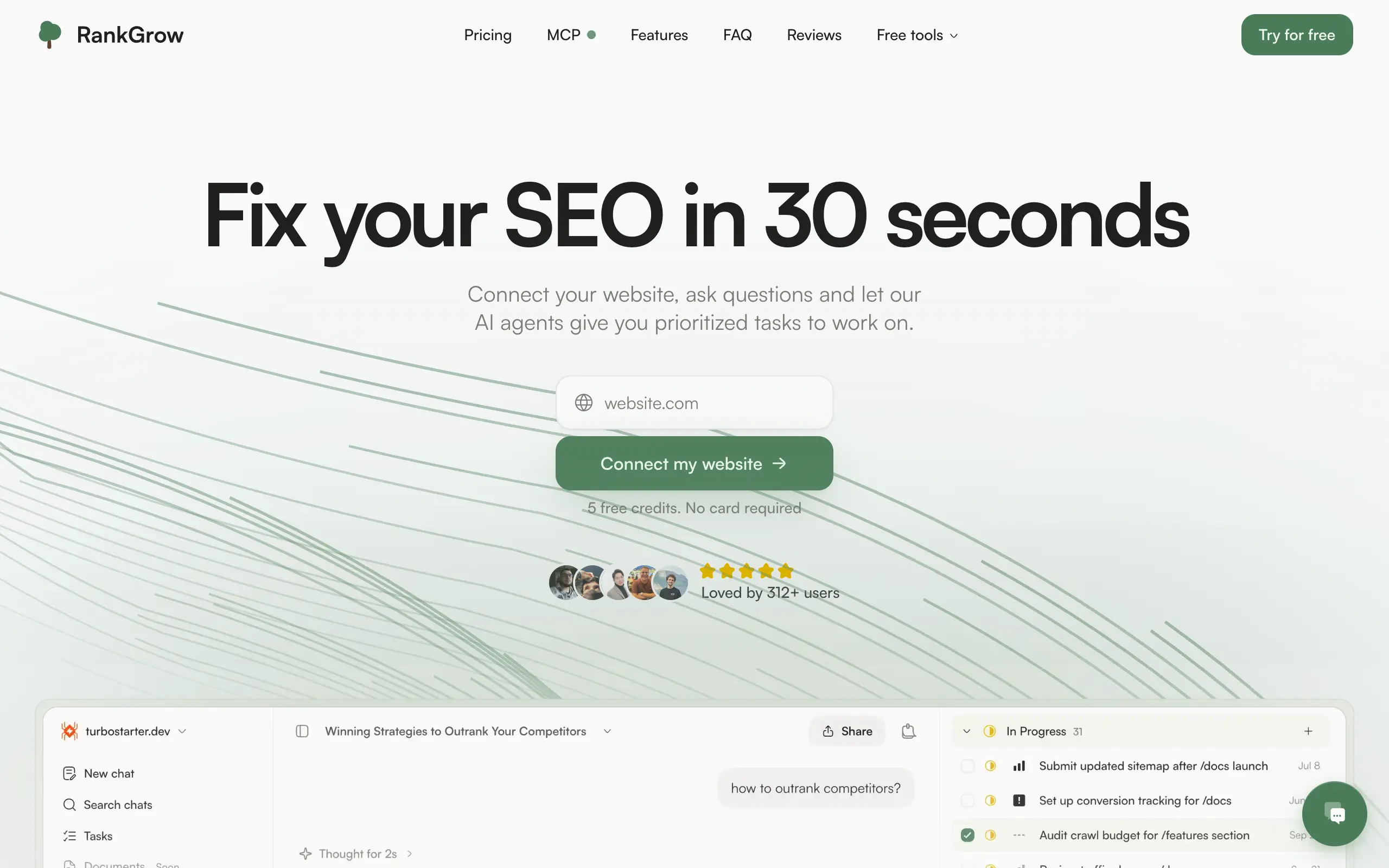
RankGrow
Fix your SEO with AI agents - connect Search Console, get prioritized tasks, and grow organic traffic 📈
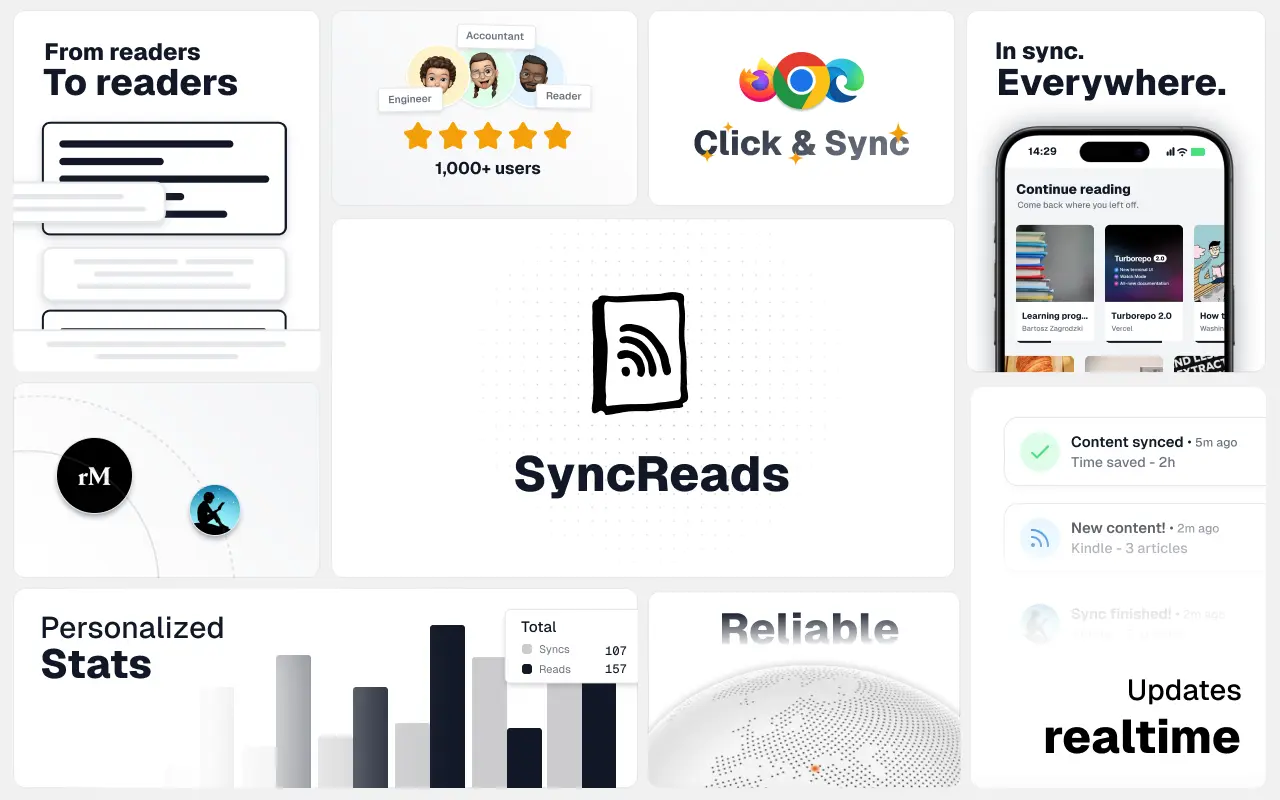
SyncReads
Sync your favorite content for distraction-free reading, save time and replace multiple apps. Anytime, anywhere 🔄
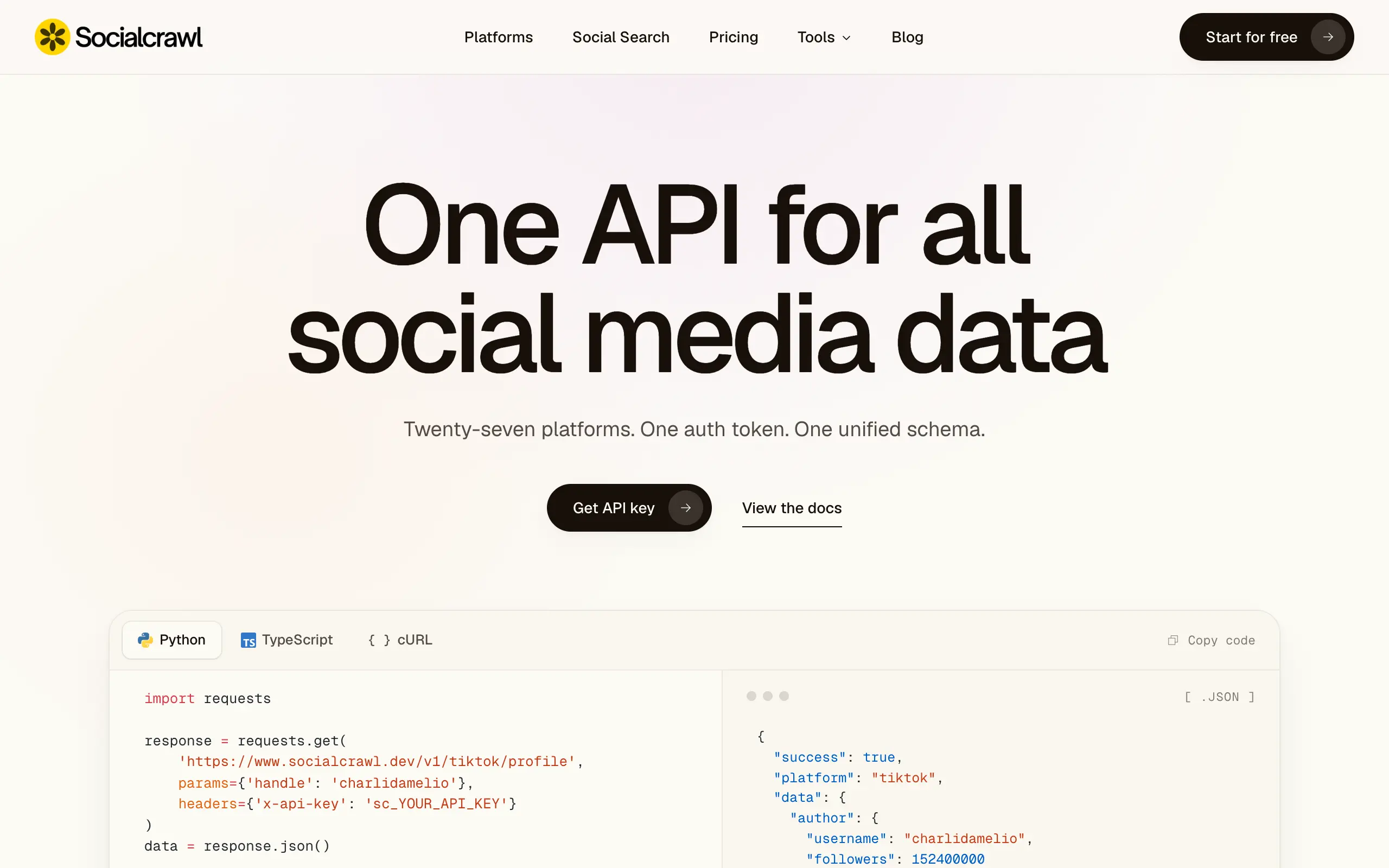
Socialcrawl
Get clean, structured data from 21 platforms like TikTok, Instagram, and YouTube with a single request 📊
Statiko
Monitor any Telegram channel in real time - track posts, edits, deletions, and growth with AI recaps 📡
Shibui
AI website builder - describe your business, pick a niche template, edit by chatting, and publish instantly ✨
Pro Service
Find verified home service professionals, compare quotes, and pay securely through escrow - built for Brazilians across the US 🏠
RankGrow
Fix your SEO with AI agents - connect Search Console, get prioritized tasks, and grow organic traffic 📈
SyncReads
Sync your favorite content for distraction-free reading, save time and replace multiple apps. Anytime, anywhere 🔄
Socialcrawl
Get clean, structured data from 21 platforms like TikTok, Instagram, and YouTube with a single request 📊
Statiko
Monitor any Telegram channel in real time - track posts, edits, deletions, and growth with AI recaps 📡
Shibui
AI website builder - describe your business, pick a niche template, edit by chatting, and publish instantly ✨
Pro Service
Find verified home service professionals, compare quotes, and pay securely through escrow - built for Brazilians across the US 🏠
RankGrow
Fix your SEO with AI agents - connect Search Console, get prioritized tasks, and grow organic traffic 📈
SyncReads
Sync your favorite content for distraction-free reading, save time and replace multiple apps. Anytime, anywhere 🔄
Socialcrawl
Get clean, structured data from 21 platforms like TikTok, Instagram, and YouTube with a single request 📊
Statiko
Monitor any Telegram channel in real time - track posts, edits, deletions, and growth with AI recaps 📡
Shibui
AI website builder - describe your business, pick a niche template, edit by chatting, and publish instantly ✨
Pro Service
Find verified home service professionals, compare quotes, and pay securely through escrow - built for Brazilians across the US 🏠
RankGrow
Fix your SEO with AI agents - connect Search Console, get prioritized tasks, and grow organic traffic 📈
SyncReads
Sync your favorite content for distraction-free reading, save time and replace multiple apps. Anytime, anywhere 🔄
Socialcrawl
Get clean, structured data from 21 platforms like TikTok, Instagram, and YouTube with a single request 📊
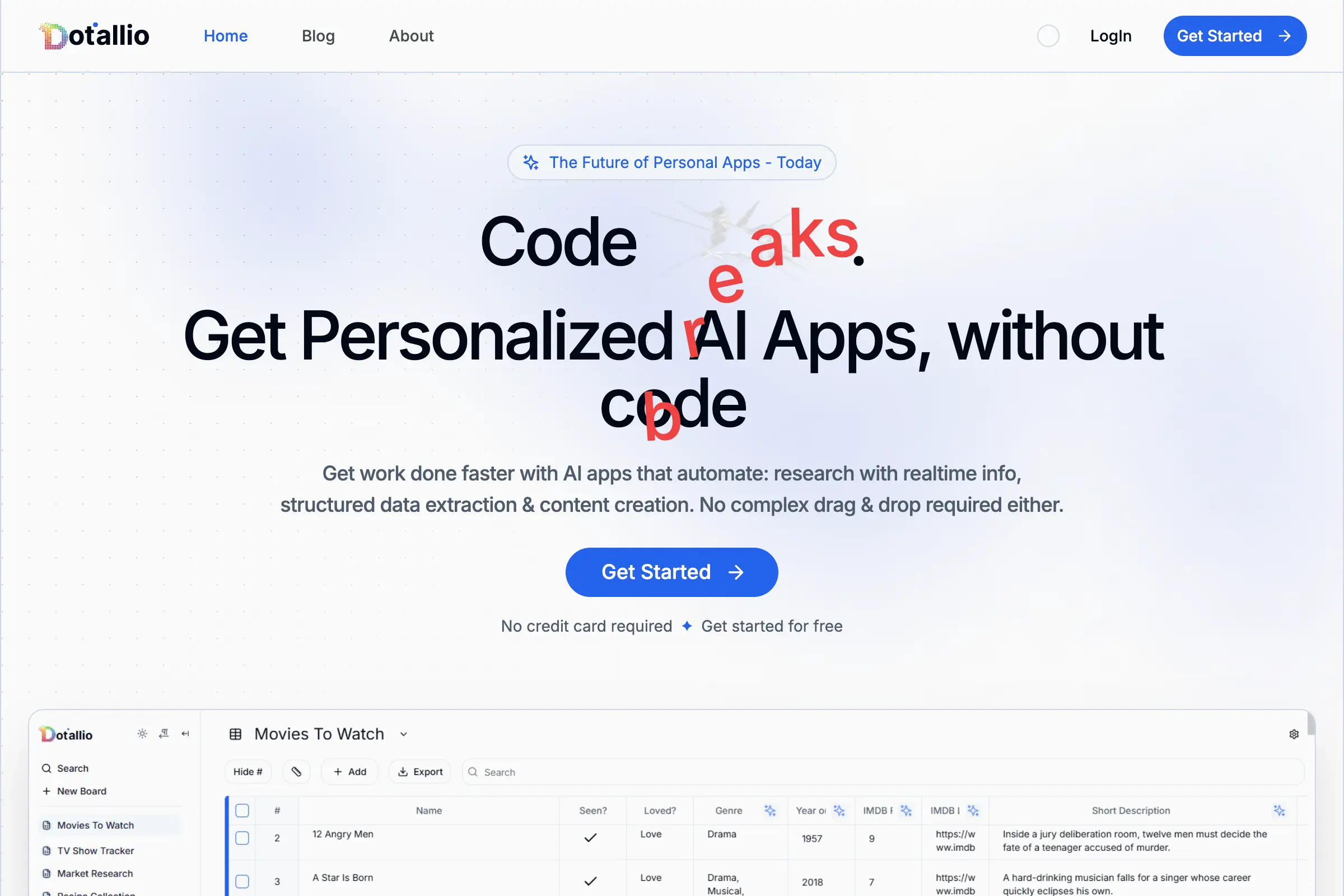
Dotallio
Personalized AI apps that automate research, data extraction, and content creation without code 🤖

Talk to Santa
Enjoy a magical live video chat or receive a unique AI-generated video greeting from Santa Claus 🎅

pozywka.pl
Scalable blog for food journalist, focused on performance and user experience 🌭
zagrodzki.me
Personal blog and portfolio of Bart Zagrodzki, where he shares his knowledge and work 💼
TurboStarter
Ship your startup everywhere. In minutes.
HTML to Markdown
Convert HTML to Markdown with ease, directly in your browser 📄
Dotallio
Personalized AI apps that automate research, data extraction, and content creation without code 🤖
Talk to Santa
Enjoy a magical live video chat or receive a unique AI-generated video greeting from Santa Claus 🎅
pozywka.pl
Scalable blog for food journalist, focused on performance and user experience 🌭
zagrodzki.me
Personal blog and portfolio of Bart Zagrodzki, where he shares his knowledge and work 💼
TurboStarter
Ship your startup everywhere. In minutes.
HTML to Markdown
Convert HTML to Markdown with ease, directly in your browser 📄
Dotallio
Personalized AI apps that automate research, data extraction, and content creation without code 🤖
Talk to Santa
Enjoy a magical live video chat or receive a unique AI-generated video greeting from Santa Claus 🎅
pozywka.pl
Scalable blog for food journalist, focused on performance and user experience 🌭
zagrodzki.me
Personal blog and portfolio of Bart Zagrodzki, where he shares his knowledge and work 💼
TurboStarter
Ship your startup everywhere. In minutes.
HTML to Markdown
Convert HTML to Markdown with ease, directly in your browser 📄
Dotallio
Personalized AI apps that automate research, data extraction, and content creation without code 🤖
Talk to Santa
Enjoy a magical live video chat or receive a unique AI-generated video greeting from Santa Claus 🎅
pozywka.pl
Scalable blog for food journalist, focused on performance and user experience 🌭
zagrodzki.me
Personal blog and portfolio of Bart Zagrodzki, where he shares his knowledge and work 💼
TurboStarter
Ship your startup everywhere. In minutes.
HTML to Markdown
Convert HTML to Markdown with ease, directly in your browser 📄
Omichat
Chat with 50+ AI models, including ChatGPT and Claude, in one place - switch models anytime without losing context 🤖
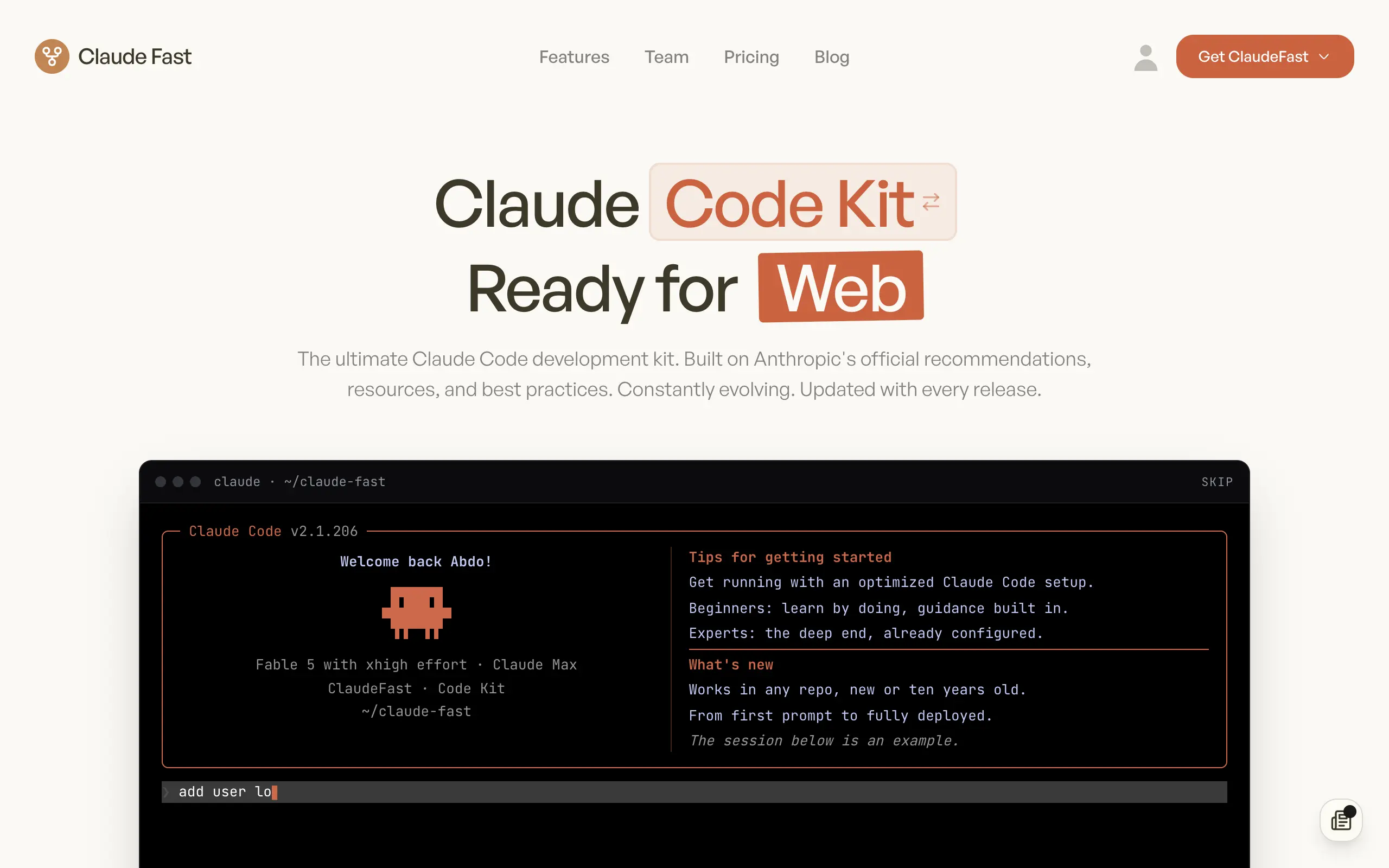
Claude Fast
Supercharge your Claude Code with 6x effective context window and specialized AI agents 🤖
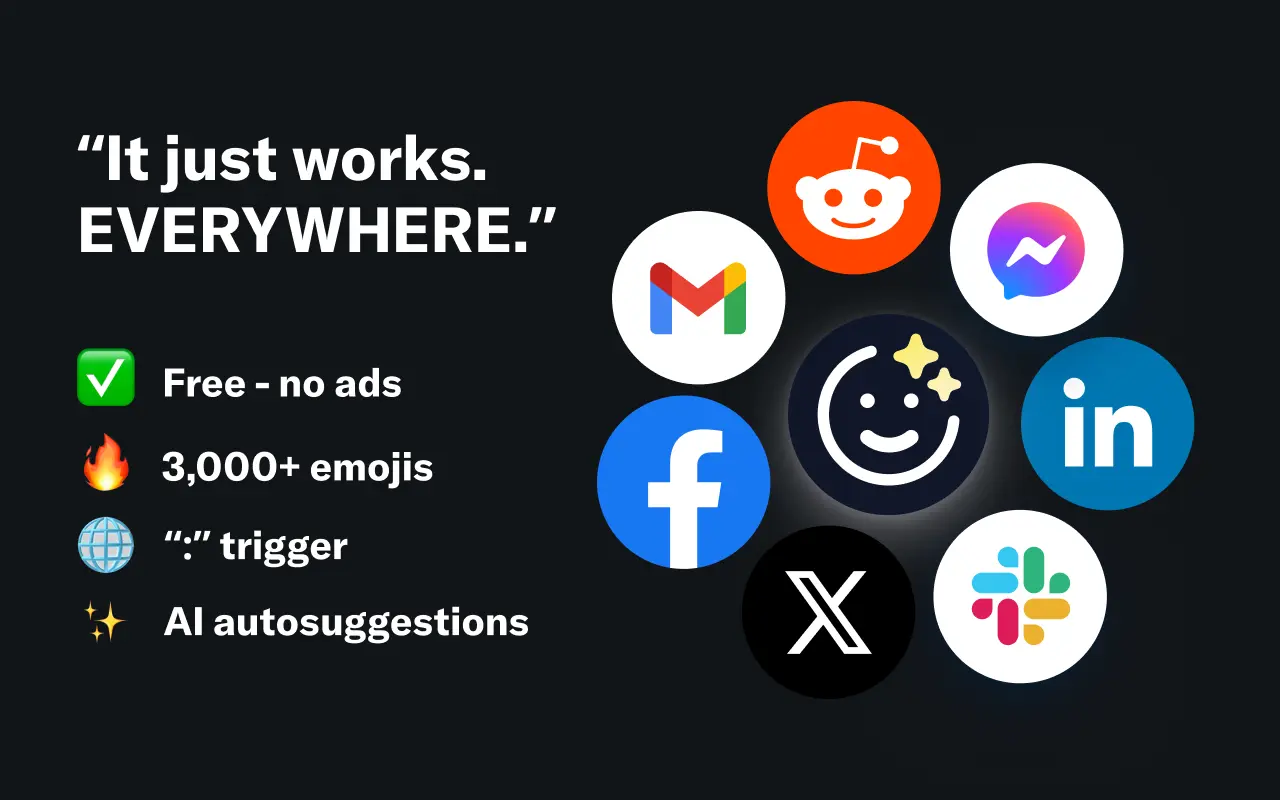
EmojAI
AI-powered emoji picker with smart, context-aware suggestions 🤖
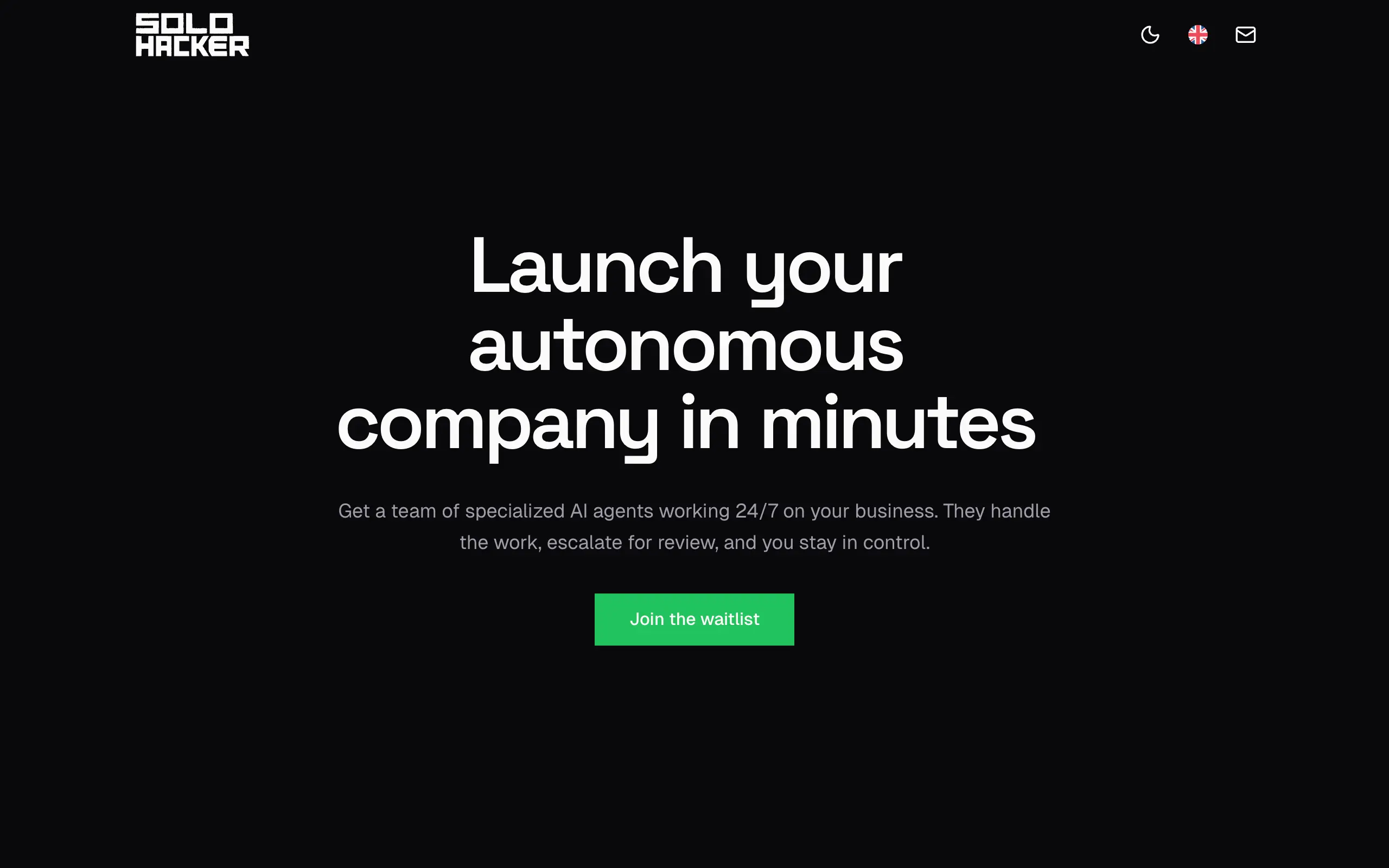
Solohacker
Autonomous company launcher - AI agents work 24/7, escalate what matters, and you stay in control 🤖

BeRawi: Storytelling Coach
Practice storytelling daily with instant feedback to sound clearer, more engaging, and confident 🎤
Omichat
Chat with 50+ AI models, including ChatGPT and Claude, in one place - switch models anytime without losing context 🤖
Claude Fast
Supercharge your Claude Code with 6x effective context window and specialized AI agents 🤖
EmojAI
AI-powered emoji picker with smart, context-aware suggestions 🤖
Solohacker
Autonomous company launcher - AI agents work 24/7, escalate what matters, and you stay in control 🤖
BeRawi: Storytelling Coach
Practice storytelling daily with instant feedback to sound clearer, more engaging, and confident 🎤
Omichat
Chat with 50+ AI models, including ChatGPT and Claude, in one place - switch models anytime without losing context 🤖
Claude Fast
Supercharge your Claude Code with 6x effective context window and specialized AI agents 🤖
EmojAI
AI-powered emoji picker with smart, context-aware suggestions 🤖
Solohacker
Autonomous company launcher - AI agents work 24/7, escalate what matters, and you stay in control 🤖
BeRawi: Storytelling Coach
Practice storytelling daily with instant feedback to sound clearer, more engaging, and confident 🎤
Omichat
Chat with 50+ AI models, including ChatGPT and Claude, in one place - switch models anytime without losing context 🤖
Claude Fast
Supercharge your Claude Code with 6x effective context window and specialized AI agents 🤖
EmojAI
AI-powered emoji picker with smart, context-aware suggestions 🤖
Solohacker
Autonomous company launcher - AI agents work 24/7, escalate what matters, and you stay in control 🤖
BeRawi: Storytelling Coach
Practice storytelling daily with instant feedback to sound clearer, more engaging, and confident 🎤

Connect with like-minded people
Join our community to get feedback, support, and grow together with 1,000+ builders on board, let's ship it!
Join usShip your startup everywhere. In minutes.
Don't burn tokens on setup and start building features on day one.