RenewalSignal
AI detects renewal risk from support, usage, invoices, and meeting notes, then launches account-specific retention workflows for B2B teams.
Why AI renewal risk software is becoming a B2B retention priority
For subscription businesses, renewal outcomes are rarely decided during the final 30 days of a contract. By the time a customer says they are “reviewing alternatives,” the warning signs have often existed for months across support tickets, product usage, unpaid invoices, customer success notes, and stakeholder conversations.
The problem is that these signals are fragmented. Customer success managers may see declining engagement. Finance may notice payment friction. Support may identify an unresolved integration issue. Sales may learn that an executive sponsor has changed roles. Yet no one has a complete, timely view of the account’s renewal health.
RenewalSignal is an AI renewal risk software concept built to solve that operational gap. It detects renewal risk from support interactions, usage behavior, invoices, and meeting notes, then triggers account-specific retention workflows for B2B teams.
Instead of relying on subjective health scores, scattered spreadsheets, or quarterly account reviews, a renewal intelligence platform can help teams identify risk early, explain why it exists, and guide the next best action.
This is especially relevant for B2B SaaS companies with:
- Annual or multi-year contracts
- Complex account ownership across sales, customer success, support, and finance
- Product-led usage data combined with high-touch relationship management
- Growing net revenue retention goals
- A need to reduce preventable churn without hiring a large operations team
The strongest opportunity is not simply building another customer success dashboard. It is building a trusted AI-powered renewal risk detection and retention workflow platform that converts disconnected customer signals into practical, accountable action.
The key product insight
A useful renewal risk score is not just a number. It must include evidence, explain the drivers behind the score, identify the people who need to act, and recommend a workflow that can improve the renewal outcome.
The B2B renewal problem RenewalSignal solves
Most B2B teams already collect plenty of customer data. The challenge is interpretation and coordination.
A customer account may appear healthy in a CRM because the account manager logged a positive call. At the same time, the account may have declining weekly active users, several high-severity support cases, an overdue invoice, and a new procurement contact asking for competitor comparisons.
Traditional customer health scoring often fails because it has four structural limitations:
-
It depends too heavily on manually maintained fields.
Customer success teams are busy. Health updates may be delayed, inconsistent, or influenced by optimism bias. -
It treats every risk signal as equal.
A slight drop in usage is not equivalent to a critical unresolved support incident. A good system needs contextual weighting. -
It identifies risk without enabling a response.
A dashboard that says “red account” does not tell a CSM whether to schedule an executive business review, involve support leadership, offer training, or resolve billing friction. -
It is too late in the customer lifecycle.
Quarterly reviews and manually updated renewal forecasts can miss behavior shifts that happen between meetings.
RenewalSignal addresses these limitations by operating as a cross-functional customer intelligence layer. It pulls signals from the systems B2B teams already use, detects meaningful changes, produces explainable account-level risk assessments, and launches tailored retention plays.
Target audience for AI renewal risk detection
The ideal audience is not every company with recurring revenue. RenewalSignal is most valuable where account value, customer complexity, and retention risk justify a dedicated intelligence workflow.
Primary audience: mid-market and enterprise B2B SaaS teams
The primary customer profile includes B2B SaaS companies with recurring contracts, customer success teams, and enough data volume to make manual renewal monitoring unreliable.
Common characteristics include:
- Annual contract values from roughly $10,000 to $250,000 or more
- A portfolio of 50 to several thousand customer accounts
- Customer success, account management, support, finance, and product teams working from different systems
- A material portion of revenue concentrated in upcoming renewals
- Existing use of a CRM, support platform, product analytics tool, and billing system
- Pressure to improve gross revenue retention, net revenue retention, expansion rates, or forecast accuracy
For this audience, preventing one avoidable enterprise churn event can justify a substantial annual software investment.
Secondary audience: customer success consultancies and fractional operators
Customer success consultancies and fractional chief customer officers manage retention programs for multiple clients. They need scalable ways to diagnose account risk without manually auditing every support ticket and meeting note.
A multi-tenant consultant experience could let them:
- Review risk trends across a client portfolio
- Build repeatable retention playbooks
- Benchmark customer health drivers by industry
- Deliver more evidence-based renewal recommendations
- Demonstrate measurable operational value to their own clients
Tertiary audience: B2B service businesses with recurring contracts
Managed service providers, IT consultancies, HR outsourcing firms, agencies, and professional service businesses also face renewal and retention risk. Their data structure is different from SaaS, but the core challenge is familiar.
Signals may include:
- Service ticket volume and resolution times
- Contract utilization
- Invoice delays and disputes
- Project meeting summaries
- Changes in executive sponsorship
- Reduced stakeholder engagement
This segment may be a later expansion market after proving the model in SaaS.
Buyer and user roles
RenewalSignal should be positioned differently depending on the stakeholder.
| Role | Primary concern | What RenewalSignal provides | Likely objection | Response |
|---|---|---|---|---|
| VP of customer success | Preventing churn and scaling CSM capacity | Prioritized risk portfolio and playbooks | “We already have health scores” | Explainable multi-source risk and action orchestration |
| Chief revenue officer | Renewal forecast accuracy and revenue protection | Renewal pipeline visibility and escalation alerts | “Is this another dashboard?” | It launches and tracks retention work, not just reporting |
| Customer success operations | Process consistency and data quality | Automated signal collection and workflow governance | “Will implementation be difficult?” | Start with high-value connectors and phased activation |
| Finance leader | Invoice risk and cash collection | Billing signals connected to account health | “Why involve finance data?” | Payment behavior can be an early commercial risk indicator |
The market gap in customer health and retention software
The customer success software market is established, but there remains a meaningful gap between tracking customer health and operating a reliable retention system.
Many incumbent platforms are strong at account management, customer segmentation, playbooks, lifecycle management, and reporting. However, companies still encounter recurring problems:
- Health scores can be static or simplistic
- Usage metrics may live in product analytics tools rather than the success platform
- Support sentiment is difficult to incorporate consistently
- Renewal risk depends on unstructured data such as meeting notes and emails
- Finance and billing signals are often excluded
- Teams struggle to translate risk into cross-functional action
- AI-generated summaries can be generic and insufficiently evidence-based
This creates room for a specialized AI renewal intelligence platform.
The opportunity: account-specific, evidence-backed intervention
RenewalSignal’s market opportunity is based on a simple premise: a renewal risk alert is only valuable when teams trust it and can act on it quickly.
The product should not merely say that an account is at risk. It should answer the operational questions a customer success leader will immediately ask:
- What changed?
- Which evidence supports this risk assessment?
- How severe is the risk?
- Is the issue product adoption, service quality, commercial friction, stakeholder change, or competitive pressure?
- Who owns the next step?
- What should happen this week?
- Has the recommended action been completed?
- Did the account health improve after the intervention?
That combination of diagnosis, workflow automation, and outcome learning is a stronger category position than “AI customer success assistant.”
Why timing matters now
Several industry trends make this concept increasingly practical:
- B2B companies are under continued pressure to protect efficient growth and retain existing revenue.
- Customer-facing teams now generate more structured and unstructured digital data than they can manually review.
- Large language models can classify themes, summarize conversations, extract commitments, and identify risk language from text.
- Modern data warehouses, event pipelines, and SaaS APIs make account-level data unification more accessible.
- Finance, customer success, and revenue operations teams increasingly need a shared renewal forecast rather than disconnected forecasts.
When discussing market size, churn benchmarks, or net revenue retention statistics in published content, cite a current primary source, public earnings report, or recognized industry research provider. Avoid unsupported universal claims because retention benchmarks vary significantly by segment, contract size, and business model.
How RenewalSignal works as an AI renewal risk platform
RenewalSignal should combine deterministic business rules with machine learning and AI analysis. A purely black-box churn model may be difficult for revenue leaders to trust, especially when it influences account escalation, pricing decisions, or executive involvement.
The recommended product philosophy is explainable intelligence over opaque scoring.
Unified account signal timeline
The foundation is an account-level timeline that combines structured and unstructured events.
Relevant inputs include:
- Product usage trends, active users, feature adoption, seat utilization, and login frequency
- Support ticket severity, sentiment, time to resolution, reopen rates, and unresolved escalations
- Invoice status, payment delays, failed payments, credit holds, and renewal order status
- CRM opportunity stage, renewal date, contract value, stakeholder roles, and renewal forecast
- Meeting notes, call transcripts, action items, executive sponsor changes, and competitor mentions
- Survey data such as NPS, CSAT, and relationship health assessments
- Email or conversation metadata where privacy and customer agreements allow it
The system should normalize these signals into an account profile with an auditable event history.
Risk scoring with transparent drivers
Each account receives a renewal risk status, confidence level, and a set of contributing factors.
For example, a high-risk account summary might state:
Renewal risk increased from medium to high during the past 21 days. The largest contributing factors are a 42% decline in weekly active users, two unresolved priority-one support cases, and meeting notes indicating that the executive sponsor is evaluating alternatives before the renewal date.
The language should be precise, grounded in source evidence, and never imply certainty where only correlation exists.
A practical scoring model can blend:
- Rules-based signals for known high-risk conditions
- Trend detection for unusual changes compared with the account’s baseline
- Predictive models trained on historical renewal outcomes
- LLM classification for sentiment, themes, objections, and stakeholder changes
- Human feedback from CSMs who confirm, dismiss, or refine detected risk
Account-specific retention workflows
The product’s differentiation comes from the action layer. Once risk is detected, RenewalSignal should select or recommend an appropriate retention workflow based on the risk pattern.
Examples include:
- A product adoption recovery plan for reduced feature usage
- A support escalation workflow for repeated high-severity incidents
- An executive alignment play for sponsor changes
- A billing resolution workflow for overdue invoices or procurement friction
- A value realization review for low engagement but high contract value
- A competitive defense play when meeting notes mention alternatives
- A renewal readiness workflow beginning 120 or 180 days before contract end
Each workflow should create assignments, due dates, checklists, notifications, and measurable outcomes.
Detect early
Identify meaningful risk changes from product, support, financial, and relationship signals before the renewal becomes urgent.
Explain clearly
Show the evidence behind each risk assessment so account teams can verify the recommendation and act with confidence.
Orchestrate action
Launch accountable retention workflows across customer success, support, sales, finance, and leadership.
AI meeting note analysis
Meeting notes are one of the highest-value data sources because they contain context unavailable in product telemetry. They can reveal political risk, changing priorities, customer sentiment, and hidden blockers.
RenewalSignal can use AI to extract:
- Renewal intent and timing
- Stakeholder sentiment
- Competitor mentions
- Budget constraints
- Product gaps and unresolved objections
- Promised follow-up actions
- New decision-makers or lost champions
- Expansion opportunities
- Escalation requests
The interface should always show the underlying note excerpt or source reference. This gives users a way to verify AI output and correct mistakes.
Risk-to-action recommendation engine
A recommendation engine should use a combination of templates and adaptive logic.
For instance:
- If usage is falling but support sentiment remains positive, recommend enablement, training, and adoption milestones.
- If ticket volume is high and executive sentiment is negative, recommend a support leadership escalation and written recovery plan.
- If usage is healthy but invoicing is delayed, recommend finance coordination and procurement outreach.
- If a champion leaves, recommend mapping new stakeholders and scheduling an executive alignment meeting.
- If a competitor is mentioned near renewal, recommend a value benchmark, ROI review, and executive sponsor engagement.
The system should avoid inappropriate automations, such as automatically discounting contracts or sending customer-facing messages without human approval.
Core features for an MVP
A successful MVP should solve a narrow but urgent workflow exceptionally well. Trying to replace a CRM, customer success platform, product analytics system, and support desk in version one will slow time to market and weaken positioning.
The first version of RenewalSignal should focus on renewal risk detection, evidence, and action orchestration.
Essential MVP capabilities
-
Account and renewal dashboard
Show upcoming renewals grouped by risk level, contract value, renewal date, assigned owner, and recent risk movement. -
Core data connectors
Start with CRM, support, product usage, billing, and meeting note ingestion. Prioritize systems common in the chosen ideal customer profile. -
Explainable account risk profile
Display risk score, confidence, key drivers, source evidence, timeline, and historical trend. -
AI note and ticket analysis
Extract sentiment, themes, competitor mentions, commitments, and risk indicators from unstructured text. -
Retention workflow templates
Provide configurable workflows for adoption decline, support escalation, sponsor loss, payment friction, and competitive risk. -
Tasks and ownership
Assign actions to CSMs, account executives, support leaders, finance contacts, and executive sponsors. -
Notifications and escalation rules
Alert owners when risk rises, deadlines are missed, or high-value accounts cross a threshold. -
Feedback controls
Let users mark a risk signal as accurate, inaccurate, resolved, or irrelevant. This is crucial for improving model quality and trust.
Features to defer until product-market fit
Avoid adding these capabilities too early:
- Full customer success journey orchestration
- Broad email outreach automation
- Complex custom report builders
- Autonomous customer-facing agents
- Advanced revenue forecasting modules
- Extensive white-labeling
- A large marketplace of integrations
These features can become valuable later, but they should not distract from the central promise: spotting meaningful renewal risk and coordinating the best response.
Recommended tech stack for RenewalSignal
The technology stack should support secure multi-tenancy, scalable event ingestion, configurable workflows, and auditable AI outputs. The correct architecture depends on expected customer size and integration complexity, but a modern TypeScript-based SaaS stack is a practical default.
Product application and dashboard
For the web application, use Next.js with React. This combination supports a fast B2B dashboard, server-side data access patterns, authentication flows, and flexible deployment options.
Tailwind CSS is well suited to building a consistent operations-focused interface quickly. A clean dashboard matters because CSMs and revenue leaders need to scan account status, understand evidence, and take action with minimal training.
Recommended front-end considerations include:
- Dense but readable account tables
- Saved filters for renewal windows and risk segments
- Drill-down account timelines
- Role-specific dashboards
- Clear evidence links for AI claims
- Accessible contrast and keyboard navigation
- Responsive layouts for account reviews on smaller screens
Backend, database, and data model
Use PostgreSQL as the primary relational database. Renewal management data is highly relational: accounts have contracts, users, events, workflows, tasks, stakeholders, and integrations.
A multi-tenant schema should include strong tenant isolation from the beginning. Depending on the customer segment, use either:
- Shared tables with a mandatory organization identifier and strict row-level security
- Separate schemas for stronger isolation needs
- Dedicated databases for enterprise customers with contractual security requirements
The shared-table approach is usually faster and more cost-effective early on. Dedicated environments can become an enterprise tier feature when demand justifies the operational overhead.
Event ingestion and workflow processing
Renewal risk analysis depends on processing incoming data reliably. Use queues and background jobs for ingestion, enrichment, scoring, and workflow activation.
Useful architecture components include:
- Webhook endpoints for near-real-time SaaS events
- Scheduled syncs for APIs that do not support webhooks
- Idempotent ingestion jobs to prevent duplicate records
- A durable queue for long-running enrichment tasks
- Dead-letter handling for failed jobs
- Observability for sync failures and stale integrations
For workflow logic, begin with an internal rules engine stored in the database. Rules should be versioned and traceable. For example, a rule can specify that a high-severity unresolved ticket plus a decline in active users triggers a “service recovery” retention workflow.
AI and retrieval layer
AI should support classification, extraction, summarization, and recommendations. It should not be the sole source of truth.
A robust implementation can use:
- Structured prompts that require JSON output
- Schema validation for extracted fields
- Source attribution for every generated claim
- Retrieval of account-specific notes, tickets, and events
- Guardrails that limit recommendations to approved workflow templates
- Human review for high-impact actions
For semantic search or retrieval, use pgvector within PostgreSQL during the early stage. This reduces infrastructure complexity because embeddings and operational data can remain close together.
The trade-off is that a dedicated vector database may be more suitable later if retrieval scale, performance requirements, or advanced hybrid search become demanding.
Authentication, permissions, and auditability
B2B renewal data can contain commercially sensitive information, customer complaints, financial status, and meeting content. Security is a product requirement, not a late-stage checkbox.
Implement:
- Role-based access control
- Single sign-on support for enterprise plans
- Audit logs for data access and workflow changes
- Encryption in transit and at rest
- Tenant-scoped API tokens
- Granular integration permissions
- Configurable data retention settings
- Admin controls for AI access and source types
For identity and session security, use a mature authentication provider or a well-maintained internal implementation. The key trade-off is control versus operational responsibility. Early-stage teams generally benefit from using established infrastructure rather than building identity management from scratch.
Building quickly without creating product debt
A production-ready SaaS boilerplate can shorten the path to an initial launch by providing foundational features such as authentication, billing, organizations, teams, and application structure. TurboStarter can be a useful starting point for founders building the SaaS foundation while concentrating engineering effort on risk intelligence, integrations, and workflow automation.
Data strategy and AI model design
RenewalSignal’s long-term defensibility will depend on data quality, feedback loops, and workflow outcome history more than on any single AI model.
Start with a hybrid scoring system
A hybrid model combines business rules with learned patterns.
Rules are appropriate for highly interpretable events:
- A renewal date is within 90 days and no meeting has occurred
- A critical support ticket remains unresolved beyond the service target
- Invoice payment is overdue
- Weekly active users fall below a configured baseline
- The executive sponsor is marked inactive or departed
Machine learning is appropriate when patterns are more complex:
- Combinations of declining feature usage and support behavior
- Which engagement changes historically precede churn
- Which intervention types correlate with recovery
- Differences in risk patterns across customer segments
LLM analysis is appropriate for unstructured content:
- Classifying customer sentiment
- Identifying competitor mentions
- Extracting commitments and deadlines
- Detecting stakeholder or budget changes
- Summarizing risk history for account reviews
Build a feedback loop into the product
Every risk assessment should allow the account owner to provide feedback. Suggested feedback states include:
- Accurate risk
- Inaccurate risk
- Known issue already being handled
- Resolved
- Needs leadership attention
- Missing context
This feedback has two benefits. It improves future scoring and identifies systematic data quality problems. If many CSMs dismiss alerts related to a specific usage event, that event may be poorly defined or not meaningful.
Measure model quality with business metrics
Do not judge the platform solely by model accuracy. A highly accurate score that arrives too late or does not lead to action has limited value.
Track:
- Percentage of at-risk renewals detected before a defined lead time
- Precision of high-risk alerts
- Account owner agreement rate
- Workflow completion rate
- Time from risk detection to first action
- Change in renewal forecast accuracy
- Gross revenue retention and net revenue retention impact
- Churn avoided or revenue retained, using a carefully defined attribution model
Attribution must be transparent. Renewal outcomes are influenced by many factors, so RenewalSignal should present its impact as evidence-backed contribution rather than claiming sole credit for every retained account.
Monetization strategy for RenewalSignal
The best pricing model should reflect value, data complexity, and the number of accounts being monitored.
Recommended pricing approach: platform fee plus monitored accounts
A hybrid model is likely the strongest fit:
- A base platform fee for access, core integrations, and workflow capabilities
- A usage component based on monitored accounts, active contracts, or annual recurring revenue bands
- Premium pricing for advanced AI analysis, additional connectors, enterprise security, and dedicated environments
This model aligns pricing with the number of accounts receiving protection while preserving predictable revenue for RenewalSignal.
Example plan positioning can include:
- Growth plan for smaller customer success teams monitoring a limited account portfolio
- Scale plan for mid-market SaaS companies needing multiple integrations and team workflows
- Enterprise plan for SSO, advanced permissions, custom retention policies, data residency needs, and dedicated support
Avoid pricing solely by seats. A seat-based model can discourage cross-functional adoption, even though renewal protection requires participation from customer success, support, sales, and finance.
Value-based pricing narrative
The core pricing conversation should focus on protected recurring revenue.
If a customer has several million dollars in renewals each quarter, avoiding even one preventable churn event can create a significant return on investment. The platform should help buyers model potential value based on:
- Revenue coming up for renewal
- Historical churn rate
- Average contract value
- Percentage of churn considered preventable
- Current customer success team capacity
- Forecast error and late-stage escalation frequency
A value calculator can support sales conversations, but it should clearly label assumptions and avoid promises that cannot be substantiated.
Services as an early revenue accelerator
Early customers may need help defining risk criteria, configuring integrations, and designing retention workflows. A paid implementation package can improve onboarding and create valuable product learning.
Services can include:
- Data source mapping
- Risk taxonomy workshops
- Workflow configuration
- Historical data review
- Executive dashboard setup
- Customer success process design
- Team training
Over time, standardize these services into repeatable onboarding packages so implementation does not become a bottleneck.
Competitive advantage and positioning
RenewalSignal will compete indirectly with customer success platforms, CRMs, revenue intelligence tools, product analytics products, support analytics tools, and internal data teams.
Its competitive advantage should be anchored in a narrow, high-value use case.
The RenewalSignal USP
RenewalSignal turns fragmented customer evidence into explainable renewal risk assessments and account-specific retention workflows before churn becomes inevitable.
This positioning is more specific than generic AI customer success software. It emphasizes the commercial outcome, the multi-source data advantage, the need for explainability, and the operational response.
Competitive differentiation pillars
| Capability | Traditional health dashboard | Generic AI assistant | RenewalSignal advantage | Buyer value |
|---|---|---|---|---|
| Risk inputs | Mostly configured metrics | Usually text prompts | Usage, support, invoices, CRM, and meeting context | More complete account picture |
| Explainability | Score may lack detail | Output can lack grounding | Evidence-linked risk drivers and timeline | Higher trust and faster validation |
| Action | Manual follow-up | Suggested text or summary | Role-based retention workflows with ownership | Reduced coordination delays |
| Learning loop | Limited feedback capture | Often disconnected from outcomes | Risk feedback and workflow outcome learning | Improving relevance over time |
Moats that become stronger over time
The first version can be copied conceptually. The durable advantage comes from accumulated operational intelligence.
Potential moats include:
- Historical relationships between account signals and renewal outcomes
- Customer-specific risk baselines
- A curated library of successful retention interventions
- Integration depth and normalized account data models
- Trust earned through accurate evidence attribution
- Workflow configuration embedded in customers’ operating processes
- Benchmark insights across comparable segments, with strict privacy safeguards
The most important moat is trust. Revenue teams will not use a system that regularly produces unexplained alerts, misses obvious risks, or recommends irrelevant actions.
Risks and mitigation strategies
Building AI renewal risk software involves real technical, commercial, and governance risks. Addressing them directly improves product credibility.
Risk: poor data quality creates misleading alerts
Customer records may be incomplete, account identifiers may not match across systems, and usage telemetry may not represent actual value realization.
Mitigation measures include:
- Build account matching and data quality checks early
- Show data freshness and source coverage for each account
- Allow customers to configure trusted metrics
- Label low-confidence risk assessments clearly
- Provide a data readiness assessment during onboarding
- Avoid making strong predictions when source coverage is poor
Risk: AI hallucinations reduce trust
An LLM may incorrectly infer sentiment, attribute a statement to the wrong stakeholder, or generate a recommendation not supported by account evidence.
Mitigation measures include:
- Require structured outputs validated against schemas
- Link every AI claim to source content
- Use deterministic logic for critical alerts
- Limit recommendations to approved workflow options
- Add human review requirements for high-impact actions
- Capture user corrections and monitor error patterns
Risk: privacy and compliance concerns slow enterprise sales
Meeting notes, tickets, invoice information, and customer contacts may contain sensitive data.
Mitigation measures include:
- Clearly document data flows and subprocessors
- Support configurable retention and deletion policies
- Minimize stored data where possible
- Apply least-privilege integration scopes
- Maintain audit logs
- Build a security roadmap for enterprise requirements
- Obtain legal guidance on data processing obligations in target markets
Risk: integration complexity extends implementation time
If customers need six months to connect data sources, the product will struggle to prove value quickly.
Mitigation measures include:
- Start with the most common systems in a focused ICP
- Offer CSV import and API options for early flexibility
- Create connector health monitoring
- Prioritize a “minimum viable signal set”
- Make implementation packages repeatable
- Design the platform to deliver value with partial data coverage
Risk: teams ignore alerts due to alert fatigue
Too many low-quality alerts will cause CSMs to disengage.
Mitigation measures include:
- Set conservative thresholds initially
- Prioritize alerts by account value, urgency, and confidence
- Bundle related signals into a single account narrative
- Suppress duplicate alerts
- Let customers tune notification preferences
- Measure acknowledgement and action rates
A practical starting set is renewal date and contract value from the CRM, core product adoption trends, unresolved high-severity support cases, invoice status, and customer success meeting notes. This is enough to identify several common risk patterns without requiring an exhaustive integration project.
No. The clearest early position is as an intelligence and orchestration layer that complements an existing CRM or customer success platform. Replacement positioning increases sales friction and expands the implementation scope unnecessarily.
Recommendations should be framed as evidence-based suggestions, not automatic decisions. Show the specific signals, the recommended workflow, the expected owner, and an option for users to accept, modify, or dismiss the recommendation.
Go-to-market strategy for an AI retention workflow platform
The initial go-to-market motion should focus on a painful, measurable problem: identifying and saving at-risk high-value renewals.
Start with a narrow ideal customer profile
A strong initial ICP might be:
B2B SaaS companies with $5 million to $50 million in annual recurring revenue, annual contracts, a customer success team of at least three people, and customer data spread across a CRM, support system, and product analytics tool.
This segment is large enough to feel operational pain but often lacks the internal data science and revenue operations resources to build a sophisticated renewal intelligence layer.
Lead with a renewal risk audit
An effective sales entry point is a short, paid or tightly scoped pilot that analyzes a defined renewal cohort.
The pilot promise should be concrete:
- Connect a limited set of systems
- Analyze renewals occurring within the next 90 to 180 days
- Surface risk drivers and evidence
- Run selected retention workflows
- Measure alert quality and user adoption
- Deliver an executive readout
This approach reduces perceived buying risk and creates a path to proving value before a wider rollout.
Build authority through practical content
SEO content for RenewalSignal should target commercial and educational search intent. High-intent topics may include:
- AI renewal risk software
- Customer renewal risk indicators
- How to predict B2B SaaS churn
- Customer health score best practices
- Renewal forecasting for customer success teams
- Retention workflows for B2B SaaS
- How to identify at-risk accounts
- Customer success automation for renewals
The strongest articles should include frameworks, examples, implementation details, and transparent caveats. Avoid shallow content that simply repeats generic advice about “delighting customers.”
Actionable implementation steps
A disciplined rollout will improve the odds of reaching product-market fit.
Define one initial customer segment with a consistent contract model, common systems, and a clear renewal pain point.
Interview customer success leaders, CSMs, support managers, finance operators, and account executives about their last lost renewal. Document the signals they saw, when they saw them, and what prevented earlier action.
Create a renewal risk taxonomy with categories such as adoption decline, unresolved support issues, stakeholder change, commercial friction, competitive threat, and missing value realization.
Build the unified account data model and start with a minimum viable set of connectors for CRM, product usage, support, billing, and meeting notes.
Launch an explainable hybrid scoring model using rules, trend detection, and AI extraction from unstructured account content.
Create three to five high-confidence retention workflows that assign clear owners, deadlines, escalation paths, and completion criteria.
Run pilots on active renewal cohorts, collect feedback from account owners, and compare alerts with actual renewal outcomes.
Use pilot evidence to refine pricing, onboarding, alert thresholds, workflow templates, and the product’s revenue-protection narrative.
The most effective initial product will not attempt to predict every possible churn event. It will help B2B teams avoid the expensive and common failure mode of discovering renewal risk after there is little time left to respond.
Final perspective
RenewalSignal has a compelling SaaS opportunity because it sits at the intersection of AI, customer success operations, revenue retention, and workflow automation. Its value is not in producing a more sophisticated health score alone. Its value is in helping teams understand the evidence behind account risk and mobilize the right people before a customer decides not to renew.
The winning product strategy is to remain focused on high-stakes renewal decisions:
- Detect meaningful customer risk across fragmented systems
- Make AI outputs explainable and verifiable
- Turn risk signals into account-specific retention actions
- Create clear ownership across customer success, support, finance, and sales
- Learn from completed workflows and renewal outcomes over time
For B2B teams managing complex recurring revenue, that is a direct path from scattered customer data to more proactive, disciplined retention management.
More 🤖 AI Startup SaaS ideas
Discover more innovative ai startup SaaS ideas that are trending in 2026. Each idea is AI-generated with market validation and growth potential to help you find your next profitable venture faster than competitors.
Your competitors are building with TurboStarter
Below are some of the SaaS ideas that have been generated and built with our starter kit.
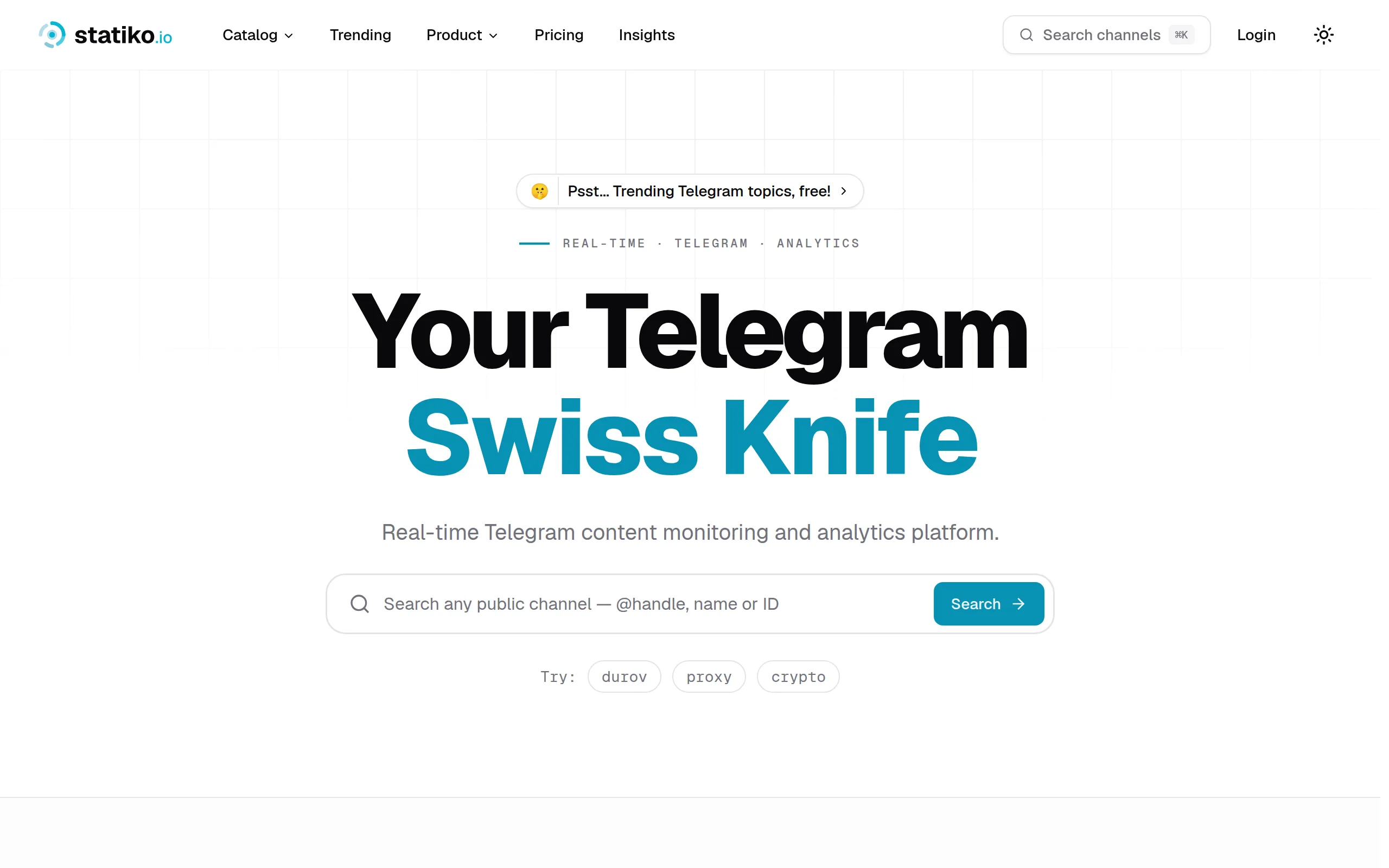
Statiko
Monitor any Telegram channel in real time - track posts, edits, deletions, and growth with AI recaps 📡

Shibui
AI website builder - describe your business, pick a niche template, edit by chatting, and publish instantly ✨

Pro Service
Find verified home service professionals, compare quotes, and pay securely through escrow - built for Brazilians across the US 🏠
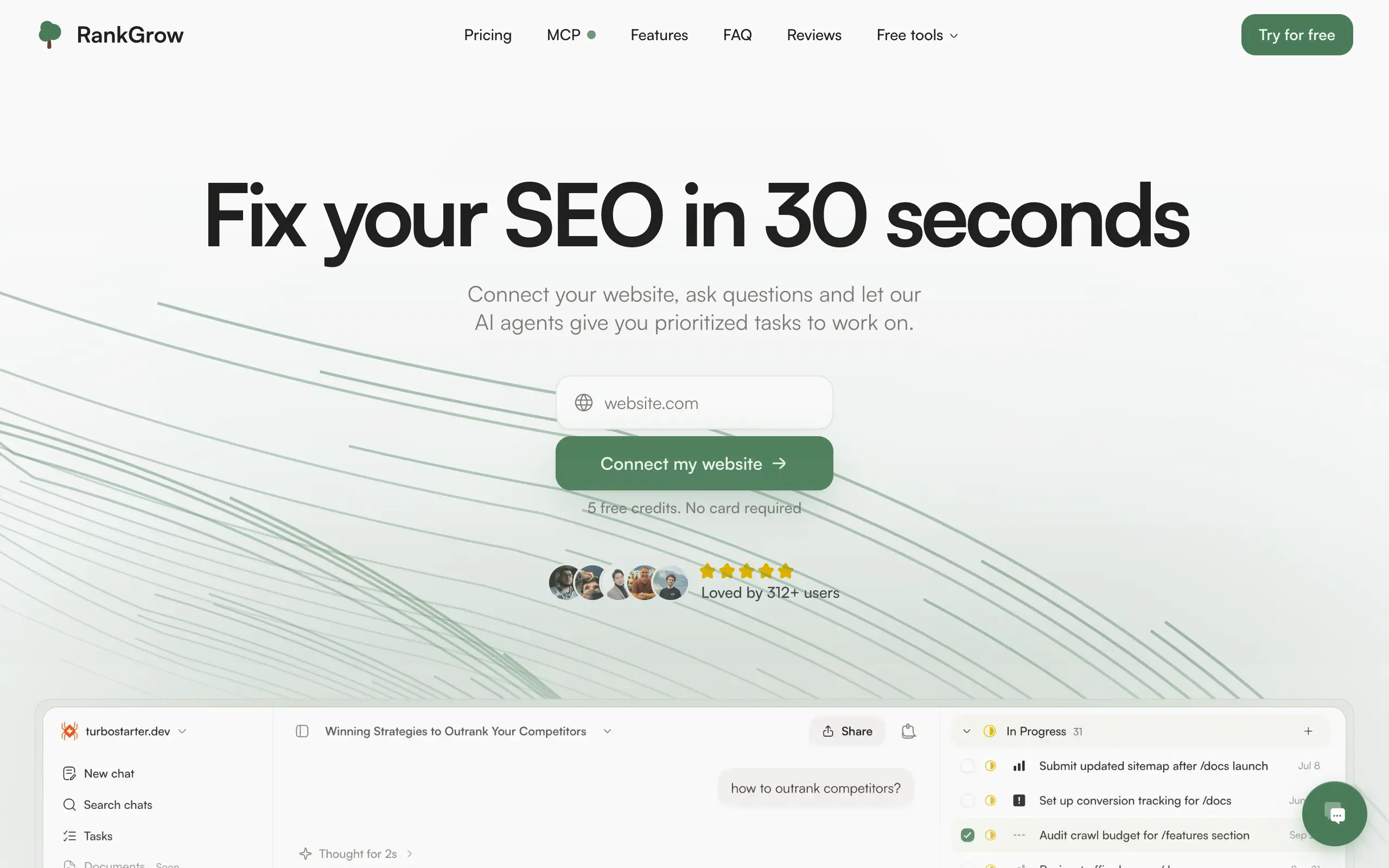
RankGrow
Fix your SEO with AI agents - connect Search Console, get prioritized tasks, and grow organic traffic 📈
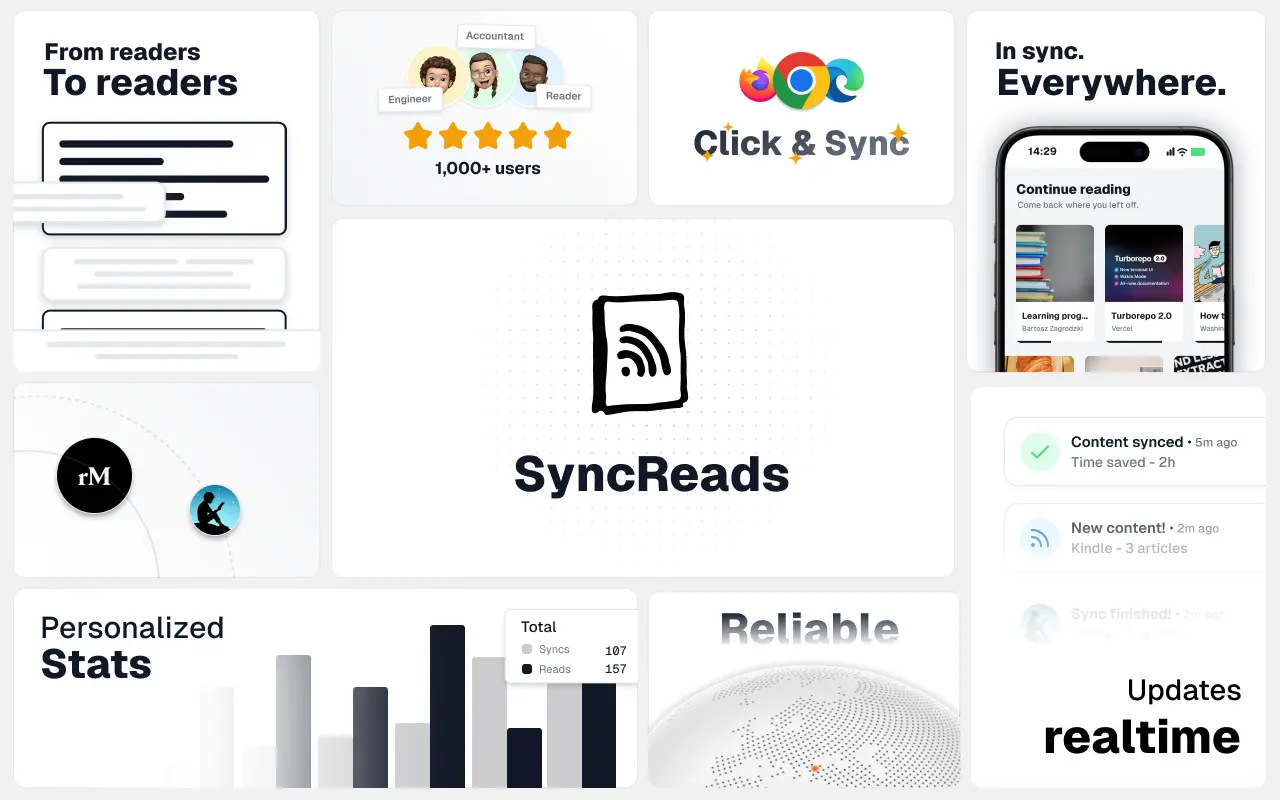
SyncReads
Sync your favorite content for distraction-free reading, save time and replace multiple apps. Anytime, anywhere 🔄
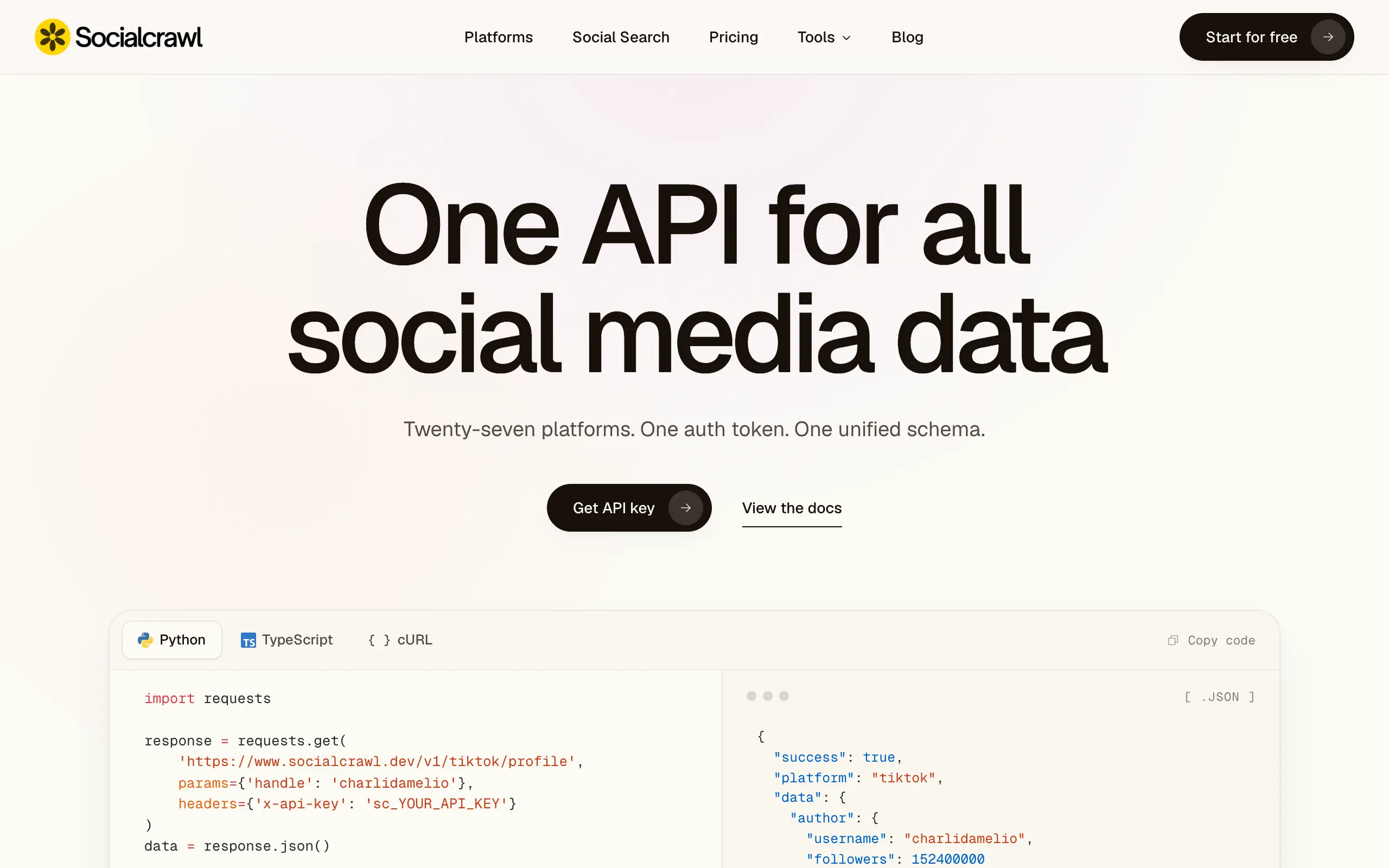
Socialcrawl
Get clean, structured data from 21 platforms like TikTok, Instagram, and YouTube with a single request 📊
Statiko
Monitor any Telegram channel in real time - track posts, edits, deletions, and growth with AI recaps 📡
Shibui
AI website builder - describe your business, pick a niche template, edit by chatting, and publish instantly ✨
Pro Service
Find verified home service professionals, compare quotes, and pay securely through escrow - built for Brazilians across the US 🏠
RankGrow
Fix your SEO with AI agents - connect Search Console, get prioritized tasks, and grow organic traffic 📈
SyncReads
Sync your favorite content for distraction-free reading, save time and replace multiple apps. Anytime, anywhere 🔄
Socialcrawl
Get clean, structured data from 21 platforms like TikTok, Instagram, and YouTube with a single request 📊
Statiko
Monitor any Telegram channel in real time - track posts, edits, deletions, and growth with AI recaps 📡
Shibui
AI website builder - describe your business, pick a niche template, edit by chatting, and publish instantly ✨
Pro Service
Find verified home service professionals, compare quotes, and pay securely through escrow - built for Brazilians across the US 🏠
RankGrow
Fix your SEO with AI agents - connect Search Console, get prioritized tasks, and grow organic traffic 📈
SyncReads
Sync your favorite content for distraction-free reading, save time and replace multiple apps. Anytime, anywhere 🔄
Socialcrawl
Get clean, structured data from 21 platforms like TikTok, Instagram, and YouTube with a single request 📊
Statiko
Monitor any Telegram channel in real time - track posts, edits, deletions, and growth with AI recaps 📡
Shibui
AI website builder - describe your business, pick a niche template, edit by chatting, and publish instantly ✨
Pro Service
Find verified home service professionals, compare quotes, and pay securely through escrow - built for Brazilians across the US 🏠
RankGrow
Fix your SEO with AI agents - connect Search Console, get prioritized tasks, and grow organic traffic 📈
SyncReads
Sync your favorite content for distraction-free reading, save time and replace multiple apps. Anytime, anywhere 🔄
Socialcrawl
Get clean, structured data from 21 platforms like TikTok, Instagram, and YouTube with a single request 📊
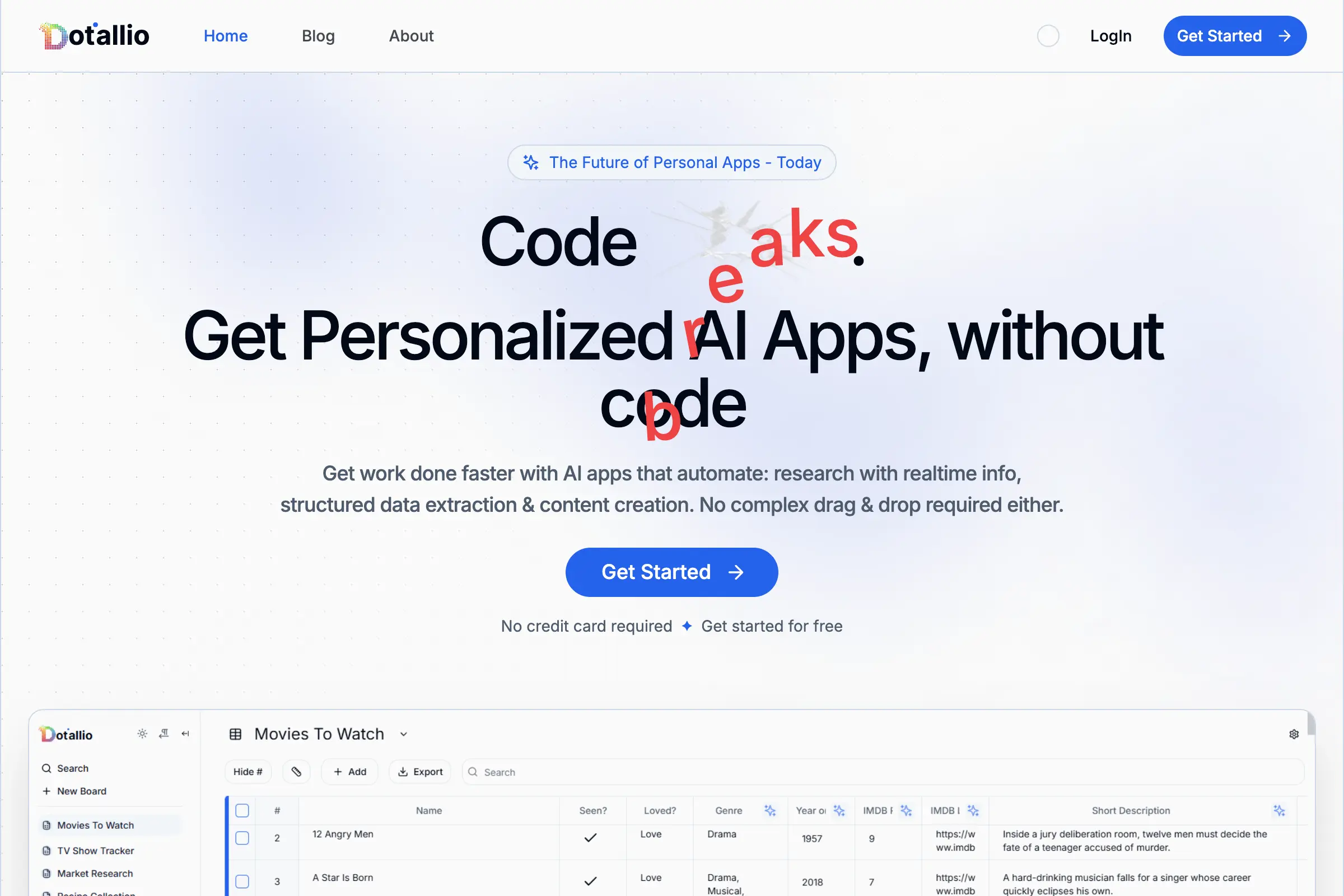
Dotallio
Personalized AI apps that automate research, data extraction, and content creation without code 🤖

Talk to Santa
Enjoy a magical live video chat or receive a unique AI-generated video greeting from Santa Claus 🎅

pozywka.pl
Scalable blog for food journalist, focused on performance and user experience 🌭
zagrodzki.me
Personal blog and portfolio of Bart Zagrodzki, where he shares his knowledge and work 💼
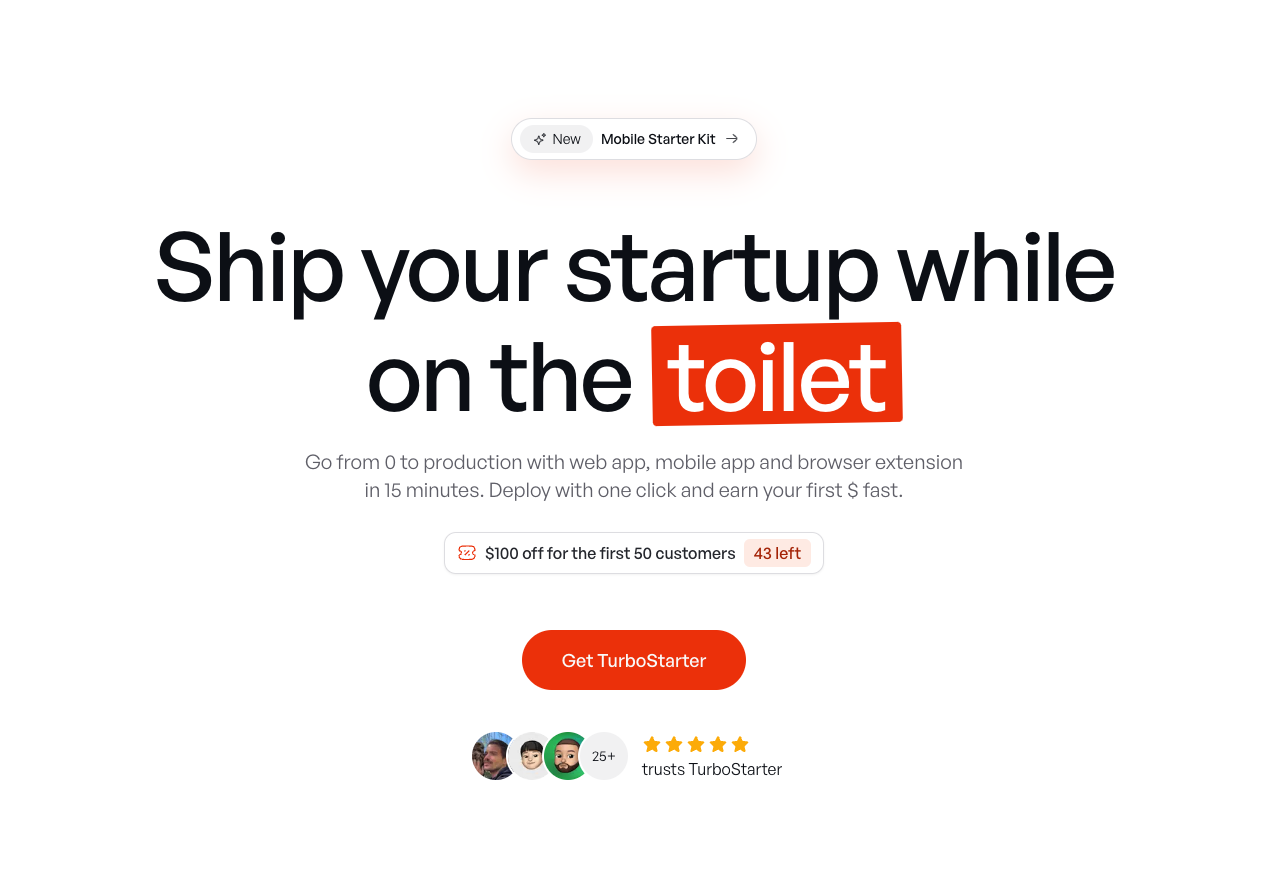
TurboStarter
Ship your startup everywhere. In minutes.
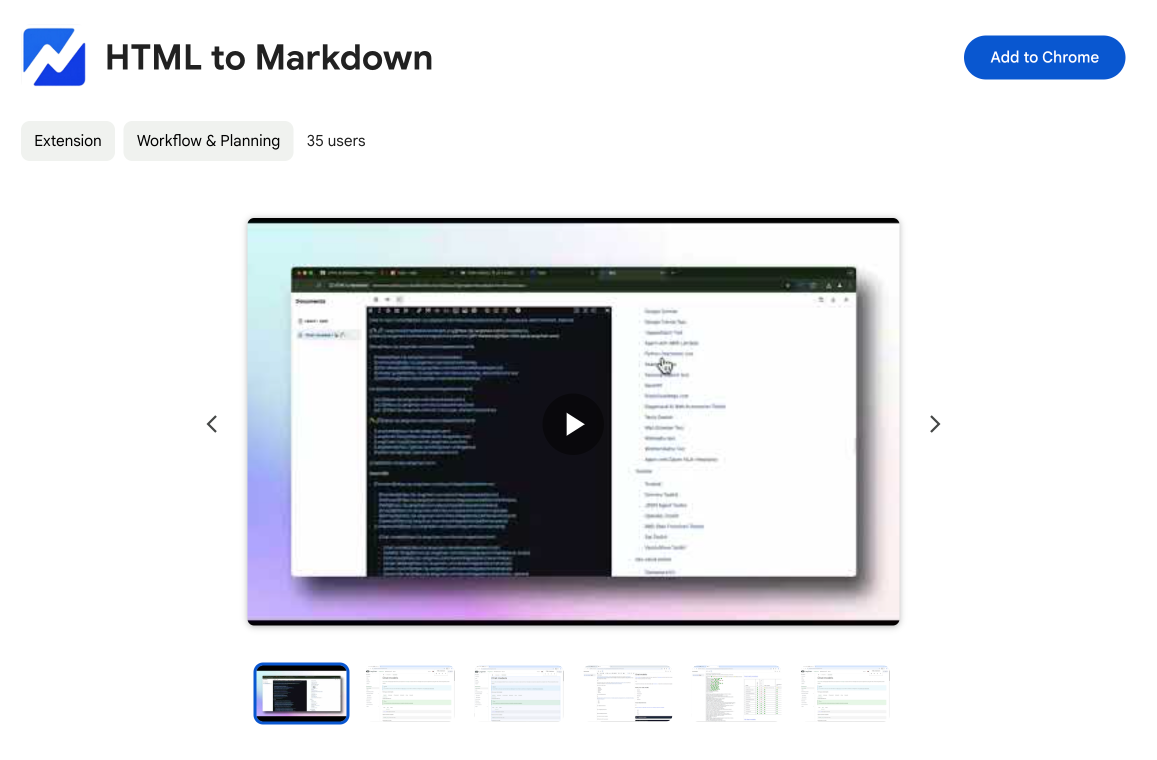
HTML to Markdown
Convert HTML to Markdown with ease, directly in your browser 📄
Dotallio
Personalized AI apps that automate research, data extraction, and content creation without code 🤖
Talk to Santa
Enjoy a magical live video chat or receive a unique AI-generated video greeting from Santa Claus 🎅
pozywka.pl
Scalable blog for food journalist, focused on performance and user experience 🌭
zagrodzki.me
Personal blog and portfolio of Bart Zagrodzki, where he shares his knowledge and work 💼
TurboStarter
Ship your startup everywhere. In minutes.
HTML to Markdown
Convert HTML to Markdown with ease, directly in your browser 📄
Dotallio
Personalized AI apps that automate research, data extraction, and content creation without code 🤖
Talk to Santa
Enjoy a magical live video chat or receive a unique AI-generated video greeting from Santa Claus 🎅
pozywka.pl
Scalable blog for food journalist, focused on performance and user experience 🌭
zagrodzki.me
Personal blog and portfolio of Bart Zagrodzki, where he shares his knowledge and work 💼
TurboStarter
Ship your startup everywhere. In minutes.
HTML to Markdown
Convert HTML to Markdown with ease, directly in your browser 📄
Dotallio
Personalized AI apps that automate research, data extraction, and content creation without code 🤖
Talk to Santa
Enjoy a magical live video chat or receive a unique AI-generated video greeting from Santa Claus 🎅
pozywka.pl
Scalable blog for food journalist, focused on performance and user experience 🌭
zagrodzki.me
Personal blog and portfolio of Bart Zagrodzki, where he shares his knowledge and work 💼
TurboStarter
Ship your startup everywhere. In minutes.
HTML to Markdown
Convert HTML to Markdown with ease, directly in your browser 📄
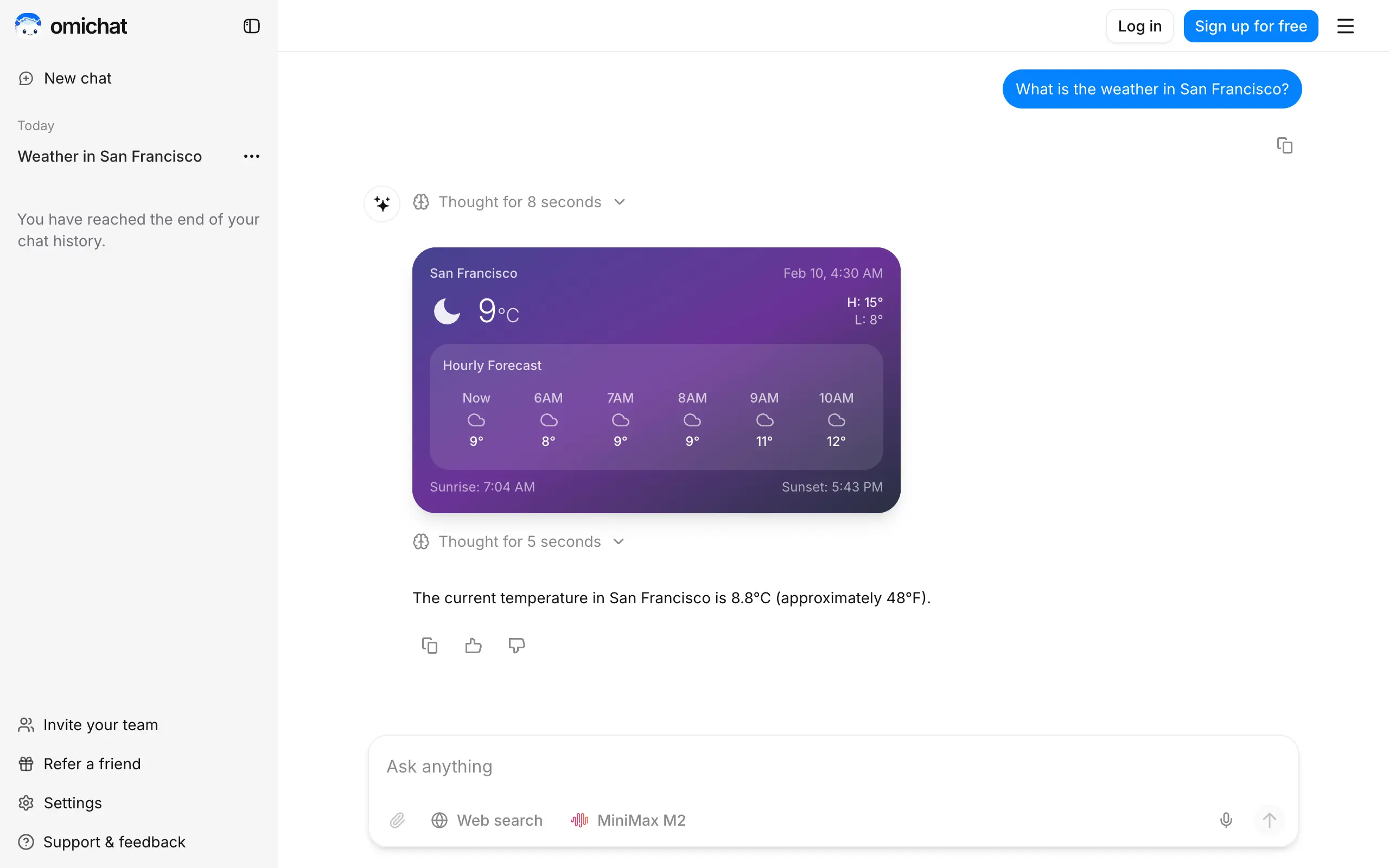
Omichat
Chat with 50+ AI models, including ChatGPT and Claude, in one place - switch models anytime without losing context 🤖
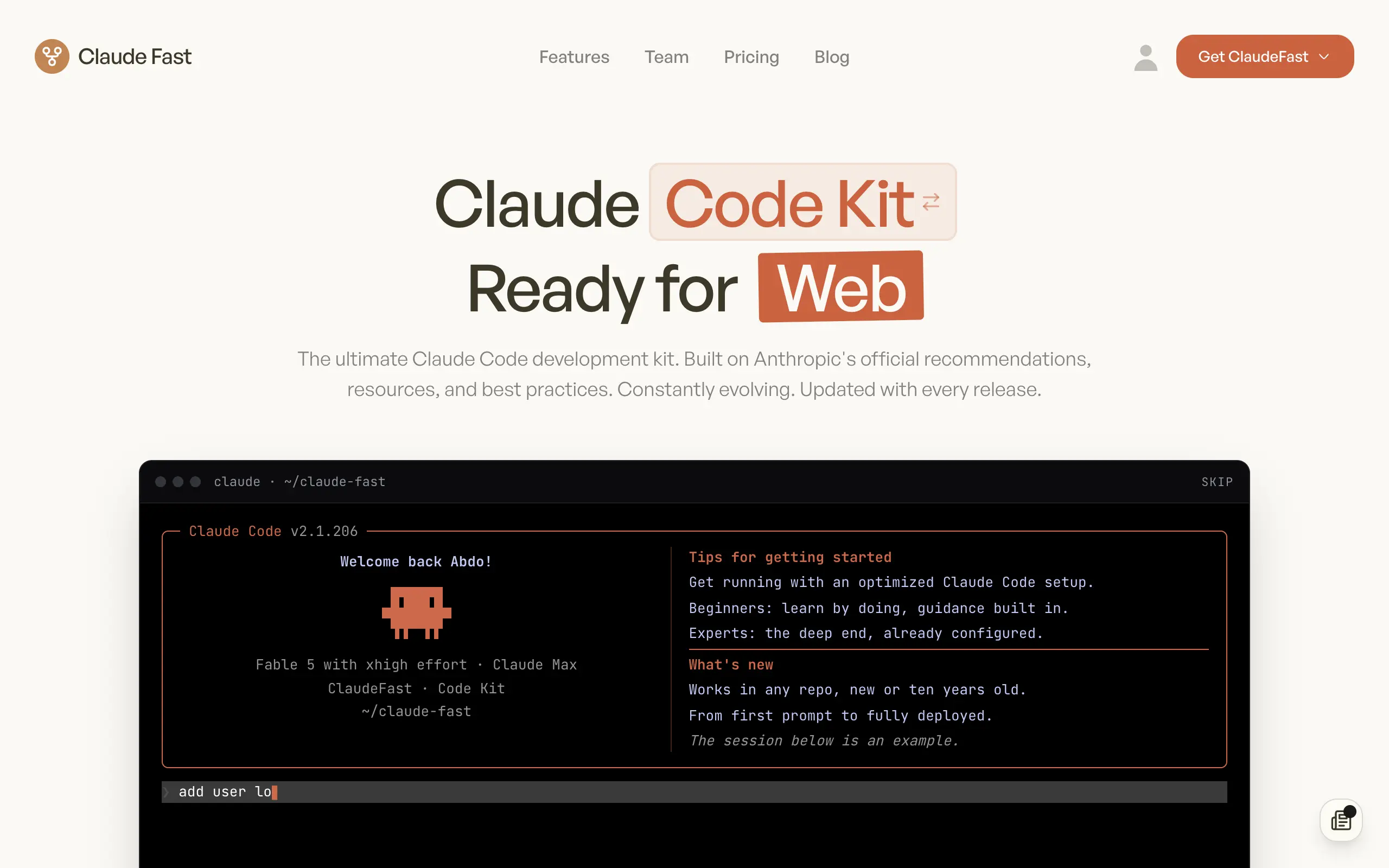
Claude Fast
Supercharge your Claude Code with 6x effective context window and specialized AI agents 🤖
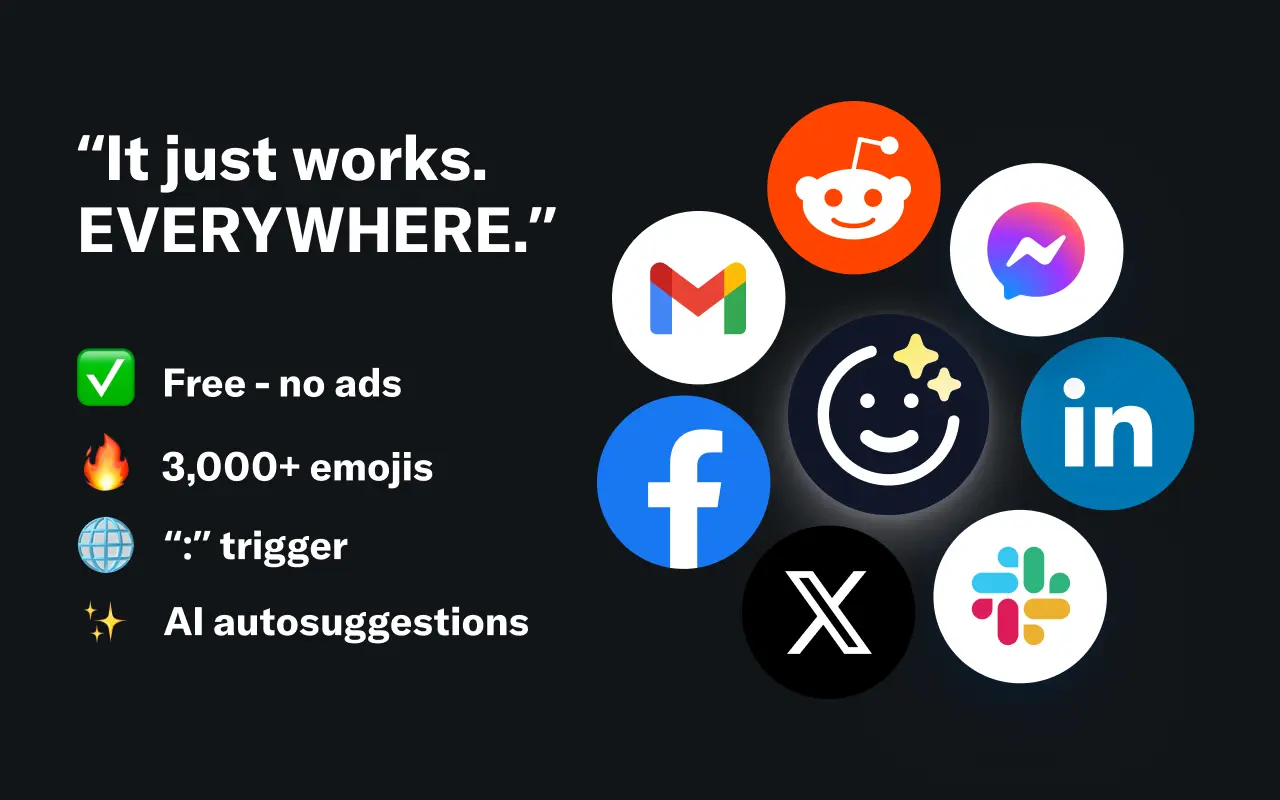
EmojAI
AI-powered emoji picker with smart, context-aware suggestions 🤖
Solohacker
Autonomous company launcher - AI agents work 24/7, escalate what matters, and you stay in control 🤖

BeRawi: Storytelling Coach
Practice storytelling daily with instant feedback to sound clearer, more engaging, and confident 🎤
Omichat
Chat with 50+ AI models, including ChatGPT and Claude, in one place - switch models anytime without losing context 🤖
Claude Fast
Supercharge your Claude Code with 6x effective context window and specialized AI agents 🤖
EmojAI
AI-powered emoji picker with smart, context-aware suggestions 🤖
Solohacker
Autonomous company launcher - AI agents work 24/7, escalate what matters, and you stay in control 🤖
BeRawi: Storytelling Coach
Practice storytelling daily with instant feedback to sound clearer, more engaging, and confident 🎤
Omichat
Chat with 50+ AI models, including ChatGPT and Claude, in one place - switch models anytime without losing context 🤖
Claude Fast
Supercharge your Claude Code with 6x effective context window and specialized AI agents 🤖
EmojAI
AI-powered emoji picker with smart, context-aware suggestions 🤖
Solohacker
Autonomous company launcher - AI agents work 24/7, escalate what matters, and you stay in control 🤖
BeRawi: Storytelling Coach
Practice storytelling daily with instant feedback to sound clearer, more engaging, and confident 🎤
Omichat
Chat with 50+ AI models, including ChatGPT and Claude, in one place - switch models anytime without losing context 🤖
Claude Fast
Supercharge your Claude Code with 6x effective context window and specialized AI agents 🤖
EmojAI
AI-powered emoji picker with smart, context-aware suggestions 🤖
Solohacker
Autonomous company launcher - AI agents work 24/7, escalate what matters, and you stay in control 🤖
BeRawi: Storytelling Coach
Practice storytelling daily with instant feedback to sound clearer, more engaging, and confident 🎤

Connect with like-minded people
Join our community to get feedback, support, and grow together with 1,000+ builders on board, let's ship it!
Join usShip your startup everywhere. In minutes.
Don't burn tokens on setup and start building features on day one.