RepoPilot
Turn open-source AI repos into tested automations with one-click sandboxes, setup guides, and deployment recipes. Built for founders and automation builders.
RepoPilot is an AI developer tool concept for turning open-source AI repositories into reliable, tested automations. Instead of asking builders to piece together installation instructions, environment variables, model access, and deployment steps on their own, RepoPilot would guide them from repository discovery to a working sandbox and repeatable deployment recipe.
The opportunity is specific: open-source AI projects are easy to find, but much harder to evaluate, configure, and operate. A repo may look promising yet require an unclear combination of Python versions, system packages, API keys, GPU resources, and undocumented setup steps. RepoPilot can bridge that gap with guided setup, isolated execution, automated checks, and deployment workflows.
This article explores how to position RepoPilot, who it should serve, what its first version should include, how it could make money, and how to build it responsibly.
What is RepoPilot?
RepoPilot is a platform for making open-source AI repositories easier to run, test, adapt, and deploy. A user finds a repository, connects it to RepoPilot, and receives a practical path from source code to a verified automation.
The product should do more than generate a summary or a generic installation guide. Its value comes from coordinating the full workflow:
- Inspect a repository and identify its likely setup requirements.
- Create an isolated sandbox for safely installing and running it.
- Produce a step-by-step setup guide based on the repository’s actual configuration.
- Run defined checks and show what succeeded or failed.
- Generate a deployment recipe that users can inspect, customize, and repeat.
The distinction matters. A documentation assistant can tell someone what a project appears to do. RepoPilot should help them determine whether it works in their environment and what it takes to put it into use.
A concise positioning statement could be:
RepoPilot helps founders and automation builders turn open-source AI repositories into tested, deployable workflows without spending days untangling setup instructions.
The product’s promise should remain grounded. Not every repository can be made production-ready automatically, and passing a basic check is not the same as proving security, reliability, or suitability for a particular business. RepoPilot should make those boundaries visible rather than implying that every repo can be deployed with one click.
The problem RepoPilot addresses
Open-source software creates leverage, but using a repository in a real workflow can involve substantial integration work. AI repositories often combine application code with model dependencies, cloud services, configuration files, data pipelines, and hardware assumptions. Any one of those requirements can block a new user.
Common obstacles include:
- Setup instructions that are missing, outdated, or written for one developer’s machine.
- Dependency versions that conflict with the user’s operating system or existing projects.
- Environment variables that are required but not clearly documented.
- Reliance on paid APIs, model weights, GPU hardware, or services the user has not configured.
- Examples that run in a notebook but do not translate cleanly into a reusable service.
- Unclear licensing or uncertainty about whether a project is maintained.
- Deployment instructions that assume familiarity with containers, cloud providers, or orchestration tools.
- Security concerns about running unreviewed code or sharing secrets with an unfamiliar tool.
The friction is particularly costly for founders and small teams. They may identify a promising project quickly, but evaluating it can consume engineering time before they know whether it fits their needs. RepoPilot’s strongest value proposition is therefore not simply “AI-generated setup instructions.” It is a more efficient, observable, and repeatable evaluation process.
Who should use RepoPilot?
RepoPilot should begin with users who regularly evaluate repositories and are comfortable with technical workflows but do not want to rebuild the same setup process for every project.
Founders validating AI product ideas
Founders often need to test whether an open-source model or workflow can support a product concept before committing to a larger engineering effort. RepoPilot can help them create a disposable sandbox, understand prerequisites, and decide whether to adopt, fork, or reject a repository.
For this audience, the product should emphasize speed and clarity. The key outcome is not necessarily a production deployment. It may be a working proof of concept, an estimate of integration effort, or a clear list of blockers.
Automation builders and consultants
Consultants and automation specialists may assemble workflows from multiple open-source tools. Their challenge is to turn promising components into repeatable client solutions. RepoPilot could help standardize repository evaluation, generate setup checklists, and preserve deployment knowledge between projects.
These users may value reusable templates, team workspaces, and the ability to share a tested recipe with a client or colleague.
Developer advocates and technical educators
People who create tutorials, workshops, or starter projects need installation processes that work for different learners. RepoPilot could give them a way to provide a verified environment and surface the steps learners need to reproduce it.
This segment can also provide valuable feedback about usability. If a beginner cannot understand the generated instructions, RepoPilot may need better explanations and clearer prerequisite checks.
Small engineering teams
Small teams may want to assess an external repository before adding it to an internal product. They need a record of what was tested, which dependencies were installed, what permissions were required, and which checks passed.
For these teams, auditability matters as much as convenience. A useful report should distinguish observed facts from inferred requirements and unverified assumptions.
Who is not the ideal first customer?
RepoPilot should not initially position itself as an autonomous production deployment platform for regulated enterprises. Those organizations often require extensive vendor review, custom security controls, procurement processes, and compliance evidence. They may become valuable customers later, but pursuing them too early can overwhelm a small team with requirements that do not validate the core workflow.
The first users should be technically capable early adopters who can provide repos, explain their setup pain, and tolerate a product that is still improving.
The market opportunity and product gap
RepoPilot sits at the intersection of several established categories: developer tools, cloud development environments, AI coding assistants, container platforms, and deployment services. Its opportunity is not to replace all of them. It is to connect the steps they often leave to the user.
A typical workflow today might involve discovering a repository, reading its README, checking its issue tracker, installing dependencies locally, resolving setup errors, writing a Dockerfile, and adapting deployment instructions to a chosen cloud. Each step may have a separate tool, but the user is responsible for carrying context from one step to the next.
RepoPilot can differentiate by treating repository evaluation and operationalization as one continuous process. The user should be able to understand:
- What the project appears to do.
- What it needs to run.
- What RepoPilot actually tested.
- What failed and why.
- Which services, credentials, or hardware remain the user’s responsibility.
- How to repeat the successful setup outside the sandbox.
That last point is crucial. A disposable sandbox is useful for exploration, but a trustworthy product must make the result portable. Users should be able to export instructions, configuration, and deployment assets rather than being locked into an opaque hosted environment.
Where existing tools may leave a gap
General-purpose coding assistants can explain code and suggest commands, but their advice may not be based on a clean execution of the specific project. Hosted development environments can provide a workspace, but they may not guide users through repository suitability, automated validation, or deployment planning. CI systems can test code, but they are usually configured by someone who already understands the project.
RepoPilot’s potential gap is the guided layer between “I found this repo” and “I know how to run and operationalize it.” Its advantage depends on delivering that end-to-end context, not merely wrapping a language model around a README.
This is a product hypothesis, not a guaranteed market fact. Before investing in broad platform development, the team should interview users and observe real repository onboarding sessions. Record where time is spent, which errors recur, and what users consider a successful outcome.
Core features for an effective RepoPilot product
A strong first release should prioritize a narrow workflow and make its output trustworthy. A polished repository report is more valuable than a large collection of partially working deployment integrations.
Repository intake and inspection
Users should be able to provide a public repository URL or connect a supported source-control account. RepoPilot can then inspect repository metadata and files that are relevant to setup, such as:
- README and contribution documentation.
- Dependency manifests and lockfiles.
- Container and compose files.
- CI configuration.
- Environment-variable examples.
- License files.
- Entry points, scripts, and test commands.
The interface should show what was inspected and when. If the repository changes, users should be able to refresh the analysis rather than assume that an earlier report remains accurate.
Setup and dependency analysis
RepoPilot should identify likely runtime requirements and convert them into a readable checklist. That might include language and runtime versions, system packages, required environment variables, external services, model downloads, or hardware expectations.
The product should label the confidence of each finding. For example, it can distinguish:
- Detected: directly present in a manifest or configuration file.
- Inferred: suggested by code patterns or documentation.
- User-provided: supplied by the person configuring the run.
- Not verified: not tested in the selected sandbox.
This makes the setup guide more honest and actionable. A generated instruction should not look like a verified fact if it is only a model’s interpretation.
One-click isolated sandboxes
The sandbox is central to RepoPilot’s value. Users should be able to run a repository without placing its dependencies directly on their personal machine. Each run should have explicit resource limits, network rules, time limits, and lifecycle controls.
A sandbox should report:
- Which commit or revision was tested.
- Which environment image was used.
- Which commands were executed.
- How much time and compute the run consumed.
- Whether network access was enabled.
- Which files or outputs were produced.
- Whether credentials were present, without exposing their values.
“one-click” should mean that the platform manages routine orchestration, not that it silently executes arbitrary code with unlimited access. A clear confirmation step is appropriate when a repository requests elevated permissions or broad network access.
Guided setup instructions
RepoPilot should turn observed setup behavior into a guide that users can follow and reproduce. Useful instructions should include prerequisites, commands, configuration steps, expected outputs, common failure explanations, and cleanup guidance.
Where possible, the guide should be generated from actual successful sandbox actions. If a command was not tested, say so. Users should be able to edit a guide, save a team-specific version, and compare it with the original.
Automated checks and test reports
A useful test report should separate different kinds of validation rather than presenting a single green checkmark. For example:
- Dependency installation completed.
- A documented command started successfully.
- Unit tests passed or failed.
- A health endpoint responded.
- A sample input produced an output.
- A deployment package was generated.
- A manual review is still required.
This prevents users from interpreting “the app starts” as “the app is production-ready.” The report should include logs and clear failure messages, while filtering secrets and other sensitive values.
Deployment recipes
Deployment recipes should turn the successful sandbox into portable next steps. The initial product might generate a Dockerfile, a container configuration, environment-variable templates, or cloud-specific instructions.
The recipe should be inspectable and editable. It should also describe what it does, which assumptions it makes, and what the user must configure. Avoid deploying to a cloud account automatically until permissions, costs, and rollback behavior are clear.
Repository and recipe library
Over time, RepoPilot could create a searchable catalog of repositories that have been evaluated. Users might filter by language, task, license, runtime, hardware needs, or validation status.
The catalog should be careful about freshness. A report for one commit does not automatically certify the latest version. Show the revision and last-tested date, and make clear whether a result belongs to RepoPilot, the repository maintainer, or a community contributor.
A practical MVP scope
A viable MVP should test one core hypothesis: users will trust and pay for a workflow that helps them move from an unfamiliar AI repository to a reproducible, tested setup.
A focused first version could include:
- Public repository URL intake.
- Analysis of common Python and JavaScript project files.
- A small number of controlled sandbox templates.
- Dependency installation and a configurable test command.
- A generated setup report with confidence labels.
- A downloadable guide and container recipe.
- Basic run history tied to a repository revision.
- A clear security and data-retention policy.
Do not begin by supporting every programming language, cloud provider, model host, and deployment target. Each integration increases the number of environment combinations the team must test. A narrow, reliable product will teach more than a broad interface that frequently fails.
Competitive advantage and positioning
RepoPilot’s potential competitive advantage is workflow continuity. It can connect repository analysis, isolated execution, setup documentation, validation, and deployment guidance in one product.
A useful comparison is based on the job each category performs, rather than declaring that one tool replaces another.
| Capability | Code assistant | Cloud workspace | CI platform | RepoPilot opportunity |
|---|---|---|---|---|
| Explains repository code | Often | Sometimes | Rarely | Summarize setup and requirements |
| Runs unfamiliar code | Limited | Yes | After configuration | Offer a guided, isolated first run |
| Tests repository behavior | May suggest tests | Manual setup | Yes, when configured | Run practical checks and report evidence |
| Creates setup documentation | Can draft it | Usually user-led | Usually not the goal | Generate instructions from observed results |
| Produces deployment guidance | May suggest options | Varies by platform | Requires configuration | Export portable, inspectable recipes |
The differentiator is only defensible if RepoPilot can build trust through useful evidence. A generated explanation is easy to imitate. A reliable collection of reproducible setup results, failure patterns, and user-maintained deployment recipes is harder to replicate because it depends on operational quality and accumulated experience.
The product should therefore compete on:
- Evidence over confident guesses: show which steps ran and what happened.
- Reproducibility over lock-in: let users export instructions and configuration.
- Safe defaults over frictionless risk: isolate code and make permissions explicit.
- Useful failure handling over superficial success: explain blockers with concrete next steps.
- Focused support for AI repos: account for model access, GPU needs, data, and external APIs.
Recommended technology stack
The right stack depends on the founding team’s experience and the sandbox strategy. The highest-risk technical area is not the marketing site or dashboard. It is safely and economically executing untrusted repositories.
Web application and API
A practical product interface could use React with a server-rendered framework such as Next.js. This gives the team a familiar ecosystem for dashboards, repository reports, account management, and application programming interfaces.
A TypeScript backend can handle user-facing requests, queue sandbox jobs, and coordinate integrations. Keep execution orchestration separate from the web request path. A long-running repository build should not depend on a browser request remaining open.
A relational database such as PostgreSQL is a reasonable choice for users, repositories, runs, reports, and billing records. Store large logs and artifacts in object storage, with access controls and retention policies. Avoid treating generated logs as harmless; they may contain source fragments, credentials accidentally printed by software, or private repository details.
Job orchestration and sandbox execution
Use a job queue and worker system for repository inspection, dependency installation, test runs, and artifact creation. Jobs should be idempotent where possible, observable, and bounded by time and resource limits.
Containerization is a useful starting point. Docker provides widely understood tooling for images and isolated application environments. However, containers share the host kernel, so they should not be treated as a complete security boundary for arbitrary hostile code. The team should assess stronger isolation options, network controls, image hardening, and host separation with experienced security engineers.
For production execution, consider a dedicated sandbox service or microVM-based design rather than running customer code on the same infrastructure as the web application. Separate control-plane services from execution workers. Apply limits to CPU, memory, disk, process count, execution time, and outbound network access.
Repository integrations
A GitHub integration can simplify repository import and private repository access. Use the narrowest permissions needed and explain why each permission is requested. Consult the official GitHub documentation for current authentication and application permission guidance.
For public repositories, begin with read-only access. For private repositories, make the trust boundary and data handling especially clear. Do not request write access unless a specific, user-visible feature requires it.
AI-assisted analysis
A language model can help summarize project structure, explain failures, and draft setup documentation. It should not be the authority for whether a command succeeded or whether a repository is safe.
A robust design combines deterministic inspection with model-assisted explanation:
- Parse manifests and configuration files using conventional tooling.
- Execute commands in a controlled environment.
- Record machine-readable outcomes.
- Ask the model to explain those outcomes.
- Verify that generated recommendations do not contradict the execution record.
Treat repository content as untrusted input. A README, comment, or script could contain prompt injection designed to manipulate an AI assistant. Keep tool permissions constrained, avoid passing secrets into analysis unnecessarily, and do not allow model-generated commands to run without policy checks.
Testing and observability
Use structured logs and metrics to track sandbox queue time, installation success, job duration, failure categories, and compute consumption. These metrics support product improvement and cost control. For browser-driven tests of RepoPilot’s own product, Playwright is a widely used option.
The most valuable early operational metric is not the number of repositories analyzed. It is the percentage of eligible repositories that reach a clearly explained outcome: successful run, actionable failure, or explicit unsupported status.
Monetization strategy
RepoPilot can combine usage-based pricing with subscriptions, but the billing model should be easy to understand. Sandbox execution has direct costs, so unlimited plans can become risky if not carefully constrained.
Free discovery tier
A free tier can support repository analysis, limited sandbox minutes, or a small number of saved reports. This helps developers experience the value before connecting a paid account. Clearly state what is included and avoid surprising users with automatic charges.
Individual and builder plans
A paid individual plan could include more execution time, longer run history, private repositories, exportable recipes, and saved configurations. This may fit founders, independent developers, and automation consultants.
Team subscriptions
Teams may pay for shared workspaces, role-based access, shared setup guides, audit history, custom resource limits, and centralized billing. Team features are most compelling when they reduce repeated work across multiple engineers.
Usage-based execution
Charge for sandbox usage based on transparent units such as runtime, compute class, or included monthly minutes. Avoid pricing that users cannot predict. Provide estimated costs before a resource-intensive run and let users set budget limits.
Enterprise and self-hosted options
Larger organizations may require private networking, custom retention, dedicated execution environments, audit exports, or self-hosted workers. These capabilities could support higher-value contracts, but should follow evidence of demand rather than being built speculatively.
Potential later revenue streams include paid templates or verified deployment recipes. If RepoPilot introduces a marketplace, disclose who created each recipe and whether it has been reviewed or tested. Do not imply that a community listing is officially endorsed unless that is true.
Risks and how to mitigate them
Running untrusted code
This is the highest-priority risk. A repository may contain malicious scripts, compromised dependencies, or code that attempts to access host resources.
Mitigation should include isolated execution, least privilege, restricted network access, resource limits, disposable workers, image scanning, and a documented incident response plan. Never rely on a generated risk summary as a substitute for technical controls.
Exposing secrets
Users may need to provide API keys for a real test. A careless implementation can leak secrets through logs, model prompts, build output, or artifacts.
Store credentials securely, scope them to individual jobs, avoid including them in generated summaries, redact logs where possible, and destroy temporary credentials after execution. Prefer secret injection at runtime instead of writing values into repository files.
Incorrect setup instructions
AI-generated instructions can be plausible and wrong. An incorrect command can waste time or create unsafe behavior.
Mitigate this by identifying the source of each instruction, marking untested steps, preserving the actual logs, and requiring user review before consequential actions. Encourage users to report errors and provide a direct path to rerun or edit a recipe.
License and intellectual property concerns
Open-source availability does not mean unrestricted commercial use. A repository may have a license with obligations, or it may lack a clear license altogether.
RepoPilot can display detected license metadata and link to the repository’s license file, but should not present its output as legal advice. Encourage users to consult qualified counsel for material commercial decisions. Do not copy or redistribute source code beyond what the user’s permissions and the applicable license allow.
Inconsistent repositories
Some projects will be incomplete, abandoned, hardware-intensive, or dependent on unavailable services. A product that promises universal one-click execution will disappoint users.
Support an explicit “not supported” or “needs manual configuration” outcome. Explain blockers, allow users to submit missing requirements, and expand support based on repeated demand.
Unit economics
Long builds, large model downloads, and GPU execution can make each run expensive. A generous free tier can produce heavy usage before the product has a sustainable revenue model.
Start with cost limits, short default timeouts, and clear compute classes. Track cost per successful outcome and per active user. Use those measurements to set plan limits and prioritize optimizations.
False confidence in security or quality
A passing setup check does not certify that a project is secure, accurate, or production-ready. RepoPilot must not use a single “verified” badge without explaining what was checked.
Use specific labels such as “dependencies installed,” “sample command completed,” or “tests passed.” Keep security review, model quality evaluation, and production readiness as separate claims.
How to validate the idea before building too much
A founder can reduce uncertainty by testing the workflow manually before investing in a sophisticated sandbox platform.
- Interview founders and automation builders who recently adopted an open-source AI tool.
- Ask them to walk through the last repository they tried, including failed attempts and workarounds.
- Collect a small set of repositories that represent recurring setup patterns.
- Manually produce setup reports and test outcomes for those repositories.
- Share the reports with prospective users and ask what they would trust, change, or pay for.
- Observe whether users value sandbox execution, deployment recipes, or repository discovery most.
- Test willingness to pay with a specific offer rather than relying only on expressions of interest.
Useful validation signals include repeat use, users bringing their own repositories, sharing reports with teammates, and willingness to pay for more execution or collaboration. Page views and waitlist signups can indicate interest, but they do not prove that the core workflow solves an urgent problem.
For evidence-based market claims, cite current sources directly in the published article. If the team wants to include market size, AI adoption, or open-source usage statistics, use a named report with its publication date and methodology rather than repeating an unsourced figure.
Actionable implementation steps
A disciplined build plan should reduce security and market risk early.
Choose a narrow first use case
Select a target such as evaluating Python-based AI automation repositories for founders. Define which project types are supported and which are explicitly out of scope. A precise scope makes testing and messaging clearer.
Interview users and map their current workflow
Document how users discover a repository, install it, resolve failures, and decide whether to deploy it. Identify the repeated pain rather than assuming that setup is the only important problem.
Define a trustworthy run report
Design the report before building the full platform. Include repository revision, environment, commands, outcomes, logs, unresolved requirements, and confidence labels. Ask users whether the report gives them enough evidence to make a decision.
Build a constrained sandbox prototype
Start with a small number of supported environments and strict resource controls. Keep the execution system separate from the web application and test with non-sensitive repositories before supporting private code.
Add deterministic inspection before AI explanations
Parse known files and collect observable execution results. Use AI to make the results understandable, not to invent verification. Make the distinction visible in the product interface.
Add setup guides and portable recipes
Generate documentation from tested steps, then allow users to edit and export it. Start with a small number of portable outputs, such as a container recipe and environment-variable checklist.
Instrument reliability and cost
Measure run completion, queue time, repeated failure types, resource consumption, and user return behavior. Use these signals to improve the supported repository set and create sustainable plan limits.
Expand integrations based on demand
Add languages, cloud providers, team controls, and private repository support only when user evidence justifies them. Preserve the product’s core promise of safe, understandable, and repeatable repository evaluation.
A starter architecture example
A minimal architecture can keep the user-facing application separate from potentially risky code execution:
Web app
  ├── Auth and billing
  ├── Repository intake
  ├── Run report and history
  └── Job queue
        ├── Static inspection worker
        ├── Isolated execution worker
        └── Artifact and log storage
The web application should create and track jobs, while dedicated workers perform repository operations. Each job should have a unique identity, limited permissions, a defined timeout, and a cleanup process. Reports should retain enough evidence to explain what happened without keeping sensitive data longer than necessary.
For a fast SaaS foundation, TurboStarter can help accelerate the application scaffolding so the team can focus more of its engineering effort on repository inspection, sandbox safety, and execution reliability. It should complement—not replace—the specialized security design required for running untrusted code.
Frequently asked questions
No. AI can help explain repository structure and summarize errors, but RepoPilot’s intended value is the full operational workflow: inspect a repository, run it in an isolated environment, record what happened, and produce a reproducible setup or deployment guide.
No. Automated checks can identify some risks, but they cannot guarantee that arbitrary software is secure or appropriate for production. RepoPilot should communicate what it inspected and tested, avoid broad safety claims, and use strong execution controls.
Usually not. The first version should generate inspectable deployment recipes and let users review them. Automatic deployment adds cloud permissions, billing exposure, rollback requirements, and additional security concerns. It should follow demonstrated demand and mature controls.
Founders, independent builders, and automation consultants are promising initial users because they frequently test tools and can give direct feedback. The best segment is the one that repeatedly evaluates repositories and can connect the product to a measurable cost or time saving.
Show the repository revision, environment, commands, test outcomes, and unresolved assumptions. Use least-privilege integrations, explain data retention, make generated steps editable, and let users export their work. Trust comes from transparent evidence and predictable controls, not from a confident AI-generated summary.
The opportunity for RepoPilot
RepoPilot has a clear product premise: open-source AI projects are abundant, but getting from discovery to a repeatable, tested workflow is still labor-intensive. A product that connects repository analysis, safe sandbox execution, practical documentation, and portable deployment guidance could remove a meaningful layer of integration work for founders and automation builders.
The strongest version of the idea will not promise that every repository runs perfectly with one click. It will make progress visible, failures understandable, and successful setups reproducible. Start with a narrow set of repositories, treat sandbox security as a core product requirement, and build around evidence rather than generated confidence.
If users repeatedly bring new repositories, share results with teammates, and pay to save time on evaluation and deployment, RepoPilot will have a credible foundation for expanding into a broader platform for operationalizing open-source AI software.
More 🤖 AI Startup SaaS ideas
Discover more innovative ai startup SaaS ideas that are trending in 2026. Each idea is AI-generated with market validation and growth potential to help you find your next profitable venture faster than competitors.
Your competitors are building with TurboStarter
Below are some of the SaaS ideas that have been generated and built with our starter kit.

Statiko
Monitor any Telegram channel in real time - track posts, edits, deletions, and growth with AI recaps 📡

Shibui
AI website builder - describe your business, pick a niche template, edit by chatting, and publish instantly ✨

Pro Service
Find verified home service professionals, compare quotes, and pay securely through escrow - built for Brazilians across the US 🏠

RankGrow
Fix your SEO with AI agents - connect Search Console, get prioritized tasks, and grow organic traffic 📈
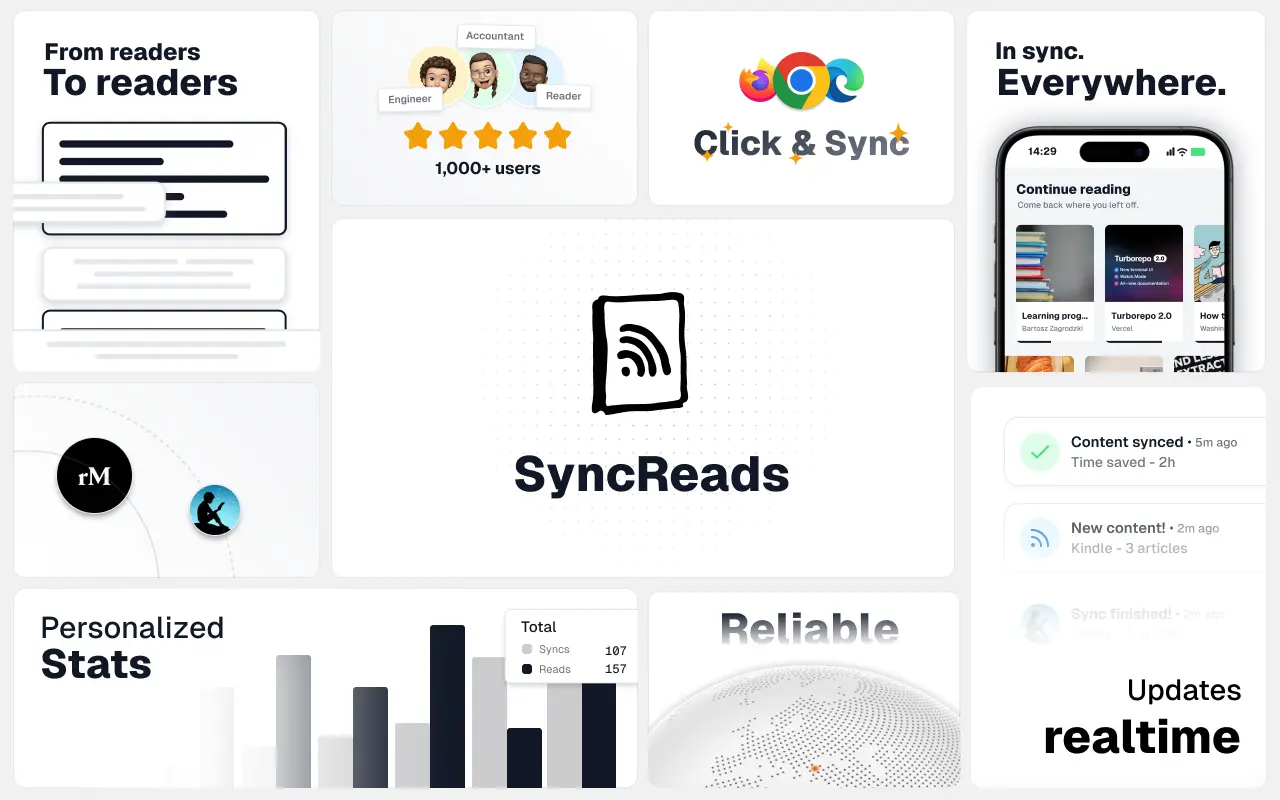
SyncReads
Sync your favorite content for distraction-free reading, save time and replace multiple apps. Anytime, anywhere 🔄
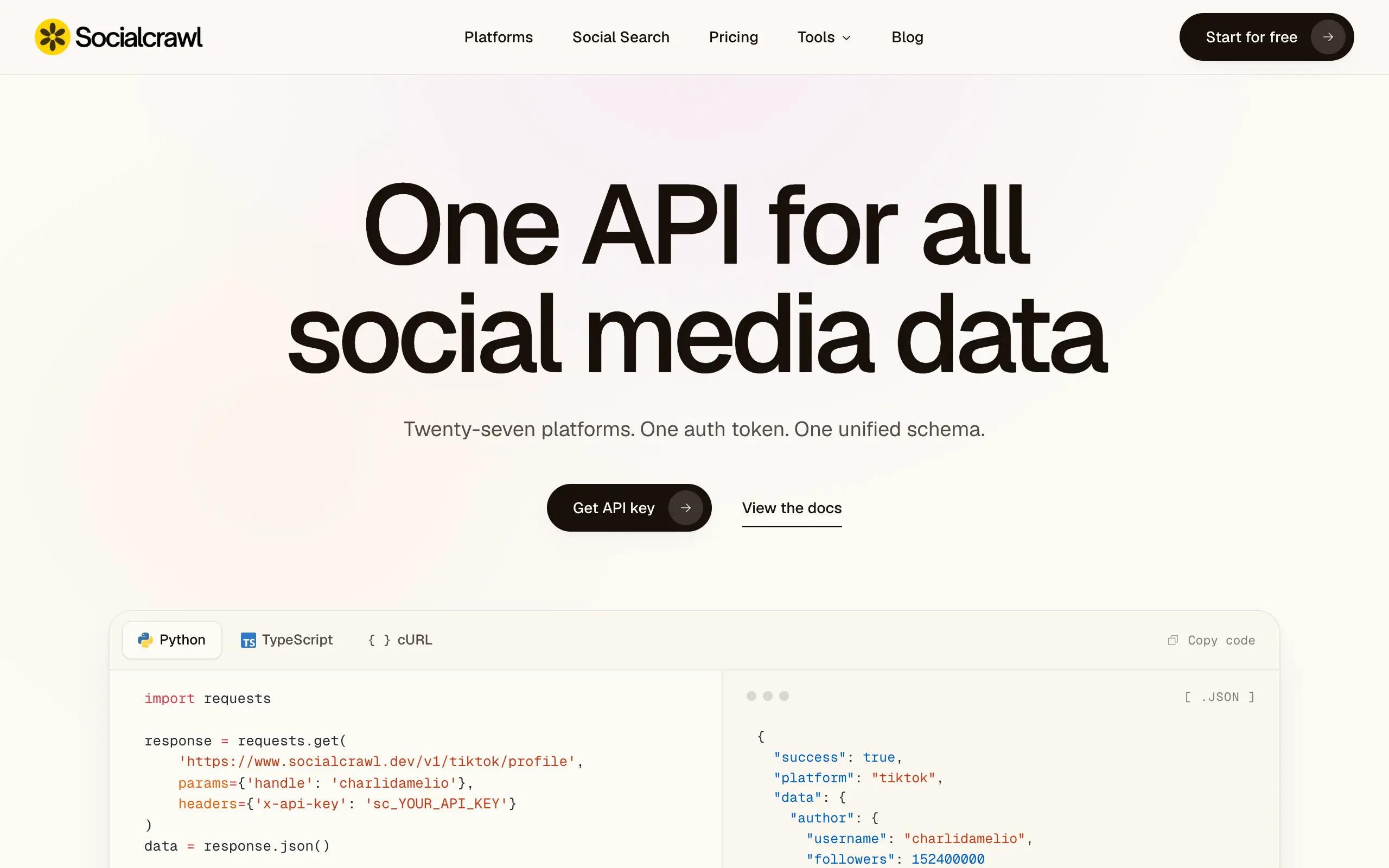
Socialcrawl
Get clean, structured data from 21 platforms like TikTok, Instagram, and YouTube with a single request 📊
Statiko
Monitor any Telegram channel in real time - track posts, edits, deletions, and growth with AI recaps 📡
Shibui
AI website builder - describe your business, pick a niche template, edit by chatting, and publish instantly ✨
Pro Service
Find verified home service professionals, compare quotes, and pay securely through escrow - built for Brazilians across the US 🏠
RankGrow
Fix your SEO with AI agents - connect Search Console, get prioritized tasks, and grow organic traffic 📈
SyncReads
Sync your favorite content for distraction-free reading, save time and replace multiple apps. Anytime, anywhere 🔄
Socialcrawl
Get clean, structured data from 21 platforms like TikTok, Instagram, and YouTube with a single request 📊
Statiko
Monitor any Telegram channel in real time - track posts, edits, deletions, and growth with AI recaps 📡
Shibui
AI website builder - describe your business, pick a niche template, edit by chatting, and publish instantly ✨
Pro Service
Find verified home service professionals, compare quotes, and pay securely through escrow - built for Brazilians across the US 🏠
RankGrow
Fix your SEO with AI agents - connect Search Console, get prioritized tasks, and grow organic traffic 📈
SyncReads
Sync your favorite content for distraction-free reading, save time and replace multiple apps. Anytime, anywhere 🔄
Socialcrawl
Get clean, structured data from 21 platforms like TikTok, Instagram, and YouTube with a single request 📊
Statiko
Monitor any Telegram channel in real time - track posts, edits, deletions, and growth with AI recaps 📡
Shibui
AI website builder - describe your business, pick a niche template, edit by chatting, and publish instantly ✨
Pro Service
Find verified home service professionals, compare quotes, and pay securely through escrow - built for Brazilians across the US 🏠
RankGrow
Fix your SEO with AI agents - connect Search Console, get prioritized tasks, and grow organic traffic 📈
SyncReads
Sync your favorite content for distraction-free reading, save time and replace multiple apps. Anytime, anywhere 🔄
Socialcrawl
Get clean, structured data from 21 platforms like TikTok, Instagram, and YouTube with a single request 📊
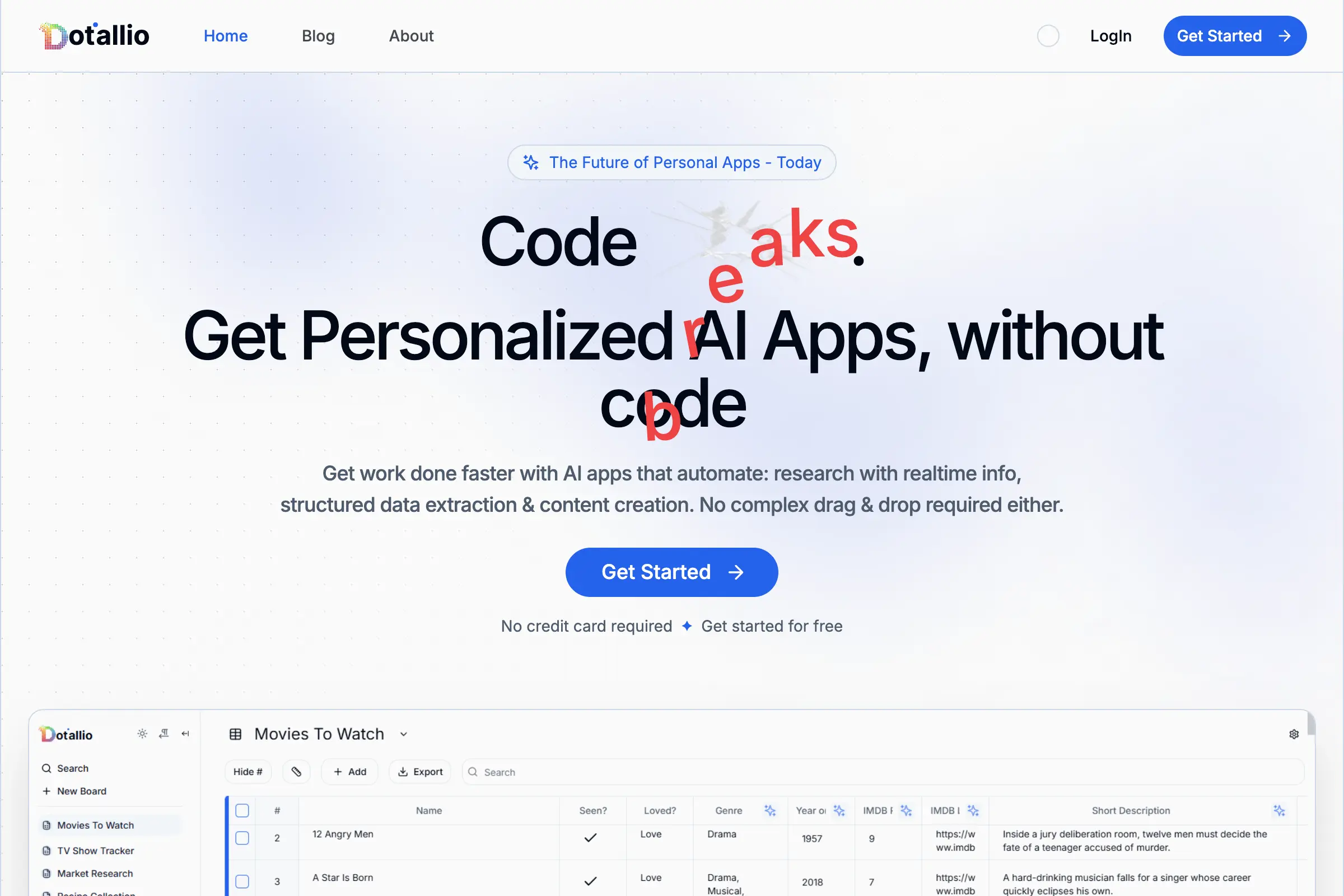
Dotallio
Personalized AI apps that automate research, data extraction, and content creation without code 🤖

Talk to Santa
Enjoy a magical live video chat or receive a unique AI-generated video greeting from Santa Claus 🎅

pozywka.pl
Scalable blog for food journalist, focused on performance and user experience 🌭
zagrodzki.me
Personal blog and portfolio of Bart Zagrodzki, where he shares his knowledge and work 💼

TurboStarter
Ship your startup everywhere. In minutes.
HTML to Markdown
Convert HTML to Markdown with ease, directly in your browser 📄
Dotallio
Personalized AI apps that automate research, data extraction, and content creation without code 🤖
Talk to Santa
Enjoy a magical live video chat or receive a unique AI-generated video greeting from Santa Claus 🎅
pozywka.pl
Scalable blog for food journalist, focused on performance and user experience 🌭
zagrodzki.me
Personal blog and portfolio of Bart Zagrodzki, where he shares his knowledge and work 💼
TurboStarter
Ship your startup everywhere. In minutes.
HTML to Markdown
Convert HTML to Markdown with ease, directly in your browser 📄
Dotallio
Personalized AI apps that automate research, data extraction, and content creation without code 🤖
Talk to Santa
Enjoy a magical live video chat or receive a unique AI-generated video greeting from Santa Claus 🎅
pozywka.pl
Scalable blog for food journalist, focused on performance and user experience 🌭
zagrodzki.me
Personal blog and portfolio of Bart Zagrodzki, where he shares his knowledge and work 💼
TurboStarter
Ship your startup everywhere. In minutes.
HTML to Markdown
Convert HTML to Markdown with ease, directly in your browser 📄
Dotallio
Personalized AI apps that automate research, data extraction, and content creation without code 🤖
Talk to Santa
Enjoy a magical live video chat or receive a unique AI-generated video greeting from Santa Claus 🎅
pozywka.pl
Scalable blog for food journalist, focused on performance and user experience 🌭
zagrodzki.me
Personal blog and portfolio of Bart Zagrodzki, where he shares his knowledge and work 💼
TurboStarter
Ship your startup everywhere. In minutes.
HTML to Markdown
Convert HTML to Markdown with ease, directly in your browser 📄
Omichat
Chat with 50+ AI models, including ChatGPT and Claude, in one place - switch models anytime without losing context 🤖
Claude Fast
Supercharge your Claude Code with 6x effective context window and specialized AI agents 🤖

EmojAI
AI-powered emoji picker with smart, context-aware suggestions 🤖

Solohacker
Autonomous company launcher - AI agents work 24/7, escalate what matters, and you stay in control 🤖

BeRawi: Storytelling Coach
Practice storytelling daily with instant feedback to sound clearer, more engaging, and confident 🎤
Omichat
Chat with 50+ AI models, including ChatGPT and Claude, in one place - switch models anytime without losing context 🤖
Claude Fast
Supercharge your Claude Code with 6x effective context window and specialized AI agents 🤖
EmojAI
AI-powered emoji picker with smart, context-aware suggestions 🤖
Solohacker
Autonomous company launcher - AI agents work 24/7, escalate what matters, and you stay in control 🤖
BeRawi: Storytelling Coach
Practice storytelling daily with instant feedback to sound clearer, more engaging, and confident 🎤
Omichat
Chat with 50+ AI models, including ChatGPT and Claude, in one place - switch models anytime without losing context 🤖
Claude Fast
Supercharge your Claude Code with 6x effective context window and specialized AI agents 🤖
EmojAI
AI-powered emoji picker with smart, context-aware suggestions 🤖
Solohacker
Autonomous company launcher - AI agents work 24/7, escalate what matters, and you stay in control 🤖
BeRawi: Storytelling Coach
Practice storytelling daily with instant feedback to sound clearer, more engaging, and confident 🎤
Omichat
Chat with 50+ AI models, including ChatGPT and Claude, in one place - switch models anytime without losing context 🤖
Claude Fast
Supercharge your Claude Code with 6x effective context window and specialized AI agents 🤖
EmojAI
AI-powered emoji picker with smart, context-aware suggestions 🤖
Solohacker
Autonomous company launcher - AI agents work 24/7, escalate what matters, and you stay in control 🤖
BeRawi: Storytelling Coach
Practice storytelling daily with instant feedback to sound clearer, more engaging, and confident 🎤

Connect with like-minded people
Join our community to get feedback, support, and grow together with 1,000+ builders on board, let's ship it!
Join usShip your startup everywhere. In minutes.
Don't burn tokens on setup and start building features on day one.