RepoPilot AI
An autonomous coding agent that understands your entire repository, plans multi-step tasks, and ships production-ready PRs with tests and documentation.
The rise of autonomous coding agents for real-world repositories
Software teams are shipping faster than ever, yet engineering backlogs keep growing. AI code assistants can autocomplete functions and generate snippets, but they often fall short when tasks span multiple files, require architectural understanding, or demand production-ready quality.
This is where RepoPilot AI, an autonomous coding agent that understands your entire repository and ships production-ready pull requests (PRs), positions itself differently.
Unlike chat-based copilots that operate at the file level, RepoPilot AI works at the repository level. It reads the codebase, analyzes dependencies, plans multi-step tasks, writes code, generates tests, updates documentation, and submits clean PRs for review.
This article explores the full strategic picture behind building and scaling an autonomous coding agent like RepoPilot AI—from market opportunity and technical architecture to monetization and competitive advantage.
Understanding user intent: what developers really want
Before diving into features and architecture, it’s critical to understand search intent around terms like:
- “autonomous coding agent”
- “AI that creates pull requests”
- “AI that understands entire repository”
- “AI developer agent for production code”
- “AI that writes tests and documentation”
Most users searching these terms fall into three categories:
- Startup founders validating the idea of building an AI dev agent.
- Engineering leaders exploring tools to accelerate delivery.
- Developers looking for automation beyond autocomplete.
Their real questions are:
- Can an AI reliably modify large codebases?
- How does it avoid breaking things?
- How is it different from GitHub Copilot?
- Can it generate tests and documentation?
- What’s the risk of letting AI push code?
RepoPilot AI must directly answer these concerns with architecture, reliability, guardrails, and measurable value.
Market opportunity: why autonomous coding agents are inevitable
The AI coding tools market has grown explosively since 2023. GitHub Copilot, ChatGPT, and similar tools have normalized AI-assisted development. But these tools are still primarily interactive assistants, not autonomous agents.
The gap in the market
Most AI coding tools:
- Operate at the file level.
- Require constant human prompting.
- Lack full repository context.
- Don’t reason across multi-step changes.
- Rarely generate robust test coverage automatically.
- Don’t manage full PR lifecycle.
Engineering teams, however, need:
- Backlog automation.
- Dependency upgrades.
- Refactors across dozens of files.
- Feature implementation with tests.
- Documentation updates.
- Migration tasks (framework upgrades, API changes).
There’s a massive gap between “AI that suggests code” and “AI that ships production-ready features.”
RepoPilot AI addresses that gap.
Target audience analysis
1. Startup engineering teams (5–30 developers)
Pain points:
- Small teams juggling roadmap and maintenance.
- Technical debt accumulating quickly.
- Slow code reviews due to context switching.
- Limited QA bandwidth.
Value proposition:
- Automate repetitive refactors.
- Implement small-to-medium features.
- Generate test coverage.
- Reduce review overhead.
2. Growth-stage SaaS companies
Pain points:
- Large monorepos.
- Cross-cutting architectural changes.
- Continuous dependency upgrades.
- Compliance documentation needs.
Value proposition:
- Repository-wide refactoring.
- Automated changelog and docs updates.
- Migration support (e.g., Next.js version upgrades).
- AI-generated regression test scaffolding.
3. Open-source maintainers
Pain points:
- Too many small issues.
- Limited contributor bandwidth.
- Inconsistent documentation.
Value proposition:
- Automated PRs for labeled issues.
- Standardized test generation.
- Documentation fixes.
- Faster issue resolution.
4. Enterprise teams
Pain points:
- Security and compliance concerns.
- Strict code review processes.
- Large legacy codebases.
Value proposition:
- Controlled AI agent with policy guardrails.
- Full audit logs.
- Test-first PR generation.
- On-prem or VPC deployment options.
Core problem: AI lacks repository-level reasoning
Most AI code assistants fail because they:
- Don’t build a persistent internal map of the codebase.
- Ignore architectural boundaries.
- Fail at multi-step reasoning.
- Can’t safely modify interconnected modules.
An autonomous coding agent must solve:
- Context ingestion at scale
- Long-horizon task planning
- Tool orchestration
- Safe code generation
- Test validation
- PR lifecycle management
RepoPilot AI’s differentiator is that it treats the repository as a living system—not just a set of files.
Core features of RepoPilot AI
Below is a breakdown of essential capabilities.
1. Full repository understanding
- AST parsing across languages.
- Dependency graph mapping.
- API contract detection.
- Database schema awareness.
- Test coverage analysis.
2. Multi-step task planning
Instead of:
“Write a function to validate email”
It handles:
“Add role-based access control to the dashboard”
Which may require:
- Updating database schema.
- Modifying backend services.
- Adjusting middleware.
- Updating frontend permissions.
- Writing new tests.
- Updating documentation.
3. Autonomous PR generation
RepoPilot AI should:
- Create feature branches.
- Commit changes incrementally.
- Write descriptive commit messages.
- Generate a complete PR description:
- Summary
- Implementation details
- Test strategy
- Potential risks
4. Test generation and validation
An autonomous coding agent must:
- Detect missing coverage.
- Generate unit and integration tests.
- Run tests in CI.
- Fix failures before submitting PR.
Without this, trust collapses.
5. Documentation updates
- Update README sections.
- Modify API docs.
- Regenerate OpenAPI specs.
- Add migration notes.
This makes the PR truly production-ready.
How RepoPilot AI compares to existing tools
| Feature | RepoPilot AI | Copilot | ChatGPT | CI Bots | Code Review AI |
|---|---|---|---|---|---|
| Full repo reasoning | ✅ | ❌ | ❌ | ❌ | ❌ |
| Autonomous PR creation | ✅ | ❌ | ❌ | ✅ | ❌ |
RepoPilot AI competes in a new category: autonomous development agents, not autocomplete assistants.
Technical architecture of an autonomous coding agent
Building RepoPilot AI requires thoughtful architecture.
High-level system components
- Repository ingestion engine
- Vector and graph-based memory
- Task planner (LLM-driven)
- Code generation engine
- Tool executor (CI, linters, test runner)
- PR manager
- Guardrail & policy layer
Suggested tech stack
Frontend
Backend
- Node.js or Python (FastAPI)
- Background job processing (e.g., queue system)
- Git provider integrations (GitHub, GitLab)
AI Layer
- LLM with long-context capability.
- Embedding model for semantic search.
- Vector database (e.g., Pinecone or open-source equivalent).
- Code parsing via Tree-sitter.
Execution Sandbox
- Containerized environment (Docker).
- Ephemeral execution for each task.
- Isolated CI-like runner.
Example: planning multi-step tasks
// Simplified pseudo-task planner
const task = "Add RBAC to dashboard";

const plan = await llm.generatePlan({
  repositoryMap,
  task,
  constraints: ["must include tests", "no breaking changes"]
});

for (const step of plan.steps) {
  await executeStep(step);
}

await runTests();
await createPullRequest();
This loop must be resilient, retry-aware, and guardrail-protected.
Guardrails and safety mechanisms
An autonomous coding agent must be safe by design.
Essential safeguards
- Max diff size limits.
- Mandatory test coverage increase.
- No direct push to main.
- Policy enforcement (no secret exposure).
- Human approval required.
Critical trust factor
If the AI breaks production even once without guardrails, trust erodes quickly. Human-in-the-loop review is essential during early adoption.
Monetization strategies for RepoPilot AI
A SaaS AI agent like RepoPilot AI can monetize in multiple ways.
1. Usage-based pricing
- Per autonomous task
- Per PR generated
- Token consumption-based
Best for startups.
2. Per-seat pricing
- $49–$99 per developer per month.
- Tiered by repository size.
3. Enterprise licensing
- Custom pricing.
- On-prem deployment.
- SLA guarantees.
- Security audits.
4. Hybrid model (recommended)
- Base subscription.
- Usage overages.
- Enterprise add-ons.
Competitive advantage analysis
RepoPilot AI’s moat depends on:
1. Repository graph intelligence
Building a persistent knowledge graph of code dependencies is defensible.
2. Execution loop refinement
Improving planning-execution-validation cycles through reinforcement feedback.
3. Trust score system
PR quality scoring over time:
- Test coverage delta.
- Bug regression rate.
- Reviewer approval speed.
4. Integration ecosystem
Deep integration with:
- GitHub workflows.
- CI/CD pipelines.
- Issue trackers.
Risks and mitigation strategies
Risk 1: Hallucinated changes
Mitigation:
- AST validation.
- Strict schema validation.
- Test-first generation.
Risk 2: Security vulnerabilities
Mitigation:
- Static analysis tools.
- Dependency scanning.
- Code linting enforcement.
Risk 3: Overpromising autonomy
Mitigation:
- Market as “AI junior engineer with guardrails.”
- Emphasize review process.
Implementation roadmap
MVP scope recommendation
To avoid scope explosion:
Start with:
- TypeScript repositories.
- GitHub integration only.
- Unit test generation.
- Small-to-medium task support.
Expand gradually.
Go-to-market strategy
1. Developer-first launch
- Open beta.
- Transparent benchmarks.
- Case studies.
2. Content marketing
Target SEO terms like:
- “AI that creates pull requests”
- “Autonomous coding agent”
- “AI developer agent SaaS”
3. Community-driven growth
- GitHub discussions.
- Discord for early adopters.
- Open roadmap.
Why this idea stands out
RepoPilot AI isn’t another AI autocomplete tool.
It shifts the paradigm from:
AI assisting developers
to
AI acting as a developer (with supervision)
That category shift is powerful.
Actionable next steps to build RepoPilot AI
- Validate demand via landing page.
- Interview 15–20 engineering managers.
- Build repository parser prototype.
- Integrate LLM with structured planning.
- Launch private alpha.
If you’re building from scratch, leveraging a modern SaaS foundation like TurboStarter can accelerate authentication, billing, and dashboard setup.
Final thoughts
Autonomous coding agents represent the next major shift in software engineering.
Autocomplete was phase one.
Chat-based assistants were phase two.
Repository-aware autonomous agents like RepoPilot AI are phase three.
The opportunity is massive—but execution, safety, and trust determine success.
Teams don’t just want AI that writes code.
They want AI that ships production-ready pull requests with confidence.
RepoPilot AI is designed for exactly that future.
More 🤖 AI Startup SaaS ideas
Discover more innovative ai startup SaaS ideas that are trending in 2026. Each idea is AI-generated with market validation and growth potential to help you find your next profitable venture faster than competitors.
Your competitors are building with TurboStarter
Below are some of the SaaS ideas that have been generated and built with our starter kit.

Statiko
Monitor any Telegram channel in real time - track posts, edits, deletions, and growth with AI recaps 📡

Shibui
AI website builder - describe your business, pick a niche template, edit by chatting, and publish instantly ✨

Pro Service
Find verified home service professionals, compare quotes, and pay securely through escrow - built for Brazilians across the US 🏠

RankGrow
Fix your SEO with AI agents - connect Search Console, get prioritized tasks, and grow organic traffic 📈

SyncReads
Sync your favorite content for distraction-free reading, save time and replace multiple apps. Anytime, anywhere 🔄
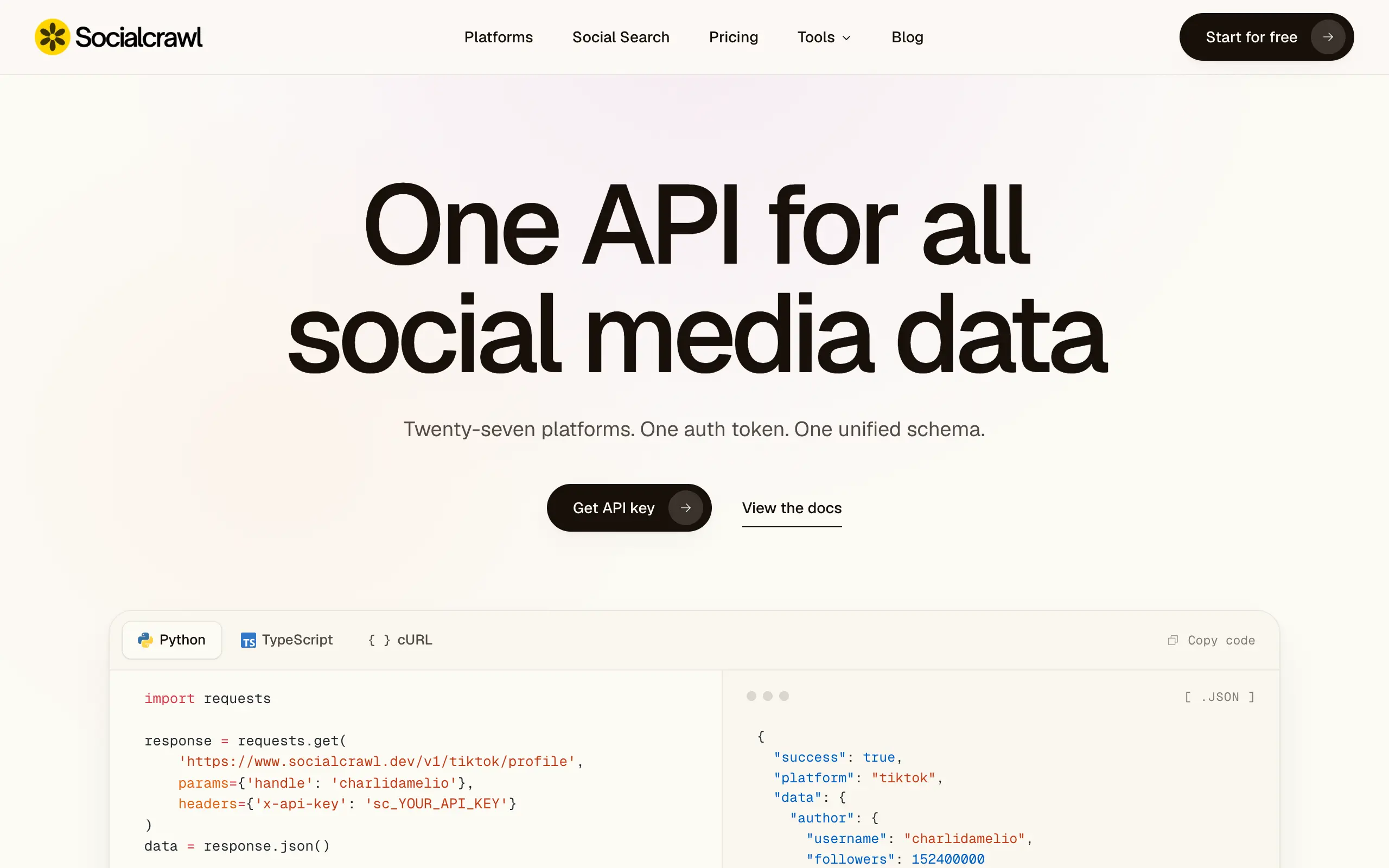
Socialcrawl
Get clean, structured data from 21 platforms like TikTok, Instagram, and YouTube with a single request 📊
Statiko
Monitor any Telegram channel in real time - track posts, edits, deletions, and growth with AI recaps 📡
Shibui
AI website builder - describe your business, pick a niche template, edit by chatting, and publish instantly ✨
Pro Service
Find verified home service professionals, compare quotes, and pay securely through escrow - built for Brazilians across the US 🏠
RankGrow
Fix your SEO with AI agents - connect Search Console, get prioritized tasks, and grow organic traffic 📈
SyncReads
Sync your favorite content for distraction-free reading, save time and replace multiple apps. Anytime, anywhere 🔄
Socialcrawl
Get clean, structured data from 21 platforms like TikTok, Instagram, and YouTube with a single request 📊
Statiko
Monitor any Telegram channel in real time - track posts, edits, deletions, and growth with AI recaps 📡
Shibui
AI website builder - describe your business, pick a niche template, edit by chatting, and publish instantly ✨
Pro Service
Find verified home service professionals, compare quotes, and pay securely through escrow - built for Brazilians across the US 🏠
RankGrow
Fix your SEO with AI agents - connect Search Console, get prioritized tasks, and grow organic traffic 📈
SyncReads
Sync your favorite content for distraction-free reading, save time and replace multiple apps. Anytime, anywhere 🔄
Socialcrawl
Get clean, structured data from 21 platforms like TikTok, Instagram, and YouTube with a single request 📊
Statiko
Monitor any Telegram channel in real time - track posts, edits, deletions, and growth with AI recaps 📡
Shibui
AI website builder - describe your business, pick a niche template, edit by chatting, and publish instantly ✨
Pro Service
Find verified home service professionals, compare quotes, and pay securely through escrow - built for Brazilians across the US 🏠
RankGrow
Fix your SEO with AI agents - connect Search Console, get prioritized tasks, and grow organic traffic 📈
SyncReads
Sync your favorite content for distraction-free reading, save time and replace multiple apps. Anytime, anywhere 🔄
Socialcrawl
Get clean, structured data from 21 platforms like TikTok, Instagram, and YouTube with a single request 📊
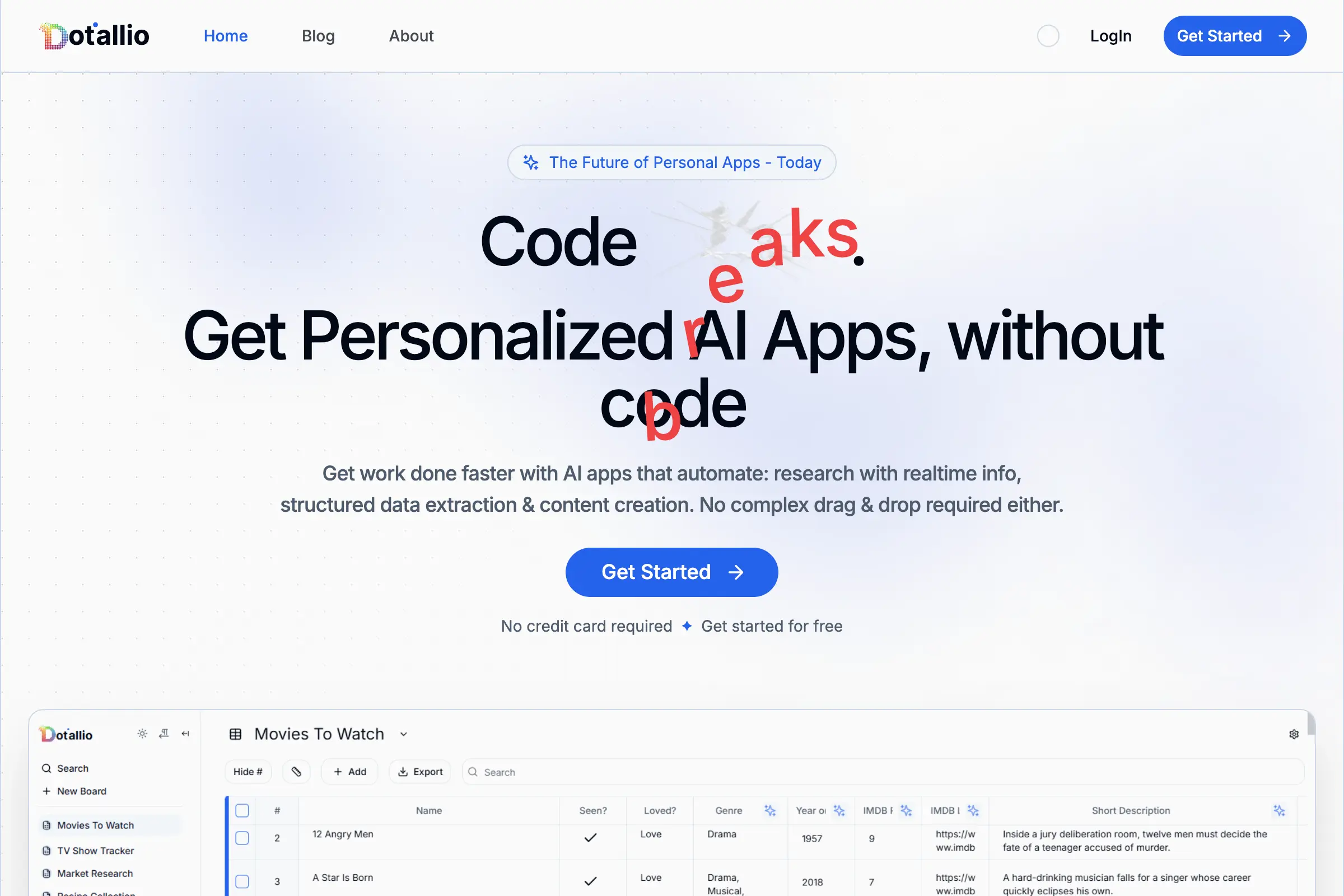
Dotallio
Personalized AI apps that automate research, data extraction, and content creation without code 🤖

Talk to Santa
Enjoy a magical live video chat or receive a unique AI-generated video greeting from Santa Claus 🎅

pozywka.pl
Scalable blog for food journalist, focused on performance and user experience 🌭
zagrodzki.me
Personal blog and portfolio of Bart Zagrodzki, where he shares his knowledge and work 💼
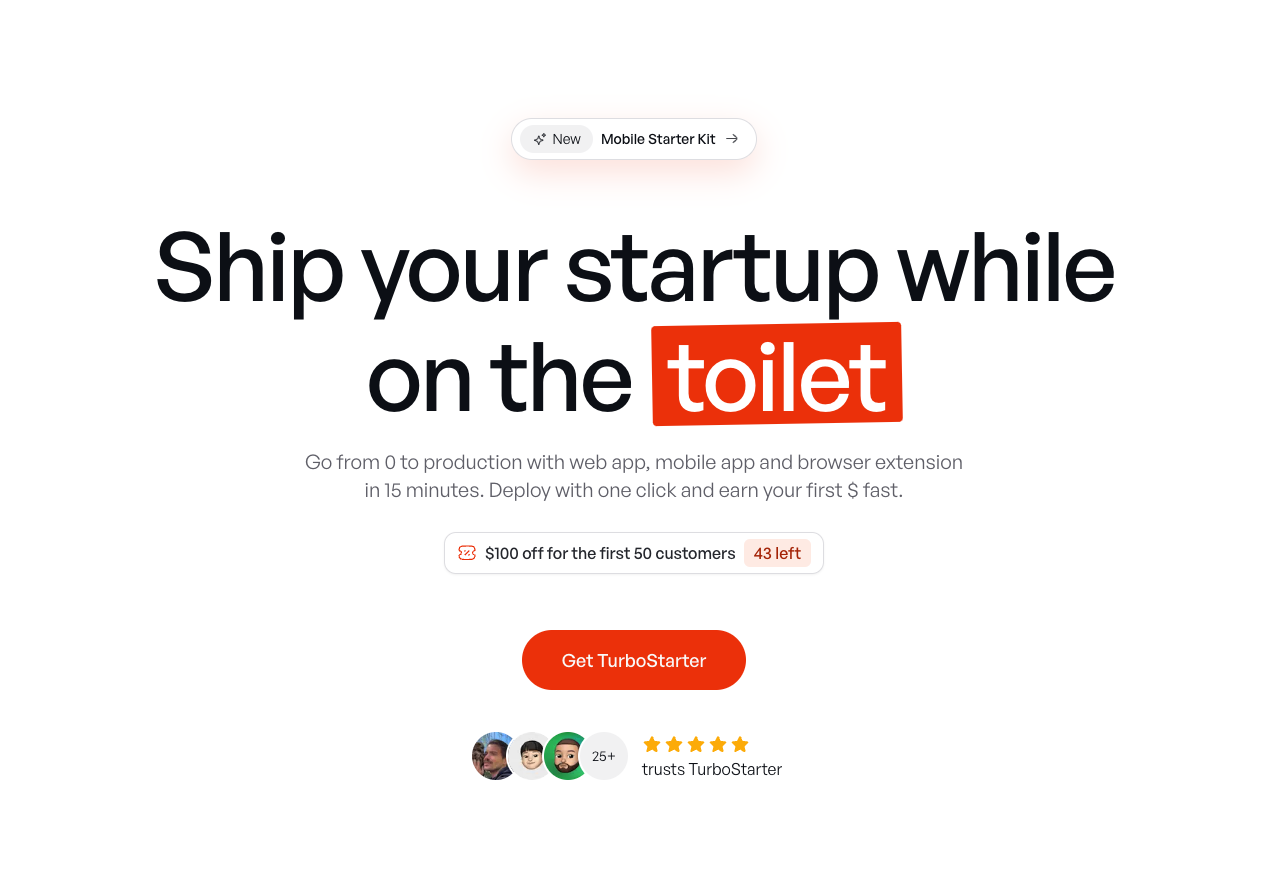
TurboStarter
Ship your startup everywhere. In minutes.
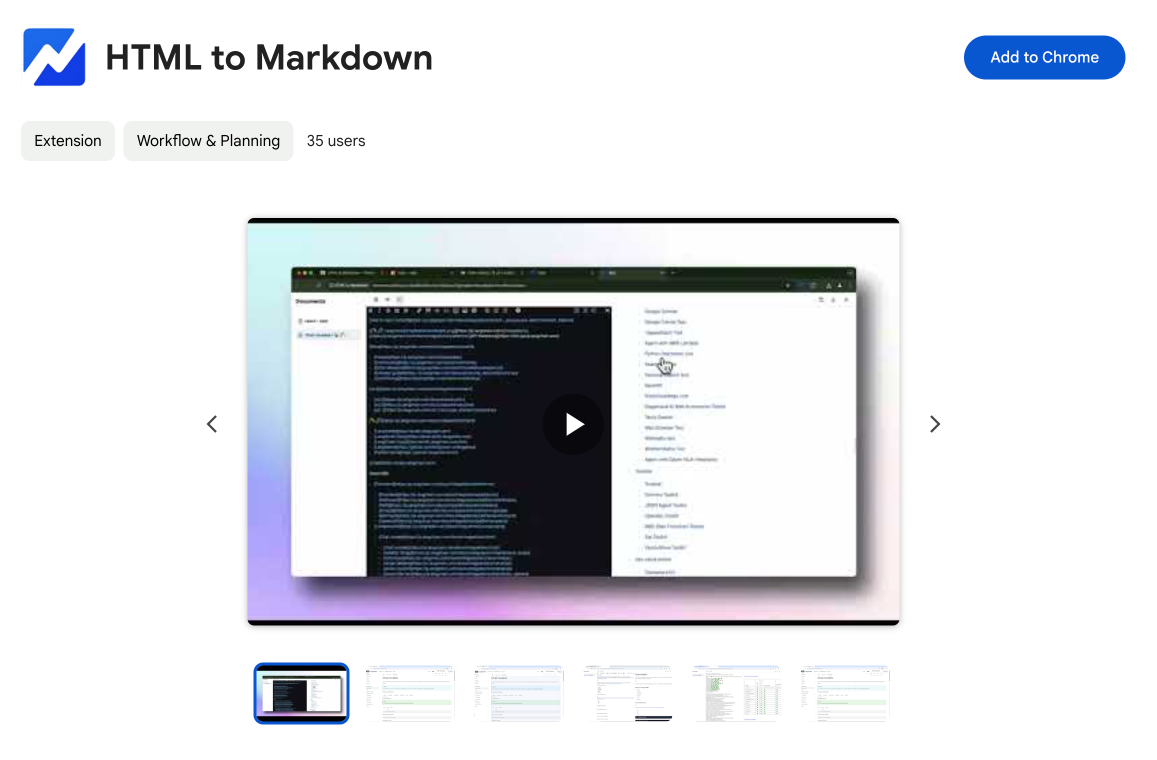
HTML to Markdown
Convert HTML to Markdown with ease, directly in your browser 📄
Dotallio
Personalized AI apps that automate research, data extraction, and content creation without code 🤖
Talk to Santa
Enjoy a magical live video chat or receive a unique AI-generated video greeting from Santa Claus 🎅
pozywka.pl
Scalable blog for food journalist, focused on performance and user experience 🌭
zagrodzki.me
Personal blog and portfolio of Bart Zagrodzki, where he shares his knowledge and work 💼
TurboStarter
Ship your startup everywhere. In minutes.
HTML to Markdown
Convert HTML to Markdown with ease, directly in your browser 📄
Dotallio
Personalized AI apps that automate research, data extraction, and content creation without code 🤖
Talk to Santa
Enjoy a magical live video chat or receive a unique AI-generated video greeting from Santa Claus 🎅
pozywka.pl
Scalable blog for food journalist, focused on performance and user experience 🌭
zagrodzki.me
Personal blog and portfolio of Bart Zagrodzki, where he shares his knowledge and work 💼
TurboStarter
Ship your startup everywhere. In minutes.
HTML to Markdown
Convert HTML to Markdown with ease, directly in your browser 📄
Dotallio
Personalized AI apps that automate research, data extraction, and content creation without code 🤖
Talk to Santa
Enjoy a magical live video chat or receive a unique AI-generated video greeting from Santa Claus 🎅
pozywka.pl
Scalable blog for food journalist, focused on performance and user experience 🌭
zagrodzki.me
Personal blog and portfolio of Bart Zagrodzki, where he shares his knowledge and work 💼
TurboStarter
Ship your startup everywhere. In minutes.
HTML to Markdown
Convert HTML to Markdown with ease, directly in your browser 📄
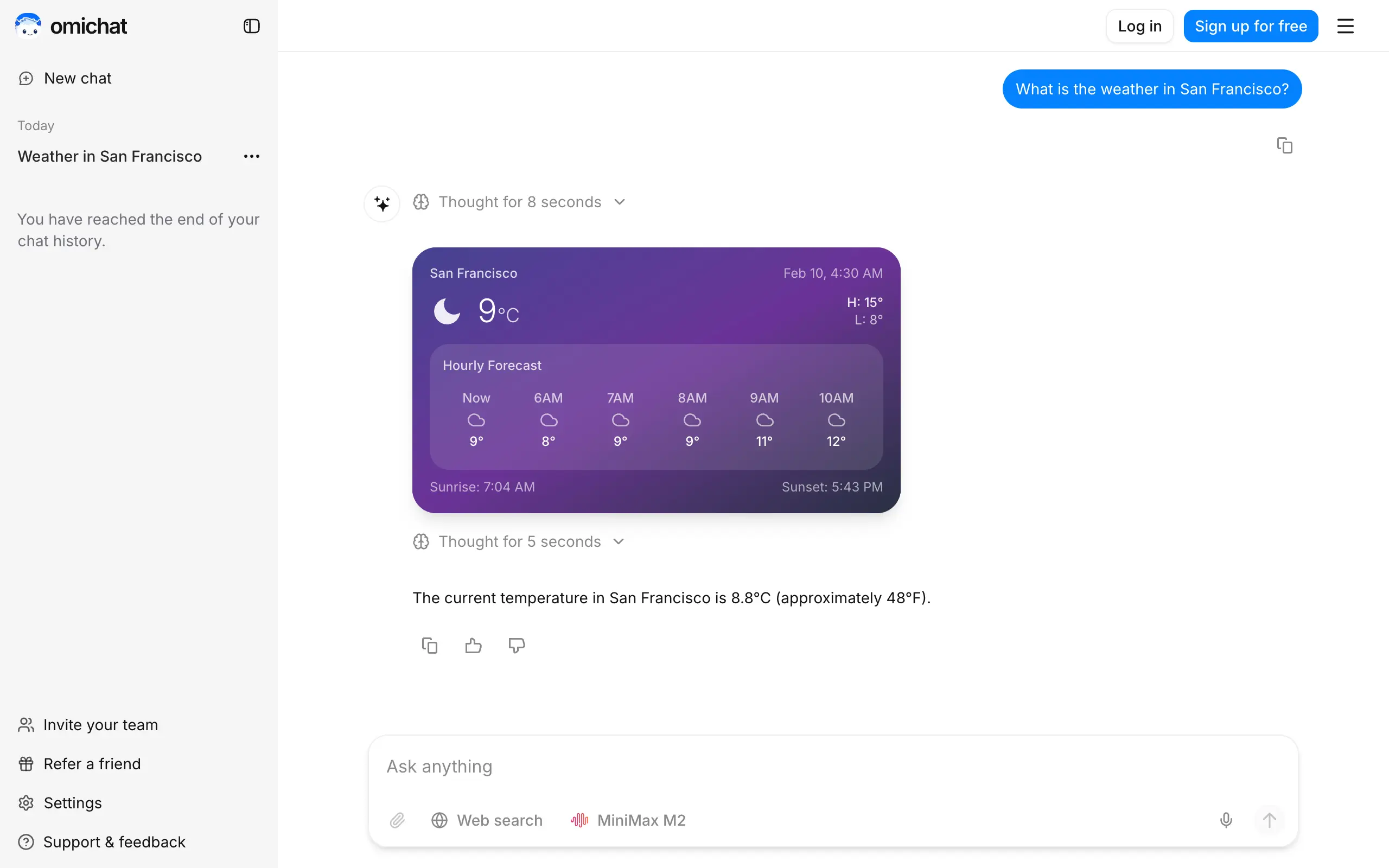
Omichat
Chat with 50+ AI models, including ChatGPT and Claude, in one place - switch models anytime without losing context 🤖
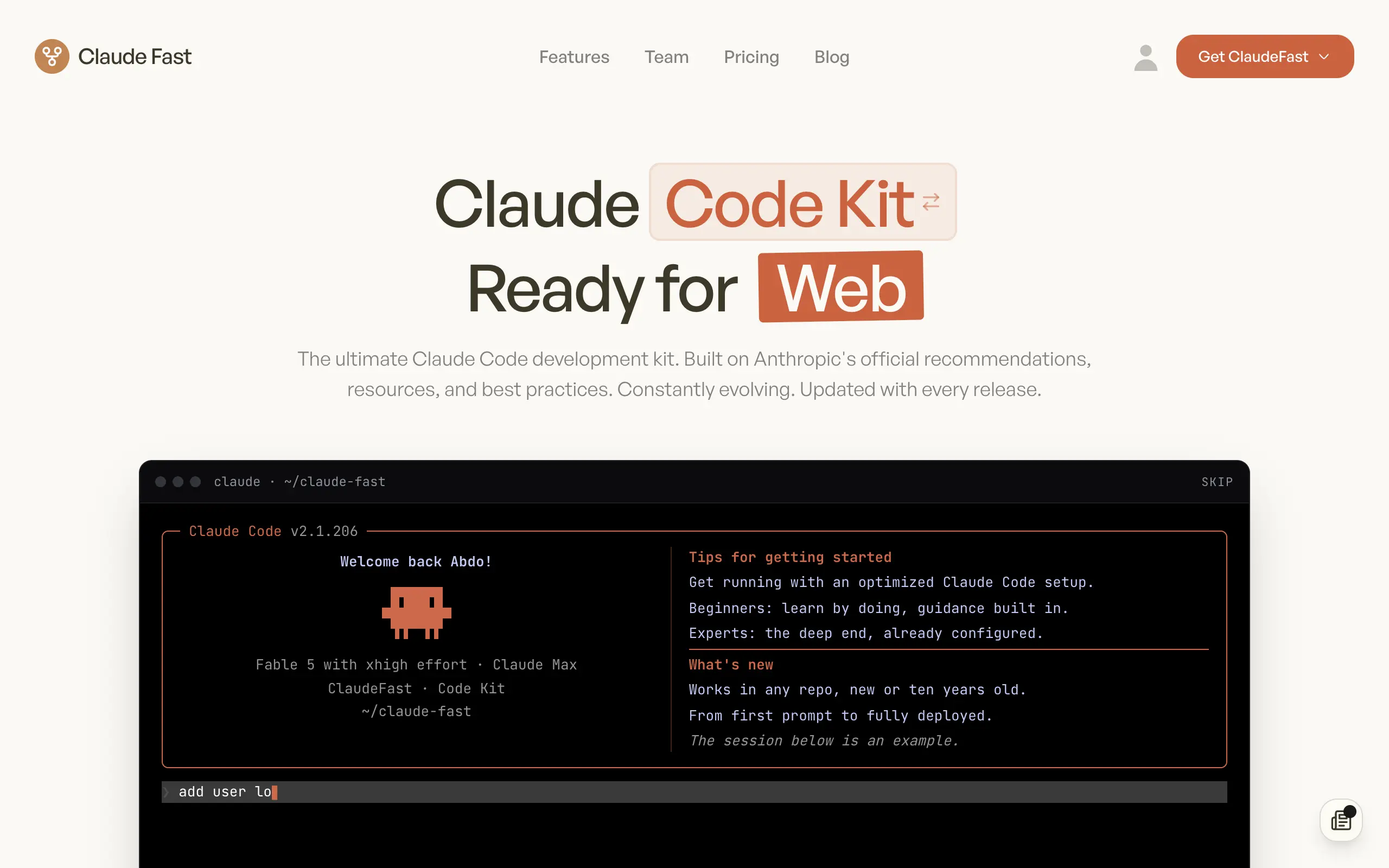
Claude Fast
Supercharge your Claude Code with 6x effective context window and specialized AI agents 🤖
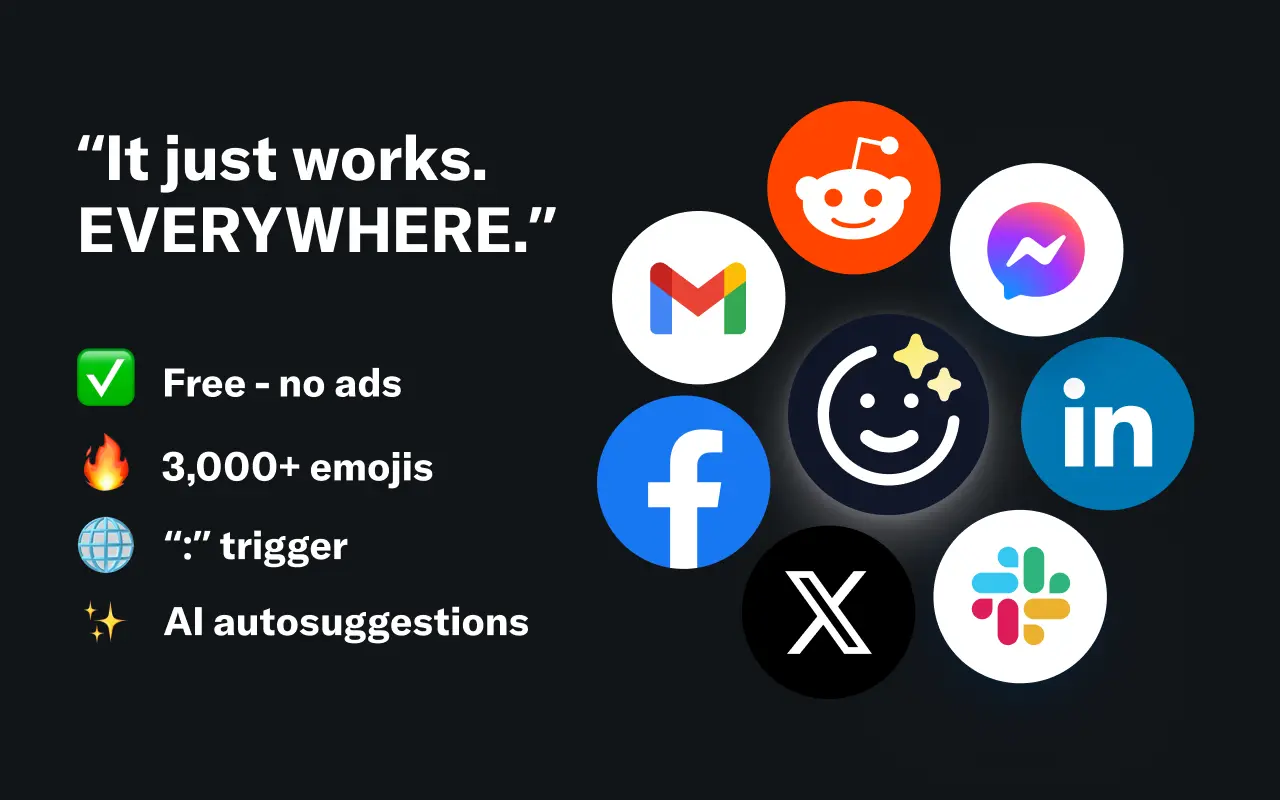
EmojAI
AI-powered emoji picker with smart, context-aware suggestions 🤖

Solohacker
Autonomous company launcher - AI agents work 24/7, escalate what matters, and you stay in control 🤖

BeRawi: Storytelling Coach
Practice storytelling daily with instant feedback to sound clearer, more engaging, and confident 🎤
Omichat
Chat with 50+ AI models, including ChatGPT and Claude, in one place - switch models anytime without losing context 🤖
Claude Fast
Supercharge your Claude Code with 6x effective context window and specialized AI agents 🤖
EmojAI
AI-powered emoji picker with smart, context-aware suggestions 🤖
Solohacker
Autonomous company launcher - AI agents work 24/7, escalate what matters, and you stay in control 🤖
BeRawi: Storytelling Coach
Practice storytelling daily with instant feedback to sound clearer, more engaging, and confident 🎤
Omichat
Chat with 50+ AI models, including ChatGPT and Claude, in one place - switch models anytime without losing context 🤖
Claude Fast
Supercharge your Claude Code with 6x effective context window and specialized AI agents 🤖
EmojAI
AI-powered emoji picker with smart, context-aware suggestions 🤖
Solohacker
Autonomous company launcher - AI agents work 24/7, escalate what matters, and you stay in control 🤖
BeRawi: Storytelling Coach
Practice storytelling daily with instant feedback to sound clearer, more engaging, and confident 🎤
Omichat
Chat with 50+ AI models, including ChatGPT and Claude, in one place - switch models anytime without losing context 🤖
Claude Fast
Supercharge your Claude Code with 6x effective context window and specialized AI agents 🤖
EmojAI
AI-powered emoji picker with smart, context-aware suggestions 🤖
Solohacker
Autonomous company launcher - AI agents work 24/7, escalate what matters, and you stay in control 🤖
BeRawi: Storytelling Coach
Practice storytelling daily with instant feedback to sound clearer, more engaging, and confident 🎤

Connect with like-minded people
Join our community to get feedback, support, and grow together with 1,000+ builders on board, let's ship it!
Join usShip your startup everywhere. In minutes.
Don't burn tokens on setup and start building features on day one.