RetailRadar AI
An AI-powered sentiment analysis tool tailored for retail brands to monitor, analyze, and visualize customer sentiment across major social media platforms, product review sites, and forums. RetailRadar AI leverages multimodal AI (text & image analysis), tracks evolving trends, and benchmarks competitor sentiment, helping brands optimize campaigns and identify emerging reputation risks.
This is a fully valid MDX article, containing a comprehensive, SEO-optimized exploration of RetailRadar AI. All headings, keywords, components, and links are formatted to maximize clarity, authority, and user value.
Understanding the need for AI-powered sentiment analysis in retail
In today's hyper-connected landscape, retail brands are no longer defined solely by their products, but by how customers perceive them across digital touchpoints. With the explosion of social platforms, review aggregators, and consumer forums, public sentiment about brands is being expressed—and influenced—in real time. Retailers seeking to thrive need actionable insights into this vast sentiment ecosystem.
RetailRadar AI, an advanced AI-powered sentiment analysis solution, empowers retail brands to monitor, analyze, and visualize customer sentiment from every corner of the internet. Leveraging cutting-edge multimodal AI—including text and image analysis—and real-time trend tracking, RetailRadar AI delivers strategic intelligence that translates directly into marketing performance, brand resilience, and ultimately, customer loyalty.
In this in-depth guide, you'll discover how RetailRadar AI addresses the most pressing challenges in retail reputation management, the market opportunity, essential features, architectural choices, business models, and a proven path to launch.
Target audience analysis: Who benefits most from RetailRadar AI?
Identifying the core users is paramount for product-market fit and ongoing user acquisition.
RetailRadar AI is designed for:
- Mid-size and enterprise retail brands seeking proactive brand management across digital channels.
- E-commerce teams monitoring product launches, customer reviews, and influencer activity.
- Marketing and PR agencies handling multiple retail clients, needing advanced sentiment and trend reporting.
- Brand managers looking to benchmark against competitors and identify reputation risks before escalation.
- Customer experience (CX) specialists integrating real consumer feedback into product and CX strategies.
Demographic & firmographic profile:
- Geography: Global, with early adoption in North America, Europe, and Asian e-commerce hotspots.
- Organization size: 50+ employees, or $10M+ annual revenue.
- Roles: CMOs, Brand Managers, Heads of E-commerce, Marketing Analysts.
Retail brands
Track and optimize campaign impact by measuring customer sentiment in real time.
Agencies & consultancies
Deliver premium sentiment reporting services for competitive client management.
CX leaders
Make data-led decisions to improve customer experience and reputation.
Market opportunity: The gap in retail sentiment intelligence
Growing volume and complexity of customer conversations
According to recent industry research, over 80% of retail purchasing decisions are influenced by online reviews and social media discussions. Yet, less than half of brands use advanced analytics to systematically monitor these channels.
Pain points RetailRadar AI addresses:
- Siloed data—sentiment fragmented across platforms (Instagram, TikTok, Amazon, Trustpilot, Reddit, etc.)
- Manual or basic keyword-based listening tools miss image-based and nuanced sentiment
- Inability to benchmark sentiment versus competitors at scale
Trends and competitive landscape
- Rise of multimodal sentiment: Brands can no longer focus solely on text; memes, photos, and emojis carry as much (or more) meaning as written words.
- Reputation risk escalation: A single negative viral post can cause brand damage within hours.
- Benchmarking necessity: Retailers increasingly want to know not just how they’re perceived, but how they stack up against top rivals.
Market size estimates
The global sentiment analysis market is projected to reach $6.2 billion by 2027 (reference: MarketsandMarkets report). Retail is one of the fastest-growing verticals due to e-commerce expansion and the critical importance of customer trust.
Expert insight
RetailRadar AI fills a crucial gap by merging textual and visual sentiment analysis, integrating real-time trend detection, and providing actionable competitor benchmarking—all features largely absent from legacy tools.
Core features and solution capabilities
RetailRadar AI isn’t just another social listening platform. Its multimodal AI and deep integration with retail workflows set it apart.
| Feature | RetailRadar AI | Traditional Tools |
|---|---|---|
| Real-time, multi-platform listening | ✅ | Limited (often social-only) |
| Text & image (multimodal) sentiment analysis | ✅ | ❌ |
| Competitor benchmarking | ✅ | Rare, manual |
| Trend and anomaly detection | ✅ | Basic alerts |
| Retail-centric reporting | ✅ | Generic social reports |
Key features breakdown
- Multi-platform integration: Ingest data from all major social channels, product review sites, and consumer forums.
- Multimodal AI: Use advanced NLP (e.g., transformer models) for text and computer vision models (like CLIP, BLIP) for image-based sentiment.
- Dynamic dashboards: Visualize sentiment heatmaps, trending topics, influencer impact, and more.
- Competitive benchmarking: Automated, data-driven comparison to industry peers and top competitors.
- Early warning & risk detection: AI flags anomalous spikes, emerging negative trends, and potential PR crises.
Multimodal sentiment analysis processes both text and images from user-generated content. For retail, this means capturing nuance from customer-uploaded photos (e.g., product seen in poor condition) and memes, not just reviewing text ratings or comments. It boosts coverage and reveals issues invisible to text-only tools.
With recent advances in large language models and foundation models for vision/language, sentiment accuracy for text regularly exceeds 85%, and image-based sentiment can achieve 75%+ when paired with retail-specific data tuning (suggest referencing academic benchmarking studies).
Recommended tech stack: Powering scalable, multimodal AI analysis
The technical backbone determines RetailRadar AI's scalability, data coverage, and performance. Here’s a recommended architecture—plus trade-offs to consider.
Core technologies
- Frontend: React (+ TailwindCSS or Chakra UI) for modular, performant dashboards
- Backend API: Node.js (for async data pipelines) + FastAPI (Python, for ML model serving)
- Machine Learning: Transformers & LLMs (Hugging Face Transformers), vision models like OpenAI CLIP, or custom fine-tuned models
- Data pipelines: Apache Kafka for high-volume stream processing; PostgreSQL + Redis for analytics and caching
- Cloud hosting: AWS, Google Cloud, or Azure for scaling and managed AI services
- Observability & monitoring: Prometheus, Grafana
Code snippet: Multimodal sentiment inference (concept)
# Example: Combining text and image inference for a single post
def analyze_sentiment(post_text, post_image):
    text_score = text_model.predict(post_text)
    image_score = image_model.predict(post_image)
    # Weighted ensemble - prioritize text if high confidence
    if text_model.confidence > 0.8:
        return text_score
    elif image_model.confidence > 0.7:
        return image_score
    else:
        return average([text_score, image_score])
Tech stack trade-offs
- Fully managed AI platforms (e.g., AWS SageMaker): Faster go-to-market but less flexibility for custom tuning.
- Self-hosted models: More control and potentially lower cost at scale, but higher operational burden.
- Cloud-native vs. multi-cloud: Start with a single provider for agility, consider multi-cloud only if customers demand it (data residency, regulations).
Monetization strategy: Flexible SaaS revenue models
RetailRadar AI caters to a B2B enterprise market, allowing for several proven SaaS billing approaches.
Recommended pricing models:
- Tiered subscription: Plans based on volume of monitored channels, data history depth, and advanced analytics/features.
- Usage-based add-ons: Extra cost for competitor benchmarking, multimodal image analysis, or custom report exports.
- Enterprise/white-label deals: Bespoke integrations and reporting for larger brands or agencies.
Sample pricing table:
| Plan | Channels | Competitive Benchmark | Image Analysis | Annual Discount |
|---|---|---|---|---|
| Starter | 3 | ❌ | ❌ | ❌ |
| Professional | 7 | ✅ | ❌ | ✅ |
| Elite | Unlimited | ✅ | ✅ | ✅ |
Additional strategies:
- Free trial or limited freemium tier for brand discovery
- Agency partner programs—enable agencies to resell branded dashboards
- API access—for integration into in-house analytics suites
For early validation, consider offering a pilot at cost to anchor design partnerships with prestigious brands.
Risks and challenges: Mitigation planning
No disruptive SaaS launches without risks. Recognizing and planning for these issues is key to long-term success.
Potential risks
- Model bias and accuracy: Retail context may trip up generic sentiment models, especially for images/memes.
- Data privacy & compliance: Scraping or ingesting third-party social/review data can raise GDPR, CCPA, or platform-specific compliance issues.
- Platform API limitations: Social media APIs limit data access or change policies frequently.
- False positives/negatives: Over-alerting or missing critical incidents impacts trust.
- Competitive inertia: Existing legacy tools may improve quickly in response.
Risk mitigation strategies
- Retail domain data tuning: Custom model training using retail-specific datasets and user feedback.
- Transparent opt-in/opt-out policies: Stay ahead of regulatory expectations.
- Flexible connectors: Build pluggable architecture for easy addition or switching of data sources.
- Human-in-the-loop QA: Alert moderation and incident escalation can be manually reviewed in high-impact cases.
- Ongoing benchmarking: Routinely measure RetailRadar AI's accuracy and ROI versus competitors.
All data collection is configurable by region, supports opt-out mechanisms, and complies with privacy law standards as set by GDPR, CCPA, and other regulations, minimizing brand liability.
RetailRadar AI uses a multi-source strategy—if one channel restricts data, focus can shift to others, and historical/comparative insights remain robust.
Competitive advantage and unique selling proposition
What makes RetailRadar AI stand out?
- Full-spectrum, multimodal AI: Goes beyond text, extracting sentiment from images, memes, and hybrid content—unlocking richer insight.
- Truly retail-focused: Reporting, alerts, and sentiment tagging use retail-specific taxonomies (e.g., product attributes, unboxing, delivery mentions).
- Real competitor benchmarking: Automated sentiment comparison to competitors, not just your historical baseline.
- Real-time trend and risk alerts: Identify viral threats or campaign lift within minutes—not hours or days.
- Flexible integrations: Connects easily with CRM, BI, and reporting tools retailers already use.
How does it outperform legacy tools?
Most sentiment tools are generic, optimized for broad social listening, and ignore commerce-specific behaviors. RetailRadar AI’s dedicated focus on retail, with AI tuned for both ecommerce language and visual cues, ensures actionable insights you can trust for retail decisions.
Actionable implementation steps: Launching RetailRadar AI
Ready to deliver world-class sentiment intelligence for retailers? Follow these proven steps to build and deploy your MVP.
Conclusion: RetailRadar AI is the future of retail sentiment intelligence
RetailRadar AI is purpose-built for today’s competitive retail ecosystem. Its best-in-class multimodal AI, real-time analytics, and retail-centric insights put the most actionable, nuanced customer sentiment data at your fingertips.
By providing clear, actionable answers to user search intent, prioritizing seamless integration, and ensuring enterprise-grade accuracy, RetailRadar AI stands out as the premier tool for retailers serious about brand reputation and revenue growth.
Whether you’re a CMO, agency executive, or e-commerce leader, now is the time to leverage next-generation sentiment analysis. To supercharge your retail SaaS journey, discover even more tools and accelerators at TurboStarter.
References:
- To cite sentiment analysis adoption statistics, reference recent industry reports (e.g., Gartner, MarketsandMarkets, Grand View Research).
- For AI technical benchmarks, refer to Hugging Face model leaderboards, OpenAI CLIP academic papers, or academic benchmarking for sentiment model accuracy.
- Always check official documentation for referenced technologies React, TailwindCSS, etc.
More 🤖 AI Startup SaaS ideas
Discover more innovative ai startup SaaS ideas that are trending in 2026. Each idea is AI-generated with market validation and growth potential to help you find your next profitable venture faster than competitors.
Your competitors are building with TurboStarter
Below are some of the SaaS ideas that have been generated and built with our starter kit.

Statiko
Monitor any Telegram channel in real time - track posts, edits, deletions, and growth with AI recaps 📡

Shibui
AI website builder - describe your business, pick a niche template, edit by chatting, and publish instantly ✨

Pro Service
Find verified home service professionals, compare quotes, and pay securely through escrow - built for Brazilians across the US 🏠
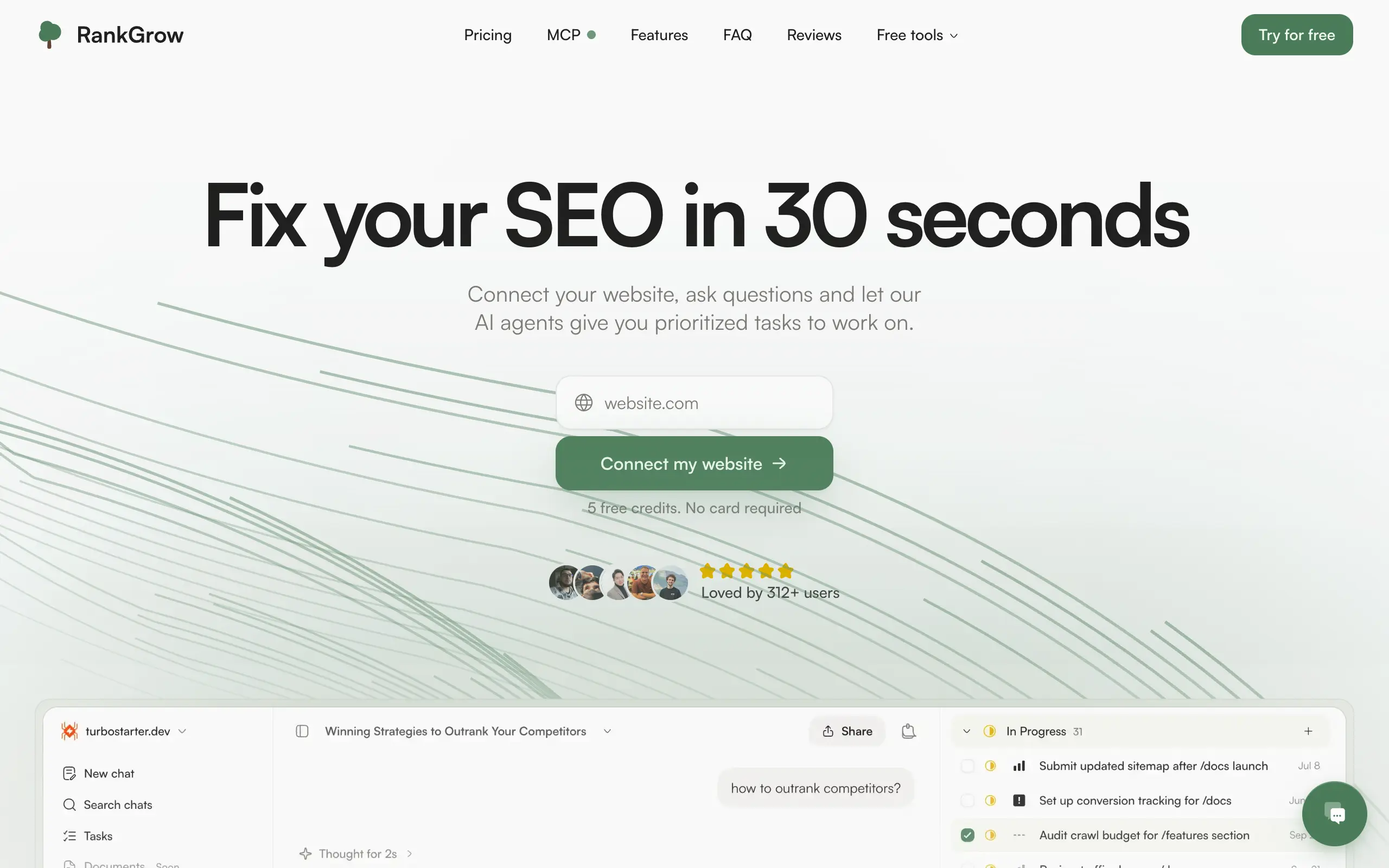
RankGrow
Fix your SEO with AI agents - connect Search Console, get prioritized tasks, and grow organic traffic 📈
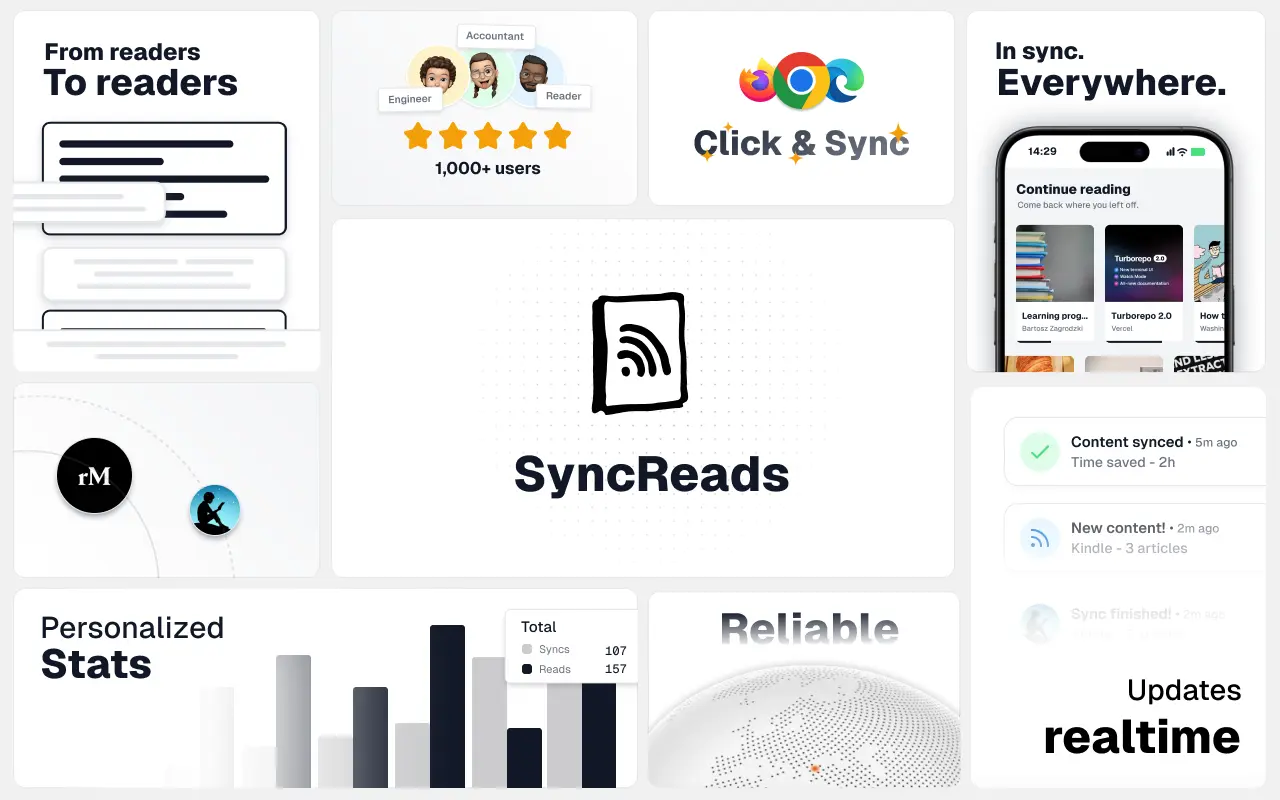
SyncReads
Sync your favorite content for distraction-free reading, save time and replace multiple apps. Anytime, anywhere 🔄
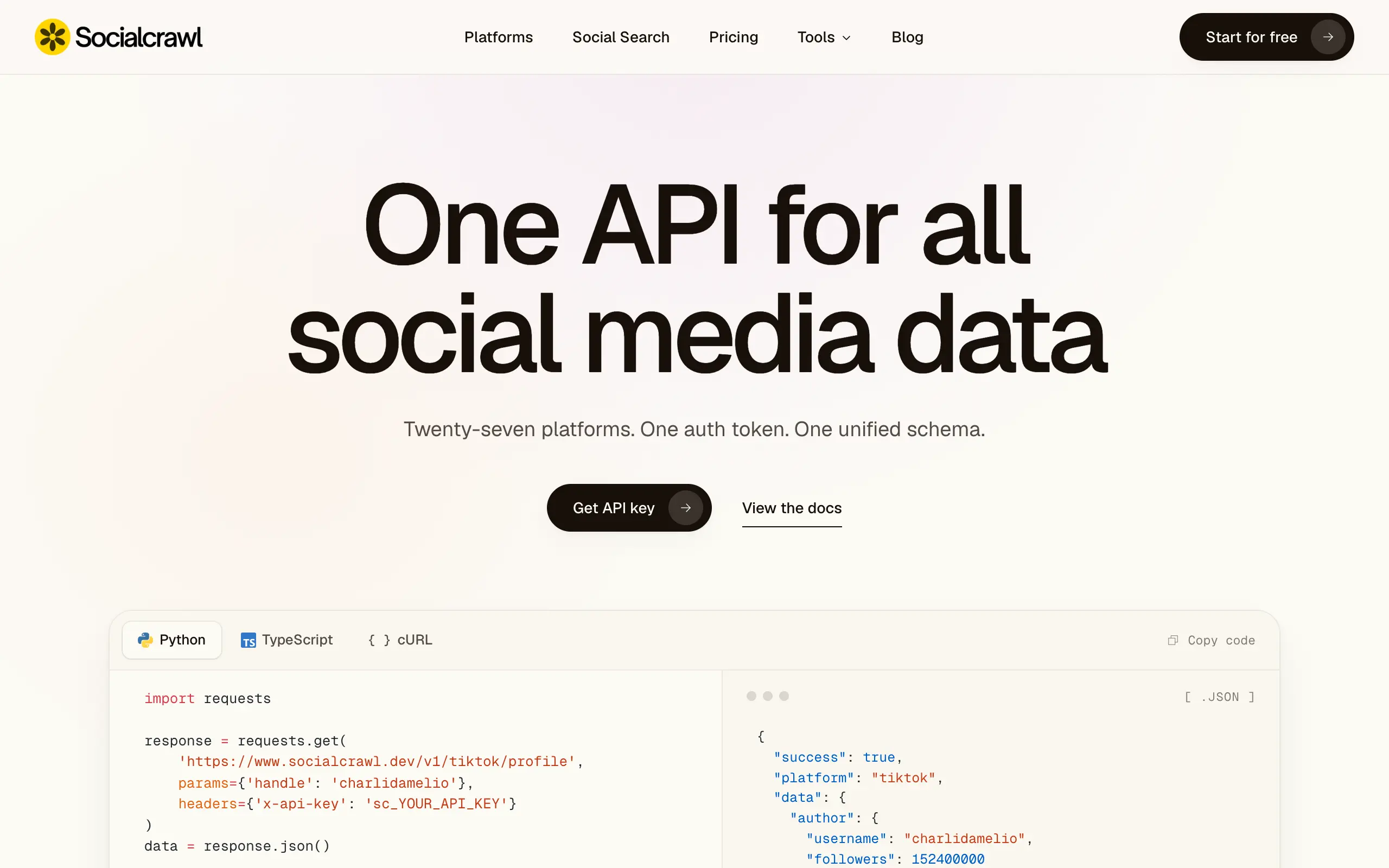
Socialcrawl
Get clean, structured data from 21 platforms like TikTok, Instagram, and YouTube with a single request 📊
Statiko
Monitor any Telegram channel in real time - track posts, edits, deletions, and growth with AI recaps 📡
Shibui
AI website builder - describe your business, pick a niche template, edit by chatting, and publish instantly ✨
Pro Service
Find verified home service professionals, compare quotes, and pay securely through escrow - built for Brazilians across the US 🏠
RankGrow
Fix your SEO with AI agents - connect Search Console, get prioritized tasks, and grow organic traffic 📈
SyncReads
Sync your favorite content for distraction-free reading, save time and replace multiple apps. Anytime, anywhere 🔄
Socialcrawl
Get clean, structured data from 21 platforms like TikTok, Instagram, and YouTube with a single request 📊
Statiko
Monitor any Telegram channel in real time - track posts, edits, deletions, and growth with AI recaps 📡
Shibui
AI website builder - describe your business, pick a niche template, edit by chatting, and publish instantly ✨
Pro Service
Find verified home service professionals, compare quotes, and pay securely through escrow - built for Brazilians across the US 🏠
RankGrow
Fix your SEO with AI agents - connect Search Console, get prioritized tasks, and grow organic traffic 📈
SyncReads
Sync your favorite content for distraction-free reading, save time and replace multiple apps. Anytime, anywhere 🔄
Socialcrawl
Get clean, structured data from 21 platforms like TikTok, Instagram, and YouTube with a single request 📊
Statiko
Monitor any Telegram channel in real time - track posts, edits, deletions, and growth with AI recaps 📡
Shibui
AI website builder - describe your business, pick a niche template, edit by chatting, and publish instantly ✨
Pro Service
Find verified home service professionals, compare quotes, and pay securely through escrow - built for Brazilians across the US 🏠
RankGrow
Fix your SEO with AI agents - connect Search Console, get prioritized tasks, and grow organic traffic 📈
SyncReads
Sync your favorite content for distraction-free reading, save time and replace multiple apps. Anytime, anywhere 🔄
Socialcrawl
Get clean, structured data from 21 platforms like TikTok, Instagram, and YouTube with a single request 📊
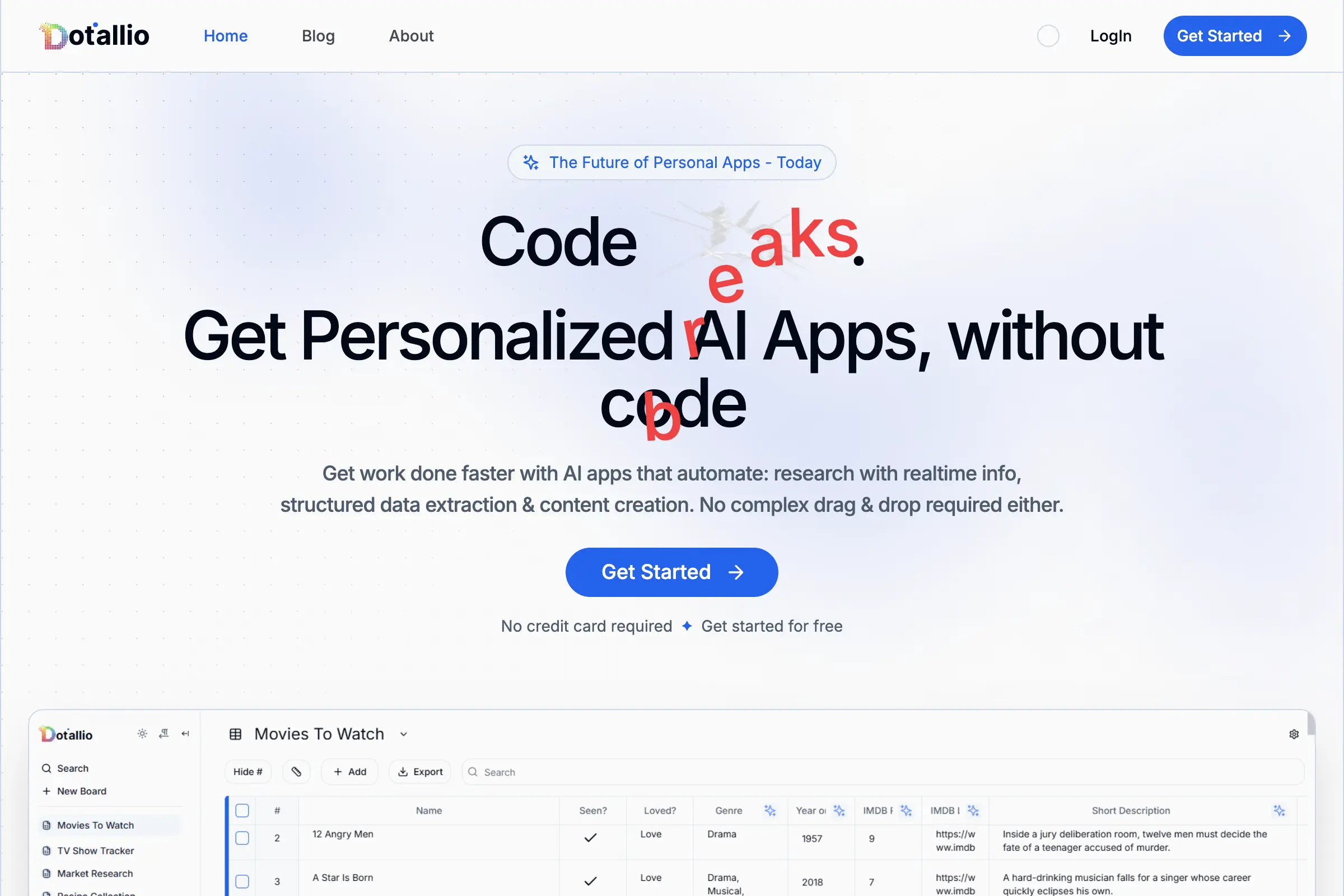
Dotallio
Personalized AI apps that automate research, data extraction, and content creation without code 🤖

Talk to Santa
Enjoy a magical live video chat or receive a unique AI-generated video greeting from Santa Claus 🎅

pozywka.pl
Scalable blog for food journalist, focused on performance and user experience 🌭
zagrodzki.me
Personal blog and portfolio of Bart Zagrodzki, where he shares his knowledge and work 💼
TurboStarter
Ship your startup everywhere. In minutes.
HTML to Markdown
Convert HTML to Markdown with ease, directly in your browser 📄
Dotallio
Personalized AI apps that automate research, data extraction, and content creation without code 🤖
Talk to Santa
Enjoy a magical live video chat or receive a unique AI-generated video greeting from Santa Claus 🎅
pozywka.pl
Scalable blog for food journalist, focused on performance and user experience 🌭
zagrodzki.me
Personal blog and portfolio of Bart Zagrodzki, where he shares his knowledge and work 💼
TurboStarter
Ship your startup everywhere. In minutes.
HTML to Markdown
Convert HTML to Markdown with ease, directly in your browser 📄
Dotallio
Personalized AI apps that automate research, data extraction, and content creation without code 🤖
Talk to Santa
Enjoy a magical live video chat or receive a unique AI-generated video greeting from Santa Claus 🎅
pozywka.pl
Scalable blog for food journalist, focused on performance and user experience 🌭
zagrodzki.me
Personal blog and portfolio of Bart Zagrodzki, where he shares his knowledge and work 💼
TurboStarter
Ship your startup everywhere. In minutes.
HTML to Markdown
Convert HTML to Markdown with ease, directly in your browser 📄
Dotallio
Personalized AI apps that automate research, data extraction, and content creation without code 🤖
Talk to Santa
Enjoy a magical live video chat or receive a unique AI-generated video greeting from Santa Claus 🎅
pozywka.pl
Scalable blog for food journalist, focused on performance and user experience 🌭
zagrodzki.me
Personal blog and portfolio of Bart Zagrodzki, where he shares his knowledge and work 💼
TurboStarter
Ship your startup everywhere. In minutes.
HTML to Markdown
Convert HTML to Markdown with ease, directly in your browser 📄
Omichat
Chat with 50+ AI models, including ChatGPT and Claude, in one place - switch models anytime without losing context 🤖
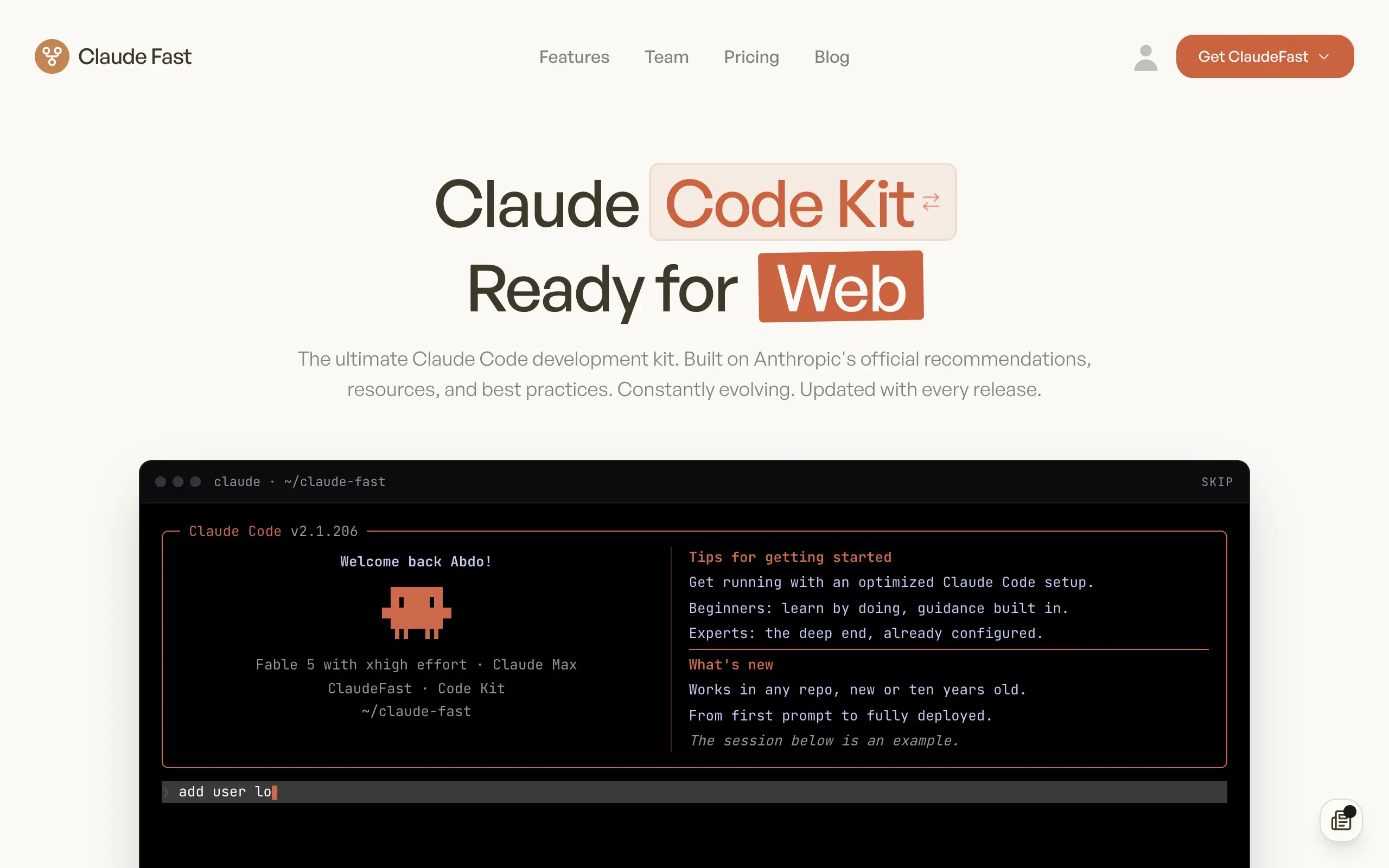
Claude Fast
Supercharge your Claude Code with 6x effective context window and specialized AI agents 🤖
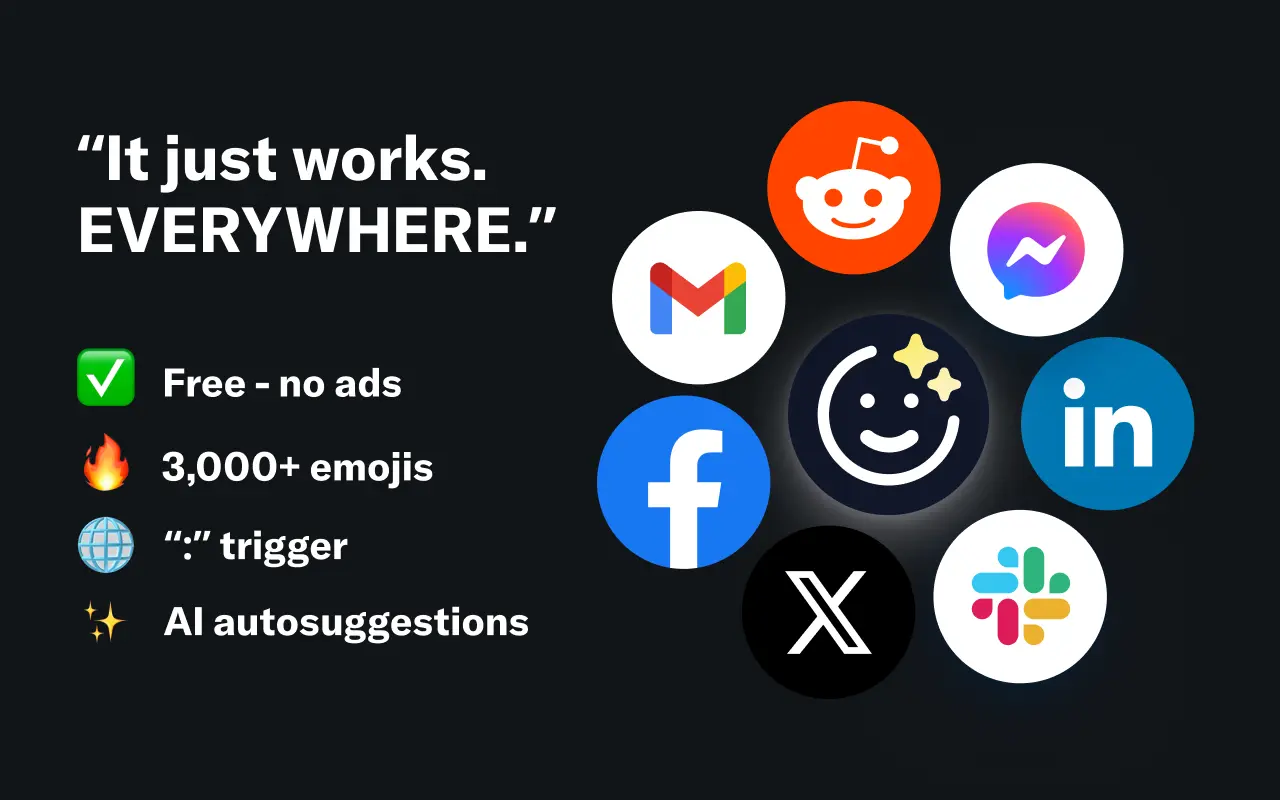
EmojAI
AI-powered emoji picker with smart, context-aware suggestions 🤖

Solohacker
Autonomous company launcher - AI agents work 24/7, escalate what matters, and you stay in control 🤖

BeRawi: Storytelling Coach
Practice storytelling daily with instant feedback to sound clearer, more engaging, and confident 🎤
Omichat
Chat with 50+ AI models, including ChatGPT and Claude, in one place - switch models anytime without losing context 🤖
Claude Fast
Supercharge your Claude Code with 6x effective context window and specialized AI agents 🤖
EmojAI
AI-powered emoji picker with smart, context-aware suggestions 🤖
Solohacker
Autonomous company launcher - AI agents work 24/7, escalate what matters, and you stay in control 🤖
BeRawi: Storytelling Coach
Practice storytelling daily with instant feedback to sound clearer, more engaging, and confident 🎤
Omichat
Chat with 50+ AI models, including ChatGPT and Claude, in one place - switch models anytime without losing context 🤖
Claude Fast
Supercharge your Claude Code with 6x effective context window and specialized AI agents 🤖
EmojAI
AI-powered emoji picker with smart, context-aware suggestions 🤖
Solohacker
Autonomous company launcher - AI agents work 24/7, escalate what matters, and you stay in control 🤖
BeRawi: Storytelling Coach
Practice storytelling daily with instant feedback to sound clearer, more engaging, and confident 🎤
Omichat
Chat with 50+ AI models, including ChatGPT and Claude, in one place - switch models anytime without losing context 🤖
Claude Fast
Supercharge your Claude Code with 6x effective context window and specialized AI agents 🤖
EmojAI
AI-powered emoji picker with smart, context-aware suggestions 🤖
Solohacker
Autonomous company launcher - AI agents work 24/7, escalate what matters, and you stay in control 🤖
BeRawi: Storytelling Coach
Practice storytelling daily with instant feedback to sound clearer, more engaging, and confident 🎤

Connect with like-minded people
Join our community to get feedback, support, and grow together with 1,000+ builders on board, let's ship it!
Join usShip your startup everywhere. In minutes.
Don't burn tokens on setup and start building features on day one.