ReturnSense AI
AI return-intelligence for Shopify brands that predicts return risk, spots product issues, and recommends fixes before margins disappear.
ReturnSense AI is an AI return-intelligence platform for Shopify brands that want to reduce preventable returns before they erode contribution margin, distort inventory planning, and weaken customer trust. Rather than treating a return as a completed transaction, the product treats it as a high-value feedback signal about product quality, merchandising accuracy, fulfillment, sizing, and customer expectations.
The primary opportunity is not simply to build another Shopify returns management app. It is to create a decision layer that helps ecommerce teams answer more valuable questions:
- Which orders have the highest likelihood of being returned?
- Which products, variants, sizes, and suppliers are creating avoidable return volume?
- Are returns caused by product defects, inaccurate product pages, shipping errors, or expectation gaps?
- What action should the team take next to protect margin?
- Did a fix actually reduce returns over time?
For growing direct-to-consumer brands, these answers are often scattered across Shopify orders, return portals, support tickets, reviews, warehouse notes, and spreadsheets. ReturnSense AI brings those signals together and turns them into prioritized operational recommendations.
The core positioning
ReturnSense AI should be positioned as proactive Shopify return intelligence, not only post-purchase return processing. Its promise is to help brands identify and fix the conditions behind returns before they become an expensive pattern.
Why AI return intelligence for Shopify brands matters
Returns are a margin problem, a customer experience problem, and a product-data problem. A return may look like a single operational event, but it frequently exposes a systemic issue.
For example, a high return rate on a dress may be caused by inconsistent sizing. But the root issue could also be an unclear fit guide, photography that makes the fabric appear thicker than it is, a supplier batch with a construction defect, or a fulfillment workflow that is sending the wrong variant. A basic returns platform can capture a reason code. An AI return-intelligence product should identify the likely cause, quantify its impact, and recommend a response.
This distinction is important for Shopify merchants because ecommerce teams are under constant pressure to improve profitability without sacrificing conversion or loyalty. Cutting return windows or adding restocking fees may suppress some return behavior, but these policies can also increase purchase hesitation and damage trust. The more durable solution is reducing avoidable return demand.
ReturnSense AI can help brands move from reactive questions such as “How many returns did we process?” toward strategic questions such as:
- “Which revenue-driving product has the most urgent quality risk?”
- “Which product description is causing expectation mismatch?”
- “Which customer segment is returning an item at an unusual rate?”
- “Which fulfillment location has a growing wrong-item problem?”
- “What is the estimated margin recovered if we correct this problem now?”
A strong product narrative should emphasize that returns are not merely a cost center. They are one of the clearest forms of structured and unstructured customer feedback available to a commerce brand.
Target audience for Shopify returns management software
ReturnSense AI should initially focus on Shopify brands with enough order and return volume to produce meaningful patterns, but not enough internal analytics capacity to build return intelligence from scratch.
Core customer profile
The best early customers are typically mid-market Shopify and Shopify Plus brands with:
- Hundreds to thousands of monthly orders
- A meaningful return rate or a high average order value
- Multiple products, sizes, variants, or suppliers
- A lean operations, ecommerce, or customer experience team
- Existing return workflows that generate data but do not generate insight
- A clear need to protect contribution margin
Fashion, footwear, beauty, wellness, home goods, consumer electronics, and subscription-enabled physical product brands are especially attractive verticals. These categories tend to experience recurring return patterns related to size, fit, color, quality, compatibility, shipping damage, or expectation mismatch.
Primary buyer personas
Ecommerce director
Needs to protect revenue, improve conversion confidence, and identify product-page or merchandising issues before a problem spreads.
Head of operations
Needs visibility into return cost, fulfillment errors, warehouse patterns, and inventory implications.
Customer experience leader
Needs to reduce support volume and turn return feedback into a better customer journey.
Merchandising or product leader
Needs evidence that separates design, quality, sizing, and expectation problems.
The economic buyer may be a founder, COO, VP of ecommerce, or head of finance. The daily user is more likely to be an ecommerce manager, operations analyst, CX lead, or product operations manager.
Jobs customers are trying to accomplish
A useful SaaS strategy starts with jobs to be done rather than features. ReturnSense AI customers are not buying machine learning because they want a model score. They are buying a faster route to better decisions.
Their practical jobs include:
- Detect a return issue before it becomes a major loss.
- Understand why a product, SKU, or variant is being sent back.
- Determine whether the issue is product-related, operational, or communication-related.
- Prioritize fixes based on financial impact.
- Coordinate actions between ecommerce, CX, operations, and product teams.
- Prove whether interventions improve return outcomes.
- Preserve customer goodwill without blindly accepting every return cost.
The market gap in Shopify return analytics
Most return-management tools are built around processing: issuing labels, setting rules, routing items, offering exchanges, and managing refunds. Those functions are useful, but they often leave a critical gap between operational data collection and strategic action.
Brands may already have a return portal that captures reasons such as “too small,” “not as expected,” or “damaged.” What they often lack is a system that can:
- Normalize inconsistent reason codes across channels
- Read free-text comments and support conversations
- Compare return behavior by SKU, variant, order cohort, channel, warehouse, and customer segment
- Identify unusual changes as they emerge
- Estimate the likely margin impact of a pattern
- Recommend specific fixes and track their outcomes
This is where AI return intelligence can stand apart from traditional returns software. The value is not only that ReturnSense AI can summarize data. The value is that it can connect signals across the lifecycle of an order and convert analysis into an operational decision.
Why spreadsheets are not enough
Many brands begin with weekly return exports and manual spreadsheet analysis. That approach can work at low volume, but it breaks down quickly when data becomes fragmented.
A spreadsheet workflow is usually weak at handling:
- Free-text return notes with inconsistent wording
- Product reviews and support tickets
- Variant-level trend detection
- Time-series anomalies
- Cost allocation across shipping, handling, markdowns, and resale recovery
- Clear ownership for recommended actions
- Automated follow-up after a fix is deployed
The challenge is not a lack of data. It is the lack of a continuous intelligence workflow.
Why generic AI dashboards are not enough
A generic AI dashboard can produce summaries, but ecommerce teams need trusted, traceable recommendations. If a dashboard says that a product has a “high risk” of return, a manager needs to know:
- The evidence behind the prediction
- The confidence level
- The affected products and order cohorts
- The estimated economic impact
- The recommended action
- The expected owner of that action
Trustworthy AI for return operations needs explainability and operational context. A black-box score without supporting evidence is unlikely to change the behavior of a merchandising or operations team.
ReturnSense AI product vision and unique selling proposition
The unique selling proposition for ReturnSense AI is simple:
ReturnSense AI helps Shopify brands predict return risk, identify root causes, and prioritize margin-saving fixes using data from orders, products, customer feedback, and return behavior.
That combines three layers that are often separated in the market:
-
Prediction
Estimate return risk at the order, product, variant, or customer-segment level. -
Diagnosis
Explain the likely drivers behind high returns using structured and unstructured evidence. -
Action
Recommend, assign, and measure fixes so insights lead to measurable operational change.
A defensible product should avoid presenting AI as a vague assistant. Instead, it should produce a clear decision loop:
Detect a signal, investigate the likely cause, recommend an action, assign ownership, and measure the result.
The return intelligence loop
This closed-loop design makes ReturnSense AI more valuable than a static analytics dashboard. It creates a repeatable operating system for reducing avoidable returns.
Core features for an AI returns intelligence platform
A focused MVP should solve a painful problem exceptionally well. It does not need to replace every return portal or warehouse workflow on day one.
Shopify data connection and unified return data model
The platform needs a secure Shopify integration that ingests the essential commerce data needed for analysis. The integration should use Shopify’s official APIs and consent model. Teams can review the platform documentation at Shopify Dev when planning scopes, webhooks, and data synchronization.
The initial data model should include:
- Orders and line items
- Product, SKU, variant, and collection metadata
- Customer purchase history where permitted
- Fulfillment status and location data
- Refunds and return events
- Discount and promotion details
- Shipping method and delivery context where available
- Product cost and margin fields when a merchant provides them
- Return reasons, notes, and resolution outcomes
A robust data model matters because return analysis becomes misleading when a product, variant, order, or refund is not consistently linked to the right entity.
Return-risk prediction
Return-risk prediction can be presented at several levels. The most practical first release may focus on SKU and variant risk rather than attempting a highly individualized customer-level score immediately.
Useful views include:
- Product-level return risk over the last 7, 30, and 90 days
- Variant-level risk for size, color, material, or configuration
- Order-level risk for post-purchase interventions
- Customer cohort patterns without relying on sensitive or unfair profiling
- New-product launch risk as early orders begin to return
The model should not imply certainty. Use language such as “elevated risk,” “emerging pattern,” and “likely contributor,” supported by confidence indicators.
AI-powered return reason classification
Return reasons are frequently messy. One customer might choose “too small,” another might write “sizing is way off,” and another might open a support ticket saying “medium fits like an extra small.” An AI classifier can cluster these signals into a normalized taxonomy.
A practical taxonomy could include:
- Size and fit mismatch
- Product quality or defect
- Product description mismatch
- Color or visual mismatch
- Shipping damage
- Incorrect item received
- Late delivery
- Compatibility issue
- Changed mind
- Suspected fraud or policy abuse
The classification system should preserve the original customer language while assigning normalized categories. This approach helps teams explore evidence without losing nuance.
Product issue detection
The product issue detector is where ReturnSense AI can create meaningful differentiation. It should identify significant changes and not just rank products by raw return count.
For example, the system might detect:
- A new spike in “damaged on arrival” comments after a supplier change
- A color-specific increase in “different from photos” returns
- Higher fit-related returns on one size range
- A fulfillment center producing abnormal wrong-item return rates
- A promotion cohort with elevated “not as expected” returns
- A product page update followed by improved exchange behavior
The model should account for sales volume. Ten returns from one hundred units sold may be more urgent than twelve returns from ten thousand units sold.
Margin impact calculator
Return counts are useful, but financial prioritization is more persuasive. ReturnSense AI should estimate the cost of a return using configurable inputs.
Possible components include:
- Refund value
- Outbound shipping cost
- Return shipping or label cost
- Payment processing leakage where relevant
- Warehouse handling cost
- Product inspection and restocking cost
- Markdown or liquidation cost
- Estimated resale recovery
- Exchange retention value
- Customer lifetime value considerations
The goal is not to claim perfect accounting accuracy. The goal is to create a transparent estimate that helps teams compare issues consistently.
Recommended fixes and action workspace
A recommendation needs to be specific enough to act on. Instead of writing “Improve product experience,” ReturnSense AI should produce guidance such as:
- Add a fit note to the product page because size-related return language increased after launch.
- Review the latest supplier batch because defect-related comments rose sharply for specific production dates.
- Add packaging reinforcement for a product because damage claims are concentrated by fulfillment location.
- Update color photography or swatch guidance because visual mismatch returns are elevated for one variant.
- Review pick-and-pack controls because wrong-item events are clustered at one warehouse.
Each recommendation should show:
- The detected issue
- The affected SKU, variants, and time period
- Evidence and supporting examples
- Estimated financial exposure
- Confidence level
- Suggested owner
- Recommended next step
- Status and outcome tracking
Executive dashboard and scheduled insights
The dashboard should not overwhelm users with dozens of charts. It should answer the most important question first: “What needs attention this week?”
An effective dashboard can include:
- Estimated return cost at risk
- Top emerging issues
- Products with the largest return-rate changes
- Root-cause category trends
- Return risk by product family and variant
- Actions awaiting assignment or verification
- Improvements linked to completed fixes
Scheduled alerts can be delivered through email, Slack, or a weekly report. The alerts should be selective. Too many low-value notifications will train users to ignore the product.
Recommended tech stack for ReturnSense AI
The technical architecture should support reliable Shopify synchronization, low-latency product insights, secure customer data handling, and gradual evolution from rules to machine learning.
Start with a TypeScript application using a modern web framework, a relational database, background jobs, and Shopify webhooks. This combination supports rapid iteration while keeping transactional data understandable and auditable.
As order volume grows, separate ingestion, transformation, analytics, and application workloads. Add a warehouse or analytical store only when product usage justifies the operational complexity.
Begin with transparent scoring, anomaly detection, and text classification. Introduce more advanced predictive models only after the platform has reliable labels, sufficient data, and clear evaluation criteria.
Application layer
A practical frontend can use React with Next.js for a responsive dashboard, authenticated routes, and server-rendered marketing pages. Tailwind CSS is well suited to building a consistent SaaS interface quickly.
For the backend, TypeScript offers strong productivity when the application and dashboard share types. Use an API layer that supports tenant isolation, role-based access controls, audit logs, and predictable validation.
A startup team can accelerate the initial SaaS foundation with TurboStarter, then devote more engineering capacity to the Shopify integration, data model, analytics, and differentiated intelligence workflows.
Data storage and processing
For an MVP, PostgreSQL is a strong default because it handles transactional entities, relational joins, JSON fields, and analytical queries effectively at early scale. It is particularly useful for multi-tenant SaaS applications where data integrity matters.
Use asynchronous workers for:
- Shopify webhook processing
- Historical order backfills
- Data normalization
- Embedding generation for text feedback
- Scheduled risk-score recalculation
- Alert generation
- Report delivery
A queue-based architecture protects the application from spikes during large catalog imports, peak sales periods, and bulk data resynchronization.
AI and machine learning layer
The initial AI stack should be intentionally conservative. A trustworthy v1 does not require a complex deep-learning system.
Start with:
- Rules for known high-signal conditions
- Statistical anomaly detection for rate changes
- Text classification for return notes and support messages
- Retrieval-based summaries grounded in merchant data
- Explainable scoring models for product and variant risk
As the platform accumulates historical data, it can evaluate supervised models that predict the likelihood of return for a product, variant, or order. Model performance must be tested against holdout data and monitored for drift.
The trade-off is clear. More advanced models may improve prediction quality, but they are harder to explain, maintain, and validate. For a product used in margin-sensitive operations, transparency is often more valuable than marginal model complexity.
Example recommendation data contract
type ReturnRecommendation = {
  id: string
  merchantId: string
  productId: string
  issueCategory: "fit" | "quality" | "description" | "fulfillment" | "shipping"
  severity: "low" | "medium" | "high"
  confidence: number
  estimatedMarginAtRisk: number
  evidence: string[]
  suggestedAction: string
  ownerTeam: "ecommerce" | "operations" | "product" | "cx"
  status: "new" | "assigned" | "in_progress" | "verified" | "dismissed"
}
This kind of structure keeps AI output connected to an auditable product workflow instead of leaving recommendations as unstructured chat responses.
Monetization strategy for ReturnSense AI
The best pricing model should align with customer value while remaining easy to understand. ReturnSense AI creates value through reduced avoidable return cost, better product decisions, lower support burden, and retained exchange revenue.
Recommended pricing approach
A hybrid subscription model is likely the strongest option:
- A base platform fee for dashboard access, integrations, and reporting
- Usage tiers based on monthly order volume or processed return events
- Premium pricing for advanced forecasting, multiple stores, additional integrations, and custom reporting
- Enterprise pricing for Shopify Plus brands with SSO, data exports, dedicated onboarding, and service-level commitments
Avoid pricing solely per return label because it may position the product too closely to returns processing platforms. Pricing tied to order volume, SKU count, or analytics complexity better reflects the intelligence value proposition.
| Plan | Best for | Order volume | Core value | Commercial model |
|---|---|---|---|---|
| Starter | Emerging DTC brands | Lower volume | Return trends and issue alerts | Accessible monthly fee |
| Growth | Scaling Shopify brands | Mid volume | AI diagnosis and action tracking | Volume-based subscription |
| Enterprise | Complex retailers | High volume | Custom models and governance | Annual contract |
Expansion revenue opportunities
Once the core product proves value, expansion paths may include:
- Support platform integrations
- Warehouse management system integrations
- Supplier and purchase-order analytics
- Product review platform integrations
- Exchange optimization insights
- Fraud pattern analysis
- Custom data warehouse exports
- Quarterly return-reduction strategy reviews
A services-assisted onboarding package can be especially valuable in the early stage. It helps merchants define their return taxonomy, cost assumptions, and ownership workflows while giving the product team insight into real-world implementation barriers.
Competitive advantage and defensibility
ReturnSense AI will compete indirectly with returns platforms, business intelligence tools, Shopify analytics apps, and internal data teams. Its defensibility comes from its ability to unite data, domain-specific intelligence, and action workflows.
Where ReturnSense AI can win
The platform should compete on five dimensions:
-
Proactive insight
Detect emerging issues before they become established return patterns. -
Root-cause clarity
Connect return data with products, variants, fulfillment events, and customer language. -
Financial prioritization
Rank issues by estimated margin exposure, not only raw return volume. -
Actionability
Turn an insight into a recommended fix, owner, deadline, and verification loop. -
Shopify-native workflow
Make setup, data synchronization, and product-level exploration intuitive for Shopify teams.
The data moat
Over time, ReturnSense AI can develop a valuable proprietary data asset: a normalized understanding of how return reasons, product attributes, merchandising decisions, fulfillment events, and remediation actions relate to outcomes.
The moat is not simply “having data.” Individual merchant data must remain private and protected. The defensible advantage is building better domain models, taxonomies, benchmarks where appropriate and consented, and recommendation workflows from repeated use across merchant contexts.
A merchant should be able to see that the system is learning their catalog, their cost structure, their language, and their operating process. That creates switching friction based on accumulated operational intelligence, not lock-in for its own sake.
Risks, limitations, and mitigation strategies
An expert return-intelligence product should be candid about risks. The strongest SaaS products earn trust by making uncertainty visible and designing for it.
Data quality risk
Return reasons are often incomplete, inconsistent, or influenced by the options presented in a return portal. Product cost data may also be missing or inaccurate.
Mitigation: Build a configurable taxonomy, retain original source data, label confidence levels, and make cost assumptions editable. Show users when a conclusion is based on limited evidence.
False positives and misleading recommendations
An anomaly may be seasonal, caused by a temporary promotion, or driven by a small sample size. Overly aggressive alerts can cause teams to waste time.
Mitigation: Require minimum data thresholds, use confidence scoring, compare against relevant baselines, and let users provide feedback on recommendation quality. Prioritize trend changes with material financial impact.
Privacy and customer data risk
Shopify stores may contain personal data, customer messages, and order history. This requires a careful privacy and security posture.
Mitigation: Use data minimization, encryption in transit and at rest, role-based access controls, tenant isolation, deletion workflows, audit logging, and clear data processing terms. Avoid using customer data for model training without explicit legal and contractual consideration.
AI trust risk
Users may reject recommendations if they cannot understand why the platform made them.
Mitigation: Show the underlying evidence. Include examples of normalized return language, affected variants, relevant dates, trend charts, and confidence explanations. Make it easy to dismiss or correct a recommendation.
Integration dependency risk
Changes in Shopify APIs, app review requirements, or merchant permissions can affect the product experience.
Mitigation: Follow official Shopify development guidance, build resilient webhook handling, monitor API changes, and maintain fallback synchronization processes for critical data.
Competitive commoditization risk
Basic AI summaries and dashboards may become easy to replicate.
Mitigation: Invest in workflow depth, vertical-specific root-cause models, measurable action tracking, reliable financial logic, and integrations that create recurring operational value.
Not initially. Integrating with existing return portals is often the faster path to market. The initial product should specialize in intelligence and recommendations, then consider workflow extensions after product-market fit is established.
It can estimate risk using order, product, variant, customer-history, and fulfillment signals. However, predictions should be framed as decision support, not guarantees, and should avoid unfair or sensitive customer profiling.
The clearest story is finding one high-cost product issue, taking a targeted corrective action, and measuring a meaningful reduction in return-related margin loss over the following cohorts.
Go-to-market strategy for ReturnSense AI
The initial go-to-market should focus on a narrow, credible message: help Shopify brands uncover the product and operational issues driving costly returns.
Avoid trying to sell to every merchant. The strongest early segment is likely apparel and footwear brands where size, fit, color, and product expectation issues create rich return signals.
High-intent acquisition channels
Potential acquisition channels include:
- Shopify App Store discovery once the integration is mature
- Educational SEO content targeting Shopify return rate analysis and return reduction
- Founder-led outreach to ecommerce operators
- Partnerships with Shopify agencies and ecommerce consultants
- Return policy and profitability webinars for DTC brands
- Case studies with measurable before-and-after outcomes
- Communities for ecommerce, operations, and Shopify leaders
SEO content should focus on high-intent topics such as:
- How to reduce returns for a Shopify store
- Shopify return analytics best practices
- How to analyze return reasons by product variant
- Ecommerce return rate benchmarking methodology
- Product return root cause analysis
- How to calculate the true cost of ecommerce returns
When citing market data in content, use authoritative sources and clearly state the year and methodology. Useful references to consult include annual reports from the National Retail Federation, Shopify investor materials, and peer-reviewed or established logistics research. Avoid presenting broad industry statistics without a traceable source.
A strong early sales motion
A product-led sales motion can begin with a free return health check. A merchant connects Shopify, receives a limited analysis of its highest-risk products, and sees a sample of actionable findings.
The paid conversion should happen when the customer needs:
- Ongoing monitoring
- Full product and variant coverage
- Custom margin assumptions
- Recommendation workflows
- Team collaboration
- Alerts and scheduled reports
- Advanced integrations
This approach shortens time to value. It also gives ReturnSense AI a practical opportunity to prove that its insights are more useful than a generic return dashboard.
Actionable implementation roadmap
A disciplined roadmap will reduce the risk of building an impressive but unfocused analytics product.
Phase one: validate the problem with real merchant data
Interview 15 to 25 Shopify brands in the target vertical. Ask for anonymized examples of return exports, product data, support issues, and the decisions teams currently struggle to make.
Focus the discovery process on questions such as:
- Which return issue was most expensive in the last quarter?
- How did the team discover it?
- How long did it take to act?
- What data was missing?
- Which existing tools are used today?
- How does the business calculate return cost?
- Who owns the fix after an issue is found?
The objective is to identify a narrow initial wedge. For example, “detect sizing and expectation mismatch at the variant level for apparel brands” is much more focused than “solve all ecommerce returns.”
Phase two: build a data-first MVP
Build the Shopify connector, normalized return model, product dashboard, and issue detection engine. Ensure that every insight can be traced back to source data.
The MVP should include:
- Shopify installation and historical data sync
- Return and refund normalization
- SKU and variant return trends
- AI classification of return notes
- Anomaly detection
- Estimated margin-at-risk calculation
- A small set of explicit recommendations
- Exportable or shareable weekly report
Do not overbuild predictive modeling before validating that teams act on the insights.
Phase three: run design partner pilots
Work closely with five to ten design partners. Set success criteria before the pilot begins.
Good pilot metrics include:
- Time required to identify a material return issue
- Number of recommendations acted upon
- Reduction in targeted return reason rate
- Estimated margin recovered
- Improvement in exchange retention
- Reduction in support contacts related to a known issue
- Weekly active users across relevant teams
The best pilot case study will not just show a dashboard metric. It will show a chain of evidence from detection to action to outcome.
Phase four: add workflow and predictive depth
Once users trust the diagnostics, expand into action management, team assignments, alerts, and increasingly precise risk prediction.
Prioritize features that increase retention:
- Recommendation feedback loops
- Before-and-after measurement
- Slack or email alerts
- Product issue ownership
- Supplier and warehouse segmentation
- Custom return reason taxonomies
- Integrations with support and returns providers
Phase five: establish enterprise readiness
As larger Shopify brands adopt the platform, invest in governance and reliability.
This includes:
- SSO and role management
- Audit trails
- Data retention controls
- Formal security documentation
- Uptime and support processes
- Export APIs
- Advanced permissions
- Custom onboarding and implementation support
Final perspective
ReturnSense AI has a compelling SaaS opportunity because it addresses a persistent ecommerce pain point with a more strategic frame. Shopify brands do not only need to make returns easier to process. They need to understand which returns are preventable, why they happen, what they cost, and which corrective action will make the largest difference.
The winning product will combine reliable Shopify data ingestion, transparent AI analysis, practical financial context, and a workflow that drives accountability. Its competitive advantage will come from helping teams make better decisions faster, not from generating more charts or using AI as a marketing label.
Start narrow, prove that a recommendation can reduce a measurable return problem, and build outward from that repeatable outcome.
More 🤖 AI Startup SaaS ideas
Discover more innovative ai startup SaaS ideas that are trending in 2026. Each idea is AI-generated with market validation and growth potential to help you find your next profitable venture faster than competitors.
Your competitors are building with TurboStarter
Below are some of the SaaS ideas that have been generated and built with our starter kit.

Shibui
AI website builder - describe your business, pick a niche template, edit by chatting, and publish instantly ✨

Pro Service
Find verified home service professionals, compare quotes, and pay securely through escrow - built for Brazilians across the US 🏠
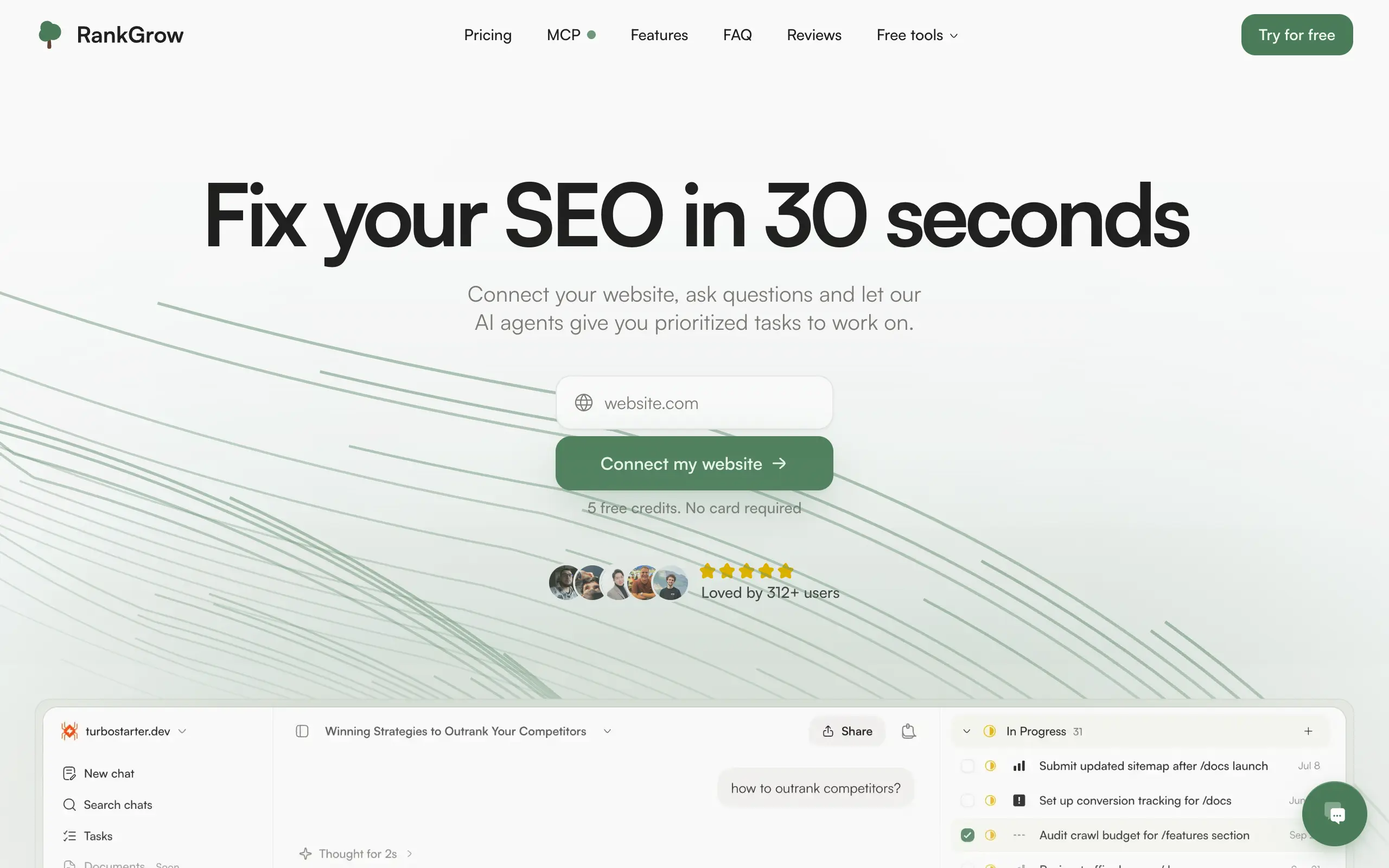
RankGrow
Fix your SEO with AI agents - connect Search Console, get prioritized tasks, and grow organic traffic 📈
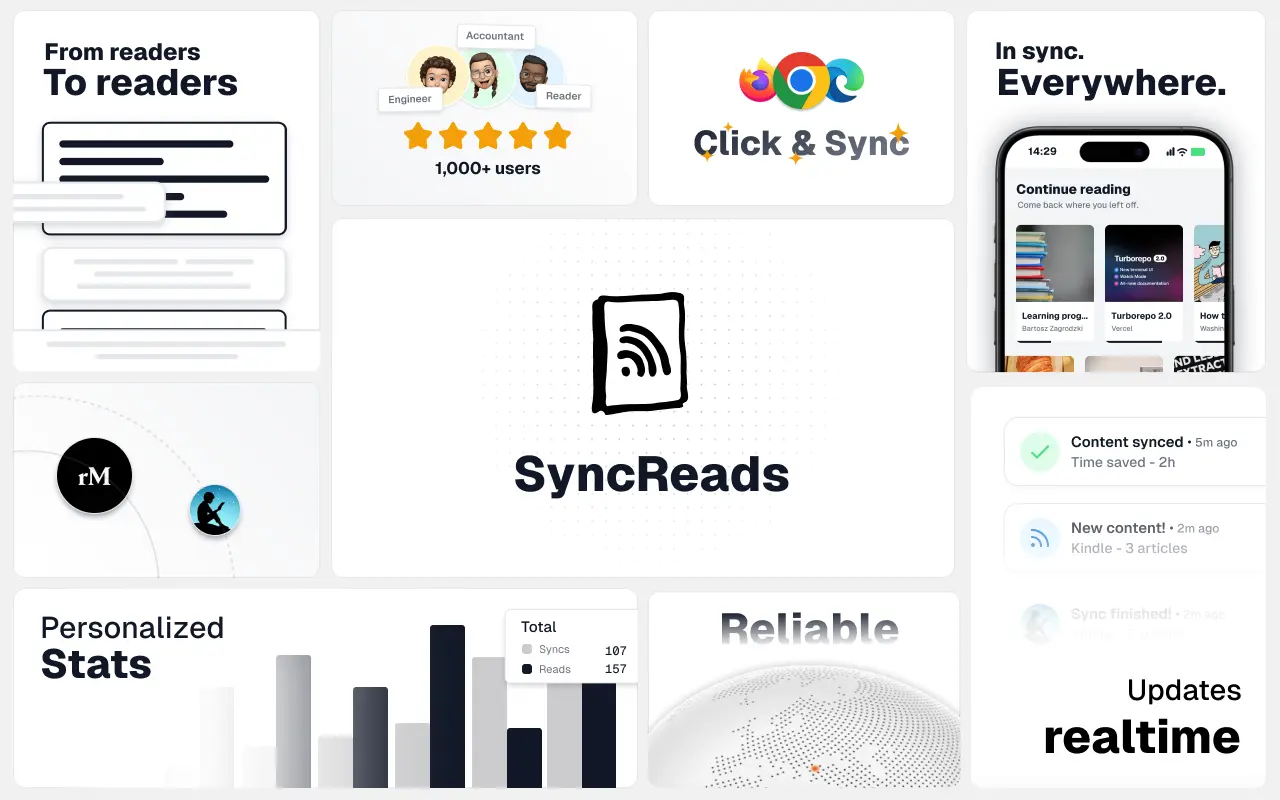
SyncReads
Sync your favorite content for distraction-free reading, save time and replace multiple apps. Anytime, anywhere 🔄
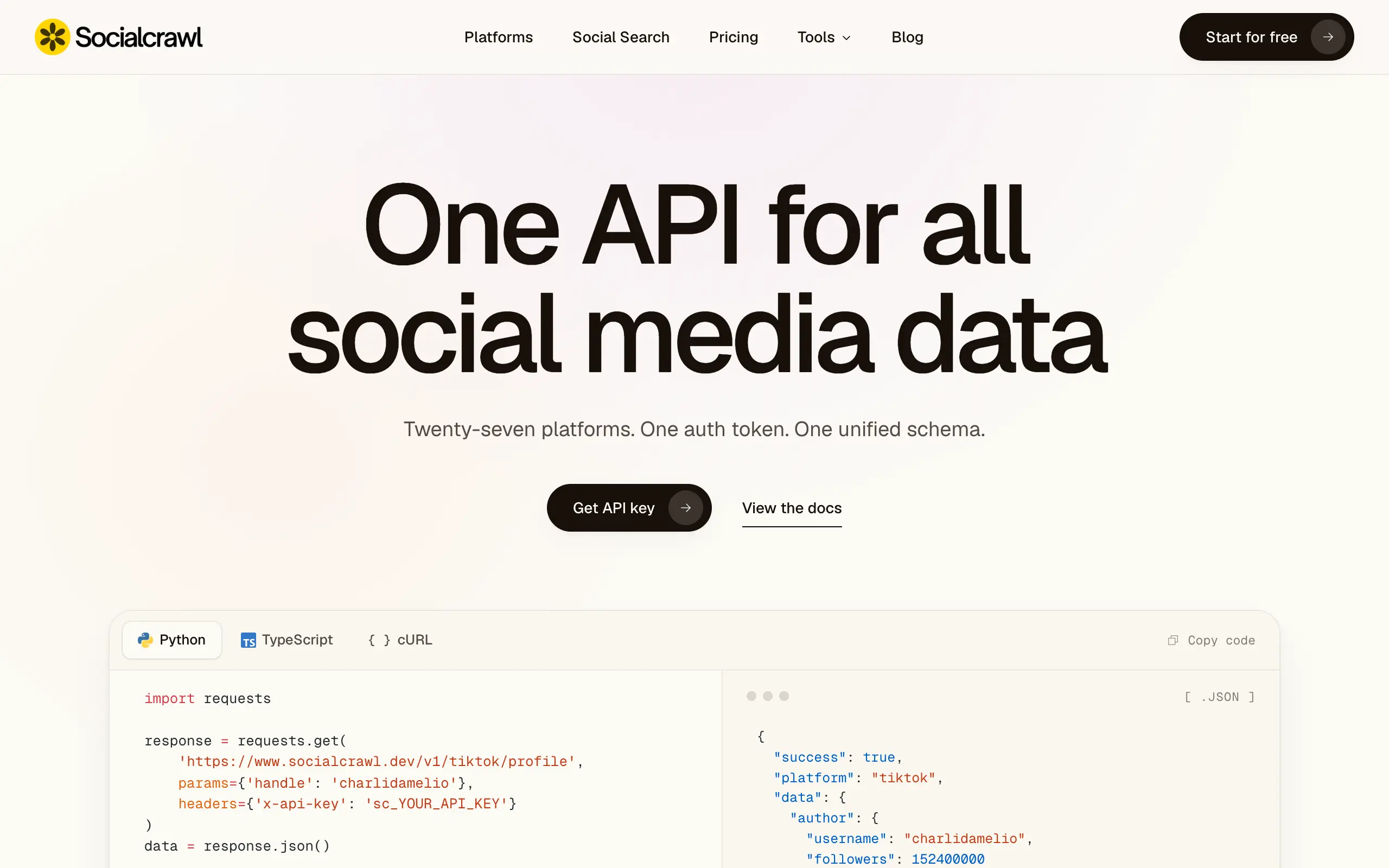
Socialcrawl
Get clean, structured data from 21 platforms like TikTok, Instagram, and YouTube with a single request 📊
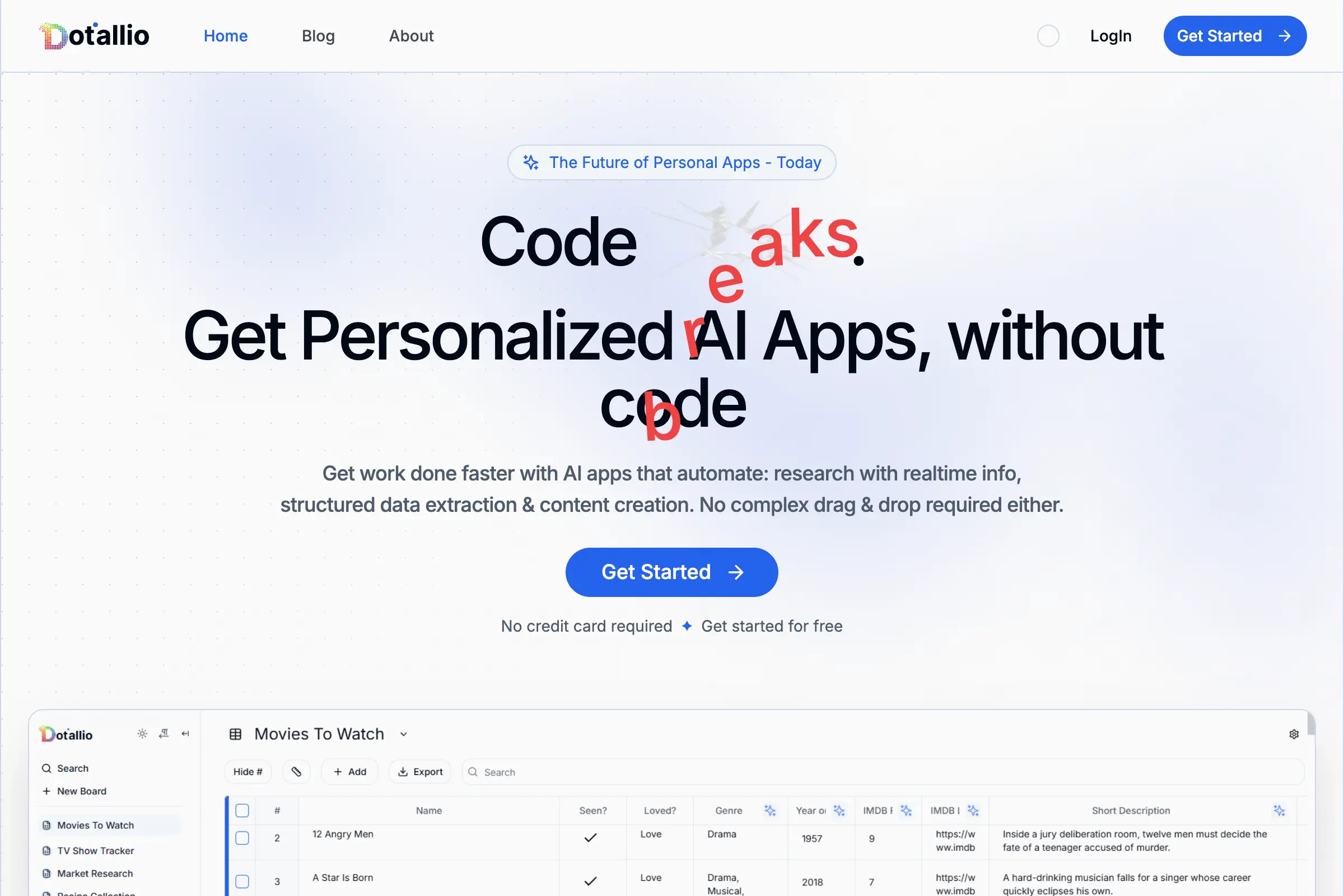
Dotallio
Personalized AI apps that automate research, data extraction, and content creation without code 🤖
Shibui
AI website builder - describe your business, pick a niche template, edit by chatting, and publish instantly ✨
Pro Service
Find verified home service professionals, compare quotes, and pay securely through escrow - built for Brazilians across the US 🏠
RankGrow
Fix your SEO with AI agents - connect Search Console, get prioritized tasks, and grow organic traffic 📈
SyncReads
Sync your favorite content for distraction-free reading, save time and replace multiple apps. Anytime, anywhere 🔄
Socialcrawl
Get clean, structured data from 21 platforms like TikTok, Instagram, and YouTube with a single request 📊
Dotallio
Personalized AI apps that automate research, data extraction, and content creation without code 🤖
Shibui
AI website builder - describe your business, pick a niche template, edit by chatting, and publish instantly ✨
Pro Service
Find verified home service professionals, compare quotes, and pay securely through escrow - built for Brazilians across the US 🏠
RankGrow
Fix your SEO with AI agents - connect Search Console, get prioritized tasks, and grow organic traffic 📈
SyncReads
Sync your favorite content for distraction-free reading, save time and replace multiple apps. Anytime, anywhere 🔄
Socialcrawl
Get clean, structured data from 21 platforms like TikTok, Instagram, and YouTube with a single request 📊
Dotallio
Personalized AI apps that automate research, data extraction, and content creation without code 🤖
Shibui
AI website builder - describe your business, pick a niche template, edit by chatting, and publish instantly ✨
Pro Service
Find verified home service professionals, compare quotes, and pay securely through escrow - built for Brazilians across the US 🏠
RankGrow
Fix your SEO with AI agents - connect Search Console, get prioritized tasks, and grow organic traffic 📈
SyncReads
Sync your favorite content for distraction-free reading, save time and replace multiple apps. Anytime, anywhere 🔄
Socialcrawl
Get clean, structured data from 21 platforms like TikTok, Instagram, and YouTube with a single request 📊
Dotallio
Personalized AI apps that automate research, data extraction, and content creation without code 🤖

Talk to Santa
Enjoy a magical live video chat or receive a unique AI-generated video greeting from Santa Claus 🎅

pozywka.pl
Scalable blog for food journalist, focused on performance and user experience 🌭
zagrodzki.me
Personal blog and portfolio of Bart Zagrodzki, where he shares his knowledge and work 💼
TurboStarter
Ship your startup everywhere. In minutes.
HTML to Markdown
Convert HTML to Markdown with ease, directly in your browser 📄
Omichat
Chat with 50+ AI models, including ChatGPT and Claude, in one place - switch models anytime without losing context 🤖
Talk to Santa
Enjoy a magical live video chat or receive a unique AI-generated video greeting from Santa Claus 🎅
pozywka.pl
Scalable blog for food journalist, focused on performance and user experience 🌭
zagrodzki.me
Personal blog and portfolio of Bart Zagrodzki, where he shares his knowledge and work 💼
TurboStarter
Ship your startup everywhere. In minutes.
HTML to Markdown
Convert HTML to Markdown with ease, directly in your browser 📄
Omichat
Chat with 50+ AI models, including ChatGPT and Claude, in one place - switch models anytime without losing context 🤖
Talk to Santa
Enjoy a magical live video chat or receive a unique AI-generated video greeting from Santa Claus 🎅
pozywka.pl
Scalable blog for food journalist, focused on performance and user experience 🌭
zagrodzki.me
Personal blog and portfolio of Bart Zagrodzki, where he shares his knowledge and work 💼
TurboStarter
Ship your startup everywhere. In minutes.
HTML to Markdown
Convert HTML to Markdown with ease, directly in your browser 📄
Omichat
Chat with 50+ AI models, including ChatGPT and Claude, in one place - switch models anytime without losing context 🤖
Talk to Santa
Enjoy a magical live video chat or receive a unique AI-generated video greeting from Santa Claus 🎅
pozywka.pl
Scalable blog for food journalist, focused on performance and user experience 🌭
zagrodzki.me
Personal blog and portfolio of Bart Zagrodzki, where he shares his knowledge and work 💼
TurboStarter
Ship your startup everywhere. In minutes.
HTML to Markdown
Convert HTML to Markdown with ease, directly in your browser 📄
Omichat
Chat with 50+ AI models, including ChatGPT and Claude, in one place - switch models anytime without losing context 🤖
Claude Fast
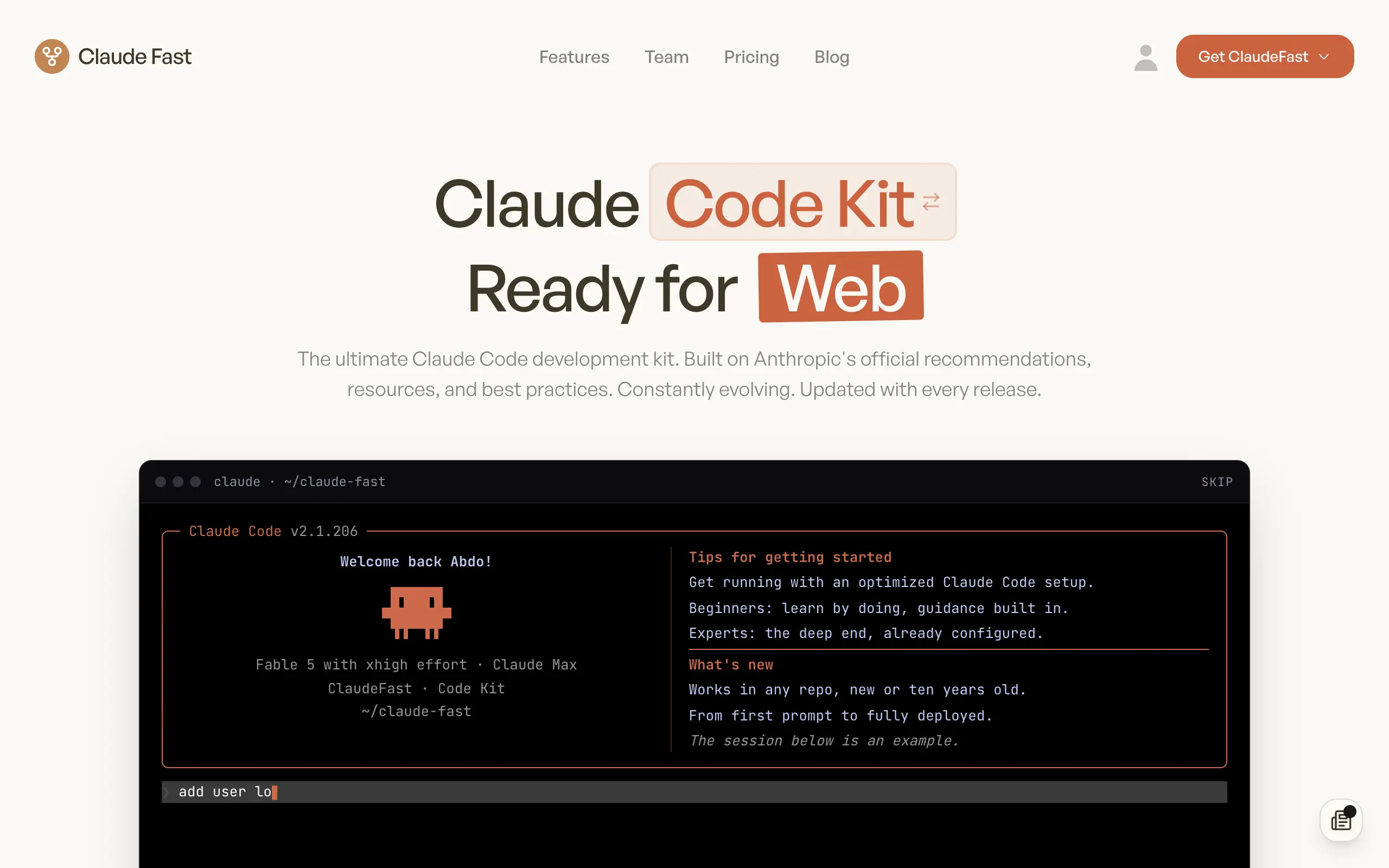
Supercharge your Claude Code with 6x effective context window and specialized AI agents 🤖
EmojAI
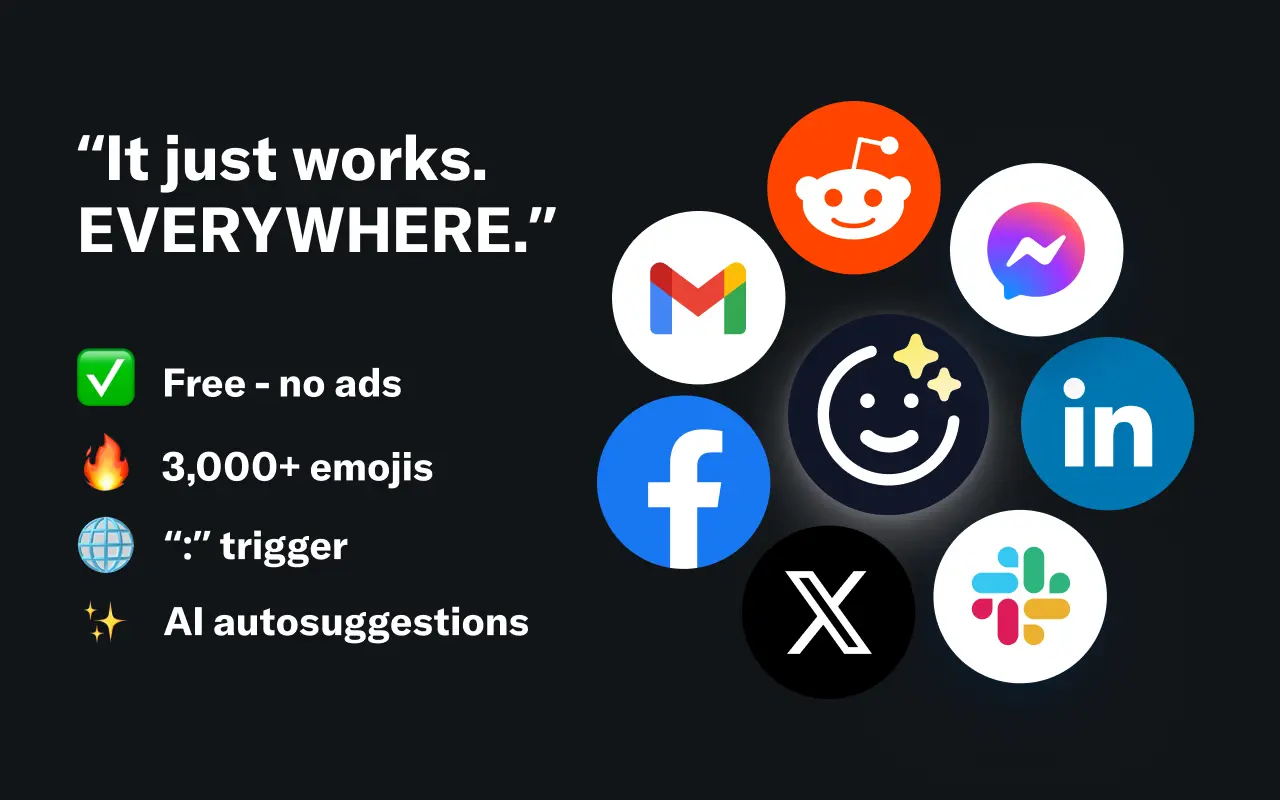
AI-powered emoji picker with smart, context-aware suggestions 🤖

Solohacker
Autonomous company launcher - AI agents work 24/7, escalate what matters, and you stay in control 🤖

BeRawi: Storytelling Coach
Practice storytelling daily with instant feedback to sound clearer, more engaging, and confident 🎤
Claude Fast
Supercharge your Claude Code with 6x effective context window and specialized AI agents 🤖
EmojAI
AI-powered emoji picker with smart, context-aware suggestions 🤖
Solohacker
Autonomous company launcher - AI agents work 24/7, escalate what matters, and you stay in control 🤖
BeRawi: Storytelling Coach
Practice storytelling daily with instant feedback to sound clearer, more engaging, and confident 🎤
Claude Fast
Supercharge your Claude Code with 6x effective context window and specialized AI agents 🤖
EmojAI
AI-powered emoji picker with smart, context-aware suggestions 🤖
Solohacker
Autonomous company launcher - AI agents work 24/7, escalate what matters, and you stay in control 🤖
BeRawi: Storytelling Coach
Practice storytelling daily with instant feedback to sound clearer, more engaging, and confident 🎤
Claude Fast
Supercharge your Claude Code with 6x effective context window and specialized AI agents 🤖
EmojAI
AI-powered emoji picker with smart, context-aware suggestions 🤖
Solohacker
Autonomous company launcher - AI agents work 24/7, escalate what matters, and you stay in control 🤖
BeRawi: Storytelling Coach
Practice storytelling daily with instant feedback to sound clearer, more engaging, and confident 🎤

Connect with like-minded people
Join our community to get feedback, support, and grow together with 1,000+ builders on board, let's ship it!
Join usShip your startup everywhere. In minutes.
Don't burn tokens on setup and start building features on day one.