RFP Copilot
AI workspace that turns past proposals, security docs, and product knowledge into cited RFP answers for B2B SaaS teams.
What an AI RFP response platform must solve
Enterprise buyers increasingly expect B2B SaaS vendors to complete detailed requests for proposal, security questionnaires, due diligence forms, and procurement portals before a deal can progress. For revenue teams, this work is rarely a simple writing task. It is a knowledge retrieval, verification, collaboration, and risk-management problem.
RFP Copilot is an AI RFP response platform designed to turn a company’s existing proposal library, security documentation, product knowledge, policies, and approved answers into accurate, cited responses. Rather than asking sales teams to search through disconnected folders or relying on generic AI output, it gives teams a governed workspace for producing answers that are grounded in internal evidence.
The core opportunity is substantial. Enterprise sales cycles often involve:
- Long questionnaires with hundreds or thousands of questions
- Repetitive questions phrased differently across prospects
- High-stakes security, privacy, legal, and compliance requests
- Knowledge distributed across sales, product, engineering, legal, and security teams
- Tight turnaround requirements that create bottlenecks
- Review processes that can delay a qualified opportunity for days or weeks
An AI RFP response tool should not merely generate faster prose. It should help teams identify the best source material, preserve citations, detect uncertainty, route ownership, and maintain approval controls. That is the difference between a novelty chatbot and a trusted revenue operations system.
The central product thesis
The most valuable RFP automation is evidence-first. Buyers will trust AI-assisted answers when every meaningful claim can be traced to a current, approved internal source.
The target audience for AI RFP response software
The best early customers for RFP Copilot are B2B SaaS companies that sell into mid-market and enterprise accounts. These organizations typically have enough RFP volume and enough deal complexity to feel the operational cost of manual responses.
Primary users inside B2B SaaS companies
The primary day-to-day user is usually a proposal manager, sales operations manager, revenue enablement lead, or solutions consultant. These users are responsible for coordinating responses but often lack direct ownership over all of the information required to answer a questionnaire.
They need a system that makes it easier to:
- Find previously approved answers without relying on tribal knowledge
- Draft a first response quickly and confidently
- Ask subject-matter experts only when an answer truly needs review
- Track status across hundreds of questions
- Ensure responses match approved messaging and compliance positions
- Export answers into the format required by the prospect
Secondary users include account executives, sales engineers, security leaders, product marketers, legal counsel, privacy officers, compliance teams, and customer success leaders. Each group contributes specialized knowledge, but none wants to become a permanent bottleneck for repetitive requests.
| Audience | Primary job | Current pain | Value from RFP Copilot | Buying influence |
|---|---|---|---|---|
| Proposal manager | Coordinate submissions | Manual search and follow-up | Faster cited drafts and workflow visibility | High |
| Sales engineer | Validate technical answers | Repeated technical questions | Reusable approved product knowledge | Medium |
| Security leader | Review risk and assurance claims | Uncontrolled answer reuse | Evidence, approvals, and auditability | High |
| Revenue leader | Improve deal velocity | RFP delays and low capacity | More responses without proportional hiring | High |
Ideal customer profile for RFP Copilot
A strong ideal customer profile is a SaaS business with at least one of the following characteristics:
- Responds to more than 20 meaningful RFPs, RFIs, DDQs, or security questionnaires each year
- Has annual contract values that justify a formal procurement process
- Sells to regulated industries such as financial services, healthcare, government, insurance, or large enterprises
- Maintains documentation in tools such as Google Drive, Notion, Confluence, SharePoint, GitHub, or a trust center
- Employs dedicated sales engineering, security, proposal, or deal-desk staff
- Experiences frequent delays waiting for technical, legal, or security approvals
- Needs consistent positioning across a growing sales organization
Early-stage SaaS startups may appreciate AI proposal writing, but they are less likely to have enough content volume, governance requirements, or RFP frequency to support premium pricing. The more attractive segment is the scaling SaaS company that has already outgrown shared spreadsheets and ad hoc Slack requests.
Buyer concerns that shape the product
A buyer evaluating AI RFP software will not only ask whether it saves time. They will ask whether the system creates a new security or accuracy risk.
Their questions are likely to include:
- Can the model answer only from approved company information?
- Can we see the exact source behind each generated answer?
- Can we restrict access to confidential policies and documents?
- Can we ensure legal, security, and product teams approve sensitive content?
- Does the platform retain or train on our data?
- How does it handle outdated source material?
- Can it work with existing document repositories and RFP formats?
- Can we demonstrate a measurable return on investment?
RFP Copilot should treat these objections as product requirements, not merely sales objections.
The market gap in RFP automation and security questionnaires
The RFP response market includes proposal management software, knowledge bases, spreadsheet-heavy workflows, outsourced proposal services, and increasingly, general-purpose generative AI tools. Yet many teams remain frustrated because each approach has a critical limitation.
Traditional proposal software can provide response libraries and workflow controls, but it may require extensive maintenance and can still force users to search manually. General-purpose AI can generate fluent answers quickly, but it may hallucinate, lack organization-specific context, and provide no dependable evidence trail. Outsourcing can increase capacity, but it is expensive, introduces knowledge transfer overhead, and may not solve ongoing governance problems.
The market gap is a practical AI workspace that combines the following elements:
- Company-specific retrieval from authoritative internal documents
- Answer-level citations that users can inspect before submission
- Confidence signals when source support is weak or contradictory
- Structured review workflows for security, legal, product, and executive stakeholders
- Content governance that separates approved answers from drafts
- Continuous knowledge improvement based on resolved questions and reviewer feedback
This positioning makes RFP Copilot relevant beyond formal RFPs. The same knowledge system can support security questionnaires, due diligence questionnaires, sales enablement, procurement forms, trust-center updates, and internal deal support.
Why citations are the defining product advantage
In an enterprise questionnaire, a polished but unsupported answer is dangerous. A statement about encryption, uptime, certifications, data retention, subprocessors, integrations, accessibility, or compliance can create commercial and legal exposure if it is incorrect.
Cited RFP answers change the reviewer experience. Instead of asking, “Where did this answer come from?” a security reviewer can inspect the underlying source and decide whether it is current, complete, and approved.
That transforms AI from an opaque text generator into a research assistant that helps experts make faster decisions.
The RFP Copilot USP should therefore be clear:
RFP Copilot generates grounded, cited RFP answers from approved company knowledge, then routes exceptions to the right expert before they become deal risk.
This is more defensible than a broad promise to “write proposals with AI.” It speaks directly to the trust, speed, and governance requirements of enterprise sales teams.
Core RFP Copilot features and solution design
RFP Copilot should be built as a complete response workspace rather than a chat interface attached to a document repository. The workflow needs to support knowledge ingestion, question extraction, response drafting, review, and final delivery.
Grounded answer generation
Generate proposal and questionnaire responses from approved source documents, with visible citations and confidence indicators.
Knowledge governance
Manage source ownership, document freshness, approved answer status, permissions, and content lifecycle.
Collaborative review
Assign questions to subject-matter experts, collect approvals, and preserve a complete response history.
Knowledge ingestion and source management
The first feature area is a secure knowledge ingestion layer. Teams should be able to import and synchronize content from the places where business knowledge already lives.
Initial connectors should prioritize common systems:
- Google Drive for policies, prior proposals, and collateral
- Microsoft SharePoint and OneDrive for enterprise document repositories
- Notion and Confluence for internal product and process documentation
- GitHub for technical documentation and release notes
- CSV and spreadsheet upload for historical answer libraries
- Direct PDF, DOCX, XLSX, and PPTX upload for one-off material
Each source should include metadata that improves retrieval and governance:
- Document title and source location
- Owner or accountable team
- Last updated date
- Security classification
- Product area
- Region or market applicability
- Approval status
- Expiration or review date
A source should not become automatically trusted simply because it was uploaded. RFP Copilot should distinguish between reference material, approved answer sources, and restricted internal documents. This lets customers use a broad knowledge corpus while controlling what the AI can cite for externally submitted claims.
RFP and questionnaire intake
RFP intake needs to support real-world formats. Buyers often send spreadsheets, Word documents, PDFs, online portals, and exported questionnaires with inconsistent structures.
An MVP can begin with XLSX, CSV, DOCX, and PDF support. The product should extract:
- Section headings
- Question text
- Response fields
- Character or word limits
- Required attachments
- Question categories
- Mandatory versus optional fields
- Existing buyer instructions
Question classification is particularly useful. The system can automatically tag questions as security, privacy, legal, product, implementation, support, accessibility, commercial, or company information. These categories support more accurate retrieval and smarter reviewer assignment.
Cited answer generation with confidence scoring
For each question, RFP Copilot should retrieve relevant approved evidence and generate a proposed response based on that context. The interface should present the response alongside citations, not hide them behind an optional menu.
A useful answer panel includes:
- Draft answer text
- One or more source citations
- Source snippets relevant to the claim
- A confidence score based on evidence quality and answer coverage
- Content freshness indicators
- A clear warning when the system lacks adequate evidence
- Options to regenerate, edit, assign, approve, or mark as not applicable
Confidence should never be marketed as proof of correctness. It is a triage mechanism. A “high-confidence” answer may have strong overlap with current, approved source content, while a “needs review” answer could have incomplete evidence, conflicting documents, or an outdated source.
Do not automate unsupported commitments
When RFP Copilot cannot find sufficient evidence, it should say so clearly. The correct action is to route the question for review, not to invent a plausible commitment.
Answer library that learns from approvals
A traditional answer library becomes stale because it requires manual maintenance. RFP Copilot can reduce that burden by turning approved responses into governed knowledge assets.
After a response is approved, authorized users should be able to save it as a reusable answer with:
- Applicable tags and question categories
- Product and market scope
- Required caveats
- Source citations
- Approval owner
- Review deadline
- Version history
- Usage count and recent performance signals
This creates a compounding advantage. Every completed questionnaire improves the speed and quality of the next one, but only after a human has validated the answer.
Collaboration, approvals, and audit trails
Enterprise RFP work is inherently cross-functional. A compelling AI RFP response platform must avoid replacing collaboration with isolated AI output.
Core workflow features include:
- Assigning individual questions or sections to named experts
- Adding comments and requested changes
- Setting due dates and escalation reminders
- Defining approval stages for sensitive categories
- Tracking response status at question, section, and project levels
- Maintaining version history for every answer
- Recording who approved, changed, or rejected an answer
- Exporting an audit record for internal governance
For example, privacy questions could require a privacy lead’s approval, while infrastructure questions route to security engineering. The assignment engine can recommend owners based on question category, source ownership, and prior reviewer activity.
Export and submission readiness
The response workflow is incomplete without reliable export. Customers need to return completed answers in the buyer’s requested format, often with exact formatting requirements.
The product should support:
- Export to XLSX and DOCX
- Preserving question order and response columns
- Downloading source citations as an internal-only review appendix
- Tracking unanswered and unapproved questions before export
- Copy-friendly answer formatting for procurement portals
- A final submission checklist
A later enterprise feature can include browser assistance for copying approved responses into web-based portals. However, that should follow rigorous security evaluation because browser extensions and portal interactions can introduce data-handling concerns.
Recommended tech stack for an AI RFP response platform
The technical foundation should prioritize secure multi-tenancy, dependable retrieval, asynchronous document processing, and a responsive collaboration experience. RFP Copilot does not need exotic infrastructure at launch, but it does need disciplined data architecture.
Application layer and user experience
A strong SaaS foundation can use Next.js with React and TypeScript. This combination supports a high-performance web application, server-side rendering where useful, API routes or server actions, and an established ecosystem for B2B product development.
For styling, Tailwind CSS offers a fast way to build a consistent design system. The interface should focus on dense but readable workspaces, especially for spreadsheet-style question lists, review panes, document citations, and status dashboards.
Use a component-driven workflow where the central page layout includes:
- A project navigation panel
- A question list with status and ownership
- An answer editor
- A citation and source panel
- A review activity timeline
The product should feel closer to a modern deal workspace than a generic AI chat screen.
Data, authentication, and multi-tenancy
PostgreSQL is a strong default database for tenants, users, workspaces, RFP projects, questions, answers, tasks, approvals, and audit events. It is mature, reliable, and well-suited to relational workflow data.
For an early product, Supabase can accelerate development by offering managed Postgres, authentication, storage, and row-level security. The trade-off is that advanced enterprise requirements may eventually lead some teams toward more customized identity, data residency, and infrastructure arrangements.
Authentication should support:
- Email and password or passwordless login
- Google and Microsoft sign-in where appropriate
- Role-based access controls
- Workspace membership
- Single sign-on for enterprise plans
- SCIM provisioning for larger deployments
The authorization model deserves early attention. A user who can view a sales proposal should not automatically gain access to confidential legal or security documentation.
Retrieval-augmented generation architecture
The AI layer should use retrieval-augmented generation, commonly called RAG. In practical terms, RFP Copilot should retrieve approved source passages before asking a language model to draft a response.
A reliable pipeline looks like this:
type AnswerRequest = {
  question: string;
  category: "security" | "privacy" | "product" | "legal" | "general";
  workspaceId: string;
};

async function generateGroundedAnswer(request: AnswerRequest) {
  const sources = await retrieveApprovedSources({
    query: request.question,
    category: request.category,
    workspaceId: request.workspaceId,
    limit: 8,
  });

  if (sources.length === 0) {
    return {
      status: "needs_review",
      answer: "",
      citations: [],
      reason: "No approved evidence was found for this question.",
    };
  }

  return generateAnswerFromSources({
    question: request.question,
    sources,
    requireCitations: true,
    prohibitUnsupportedClaims: true,
  });
}
The important design choice is the final instruction. The system should prohibit unsupported claims and return a review state when evidence is unavailable.
For vector search, pgvector is an appealing starting point because it keeps embeddings near the relational data model. Managed vector databases can become attractive at very large scale or when specialized retrieval capabilities are required. The trade-off is operational complexity and additional data synchronization.
Document processing and background jobs
Document ingestion can be expensive and asynchronous. The product needs background jobs for:
- File parsing
- Optical character recognition for scanned PDFs
- Chunking and embedding content
- Metadata extraction
- Connector synchronization
- Re-indexing updated documents
- Generating project-level summaries
- Sending reminders and notifications
A durable job queue is important because a failed document parse should be retried safely without blocking the user interface. Store raw documents in encrypted object storage and save parsed content, chunks, embeddings, metadata, and processing status separately.
AI model strategy and vendor resilience
Use a model abstraction layer instead of binding all product logic to one provider. The best model for long-context synthesis may not always be the lowest-cost model for classification, extraction, or answer comparison.
A practical strategy includes:
- Smaller models for tagging, extraction, and routine classification
- Higher-capability models for complex answer drafting
- Retrieval and citations as mandatory inputs for sensitive responses
- Model evaluation datasets based on anonymized customer-style questions
- Human approval checkpoints for high-risk content
Customers will ask how their content is handled. The product should offer clear documentation covering data retention, model-provider terms, encryption, training policy, access controls, and deletion workflows. For high-value enterprise customers, consider options such as region-specific processing or bring-your-own-model arrangements later in the roadmap.
Monetization options for RFP Copilot
RFP Copilot should use value-based SaaS pricing. The product saves valuable employee time, increases response capacity, and helps reduce revenue risk. Pricing should reflect business impact rather than only token consumption.
Recommended pricing model
A tiered subscription with usage guardrails is the clearest starting point.
- "Starter": for small teams with limited projects, core uploads, cited drafting, and basic exports
- "Growth": for cross-functional revenue teams needing integrations, collaboration, approval workflows, and higher document limits
- "Enterprise": for large organizations requiring SSO, SCIM, advanced audit logs, custom retention, dedicated onboarding, and security review support
A project or response-volume metric can complement seat pricing. Proposal managers may need daily access, while subject-matter experts may only review a few questions per quarter. Charging every occasional reviewer as a full seat can slow adoption.
A balanced approach is to include a set number of editor seats, allow free or low-cost reviewer access, and limit plans by active RFP projects, knowledge volume, or AI processing capacity.
Expansion revenue opportunities
Expansion should come from capabilities that grow with a customer’s governance needs:
- Additional workspace or business-unit support
- More data connectors
- Advanced security questionnaire automation
- Custom approval workflows
- Dedicated private deployment options
- Trust-center integrations
- CRM integrations with Salesforce or HubSpot
- API access and custom exports
- Professional services for knowledge-base migration
Do not rely on opaque AI credit pricing as the primary value story. Customers buy RFP Copilot because they want faster, safer enterprise responses. AI usage should be understandable, but it should not distract from the business outcome.
Competitive advantage analysis for AI RFP Copilot
The RFP software category is competitive, so a generic feature checklist is not enough. RFP Copilot needs a focused wedge that creates measurable differentiation.
| Capability | Shared folders | Generic AI chat | Legacy response library | RFP Copilot | Customer impact |
|---|---|---|---|---|---|
| Search approved evidence | Limited | Limited | Partial | Strong | Less manual research |
| Answer-level citations | No | Usually no | Limited | Strong | Higher reviewer trust |
| Automated routing | No | No | Partial | Strong | Fewer expert bottlenecks |
| Freshness governance | No | No | Partial | Strong | Lower compliance risk |
Defensible product moats
The first moat is governed proprietary knowledge. As customers connect more content, approve more answers, and define more workflows, the workspace becomes increasingly valuable and harder to replace.
The second moat is workflow embedding. If RFP Copilot becomes the place where sales, security, legal, and product teams coordinate responses, it earns a role in a critical commercial process.
The third moat is evaluation data. Over time, the platform can measure which retrieval strategies, answer structures, reviewer paths, and confidence signals create the best outcomes. This data can improve product quality without exposing one customer’s content to another.
The fourth moat is trust. In this category, trust is built through product behavior. Citation quality, clear uncertainty, document permissions, audit logs, and reliable exports are more valuable than flashy claims about autonomous AI.
Risks and mitigation strategies
AI RFP automation involves material risks. Addressing them openly makes the product more credible and gives the team a practical operating plan.
Mitigate this risk with retrieval-first generation, mandatory citations, source snippets, confidence thresholds, and “needs review” states. Never allow the system to present unsupported statements as approved facts.
Attach ownership and review dates to source documents and reusable answers. Flag content that is past its review deadline, and reduce confidence when only stale sources support a response.
Use tenant isolation, encryption in transit and at rest, granular permissions, secure audit logs, and clear retention controls. Conduct regular security reviews and prepare for customer vendor assessments early.
Design around existing workflows and file formats. Start with the question-by-question workflow users already understand, then automate repetitive steps without forcing a radical process change.
Lead with cited, governed responses for security-conscious SaaS teams. Avoid competing solely on generic writing quality, where model providers and broad AI tools can commoditize features quickly.
Legal and compliance considerations
RFP Copilot should avoid making compliance claims on behalf of its customers. It can help customers locate their own approved statements, but it should not imply that a company is certified, compliant, or contractually committed unless a source explicitly supports that claim.
The product team should also establish policies for:
- Customer data processing and deletion
- Model-provider data handling
- Subprocessor transparency
- Incident response
- Access logging
- Vulnerability management
- Security testing
- Intellectual property handling for uploaded documents
As the company moves upmarket, preparation for SOC 2 is likely to become commercially important. Teams should reference current guidance from credible standards bodies and independent auditors when publishing formal security materials rather than relying on outdated blog statistics or unsupported claims.
Go-to-market strategy for an AI RFP response platform
The go-to-market motion should focus on a narrow, urgent pain point. “AI for sales” is too broad. “Cited answers for SaaS security questionnaires and enterprise RFPs” is specific, painful, and easy to demonstrate.
Positioning message
A concise homepage message could be:
Turn approved company knowledge into cited RFP and security questionnaire answers, then send uncertain questions to the right expert.
This statement covers speed, trust, and collaboration without promising full automation where human review remains necessary.
High-intent SEO topics
RFP Copilot can build organic demand around searches from practitioners actively looking for a solution. Strong content clusters include:
- AI RFP response software
- RFP automation software for SaaS companies
- How to respond to security questionnaires faster
- RFP response best practices
- Security questionnaire automation
- Proposal management software comparison
- RAG for enterprise knowledge bases
- How to build an RFP answer library
- Reducing RFP response time
- How to prevent AI hallucinations in sales content
The best content should include practical templates, evaluation criteria, workflow examples, and buyer checklists. For data-driven claims, cite the original source in the final published piece, such as a recognized research firm, security standard body, or reputable industry survey.
Sales-assisted validation
Before investing heavily in broad acquisition, conduct structured discovery with proposal managers and security teams. The goal is not simply to hear that AI sounds useful. The goal is to understand actual workflow friction.
Ask prospects:
- How many questionnaires do you complete each quarter?
- Which questions create the biggest delays?
- Where do approved answers live today?
- How often are answers challenged or corrected during review?
- Who owns security and legal approvals?
- What is the average turnaround target?
- What does one delayed RFP cost in employee time or opportunity risk?
- Which systems must a new RFP tool integrate with?
A strong early design partner is one that can provide realistic questionnaires, representative internal documentation, recurring feedback, and a willingness to define success metrics.
Actionable implementation plan
The most effective approach is to launch a narrow, trustworthy MVP, validate that it reduces response effort, and then expand toward enterprise workflow depth.
Define the initial use case around security questionnaires and SaaS RFPs where incorrect answers are costly and source citations provide immediate value.
Interview 15 to 25 proposal managers, sales engineers, and security leaders. Collect anonymized examples of question formats, review workflows, and document repositories.
Build document upload, parsing, tagging, approved-source controls, question extraction, and answer generation with visible citations before adding broad integrations.
Create a review workflow with assignments, comments, approvals, version history, and a clear “needs review” status for insufficient evidence.
Measure time to first draft, percentage of answers accepted with minor edits, reviewer turnaround time, citation usage, and unanswered-question rate.
Add the highest-demand connectors, XLSX and DOCX exports, workspace roles, and audit logs after the core response loop is reliable.
Package enterprise capabilities such as SSO, SCIM, advanced permissions, custom retention, and onboarding once repeatable mid-market demand is established.
For teams that want to move from concept to production faster, TurboStarter can provide a practical SaaS foundation for building the application layer, authentication flow, billing structure, and production-ready product experience.
Final recommendation
RFP Copilot has a strong opportunity because it targets a costly, repetitive, high-trust workflow at the intersection of revenue operations, security, and enterprise procurement. The winning version of this product will not position AI as a replacement for expert judgment. It will position AI as a governed research and drafting layer that helps experts respond faster with evidence.
The clearest path to differentiation is to make every answer inspectable, every source governable, and every uncertain claim reviewable. If RFP Copilot consistently helps B2B SaaS teams produce cited RFP answers, reduce security questionnaire bottlenecks, and protect against unsupported commitments, it can become an essential part of the enterprise sales stack.
More 🤖 AI Startup SaaS ideas
Discover more innovative ai startup SaaS ideas that are trending in 2026. Each idea is AI-generated with market validation and growth potential to help you find your next profitable venture faster than competitors.
Your competitors are building with TurboStarter
Below are some of the SaaS ideas that have been generated and built with our starter kit.

Statiko
Monitor any Telegram channel in real time - track posts, edits, deletions, and growth with AI recaps 📡

Shibui
AI website builder - describe your business, pick a niche template, edit by chatting, and publish instantly ✨

Pro Service
Find verified home service professionals, compare quotes, and pay securely through escrow - built for Brazilians across the US 🏠
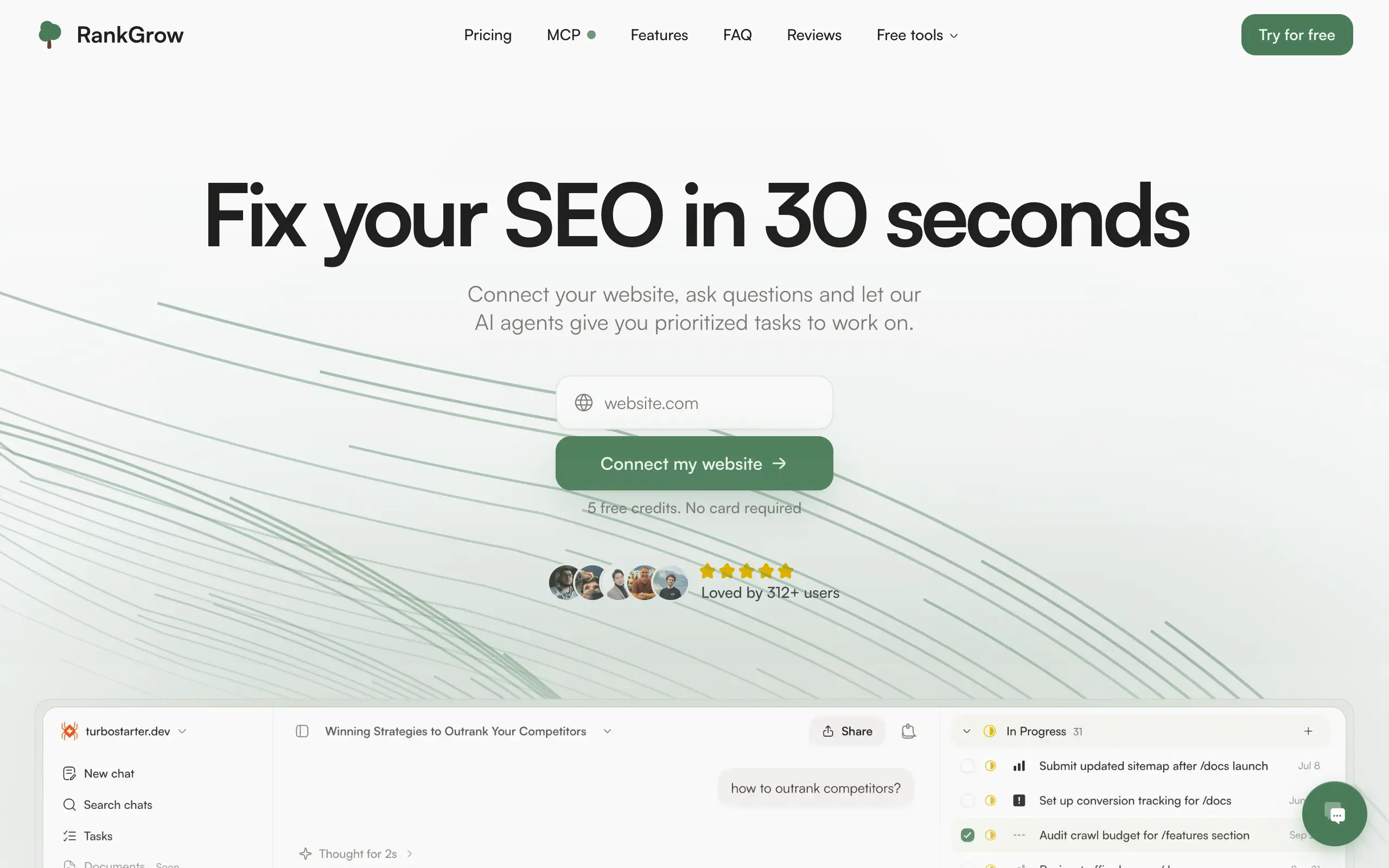
RankGrow
Fix your SEO with AI agents - connect Search Console, get prioritized tasks, and grow organic traffic 📈
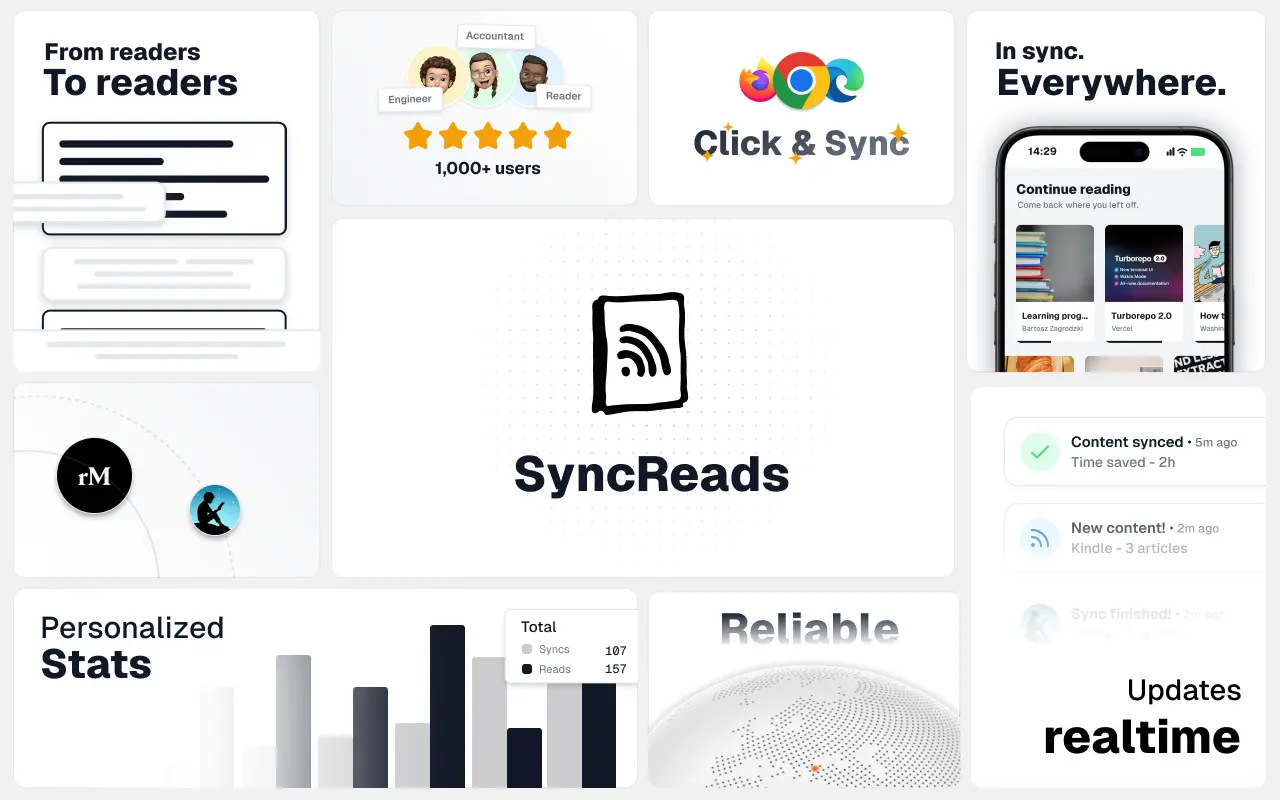
SyncReads
Sync your favorite content for distraction-free reading, save time and replace multiple apps. Anytime, anywhere 🔄
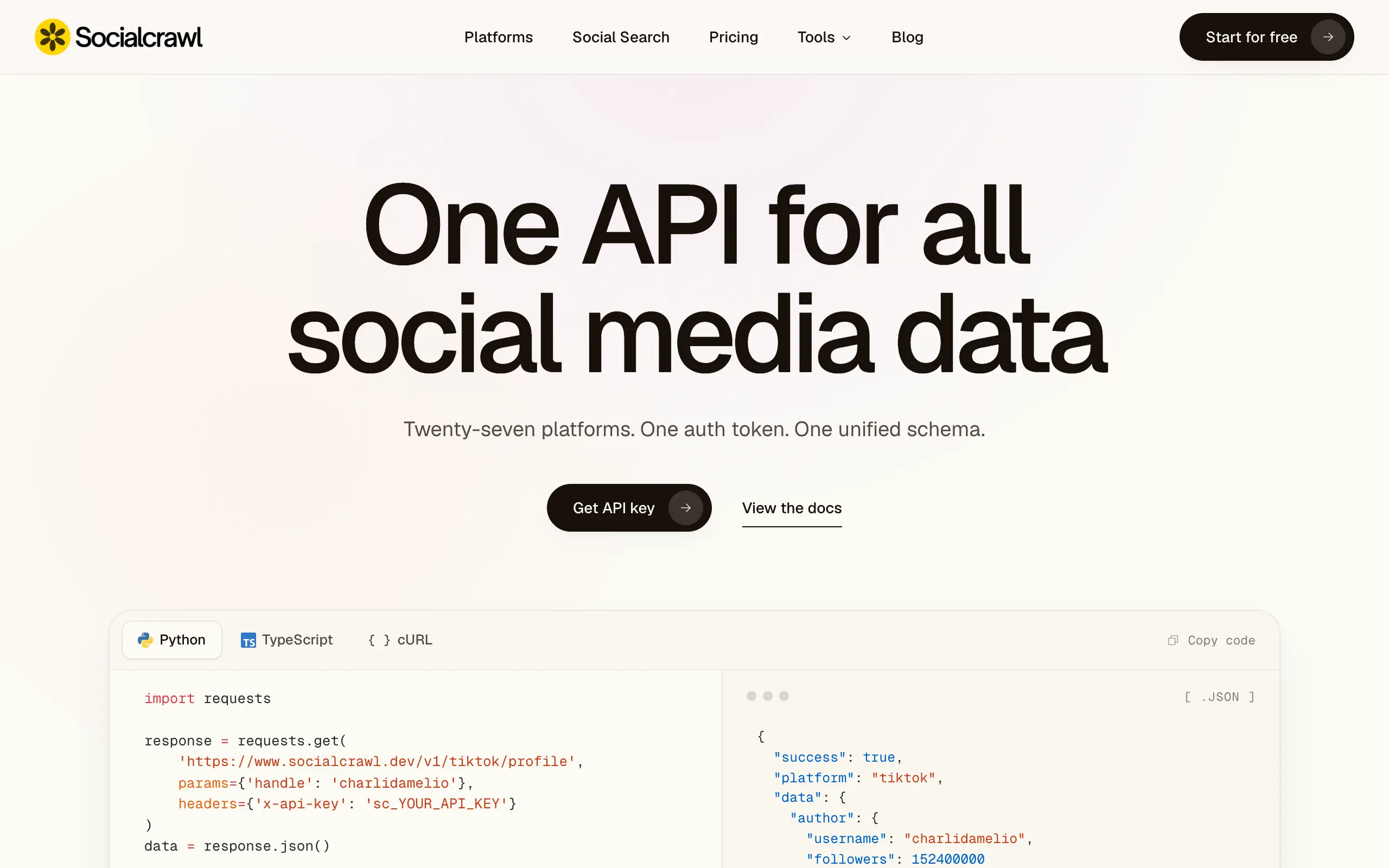
Socialcrawl
Get clean, structured data from 21 platforms like TikTok, Instagram, and YouTube with a single request 📊
Statiko
Monitor any Telegram channel in real time - track posts, edits, deletions, and growth with AI recaps 📡
Shibui
AI website builder - describe your business, pick a niche template, edit by chatting, and publish instantly ✨
Pro Service
Find verified home service professionals, compare quotes, and pay securely through escrow - built for Brazilians across the US 🏠
RankGrow
Fix your SEO with AI agents - connect Search Console, get prioritized tasks, and grow organic traffic 📈
SyncReads
Sync your favorite content for distraction-free reading, save time and replace multiple apps. Anytime, anywhere 🔄
Socialcrawl
Get clean, structured data from 21 platforms like TikTok, Instagram, and YouTube with a single request 📊
Statiko
Monitor any Telegram channel in real time - track posts, edits, deletions, and growth with AI recaps 📡
Shibui
AI website builder - describe your business, pick a niche template, edit by chatting, and publish instantly ✨
Pro Service
Find verified home service professionals, compare quotes, and pay securely through escrow - built for Brazilians across the US 🏠
RankGrow
Fix your SEO with AI agents - connect Search Console, get prioritized tasks, and grow organic traffic 📈
SyncReads
Sync your favorite content for distraction-free reading, save time and replace multiple apps. Anytime, anywhere 🔄
Socialcrawl
Get clean, structured data from 21 platforms like TikTok, Instagram, and YouTube with a single request 📊
Statiko
Monitor any Telegram channel in real time - track posts, edits, deletions, and growth with AI recaps 📡
Shibui
AI website builder - describe your business, pick a niche template, edit by chatting, and publish instantly ✨
Pro Service
Find verified home service professionals, compare quotes, and pay securely through escrow - built for Brazilians across the US 🏠
RankGrow
Fix your SEO with AI agents - connect Search Console, get prioritized tasks, and grow organic traffic 📈
SyncReads
Sync your favorite content for distraction-free reading, save time and replace multiple apps. Anytime, anywhere 🔄
Socialcrawl
Get clean, structured data from 21 platforms like TikTok, Instagram, and YouTube with a single request 📊
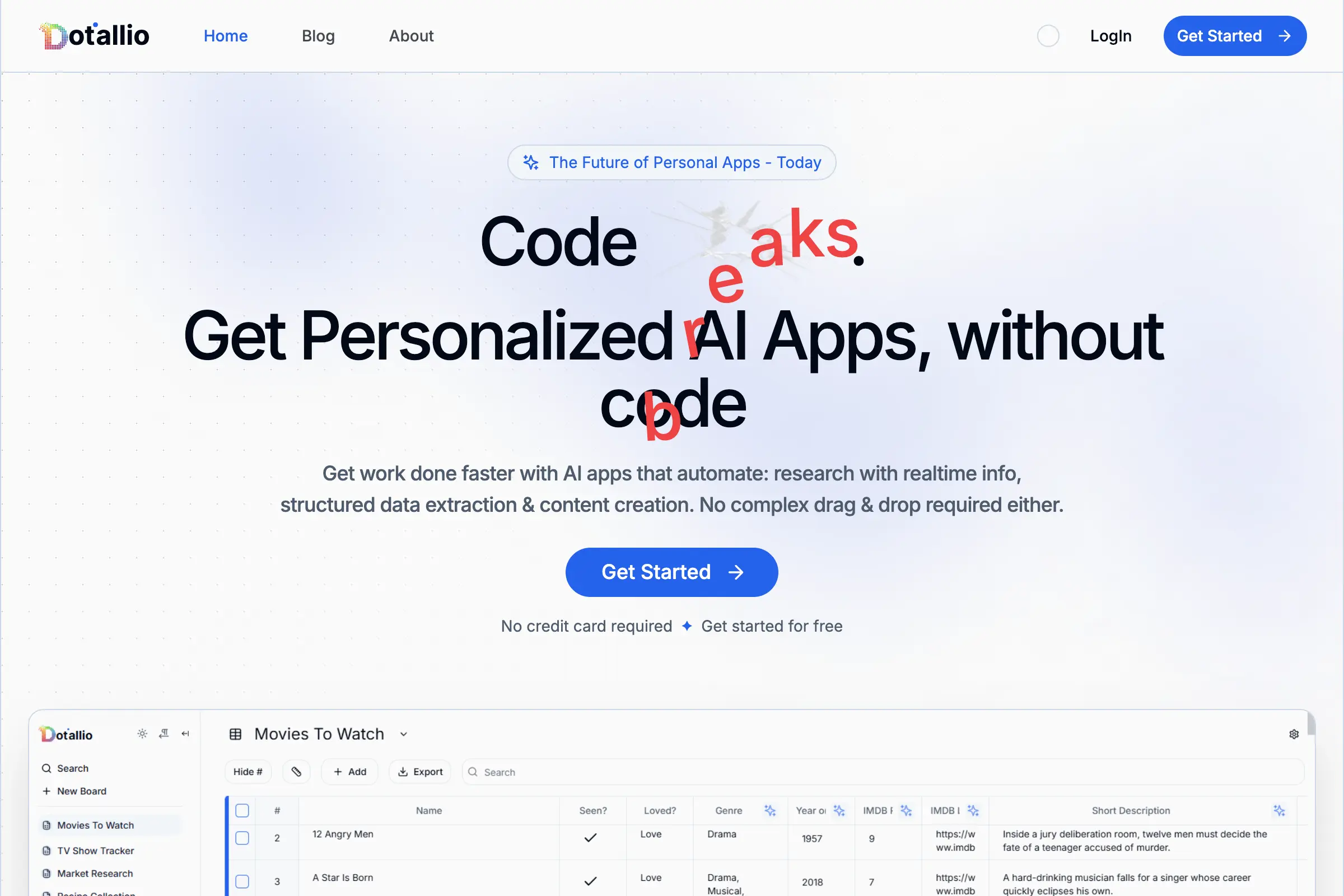
Dotallio
Personalized AI apps that automate research, data extraction, and content creation without code 🤖

Talk to Santa
Enjoy a magical live video chat or receive a unique AI-generated video greeting from Santa Claus 🎅

pozywka.pl
Scalable blog for food journalist, focused on performance and user experience 🌭
zagrodzki.me
Personal blog and portfolio of Bart Zagrodzki, where he shares his knowledge and work 💼
TurboStarter
Ship your startup everywhere. In minutes.
HTML to Markdown
Convert HTML to Markdown with ease, directly in your browser 📄
Dotallio
Personalized AI apps that automate research, data extraction, and content creation without code 🤖
Talk to Santa
Enjoy a magical live video chat or receive a unique AI-generated video greeting from Santa Claus 🎅
pozywka.pl
Scalable blog for food journalist, focused on performance and user experience 🌭
zagrodzki.me
Personal blog and portfolio of Bart Zagrodzki, where he shares his knowledge and work 💼
TurboStarter
Ship your startup everywhere. In minutes.
HTML to Markdown
Convert HTML to Markdown with ease, directly in your browser 📄
Dotallio
Personalized AI apps that automate research, data extraction, and content creation without code 🤖
Talk to Santa
Enjoy a magical live video chat or receive a unique AI-generated video greeting from Santa Claus 🎅
pozywka.pl
Scalable blog for food journalist, focused on performance and user experience 🌭
zagrodzki.me
Personal blog and portfolio of Bart Zagrodzki, where he shares his knowledge and work 💼
TurboStarter
Ship your startup everywhere. In minutes.
HTML to Markdown
Convert HTML to Markdown with ease, directly in your browser 📄
Dotallio
Personalized AI apps that automate research, data extraction, and content creation without code 🤖
Talk to Santa
Enjoy a magical live video chat or receive a unique AI-generated video greeting from Santa Claus 🎅
pozywka.pl
Scalable blog for food journalist, focused on performance and user experience 🌭
zagrodzki.me
Personal blog and portfolio of Bart Zagrodzki, where he shares his knowledge and work 💼
TurboStarter
Ship your startup everywhere. In minutes.
HTML to Markdown
Convert HTML to Markdown with ease, directly in your browser 📄
Omichat
Chat with 50+ AI models, including ChatGPT and Claude, in one place - switch models anytime without losing context 🤖
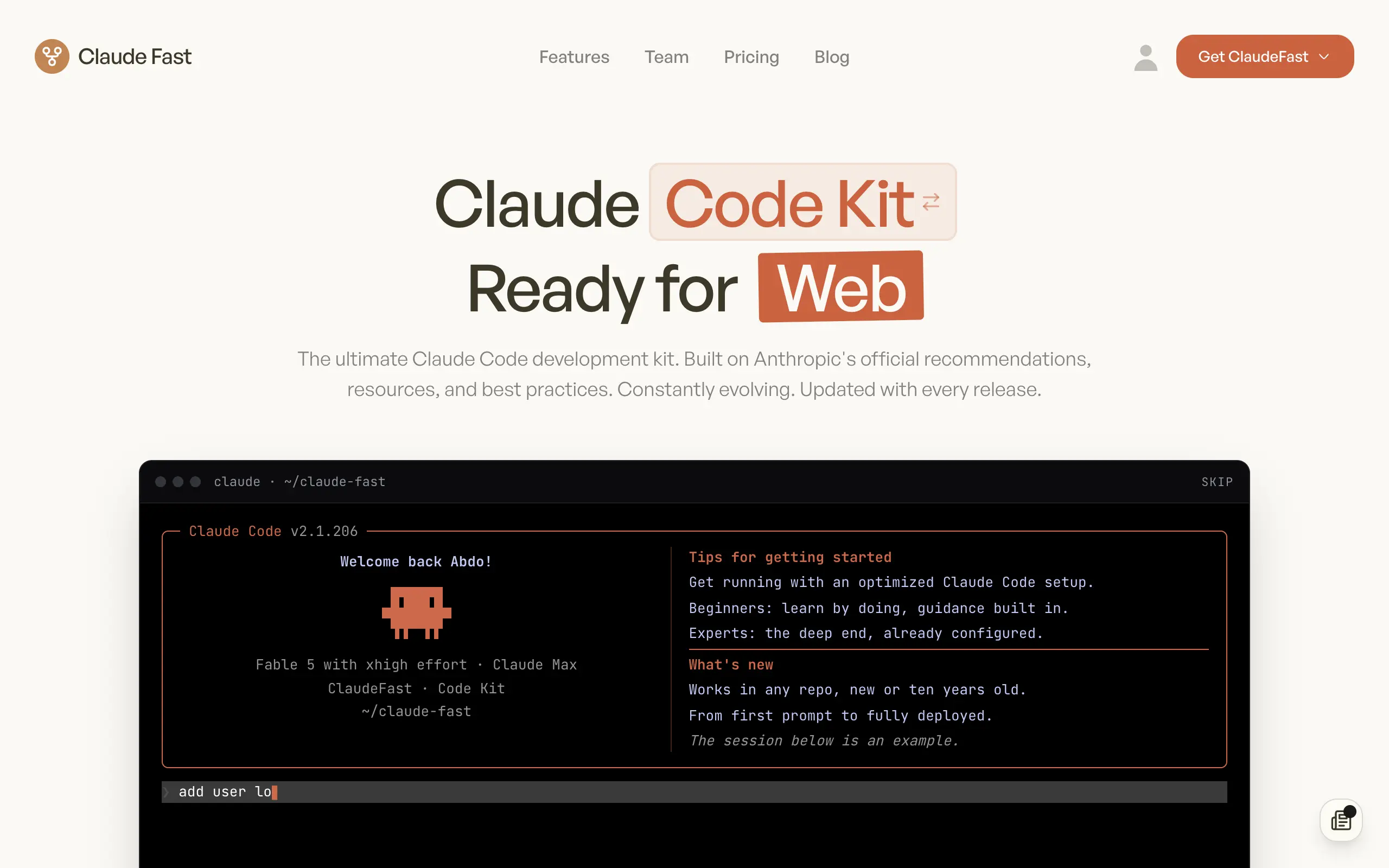
Claude Fast
Supercharge your Claude Code with 6x effective context window and specialized AI agents 🤖
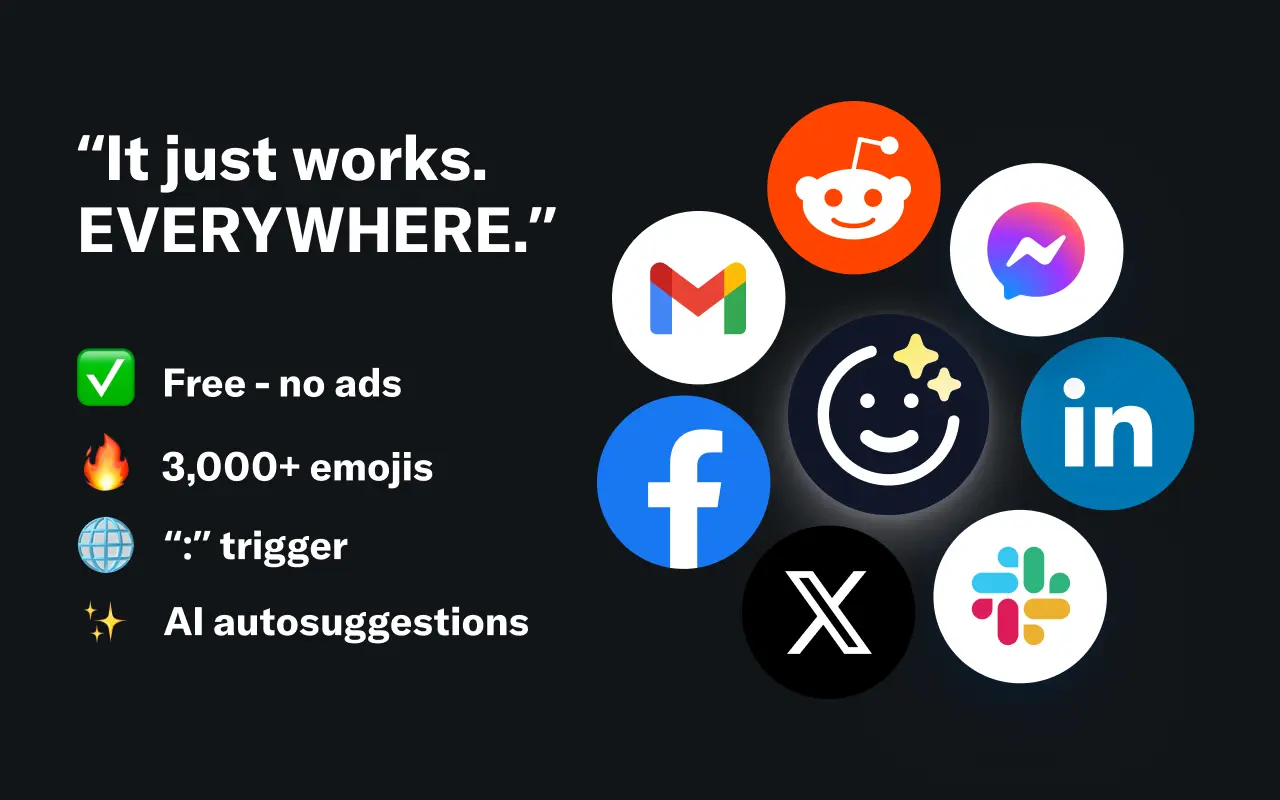
EmojAI
AI-powered emoji picker with smart, context-aware suggestions 🤖
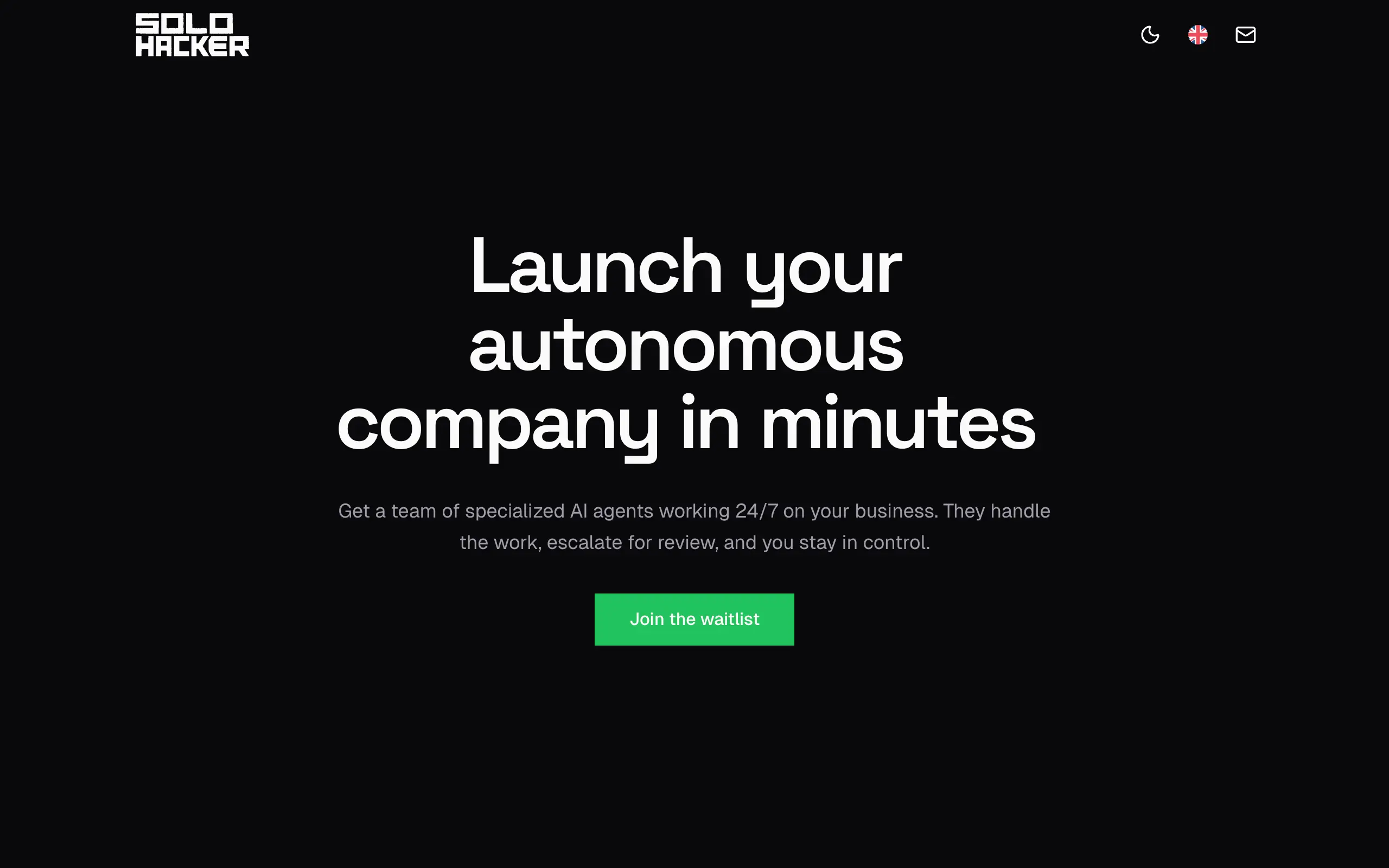
Solohacker
Autonomous company launcher - AI agents work 24/7, escalate what matters, and you stay in control 🤖

BeRawi: Storytelling Coach
Practice storytelling daily with instant feedback to sound clearer, more engaging, and confident 🎤
Omichat
Chat with 50+ AI models, including ChatGPT and Claude, in one place - switch models anytime without losing context 🤖
Claude Fast
Supercharge your Claude Code with 6x effective context window and specialized AI agents 🤖
EmojAI
AI-powered emoji picker with smart, context-aware suggestions 🤖
Solohacker
Autonomous company launcher - AI agents work 24/7, escalate what matters, and you stay in control 🤖
BeRawi: Storytelling Coach
Practice storytelling daily with instant feedback to sound clearer, more engaging, and confident 🎤
Omichat
Chat with 50+ AI models, including ChatGPT and Claude, in one place - switch models anytime without losing context 🤖
Claude Fast
Supercharge your Claude Code with 6x effective context window and specialized AI agents 🤖
EmojAI
AI-powered emoji picker with smart, context-aware suggestions 🤖
Solohacker
Autonomous company launcher - AI agents work 24/7, escalate what matters, and you stay in control 🤖
BeRawi: Storytelling Coach
Practice storytelling daily with instant feedback to sound clearer, more engaging, and confident 🎤
Omichat
Chat with 50+ AI models, including ChatGPT and Claude, in one place - switch models anytime without losing context 🤖
Claude Fast
Supercharge your Claude Code with 6x effective context window and specialized AI agents 🤖
EmojAI
AI-powered emoji picker with smart, context-aware suggestions 🤖
Solohacker
Autonomous company launcher - AI agents work 24/7, escalate what matters, and you stay in control 🤖
BeRawi: Storytelling Coach
Practice storytelling daily with instant feedback to sound clearer, more engaging, and confident 🎤

Connect with like-minded people
Join our community to get feedback, support, and grow together with 1,000+ builders on board, let's ship it!
Join usShip your startup everywhere. In minutes.
Don't burn tokens on setup and start building features on day one.