RFPilot
Automate RFP and security questionnaire responses with an AI workspace that cites approved knowledge and flags risky claims before submission.
Why AI RFP response automation is becoming a revenue operations priority
RFPilot is an AI RFP response automation platform designed for teams that need to complete requests for proposals, vendor due diligence forms, and security questionnaires without compromising accuracy, consistency, or compliance.
The underlying business problem is not simply that RFPs take too long. It is that high-value sales opportunities routinely depend on answers spread across security policies, product documentation, legal-approved language, past proposals, spreadsheets, and the institutional knowledge of a few subject matter experts. When that information is difficult to retrieve and validate, organizations face a costly choice:
- Submit a rushed response that may contain inconsistent or risky claims
- Pull senior technical, security, legal, and product teams away from strategic work
- Decline the opportunity because the response burden is too high
- Reuse stale content and quietly introduce compliance or contractual risk
An AI workspace that generates answers from approved, cited knowledge changes the workflow. Instead of treating generative AI as an uncontrolled writing tool, RFPilot can serve as a governed response layer for proposal and trust teams. It helps users draft faster while making the provenance of each answer visible and flagging claims that need expert review.
This is particularly timely as enterprise buyers ask increasingly detailed questions about security, privacy, resilience, AI governance, data residency, and vendor risk management. Sales teams are not only selling features. They are proving operational maturity.
The core positioning opportunity
RFPilot should be positioned as a trust-aware AI copilot for revenue teams, security teams, and proposal operations teams. Its value is not “write an RFP faster.” Its value is “submit defensible answers faster, with evidence and review controls.”
The target audience for RFPilot
The strongest initial market is not every company that receives an RFP. It is organizations where questionnaires are frequent, complex, expensive to answer, and influential in large contract decisions.
Primary users and buyers
RFPilot has a multi-stakeholder buying model. The daily user, process owner, technical approver, and budget holder may all be different people.
| Audience | Primary need | Current pain | RFPilot value | Likely buyer role |
|---|---|---|---|---|
| Proposal managers | Faster response assembly | Manual searching and version confusion | Reusable, cited answer generation | VP of sales or revenue operations |
| Sales engineers | Accurate technical answers | Repeated SME requests | Grounded drafts and expert routing | Sales engineering leader |
| Security and GRC teams | Controlled security responses | Unapproved or overstated claims | Approved source citations and risk flags | CISO or GRC leader |
| Legal and privacy teams | Contract-safe language | Last-minute review bottlenecks | Policy-aware review workflows | General counsel or privacy leader |
| Founders at B2B SaaS firms | More enterprise deal capacity | Small teams handling enterprise procurement | Structured response process without headcount | CEO or COO |
Best initial customer profile
The most attractive early customers are B2B software and technology-enabled service companies with enterprise customers and meaningful procurement requirements. They commonly have:
- Annual contract values high enough to justify a formal RFP process
- Frequent security questionnaires, especially SIG, CAIQ-inspired, custom, and spreadsheet-based assessments
- Distributed knowledge across Google Drive, Notion, Confluence, SharePoint, policy repositories, and prior RFP files
- A need to maintain clear approval boundaries between sales, security, privacy, legal, and product teams
- A lean proposal or revenue operations function that cannot hire dedicated staff for every questionnaire
A useful ideal customer profile is a growth-stage or mid-market SaaS company that has begun selling into regulated or security-conscious segments such as financial services, healthcare, insurance, government-adjacent organizations, and large enterprises.
Jobs to be done
RFPilot should be designed around practical jobs, not generic “AI productivity” claims.
- When a buyer sends a long RFP, help me locate relevant approved answers and create a credible first draft quickly.
- When a security questionnaire asks ambiguous questions, help me distinguish between established facts, approved caveats, and unsupported claims.
- When I need an expert’s input, route only the unresolved questions to the right reviewer with useful context.
- When an answer is challenged, show the source material and approval history behind the response.
- When our product or policies change, help us identify stale knowledge that could affect future submissions.
- When leadership asks about proposal performance, help us measure response effort, bottlenecks, and content gaps.
These jobs reveal why a generic chatbot is not a sufficient substitute. The key requirement is governance over both content and workflow.
The market gap in security questionnaire automation
There are established proposal management tools, knowledge bases, GRC systems, document collaboration tools, and general-purpose AI assistants. Yet many teams still manage RFP response work through a patchwork of spreadsheets, folders, Slack threads, ticket queues, and manually maintained answer libraries.
The gap is the connection between fast AI drafting and trustworthy operational controls.
Where existing processes break down
Traditional answer libraries are useful but difficult to maintain. Users must know the correct search terms, recognize outdated answers, and decide whether a previous response still applies. This creates a high cognitive burden, especially when responders are under deadline pressure.
General AI tools reduce writing time but introduce a different risk. An ungrounded model can produce plausible language that is not supported by company policy or product reality. In the context of a security questionnaire, a single unverified statement about encryption, certifications, data retention, incident response, or regulatory compliance may create commercial, legal, and reputational consequences.
Manual reviews create safety, but they do not scale well. A security leader may become the bottleneck for every nonstandard question, while sales teams wait for answers that could have been drafted safely from approved materials.
RFPilot addresses this gap with a workflow based on four principles:
- Approved knowledge is the source of truth
- Every AI-generated answer should be traceable to source evidence
- Risky or unsupported claims should be visibly flagged
- Human reviewers should focus on exceptions, not routine repetition
Why citation-first AI is a defensible differentiator
The central RFPilot proposition is not that it can generate text. Most large language models can do that. The differentiator is that it can produce answers with citations to approved internal knowledge and surface uncertainty when the available evidence is incomplete.
That distinction matters because procurement responses are often reviewed by legal, security, and compliance stakeholders. These teams need an auditable basis for believing an answer is accurate.
A citation-first approach can help teams answer questions such as:
- Which policy, control description, or product document supports this response?
- Is the cited source current and approved for external sharing?
- Does this answer contain a promise that exceeds the source material?
- Does the answer apply globally or only to a specific product tier, region, or customer configuration?
- Has the source been reviewed recently by the responsible owner?
The product should make citations useful, not decorative. Clicking a citation should show the relevant excerpt, source title, owner, version, effective date, and approval status wherever possible.
RFPilot’s core product: a governed AI workspace
A compelling RFPilot workflow begins when a user uploads an RFP, questionnaire, or spreadsheet and ends when an approved response package is ready for submission.
The product should support documents in the formats proposal teams actually receive, including DOCX, XLSX, PDF, CSV, and web-based question lists. Spreadsheet support deserves special attention because many security questionnaires are operationally difficult not because of the questions themselves, but because of cell structures, tabs, embedded instructions, and response formatting requirements.
Knowledge ingestion and source governance
The knowledge layer is the product’s foundation. RFPilot should ingest and organize approved response material from the systems teams already use.
Potential data sources include:
- Security policies and control narratives
- Product documentation and architecture diagrams
- Trust center content
- Data processing addenda and privacy notices
- Prior approved RFPs and questionnaires
- Standard legal language and contract fallback positions
- SOC 2 reports and certification summaries when sharing controls permit it
- Internal wiki pages and subject matter expert playbooks
- Customer-facing service descriptions and support policies
Not every document should be treated equally. A mature knowledge model needs metadata such as:
- "Source owner" to identify who is responsible for accuracy
- "Approval status" to distinguish draft, approved, retired, and restricted content
- "Audience scope" to distinguish internal-only language from buyer-shareable language
- "Product scope" to specify editions, features, regions, or deployment models
- "Jurisdiction" to prevent inappropriate legal or privacy statements
- "Effective date" to expose potentially stale information
- "Sensitivity level" to prevent restricted documents from appearing in an export
A knowledge base without governance becomes a faster way to find old mistakes. RFPilot should make source freshness and approval a first-class product concern.
Grounded answer generation with citations
The answer generation flow should retrieve relevant passages before drafting a response. The model then composes an answer based on those passages and displays its citations alongside the generated text.
A well-designed answer panel could include:
- A concise proposed response
- Supporting source citations
- A confidence or evidence-coverage indicator
- A claim-risk status
- A suggested answer type such as yes, no, partial, not applicable, or requires review
- An option to compare the answer against a prior approved response
- A button to assign the question to an appropriate reviewer
The product should avoid presenting confidence as a vague model score. Users need operational signals. For example, “high evidence coverage” is meaningful when multiple current approved sources directly support the answer. “Review required” is meaningful when the question requests a customer-specific commitment, a certification claim, or a product capability not found in approved knowledge.
Risky claim detection
Risk detection is where RFPilot can create substantial enterprise value. The system should identify language patterns that frequently require review.
Examples include:
- Absolute statements such as “always,” “never,” “fully,” or “guaranteed”
- Compliance assertions such as “HIPAA compliant,” “GDPR compliant,” or “certified”
- Future commitments such as roadmap promises or planned feature delivery dates
- Contractual commitments involving indemnification, audit rights, service levels, and breach notifications
- Security statements related to encryption, penetration testing, access controls, backups, disaster recovery, and incident response
- Data handling claims involving storage location, subprocessors, retention, deletion, and training data
- Statements that conflict with approved source content
- Answers generated without adequate supporting evidence
The goal is not to block every answer. It is to ensure the right questions receive the right level of scrutiny.
Avoid an unsafe automation promise
RFPilot should never imply that AI can independently certify legal, security, or compliance accuracy. Position risk flags as review assistance and decision support, with clear human approval workflows for sensitive content.
Expert review workflows
Effective security questionnaire automation does not eliminate subject matter experts. It preserves their time for questions that truly need them.
RFPilot should let proposal managers assign questions based on category, source owner, product area, risk type, or account importance. Reviewers should receive a focused queue with the question, draft answer, sources, prior answers, and requested decision.
Useful workflow states include:
- New
- AI drafted
- Needs evidence
- Assigned for review
- Changes requested
- Approved
- Rejected
- Exported
- Archived
The approval record should preserve who approved the final response, what source material was used, and when the decision occurred. This is valuable for auditability and for improving the answer library after each submission.
Response exports and buyer-ready formatting
The last mile matters. Teams need to return completed files in the buyer’s requested format, not copy responses manually from a new interface into a spreadsheet.
RFPilot should support:
- Preserving spreadsheet tabs, columns, row order, and basic formatting
- Exporting Word-compatible documents with tracked review status where practical
- Generating a response package with evidence links for internal review
- Marking unanswered, blocked, and high-risk questions before export
- Maintaining document version history
- Separating internal notes from customer-facing responses
A product that generates strong answers but fails to preserve a buyer’s spreadsheet structure will create friction at the point where users need the most reliability.
Competitive advantage: why RFPilot can stand out
RFPilot’s most defensible position is a combination of provenance, policy-aware risk controls, and operational workflow.
A generic AI assistant can draft an answer. A document repository can store a prior answer. A proposal platform can organize tasks. RFPilot can unite these functions around the most important requirement in a high-stakes questionnaire: submit only what the organization can support.
Evidence over eloquence
Answers are grounded in approved sources, making them easier for reviewers to validate and defend.
Risk-aware generation
The platform highlights unsupported, absolute, contractual, and compliance-sensitive language before submission.
Expert time protection
Smart routing sends only unresolved or high-risk questions to security, legal, product, and privacy reviewers.
A learning response system
Every reviewed answer can improve the governed knowledge base for the next enterprise opportunity.
The RFPilot moat
The moat is not the language model alone. Foundation models are widely available and model capabilities evolve quickly. A sustainable advantage is built through proprietary workflow data and trust infrastructure.
Over time, RFPilot can develop durable differentiation through:
- A structured, versioned corpus of approved answer patterns
- Source-level permissioning and visibility controls
- Claim classification tuned for procurement and vendor risk language
- Integrations that fit the team’s existing response process
- Review and approval histories that improve future routing
- Organization-specific terminology, product mappings, and policy logic
- Analytics on content gaps, reviewer bottlenecks, and response readiness
The product should be model-flexible. This protects customers from vendor lock-in concerns and allows RFPilot to select models based on quality, cost, privacy, latency, and deployment requirements.
Recommended tech stack for an AI RFP response platform
The recommended stack should optimize for secure document handling, reliable asynchronous processing, search quality, permissions, and enterprise-ready observability.
For a fast SaaS launch, a TypeScript-based architecture is practical because it supports shared types across the frontend, API layer, background jobs, and integrations.
Application and interface layer
A modern web stack could include:
- Next.js for the application framework and server-rendered product experience
- React for reusable workflow components
- TypeScript for safer domain models and API contracts
- Tailwind CSS for efficient design system implementation
- PostgreSQL for relational data, organization state, permissions, and audit records
The UI needs to support dense information without becoming overwhelming. A good answer-review screen should keep the question, generated answer, citations, source excerpts, reviewer notes, and risk indicators visible in a predictable layout.
Retrieval and AI orchestration
For retrieval-augmented generation, use a pipeline that separates ingestion, indexing, retrieval, reranking, drafting, and validation.
A practical architecture may include:
- A document parser and OCR service for PDFs, DOCX files, and spreadsheet extraction
- A chunking pipeline that preserves headings, tables, document lineage, and page references
- Embeddings for semantic retrieval
- Hybrid search that combines keyword search with vector similarity
- A reranking stage to improve source relevance
- An LLM layer for answer synthesis and risk classification
- A citation validator that verifies drafted claims have evidence
- An evaluation suite with benchmark questionnaires and expected answer characteristics
For vector search, teams can start with pgvector when they want a simpler operational footprint alongside PostgreSQL. A specialized vector database may become attractive at larger scale or when advanced filtering and retrieval performance requirements justify the added operational complexity.
The trade-off is straightforward:
- PostgreSQL with pgvector offers simpler architecture and transactional proximity to business data.
- A dedicated vector database can offer purpose-built retrieval capabilities but adds another system to secure, monitor, and operate.
Asynchronous jobs and document processing
RFP ingestion, OCR, embedding generation, exports, and large-answer generation should run outside the request-response path.
Use a durable job queue and idempotent workers for:
- File parsing
- Knowledge indexing
- Bulk question generation
- Export creation
- Source freshness checks
- Scheduled access reviews
- Integration syncs
This prevents timeouts and creates a better user experience. Users should see clearly which questions are processing, completed, blocked, or awaiting review.
Security architecture requirements
Because RFPilot will process sensitive company information, security is part of the product, not an enterprise add-on.
Baseline controls should include:
- Tenant isolation at the database, query, and retrieval layers
- Role-based access control with least-privilege defaults
- Strong encryption in transit and at rest
- Secure secret management
- Immutable audit logs for critical events
- Data retention and deletion controls
- Configurable document access permissions
- Single sign-on and SCIM provisioning for enterprise plans
- Rate limiting and abuse monitoring
- Redaction options for sensitive data during processing
- Vendor risk documentation and incident response procedures
The OWASP Top 10 is a useful baseline reference for application security practices. For AI-specific risk management, product teams should also review the NIST AI Risk Management Framework.
A simple answer object model
A structured answer object makes the product safer than treating every result as unstructured chat text.
type RfpAnswer = {
  questionId: string;
  response: string;
  answerType: "yes" | "no" | "partial" | "not_applicable" | "review_required";
  citations: Array<{
    sourceId: string;
    sourceTitle: string;
    excerpt: string;
    approvalStatus: "approved" | "draft" | "restricted";
    effectiveDate?: string;
  }>;
  riskFlags: Array<{
    category: "security" | "privacy" | "legal" | "compliance" | "unsupported_claim";
    severity: "low" | "medium" | "high";
    explanation: string;
  }>;
  status: "draft" | "in_review" | "approved" | "rejected";
};
This schema creates a foundation for UI rendering, approvals, exports, analytics, and audit logs. It also forces the product team to treat citations and risk assessments as core response data.
Monetization strategy for RFPilot
RFPilot should use value-based SaaS pricing rather than charging only for generic AI usage. The product saves time, increases enterprise response capacity, and reduces the risk of inaccurate claims. Those outcomes are more valuable than token consumption.
Recommended pricing model
A tiered subscription with usage-based capacity is a sensible model.
- Starter plan for smaller SaaS teams handling a limited number of RFPs or questionnaires each month
- Growth plan for companies that need multi-user collaboration, approval workflows, integrations, and higher document limits
- Enterprise plan for SSO, SCIM, advanced permissions, audit exports, private deployment requirements, custom retention, and priority support
- Professional services add-on for knowledge base setup, answer library migration, workflow design, and integration implementation
The key billable unit should align with customer value. Possible usage dimensions include:
- Active workspaces
- Submitted questionnaires
- Processed questions
- Knowledge sources
- Reviewer seats
- Advanced exports
- Premium integrations
Avoid making the pricing experience feel punitive during busy sales cycles. An enterprise customer may process a large questionnaire precisely when a high-value opportunity is active. Usage overages should be predictable, transparent, and tied to clear capacity bands.
Land-and-expand strategy
The best entry point is often a narrow, painful workflow such as security questionnaires. Once RFPilot earns trust there, it can expand into:
- Sales RFPs and RFIs
- Vendor due diligence
- Trust center content management
- Sales enablement answer libraries
- Legal intake questionnaires
- Customer renewal security reviews
- AI governance assessments
- Internal audit evidence requests
This expansion path works because the same governed knowledge and approval infrastructure can support multiple response-heavy workflows.
Risks and mitigation strategies
AI RFP response automation operates in a high-trust domain. The product strategy must anticipate failure modes before customers encounter them.
Mitigate this through retrieval-first generation, mandatory citations, evidence-coverage checks, claim-level risk flags, and a “no supported answer found” response state. The product should make abstention a useful outcome rather than forcing an answer.
Attach source ownership, approval status, effective dates, and review cycles to every knowledge asset. Flag conflicting sources, prioritize approved content, and make outdated sources unavailable for external-facing drafting when appropriate.
Apply tenant isolation, granular permissions, encryption, audit logging, retention controls, and vendor subprocessors with appropriate contractual safeguards. Provide customers with clear controls over data use and model training policies.
Start with familiar uploads and exports, preserve customer file formats, and avoid forcing teams to rebuild all content before realizing value. Measure time saved and reviewer workload reduction during onboarding.
Design the interface to make approval responsibilities explicit. High-risk categories should require human review, and the product should clearly distinguish AI suggestions from approved final answers.
Evaluation should be a product discipline
A reliable AI system needs continuous evaluation. RFPilot should maintain internal test sets made from representative, sanitized questionnaire questions and approved answer expectations.
Evaluation criteria can include:
- Citation precision and whether sources truly support the response
- Citation completeness and whether important claims are evidenced
- Accuracy against approved answer libraries
- Correct handling of “not applicable” or “requires review” cases
- Risk flag recall for sensitive language
- Export fidelity for buyer-supplied spreadsheets
- Reviewer acceptance rate
- Average time from upload to approved response
Do not market model accuracy with a single broad percentage unless the methodology is transparent, representative, and independently reviewable. For future thought leadership, cite authoritative research or clearly explain the dataset, sample size, task definition, and evaluation criteria used.
A practical MVP roadmap for RFPilot
The MVP should solve one complete workflow exceptionally well. The right first scope is likely security questionnaire automation for B2B SaaS teams.
Avoid trying to build every connector, every export format, every enterprise feature, and every AI model integration at launch. The initial version needs to establish trust by being accurate, auditable, and genuinely easier than manual work.
Phase 1: deliver the trusted response loop
Build the smallest end-to-end system that allows a user to upload a questionnaire, generate source-backed drafts, review risks, and export completed answers.
Define the initial ideal customer profile and interview proposal managers, sales engineers, security leaders, and legal reviewers. Focus on recent questionnaires, actual bottlenecks, source materials used, and reasons answers were escalated.
Build secure organization workspaces with role-based access controls, document upload, source metadata, and an approved knowledge repository.
Support XLSX, DOCX, and PDF intake. Extract questions while preserving document structure and give users a way to correct extraction issues.
Implement retrieval-augmented answer generation with visible citations, source excerpts, and a clear “insufficient evidence” state.
Add a rules-based risk engine for compliance, privacy, security, legal, future commitment, and absolute-language patterns.
Create reviewer assignment, status tracking, comments, and approval history. Make the review queue the center of daily operations.
Export responses back to the original buyer-friendly format and validate the output against real customer templates.
Phase 2: improve content quality and integrations
After the core response loop is working, expand into the capabilities that make RFPilot sticky across teams.
Priority investments include:
- Integrations with knowledge systems and cloud storage platforms
- Automated source synchronization
- Source versioning and stale-content alerts
- Custom answer templates by customer segment or product line
- Better spreadsheet mapping and export fidelity
- SME recommendation based on past approvals
- Analytics dashboards for response volume, turnaround time, and content gaps
- SSO, SCIM, and advanced audit controls
Phase 3: build strategic intelligence
Once enough workflow data exists, RFPilot can offer insights beyond individual documents.
Examples include:
- The questions that most often block submissions
- Areas where approved source content is missing or contradictory
- Topics associated with low reviewer confidence
- Repeated buyer concerns by industry or segment
- The estimated effort required before accepting an RFP
- Changes in security and procurement demands over time
This intelligence can elevate RFPilot from a response tool to a revenue and trust operations platform.
Go-to-market strategy for AI security questionnaire automation
Early go-to-market should focus on credibility and concrete outcomes. Security and proposal teams have seen enough generic AI claims. They need proof that RFPilot improves speed without creating uncontrolled risk.
Messaging that will resonate
Strong messaging focuses on the business outcome:
- “Answer security questionnaires with approved evidence.”
- “Draft RFP responses faster without losing control of claims.”
- “Route only high-risk questions to your security and legal experts.”
- “Turn your best approved answers into a governed response system.”
- “Reduce response bottlenecks while maintaining buyer-ready accuracy.”
Avoid positioning that suggests the product replaces security, legal, or proposal professionals. Buyers in this category want leverage, not a black box.
Content marketing opportunities
SEO content can attract high-intent users searching for tactical guidance, templates, and software evaluation help. Priority keyword clusters include:
- AI RFP response automation
- RFP automation software
- security questionnaire automation
- AI security questionnaire software
- vendor due diligence automation
- RFP response management
- RFP knowledge base
- security questionnaire response process
- how to respond to enterprise security questionnaires
- RFP response best practices
High-value content formats include:
- A security questionnaire response playbook
- An RFP response workflow checklist
- A guide to building an approved answer library
- A comparison of AI RFP tools versus traditional proposal software
- A practical explanation of RAG, citations, and hallucination controls
- Downloadable templates for response ownership and approval workflows
- Case studies that quantify hours saved and reviewer interruptions reduced
When publishing performance claims, tie them to documented customer case studies and explain the measurement period. For market statistics, reference a credible analyst report, industry association, or public research source rather than relying on unsupported figures.
How to build and validate RFPilot quickly
The fastest path is to validate the risky parts of the product before investing heavily in polished features.
Start with a design partner program involving five to ten companies that regularly respond to security questionnaires. Ask each partner to provide sanitized historical questionnaires, their approved responses, and the source materials their teams rely on.
Measure whether RFPilot can:
- Extract questions accurately
- Retrieve the right source material
- Produce useful cited first drafts
- Flag answers that reviewers would want to inspect
- Preserve the original document format during export
- Reduce time spent searching for answers
- Reduce unnecessary expert assignments
The strongest early proof point is not raw generation quality. It is a measurable operational result, such as fewer manual search hours, faster first drafts, higher answer consistency, or a lower percentage of questions requiring SME involvement.
For founders building the initial SaaS infrastructure, TurboStarter can accelerate the foundation for authentication, billing, application scaffolding, and production-ready SaaS workflows. That lets the product team spend more of its early development time on the hard differentiators: document ingestion, evidence retrieval, risk policies, review workflows, and reliable exports.
Final perspective
RFPilot has a strong opportunity because it addresses a workflow that is both repetitive and high stakes. Enterprise sales teams need faster RFP and security questionnaire responses, but they cannot afford an AI system that invents capabilities, misstates compliance posture, or obscures the evidence behind an answer.
The winning product will make AI useful within the controls that security, legal, privacy, and proposal teams already need. By grounding responses in approved knowledge, showing citations, flagging risky claims, preserving human approvals, and exporting buyer-ready documents, RFPilot can become a trusted operating layer for enterprise deal execution.
The strategic focus should remain clear: build the most dependable way for B2B companies to convert internal knowledge into defensible external responses. Speed matters, but in procurement and security reviews, verifiable speed is the real advantage.
More 🤖 AI Startup SaaS ideas
Discover more innovative ai startup SaaS ideas that are trending in 2026. Each idea is AI-generated with market validation and growth potential to help you find your next profitable venture faster than competitors.
Your competitors are building with TurboStarter
Below are some of the SaaS ideas that have been generated and built with our starter kit.

Statiko
Monitor any Telegram channel in real time - track posts, edits, deletions, and growth with AI recaps 📡

Shibui
AI website builder - describe your business, pick a niche template, edit by chatting, and publish instantly ✨

Pro Service
Find verified home service professionals, compare quotes, and pay securely through escrow - built for Brazilians across the US 🏠

RankGrow
Fix your SEO with AI agents - connect Search Console, get prioritized tasks, and grow organic traffic 📈
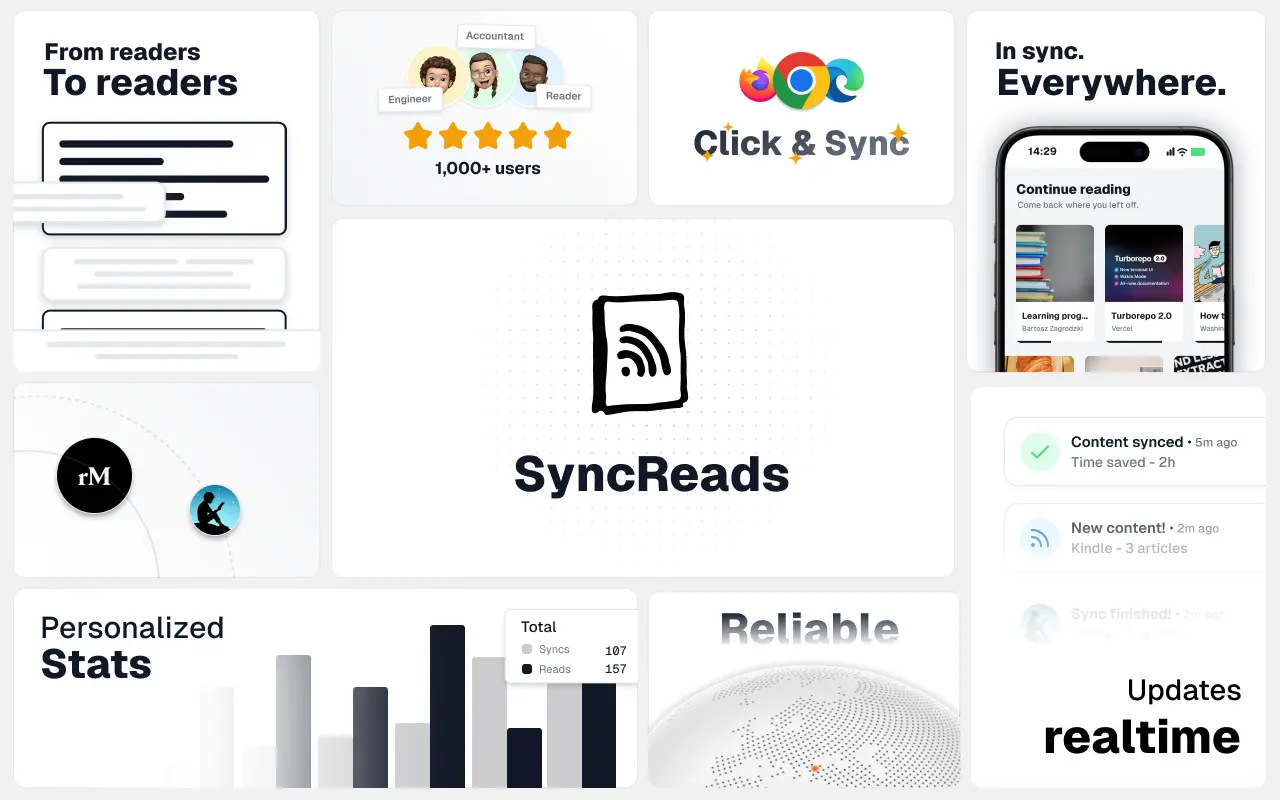
SyncReads
Sync your favorite content for distraction-free reading, save time and replace multiple apps. Anytime, anywhere 🔄
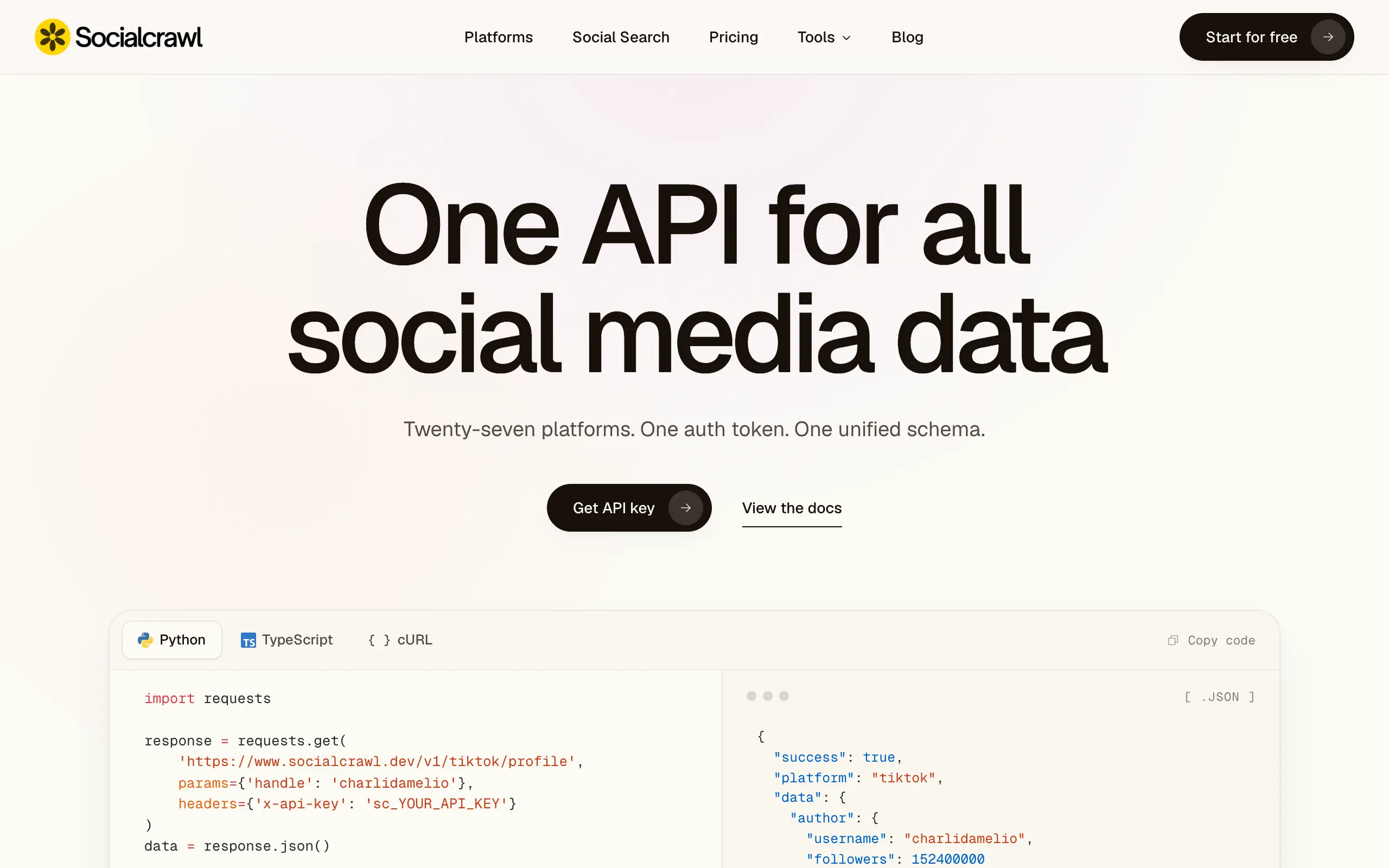
Socialcrawl
Get clean, structured data from 21 platforms like TikTok, Instagram, and YouTube with a single request 📊
Statiko
Monitor any Telegram channel in real time - track posts, edits, deletions, and growth with AI recaps 📡
Shibui
AI website builder - describe your business, pick a niche template, edit by chatting, and publish instantly ✨
Pro Service
Find verified home service professionals, compare quotes, and pay securely through escrow - built for Brazilians across the US 🏠
RankGrow
Fix your SEO with AI agents - connect Search Console, get prioritized tasks, and grow organic traffic 📈
SyncReads
Sync your favorite content for distraction-free reading, save time and replace multiple apps. Anytime, anywhere 🔄
Socialcrawl
Get clean, structured data from 21 platforms like TikTok, Instagram, and YouTube with a single request 📊
Statiko
Monitor any Telegram channel in real time - track posts, edits, deletions, and growth with AI recaps 📡
Shibui
AI website builder - describe your business, pick a niche template, edit by chatting, and publish instantly ✨
Pro Service
Find verified home service professionals, compare quotes, and pay securely through escrow - built for Brazilians across the US 🏠
RankGrow
Fix your SEO with AI agents - connect Search Console, get prioritized tasks, and grow organic traffic 📈
SyncReads
Sync your favorite content for distraction-free reading, save time and replace multiple apps. Anytime, anywhere 🔄
Socialcrawl
Get clean, structured data from 21 platforms like TikTok, Instagram, and YouTube with a single request 📊
Statiko
Monitor any Telegram channel in real time - track posts, edits, deletions, and growth with AI recaps 📡
Shibui
AI website builder - describe your business, pick a niche template, edit by chatting, and publish instantly ✨
Pro Service
Find verified home service professionals, compare quotes, and pay securely through escrow - built for Brazilians across the US 🏠
RankGrow
Fix your SEO with AI agents - connect Search Console, get prioritized tasks, and grow organic traffic 📈
SyncReads
Sync your favorite content for distraction-free reading, save time and replace multiple apps. Anytime, anywhere 🔄
Socialcrawl
Get clean, structured data from 21 platforms like TikTok, Instagram, and YouTube with a single request 📊
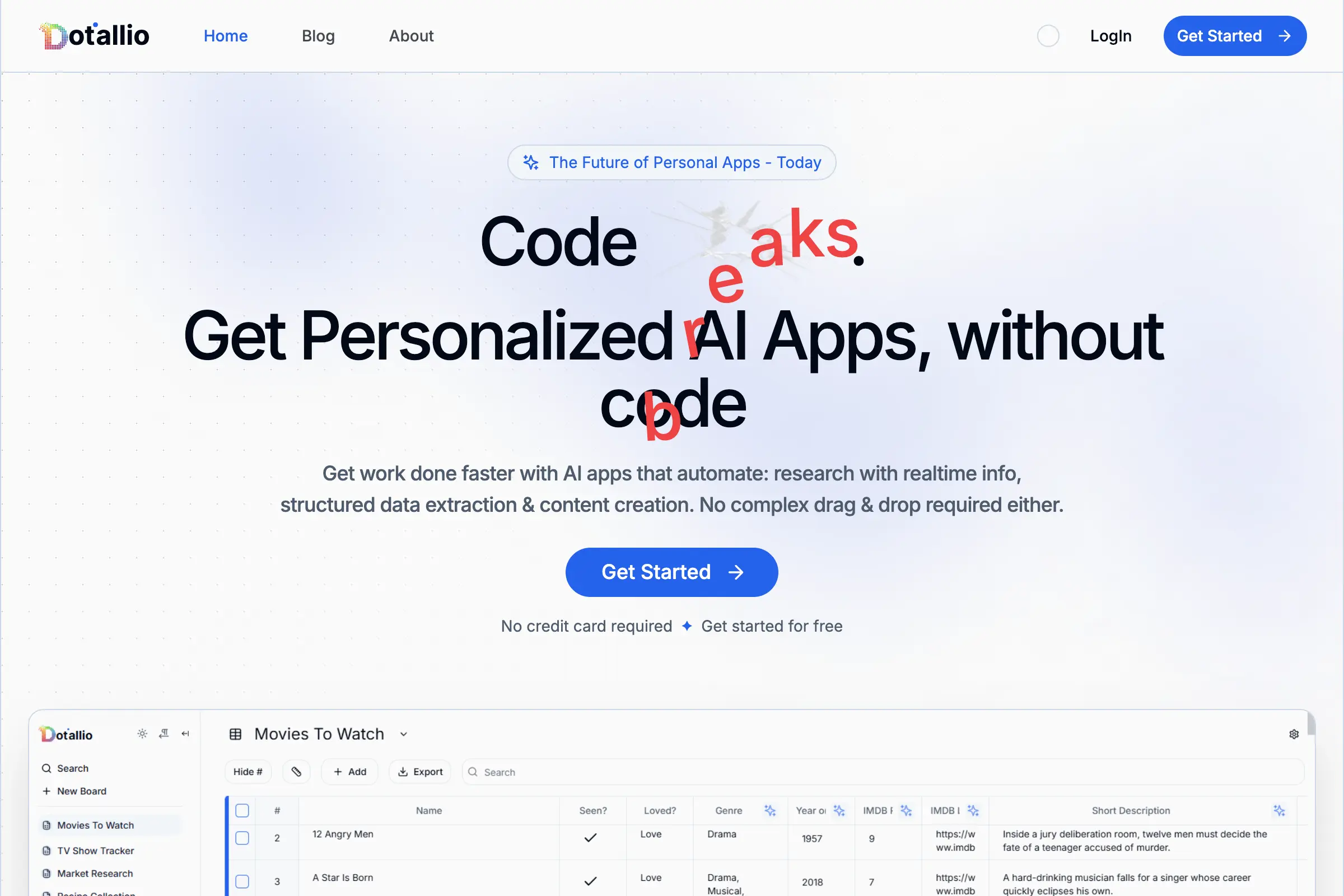
Dotallio
Personalized AI apps that automate research, data extraction, and content creation without code 🤖

Talk to Santa
Enjoy a magical live video chat or receive a unique AI-generated video greeting from Santa Claus 🎅

pozywka.pl
Scalable blog for food journalist, focused on performance and user experience 🌭
zagrodzki.me
Personal blog and portfolio of Bart Zagrodzki, where he shares his knowledge and work 💼
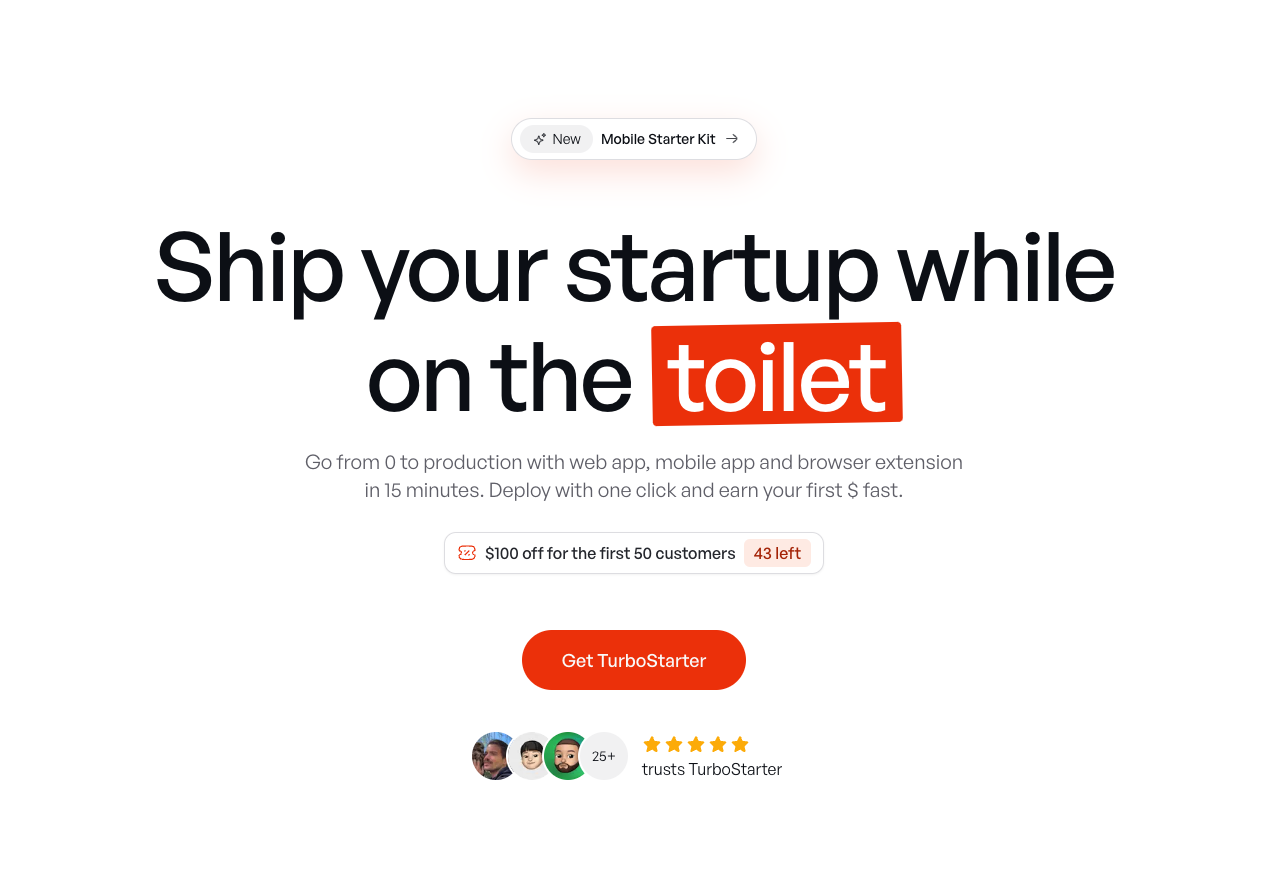
TurboStarter
Ship your startup everywhere. In minutes.
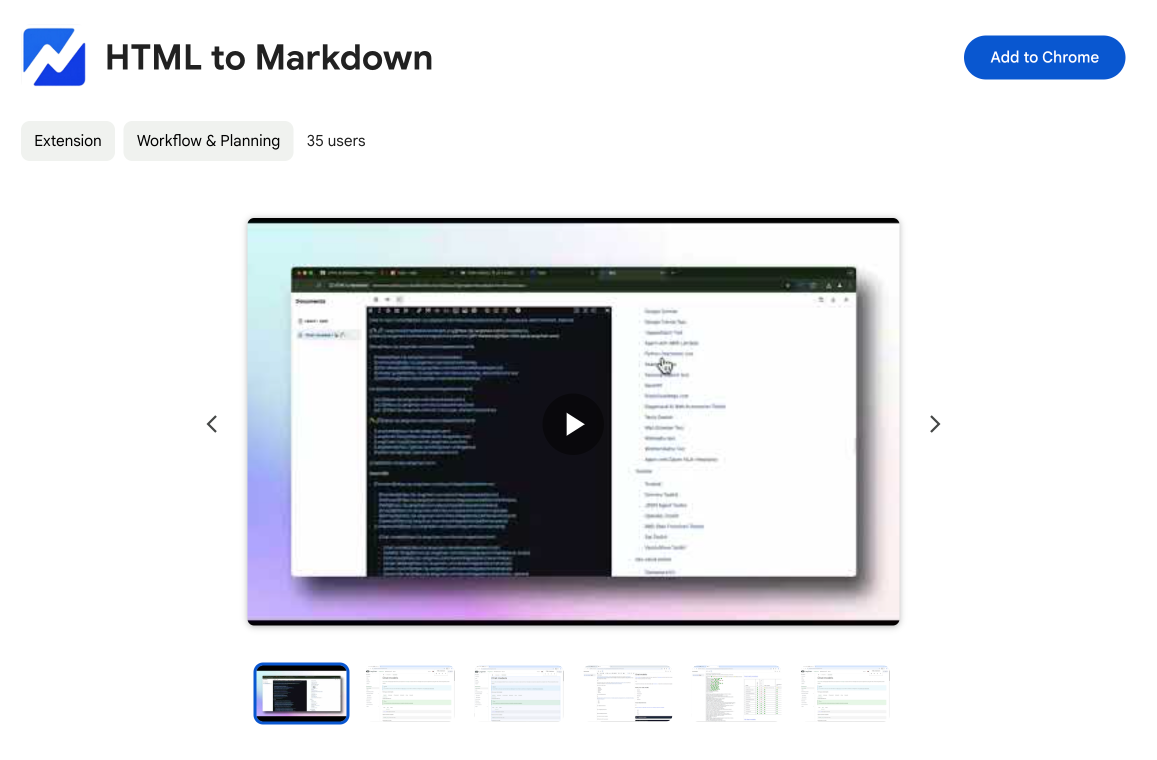
HTML to Markdown
Convert HTML to Markdown with ease, directly in your browser 📄
Dotallio
Personalized AI apps that automate research, data extraction, and content creation without code 🤖
Talk to Santa
Enjoy a magical live video chat or receive a unique AI-generated video greeting from Santa Claus 🎅
pozywka.pl
Scalable blog for food journalist, focused on performance and user experience 🌭
zagrodzki.me
Personal blog and portfolio of Bart Zagrodzki, where he shares his knowledge and work 💼
TurboStarter
Ship your startup everywhere. In minutes.
HTML to Markdown
Convert HTML to Markdown with ease, directly in your browser 📄
Dotallio
Personalized AI apps that automate research, data extraction, and content creation without code 🤖
Talk to Santa
Enjoy a magical live video chat or receive a unique AI-generated video greeting from Santa Claus 🎅
pozywka.pl
Scalable blog for food journalist, focused on performance and user experience 🌭
zagrodzki.me
Personal blog and portfolio of Bart Zagrodzki, where he shares his knowledge and work 💼
TurboStarter
Ship your startup everywhere. In minutes.
HTML to Markdown
Convert HTML to Markdown with ease, directly in your browser 📄
Dotallio
Personalized AI apps that automate research, data extraction, and content creation without code 🤖
Talk to Santa
Enjoy a magical live video chat or receive a unique AI-generated video greeting from Santa Claus 🎅
pozywka.pl
Scalable blog for food journalist, focused on performance and user experience 🌭
zagrodzki.me
Personal blog and portfolio of Bart Zagrodzki, where he shares his knowledge and work 💼
TurboStarter
Ship your startup everywhere. In minutes.
HTML to Markdown
Convert HTML to Markdown with ease, directly in your browser 📄
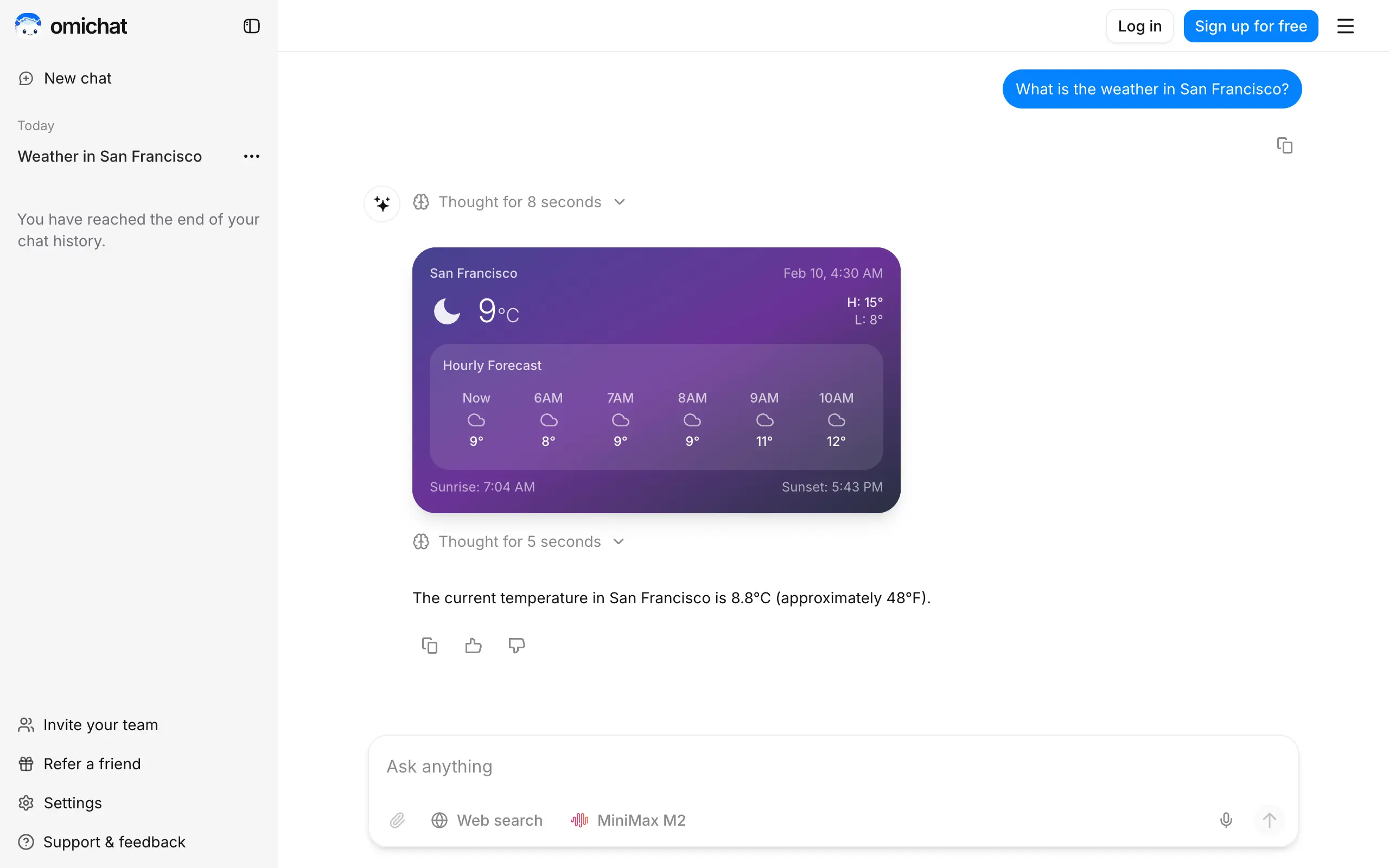
Omichat
Chat with 50+ AI models, including ChatGPT and Claude, in one place - switch models anytime without losing context 🤖
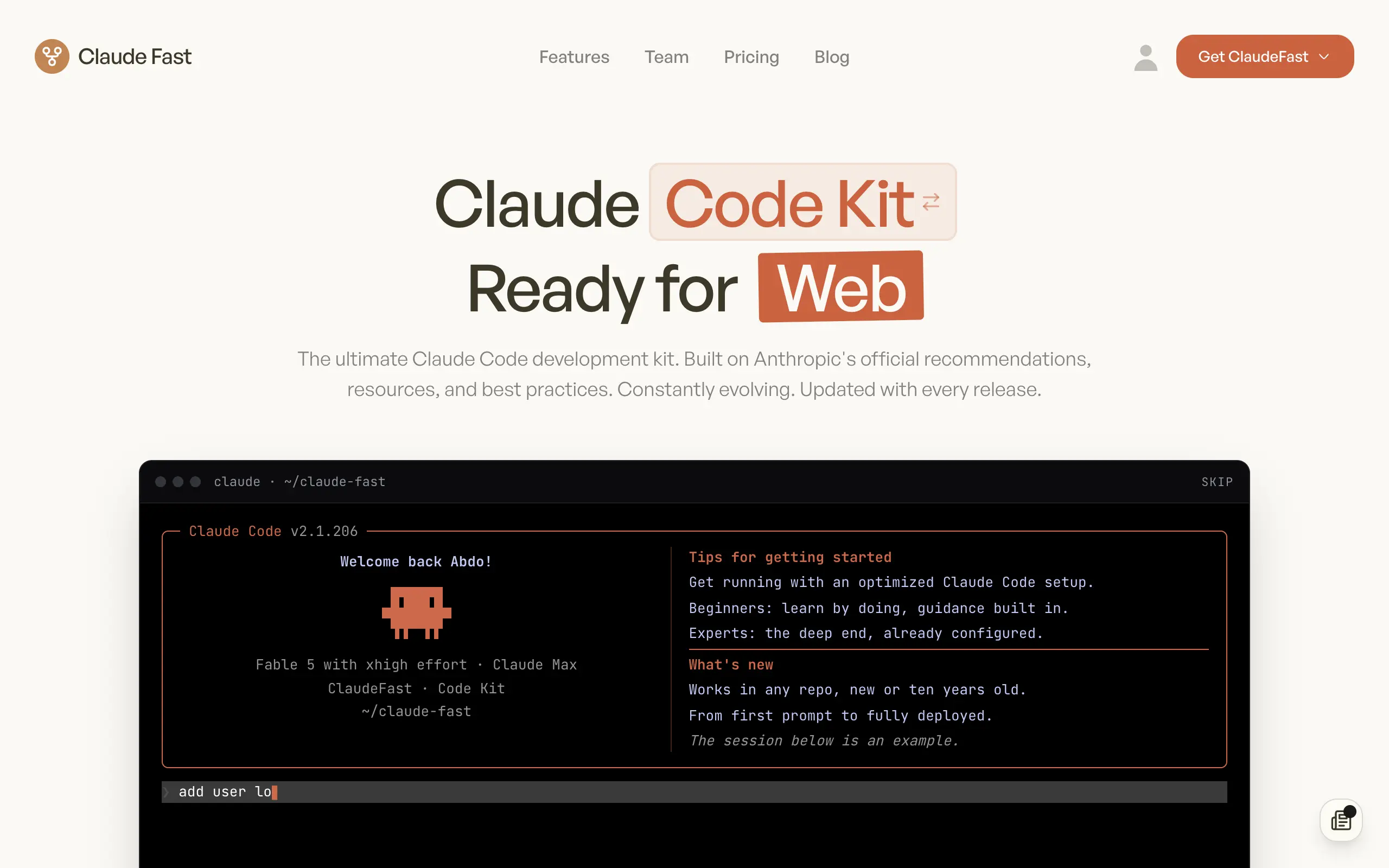
Claude Fast
Supercharge your Claude Code with 6x effective context window and specialized AI agents 🤖

EmojAI
AI-powered emoji picker with smart, context-aware suggestions 🤖

Solohacker
Autonomous company launcher - AI agents work 24/7, escalate what matters, and you stay in control 🤖

BeRawi: Storytelling Coach
Practice storytelling daily with instant feedback to sound clearer, more engaging, and confident 🎤
Omichat
Chat with 50+ AI models, including ChatGPT and Claude, in one place - switch models anytime without losing context 🤖
Claude Fast
Supercharge your Claude Code with 6x effective context window and specialized AI agents 🤖
EmojAI
AI-powered emoji picker with smart, context-aware suggestions 🤖
Solohacker
Autonomous company launcher - AI agents work 24/7, escalate what matters, and you stay in control 🤖
BeRawi: Storytelling Coach
Practice storytelling daily with instant feedback to sound clearer, more engaging, and confident 🎤
Omichat
Chat with 50+ AI models, including ChatGPT and Claude, in one place - switch models anytime without losing context 🤖
Claude Fast
Supercharge your Claude Code with 6x effective context window and specialized AI agents 🤖
EmojAI
AI-powered emoji picker with smart, context-aware suggestions 🤖
Solohacker
Autonomous company launcher - AI agents work 24/7, escalate what matters, and you stay in control 🤖
BeRawi: Storytelling Coach
Practice storytelling daily with instant feedback to sound clearer, more engaging, and confident 🎤
Omichat
Chat with 50+ AI models, including ChatGPT and Claude, in one place - switch models anytime without losing context 🤖
Claude Fast
Supercharge your Claude Code with 6x effective context window and specialized AI agents 🤖
EmojAI
AI-powered emoji picker with smart, context-aware suggestions 🤖
Solohacker
Autonomous company launcher - AI agents work 24/7, escalate what matters, and you stay in control 🤖
BeRawi: Storytelling Coach
Practice storytelling daily with instant feedback to sound clearer, more engaging, and confident 🎤

Connect with like-minded people
Join our community to get feedback, support, and grow together with 1,000+ builders on board, let's ship it!
Join usShip your startup everywhere. In minutes.
Don't burn tokens on setup and start building features on day one.