RPCSignal
Cluster RPC and node errors, spot chain-specific incidents, and draft actionable runbooks from your team's private, SQLite-backed history.
What RPCSignal is and why it matters
RPCSignal is an incident intelligence platform for teams that depend on blockchain remote procedure call (RPC) endpoints. It collects errors and health signals from RPC nodes, groups related failures into chain-specific incidents, and uses a team’s private history to draft practical runbooks.
The idea addresses a familiar operational problem: when an application cannot read from or submit transactions to a blockchain, engineers need to determine whether the fault is in their code, their RPC provider, a particular network, or a broader ecosystem incident. That investigation can involve scattered logs, dashboards, provider status pages, and old incident notes. RPCSignal brings those clues together in one place.
A useful way to describe the product is RPC incident management for blockchain infrastructure teams. It is not simply another uptime monitor. Its potential value comes from connecting three activities that are often handled separately:
- Detecting and clustering related RPC and node errors.
- Helping a team understand which chains, providers, and workloads are affected.
- Turning lessons from earlier incidents into suggested next steps.
That distinction matters. Alerts are helpful, but they do not automatically explain what is failing or what a team should do next. RPCSignal’s opportunity is to reduce the time between an error appearing and an engineer taking a well-informed action.
Product positioning
RPCSignal should help teams answer three questions quickly: “What is failing?”, “Who or what is affected?”, and “What should we check next?”
The problem behind blockchain RPC incidents
Blockchain applications rely on RPC infrastructure to read chain data and submit requests. A team may use a hosted provider, a self-managed node, a load-balanced group of endpoints, or a combination of these options. Each arrangement creates operational dependencies that can fail in different ways.
An endpoint may become slow without going fully offline. A provider may return rate-limit errors during a traffic spike. A node may lag behind the network, respond inconsistently, or reject a request because of a chain-specific issue. An application may also send malformed requests or use an unsupported method. These failures can look similar at first, even though the right response differs.
For example, a burst of timeouts across several services could indicate a shared provider problem. The same timeouts isolated to one application might point to a deployment, connection pool, or request pattern. A rise in errors on a single chain may have a different cause from a simultaneous increase across multiple chains.
The investigation can be costly because useful evidence often lives in different places:
- Application logs contain request-level details.
- Provider dashboards report endpoint health or quota usage.
- Node monitoring tools expose host and process signals.
- Incident chat contains decisions and workarounds.
- Team documents preserve runbooks, if they have been kept current.
Without a consistent history, teams may repeatedly diagnose the same failure from scratch. The issue is not a lack of raw data alone. It is the time and effort required to connect symptoms to context and then turn context into action.
RPCSignal can focus on that operational gap. It should make incidents easier to recognize, give engineers enough evidence to assess their scope, and help teams reuse their own knowledge instead of treating every outage as entirely new.
Who RPCSignal should serve
The product is most compelling for teams where RPC reliability is directly connected to application reliability, customer experience, or operational risk. It is less likely to be essential for a hobby project with one endpoint and no on-call process.
Blockchain application and wallet teams
Wallets, exchanges, analytics products, payment systems, and decentralized applications often rely on RPC calls for essential user flows. If a request fails, a user may be unable to view a balance, prepare a transaction, or confirm an action.
These teams need more than a generic “endpoint is down” alert. They need to understand which chain and user flow are affected, whether a fallback endpoint is working, and whether an error is new or recurring.
Infrastructure and node operators
Teams that run their own nodes need visibility into node health, synchronization, request failures, and service behavior. RPCSignal could help operators correlate application-facing errors with node-level signals, especially when a fleet contains multiple nodes or networks.
A practical product should not assume every operator uses the same deployment model. It should support a clear first integration path while leaving room for self-hosted, cloud-hosted, and mixed environments.
Web3 platform and developer infrastructure teams
Infrastructure teams may support several internal services or external customers across multiple chains. Their operational burden includes not only responding to incidents, but also communicating impact and identifying patterns across workloads.
For these teams, chain-aware filtering, service ownership, incident history, and exportable reports may be as important as alerting.
Engineering leaders and reliability teams
Engineering managers and reliability engineers need to know whether incidents are becoming more frequent, whether certain chains or providers create disproportionate operational work, and whether runbooks are effective.
RPCSignal can help provide that operational picture, provided it measures outcomes rather than generating a dashboard full of unprioritized events.
Primary users
On-call engineers, infrastructure engineers, node operators, and platform teams responsible for RPC reliability.
Economic buyers
Engineering leaders, CTOs, and infrastructure managers accountable for uptime, incident response, and operational efficiency.
Early adopters
Teams already operating across multiple chains, providers, services, or node fleets with recurring RPC troubleshooting needs.
Market opportunity and product gap
The market opportunity is best understood as a workflow gap rather than a claim that existing monitoring tools cannot observe RPC infrastructure. General-purpose observability platforms can collect metrics, logs, and traces. RPC providers expose their own service information. Node monitoring systems can report machine and process health. Incident-management products can route alerts and coordinate response.
The challenge for a blockchain team is that these tools may not provide a unified, chain-aware way to interpret RPC errors alongside its own incident history. Teams can build that layer themselves, but doing so requires time to normalize errors, maintain integrations, tune alerting, and document operational knowledge.
RPCSignal’s product hypothesis is that a focused layer can make this work easier by combining:
- Chain- and provider-aware error classification.
- Correlation across endpoints, services, and time windows.
- A private, searchable incident history.
- Suggested runbooks grounded in that history.
- Integrations that fit existing monitoring and incident workflows.
That hypothesis should be validated with customer interviews and prototype testing. A product strategy should not assume that every team wants to replace its existing monitoring stack. Many potential customers may prefer RPCSignal to enrich current tools and send actionable signals into the systems they already use.
A practical validation question is: Will teams pay for faster, more reliable RPC incident diagnosis, or do they consider their current combination of dashboards and internal scripts sufficient? Interviews should uncover how often RPC incidents occur, how they are investigated, who owns them, and what the cost of a slow response looks like.
For a credible market analysis, gather evidence from target customers and cite any market-size or adoption figures using a recognized source, publication date, and clear definition. Avoid combining unrelated estimates, such as total blockchain transaction activity and the addressable market for incident software. Those figures measure different things.
Core features that make RPCSignal useful
RPCSignal should be designed around a complete incident workflow. A large collection of integrations is not valuable if an engineer cannot move from an alert to a defensible diagnosis.
Chain-aware error ingestion
The first feature is reliable collection of error signals. Depending on customer needs, ingestion could begin with webhook events, lightweight SDKs, log forwarding, or integrations with existing telemetry systems.
Each event should capture useful context, such as:
- Chain and network identifier.
- Provider, endpoint, or node label.
- RPC method and error category.
- Timestamp and duration.
- Request outcome and retry information.
- Service or environment where the request originated.
- A safe correlation identifier that does not expose sensitive payloads.
The product should normalize common error patterns without pretending that every provider uses identical terminology. Preserve the original error message for investigation, but also map it to a consistent category such as timeout, rate limit, connection failure, invalid request, or upstream error.
Incident clustering and deduplication
If every failed request creates a new alert, the system will quickly become noisy. RPCSignal should group related events into incidents using a combination of chain, endpoint, error type, service, and time window.
Clustering needs transparent behavior. Engineers should be able to understand why two events were grouped and separate them when the apparent relationship is wrong. A useful first version can use deterministic rules and configurable thresholds. More advanced statistical or machine-learning methods can follow after the product has enough trustworthy examples.
Chain and provider impact views
An incident should make scope visible. The user should be able to see which networks, providers, endpoints, services, and environments are affected, along with the event trend over time.
This helps distinguish a broad provider issue from a problem limited to one endpoint or deployment. It also supports a more informed response: an engineer may choose to fail over to another provider, reduce traffic, pause a noncritical job, or investigate a recent application change.
Private incident history
The SQLite-backed history is a defining part of the idea. It can give teams a compact, private record of incidents, observations, resolutions, and follow-up work.
The history should capture more than an error count. Useful records may include:
- The incident’s start and end times.
- Affected chains, providers, services, and environments.
- Evidence used during investigation.
- The response taken and its result.
- Links or references to internal tickets and chat discussions.
- A review of whether the incident recurred.
SQLite can be a practical choice for an initial deployment or a local, single-instance product because it is lightweight and reduces infrastructure requirements. It is not automatically the right choice for every scale or availability requirement. A multi-instance service with high write concurrency or distributed access may require a different persistence model. The storage architecture should follow customer deployment needs, not a preference for one database.
Runbook drafting grounded in team evidence
RPCSignal can turn recurring incident patterns into draft runbooks. This is potentially powerful, but it must be presented as decision support rather than unquestionable automation.
A useful draft might identify checks that resolved a similar issue before, list the relevant dashboards or internal references, and suggest a sequence of diagnostic steps. It should also show which historical incidents informed the suggestion and flag uncertainty when the available evidence is weak.
The product should not silently execute risky actions. Failover, key rotation, traffic changes, or node restarts should remain under explicit human control unless a customer deliberately configures and approves automation.
Search, ownership, and collaboration
Teams need to find past incidents quickly. Search should support filters for chain, provider, error category, service, date, and resolution status. Incident ownership and annotations can help a team coordinate response without requiring everyone to leave their existing tools.
Early collaboration features might include assignment, comments, incident status, and links to an existing issue tracker. A product should integrate where its users already work rather than forcing a new process for every event.
Competitive advantage and differentiation
RPCSignal should not position itself as a universal replacement for observability, provider status pages, or incident-management platforms. Its advantage should be a focused interpretation layer for RPC operations.
| Capability | Generic monitoring | RPC provider dashboard | Incident management | RPCSignal opportunity |
|---|---|---|---|---|
| Infrastructure metrics | Strong | Provider-specific | Limited | Correlate with RPC failures |
| Chain-aware error context | Varies | Often provider-specific | Usually limited | Normalize across chains and providers |
| Cross-provider incident view | Possible with setup | Usually limited to one provider | Not usually native | Show impact across configured sources |
| Team incident history | Often assembled manually | Provider-specific | Strong for workflows | Make history useful for RPC diagnosis |
| Runbook suggestions | Usually custom | Varies | Often manual | Draft from private, relevant history |
This comparison is directional, not a claim that every competing product lacks these features. Product capabilities change, and any public comparison should be checked against current vendor documentation and customer workflows.
The strongest potential differentiators are:
- Chain-aware normalization that reduces the work of interpreting different providers and networks.
- Private operational memory that preserves a team’s own incident history.
- Actionable context that connects errors to affected workloads and response guidance.
- A focused user experience for RPC operations rather than a broad platform that requires extensive configuration.
The unique selling proposition should be easy to test: RPCSignal helps blockchain teams diagnose recurring RPC incidents faster by combining chain-aware error clustering with private incident history and evidence-based runbook drafts.
Recommended technology stack
A first version should prioritize secure ingestion, understandable incident grouping, and dependable history over a large number of integrations. The stack can evolve as the product learns which deployment model customers need.
Application and user interface
A web application built with React and TypeScript can support a responsive incident dashboard and typed client code. A framework such as Next.js may be suitable if the team wants server-rendered pages and an integrated application framework, though a separate API service can be a better fit for some ingestion-heavy architectures.
Use a component system that supports accessible tables, filters, and clear status indicators. Incident interfaces need to work under pressure, so visual clarity and keyboard accessibility matter more than decorative complexity.
API and ingestion services
Choose a backend runtime based on the team’s operational experience and the expected ingestion pattern. The ingestion path should be isolated from slower analysis and user-facing requests. A typical design includes:
- An authenticated API for event submission.
- Validation and normalization at the ingestion boundary.
- A durable queue or buffered processing path when delivery volume requires it.
- A worker for clustering, enrichment, and alert generation.
- A separate query API for incident search and dashboards.
For an early, low-volume deployment, a simpler synchronous path may be adequate. Add a queue when measured traffic, retry requirements, or processing latency justify it. Avoid introducing distributed infrastructure before the product has evidence that it needs it.
Storage and event history
SQLite is a reasonable starting point for a self-contained or single-instance deployment. Its simplicity can reduce setup friction and make local development easier. The team should test the expected write volume, backup procedure, concurrency behavior, and recovery process before relying on it for production workloads.
For a hosted service with multiple application instances, consider a managed relational database such as PostgreSQL. A hybrid architecture may also make sense: relational storage for customer, incident, and workflow records, with object storage or a specialized analytics system for high-volume raw events.
Make retention explicit. Customers should be able to understand how long raw events and derived incident records are kept, and whether they can export or delete them.
Observability and security
OpenTelemetry can provide a vendor-neutral foundation for collecting traces, metrics, and logs from RPCSignal itself. Monitoring the monitoring product is essential: ingestion failures, delayed processing, alert delivery errors, and database health all need visibility.
Security should be designed into the system from the first customer test:
- Use tenant isolation for every query and stored record.
- Encrypt traffic in transit and sensitive data at rest.
- Keep provider credentials and integration secrets in a dedicated secrets-management system.
- Redact request payloads by default unless a customer deliberately enables their collection.
- Use role-based access controls and audit important administrative actions.
- Support retention policies, deletion, and export.
- Document how AI or language-model features process customer data.
A team’s private history is valuable precisely because it may contain sensitive operational details. The product must make its privacy boundary clear and avoid using customer data for model training without explicit, informed permission.
Architecture example
A simple event envelope can make ingestion and normalization easier to evolve:
type RpcEvent = {
  tenantId: string;
  occurredAt: string;
  chainId: string;
  providerId?: string;
  endpointId?: string;
  serviceName: string;
  environment: "development" | "staging" | "production";
  method?: string;
  durationMs?: number;
  category:
    | "timeout"
    | "rate_limit"
    | "connection"
    | "invalid_request"
    | "upstream"
    | "unknown";
  message: string;
  correlationId?: string;
};
The schema should avoid collecting secrets or full request data by default. Version the event format so customers can update integrations without breaking older agents.
Monetization strategy
RPCSignal can monetize according to the operational value it provides, while keeping pricing understandable for engineering buyers.
Tiered SaaS subscriptions
A hosted plan can scale with a combination of monitored endpoints, event volume, supported chains, retention period, and team members. Avoid pricing only by raw event count if that discourages customers from sending the data needed to diagnose incidents.
An example structure might include:
- Starter for a small team evaluating one or two networks.
- Growth for multi-chain teams needing longer history and collaboration.
- Business for larger teams requiring access controls, auditability, and integrations.
- Enterprise for custom retention, support commitments, deployment options, and security review.
These are packaging concepts, not fixed price recommendations. Price should be tested against customer value, implementation cost, and willingness to pay.
Usage-based pricing
Event volume can align infrastructure costs with customer usage, but it can also make bills unpredictable. If usage-based pricing is used, provide clear included limits, forecasting, and controls. Consider charging for processed or retained data rather than every raw request when the product’s value comes from incident insight.
Self-hosted or private deployment
Some infrastructure teams may require data to stay within their environment. A self-hosted edition or private deployment could be a premium option, especially if customers need to retain sensitive incident history internally.
This model can increase support and release-management overhead. Validate demand before maintaining separate deployment paths.
Services and onboarding
Paid onboarding, integration support, and custom incident taxonomy can be useful for larger customers. These services should complement a repeatable product rather than become the only way customers can get value.
Risks and how to mitigate them
Alert fatigue
Poor clustering can create too many incidents, while overly broad clustering can hide distinct failures.
Mitigation: Start with explainable grouping rules, show why events were combined, provide tuning controls, and track whether alerts lead to useful action. Measure false positives and missed incidents through customer feedback.
Incomplete or misleading diagnosis
An error pattern is evidence, not proof of its cause. A model that confidently attributes a failure to a provider when the issue is an application deployment can damage trust.
Mitigation: Separate observed facts from hypotheses. Show supporting signals and confidence, state what information is missing, and make runbook drafts easy to review and edit.
Sensitive data exposure
Logs and request metadata can contain credentials, addresses, transaction details, or customer information.
Mitigation: Minimize collection, redact by default, document data flows, offer retention controls, and test tenant boundaries. Treat privacy and security as product requirements rather than enterprise-only add-ons.
Dependence on provider APIs
Provider status and telemetry integrations can change, become unavailable, or expose different levels of detail.
Mitigation: Support multiple ingestion methods, keep integrations modular, preserve customer-submitted signals, and distinguish provider-reported data from RPCSignal’s own observations.
Difficult onboarding
A team may not know which events to send or how to classify its endpoints. If configuration takes too long, the product may never reach its first useful incident.
Mitigation: Provide a guided setup, a test event, sensible defaults, and clear documentation. Measure time to first useful alert rather than only account creation.
AI overreach
Runbook generation may be unreliable when history is sparse or incidents have changed materially.
Mitigation: Ground suggestions in cited internal incidents, label them as drafts, allow users to disable AI features, and never execute high-impact actions without explicit approval.
SQLite deployment limitations
SQLite’s operational simplicity may not fit every multi-tenant, high-write, or multi-instance deployment.
Mitigation: Define the supported deployment model, test realistic workloads, monitor locking and latency, and establish a migration path to a client-server database if usage requires it.
How to validate demand before building too much
The first validation effort should focus on real incident workflows, not general enthusiasm for AI or blockchain tooling. Interview people who have recently investigated RPC failures and ask them to reconstruct what happened.
Useful questions include:
- What first indicated that an RPC dependency was failing?
- Which tools and people were involved in diagnosis?
- How did the team distinguish provider trouble from application trouble?
- What information was missing during the incident?
- How often did a similar issue happen again?
- What action resolved it, and where was that knowledge recorded?
- What data would the team refuse to send to a hosted service?
- Who would approve a purchase, and what evidence would they need?
Then test a narrow prototype. Give users a sample incident timeline, a cluster of related errors, and a draft runbook based on a small set of prior incidents. Observe whether they trust the grouping, understand the explanation, and can identify a next action.
A useful early success measure is not the number of events ingested. It is whether the product helps an engineer reach a reliable diagnosis sooner, reduce repeated investigation, or improve incident handoffs. Establish a baseline with pilot users and compare it with the workflow after they try RPCSignal. Avoid publishing performance claims until they are supported by measured, representative customer evidence.
Go-to-market strategy
A focused launch is more likely to succeed than a broad pitch to every organization using blockchain. Start with one segment whose operational pain is visible, such as multi-chain application teams or node operators managing several networks.
Create educational content around concrete search intent, including:
- How to troubleshoot blockchain RPC errors.
- How to distinguish an RPC provider outage from an application issue.
- What RPC monitoring should capture beyond uptime.
- How to build an incident runbook for node and endpoint failures.
- How to compare hosted providers with self-managed nodes.
These resources should explain practical diagnostic steps even when they do not promote the product. That builds credibility and helps potential users discover RPCSignal while researching a real problem.
For product-led acquisition, offer a low-friction way to send a test event and see how it is categorized. For sales-led acquisition, prepare a security overview, data-flow diagram, retention policy, and a clear explanation of deployment options. Infrastructure buyers often need these materials before they can approve a pilot.
If the team publishes performance or reliability claims, document the measurement method, sample size, and time period. For external market statistics, use a source with an identifiable publisher and publication date; do not repeat unsourced figures merely because they appear in industry commentary.
Actionable implementation steps
A disciplined build sequence keeps RPCSignal focused on the riskiest assumptions: whether teams need this workflow, whether the signals can be normalized, and whether the product earns trust with private operational data.
Keep the first release narrow
Do not begin by building a universal blockchain observability platform. Prove that chain-aware error clustering and private incident history improve a specific team’s response workflow, then expand based on evidence.
Building RPCSignal with a reusable SaaS foundation
A product like RPCSignal combines a customer-facing application with operationally sensitive data handling. The team should reserve time for tenant isolation, billing, authentication, onboarding, and deployment workflows alongside the incident engine. These foundations are easy to postpone and expensive to retrofit.
A starter platform can reduce the amount of routine SaaS infrastructure a team must assemble, leaving more time for the product-specific work: error normalization, incident grouping, and runbook quality. TurboStarter is one option to evaluate for accelerating common application foundations. The right choice depends on the preferred stack, deployment needs, and how much control the team wants over its architecture.
Before adopting any starter, verify that its current capabilities, licensing, security model, and supported deployment options match the product’s requirements. A foundation should accelerate implementation without obscuring the data boundaries that make RPCSignal trustworthy.
The long-term opportunity for RPCSignal
RPCSignal has a credible product direction because it focuses on a specific and consequential operational problem: diagnosing failures in blockchain RPC dependencies and preserving what a team learns from them. Its strongest position is not “AI for blockchain monitoring” in the abstract. It is a practical incident workflow that turns noisy signals into understandable, team-specific next steps.
The opportunity will depend on execution. RPCSignal must classify errors carefully, avoid alert fatigue, protect private history, and make every suggested action traceable to evidence. If it does those things well, it can complement existing observability and incident tools rather than forcing teams to replace them.
The most important next move is validation: speak with teams that have recently experienced RPC incidents, prototype the smallest useful workflow, and measure whether it improves diagnosis in practice. Build from those results. That approach gives RPCSignal a stronger foundation than adding features based only on assumptions about what blockchain teams might need.
More 🤖 AI Startup SaaS ideas
Discover more innovative ai startup SaaS ideas that are trending in 2026. Each idea is AI-generated with market validation and growth potential to help you find your next profitable venture faster than competitors.
Your competitors are building with TurboStarter
Below are some of the SaaS ideas that have been generated and built with our starter kit.
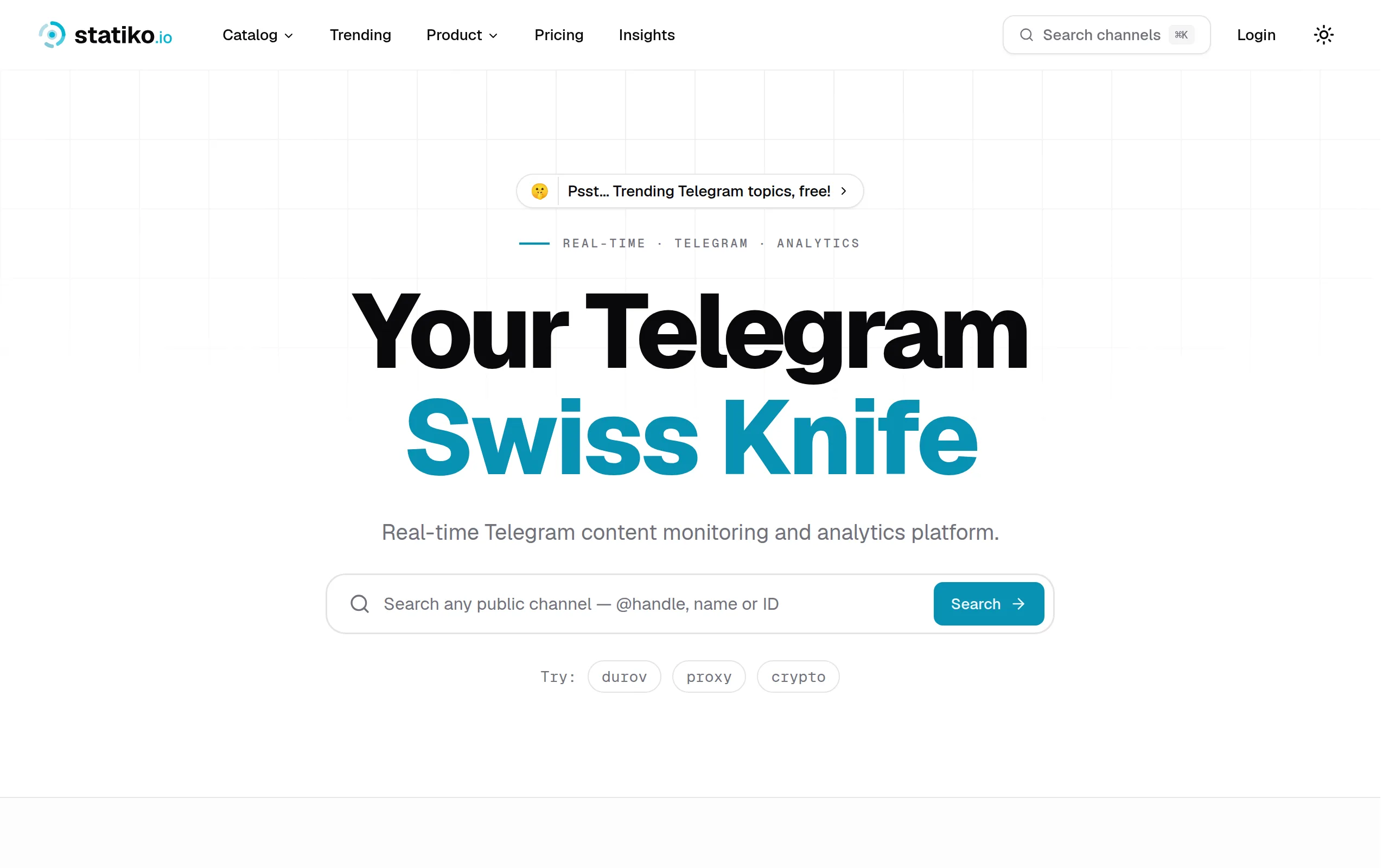
Statiko
Monitor any Telegram channel in real time - track posts, edits, deletions, and growth with AI recaps 📡

Shibui
AI website builder - describe your business, pick a niche template, edit by chatting, and publish instantly ✨

Pro Service
Find verified home service professionals, compare quotes, and pay securely through escrow - built for Brazilians across the US 🏠

RankGrow
Fix your SEO with AI agents - connect Search Console, get prioritized tasks, and grow organic traffic 📈
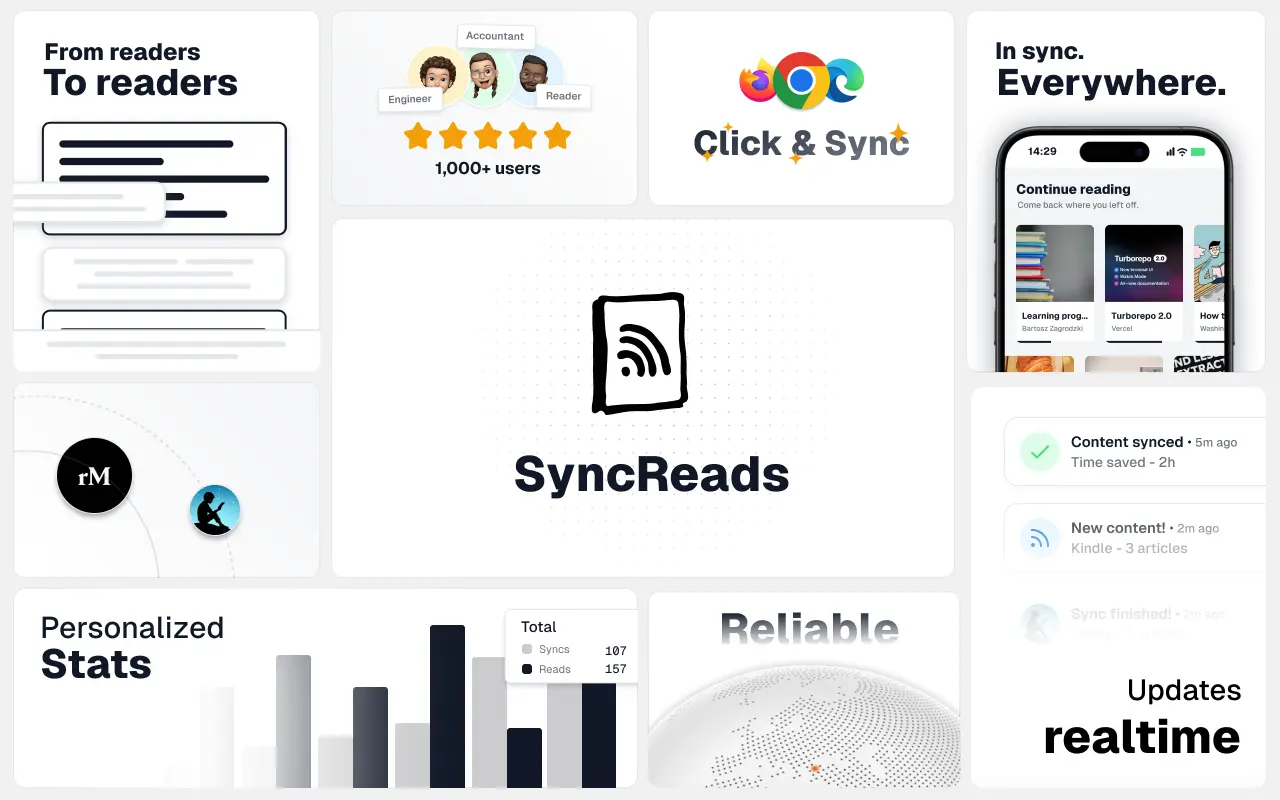
SyncReads
Sync your favorite content for distraction-free reading, save time and replace multiple apps. Anytime, anywhere 🔄
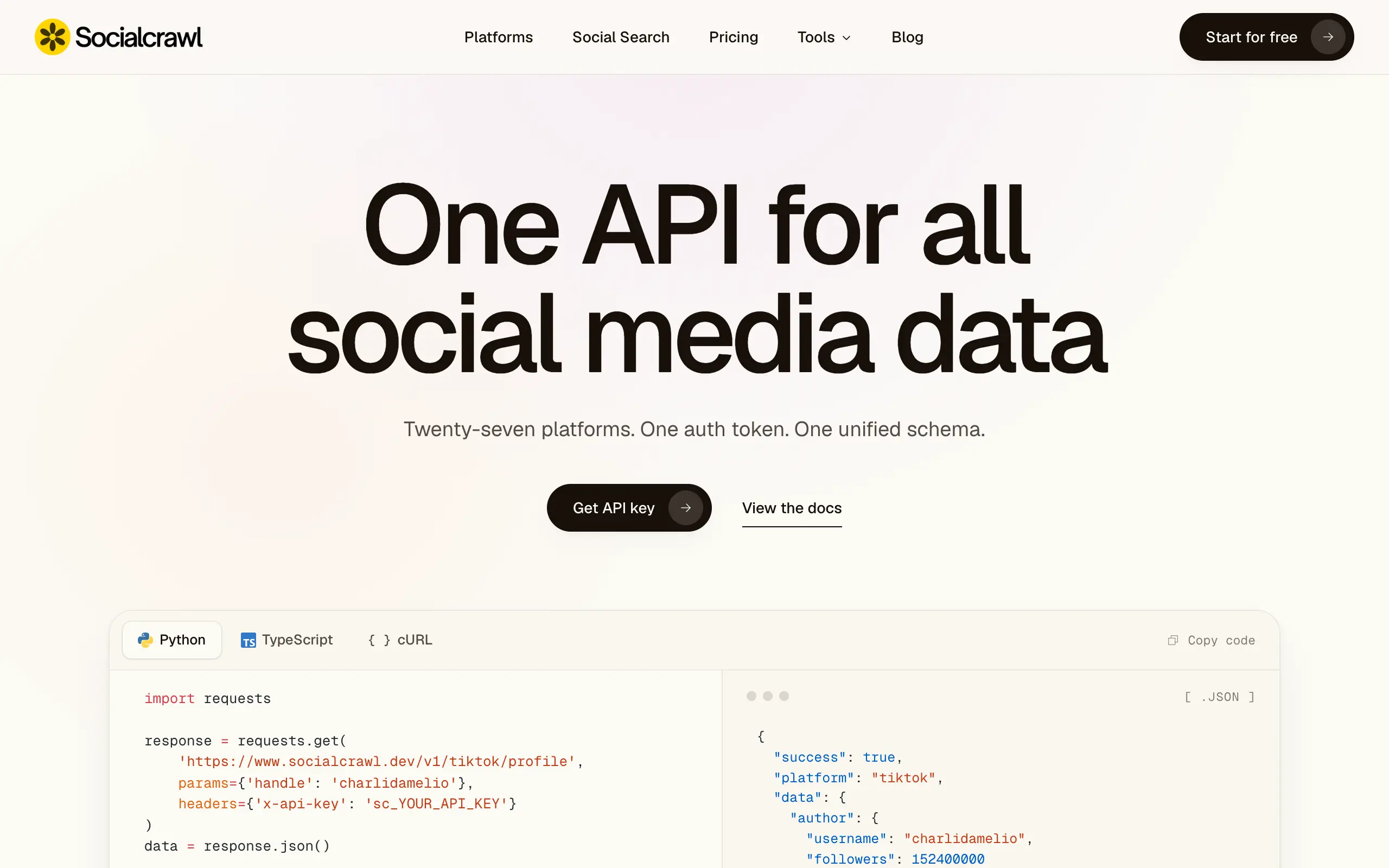
Socialcrawl
Get clean, structured data from 21 platforms like TikTok, Instagram, and YouTube with a single request 📊
Statiko
Monitor any Telegram channel in real time - track posts, edits, deletions, and growth with AI recaps 📡
Shibui
AI website builder - describe your business, pick a niche template, edit by chatting, and publish instantly ✨
Pro Service
Find verified home service professionals, compare quotes, and pay securely through escrow - built for Brazilians across the US 🏠
RankGrow
Fix your SEO with AI agents - connect Search Console, get prioritized tasks, and grow organic traffic 📈
SyncReads
Sync your favorite content for distraction-free reading, save time and replace multiple apps. Anytime, anywhere 🔄
Socialcrawl
Get clean, structured data from 21 platforms like TikTok, Instagram, and YouTube with a single request 📊
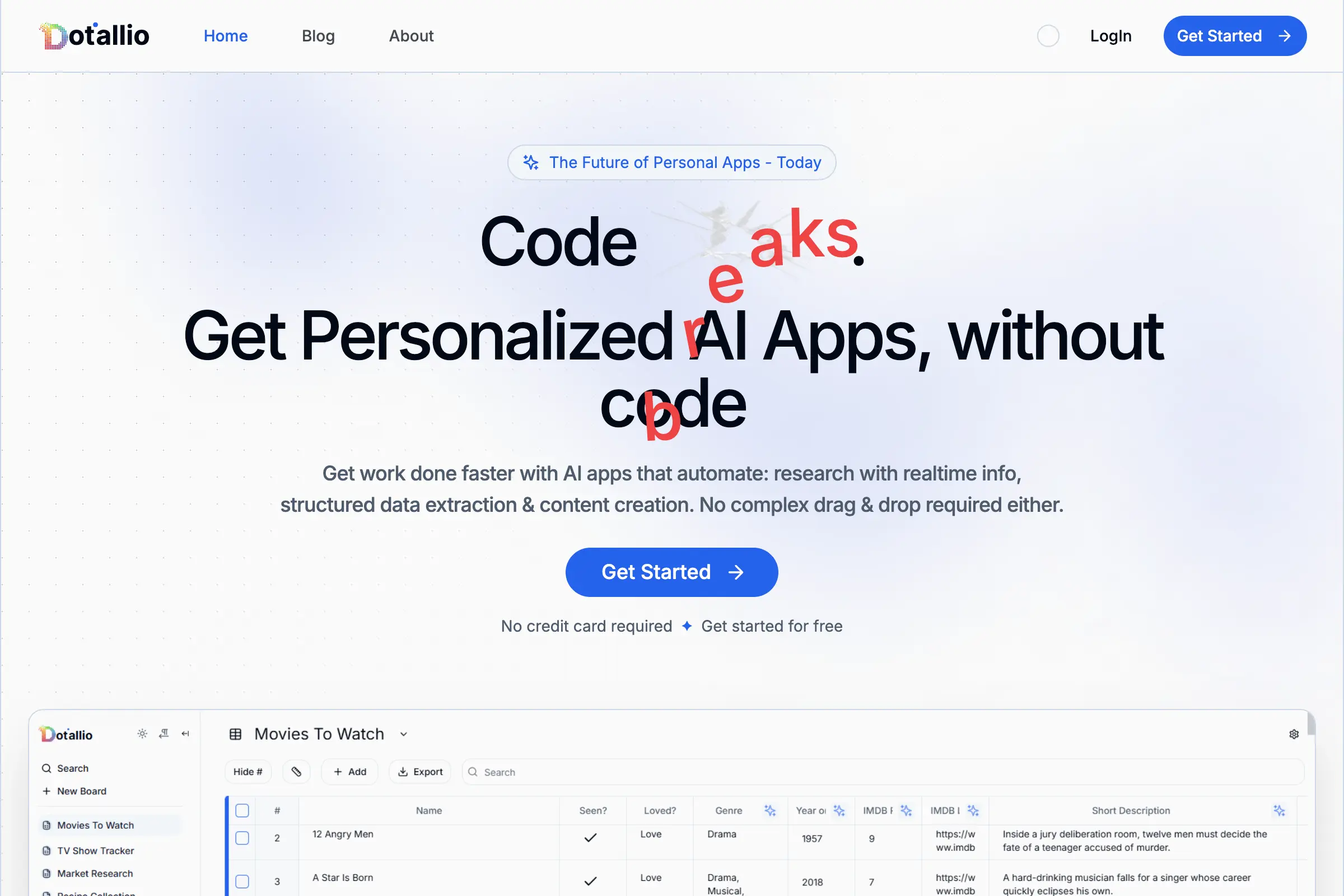
Dotallio
Personalized AI apps that automate research, data extraction, and content creation without code 🤖

Talk to Santa
Enjoy a magical live video chat or receive a unique AI-generated video greeting from Santa Claus 🎅

pozywka.pl
Scalable blog for food journalist, focused on performance and user experience 🌭
zagrodzki.me
Personal blog and portfolio of Bart Zagrodzki, where he shares his knowledge and work 💼
TurboStarter
Ship your startup everywhere. In minutes.
HTML to Markdown
Convert HTML to Markdown with ease, directly in your browser 📄
Dotallio
Personalized AI apps that automate research, data extraction, and content creation without code 🤖
Talk to Santa
Enjoy a magical live video chat or receive a unique AI-generated video greeting from Santa Claus 🎅
pozywka.pl
Scalable blog for food journalist, focused on performance and user experience 🌭
zagrodzki.me
Personal blog and portfolio of Bart Zagrodzki, where he shares his knowledge and work 💼
TurboStarter
Ship your startup everywhere. In minutes.
HTML to Markdown
Convert HTML to Markdown with ease, directly in your browser 📄
Omichat
Chat with 50+ AI models, including ChatGPT and Claude, in one place - switch models anytime without losing context 🤖
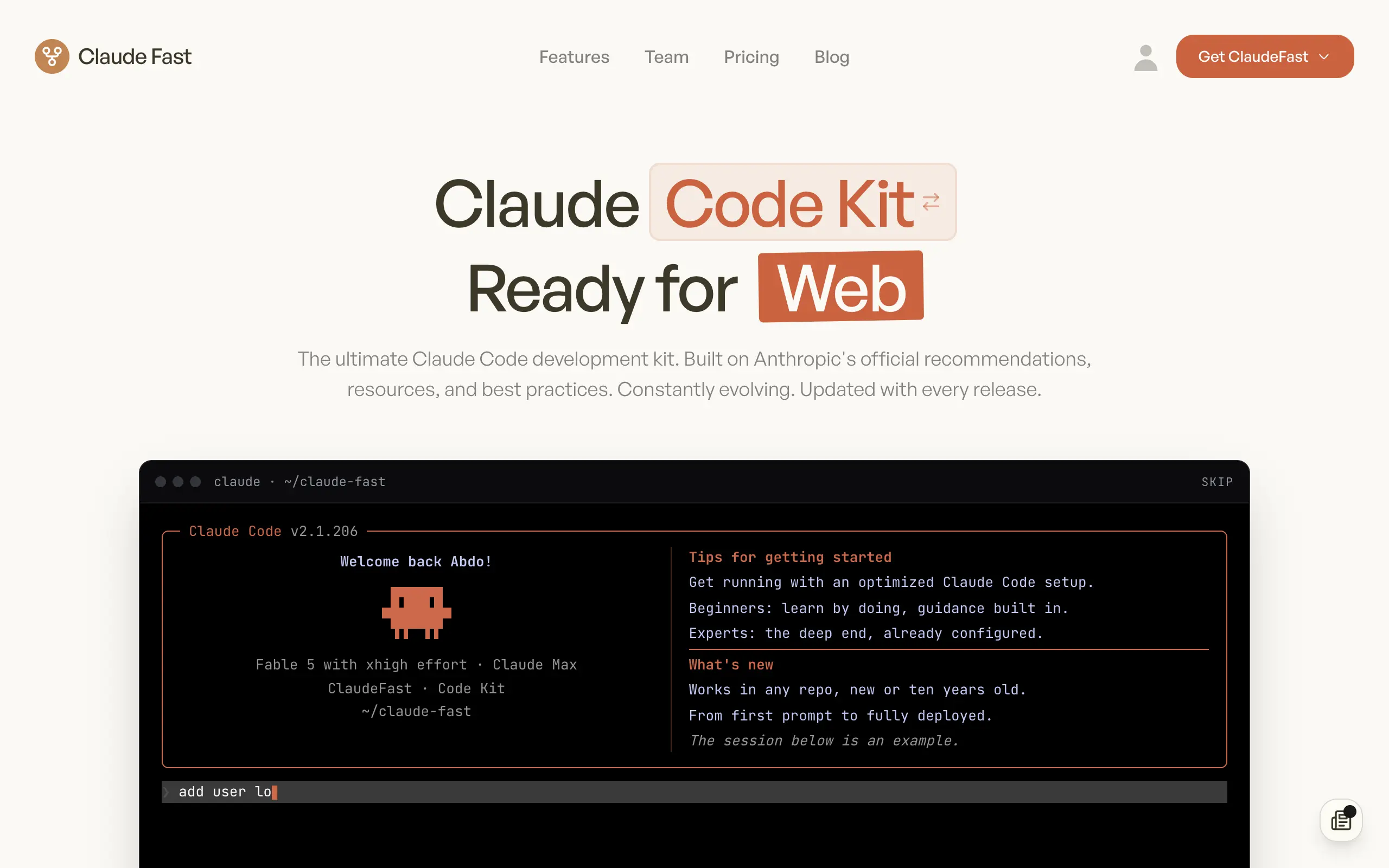
Claude Fast
Supercharge your Claude Code with 6x effective context window and specialized AI agents 🤖
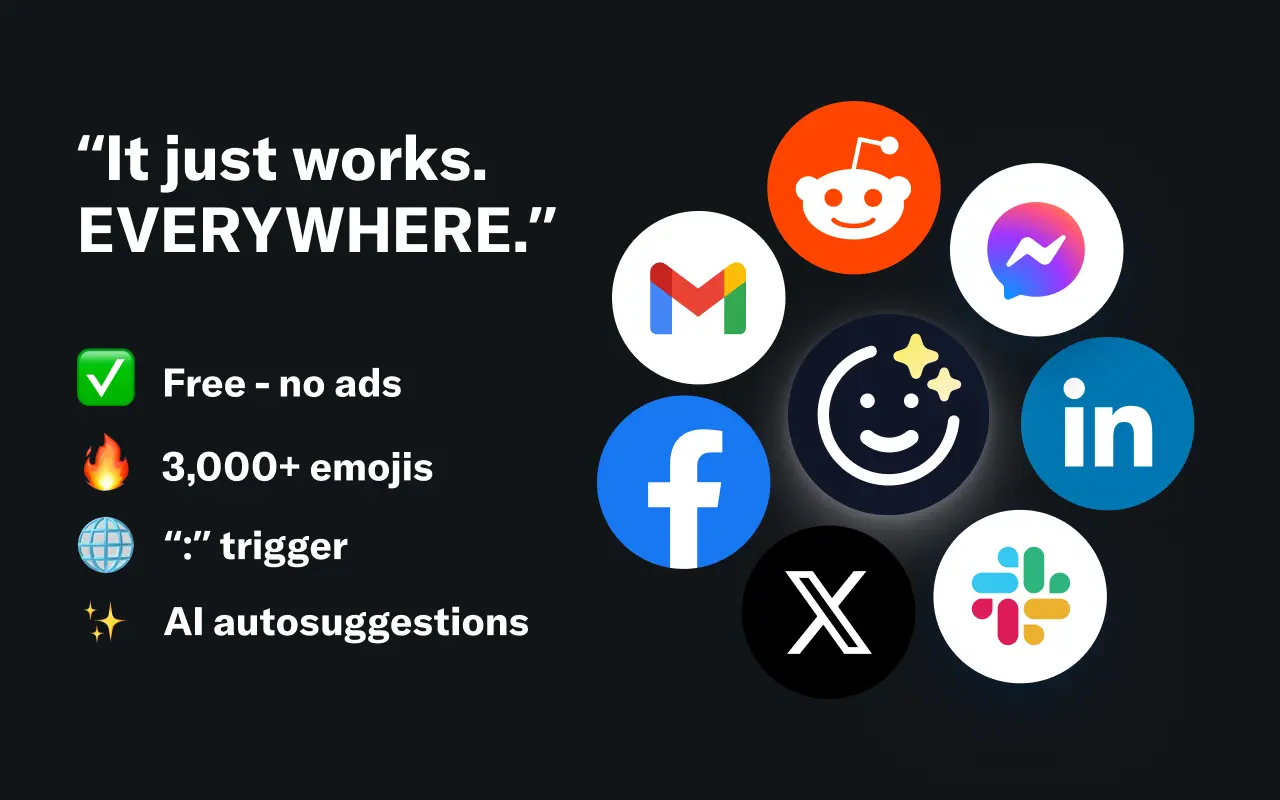
EmojAI
AI-powered emoji picker with smart, context-aware suggestions 🤖

Solohacker
Autonomous company launcher - AI agents work 24/7, escalate what matters, and you stay in control 🤖

BeRawi: Storytelling Coach
Practice storytelling daily with instant feedback to sound clearer, more engaging, and confident 🎤
Omichat
Chat with 50+ AI models, including ChatGPT and Claude, in one place - switch models anytime without losing context 🤖
Claude Fast
Supercharge your Claude Code with 6x effective context window and specialized AI agents 🤖
EmojAI
AI-powered emoji picker with smart, context-aware suggestions 🤖
Solohacker
Autonomous company launcher - AI agents work 24/7, escalate what matters, and you stay in control 🤖
BeRawi: Storytelling Coach
Practice storytelling daily with instant feedback to sound clearer, more engaging, and confident 🎤

Connect with like-minded people
Join our community to get feedback, support, and grow together with 1,000+ builders on board, let's ship it!
Join usShip your startup everywhere. In minutes.
Don't burn tokens on setup and start building features on day one.