SchemaForge
Generate, sync, and evolve database schemas across services using AI that understands your business logic and prevents breaking changes.
The rise of AI-powered schema management: why SchemaForge matters now
Modern software teams are drowning in schema complexity. Between microservices, event-driven architectures, data warehouses, and real-time APIs, managing database schemas is no longer a simple version-controlled SQL file—it’s a living, evolving system that directly impacts product velocity and system reliability.
This is where AI-powered schema management tools like SchemaForge step in. By combining intelligent schema generation, synchronization, and safe evolution, SchemaForge addresses one of the most painful and overlooked bottlenecks in modern development: coordinating data structures across distributed systems without breaking production.
In this deep dive, we’ll explore how SchemaForge works, who it’s for, why the market is ready for it, and how to build and monetize a product like this effectively.
Understanding the core problem: schema drift and breaking changes
Before diving into the solution, it’s critical to understand the problem space.
What is schema drift?
Schema drift happens when different parts of your system operate on slightly different versions of a database schema. This is especially common in:
- Microservices architectures
- Data pipelines and ETL workflows
- Multi-team environments
- Rapidly iterating startups
Over time, inconsistencies creep in:
- One service expects a field that another has deprecated
- Data types change without proper migration
- API contracts fall out of sync with database structure
Why current tools fall short
Existing tools like migration frameworks (e.g., Prisma Migrate, Flyway) and ORMs help—but they don’t understand intent.
They:
- Execute migrations
- Track versions
- Apply changes
But they don’t reason about business logic or downstream impact.
This leads to:
- Breaking changes in production
- Fragile integrations
- Slow coordination between teams
Critical insight
Most schema tools are reactive—they apply changes. SchemaForge is proactive—it predicts and prevents problems before they happen.
What is SchemaForge?
SchemaForge is an AI-powered schema orchestration platform that:
- Generates schemas from business requirements
- Syncs schema changes across services
- Detects and prevents breaking changes
- Evolves schemas safely over time
Instead of writing migrations manually, developers describe intent:
“Add a nullable
customer_tierfield to users, ensure backward compatibility, and update dependent services.”
SchemaForge translates that into:
- Safe schema updates
- Migration plans
- Compatibility layers
- Service-level adjustments
Target audience: who needs SchemaForge the most?
Primary audience
1. Scaling startups (Series A–C)
- Rapid product iteration
- Growing engineering teams
- Increasing system complexity
2. SaaS companies with microservices
- Distributed architectures
- Independent service deployments
- Complex data contracts
3. Data-heavy platforms
- Analytics tools
- Fintech systems
- Marketplaces
Secondary audience
- Enterprise engineering teams modernizing legacy systems
- DevOps teams managing CI/CD pipelines
- Platform engineers building internal tooling
Market opportunity and timing
Why now?
Several macro trends make SchemaForge highly relevant:
1. Explosion of microservices
Companies are shifting from monoliths to distributed systems, increasing schema coordination complexity.
2. Rise of AI-assisted development
Tools like GitHub Copilot and AI code generators are changing how code is written—schemas are the next frontier.
3. Data as a product
Organizations now treat data models as core assets, not just backend details.
4. Increased cost of downtime
Schema-related bugs can break entire systems—especially in fintech, healthcare, and SaaS.
Market gap
There’s currently no dominant player that:
- Combines schema generation + evolution + synchronization
- Uses AI to understand intent
- Operates across services, not just a single database
Opportunity
SchemaForge sits at the intersection of DevTools, AI, and data infrastructure—three of the fastest-growing categories in SaaS.
Core features that define SchemaForge
1. AI-driven schema generation
Developers describe requirements in natural language:
- “Create a multi-tenant billing schema”
- “Add audit logs for user actions”
SchemaForge generates:
- Tables
- Relationships
- Constraints
- Indexes
2. Cross-service schema synchronization
Keeps schemas aligned across:
- APIs
- Microservices
- Data warehouses
Ensures:
- Consistent field definitions
- Version compatibility
- No silent drift
3. Breaking change detection
Before applying updates, SchemaForge:
- Simulates impact
- Identifies affected services
- Suggests safe alternatives
4. Automated migration planning
Generates:
- Backward-compatible migrations
- Rollback strategies
- Deployment sequencing
5. Schema version intelligence
Tracks:
- Schema history
- Usage patterns
- Dependency graphs
Feature comparison with traditional tools
| Capability | Traditional ORM | Migration Tools | Schema Registry | SchemaForge |
|---|---|---|---|---|
| Schema generation | ❌ | ❌ | ❌ | ✅ |
| Cross-service sync | ❌ | ❌ | ✅ | ✅ |
| AI reasoning | ❌ | ❌ | ❌ | ✅ |
| Breaking change prevention | ❌ | ⚠️ | ⚠️ | ✅ |
Recommended tech stack for building SchemaForge
Frontend
- React – dynamic UI for schema visualization
- TailwindCSS – rapid styling
- Monaco Editor – for schema/code editing
Backend
- Node.js or Go – for performance and concurrency
- GraphQL – for schema introspection
- PostgreSQL – metadata storage
AI layer
- LLM APIs (OpenAI or similar)
- Embeddings for schema understanding
- Vector database (e.g., Pinecone, Weaviate)
Infrastructure
- Kubernetes – scalable orchestration
- Kafka – event-driven schema updates
- CI/CD integration (GitHub Actions)
Trade-offs
- Node vs Go: Node is faster to build; Go scales better for heavy workloads
- GraphQL vs REST: GraphQL better for schema introspection
- LLM cost vs accuracy: balancing inference cost with reliability
Example: AI-powered schema evolution flow
// Example pseudo-flow for schema update request
const request = {
  intent: "Add optional user profile picture",
  constraints: ["backward compatible", "no downtime"],
};

const plan = await schemaForge.generateMigrationPlan(request);

console.log(plan);
/*
- Add nullable column: profile_picture_url
- Backfill optional values
- Update API schema
- Notify dependent services
*/
Monetization strategies
1. SaaS subscription tiers
- Free tier: limited schemas, small teams
- Pro: advanced AI features, integrations
- Enterprise: custom deployments, SLAs
2. Usage-based pricing
Charge based on:
- Number of schema changes
- AI requests
- Services managed
3. Enterprise licensing
- On-prem deployment
- Compliance features
- Dedicated support
4. Developer platform ecosystem
- Plugins for Prisma, Sequelize, etc.
- API access for automation
Competitive advantage: why SchemaForge wins
1. Intent-based schema management
Unlike traditional tools, SchemaForge understands:
- Why a change is being made
- Not just what is changing
2. Cross-service intelligence
Most tools operate at the database level. SchemaForge operates at the system level.
3. AI-native architecture
This is not “AI added later”—it’s core to the product.
4. Preventative approach
Instead of fixing bugs after deployment, it prevents them entirely.
Risks and how to mitigate them
Risk 1: AI inaccuracies
Mitigation:
- Human-in-the-loop approvals
- Confidence scoring
- Schema validation layers
Risk 2: Developer trust
Mitigation:
- Transparent decision logs
- Explainable AI outputs
- Incremental adoption
Risk 3: Integration complexity
Mitigation:
- SDKs for major frameworks
- Plug-and-play integrations
- Strong documentation
Risk 4: Performance overhead
Mitigation:
- Async processing
- Caching strategies
- Incremental updates
Go-to-market strategy
Phase 1: Developer adoption
- Launch on Product Hunt
- Open-source core components
- Build developer trust
Phase 2: Community growth
- Tutorials and case studies
- Integration partnerships
- DevRel strategy
Phase 3: Enterprise expansion
- Target scaling startups
- Offer migration audits
- Provide ROI metrics
Real-world use cases
Fintech platforms
Ensure schema consistency across transaction systems without risking downtime.
SaaS products
Ship features faster without breaking existing APIs or customer data.
Data pipelines
Maintain schema alignment between ingestion, transformation, and analytics layers.
Implementation roadmap
How SchemaForge fits into modern dev workflows
Integration points
- Git workflows (schema as code)
- CI/CD pipelines
- API gateways
- Data warehouses
Example workflow
Manual migrations, broken services, slow coordination, high risk.
AI-assisted schema updates, automatic sync, safe deployments, faster iteration.
Future trends and expansion opportunities
1. Autonomous infrastructure
SchemaForge could evolve into:
- Self-healing data systems
- Fully automated schema optimization
2. AI-native databases
Databases that adapt schemas dynamically based on usage patterns.
3. Cross-company schema standards
Shared schema protocols across platforms and APIs.
Actionable steps to build SchemaForge today
- Start with a narrow use case (e.g., PostgreSQL schema evolution)
- Build a lightweight AI layer for intent parsing
- Create a migration planner
- Add visualization tools
- Integrate with Git workflows
- Expand to multi-service support
If you want to accelerate this process, using a production-ready SaaS foundation like TurboStarter can significantly reduce setup time and let you focus on core product innovation.
Final thoughts
Schema management is one of the last major pain points in modern software development that hasn’t been fully transformed by AI. SchemaForge represents a shift from manual, reactive tooling to intelligent, proactive systems that understand how data flows across an entire architecture.
The opportunity here is not just incremental—it’s foundational. Whoever solves schema evolution at scale will become a critical layer in the modern development stack.
If executed well, SchemaForge could become as essential as version control or CI/CD—quietly powering everything behind the scenes while preventing the kinds of failures that developers lose sleep over.
More 🤖 AI Startup SaaS ideas
Discover more innovative ai startup SaaS ideas that are trending in 2026. Each idea is AI-generated with market validation and growth potential to help you find your next profitable venture faster than competitors.
Your competitors are building with TurboStarter
Below are some of the SaaS ideas that have been generated and built with our starter kit.

Statiko
Monitor any Telegram channel in real time - track posts, edits, deletions, and growth with AI recaps 📡

Shibui
AI website builder - describe your business, pick a niche template, edit by chatting, and publish instantly ✨

Pro Service
Find verified home service professionals, compare quotes, and pay securely through escrow - built for Brazilians across the US 🏠
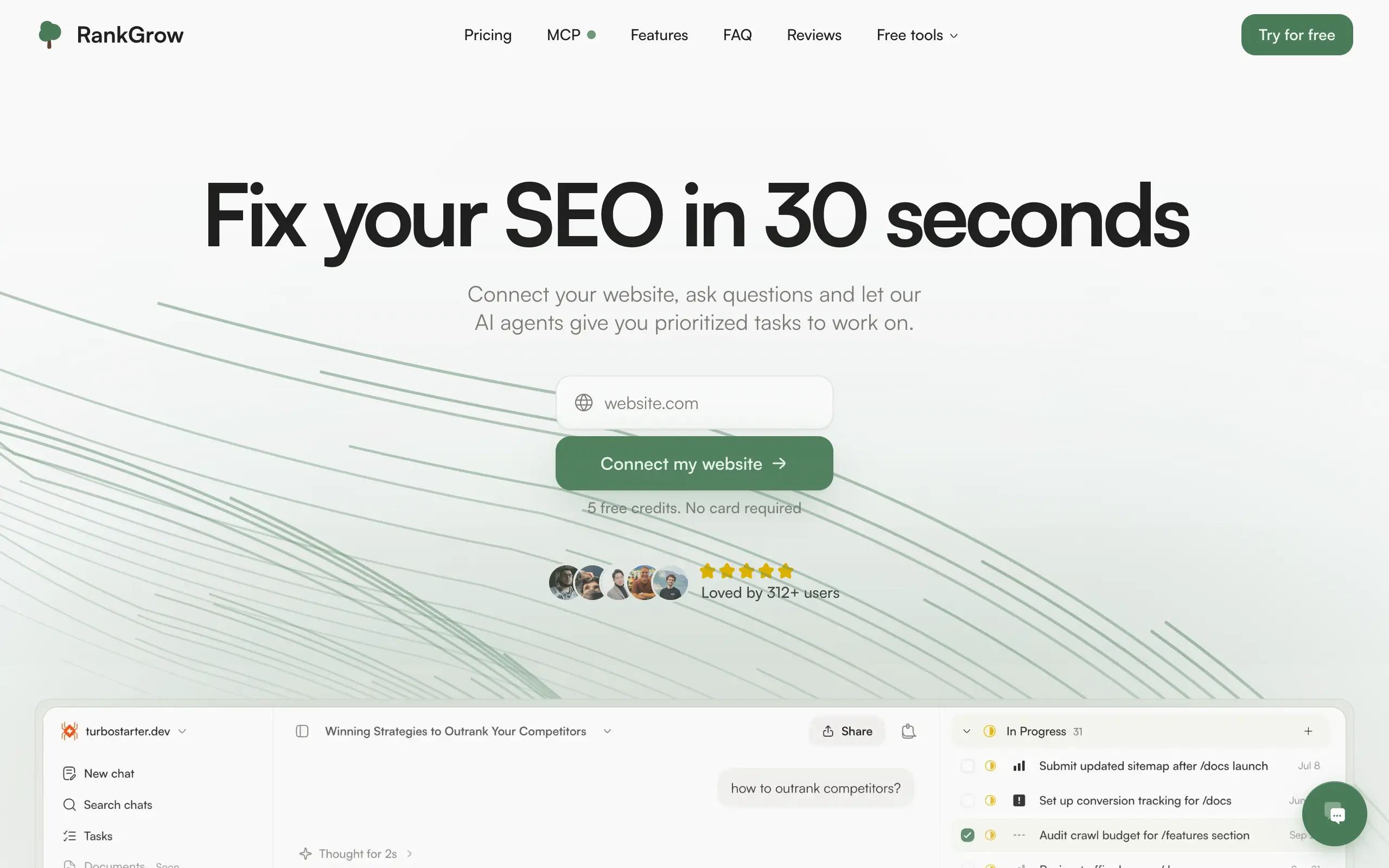
RankGrow
Fix your SEO with AI agents - connect Search Console, get prioritized tasks, and grow organic traffic 📈

SyncReads
Sync your favorite content for distraction-free reading, save time and replace multiple apps. Anytime, anywhere 🔄
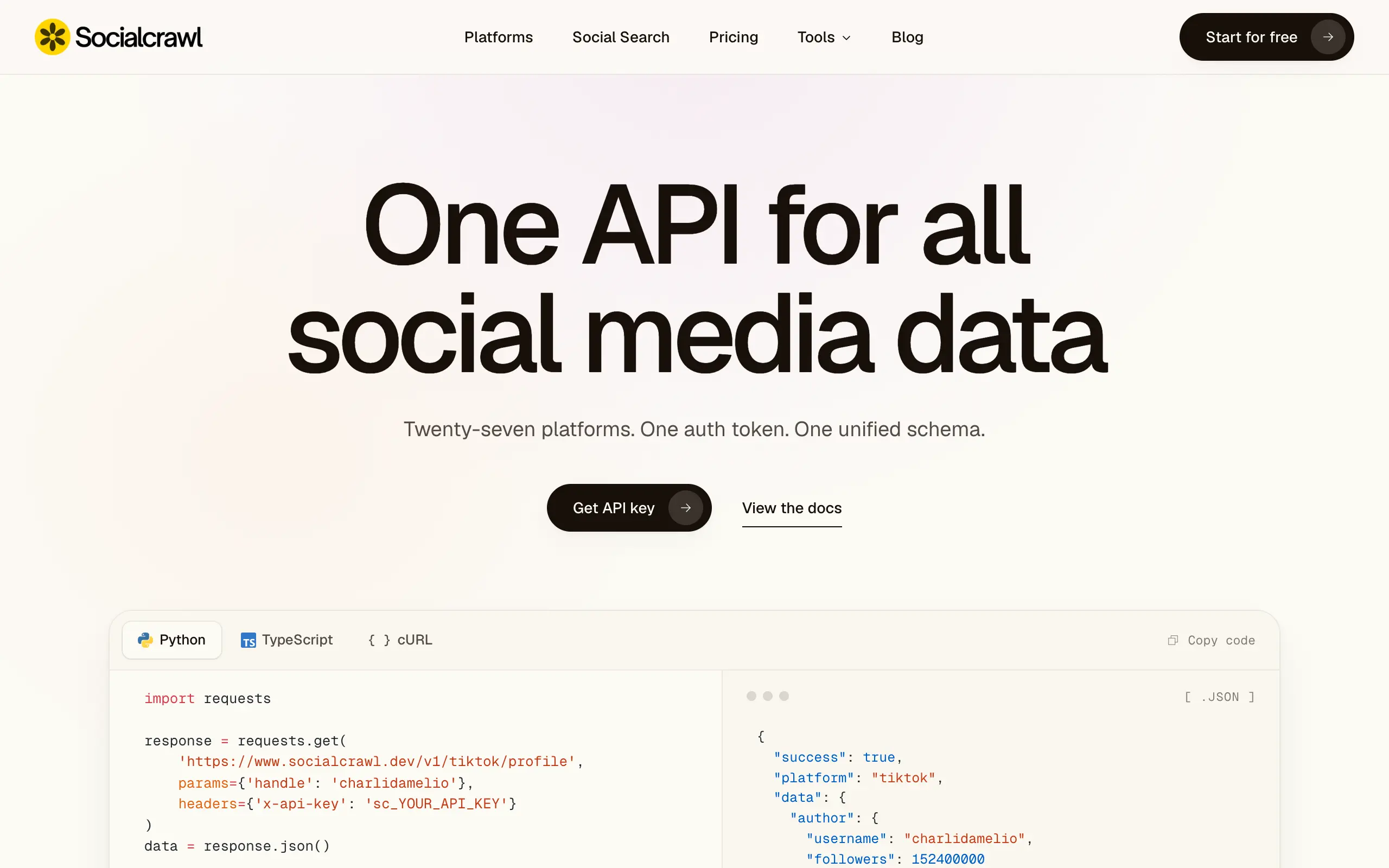
Socialcrawl
Get clean, structured data from 21 platforms like TikTok, Instagram, and YouTube with a single request 📊
Statiko
Monitor any Telegram channel in real time - track posts, edits, deletions, and growth with AI recaps 📡
Shibui
AI website builder - describe your business, pick a niche template, edit by chatting, and publish instantly ✨
Pro Service
Find verified home service professionals, compare quotes, and pay securely through escrow - built for Brazilians across the US 🏠
RankGrow
Fix your SEO with AI agents - connect Search Console, get prioritized tasks, and grow organic traffic 📈
SyncReads
Sync your favorite content for distraction-free reading, save time and replace multiple apps. Anytime, anywhere 🔄
Socialcrawl
Get clean, structured data from 21 platforms like TikTok, Instagram, and YouTube with a single request 📊
Statiko
Monitor any Telegram channel in real time - track posts, edits, deletions, and growth with AI recaps 📡
Shibui
AI website builder - describe your business, pick a niche template, edit by chatting, and publish instantly ✨
Pro Service
Find verified home service professionals, compare quotes, and pay securely through escrow - built for Brazilians across the US 🏠
RankGrow
Fix your SEO with AI agents - connect Search Console, get prioritized tasks, and grow organic traffic 📈
SyncReads
Sync your favorite content for distraction-free reading, save time and replace multiple apps. Anytime, anywhere 🔄
Socialcrawl
Get clean, structured data from 21 platforms like TikTok, Instagram, and YouTube with a single request 📊
Statiko
Monitor any Telegram channel in real time - track posts, edits, deletions, and growth with AI recaps 📡
Shibui
AI website builder - describe your business, pick a niche template, edit by chatting, and publish instantly ✨
Pro Service
Find verified home service professionals, compare quotes, and pay securely through escrow - built for Brazilians across the US 🏠
RankGrow
Fix your SEO with AI agents - connect Search Console, get prioritized tasks, and grow organic traffic 📈
SyncReads
Sync your favorite content for distraction-free reading, save time and replace multiple apps. Anytime, anywhere 🔄
Socialcrawl
Get clean, structured data from 21 platforms like TikTok, Instagram, and YouTube with a single request 📊
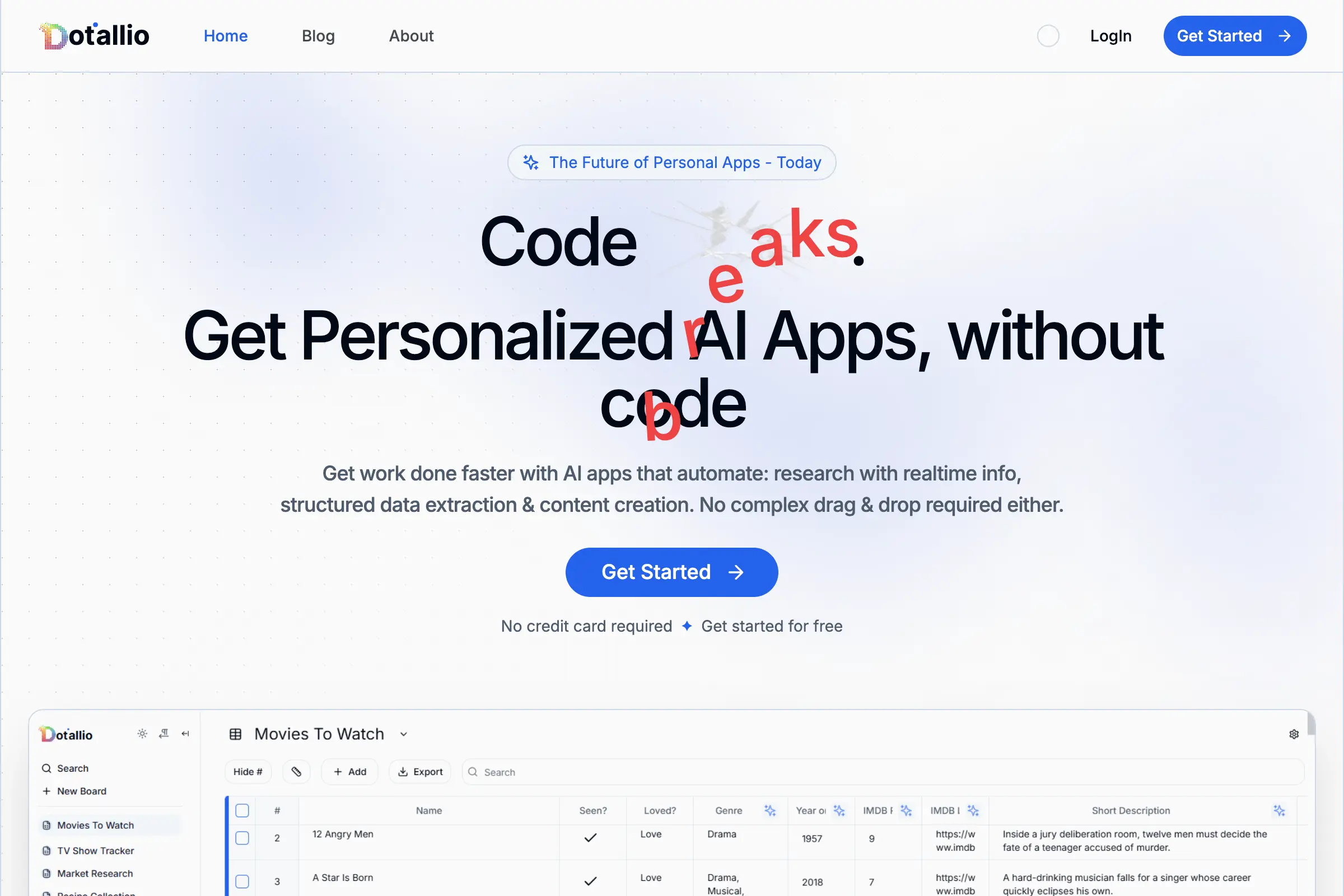
Dotallio
Personalized AI apps that automate research, data extraction, and content creation without code 🤖

Talk to Santa
Enjoy a magical live video chat or receive a unique AI-generated video greeting from Santa Claus 🎅

pozywka.pl
Scalable blog for food journalist, focused on performance and user experience 🌭
zagrodzki.me
Personal blog and portfolio of Bart Zagrodzki, where he shares his knowledge and work 💼
TurboStarter
Ship your startup everywhere. In minutes.
HTML to Markdown
Convert HTML to Markdown with ease, directly in your browser 📄
Dotallio
Personalized AI apps that automate research, data extraction, and content creation without code 🤖
Talk to Santa
Enjoy a magical live video chat or receive a unique AI-generated video greeting from Santa Claus 🎅
pozywka.pl
Scalable blog for food journalist, focused on performance and user experience 🌭
zagrodzki.me
Personal blog and portfolio of Bart Zagrodzki, where he shares his knowledge and work 💼
TurboStarter
Ship your startup everywhere. In minutes.
HTML to Markdown
Convert HTML to Markdown with ease, directly in your browser 📄
Dotallio
Personalized AI apps that automate research, data extraction, and content creation without code 🤖
Talk to Santa
Enjoy a magical live video chat or receive a unique AI-generated video greeting from Santa Claus 🎅
pozywka.pl
Scalable blog for food journalist, focused on performance and user experience 🌭
zagrodzki.me
Personal blog and portfolio of Bart Zagrodzki, where he shares his knowledge and work 💼
TurboStarter
Ship your startup everywhere. In minutes.
HTML to Markdown
Convert HTML to Markdown with ease, directly in your browser 📄
Dotallio
Personalized AI apps that automate research, data extraction, and content creation without code 🤖
Talk to Santa
Enjoy a magical live video chat or receive a unique AI-generated video greeting from Santa Claus 🎅
pozywka.pl
Scalable blog for food journalist, focused on performance and user experience 🌭
zagrodzki.me
Personal blog and portfolio of Bart Zagrodzki, where he shares his knowledge and work 💼
TurboStarter
Ship your startup everywhere. In minutes.
HTML to Markdown
Convert HTML to Markdown with ease, directly in your browser 📄

Omichat
Chat with 50+ AI models, including ChatGPT and Claude, in one place - switch models anytime without losing context 🤖
Claude Fast
Supercharge your Claude Code with 6x effective context window and specialized AI agents 🤖

EmojAI
AI-powered emoji picker with smart, context-aware suggestions 🤖

Solohacker
Autonomous company launcher - AI agents work 24/7, escalate what matters, and you stay in control 🤖

BeRawi: Storytelling Coach
Practice storytelling daily with instant feedback to sound clearer, more engaging, and confident 🎤
Omichat
Chat with 50+ AI models, including ChatGPT and Claude, in one place - switch models anytime without losing context 🤖
Claude Fast
Supercharge your Claude Code with 6x effective context window and specialized AI agents 🤖
EmojAI
AI-powered emoji picker with smart, context-aware suggestions 🤖
Solohacker
Autonomous company launcher - AI agents work 24/7, escalate what matters, and you stay in control 🤖
BeRawi: Storytelling Coach
Practice storytelling daily with instant feedback to sound clearer, more engaging, and confident 🎤
Omichat
Chat with 50+ AI models, including ChatGPT and Claude, in one place - switch models anytime without losing context 🤖
Claude Fast
Supercharge your Claude Code with 6x effective context window and specialized AI agents 🤖
EmojAI
AI-powered emoji picker with smart, context-aware suggestions 🤖
Solohacker
Autonomous company launcher - AI agents work 24/7, escalate what matters, and you stay in control 🤖
BeRawi: Storytelling Coach
Practice storytelling daily with instant feedback to sound clearer, more engaging, and confident 🎤
Omichat
Chat with 50+ AI models, including ChatGPT and Claude, in one place - switch models anytime without losing context 🤖
Claude Fast
Supercharge your Claude Code with 6x effective context window and specialized AI agents 🤖
EmojAI
AI-powered emoji picker with smart, context-aware suggestions 🤖
Solohacker
Autonomous company launcher - AI agents work 24/7, escalate what matters, and you stay in control 🤖
BeRawi: Storytelling Coach
Practice storytelling daily with instant feedback to sound clearer, more engaging, and confident 🎤

Connect with like-minded people
Join our community to get feedback, support, and grow together with 1,000+ builders on board, let's ship it!
Join usShip your startup everywhere. In minutes.
Don't burn tokens on setup and start building features on day one.