ShelfStory
Create conversion-focused product stories for every audience and channel. ShelfStory uses customer reviews and product data to generate consistent, on-brand ecommerce campaigns.
ShelfStory is an AI SaaS concept for turning product information and customer reviews into conversion-focused ecommerce campaigns. Instead of asking merchants to start every product description, email, ad, or social post from scratch, ShelfStory would create a consistent story for a specific audience and channel—grounded in the product’s actual details and the language real customers use.
The opportunity is promising, but the product needs to do more than generate generic marketing copy. Ecommerce teams already have access to general-purpose AI tools. ShelfStory’s strongest position is as a review-informed, product-aware content workflow that helps teams create, approve, adapt, and measure campaigns without losing their brand voice or making unsupported claims.
What ShelfStory should solve
Ecommerce teams routinely need multiple versions of a product story. A product page may need a concise benefit-led summary, an email campaign may need a stronger emotional hook, and a paid social ad may need a short message tailored to a particular customer segment.
The underlying facts should stay consistent across all of those assets. The framing, length, and emphasis should change.
In many businesses, that process is scattered across product information systems, review platforms, spreadsheets, email tools, and creative briefs. A marketer might manually read customer reviews, pull out recurring themes, check product specifications, and then rewrite the same core message for several channels. That work takes time and can produce uneven results.
ShelfStory can streamline this process by connecting three inputs:
- Product facts, such as materials, dimensions, use cases, features, and care instructions.
- Customer evidence, such as reviews, frequently mentioned benefits, and recurring objections.
- Campaign context, such as the target audience, channel, offer, campaign objective, and brand voice.
The product’s job is to transform those inputs into useful marketing assets while preserving traceability. Users should be able to see why a claim appeared, which customer themes informed it, and whether the claim is supported by the product data.
The primary audience for an AI ecommerce storytelling tool
ShelfStory should initially serve teams with enough content demand to feel the pain but not enough operational capacity to solve it through a large in-house team.
Small and midsize ecommerce brands
These brands often manage many marketing tasks with a small team. A founder or marketer may be responsible for product pages, lifecycle emails, paid campaigns, and social content at the same time.
They need a tool that reduces repetitive writing and helps keep product messaging aligned across channels. They are also likely to value a simple onboarding experience over a complex enterprise implementation.
ShelfStory’s value for this group: turn existing product data and reviews into draft campaign assets that a small team can edit and publish.
Ecommerce marketing agencies
Agencies may create product stories for multiple clients, each with different positioning, audiences, and brand guidelines. Reusing a generic prompt for each account is risky and inefficient.
A multi-brand workspace, client approval workflow, and reusable campaign templates could make ShelfStory useful for agencies that produce ecommerce content at scale.
ShelfStory’s value for this group: centralize brand rules and source material while supporting repeatable workflows across client accounts.
Growth and lifecycle marketing teams
These teams need to adapt product benefits to different stages of the customer journey. A first-time visitor may need reassurance about fit or quality, while a returning customer may respond to complementary products or a new use case.
ShelfStory could support campaign planning by generating content variations around specific audiences and objectives. It should not replace the team’s testing strategy, but it can help produce structured options faster.
ShelfStory’s value for this group: create audience- and channel-specific drafts without losing the product’s factual foundation.
Catalog and merchandising teams
Merchandising teams work with large catalogs and may need to standardize product descriptions, attributes, and category-level messaging. They can benefit from tools that identify missing product information as well as tools that generate copy.
ShelfStory’s value for this group: surface incomplete or conflicting product data before it becomes a customer-facing claim.
A sensible first customer profile
The best initial customer is not necessarily a retailer with the largest catalog. A more useful early profile is a brand that:
- Has a meaningful volume of customer reviews.
- Runs multiple marketing channels.
- Rewrites product content frequently.
- Has a clear brand voice or style guide.
- Can provide a human reviewer for generated content.
- Is willing to share feedback and connect its existing tools.
This profile gives ShelfStory enough source material to demonstrate value and enough workflow complexity to justify a dedicated product.
The market opportunity and the gap to address
AI writing tools have made it easy to produce more copy. That does not automatically make the copy more useful, more accurate, or more likely to convert.
A general-purpose AI assistant can draft a product description, but it may not know which claims are verified, which benefits customers mention most often, or which language is appropriate for a particular brand. A review platform may contain valuable customer feedback, but it may not turn that feedback into ready-to-review campaigns. An ecommerce platform may store product data without connecting it to channel-specific storytelling.
That gap is where ShelfStory can compete: between source material and publishable marketing content.
The strongest market hypothesis
The core hypothesis is that ecommerce teams will pay for a workflow that consistently transforms product facts and customer feedback into usable campaign drafts, especially when that workflow saves time without requiring them to sacrifice brand control.
This hypothesis should be tested before building a large platform. Early discovery should answer:
- How many hours do target teams spend turning product information and reviews into campaigns?
- Which asset types cause the most repetitive work?
- What source systems hold product data and customer reviews?
- Which steps require human approval?
- How do teams currently check claims for accuracy?
- What would make a generated draft trustworthy enough to use?
- Which existing tools do teams already pay for in this workflow?
The answers will help ShelfStory distinguish an urgent problem from a feature that sounds attractive but rarely gets used.
Where a product gap may exist
ShelfStory could differentiate by combining features that are often handled separately:
- Product grounding: Every draft is informed by structured product data rather than vague prompts alone.
- Review mining: Recurring customer benefits, concerns, and use cases become visible and usable.
- Audience-specific storytelling: Teams can adjust the angle for a defined customer segment without changing the underlying facts.
- Channel-aware generation: The output respects the purpose and constraints of an email, product page, advertisement, or social post.
- Evidence and approvals: Reviewers can inspect the source behind a claim and approve content before publication.
- Brand consistency: Voice, terminology, prohibited phrases, and formatting rules can be reused across campaigns.
These capabilities form a more defensible product than a single “write copy” button.
ShelfStory’s unique selling proposition
A strong USP for ShelfStory could be:
Create brand-consistent ecommerce campaigns from verified product facts and real customer feedback, with source context and human approval built into the workflow.
The central distinction is not simply that ShelfStory uses AI. Many products do. The distinction is that it connects content generation to the evidence and workflow that ecommerce teams need to trust the result.
A useful product promise should be specific and measurable. For example, ShelfStory could aim to reduce the time required to produce a first campaign draft, increase the number of usable variations per campaign, or reduce revisions caused by missing product context. These are hypotheses to validate, not claims to advertise before they have been measured.
Core features for the first version
The first release should prove that users can go from source material to an approved draft with less effort than their current process. Avoid starting with every possible channel, integration, and analytics feature.
1. Product and brand workspaces
Each workspace should hold the context ShelfStory needs to generate relevant content:
- Product name and category.
- Product attributes and specifications.
- Intended use cases.
- Approved benefits and terminology.
- Brand voice guidance.
- Words, claims, or styles to avoid.
- Target markets and languages.
- Relevant customer reviews or feedback.
Separate brand and product context is important for agencies and businesses with multiple storefronts. The system should make it difficult to accidentally apply the wrong brand rules to a campaign.
2. Review insight extraction
ShelfStory should help users find patterns in customer feedback, not merely paste reviews into a prompt. Useful capabilities include:
- Grouping comments by themes such as comfort, durability, ease of use, or fit.
- Highlighting common questions and objections.
- Distinguishing recurring themes from isolated comments.
- Displaying representative review excerpts with relevant context.
- Allowing users to confirm, rename, or dismiss extracted themes.
Review summaries should be presented as insights, not as definitive statistical conclusions unless the underlying sample and method support that interpretation.
3. Audience and campaign briefs
A generation workflow should ask for enough information to guide the result without becoming a burdensome form. A compact campaign brief might include:
- Target audience or customer stage.
- Channel and asset type.
- Campaign goal.
- Product or collection.
- Offer or promotion, if applicable.
- Desired tone.
- Length or format constraints.
- Any required call to action.
Users should be able to save frequently used briefs as templates. This makes repeated campaigns faster and helps teams standardize their process.
4. Channel-specific content generation
A product story for a product page is different from an email subject line or a paid social advertisement. ShelfStory should account for channel requirements and generate structured outputs that are ready for review.
A useful first set of outputs might include:
- Product-page benefit summaries.
- Email subject lines and body copy.
- Paid social copy variations.
- Social captions.
- Campaign concepts and creative briefs.
- Frequently asked questions based on product information and customer feedback.
Generation should produce editable drafts rather than unreviewable final copy. The interface should make it easy to compare variations and preserve a preferred version.
5. Claim and source transparency
A trust-focused feature could connect generated statements to their sources. For example, a claim about a product’s material should point to the relevant product attribute, while a customer insight should identify the review theme or excerpt that informed it.
The product should also distinguish between:
- A verified product fact supplied by the merchant.
- A customer-reported experience found in reviews.
- An inference generated by the model.
- A claim needing review because the evidence is missing or ambiguous.
This distinction can reduce the chance that generated content presents an unsupported assumption as a guaranteed product outcome.
6. Brand controls and approvals
Brand controls should include reusable voice guidance, preferred terminology, prohibited claims, and approval roles. A practical review flow might let a writer edit a draft, a brand manager approve it, and an administrator manage the source data.
For an MVP, approval can be simple. Add more advanced permissions only after early customers demonstrate that they need them.
7. Version history and reuse
Teams often revisit old campaigns or adapt a proven message for another channel. ShelfStory should preserve drafts, edits, and approvals, making it clear which version was used and when.
Version history can also support learning. If users repeatedly reject certain kinds of output, the product could help them improve their brief, brand rules, or source data rather than merely regenerating the same copy.
A sample ShelfStory content workflow
A strong workflow should feel like an assistant that understands context, not a blank prompt field.
- A user selects a brand and product.
- ShelfStory loads the approved product facts and brand rules.
- The user selects a campaign goal, audience, and channel.
- ShelfStory presents relevant customer themes and possible messaging angles.
- The user chooses an angle or adds campaign instructions.
- ShelfStory generates several editable drafts.
- The user checks source context, revises the content, and sends it for approval.
- The approved asset is copied, exported, or eventually published through an integration.
- The team records performance or feedback to inform future work.
The MVP does not need to automate every step. It needs to make this sequence faster, clearer, and more reliable than the user’s current process.
Recommended MVP scope
A focused MVP could include:
- One ecommerce platform integration or a reliable CSV import.
- Manual review import or one review-source integration.
- Brand and product profiles.
- A guided campaign brief.
- A small number of high-value content formats.
- Editable generation with saved versions.
- Source references for product facts and review themes.
- Basic user roles and approval status.
- Usage tracking and customer feedback collection.
Avoid building a large integration marketplace, complex campaign analytics, automatic publishing to every channel, and extensive localization before validating the core workflow.
Build for trust, not just output volume
A product that generates ten drafts quickly is not necessarily more valuable than one that generates three drafts users can verify and approve. For ShelfStory, trust, relevance, and repeat use are better early product signals than raw generation counts.
Recommended technology stack
The stack should support fast iteration, secure handling of customer data, and a clear separation between application logic and AI providers. The right choice depends on the founding team’s experience and the integrations customers request.
Frontend
React is a strong foundation for a responsive web application with interactive review, editing, and approval workflows. A framework built around React can support server rendering, routing, and application-level features.
Tailwind CSS can help a small team build a consistent interface quickly, particularly for dashboards and structured forms. Its trade-off is that teams need design conventions to avoid scattered utility classes and inconsistent components.
For the MVP, prioritize usability in the content editor, source inspection, and campaign setup. A visually polished dashboard is less valuable than a workflow that clearly communicates what the AI used to produce a draft.
Backend and data storage
A relational database such as PostgreSQL is a practical choice because ShelfStory’s core entities have clear relationships:
- Organizations and users.
- Brands and products.
- Product attributes and source records.
- Reviews and extracted themes.
- Campaign briefs and generated assets.
- Approvals, edits, and usage records.
A relational model helps enforce ownership boundaries and supports queries such as “show approved assets for this brand” or “find campaigns created from this product.” A separate search index or vector database may become useful later, but it should not be added before search or retrieval needs justify the additional operational complexity.
For file imports, use object storage and record metadata in the database. Validate uploaded files, limit file sizes, and clearly communicate what data is retained.
AI orchestration and model selection
ShelfStory should treat the language model as one replaceable part of the system, not as the entire product. Build a generation layer that can support more than one provider over time.
Important implementation practices include:
- Store prompt and workflow versions.
- Use structured outputs where predictable fields are needed.
- Validate generated data before saving it.
- Keep source context separate from user instructions.
- Track model, prompt version, latency, and failure status.
- Avoid sending unnecessary customer data to a model.
- Provide a fallback when generation fails.
Model selection should be based on quality, latency, cost, privacy requirements, and performance on ShelfStory’s actual content tasks. Do not choose a provider only because it performs well on general benchmarks. Create an evaluation set made from representative product data, brand instructions, and review themes, then compare outputs with human reviewers.
Retrieval and evidence handling
Retrieval-augmented generation can help the system find relevant product information and review themes before generating content. It is especially useful when a brand has many products or a large review corpus.
However, retrieval can introduce its own failure modes. The system may retrieve irrelevant material, miss an important specification, or blend customer opinion with verified facts. ShelfStory should preserve source identifiers and make the evidence inspectable.
For a small catalog, structured database lookups may be enough. Add embedding-based search when the volume and variety of source text make conventional filtering insufficient.
Authentication, permissions, and data boundaries
ShelfStory will handle proprietary brand information and customer-generated content. The application should use organization-level access controls and enforce tenant boundaries on the server, not only in the user interface.
Useful safeguards include:
- Role-based permissions.
- Secure session management.
- Audit records for key actions.
- Encryption in transit and at rest through appropriately configured infrastructure.
- A clear retention and deletion policy.
- Limits on access to imported source data.
- A documented process for handling security incidents.
For an early product, a managed authentication provider and managed database can reduce infrastructure burden. The trade-off is vendor dependence, so review export options and service limitations before committing.
Integrations and background jobs
Product imports, review processing, and bulk generation may take longer than a typical web request. Use a background job system for work that needs retries, progress updates, or rate-limit handling.
Start with the integration that early customers use most. A robust CSV import can be more valuable than several fragile integrations. When building connectors, plan for token refresh, partial failures, duplicate records, schema changes, and user-visible sync status.
Competitive advantage and positioning
ShelfStory will compete with general AI writing tools, ecommerce platforms, review systems, agency workflows, and other marketing software. The goal should not be to claim that it replaces every one of these products. Instead, it should own a specific job that is painful to complete across them.
| Category | Typical strength | Potential gap ShelfStory can address |
|---|---|---|
| General AI writing tools | Flexible text generation | Limited built-in product context and campaign workflow |
| Ecommerce platforms | Product catalog and storefront management | Product facts may not become audience-specific campaign assets automatically |
| Review platforms | Collecting and displaying customer feedback | Feedback may not be organized for content creation and approvals |
| Marketing automation tools | Sending and measuring campaigns | Campaign tools may not prepare grounded product stories |
| Agencies and freelancers | Strategic judgment and creative quality | Repetitive research and adaptation can consume delivery time |
| ShelfStory | Product- and review-informed content workflow | Must prove trust, integration quality, and measurable time savings |
The table describes broad categories, not every vendor in each category. ShelfStory should validate actual alternatives during customer interviews, including spreadsheets, internal prompt libraries, and existing agency processes.
Defensible advantages to build over time
AI-generated copy alone is easy to imitate. More durable advantages may come from:
- A structured understanding of product catalogs and customer language.
- Brand-specific content rules and approval history.
- High-quality integrations that preserve useful source context.
- Workflow adoption across marketing, merchandising, and brand teams.
- Evaluation data showing which types of drafts users accept or revise.
- Reliable controls that reduce unsupported product claims.
- A growing library of channel and industry workflows.
These advantages accumulate through product use and operational learning. They are not automatic. ShelfStory should collect only the data it needs, explain how it is used, and give customers appropriate control.
Monetization strategy options
ShelfStory could use several pricing approaches. The best model should align with customer value and make costs predictable.
Tiered subscription pricing
Plans can vary by the number of brands, users, products, or monthly content workflows. A simple structure might include:
- A starter plan for a single brand and a limited amount of generation.
- A growth plan with more products, users, and workflow features.
- An agency or enterprise plan with multiple brands, permissions, and support.
This model is easy to understand, but limits should map to perceived value. Charging by an opaque AI-credit system may create anxiety if customers cannot predict their monthly usage.
Usage-based pricing
A usage-based model can fit customers with highly variable generation volume. ShelfStory could meter completed workflows, generated assets, or processed review volume.
The trade-off is revenue unpredictability for both the customer and the company. If usage pricing is used, show estimates, alerts, and clear limits before users incur unexpected charges.
Platform fee plus usage
A base subscription can cover workspace, collaboration, brand profiles, and integrations, with a usage allowance included. Additional usage can be charged in transparent increments.
This hybrid approach can balance predictable recurring revenue with the variable cost of model calls and data processing.
Agency and multi-brand plans
Agencies may pay for multiple client workspaces, separate approval flows, and reusable templates. These plans can support higher contract values if ShelfStory helps agencies improve delivery efficiency while maintaining client-specific controls.
Implementation and enterprise services
Larger customers may need catalog mapping, custom integrations, onboarding, or governance reviews. These services can support adoption, but they should not become a substitute for a repeatable product. Document common requirements and turn recurring implementation work into reusable capabilities where appropriate.
Go-to-market strategy
ShelfStory should market itself around a concrete workflow rather than broad claims about AI transformation.
Lead with a specific use case
Potential starting messages include:
- Turn customer reviews into product-page messaging.
- Create campaign drafts grounded in product data.
- Adapt one product story for email, social, and paid campaigns.
- Reduce repetitive content preparation for growing product catalogs.
Test these messages with the same target audience. The strongest angle will be the one that resonates with buyers and leads to qualified product evaluations, not merely the one that attracts the most clicks.
Use a guided pilot
A useful pilot can be based on one brand, a small product set, and a clearly defined content workflow. Agree on success measures before the pilot begins.
Possible measures include:
- Time from brief to first usable draft.
- Number of revision rounds.
- Percentage of generated drafts accepted with light edits.
- Number of campaigns completed per week.
- User confidence in source accuracy.
- Repeat usage by the same team.
Do not assume that faster generation automatically means business impact. Track the full workflow, including review and editing time.
Create educational content
ShelfStory can build topical authority with practical resources such as:
- A guide to turning review themes into campaign angles.
- Examples of product messaging for different customer stages.
- A checklist for verifying AI-generated product claims.
- Guidance on adapting a product benefit for different channels.
- Templates for ecommerce campaign briefs.
This content can attract marketers searching for ways to improve product storytelling. It should be genuinely useful even to readers who do not use ShelfStory.
Risks and ways to mitigate them
Unsupported or misleading claims
Generated content can exaggerate a benefit or infer a product capability that was never supplied. In regulated categories, this can create serious legal and reputational problems.
Mitigation: separate verified facts from customer opinions, show evidence for claims, flag unsupported statements, and require human approval. Provide stricter workflows for sensitive categories and keep a record of approved content.
Poor-quality or unrepresentative review insights
A small number of reviews may not represent the broader customer base. Review data may also contain spam, duplicate content, irrelevant comments, or personal information.
Mitigation: show the number and type of source records behind an insight, flag low-confidence patterns, support exclusions, and avoid describing an isolated comment as a common customer view.
Brand inconsistency
An AI-generated draft may sound generic or conflict with a brand’s tone. Incorrect or outdated brand guidance can make the problem worse.
Mitigation: allow structured brand rules, provide examples of approved content, support human editing, and make it easy for teams to report recurring style issues.
Integration complexity
Ecommerce catalogs and review systems vary in data quality and structure. Integrations can fail because fields change, permissions expire, or data is incomplete.
Mitigation: start with one high-demand integration, provide a dependable import fallback, show sync status, and build monitoring and retry behavior from the beginning.
Privacy and data governance
Customer reviews and business information may be sensitive. Customers need to understand what data ShelfStory processes, how long it is retained, and whether it is sent to third-party AI services.
Mitigation: minimize collected data, publish clear retention and processing terms, offer deletion controls, and review provider policies before sending customer information to external services. Obtain qualified legal advice for privacy, consumer protection, and data-processing obligations in relevant markets.
Model and infrastructure costs
High-volume generation or repeated retries can increase operating costs, especially if pricing does not reflect usage.
Mitigation: track cost per workflow, set sensible generation limits, cache reusable analysis where appropriate, and test smaller or more efficient models for suitable tasks. Avoid sacrificing output quality without evaluation.
Weak differentiation
If ShelfStory is perceived as another prompt wrapper, customers may compare it primarily on price or switch to tools they already use.
Mitigation: invest in source traceability, workflow integrations, review analysis, brand governance, and measurable outcome reporting. Position the product around a specific job, not a generic AI capability.
Overreliance on automation
Marketing teams may resist a product that removes their judgment or makes it hard to review content. Automatic publishing can amplify mistakes.
Mitigation: begin with human-in-the-loop drafting and approval. Add automation only when customers request it and the system can provide suitable safeguards.
Product metrics that matter
ShelfStory should avoid treating generated word count as a success metric. Better measures reflect whether the product helps customers complete valuable work.
Track:
- Activation: how many new accounts import a product and create a first usable asset.
- Time to value: time from signup to the first approved campaign draft.
- Repeat usage: whether teams return for another product or campaign.
- Draft acceptance: how often users approve a draft with limited changes.
- Editing burden: the amount of revision needed before approval.
- Workflow completion: whether users finish the process from brief to approval.
- Retention: whether the product remains part of a recurring marketing workflow.
- Cost to serve: model, storage, support, and integration costs per active customer.
- Customer outcomes: time saved or campaign throughput, measured with a clearly defined method.
A high generation count paired with low approval and retention may indicate that users are experimenting but not receiving lasting value.
Actionable implementation steps
Interview target customers
Speak with ecommerce marketers, agency teams, and merchandising professionals. Ask them to walk through their latest product campaign from source research to final approval. Look for repeated work, handoffs, and points where teams lose confidence in the information.
Choose a narrow first use case
Select one content workflow with clear demand, such as using product data and reviews to prepare product-page copy or email campaign drafts. Define what the product will not do in the first release.
Collect realistic source material
With permission, gather representative product records, brand guidelines, and review samples. Use these to create a test set that includes incomplete data, contradictory feedback, and edge cases—not only ideal examples.
Prototype the workflow before automating it
Test a simple interface or concierge-style process. Manually observe where users need more context, where they edit the output, and which evidence they want to inspect. This can prevent building features around assumptions.
Build the smallest trustworthy product
Create brand and product profiles, a guided brief, a limited set of content formats, editable drafts, source references, and a basic approval state. Keep the generation process observable and versioned.
Evaluate output quality with human review
Create a rubric for factual accuracy, brand fit, usefulness, channel fit, and editing effort. Test outputs on realistic examples and compare model or prompt changes against the same evaluation set.
Run a measured pilot
Work with a small number of design partners. Record baseline workflow time and agree on success measures before introducing the product. Review failures with customers and prioritize issues that block repeated use.
Improve onboarding and integrations
After confirming that the workflow is valuable, reduce setup friction. Improve import tools, add the integrations customers request most, and make missing or conflicting source data visible.
Price around validated value
Test pricing with customers who have completed the workflow. Consider their team size, campaign volume, and time savings. Make usage limits easy to understand and monitor cost to serve as adoption grows.
Expand carefully
Add more channels, languages, automation, and analytics only when they strengthen the proven core workflow. Keep human review and source transparency central as the product expands.
How to build ShelfStory efficiently
The early product will need authentication, organization workspaces, billing, database models, and a reliable application foundation alongside its AI-specific features. Founders can save time by using an established SaaS starter rather than building every common layer from scratch. TurboStarter is one option to evaluate when selecting a starting point for a SaaS application.
The goal is not to accelerate feature development at the expense of product learning. Use time saved on generic infrastructure to conduct more customer interviews, test real campaign workflows, and improve trust and content quality.
Frequently asked questions
ShelfStory is an AI SaaS concept for creating ecommerce product stories and campaign drafts from product data, customer reviews, audience context, and brand guidelines. Its potential value is in connecting those inputs to a reviewable content workflow.
The strongest initial users are likely small and midsize ecommerce brands, ecommerce marketing agencies, growth teams, and merchandising teams that repeatedly adapt product information for multiple audiences and channels.
A general AI writing tool can generate text from a prompt. ShelfStory’s intended differentiation is product-specific context, customer review insights, channel-aware workflows, brand controls, and traceable evidence that helps users verify claims before approval.
Not in its earliest version. Human review is important because generated copy can misstate product facts or make unsupported claims. Automatic publishing may be appropriate later for well-tested workflows with clear approval controls.
Start with a single high-value workflow, such as generating product-page or email drafts from product facts and review themes. Validate that users can produce and approve useful content repeatedly before expanding into more channels and integrations.
Final assessment
ShelfStory has a credible opportunity if it solves a specific ecommerce content problem better than a combination of spreadsheets, general AI tools, and manual review. Its strongest product direction is not “AI copy for every store.” It is a trusted product storytelling workflow that transforms product facts and customer feedback into channel-ready drafts while keeping teams in control.
The most important next step is validation. Observe how real teams create campaigns, identify where they lose time or trust, and test whether source-grounded drafts meaningfully improve that process. If ShelfStory can demonstrate repeat use, lower editing effort, and dependable brand and claim controls, it can build a differentiated SaaS product in a crowded AI market.
More 🤖 AI Startup SaaS ideas
Discover more innovative ai startup SaaS ideas that are trending in 2026. Each idea is AI-generated with market validation and growth potential to help you find your next profitable venture faster than competitors.
Your competitors are building with TurboStarter
Below are some of the SaaS ideas that have been generated and built with our starter kit.

Statiko
Monitor any Telegram channel in real time - track posts, edits, deletions, and growth with AI recaps 📡

Shibui
AI website builder - describe your business, pick a niche template, edit by chatting, and publish instantly ✨

Pro Service
Find verified home service professionals, compare quotes, and pay securely through escrow - built for Brazilians across the US 🏠
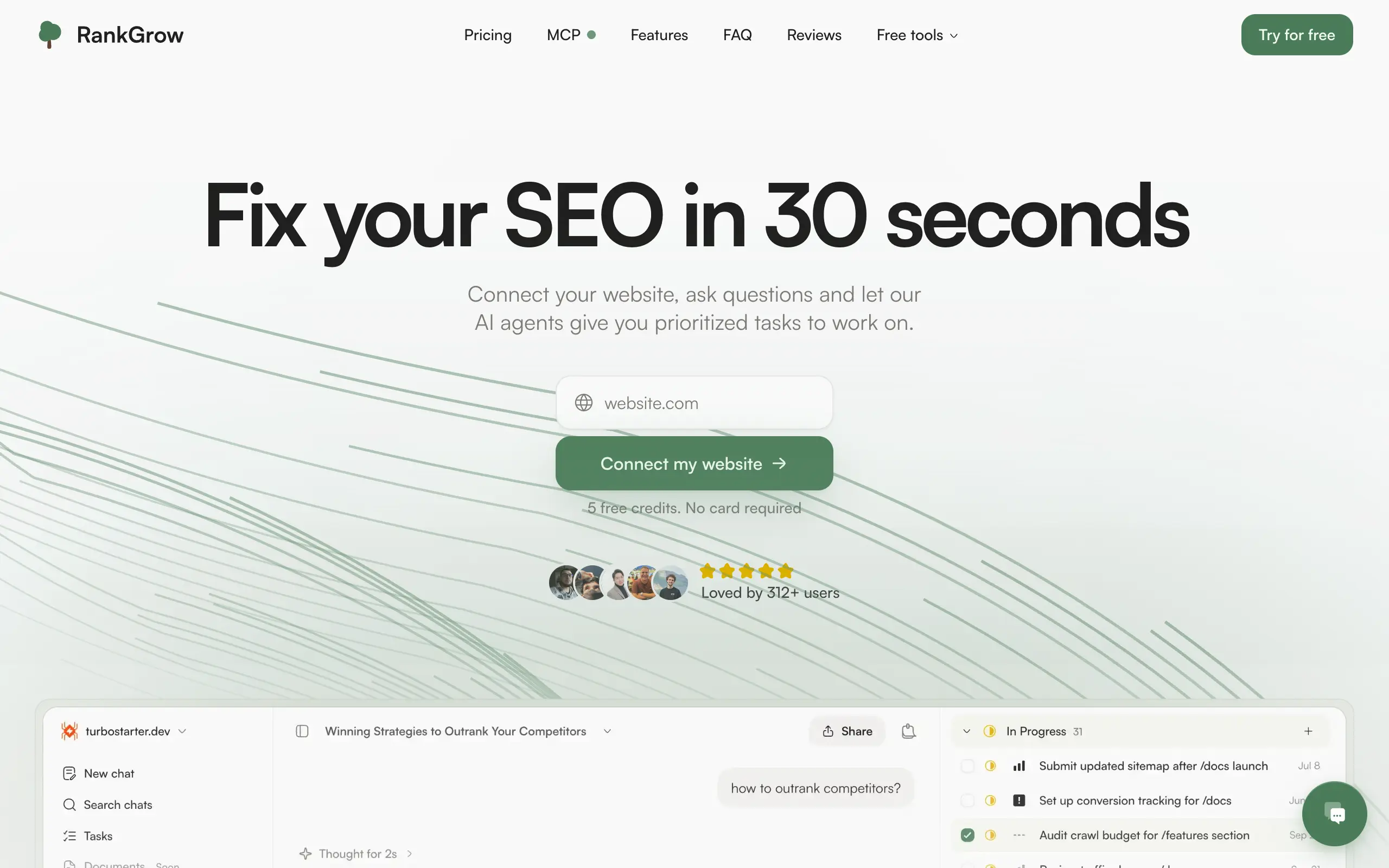
RankGrow
Fix your SEO with AI agents - connect Search Console, get prioritized tasks, and grow organic traffic 📈
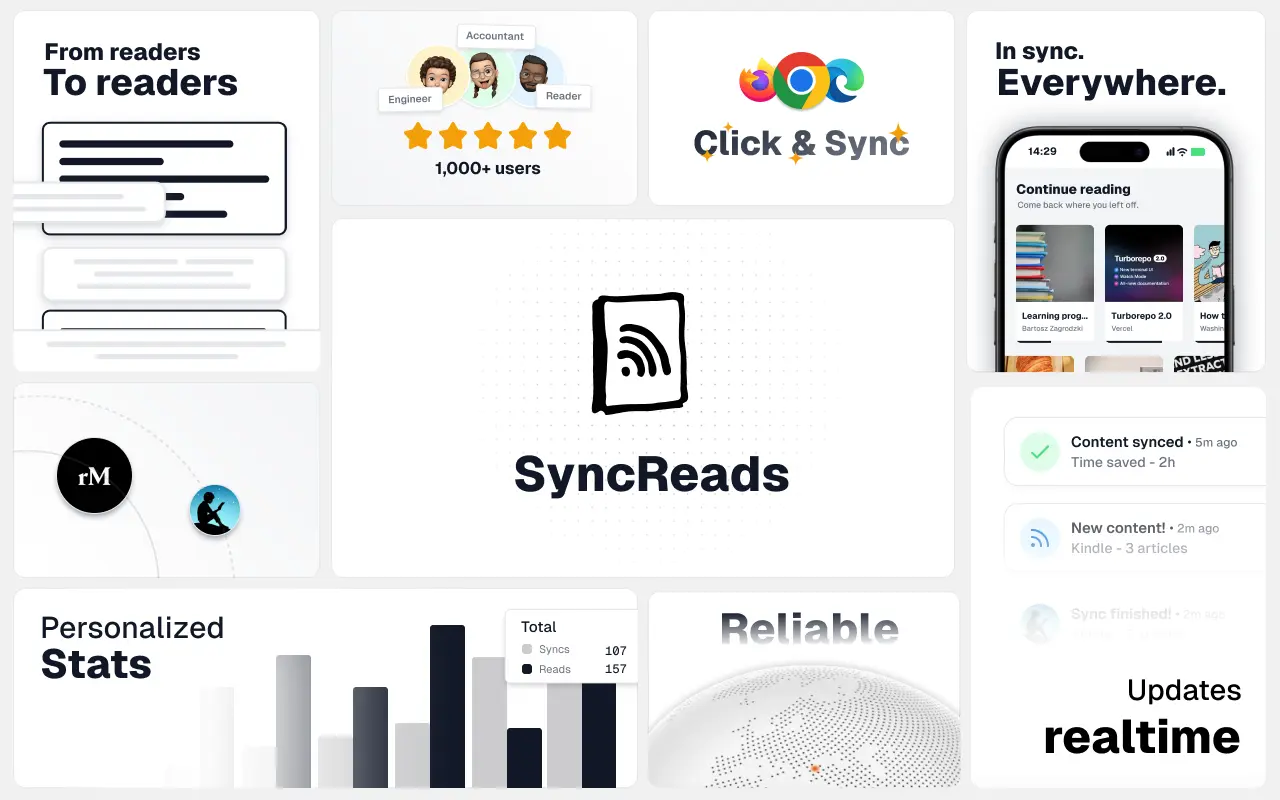
SyncReads
Sync your favorite content for distraction-free reading, save time and replace multiple apps. Anytime, anywhere 🔄
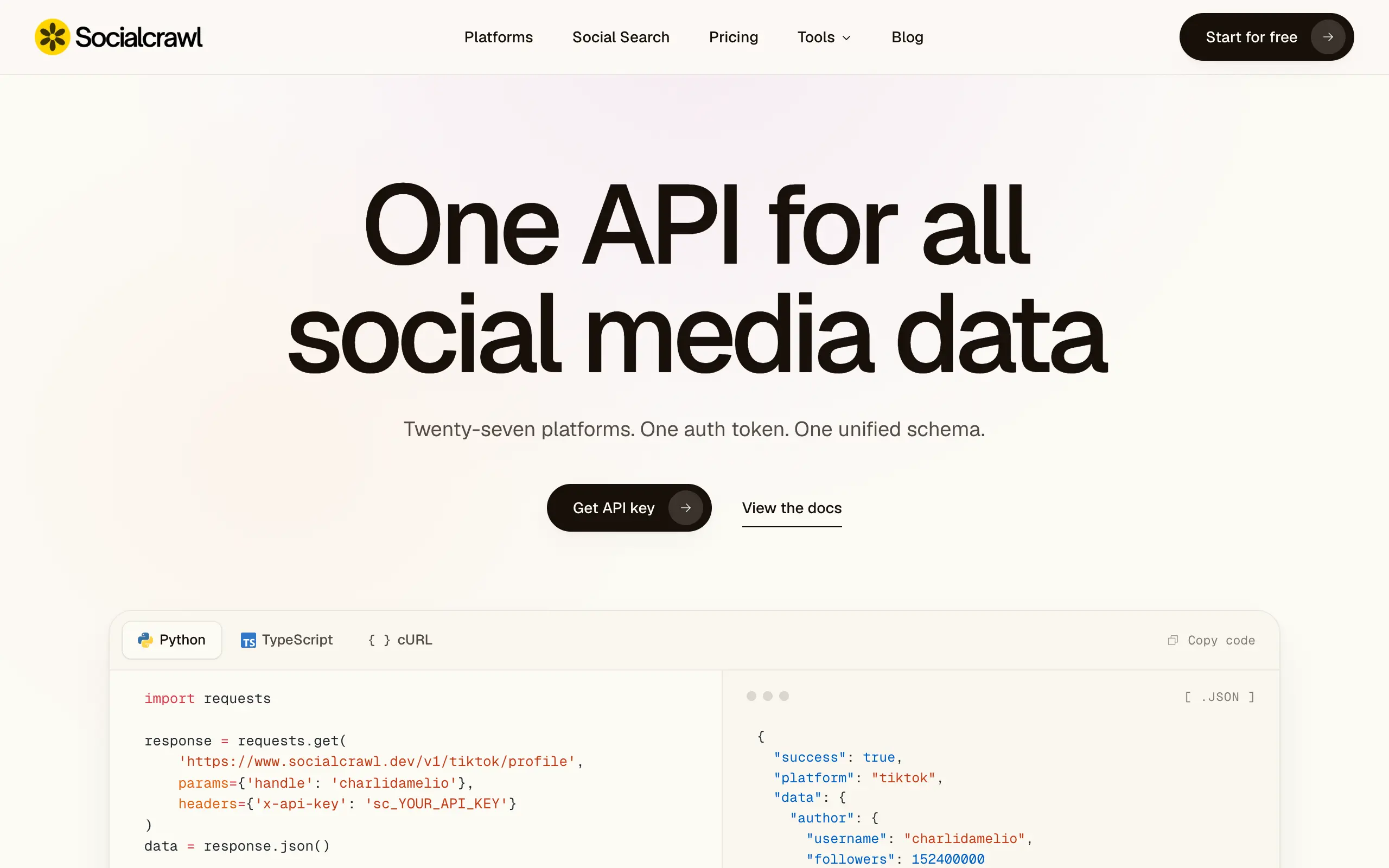
Socialcrawl
Get clean, structured data from 21 platforms like TikTok, Instagram, and YouTube with a single request 📊
Statiko
Monitor any Telegram channel in real time - track posts, edits, deletions, and growth with AI recaps 📡
Shibui
AI website builder - describe your business, pick a niche template, edit by chatting, and publish instantly ✨
Pro Service
Find verified home service professionals, compare quotes, and pay securely through escrow - built for Brazilians across the US 🏠
RankGrow
Fix your SEO with AI agents - connect Search Console, get prioritized tasks, and grow organic traffic 📈
SyncReads
Sync your favorite content for distraction-free reading, save time and replace multiple apps. Anytime, anywhere 🔄
Socialcrawl
Get clean, structured data from 21 platforms like TikTok, Instagram, and YouTube with a single request 📊
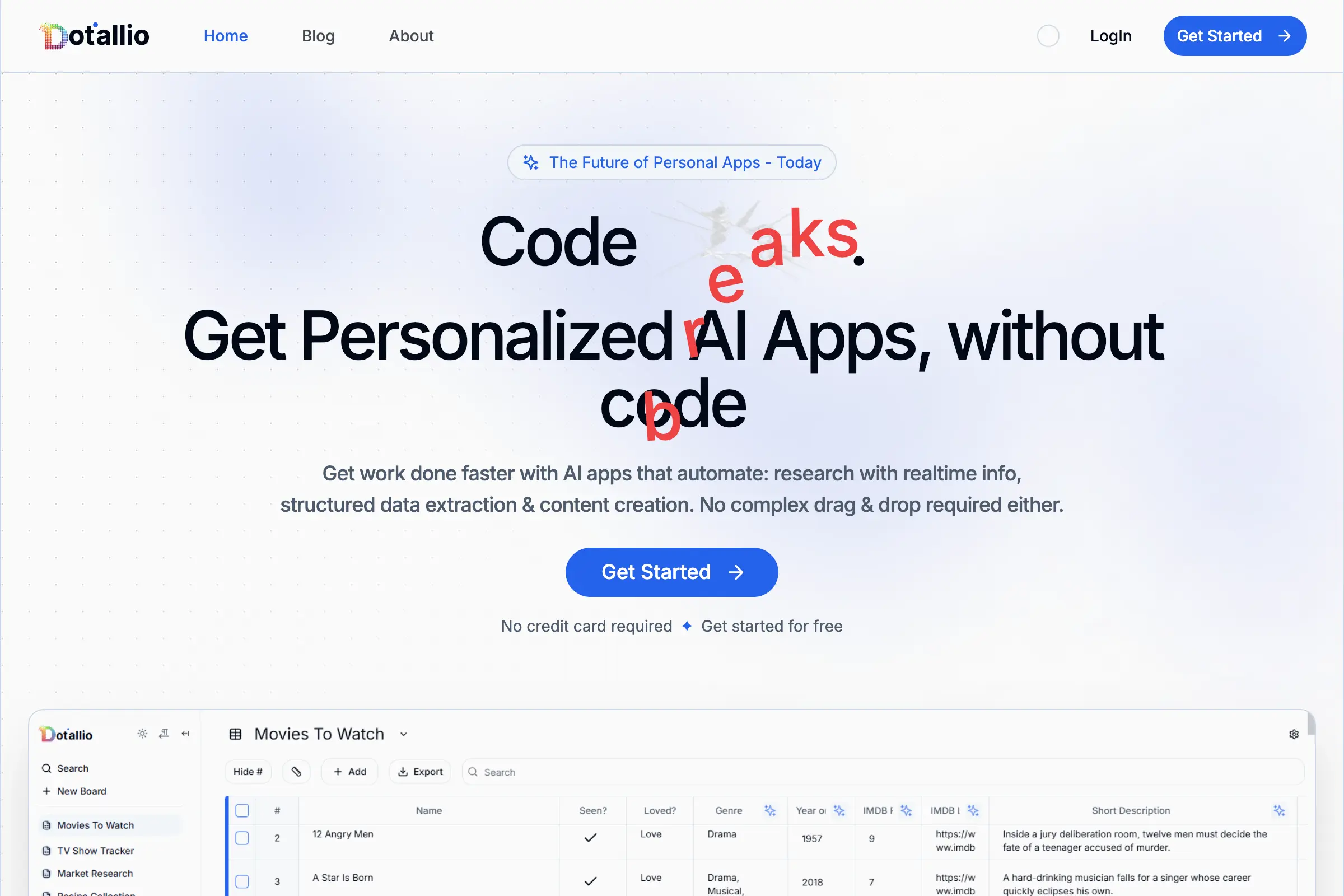
Dotallio
Personalized AI apps that automate research, data extraction, and content creation without code 🤖

Talk to Santa
Enjoy a magical live video chat or receive a unique AI-generated video greeting from Santa Claus 🎅

pozywka.pl
Scalable blog for food journalist, focused on performance and user experience 🌭
zagrodzki.me
Personal blog and portfolio of Bart Zagrodzki, where he shares his knowledge and work 💼
TurboStarter
Ship your startup everywhere. In minutes.
HTML to Markdown
Convert HTML to Markdown with ease, directly in your browser 📄
Dotallio
Personalized AI apps that automate research, data extraction, and content creation without code 🤖
Talk to Santa
Enjoy a magical live video chat or receive a unique AI-generated video greeting from Santa Claus 🎅
pozywka.pl
Scalable blog for food journalist, focused on performance and user experience 🌭
zagrodzki.me
Personal blog and portfolio of Bart Zagrodzki, where he shares his knowledge and work 💼
TurboStarter
Ship your startup everywhere. In minutes.
HTML to Markdown
Convert HTML to Markdown with ease, directly in your browser 📄
Omichat
Chat with 50+ AI models, including ChatGPT and Claude, in one place - switch models anytime without losing context 🤖
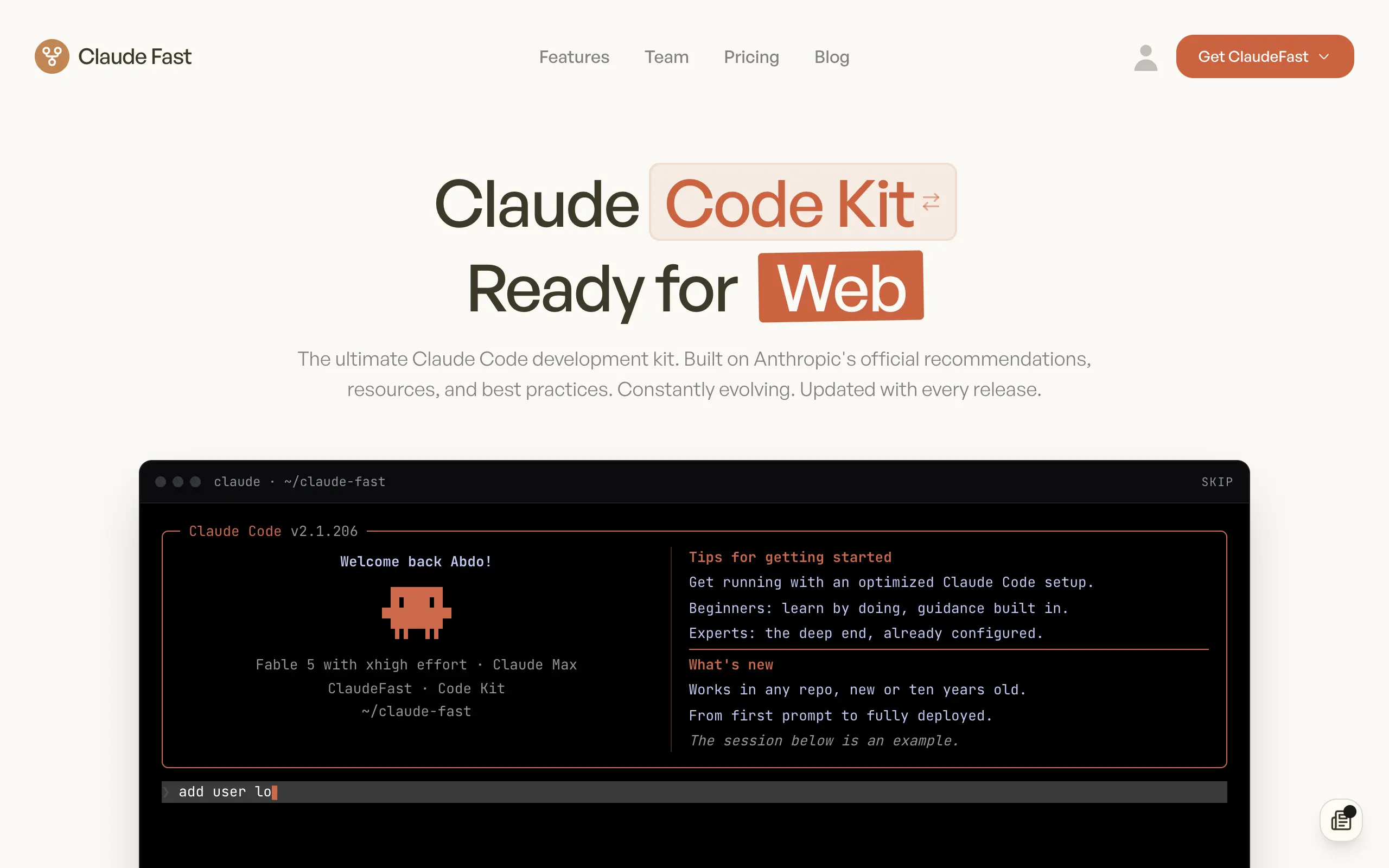
Claude Fast
Supercharge your Claude Code with 6x effective context window and specialized AI agents 🤖
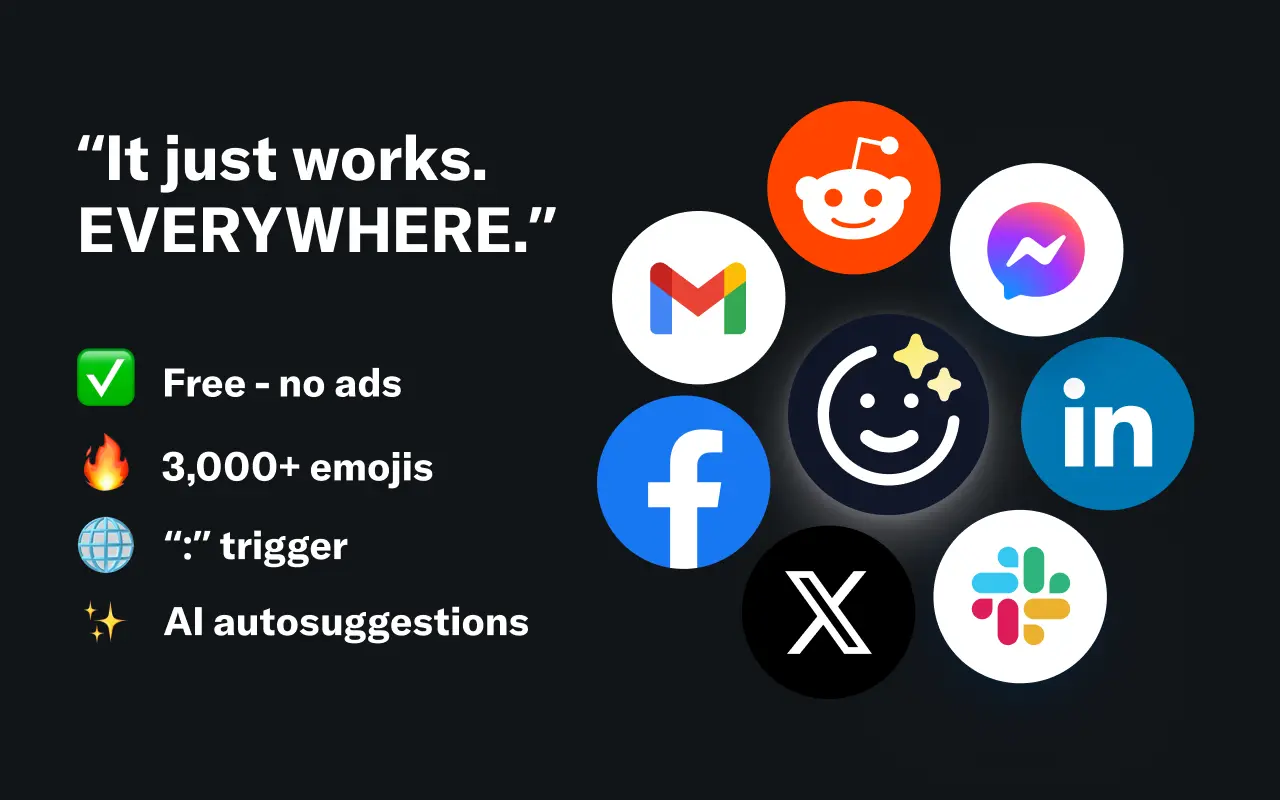
EmojAI
AI-powered emoji picker with smart, context-aware suggestions 🤖

Solohacker
Autonomous company launcher - AI agents work 24/7, escalate what matters, and you stay in control 🤖

BeRawi: Storytelling Coach
Practice storytelling daily with instant feedback to sound clearer, more engaging, and confident 🎤
Omichat
Chat with 50+ AI models, including ChatGPT and Claude, in one place - switch models anytime without losing context 🤖
Claude Fast
Supercharge your Claude Code with 6x effective context window and specialized AI agents 🤖
EmojAI
AI-powered emoji picker with smart, context-aware suggestions 🤖
Solohacker
Autonomous company launcher - AI agents work 24/7, escalate what matters, and you stay in control 🤖
BeRawi: Storytelling Coach
Practice storytelling daily with instant feedback to sound clearer, more engaging, and confident 🎤

Connect with like-minded people
Join our community to get feedback, support, and grow together with 1,000+ builders on board, let's ship it!
Join usShip your startup everywhere. In minutes.
Don't burn tokens on setup and start building features on day one.