ShiftScribe
AI handover intelligence for shift-based teams that converts voice notes and chats into risk-ranked, actionable transition briefs.
Why AI shift handover intelligence is becoming essential
Shift-based teams operate in environments where missed information can become costly quickly. Manufacturing plants, hospitals, logistics operations, security firms, field service organizations, energy providers, and customer support centers all depend on people transferring operational context accurately at the end of a shift.
Yet the handover process is often fragmented. A departing employee may leave a voice note, send a message in a group chat, add a partial line to a logbook, or mention a concern verbally while walking out. The incoming team must then reconstruct what matters, what changed, what remains unresolved, and what could create risk.
ShiftScribe is an AI handover intelligence platform designed to solve that problem. It converts voice notes and chat-based updates into clear, risk-ranked, actionable transition briefs for shift-based teams.
Instead of expecting supervisors to manually interpret a stream of unstructured updates, ShiftScribe can identify critical details, assign urgency, surface unresolved tasks, and deliver a concise shift summary that the next team can act on immediately.
The primary opportunity is not simply “AI note-taking.” It is building AI shift handover software that improves continuity, operational accountability, safety awareness, and frontline decision-making.
The core product thesis
The best shift handover system does not ask frontline workers to become better documentarians. It captures updates in the channels they already use, turns those updates into structured intelligence, and makes the next action obvious.
The problem with traditional shift handovers
A shift handover is a business-critical moment, but it is rarely treated as a structured workflow. In many organizations, handovers depend on individual habits, informal conversations, and disconnected tools.
A typical transition may involve:
- A technician recording a short voice note about a machine issue
- A nurse posting a patient-related update in a secure channel
- A warehouse lead messaging an unfinished loading task
- A security guard documenting an incident in a daily log
- A support team member noting a priority customer escalation in chat
- A supervisor trying to understand which issues require immediate follow-up
The information exists, but it is difficult to consume reliably.
Why unstructured handover data creates operational risk
The main issue is not a lack of communication. It is a lack of structured, prioritized communication.
A shift team may receive dozens of messages, yet miss the one detail that matters most. A routine update can look similar to a safety concern. A task that was started but not completed can disappear in a busy thread. A voice note might contain valuable context, but nobody has time to replay every recording before beginning work.
This produces several recurring problems:
- "Information loss": Important context remains trapped in spoken conversations, audio messages, or long chat threads.
- "Weak prioritization": Teams cannot easily distinguish between routine notes and high-risk operational concerns.
- "Unclear ownership": Nobody knows whether a pending issue has an assigned owner or expected completion time.
- "Inconsistent documentation": Each site, shift lead, and employee may document events differently.
- "Delayed escalation": A serious issue is noticed too late because it was buried among lower-priority updates.
- "Poor auditability": Management cannot easily review what was communicated, acknowledged, or left unresolved.
- "Shift-start overload": Incoming workers spend too much time searching for context rather than acting on it.
For high-consequence operations, these gaps affect safety, quality, service levels, compliance, customer experience, and costs.
Who needs AI shift handover software
The strongest market for ShiftScribe is made up of organizations where operations continue beyond one person’s working hours and where incomplete context has a meaningful downside.
Primary audience: operations leaders and frontline managers
The most likely economic buyer is an operations leader responsible for consistency, throughput, safety, quality, or service delivery across shifts.
Typical buyers include:
- Operations directors
- Plant managers
- Head nurses and clinical operations leaders
- Distribution center managers
- Facilities and maintenance directors
- Security operations managers
- Contact center leaders
- Field service operations managers
- Regional managers overseeing multi-site teams
These stakeholders care about measurable outcomes. They need fewer missed tasks, faster issue escalation, more consistent reporting, shorter shift-start ramp time, and a clear record of operational events.
Daily users: frontline employees and shift supervisors
The product must also win with the people doing the work. If entering an update feels like extra administration, adoption will fail regardless of how compelling the analytics look to leadership.
Daily users may include:
- Machine operators
- Technicians and maintenance engineers
- Nurses and care staff
- Warehouse supervisors
- Dispatch coordinators
- Security officers
- Customer support agents
- Field technicians
- Shift managers
For these users, the value proposition should be simple: say or send what happened, and ShiftScribe makes sure the next team gets the important parts.
High-value verticals for ShiftScribe
| Vertical | Handover challenge | High-value use case | Key buyer concern | Product emphasis |
|---|---|---|---|---|
| Manufacturing | Equipment conditions and quality issues are scattered across logs | Flagging machine faults and unfinished maintenance work | Downtime and safety | Risk ranking and maintenance integrations |
| Healthcare | Clinical context can be incomplete or difficult to scan | Structured non-diagnostic shift summaries and task continuity | Patient safety and privacy | Security, audit trails, configurable policies |
| Logistics | Exceptions move rapidly across docks, routes, and shifts | Late loads, damaged goods, and carrier escalation summaries | Throughput and on-time delivery | Mobile-first capture and status tracking |
| Security | Incident details are frequently written inconsistently | Risk-ranked incident and patrol transition brief | Response readiness | Evidence links and acknowledgement workflows |
| Customer support | Critical conversations can be lost between global teams | Priority escalation brief for incoming support shifts | Customer experience and SLA performance | Ticket and chat integrations |
Start with one operational wedge
ShiftScribe should avoid launching as a generic tool for every industry. Broad positioning creates vague workflows, long sales cycles, and weak messaging.
A sharper early wedge might be:
AI handover intelligence for manufacturing maintenance teams that turns voice and chat updates into prioritized equipment-risk briefs.
That positioning is specific enough to guide product decisions. It also creates a repeatable sales narrative around downtime prevention, unresolved maintenance tasks, and operational continuity.
Once the workflow is validated, the platform can expand into adjacent verticals with similar handover pain.
The market gap: chat tools capture updates but do not create operational intelligence
Most shift-based organizations already have communication tools. They may use Microsoft Teams, Slack, WhatsApp, radio systems, email, incident management platforms, paper logs, or industry-specific operational software.
The gap is that these tools are optimized for communication, not handover intelligence.
A team chat can tell you that a message was sent. It does not reliably answer:
- Which issues are unresolved?
- What changed during the prior shift?
- Which update carries the highest operational risk?
- Who owns the next action?
- Was the incoming employee informed?
- Is this a repeating problem that should be escalated?
- What needs attention in the next four hours?
Likewise, traditional digital logbooks often impose too much manual structure on frontline teams. They may require employees to categorize, format, and prioritize every update while operating under time pressure.
ShiftScribe can occupy the space between these systems:
- It accepts natural, low-friction input.
- It uses AI to extract operational signals.
- It produces a reliable handover artifact.
- It routes critical issues into existing systems of record.
- It creates management visibility without forcing workers into rigid forms.
This is a valuable category because it augments existing software rather than demanding a complete workflow replacement.
The ShiftScribe solution: from raw updates to a transition brief
The core ShiftScribe workflow should be easy to explain in a single sentence:
Capture shift updates in voice or chat, let AI identify what matters, and deliver a risk-ranked brief the incoming team can acknowledge and act on.
A strong transition brief should do more than summarize text. It should combine information extraction, prioritization, reasoning within approved operational rules, and workflow automation.
How the AI handover workflow should work
- A worker submits a voice note, text message, photo annotation, or structured update.
- ShiftScribe transcribes audio and preserves the original source.
- AI extracts entities such as equipment, location, incident type, customer, patient reference, task, date, and owner.
- The platform classifies the update by category and urgency.
- A risk engine scores the issue using organizational rules and contextual signals.
- ShiftScribe creates a concise handover item with recommended next actions.
- The incoming shift receives a ranked brief.
- Team members acknowledge, assign, resolve, or escalate individual items.
- Leaders can review trends, recurring issues, and handover quality over time.
The product must keep the original source accessible. AI-generated briefs improve speed, but operational teams need to verify context. Every summary should link back to the source voice note, message, or supporting evidence.
The core features that make ShiftScribe useful
Voice-to-brief transcription
Turn voice updates into searchable, timestamped, reviewable handover records while retaining the original audio.
Risk-ranked handover summaries
Prioritize safety, service, compliance, and operational issues so teams know what to address first.
Action and owner extraction
Identify tasks, due windows, teams, and named owners from unstructured updates.
Acknowledgement workflows
Record that an incoming shift has reviewed critical handover items and accepted responsibility.
Escalation automation
Route urgent issues to supervisors, incident tools, ticketing platforms, or on-call channels.
Operational trend analytics
Reveal repeat failures, recurring exceptions, handover gaps, and unresolved issue patterns.
Risk ranking must be explainable
Risk scoring is one of ShiftScribe’s most important differentiators, but it is also the area where product teams must be disciplined.
A “high-risk” label cannot feel arbitrary. Users need to understand why an item was ranked above another. An explainable risk score can consider:
- Severity terms such as “leak,” “unsafe,” “critical,” “outage,” or “injury”
- Affected asset or location
- Potential impact on people, customers, production, or compliance
- Whether the issue remains unresolved
- Whether a deadline or service-level commitment is approaching
- Recurrence frequency for the same asset or issue type
- Presence of an escalation request
- Site-specific risk policies created by administrators
For example, a message stating that a production line has a recurring temperature alarm, a quality hold is active, and maintenance has not yet inspected the unit should rank higher than a routine stock replenishment reminder.
The interface should show the rationale in human terms, such as “High priority because the issue affects Line 3, remains unresolved, and matches a configured equipment safety rule.”
Do not position AI as the final authority
ShiftScribe should support operational judgment, not replace it. Users must be able to override a risk level, edit a generated brief, and report an incorrect classification. Human review is especially important in healthcare, safety, and regulated environments.
A practical feature roadmap for ShiftScribe
A focused product roadmap reduces engineering risk and gives early customers a reason to adopt before the most advanced features are available.
MVP capabilities
The initial release should solve the core handover problem with minimal workflow complexity.
- Voice note upload and transcription
- Chat message ingestion through one or two integrations
- AI-generated handover summaries
- Manual and AI-assisted priority levels
- Team, site, and shift configuration
- Searchable handover history
- Basic acknowledgement states
- Supervisor dashboard for unresolved items
- Exportable daily transition report
The MVP should focus on one target vertical and one communication channel. For example, a manufacturing pilot could begin with mobile voice notes and Microsoft Teams ingestion.
Growth capabilities
Once the product proves that teams consistently review and act on briefs, add automation and operational depth.
- Configurable risk rules by site or department
- Task assignment and due dates
- Escalation workflows
- Asset, location, and customer entity detection
- Integrations with ticketing and maintenance platforms
- Multi-language transcription and translation
- Trend reports for repeat issues
- Shift quality scorecards
- Role-specific brief templates
This stage creates the switch from a useful summary product to a workflow system that becomes harder to replace.
Enterprise capabilities
Larger organizations will require controls, governance, and deployment flexibility.
- Single sign-on and SCIM provisioning
- Granular role-based access controls
- Retention policies and audit logs
- Data residency options
- Bring-your-own-model or private AI deployment options
- Advanced analytics and warehouse exports
- Custom integrations and webhooks
- Compliance configuration by business unit
- API access for operational intelligence data
Enterprise readiness should follow product-market fit, not precede it. Building every control before validating the workflow can slow the company down unnecessarily.
What makes ShiftScribe different from transcription, chat, and digital logbook tools
ShiftScribe will face indirect competition from communication platforms, note-taking AI, incident software, workforce management suites, and custom-built internal processes.
Its competitive advantage comes from combining several capabilities into one operationally focused experience.
ShiftScribe’s unique selling proposition
ShiftScribe transforms informal shift communication into a verified, risk-ranked, actionable operating brief.
That differs from generic transcription tools because ShiftScribe is not merely producing text. It is extracting operational meaning.
That differs from team chat because ShiftScribe is not simply delivering messages. It is organizing what requires action during the next shift.
That differs from a digital checklist because ShiftScribe does not require every employee to manually convert real-world work into structured fields before they can move on.
Competitive comparison
| Capability | Team chat | Generic AI transcription | Digital logbook | ShiftScribe |
|---|---|---|---|---|
| Captures informal voice updates | Partial | Partial | Limited | Strong |
| Creates a cross-channel handover brief | Limited | Limited | Partial | Strong |
| Ranks operational risk | Limited | Limited | Manual | Strong |
| Tracks acknowledgement and ownership | Partial | Limited | Partial | Strong |
| Preserves source context for review | Partial | Strong | Partial | Strong |
The defensible advantage is not the language model alone. Foundation models are widely available. The defensibility comes from:
- Vertical-specific handover templates
- Customer-configured operational risk policies
- High-quality labeled feedback on priorities and outcomes
- Integrations into systems of record
- Trust earned through explainability and review workflows
- Historical operational data that reveals recurring risks
- A user experience that fits a busy shift environment
Recommended tech stack for an AI handover intelligence platform
The right ShiftScribe architecture should prioritize security, reliable asynchronous processing, traceability, and low-friction mobile use.
Frontend and application layer
A productive default stack includes:
- React for the web application interface
- Next.js for full-stack rendering, routing, API endpoints, and deployment flexibility
- TypeScript for safer application development
- Tailwind CSS for fast, consistent interface development
- PostgreSQL for relational operational data
- Prisma for type-safe database access and migrations
The user interface should be mobile-responsive from day one. Many shift workers will submit or review updates from shared tablets, rugged devices, personal phones, or workstations on the floor.
The primary screen should not resemble a complex analytics dashboard. It should answer three questions immediately:
- What needs attention now?
- What was handed over from the previous shift?
- What do I need to acknowledge, own, or escalate?
AI and data pipeline architecture
An AI handover system needs a pipeline that separates raw data, extracted data, generated outputs, and human decisions.
A useful data model includes:
- Raw source messages and audio files
- Transcript versions
- Extracted entities
- AI classifications and confidence scores
- Generated summary versions
- Risk score inputs and outputs
- Human edits and overrides
- Acknowledgement and resolution events
- Immutable audit events
For audio ingestion, use a speech-to-text provider capable of handling noisy environments, accents, specialized vocabulary, and multiple languages. Evaluate performance using real recordings from the intended industry, not clean demo audio.
For retrieval, a vector search layer can help the model identify related past issues, standard operating procedures, and asset history. However, retrieval should be constrained carefully. The system must show which source records informed a recommendation and avoid presenting uncertain associations as fact.
Trade-offs to consider
- "Managed AI APIs": Faster to launch and easier to maintain, but may raise data residency, privacy, or procurement concerns for enterprise buyers.
- "Self-hosted models": Greater control over data and cost at scale, but substantially higher infrastructure, evaluation, and reliability burden.
- "Real-time processing": Better for urgent escalation, but more expensive and technically demanding than batch brief generation.
- "Fully automatic actions": Faster workflows, but riskier when the AI misclassifies an issue. Start with human confirmation for high-impact actions.
- "Native mobile apps": Better device access and offline support, but more expensive than a responsive web application in the MVP stage.
A starter kit can reduce time spent on undifferentiated SaaS foundations such as authentication, billing, teams, database patterns, and marketing pages. TurboStarter is useful for founders who want to accelerate the SaaS scaffolding work and focus engineering time on the handover intelligence workflow.
Example: a structured handover item
A good architecture stores a clear structured object alongside the original text and AI rationale.
type HandoverItem = {
  id: string;
  sourceType: "voice_note" | "chat_message" | "manual_entry";
  summary: string;
  riskLevel: "low" | "medium" | "high" | "critical";
  riskReasons: string[];
  category: "safety" | "maintenance" | "quality" | "service" | "staffing";
  status: "open" | "acknowledged" | "in_progress" | "resolved";
  ownerId?: string;
  affectedAsset?: string;
  recommendedAction?: string;
  sourceReference: string;
  aiConfidence: number;
  humanOverride: boolean;
};
This design helps the team distinguish between AI inference and verified operational facts.
Trust, security, and responsible AI requirements
Trust is a core product feature for ShiftScribe, particularly when voice recordings and operational details are involved.
Customers will ask where their data is stored, who can access it, whether recordings are retained, how AI providers process content, and whether the system can support audits.
The company should prepare clear answers before enterprise sales begins.
Essential trust controls
- "Data minimization": Collect only the information needed for handover and operational follow-up.
- "Encryption": Protect data in transit and at rest using established industry practices.
- "Access control": Restrict data by organization, site, team, and role.
- "Audit trails": Record source creation, AI processing, edits, acknowledgements, and escalations.
- "Retention controls": Allow customers to configure retention periods for recordings and transcripts.
- "AI transparency": Show the original source and explain why an item received a risk level.
- "Human override": Let authorized users correct summaries, categories, owners, and priority.
- "Feedback loop": Capture inaccurate outputs to improve prompts, rules, evaluations, and model selection.
For healthcare, financial services, critical infrastructure, or unionized workplaces, legal review should happen early. ShiftScribe should not make compliance claims such as “HIPAA compliant” or “SOC 2 compliant” unless the relevant organizational, legal, and technical requirements have been independently completed and documented.
Monetization strategy for ShiftScribe
The best pricing model aligns with the operational value customers receive while staying predictable for procurement teams.
Recommended pricing approach
A hybrid subscription model is likely the best fit:
- Base platform fee per site or operational team
- Per active user or per frontline seat
- Usage allowance for transcription minutes and AI processing
- Enterprise add-ons for advanced controls, integrations, analytics, and support
This avoids relying exclusively on usage pricing, which can make buyers nervous about unpredictable costs. It also avoids charging only per seat, which may underprice high-volume voice processing and multi-site complexity.
Example package structure
- "Starter": Small single-site teams with limited voice transcription and core daily briefs.
- "Operations": Multi-shift teams needing workflow automation, acknowledgements, integrations, and analytics.
- "Enterprise": Multi-site organizations requiring SSO, audit controls, custom retention, API access, security review support, and implementation services.
The initial sales motion should favor paid pilots. A pilot should have a clear operational baseline and success criteria, such as improved handover acknowledgement rates, fewer unresolved shift issues, reduced supervisor review time, or faster escalation of high-risk events.
Avoid offering unlimited free access in industries where onboarding and integrations are meaningful. A tightly scoped proof of value is more sustainable and produces better implementation data.
Risks and mitigation strategies
Every AI SaaS product faces execution risk. ShiftScribe faces additional challenges because operational users may act on its outputs.
Risk: low frontline adoption
If workers view ShiftScribe as surveillance or additional paperwork, they may avoid it.
Mitigation: Make input faster than existing documentation. Support voice-first capture, limit mandatory fields, communicate how the product protects continuity, and ensure managers use data to improve operations rather than punish minor mistakes.
Risk: inaccurate transcription or summarization
Noisy worksites, specialized terminology, accents, and incomplete updates can reduce AI accuracy.
Mitigation: Test on real-world recordings from the target vertical. Add custom vocabularies, keep original audio accessible, display confidence indicators, and make edits frictionless. Measure quality continuously by comparing AI output with human corrections.
Risk: alert fatigue
If too many updates are marked urgent, users will stop trusting the risk ranking.
Mitigation: Start with conservative rules. Let sites configure thresholds. Track override behavior and tune the model against outcomes rather than optimizing for maximum sensitivity alone.
Risk: long enterprise sales cycles
Operational software often requires security review, procurement approval, and change management.
Mitigation: Begin with mid-market teams that have clear pain and shorter buying cycles. Build reusable security documentation early. Offer an implementation plan that does not require replacing existing communication systems.
Risk: integration complexity
Every customer may use a different combination of chat, maintenance, ticketing, and workforce tools.
Mitigation: Prioritize integrations based on the first target market. Build a reliable API and webhook layer. Do not promise every integration before the core workflow proves value.
Risk: unclear ROI
If buyers see ShiftScribe as “nice AI summaries,” budgets will be limited.
Mitigation: Tie value to operational outcomes. Position the product around reduced missed handovers, faster resolution, improved safety reporting, lower supervisor time, and stronger audit readiness.
How to validate ShiftScribe before building too much
The fastest path to validation is not a large platform build. It is testing whether teams will repeatedly use risk-ranked AI transition briefs and whether those briefs change operational behavior.
Conduct high-quality customer discovery
Interview at least three groups within each target organization:
- Frontline workers who create updates
- Incoming staff who consume handovers
- Managers who are accountable for performance and incidents
Focus questions on actual recent events rather than hypothetical preferences.
Useful questions include:
- “Walk me through the last shift handover that went badly.”
- “Where did the important information live?”
- “How did the next team find out?”
- “What did the supervisor have to do manually?”
- “Which issues are most likely to be missed?”
- “What would make you trust an AI-generated brief?”
- “Which existing system must this connect to?”
Run a concierge pilot
Before building integrations, create a controlled pilot. Collect real voice notes and chat updates from a small team, process them with a secure prototype or supervised workflow, and deliver a daily ranked handover brief.
Measure:
- Number of updates captured
- Time required to produce the brief
- Percentage of items requiring correction
- Acknowledgement rate
- Number of actions assigned
- Time to escalation for high-priority issues
- Qualitative trust from frontline and supervisor users
The goal is to discover whether the brief becomes part of the shift-start ritual. If teams do not review it consistently, more AI sophistication will not solve the adoption problem.
Actionable implementation plan
Choose a narrow vertical and critical workflow
Pick one environment where missed handovers have visible consequences. Define one high-value workflow, such as unresolved maintenance issues during a manufacturing shift change.
Interview users and map the current handover journey
Document where updates originate, who receives them, which details get lost, and how serious issues are escalated today. Use real incident stories to identify the first risk categories.
Build a voice-first MVP
Create a mobile-friendly capture flow, reliable transcription, AI summarization, a risk-ranked brief, source references, and acknowledgement states. Do not begin with a sprawling analytics suite.
Add human review and feedback controls
Allow supervisors to correct priorities, summaries, owners, and recommended actions. Treat those corrections as evaluation data for improving the system.
Pilot with one site and measure operational impact
Set a baseline before launch. Review results after several shift cycles and look for evidence that the system shortens handover review, improves acknowledgement, or accelerates issue resolution.
Productize the winning workflow
Turn the successful pilot pattern into templates, implementation checklists, pricing packages, integration priorities, and vertical-specific sales messaging.
Frequently asked questions about AI shift handover software
AI shift handover software collects updates from outgoing teams and turns them into a structured brief for incoming teams. ShiftScribe is designed to process voice notes and chat messages, identify key events and tasks, rank risks, and help the next shift acknowledge and act on important issues.
No. ShiftScribe should support supervisors and frontline teams by reducing information overload and improving continuity. A supervisor still provides operational judgment, verifies important details, handles exceptions, and makes final decisions.
A basic summary may still force users to decide what matters most. Risk ranking helps incoming teams focus first on unresolved issues with the greatest potential impact. The ranking must be transparent, configurable, and easy for users to override.
The best early adopters are shift-based teams with frequent transitions, meaningful consequences for missed information, and existing reliance on voice notes or chat. Manufacturing maintenance, logistics, security, and multi-region support operations are especially strong initial markets.
Track operational metrics that matter to the specific workflow. Examples include handover acknowledgement rates, time spent preparing shift reports, unresolved issue aging, time to escalation, repeat incidents, supervisor review time, and user correction rates for AI-generated items.
Final perspective
ShiftScribe has the potential to create a meaningful new layer in operational technology: an AI shift handover intelligence system that turns fragmented frontline communication into a dependable action plan.
The opportunity is strongest when the product remains grounded in how shift teams actually work. Employees need fast capture. Incoming teams need clarity. Supervisors need confidence that critical risks are visible. Leaders need evidence that handovers are improving rather than becoming another administrative burden.
By starting with a narrow vertical, preserving source context, making AI reasoning explainable, and tying the product to measurable operational outcomes, ShiftScribe can become far more than a transcription tool. It can become the trusted transition layer between every shift.
More 🤖 AI Startup SaaS ideas
Discover more innovative ai startup SaaS ideas that are trending in 2026. Each idea is AI-generated with market validation and growth potential to help you find your next profitable venture faster than competitors.
Your competitors are building with TurboStarter
Below are some of the SaaS ideas that have been generated and built with our starter kit.
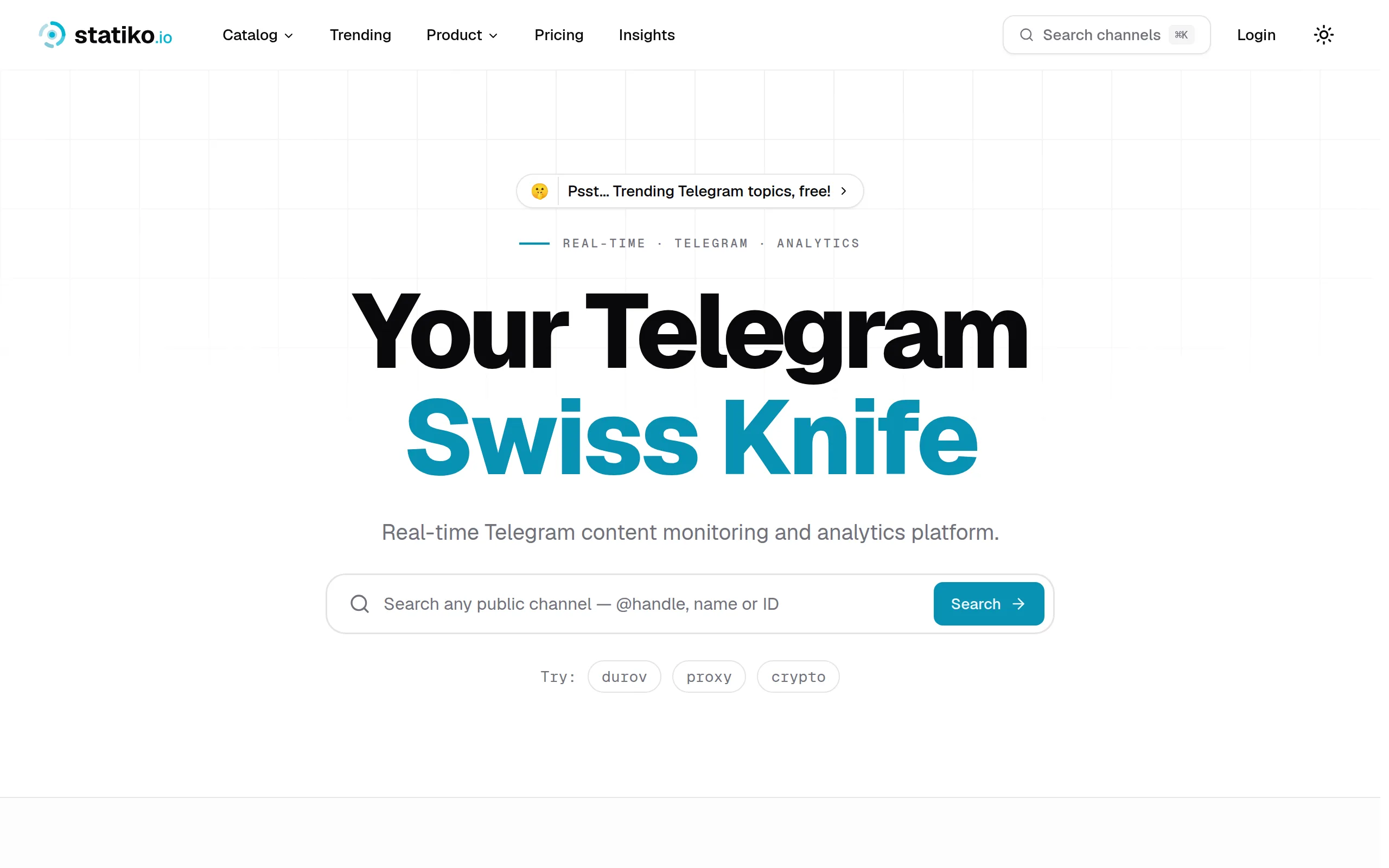
Statiko
Monitor any Telegram channel in real time - track posts, edits, deletions, and growth with AI recaps 📡

Shibui
AI website builder - describe your business, pick a niche template, edit by chatting, and publish instantly ✨

Pro Service
Find verified home service professionals, compare quotes, and pay securely through escrow - built for Brazilians across the US 🏠
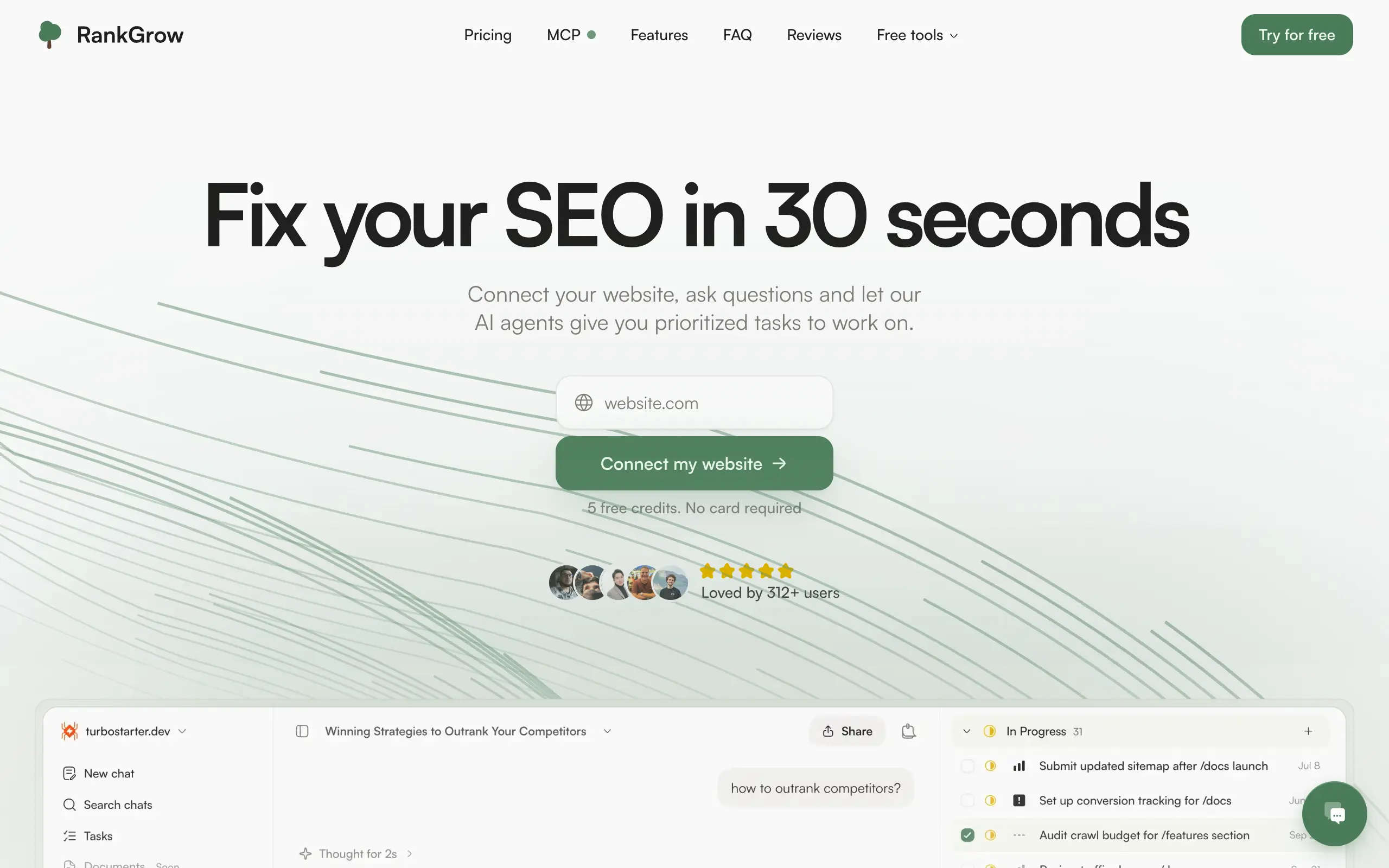
RankGrow
Fix your SEO with AI agents - connect Search Console, get prioritized tasks, and grow organic traffic 📈
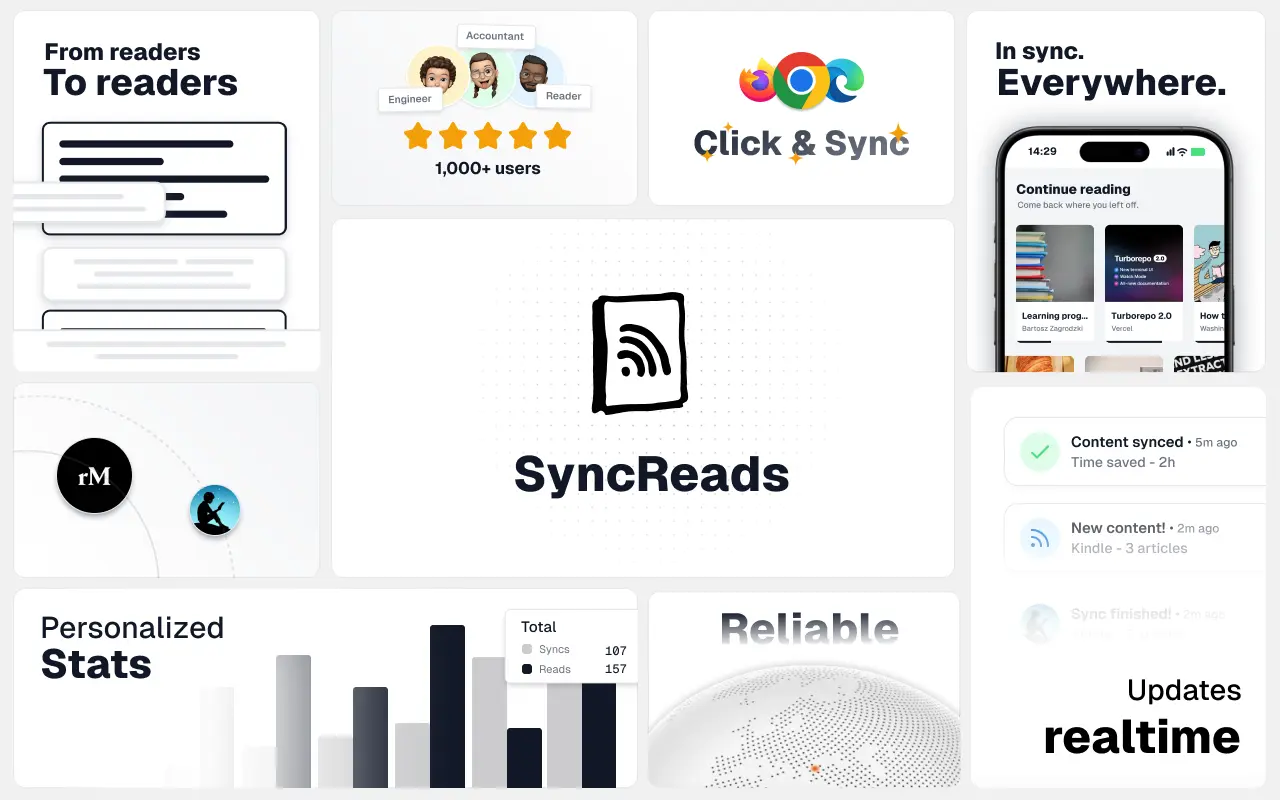
SyncReads
Sync your favorite content for distraction-free reading, save time and replace multiple apps. Anytime, anywhere 🔄
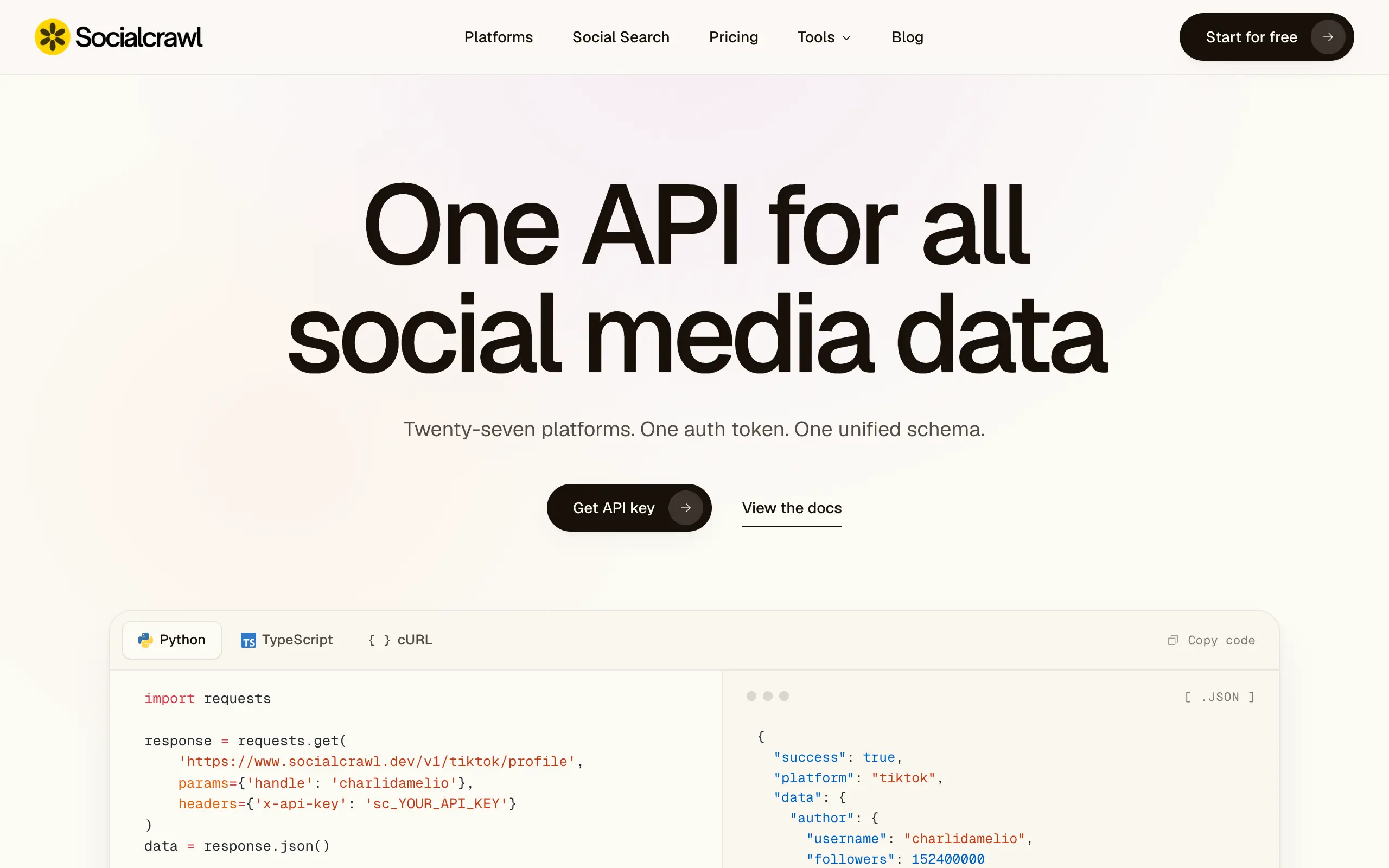
Socialcrawl
Get clean, structured data from 21 platforms like TikTok, Instagram, and YouTube with a single request 📊
Statiko
Monitor any Telegram channel in real time - track posts, edits, deletions, and growth with AI recaps 📡
Shibui
AI website builder - describe your business, pick a niche template, edit by chatting, and publish instantly ✨
Pro Service
Find verified home service professionals, compare quotes, and pay securely through escrow - built for Brazilians across the US 🏠
RankGrow
Fix your SEO with AI agents - connect Search Console, get prioritized tasks, and grow organic traffic 📈
SyncReads
Sync your favorite content for distraction-free reading, save time and replace multiple apps. Anytime, anywhere 🔄
Socialcrawl
Get clean, structured data from 21 platforms like TikTok, Instagram, and YouTube with a single request 📊
Statiko
Monitor any Telegram channel in real time - track posts, edits, deletions, and growth with AI recaps 📡
Shibui
AI website builder - describe your business, pick a niche template, edit by chatting, and publish instantly ✨
Pro Service
Find verified home service professionals, compare quotes, and pay securely through escrow - built for Brazilians across the US 🏠
RankGrow
Fix your SEO with AI agents - connect Search Console, get prioritized tasks, and grow organic traffic 📈
SyncReads
Sync your favorite content for distraction-free reading, save time and replace multiple apps. Anytime, anywhere 🔄
Socialcrawl
Get clean, structured data from 21 platforms like TikTok, Instagram, and YouTube with a single request 📊
Statiko
Monitor any Telegram channel in real time - track posts, edits, deletions, and growth with AI recaps 📡
Shibui
AI website builder - describe your business, pick a niche template, edit by chatting, and publish instantly ✨
Pro Service
Find verified home service professionals, compare quotes, and pay securely through escrow - built for Brazilians across the US 🏠
RankGrow
Fix your SEO with AI agents - connect Search Console, get prioritized tasks, and grow organic traffic 📈
SyncReads
Sync your favorite content for distraction-free reading, save time and replace multiple apps. Anytime, anywhere 🔄
Socialcrawl
Get clean, structured data from 21 platforms like TikTok, Instagram, and YouTube with a single request 📊
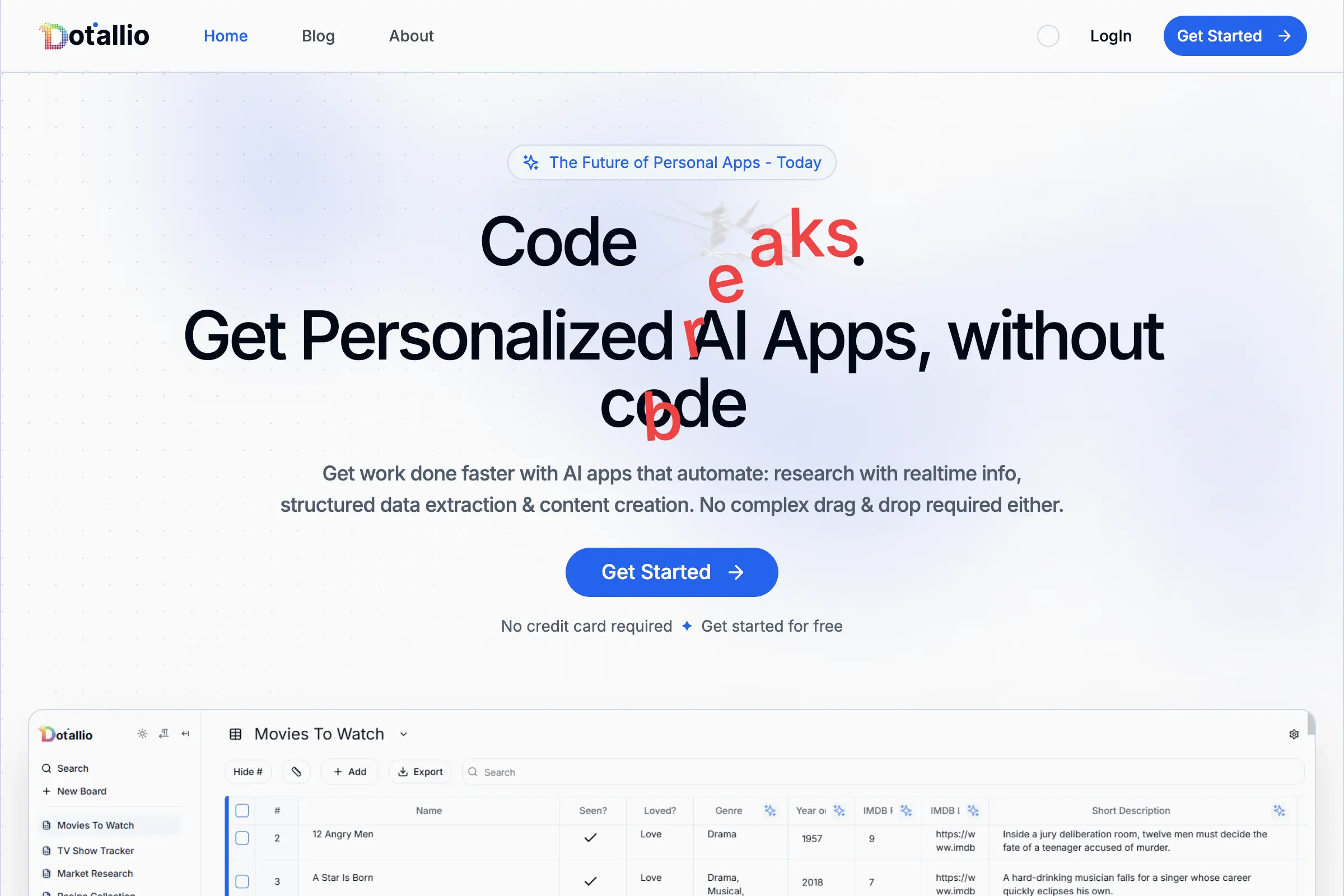
Dotallio
Personalized AI apps that automate research, data extraction, and content creation without code 🤖
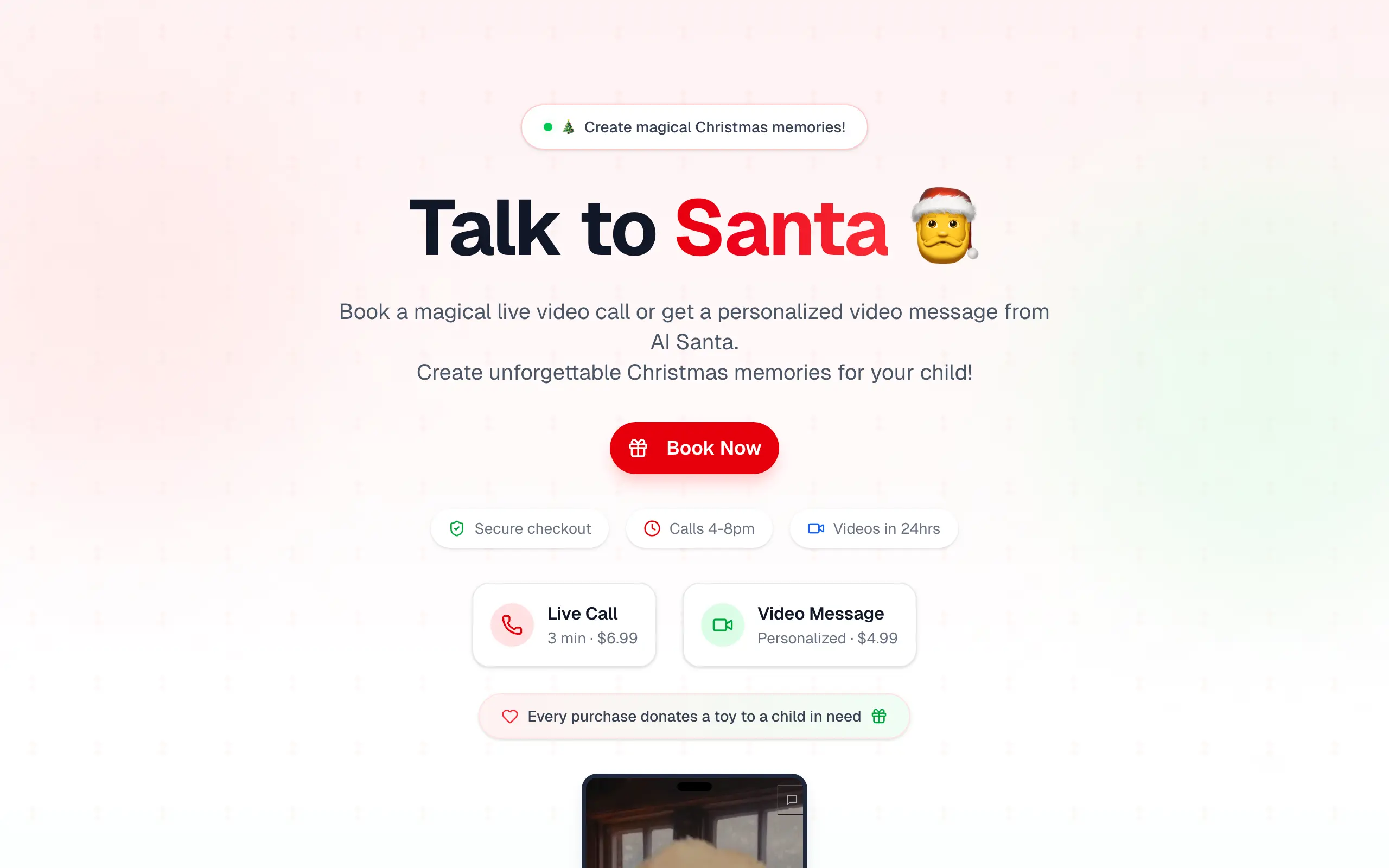
Talk to Santa
Enjoy a magical live video chat or receive a unique AI-generated video greeting from Santa Claus 🎅
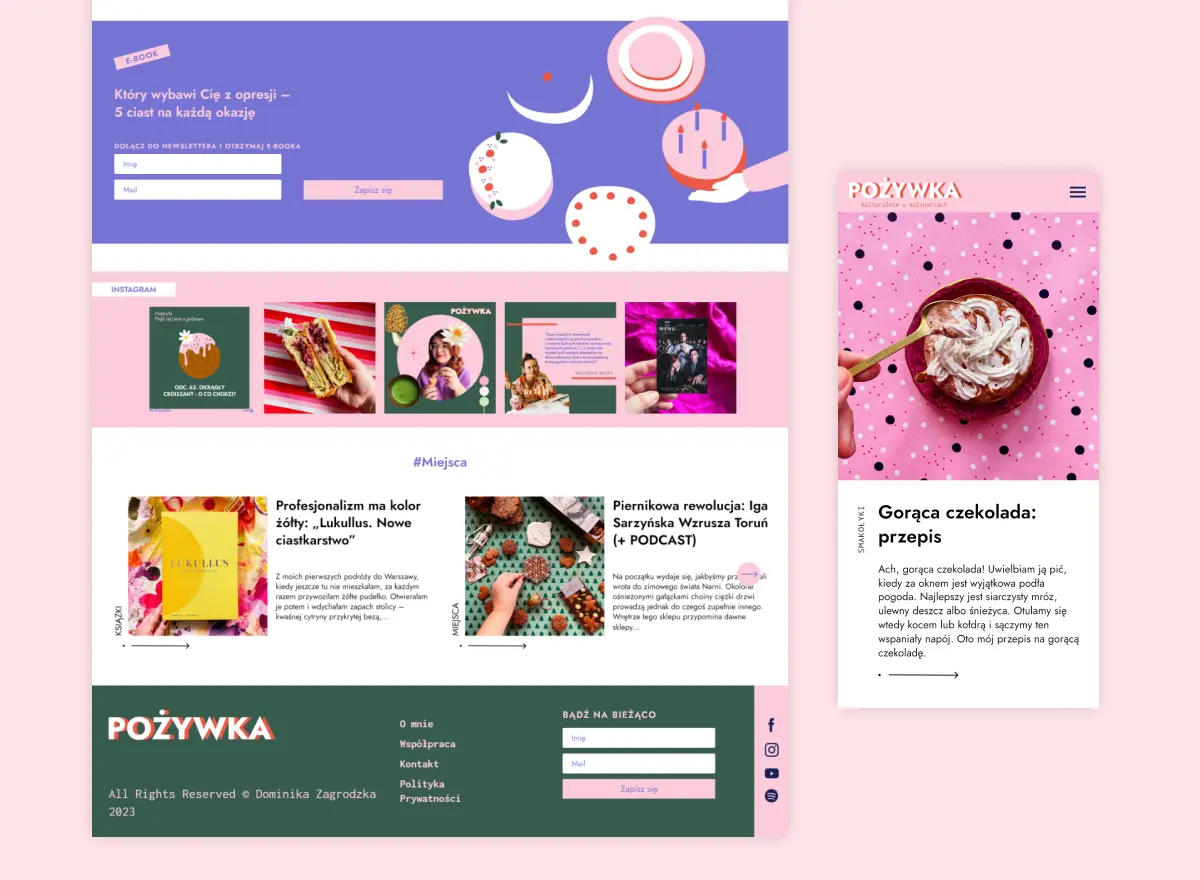
pozywka.pl
Scalable blog for food journalist, focused on performance and user experience 🌭
zagrodzki.me
Personal blog and portfolio of Bart Zagrodzki, where he shares his knowledge and work 💼
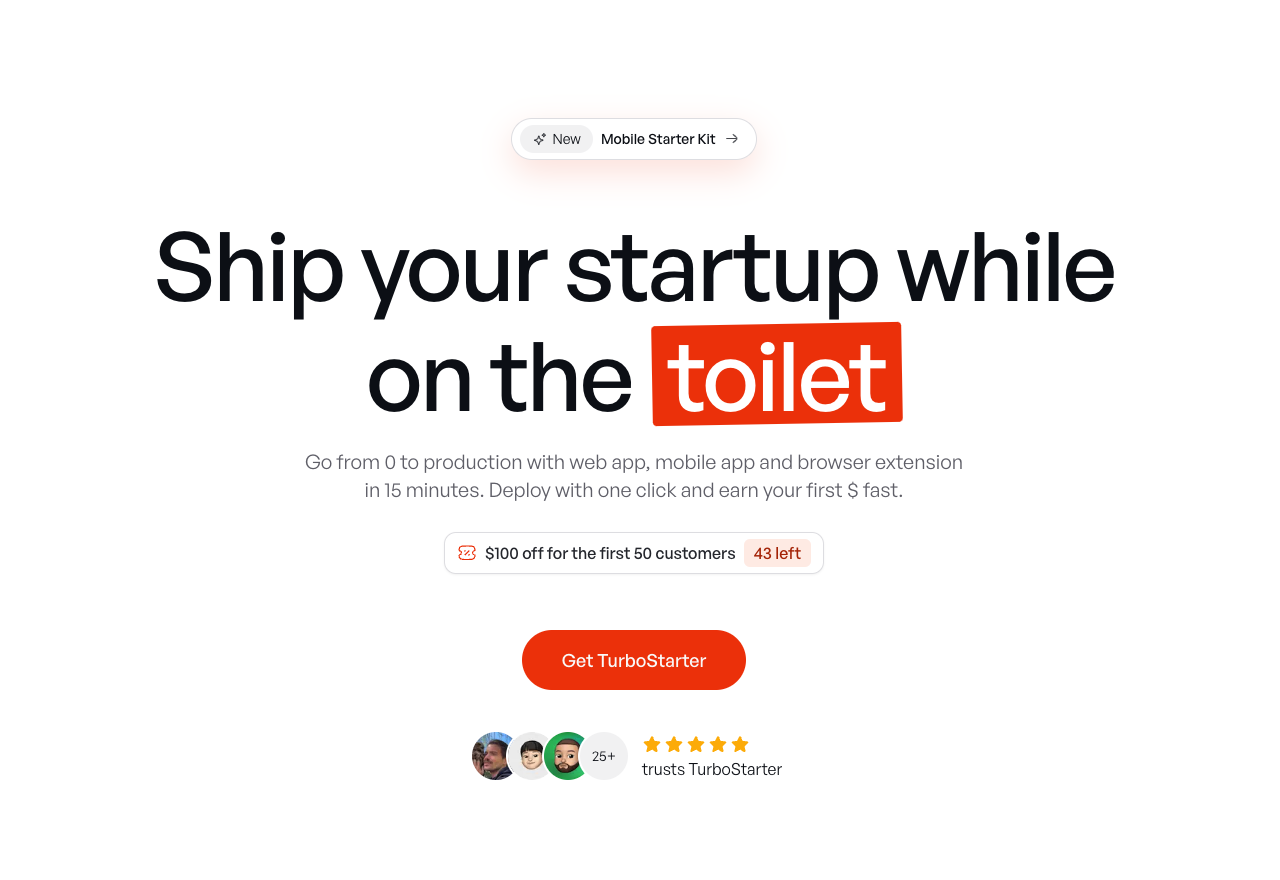
TurboStarter
Ship your startup everywhere. In minutes.
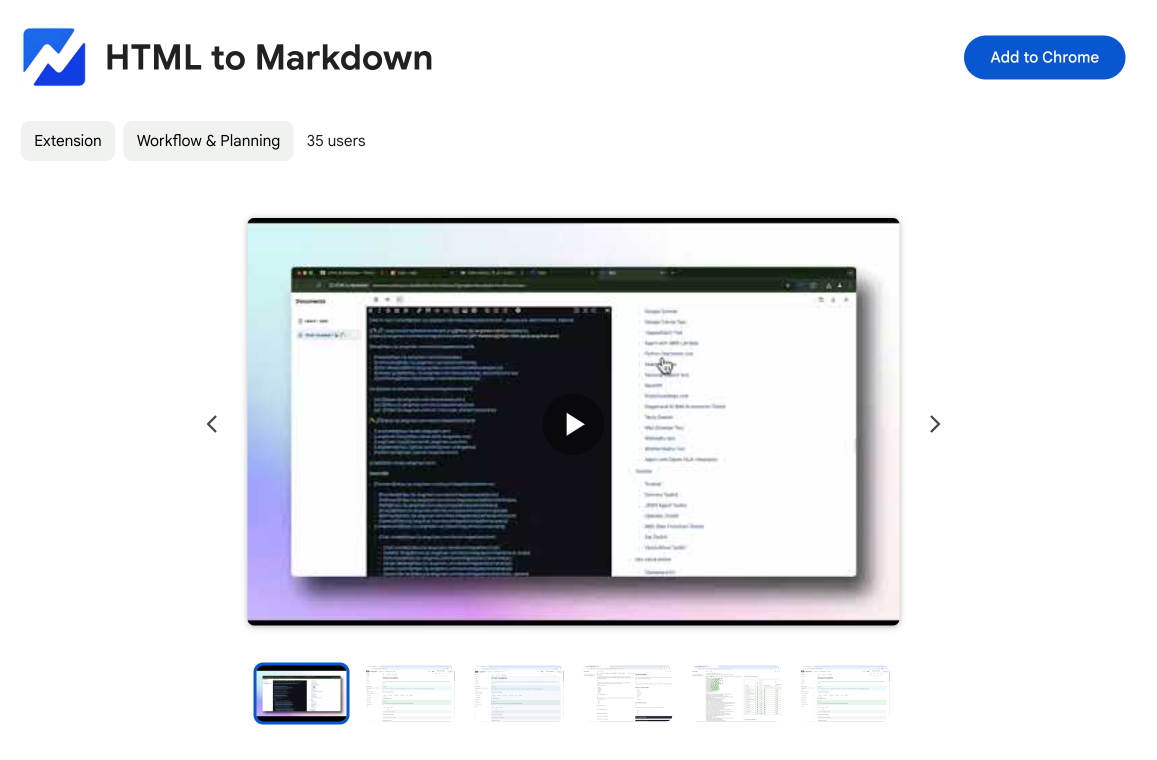
HTML to Markdown
Convert HTML to Markdown with ease, directly in your browser 📄
Dotallio
Personalized AI apps that automate research, data extraction, and content creation without code 🤖
Talk to Santa
Enjoy a magical live video chat or receive a unique AI-generated video greeting from Santa Claus 🎅
pozywka.pl
Scalable blog for food journalist, focused on performance and user experience 🌭
zagrodzki.me
Personal blog and portfolio of Bart Zagrodzki, where he shares his knowledge and work 💼
TurboStarter
Ship your startup everywhere. In minutes.
HTML to Markdown
Convert HTML to Markdown with ease, directly in your browser 📄
Dotallio
Personalized AI apps that automate research, data extraction, and content creation without code 🤖
Talk to Santa
Enjoy a magical live video chat or receive a unique AI-generated video greeting from Santa Claus 🎅
pozywka.pl
Scalable blog for food journalist, focused on performance and user experience 🌭
zagrodzki.me
Personal blog and portfolio of Bart Zagrodzki, where he shares his knowledge and work 💼
TurboStarter
Ship your startup everywhere. In minutes.
HTML to Markdown
Convert HTML to Markdown with ease, directly in your browser 📄
Dotallio
Personalized AI apps that automate research, data extraction, and content creation without code 🤖
Talk to Santa
Enjoy a magical live video chat or receive a unique AI-generated video greeting from Santa Claus 🎅
pozywka.pl
Scalable blog for food journalist, focused on performance and user experience 🌭
zagrodzki.me
Personal blog and portfolio of Bart Zagrodzki, where he shares his knowledge and work 💼
TurboStarter
Ship your startup everywhere. In minutes.
HTML to Markdown
Convert HTML to Markdown with ease, directly in your browser 📄
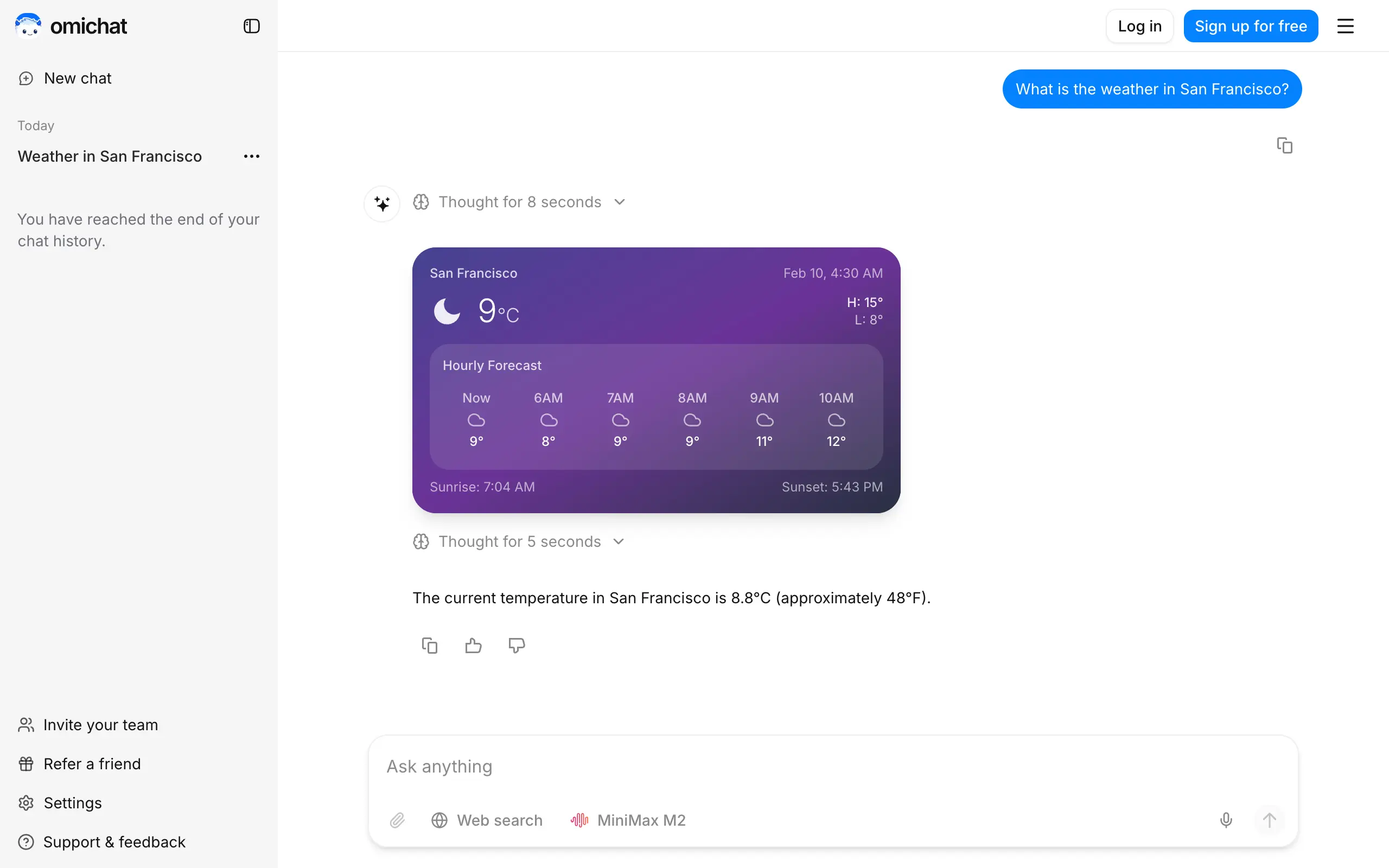
Omichat
Chat with 50+ AI models, including ChatGPT and Claude, in one place - switch models anytime without losing context 🤖
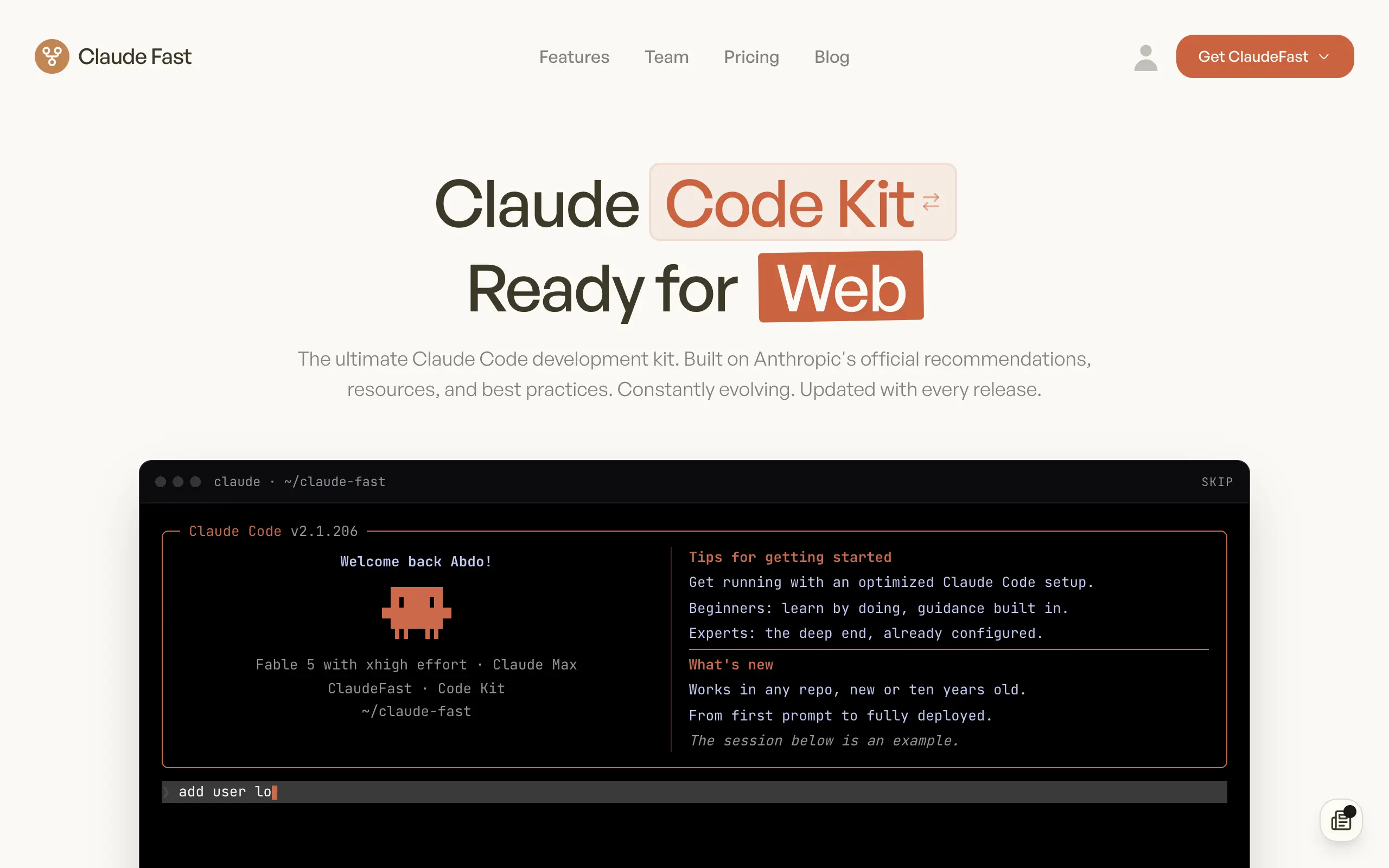
Claude Fast
Supercharge your Claude Code with 6x effective context window and specialized AI agents 🤖
EmojAI
AI-powered emoji picker with smart, context-aware suggestions 🤖
Solohacker
Autonomous company launcher - AI agents work 24/7, escalate what matters, and you stay in control 🤖

BeRawi: Storytelling Coach
Practice storytelling daily with instant feedback to sound clearer, more engaging, and confident 🎤
Omichat
Chat with 50+ AI models, including ChatGPT and Claude, in one place - switch models anytime without losing context 🤖
Claude Fast
Supercharge your Claude Code with 6x effective context window and specialized AI agents 🤖
EmojAI
AI-powered emoji picker with smart, context-aware suggestions 🤖
Solohacker
Autonomous company launcher - AI agents work 24/7, escalate what matters, and you stay in control 🤖
BeRawi: Storytelling Coach
Practice storytelling daily with instant feedback to sound clearer, more engaging, and confident 🎤
Omichat
Chat with 50+ AI models, including ChatGPT and Claude, in one place - switch models anytime without losing context 🤖
Claude Fast
Supercharge your Claude Code with 6x effective context window and specialized AI agents 🤖
EmojAI
AI-powered emoji picker with smart, context-aware suggestions 🤖
Solohacker
Autonomous company launcher - AI agents work 24/7, escalate what matters, and you stay in control 🤖
BeRawi: Storytelling Coach
Practice storytelling daily with instant feedback to sound clearer, more engaging, and confident 🎤
Omichat
Chat with 50+ AI models, including ChatGPT and Claude, in one place - switch models anytime without losing context 🤖
Claude Fast
Supercharge your Claude Code with 6x effective context window and specialized AI agents 🤖
EmojAI
AI-powered emoji picker with smart, context-aware suggestions 🤖
Solohacker
Autonomous company launcher - AI agents work 24/7, escalate what matters, and you stay in control 🤖
BeRawi: Storytelling Coach
Practice storytelling daily with instant feedback to sound clearer, more engaging, and confident 🎤

Connect with like-minded people
Join our community to get feedback, support, and grow together with 1,000+ builders on board, let's ship it!
Join usShip your startup everywhere. In minutes.
Don't burn tokens on setup and start building features on day one.