ShipShape AI
Turn a frontend repo into a production backend plan with inferred data models, API contracts, authentication, observability, and a tested CI/CD starter.
ShipShape AI is an AI-powered product concept for teams that need to turn a frontend prototype into a credible, codebase-aware production plan. Instead of generating a generic backend checklist, it would inspect an existing application and recommend the APIs, data models, authentication, tests, and CI/CD workflows that fit the project’s actual structure.
The opportunity is not simply to generate more code. It is to help developers close the gap between “the prototype works” and “the product is ready to ship”—with recommendations they can review, adapt, and implement safely.
What ShipShape AI should do
A frontend prototype can make a product feel nearly finished while leaving important engineering questions unanswered. Where should data live? Which endpoints does the interface need? How should users authenticate? What should be tested before deployment? Which workflows belong in CI?
ShipShape AI would answer those questions by analyzing the codebase and producing an actionable implementation plan. Its output might include:
- A proposed domain model and database schema
- API endpoint definitions based on user flows and interface behavior
- Authentication and authorization recommendations
- A prioritized testing plan, including suggested test cases
- CI/CD workflow recommendations tailored to the project
- A phased roadmap with assumptions, dependencies, and risks
The product’s primary value is contextual planning. A generic AI assistant can describe how to build an API. ShipShape AI should explain which API this application needs, why it needs it, and how that recommendation fits the code already in the repository.
The tool should be designed as an engineering copilot, not an autonomous production engineer. It can generate proposals, draft artifacts, and identify gaps, but developers should remain responsible for reviewing security-sensitive decisions and approving code changes.
The target audience for ShipShape AI
ShipShape AI is most useful to people who have a working interface but need to make it production-ready. That includes teams with very different levels of engineering experience.
Indie hackers and solo founders
Solo founders often build a prototype quickly to validate a product idea. They may understand the user experience but have less confidence in backend architecture, security, or deployment.
For this audience, ShipShape AI can turn an uncertain next step into a visible plan. Instead of asking, “What do I build now?” a founder can review a sequence such as:
- Identify the entities represented in the interface.
- Define how those entities relate.
- Add authentication and authorization requirements.
- Specify the API operations needed for each workflow.
- Test the most important user journeys.
- Prepare deployment and monitoring workflows.
This does not eliminate the need for engineering judgment. It helps a founder see the scope of the work and make better decisions about when to build, learn, or hire.
Small product teams
Small teams often have enough technical skill to deliver a product but not enough time to document every architectural decision. A frontend engineer may have built the prototype while another developer is expected to add the backend. ShipShape AI can produce a shared starting point that reduces handoff ambiguity.
The team can use the analysis to discuss what belongs in the first release, which requirements are still unknown, and which recommendations should be changed to fit existing conventions.
Agencies and product studios
An agency may prototype several client products using different frameworks and hosting environments. A codebase-aware planning tool can help standardize discovery and technical handoffs without forcing every project into the same architecture.
The value here is repeatability. Teams can use a consistent review process while still receiving recommendations based on the specific repository, stack, and requirements.
Developer educators and technical consultants
Consultants, mentors, and educators can use a structured plan to explain why a prototype needs particular backend capabilities. ShipShape AI could help make hidden engineering work visible to clients and learners, especially when a polished interface creates unrealistic expectations about launch readiness.
The market opportunity and product gap
AI coding tools have made it easier to generate components, functions, and application scaffolding. Yet code generation is only one part of building a production-ready product. Teams must still decide what to generate, how the pieces fit together, and whether the result meets functional and operational requirements.
That leaves a useful product opportunity between prototype generation and production implementation.
A prototype-focused tool may help create screens and interactions. A coding assistant may help write a specific function. A project management tool may track tasks. ShipShape AI can occupy a different role: analyze the application and translate visible product behavior into an engineering plan.
The gap between what users see and what teams must build
A user interface suggests requirements, but it does not fully specify them. A form implies validation, persistence, error handling, and possibly permissions. A dashboard implies data sources, filtering rules, loading states, and decisions about how fresh the information should be. A sign-in screen raises questions about identity providers, account recovery, session management, and protected resources.
These decisions are often scattered across:
- Frontend components and route definitions
- Existing API clients or mock data
- Design documents and issue trackers
- Conversations between product and engineering
- The implicit knowledge of the original prototype author
ShipShape AI can add value by making those assumptions explicit and connecting them to evidence in the repository.
Why generic checklists are not enough
A standard launch checklist can remind a team to add tests or authentication. It cannot reliably determine which parts of a particular application need those capabilities or how they should fit the current stack.
To stand apart, ShipShape AI should produce recommendations that are:
- Codebase-aware, grounded in files, routes, dependencies, and conventions
- Traceable, with each recommendation linked to supporting evidence
- Prioritized, so teams can distinguish launch blockers from later improvements
- Editable, allowing engineers to correct assumptions and refine scope
- Implementation-ready, with outputs that can become issues, specifications, or code changes
The product should not claim that an AI analysis makes software secure or production-ready by itself. A more credible promise is that it helps teams identify important work earlier and create a clearer path toward a reviewed release.
Core features for an AI production-planning tool
The strongest first version of ShipShape AI should solve a narrow, recurring problem before expanding into broad autonomous development. A practical product can be organized around repository analysis, planning, and controlled implementation.
1. Codebase intake and framework detection
Users need a simple way to connect or upload a project. The first analysis should identify the application’s structure, framework, language, dependency manager, routing approach, and existing backend integrations.
Useful signals may include:
- Package manifests and lockfiles
- Route and page definitions
- Components that make network requests
- Mock data and local state
- Environment variable references
- Existing test configuration
- Build and deployment files
The tool should tell users what it inspected. If a repository is incomplete, private, or too large for a reliable analysis, ShipShape AI should say so instead of presenting guesses as facts.
2. Product-flow and requirement extraction
The system can infer likely user flows from pages, forms, buttons, navigation, and existing documentation. It should distinguish between observed behavior and inferred requirements.
For example, it might report:
- Observed: the dashboard displays a list of projects.
- Inferred: users likely need to create, edit, and archive projects.
- Unknown: whether projects are private to one user or shared with a team.
This distinction is critical for trust. Developers should be able to correct an assumption before it influences a schema or API design.
3. Data model and persistence recommendations
ShipShape AI can propose entities, fields, relationships, and constraints based on the product’s interface and domain language. The proposal should explain why each entity exists and which user flows depend on it.
A useful data-model report should include:
- Entity names and descriptions
- Suggested fields and data types
- Relationships and cardinality
- Required versus optional fields
- Uniqueness and validation constraints
- Questions that need product-owner input
- Potential privacy or retention concerns
The tool should avoid presenting a generated schema as definitive. Data modeling involves business decisions that cannot always be inferred from a UI.
4. API design grounded in interface behavior
An API plan should connect user actions to operations. A user clicking “Save” might require a create or update operation; a list view might need pagination, filtering, or sorting.
For each proposed endpoint, ShipShape AI could show:
- The user flow it supports
- The HTTP method and route
- The request and response shapes
- Authentication requirements
- Validation and error cases
- Related data model entities
- Whether the endpoint is essential for the first release
If the project already uses an API pattern, the plan should follow it where possible. For teams adopting a contract-first workflow, generated specifications can be expressed using OpenAPI, then reviewed before implementation.
5. Authentication and authorization planning
Authentication is easy to treat as a checkbox, but access control depends on the product’s actual users, resources, and workflows. ShipShape AI should help identify the difference between verifying a user’s identity and deciding what that user is allowed to do.
A useful analysis might cover:
- Sign-up and sign-in requirements
- Account recovery and session behavior
- Public versus protected routes
- Resource ownership
- Team or organization membership
- Role-based access needs
- Sensitive operations that require additional checks
The system should flag uncertainty rather than inventing a role model. It should also recommend human review for decisions that affect user data or privileged actions.
6. Test planning and test generation
A production plan should connect tests to expected product behavior. ShipShape AI can identify the most important journeys and propose a layered testing strategy, such as unit tests for isolated logic, integration tests for API and database behavior, and end-to-end tests for critical user flows.
A good test plan prioritizes:
- Sign-up and sign-in
- Core create, read, update, and delete workflows
- Permission boundaries
- Form validation and error handling
- Empty, loading, and failure states
- Regression-prone business rules
For browser automation, a team might use Playwright. ShipShape AI should recommend a tool only when it fits the existing project and team workflow, rather than generating the same setup for every repository.
7. CI/CD and deployment readiness
The product can inspect existing scripts and configuration to recommend missing checks. A practical CI/CD plan may include:
- Dependency installation and caching
- Linting and type checks
- Unit and integration tests
- Production builds
- Secret handling
- Preview deployments
- Release approvals and rollback considerations
If the project uses GitHub Actions, ShipShape AI could draft a workflow file for review. Generated workflows should avoid exposing secrets, granting unnecessary permissions, or deploying unreviewed changes.
8. Prioritized implementation roadmap
Analysis becomes more valuable when it turns into a sequence of work. ShipShape AI should group recommendations into stages, such as:
- Foundation: define data ownership, choose persistence, configure environments
- Core workflows: implement the essential API and user actions
- Quality and security: add tests, access checks, and validation
- Release readiness: configure deployment, monitoring, and recovery procedures
The roadmap should account for dependencies. For example, authorization tests are difficult to finalize before the team defines its permission model.
Make recommendations reviewable
A strong ShipShape AI report should show its evidence, confidence, assumptions, and open questions. This gives developers a way to separate repository facts from AI-generated interpretation.
A practical product workflow
A focused workflow can help ShipShape AI deliver value without overwhelming users with a wall of generated code.
Connect a project
The user connects a repository or uploads a supported project. ShipShape AI explains what permissions it needs, what data it will inspect, and whether source files will be retained.
Review the codebase summary
The system identifies the framework, routes, dependencies, tests, and existing backend conventions. The user corrects any detection errors before moving on.
Confirm product assumptions
ShipShape AI presents observed flows separately from inferred requirements. The user answers questions about roles, ownership, data retention, and launch scope.
Generate a production plan
The product creates data-model proposals, API contracts, authentication recommendations, test coverage suggestions, and CI/CD tasks tied to the repository.
Export or implement in stages
The team exports the plan to its project tracker or reviews proposed code changes in a branch. Every change remains inspectable and reversible.
A useful report should support two different users: the person who wants a concise roadmap and the engineer who wants to inspect the technical details. The overview can summarize priorities; expandable sections can show evidence, schemas, endpoint contracts, and generated files.
Recommended technology stack
ShipShape AI has two core technical challenges: safely analyzing arbitrary codebases and producing useful recommendations without overstating confidence. The stack should support secure repository access, asynchronous analysis, structured outputs, and auditability.
| Product area | Practical starting choice | Why it fits | Trade-off |
|---|---|---|---|
| Web application | Next.js with React | Familiar ecosystem for a SaaS dashboard and server-rendered product pages | Framework conventions can become restrictive if the product later separates into multiple services |
| Language | TypeScript | Shared types help reduce errors across API contracts and frontend state | Types cannot guarantee that generated recommendations are correct |
| Styling | Tailwind CSS | Enables fast iteration on a dense analysis and reporting interface | Teams need consistent component conventions to avoid inconsistent utility patterns |
| Primary database | PostgreSQL | Suitable for users, projects, analysis jobs, reports, and structured configuration | Large source artifacts and logs may belong in object storage instead |
| Asynchronous work | A queue backed by a managed Redis-compatible service or a cloud task system | Repository analysis and model calls can take longer than a normal web request | Adds operational complexity and requires retry and idempotency design |
| Repository integration | Official provider APIs and short-lived, scoped credentials | Allows users to connect existing code without manual exports | Permissions, webhook security, and provider-specific behavior require ongoing maintenance |
| Model orchestration | A provider-agnostic service layer with structured outputs | Makes it easier to validate results and adapt providers | Abstraction can hide provider-specific capabilities if taken too far |
| Browser testing | Playwright | Supports automated testing of the ShipShape AI application itself | End-to-end tests can be slower and more brittle than focused unit tests |
Separate analysis from the interactive application
Repository inspection should run as a background job rather than blocking a web request. A typical flow is:
- The web application creates an analysis job.
- A worker fetches the permitted repository snapshot.
- Static analysis identifies project structure and relevant files.
- A model generates structured proposals from selected context.
- Validators check the output format and flag incomplete results.
- The report is stored and shown to the user.
This design improves reliability because long-running analysis can be retried, monitored, and cancelled independently of the dashboard.
Keep generated outputs structured
Do not rely on a single free-form response for every feature. Use schemas for entities, endpoints, risks, evidence references, and implementation tasks. Validate generated data before displaying it or offering it as a code change.
A simplified task representation might look like this:
type PlanTask = {
  id: string;
  title: string;
  description: string;
  priority: "critical" | "high" | "medium" | "low";
  category: "data" | "api" | "auth" | "testing" | "delivery";
  evidence: string[];
  assumptions: string[];
  dependencies: string[];
};
The exact schema should evolve with product research. The important principle is that recommendations should be queryable and reviewable, not trapped in an unstructured paragraph.
Design for secure repository analysis
Source code can contain secrets, customer information, or proprietary business logic. ShipShape AI should use least-privilege access, encrypt sensitive data in transit and at rest, minimize retention, and clearly explain how repository contents are processed.
A defensible first release should consider:
- Read-only access by default
- Short-lived credentials where available
- Explicit consent before code generation or write access
- Secret detection before sending context to a model
- Configurable retention and deletion
- Audit logs for repository access and generated changes
- Clear disclosure of any third-party data processors
Security and privacy are not optional add-ons for this product. They directly affect whether engineering teams will trust it with their repositories.
Monetization strategies
ShipShape AI can monetize around recurring analysis, collaboration, and implementation value. Pricing should be tested with real users because repository size, team workflows, and model costs can vary significantly.
Free tier for product discovery
A free plan can provide a limited codebase summary or one initial production plan. It gives solo developers a low-friction way to understand the product and can reveal which recommendations are valuable enough to justify payment.
The free tier should still provide a complete, useful experience. Artificially withholding every meaningful recommendation can damage trust.
Subscription for individual developers
An individual plan could offer:
- More project analyses
- Saved reports and project history
- Exportable implementation tasks
- Re-analysis after code changes
- Access to additional technical detail
A subscription is easy to understand, but usage limits should reflect the actual cost of repository analysis and model calls.
Team plans
Teams may pay for shared projects, collaborative review, role-based access, team templates, and integrations with development workflows. Team features are especially relevant when the product helps turn an analysis into agreed engineering work.
Potential team capabilities include:
- Shared report comments
- Approval workflows
- Organization-wide security settings
- Repository-level access controls
- Issue tracker exports
- Reusable planning standards
Usage-based analysis
Charging by analysis run, repository size, or advanced generation may align price with compute costs. However, unpredictable bills can discourage experimentation. If usage-based pricing is tested, provide clear limits, cost estimates, and alerts.
Agency or enterprise offerings
Agencies may value reusable client workflows and branded reports. Larger organizations may require private deployment options, data-retention controls, audit logs, and support for internal security policies.
Enterprise features should be built in response to validated demand. Starting with complex compliance promises before the product can support them creates unnecessary risk.
Competitive advantage and positioning
ShipShape AI should avoid positioning itself as another general-purpose AI coding assistant. Its strongest differentiation is a traceable production plan generated from the application’s existing codebase.
| Capability | Generic checklist | General coding assistant | ShipShape AI opportunity |
|---|---|---|---|
| Reads the project structure | Usually no | Often yes | Yes, with an explicit codebase summary |
| Connects interface behavior to backend needs | Limited | Possible through prompting | Core workflow |
| Shows assumptions and evidence | Rarely | Depends on the prompt | Built into each recommendation |
| Prioritizes production work | Usually generic | Often task-by-task | Organized as a phased roadmap |
| Covers API, data, auth, tests, and delivery together | Sometimes | Can be fragmented | Unified planning experience |
| Keeps developer approval central | Varies | Varies | A core trust and safety principle |
The product’s defensibility will not come from using a particular model. Models and coding features evolve quickly. More durable advantages could include:
- A high-quality repository analysis pipeline
- A structured taxonomy of production-readiness gaps
- Strong links between code evidence and recommendations
- Feedback data showing which plans developers accept or change
- Integrations that make the plan useful in existing team workflows
- A reputation for security, transparency, and technically grounded output
The product should measure whether users can act on its recommendations, not just whether they find the generated report impressive.
Risks and how to mitigate them
Incorrect or overconfident recommendations
AI systems may misunderstand project intent, infer the wrong domain model, or recommend patterns that conflict with the team’s requirements.
Mitigation: Label assumptions, include evidence, show confidence carefully, and let users correct the analysis. Require review before generating or applying changes.
Security and privacy concerns
A repository can contain confidential code and credentials. Even the perception of unsafe handling can stop teams from trying the product.
Mitigation: Minimize access and retention, detect likely secrets, document data flows, and provide deletion controls. Do not request write permissions when read-only access is sufficient.
Overly broad scope
Trying to generate production code, manage deployment, replace project tracking, and design architecture in the first release will make the product difficult to build and explain.
Mitigation: Begin with a focused report that maps frontend behavior to APIs, data needs, tests, and delivery tasks. Add code generation only after users consistently trust and act on the planning output.
Recommendations that do not fit the repository
A tool might propose a new framework or database even when the project already has conventions that should be extended.
Mitigation: Treat existing dependencies and patterns as constraints unless the user explicitly asks for alternatives. Explain when a recommendation intentionally departs from the current stack.
Unclear product ownership
An analysis can surface unresolved business questions that engineering cannot answer alone, such as whether records are shared or whether users can belong to multiple organizations.
Mitigation: Make unresolved questions visible and assign them to a product decision stage. Do not disguise missing requirements as technical certainty.
Difficulty proving return on investment
Users may enjoy a report without using it. If the output does not change project behavior, retention and willingness to pay may be weak.
Mitigation: Track meaningful activation events, such as accepting a recommendation, exporting tasks, revisiting a plan, or completing a suggested workflow. Interview users about what they implemented and what they ignored.
Metrics to validate the idea
Early metrics should test whether ShipShape AI solves a real planning problem rather than merely generating polished content.
Useful product measures include:
- Time from repository connection to a useful first report
- Percentage of reports users rate as relevant
- Recommendation acceptance and dismissal rates
- Number of reports exported or shared
- Percentage of users who return after making code changes
- Conversion from an initial analysis to a paid plan
- Frequency of corrected assumptions
- Incidents involving sensitive data or incorrect access
Pair quantitative measures with interviews. A high report-completion rate does not prove that users trust the advice, and a high click-through rate does not prove that the roadmap is useful.
For market or adoption claims, use clearly attributed and current sources rather than unsourced statistics. Potential research references include developer surveys, public software delivery reports, and official documentation on security and repository permissions. Any statistic used in launch material should include the source, publication date, sample, and methodology.
Actionable implementation steps
The best way to validate ShipShape AI is to build a narrow, human-reviewable first version and test it with real repositories.
-
Interview target users. Speak with solo founders, frontend engineers, and small product teams who have recently taken a prototype toward launch. Ask where the handoff became difficult and what they used to solve it.
-
Choose one initial user segment. Avoid designing for solo developers, agencies, and enterprise engineering teams simultaneously. Select the group with the most urgent and repeatable planning problem.
-
Define a narrow input. Start with a supported framework and repository type. Clear boundaries make it easier to evaluate the quality of codebase analysis.
-
Create a manual prototype. Before automating everything, analyze a small set of consenting projects and deliver structured reports. Observe which recommendations users trust, correct, or ignore.
-
Build repository summarization. Detect routes, dependencies, forms, API calls, tests, and deployment configuration. Keep the system’s observations separate from its interpretations.
-
Add structured recommendations. Generate a prioritized set of data, API, authentication, test, and CI/CD tasks. Require evidence and open questions for every important recommendation.
-
Validate report quality. Have experienced engineers review sample outputs. Track false positives, missing risks, irrelevant suggestions, and assumptions that should have been asked as questions.
-
Implement secure repository access. Begin with limited, read-only permissions. Establish a clear retention policy and explain how the analysis works before inviting broader usage.
-
Test export and collaboration workflows. Let users turn recommendations into issues or share reports with teammates. The plan should fit into how teams already work.
-
Add controlled code generation only when justified. If users repeatedly ask for implementation artifacts, generate drafts in a branch or downloadable patch. Keep each change reviewable and reversible.
-
Test pricing with actual behavior. Compare subscription and usage-based approaches using real user feedback and observed compute costs. Avoid choosing a pricing model based only on competitor assumptions.
-
Expand based on evidence. Add frameworks, integrations, and enterprise capabilities when customer demand and product quality support them.
TurboStarter can help teams accelerate the initial SaaS build so they can focus more time on validating the repository-analysis workflow, recommendation quality, and customer demand.
The long-term opportunity
ShipShape AI has a credible opportunity if it helps developers answer a practical question: What does this prototype still need before we can ship it responsibly?
The most compelling version of the product will not promise that AI can replace engineering judgment. It will make engineering work easier to see, organize, and review. By grounding its recommendations in repository evidence, surfacing uncertainty, and turning broad production concerns into prioritized tasks, ShipShape AI can become a useful bridge between frontend prototypes and production software.
The first milestone is not an autonomous deployment platform. It is a report that a developer trusts enough to discuss with a teammate and use to make the next engineering decision.
More 🤖 AI Startup SaaS ideas
Discover more innovative ai startup SaaS ideas that are trending in 2026. Each idea is AI-generated with market validation and growth potential to help you find your next profitable venture faster than competitors.
Your competitors are building with TurboStarter
Below are some of the SaaS ideas that have been generated and built with our starter kit.
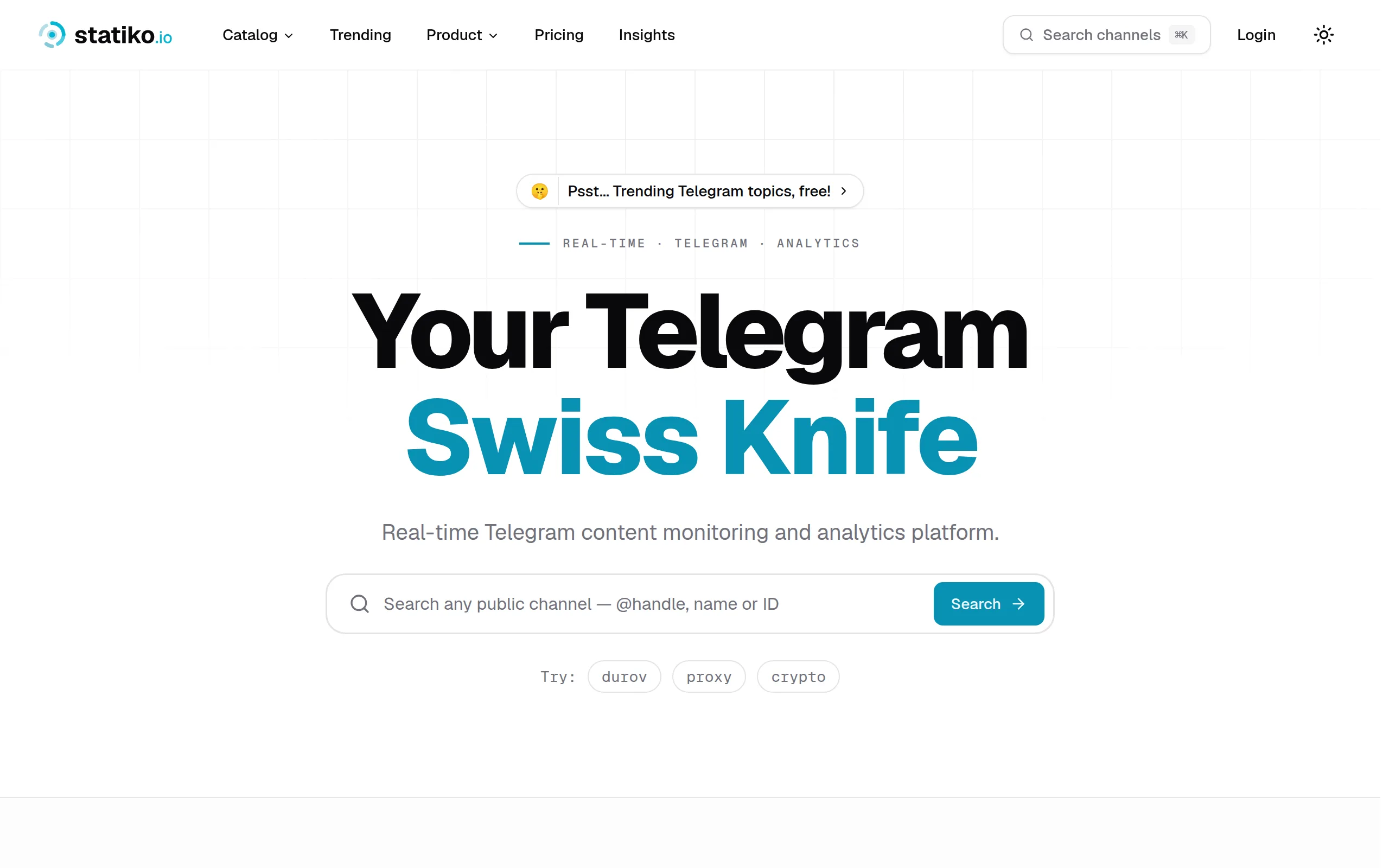
Statiko
Monitor any Telegram channel in real time - track posts, edits, deletions, and growth with AI recaps 📡

Shibui
AI website builder - describe your business, pick a niche template, edit by chatting, and publish instantly ✨

Pro Service
Find verified home service professionals, compare quotes, and pay securely through escrow - built for Brazilians across the US 🏠
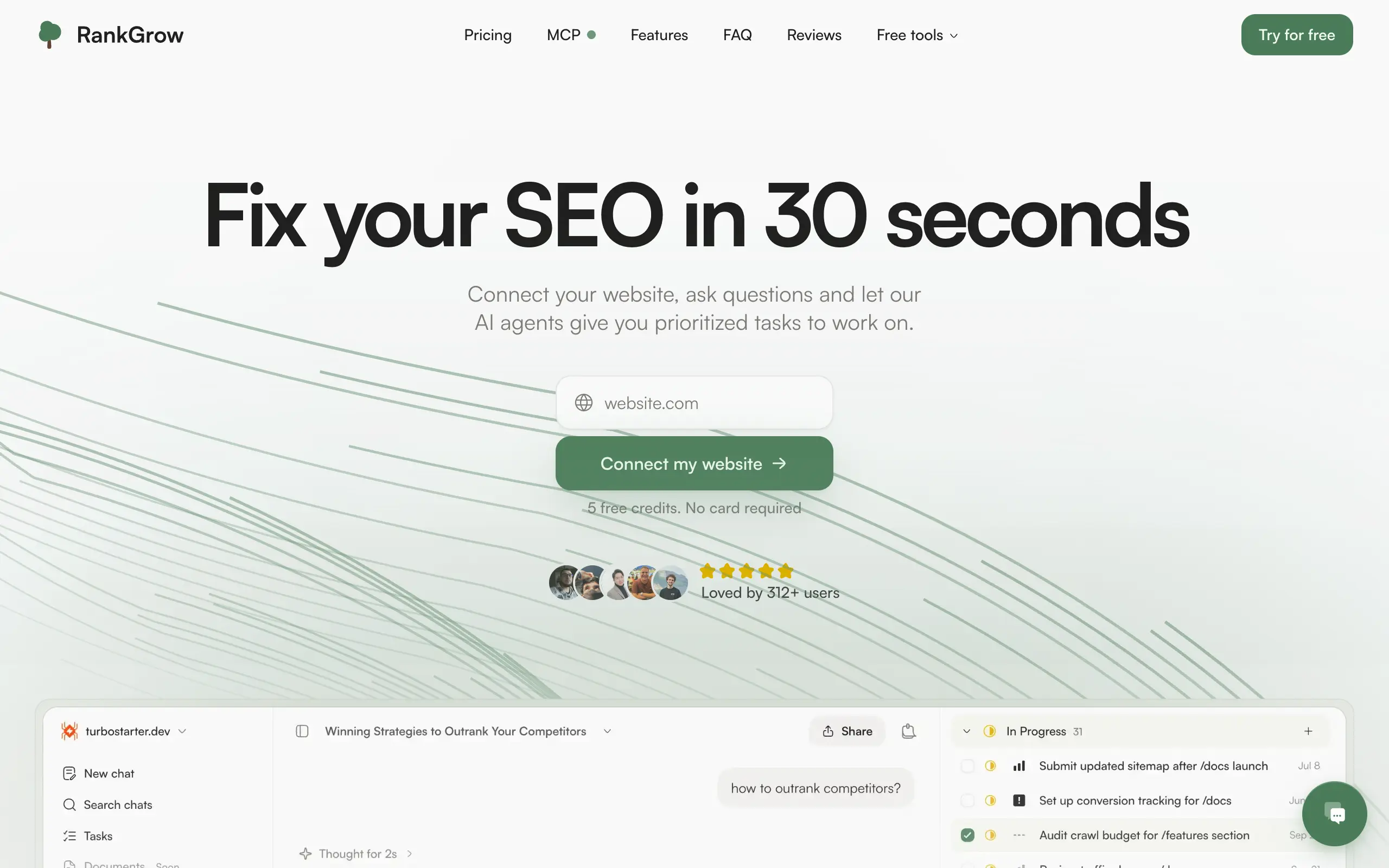
RankGrow
Fix your SEO with AI agents - connect Search Console, get prioritized tasks, and grow organic traffic 📈
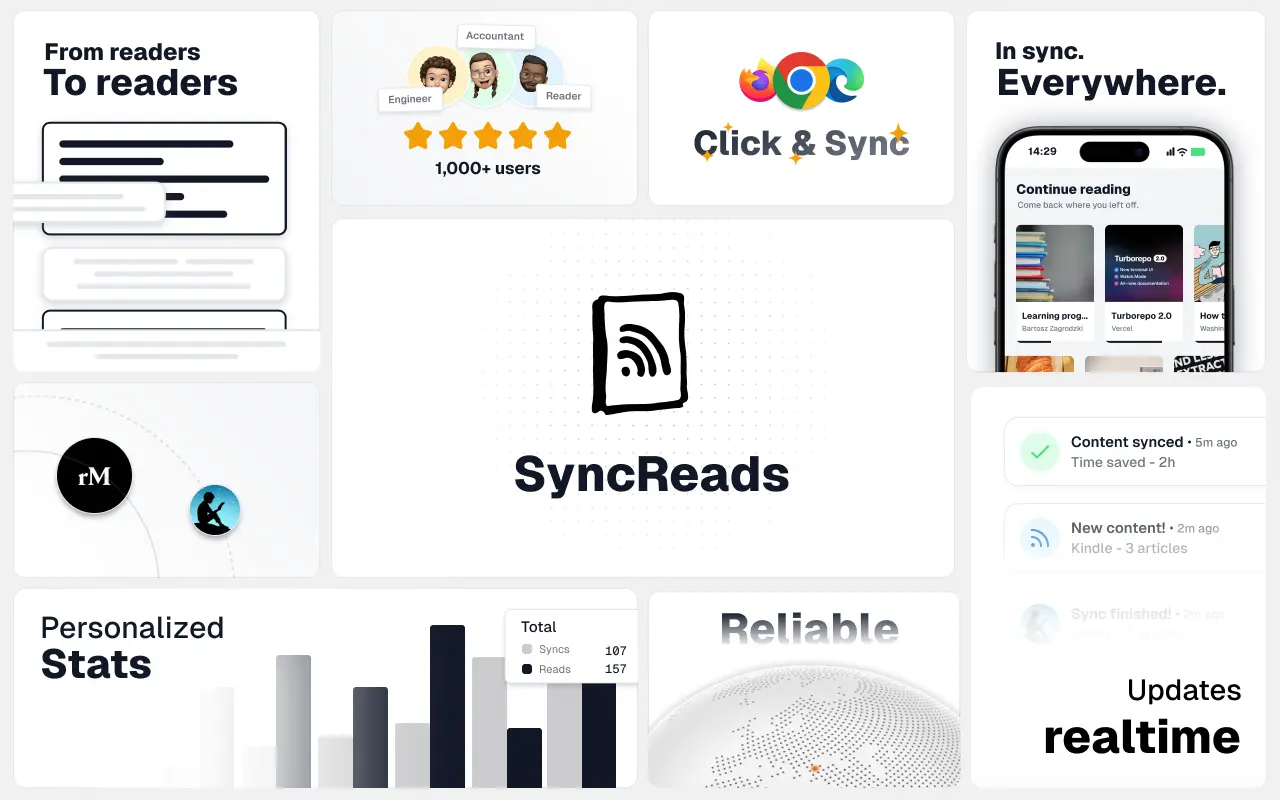
SyncReads
Sync your favorite content for distraction-free reading, save time and replace multiple apps. Anytime, anywhere 🔄
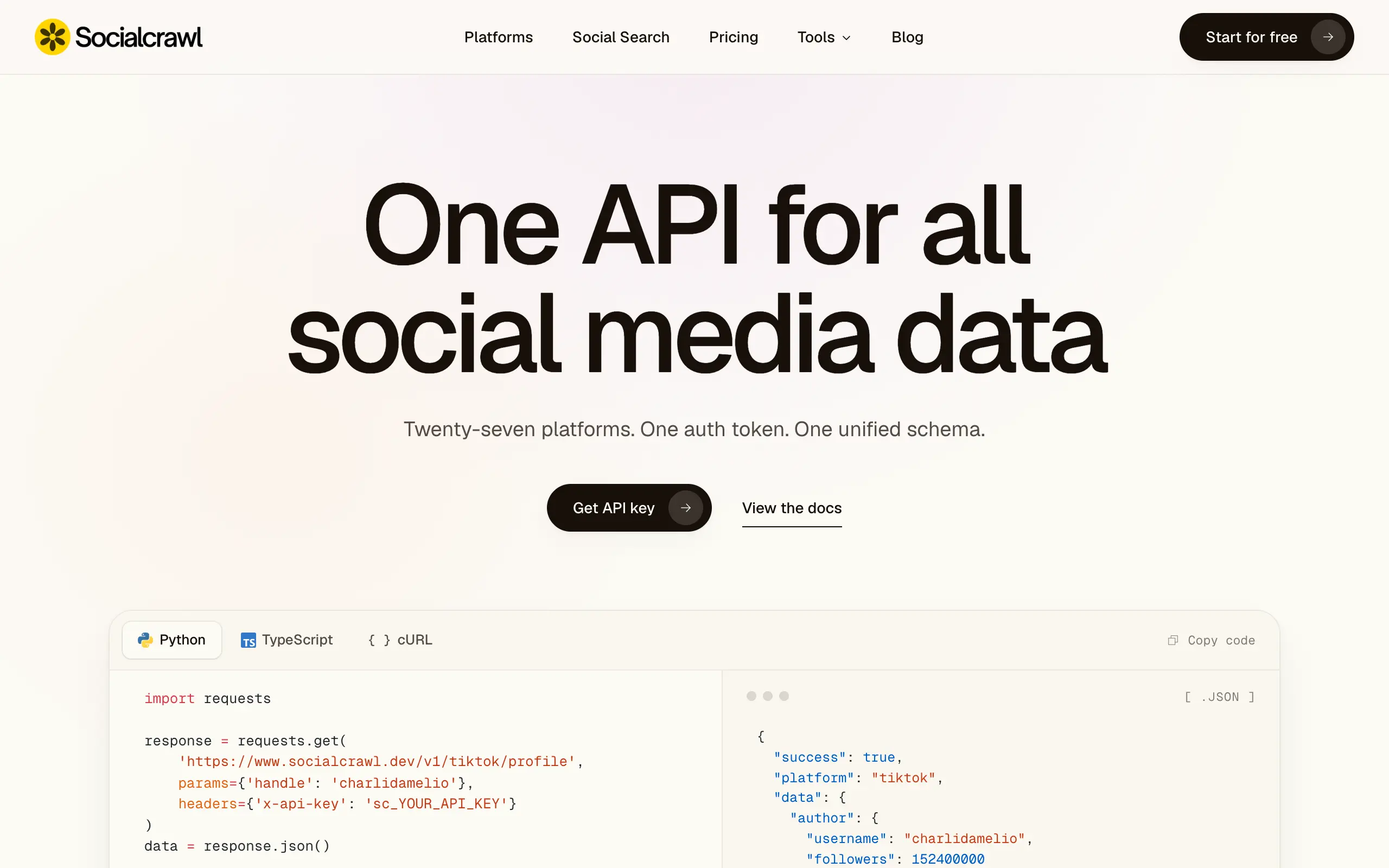
Socialcrawl
Get clean, structured data from 21 platforms like TikTok, Instagram, and YouTube with a single request 📊
Statiko
Monitor any Telegram channel in real time - track posts, edits, deletions, and growth with AI recaps 📡
Shibui
AI website builder - describe your business, pick a niche template, edit by chatting, and publish instantly ✨
Pro Service
Find verified home service professionals, compare quotes, and pay securely through escrow - built for Brazilians across the US 🏠
RankGrow
Fix your SEO with AI agents - connect Search Console, get prioritized tasks, and grow organic traffic 📈
SyncReads
Sync your favorite content for distraction-free reading, save time and replace multiple apps. Anytime, anywhere 🔄
Socialcrawl
Get clean, structured data from 21 platforms like TikTok, Instagram, and YouTube with a single request 📊
Statiko
Monitor any Telegram channel in real time - track posts, edits, deletions, and growth with AI recaps 📡
Shibui
AI website builder - describe your business, pick a niche template, edit by chatting, and publish instantly ✨
Pro Service
Find verified home service professionals, compare quotes, and pay securely through escrow - built for Brazilians across the US 🏠
RankGrow
Fix your SEO with AI agents - connect Search Console, get prioritized tasks, and grow organic traffic 📈
SyncReads
Sync your favorite content for distraction-free reading, save time and replace multiple apps. Anytime, anywhere 🔄
Socialcrawl
Get clean, structured data from 21 platforms like TikTok, Instagram, and YouTube with a single request 📊
Statiko
Monitor any Telegram channel in real time - track posts, edits, deletions, and growth with AI recaps 📡
Shibui
AI website builder - describe your business, pick a niche template, edit by chatting, and publish instantly ✨
Pro Service
Find verified home service professionals, compare quotes, and pay securely through escrow - built for Brazilians across the US 🏠
RankGrow
Fix your SEO with AI agents - connect Search Console, get prioritized tasks, and grow organic traffic 📈
SyncReads
Sync your favorite content for distraction-free reading, save time and replace multiple apps. Anytime, anywhere 🔄
Socialcrawl
Get clean, structured data from 21 platforms like TikTok, Instagram, and YouTube with a single request 📊
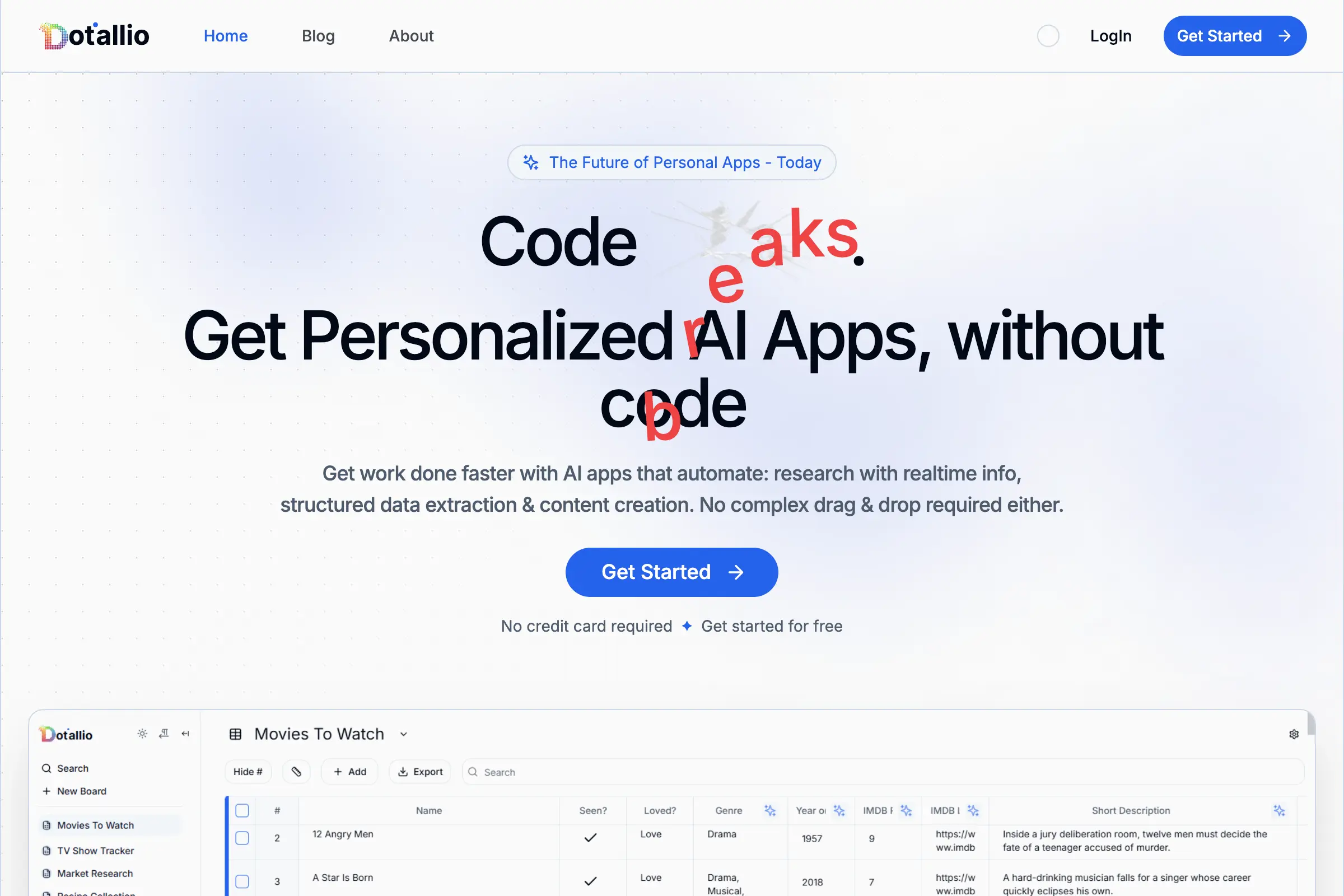
Dotallio
Personalized AI apps that automate research, data extraction, and content creation without code 🤖

Talk to Santa
Enjoy a magical live video chat or receive a unique AI-generated video greeting from Santa Claus 🎅

pozywka.pl
Scalable blog for food journalist, focused on performance and user experience 🌭
zagrodzki.me
Personal blog and portfolio of Bart Zagrodzki, where he shares his knowledge and work 💼
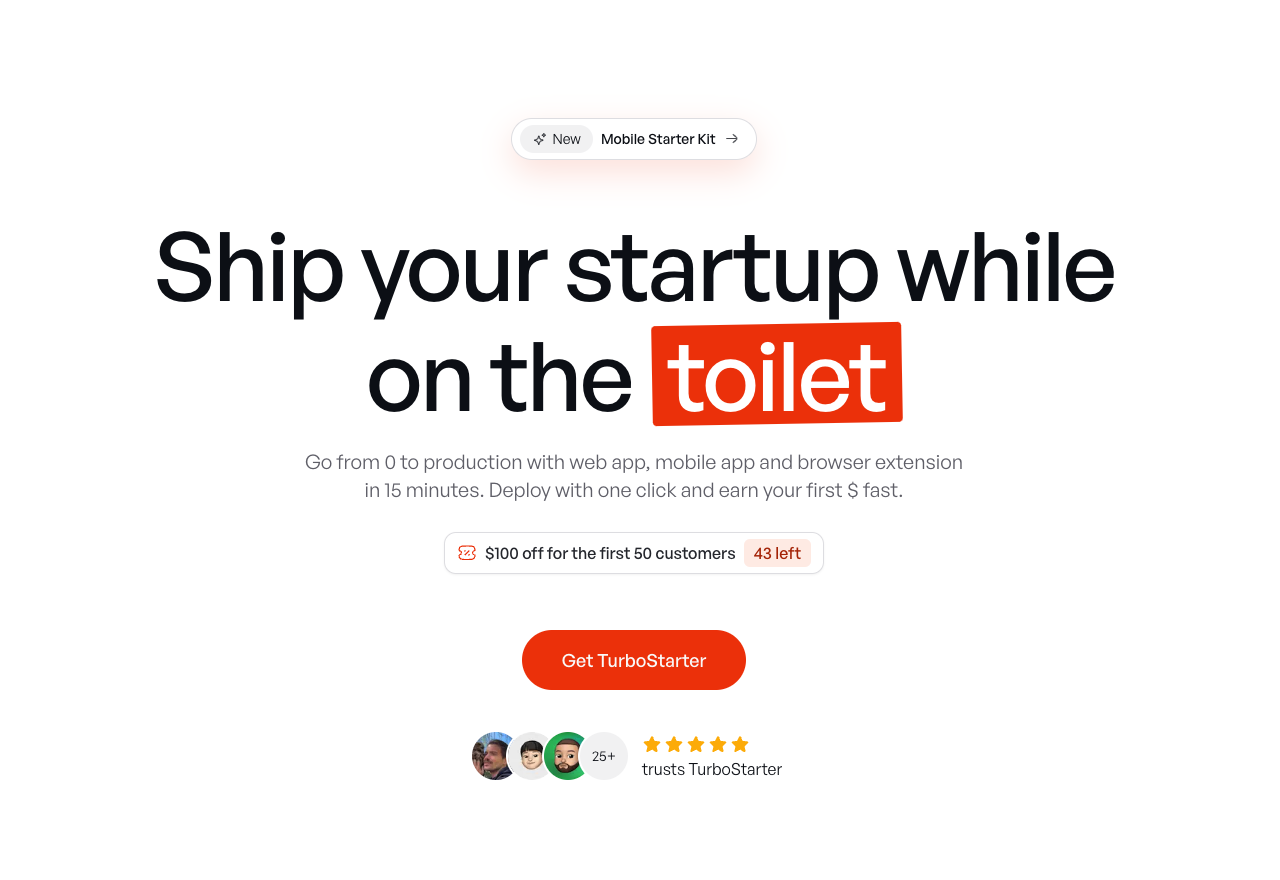
TurboStarter
Ship your startup everywhere. In minutes.
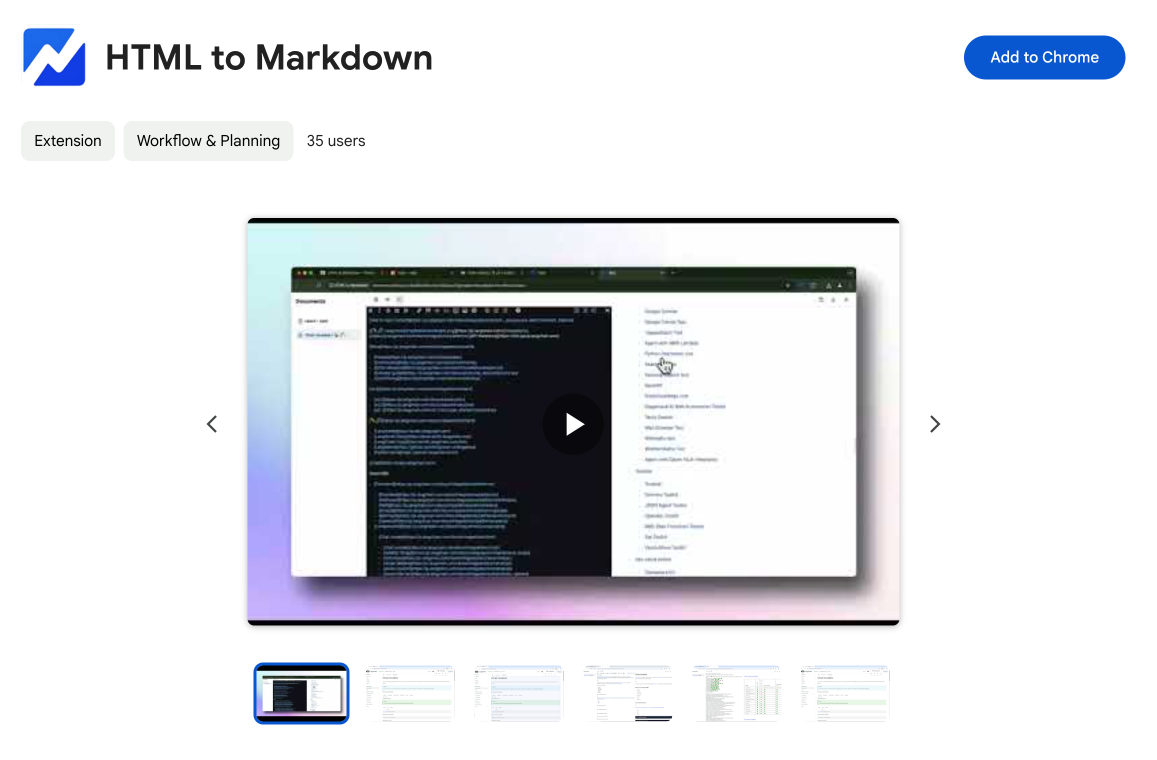
HTML to Markdown
Convert HTML to Markdown with ease, directly in your browser 📄
Dotallio
Personalized AI apps that automate research, data extraction, and content creation without code 🤖
Talk to Santa
Enjoy a magical live video chat or receive a unique AI-generated video greeting from Santa Claus 🎅
pozywka.pl
Scalable blog for food journalist, focused on performance and user experience 🌭
zagrodzki.me
Personal blog and portfolio of Bart Zagrodzki, where he shares his knowledge and work 💼
TurboStarter
Ship your startup everywhere. In minutes.
HTML to Markdown
Convert HTML to Markdown with ease, directly in your browser 📄
Dotallio
Personalized AI apps that automate research, data extraction, and content creation without code 🤖
Talk to Santa
Enjoy a magical live video chat or receive a unique AI-generated video greeting from Santa Claus 🎅
pozywka.pl
Scalable blog for food journalist, focused on performance and user experience 🌭
zagrodzki.me
Personal blog and portfolio of Bart Zagrodzki, where he shares his knowledge and work 💼
TurboStarter
Ship your startup everywhere. In minutes.
HTML to Markdown
Convert HTML to Markdown with ease, directly in your browser 📄
Dotallio
Personalized AI apps that automate research, data extraction, and content creation without code 🤖
Talk to Santa
Enjoy a magical live video chat or receive a unique AI-generated video greeting from Santa Claus 🎅
pozywka.pl
Scalable blog for food journalist, focused on performance and user experience 🌭
zagrodzki.me
Personal blog and portfolio of Bart Zagrodzki, where he shares his knowledge and work 💼
TurboStarter
Ship your startup everywhere. In minutes.
HTML to Markdown
Convert HTML to Markdown with ease, directly in your browser 📄
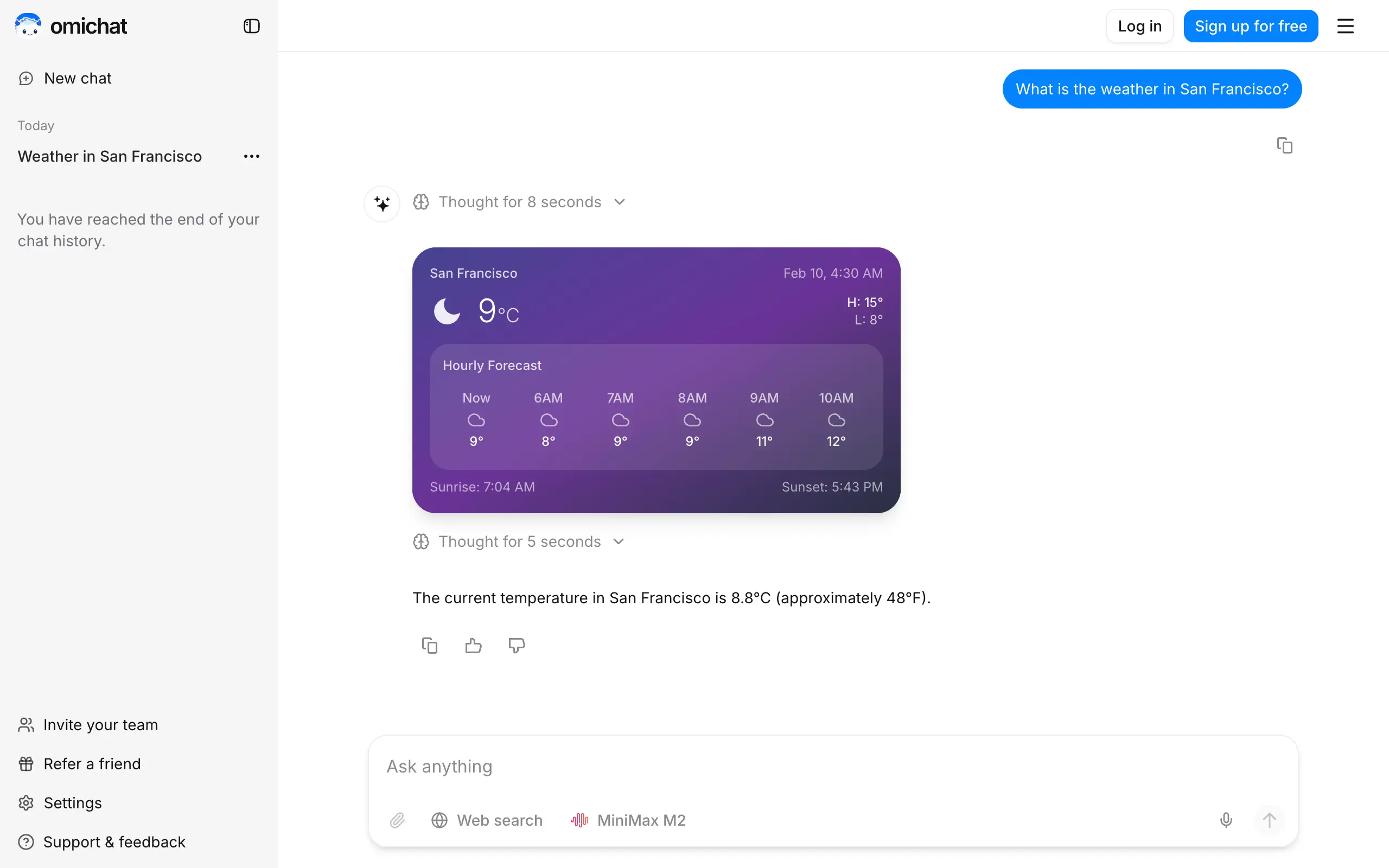
Omichat
Chat with 50+ AI models, including ChatGPT and Claude, in one place - switch models anytime without losing context 🤖
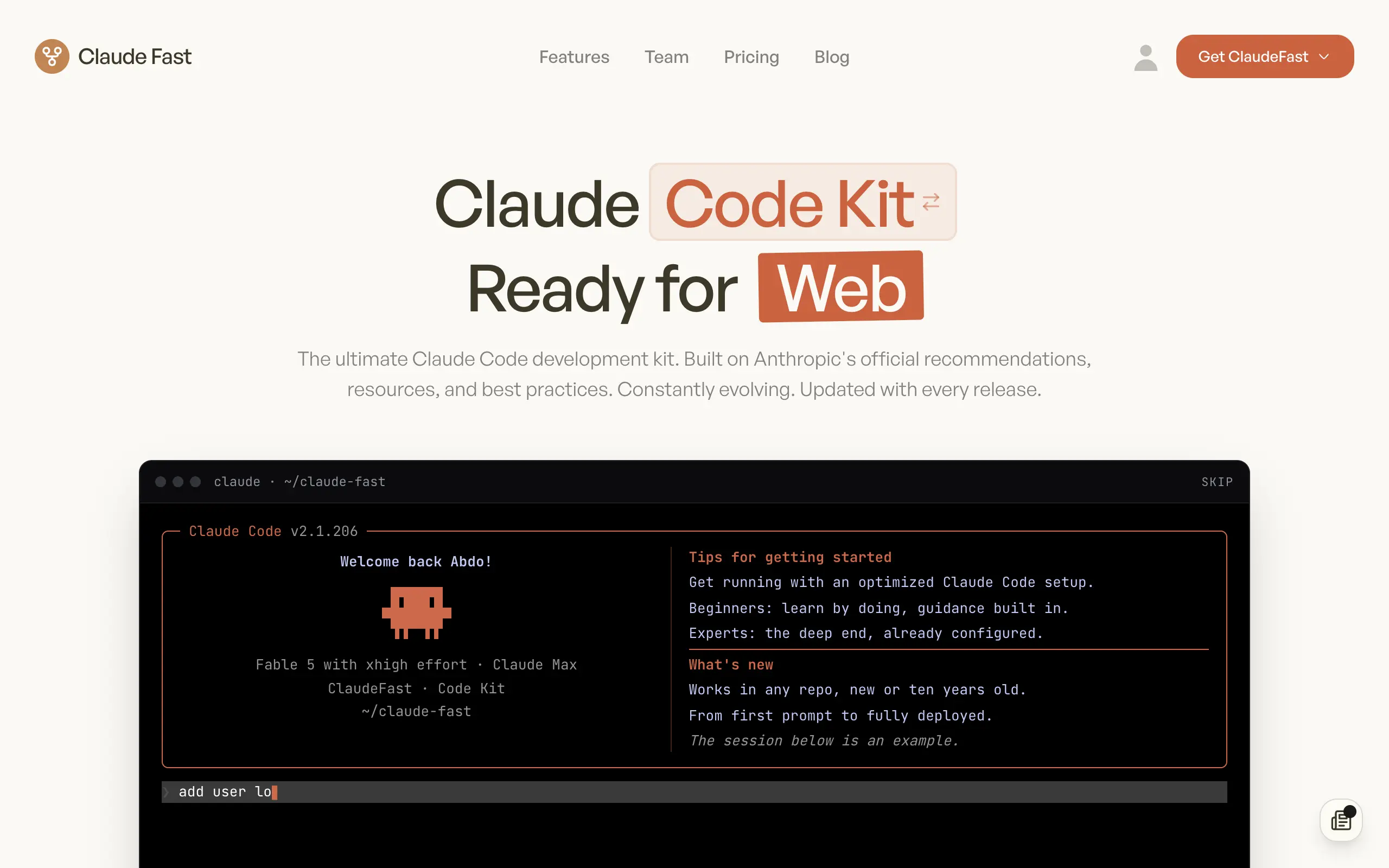
Claude Fast
Supercharge your Claude Code with 6x effective context window and specialized AI agents 🤖
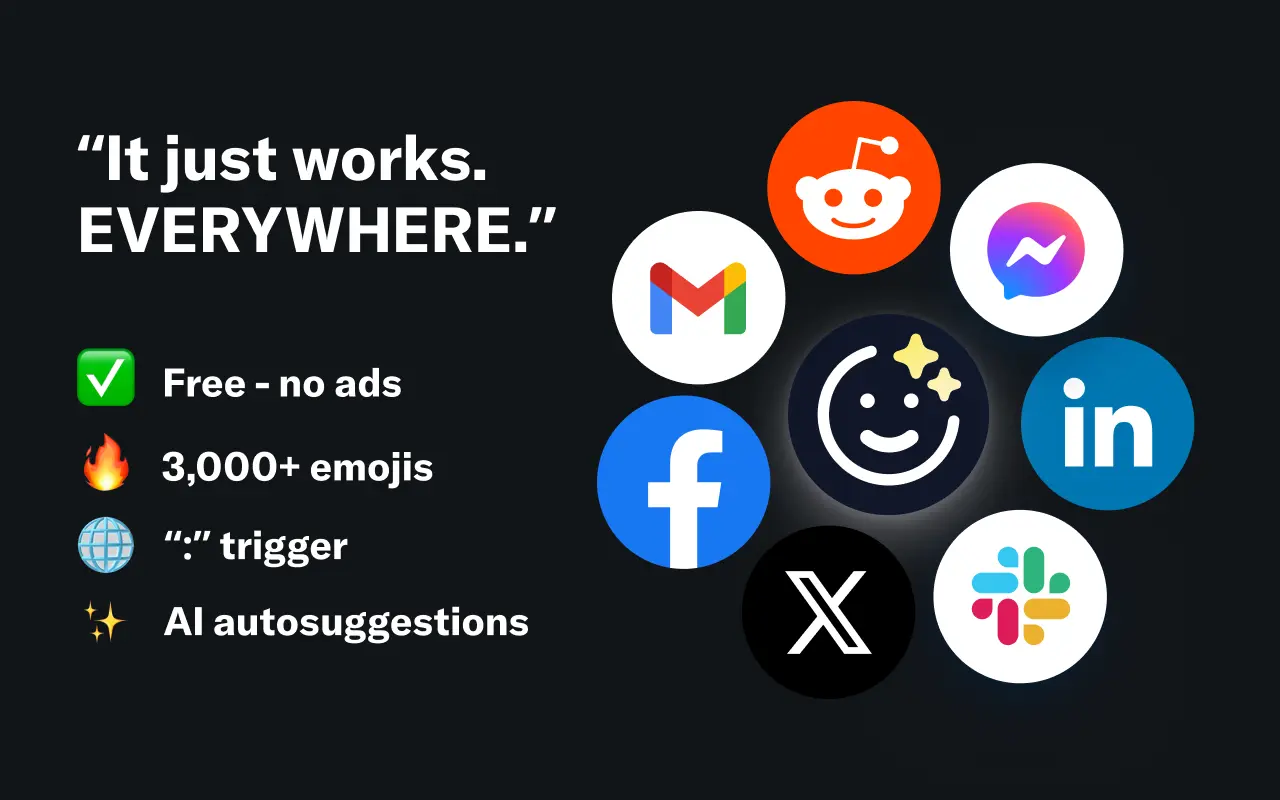
EmojAI
AI-powered emoji picker with smart, context-aware suggestions 🤖
Solohacker
Autonomous company launcher - AI agents work 24/7, escalate what matters, and you stay in control 🤖
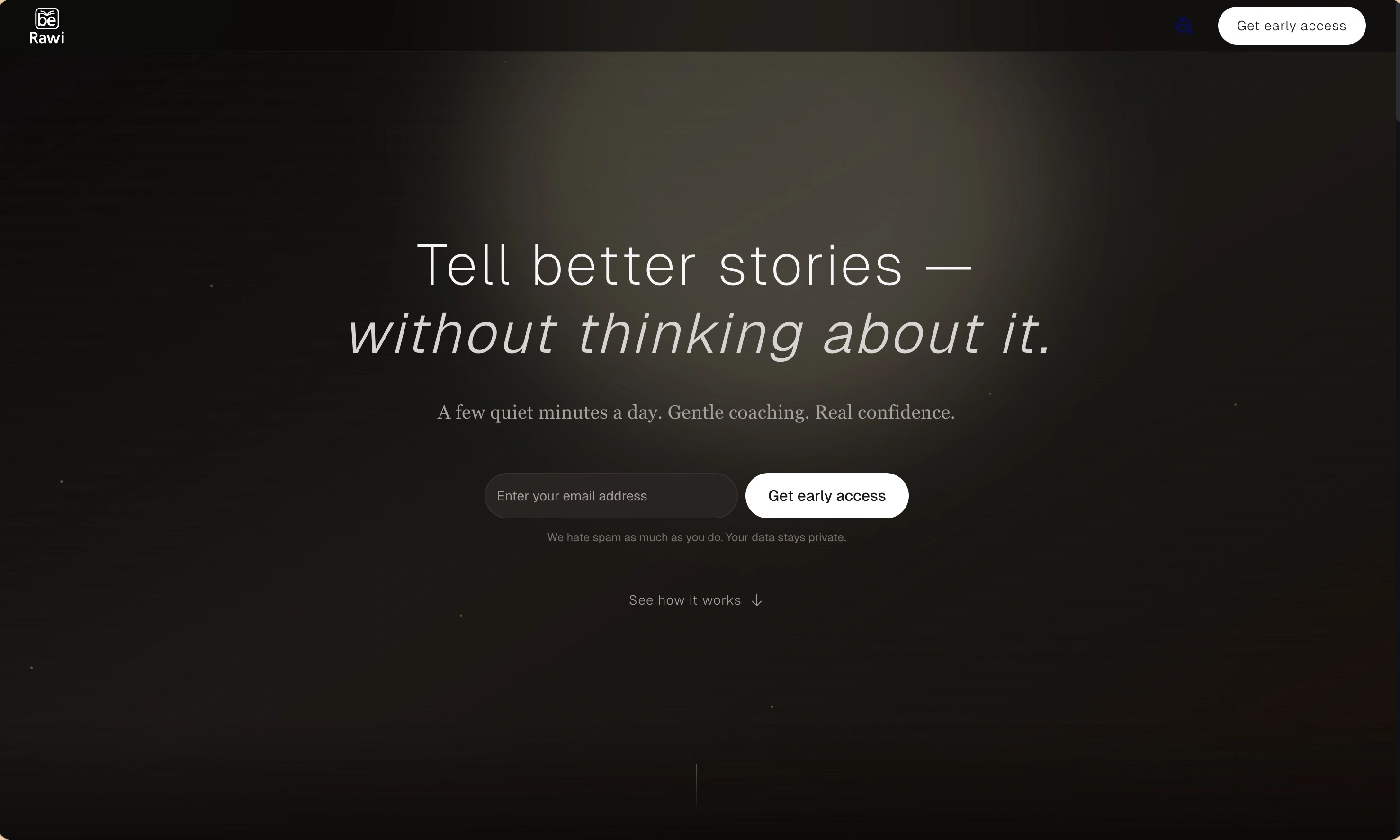
BeRawi: Storytelling Coach
Practice storytelling daily with instant feedback to sound clearer, more engaging, and confident 🎤
Omichat
Chat with 50+ AI models, including ChatGPT and Claude, in one place - switch models anytime without losing context 🤖
Claude Fast
Supercharge your Claude Code with 6x effective context window and specialized AI agents 🤖
EmojAI
AI-powered emoji picker with smart, context-aware suggestions 🤖
Solohacker
Autonomous company launcher - AI agents work 24/7, escalate what matters, and you stay in control 🤖
BeRawi: Storytelling Coach
Practice storytelling daily with instant feedback to sound clearer, more engaging, and confident 🎤
Omichat
Chat with 50+ AI models, including ChatGPT and Claude, in one place - switch models anytime without losing context 🤖
Claude Fast
Supercharge your Claude Code with 6x effective context window and specialized AI agents 🤖
EmojAI
AI-powered emoji picker with smart, context-aware suggestions 🤖
Solohacker
Autonomous company launcher - AI agents work 24/7, escalate what matters, and you stay in control 🤖
BeRawi: Storytelling Coach
Practice storytelling daily with instant feedback to sound clearer, more engaging, and confident 🎤
Omichat
Chat with 50+ AI models, including ChatGPT and Claude, in one place - switch models anytime without losing context 🤖
Claude Fast
Supercharge your Claude Code with 6x effective context window and specialized AI agents 🤖
EmojAI
AI-powered emoji picker with smart, context-aware suggestions 🤖
Solohacker
Autonomous company launcher - AI agents work 24/7, escalate what matters, and you stay in control 🤖
BeRawi: Storytelling Coach
Practice storytelling daily with instant feedback to sound clearer, more engaging, and confident 🎤

Connect with like-minded people
Join our community to get feedback, support, and grow together with 1,000+ builders on board, let's ship it!
Join usShip your startup everywhere. In minutes.
Don't burn tokens on setup and start building features on day one.