Socratic Sidekick
Talk through life dilemmas with AI philosophers who ask powerful questions, reveal assumptions, and help turn confusion into clear next steps.
Why an AI Socratic coach is a timely SaaS opportunity
People have more information, advice, content, and productivity tools than ever. What many still lack is a structured way to think through difficult decisions. A career move, relationship conflict, business idea, family obligation, or major purchase can create a kind of cognitive overload that generic advice rarely resolves.
Socratic Sidekick is an AI Socratic coach designed for that gap. Rather than immediately prescribing an answer, it uses guided questioning, reflective summaries, assumption testing, and practical next-step planning to help users move from vague confusion to informed action.
The product sits at the intersection of several growing behavior patterns:
- Consumers increasingly use conversational AI for personal reflection, planning, and decision support.
- Knowledge workers need better tools for navigating ambiguity, not merely completing tasks.
- Mental wellness products have normalized self-guided reflection, but many are built around mood tracking, meditation, or clinical-style support rather than decision clarity.
- Coaching remains valuable but expensive, difficult to schedule, and inaccessible for many people.
- Generic AI chat tools can be useful, but they often provide overly confident recommendations before fully understanding the user's context.
The core opportunity is not to build “another chatbot.” It is to create a decision-reflection system with a recognizable conversational method, appropriate safety boundaries, and a repeatable framework users can trust.
The core product promise
Socratic Sidekick should help users think more clearly without pretending to think for them. Its value comes from better questions, not louder answers.
An effective positioning statement could be:
Socratic Sidekick is an AI Socratic coach that helps people unpack life dilemmas, challenge hidden assumptions, clarify what matters, and leave every conversation with a practical next step.
This distinction is commercially important. Users are not simply purchasing access to an AI model. They are purchasing a guided experience that makes difficult reflection feel safer, clearer, and more useful.
The problem Socratic Sidekick solves
Most life dilemmas are not knowledge problems. They are trade-off problems.
A user deciding whether to change jobs may already know their salary, benefits, commute, prospects, and personal goals. Their real struggle is determining how to weigh those factors. A user navigating a relationship conflict may not need a list of communication tips. They may need to recognize an unspoken expectation, fear, or assumption shaping the conflict.
Traditional sources of support each have limits:
- Friends and family can be helpful but may bring bias, emotional investment, or limited availability.
- Search results tend to offer generalized advice without personal context.
- Therapists and coaches offer depth but require time, cost, and scheduling capacity.
- Journaling supports reflection but can be difficult when the person does not know what question to ask.
- General-purpose AI assistants may answer too quickly, agree too readily, or provide advice that sounds polished but does not fit the user's values.
An AI philosopher or AI Socratic coach can address this problem by applying a deliberate sequence:
- Understand the dilemma and the stakes.
- Separate facts from interpretations.
- Surface assumptions and missing information.
- Explore competing values and options.
- Challenge reasoning respectfully.
- Identify a small, reversible, concrete next action.
- Summarize the user's own emerging perspective.
This process gives users a durable mental model they can reuse beyond a single conversation.
Target audience for an AI Socratic coach
Socratic Sidekick should not initially attempt to serve every person with every type of personal problem. A narrow initial market improves onboarding, product language, prompt design, safety systems, and paid conversion.
The strongest initial audience is likely reflective, digitally fluent adults facing recurring decisions in work and life.
Primary audience: ambitious knowledge workers
The primary segment includes professionals, founders, managers, freelancers, and creative workers who experience frequent uncertainty around work, identity, priorities, and relationships.
Their common scenarios include:
- Considering a job change or promotion.
- Navigating burnout, workload, or boundaries.
- Choosing between financial security and meaningful work.
- Resolving founder disagreements or business direction questions.
- Preparing for difficult conversations with colleagues.
- Deciding whether an opportunity matches their long-term values.
- Breaking indecision loops around creative or entrepreneurial projects.
These users are accustomed to software subscriptions, understand the value of leverage, and may already use AI tools at work. They are especially likely to value a private, always-available thinking partner.
Secondary audience: students and early-career professionals
Students and early-career users face disproportionately high-stakes identity decisions with limited access to experienced mentors. They may use Socratic Sidekick for:
- Selecting a degree, course, internship, or career path.
- Preparing for interviews and major conversations.
- Evaluating competing life priorities.
- Building confidence in independent decision-making.
- Turning broad anxiety into specific questions and experiments.
This segment may be more price-sensitive, making it a strong fit for a free tier, educational discounts, or university partnerships later in the product lifecycle.
Third audience: coaches, educators, and facilitators
Professionals who guide others can use an AI Socratic coach as a between-session reflection tool. Rather than positioning the platform as a replacement for coaching, it can become a complement that helps clients arrive better prepared.
Potential professional use cases include:
- Coaches assigning reflection pathways between sessions.
- Therapists using non-clinical journaling summaries when appropriate and consented to.
- Managers preparing for difficult one-to-ones.
- Educators teaching critical thinking and reflective writing.
- Community leaders creating guided discussion prompts.
This segment has higher willingness to pay but requires additional privacy, workspace, administrative, and data-handling capabilities.
Audience jobs to be done
The most useful product strategy is built around jobs to be done rather than broad demographics.
Clarify a decision
Help me make sense of competing options without pressuring me toward a premature answer.
Prepare for a conversation
Help me identify what I really want to say, what I might be assuming, and what I need to ask.
Challenge my thinking
Help me examine my story without making me feel judged or dismissed.
Turn reflection into action
Help me leave with one realistic next step instead of another open-ended conversation.
Market gap: beyond advice bots and digital journaling
The AI reflection market has meaningful whitespace, but the category needs careful positioning. Users may compare Socratic Sidekick to ChatGPT, journaling apps, coaching marketplaces, meditation tools, and mental wellness chatbots. The product must make the difference obvious within minutes.
The market gap is a structured, values-aware, non-clinical AI decision coach that is built around inquiry before recommendation.
Generic AI chat interfaces are highly flexible, but flexibility can create an inconsistent user experience. One conversation may be thoughtful, while the next becomes a list of generic productivity tips. Socratic Sidekick can win by creating a consistent methodology and product structure around reflection.
| Approach | Primary value | Common limitation | Socratic Sidekick opportunity | User outcome |
|---|---|---|---|---|
| Generic AI chatbot | Fast, broad answers | May answer before understanding context | Use a repeatable questioning framework | More thoughtful decisions |
| Digital journal | Private self-expression | Requires users to direct themselves | Offer adaptive prompts and summaries | Clearer patterns and insights |
| Human coaching | Deep accountability | Cost and scheduling barriers | Provide daily reflection between sessions | More consistent practice |
| Mental wellness app | Stress reduction routines | Often not decision-specific | Focus on dilemmas, choices, and trade-offs | Actionable clarity |
The product should avoid claiming to replace therapy, medical care, legal counsel, financial advice, or human relationships. Trustworthy boundaries are not merely compliance requirements. They are part of the brand.
The product category should feel distinct
A compelling category definition could be:
Reflective decision intelligence
This phrase communicates that the platform is more than a journal, less clinical than therapy, and more intentional than a general chatbot. It also gives Socratic Sidekick room to expand into decision logs, values mapping, conversation preparation, team reflection, and coaching workflows.
The unique selling proposition is straightforward:
Socratic Sidekick turns open-ended AI conversation into a guided philosophy-inspired practice for clearer decisions, stronger self-awareness, and practical action.
Core features for Socratic Sidekick
The best early product is not an enormous set of AI features. It is a coherent flow that consistently delivers a useful emotional and practical outcome.
Guided dilemma intake
The first interaction should reduce the intimidation of an empty chat box. Instead of asking users to “tell me anything,” the platform can invite them to choose a reflection mode.
Helpful starting modes include:
- Career and work decisions.
- Relationship and communication dilemmas.
- Personal priorities and life direction.
- Founder and business decisions.
- Creative blocks and project choices.
- A difficult conversation I need to have.
- I am not sure what I am feeling.
The onboarding form should ask only for essential context:
- What decision or dilemma is on your mind?
- What makes this difficult right now?
- What options are you considering?
- What would a useful outcome from this reflection look like?
A user should be able to skip questions and begin quickly. Friction is especially costly when someone is emotionally overwhelmed or uncertain.
A configurable Socratic questioning engine
The conversation engine is the heart of the SaaS. It should do more than ask random “why” questions. Repetitive questioning can feel robotic, confrontational, or exhausting.
A high-quality AI Socratic coach needs a framework with several moves:
- Clarification identifies what the user means and what is materially happening.
- Evidence examination distinguishes observation from prediction, memory, or belief.
- Assumption discovery identifies unstated premises driving the dilemma.
- Perspective expansion considers another person's likely viewpoint or an alternative interpretation.
- Values clarification reveals what the user is trying to protect, achieve, or avoid.
- Trade-off analysis acknowledges that many hard decisions have real costs.
- Action design converts insight into a specific next experiment, question, or conversation.
The system should adjust its mode based on user preference. Some users want gentle emotional validation before analysis. Others want direct intellectual challenge. A simple setting such as “gentle,” “balanced,” or “challenging” gives users agency over the interaction style.
Philosopher-inspired conversation modes
The “AI philosophers” concept can create a memorable brand without misrepresenting historical figures. Rather than claiming that a philosopher would literally speak exactly as they did, use transparent, inspired-by frameworks.
For example:
Uses clarifying questions, definitions, evidence checks, and assumption testing. This is the default mode for users who want to understand their reasoning more clearly.
Separates what the user can control from what they cannot, then redirects attention toward values-consistent action. This works well for anxiety around uncertain outcomes.
Explores character, practical wisdom, habits, and the balanced response between unhelpful extremes. This is useful for recurring behavior patterns.
Explores freedom, responsibility, authenticity, and meaning. This mode can help users facing identity, purpose, and life-direction questions.
Focuses on workable experiments, observable outcomes, and learning through action. This is useful when a user is stuck in analysis paralysis.
Each mode should include a plain-language explanation. The product should never make users feel they need a philosophy degree to benefit.
Assumption and cognitive pattern detection
One of the strongest premium features is the ability to turn a long conversation into a structured “thinking map.” After a session, Socratic Sidekick could highlight:
- Facts the user reported.
- Interpretations that may need verification.
- Core assumptions.
- Competing values.
- Risks the user is focused on.
- Missing information.
- Possible experiments.
- Questions worth asking another person.
This feature should use cautious language. Instead of saying “Your belief is irrational,” the system can say, “One assumption that may be worth testing is that declining this opportunity would permanently damage your career.”
That wording preserves user dignity and prevents the AI from presenting subjective interpretations as facts.
Reflection summaries and decision records
Users need value after the conversation ends. A session summary creates both retention and trust.
Each summary can include:
- The dilemma in the user's own words.
- The options currently available.
- The values that appear most relevant.
- The central tension.
- Assumptions to verify.
- A decision criterion or principle.
- The next smallest action.
- A suggested date to revisit the decision.
Over time, a private decision journal can help users identify patterns. For example, they may notice that they consistently overvalue short-term certainty, avoid asking for support, or postpone choices until options disappear.
This longitudinal insight is a meaningful differentiator, but it must be privacy-first. Users should have clear controls to edit, export, or permanently delete records.
Conversation rehearsal
A practical extension is a conversation preparation workflow. The user selects a context, explains the situation, identifies their desired outcome, and rehearses the conversation with the AI.
Useful scenarios include:
- Asking for a raise.
- Giving difficult feedback.
- Setting a personal boundary.
- Apologizing after a conflict.
- Discussing a business disagreement.
- Telling a manager about burnout.
- Explaining a major life decision to family.
The AI can role-play the other person, then debrief the conversation through questions such as, “What response made you defensive?” or “What did you avoid saying directly?”
Safety routing and clear limits
A responsible AI reflection platform needs safety features from the first release. It must recognize when a user may be in immediate danger, discussing self-harm, experiencing abuse, or seeking emergency guidance.
The product should:
- Detect high-risk language and interrupt normal conversational flow when needed.
- Encourage users to contact local emergency services or crisis resources where appropriate.
- Avoid diagnosing mental health conditions.
- Avoid coercive, shaming, or overly certain advice.
- Make it clear that Socratic Sidekick is not a substitute for licensed professional support.
- Provide an easy way for users to report harmful or inaccurate outputs.
For U.S.-specific crisis routing, the platform may reference the 988 Suicide & Crisis Lifeline, but geographic assumptions should be handled carefully. A global product needs localization and region-specific safety resources.
Safety is part of the user experience
Do not treat crisis handling as a hidden moderation layer. Explain the product boundaries in onboarding, make help pathways visible, and test them continuously with qualified safety reviewers.
Designing an AI philosopher experience users trust
Trust is especially important when a user shares private thoughts. The product experience must feel reflective without becoming manipulative, overly familiar, or falsely authoritative.
Principles for high-quality AI reflection
A trustworthy AI Socratic coach should follow several interaction principles:
- Ask permission before challenging a sensitive belief.
- Reflect the user's language without parroting it.
- Separate possibilities from conclusions.
- Acknowledge uncertainty.
- Avoid excessive flattery and automatic agreement.
- Encourage real-world information gathering when assumptions are testable.
- Leave choice and agency with the user.
- Offer concise summaries users can correct.
A useful conversational pattern is:
Validate the difficulty, clarify the situation, inspect the reasoning, explore alternatives, and identify a user-owned next step.
The AI should not sound like a lecturer. It should be calm, curious, concise, and occasionally direct when the user explicitly asks for challenge.
Personalization without invasive data collection
Personalization can improve quality, but this product should practice data minimization. Users do not need to provide a complete personal profile before receiving value.
A reasonable profile may include:
- Preferred conversation style.
- Current life areas they want to work on.
- Personal values they have explicitly chosen to save.
- Typical reflection cadence.
- Whether they prefer summaries, action plans, or open-ended inquiry.
Sensitive memories should be opt-in. If memory is enabled, the interface should show what has been saved and let users remove items individually.
Recommended tech stack for an AI Socratic coach SaaS
Socratic Sidekick needs a stack that supports fast iteration, secure authentication, streaming AI responses, structured conversation state, payment subscriptions, and privacy-aware data management.
For a founder or lean product team, a TypeScript-first architecture offers excellent speed and maintainability.
Frontend and application framework
Next.js is a strong choice because it supports server-rendered pages, route handlers, streaming experiences, authentication integrations, and SEO-friendly marketing pages in one application.
Use React for the interface and Tailwind CSS for a consistent design system. Tailwind is particularly effective for rapid iteration, but teams should establish reusable components and design tokens early to prevent class-heavy UI code from becoming difficult to maintain.
Recommended frontend capabilities include:
- Streaming chat responses.
- A persistent conversation sidebar.
- Markdown-safe AI output rendering.
- Session summaries and editable decision maps.
- Keyboard-first interaction for reflective writing.
- Accessible color contrast, focus states, and screen-reader labels.
- Mobile support for quick check-ins and emotional moments.
Backend, data, and authentication
A practical initial architecture can include:
- Next.js server-side routes for application logic.
- PostgreSQL for durable relational data.
- Prisma for type-safe database access.
- Supabase or a managed Postgres provider for fast deployment.
- Auth.js for authentication workflows.
- Stripe for subscriptions, billing portal access, invoices, and payment recovery.
PostgreSQL is preferable to a document-only database for core product records because conversations, summaries, users, plans, permissions, and audit events have meaningful relationships. A vector search layer can be added later if users explicitly opt into long-term semantic memory.
AI orchestration and model strategy
The AI layer should be designed as an orchestration problem, not just a single prompt. It needs consistent behavior, reliable structured output, evaluation, safety controls, and the ability to evolve models over time.
A robust architecture includes:
- A model gateway that abstracts provider-specific APIs.
- System prompts that define boundaries and conversation style.
- Structured outputs for summaries, assumptions, values, and next steps.
- Moderation and risk classification before and during responses.
- Retrieval only for user-approved memories or curated philosophical content.
- Logging that excludes or redacts sensitive content where possible.
- An evaluation suite based on realistic user dilemmas.
Use model routing where it has clear benefits. A fast, lower-cost model can classify intent, generate titles, or propose session tags. A more capable model can handle nuanced reflective dialogue. This reduces inference costs without compromising the highest-value interaction.
A simplified structured summary schema might look like this:
type ReflectionSummary = {
  dilemma: string;
  facts: string[];
  assumptionsToTest: string[];
  valuesInTension: string[];
  options: string[];
  nextStep: {
    action: string;
    timeframe: string;
    successSignal: string;
  };
  safetyFlag: "none" | "review" | "urgent";
};
The trade-off is that structured outputs can make a nuanced conversation feel overly rigid. The solution is to keep the live conversation human and fluid while using structure for optional summaries, user controls, and internal quality checks.
Security and privacy architecture
Because users may share sensitive personal information, privacy cannot be deferred.
Minimum safeguards should include:
- Encryption in transit and at rest.
- Role-based access controls for internal administration.
- Separate production and development environments.
- Data retention rules that are documented and enforced.
- User-driven export and deletion controls.
- Audit logs for privileged staff access.
- Secret management rather than environment variables shared casually across teams.
- Regular dependency updates and security reviews.
- A clear policy for whether user conversations are used to improve models.
If the product processes data from European users, the team should obtain specialist legal advice on applicable privacy obligations. If it later enters health-adjacent enterprise use cases, it should seek expert counsel before making any compliance claims.
Monetization strategy for Socratic Sidekick
The best monetization approach is likely a freemium subscription model with carefully designed limits. Users need enough free value to experience a genuine moment of clarity, but paid plans should unlock continuity, personalization, and depth.
Recommended pricing structure
A simple initial model could include the following tiers.
- "Free plan" gives users a limited number of guided reflections each month, basic summaries, and selected conversation modes.
- "Plus plan" provides unlimited or high-volume conversations, full philosopher-inspired modes, saved decision records, personalized follow-ups, and conversation rehearsal.
- "Pro plan" adds advanced decision maps, exports, custom reflection templates, priority model access, and deeper longitudinal insights.
- "Coach or team plan" provides client workspaces, guided exercises, administrative controls, and aggregate insights that preserve individual privacy.
The precise price should be validated through user interviews and willingness-to-pay tests rather than guessed. A reflective tool often has strong perceived value when it solves a meaningful recurring problem, but users may resist paying if the product feels indistinguishable from a general AI subscription.
Value metrics that support retention
Avoid tying the product entirely to raw message volume. This can encourage superficial chatting rather than meaningful outcomes.
Better value metrics include:
- Guided reflection sessions completed.
- Decision records saved.
- Conversation rehearsals.
- Personalized review cycles.
- Reflection paths or frameworks unlocked.
- Monthly check-ins tied to prior goals.
Retention improves when the product creates a helpful loop:
- A user brings a difficult issue.
- The AI helps them clarify it.
- The user chooses a next action.
- Socratic Sidekick checks in later.
- The user learns from the outcome.
- The next dilemma begins with more self-knowledge.
This loop creates a durable product habit while reinforcing that the AI is a tool for agency, not dependency.
Competitive advantage analysis
Socratic Sidekick can develop defensibility through product quality and accumulated user trust, not through access to a foundation model alone.
The moat is the reflective system
The strongest competitive advantages are likely to be:
- A distinctive Socratic conversation methodology.
- High-quality evaluation data for reflective dialogue.
- Strong safety design for sensitive life dilemmas.
- User-owned decision histories and pattern insights.
- A polished experience that feels calmer and more purposeful than general AI chat.
- Personalization based on consented values, goals, and prior reflections.
- Specialized workflows for conversation rehearsal and action follow-through.
The key is that the product should not merely ask questions. It should ask the right kind of question at the right moment, then make the insight usable.
Why general AI platforms are not the whole answer
General AI platforms have broad capabilities and large distribution. Socratic Sidekick should not compete by claiming it has a smarter model. It should compete by being more intentional.
A general chatbot begins as a blank page. Socratic Sidekick begins with:
- A clear emotional promise.
- Purpose-built reflection pathways.
- Predictable interaction quality.
- Domain-specific safety boundaries.
- A clear record of what the user learned.
- Follow-up that ties reflection to real behavior.
That focus can create a brand users remember when they face uncertainty.
Key risks and practical mitigation
Every AI SaaS in a sensitive domain needs to identify where product ambition can create harm, legal exposure, or disappointing user experiences.
Risk: users mistake the product for therapy or professional advice
Mitigation should include prominent boundaries, safety-aware prompts, crisis escalation pathways, and language that avoids diagnosis or treatment claims. The product can be emotionally supportive without presenting itself as clinical care.
Risk: overconfident or harmful AI responses
Mitigation requires layered safeguards. Use strong system instructions, moderation, risk classifiers, human-reviewed test cases, continuous monitoring, and an interface that makes uncertainty visible. For particularly sensitive topics, switch from open advice to safer reflection and referral language.
Risk: repetitive questions reduce perceived intelligence
Mitigation requires conversation-state tracking. The system should know what it has already asked, vary question types, summarize before moving on, and let users choose whether to go deeper or shift toward action.
Risk: privacy concerns prevent adoption
Mitigation starts with plain-language privacy communication. Give users meaningful choices about saved memory, model training, retention, deletion, and export. Privacy controls should be easy to find, not hidden in legal pages.
Risk: users become dependent on the AI
Mitigation involves designing for autonomy. The product should repeatedly return ownership to the user, encourage real-world conversations and evidence gathering, and frame itself as a thinking aid rather than an authority.
Risk: high model costs undermine margins
Mitigation options include model routing, response-length controls, caching non-sensitive framework content, subscription limits, asynchronous summaries, and focused user flows that prevent endless low-value chat.
Risk: philosophy branding feels gimmicky
Mitigation is to use philosophy as a practical framework, not costume. Keep language modern, explain every mode in plain English, and prioritize useful outcomes over theatrical role-play.
How to validate the SaaS idea before building everything
Before investing deeply in AI infrastructure, validate whether users want this specific kind of support and which outcomes they will pay for.
Run structured discovery interviews
Interview 20 to 30 people in the initial target segment. Focus on recent decisions, not hypothetical opinions.
Ask questions such as:
- Tell me about the last decision you found difficult.
- What did you do to work through it?
- What felt missing from the support you received?
- Have you used AI, journaling, coaching, or therapy for reflection?
- What would make an AI thinking partner feel useful or unsafe?
- Would you pay for clearer decision-making support? Why or why not?
- What outcome would justify a subscription?
Look for repeated language. If participants consistently say “I need help organizing my thoughts,” “I want someone to challenge me,” or “I need to know what to do next,” that language should shape landing pages and onboarding.
Test the method manually
A useful pre-MVP test is a concierge experience. Create a simple landing page, invite early users, and run guided sessions through an existing AI interface with a carefully designed facilitation script.
Track:
- Whether users complete the session.
- Whether they identify a next action.
- Whether they return within a week.
- Whether they describe the experience as meaningfully different from generic AI.
- Whether they ask to save, revisit, or share their summaries.
This reveals product value before expensive engineering.
Define success metrics that measure outcomes
Vanity metrics such as messages sent are not enough. The early dashboard should include:
- Activation rate for users who finish a first guided reflection.
- Percentage of sessions ending with a user-selected next step.
- Seven-day and 30-day retained users.
- Repeat reflection rate.
- User-rated clarity before and after a session.
- Safety intervention rate and false-positive review rate.
- Trial-to-paid conversion.
- Cost per successful reflection session.
For credibility, publish methodology when sharing outcome claims. If Socratic Sidekick reports that users feel clearer after a session, describe the survey question, sample size, timeframe, and limitations. This supports E-E-A-T and avoids exaggerated marketing.
An actionable implementation roadmap
A disciplined roadmap prevents the team from building every philosopher mode, enterprise feature, and advanced memory system before confirming core value.
For founders who want to move from validation to a production-ready subscription application faster, TurboStarter can reduce setup work around common SaaS foundations such as authentication, billing, application structure, and deployment workflows.
Final perspective on building Socratic Sidekick
Socratic Sidekick has the potential to become more than an AI chat product. Its strongest form is a trusted reflective practice that helps users make sense of difficult choices while preserving their autonomy.
The winning product will not be the one that sounds most philosophical. It will be the one that consistently helps a user say:
I understand what is actually bothering me, I can see the assumption I was making, and I know what I can do next.
That is a meaningful and defensible outcome. By combining a carefully designed AI Socratic coaching method, privacy-first product decisions, practical safety boundaries, and an action-oriented user experience, Socratic Sidekick can occupy a valuable position between generic AI assistance and expensive one-to-one support.
The most important early decision is to stay focused. Prove that one user segment can reliably gain clarity from one structured reflection flow. Then expand the framework, personalization, and business model around the moments users already trust the product to handle.
More 🤖 AI Startup SaaS ideas
Discover more innovative ai startup SaaS ideas that are trending in 2026. Each idea is AI-generated with market validation and growth potential to help you find your next profitable venture faster than competitors.
Your competitors are building with TurboStarter
Below are some of the SaaS ideas that have been generated and built with our starter kit.
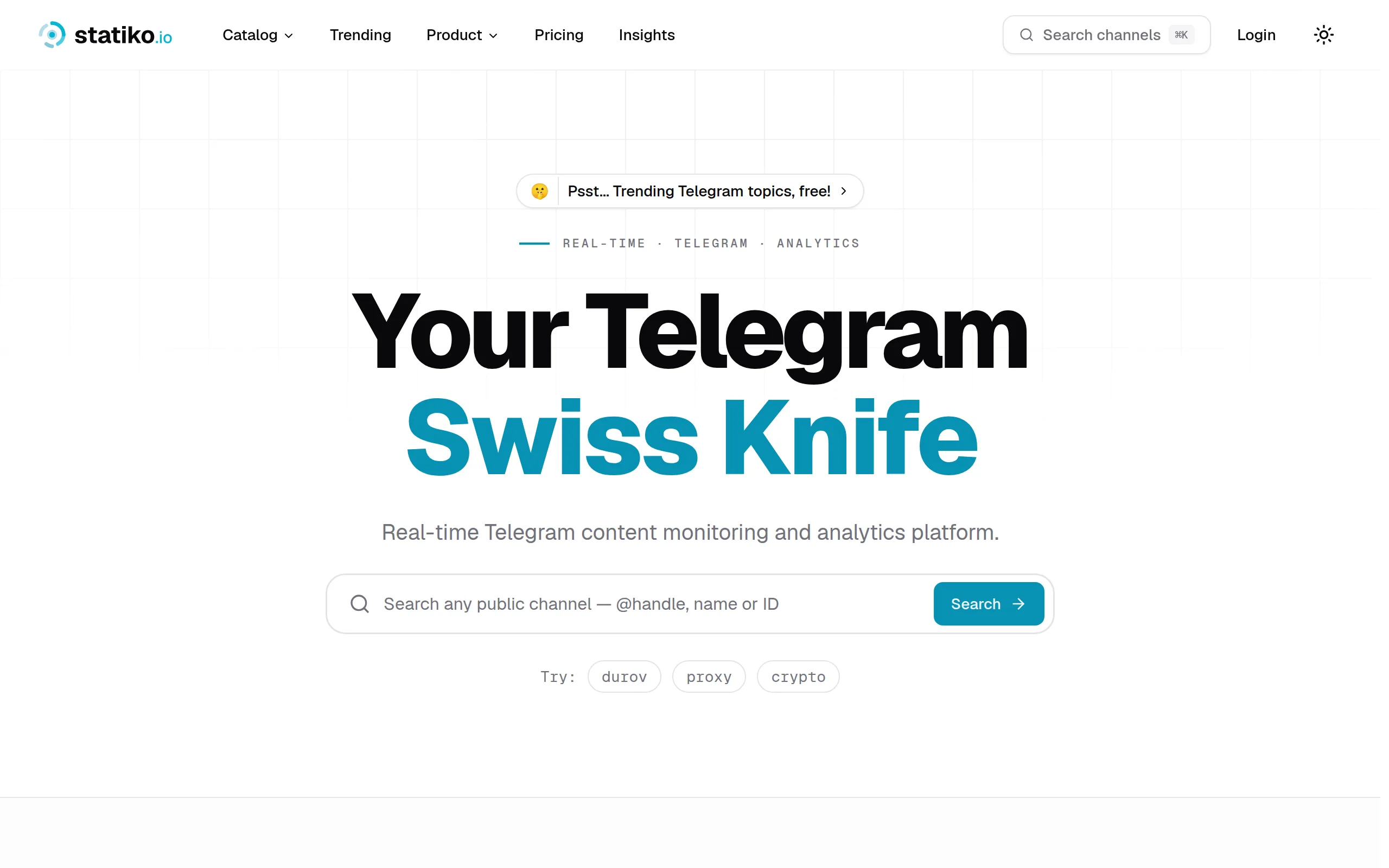
Statiko
Monitor any Telegram channel in real time - track posts, edits, deletions, and growth with AI recaps 📡

Shibui
AI website builder - describe your business, pick a niche template, edit by chatting, and publish instantly ✨

Pro Service
Find verified home service professionals, compare quotes, and pay securely through escrow - built for Brazilians across the US 🏠
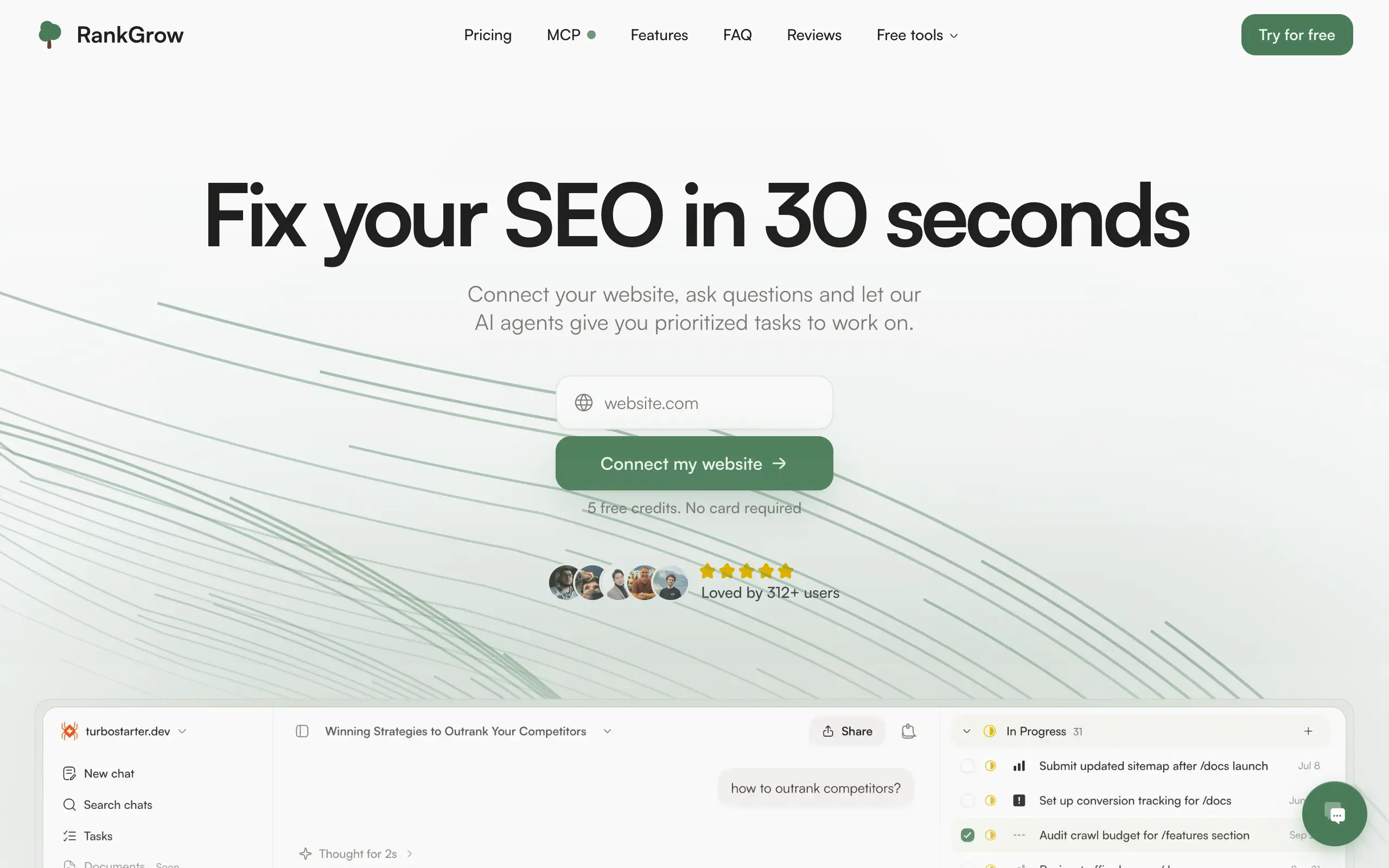
RankGrow
Fix your SEO with AI agents - connect Search Console, get prioritized tasks, and grow organic traffic 📈
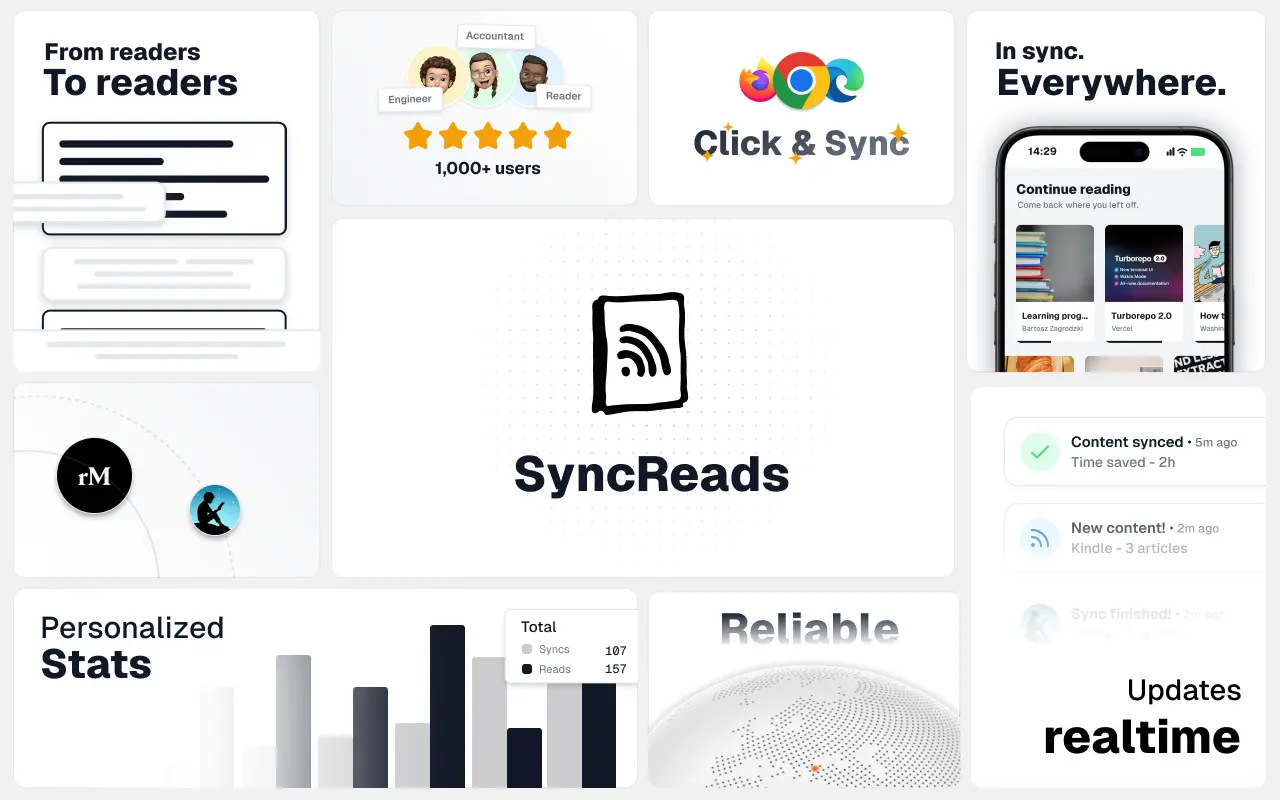
SyncReads
Sync your favorite content for distraction-free reading, save time and replace multiple apps. Anytime, anywhere 🔄
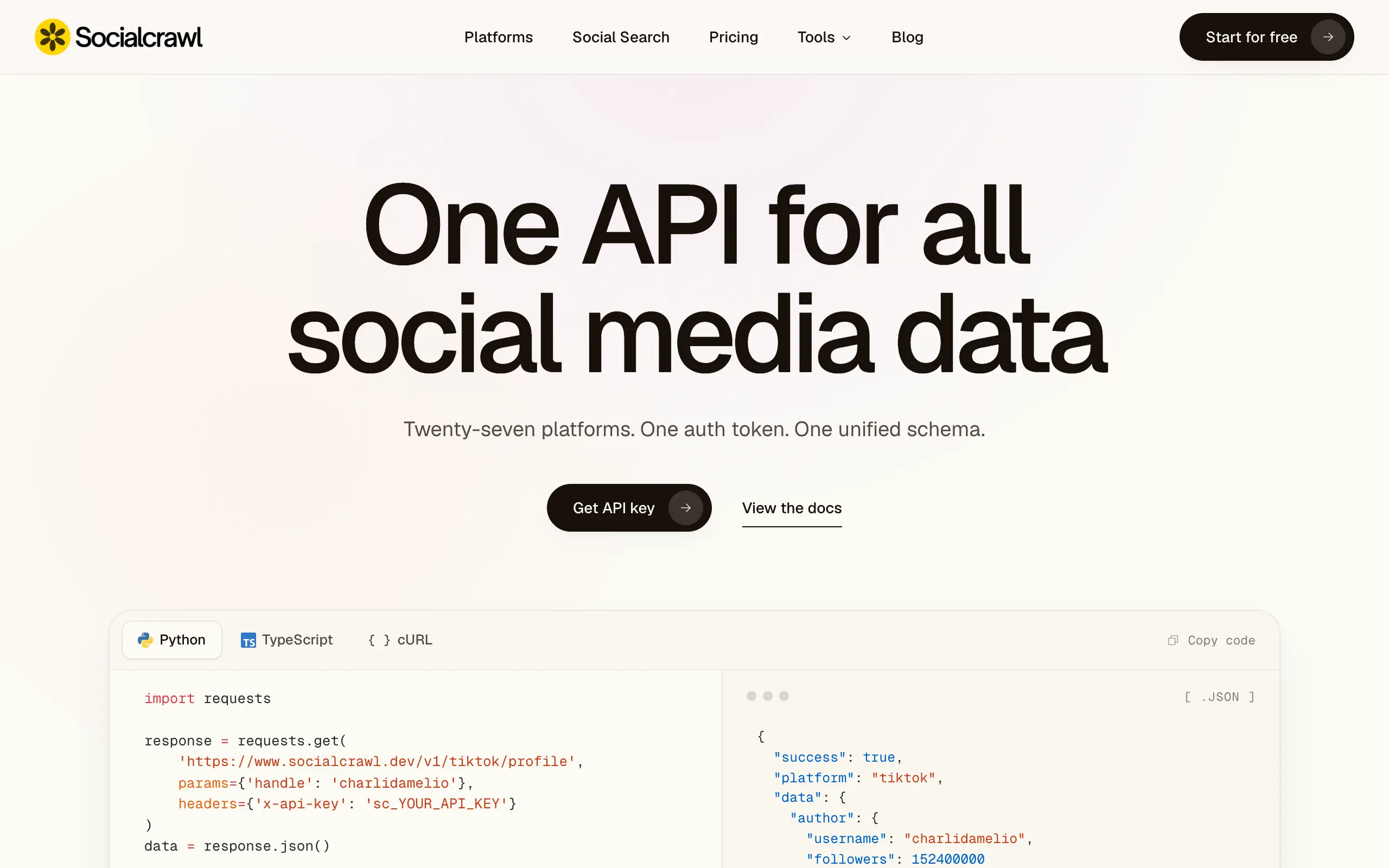
Socialcrawl
Get clean, structured data from 21 platforms like TikTok, Instagram, and YouTube with a single request 📊
Statiko
Monitor any Telegram channel in real time - track posts, edits, deletions, and growth with AI recaps 📡
Shibui
AI website builder - describe your business, pick a niche template, edit by chatting, and publish instantly ✨
Pro Service
Find verified home service professionals, compare quotes, and pay securely through escrow - built for Brazilians across the US 🏠
RankGrow
Fix your SEO with AI agents - connect Search Console, get prioritized tasks, and grow organic traffic 📈
SyncReads
Sync your favorite content for distraction-free reading, save time and replace multiple apps. Anytime, anywhere 🔄
Socialcrawl
Get clean, structured data from 21 platforms like TikTok, Instagram, and YouTube with a single request 📊
Statiko
Monitor any Telegram channel in real time - track posts, edits, deletions, and growth with AI recaps 📡
Shibui
AI website builder - describe your business, pick a niche template, edit by chatting, and publish instantly ✨
Pro Service
Find verified home service professionals, compare quotes, and pay securely through escrow - built for Brazilians across the US 🏠
RankGrow
Fix your SEO with AI agents - connect Search Console, get prioritized tasks, and grow organic traffic 📈
SyncReads
Sync your favorite content for distraction-free reading, save time and replace multiple apps. Anytime, anywhere 🔄
Socialcrawl
Get clean, structured data from 21 platforms like TikTok, Instagram, and YouTube with a single request 📊
Statiko
Monitor any Telegram channel in real time - track posts, edits, deletions, and growth with AI recaps 📡
Shibui
AI website builder - describe your business, pick a niche template, edit by chatting, and publish instantly ✨
Pro Service
Find verified home service professionals, compare quotes, and pay securely through escrow - built for Brazilians across the US 🏠
RankGrow
Fix your SEO with AI agents - connect Search Console, get prioritized tasks, and grow organic traffic 📈
SyncReads
Sync your favorite content for distraction-free reading, save time and replace multiple apps. Anytime, anywhere 🔄
Socialcrawl
Get clean, structured data from 21 platforms like TikTok, Instagram, and YouTube with a single request 📊
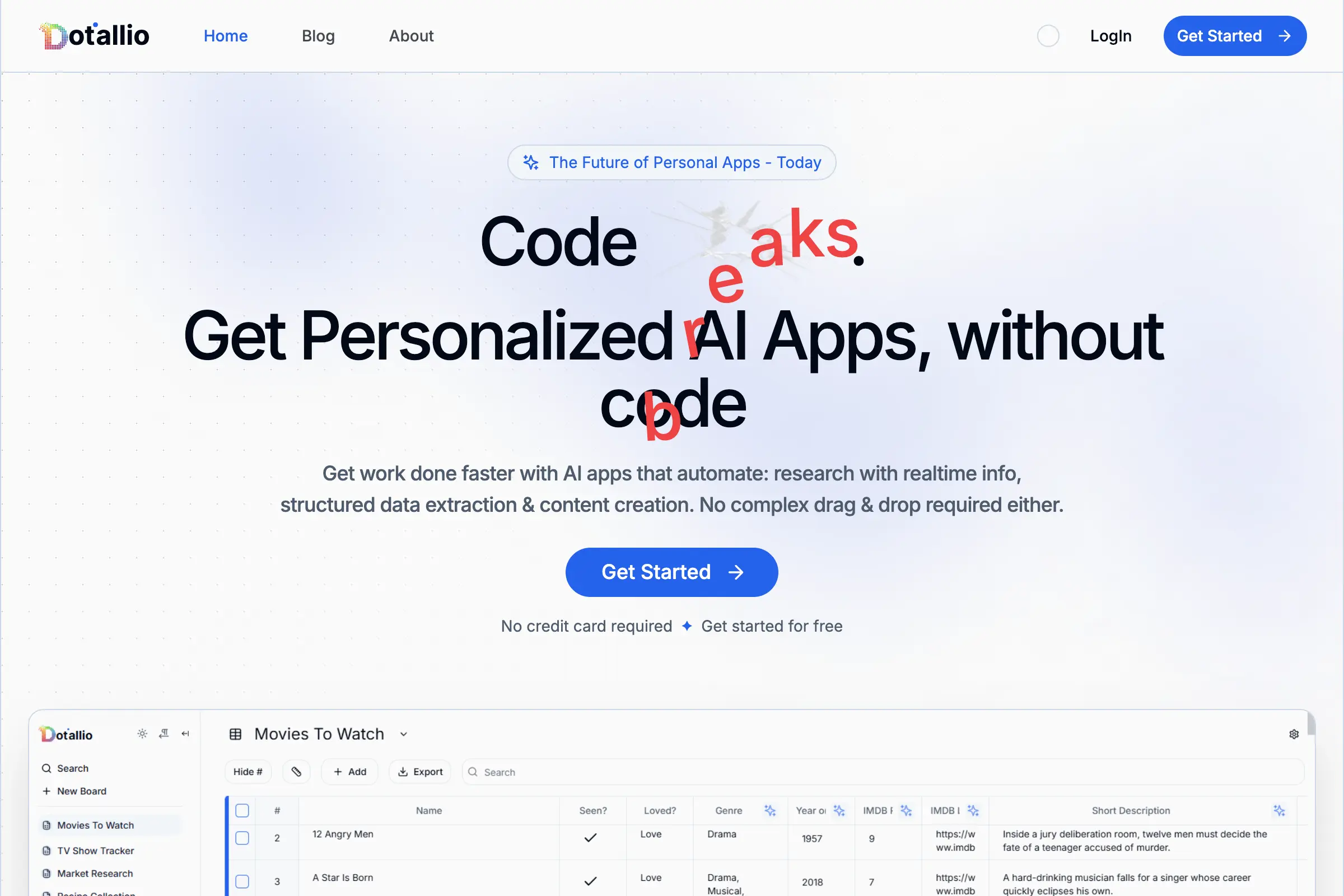
Dotallio
Personalized AI apps that automate research, data extraction, and content creation without code 🤖
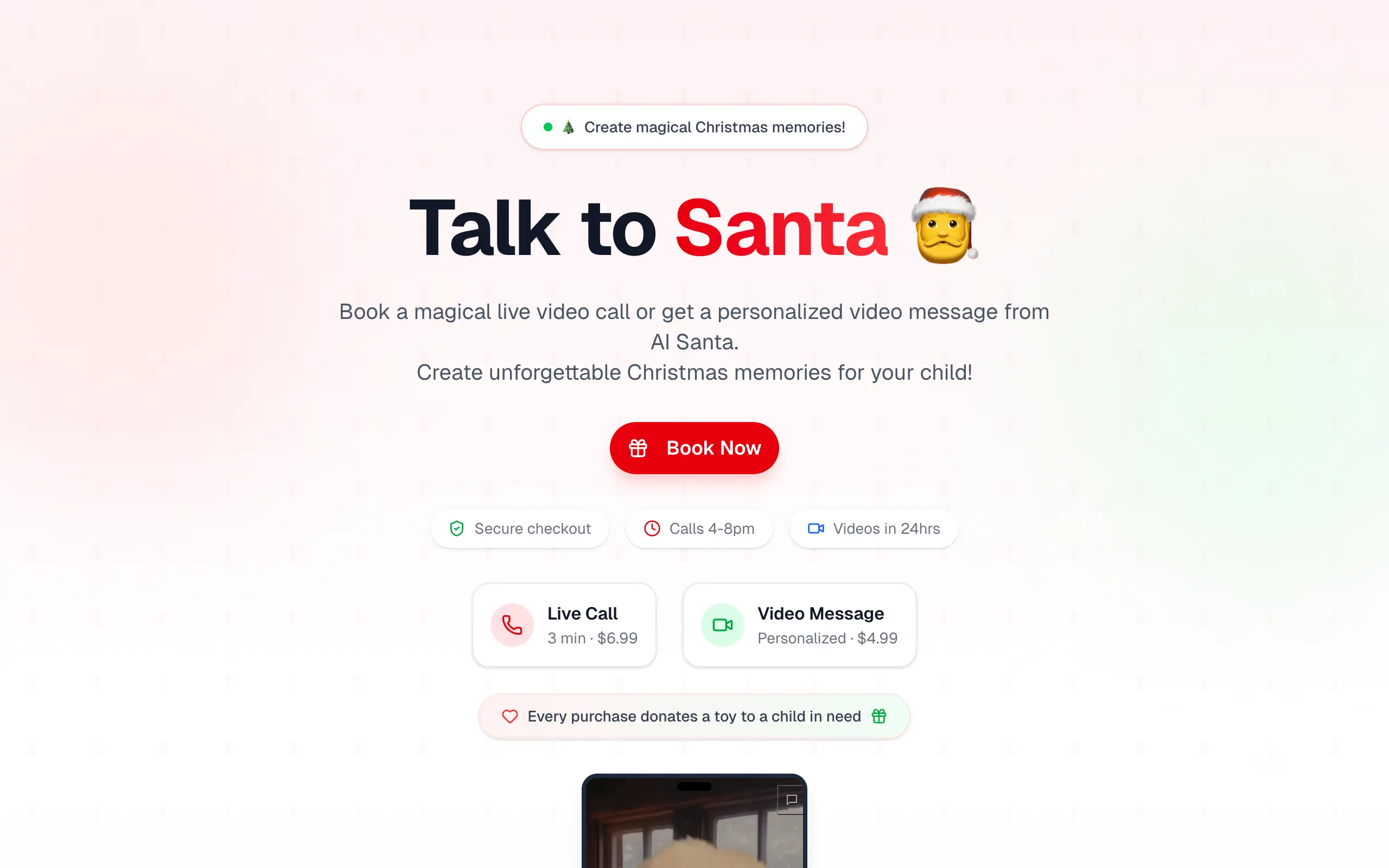
Talk to Santa
Enjoy a magical live video chat or receive a unique AI-generated video greeting from Santa Claus 🎅
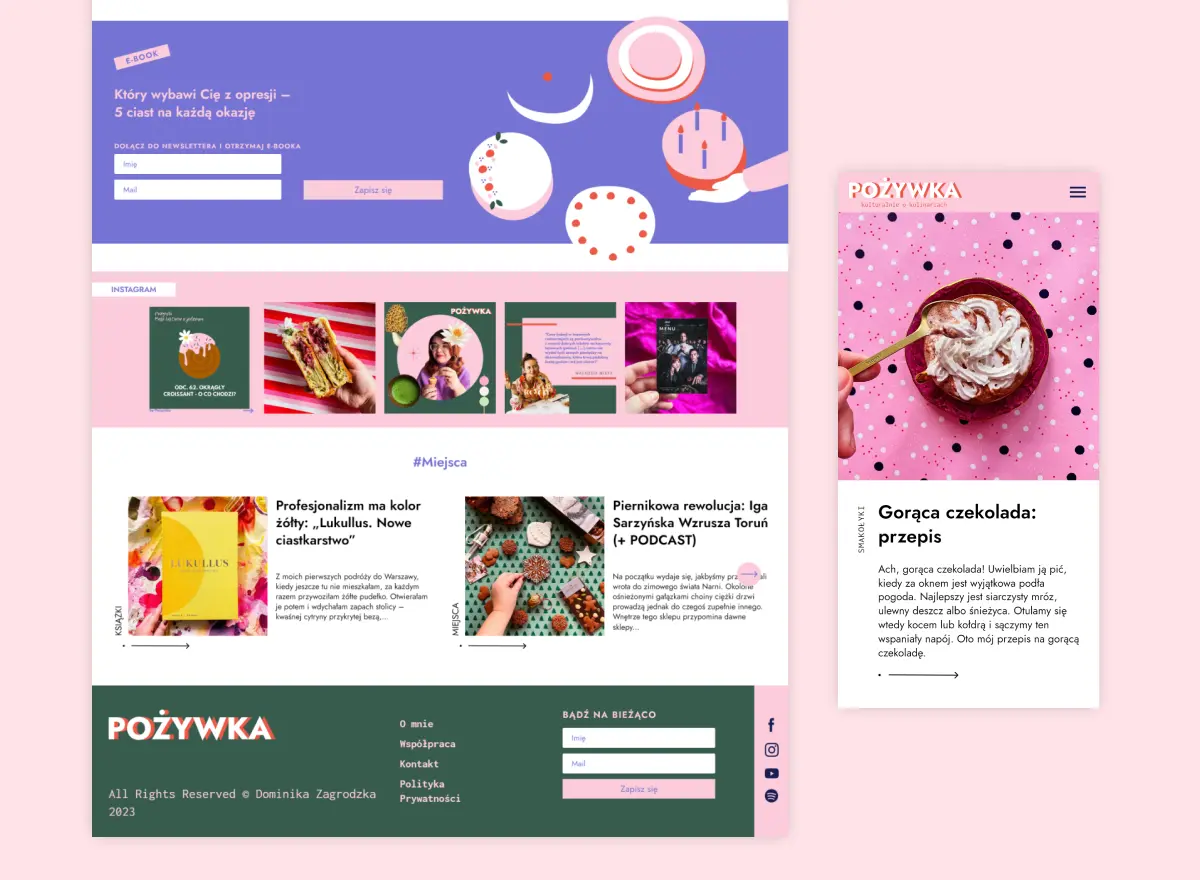
pozywka.pl
Scalable blog for food journalist, focused on performance and user experience 🌭
zagrodzki.me
Personal blog and portfolio of Bart Zagrodzki, where he shares his knowledge and work 💼
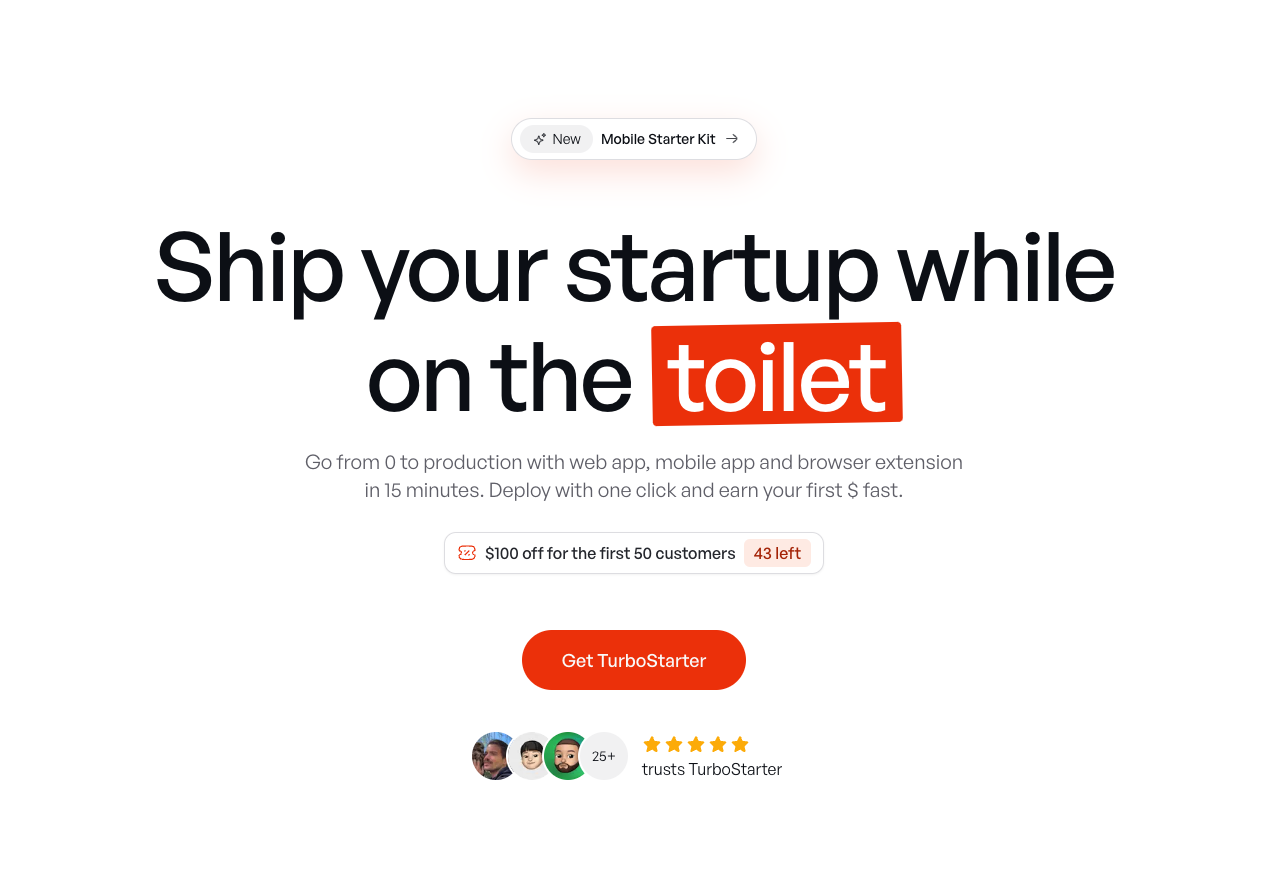
TurboStarter
Ship your startup everywhere. In minutes.
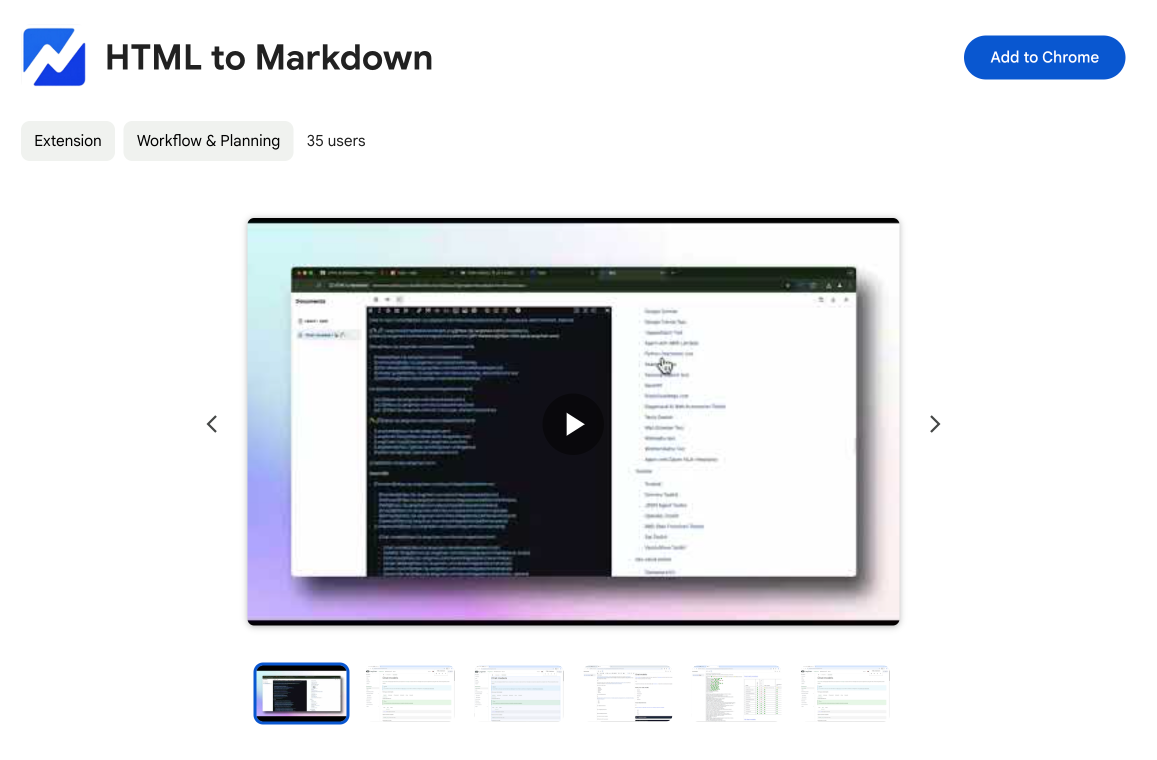
HTML to Markdown
Convert HTML to Markdown with ease, directly in your browser 📄
Dotallio
Personalized AI apps that automate research, data extraction, and content creation without code 🤖
Talk to Santa
Enjoy a magical live video chat or receive a unique AI-generated video greeting from Santa Claus 🎅
pozywka.pl
Scalable blog for food journalist, focused on performance and user experience 🌭
zagrodzki.me
Personal blog and portfolio of Bart Zagrodzki, where he shares his knowledge and work 💼
TurboStarter
Ship your startup everywhere. In minutes.
HTML to Markdown
Convert HTML to Markdown with ease, directly in your browser 📄
Dotallio
Personalized AI apps that automate research, data extraction, and content creation without code 🤖
Talk to Santa
Enjoy a magical live video chat or receive a unique AI-generated video greeting from Santa Claus 🎅
pozywka.pl
Scalable blog for food journalist, focused on performance and user experience 🌭
zagrodzki.me
Personal blog and portfolio of Bart Zagrodzki, where he shares his knowledge and work 💼
TurboStarter
Ship your startup everywhere. In minutes.
HTML to Markdown
Convert HTML to Markdown with ease, directly in your browser 📄
Dotallio
Personalized AI apps that automate research, data extraction, and content creation without code 🤖
Talk to Santa
Enjoy a magical live video chat or receive a unique AI-generated video greeting from Santa Claus 🎅
pozywka.pl
Scalable blog for food journalist, focused on performance and user experience 🌭
zagrodzki.me
Personal blog and portfolio of Bart Zagrodzki, where he shares his knowledge and work 💼
TurboStarter
Ship your startup everywhere. In minutes.
HTML to Markdown
Convert HTML to Markdown with ease, directly in your browser 📄
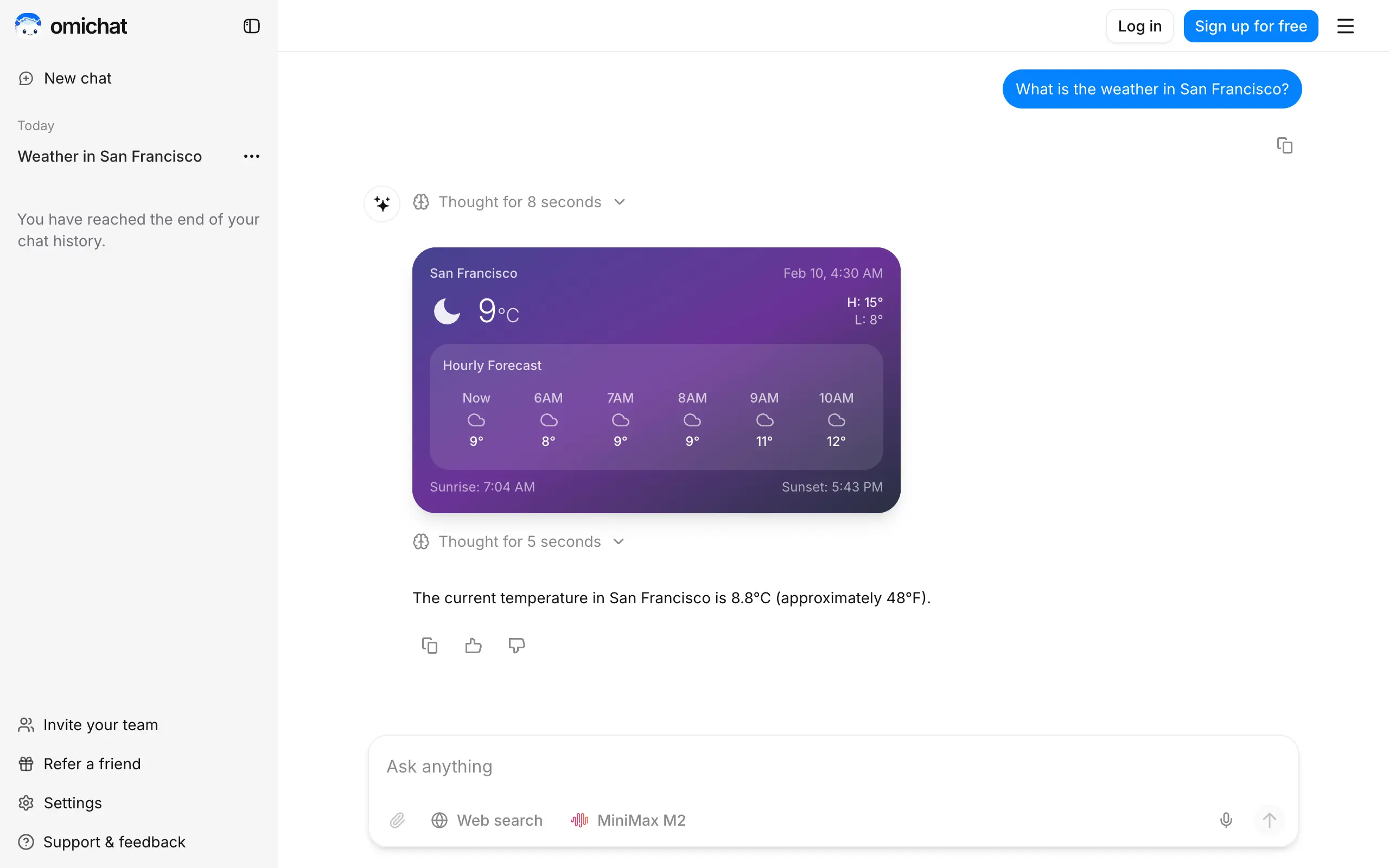
Omichat
Chat with 50+ AI models, including ChatGPT and Claude, in one place - switch models anytime without losing context 🤖
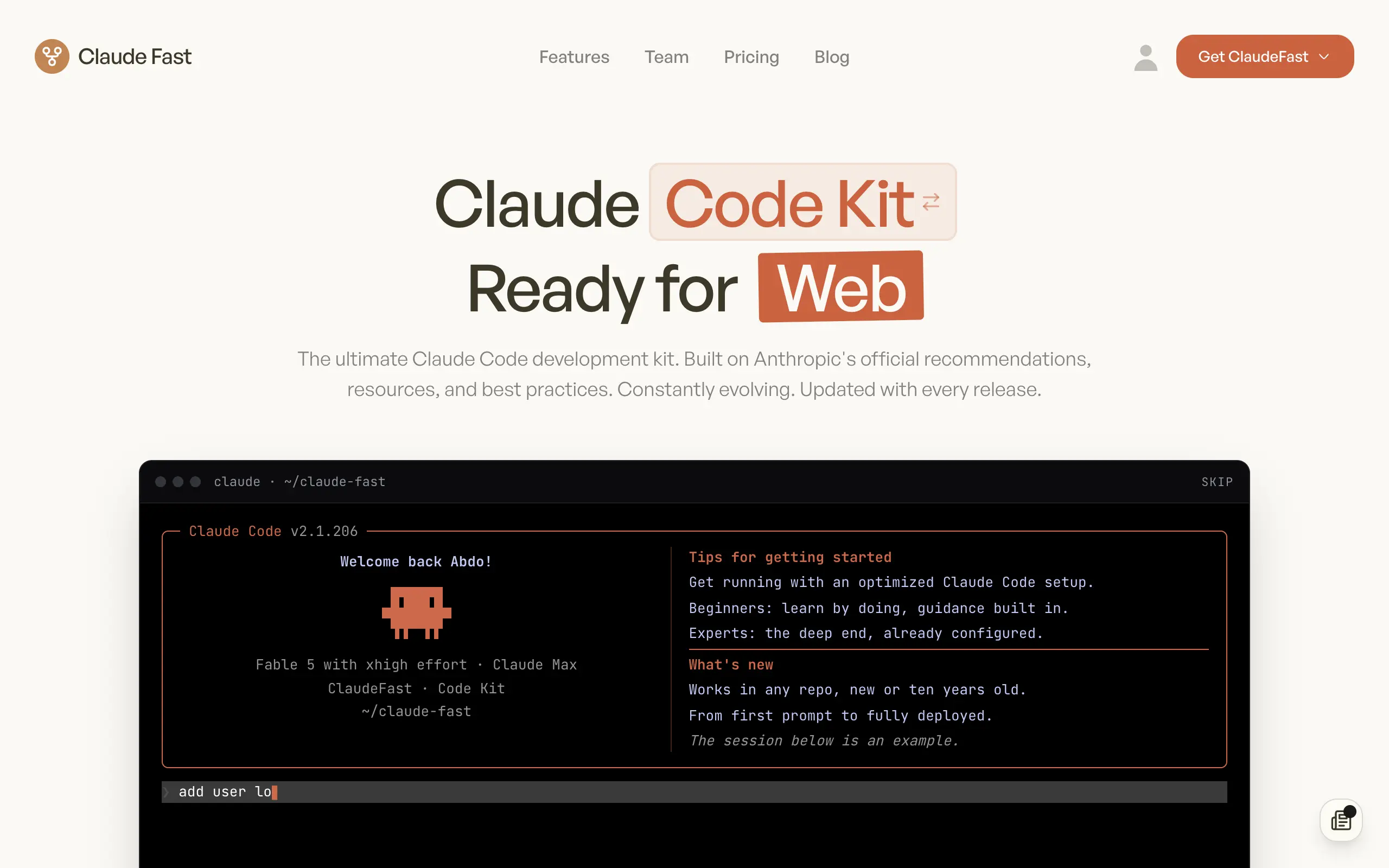
Claude Fast
Supercharge your Claude Code with 6x effective context window and specialized AI agents 🤖
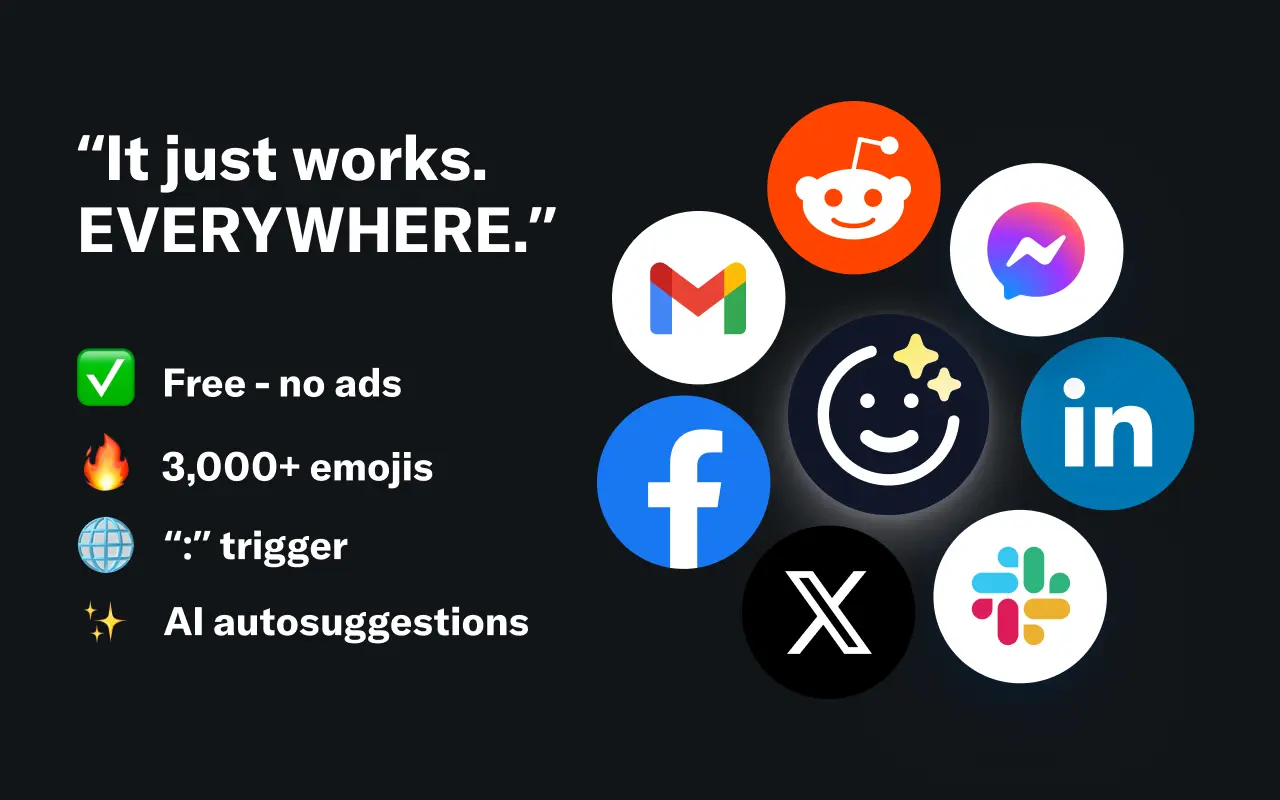
EmojAI
AI-powered emoji picker with smart, context-aware suggestions 🤖
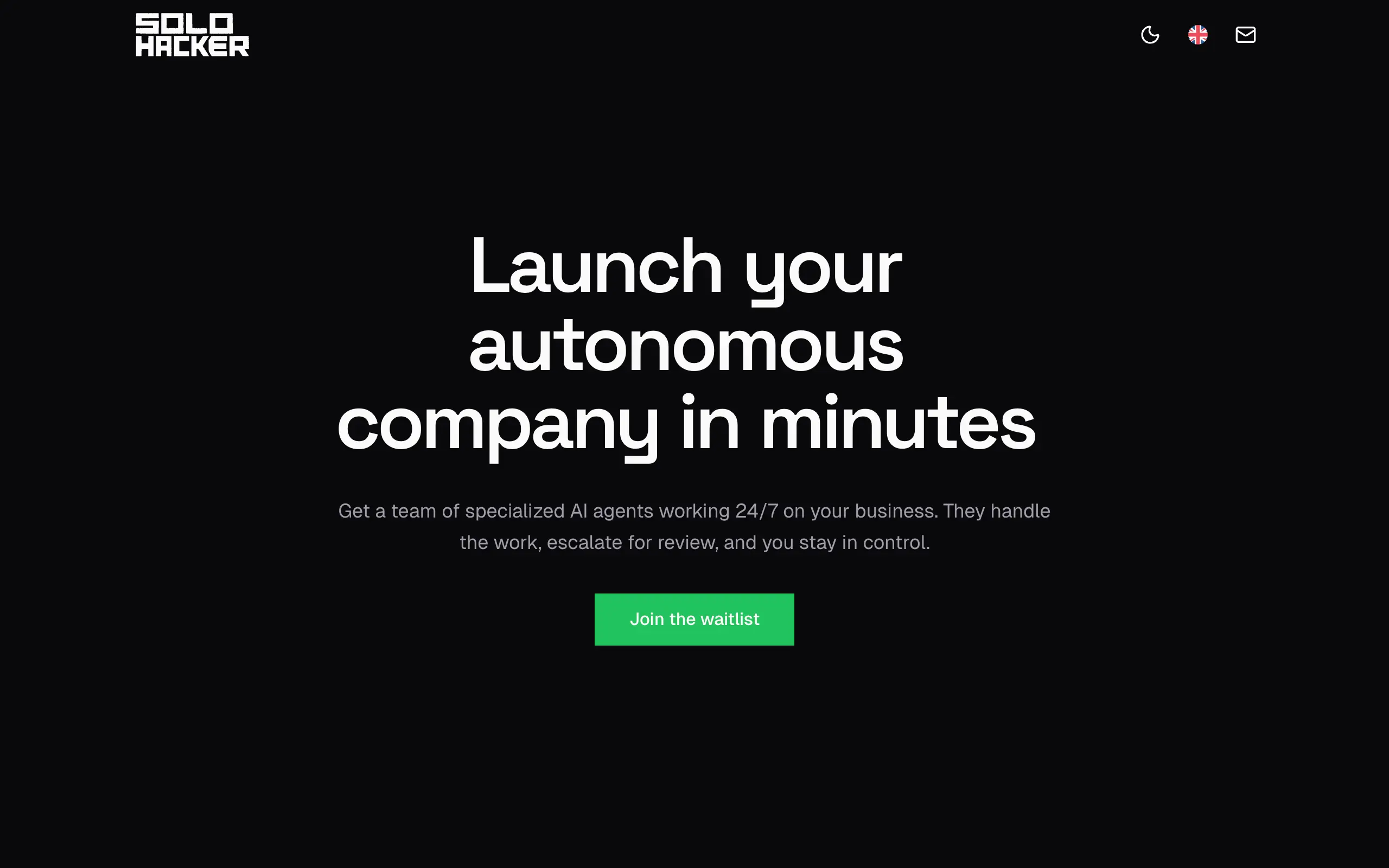
Solohacker
Autonomous company launcher - AI agents work 24/7, escalate what matters, and you stay in control 🤖
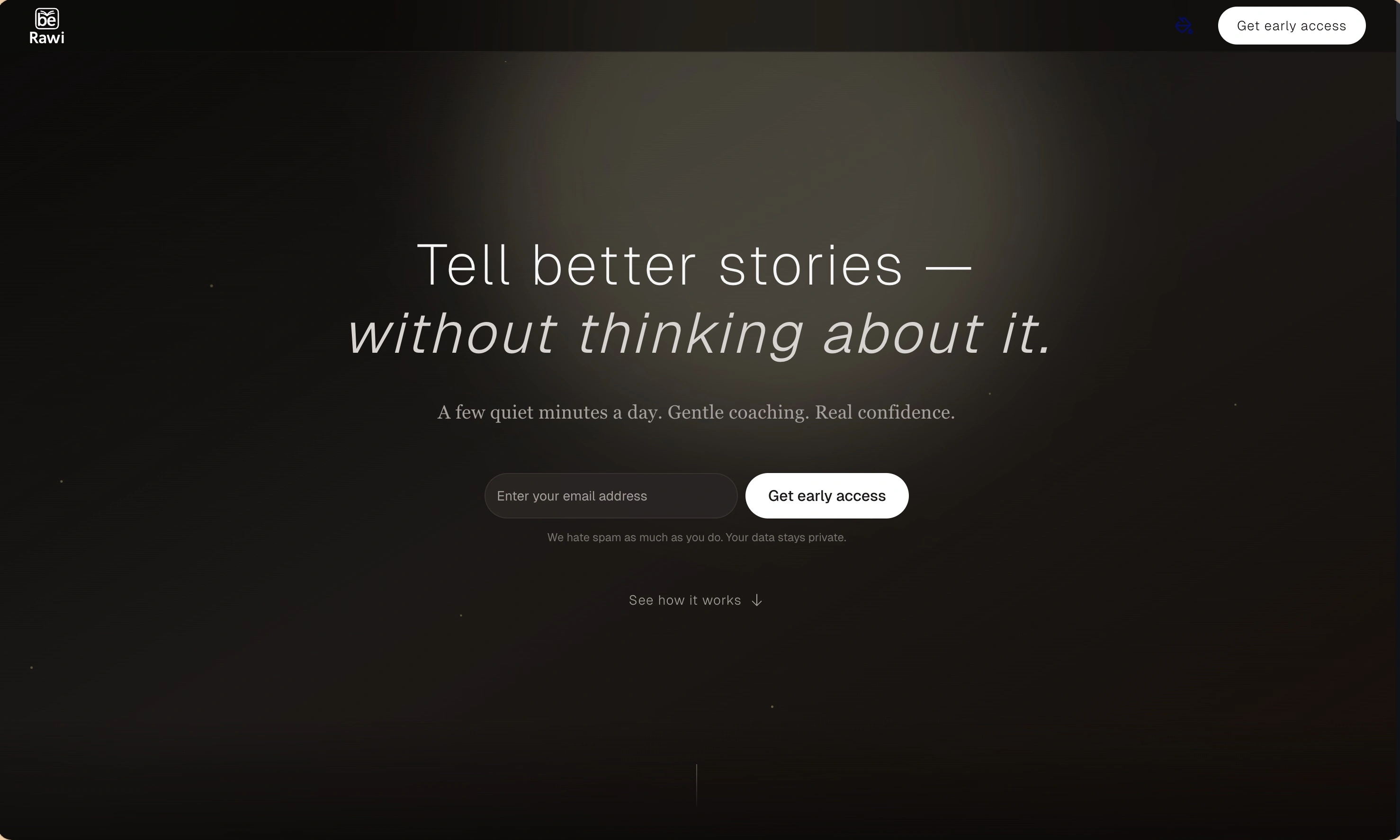
BeRawi: Storytelling Coach
Practice storytelling daily with instant feedback to sound clearer, more engaging, and confident 🎤
Omichat
Chat with 50+ AI models, including ChatGPT and Claude, in one place - switch models anytime without losing context 🤖
Claude Fast
Supercharge your Claude Code with 6x effective context window and specialized AI agents 🤖
EmojAI
AI-powered emoji picker with smart, context-aware suggestions 🤖
Solohacker
Autonomous company launcher - AI agents work 24/7, escalate what matters, and you stay in control 🤖
BeRawi: Storytelling Coach
Practice storytelling daily with instant feedback to sound clearer, more engaging, and confident 🎤
Omichat
Chat with 50+ AI models, including ChatGPT and Claude, in one place - switch models anytime without losing context 🤖
Claude Fast
Supercharge your Claude Code with 6x effective context window and specialized AI agents 🤖
EmojAI
AI-powered emoji picker with smart, context-aware suggestions 🤖
Solohacker
Autonomous company launcher - AI agents work 24/7, escalate what matters, and you stay in control 🤖
BeRawi: Storytelling Coach
Practice storytelling daily with instant feedback to sound clearer, more engaging, and confident 🎤
Omichat
Chat with 50+ AI models, including ChatGPT and Claude, in one place - switch models anytime without losing context 🤖
Claude Fast
Supercharge your Claude Code with 6x effective context window and specialized AI agents 🤖
EmojAI
AI-powered emoji picker with smart, context-aware suggestions 🤖
Solohacker
Autonomous company launcher - AI agents work 24/7, escalate what matters, and you stay in control 🤖
BeRawi: Storytelling Coach
Practice storytelling daily with instant feedback to sound clearer, more engaging, and confident 🎤

Connect with like-minded people
Join our community to get feedback, support, and grow together with 1,000+ builders on board, let's ship it!
Join usShip your startup everywhere. In minutes.
Don't burn tokens on setup and start building features on day one.