Souk Sage
Gives small Dubai retailers selling to Indian buyers an assistant that writes bilingual Hindi and Arabic product listings. Turns a photo and a few notes into ready-to-post copy in minutes.
Souk Sage is an AI assistant that turns a product photo and a few rough notes into ready-to-post Hindi and Arabic listings for small Dubai retailers. In 2026, vision-capable language models can write decent copy in both languages, but small shops still lack a tool that handles the commerce details: Gulf trade terms, Indian buyer expectations, and the formats of the platforms where they actually sell. That gap makes bilingual product listing software for Dubai retailers a narrow but buildable business.
Key takeaways
- Target customer: owner-operated Dubai shops (electronics, textiles, spices, gifts, jewelry) that sell to Indian expats and to buyers in India, and post listings themselves.
- Pricing angle: a monthly subscription with a listing quota, for example $19/month for a starter tier, plus a higher tier for teams and channel exports.
- Biggest risk: copy quality. One embarrassing translation or a wrong product claim destroys trust in a small shop owner.
- Time to MVP: about 3 to 4 weeks for one developer, if auth, billing and the database come from a starter kit.
Who is Souk Sage for?
The ideal customer is a shop owner or sales manager in Dubai with one to ten staff who lists products on Instagram, WhatsApp Business, Facebook Marketplace, Amazon.ae, Noon or their own storefront. They sell to Indian buyers living in the UAE, and often to buyers in India as well. They speak English and usually Hindi or Urdu, and have limited Arabic writing ability.
How they cope today
Typically the owner photographs an item, writes a quick English caption, and pastes it into a general chatbot or a translation app. Some ask a cousin, a part-time employee or a freelancer to write Arabic. Others skip a language altogether and lose a segment of buyers.
Why the workaround fails
- Inconsistency: every listing has a different tone, length and level of detail.
- Literal translation: generic tools often produce stiff Hindi or Arabic that reads like a machine wrote it, and they miss local phrasing such as how warranty, "original" or "imported" are expressed.
- Time: writing, translating and reformatting for three channels takes longer than photographing the stock.
- No memory: each chat starts from scratch, so brand voice, size conventions and price formats are retyped every time.
Why is bilingual listing software a good idea in 2026?
The opening is the combination of multimodal AI, a dense cross-border trade corridor and a seller segment that is underserved by tools built for large marketplaces. The Dubai to India trade link is long established, and many small sellers already run their business through chat apps and social posts rather than formal storefronts.
The gap in existing solutions
- General chatbots such as ChatGPT or Gemini can translate, but they have no workflow, templates or saved shop context.
- Marketplace listing tools inside platforms like Amazon or Noon are built for their own catalogs and rules, not for social selling or two-language posts.
- Translation services such as Google Translate or DeepL handle text, not product understanding from a photo.
- E-commerce platforms such as Shopify offer AI description generators, typically English-first and not tuned for Hindi plus Arabic pairing.
Why now
Vision models can read a photo, identify the product type and draft copy in one pass. Costs per generation are low enough that a $19/month plan can be profitable at modest usage, assuming you track token spend per listing. Small sellers are also more comfortable paying for AI tools than they were a few years ago. Treat that as a hypothesis to test in interviews, not a given.
What should the Souk Sage MVP include?
Build the shortest path from photo to post. The aha moment is a shop owner uploading one photo, typing "brass lamp, 30cm, handmade, AED 120" and getting a Hindi caption and an Arabic caption they would be willing to post as is, in under a minute.
Photo to listing
Upload an image plus a few notes and get a title, description and bullet points in Hindi and Arabic.
Channel formats
Output shaped for Instagram captions, WhatsApp messages and marketplace fields, with sensible length limits.
Shop voice memory
Save tone, preferred terms, currency format and a standard footer so every listing sounds like the same shop.
Edit and copy
Side-by-side editing with one-click copy, so the owner can fix a word and post immediately.
What to cut from version one
- Direct publishing to marketplaces and social APIs. Copy and paste is fine at first.
- Image editing, background removal and ad creative.
- Languages beyond Hindi, Arabic and English.
- Bulk catalog import. Add it only when users ask repeatedly.
How is Souk Sage different from ChatGPT and other alternatives?
The unique selling proposition is narrow on purpose: publish-ready Hindi and Arabic copy for Dubai-to-India selling, from a photo, in under a minute, with your shop's voice saved. You are not competing on general intelligence. You are competing on workflow, defaults and quality control for one niche.
| Option | Photo to copy | Hindi and Arabic together | Saved shop voice | Channel formats |
|---|---|---|---|---|
| Souk Sage | ✅ | ✅ | ✅ | ✅ |
| General chatbot | ✅ | Manual prompting | ❌ | ❌ |
| Translation app | ❌ | Text only | ❌ | ❌ |
| Freelance writer | Depends | Depends | Depends | Depends |
| Marketplace AI tool | Sometimes | ❌ | ❌ | Own platform only |
A fair caveat: a patient user with a good prompt template can get close with a general chatbot. Your product wins on speed, repeatability and not needing to be a prompt writer.
How would Souk Sage make money?
Start with a simple subscription. Small shops prefer predictable monthly costs and often pay by card or local payment methods, so keep checkout straightforward.
Option 1: tiered subscription
For example, $19/month for 100 listings and $49/month for 500 listings with multiple team members. If you convert 3% of 1,000 monthly trial signups at $19, that is about 30 paying customers, or roughly $570 in monthly recurring revenue. Treat those numbers as assumptions to check against your own funnel.
Option 2: credit packs
Sell listing credits for sellers with seasonal demand, such as around Diwali, Eid or Dubai shopping festivals. This lowers commitment but makes revenue less predictable.
Option 3: agency and wholesaler plan
Wholesalers and small agencies that manage several shops will pay more for multiple brand voices and shared workspaces. This is a good second tier once the core product works.
First growth channel
The most likely early channel is direct outreach and community presence: visiting or messaging shop owners on Instagram and WhatsApp, and posting before-and-after listing examples. Trade groups, market associations and local business communities amplify this. Paid ads are expensive for a $19 product until retention is proven.
How do you validate Souk Sage before building?
Spend one to two weeks proving that owners will give you their time and a little money.
Interview ten shop owners
Ask them to show you their last five listings and how they wrote them. Note time spent, who helps with Arabic and where they lose buyers.
Run a manual concierge test
Take photos and notes from five owners and produce the copy yourself with a model plus human review. Ask whether they would post it unchanged.
Launch a landing page
Show a real before-and-after example and one promise. Collect waitlist emails and WhatsApp numbers, since that is where this audience responds.
Ask for a pre-sale
Offer a founding-member price for a three-month plan. Even five to ten paid commitments is a stronger signal than a hundred waitlist signups.
Have native speakers grade output
Pay a Hindi and an Arabic speaker to score twenty samples for naturalness and product accuracy. If scores are weak, fix quality before building anything else.
What tech stack should you use to build Souk Sage?
Use a TypeScript web app with a relational database, a file store for photos and a hosted multimodal model. Starting from TurboStarter removes the undifferentiated work, so your time goes into prompts, evaluation and the listing workflow.
What the starter kit covers
TurboStarter ships a monorepo with web and mobile apps, plus the pieces every SaaS needs:
- Authentication for owner and staff sign-in.
- Billing for subscriptions and one-time credit packs.
- Storage for uploaded product photos.
- AI integration for calling model providers from your backend.
A mobile app can come later, and it matters for this audience: shop owners photograph stock on their phones. Early on, a mobile-friendly web app is enough.
Choosing the AI provider
Send the photo and notes to one multimodal model and request both languages in one structured response. This is the fastest to build and easiest to debug. The trade-off is higher cost per listing and less control over Hindi or Arabic quality.
First extract product facts from the image into structured data, then generate each language separately with its own prompt and examples. This costs more engineering time but lets you tune each language and validate facts once. Choose it when native reviewers flag quality gaps.
A starting data model
Keep the facts separate from the generated copy, so you can regenerate in another language without re-reading the photo.
type Listing = {
  id: string;
  shopId: string;
  imageUrl: string;
  notes: string;
  facts: {
    category: string;
    material?: string;
    size?: string;
    priceAed?: number;
  };
  copy: {
    hi: { title: string; body: string };
    ar: { title: string; body: string };
  };
  channel: "instagram" | "whatsapp" | "marketplace";
  status: "draft" | "edited" | "posted";
};
Practical trade-offs
- Store the user's edits. They are your best source of quality improvements and per-shop examples.
- Render Arabic with right-to-left layout from day one, and test mixed-direction text such as English model numbers inside Arabic sentences.
- Cap generations per plan and log cost per listing so margins stay visible.
What could make Souk Sage fail?
Biggest risk: copy quality and trust
If a listing contains an unnatural phrase, a wrong claim such as "original" or "waterproof", or a mistranslated size, the owner pays for it publicly. Always show the extracted facts for confirmation before generating, keep a human-edit step, and build a small evaluation set graded by native speakers that you rerun on every prompt or model change.
Other risks
- Free alternatives are good enough: owners may stay with a general chatbot. Mitigate by making saved shop voice, channel formats and speed the obvious wins, and by offering a generous free trial.
- Small market and low willingness to pay: a niche of small shops may cap revenue. Mitigate by testing the wholesaler tier early and by planning adjacent corridors, such as Pakistan or the Philippines, once the pipeline works.
- Distribution is slow: shop owners are reached through relationships, not search. Plan for hands-on onboarding and consider a partner such as a trade community or a local photographer network.
What is a realistic 30-day launch plan?
Days 1 to 7: validate
Run interviews, the concierge test and the landing page. Decide go or no-go based on pre-sales and native-speaker scores.
Days 8 to 14: build the core flow
Set up the project from the starter kit, then build photo upload, the facts step and bilingual generation with copy buttons.
Days 15 to 21: add shop voice and billing
Save shop settings, wire a free trial and a paid plan, and add usage limits and cost logging.
Days 22 to 26: onboard ten pilot shops
Sit with each owner, watch them create three listings and fix the friction you see. Collect their edits as evaluation data.
Days 27 to 30: open paid access
Convert pilots to paid, publish three real before-and-after examples and start outreach in shop owner communities.
If the pilot shops post your copy without heavy edits, you have a product. Start with TurboStarter so the first working version is ready in days, then spend your time on language quality.
FAQ
Interview ten shop owners, produce listings manually for five of them and ask for a paid pre-order. Also have native Hindi and Arabic speakers grade your samples. If owners will not pay and reviewers are unimpressed, rethink the idea before coding.
Start around $19 to $29 per month for a starter plan with a listing quota, then test a higher tier for teams and multiple shops. Price against the time saved per listing and the cost of a freelancer, and check that your model costs leave healthy margins.
General chatbots, translation apps, marketplace-native AI tools and freelance writers. None is built around a photo-to-bilingual workflow for Dubai sellers targeting Indian buyers, but the first of these is the one you must clearly beat on convenience.
A TypeScript full-stack app with Postgres, object storage for images and a hosted multimodal model is enough. A starter such as TurboStarter handles authentication, billing, storage and AI wiring so you build only the listing workflow.
One developer can ship a usable MVP in roughly 3 to 4 weeks using a starter kit. Main costs are model usage, hosting and paying native reviewers, which are typically modest compared with the time you invest in prompt and evaluation work.
More 🤖 AI Startup SaaS ideas
Discover more innovative ai startup SaaS ideas that are trending in 2026. Each idea is AI-generated with market validation and growth potential to help you find your next profitable venture faster than competitors.
Your competitors are building with TurboStarter
Below are some of the SaaS ideas that have been generated and built with our starter kit.

Statiko
Monitor any Telegram channel in real time - track posts, edits, deletions, and growth with AI recaps 📡

Shibui
AI website builder - describe your business, pick a niche template, edit by chatting, and publish instantly ✨
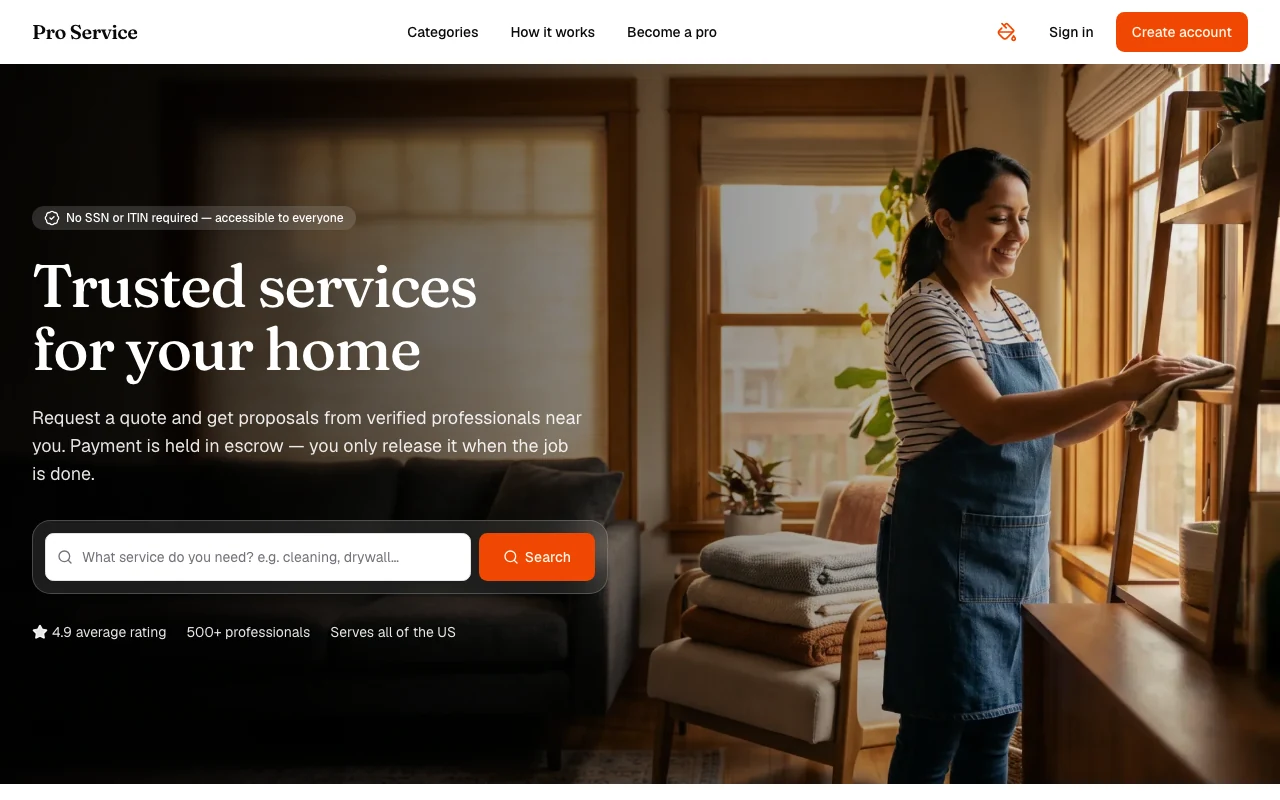
Pro Service
Find verified home service professionals, compare quotes, and pay securely through escrow - built for Brazilians across the US 🏠
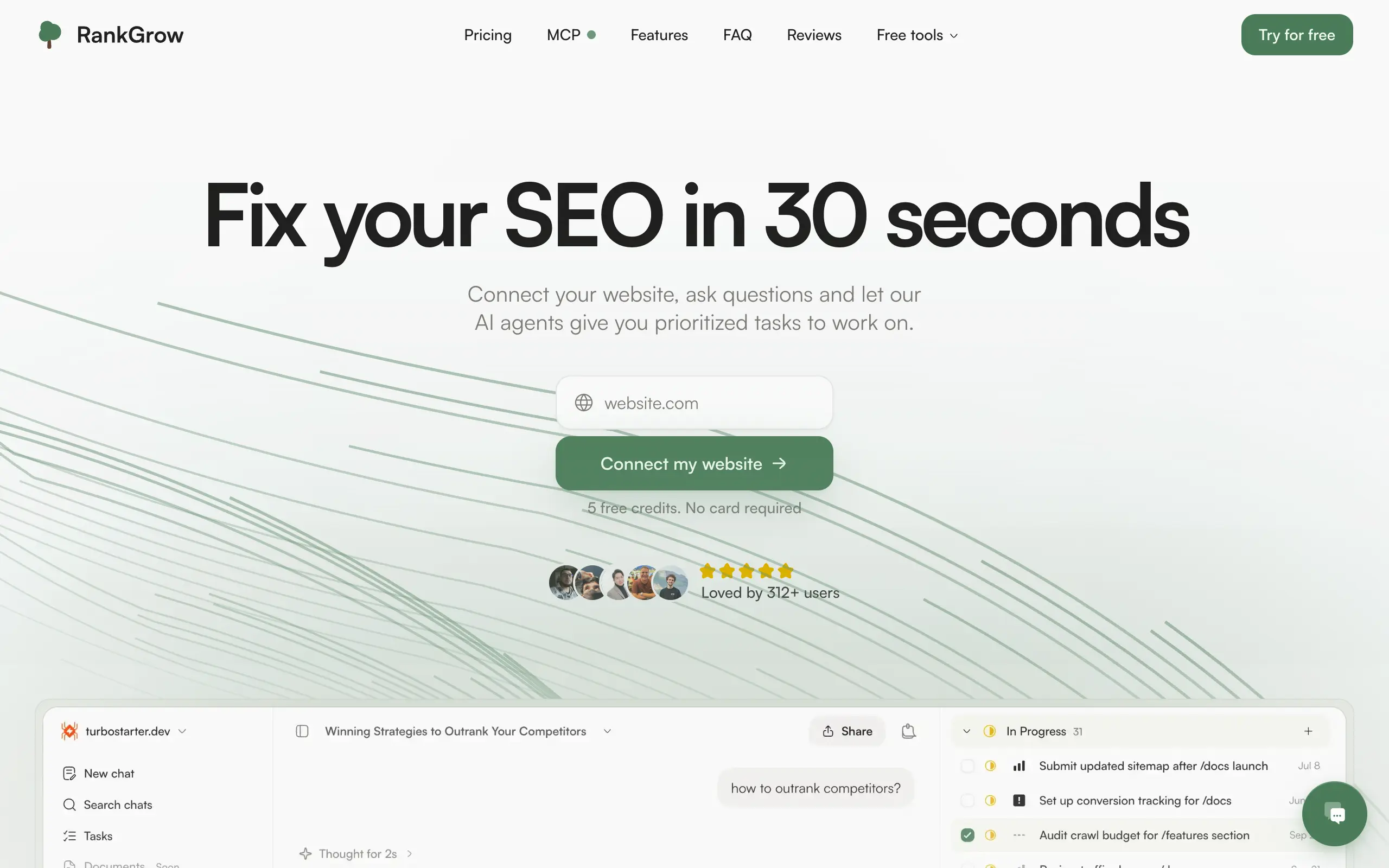
RankGrow
Fix your SEO with AI agents - connect Search Console, get prioritized tasks, and grow organic traffic 📈

SyncReads
Sync your favorite content for distraction-free reading, save time and replace multiple apps. Anytime, anywhere 🔄

Socialcrawl
Get clean, structured data from 21 platforms like TikTok, Instagram, and YouTube with a single request 📊
Statiko
Monitor any Telegram channel in real time - track posts, edits, deletions, and growth with AI recaps 📡
Shibui
AI website builder - describe your business, pick a niche template, edit by chatting, and publish instantly ✨
Pro Service
Find verified home service professionals, compare quotes, and pay securely through escrow - built for Brazilians across the US 🏠
RankGrow
Fix your SEO with AI agents - connect Search Console, get prioritized tasks, and grow organic traffic 📈
SyncReads
Sync your favorite content for distraction-free reading, save time and replace multiple apps. Anytime, anywhere 🔄
Socialcrawl
Get clean, structured data from 21 platforms like TikTok, Instagram, and YouTube with a single request 📊

Dotallio
Personalized AI apps that automate research, data extraction, and content creation without code 🤖

Talk to Santa
Enjoy a magical live video chat or receive a unique AI-generated video greeting from Santa Claus 🎅

pozywka.pl
Scalable blog for food journalist, focused on performance and user experience 🌭

zagrodzki.me
Personal blog and portfolio of Bart Zagrodzki, where he shares his knowledge and work 💼

TurboStarter
Ship your startup everywhere. In minutes.

HTML to Markdown
Convert HTML to Markdown with ease, directly in your browser 📄
Dotallio
Personalized AI apps that automate research, data extraction, and content creation without code 🤖
Talk to Santa
Enjoy a magical live video chat or receive a unique AI-generated video greeting from Santa Claus 🎅
pozywka.pl
Scalable blog for food journalist, focused on performance and user experience 🌭
zagrodzki.me
Personal blog and portfolio of Bart Zagrodzki, where he shares his knowledge and work 💼
TurboStarter
Ship your startup everywhere. In minutes.
HTML to Markdown
Convert HTML to Markdown with ease, directly in your browser 📄

Omichat
Chat with 50+ AI models, including ChatGPT and Claude, in one place - switch models anytime without losing context 🤖

Claude Fast
Supercharge your Claude Code with 6x effective context window and specialized AI agents 🤖

EmojAI
AI-powered emoji picker with smart, context-aware suggestions 🤖

Solohacker
Autonomous company launcher - AI agents work 24/7, escalate what matters, and you stay in control 🤖

BeRawi: Storytelling Coach
Practice storytelling daily with instant feedback to sound clearer, more engaging, and confident 🎤
Omichat
Chat with 50+ AI models, including ChatGPT and Claude, in one place - switch models anytime without losing context 🤖
Claude Fast
Supercharge your Claude Code with 6x effective context window and specialized AI agents 🤖
EmojAI
AI-powered emoji picker with smart, context-aware suggestions 🤖
Solohacker
Autonomous company launcher - AI agents work 24/7, escalate what matters, and you stay in control 🤖
BeRawi: Storytelling Coach
Practice storytelling daily with instant feedback to sound clearer, more engaging, and confident 🎤

Connect with like-minded people
Join our community to get feedback, support, and grow together with 1,000+ builders on board, let's ship it!
Join usShip your startup everywhere. In minutes.
Don't burn tokens on setup and start building features on day one.