Souk Scout
Gives Indian-origin small shop owners in Dubai a tool to draft bilingual product listings and WhatsApp replies. It learns their pricing and tone so each message sounds like the owner wrote it.
Souk Scout is an AI writing assistant for Indian-origin small shop owners in Dubai. It drafts bilingual product listings and WhatsApp replies that match the owner's pricing and tone, so the shop keeps its personal voice while the owner stops typing the same answers all day. The timing works in 2026 because WhatsApp is already where these shops sell, and language models are now good enough to handle code-switching between English, Hindi, Urdu, Malayalam and Arabic without sounding stiff. This is the clearest example of an AI assistant for small shop owners in Dubai that is narrow enough to build and sell.
Key takeaways
- Target customer: owner-operators of small retail and trading shops in Dubai (electronics, textiles, groceries, gifts, perfumes) who run sales through WhatsApp and Instagram.
- Pricing angle: a flat monthly subscription in the range of a few dozen dirhams to low hundreds, with a free trial tied to the first 20 drafted replies.
- Biggest risk: reliance on WhatsApp's rules and APIs, plus the chance that owners will not pay for something they feel they can do for free with a general chatbot.
- Time to MVP: about 3 to 5 weeks for a solo founder using a starter kit, assuming the first version is a web app with copy-and-paste into WhatsApp.
What problem does Souk Scout solve?
Small shop owners in Dubai lose hours every day to repetitive, low-value writing: answering "price?", "available?", "last price?" and "can you deliver to Sharjah?" on WhatsApp, and rewriting product descriptions for listings. Writing quality also varies. Many owners are far more fluent in their home language than in polished English or Arabic, which shows in listings and slows replies.
Who is the ideal customer?
Picture a 45-year-old owner of a mobile accessories or fabric shop in Bur Dubai, Deira or Karama. They have one to four staff, a WhatsApp Business account, an Instagram page, maybe a listing on a marketplace, and no marketing person. They negotiate prices by chat, switch between English and Hindi or Malayalam mid-sentence, and often sell to customers who speak Arabic, Tagalog or Urdu.
The buyer is the owner. They decide quickly, pay by card or a local payment method, and care about one thing: does this save me time without making me sound like a robot?
What is the current workaround and why does it fail?
Most owners use some mix of these:
- Saved replies in WhatsApp Business: fast, but rigid. They cannot handle price haggling or customer-specific context.
- A general chatbot: useful, but the owner has to explain their shop, pricing and tone in every session, and the output sounds generic.
- A nephew or staff member who "writes well": a bottleneck that disappears when they are busy.
- Copying and editing old messages: slow and error-prone, especially with prices.
The common failure is memory. None of these tools know that this shop never goes below a certain margin, says "bhai" to regulars, and writes Arabic product titles in a particular style.
Why is the opportunity real for AI tools for Dubai small businesses in 2026?
The gap is not "AI writing" in general. It is a writing tool that knows one shop's catalog, price rules and voice, and works in the languages that shop actually uses. Large platforms serve either enterprises or English-first marketers, and few products target this owner on their own terms.
What has changed recently?
- Multilingual models are good enough. Mixed-language chat and Arabic output are now workable with careful prompting and review, though Arabic dialect nuance still needs checking.
- WhatsApp is the commerce layer. In the UAE, a large share of small-shop selling already happens in chat, and WhatsApp Business offers catalogs and a business API.
- Owners are used to AI. Many have already tried a chatbot, so the pitch is "the one that already knows my shop", not "what is AI?".
- Cheap inference. Drafting short messages costs little per request, so a low monthly price can still leave healthy margins, assuming sensible usage limits.
Who are the existing alternatives?
Categories you will compete with: WhatsApp Business built-in quick replies and catalogs, general assistants such as ChatGPT, customer-service chatbot platforms aimed at larger companies, and marketplace listing tools. None is built around a single owner's pricing and voice in a South Asian and Arabic bilingual context. That is the wedge, but also a reminder that a big platform could add memory features and narrow it.
What should the Souk Scout MVP include?
Build the smallest tool that produces one believable message in the owner's voice. The aha moment is the first time the owner pastes a customer's WhatsApp message and gets a reply that sounds like them, with the right price, in the customer's language, in under ten seconds.
Voice and pricing profile
Owner uploads past chats and a price list. The app extracts tone, greetings, margins and negotiation limits.
WhatsApp reply drafter
Paste an incoming message, get two or three draft replies in the right language, ready to copy.
Bilingual listing generator
Turn a photo and a few details into an English and Arabic product title and description.
Catalog memory
A simple product list with prices and stock notes that the drafts pull from, so numbers are never invented.
What should you cut from version one?
- Direct WhatsApp Business API integration (copy-paste is fine at first and avoids approval delays).
- Auto-sending replies. Keep the owner in the loop.
- Marketplace publishing, image generation and analytics dashboards.
- More than three languages. Start with English plus one South Asian language and Arabic.
How is Souk Scout different from a general chatbot?
The unique selling proposition is: it already knows your shop and sounds like you. The comparison below is qualitative and reflects typical behavior.
| Option | Remembers pricing rules | Matches owner's tone | Bilingual listings | Setup effort |
|---|---|---|---|---|
| Souk Scout | ✅ | ✅ | ✅ | Low, once |
| General chatbot | ❌ | Needs re-prompting | Depends | Repeated |
| WhatsApp saved replies | ❌ | ✅ (static) | ❌ | Medium |
| Staff or relative | Depends | Depends | Depends | Ongoing |
| Enterprise chatbot platform | Partial | ❌ | Partial | High |
The moat is the accumulated profile: past replies, approved edits and price rules. Each correction the owner makes improves the next draft, which raises switching costs over time.
How would Souk Scout make money?
Start with a simple subscription. Owners dislike complex plans, and usage per shop is small enough to cap sensibly.
- Flat monthly plan: for example, a price equal to a few lunches per month. As an assumption, if you charge $15 per month and convert 10% of 200 trial users, that is 20 customers and $300 monthly revenue. Measure real conversion before planning around it.
- Tiered by shops or staff seats: a higher tier for owners with several staff who share the same voice profile and catalog.
- Annual prepay discount: useful for cash flow and lower churn, and common for small-business buyers who like paying once.
I would avoid per-message pricing early, since it makes owners hesitate before using the product. Keep generous fair-use limits instead.
What growth channel works first?
Community and word of mouth. Dubai's trading neighborhoods, WhatsApp groups for shop owners, and supplier networks spread tools quickly when one respected owner vouches for them. Visit shops in person, set up the first 10 to 20 owners yourself, and ask each for one referral.
How do you validate Souk Scout before building?
Aim for one to two weeks and a clear decision at the end: either owners will commit money or time, or they will not.
Interview 10 shop owners
Visit or call owners and ask to see their last 20 WhatsApp customer chats. Note how long replies take and which questions repeat.
Run a manual concierge test
Take three owners' real customer messages and draft replies yourself with a general chatbot plus their price list. Send them back and ask if they would use them as written.
Launch a simple landing page
Write one promise in English and Arabic, with a WhatsApp number for signup. Share it in two or three owner groups.
Ask for a pre-sale
Offer a discounted first three months and collect payment or a firm commitment from at least five owners. Free waitlist signups alone are weak evidence.
How do you build Souk Scout with TurboStarter?
The product itself is a fairly standard web app with an AI layer. The hard part is the voice and pricing logic, not authentication or billing, so use a starter kit for everything else. TurboStarter provides a ready-made monorepo with web and mobile apps, authentication, billing, database, emails, file storage, AI, background tasks, an admin panel, analytics, internationalization and monitoring.
What does the architecture look like?
- Web app: the owner's dashboard for profile, catalog and drafting. Built with React and styled with Tailwind CSS.
- Auth and accounts: handled by the starter's authentication module, so you do not build login flows.
- Subscriptions: use the billing setup for monthly and annual plans.
- Data and AI calls: store profiles and catalogs through the database layer and call models via the AI integration.
- Mobile later: owners live on their phones, so a mobile app or a mobile-friendly web experience becomes important after the first validation round.
Which AI approach should you choose?
Store the owner's best past replies and price rules, retrieve the closest examples for each incoming message, and include them in the prompt. This is faster to build, easy to correct, and the right default for an MVP. The trade-off is slightly higher cost per request and prompt-size limits.
Train a model per owner or per segment on approved replies. It can produce more consistent tone, but it needs enough clean data, adds operational complexity and makes price accuracy harder to guarantee. Consider it only after you have many corrected examples.
What does the data model look like?
A minimal sketch of the core tables:
create table shop_profile (
  id uuid primary key,
  owner_id uuid not null,
  languages text[] not null,
  tone_notes text,
  min_margin_percent numeric
);

create table product (
  id uuid primary key,
  shop_id uuid references shop_profile(id),
  name text not null,
  price_aed numeric not null,
  notes text
);

create table approved_reply (
  id uuid primary key,
  shop_id uuid references shop_profile(id),
  customer_message text not null,
  final_reply text not null,
  language text not null
);
Prices should come from the product table, never from the model's imagination. Have the model fill in a template and verify the number before showing the draft.
What could make Souk Scout fail?
Biggest risk: owners may not pay for something a free chatbot almost does
If owners decide a general chatbot is good enough, willingness to pay collapses. Mitigate this by proving the memory advantage in the first session: import their price list and past chats on day one, and show a draft that a general tool could not produce without setup. Pre-sales in the validation phase should tell you quickly whether this holds.
Other risks to plan for:
- WhatsApp policy dependency. Automating replies can run into platform rules. Keep the owner approving each message and treat the official API as a later, optional step.
- Language quality. Arabic dialects and code-switched Indian languages can produce awkward drafts. Use native-speaker review on early outputs and let owners edit freely.
- Wrong prices or promises. A hallucinated discount is costly. Pull prices from the catalog and flag anything outside the owner's margin rules.
- Low retention. If the owner stops pasting messages after a week, the product is a novelty. Track weekly active drafting and build the habit with a mobile-friendly flow.
What is a 30-day plan to launch Souk Scout?
Days 1 to 7: validate
Complete interviews, the concierge test and the landing page. Decide go or no-go based on pre-sales.
Days 8 to 14: set up the foundation
Clone TurboStarter, configure auth, billing and the database, and add the shop profile and product tables.
Days 15 to 21: build the core loop
Ship the reply drafter and catalog memory. Onboard three pilot owners and watch them use it.
Days 22 to 26: add listings and corrections
Add the bilingual listing generator and an approve-or-edit flow that saves corrections as examples.
Days 27 to 30: charge and expand
Turn on paid plans for pilot owners, ask each for two referrals and fix the top three complaints.
If you want to test an AI assistant for small shop owners in Dubai, start with ten conversations this week and a working prototype by the end of the month.
FAQ
Ask owners to show their real WhatsApp chats, then draft replies for them manually and see whether they would send them. Follow with a pre-sale to at least five owners. Payment or a firm commitment matters more than compliments.
Start with a flat monthly price that feels like a small business expense, then test one or two price points with pilot owners. Owners in this segment tend to compare against the time a staff member spends, so frame the price around hours saved.
WhatsApp Business quick replies and catalogs, general AI assistants like ChatGPT, and customer-service chatbot platforms aimed at larger firms. None focuses on one owner's pricing rules and voice across South Asian languages and Arabic, which is where Souk Scout aims to win.
A web app with authentication, a relational database, subscription billing and a model provider with retrieval over saved replies. A starter kit like TurboStarter covers most of the non-AI parts so you can spend time on the voice and pricing logic.
A solo founder can typically ship a copy-and-paste MVP in 3 to 5 weeks. Main costs are model usage, hosting and your time, and early usage per owner is small enough that costs stay modest, though you should measure per-user usage during the pilot.
More 🤖 AI Startup SaaS ideas
Discover more innovative ai startup SaaS ideas that are trending in 2026. Each idea is AI-generated with market validation and growth potential to help you find your next profitable venture faster than competitors.
Your competitors are building with TurboStarter
Below are some of the SaaS ideas that have been generated and built with our starter kit.

Statiko
Monitor any Telegram channel in real time - track posts, edits, deletions, and growth with AI recaps 📡

Shibui
AI website builder - describe your business, pick a niche template, edit by chatting, and publish instantly ✨
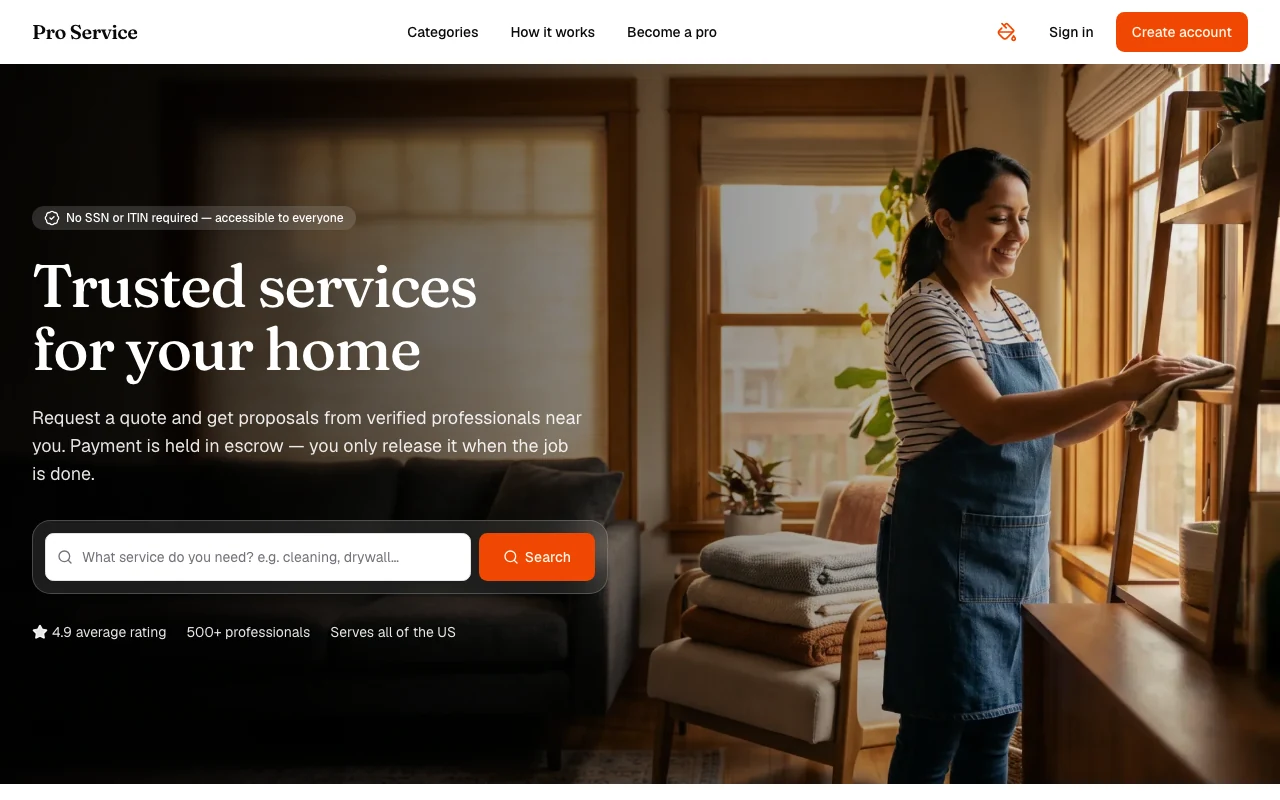
Pro Service
Find verified home service professionals, compare quotes, and pay securely through escrow - built for Brazilians across the US 🏠
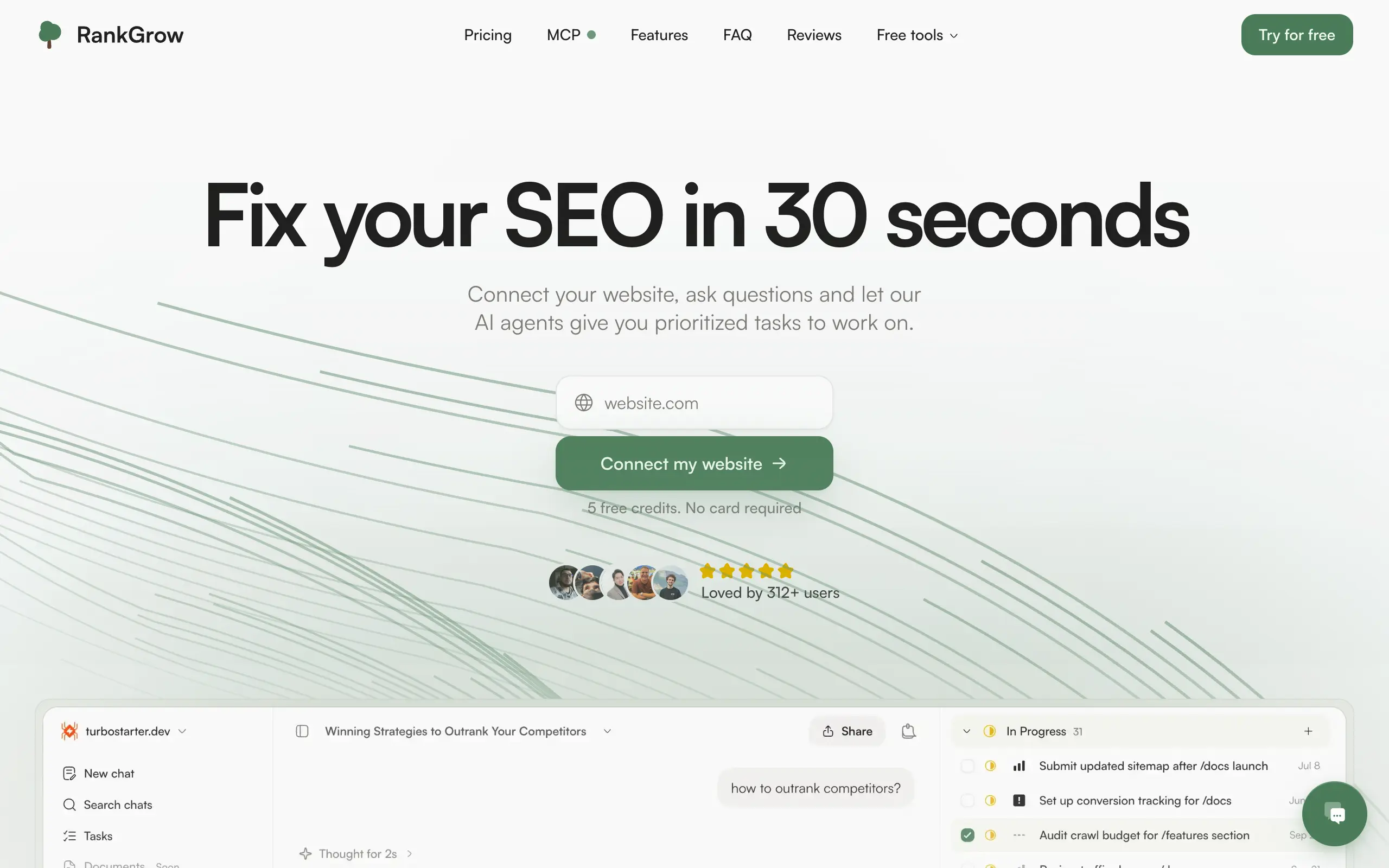
RankGrow
Fix your SEO with AI agents - connect Search Console, get prioritized tasks, and grow organic traffic 📈

SyncReads
Sync your favorite content for distraction-free reading, save time and replace multiple apps. Anytime, anywhere 🔄

Socialcrawl
Get clean, structured data from 21 platforms like TikTok, Instagram, and YouTube with a single request 📊
Statiko
Monitor any Telegram channel in real time - track posts, edits, deletions, and growth with AI recaps 📡
Shibui
AI website builder - describe your business, pick a niche template, edit by chatting, and publish instantly ✨
Pro Service
Find verified home service professionals, compare quotes, and pay securely through escrow - built for Brazilians across the US 🏠
RankGrow
Fix your SEO with AI agents - connect Search Console, get prioritized tasks, and grow organic traffic 📈
SyncReads
Sync your favorite content for distraction-free reading, save time and replace multiple apps. Anytime, anywhere 🔄
Socialcrawl
Get clean, structured data from 21 platforms like TikTok, Instagram, and YouTube with a single request 📊

Dotallio
Personalized AI apps that automate research, data extraction, and content creation without code 🤖

Talk to Santa
Enjoy a magical live video chat or receive a unique AI-generated video greeting from Santa Claus 🎅

pozywka.pl
Scalable blog for food journalist, focused on performance and user experience 🌭

zagrodzki.me
Personal blog and portfolio of Bart Zagrodzki, where he shares his knowledge and work 💼

TurboStarter
Ship your startup everywhere. In minutes.

HTML to Markdown
Convert HTML to Markdown with ease, directly in your browser 📄
Dotallio
Personalized AI apps that automate research, data extraction, and content creation without code 🤖
Talk to Santa
Enjoy a magical live video chat or receive a unique AI-generated video greeting from Santa Claus 🎅
pozywka.pl
Scalable blog for food journalist, focused on performance and user experience 🌭
zagrodzki.me
Personal blog and portfolio of Bart Zagrodzki, where he shares his knowledge and work 💼
TurboStarter
Ship your startup everywhere. In minutes.
HTML to Markdown
Convert HTML to Markdown with ease, directly in your browser 📄

Omichat
Chat with 50+ AI models, including ChatGPT and Claude, in one place - switch models anytime without losing context 🤖

Claude Fast
Supercharge your Claude Code with 6x effective context window and specialized AI agents 🤖

EmojAI
AI-powered emoji picker with smart, context-aware suggestions 🤖

Solohacker
Autonomous company launcher - AI agents work 24/7, escalate what matters, and you stay in control 🤖

BeRawi: Storytelling Coach
Practice storytelling daily with instant feedback to sound clearer, more engaging, and confident 🎤
Omichat
Chat with 50+ AI models, including ChatGPT and Claude, in one place - switch models anytime without losing context 🤖
Claude Fast
Supercharge your Claude Code with 6x effective context window and specialized AI agents 🤖
EmojAI
AI-powered emoji picker with smart, context-aware suggestions 🤖
Solohacker
Autonomous company launcher - AI agents work 24/7, escalate what matters, and you stay in control 🤖
BeRawi: Storytelling Coach
Practice storytelling daily with instant feedback to sound clearer, more engaging, and confident 🎤

Connect with like-minded people
Join our community to get feedback, support, and grow together with 1,000+ builders on board, let's ship it!
Join usShip your startup everywhere. In minutes.
Don't burn tokens on setup and start building features on day one.