Spec2Stack
Convert rough product briefs into architecture diagrams, database schemas, API contracts, and sprint-ready tasks tailored to your tech stack.
Product teams rarely begin with a complete, implementation-ready specification. They begin with a customer interview, a founder’s note, a few acceptance criteria, a rough Figma flow, or a ticket that says “build an analytics dashboard.” The difficult work is translating that ambiguity into architecture, data models, APIs, milestones, and engineering tasks without losing the original product intent.
Spec2Stack is an AI product specification generator designed to close that gap. It converts rough product briefs into architecture diagrams, database schemas, API contracts, and sprint-ready task breakdowns tailored to a team’s chosen technology stack. Instead of treating AI as a generic text assistant, it turns AI into a structured planning layer between product discovery and software delivery.
For startup founders, product managers, solution architects, technical leads, agencies, and internal platform teams, this concept addresses a recurring bottleneck: planning quality often depends on a small number of senior engineers who are already overloaded. A stack-aware specification tool can make early technical planning faster, more consistent, easier to review, and far more actionable.
Why an AI product specification generator is needed now
Modern software teams ship faster than ever, but planning remains fragmented. A typical team may use a document editor for requirements, a whiteboard for architecture, a diagramming tool for systems design, an issue tracker for sprint planning, and API tooling for endpoint contracts. Each handoff introduces interpretation risk.
The result is familiar:
- Product requirements lack technical constraints.
- Architecture decisions are buried in chat threads.
- Database changes surface too late in implementation.
- APIs are designed independently from user flows.
- Engineering tickets are too broad to estimate accurately.
- Teams discover edge cases after development has already started.
An AI architecture planning platform such as Spec2Stack can consolidate these activities into a guided workflow. A user supplies a rough brief, declares constraints, selects a technology stack, and receives a connected set of implementation artifacts rather than an isolated summary.
The fundamental value is not merely generating text. The value is maintaining traceability from product outcome to technical design and delivery work.
For example, a brief such as “Create a multi-tenant client portal where agencies can upload campaign assets, request client approval, and track feedback” can become:
- A high-level service architecture.
- A tenant-aware database schema.
- Role-based access rules.
- REST or GraphQL API contracts.
- Storage and notification recommendations.
- Defined acceptance criteria.
- Dependencies and risk flags.
- Sprint-ready engineering tasks.
This is especially valuable as teams adopt AI-assisted coding tools. Faster code generation raises the importance of high-quality specifications. If implementation becomes cheaper and faster, weak planning becomes a more visible and expensive source of failure.
The practical AI opportunity
AI is most useful in software planning when it converts ambiguous input into reviewable, editable, structured artifacts. A polished narrative is helpful, but a schema, API contract, decision log, and scoped task plan are what make the output operational.
Target audience for Spec2Stack
The best initial customers are not “all developers.” The target market should be defined by workflows where unclear briefs, repeated solution design, and handoff friction create measurable costs.
Startup founders and early-stage product teams
Founders often have strong insight into customer problems but may not have a full-time CTO or dedicated solutions architect. They need a way to validate whether an idea is technically feasible before committing budget, hiring contractors, or beginning development.
Spec2Stack can help these teams produce a credible first-pass technical plan that improves conversations with:
- Fractional CTOs
- Development agencies
- Freelance engineers
- Potential technical co-founders
- Early engineering hires
- Investors evaluating execution readiness
The product should not position itself as a replacement for expert engineering judgment. Instead, it should help founders arrive at technical discussions with clearer assumptions, a better-defined MVP boundary, and fewer hidden requirements.
Product managers and product operations teams
Product managers are frequently expected to write requirements that engineering can estimate and implement. Yet many product teams lack a consistent way to represent technical implications early in discovery.
For this audience, an AI requirements-to-architecture tool can make product briefs more complete by identifying:
- Missing user roles and permissions
- Data retention requirements
- Failure states and edge cases
- Integration dependencies
- Analytics events
- Compliance considerations
- Open questions that need stakeholder decisions
The experience should be designed around guided refinement, not a one-shot “generate everything” action. Product managers need a system that asks intelligent questions and makes uncertainty visible.
Engineering leads and staff engineers
Technical leaders need to review and shape architecture rather than repeatedly starting from blank documents. They are likely to value stack-specific output, transparent assumptions, version comparison, and the ability to enforce organizational standards.
This segment will care about whether Spec2Stack can generate artifacts that resemble real engineering work:
- Entity relationship diagrams
- Service boundaries
- API schemas
- Event definitions
- Security and authorization rules
- Infrastructure assumptions
- Migration concerns
- Test plans
- Explicit non-functional requirements
For senior engineers, the product earns trust when it clearly distinguishes between a recommendation, an assumption, and a confirmed requirement.
Software agencies and consultancies
Agencies face a particularly strong commercial use case. Discovery and solution design are often difficult to standardize, while proposal quality directly affects sales outcomes and project profitability.
A consultancy could use Spec2Stack to create more consistent discovery deliverables, reduce pre-sales effort, and make early estimates less dependent on individual architects. Agency features could include branded exports, reusable stack templates, client-facing summaries, and workspace-level standards.
Internal engineering enablement teams
Larger organizations may use the platform to normalize architecture review inputs and accelerate lightweight internal projects. However, enterprise adoption should come after a strong product-market fit with smaller teams because enterprise buyers introduce long sales cycles, security reviews, procurement demands, and custom integration expectations.
Best early adopter
A small product or agency team that ships repeatedly, has a familiar stack, and needs faster technical discovery without sacrificing senior engineering review.
Strong expansion buyer
An engineering organization that wants repeatable specification standards, reusable architecture patterns, and better traceability from requirements to delivery.
Poor initial fit
A team expecting AI to make irreversible architectural decisions without human review, context, or accountability.
The market gap in requirements-to-architecture workflows
There are many tools for individual parts of the software planning process. Product documentation platforms capture requirements. Diagramming tools visualize systems. API platforms help define contracts. Issue trackers organize delivery. AI chat tools can summarize documents or produce code snippets.
The gap is the connective layer.
Most teams still manually translate one artifact into another. A product brief becomes an architecture discussion. That discussion becomes a diagram. The diagram becomes a data model. The data model informs an API. The API becomes tickets. The tickets become pull requests. Important assumptions can be lost at every stage.
Spec2Stack’s opportunity is to own the transition from intent to implementation plan.
A successful product must do more than create attractive architecture diagrams. It needs to model relationships among outputs:
- A user role in the requirements should map to authorization rules.
- An authorization rule should influence the API contract.
- An API contract should correspond to domain entities.
- Domain entities should inform database schema and migration tasks.
- Features should map to test cases and acceptance criteria.
- Open assumptions should appear in the project risk register.
That connected model creates a defensible product advantage. It is harder to replace than a generic AI prompt library because it becomes embedded in the way teams define, review, and execute work.
| Planning approach | Speed | Stack awareness | Traceability | Review readiness |
|---|---|---|---|---|
| Manual documents and whiteboards | Low | Depends on author | Low | Inconsistent |
| Generic AI chat workflow | High | Variable | Low | Moderate |
| Traditional architecture consultancy | Moderate | High | High | High |
| Spec2Stack workflow | High | High | High | High with human approval |
The core Spec2Stack workflow
The product should be built around an iterative planning workflow, not an opaque generation event. The user should always understand what the system knows, what it inferred, and what it still needs to clarify.
1. Capture the brief and project context
The entry point should accept structured and unstructured input. Users may paste a paragraph, upload a product requirements document, link a repository, or select a reusable project template.
The system should then collect context that materially changes technical output:
- Product type and primary user journey
- Expected user volume and growth assumptions
- Chosen frontend, backend, and database technologies
- Authentication provider or identity requirements
- Third-party integrations
- Deployment environment
- Security and compliance needs
- Team composition and skill level
- Existing codebase constraints
- MVP deadline and scope boundary
A key product decision is to avoid overloading users with a long form before they see value. The interface should collect the minimum initial context, generate a first draft, and then ask targeted questions based on uncertainty.
2. Extract requirements and reveal assumptions
Before generating architecture, Spec2Stack should convert the brief into a structured requirement model. This model can include actors, goals, workflows, business rules, entities, integrations, constraints, and non-functional requirements.
The platform should make assumptions obvious. For example:
Assumption: Each agency belongs to one organization, while a client may have access to multiple projects within that organization.
The user should be able to accept, reject, edit, or defer each assumption. This reduces hallucination risk and improves trust because the AI does not pretend to know what the source material never stated.
3. Generate a stack-aware architecture diagram
The architecture output should reflect the selected stack and operating model. A team using React, Next.js, PostgreSQL, and serverless deployment needs different recommendations than a team operating a Kotlin monolith on Kubernetes.
A useful architecture view should include:
- Client applications and user-facing surfaces
- API or backend-for-frontend layer
- Core domain modules or services
- Data stores and cache layers
- Third-party services
- Authentication and authorization boundaries
- Async jobs, queues, or event flows
- Observability and error monitoring
- Deployment assumptions
The first version can use a declarative diagram format, such as Mermaid-compatible syntax, plus a visual canvas. The advantage of a structured diagram representation is that it can be regenerated when requirements change while retaining manual annotations.
4. Produce database schemas and domain models
The database design should not be a generic list of tables. It should explain relationships, tenancy decisions, indexing suggestions, audit requirements, and data ownership.
For a PostgreSQL-based stack, Spec2Stack could generate:
- Entity relationship diagrams
- SQL migrations
- ORM models
- Enum definitions
- Foreign key relationships
- Suggested indexes
- Soft-delete conventions
- Audit trail strategy
- Row-level security guidance where applicable
Users should be able to select an ORM or schema format such as Prisma, Drizzle, SQLAlchemy, Django ORM, or raw SQL. Stack specificity is a major reason users will pay for the tool rather than use a generic chatbot.
5. Define API contracts before implementation
API design is where product requirements and system design become concrete. Spec2Stack should generate endpoint groups, request and response shapes, validation rules, authorization behavior, error states, and pagination conventions.
The tool should support formats such as OpenAPI and GraphQL schema definitions. It should also call out contract questions that require a product decision, such as whether a resource can be permanently deleted or only archived.
Here is the kind of generated API contract the platform could produce for a project resource:
openapi: 3.1.0
paths:
  /v1/projects:
    post:
      summary: Create a project
      security:
        - bearerAuth: []
      requestBody:
        required: true
        content:
          application/json:
            schema:
              type: object
              required:
                - clientId
                - name
              properties:
                clientId:
                  type: string
                  format: uuid
                name:
                  type: string
                  minLength: 1
                  maxLength: 120
      responses:
        "201":
          description: Project created
        "400":
          description: Validation error
        "403":
          description: User lacks permission to create projects
The commercial value comes from connecting this endpoint to the relevant user story, permissions, database entities, and implementation tasks.
6. Convert the plan into sprint-ready work
Teams should be able to turn approved artifacts into an execution plan. Generated tasks must be granular enough for estimation and review, but not so granular that they become busywork.
Each task should ideally include:
- A concise title
- Product objective
- Technical scope
- Relevant files or modules when a repository is connected
- Dependencies
- Acceptance criteria
- Test requirements
- Risk level
- Suggested owner type such as frontend, backend, platform, or QA
- Source links back to requirements and architecture decisions
This feature makes Spec2Stack more than a planning tool. It becomes an execution handoff system.
Core features that create a defensible product
The initial feature set should focus on depth and reliability rather than attempting to support every engineering methodology.
Stack templates and organization standards
Users should select from opinionated templates, then customize them. Examples include:
- TypeScript SaaS with Next.js, PostgreSQL, and Prisma
- Python API with FastAPI and PostgreSQL
- Rails monolith with Sidekiq and Redis
- Node.js backend with React frontend
- Mobile app backend with Firebase or Supabase
- Enterprise service with Java, Spring Boot, and Kubernetes
Each template should define default architecture patterns, authentication conventions, folder structures, testing expectations, deployment assumptions, and output formats.
For example, a TypeScript SaaS template could recommend Tailwind CSS for interface implementation, PostgreSQL for relational data, and a typed API boundary. The goal is not to claim that one stack is universally best. The goal is to generate coherent output within the team’s chosen constraints.
Requirement-to-artifact traceability
Every artifact should have references back to source requirements. If a user changes a requirement, the platform should identify potentially affected schema entities, endpoints, tasks, and architecture components.
This change-impact analysis is one of the most valuable premium capabilities. It solves a real operational problem: teams often know that something changed, but not all the places where the change must be reflected.
Architecture decision records
Spec2Stack should create lightweight architecture decision records, often called ADRs, for meaningful choices. A generated record could explain why the plan recommends object storage for media uploads, a queue for asynchronous notifications, or row-level tenant isolation.
Each ADR should have:
- Decision context
- Options considered
- Recommended option
- Trade-offs
- Consequences
- Open questions
- Review status
This supports E-E-A-T in the product itself. The system demonstrates reasoning instead of presenting a single conclusion as absolute fact.
Collaborative review and approvals
Architecture is collaborative. Product managers need to confirm user behavior, engineering leads need to approve implementation choices, and security reviewers may need to evaluate data handling.
Collaboration features should include comments, mentions, approval checkpoints, artifact version history, and a clear status model. A practical workflow might use Draft, Needs clarification, Ready for technical review, Approved, and Superseded states.
Export and delivery integrations
Exports should prioritize formats teams already use:
- Markdown specifications
- OpenAPI files
- Mermaid diagrams
- SQL migrations
- JSON task payloads
- CSV exports
- PDF client deliverables for agencies
Later, native integrations with issue trackers, source control, documentation systems, and communication tools can improve retention. Integrations should follow stable official APIs and should be introduced only when the core artifacts are trusted.
Recommended tech stack for building Spec2Stack
Spec2Stack itself needs an architecture that supports multi-tenant SaaS delivery, collaborative editing, artifact versioning, secure AI orchestration, and future integrations.
A pragmatic initial stack could use Next.js and TypeScript for the application layer, PostgreSQL for core data, object storage for uploads and exports, and a background job system for long-running generation tasks.
Application layer
Next.js is a strong choice for the web application because it supports server-rendered pages, route handlers, modern React workflows, and a unified TypeScript codebase. It is particularly suitable for an SEO-driven marketing site and an authenticated application under the same product umbrella.
Trade-off considerations include:
- A full-stack framework can simplify an early team’s operational footprint.
- Complex long-running workflows should not execute directly inside request lifecycles.
- Real-time collaboration may require dedicated infrastructure as usage grows.
- A modular monolith is usually safer than premature microservices.
Data layer
PostgreSQL is appropriate for users, organizations, projects, specifications, artifact versions, comments, approvals, and billing metadata. It provides strong relational modeling, transactions, indexing, and flexible JSON support for AI-generated intermediate data.
A vector search capability can be added for semantic retrieval over uploaded documents, repository summaries, organizational standards, and prior approved specifications. The important design principle is to keep source documents and structured normalized entities distinct. Retrieval improves context, but the canonical project model should remain queryable and auditable.
AI orchestration layer
The AI layer should use structured outputs rather than free-form prose wherever possible. The platform can ask models to return JSON that conforms to explicit schemas for requirements, entities, APIs, tasks, and risks.
This architecture improves reliability because the application can validate output before displaying it. It also enables targeted regeneration. If a user changes a data retention requirement, the system can regenerate only affected policies, schema notes, and related tasks instead of rewriting an entire specification.
A simplified typed artifact model might look like this:
type Requirement = {
  id: string
  title: string
  priority: "must" | "should" | "could"
  acceptanceCriteria: string[]
  assumptions: string[]
}

type ApiEndpoint = {
  method: "GET" | "POST" | "PATCH" | "DELETE"
  path: string
  requirementIds: string[]
  authorization: string[]
  requestSchema: Record<string, unknown>
  responseSchema: Record<string, unknown>
}
Job processing and observability
Generation pipelines can involve file extraction, retrieval, multi-step model calls, validation, rendering, and export generation. These should run in durable background jobs with retries, status updates, and idempotency safeguards.
Observability is essential because AI failures are not limited to infrastructure errors. The product should track:
- Generation duration
- Validation failure rate
- User edits after generation
- Accepted versus rejected assumptions
- Artifact approval rate
- Regeneration frequency
- Task export completion
- Model cost per workspace
These product signals will reveal where the AI workflow is actually useful and where it is creating friction.
Start with a modular monolith, PostgreSQL, object storage, a background job queue, structured AI outputs, and versioned artifacts. This minimizes operational complexity while supporting the core user workflow.
Add event-driven processing, dedicated collaboration services, enterprise identity features, audit exports, tenant-specific model routing, and integration workers only after usage patterns justify the added complexity.
Monetization strategy for an AI architecture planning platform
The strongest monetization model is a subscription product with usage-aware limits. AI generation carries variable costs, while collaboration, standards, history, and integrations create durable account value.
Freemium for individual exploration
A free plan can let users create one or two projects, choose from a limited set of stack templates, and generate basic artifacts. This lowers adoption friction for founders and independent developers.
The free experience should demonstrate the end-to-end transformation from rough brief to usable plan. It should not simply provide a teaser that is too restricted to evaluate.
Pro plan for serious builders
A Pro plan can target founders, product managers, and small engineering teams. It may include higher project limits, full exports, API contracts, task generation, revision history, and custom stack profiles.
Pricing should be tested against value rather than token count alone. Customers pay because they save planning time, reduce rework, and improve delivery confidence.
Team plan for collaborative workflows
A team plan can include workspace collaboration, shared templates, comments, approvals, role-based access, and integrations. This is likely to become the primary revenue tier because the product’s value increases as planning becomes a shared process.
Enterprise plan for governance
Enterprise features can include SSO, SCIM, audit logs, private deployment options, data retention controls, custom model policies, workspace analytics, dedicated support, and legal procurement support.
For enterprise buyers, trust and governance will often matter more than a marginal difference in generation quality.
Avoid pricing only by AI credits
Credit-only pricing can make customers hesitant to explore and refine their specifications. A hybrid model with included usage, clear overages, and value-based collaboration tiers is typically easier to understand.
Competitive advantage and unique selling proposition
Spec2Stack’s USP is clear: it turns rough product intent into a connected, stack-specific implementation system that teams can review, modify, and execute.
The distinction matters. Generic AI tools can produce a diagram or a list of tasks. Specialized documentation tools can store requirements. Diagram tools can visualize components. Issue trackers can manage delivery. Spec2Stack should connect all of them around a shared specification model.
Its durable advantages can include:
- Stack-aware generation that accounts for the technologies a team has selected.
- Structured artifacts instead of unverified blocks of AI prose.
- Traceability from requirement to schema, endpoint, task, and decision.
- Change-impact analysis when product scope evolves.
- Human review workflows that make uncertainty and approval explicit.
- Reusable organization patterns that encode team standards over time.
- Exportable implementation outputs that fit existing delivery tools.
The strongest long-term moat is not the underlying model provider. Model capabilities will continue to commoditize. The moat is the proprietary workflow data and feedback loop created when teams review, edit, approve, and ship from generated plans.
With permission and appropriate privacy controls, the platform can learn which kinds of recommendations are accepted for specific stacks, project types, and organization standards. That creates increasingly useful recommendations without needing to expose one customer’s confidential information to another.
Risks and mitigation strategies
An AI specification generator handles decisions that can influence code quality, security, cost, and delivery timelines. The product must actively manage risk rather than presenting output as authoritative truth.
Hallucinated or incomplete requirements
AI may infer details that do not exist in the source brief. The mitigation is to distinguish clearly among direct source evidence, assumptions, recommendations, and unresolved questions.
Require users to approve assumptions that affect security, billing, compliance, data retention, identity, and external integrations.
Insecure architecture recommendations
A generic recommendation can be inappropriate for a regulated or sensitive application. Spec2Stack should apply policy checks and provide security review prompts for high-risk areas.
Examples include:
- Personal data collection
- Payment information
- Healthcare or financial records
- Admin access
- File uploads
- Webhook processing
- Multi-tenant data isolation
- Secrets management
The product should recommend external review by qualified security professionals for high-impact systems. It should not imply compliance certification merely because it generated a checklist.
Outdated framework guidance
Libraries, cloud APIs, and framework patterns change quickly. The platform needs versioned stack templates, source freshness metadata, and a clear policy for refreshing technical recommendations.
For claims involving ecosystem adoption, benchmark results, or security guidance, the published content should cite primary sources or suggest references from recognized organizations. Examples may include official framework documentation, cloud provider guidance, OWASP resources, and peer-reviewed or industry-standard reports.
Overreliance on generated output
The product should intentionally design for review. Strong UX includes confidence indicators, “why this recommendation” explanations, change diffs, and approval gates.
A responsible positioning statement is simple: Spec2Stack accelerates architecture and planning, while accountable humans validate decisions before implementation.
Sensitive customer data
Product briefs can contain confidential roadmaps, customer information, or intellectual property. Security must be part of the product foundation.
Important controls include encryption in transit and at rest, strict tenant isolation, least-privilege access, retention settings, deletion workflows, audit trails, and transparent AI data handling policies. Enterprise customers may also require options that limit or govern model-provider data processing.
How to validate Spec2Stack before building the full platform
The best validation path is not to build every artifact generator at once. Start with a narrow, high-value workflow and measure whether users trust and act on the output.
For an MVP, a TypeScript SaaS template is a sensible initial focus because it addresses a large builder audience and has well-understood conventions. A starter kit such as TurboStarter can accelerate the operational SaaS foundation, including authentication, billing, workspace patterns, and production-ready application setup, allowing the team to spend more time on the specification engine.
Actionable implementation roadmap
A disciplined roadmap will make Spec2Stack easier to launch and easier to validate.
Phase one: deliver a trustworthy brief-to-plan experience
Build the core user loop:
- Create a workspace and project.
- Paste a rough product brief.
- Choose an initial stack template.
- Generate structured requirements and assumptions.
- Review and edit the generated output.
- Create a first architecture diagram.
- Export a Markdown specification.
At this stage, the key success metric is not generation volume. It is whether users say the output is accurate enough to use in a real technical conversation.
Phase two: add implementation artifacts
Once requirements extraction is reliable, add connected schema generation, API contracts, and sprint-ready tasks. Focus on the relationships among these outputs.
A user should be able to click a requirement and see:
- Related database entities
- Related API endpoints
- Related architecture components
- Linked engineering tasks
- Open questions
- Review status
This is the point where the product becomes meaningfully differentiated from generic AI assistants.
Phase three: build collaboration and integrations
Add comments, approvals, version history, team templates, and exports to issue tracking systems. Make artifact changes visible through clear diffs so reviewers can understand what changed and why.
The product should avoid automating ticket creation without review. Teams value speed, but they also need confidence that generated tasks fit their engineering practices.
Phase four: establish enterprise readiness
After proving repeatable use by teams, invest in SSO, audit logs, security documentation, data controls, and advanced governance. Enterprise expansion should be driven by validated demand rather than assumed from the beginning.
Final perspective
Spec2Stack addresses a high-value and persistent problem in software delivery: turning unclear product intent into a coherent technical plan. Its opportunity is strongest where requirements are incomplete, senior engineering capacity is constrained, and teams need to move from discovery to delivery without sacrificing architectural quality.
The winning product will not claim that AI can replace architects, product managers, or technical leads. Instead, it will make each of those roles more effective by generating structured first drafts, exposing uncertainty early, preserving traceability, and creating implementation-ready artifacts tailored to the team’s stack.
If the product can reliably answer “what should we build, how should it work, what data does it need, how should the API behave, and what should the team do next,” Spec2Stack can become an essential operating layer for modern software planning.
More 🤖 AI Startup SaaS ideas
Discover more innovative ai startup SaaS ideas that are trending in 2026. Each idea is AI-generated with market validation and growth potential to help you find your next profitable venture faster than competitors.
Your competitors are building with TurboStarter
Below are some of the SaaS ideas that have been generated and built with our starter kit.
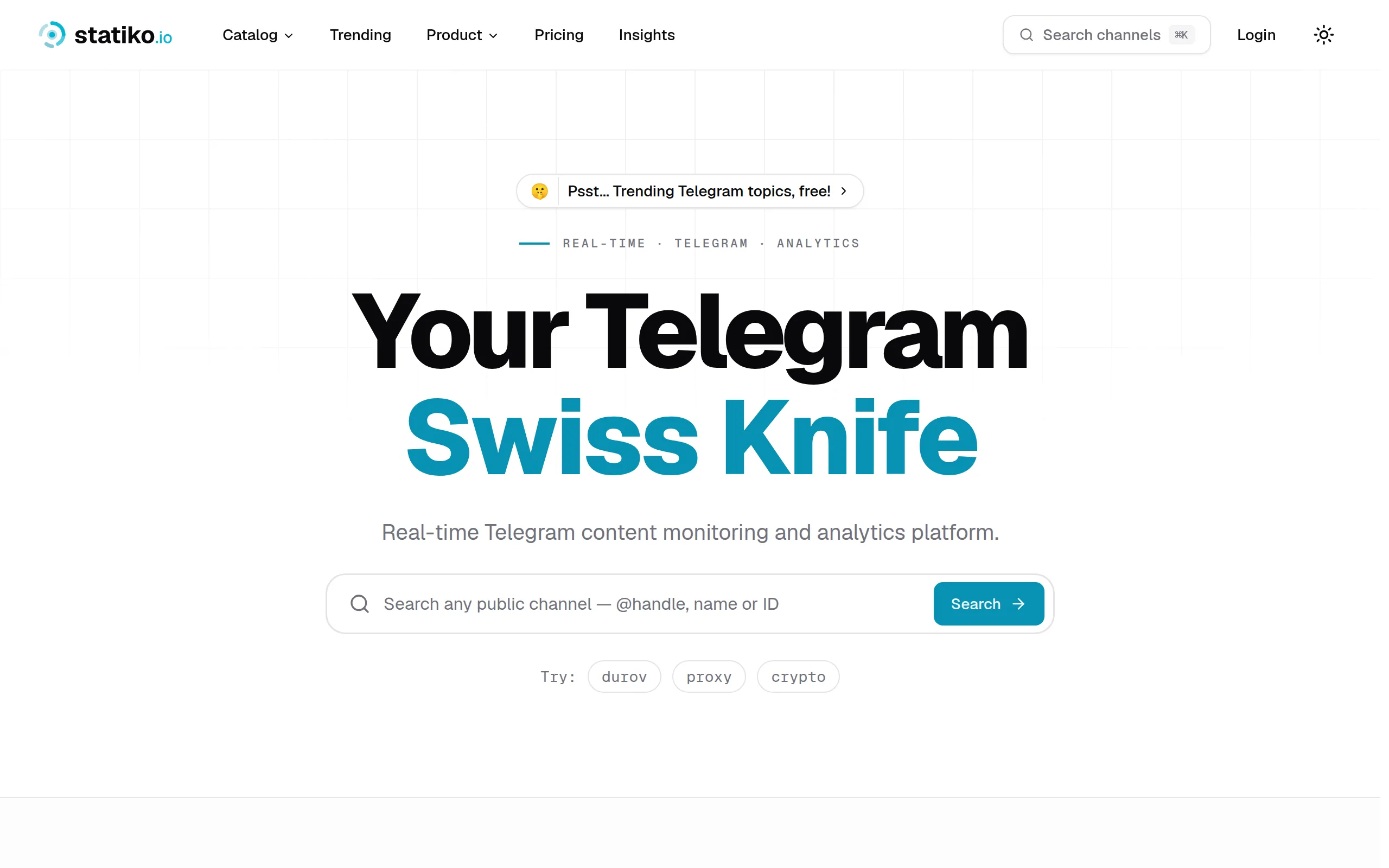
Statiko
Monitor any Telegram channel in real time - track posts, edits, deletions, and growth with AI recaps 📡

Shibui
AI website builder - describe your business, pick a niche template, edit by chatting, and publish instantly ✨

Pro Service
Find verified home service professionals, compare quotes, and pay securely through escrow - built for Brazilians across the US 🏠
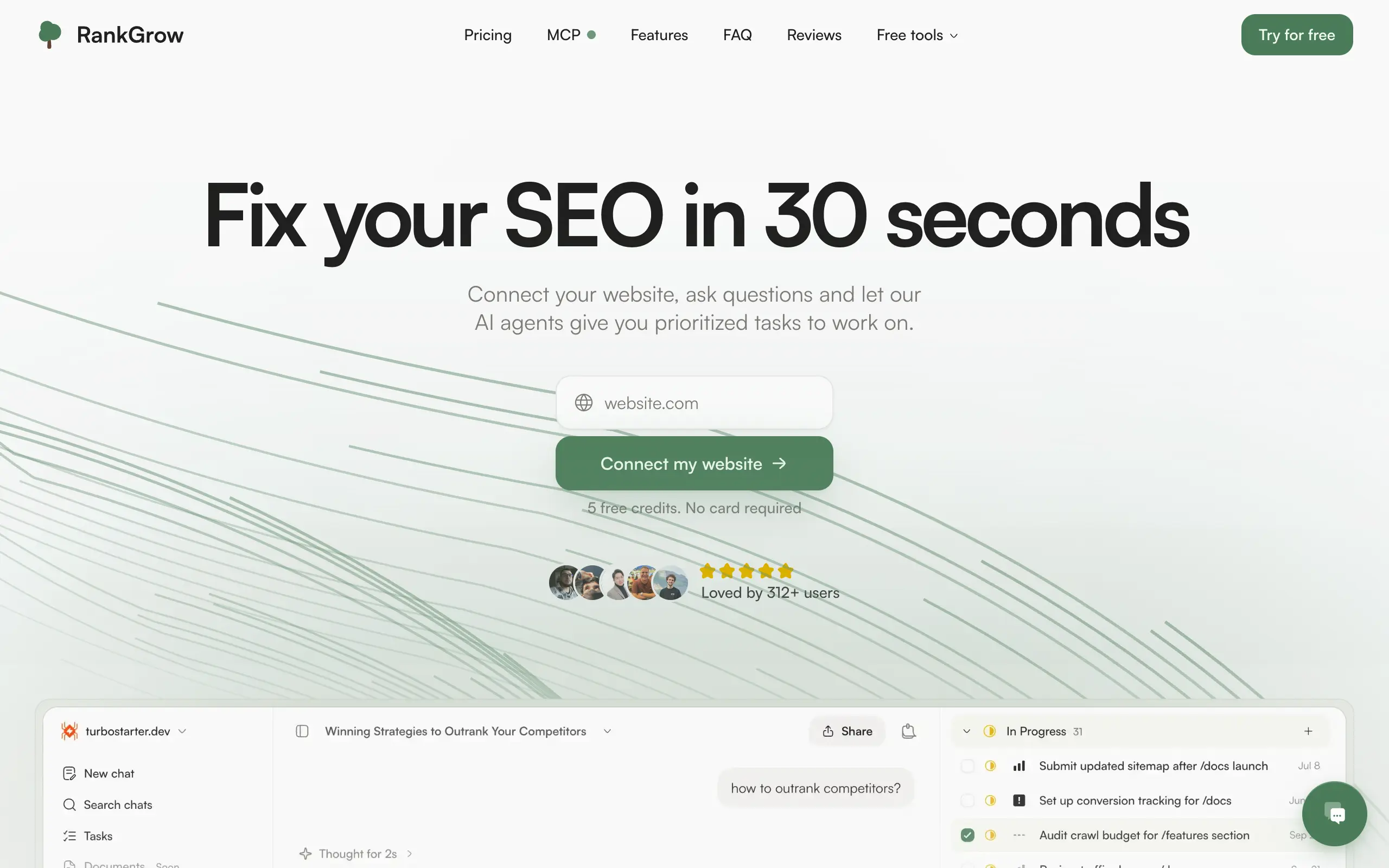
RankGrow
Fix your SEO with AI agents - connect Search Console, get prioritized tasks, and grow organic traffic 📈
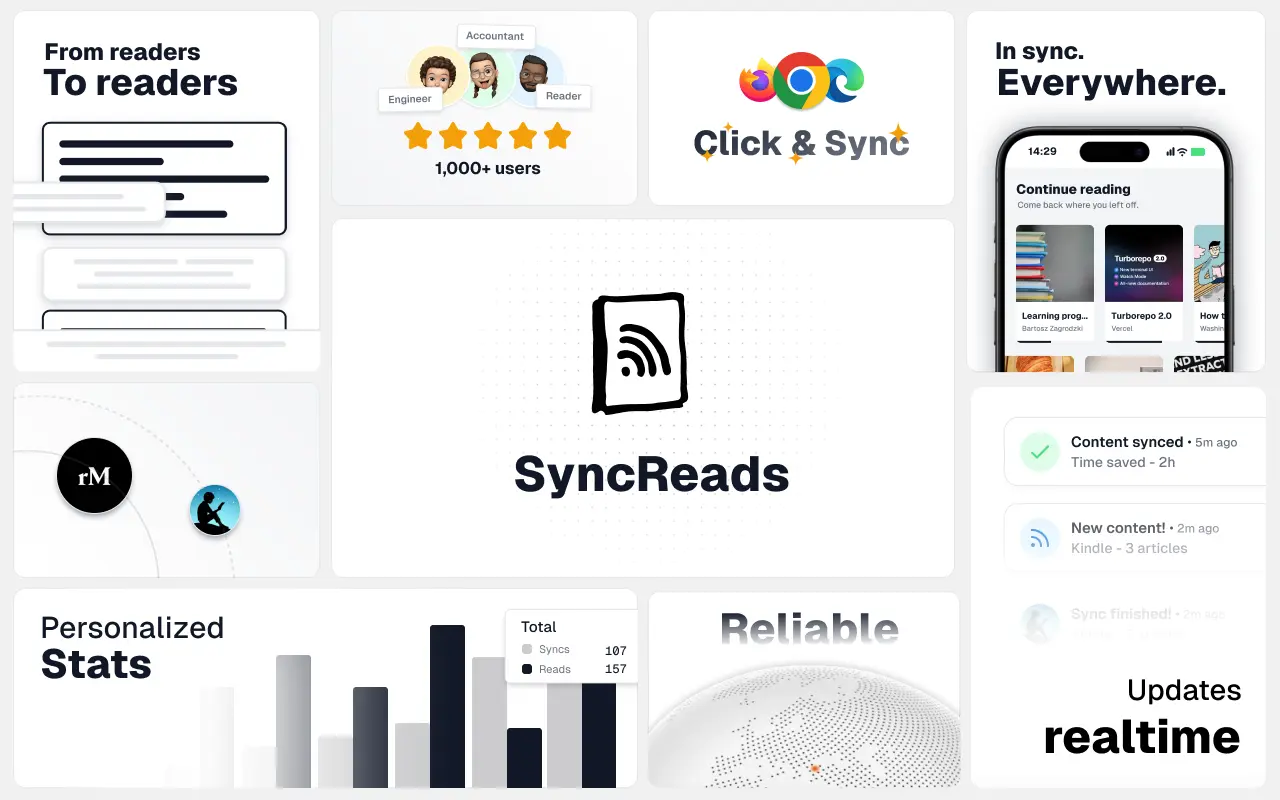
SyncReads
Sync your favorite content for distraction-free reading, save time and replace multiple apps. Anytime, anywhere 🔄
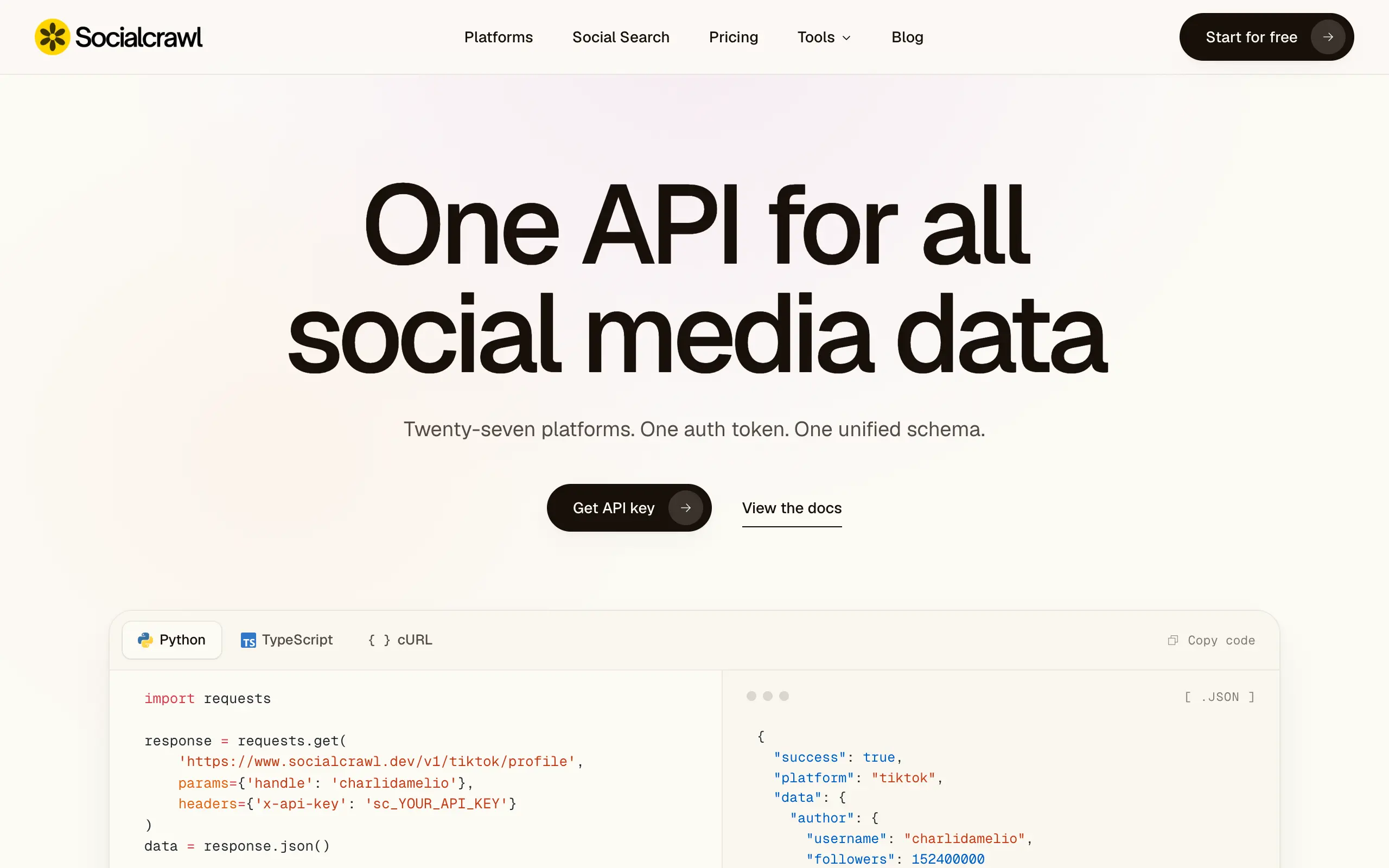
Socialcrawl
Get clean, structured data from 21 platforms like TikTok, Instagram, and YouTube with a single request 📊
Statiko
Monitor any Telegram channel in real time - track posts, edits, deletions, and growth with AI recaps 📡
Shibui
AI website builder - describe your business, pick a niche template, edit by chatting, and publish instantly ✨
Pro Service
Find verified home service professionals, compare quotes, and pay securely through escrow - built for Brazilians across the US 🏠
RankGrow
Fix your SEO with AI agents - connect Search Console, get prioritized tasks, and grow organic traffic 📈
SyncReads
Sync your favorite content for distraction-free reading, save time and replace multiple apps. Anytime, anywhere 🔄
Socialcrawl
Get clean, structured data from 21 platforms like TikTok, Instagram, and YouTube with a single request 📊
Statiko
Monitor any Telegram channel in real time - track posts, edits, deletions, and growth with AI recaps 📡
Shibui
AI website builder - describe your business, pick a niche template, edit by chatting, and publish instantly ✨
Pro Service
Find verified home service professionals, compare quotes, and pay securely through escrow - built for Brazilians across the US 🏠
RankGrow
Fix your SEO with AI agents - connect Search Console, get prioritized tasks, and grow organic traffic 📈
SyncReads
Sync your favorite content for distraction-free reading, save time and replace multiple apps. Anytime, anywhere 🔄
Socialcrawl
Get clean, structured data from 21 platforms like TikTok, Instagram, and YouTube with a single request 📊
Statiko
Monitor any Telegram channel in real time - track posts, edits, deletions, and growth with AI recaps 📡
Shibui
AI website builder - describe your business, pick a niche template, edit by chatting, and publish instantly ✨
Pro Service
Find verified home service professionals, compare quotes, and pay securely through escrow - built for Brazilians across the US 🏠
RankGrow
Fix your SEO with AI agents - connect Search Console, get prioritized tasks, and grow organic traffic 📈
SyncReads
Sync your favorite content for distraction-free reading, save time and replace multiple apps. Anytime, anywhere 🔄
Socialcrawl
Get clean, structured data from 21 platforms like TikTok, Instagram, and YouTube with a single request 📊
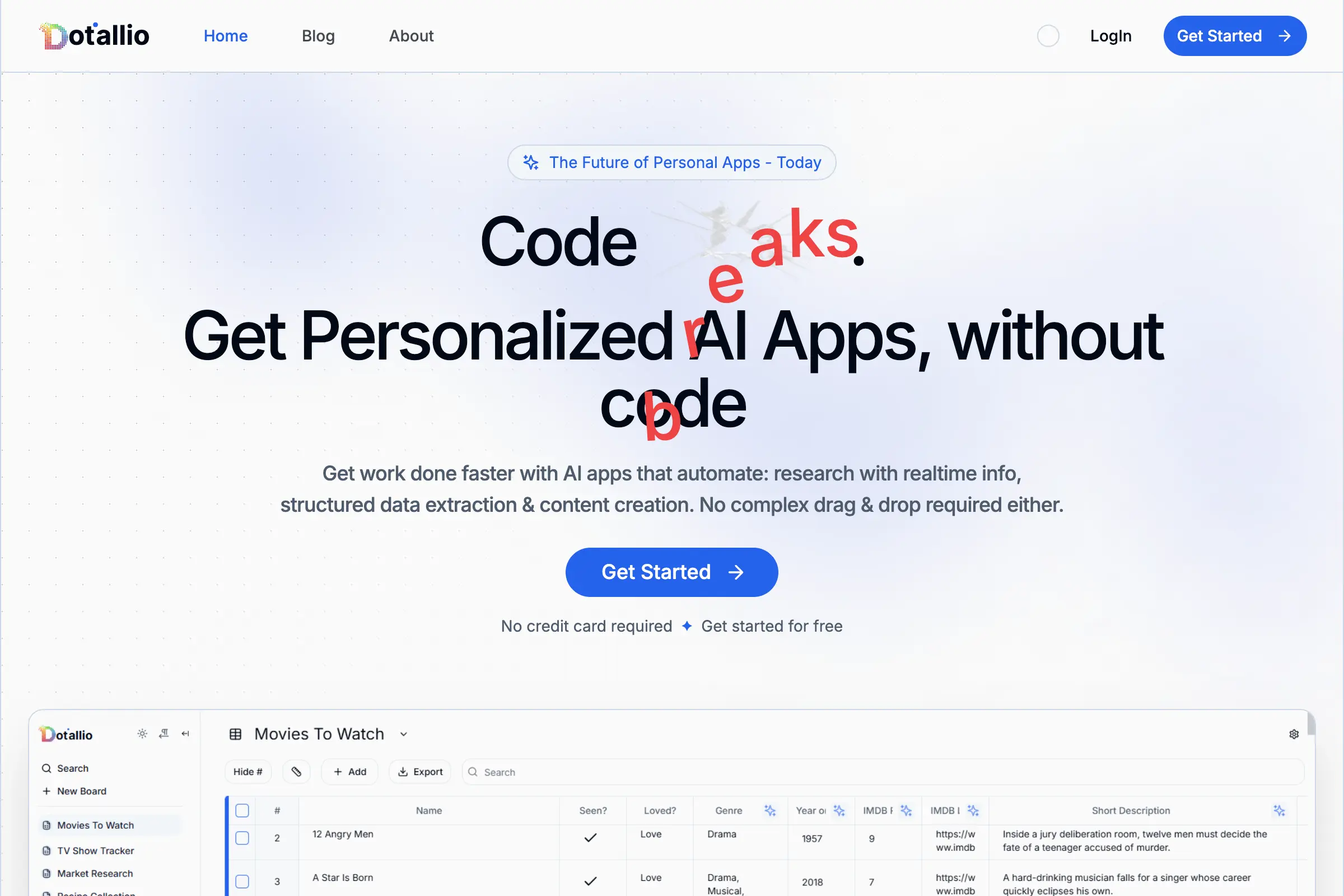
Dotallio
Personalized AI apps that automate research, data extraction, and content creation without code 🤖

Talk to Santa
Enjoy a magical live video chat or receive a unique AI-generated video greeting from Santa Claus 🎅

pozywka.pl
Scalable blog for food journalist, focused on performance and user experience 🌭
zagrodzki.me
Personal blog and portfolio of Bart Zagrodzki, where he shares his knowledge and work 💼
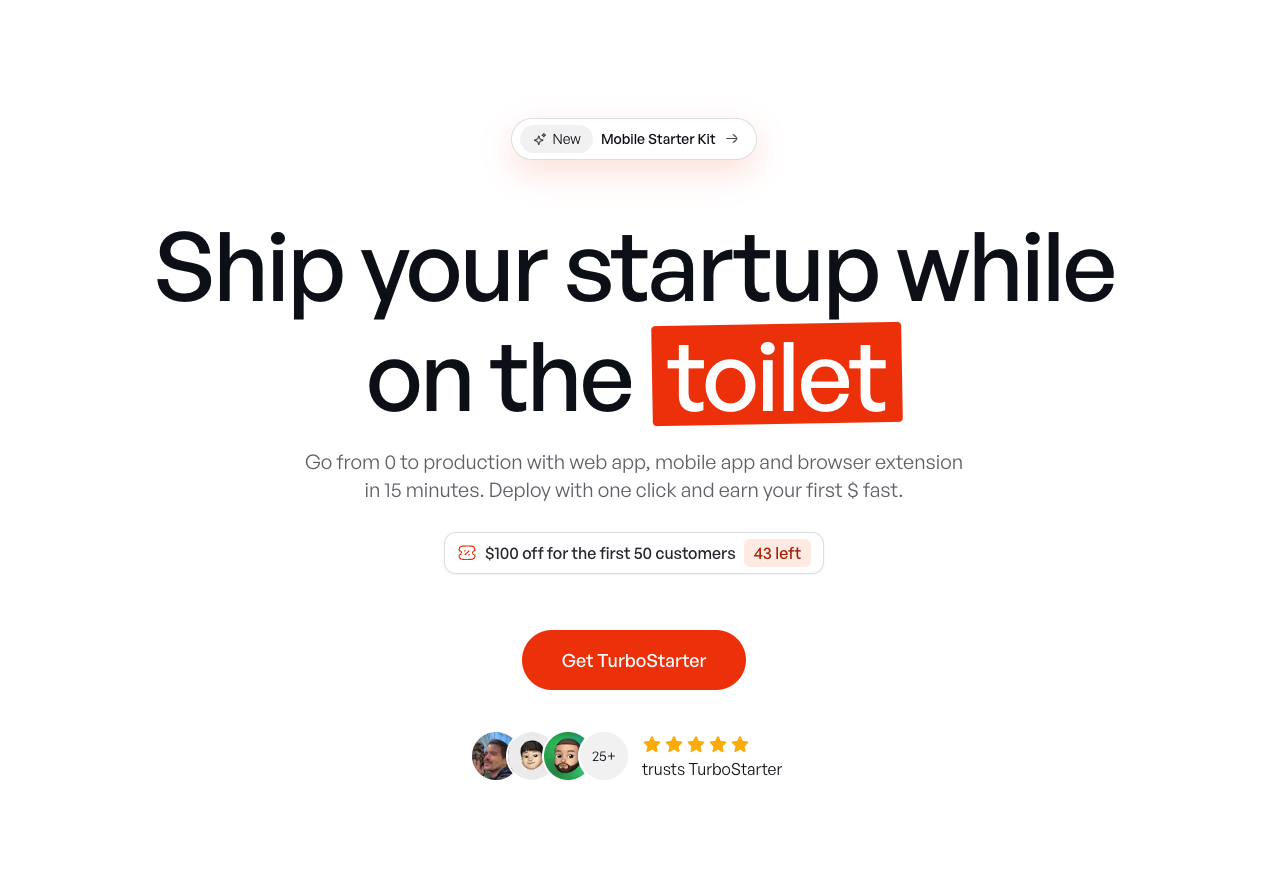
TurboStarter
Ship your startup everywhere. In minutes.
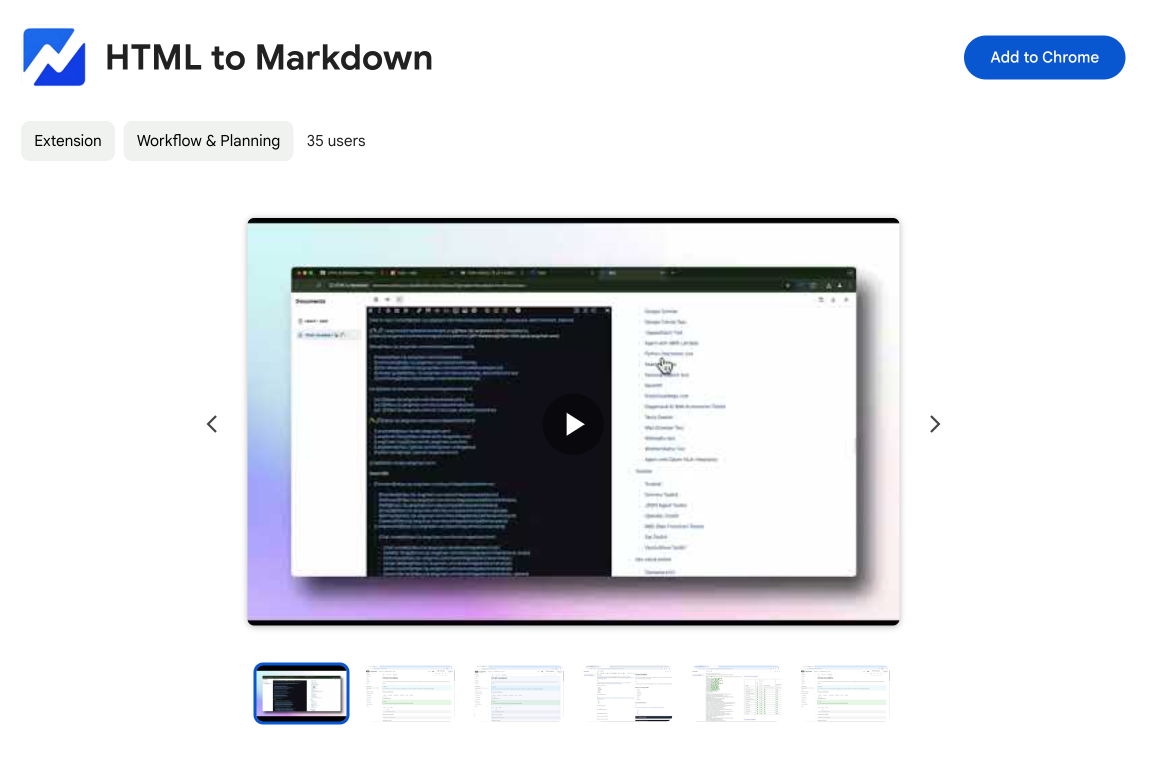
HTML to Markdown
Convert HTML to Markdown with ease, directly in your browser 📄
Dotallio
Personalized AI apps that automate research, data extraction, and content creation without code 🤖
Talk to Santa
Enjoy a magical live video chat or receive a unique AI-generated video greeting from Santa Claus 🎅
pozywka.pl
Scalable blog for food journalist, focused on performance and user experience 🌭
zagrodzki.me
Personal blog and portfolio of Bart Zagrodzki, where he shares his knowledge and work 💼
TurboStarter
Ship your startup everywhere. In minutes.
HTML to Markdown
Convert HTML to Markdown with ease, directly in your browser 📄
Dotallio
Personalized AI apps that automate research, data extraction, and content creation without code 🤖
Talk to Santa
Enjoy a magical live video chat or receive a unique AI-generated video greeting from Santa Claus 🎅
pozywka.pl
Scalable blog for food journalist, focused on performance and user experience 🌭
zagrodzki.me
Personal blog and portfolio of Bart Zagrodzki, where he shares his knowledge and work 💼
TurboStarter
Ship your startup everywhere. In minutes.
HTML to Markdown
Convert HTML to Markdown with ease, directly in your browser 📄
Dotallio
Personalized AI apps that automate research, data extraction, and content creation without code 🤖
Talk to Santa
Enjoy a magical live video chat or receive a unique AI-generated video greeting from Santa Claus 🎅
pozywka.pl
Scalable blog for food journalist, focused on performance and user experience 🌭
zagrodzki.me
Personal blog and portfolio of Bart Zagrodzki, where he shares his knowledge and work 💼
TurboStarter
Ship your startup everywhere. In minutes.
HTML to Markdown
Convert HTML to Markdown with ease, directly in your browser 📄
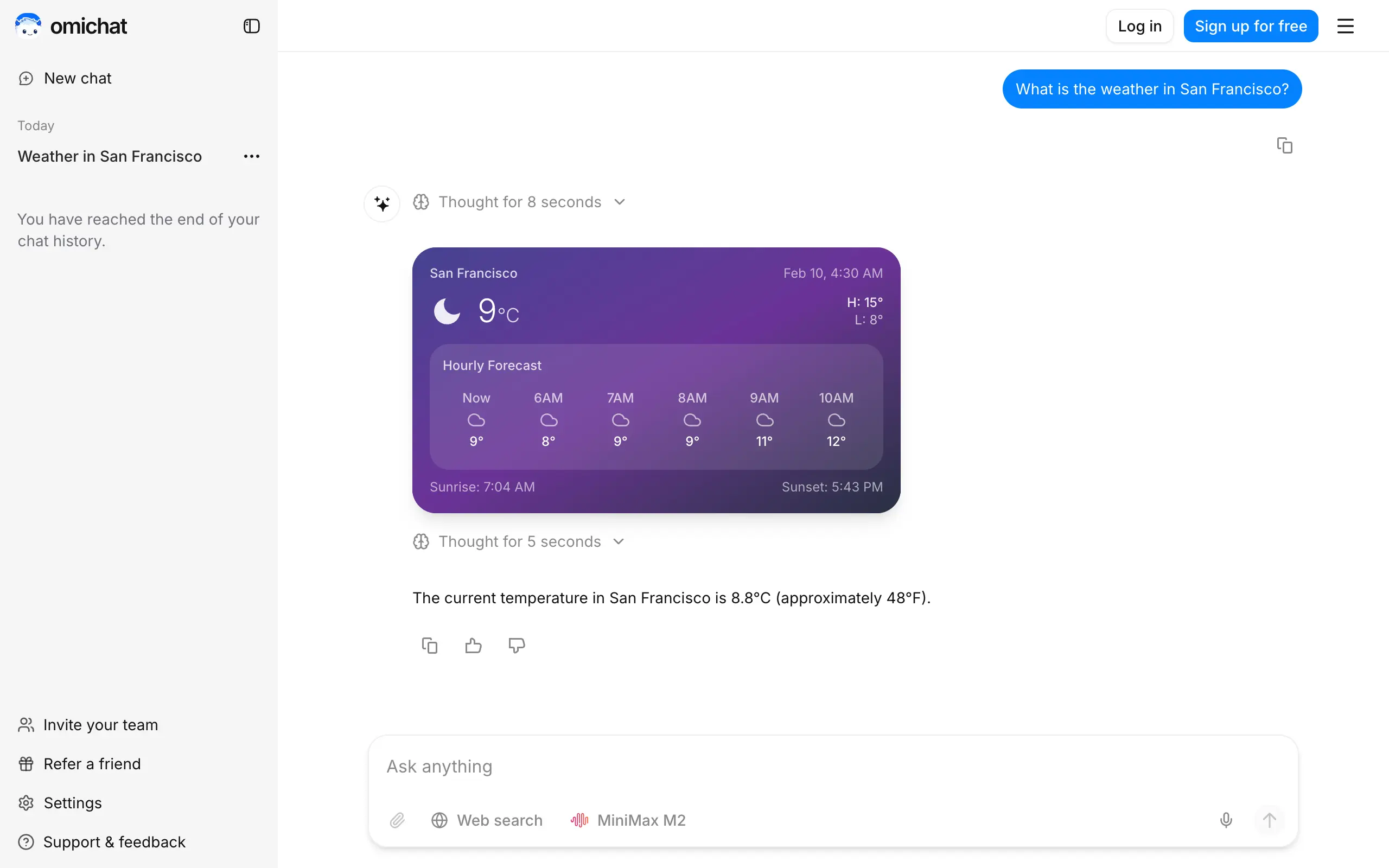
Omichat
Chat with 50+ AI models, including ChatGPT and Claude, in one place - switch models anytime without losing context 🤖
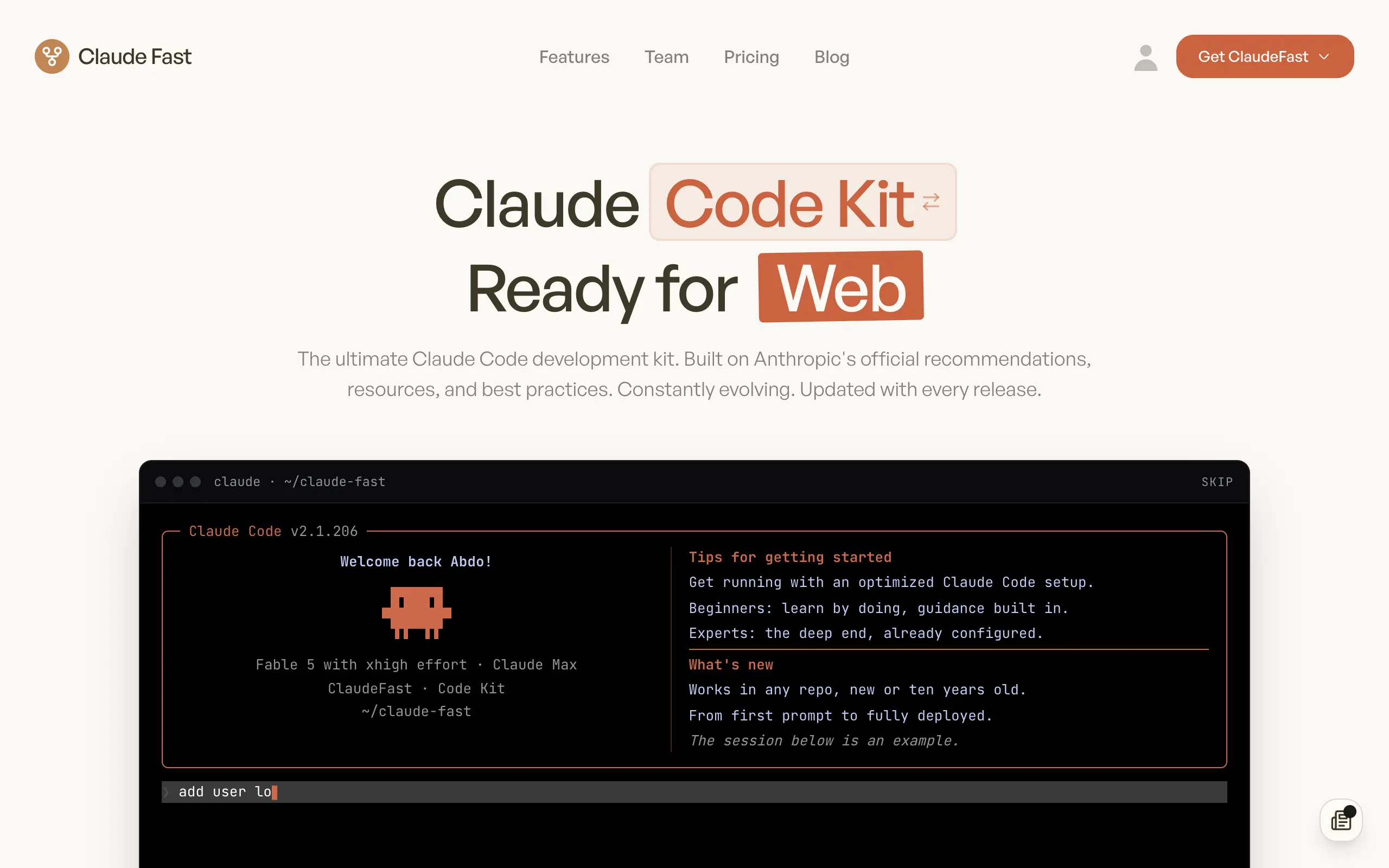
Claude Fast
Supercharge your Claude Code with 6x effective context window and specialized AI agents 🤖
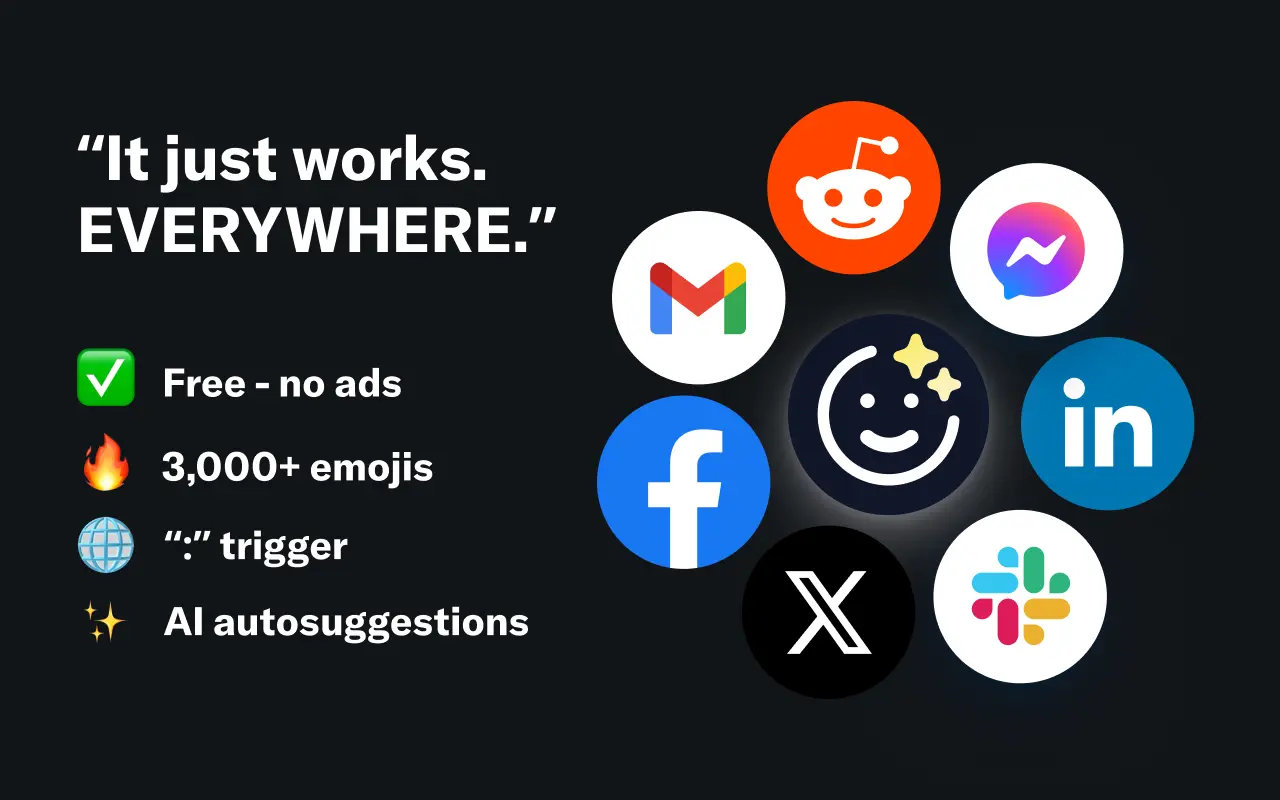
EmojAI
AI-powered emoji picker with smart, context-aware suggestions 🤖
Solohacker
Autonomous company launcher - AI agents work 24/7, escalate what matters, and you stay in control 🤖
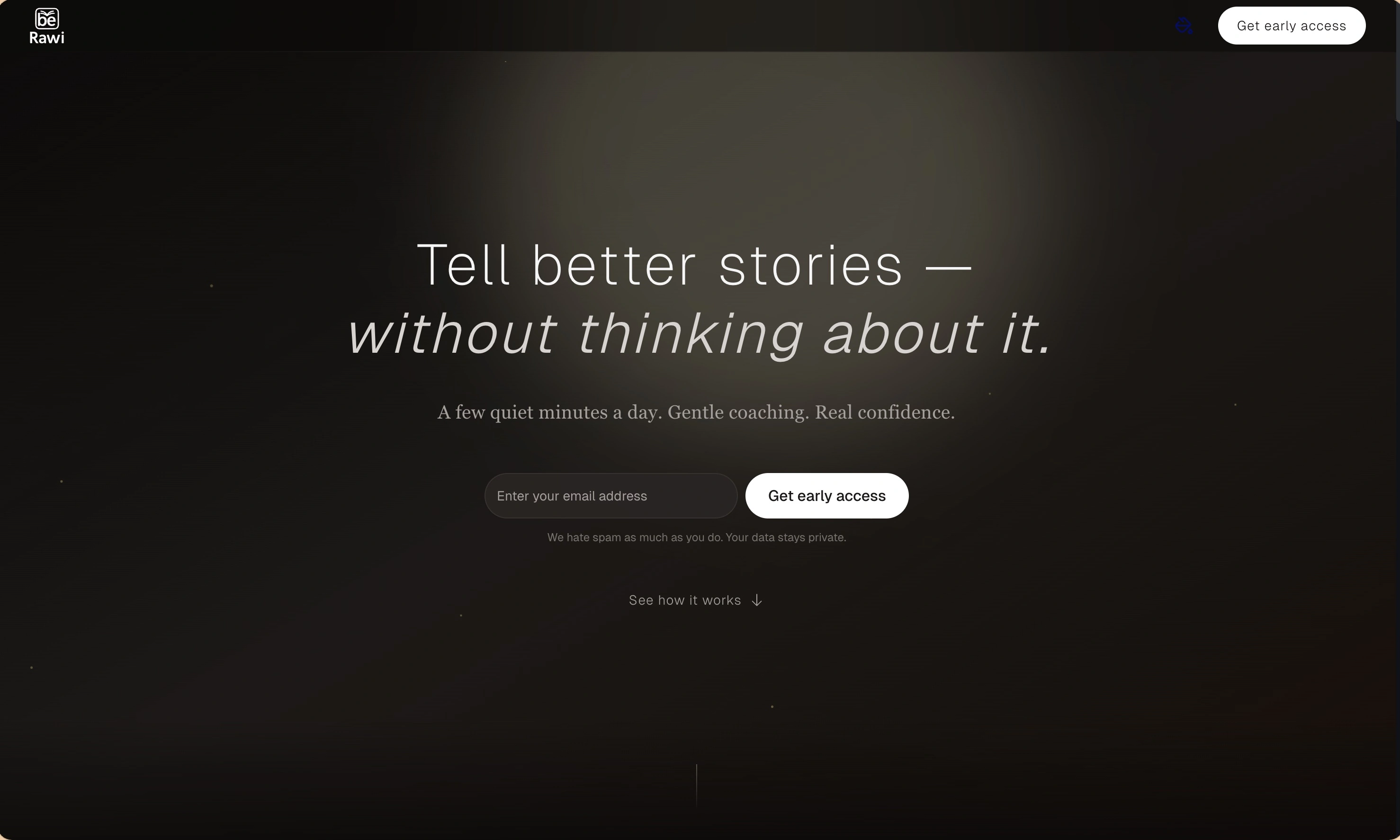
BeRawi: Storytelling Coach
Practice storytelling daily with instant feedback to sound clearer, more engaging, and confident 🎤
Omichat
Chat with 50+ AI models, including ChatGPT and Claude, in one place - switch models anytime without losing context 🤖
Claude Fast
Supercharge your Claude Code with 6x effective context window and specialized AI agents 🤖
EmojAI
AI-powered emoji picker with smart, context-aware suggestions 🤖
Solohacker
Autonomous company launcher - AI agents work 24/7, escalate what matters, and you stay in control 🤖
BeRawi: Storytelling Coach
Practice storytelling daily with instant feedback to sound clearer, more engaging, and confident 🎤
Omichat
Chat with 50+ AI models, including ChatGPT and Claude, in one place - switch models anytime without losing context 🤖
Claude Fast
Supercharge your Claude Code with 6x effective context window and specialized AI agents 🤖
EmojAI
AI-powered emoji picker with smart, context-aware suggestions 🤖
Solohacker
Autonomous company launcher - AI agents work 24/7, escalate what matters, and you stay in control 🤖
BeRawi: Storytelling Coach
Practice storytelling daily with instant feedback to sound clearer, more engaging, and confident 🎤
Omichat
Chat with 50+ AI models, including ChatGPT and Claude, in one place - switch models anytime without losing context 🤖
Claude Fast
Supercharge your Claude Code with 6x effective context window and specialized AI agents 🤖
EmojAI
AI-powered emoji picker with smart, context-aware suggestions 🤖
Solohacker
Autonomous company launcher - AI agents work 24/7, escalate what matters, and you stay in control 🤖
BeRawi: Storytelling Coach
Practice storytelling daily with instant feedback to sound clearer, more engaging, and confident 🎤

Connect with like-minded people
Join our community to get feedback, support, and grow together with 1,000+ builders on board, let's ship it!
Join usShip your startup everywhere. In minutes.
Don't burn tokens on setup and start building features on day one.