SpecForge AI
Turn product briefs into factory-ready specifications, RFQs, and compliance checklists. Catch costly ambiguities before sampling and production.
What SpecForge AI should solve
SpecForge AI is an AI-powered product specification and sourcing platform that turns product briefs into factory-ready documents, request-for-quotation packages, and compliance checklists. Its central promise is straightforward: help product teams identify missing information before it becomes an expensive delay, rejected sample, or production mistake.
The idea addresses a common gap between how a product is described inside a company and what a supplier needs to make it. A brief might explain the desired look, price, and customer, but omit tolerances, construction details, test methods, packaging requirements, or regulatory considerations. Those gaps often surface only after a factory has started asking questions—or after a sample arrives and the team realizes that everyone interpreted the brief differently.
SpecForge AI can create value by making those gaps visible earlier. It should not simply rewrite a brief into polished prose. It should structure product information, identify uncertainty, ask targeted questions, and produce documents that people can review and use in sourcing workflows.
The opportunity is to build a practical bridge between product intent and manufacturing execution. That means serving product developers and sourcing teams while treating factory users, compliance specialists, and quality teams as important stakeholders too.
The market opportunity for AI product specification software
Many businesses already use general-purpose AI tools to draft product descriptions, summarize supplier emails, or generate early concepts. Yet producing a reliable manufacturing specification requires more than fluent writing. The output must be complete enough to quote, precise enough to review, and traceable enough to update when a product changes.
That creates a focused market opportunity for AI product specification software: a tool that understands the structure and workflow of product development rather than treating a specification as a generic document.
Why product briefs often fail to become production-ready
A product brief is usually written for alignment. It communicates the customer, product concept, positioning, target cost, and desired launch. A factory specification has a different job. It must reduce interpretation by describing measurable requirements, materials, construction, testing, packaging, and other details needed to make and evaluate the product.
The same gap can arise in several ways:
- Requirements are implicit. A brief might say “durable” or “premium” without defining how durability or quality should be assessed.
- Information is fragmented. Measurements may live in a spreadsheet, material choices in a presentation, and packaging notes in email.
- Ownership is unclear. Teams may not know who can approve a material, tolerance, test method, or design change.
- The product changes. A revision may update one document but leave another with outdated requirements.
- Compliance questions appear late. A product’s intended market, materials, claims, or components may affect what evidence or testing is needed.
These are not simply writing problems. They are problems of structure, decision-making, and handoff. SpecForge AI should therefore be designed as a workflow system, with document generation as one important feature rather than the whole product.
The initial customer segment
A strong starting segment is small and midsize consumer product companies that develop physical goods but do not have a large internal engineering or compliance organization. These businesses may have product, design, and sourcing teams, yet rely on external factories and consultants for execution.
Potential early customers include:
- Direct-to-consumer brands developing products with multiple components or materials.
- Product development agencies managing briefs for several clients.
- Importers and distributors coordinating between buyers and factories.
- Sourcing teams that prepare repeat RFQs across product lines.
- Hardware startups moving from prototypes to supplier quotes.
- Established manufacturers that receive inconsistent briefs from customers.
The best initial customer is not necessarily the company with the most complex product. It is the customer with a repeated, expensive handoff problem and enough process maturity to evaluate a better workflow.
For example, a brand that develops a new product every quarter may have more to gain than a company that creates one highly regulated product every few years. Repeat use improves onboarding economics, produces more workflow feedback, and supports a clearer subscription case.
The market gap
Existing tools tend to cover separate parts of the job. Teams may use a project management system for status, spreadsheets for requirements, cloud documents for specifications, supplier platforms for sourcing, and specialist services for testing or compliance. These tools can be useful, but they do not necessarily connect a product brief to a structured, reviewable specification.
SpecForge AI can occupy that coordination layer. It does not need to replace every system customers use. It needs to make the critical handoff more dependable by connecting:
- The source brief and its attachments.
- Structured product requirements.
- Open questions and assumptions.
- RFQ-ready information.
- Compliance and testing considerations.
- Supplier responses and revisions.
- Approval history and document versions.
This positioning keeps the product focused. Rather than promising to automate manufacturing, SpecForge AI can promise to help teams prepare better inputs for the people and systems that manufacture products.
Target users and their needs
A product with multiple stakeholders should make each person’s role clear. Otherwise, it risks becoming a document generator used by one person without becoming part of the company’s operating process.
Product managers and founders
Product managers and founders need to translate a customer need into a feasible product. They often want a faster path from concept to quote, but may not know every technical detail required by a factory.
SpecForge AI should help them distinguish between:
- What is already decided.
- What is a preference rather than a requirement.
- What needs a technical owner.
- What a supplier must confirm.
- What could change cost, lead time, quality, or compliance risk.
The system should make uncertainty actionable rather than presenting a long list of generic questions.
Sourcing and procurement teams
Sourcing teams need comparable quotes. If each supplier receives a different or incomplete request, it becomes difficult to determine whether price differences reflect supplier performance or different assumptions.
For this audience, SpecForge AI should help create consistent RFQ packages, track supplier questions, and make differences between quotes easier to review. It should also preserve the distinction between a supplier’s proposed alternative and the company’s approved requirement.
Designers and engineers
Designers and engineers need the specification to reflect intent without flattening important nuance. A visual reference may communicate appearance, but it may not define a dimension, material grade, or acceptance criterion.
These users need a way to review AI-generated interpretations, edit technical fields, attach source evidence, and see where a requirement came from. The product should never silently convert an uncertain interpretation into an approved technical fact.
Compliance and quality teams
Compliance and quality specialists need visibility into product claims, materials, markets, test plans, and supporting evidence. They may not be involved in the first draft, but early visibility can prevent avoidable rework.
SpecForge AI should make it easy for these users to flag a requirement, attach a review note, or mark an item as needing expert verification. It should not imply that a generated checklist establishes legal compliance.
Factories and suppliers
Factories are not merely recipients of documents. They are collaborators who may identify conflicting dimensions, unavailable materials, production constraints, or alternative processes.
A future supplier-facing experience could let a factory ask structured questions and propose changes without altering the buyer’s approved specification. That distinction is important: supplier input should be captured as a proposal, with a clear path for review and approval.
Core features for SpecForge AI
The product should be built around a reliable conversion process: ingest information, structure it, surface gaps, review decisions, and produce controlled outputs.
1. Product brief intake and source management
Users should be able to start with a brief and add supporting files such as PDFs, spreadsheets, images, sketches, and existing specifications. Each extracted requirement should retain a reference to its source so a reviewer can check whether the system interpreted it correctly.
Useful intake capabilities include:
- A guided form for customers who do not have a clean brief.
- File upload and document parsing.
- Product category templates.
- Version tracking for source materials.
- A way to mark conflicting or superseded files.
- Source references attached to extracted fields.
The system should tell users when a file is unreadable, incomplete, or ambiguous. A confident-looking output based on a failed extraction is worse than an explicit request to review the source.
2. Structured specification generation
Instead of producing only a block of prose, SpecForge AI should create a structured product record. Depending on product category, fields might cover intended use, dimensions, materials, components, finishes, performance requirements, packaging, labeling, quality expectations, and testing.
A structured model makes the output easier to:
- Validate for missing fields.
- Compare across product versions.
- Export into different formats.
- Review with different roles.
- Reuse in future product development.
- Feed into downstream procurement or product lifecycle systems.
Templates should be configurable. A textile product, an electronic accessory, and a food-contact item may require different questions and evidence. The platform should avoid presenting one universal checklist as suitable for every category.
3. Ambiguity and completeness checks
This is the feature most likely to define the product’s value. SpecForge AI should identify statements that appear subjective, conflicting, incomplete, or difficult to verify.
For example, “water-resistant” could prompt questions about the intended use, test conditions, and required performance level. “Use recycled material” could prompt the team to clarify the material, minimum recycled content, documentation, and acceptable supplier evidence.
A good ambiguity engine should:
- Explain why a field needs clarification.
- Separate missing information from contradictory information.
- Suggest questions without asserting unsupported answers.
- Prioritize issues by likely impact on quoting, sampling, production, or review.
- Allow a user to resolve an issue, defer it, or assign it to an owner.
- Keep an audit trail of the decision.
The goal is not to eliminate every unknown before an RFQ. Some questions are appropriately answered by suppliers. The product should help users distinguish between information they need to decide and information they want a supplier to propose.
4. RFQ package creation
An RFQ package should help suppliers quote against a consistent set of requirements. It could include a specification, relevant drawings or references, target quantities, requested lead time, packaging requirements, and a structured response form.
A useful RFQ workflow would let the team:
- Select which requirements are mandatory and which are open to supplier input.
- Generate a supplier-ready document.
- Create a consistent question set for multiple suppliers.
- Capture quotes and supplier assumptions.
- Compare proposed alternatives against the requested specification.
- Keep sensitive commercial information separate where appropriate.
SpecForge AI should not pretend that a document alone guarantees a comparable quote. Quote comparability also depends on quantities, Incoterms, payment terms, tooling, packaging, shipping assumptions, and other commercial factors. The platform should encourage users to include those details where relevant.
5. Compliance and testing checklists
Compliance support can be a valuable differentiator, but it is also an area where misleading claims can create substantial risk. A checklist should be positioned as a planning and issue-spotting aid, not a certification or legal determination.
A responsible checklist experience should ask for context such as:
- Product category and intended use.
- Markets where the product may be sold.
- Materials, components, or substances that may require review.
- Product claims and labeling plans.
- Whether children or other sensitive user groups are involved.
- Existing test reports, declarations, or supplier documentation.
The system should state the assumptions behind each suggested item and identify when a qualified specialist should review it. Regulatory requirements can depend on product details and jurisdiction; generated guidance should not be framed as definitive legal advice.
6. Collaboration, approvals, and change control
A specification is a living product record. Teams need to know who changed a requirement, what changed, why it changed, and whether the change was approved.
Core collaboration features should include:
- Role-based access for internal teams and invited suppliers.
- Comments on individual requirements.
- Approval states and designated owners.
- Version comparison.
- Change summaries.
- Notifications when a change affects an RFQ or existing sample.
- Exportable revision history.
A strong change-control model can become a durable competitive advantage because it ties product decisions to their consequences. It also reduces the risk of teams quoting or sampling against an outdated file.
7. Export and integrations
Customers will expect the tool to work with their existing processes. Early exports might include PDF, spreadsheet, and editable document formats. Later integrations could connect to product lifecycle management, enterprise resource planning, procurement, or project management systems.
The initial product should prioritize dependable exports and a clean data model over a long list of shallow integrations. A document that reliably preserves tables, revision identifiers, and source references is more valuable than an integration that creates confusing duplicate records.
How the AI workflow should work
SpecForge AI should use AI where it can improve speed and consistency, while relying on deterministic software for permissions, approvals, version control, and other operational rules.
A practical flow is:
- Collect source material. The user uploads a brief, relevant drawings, and existing requirements.
- Extract candidate information. The system identifies product attributes and links them to their sources.
- Normalize into fields. Candidate requirements are organized into the relevant product template.
- Run validation rules. The platform checks for missing required fields, contradictory values, and unresolved assumptions.
- Generate targeted questions. AI suggests clarifications and explains why they matter.
- Review with the team. Users approve, correct, assign, or defer each item.
- Create controlled outputs. The platform generates an RFQ package, specification, and checklist with version information.
- Capture supplier feedback. Supplier questions and proposed alternatives become reviewable records.
- Update the product record. Approved decisions flow into the next revision.
The system should make provenance visible. For every generated statement, users should be able to see whether it came from a source document, a user decision, a template rule, or an AI suggestion.
A simple internal representation might look like this:
type Requirement = {
  id: string;
  category: string;
  value: string | null;
  status: "confirmed" | "needs_review" | "open";
  sourceReference?: {
    fileName: string;
    excerpt?: string;
  };
  ownerId?: string;
  revision: number;
};
This model is intentionally conservative. It distinguishes a confirmed requirement from an unresolved field instead of forcing every generated value into the same status.
Recommended technology stack
The best technology choices depend on the founding team’s strengths and the security expectations of the first customer segment. A practical MVP stack should support structured data, reliable document workflows, and a flexible AI layer.
Application and data layer
A web application built with React and Next.js can support a responsive user experience, server-rendered pages, and API routes in one application. TypeScript helps teams maintain clearer contracts between specification fields, validation logic, and UI components.
For core product records, PostgreSQL is a strong default because product requirements, users, approvals, supplier responses, and revisions have clear relationships. A managed platform such as Supabase can accelerate authentication, database setup, and file storage, but teams should evaluate access-control requirements and data residency before choosing a provider.
AI and document processing
An AI provider can support extraction, classification, summarization, and question generation. Use structured outputs and schema validation rather than treating free-form model responses as trusted application data. Where models support constrained output formats, those can reduce formatting errors, but application-level validation is still necessary.
Document processing may require separate tools for optical character recognition, table extraction, and file conversion. The right choice depends on the kinds of documents customers actually provide. Test against real, permissioned sample files before committing to a provider.
Important design principles include:
- Treat uploaded files and extracted text as untrusted input.
- Keep model-generated content separate from approved product data until reviewed.
- Record the model, prompt version, and source context for important transformations.
- Provide fallback behavior when extraction is uncertain.
- Avoid sending confidential files to an AI provider without appropriate customer consent and contractual safeguards.
Payments and deployment
Stripe is a common option for subscription billing, usage-based charges, and plan management. Pricing should be designed around customer value rather than model token consumption alone.
Cloud deployment can use a major provider selected for the team’s operational capabilities and customer requirements. Before onboarding sensitive enterprise customers, plan for encryption, backups, access controls, incident response, and data-retention policies. Security claims should be made only after the relevant controls are implemented and independently evaluated where necessary.
For teams looking to shorten the setup work around authentication, billing, and application foundations, TurboStarter can be considered as a starting point. The product team should still validate that any starter architecture fits its document-security, permissions, and compliance needs.
Monetization strategy
SpecForge AI can combine subscription revenue with usage limits or paid services. The right model should reflect how frequently customers develop products and how many people participate in the workflow.
Tiered SaaS subscriptions
A tiered plan can be based on a combination of active products, users, and workflow capabilities. For example:
- Starter for a small team validating one or two product workflows.
- Growth for recurring product development, supplier collaboration, and multiple templates.
- Business for advanced roles, approvals, audit history, and integrations.
- Enterprise for custom security, data controls, onboarding, and support requirements.
Avoid making core trust features—such as revision history or clear source references—available only to the highest plan. These are important to the product’s credibility, not merely premium conveniences.
Usage-based options
Some AI and document-processing costs grow with use. A plan could include a reasonable allowance for document processing, with transparent charges for unusually high usage. Keep pricing predictable; buyers should not fear that uploading a large product brief will trigger an unexpected bill.
Paid onboarding and expert services
Customers may benefit from implementation assistance, custom templates, workflow configuration, or specialist review. These services can generate early revenue and provide valuable insight into customer processes.
However, the software business should avoid becoming a custom consulting firm by default. If several customers request the same service, consider turning the repeatable part into a product capability or a clearly scoped partner offering.
A pricing hypothesis to test
The clearest value metric may be the number of active product projects or supplier-ready RFQ packages rather than raw AI usage. Those measures map more closely to customer outcomes and make budgets easier to forecast.
Test pricing with actual buying conversations. Ask prospective customers what budget currently covers specification preparation, sourcing coordination, sample rework, or external support. Treat stated interest as weaker evidence than a paid pilot, a signed evaluation agreement, or a committed design partner.
Competitive advantage and positioning
SpecForge AI’s strongest positioning is not “AI writes specifications.” That claim is easy to imitate and can make the product sound like a thin layer over a general-purpose chatbot.
A more defensible position is:
SpecForge AI turns product intent into traceable, reviewable manufacturing requirements—and makes unresolved decisions visible before suppliers act on them.
That position combines structured workflow, domain-specific checks, and accountability.
| Capability | General AI chat | Document templates | Project management tools | SpecForge AI opportunity | Why it matters |
|---|---|---|---|---|---|
| Draft product language | ✅ | ❌ | ❌ | ✅ | Speeds up first drafts |
| Structured requirements | ❌ | ✅ | ❌ | ✅ | Makes information reusable |
| Source-linked extraction | ❌ | ❌ | ❌ | ✅ | Supports human verification |
| Ambiguity detection | Limited | ❌ | ❌ | ✅ | Surfaces costly open questions |
| RFQ workflow | Limited | Limited | Limited | ✅ | Supports supplier handoffs |
| Revision and approval history | Limited | Limited | ✅ | ✅ | Helps control changes |
The table describes a product opportunity, not a claim that all competing products lack these features. Existing software varies considerably, and a thorough competitive review should evaluate product lifecycle platforms, sourcing tools, document automation products, and category-specific compliance services.
What can become defensible
Potential sources of advantage include:
- A structured product knowledge model. Product fields, dependencies, and validation rules can improve as the company learns from real workflows.
- Category-specific templates. High-quality templates can reduce setup time and produce more relevant questions.
- Traceability. Source references, approvals, and revisions create a useful record that is difficult to replicate with a generic prompt.
- Workflow adoption. If product, sourcing, and quality teams use the same record, the product becomes more valuable than a single-user writing tool.
- Supplier feedback loops. Structured supplier questions and accepted alternatives can improve the usefulness of future workflows, subject to customer permissions and data boundaries.
The company should not treat customer documents as a shared training dataset by default. Customers need clear controls over data access, retention, model use, and deletion. Trust and governance are part of the competitive advantage.
Risks and mitigation strategies
AI-generated errors
An AI system may misread a table, infer a material incorrectly, or produce a plausible but unsupported requirement.
Mitigation: Keep source excerpts visible, use confidence thresholds to request review, validate structured outputs, and require approval before an AI suggestion becomes an approved requirement. Measure the rate and severity of extraction errors during pilots.
False confidence about compliance
A generated checklist could be mistaken for a legal opinion or certification.
Mitigation: Label checklists as planning aids, show assumptions and jurisdictional context, recommend expert review where appropriate, and avoid claiming that a product is compliant based solely on AI output.
Product-category breadth
Trying to support every type of physical product at launch will make templates shallow and validation rules unreliable.
Mitigation: Start with one or two product categories where the team can access knowledgeable users. Expand only after the workflow is accurate and useful for the initial segment.
Supplier adoption friction
Factories may not want to create accounts or learn a new platform just to respond to an RFQ.
Mitigation: Make supplier participation lightweight. Start with exportable documents and structured response forms. Add supplier accounts or deeper collaboration after buyer-side workflows demonstrate value.
Security and confidentiality
Briefs can include unreleased designs, pricing, supplier details, and other sensitive information.
Mitigation: Define data handling policies early, provide role-based access, encrypt data in transit and at rest, support deletion and retention settings, and document which AI services receive customer content. Avoid broad security claims that the product cannot substantiate.
Long sales cycles
Larger manufacturers and brands may require security reviews, procurement approval, and integrations before deployment.
Mitigation: Start with a buyer profile that can run a contained pilot. Offer a clear evaluation scope, demonstrate value on one product workflow, and develop enterprise controls in response to evidence rather than assumption.
Weak or unproven ROI
The value of fewer ambiguities is intuitive, but customers may ask for measurable proof.
Mitigation: Track baseline and pilot outcomes such as time to prepare an RFQ, number of clarification rounds, time to resolve open requirements, and specification revision volume. Do not promise a fixed reduction in cost without customer-specific evidence.
Metrics that show whether the product is working
Usage alone does not establish that SpecForge AI solves the problem. Measure whether it improves the handoff and helps users reach decisions.
Useful early metrics include:
- Time from brief upload to reviewed specification.
- Percentage of extracted fields accepted, edited, or rejected.
- Number of high-priority ambiguities resolved before RFQ release.
- RFQ packages completed without missing required fields.
- Supplier clarification questions per RFQ.
- Time from RFQ distribution to comparable supplier responses.
- Percentage of product projects with an approved current version.
- Pilot conversion and repeat usage across product launches.
The team should interpret these measures carefully. A lower number of supplier questions is not always better; suppliers may ask fewer questions because the RFQ is clearer, or because they are less engaged. Pair quantitative indicators with interviews and document reviews.
Actionable implementation steps
A practical launch sequence can reduce product risk while producing evidence for the business case.
Interview users around a real workflow
Speak with product managers, sourcing specialists, designers, and quality or compliance reviewers. Ask them to walk through a recent product handoff using real, permissioned examples. Find out where information lived, what was missing, which questions arrived late, and how teams managed revisions.
Focus on observed work rather than hypothetical feature requests. A customer who shares a redacted brief and helps evaluate a prototype is providing stronger validation than someone who only says the idea sounds useful.
Choose a narrow initial product category
Select one category with repeat demand, accessible experts, and a manageable set of requirements. Define the boundaries of the first version, including what it will not generate or validate.
Build a template around actual decisions and handoffs rather than a generic list of fields.
Create a concierge prototype
Before automating every step, manually support a small number of product teams. Use their briefs to test whether the proposed specification structure, ambiguity questions, and RFQ output are useful.
Record where the process breaks. These observations can inform the product model, templates, and validation rules.
Build the reviewable specification core
Develop the product record, source references, requirement statuses, comments, approvals, and revision history. Make the user experience clear about what is extracted, what is inferred, and what remains undecided.
Prioritize correctness and traceability over visual polish or broad integrations.
Add AI assistance with safeguards
Introduce extraction and question generation behind a human review step. Use structured outputs, schema checks, source linking, and explicit uncertainty states.
Test on representative documents, including difficult tables, scans, conflicting versions, and incomplete briefs. Measure error types rather than relying only on whether a result appears fluent.
Pilot RFQ and checklist outputs
Work with design partners to produce real RFQ packages and compliance planning checklists. Ask suppliers and reviewers whether the documents are understandable, complete, and appropriately scoped.
Make it easy to flag ambiguous instructions and propose changes without overwriting approved requirements.
Validate willingness to pay and expand carefully
Convert successful pilots into paid usage where possible. Test packaging, onboarding, and pricing against the value customers observe. Expand into additional product categories or integrations only when the initial workflow demonstrates repeat use.
The long-term opportunity
SpecForge AI can become more than a document generator if it becomes the trusted record of how product intent turns into supplier-ready requirements. That requires disciplined scope, careful AI design, strong source traceability, and a clear separation between suggestions and approvals.
The most promising first product is a focused workflow that helps teams prepare better specifications and RFQs, resolve ambiguity earlier, and maintain a reliable revision history. From there, the company can expand into supplier collaboration, category-specific templates, integrations, and more advanced quality workflows.
The key product principle is simple: AI should make uncertainty easier to see and resolve, not hide it behind polished output. If SpecForge AI consistently helps teams ask better questions before sampling and production, it can earn a meaningful role in physical product development.
More 🤖 AI Startup SaaS ideas
Discover more innovative ai startup SaaS ideas that are trending in 2026. Each idea is AI-generated with market validation and growth potential to help you find your next profitable venture faster than competitors.
Your competitors are building with TurboStarter
Below are some of the SaaS ideas that have been generated and built with our starter kit.

Statiko
Monitor any Telegram channel in real time - track posts, edits, deletions, and growth with AI recaps 📡

Shibui
AI website builder - describe your business, pick a niche template, edit by chatting, and publish instantly ✨

Pro Service
Find verified home service professionals, compare quotes, and pay securely through escrow - built for Brazilians across the US 🏠
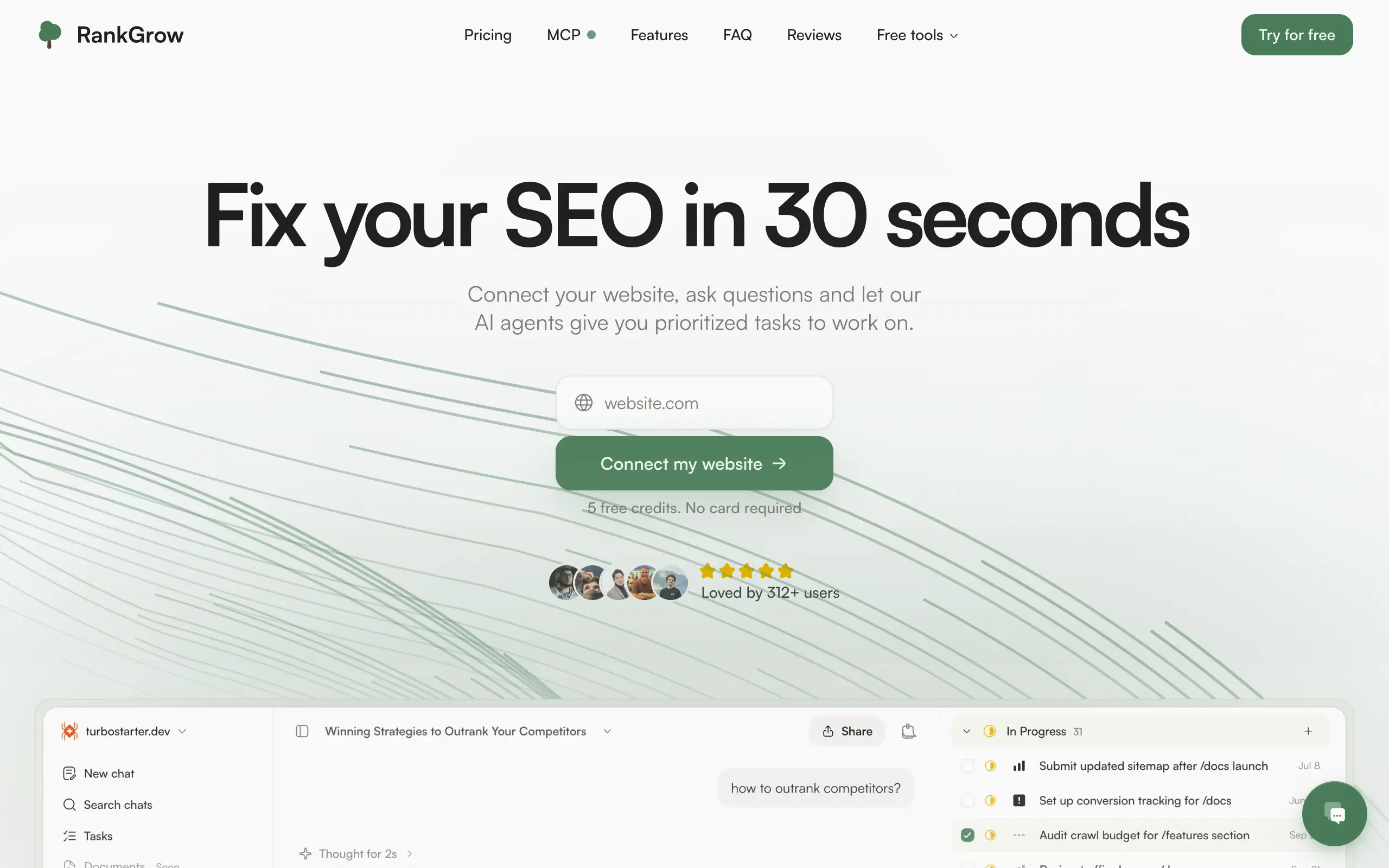
RankGrow
Fix your SEO with AI agents - connect Search Console, get prioritized tasks, and grow organic traffic 📈
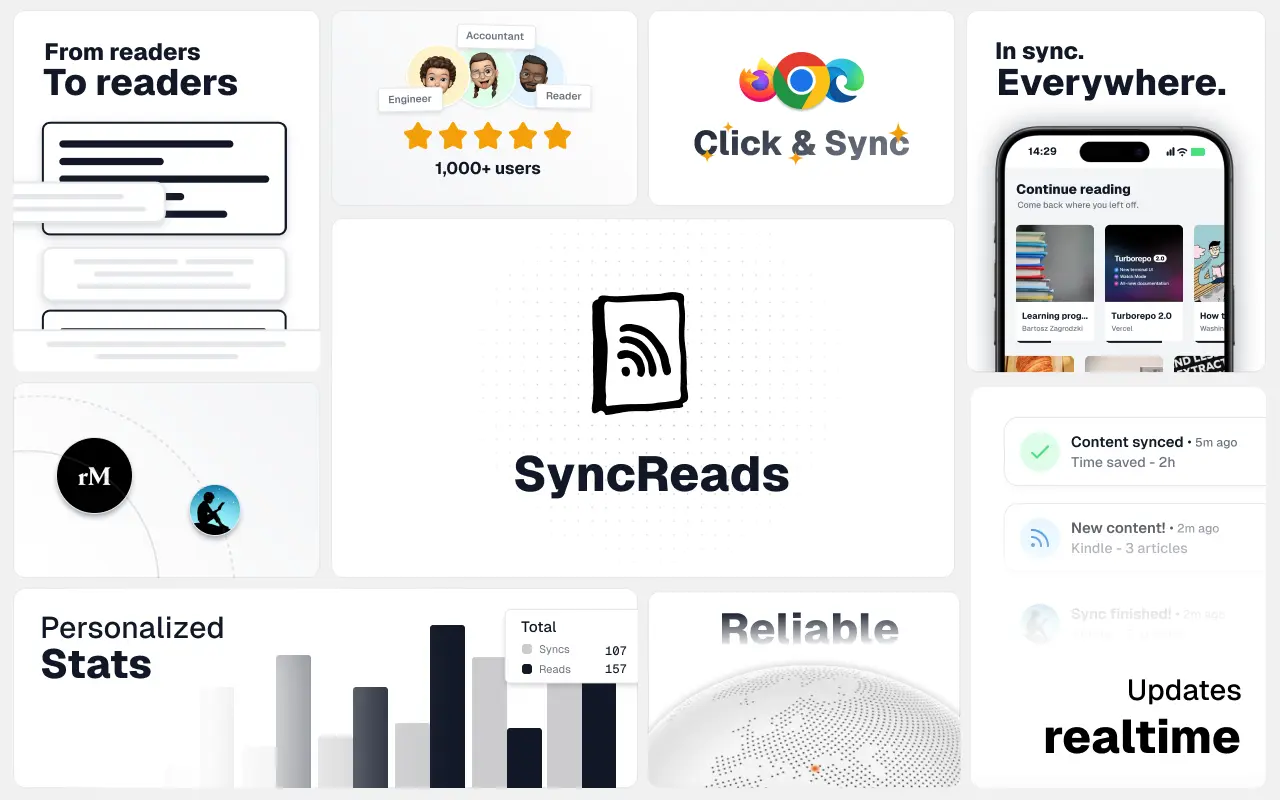
SyncReads
Sync your favorite content for distraction-free reading, save time and replace multiple apps. Anytime, anywhere 🔄
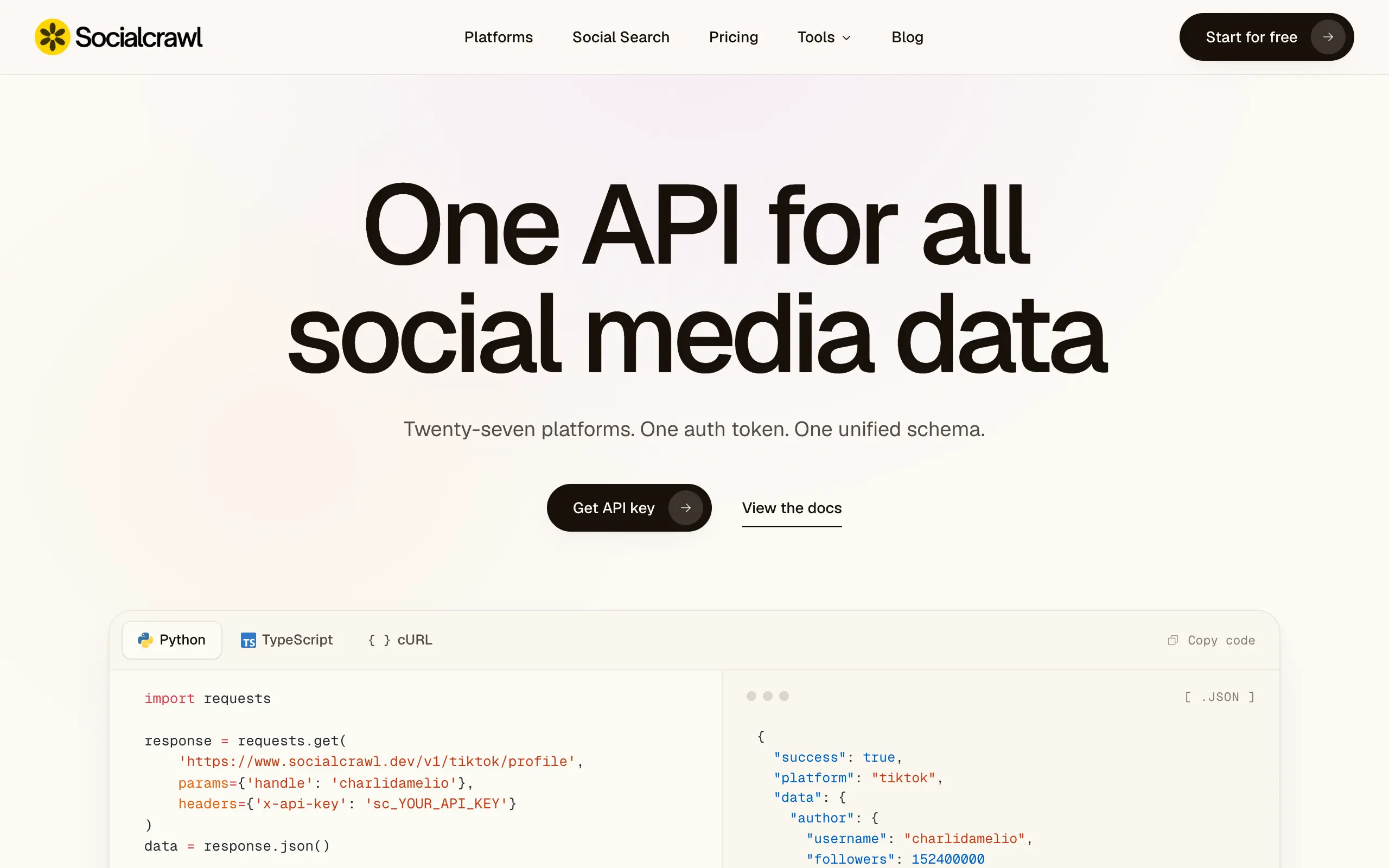
Socialcrawl
Get clean, structured data from 21 platforms like TikTok, Instagram, and YouTube with a single request 📊
Statiko
Monitor any Telegram channel in real time - track posts, edits, deletions, and growth with AI recaps 📡
Shibui
AI website builder - describe your business, pick a niche template, edit by chatting, and publish instantly ✨
Pro Service
Find verified home service professionals, compare quotes, and pay securely through escrow - built for Brazilians across the US 🏠
RankGrow
Fix your SEO with AI agents - connect Search Console, get prioritized tasks, and grow organic traffic 📈
SyncReads
Sync your favorite content for distraction-free reading, save time and replace multiple apps. Anytime, anywhere 🔄
Socialcrawl
Get clean, structured data from 21 platforms like TikTok, Instagram, and YouTube with a single request 📊
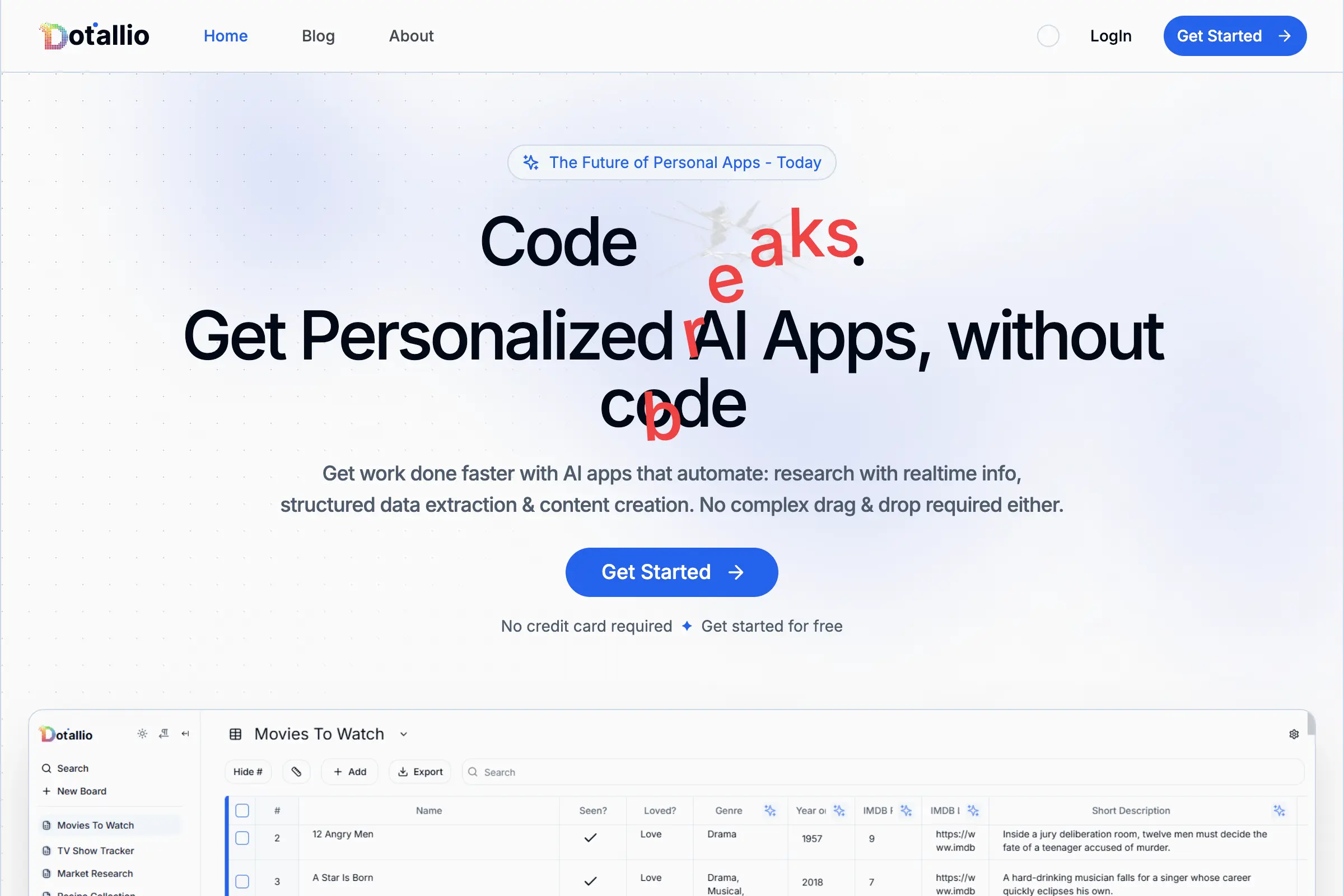
Dotallio
Personalized AI apps that automate research, data extraction, and content creation without code 🤖

Talk to Santa
Enjoy a magical live video chat or receive a unique AI-generated video greeting from Santa Claus 🎅

pozywka.pl
Scalable blog for food journalist, focused on performance and user experience 🌭
zagrodzki.me
Personal blog and portfolio of Bart Zagrodzki, where he shares his knowledge and work 💼
TurboStarter
Ship your startup everywhere. In minutes.
HTML to Markdown
Convert HTML to Markdown with ease, directly in your browser 📄
Dotallio
Personalized AI apps that automate research, data extraction, and content creation without code 🤖
Talk to Santa
Enjoy a magical live video chat or receive a unique AI-generated video greeting from Santa Claus 🎅
pozywka.pl
Scalable blog for food journalist, focused on performance and user experience 🌭
zagrodzki.me
Personal blog and portfolio of Bart Zagrodzki, where he shares his knowledge and work 💼
TurboStarter
Ship your startup everywhere. In minutes.
HTML to Markdown
Convert HTML to Markdown with ease, directly in your browser 📄
Omichat
Chat with 50+ AI models, including ChatGPT and Claude, in one place - switch models anytime without losing context 🤖
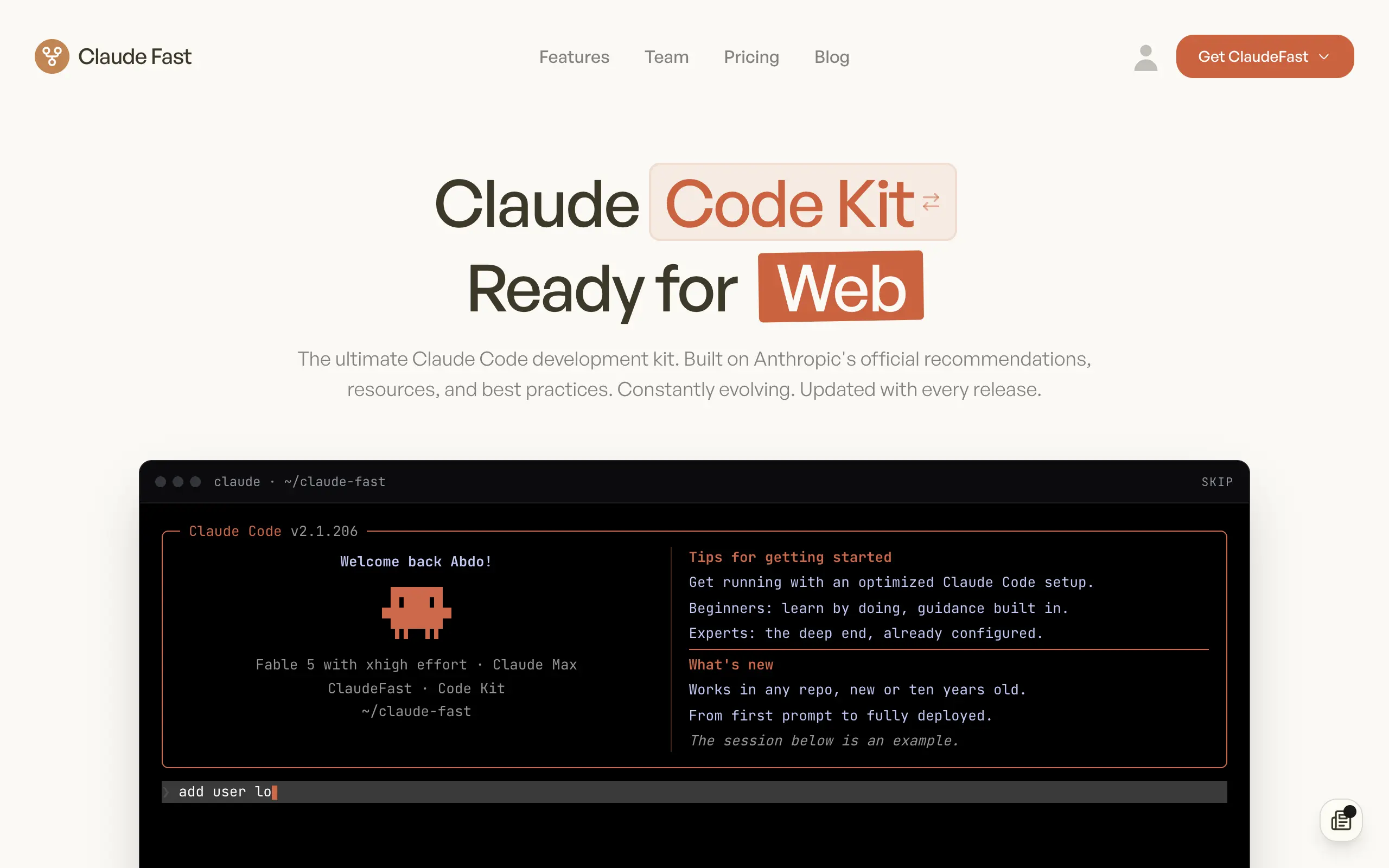
Claude Fast
Supercharge your Claude Code with 6x effective context window and specialized AI agents 🤖
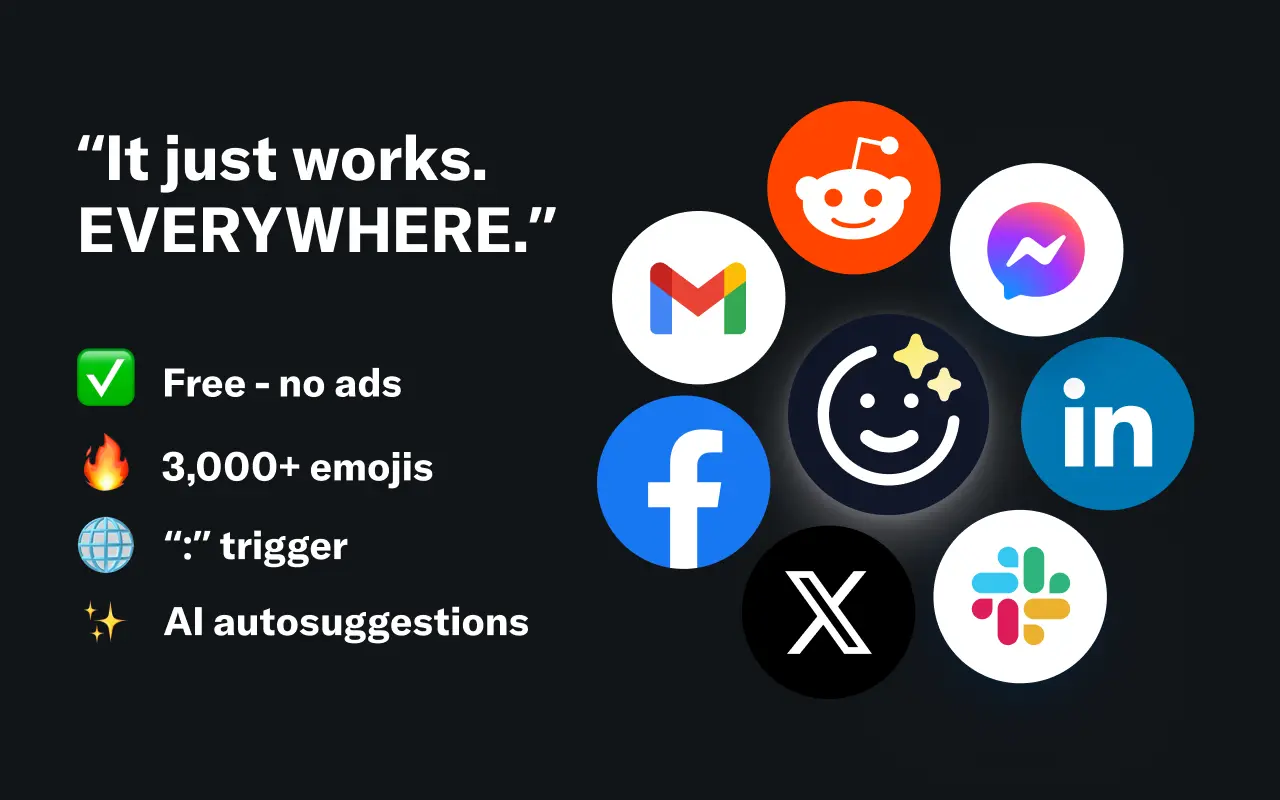
EmojAI
AI-powered emoji picker with smart, context-aware suggestions 🤖
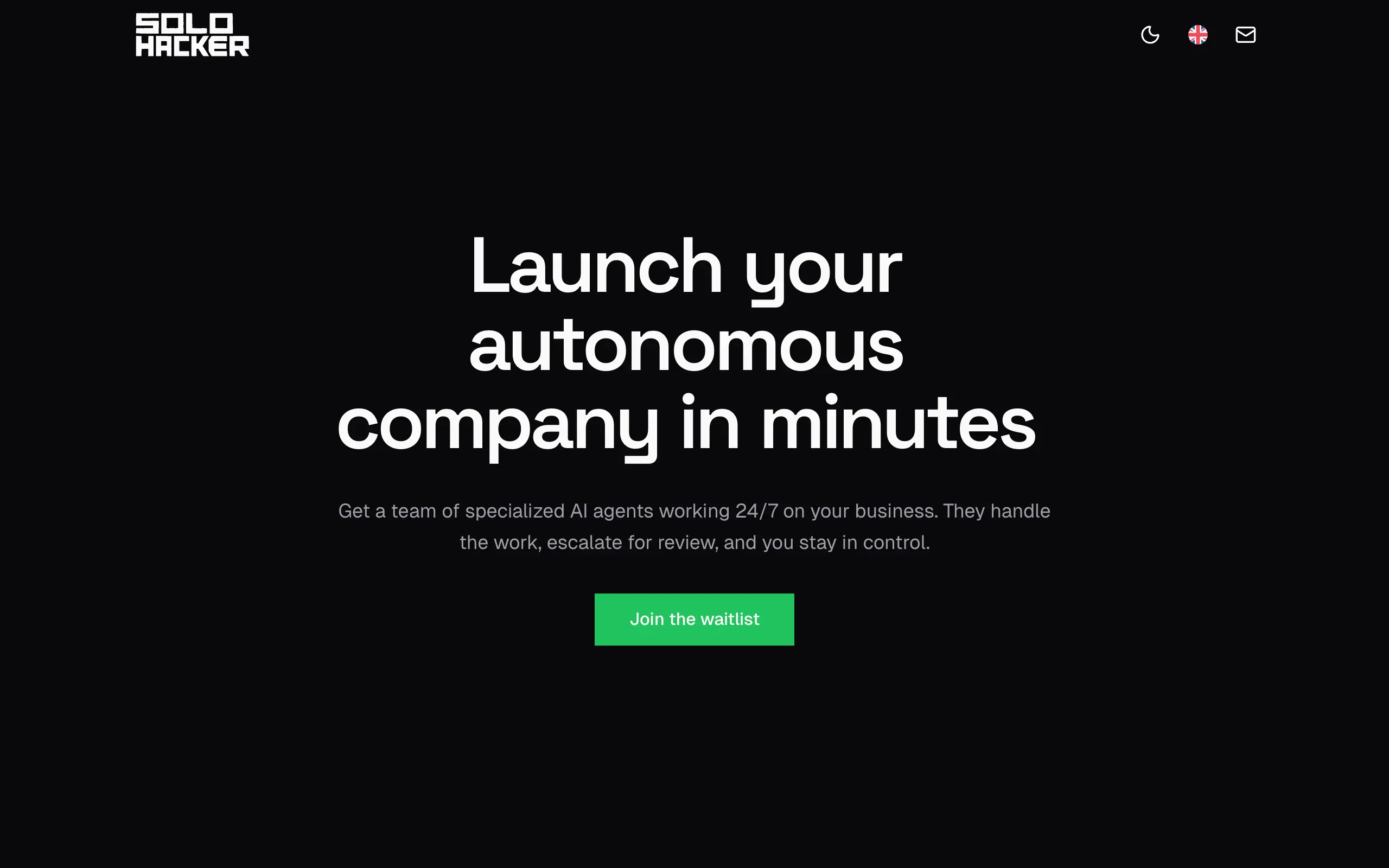
Solohacker
Autonomous company launcher - AI agents work 24/7, escalate what matters, and you stay in control 🤖

BeRawi: Storytelling Coach
Practice storytelling daily with instant feedback to sound clearer, more engaging, and confident 🎤
Omichat
Chat with 50+ AI models, including ChatGPT and Claude, in one place - switch models anytime without losing context 🤖
Claude Fast
Supercharge your Claude Code with 6x effective context window and specialized AI agents 🤖
EmojAI
AI-powered emoji picker with smart, context-aware suggestions 🤖
Solohacker
Autonomous company launcher - AI agents work 24/7, escalate what matters, and you stay in control 🤖
BeRawi: Storytelling Coach
Practice storytelling daily with instant feedback to sound clearer, more engaging, and confident 🎤

Connect with like-minded people
Join our community to get feedback, support, and grow together with 1,000+ builders on board, let's ship it!
Join usShip your startup everywhere. In minutes.
Don't burn tokens on setup and start building features on day one.