SpecToAgent
Turn product specs and API docs into production-ready AI agents with auto-generated tools, prompts, and eval tests in minutes.
The future of AI agent development starts with your specs
Building production-ready AI agents is still harder than it should be.
Teams spend weeks translating product requirement documents (PRDs), API documentation, and internal wikis into structured prompts, tool definitions, guardrails, and evaluation pipelines. The process is manual, error-prone, and often lacks consistency across projects.
An AI platform like SpecToAgent—designed to turn product specs and API docs into production-ready AI agents with auto-generated tools, prompts, and eval tests—directly addresses one of the biggest bottlenecks in modern AI product development.
This article provides a deep, expert-level breakdown of the opportunity behind SpecToAgent, including:
- ✅ Target audience analysis
- ✅ Market opportunity and gap
- ✅ Core features and architecture
- ✅ Recommended tech stack
- ✅ Monetization models
- ✅ Competitive landscape
- ✅ Risks and mitigation
- ✅ Actionable implementation roadmap
If you’re validating, building, or investing in an AI agent infrastructure startup, this is your blueprint.
Understanding the primary keyword: “AI agent generator from specs”
The core search intent behind a product like SpecToAgent centers around:
- “How to build AI agents from API documentation”
- “Generate AI agents automatically”
- “AI agent builder for developers”
- “Turn product specs into AI assistants”
- “Automate prompt engineering from docs”
- “AI tool generation from OpenAPI”
The primary keyword cluster includes:
- AI agent generator
- Spec-to-agent platform
- AI agent builder
- Auto-generated tools for LLMs
- AI eval framework
- API-to-agent pipeline
- Production-ready AI agents
Search intent here is largely implementation-focused. Users want:
- Faster development
- Fewer hallucinations
- Structured tool usage
- Evaluation and reliability
- Enterprise-grade workflows
SpecToAgent should position itself as infrastructure for serious AI product teams, not a toy prompt builder.
The market opportunity: why spec-driven AI agent generation matters now
AI agents are rapidly moving from prototypes to production systems.
Developers are no longer just experimenting with LLMs—they are integrating them into:
- Customer support automation
- Internal workflow tools
- DevOps assistants
- SaaS copilots
- Enterprise knowledge systems
- Data analysis bots
- Multi-step workflow automation
The current problem
Most teams still:
- Read API documentation manually
- Hand-write tool schemas
- Engineer prompts through trial and error
- Create ad hoc eval tests
- Repeat this for every new feature
This leads to:
- Inconsistent prompt quality
- Tool misuse
- Poor reliability
- No regression testing
- High engineering cost
The gap in the market
There are many:
- LLM frameworks
- Agent orchestration tools
- Vector databases
- Evaluation libraries
But very few solutions that:
Start from structured product specs and automatically produce a fully scaffolded, production-ready AI agent system.
SpecToAgent sits at a powerful intersection:
- Developer tooling
- AI infrastructure
- Documentation intelligence
- Automated evaluation
This is a high-value B2B SaaS opportunity.
Target audience analysis
To build a high-converting product and content strategy, we need to define exactly who SpecToAgent serves.
1. AI-native startups
These teams:
- Build LLM-powered SaaS tools
- Iterate quickly
- Need consistent tool definitions
- Care deeply about eval pipelines
Pain point: Shipping reliable agents fast.
2. Enterprise innovation teams
Large organizations experimenting with AI:
- Have extensive API documentation
- Complex internal workflows
- Strong compliance requirements
Pain point: Scaling AI safely and consistently.
3. Developer platform companies
Companies offering APIs that want:
- Official AI agents built on top
- SDKs with AI capabilities
- Copilot experiences
Pain point: Converting APIs into usable AI-native interfaces.
4. Product managers & AI architects
Non-purely-technical stakeholders who:
- Write PRDs
- Define workflows
- Need structured automation
Pain point: Translating business logic into LLM behavior.
Core value proposition of SpecToAgent
SpecToAgent’s unique selling proposition (USP):
Automatically transform product specs and API documentation into production-ready AI agents with generated tools, structured prompts, guardrails, and evaluation tests—within minutes.
This includes:
- Tool schema generation from OpenAPI
- Prompt scaffolding from product specs
- Eval case auto-creation
- Structured guardrails
- Deployment-ready agent templates
That combination is rare—and extremely valuable.
How SpecToAgent works: conceptual architecture
Step 1: Spec ingestion
Input sources:
- OpenAPI/Swagger docs
- Markdown documentation
- PRDs
- Notion exports
- Google Docs
- Internal knowledge bases
The system parses:
- Endpoints
- Parameters
- Auth requirements
- Business rules
- Edge cases
Step 2: Tool schema generation
SpecToAgent converts APIs into:
- JSON function schemas
- Tool definitions compatible with LLM tool-calling APIs
- Structured input validation rules
Step 3: Prompt engineering automation
Using the spec context, it auto-generates:
- System prompts
- Tool usage instructions
- Behavior constraints
- Error handling policies
Step 4: Evaluation test generation
From product requirements, it generates:
- Happy path test cases
- Edge case scenarios
- Failure-mode tests
- Guardrail violation tests
Step 5: Deployment scaffolding
Output includes:
- Agent configuration
- Tool registry
- Eval scripts
- Logging hooks
- CI-ready test harness
Core features that make SpecToAgent powerful
✅ 1. OpenAPI to AI tool conversion
Automatically convert:
- REST endpoints
- GraphQL queries
- Auth flows
Into LLM-compatible tools.
✅ 2. PRD-to-prompt engine
Transforms:
- User stories
- Acceptance criteria
- Business rules
Into structured system prompts.
✅ 3. Built-in evaluation generation
SpecToAgent generates:
- Unit-level tool tests
- Behavior tests
- Regression tests
✅ 4. Guardrail modeling
- Rate limit logic
- Input validation constraints
- Sensitive operation confirmation steps
✅ 5. Agent template export
Support for:
- TypeScript agent SDKs
- Python backends
- Serverless deployment
Competitive landscape
Let’s compare SpecToAgent to adjacent solutions:
| Feature | SpecToAgent | Generic LLM Framework | Prompt Builder | Manual Dev | Eval Tool Only |
|---|---|---|---|---|---|
| Spec-to-tool generation | ✅ | ❌ | ❌ | ❌ | ❌ |
| Prompt automation | ✅ | ❌ | ✅ | ❌ | ❌ |
| Eval auto-generation | ✅ | ❌ | ❌ | ❌ | ✅ |
| Production scaffolding | ✅ | ❌ | ❌ | ✅ | ❌ |
SpecToAgent is not just a framework. It’s a spec-driven AI agent factory.
Recommended tech stack for building SpecToAgent
Frontend
Why:
- Developer-friendly
- Excellent DX
- SEO-friendly for documentation-heavy product
Backend
- Node.js (TypeScript)
- Python microservices for parsing and NLP tasks
- FastAPI for structured API generation
AI orchestration
- OpenAI-compatible LLM APIs
- Structured tool-calling support
- Embedding models for doc parsing
Parsing layer
- OpenAPI parsers
- Markdown AST parsing
- NLP classification for PRDs
Eval engine
- Custom test harness
- Structured scoring
- Deterministic replay system
Deployment
- Dockerized services
- Vercel for frontend
- Kubernetes for enterprise tier
Example: tool schema generation
type ToolSchema = {
  name: string
  description: string
  parameters: {
    type: "object"
    properties: Record<string, any>
    required: string[]
  }
}

const createToolFromOpenAPI = (endpoint): ToolSchema => {
  return {
    name: endpoint.operationId,
    description: endpoint.summary,
    parameters: {
      type: "object",
      properties: endpoint.parameters,
      required: endpoint.requiredParams
    }
  }
}
This auto-generation layer eliminates manual tool engineering.
Monetization strategy
SpecToAgent is best positioned as a B2B SaaS with usage-based pricing.
Tier 1: Startup
- Limited specs per month
- Basic eval generation
- Community support
Tier 2: Growth
- Unlimited specs
- Advanced eval engine
- CI integration
- Versioned agents
Tier 3: Enterprise
- On-prem deployment
- Compliance controls
- Dedicated support
- SLA guarantees
Optional add-ons
- Managed eval hosting
- Continuous monitoring
- Security auditing
Potential risks and mitigation strategies
Risk 1: Rapid LLM evolution
Mitigation:
- Model-agnostic architecture
- Abstract tool interface layer
Risk 2: Commoditization
Mitigation:
- Deep integration with developer workflows
- CI/CD hooks
- Enterprise-grade eval tooling
Risk 3: Incorrect spec interpretation
Mitigation:
- Human-in-the-loop approval step
- Editable agent generation
- Validation simulation runs
Strategic moat opportunities
SpecToAgent can build defensibility through:
- Eval dataset library
- Enterprise compliance features
- Integration ecosystem
- Versioned agent registry
- Benchmarking system
Long term, it could become:
The “GitHub Actions” of AI agent generation.
Implementation roadmap
Go-to-market strategy
1. Developer-first content marketing
Create authoritative content around:
- AI agent best practices
- Tool calling reliability
- Eval-driven development
2. Open-source teaser
Release:
- Free OpenAPI-to-tool CLI
- Limited agent scaffold generator
3. Product-led growth
Allow:
- Free spec uploads
- Instant downloadable agent output
Why SpecToAgent stands out
SpecToAgent doesn’t just help you “build an agent.”
It helps you:
- Build it correctly
- Test it properly
- Deploy it safely
- Maintain it confidently
It transforms specs into:
- Structured AI behavior
- Reliable tool execution
- Measurable performance
That is real infrastructure value.
Final thoughts: the future of spec-driven AI engineering
AI agents are becoming core software infrastructure.
But most teams are still building them manually.
SpecToAgent introduces:
- Standardization
- Automation
- Reliability
- Scalability
If executed correctly, it could become the default starting point for serious AI agent development.
If you're building SpecToAgent or a similar AI infrastructure platform, using a high-quality SaaS starter like TurboStarter can dramatically accelerate your time to market—allowing you to focus on the core AI engine rather than rebuilding authentication, billing, and boilerplate.
The future belongs to teams who treat AI agents like real software systems.
SpecToAgent is designed to make that possible.
More 🤖 AI Startup SaaS ideas
Discover more innovative ai startup SaaS ideas that are trending in 2026. Each idea is AI-generated with market validation and growth potential to help you find your next profitable venture faster than competitors.
Your competitors are building with TurboStarter
Below are some of the SaaS ideas that have been generated and built with our starter kit.

Statiko
Monitor any Telegram channel in real time - track posts, edits, deletions, and growth with AI recaps 📡

Shibui
AI website builder - describe your business, pick a niche template, edit by chatting, and publish instantly ✨

Pro Service
Find verified home service professionals, compare quotes, and pay securely through escrow - built for Brazilians across the US 🏠
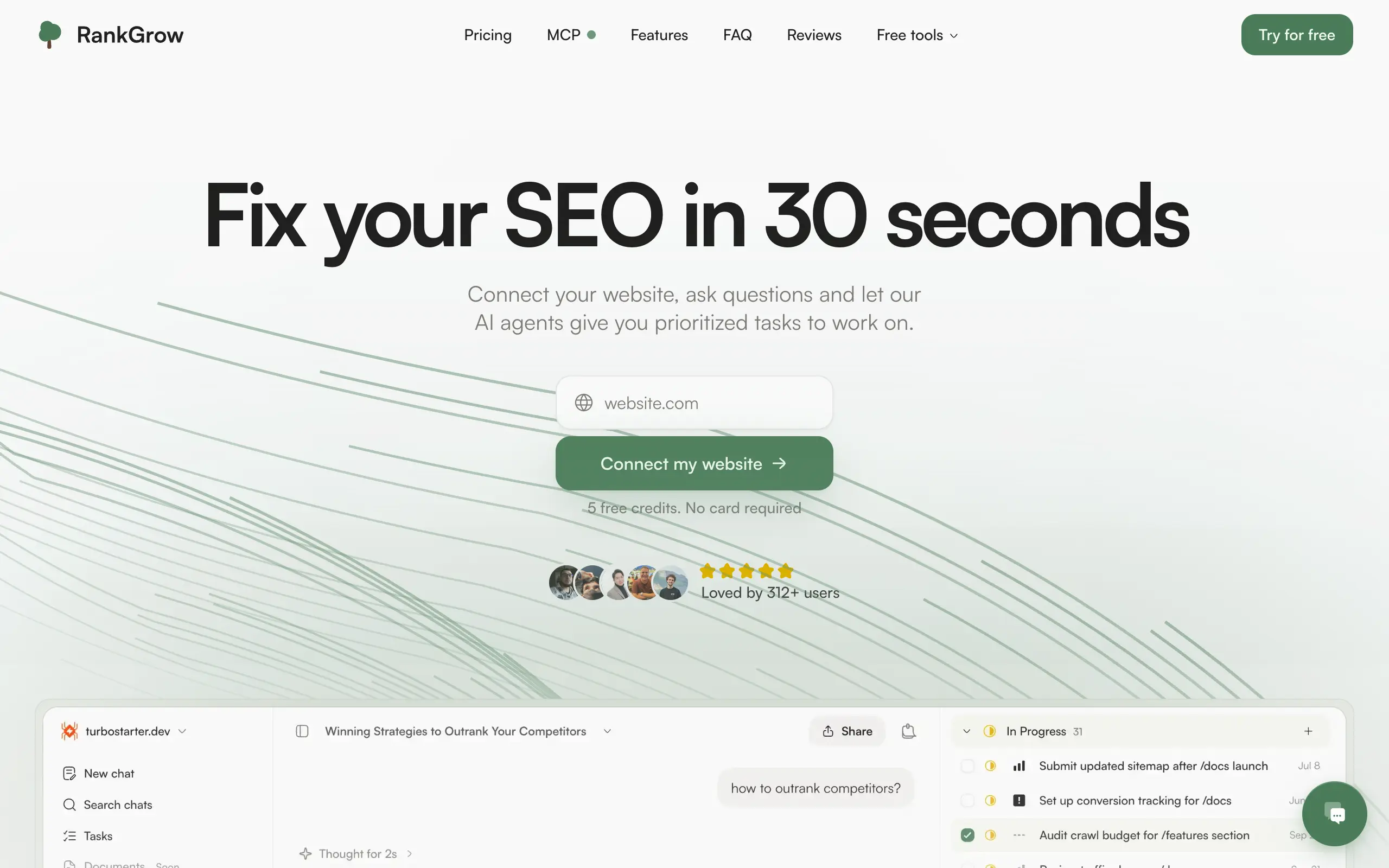
RankGrow
Fix your SEO with AI agents - connect Search Console, get prioritized tasks, and grow organic traffic 📈
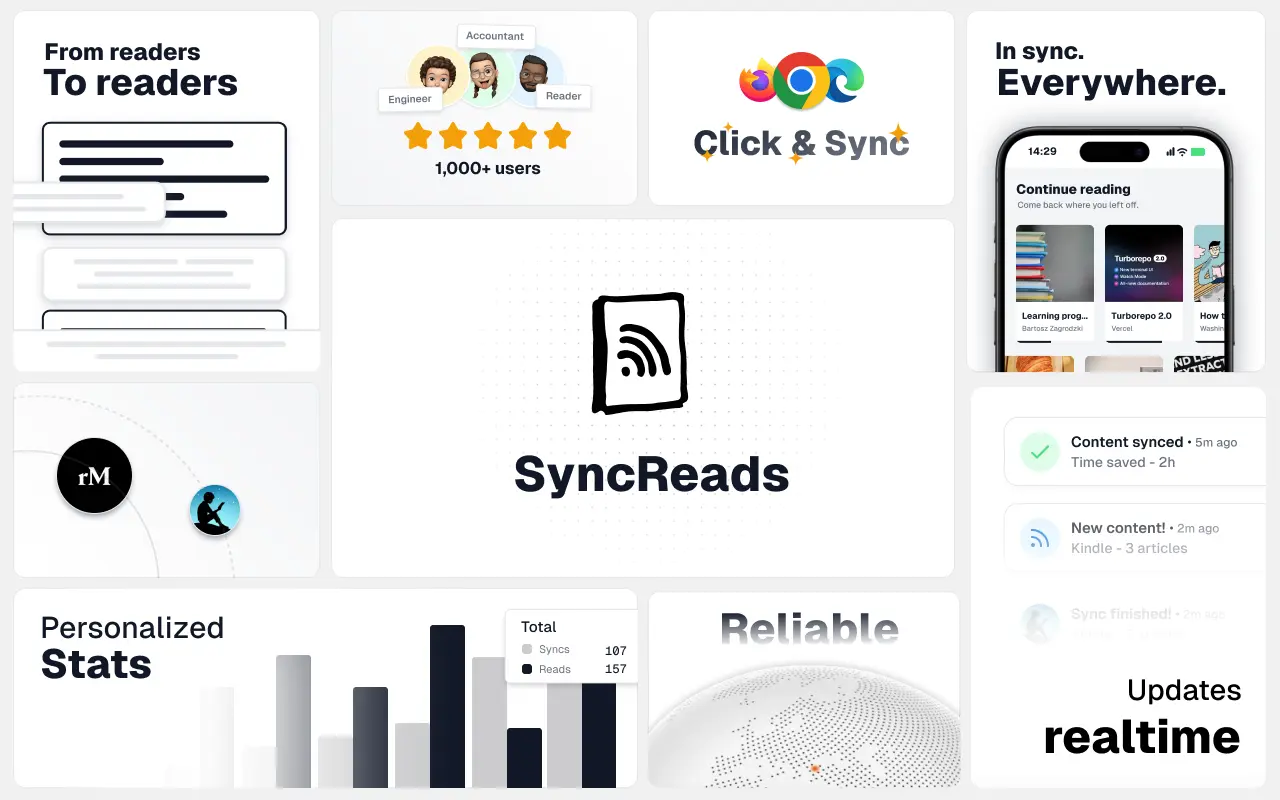
SyncReads
Sync your favorite content for distraction-free reading, save time and replace multiple apps. Anytime, anywhere 🔄
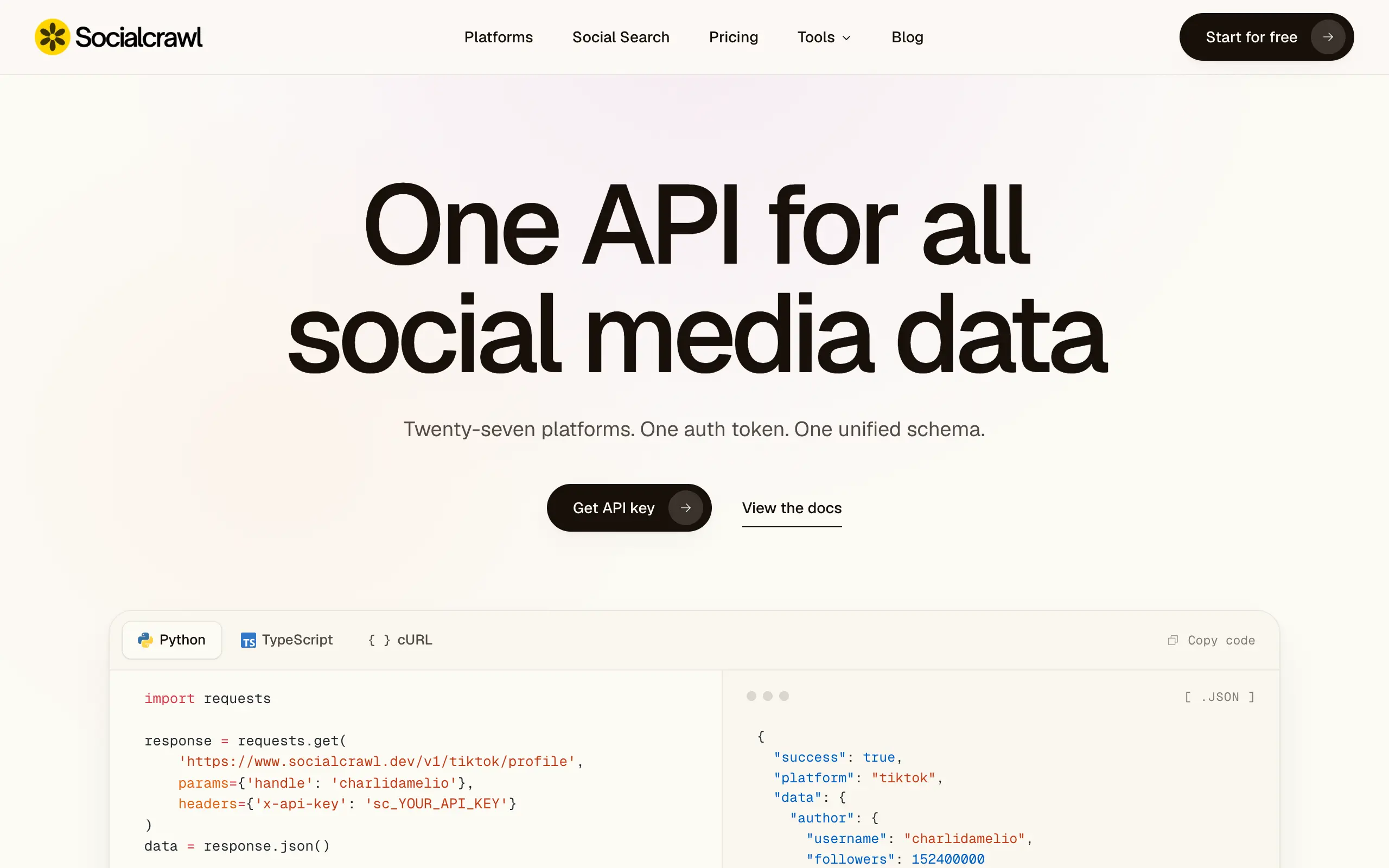
Socialcrawl
Get clean, structured data from 21 platforms like TikTok, Instagram, and YouTube with a single request 📊
Statiko
Monitor any Telegram channel in real time - track posts, edits, deletions, and growth with AI recaps 📡
Shibui
AI website builder - describe your business, pick a niche template, edit by chatting, and publish instantly ✨
Pro Service
Find verified home service professionals, compare quotes, and pay securely through escrow - built for Brazilians across the US 🏠
RankGrow
Fix your SEO with AI agents - connect Search Console, get prioritized tasks, and grow organic traffic 📈
SyncReads
Sync your favorite content for distraction-free reading, save time and replace multiple apps. Anytime, anywhere 🔄
Socialcrawl
Get clean, structured data from 21 platforms like TikTok, Instagram, and YouTube with a single request 📊
Statiko
Monitor any Telegram channel in real time - track posts, edits, deletions, and growth with AI recaps 📡
Shibui
AI website builder - describe your business, pick a niche template, edit by chatting, and publish instantly ✨
Pro Service
Find verified home service professionals, compare quotes, and pay securely through escrow - built for Brazilians across the US 🏠
RankGrow
Fix your SEO with AI agents - connect Search Console, get prioritized tasks, and grow organic traffic 📈
SyncReads
Sync your favorite content for distraction-free reading, save time and replace multiple apps. Anytime, anywhere 🔄
Socialcrawl
Get clean, structured data from 21 platforms like TikTok, Instagram, and YouTube with a single request 📊
Statiko
Monitor any Telegram channel in real time - track posts, edits, deletions, and growth with AI recaps 📡
Shibui
AI website builder - describe your business, pick a niche template, edit by chatting, and publish instantly ✨
Pro Service
Find verified home service professionals, compare quotes, and pay securely through escrow - built for Brazilians across the US 🏠
RankGrow
Fix your SEO with AI agents - connect Search Console, get prioritized tasks, and grow organic traffic 📈
SyncReads
Sync your favorite content for distraction-free reading, save time and replace multiple apps. Anytime, anywhere 🔄
Socialcrawl
Get clean, structured data from 21 platforms like TikTok, Instagram, and YouTube with a single request 📊
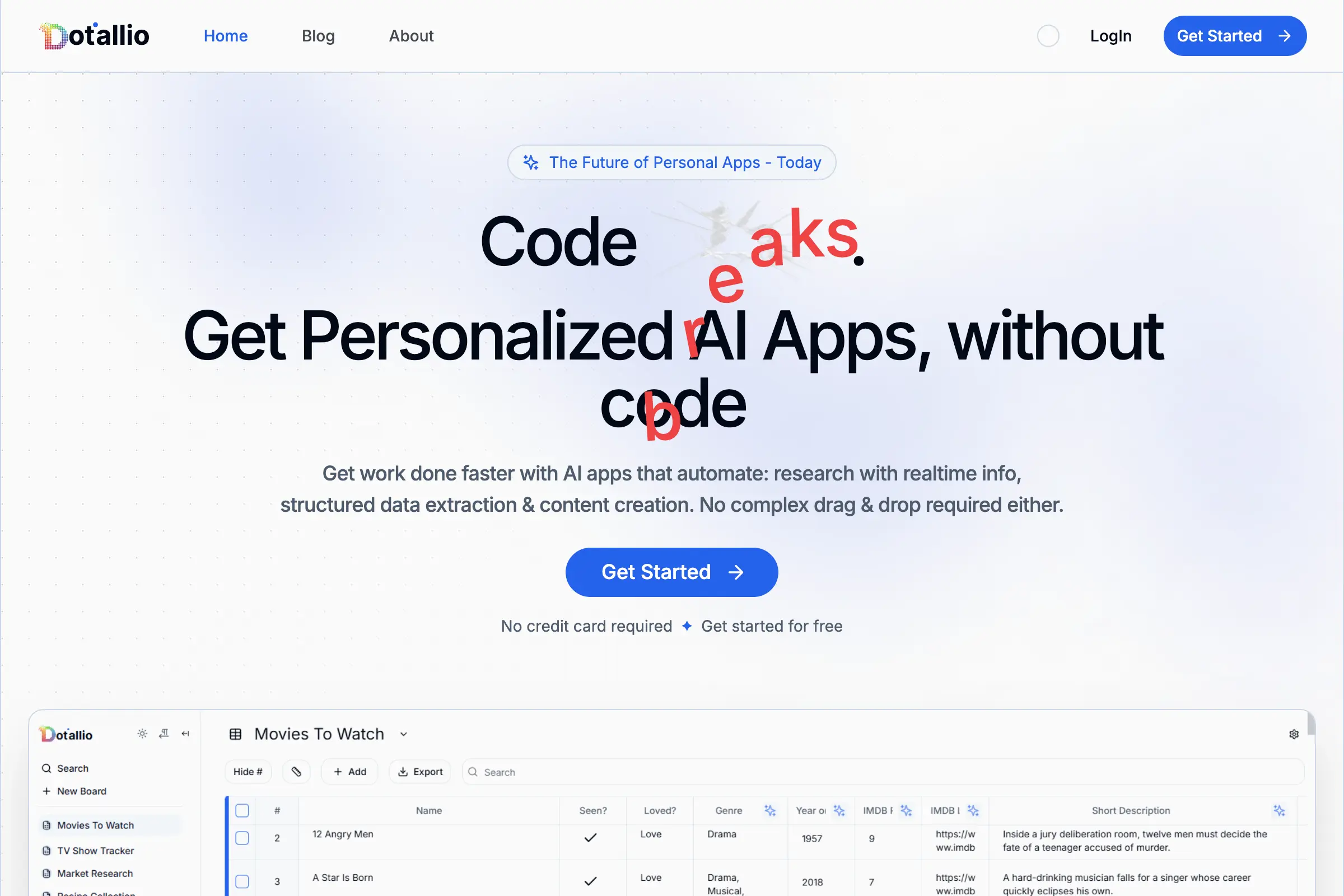
Dotallio
Personalized AI apps that automate research, data extraction, and content creation without code 🤖

Talk to Santa
Enjoy a magical live video chat or receive a unique AI-generated video greeting from Santa Claus 🎅

pozywka.pl
Scalable blog for food journalist, focused on performance and user experience 🌭
zagrodzki.me
Personal blog and portfolio of Bart Zagrodzki, where he shares his knowledge and work 💼
TurboStarter
Ship your startup everywhere. In minutes.
HTML to Markdown
Convert HTML to Markdown with ease, directly in your browser 📄
Dotallio
Personalized AI apps that automate research, data extraction, and content creation without code 🤖
Talk to Santa
Enjoy a magical live video chat or receive a unique AI-generated video greeting from Santa Claus 🎅
pozywka.pl
Scalable blog for food journalist, focused on performance and user experience 🌭
zagrodzki.me
Personal blog and portfolio of Bart Zagrodzki, where he shares his knowledge and work 💼
TurboStarter
Ship your startup everywhere. In minutes.
HTML to Markdown
Convert HTML to Markdown with ease, directly in your browser 📄
Dotallio
Personalized AI apps that automate research, data extraction, and content creation without code 🤖
Talk to Santa
Enjoy a magical live video chat or receive a unique AI-generated video greeting from Santa Claus 🎅
pozywka.pl
Scalable blog for food journalist, focused on performance and user experience 🌭
zagrodzki.me
Personal blog and portfolio of Bart Zagrodzki, where he shares his knowledge and work 💼
TurboStarter
Ship your startup everywhere. In minutes.
HTML to Markdown
Convert HTML to Markdown with ease, directly in your browser 📄
Dotallio
Personalized AI apps that automate research, data extraction, and content creation without code 🤖
Talk to Santa
Enjoy a magical live video chat or receive a unique AI-generated video greeting from Santa Claus 🎅
pozywka.pl
Scalable blog for food journalist, focused on performance and user experience 🌭
zagrodzki.me
Personal blog and portfolio of Bart Zagrodzki, where he shares his knowledge and work 💼
TurboStarter
Ship your startup everywhere. In minutes.
HTML to Markdown
Convert HTML to Markdown with ease, directly in your browser 📄
Omichat
Chat with 50+ AI models, including ChatGPT and Claude, in one place - switch models anytime without losing context 🤖
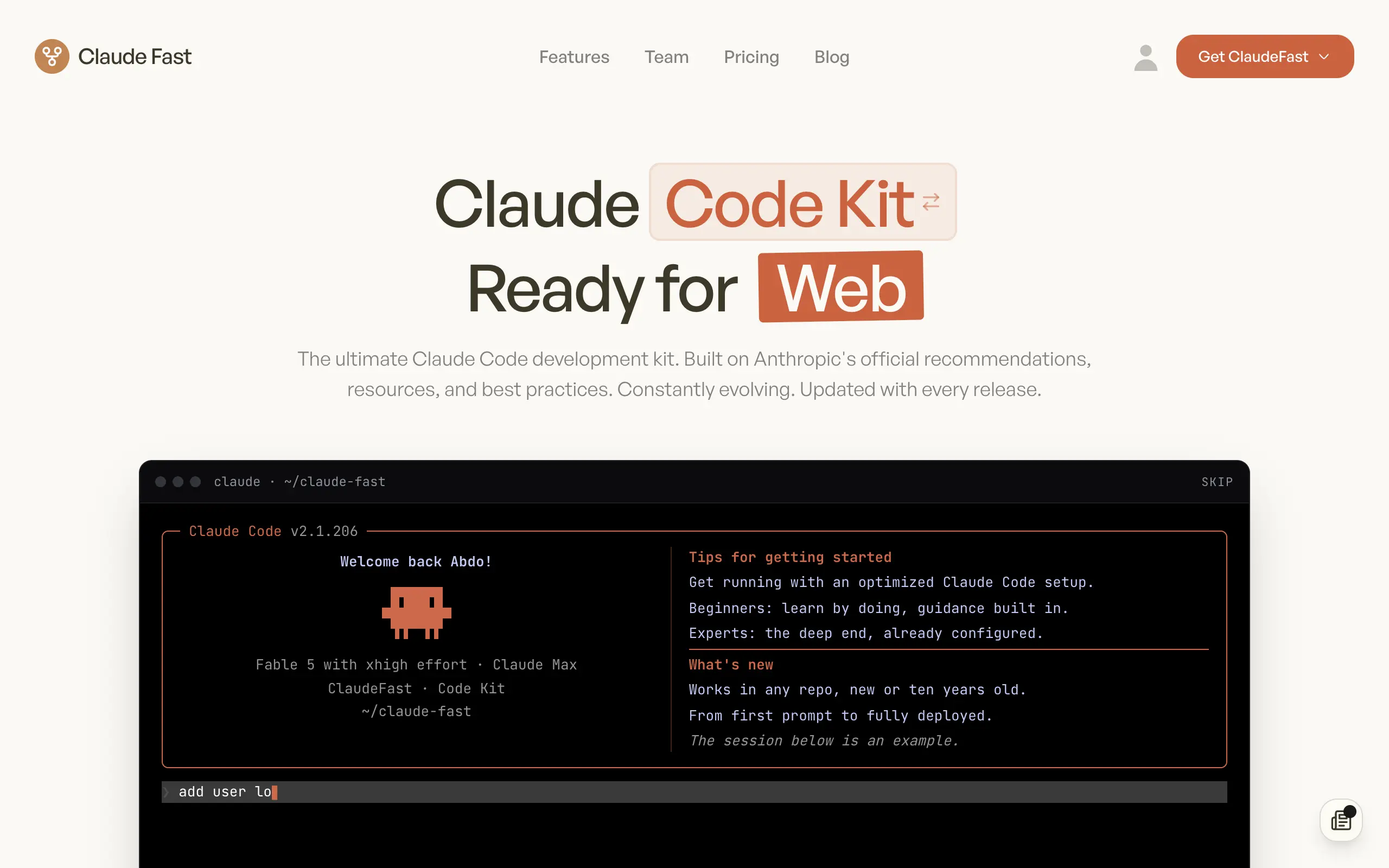
Claude Fast
Supercharge your Claude Code with 6x effective context window and specialized AI agents 🤖
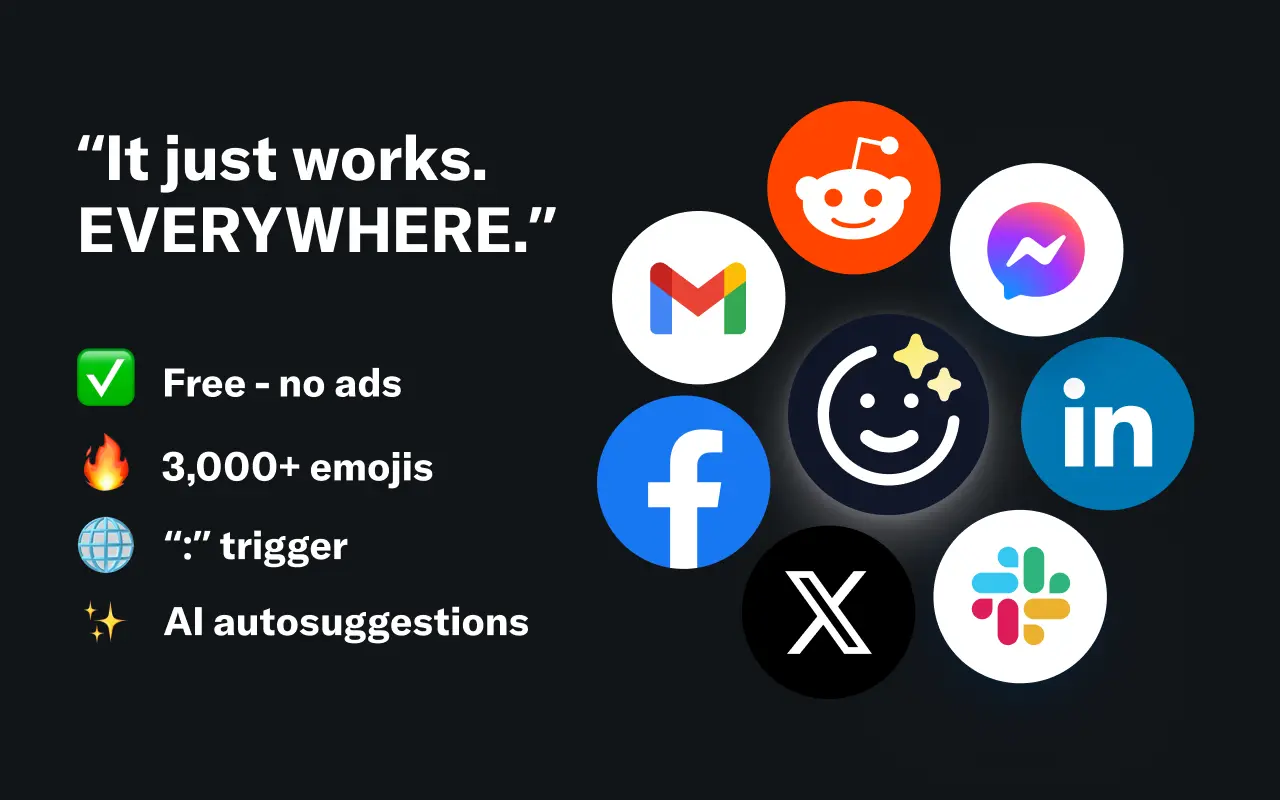
EmojAI
AI-powered emoji picker with smart, context-aware suggestions 🤖
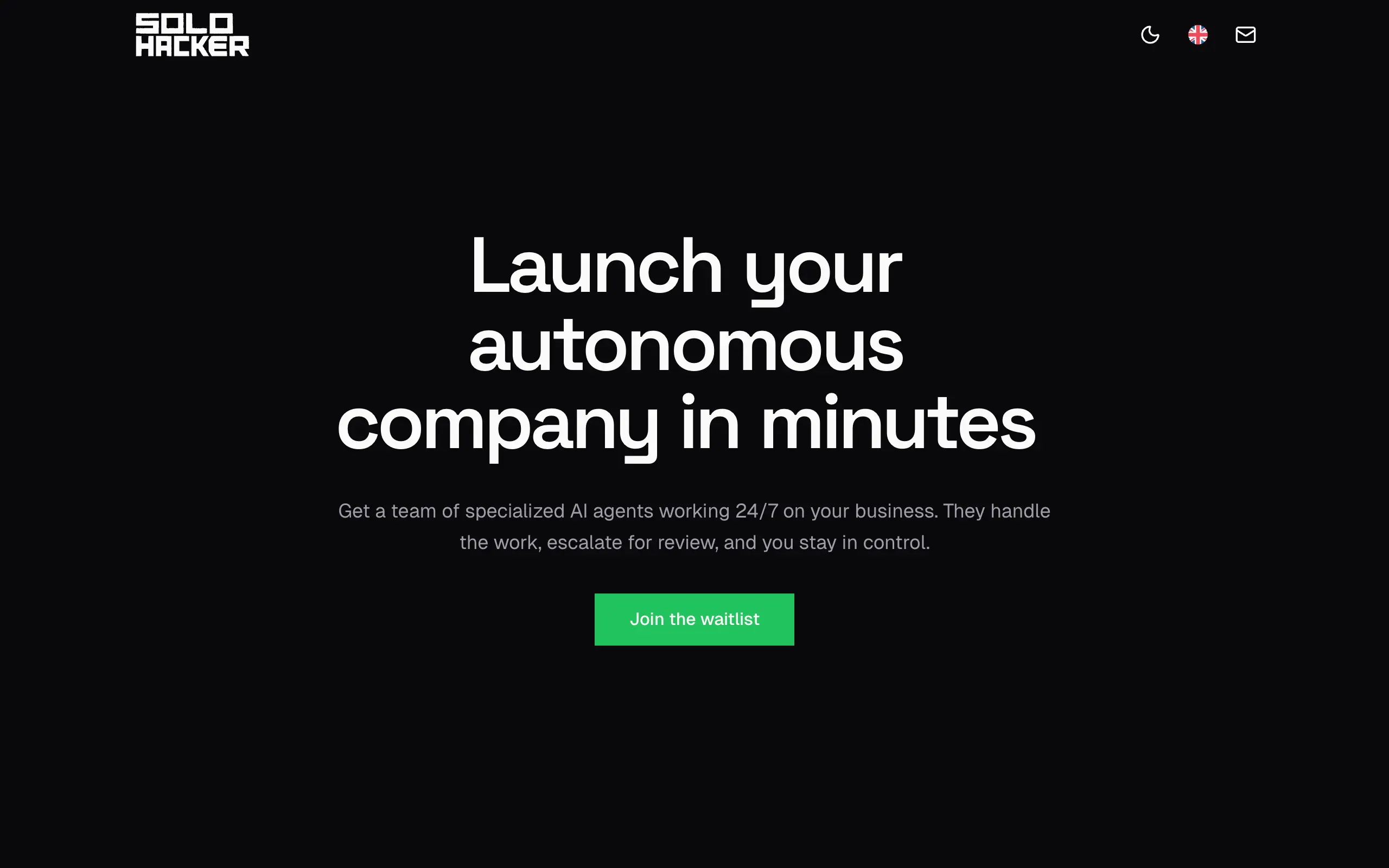
Solohacker
Autonomous company launcher - AI agents work 24/7, escalate what matters, and you stay in control 🤖

BeRawi: Storytelling Coach
Practice storytelling daily with instant feedback to sound clearer, more engaging, and confident 🎤
Omichat
Chat with 50+ AI models, including ChatGPT and Claude, in one place - switch models anytime without losing context 🤖
Claude Fast
Supercharge your Claude Code with 6x effective context window and specialized AI agents 🤖
EmojAI
AI-powered emoji picker with smart, context-aware suggestions 🤖
Solohacker
Autonomous company launcher - AI agents work 24/7, escalate what matters, and you stay in control 🤖
BeRawi: Storytelling Coach
Practice storytelling daily with instant feedback to sound clearer, more engaging, and confident 🎤
Omichat
Chat with 50+ AI models, including ChatGPT and Claude, in one place - switch models anytime without losing context 🤖
Claude Fast
Supercharge your Claude Code with 6x effective context window and specialized AI agents 🤖
EmojAI
AI-powered emoji picker with smart, context-aware suggestions 🤖
Solohacker
Autonomous company launcher - AI agents work 24/7, escalate what matters, and you stay in control 🤖
BeRawi: Storytelling Coach
Practice storytelling daily with instant feedback to sound clearer, more engaging, and confident 🎤
Omichat
Chat with 50+ AI models, including ChatGPT and Claude, in one place - switch models anytime without losing context 🤖
Claude Fast
Supercharge your Claude Code with 6x effective context window and specialized AI agents 🤖
EmojAI
AI-powered emoji picker with smart, context-aware suggestions 🤖
Solohacker
Autonomous company launcher - AI agents work 24/7, escalate what matters, and you stay in control 🤖
BeRawi: Storytelling Coach
Practice storytelling daily with instant feedback to sound clearer, more engaging, and confident 🎤

Connect with like-minded people
Join our community to get feedback, support, and grow together with 1,000+ builders on board, let's ship it!
Join usShip your startup everywhere. In minutes.
Don't burn tokens on setup and start building features on day one.