SpoilerLock
Ask an AI about a movie or game’s characters, lore, and plot without spoilers. It tailors every answer to exactly where you are in the story.
Why spoiler-free AI solves a real entertainment problem
People often want to understand a story without learning what happens next. They may have forgotten a character’s name, missed a plot point, or want help interpreting a scene. A conventional search can answer those questions, but it can also surface a future plot twist in a headline, snippet, image, or forum post.
SpoilerLock is a spoiler-free AI assistant for movies and games. Its defining promise is that answers adapt to the user’s exact place in a story. Instead of treating “no spoilers” as a vague preference, the product uses a viewer’s or player’s progress to decide which facts the assistant is allowed to reveal.
That is a meaningful product distinction. A general-purpose AI chatbot can explain a story, but it may not reliably know whether a detail appears before or after the user’s current episode, chapter, quest, or scene. SpoilerLock’s opportunity is to make story progress part of the answer-generation process.
The idea is best understood as a focused consumer AI product with a strong trust requirement. It is not enough to provide fluent answers. The assistant must be accurate about story order, conservative when uncertain, and transparent about what it knows. A single badly timed spoiler could undermine the product’s central promise.
What users are searching for
The likely search intent behind a spoiler-free AI product spans several needs:
- Immediate clarification: “Who is this character?” or “Why did that scene happen?”
- Memory refresh: “What happened in the previous episode?”
- Lore exploration: “How does this faction relate to the world?”
- Game assistance: “What is this quest asking me to do?”
- Interpretation: “What might this scene mean, based only on what I have seen?”
- Spoiler protection: “Can I ask questions without learning future plot details?”
Most existing solutions make users choose between asking a broad AI assistant, searching a fan wiki, or avoiding the question. Each option has a drawback. A chatbot may reveal future story information. A wiki may include plot summaries and character fates in prominent places. A forum search may return an answer from a user who has already finished the story.
SpoilerLock can occupy the gap between those options: a conversational story companion that knows the user’s progress and treats future information as restricted.
The target audience for SpoilerLock
A focused launch should begin with people who experience the spoiler problem often and have a clear reason to return. The audience is not simply “everyone who watches movies.” The strongest early customers are likely to be people who actively follow serialized stories and frequently need context.
Primary audience segments
- Viewers of serialized television: They may watch at different speeds from friends, avoid social media after a new episode, and need reminders between releases.
- Story-driven game players: They may want help understanding characters, factions, locations, or quest objectives without learning later outcomes.
- Fans returning to a long-running franchise: They may remember the broad story but forget character relationships, timeline details, or earlier installments.
- People watching with family or friends: Viewers may be at different points in a show and need answers that respect the least advanced person’s progress.
- Readers and lore enthusiasts: Although the initial focus may be movies and games, the same progress-aware model can apply to book series, comics, and other sequential media.
Secondary audiences
SpoilerLock could eventually serve fan communities, entertainment publishers, streaming-related products, or game communities that want a safer way to answer questions. These are potential business-to-business opportunities, but they should not distract from proving the core consumer experience.
A community integration, for example, could allow moderators to offer a spoiler-aware question assistant. A publisher could use a licensed knowledge base to answer questions about a franchise. Both opportunities depend on first demonstrating that users trust the product and that its answers are useful.
The job to be done
A concise way to define the user’s need is:
Help me understand the story I have reached so far, without revealing anything that happens later.
This statement can guide product decisions. If a feature does not improve comprehension, protect progress, or make story knowledge easier to access, it may not belong in the first release.
The market opportunity and product gap
SpoilerLock sits at the intersection of conversational AI, entertainment discovery, and fandom. Those categories are broad, but the initial product opportunity is specific: make story questions safer to ask.
The product should not depend on an unsupported claim that every viewer wants an AI companion. It is more useful to validate the repeated behavior directly. Do people encounter story confusion often enough to use a dedicated product? Will they share their progress to receive more relevant answers? Do they trust an AI to withhold information? Will they return for another show or game?
Those questions can be tested through interviews, prototypes, and early usage data without making assumptions about market size. For a credible market analysis, gather current evidence from sources such as app-store category data, search trends, public entertainment audience research, and interviews with target users. Any market-size figures should state the geography, time period, source, and assumptions used rather than presenting a single unsupported total.
Where current alternatives fall short
SpoilerLock would compete with behaviors and products, not only with other dedicated apps.
- General AI assistants offer conversational explanations but may not consistently enforce a user’s exact story boundary.
- Fan wikis can be detailed and authoritative, but many expose character fates, episode summaries, or later plot details as part of normal navigation.
- Search engines are convenient, yet results pages can show spoilers before a user reaches a relevant article.
- Discussion forums provide human context but often mix posts from users at different points in the story.
- Recap videos and summaries may help users catch up, but they can be too broad or reveal material beyond the episode they need.
- Streaming and gaming communities may contain useful explanations, but spoiler labels and moderation quality vary.
SpoilerLock’s gap is not “AI can summarize a story.” It is AI can answer a specific story question within a declared progress boundary.
SpoilerLock’s core product experience
The main flow should feel simple enough for a first-time user, while giving experienced fans meaningful control.
- The user chooses a movie, show, or game.
- SpoilerLock asks where they are in the story, using the most natural unit for that medium.
- The user asks a question in plain language.
- SpoilerLock answers only from information available up to that point.
- If the answer cannot be provided safely, the assistant explains why and offers a safer alternative.
The progress control is central. A television viewer may select a season and episode. A game player may select a chapter, mission, location, or quest. A film viewer may choose a timestamp or a simple “I have finished the film” setting.
The system should make the selected boundary visible before the first question. If users do not understand what progress they selected, they cannot evaluate whether the assistant is protecting them.
Progress-aware answers
A strong answer should be useful without being evasive. For example, if a user asks about a character’s motivation before the story has revealed it, the assistant could describe what the character has done so far and say that their full motivation has not yet been explained at the selected point.
This approach is better than either revealing the future explanation or returning an unhelpful refusal. The assistant can distinguish among:
- Known so far: Information established by the selected story point.
- Reasonable interpretation: A clearly labeled reading based on available events.
- Not revealed yet: Information the story has not disclosed by that point.
- Uncertain coverage: Information SpoilerLock cannot confidently place in the story timeline.
That distinction makes the product more transparent and gives users a reason to trust cautious answers.
Useful MVP features
The initial release should prioritize the trust loop over a large feature count.
- Title selection: Support a small, carefully curated catalog rather than claiming broad coverage.
- Progress settings: Let users set, review, and update their current episode, chapter, quest, or completion status.
- Question and answer chat: Handle character, plot, setting, relationship, and recap questions.
- Spoiler boundary enforcement: Exclude facts that occur after the selected point.
- Source-grounded responses: Use structured story information or approved references so answers are tied to evidence.
- Safe uncertainty handling: Say when the assistant lacks reliable coverage instead of inventing an answer.
- Progress reminders: Keep the selected boundary visible and prompt users to update it when appropriate.
- Feedback controls: Let users report an answer as incorrect, confusing, or spoiler-containing.
A small catalog is a strategic choice, not a weakness. If the product handles a limited set of popular titles well, it can demonstrate its core promise. A much larger catalog with unreliable chronology would make the product appear comprehensive while increasing the risk of a damaging mistake.
How spoiler protection can work technically
A reliable spoiler-free AI system needs more than a prompt that says “do not spoil.” Prompts are useful, but the product should also control which story facts are available to the model.
A practical architecture can represent story knowledge as structured facts with metadata. Each fact might include a title identifier, an entity, a relationship or event, the relevant episode or chapter, and the source from which the fact was derived. A retrieval layer can then filter out facts that occur after the user’s selected progress before passing relevant context to the language model.
A simplified pipeline looks like this:
- Normalize the user’s progress into a canonical point in the title’s story sequence.
- Classify the question by intent, such as recap, character identity, timeline, or interpretation.
- Retrieve relevant facts only from the permitted part of the story.
- Generate a response using the retrieved context and an explicit instruction to remain within the boundary.
- Check the draft for references to restricted future events and unsupported claims.
- Return an answer or safe fallback based on the system’s confidence.
The important principle is defense in depth. A prompt can guide generation, but progress filtering, evidence tracking, output checks, and conservative fallback behavior help reduce reliance on a single control.
Building the story knowledge layer
The most difficult part may not be choosing an AI model. It may be assembling and maintaining trustworthy story data.
Potential inputs include licensed materials, editorially reviewed notes, user-contributed references, and public sources where usage is appropriate. The team should evaluate the legal and contractual status of each source before building a commercial product around it. A public webpage is not automatically permission to reproduce or commercialize its contents.
For an MVP, a small editorial workflow may be more dependable than a fully automated ingestion pipeline. A reviewer can verify important facts, assign each fact to a story point, and flag ambiguous chronology. This creates a foundation for testing the product’s value while revealing which parts of content operations can later be automated.
Recommended AI safeguards
- Evidence-backed generation: The model should answer from retrieved facts, not from an unrestricted memory of the full story.
- Progress-aware retrieval: Future facts should be filtered before generation wherever possible.
- Uncertainty thresholds: If the system cannot establish the relevant story point, it should ask a clarifying question or decline to speculate.
- Spoiler evaluation sets: Test representative questions at multiple progress points, including questions designed to tempt the model into revealing future events.
- Regression testing: Re-run the evaluation set after changes to prompts, models, retrieval, or content data.
- Answer provenance: Where suitable, show the episode, chapter, or source section supporting an answer, without exposing later material.
- User-controlled boundaries: Give users a clear way to change their progress, including a stricter setting for shared or group viewing.
Recommended technology stack
The right stack depends on the team’s experience, budget, platform priorities, and content requirements. An MVP should minimize operational complexity while keeping the story data and safety logic under the product team’s control.
Web application
A responsive web app can validate demand quickly across desktop and mobile. A modern React-based frontend can support the title picker, chat experience, account settings, and progress controls. React is a well-established option for building interactive user interfaces.
For application routing and server-side capabilities, a team could consider Next.js. Its trade-off is that a full-stack framework introduces conventions and deployment decisions that may be unnecessary for a very small prototype. A simpler frontend and API can be easier to understand if the product has a narrow initial scope.
Tailwind CSS is one option for building a consistent interface efficiently. A custom design system is still important: progress controls, spoiler warnings, and confidence states need to be clear, not merely attractive.
Backend and data
A typed backend can manage authentication, title catalogs, user progress, chat requests, feedback, and administrative review tools. TypeScript can support end-to-end type safety across a JavaScript-based application, while a relational database is a good fit for structured entities and story metadata.
A database model may include:
- Titles and supported formats
- Seasons, episodes, chapters, quests, or other progress units
- Characters, places, groups, and events
- Facts and relationships linked to story points
- Source records and editorial review status
- User-selected progress and preferences
- Conversations, feedback, and safety incidents
A vector search system may help retrieve semantically related story facts, but semantic search alone is not enough. Retrieval must also enforce strict filters for title and progress. A fact can be semantically relevant and still be unsafe because it occurs later in the story.
AI provider and model strategy
The team can begin with a hosted language model API to reduce infrastructure work and learn from real user questions. A hosted provider is typically faster to integrate, but introduces ongoing usage costs, provider dependency, and data-handling considerations. Before selecting a provider, review its official documentation, pricing, retention options, and terms for the intended use.
As the product matures, the team can compare models on a task-specific evaluation set. Relevant metrics include answer usefulness, factual accuracy, spoiler leakage, refusal quality, latency, and cost per successful answer. A model that is cheaper but frequently produces unsafe answers may create greater support and retention costs.
Product infrastructure
Useful supporting services include analytics, error monitoring, rate limiting, and an internal content-review interface. Analytics should measure product behavior without collecting unnecessary personal information. The team should define retention policies for conversations and give users a clear explanation of how their data is handled.
For a faster SaaS foundation, TurboStarter can help teams start with common application building blocks. The product-specific work—story progress modeling, safe retrieval, editorial operations, and evaluation—still needs to be designed around SpoilerLock’s requirements.
Competitive advantage and differentiation
SpoilerLock’s strongest advantage is not a particular model or chat interface. Those are replicable. Its potential defensibility comes from a combination of structured story knowledge, progress-aware retrieval, trust-focused product design, and learning from real spoiler-risk cases.
A possible moat
- Progress-indexed story data: A well-maintained map of facts to episodes, chapters, quests, and scenes is harder to build than a generic chatbot interface.
- Safety evaluation data: A growing set of spoiler-sensitive questions and failure cases can improve testing and quality control.
- User trust: Consistently avoiding spoilers can create repeat use and word-of-mouth, especially among fans who have been burned by search results.
- Workflow knowledge: Editorial systems for reviewing, updating, and correcting story data can become operational expertise.
- Audience-specific experience: Features for serialized viewing, game quests, and franchise catch-up can feel more useful than a generic conversational interface.
These are potential advantages, not automatic outcomes. A competitor can build similar features, and a large AI platform could add progress settings. SpoilerLock must therefore prove that its product experience and data quality are meaningfully better for the target use case.
Differentiation by product promise
A clear positioning statement might be:
Ask anything about the story you are watching or playing. SpoilerLock answers only up to your progress.
This is more concrete than positioning the product as “AI for entertainment.” It explains the use case, the interaction, and the key protection in one sentence.
The product can reinforce that distinction through visible progress controls, explanations of uncertainty, and a clear answer style. If users cannot tell why SpoilerLock is safer than a general chatbot, the differentiation exists only in marketing copy.
Monetization strategy options
Monetization should be tested after the product establishes repeat value. The wrong pricing model can discourage the very behavior SpoilerLock needs to encourage, such as asking follow-up questions.
Freemium subscription
A free plan could include a limited number of questions or a small set of supported titles. A paid plan could offer more questions, larger catalogs, saved progress across multiple stories, or advanced recap tools.
The central trade-off is that strict usage caps may make the experience feel less helpful. If the product charges per question too aggressively, users may avoid asking the clarifying follow-up that makes the service valuable.
Premium features
Potential paid features include:
- Cross-title franchise timelines
- Personalized catch-up summaries
- Multiple profiles for households
- Shared spoiler-safe rooms for groups
- Saved character and lore notes
- Advanced game quest support
- Custom spoiler sensitivity settings
These features should be prioritized by observed demand. A feature that is technically impressive but rarely used will not improve retention.
Partnerships and licensing
If the product can demonstrate quality, it may explore partnerships with publishers, studios, fan platforms, or game communities. A licensed knowledge experience could offer official explanations while respecting a user’s progress.
Partnerships can improve content access and credibility, but they may involve long sales cycles, legal review, and constraints on how information can be used. They are better treated as a later channel than as the only route to revenue.
Advertising considerations
Advertising is possible, but it is not an obvious first choice. Ads can interrupt a focused question-and-answer interaction and create conflicts if targeting depends on sensitive viewing or gaming behavior. A subscription or partnership model may align more naturally with user trust, though each option needs validation.
Risks and mitigation
SpoilerLock’s most important risks are directly connected to its promise. A trustworthy product should identify these risks early and build operational responses rather than relying on marketing language.
Accidental spoilers
Risk: The assistant includes a future character reveal, relationship, death, quest outcome, or plot twist.
Mitigation: Restrict retrieved facts by progress, run spoiler-focused evaluations, use output checks, provide cautious fallback responses, and make incident reporting easy. Track spoiler reports as a core quality metric, not as generic support tickets.
Incorrect story chronology
Risk: The content system assigns an event to the wrong episode, chapter, or quest.
Mitigation: Store sources and review status with each fact. Prioritize human review for high-impact information and maintain a correction workflow. For nonlinear stories, represent multiple paths or conditions rather than forcing every event into a single linear sequence.
Hallucinated answers
Risk: The assistant invents a character relationship or presents an interpretation as established fact.
Mitigation: Separate evidence from interpretation. Use language such as “the story has shown so far” for confirmed information and clearly label inferences. If evidence is missing, the assistant should say so.
Copyright and licensing questions
Risk: A content pipeline relies on material the business is not authorized to use, or generated responses reproduce protected text too closely.
Mitigation: Obtain qualified legal guidance for the product’s content sources, output behavior, and commercial model. Prefer appropriately licensed or independently created structured metadata, keep source provenance, and avoid assuming that publicly accessible material can be reused freely.
Privacy and data handling
Risk: Conversations reveal a user’s interests, viewing habits, or other personal information.
Mitigation: Collect only what the product needs, explain data use clearly, set sensible retention periods, and provide account-level controls. Review relevant privacy obligations for the regions where the product operates.
Catalog quality and operational cost
Risk: Users expect broad coverage, while maintaining accurate story data is expensive.
Mitigation: Launch with a limited catalog, make coverage visible, and expand based on demand and the cost of maintaining each title. Measure both user interest and the editorial effort required to support a title reliably.
Low retention
Risk: Users try the product once, get an answer, and do not return.
Mitigation: Focus on recurring use cases such as weekly episodes, long games, franchise catch-up, and saved progress. Validate retention by cohort and usage context rather than relying only on sign-ups or total questions.
How to validate SpoilerLock before building too much
The first goal is to test the riskiest assumptions. Those assumptions are whether people want a separate tool, whether progress-aware answers feel safer, whether the content can be maintained at acceptable cost, and whether users return.
Start with user interviews
Interview people who watch serialized shows or play narrative games. Ask them to describe the last time they were confused about a story and what they did next. Ask what they avoid searching for, how they currently protect themselves from spoilers, and what would make them trust a new assistant.
Avoid asking only whether they “like the idea.” People often approve of concepts they would not use. Past behavior, specific examples, and willingness to test a prototype are more useful signals.
Build a narrow prototype
Choose a small set of titles and create a lightweight interface. The prototype could use manually curated story facts and a limited question flow. The purpose is not to prove that every title can be supported. It is to see whether users understand the progress control and whether answers help them continue watching or playing.
Test difficult cases
Do not evaluate only easy questions. Include questions that mention later events, ambiguous character motivations, nonlinear timelines, and facts that have not yet been revealed. Ask reviewers to judge whether each answer is useful, accurate, and safe at the selected progress point.
Measure product quality
Useful early metrics include:
- Percentage of questions answered with relevant evidence
- User-rated usefulness
- User-reported spoiler incidents
- Rate of safe, understandable uncertainty responses
- Repeat use across multiple sessions
- Time needed to prepare and review a supported title
- Cost per successful answer
A low spoiler-incident count is not enough on its own. Users may stop reporting problems, or they may simply leave. Combine incident reports with direct testing and follow-up interviews.
Actionable implementation steps
A disciplined rollout keeps the first version focused and gives the team clear decision points.
Define the initial audience and content scope. Choose one primary use case, such as episodic television or narrative games. Select a small number of titles based on user demand and the team’s ability to map them accurately.
Design a progress model. Decide how the product represents episodes, chapters, quests, timestamps, nonlinear paths, and completed stories. Make the model understandable to users and flexible enough to handle different formats.
Create a reviewed knowledge base. Store story facts with their sources, progress points, confidence, and review status. Build a simple internal workflow for adding, correcting, and approving information.
Prototype the core question flow. Let users select a title, set their progress, ask a question, and receive an answer that distinguishes established facts from interpretation and uncertainty.
Implement layered spoiler controls. Filter future facts during retrieval, guide generation with explicit boundaries, check responses before delivery, and offer a safe fallback when confidence is low.
Run adversarial evaluations. Test questions designed to expose future events, mistakes in chronology, vague user progress, and unsupported claims. Record failures and add them to a regression suite.
Test with real users. Observe whether people set progress correctly, understand the answer, trust the safeguards, and return to the product. Use feedback to revise the experience before expanding the catalog.
Expand only when quality holds. Add titles or formats when the team can maintain their story data and pass the same safety evaluations. Growth in catalog size should not come at the expense of the product’s central promise.
The strategic case for building SpoilerLock
SpoilerLock has a specific, memorable product promise: help people ask questions about a story without learning what happens next. That focus gives the idea a clearer position than a general entertainment chatbot and provides a practical basis for product design, evaluation, and marketing.
The opportunity is real, but execution depends on trust. The assistant needs to know what the user has reached, retrieve information that fits that boundary, and admit when it cannot answer safely. The strongest early version will likely support fewer titles than users ultimately want, but it should handle those titles carefully.
If research confirms that viewers and players repeatedly seek spoiler-safe explanations, SpoilerLock can grow from a question-answering tool into a personalized companion for following complex stories. The best path is to validate the core behavior first, build the story knowledge and safety systems alongside the interface, and expand only when accuracy and trust remain strong.
Frequently asked questions
SpoilerLock is an AI assistant concept that answers questions about movies, television, and games while respecting the user’s current progress in the story. Its goal is to provide useful context without revealing events that occur later.
A reliable design should not depend on a prompt alone. It can combine progress-filtered story retrieval, evidence-backed generation, output checks, spoiler-focused evaluations, and a safe response when the system lacks confidence.
Serialized television viewers and players of story-driven games are promising initial audiences because their progress changes over time and they often need explanations without learning future events. Interviews and prototype tests should determine which group has the strongest recurring need.
A focused MVP should include a limited title catalog, clear progress settings, conversational questions, progress-aware answers, safe uncertainty handling, and feedback tools. A carefully maintained catalog is more valuable than broad but unreliable coverage.
Possible models include a freemium subscription, premium features, and later licensing or partnerships. The best choice depends on user willingness to pay, repeat usage, content-maintenance costs, and the need to preserve a trusted experience.
More 🤖 AI Startup SaaS ideas
Discover more innovative ai startup SaaS ideas that are trending in 2026. Each idea is AI-generated with market validation and growth potential to help you find your next profitable venture faster than competitors.
Your competitors are building with TurboStarter
Below are some of the SaaS ideas that have been generated and built with our starter kit.
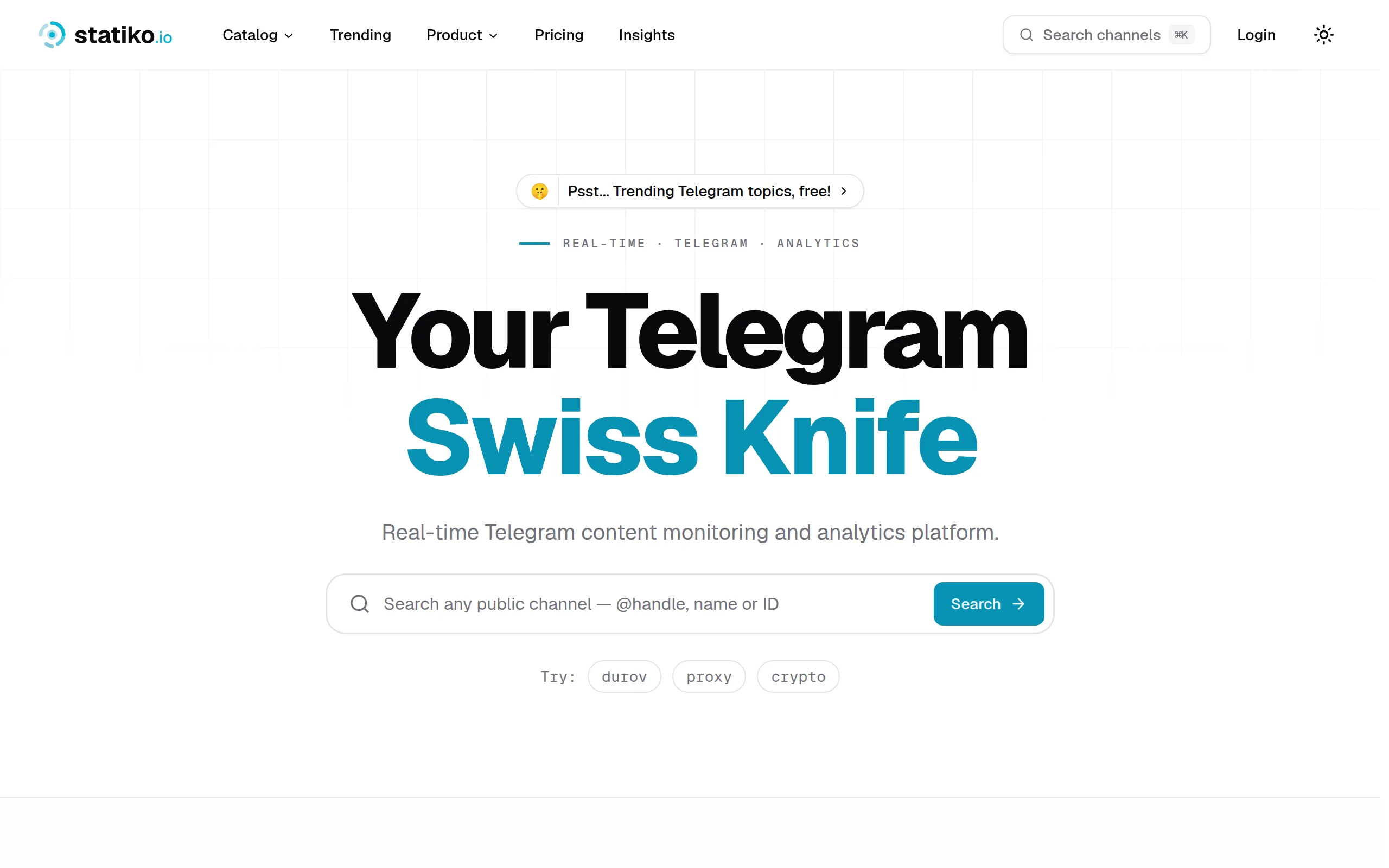
Statiko
Monitor any Telegram channel in real time - track posts, edits, deletions, and growth with AI recaps 📡

Shibui
AI website builder - describe your business, pick a niche template, edit by chatting, and publish instantly ✨

Pro Service
Find verified home service professionals, compare quotes, and pay securely through escrow - built for Brazilians across the US 🏠
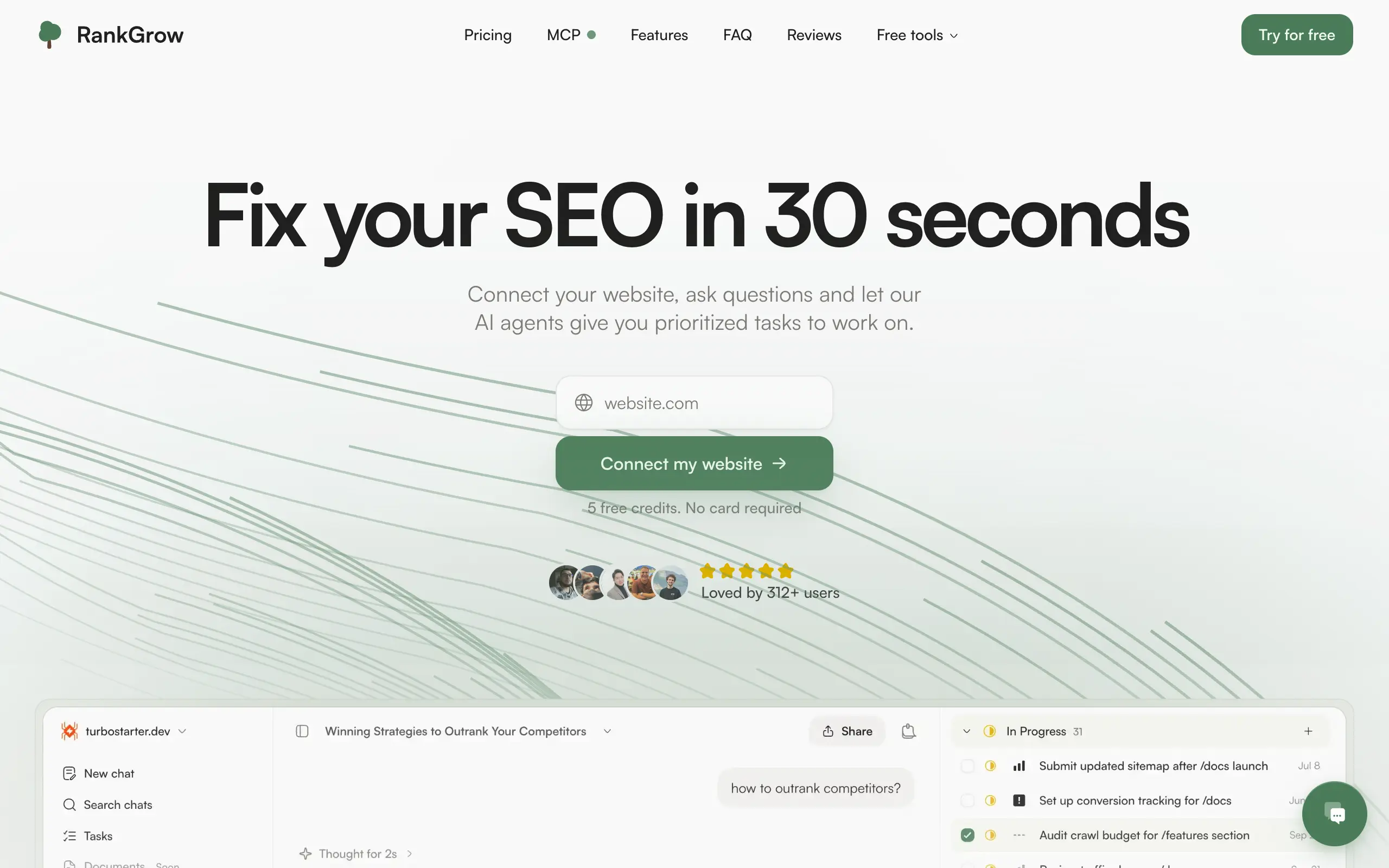
RankGrow
Fix your SEO with AI agents - connect Search Console, get prioritized tasks, and grow organic traffic 📈
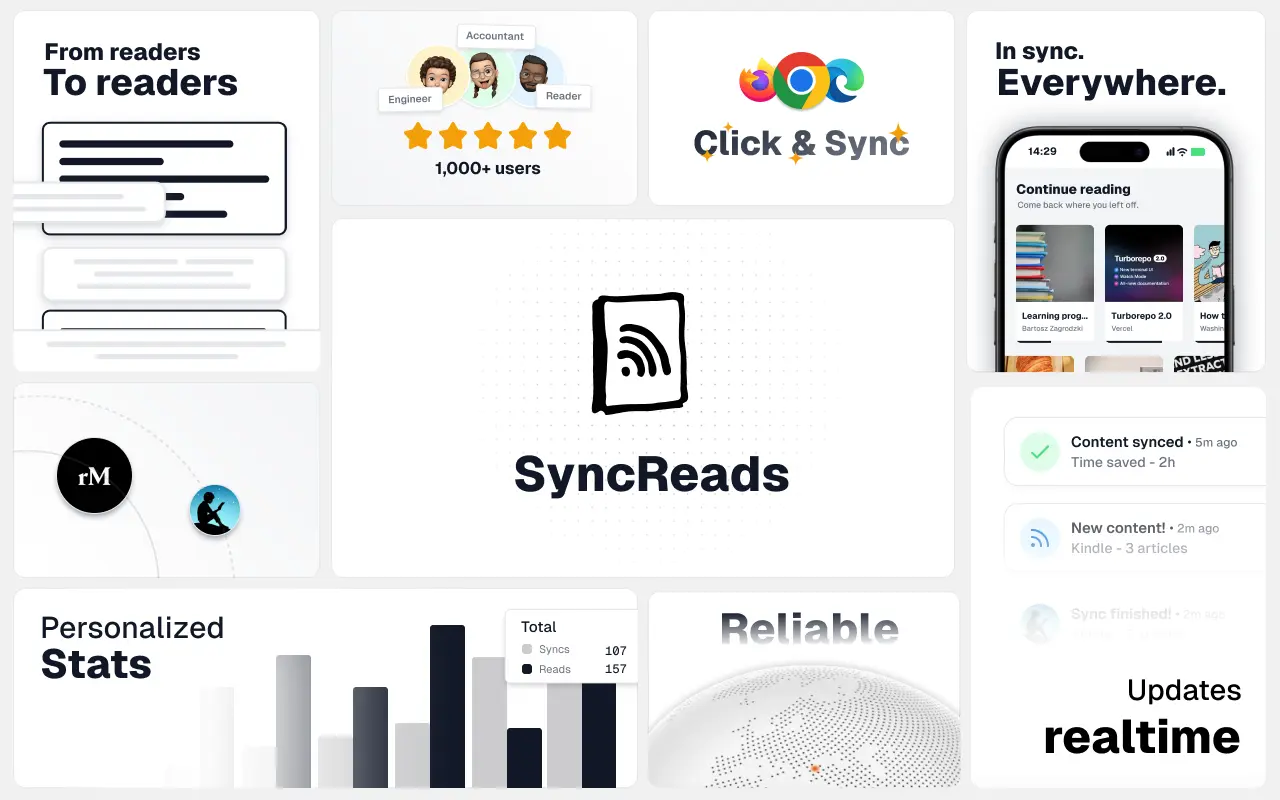
SyncReads
Sync your favorite content for distraction-free reading, save time and replace multiple apps. Anytime, anywhere 🔄
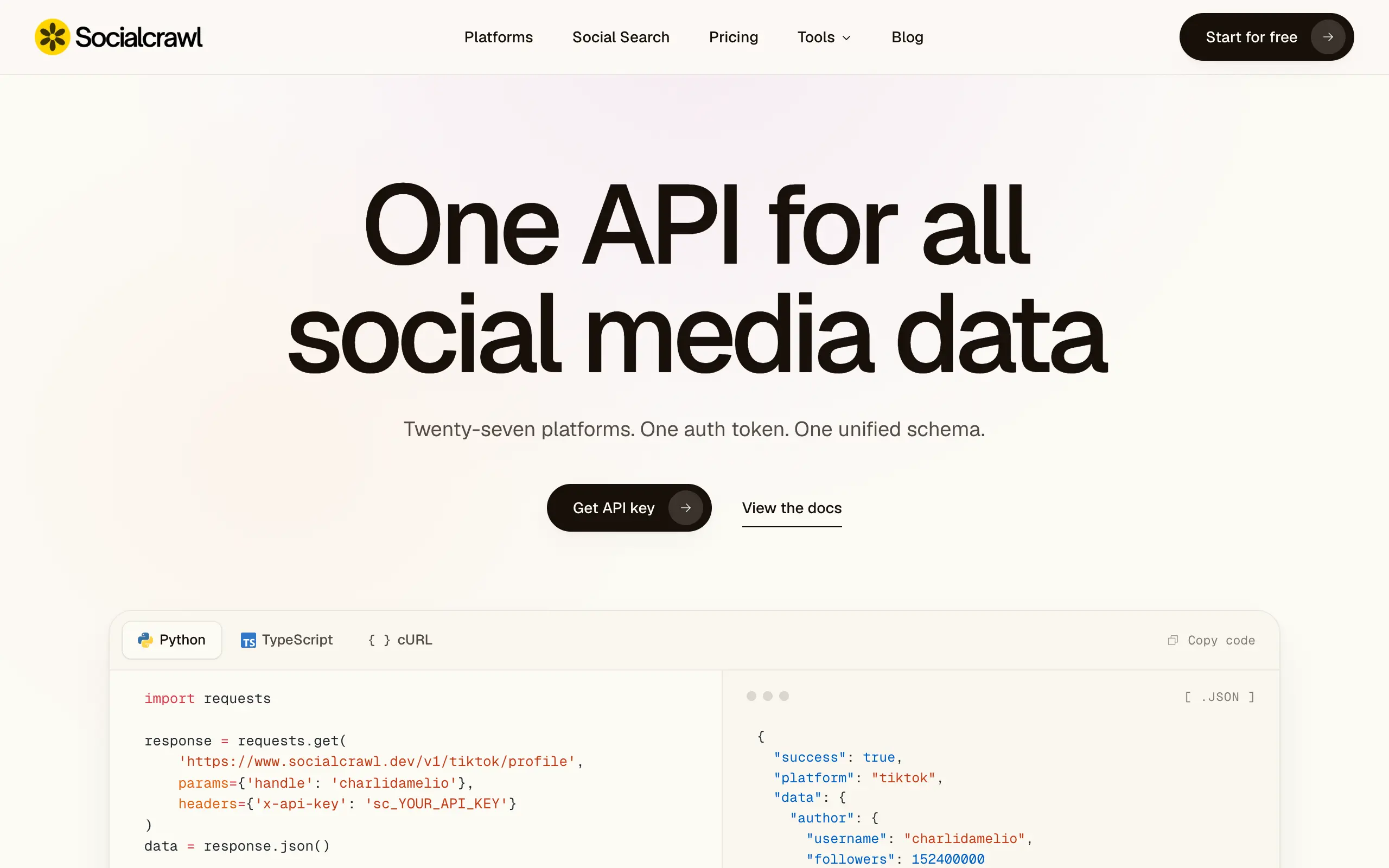
Socialcrawl
Get clean, structured data from 21 platforms like TikTok, Instagram, and YouTube with a single request 📊
Statiko
Monitor any Telegram channel in real time - track posts, edits, deletions, and growth with AI recaps 📡
Shibui
AI website builder - describe your business, pick a niche template, edit by chatting, and publish instantly ✨
Pro Service
Find verified home service professionals, compare quotes, and pay securely through escrow - built for Brazilians across the US 🏠
RankGrow
Fix your SEO with AI agents - connect Search Console, get prioritized tasks, and grow organic traffic 📈
SyncReads
Sync your favorite content for distraction-free reading, save time and replace multiple apps. Anytime, anywhere 🔄
Socialcrawl
Get clean, structured data from 21 platforms like TikTok, Instagram, and YouTube with a single request 📊
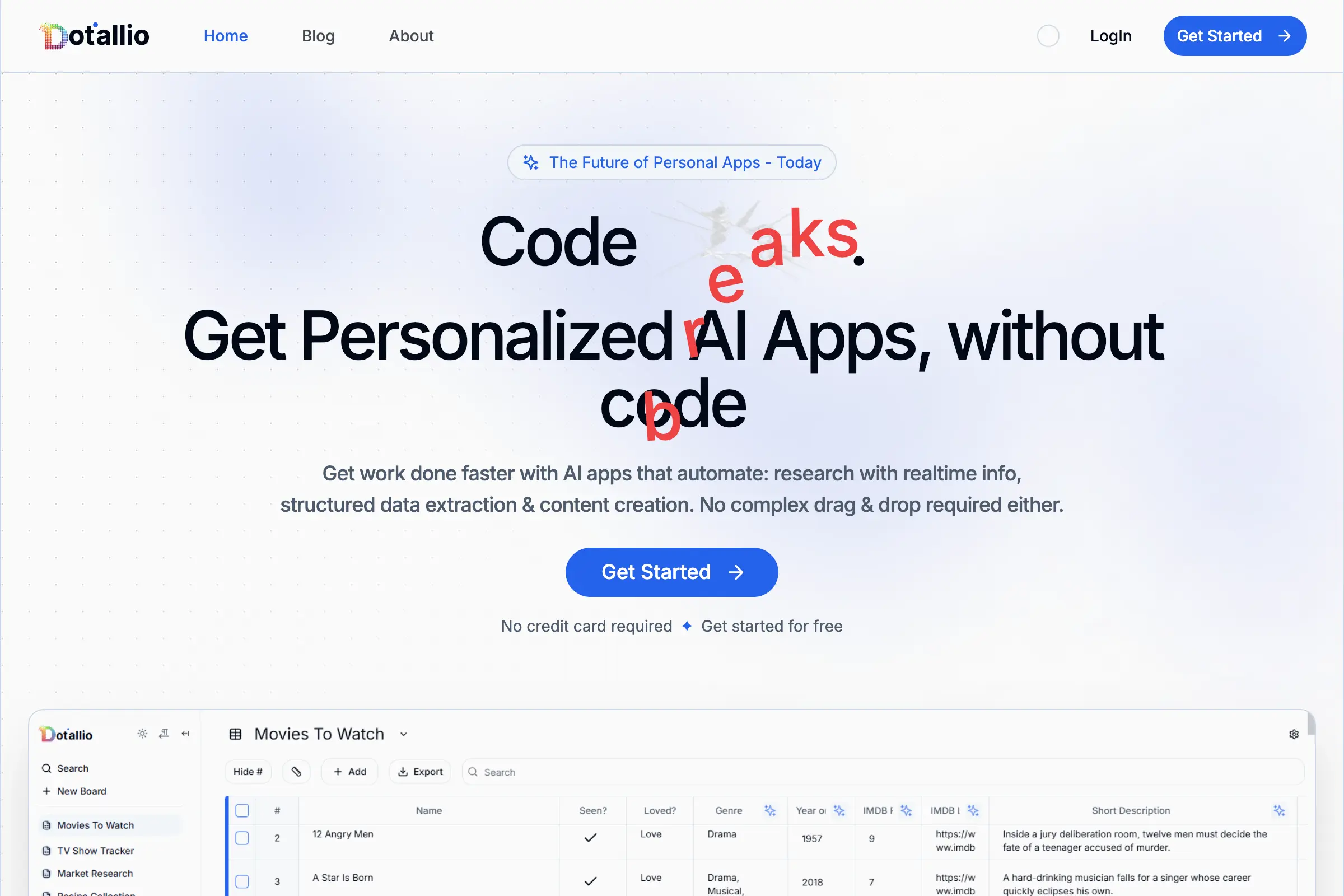
Dotallio
Personalized AI apps that automate research, data extraction, and content creation without code 🤖
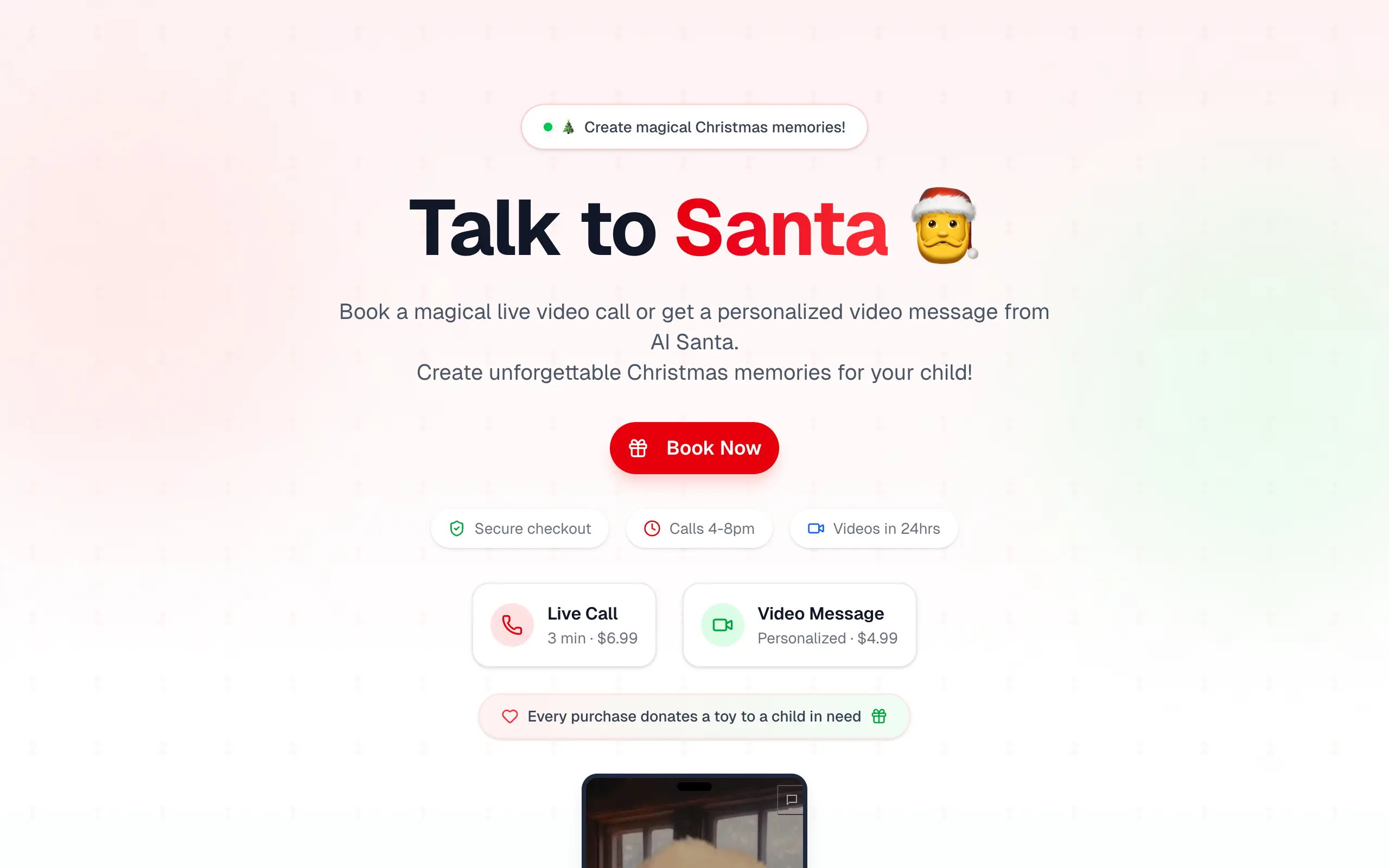
Talk to Santa
Enjoy a magical live video chat or receive a unique AI-generated video greeting from Santa Claus 🎅

pozywka.pl
Scalable blog for food journalist, focused on performance and user experience 🌭
zagrodzki.me
Personal blog and portfolio of Bart Zagrodzki, where he shares his knowledge and work 💼
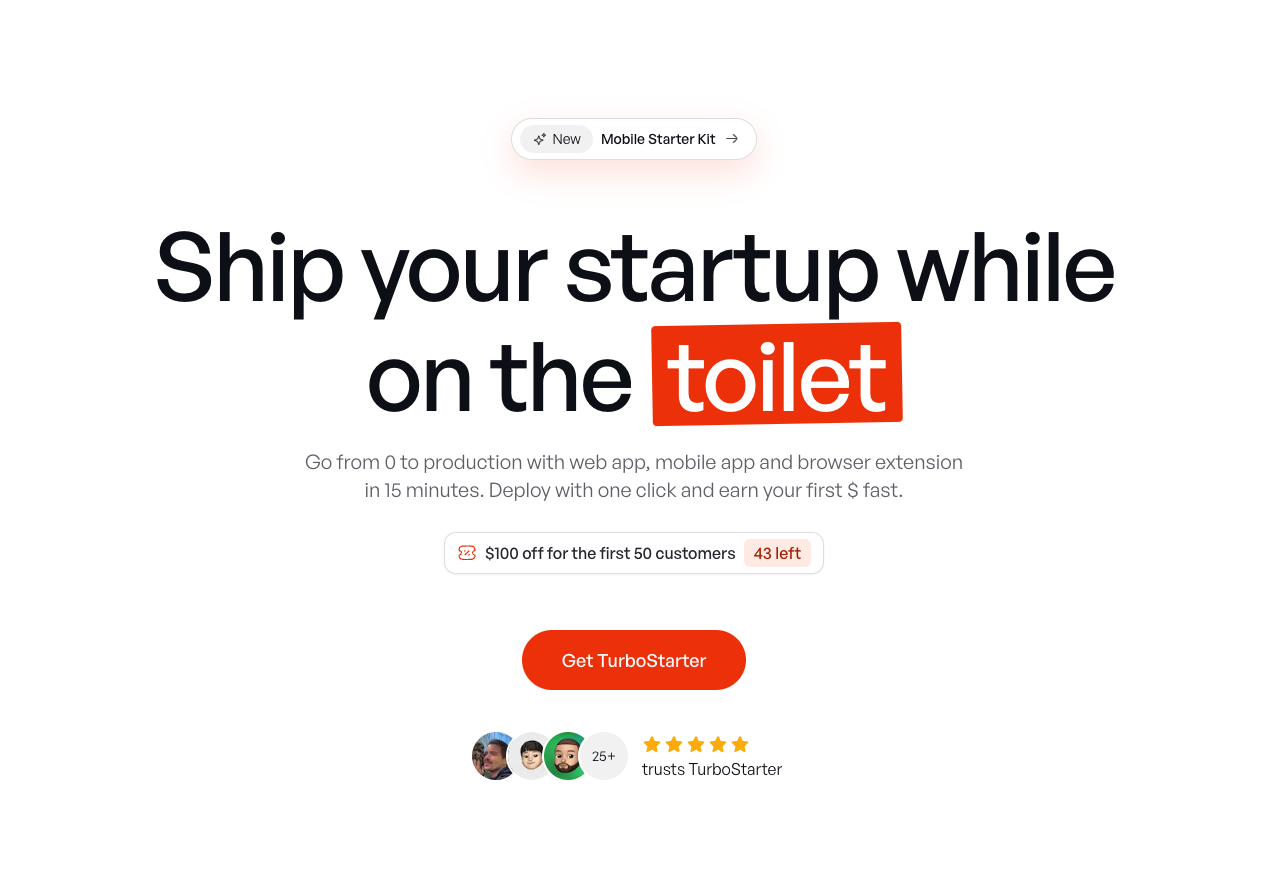
TurboStarter
Ship your startup everywhere. In minutes.
HTML to Markdown
Convert HTML to Markdown with ease, directly in your browser 📄
Dotallio
Personalized AI apps that automate research, data extraction, and content creation without code 🤖
Talk to Santa
Enjoy a magical live video chat or receive a unique AI-generated video greeting from Santa Claus 🎅
pozywka.pl
Scalable blog for food journalist, focused on performance and user experience 🌭
zagrodzki.me
Personal blog and portfolio of Bart Zagrodzki, where he shares his knowledge and work 💼
TurboStarter
Ship your startup everywhere. In minutes.
HTML to Markdown
Convert HTML to Markdown with ease, directly in your browser 📄
Omichat
Chat with 50+ AI models, including ChatGPT and Claude, in one place - switch models anytime without losing context 🤖
Claude Fast
Supercharge your Claude Code with 6x effective context window and specialized AI agents 🤖
EmojAI
AI-powered emoji picker with smart, context-aware suggestions 🤖
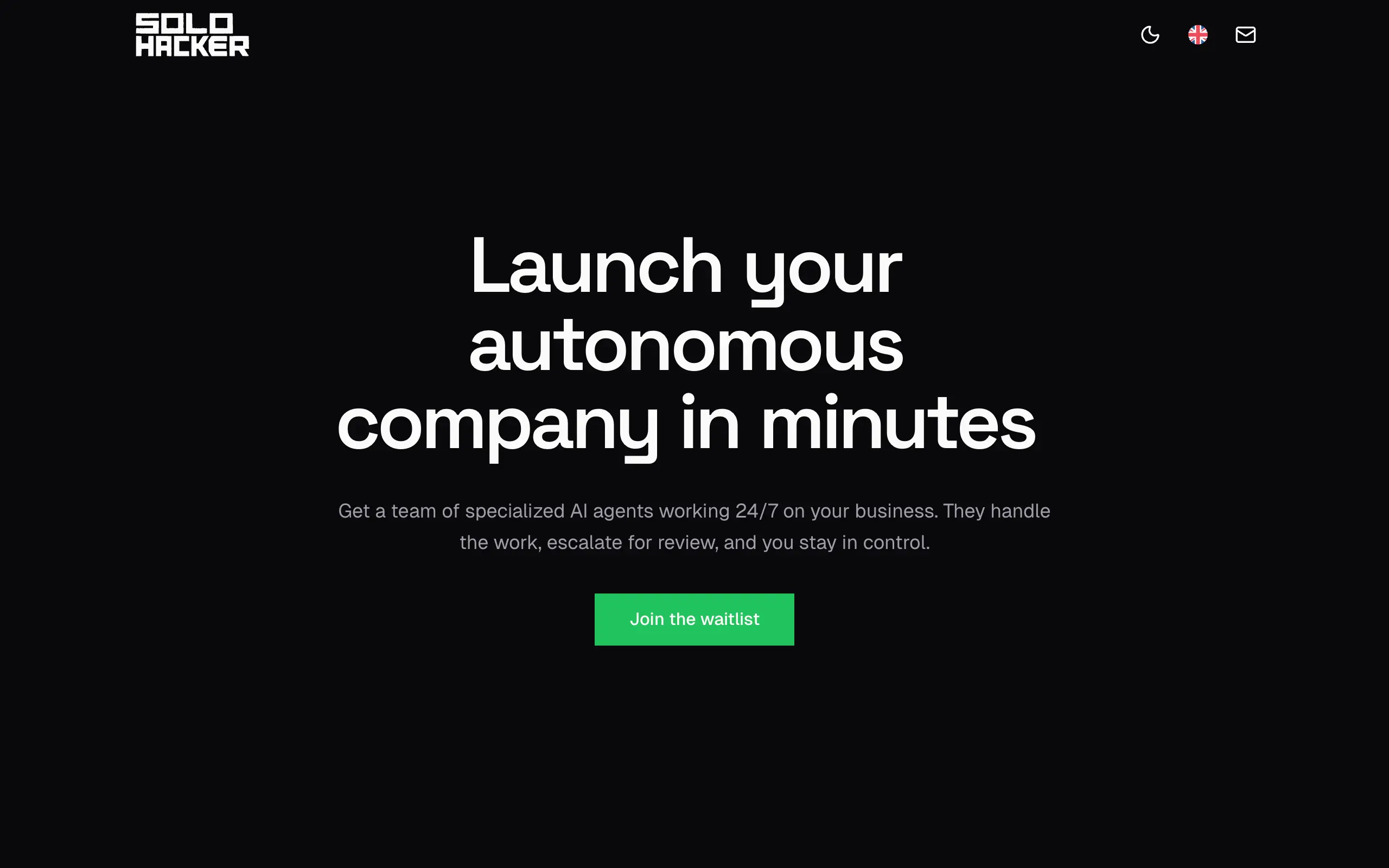
Solohacker
Autonomous company launcher - AI agents work 24/7, escalate what matters, and you stay in control 🤖
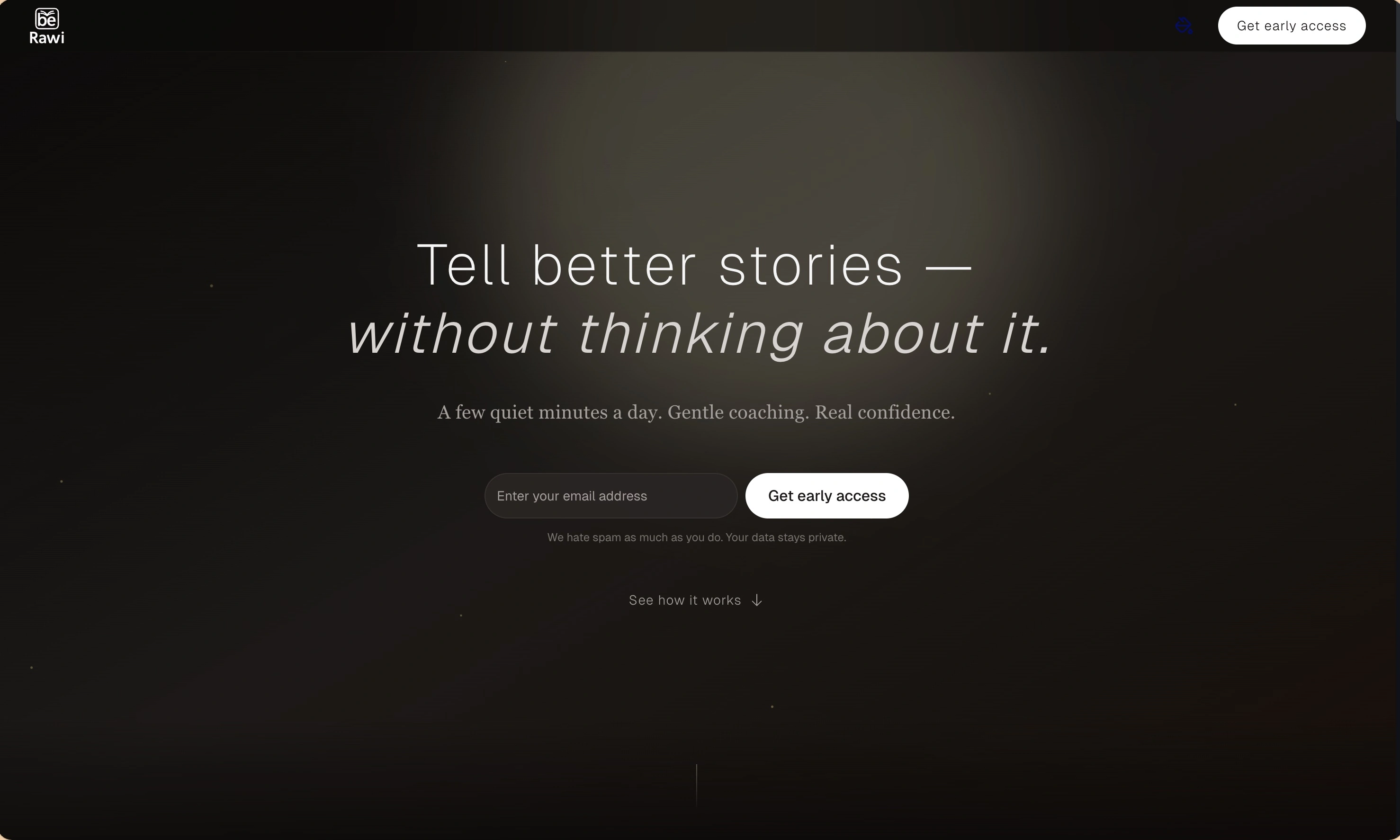
BeRawi: Storytelling Coach
Practice storytelling daily with instant feedback to sound clearer, more engaging, and confident 🎤
Omichat
Chat with 50+ AI models, including ChatGPT and Claude, in one place - switch models anytime without losing context 🤖
Claude Fast
Supercharge your Claude Code with 6x effective context window and specialized AI agents 🤖
EmojAI
AI-powered emoji picker with smart, context-aware suggestions 🤖
Solohacker
Autonomous company launcher - AI agents work 24/7, escalate what matters, and you stay in control 🤖
BeRawi: Storytelling Coach
Practice storytelling daily with instant feedback to sound clearer, more engaging, and confident 🎤

Connect with like-minded people
Join our community to get feedback, support, and grow together with 1,000+ builders on board, let's ship it!
Join usShip your startup everywhere. In minutes.
Don't burn tokens on setup and start building features on day one.