Stoic Signal
An AI-guided Stoic practice for handling stress, loss, conflict, and uncertainty through conversations with Marcus Aurelius-inspired mentors.
What Stoic Signal solves for people under pressure
Modern stress is rarely a single event. It is an accumulation of unanswered messages, difficult conversations, financial uncertainty, grief, career pressure, family obligations, and the feeling that the world is moving faster than anyone can process.
Stoic Signal is an AI Stoic practice app designed to help people meet those moments with greater clarity. Instead of delivering generic motivational quotes or treating philosophy as trivia, it guides users through practical conversations inspired by Marcus Aurelius and other Stoic thinkers. The purpose is simple: identify what is within a person’s control, separate judgment from fact, choose a virtuous next action, and move forward without pretending difficult emotions do not exist.
The primary opportunity is not to replace therapy, crisis care, or human relationships. It is to offer a private, always-available reflective practice for the everyday moments between them:
- A manager needs to respond to criticism without becoming defensive.
- A founder is anxious about a funding decision they cannot control.
- A person is grieving a loss and needs language that does not minimize it.
- A student is overwhelmed by uncertainty about the future.
- A partner wants to de-escalate an argument before saying something harmful.
- A professional wants a consistent morning and evening reflection ritual.
An AI-powered Stoicism app can turn an ancient philosophical framework into a practical decision-making system for modern life. The differentiator is not merely “chat with Marcus Aurelius.” It is providing structured, emotionally responsible guidance that helps users build judgment, resilience, self-command, and perspective over time.
The core product principle
Stoic Signal should guide reflection rather than issue commands. Its best answer is not “Here is what to do,” but “Here is what you can control, what assumption may be driving the distress, and what principled next step is available.”
Why an AI Stoic practice app has real market potential
The wellness app market is crowded, but there remains a meaningful gap between broad meditation products, clinical mental health platforms, productivity tools, and unstructured AI chatbots.
Meditation apps can help users regulate attention and establish calming routines. Therapy platforms can connect eligible users with licensed professionals. Journaling apps offer a place to write. General-purpose AI assistants can hold a conversation. Yet many users want something more specific: a practical framework for confronting adversity, interpersonal tension, fear, and uncertainty.
That is where an AI Stoic practice app can earn a durable place in a person’s life.
Stoicism is highly compatible with modern product behavior because its core practices are repeatable:
- The dichotomy of control helps users sort actionable concerns from uncontrollable outcomes.
- Negative visualization can support gratitude and preparedness when used carefully.
- Premeditatio malorum helps people plan for foreseeable setbacks without catastrophizing.
- Evening review creates a natural retention loop.
- Virtue-based reflection turns vague self-improvement into concrete choices.
- Cognitive distancing can help users examine interpretations rather than automatically believe them.
There is also a cultural tailwind. Readers increasingly seek philosophy that feels useful rather than academic. Marcus Aurelius, Epictetus, and Seneca remain visible across leadership writing, sports psychology, self-development communities, and mental fitness content. This interest creates top-of-funnel demand, but it also creates a problem: most Stoic content online is fragmented, oversimplified, or reduced to quote graphics.
Stoic Signal can compete by translating philosophy into a guided daily practice.
The market gap between inspiration and implementation
A person may save a quote such as “You have power over your mind—not outside events.” The quote can be memorable, but it does not automatically help them handle a conflict with a coworker at 4:30 PM.
The implementation gap has several dimensions:
| User need | Common current solution | What is missing | Stoic Signal opportunity | Retention potential |
|---|---|---|---|---|
| Immediate stress support | Generic chatbot | Consistent framework | Contextual Stoic dialogue | High |
| Daily reflection | Blank journal | Useful prompts and feedback | Guided morning and evening reviews | High |
| Conflict management | Advice articles | Personalized rehearsal | Scenario-based response practice | Medium |
| Learning Stoicism | Books and social media | Application to real life | Lesson-to-practice pathways | Medium |
| Emotional support | Wellness content | Boundaries and escalation | Supportive, safety-aware guidance | High |
The product should not frame Stoicism as emotional suppression. That misconception is both ethically risky and commercially limiting. Historically grounded Stoic practice is about examining judgments, accepting reality, acting with virtue, and managing impulses. It is not about becoming indifferent to suffering or avoiding care for others.
A trustworthy product teaches this distinction repeatedly through its onboarding, prompts, mentor responses, and safety UX.
Target audience for Stoic Signal
Stoic Signal should begin with a narrow set of high-intent audiences rather than marketing itself to “everyone who feels stressed.” Broad positioning can follow once the product has validated a repeatable use case and retention model.
Primary audience: reflective professionals facing uncertainty
The most promising early users are knowledge workers, managers, founders, consultants, and independent professionals between roughly 25 and 45 who already consume self-improvement content but want a more grounded practice.
They often have these characteristics:
- They make decisions with incomplete information.
- They experience recurring work conflict or pressure.
- They value privacy and may hesitate to share every concern publicly.
- They want practical guidance, not vague reassurance.
- They are open to journaling, coaching, books, or mental performance tools.
- They seek a ritual that fits into a busy schedule.
Their highest-value moments are likely to be before high-stakes meetings, after difficult feedback, during career changes, and at the end of emotionally demanding workdays.
Secondary audience: philosophy-curious self-development users
This group discovers Stoicism through books, podcasts, social media, newsletters, or creators. They may own a copy of Meditations but struggle to turn their interest into a stable habit.
For them, Stoic Signal should make Stoic principles accessible without oversimplifying them. A lightweight curriculum, contextual explanations, daily prompts, and source-aware mentor interactions can convert curiosity into consistent practice.
Tertiary audience: people navigating life transitions
Loss, relationship changes, caregiving, illness in the family, moving, layoffs, and major financial changes all create a need for stability and perspective. These users may find Stoic tools useful, but their emotional context requires careful product boundaries.
The app can support reflection in these moments, while clearly stating that it is not a substitute for licensed mental health care, emergency services, or professional crisis support.
High-intent use case
Help a manager pause before responding to a critical message, identify the controllable facts, and draft a calm next step.
High-retention ritual
Offer a two-minute morning intention and a structured evening review that reveals patterns over weeks.
High-trust positioning
Use philosophy-informed coaching with transparent safety boundaries instead of presenting AI as a therapist or authority figure.
The unique value proposition of Stoic Signal
The strongest positioning is:
Stoic Signal is a private AI-guided Stoic practice that helps you turn stress, conflict, loss, and uncertainty into clearer judgment and intentional action.
This statement differentiates the product from quote apps, generic journaling products, therapy marketplaces, and open-ended AI companions.
Its unique selling proposition rests on five elements:
-
A coherent philosophical operating system
Every response should map back to recognizable Stoic practices rather than improvising generic life advice. -
Situation-aware conversations
Users can discuss the actual issue they are facing, including a disagreement, decision, fear, or loss. -
Actionable reflection
The conversation should end with a small, concrete next action, not only a comforting observation. -
Longitudinal practice memory
With explicit consent, the app can surface recurring themes such as conflict avoidance, perfectionism, fear of judgment, or reactive communication. -
Responsible emotional boundaries
Stoic Signal should never claim diagnosis, therapy, or clinical outcomes. It needs a compassionate escalation path for users who may be in crisis.
The product’s advantage becomes stronger when mentors are not treated as historical roleplay characters. “Marcus Aurelius-inspired” should describe the tone and philosophical lens, not imply that the AI is actually Marcus Aurelius or that every generated response is an authentic quotation.
Core features for an AI Stoic practice product
A successful first version should prioritize repeatable value over a large library of loosely connected features. The core product loop should be easy to understand:
- A user encounters a difficult situation or begins a ritual.
- Stoic Signal asks focused questions.
- The user identifies controllables, judgments, values, and options.
- The AI offers a concise philosophical reframing.
- The user chooses a next action or reflection commitment.
- The app helps them review the result later.
AI mentor conversations for stress and conflict
The main experience should be a conversational interface with distinct mentor modes. Each mode can share a common safety system and retrieval layer while using different prompt patterns.
Possible mentor modes include:
- The emperor for responsibility, perspective, and duty
- The teacher for direct questioning and examining judgments
- The strategist for preparation, trade-offs, and difficult decisions
- The companion for gentle reflection during loss or uncertainty
These labels are safer and more differentiated than pretending users are literally speaking with ancient historical figures. The product can still explain each mentor’s philosophical inspiration.
A high-quality AI mentor conversation should follow a deliberate sequence:
- Acknowledge the user’s situation without excessive cheerleading.
- Separate facts from interpretations.
- Ask what is and is not within the user’s control.
- Identify the relevant virtue, such as courage, justice, wisdom, or temperance.
- Explore a proportionate response.
- End with an optional action, script, or journal prompt.
- Invite a later review.
For example, if a user says, “My colleague took credit for my work and I am furious,” the app should not rush to “forgive them” or “ignore it.” A better response is to validate the frustration, distinguish the colleague’s behavior from the user’s response, explore evidence, and help the user prepare a direct and just conversation.
The control map
The control map is a signature feature with strong product-market-fit potential. It visually and conversationally separates a situation into three zones:
- Direct control such as effort, preparation, words, boundaries, and attention
- Influence but no guarantee such as requests, negotiations, feedback, and collaboration
- Outside control such as another person’s reaction, the past, market conditions, and final outcomes
This is a modern implementation of a foundational Stoic idea. It can work as a standalone tool, a conversation output, and a longitudinal insight engine.
type ControlMap = {
  directControl: string[];
  influence: string[];
  outsideControl: string[];
  nextVirtuousAction: string;
};

const reflection: ControlMap = {
  directControl: ["Prepare my facts", "Speak calmly", "Set a boundary"],
  influence: ["Ask for credit in the next project update"],
  outsideControl: ["Whether my colleague apologizes"],
  nextVirtuousAction: "Request a private conversation before the next team meeting"
};
The output should never feel like a simplistic “just let it go” mechanism. The middle category matters because many real-world situations deserve thoughtful action even when outcomes cannot be controlled.
Daily Stoic journaling and review
Daily practice drives long-term value. The ideal journal is not a blank text box with an AI summary. It should be structured enough to create insight without becoming tedious.
A morning practice could ask:
- What situation may test your character today?
- What is one thing you can control?
- Which virtue do you want to practice?
- What would a calm and just response look like?
An evening review could ask:
- Where did you act in line with your values?
- Where did emotion or impulse take over?
- What interpretation increased your distress?
- What would you do differently tomorrow?
Over time, users should see private patterns, such as which contexts produce anxiety or which virtue they most often want to practice. This transforms the product from a single-use chatbot into a personal practice system.
Guided protocols for recurring situations
Users often arrive with recognizable categories of concern. Stoic Signal can provide structured protocols that make the first interaction less intimidating and produce more consistent outcomes.
Use a brief de-escalation flow that identifies facts, assumptions, the other person’s possible perspective, a just boundary, and a calm conversation opener.
Help users distinguish preparation from rumination, identify the next controllable step, and create a contingency plan without promising certainty.
Offer gentle prompts centered on acceptance, memory, connection, and present responsibilities. Avoid framing grief as a problem to solve or a test of toughness.
Surface values, available evidence, reversible versus irreversible choices, and the smallest action that preserves optionality.
These protocols improve quality assurance. They also create searchable landing-page and content opportunities around terms such as “Stoicism for anxiety,” “Stoic approach to conflict,” “how to handle uncertainty,” and “daily Stoic journal prompts.”
Source-grounded learning library
Trust grows when the app distinguishes between original Stoic texts, scholarly interpretation, and AI-generated coaching. A learning library should include short passages, plain-language explanations, practice exercises, and context about the limits of attribution.
Useful source material can include public-domain translations and reputable editions of works associated with Marcus Aurelius, Epictetus, Musonius Rufus, and Seneca. Product teams should have qualified editorial review for historical claims and translations.
For web content, cite or recommend authoritative references rather than presenting unattributed claims as fact. For example, a future research section can reference the Stanford Encyclopedia of Philosophy for philosophical context, while product documentation can explain its AI behavior and safety limitations in plain language.
Building trust and safety into AI-guided Stoicism
The most important product decision is to treat safety as a core capability, not a disclaimer added near launch.
Users may bring serious topics into a Stoic conversation: bereavement, abuse, suicidal ideation, trauma, panic, severe depression, or dangerous relationship dynamics. A calm philosophical tone is not enough. The product needs detection, escalation, and careful language design.
Essential safety requirements
- Clearly state that Stoic Signal provides reflective guidance and is not therapy, medical advice, diagnosis, or emergency support.
- Detect high-risk language and interrupt normal philosophical coaching when appropriate.
- Encourage immediate local emergency support when there is imminent danger.
- Provide region-appropriate crisis resource pathways where the product operates.
- Avoid guilt-inducing Stoic language such as implying suffering results from moral failure.
- Never encourage users to remain in unsafe environments, tolerate abuse, or avoid professional help.
- Use human review, red-team testing, and documented escalation policies.
- Give users control over data retention, deletion, and personal memory features.
A critical product boundary
Do not market Stoic Signal as an AI therapist, grief counselor, or crisis companion. Its value comes from reflective philosophy-informed practice, with clear support pathways when a situation exceeds that scope.
Privacy is a competitive feature
Reflection data is deeply personal. Users may describe workplace conflicts, family experiences, health concerns, finances, and private fears. The product should make privacy understandable rather than burying it in legal language.
A credible privacy approach includes:
- Clear consent before saving long-term memories
- Separate controls for chat history and insight generation
- Easy export and deletion tools
- Encryption in transit and at rest
- Data minimization by default
- Role-based internal access controls
- A public explanation of whether conversations are used to improve models
- A transparent process for handling requests from employers or third parties
For business customers, avoid a model where employers can read individual reflection content. If a B2B offering is developed, aggregate and anonymize any organizational insights, and make user privacy non-negotiable.
Recommended tech stack for Stoic Signal
The technical architecture should support fast iteration, safe AI orchestration, private user data, and reliable subscription billing. The best stack depends on the team’s existing capabilities, but a TypeScript-first web application is a practical starting point.
Suggested application architecture
- Frontend with Next.js and React for server-rendered marketing pages, authenticated dashboards, and fast user experiences
- Styling with Tailwind CSS for a consistent design system and rapid iteration
- Database with PostgreSQL for durable relational data, user records, subscriptions, reflections, and audit trails
- ORM with Prisma for type-safe schema management and application data access
- Authentication with Auth.js or a managed identity provider, depending on compliance and team requirements
- Payments with Stripe for subscriptions, trials, billing portals, tax support, and webhook-driven entitlement management
- Observability with Sentry for application errors and performance monitoring
- Product analytics with PostHog for privacy-conscious event analysis, experiments, and retention cohorts
TurboStarter can materially reduce time to market by providing a production-oriented SaaS foundation for common needs such as authentication, payments, database patterns, and application structure. That lets the team spend more of its early effort on the differentiated AI reflection workflow, safety design, and content quality.
AI architecture and retrieval trade-offs
A model provider should be selected for quality, latency, structured outputs, safety tooling, cost, and contractual data handling. The system should avoid sending every user message directly to a model with a single oversized prompt.
A stronger architecture contains several layers:
- Input classification for intent, emotional intensity, and safety risk
- Protocol selection for conflict, uncertainty, loss, daily review, or general discussion
- Retrieval from a vetted Stoic knowledge base and editorial guidance
- Response generation with structured outputs
- Safety and quality validation before delivery
- Memory extraction only when the user has opted in
- Feedback capture for evaluation and improvement
A vector database can help retrieve relevant passages and practice guidance, but retrieval-augmented generation is not a guarantee of accuracy. It introduces its own operational burden: content chunking, metadata design, evaluation, version control, and stale or misleading source retrieval.
For an MVP, a small, carefully curated source set may outperform an enormous library. The goal is not to demonstrate that the system has read every classical text. The goal is to give users helpful, responsible, consistent guidance.
Data model considerations
The data model should represent user agency and safety explicitly. Useful entities include:
- User profile and consent preferences
- Conversation sessions
- Messages and model metadata
- Reflection entries
- Control map outputs
- Practice plans and check-ins
- Source citations or source categories
- Safety events and escalation records
- Subscription entitlements
- User feedback and response ratings
Do not treat memory as an invisible implementation detail. Users should be able to inspect, edit, or remove remembered themes. This is especially important when the product summarizes behavioral patterns.
Monetization strategy for Stoic Signal
The best monetization model is likely a freemium subscription with a deliberately useful free tier and a clear reason to upgrade.
Recommended pricing structure
- Free tier with a limited number of AI-guided conversations, daily prompt access, and basic journaling
- Premium individual plan with unlimited or high-volume guided conversations, mentor modes, long-term insights, personalized practice plans, and advanced protocols
- Annual plan with a meaningful discount to improve cash flow and reduce churn
- Founder or early-adopter plan for the launch period, positioned transparently as a limited offer
- Gift subscriptions for holidays, graduations, career transitions, or wellness-oriented gifting
Avoid paywalls that block a user in the middle of a vulnerable conversation. If usage limits are necessary, allow the existing conversation to conclude safely and explain the limit clearly afterward.
Expansion revenue options
Once the consumer product demonstrates strong retention, potential expansion paths include:
- Guided Stoic courses for specific challenges such as leadership, conflict, and uncertainty
- Audio reflections and voice-based daily check-ins
- A practitioner or coach companion product with client-controlled sharing
- Team wellness plans with strict privacy protections
- Curated physical products such as reflection cards or journals
- Partnerships with credible philosophy educators and mental performance creators
B2B should be approached carefully. Employers may value resilience tools, but users will not trust a reflective AI product if they suspect their private concerns are visible to management. Consumer trust must remain the foundation.
Competitive advantage and positioning
Stoic Signal will compete indirectly with meditation apps, journaling tools, AI companion products, philosophy apps, coaching platforms, and general-purpose chat assistants. It does not need to beat each category at its own game. It needs to own a specific job to be done:
Help me respond wisely when life is difficult and I need perspective now.
How Stoic Signal can remain differentiated
Quotes can inspire, but they do not adapt to a user’s real situation. Stoic Signal turns a principle into questions, a control map, and an intentional next action.
A general chatbot can offer broad advice, but its tone and framework may shift from conversation to conversation. Stoic Signal has a stable philosophical method, reviewed protocols, and purpose-built safety boundaries.
Reading classical texts is valuable, but users often need help applying difficult ideas to a tense meeting, a breakup, a setback, or a personal decision.
The product can use a compelling mentor voice without falsely claiming historical identity, overpromising emotional outcomes, or crossing into clinical care.
The long-term moat is not the base language model. Models will become more available and less differentiated. The durable advantage is the combination of high-quality behavioral design, trusted safety practices, proprietary reflection data with consent, a refined curriculum, a recognizable brand voice, and a habit-forming practice loop.
Key risks and mitigation strategies
Every AI wellness product faces meaningful risks. Naming them early improves product quality and investor credibility.
Risk: harmful or insensitive advice
AI can misread context, offer oversimplified guidance, or use Stoic concepts in ways that feel dismissive.
Mitigation includes scenario testing, safety classifiers, human-reviewed protocols, structured response templates, response rating tools, and a clear escalation system. Build a red-team dataset around grief, abuse, workplace retaliation, self-harm, discrimination, and medical anxiety.
Risk: philosophical inaccuracy
The product may attribute fabricated quotations to Marcus Aurelius or flatten complex ideas into generic productivity advice.
Mitigation includes editorial governance, source tagging, retrieval from vetted material, a “paraphrase versus quotation” distinction, and expert review from a qualified philosophy advisor.
Risk: low retention after novelty fades
Users may enjoy the first conversation but fail to establish a habit.
Mitigation includes short daily rituals, contextual reminders, weekly insights, outcome follow-ups, streaks that do not shame users, and a visible record of personal growth. The goal is not daily engagement at any cost; it is recurring usefulness during real moments of pressure.
Risk: privacy concerns reduce adoption
People may avoid sharing honestly if they do not understand how AI conversations are stored or used.
Mitigation includes privacy-first defaults, transparent controls, deletion tools, plain-language explanations, and minimal collection. Trust messaging should appear during onboarding, not only in legal documents.
Risk: overreliance on AI
Some users may start treating the app as their sole source of support or as an unquestionable authority.
Mitigation includes language that reinforces user agency, encourages trusted human support when appropriate, avoids absolute directives, and provides professional resource pathways for serious situations.
Go-to-market strategy and SEO opportunities
Organic acquisition should focus on high-intent searches where philosophy meets a real problem. The best content does not simply publish “Stoic quotes.” It answers the practical question behind the search.
Potential topic clusters include:
- Stoicism for stress at work
- How to use Stoicism during uncertainty
- Stoic practices for dealing with criticism
- Marcus Aurelius lessons for anxiety and overthinking
- How to handle conflict using Stoic principles
- Daily Stoic journal prompts
- What is within your control
- Stoicism and grief
- Stoic decision-making framework
- How to stop reacting emotionally
Each article should offer genuine value independent of the product while naturally introducing the app as an implementation tool. For sensitive topics such as grief and anxiety, content needs careful review, non-clinical language, and clear guidance about seeking professional care when needed.
Early distribution can combine:
- Search-optimized educational content
- A short daily email reflection
- Creator partnerships with philosophy, leadership, and mindful productivity educators
- Shareable but non-trivial control-map templates
- Public challenges such as a seven-day evening review practice
- Communities for founders, professionals, and readers of practical philosophy
- App store optimization if mobile applications become part of the roadmap
Avoid relying on sensational claims like “Stoicism eliminates anxiety.” A more credible promise is that a consistent reflection practice can help users respond more intentionally to difficult situations.
A practical MVP implementation plan
The MVP should prove one thing: users return because the guided Stoic reflection is meaningfully better than journaling alone or chatting with a general AI assistant.
Define the initial audience and choose one primary moment of need, such as professionals handling work stress and conflict.
Create five to eight human-reviewed conversation protocols covering daily reflection, conflict, uncertainty, criticism, decision pressure, and setback recovery.
Build the core chat flow with safety classification, concise AI responses, a control map, and a saved next action.
Add morning intention and evening review rituals with optional reminders and private history.
Implement authentication, billing, consent controls, conversation deletion, and subscription entitlements before expanding feature scope.
Recruit a small beta cohort of philosophy-curious professionals and conduct weekly qualitative interviews about usefulness, trust, and emotional tone.
Measure activation, week-one retention, weekly reflection completion, paid conversion, safety-event rates, and the percentage of users who report taking a constructive next action.
Refine the protocols and onboarding based on observed user behavior before adding more mentors, content libraries, or enterprise features.
The first version should feel calm, specific, and reliable. It does not need dozens of historical personas, a massive content catalog, or complex gamification. A user who finishes one difficult conversation feeling clearer about what they can control has experienced the product’s central value.
Final perspective
Stoic Signal has the potential to become more than an AI chatbot with a classical aesthetic. The opportunity is to build a modern practice layer for Stoicism: one that meets people in moments of stress, conflict, loss, and uncertainty, then helps them convert reflection into wiser action.
The product will succeed if it respects both sides of its promise. It must take Stoic philosophy seriously enough to avoid superficial quote-driven advice, and it must take users seriously enough to provide emotional humility, privacy, safety boundaries, and useful next steps.
Build for the person staring at a difficult message, replaying a tense conversation, facing an uncertain decision, or trying to make sense of a setback. In those moments, an AI-guided Stoic practice can provide a valuable signal: not certainty, not emotional numbness, but a clearer way to choose what comes next.
More 🤖 AI Startup SaaS ideas
Discover more innovative ai startup SaaS ideas that are trending in 2026. Each idea is AI-generated with market validation and growth potential to help you find your next profitable venture faster than competitors.
Your competitors are building with TurboStarter
Below are some of the SaaS ideas that have been generated and built with our starter kit.
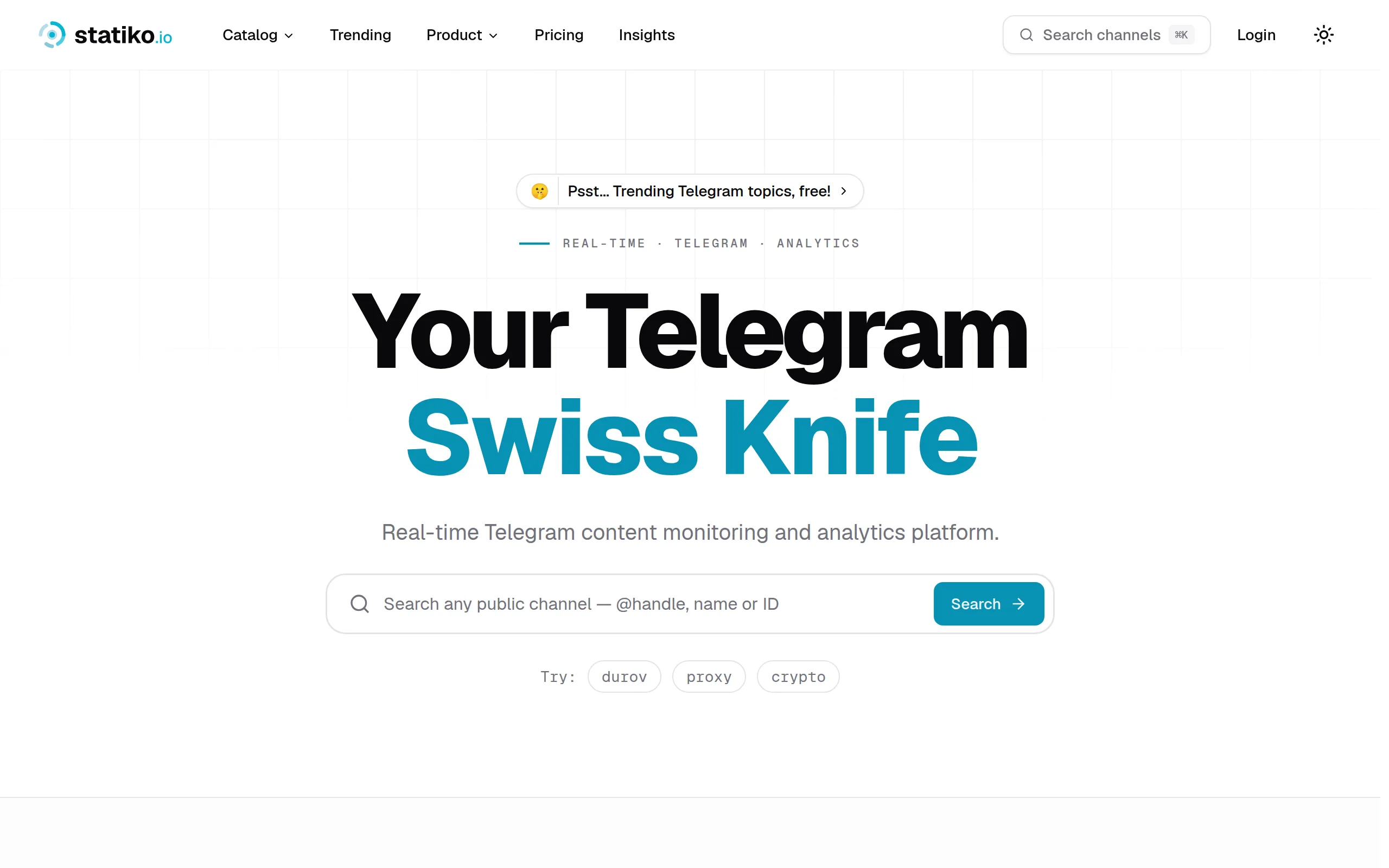
Statiko
Monitor any Telegram channel in real time - track posts, edits, deletions, and growth with AI recaps 📡

Shibui
AI website builder - describe your business, pick a niche template, edit by chatting, and publish instantly ✨

Pro Service
Find verified home service professionals, compare quotes, and pay securely through escrow - built for Brazilians across the US 🏠

RankGrow
Fix your SEO with AI agents - connect Search Console, get prioritized tasks, and grow organic traffic 📈
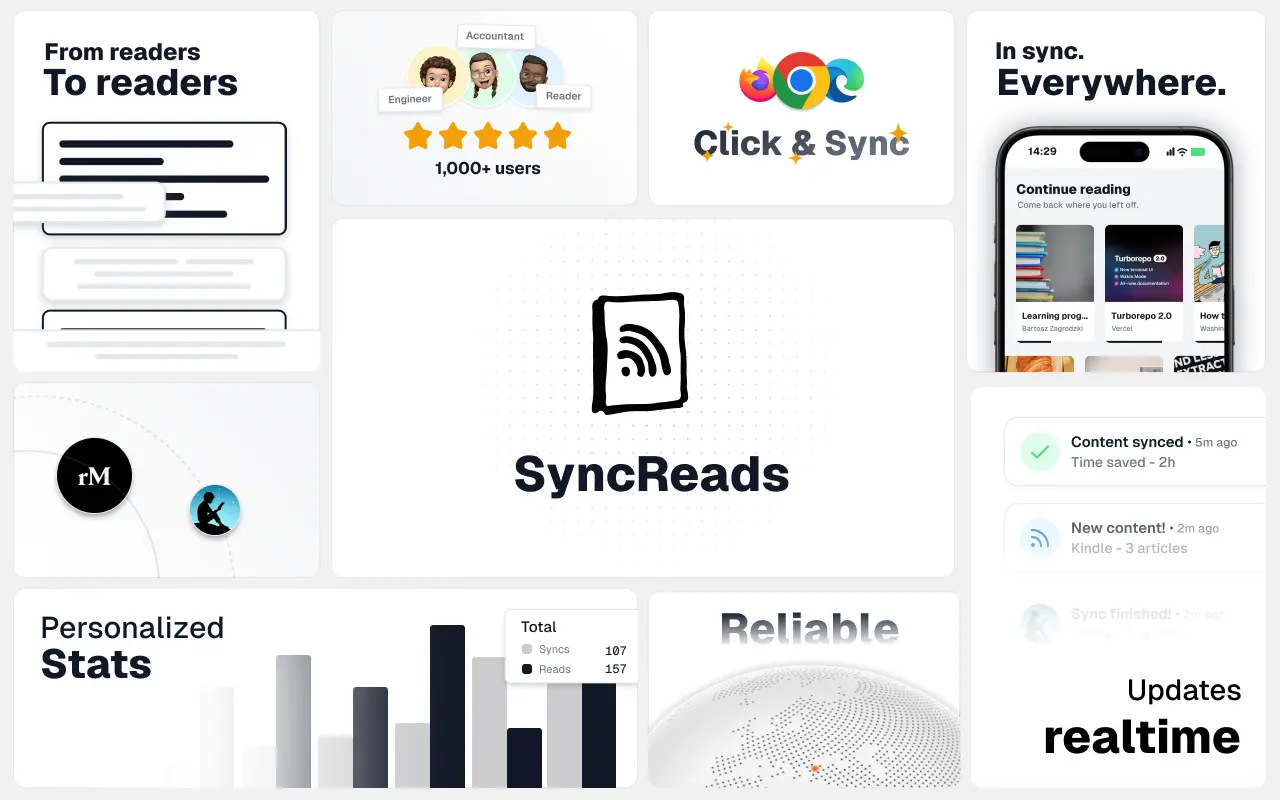
SyncReads
Sync your favorite content for distraction-free reading, save time and replace multiple apps. Anytime, anywhere 🔄
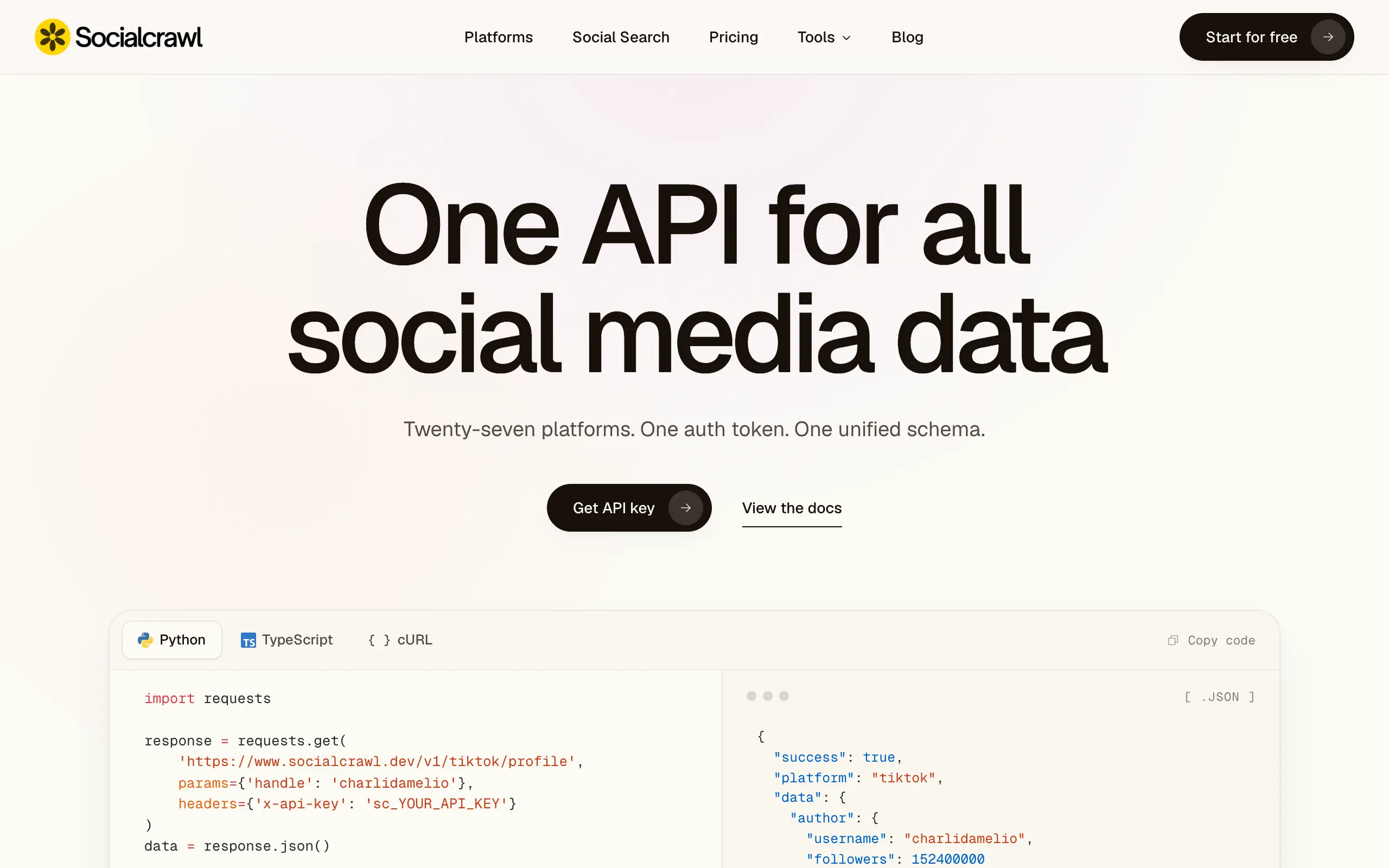
Socialcrawl
Get clean, structured data from 21 platforms like TikTok, Instagram, and YouTube with a single request 📊
Statiko
Monitor any Telegram channel in real time - track posts, edits, deletions, and growth with AI recaps 📡
Shibui
AI website builder - describe your business, pick a niche template, edit by chatting, and publish instantly ✨
Pro Service
Find verified home service professionals, compare quotes, and pay securely through escrow - built for Brazilians across the US 🏠
RankGrow
Fix your SEO with AI agents - connect Search Console, get prioritized tasks, and grow organic traffic 📈
SyncReads
Sync your favorite content for distraction-free reading, save time and replace multiple apps. Anytime, anywhere 🔄
Socialcrawl
Get clean, structured data from 21 platforms like TikTok, Instagram, and YouTube with a single request 📊
Statiko
Monitor any Telegram channel in real time - track posts, edits, deletions, and growth with AI recaps 📡
Shibui
AI website builder - describe your business, pick a niche template, edit by chatting, and publish instantly ✨
Pro Service
Find verified home service professionals, compare quotes, and pay securely through escrow - built for Brazilians across the US 🏠
RankGrow
Fix your SEO with AI agents - connect Search Console, get prioritized tasks, and grow organic traffic 📈
SyncReads
Sync your favorite content for distraction-free reading, save time and replace multiple apps. Anytime, anywhere 🔄
Socialcrawl
Get clean, structured data from 21 platforms like TikTok, Instagram, and YouTube with a single request 📊
Statiko
Monitor any Telegram channel in real time - track posts, edits, deletions, and growth with AI recaps 📡
Shibui
AI website builder - describe your business, pick a niche template, edit by chatting, and publish instantly ✨
Pro Service
Find verified home service professionals, compare quotes, and pay securely through escrow - built for Brazilians across the US 🏠
RankGrow
Fix your SEO with AI agents - connect Search Console, get prioritized tasks, and grow organic traffic 📈
SyncReads
Sync your favorite content for distraction-free reading, save time and replace multiple apps. Anytime, anywhere 🔄
Socialcrawl
Get clean, structured data from 21 platforms like TikTok, Instagram, and YouTube with a single request 📊
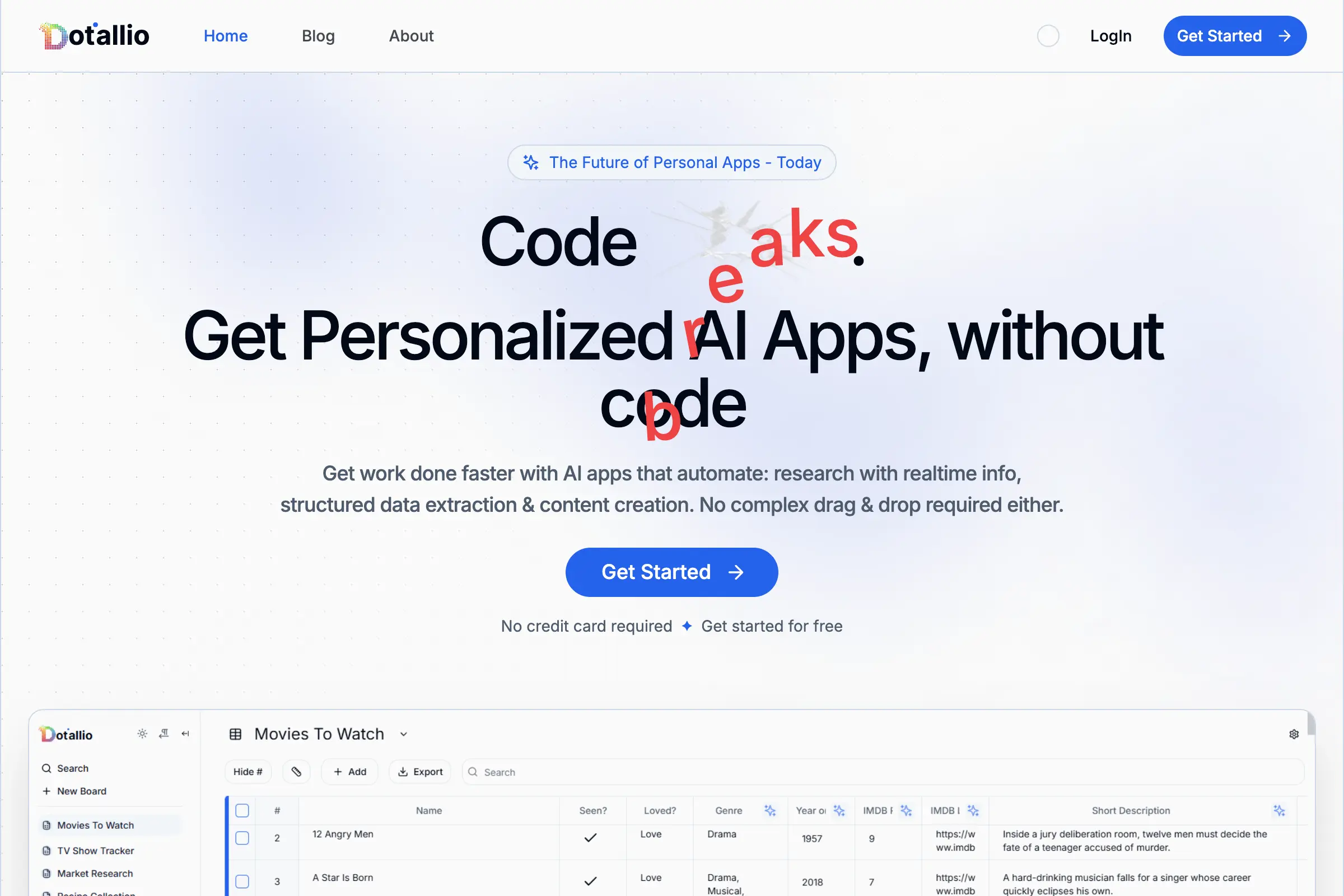
Dotallio
Personalized AI apps that automate research, data extraction, and content creation without code 🤖

Talk to Santa
Enjoy a magical live video chat or receive a unique AI-generated video greeting from Santa Claus 🎅

pozywka.pl
Scalable blog for food journalist, focused on performance and user experience 🌭
zagrodzki.me
Personal blog and portfolio of Bart Zagrodzki, where he shares his knowledge and work 💼
TurboStarter
Ship your startup everywhere. In minutes.
HTML to Markdown
Convert HTML to Markdown with ease, directly in your browser 📄
Dotallio
Personalized AI apps that automate research, data extraction, and content creation without code 🤖
Talk to Santa
Enjoy a magical live video chat or receive a unique AI-generated video greeting from Santa Claus 🎅
pozywka.pl
Scalable blog for food journalist, focused on performance and user experience 🌭
zagrodzki.me
Personal blog and portfolio of Bart Zagrodzki, where he shares his knowledge and work 💼
TurboStarter
Ship your startup everywhere. In minutes.
HTML to Markdown
Convert HTML to Markdown with ease, directly in your browser 📄
Dotallio
Personalized AI apps that automate research, data extraction, and content creation without code 🤖
Talk to Santa
Enjoy a magical live video chat or receive a unique AI-generated video greeting from Santa Claus 🎅
pozywka.pl
Scalable blog for food journalist, focused on performance and user experience 🌭
zagrodzki.me
Personal blog and portfolio of Bart Zagrodzki, where he shares his knowledge and work 💼
TurboStarter
Ship your startup everywhere. In minutes.
HTML to Markdown
Convert HTML to Markdown with ease, directly in your browser 📄
Dotallio
Personalized AI apps that automate research, data extraction, and content creation without code 🤖
Talk to Santa
Enjoy a magical live video chat or receive a unique AI-generated video greeting from Santa Claus 🎅
pozywka.pl
Scalable blog for food journalist, focused on performance and user experience 🌭
zagrodzki.me
Personal blog and portfolio of Bart Zagrodzki, where he shares his knowledge and work 💼
TurboStarter
Ship your startup everywhere. In minutes.
HTML to Markdown
Convert HTML to Markdown with ease, directly in your browser 📄
Omichat
Chat with 50+ AI models, including ChatGPT and Claude, in one place - switch models anytime without losing context 🤖
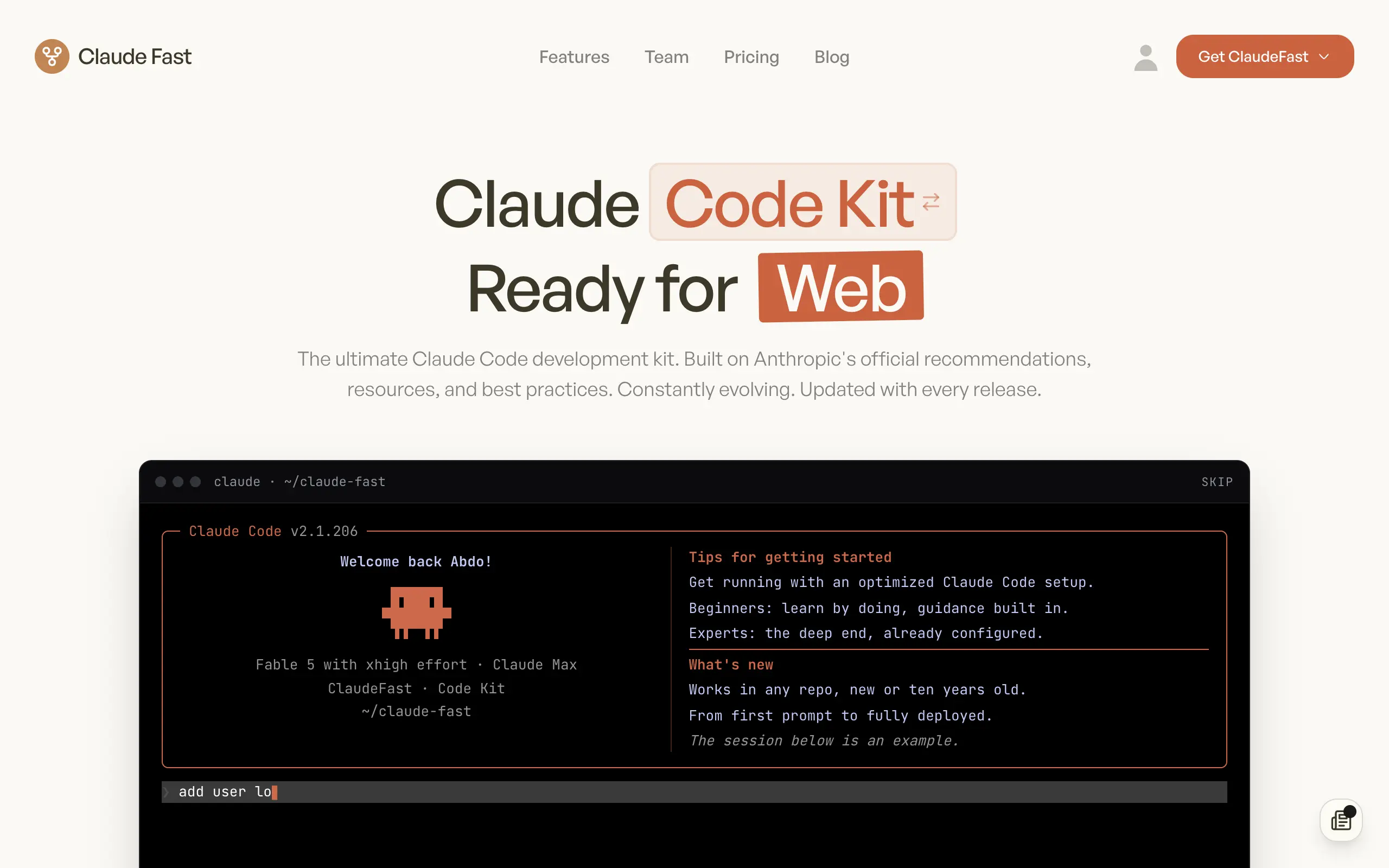
Claude Fast
Supercharge your Claude Code with 6x effective context window and specialized AI agents 🤖
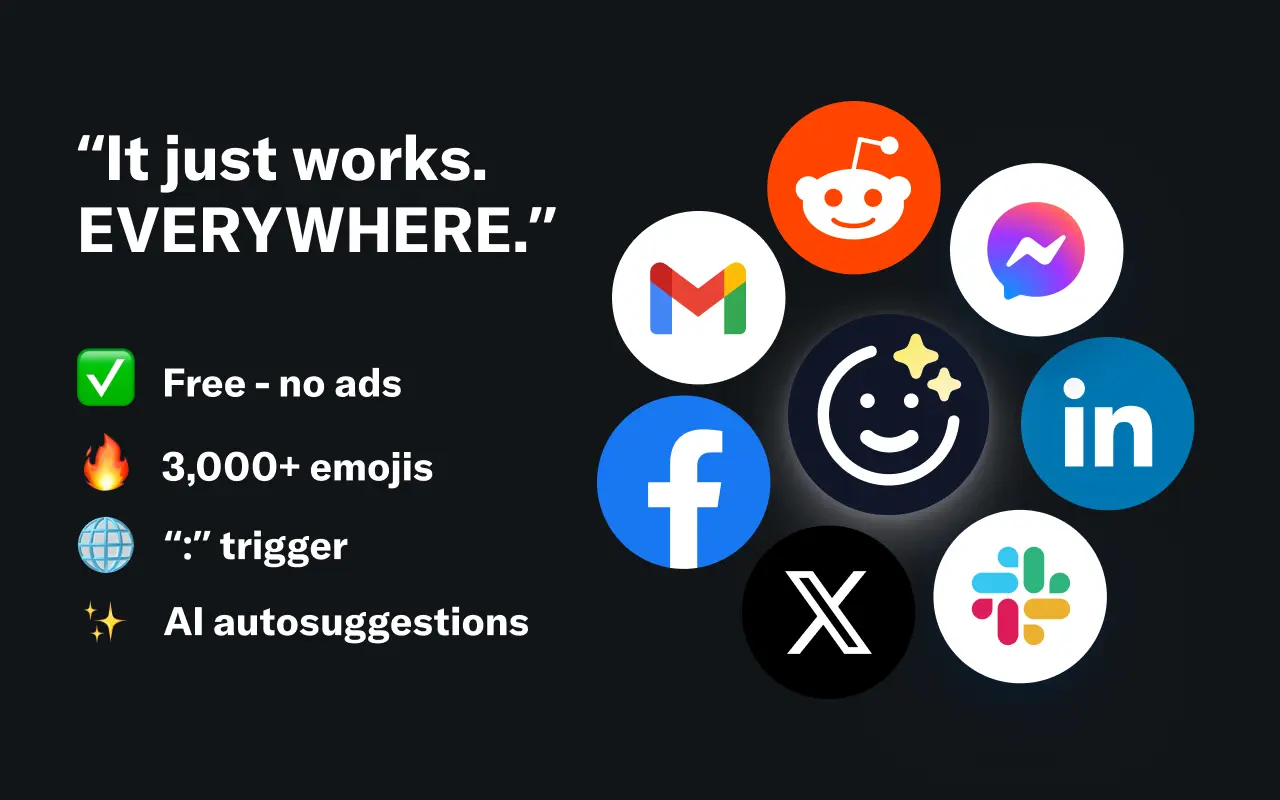
EmojAI
AI-powered emoji picker with smart, context-aware suggestions 🤖

Solohacker
Autonomous company launcher - AI agents work 24/7, escalate what matters, and you stay in control 🤖

BeRawi: Storytelling Coach
Practice storytelling daily with instant feedback to sound clearer, more engaging, and confident 🎤
Omichat
Chat with 50+ AI models, including ChatGPT and Claude, in one place - switch models anytime without losing context 🤖
Claude Fast
Supercharge your Claude Code with 6x effective context window and specialized AI agents 🤖
EmojAI
AI-powered emoji picker with smart, context-aware suggestions 🤖
Solohacker
Autonomous company launcher - AI agents work 24/7, escalate what matters, and you stay in control 🤖
BeRawi: Storytelling Coach
Practice storytelling daily with instant feedback to sound clearer, more engaging, and confident 🎤
Omichat
Chat with 50+ AI models, including ChatGPT and Claude, in one place - switch models anytime without losing context 🤖
Claude Fast
Supercharge your Claude Code with 6x effective context window and specialized AI agents 🤖
EmojAI
AI-powered emoji picker with smart, context-aware suggestions 🤖
Solohacker
Autonomous company launcher - AI agents work 24/7, escalate what matters, and you stay in control 🤖
BeRawi: Storytelling Coach
Practice storytelling daily with instant feedback to sound clearer, more engaging, and confident 🎤
Omichat
Chat with 50+ AI models, including ChatGPT and Claude, in one place - switch models anytime without losing context 🤖
Claude Fast
Supercharge your Claude Code with 6x effective context window and specialized AI agents 🤖
EmojAI
AI-powered emoji picker with smart, context-aware suggestions 🤖
Solohacker
Autonomous company launcher - AI agents work 24/7, escalate what matters, and you stay in control 🤖
BeRawi: Storytelling Coach
Practice storytelling daily with instant feedback to sound clearer, more engaging, and confident 🎤

Connect with like-minded people
Join our community to get feedback, support, and grow together with 1,000+ builders on board, let's ship it!
Join usShip your startup everywhere. In minutes.
Don't burn tokens on setup and start building features on day one.