StructurAI
An AI assistant that visualizes, reviews, and auto-corrects the hierarchy of your code, APIs, and servers, making big projects less overwhelming and more scalable.
StructurAI is an AI-powered SaaS platform designed to help developers, DevOps teams, and software architects visualize, review, and auto-correct the hierarchical structure of their codebases, APIs, and infrastructure. This tool is tailored to address the mounting complexity of modern software projects, automating best practices, and delivering clarity in scalable system design.
Understanding the target audience for StructurAI
A key factor in SaaS success is a precise understanding of who stands to benefit most. For StructurAI, its user base is both broad and specific:
- Mid-to-large software engineering teams: Teams dealing with complex, multi-layered projects, often across several microservices or distributed systems.
- Startup CTOs and technical founders: Who want to proactively avoid technical debt as their codebase and infrastructure grow.
- Enterprise DevOps and platform engineers: Ensuring architectural consistency, operational clarity, and regulatory compliance in large, evolving systems.
- Software architects: Who need a bird’s-eye view and automated refactoring suggestions for legacy or rapidly changing projects.
- QA leads and compliance auditors: Who must verify structure, security practices, and API conformity.
Their core needs and pain points
- Overwhelming codebase growth: As project size increases, understanding the interrelations between code, APIs, and servers becomes daunting.
- Human error and technical debt: Manual reviews are slow, error-prone, and often reactive rather than proactive.
- Onboarding friction: New team members struggle to grasp project structure, leading to onboarding delays.
- Scaling blockers: Inconsistent API or server hierarchy hinders scaling efforts and complicates DevOps workflows.
- Audit and compliance burden: Increasingly, teams must demonstrate their architecture follows industry standards.
Market opportunity and gap analysis for AI-powered code and API structure review
With the software development lifecycle accelerating due to Agile and DevOps, maintaining architectural coherence is more critical than ever. Several recent trends amplify this need:
- Microservices and distributed architectures: The move from monoliths to microservices (source) has made code and server hierarchy more complex.
- Rapid cloud adoption: Teams juggle cloud-native, on-prem, and hybrid environments.
- Regulatory pressures: Financial, healthcare, and SaaS companies face growing scrutiny over their software’s structure and security protocols.
Yet, the market is surprisingly underserved:
- Existing solutions tend to be limited to code analysis (e.g., SonarQube), static diagrams (like Structurizr), or architectural documentation tools.
- No comprehensive assistant unifying code, API, and infrastructure hierarchy powered by AI correction and visualization exists.
- There is a persistent gap for tools that not only visualize but also suggest and automate corrective actions across the stack.
Industry insight
Gartner forecasts that by 2026, 50% of organizations will use AI-driven tools to automate code review and system design processes. [Reference: Gartner Market Guide, suggest citation]
How StructurAI works: core features and solutions
StructurAI differentiates itself as a unified platform. It leverages AI to proactively manage complexity and scale. Here’s a breakdown of what it offers:
1. Intelligent visualization of code, API, and server hierarchy
- Dynamic maps: Instantly generate interactive graphs showing relationships between files, services, endpoints, and servers.
- Cross-stack overviews: Toggle seamlessly between code, API layer, and infrastructure to identify misalignments.
- Role-based perspectives: Filter views for developers (code), API leads (endpoints), SREs (servers/clusters).
2. AI-powered structural review and best-practice automation
- Automated code hierarchy analysis: Detect anti-patterns, cyclical dependencies, and code smells using AI trained on thousands of high-quality repositories.
- API endpoint normalization: Standardizes resource naming and HTTP methods; flags inconsistencies across REST, GraphQL, or gRPC.
- Server and cloud configuration checks: Identify orphaned instances, permission misalignments, and subnet misconfigurations.
3. One-click auto-correction and refactoring suggestions
- Refactoring proposals: Generate automated pull requests for restructuring code folders, method extractions, or route reorganizations.
- Instant fixes: With user approval, AI can rewrite config files or move API endpoints per best practices.
- Change simulation: Visualize the impact of proposed corrections before applying them to production.
4. Collaboration and audit-friendly reporting
- Shareable dashboards: Allow team-wide async review and sign-off on AI recommendations.
- Compliance-ready reports: Generate evidence for external auditors and stakeholders, demonstrating adherence to frameworks (e.g., PCI DSS, HIPAA).
5. Seamless integrations
- Version control platforms: Native support for GitHub, GitLab, and Bitbucket.
- CI/CD tools: Hooks for Jenkins, CircleCI, and GitHub Actions.
- Cloud providers: Integrates with AWS, Azure, GCP, and container orchestration tools like Kubernetes.
StructurAI isn't just a visualization or static analysis tool. It actively gives AI-driven, actionable suggestions and can auto-apply corrections, tracking improvements over time. This bridges the gap between theory (diagrams) and practical action (code and infra changes).
StructurAI uses scalable graph analysis and ML-enhanced pattern recognition, prioritizing areas with highest technical debt or compliance risks. Users can customize rules to fit their stack and standards.
Recommended tech stack for StructurAI (with trade-offs)
To deliver seamless, interactive, and robust AI features, the technology stack selections play a vital role:
Frontend: React & TailwindCSS
Utilize [React](https://reactjs.org) for dynamic UI and [TailwindCSS](https://tailwindcss.com) for efficient, utility-first styling.
Backend: Node.js & Python
Leverage [Node.js](https://nodejs.org) for real-time API connections and [Python](https://www.python.org) for AI/ML orchestration and model training.
AI/ML: OpenAI API & Scikit-learn
Embed OpenAI’s GPT models for code understanding and [scikit-learn](https://scikit-learn.org) for pattern recognition/classification.
Cloud: AWS, Kubernetes, Docker
Deploy with [AWS](https://aws.amazon.com/), orchestrate with [Kubernetes](https://kubernetes.io/), containerize with [Docker](https://www.docker.com/).
Version control and CI/CD: GitHub Actions
Automate integrations using [GitHub Actions](https://github.com/features/actions) for smooth DevOps workflows.
Trade-offs to consider:
- All-in on React: Offers speed and community, but large visuals may require optimization.
- Python for AI logic: Maximizes AI strength, though may add latency if models aren’t close to data; mitigate via microservices or hybrid architectures.
- Cloud-native deployment: Grants flexibility/scalability, but can introduce DevOps complexity for small teams.
- Third-party AI APIs: Fastest route to powerful analysis but introduces cost and dependency. Custom in-house models enable greater control but demand higher resources.
Monetization strategies for StructurAI
A robust business model is essential for sustained SaaS growth. StructurAI aligns with several proven monetization strategies:
1. Subscription-based pricing (SaaS standard)
- Tiered plans: Offer free, pro, and enterprise levels depending on codebase size, features, and integrations.
- Example:
- Free: Basic code structure visualization.
- Pro: Advanced AI review, API/server mapping, auto-correction.
- Enterprise: Compliance reporting, SSO, custom integrations, support SLAs.
2. Usage-based/seat pricing
- Users pay based on number of projects analyzed, compute cycles, or seats for collaboration.
- Attracts startups and enterprises with differing scale needs.
3. API access for partners
- Offer StructurAI’s analysis as APIs for integration in third-party DevOps or documentation tools.
4. Consulting and premium onboarding
- Upsell to larger companies needing migration, custom rule definition, or legacy system onboarding handled by StructurAI experts.
Key risks and mitigation strategies
Any SaaS tool in the AI-DevOps space faces unique risks:
1. Data privacy & security
- Risk: Sensitive code/config/data exposure during analysis.
- Mitigation: Offer on-premise/air-gapped deployment options. Encrypt all data in transit and at rest. Maintain strong compliance protocols.
2. False positives or overcorrection
- Risk: AI may suggest unnecessary refactors or misinterpret project-specific conventions.
- Mitigation: Allow users to customize structural “rulesets”, provide granular approval workflow, explain rationale for each fix.
3. Integration fragility
- Risk: Frequent platform or dependency updates may break integrations.
- Mitigation: Use robust webhook mechanisms, establish continuous integration test suites, monitor third-party API status.
4. AI model drift
- Risk: Models may become less relevant over time as coding standards or API protocols evolve.
- Mitigation: Regularly retrain models on new codebases/trends; allow user feedback to guide ongoing improvements.
StructurAI’s competitive advantage and unique selling proposition
The core differentiator for StructurAI is its unification of visualization, review, and auto-correction — not only across code but also APIs and servers. No direct competitors today combine:
| Code Analysis | API Structure | Server Mapping | AI Auto-correct | Compliance Reports |
|---|---|---|---|---|
| ✅ | ❌ | ❌ | ✅ | ❌ |
| ✅ | ❌ | ✅ | ✅ | ❌ |
StructurAI stands out by:
- Automating correction, not just visualization.
- Cohesively addressing the full stack—from code to cloud.
- Enabling action-oriented collaboration and granular reporting.
- Leveraging current AI advancements in NLP and code intelligence.
- Making compliance and technical debt management proactive, not reactive.
Practical implementation steps for building StructurAI
Building a platform with this scope calls for strategic sequencing and MVP discipline. Here’s an actionable roadmap:
Conclusion: Is StructurAI the future-proof solution for scaling software architecture?
StructurAI answers a growing need among technical teams facing the realities of ever-more complex systems. By combining AI-driven analysis, correction, and visualization across code, APIs, and servers, it delivers a “control tower” for modern software architecture. Unlike tools that merely expose bad patterns, StructurAI helps users fix them — before they hinder growth, slow down onboarding, or block compliance.
If you're planning to build or invest in a platform like this, an iterative, feedback-driven approach is critical. Focus on the high-value pain points and expand capabilities as real usage evolves. Leveraging frameworks like React and scalable cloud-native approaches will future-proof both the product and customer value.
StructurAI doesn’t just simplify — it de-risks and accelerates software project scalability. To accelerate development, consider “scaffold-as-a-service” solutions such as TurboStarter to lay down your foundation before layering on advanced AI.
Frequently asked questions
StructurAI initially focuses on widely used languages like JavaScript/TypeScript, Python, and Java, with plans to expand based on user demand.
Yes, StructurAI plans to deliver enterprise-grade, on-prem deployment for sensitive environments, with full data privacy.
StructurAI’s AI models are trained on thousands of open-source projects and are continually improved via user feedback. Teams always review and approve proposed changes.
More 🤖 AI Startup SaaS ideas
Discover more innovative ai startup SaaS ideas that are trending in 2026. Each idea is AI-generated with market validation and growth potential to help you find your next profitable venture faster than competitors.
Your competitors are building with TurboStarter
Below are some of the SaaS ideas that have been generated and built with our starter kit.
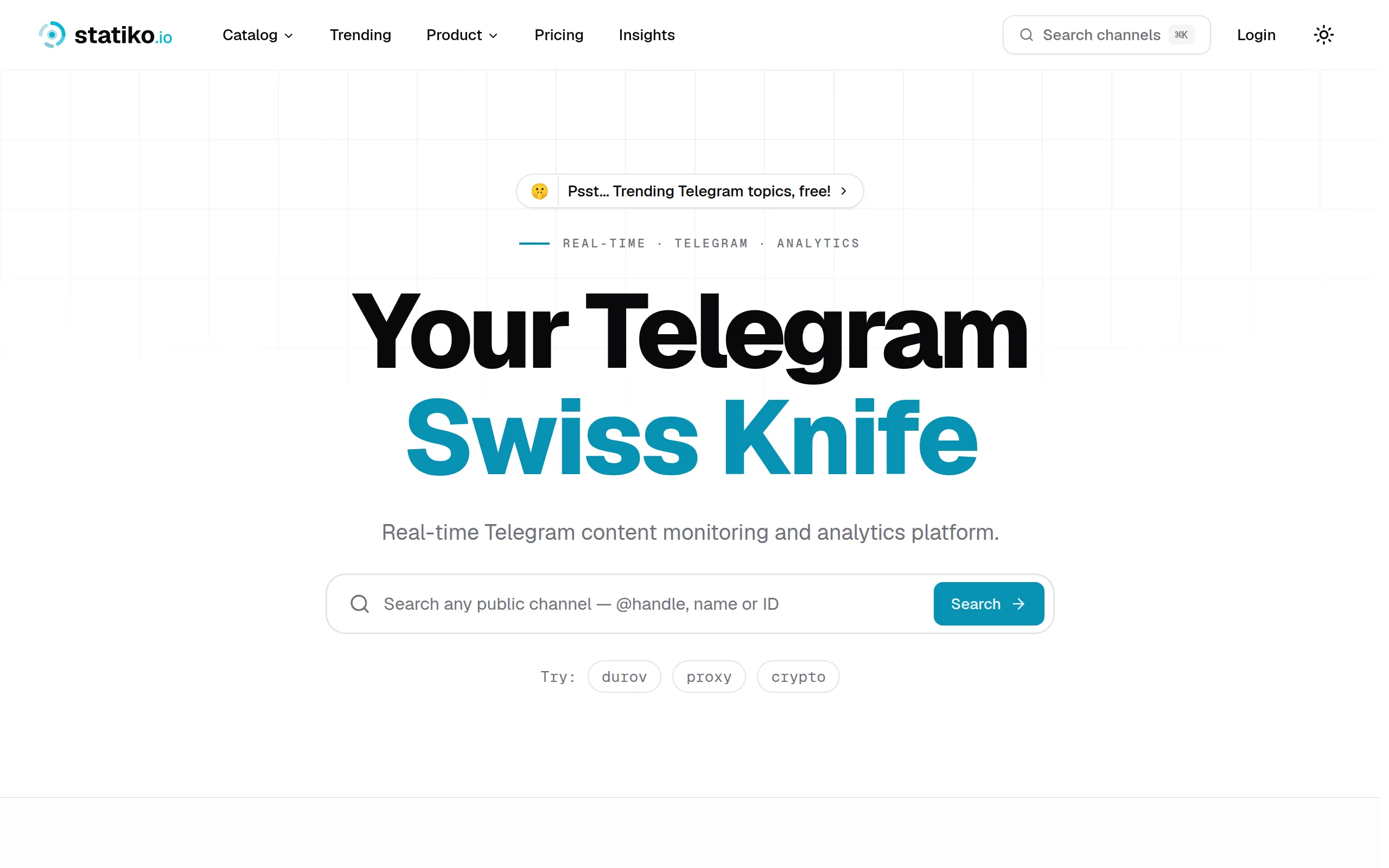
Statiko
Monitor any Telegram channel in real time - track posts, edits, deletions, and growth with AI recaps 📡

Shibui
AI website builder - describe your business, pick a niche template, edit by chatting, and publish instantly ✨

Pro Service
Find verified home service professionals, compare quotes, and pay securely through escrow - built for Brazilians across the US 🏠
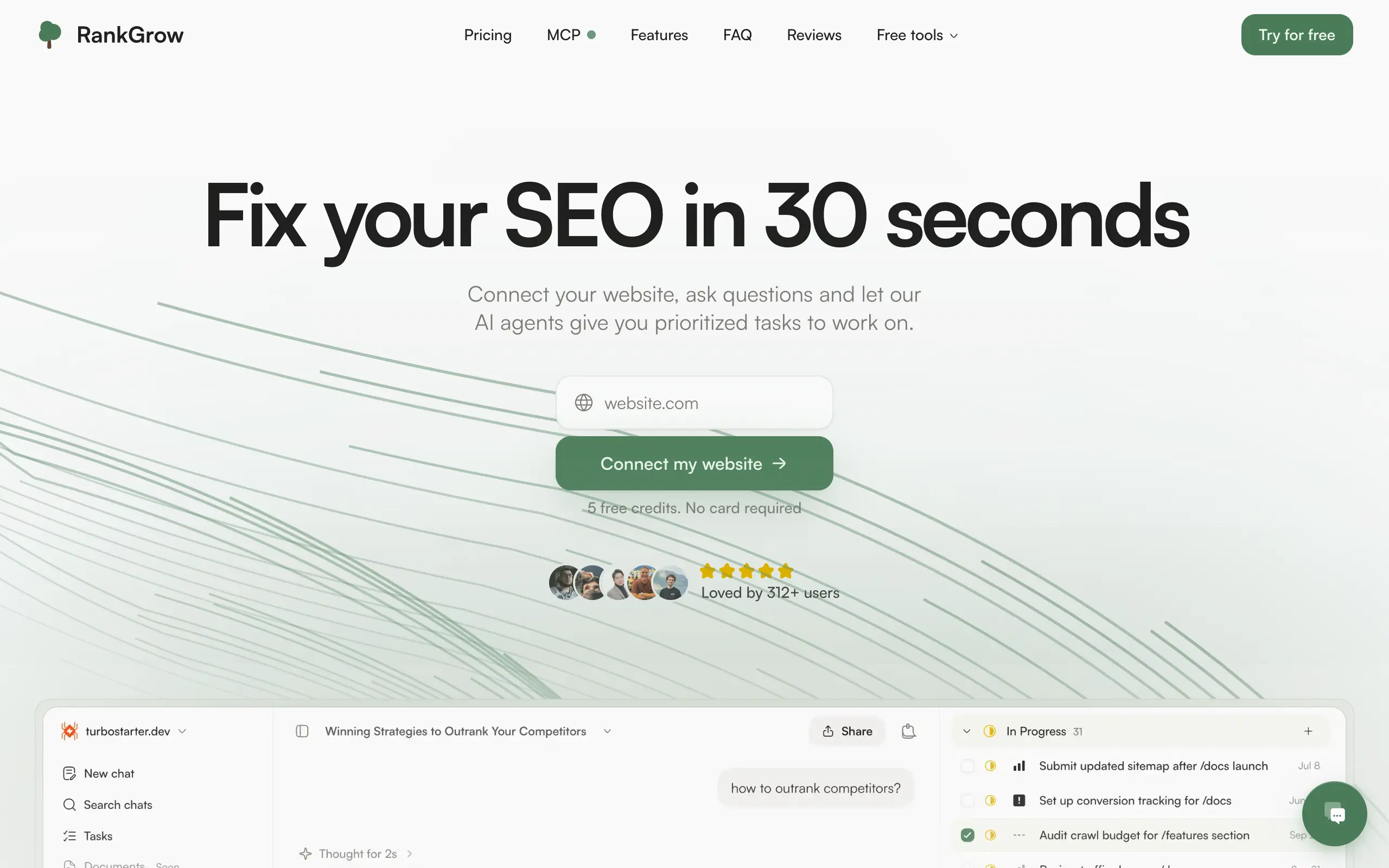
RankGrow
Fix your SEO with AI agents - connect Search Console, get prioritized tasks, and grow organic traffic 📈
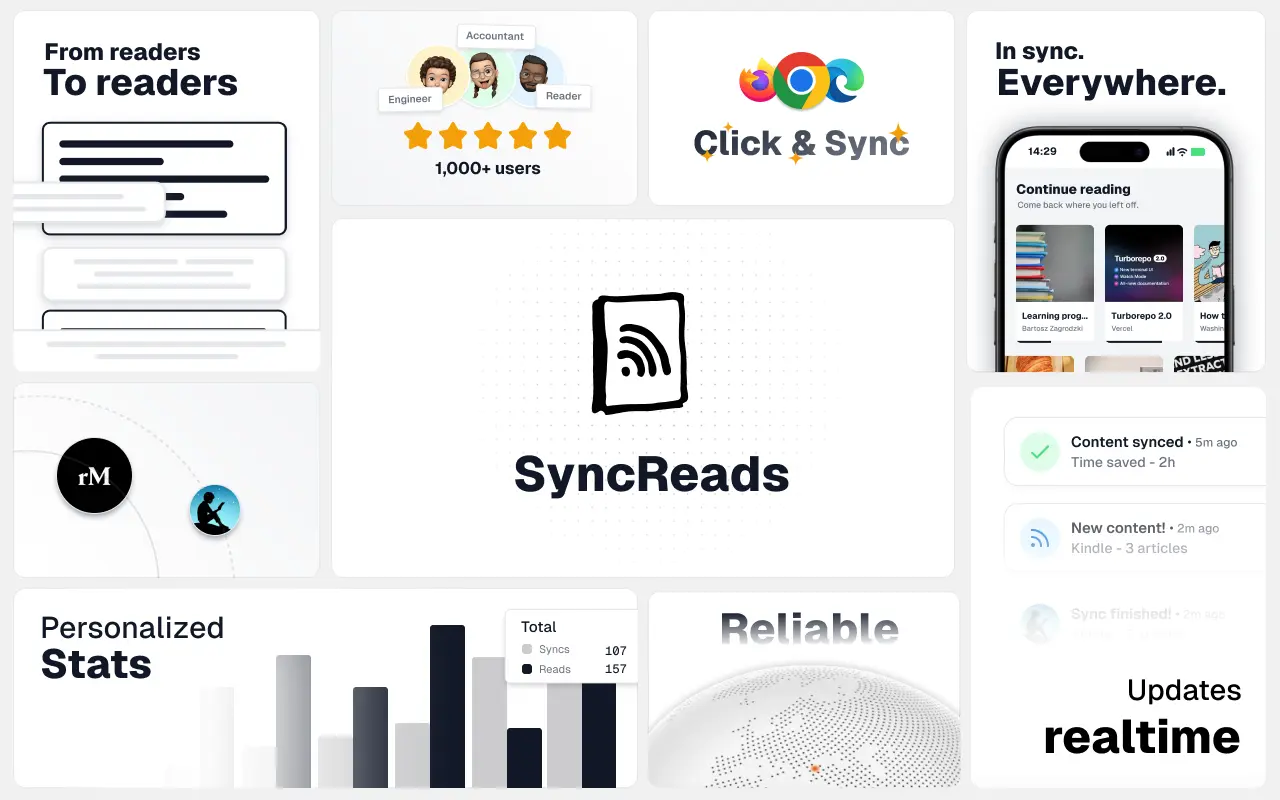
SyncReads
Sync your favorite content for distraction-free reading, save time and replace multiple apps. Anytime, anywhere 🔄
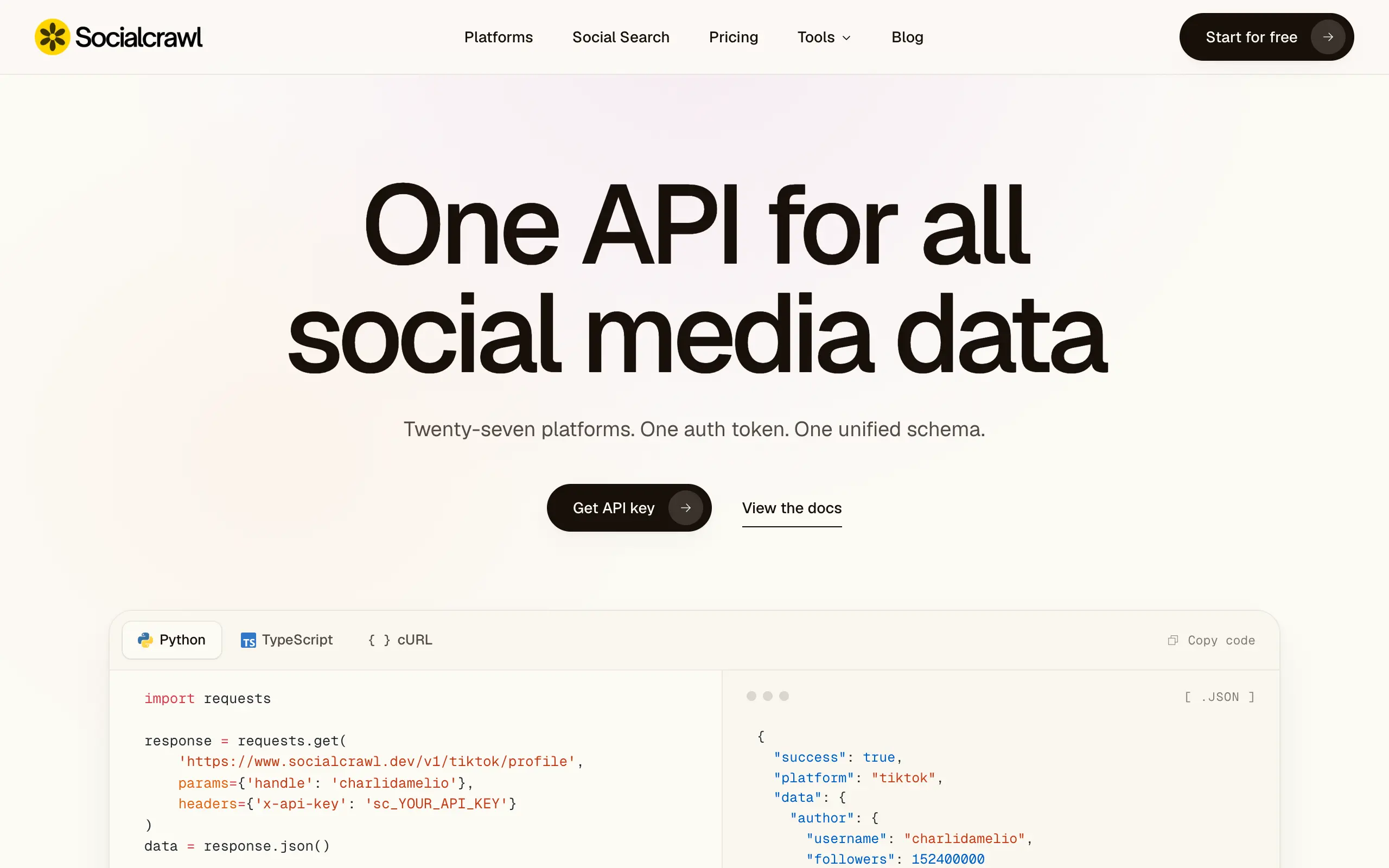
Socialcrawl
Get clean, structured data from 21 platforms like TikTok, Instagram, and YouTube with a single request 📊
Statiko
Monitor any Telegram channel in real time - track posts, edits, deletions, and growth with AI recaps 📡
Shibui
AI website builder - describe your business, pick a niche template, edit by chatting, and publish instantly ✨
Pro Service
Find verified home service professionals, compare quotes, and pay securely through escrow - built for Brazilians across the US 🏠
RankGrow
Fix your SEO with AI agents - connect Search Console, get prioritized tasks, and grow organic traffic 📈
SyncReads
Sync your favorite content for distraction-free reading, save time and replace multiple apps. Anytime, anywhere 🔄
Socialcrawl
Get clean, structured data from 21 platforms like TikTok, Instagram, and YouTube with a single request 📊
Statiko
Monitor any Telegram channel in real time - track posts, edits, deletions, and growth with AI recaps 📡
Shibui
AI website builder - describe your business, pick a niche template, edit by chatting, and publish instantly ✨
Pro Service
Find verified home service professionals, compare quotes, and pay securely through escrow - built for Brazilians across the US 🏠
RankGrow
Fix your SEO with AI agents - connect Search Console, get prioritized tasks, and grow organic traffic 📈
SyncReads
Sync your favorite content for distraction-free reading, save time and replace multiple apps. Anytime, anywhere 🔄
Socialcrawl
Get clean, structured data from 21 platforms like TikTok, Instagram, and YouTube with a single request 📊
Statiko
Monitor any Telegram channel in real time - track posts, edits, deletions, and growth with AI recaps 📡
Shibui
AI website builder - describe your business, pick a niche template, edit by chatting, and publish instantly ✨
Pro Service
Find verified home service professionals, compare quotes, and pay securely through escrow - built for Brazilians across the US 🏠
RankGrow
Fix your SEO with AI agents - connect Search Console, get prioritized tasks, and grow organic traffic 📈
SyncReads
Sync your favorite content for distraction-free reading, save time and replace multiple apps. Anytime, anywhere 🔄
Socialcrawl
Get clean, structured data from 21 platforms like TikTok, Instagram, and YouTube with a single request 📊
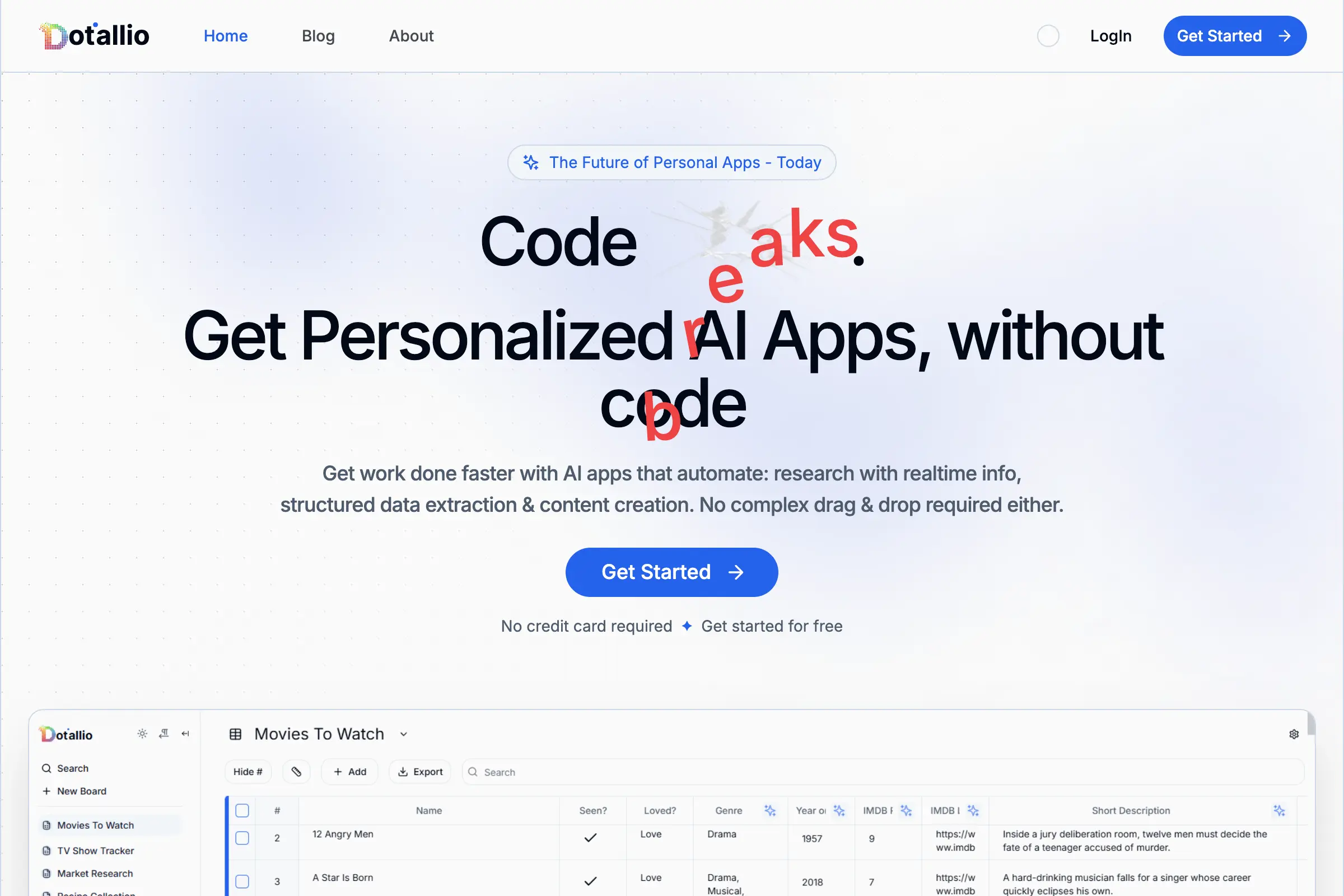
Dotallio
Personalized AI apps that automate research, data extraction, and content creation without code 🤖

Talk to Santa
Enjoy a magical live video chat or receive a unique AI-generated video greeting from Santa Claus 🎅

pozywka.pl
Scalable blog for food journalist, focused on performance and user experience 🌭
zagrodzki.me
Personal blog and portfolio of Bart Zagrodzki, where he shares his knowledge and work 💼
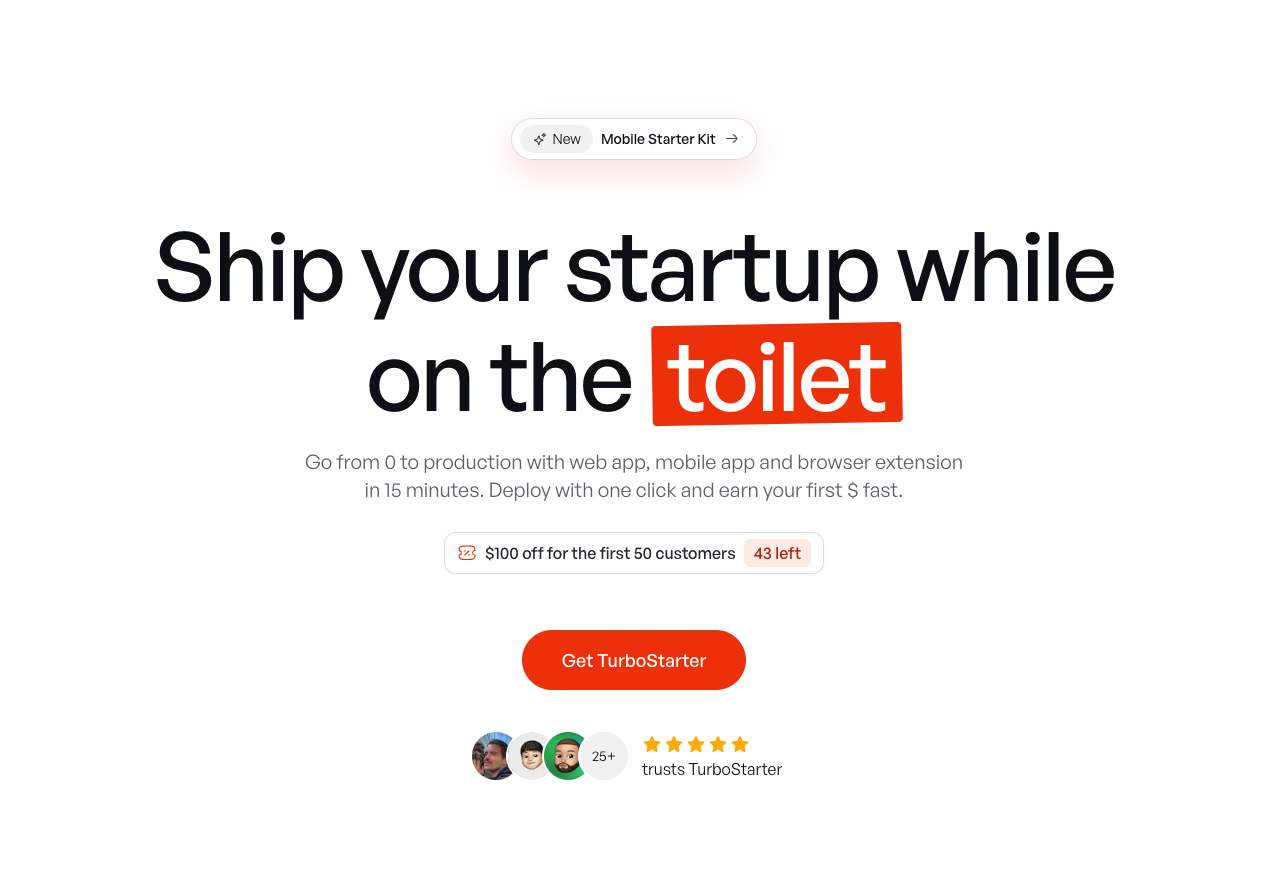
TurboStarter
Ship your startup everywhere. In minutes.
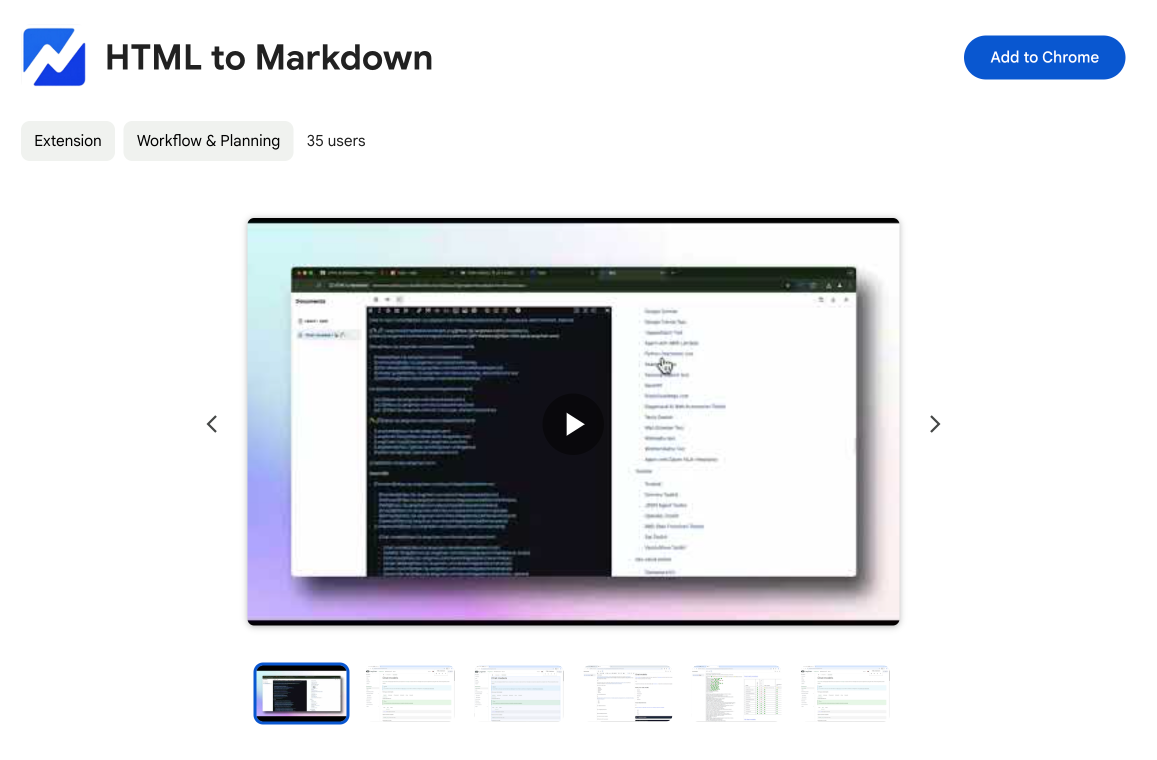
HTML to Markdown
Convert HTML to Markdown with ease, directly in your browser 📄
Dotallio
Personalized AI apps that automate research, data extraction, and content creation without code 🤖
Talk to Santa
Enjoy a magical live video chat or receive a unique AI-generated video greeting from Santa Claus 🎅
pozywka.pl
Scalable blog for food journalist, focused on performance and user experience 🌭
zagrodzki.me
Personal blog and portfolio of Bart Zagrodzki, where he shares his knowledge and work 💼
TurboStarter
Ship your startup everywhere. In minutes.
HTML to Markdown
Convert HTML to Markdown with ease, directly in your browser 📄
Dotallio
Personalized AI apps that automate research, data extraction, and content creation without code 🤖
Talk to Santa
Enjoy a magical live video chat or receive a unique AI-generated video greeting from Santa Claus 🎅
pozywka.pl
Scalable blog for food journalist, focused on performance and user experience 🌭
zagrodzki.me
Personal blog and portfolio of Bart Zagrodzki, where he shares his knowledge and work 💼
TurboStarter
Ship your startup everywhere. In minutes.
HTML to Markdown
Convert HTML to Markdown with ease, directly in your browser 📄
Dotallio
Personalized AI apps that automate research, data extraction, and content creation without code 🤖
Talk to Santa
Enjoy a magical live video chat or receive a unique AI-generated video greeting from Santa Claus 🎅
pozywka.pl
Scalable blog for food journalist, focused on performance and user experience 🌭
zagrodzki.me
Personal blog and portfolio of Bart Zagrodzki, where he shares his knowledge and work 💼
TurboStarter
Ship your startup everywhere. In minutes.
HTML to Markdown
Convert HTML to Markdown with ease, directly in your browser 📄
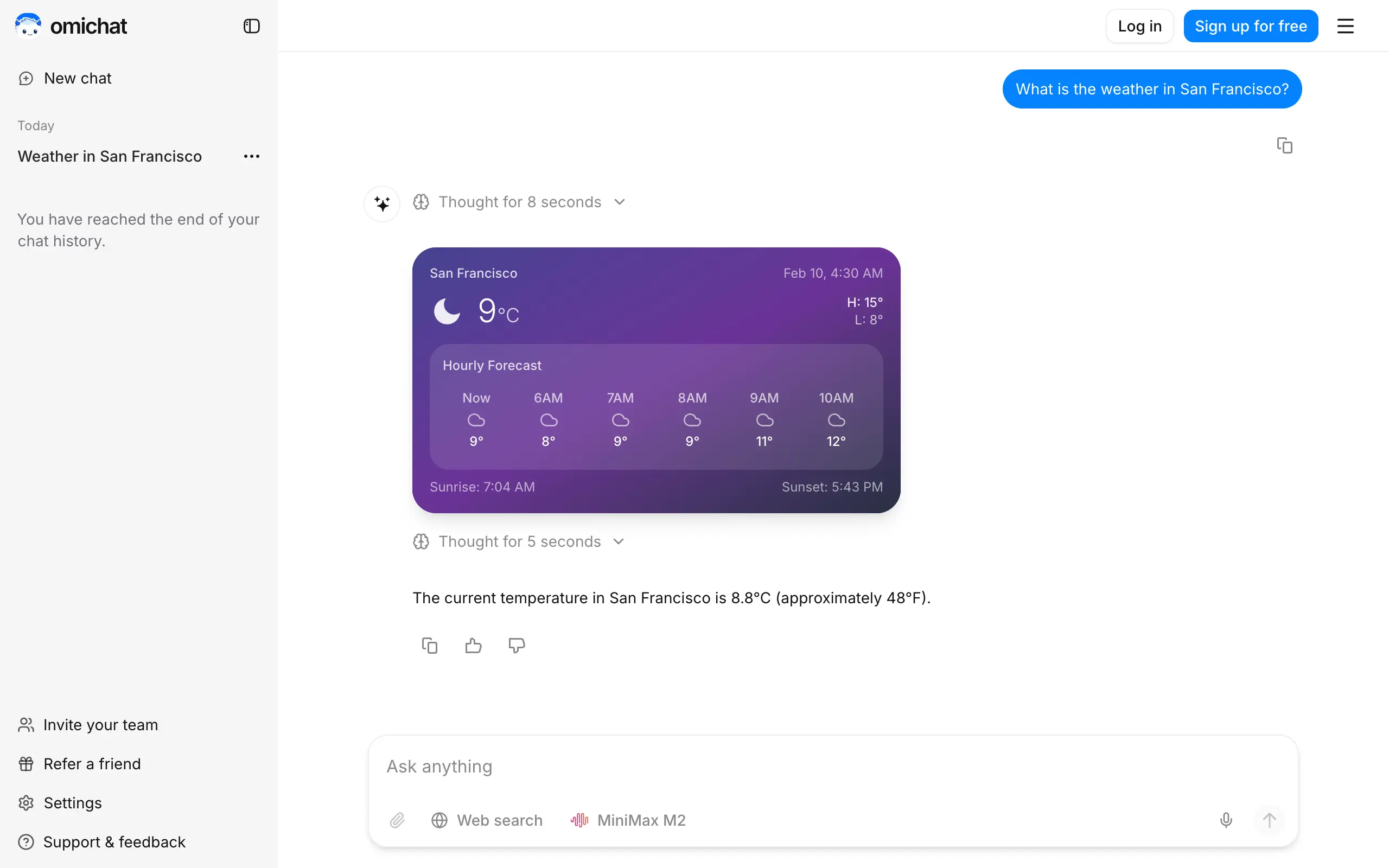
Omichat
Chat with 50+ AI models, including ChatGPT and Claude, in one place - switch models anytime without losing context 🤖
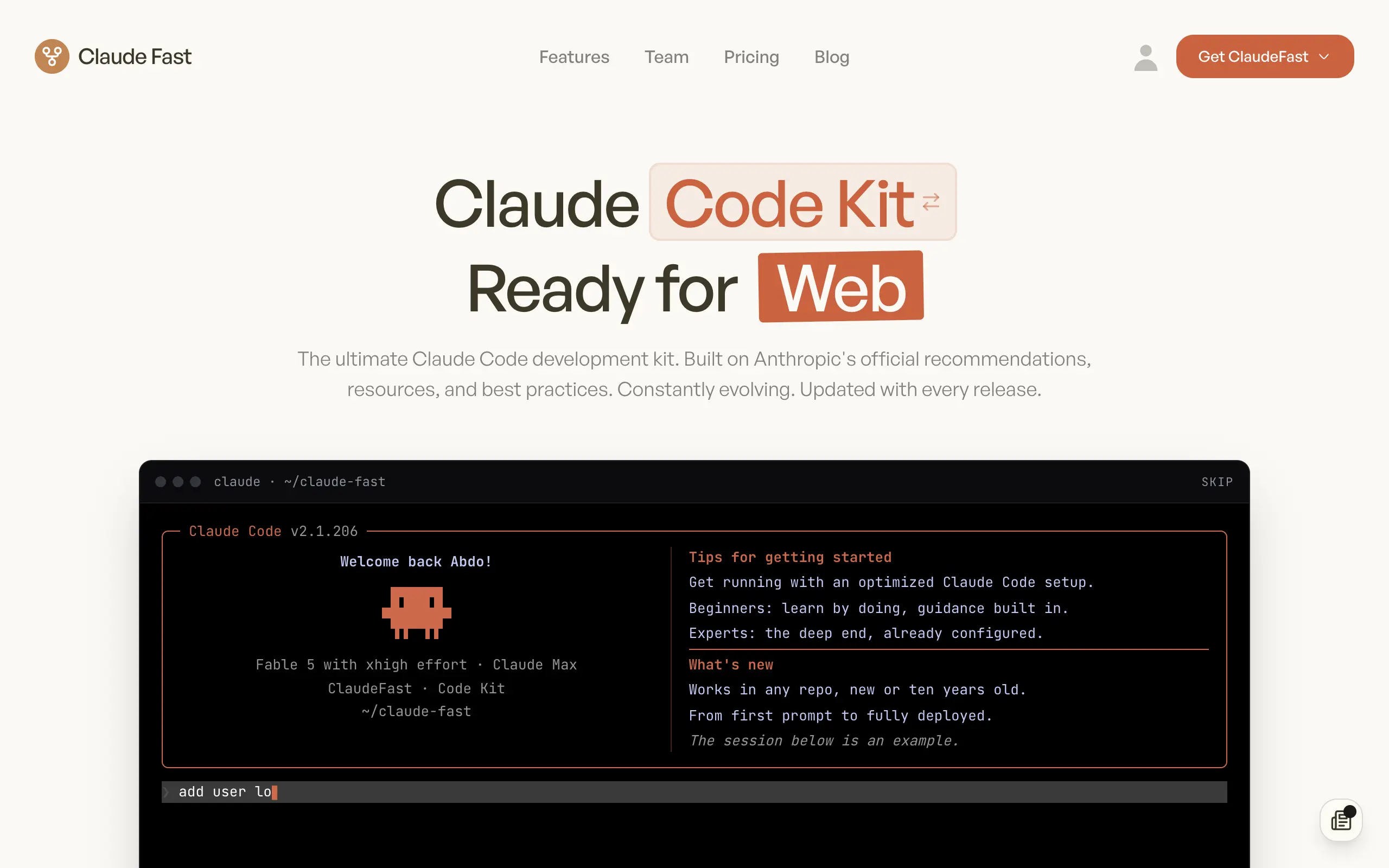
Claude Fast
Supercharge your Claude Code with 6x effective context window and specialized AI agents 🤖
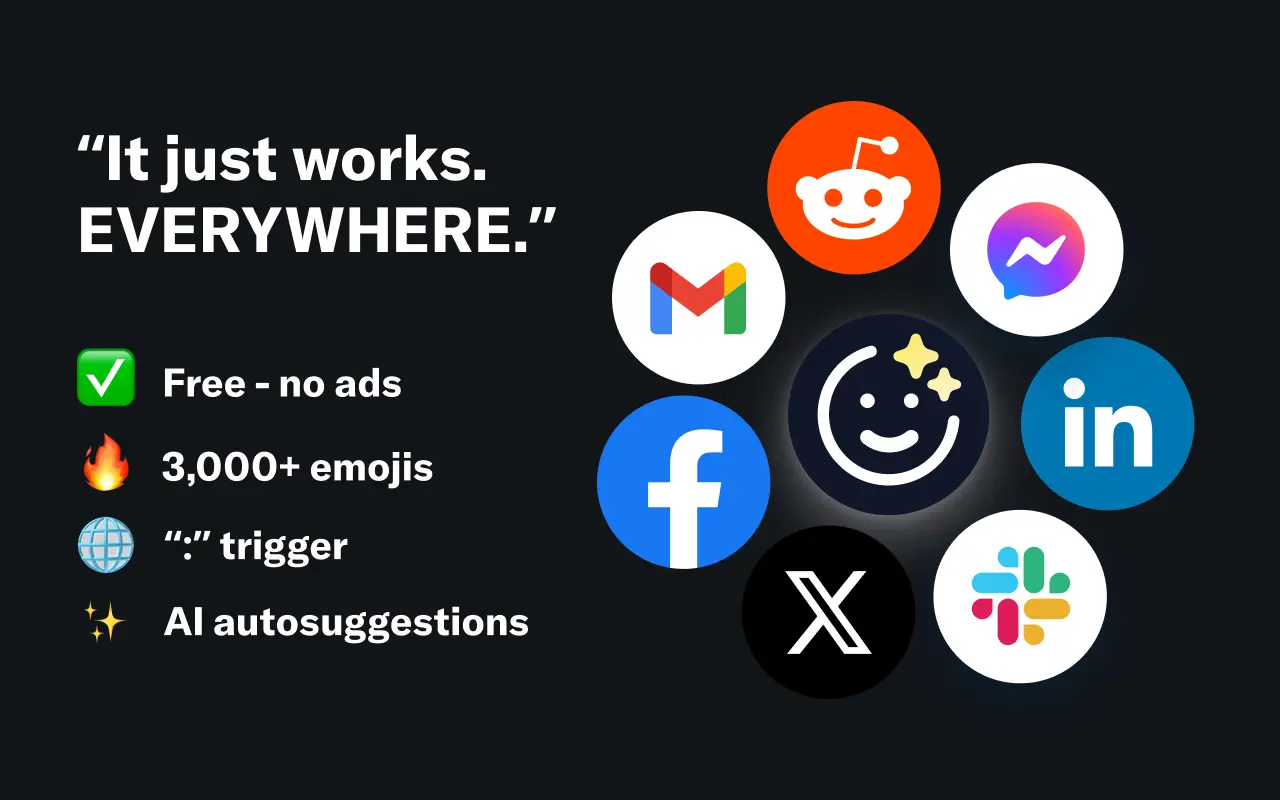
EmojAI
AI-powered emoji picker with smart, context-aware suggestions 🤖

Solohacker
Autonomous company launcher - AI agents work 24/7, escalate what matters, and you stay in control 🤖

BeRawi: Storytelling Coach
Practice storytelling daily with instant feedback to sound clearer, more engaging, and confident 🎤
Omichat
Chat with 50+ AI models, including ChatGPT and Claude, in one place - switch models anytime without losing context 🤖
Claude Fast
Supercharge your Claude Code with 6x effective context window and specialized AI agents 🤖
EmojAI
AI-powered emoji picker with smart, context-aware suggestions 🤖
Solohacker
Autonomous company launcher - AI agents work 24/7, escalate what matters, and you stay in control 🤖
BeRawi: Storytelling Coach
Practice storytelling daily with instant feedback to sound clearer, more engaging, and confident 🎤
Omichat
Chat with 50+ AI models, including ChatGPT and Claude, in one place - switch models anytime without losing context 🤖
Claude Fast
Supercharge your Claude Code with 6x effective context window and specialized AI agents 🤖
EmojAI
AI-powered emoji picker with smart, context-aware suggestions 🤖
Solohacker
Autonomous company launcher - AI agents work 24/7, escalate what matters, and you stay in control 🤖
BeRawi: Storytelling Coach
Practice storytelling daily with instant feedback to sound clearer, more engaging, and confident 🎤
Omichat
Chat with 50+ AI models, including ChatGPT and Claude, in one place - switch models anytime without losing context 🤖
Claude Fast
Supercharge your Claude Code with 6x effective context window and specialized AI agents 🤖
EmojAI
AI-powered emoji picker with smart, context-aware suggestions 🤖
Solohacker
Autonomous company launcher - AI agents work 24/7, escalate what matters, and you stay in control 🤖
BeRawi: Storytelling Coach
Practice storytelling daily with instant feedback to sound clearer, more engaging, and confident 🎤

Connect with like-minded people
Join our community to get feedback, support, and grow together with 1,000+ builders on board, let's ship it!
Join usShip your startup everywhere. In minutes.
Don't burn tokens on setup and start building features on day one.