TaxaQuest
Model how Brazil’s IBS/CBS transition could affect your indie game studio, SaaS, or digital sales. Compare pricing scenarios before meeting your accountant.
Brazil’s consumption-tax reform creates a planning problem for independent game studios, SaaS companies, and other businesses that sell digital products. The challenge is not simply learning the names of new taxes. Founders need to understand how different pricing, sales, and customer scenarios might affect revenue, margins, and cash flow while the rules and implementation details evolve.
TaxaQuest is a proposed tax scenario-planning platform for that problem. It would help Brazilian digital businesses model how the transition to IBS and CBS could affect their operations, compare alternative pricing strategies, and prepare better questions for an accountant. Its purpose is not to replace professional tax advice. It is to make the assumptions, trade-offs, and potential outcomes easier to see before a business makes a decision.
This article examines the opportunity behind TaxaQuest, its most promising customers, the product features that could make it useful, and the technology, revenue model, and risk controls required to build it responsibly.
What is TaxaQuest?
TaxaQuest is an AI-assisted tax transition scenario planner for Brazilian indie game studios, SaaS businesses, and digital sellers. A founder would enter a simplified description of their business, provide relevant assumptions, and compare possible outcomes under different pricing or operating scenarios.
For example, a studio might want to explore questions such as:
- What happens to estimated margins if we keep our current price?
- How much would we need to charge to preserve a target margin?
- How could different customer or sales-channel mixes change the model?
- Which assumptions should we confirm with our accountant?
- What information should we collect before a tax-planning meeting?
A useful TaxaQuest report would show inputs, assumptions, results, and caveats together. Rather than presenting an answer as a definitive tax liability, it would explain how changing an assumption changes an estimate.
That distinction is central to the product. A scenario planner can help a business prepare and make informed decisions, but it should not imply that a simplified model is a formal tax calculation, legal opinion, or substitute for an accountant.
Position the product carefully
TaxaQuest should be marketed as a tax transition planning and scenario-modeling tool. Estimates depend on user inputs and the current version of the model. A qualified Brazilian accountant should review tax treatment and business-specific decisions.
Why Brazil’s IBS and CBS transition creates a planning need
Brazil’s consumption-tax reform is a major operational change for businesses that collect revenue from goods and services. The framework introduces the CBS, a federal contribution, and the IBS, a tax shared by states and municipalities, as part of a broader transition in consumption taxation. The transition is phased, and implementation details, regulations, interpretations, and business processes can evolve over time.
For a digital business, the planning challenge may involve more than applying a rate to a price. A company’s scenario can depend on its business structure, product or service, customer location and type, transaction flow, sales channel, costs, and how applicable rules treat particular transactions. A studio selling a game through a third-party marketplace may have a different operational picture from a SaaS company billing customers directly. Even businesses with similar revenue can have different questions for their advisers.
The reform also creates a period in which businesses may need to understand current obligations while preparing for a new system. That can make it difficult for a small team to answer basic planning questions using spreadsheets alone. A founder may be able to find individual explanations online, but still struggle to connect those explanations to their own pricing, margins, or assumptions.
TaxaQuest could address that gap by turning a changing tax environment into a structured planning workflow:
- Capture a business’s relevant facts and assumptions.
- Show how those assumptions affect modeled outcomes.
- Compare pricing and operating scenarios.
- Identify uncertainties that need professional review.
- Keep a record of the model version and date used.
For authoritative content about the reform, the product team should monitor primary legislation, official government guidance, and qualified Brazilian tax professionals. Any dates, rates, exemptions, or transitional rules displayed in the product should be tied to a source, effective date, and reviewed model version rather than presented as timeless facts.
Who should use a Brazil tax transition simulator?
TaxaQuest should begin with customers who have a clear reason to model pricing and tax assumptions, but lack an in-house tax department. A focused initial audience will make product design and marketing more effective than trying to serve every Brazilian taxpayer.
Indie game studios
Independent game studios often have small teams that combine product development, marketing, and finance responsibilities. They may sell through digital storefronts, publish downloadable content, operate subscriptions, or earn revenue through a mix of channels. Their leaders need to think about pricing, platform fees, international sales, and cash flow, while tax treatment may require specialist advice.
TaxaQuest could help a studio create a planning worksheet that distinguishes its sales channels and assumptions. The goal would not be to determine the tax treatment of every storefront transaction automatically. Instead, it would give the studio and its accountant a clearer shared view of the business model.
SaaS founders
A Brazilian SaaS company may have recurring subscriptions, multiple plans, discounts, annual billing, add-ons, and customers in different locations. A small change in price or revenue mix can affect projected margins, especially when a founder is deciding whether to launch a new tier or enter a new market.
A SaaS-focused workflow could let users compare monthly and annual plans, test price changes, and evaluate assumptions about customer segments. The platform should clearly separate user-provided business data from rules-based tax assumptions.
Digital creators and online sellers
Digital businesses include software publishers, course creators, app developers, and other sellers of electronically delivered products. Their commercial models vary considerably. Some sell directly, some use marketplaces, and some combine digital products with consulting or other services.
TaxaQuest can serve these businesses over time, but should avoid assuming that all digital sales receive identical treatment. Its intake process should ask enough questions to avoid flattening important differences into one generic “digital product” category.
Accountants and advisory firms
Accountants could become a valuable secondary audience. A practitioner may use a TaxaQuest report as a discussion aid, onboarding worksheet, or client scenario tool. This creates an opportunity for a professional plan, provided the product gives advisers control over assumptions and does not undermine their role.
For accountants, the product’s value is not necessarily automation of professional judgment. It may be the ability to collect client information consistently, document scenario assumptions, and explain potential business impacts in a repeatable format.
The market gap TaxaQuest can target
TaxaQuest would sit between general tax content, accounting software, spreadsheets, and professional tax advice. Each serves a different purpose:
- Articles and webinars explain rules, but may not model a specific company’s pricing decisions.
- Accounting systems support bookkeeping and compliance workflows, but may not prioritize forward-looking scenario comparisons.
- Spreadsheets are flexible, but can be difficult to maintain, audit, and update when assumptions change.
- Accountants provide essential professional judgment, but founders may arrive at meetings without organized inputs or a clear list of questions.
The strongest market opportunity is not “tax advice from AI.” That positioning would create trust, liability, and accuracy problems. The more defensible opportunity is business planning preparation for the IBS and CBS transition.
TaxaQuest could make tax discussions more productive by translating business questions into explicit assumptions. For example, “Will the reform make our subscription unprofitable?” is too broad to answer responsibly without more context. A planning workflow can break it down into questions about price, costs, customer mix, sales channels, and the treatment that an accountant should verify.
That is a practical and credible value proposition: help small digital businesses understand what to ask, what to model, and where uncertainty remains.
Core TaxaQuest features
A successful product should prioritize transparent modeling and user trust over a long list of AI features. The first version should solve a narrow planning problem reliably.
Business profile and guided intake
The onboarding flow should collect only information needed for the selected scenario. Relevant questions may include:
- Business type and legal structure
- Main product or service categories
- Sales channels and billing model
- Customer locations and customer types
- Current and planned prices
- Relevant cost assumptions
- Whether the user already works with an accountant
The product should explain why it asks each question. It should also allow users to mark unknown answers rather than encouraging them to guess. An “I’m not sure” response can trigger a useful follow-up, such as flagging the item for professional review.
Scenario builder
The scenario builder should allow users to compare a baseline with one or more alternatives. A founder might compare current pricing with a proposed increase, or model different mixes of monthly and annual subscriptions.
A scenario should make its assumptions visible. Users should be able to see which values they entered, which values came from the product’s model, and which parts are illustrative. If an assumption changes, the platform should make it easy to see how the result changes.
Pricing and margin analysis
Pricing is likely to be one of TaxaQuest’s most compelling use cases. Instead of focusing only on a tax estimate, the product could show business outcomes such as:
- Estimated revenue at different prices
- Modeled margin under each scenario
- Approximate price required to reach a target margin
- Sensitivity to changes in fees or costs
- Differences between conservative and optimistic assumptions
These are planning outputs, not assurances about a company’s final tax obligations. The interface should use language such as “modeled estimate” and “based on these assumptions,” and avoid false precision.
Transition timeline and model versioning
Because the tax reform is phased, users need to know which period a scenario represents. TaxaQuest should make the selected date or phase visible in reports and retain a record of the model version used.
A trustworthy model history should include:
- Effective date of the assumptions
- Date the model was last reviewed
- Summary of material changes
- Source references for relevant rules
- Scenarios that may need to be rerun after an update
This is also a strong retention feature. Users have a reason to return when a rule, business assumption, or pricing plan changes.
AI-assisted explanation
AI can help users understand reports, translate technical language into plain Portuguese, and generate questions for an accountant. For instance, the assistant could explain why two scenarios differ or identify assumptions that have a large effect on the result.
However, the model should not invent tax rules or answer uncertain questions with unwarranted confidence. A safer design is to constrain AI responses to approved, versioned product content and user-provided data. The interface should distinguish educational explanations from formal tax conclusions.
Accountant-ready reports
A downloadable report could summarize:
- Business profile
- Scenario inputs
- Model version and date
- Results and comparisons
- Unresolved questions
- Areas that require professional confirmation
The report should be concise enough to review before a meeting, but detailed enough for an accountant to understand how the user reached each result. Export options may include PDF and CSV, with access controls for any shared data.
What a TaxaQuest MVP should include
A first release should be narrow enough to validate the core value proposition. Building a comprehensive tax engine before confirming demand would create unnecessary cost and risk.
An MVP could include:
- A focused customer segment: Start with one profile, such as Brazilian SaaS founders or indie game studios.
- A guided intake form: Capture essential business and pricing assumptions.
- A transparent scenario calculator: Compare a baseline with a small number of alternatives.
- A dated assumptions library: Show the model’s scope, sources, and review date.
- A shareable report: Help the user take questions and assumptions to an accountant.
- Feedback collection: Learn which outputs are useful and which questions users cannot answer.
Avoid launching with a broad promise to handle every type of digital transaction, every legal structure, and every business size. The initial product should state what it covers and what it does not cover.
A simple calculation might be represented in application code as a pure function, separate from interface components and AI-generated explanations:
type ScenarioInput = {
  monthlyRevenue: number;
  estimatedCosts: number;
  modeledTaxRate: number;
};

type ScenarioResult = {
  estimatedTax: number;
  estimatedNet: number;
  assumptions: string[];
};

function modelScenario(input: ScenarioInput): ScenarioResult {
  const estimatedTax = input.monthlyRevenue * input.modeledTaxRate;

  return {
    estimatedTax,
    estimatedNet: input.monthlyRevenue - input.estimatedCosts - estimatedTax,
    assumptions: [
      "This is an illustrative scenario, not a tax determination.",
      "The modeled rate must be verified for the business and period.",
    ],
  };
}
This example is intentionally simplified. A production model would need professionally reviewed rules, more precise scenario definitions, validation, tests, and a clear process for updating assumptions.
Recommended technology stack
TaxaQuest’s technology choices should support auditability, privacy, and fast iteration. The stack should not make a tax model look more authoritative than its underlying review process.
Web application
A TypeScript web application built with React can support interactive scenario forms, results dashboards, and responsive report views. A framework such as Next.js may be appropriate if the product needs server-rendered marketing pages, authenticated application routes, and server-side functionality in one codebase.
For styling, Tailwind CSS can help a small team build a consistent interface quickly. The trade-off is that teams should establish design tokens and reusable components early; otherwise, utility-heavy styling can become inconsistent as the product grows.
Backend and data layer
A relational database such as PostgreSQL is a sensible foundation for structured business profiles, scenarios, model versions, and audit events. Store model assumptions separately from user scenario data so rules can be reviewed and updated without obscuring the user’s original inputs.
The backend should record:
- Who created or changed a scenario
- Which model version generated the output
- When the calculation occurred
- Which inputs were used
- Whether a report was exported or shared
These records support debugging and user trust. They also help the team investigate discrepancies without relying on screenshots or recollections.
AI services
Use AI for language tasks that benefit from flexible explanation, such as summarizing a scenario or drafting questions for an accountant. Keep core calculations deterministic and testable. Do not allow a general-purpose language model to silently generate tax rates or modify the calculation engine.
If an AI provider processes sensitive financial information, review its data retention terms, security controls, regional processing options, and contractual commitments. Offer a non-AI path for core workflows so customers can still use the product if AI features are unavailable.
Authentication and security
Tax and revenue assumptions are sensitive business data. Use established authentication practices, secure session management, least-privilege access, encryption in transit and at rest, and carefully scoped administrative access. Provide clear account deletion and data export processes.
A security review should consider more than passwords. Shared accountant reports, support tooling, analytics events, and AI prompts can all expose information if they are not designed carefully.
Faster product validation with TurboStarter
For a small team validating a SaaS idea, TurboStarter can provide a starting point for common SaaS foundations. Using a starter kit can reduce time spent on repetitive setup, but it does not remove the need to review its implementation, security posture, or suitability for handling sensitive financial data.
Competitive advantage and positioning
TaxaQuest’s durable advantage is unlikely to come from having an AI assistant alone. General-purpose AI tools can explain tax concepts, but they do not automatically provide a reliable, versioned model that connects a particular business’s assumptions to structured scenarios.
A stronger competitive position could combine four elements:
- Digital-business specialization: Workflows designed around SaaS pricing, game sales, and online products rather than generic tax forms.
- Scenario-first experience: Make it easy to compare business decisions, not just read tax information.
- Transparent assumptions: Show model scope, effective dates, sources, and uncertainty.
- Accountant collaboration: Prepare useful reports that support professional advice instead of claiming to replace it.
A comparison of product categories helps clarify the intended position:
| Approach | Scenario comparison | Professional judgment | Best role |
|---|---|---|---|
| Tax articles | Limited | Not personalized | General education |
| Spreadsheets | Flexible | User supplied | Custom calculations |
| Accounting software | Varies | Depends on provider | Recordkeeping and operations |
| TaxaQuest concept | Core workflow | Designed for accountant review | Transition planning |
The goal is not to outperform accounting firms at professional advice or displace accounting platforms in bookkeeping. TaxaQuest can occupy a narrower category: a practical planning layer between a founder’s business model and a professional tax conversation.
Monetization strategies for TaxaQuest
TaxaQuest could test several revenue models. Pricing should reflect the frequency and value of use, not only the cost of the underlying software.
Free assessment with paid reports
A free entry-level assessment can introduce users to the workflow and show a limited preview. Users could pay to save multiple scenarios, export a detailed report, or track model updates. This can reduce the barrier to trying a product that founders may only need periodically.
The risk is that a one-time report may produce low recurring revenue. To address that, the product should offer ongoing value such as saved scenarios, model change notifications, and regular planning reviews.
Monthly or annual SaaS subscription
A subscription can support businesses that revisit pricing assumptions as the reform develops. Possible plans might differ by number of saved scenarios, users, business entities, or report exports.
Avoid charging for a feature that is essential to understanding the model’s limitations. Core disclosure, assumptions, and safety information should remain visible to every user.
Accountant or advisory plan
An accountant-focused plan could include client workspaces, reusable intake templates, branded reports, and team access. This route may improve distribution because advisers already have relationships with the businesses TaxaQuest wants to reach.
The product should be clear about data ownership and client consent. Accountants should not gain access to a client’s financial information simply because they have an account on the platform.
Educational and partner offerings
TaxaQuest could eventually offer workshops, templates, or educational resources for founder communities, accelerators, and industry associations. Partnerships may increase trust and reach, but any referral or commercial relationship should be disclosed transparently.
A reasonable early experiment is to test willingness to pay through interviews and a paid pilot before committing to a complex tier structure.
Risks and mitigation
A tax-related product faces higher trust expectations than a generic productivity app. Risk management should be part of product design from the beginning.
Regulatory and model accuracy risk
A simplified model may omit relevant details or become outdated. The mitigation is a documented review process involving qualified Brazilian tax professionals, explicit scope boundaries, versioned assumptions, and a way to suspend or flag affected calculations when guidance changes.
Overreliance on AI
Users may interpret a confident answer as professional advice. Keep AI explanations separate from calculation logic, provide source context where appropriate, and direct ambiguous or high-impact questions to an accountant. The product should be designed to say “this needs review” when the available information is insufficient.
Data privacy and security risk
Business revenue, prices, and customer information are commercially sensitive. Minimize data collection, define retention periods, secure exports, and provide clear deletion controls. Before launch, obtain legal advice on applicable Brazilian privacy obligations, including the LGPD, and document how data is processed.
Liability and misleading marketing
Claims such as “calculate your exact new taxes” could create unrealistic expectations. Use careful language that describes estimates and planning scenarios. Have product copy, onboarding, and report templates reviewed by legal and tax professionals.
Low-frequency usage and churn
Some founders may only evaluate the reform once or twice. A subscription model may struggle if the product has no reason to be used between major changes. Focus on persistent value: scenario history, price review workflows, model updates, accountant collaboration, and periodic business planning.
Complexity across business types
A game studio, SaaS company, and creator business may have materially different operating models. Start with one segment and expand only when research shows that the model can support another segment without creating a misleadingly generic experience.
How to validate demand before building deeply
The first question is not whether founders are interested in tax reform. It is whether they will use and pay for a specific planning workflow.
A practical validation process could include:
- Interviewing indie studio founders, SaaS operators, and accountants separately.
- Asking how they currently prepare for tax or pricing discussions.
- Reviewing anonymized spreadsheets or planning templates, with permission.
- Testing a prototype report before implementing a complete tax engine.
- Offering a small paid pilot with clearly limited scope.
- Measuring whether users return when assumptions or business plans change.
Avoid leading questions such as “Would an AI tax simulator be useful?” Instead, ask what the person did the last time they needed to understand a tax or pricing decision. Evidence of real behavior—time spent, spreadsheets used, adviser fees, or delayed decisions—is more useful than general enthusiasm.
Validate the pain
Find out which tax transition questions create real delays or uncertainty for digital businesses.
Validate the workflow
Test whether founders can provide the needed inputs and understand a scenario report.
Validate willingness to pay
Run a paid pilot or pricing test before investing in a broad product.
Actionable implementation steps
A careful launch can move from research to a trustworthy MVP without trying to encode the entire tax system at once.
Choose an initial segment. Select one group, such as Brazilian SaaS founders or indie game studios, and define the specific planning decision the product will help them evaluate.
Interview users and accountants. Document common questions, current workarounds, missing inputs, and the points at which professional judgment is required.
Define the model’s scope. Work with qualified Brazilian tax professionals to specify what the first version can model, what it cannot model, and how assumptions will be reviewed.
Prototype the report before the engine. Show users a sample scenario report and test whether its language, assumptions, and comparisons are understandable.
Build a narrow, auditable MVP. Implement structured intake, deterministic calculations, model versioning, and a clear export. Keep AI limited to carefully scoped explanation tasks.
Run a paid pilot. Recruit a small group of businesses and advisers. Observe where users become confused, what they ask an accountant, and whether the report changes their preparation process.
Expand only after evidence. Add segments, integrations, and automation when pilot feedback demonstrates a distinct need and the team can support the additional complexity.
Frequently asked questions
No. TaxaQuest should help a business organize assumptions, compare scenarios, and prepare questions. Business-specific tax treatment and decisions should be reviewed with a qualified accountant or other appropriate professional.
It is a planning tool that helps a business explore how assumptions about prices, revenue, costs, and operations could affect modeled outcomes during Brazil’s consumption-tax transition. The quality of the result depends on the model’s scope, current assumptions, and user-provided information.
It should not promise an exact liability calculation unless the product has been designed, validated, and legally reviewed for that purpose. A safer initial product is an estimate and scenario tool that clearly explains its assumptions and directs users to professional review.
These businesses often make frequent decisions about subscriptions, product pricing, platforms, and digital sales, but may not have an in-house tax team. Their needs provide a focused starting point for testing whether a scenario-planning product creates practical value.
The product should maintain versioned assumptions, track effective dates, document review sources, and communicate material updates. Affected scenarios may need to be rerun or clearly marked for professional review.
The opportunity for TaxaQuest
TaxaQuest has a credible opportunity if it stays focused on a real founder problem: understanding how tax-transition assumptions could affect digital-business decisions before meeting an accountant. The most promising product is not an AI that claims to know every answer. It is a transparent planning workspace that makes inputs, scenarios, uncertainty, and next steps easier to understand.
The strongest route is to begin with one customer segment, validate a report-led workflow, and build a small, professionally reviewed model. From there, TaxaQuest can expand into recurring scenario tracking, accountant collaboration, and broader digital-business use cases.
Trust will be the product’s defining feature. Clear limitations, dated assumptions, privacy-conscious design, and a meaningful role for qualified professionals can differentiate TaxaQuest more effectively than an oversized feature set.
More 🤖 AI Startup SaaS ideas
Discover more innovative ai startup SaaS ideas that are trending in 2026. Each idea is AI-generated with market validation and growth potential to help you find your next profitable venture faster than competitors.
Your competitors are building with TurboStarter
Below are some of the SaaS ideas that have been generated and built with our starter kit.

Statiko
Monitor any Telegram channel in real time - track posts, edits, deletions, and growth with AI recaps 📡
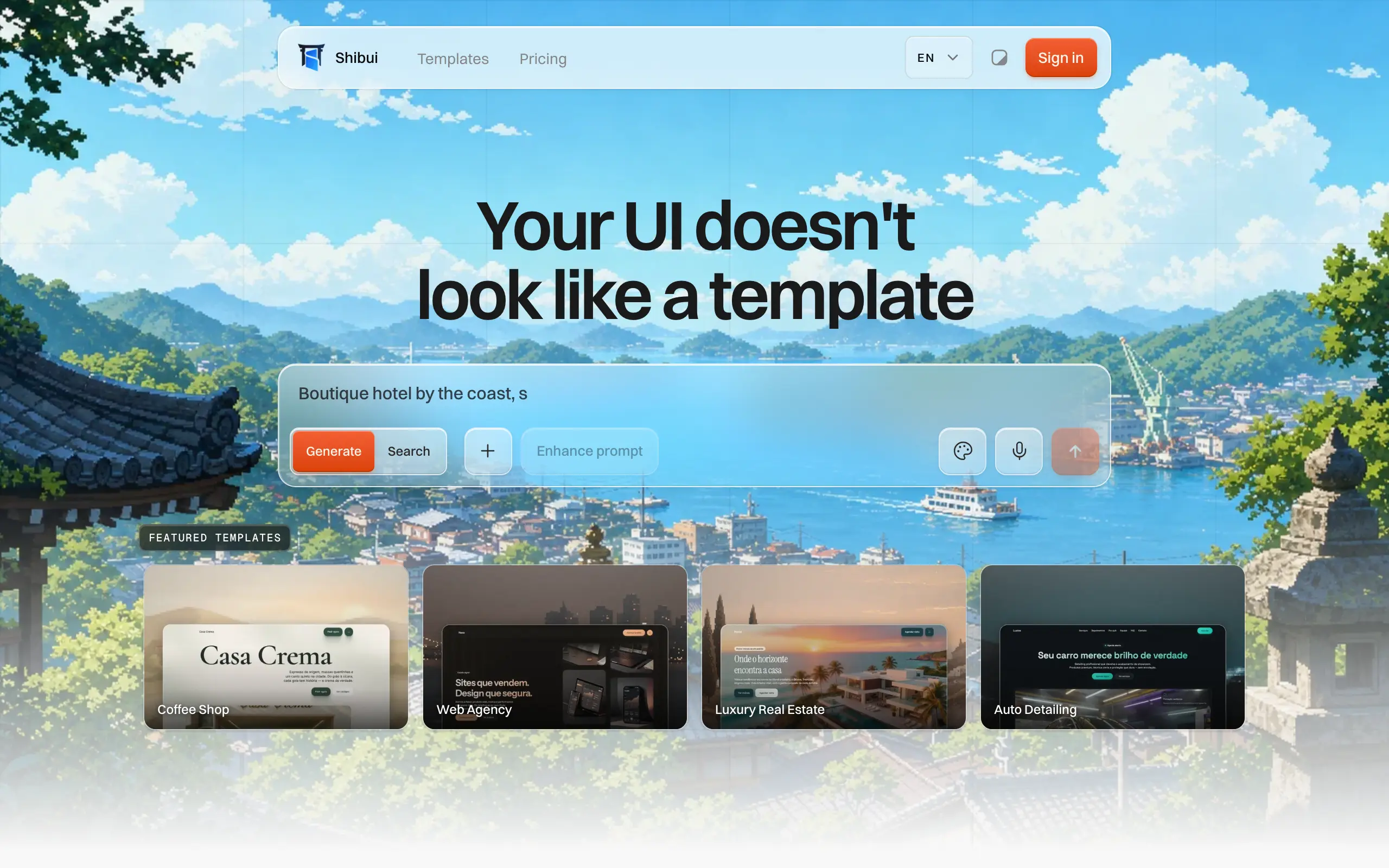
Shibui
AI website builder - describe your business, pick a niche template, edit by chatting, and publish instantly ✨

Pro Service
Find verified home service professionals, compare quotes, and pay securely through escrow - built for Brazilians across the US 🏠
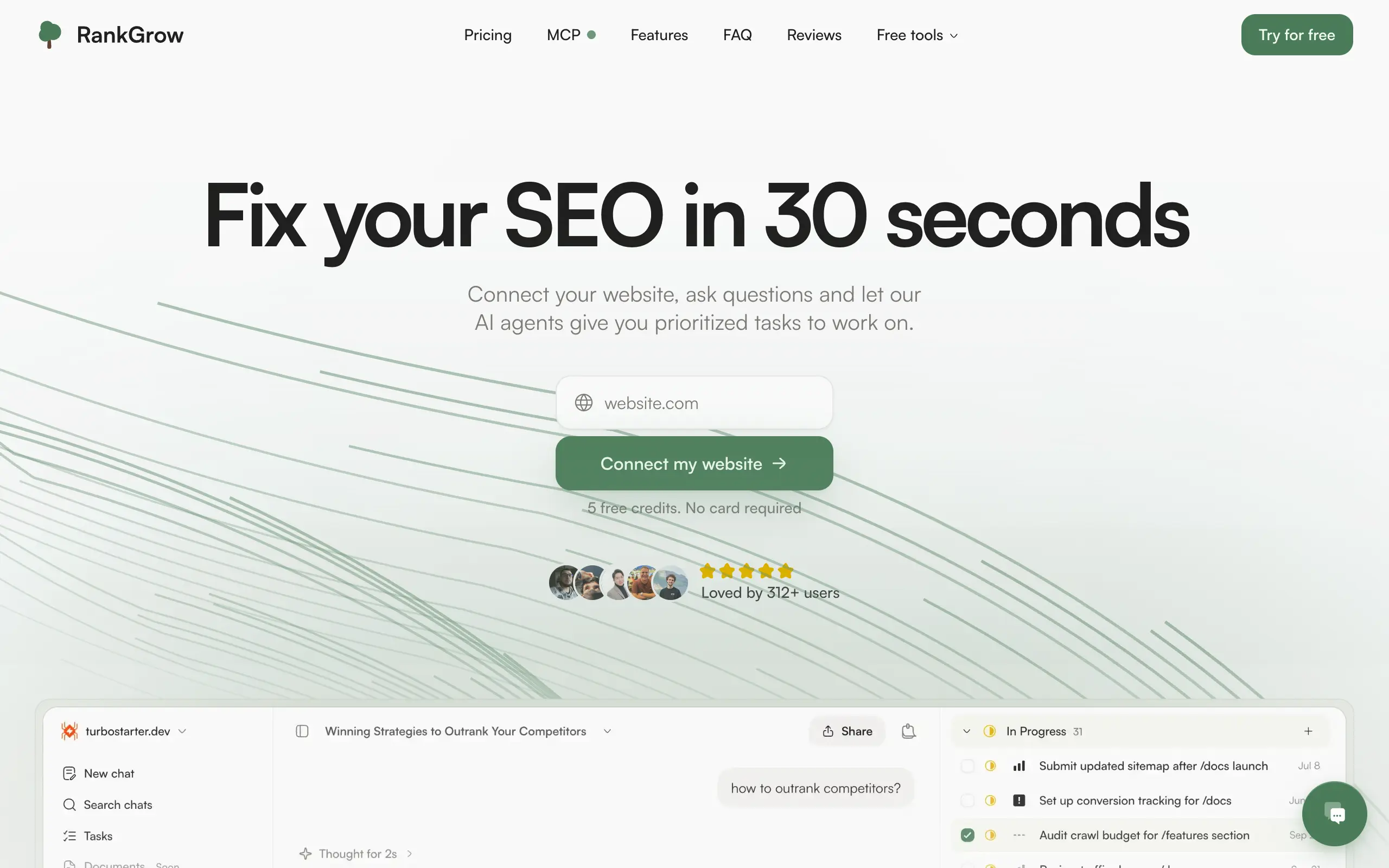
RankGrow
Fix your SEO with AI agents - connect Search Console, get prioritized tasks, and grow organic traffic 📈
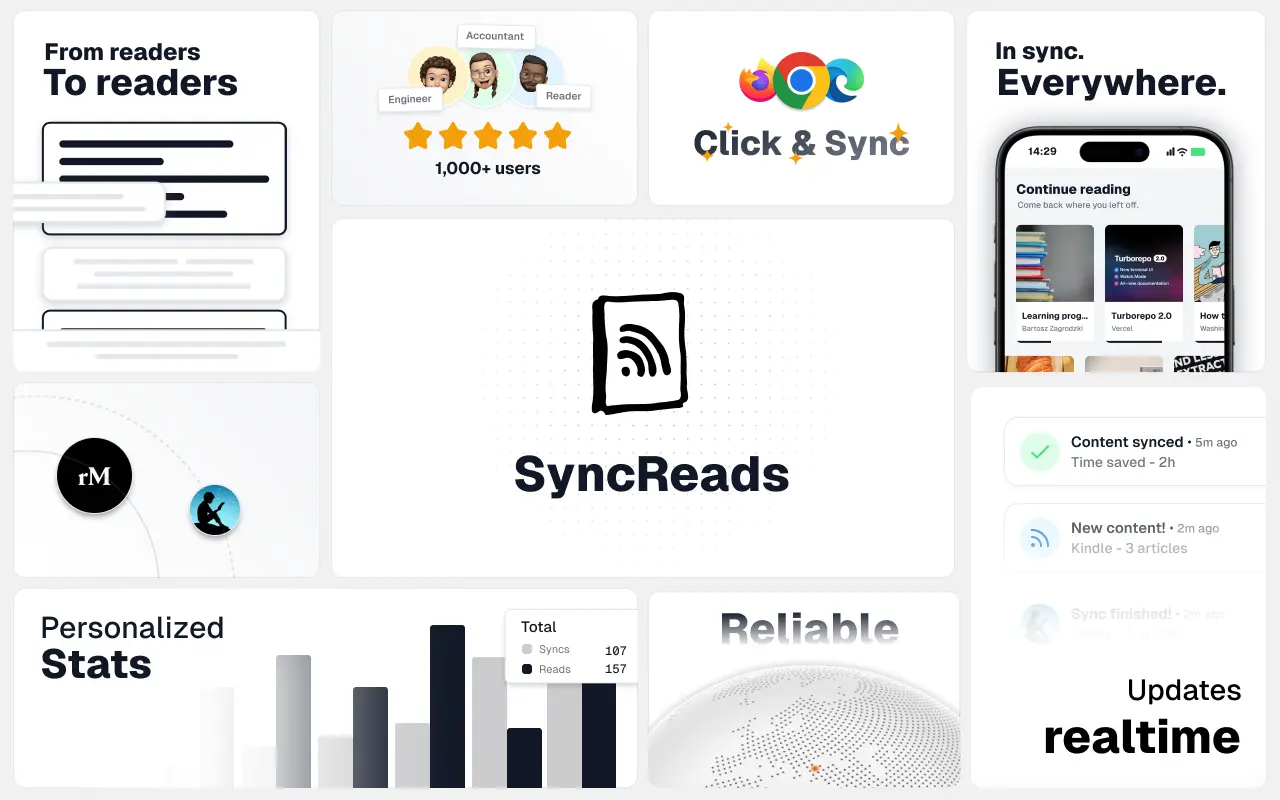
SyncReads
Sync your favorite content for distraction-free reading, save time and replace multiple apps. Anytime, anywhere 🔄
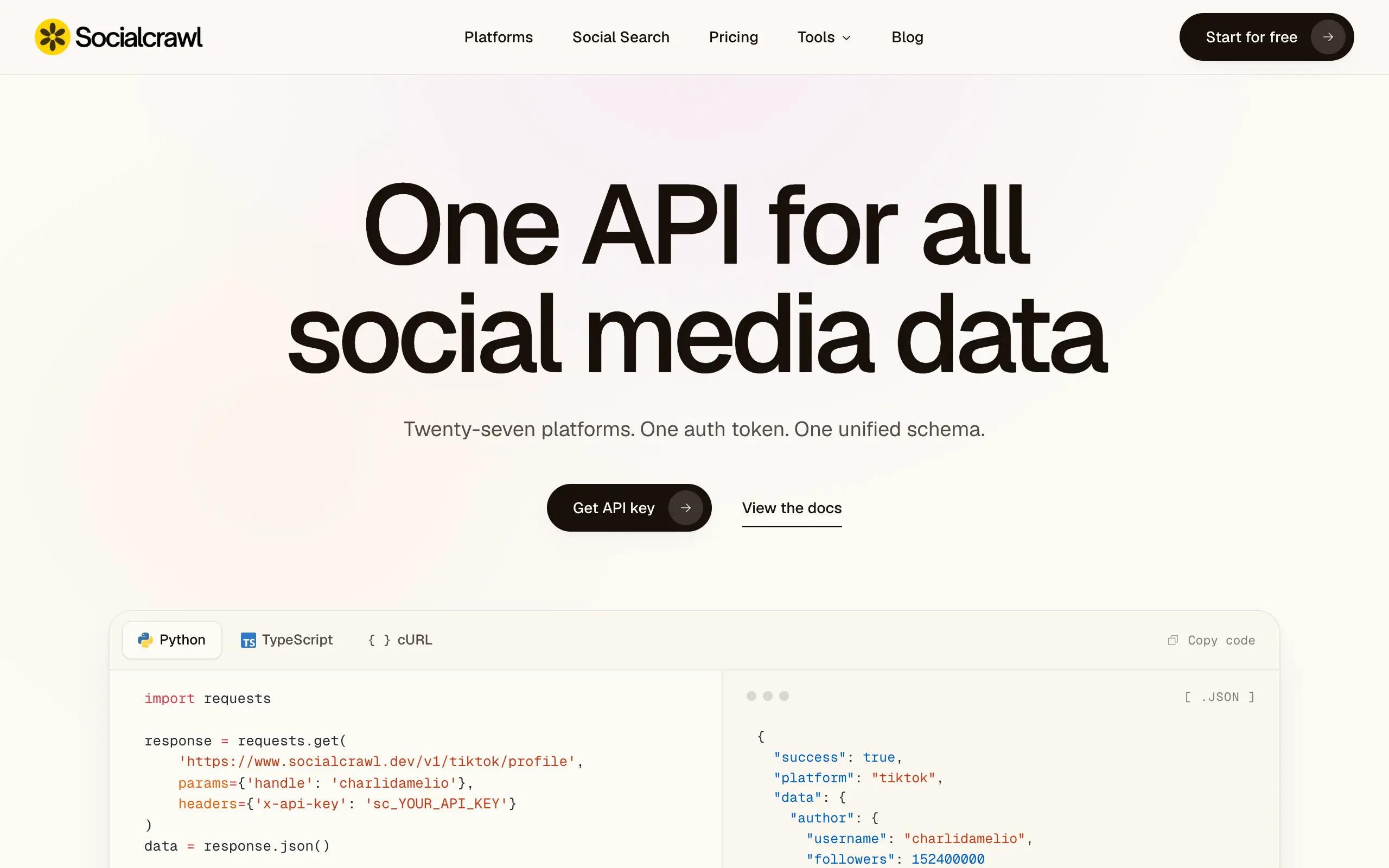
Socialcrawl
Get clean, structured data from 21 platforms like TikTok, Instagram, and YouTube with a single request 📊
Statiko
Monitor any Telegram channel in real time - track posts, edits, deletions, and growth with AI recaps 📡
Shibui
AI website builder - describe your business, pick a niche template, edit by chatting, and publish instantly ✨
Pro Service
Find verified home service professionals, compare quotes, and pay securely through escrow - built for Brazilians across the US 🏠
RankGrow
Fix your SEO with AI agents - connect Search Console, get prioritized tasks, and grow organic traffic 📈
SyncReads
Sync your favorite content for distraction-free reading, save time and replace multiple apps. Anytime, anywhere 🔄
Socialcrawl
Get clean, structured data from 21 platforms like TikTok, Instagram, and YouTube with a single request 📊
Statiko
Monitor any Telegram channel in real time - track posts, edits, deletions, and growth with AI recaps 📡
Shibui
AI website builder - describe your business, pick a niche template, edit by chatting, and publish instantly ✨
Pro Service
Find verified home service professionals, compare quotes, and pay securely through escrow - built for Brazilians across the US 🏠
RankGrow
Fix your SEO with AI agents - connect Search Console, get prioritized tasks, and grow organic traffic 📈
SyncReads
Sync your favorite content for distraction-free reading, save time and replace multiple apps. Anytime, anywhere 🔄
Socialcrawl
Get clean, structured data from 21 platforms like TikTok, Instagram, and YouTube with a single request 📊
Statiko
Monitor any Telegram channel in real time - track posts, edits, deletions, and growth with AI recaps 📡
Shibui
AI website builder - describe your business, pick a niche template, edit by chatting, and publish instantly ✨
Pro Service
Find verified home service professionals, compare quotes, and pay securely through escrow - built for Brazilians across the US 🏠
RankGrow
Fix your SEO with AI agents - connect Search Console, get prioritized tasks, and grow organic traffic 📈
SyncReads
Sync your favorite content for distraction-free reading, save time and replace multiple apps. Anytime, anywhere 🔄
Socialcrawl
Get clean, structured data from 21 platforms like TikTok, Instagram, and YouTube with a single request 📊
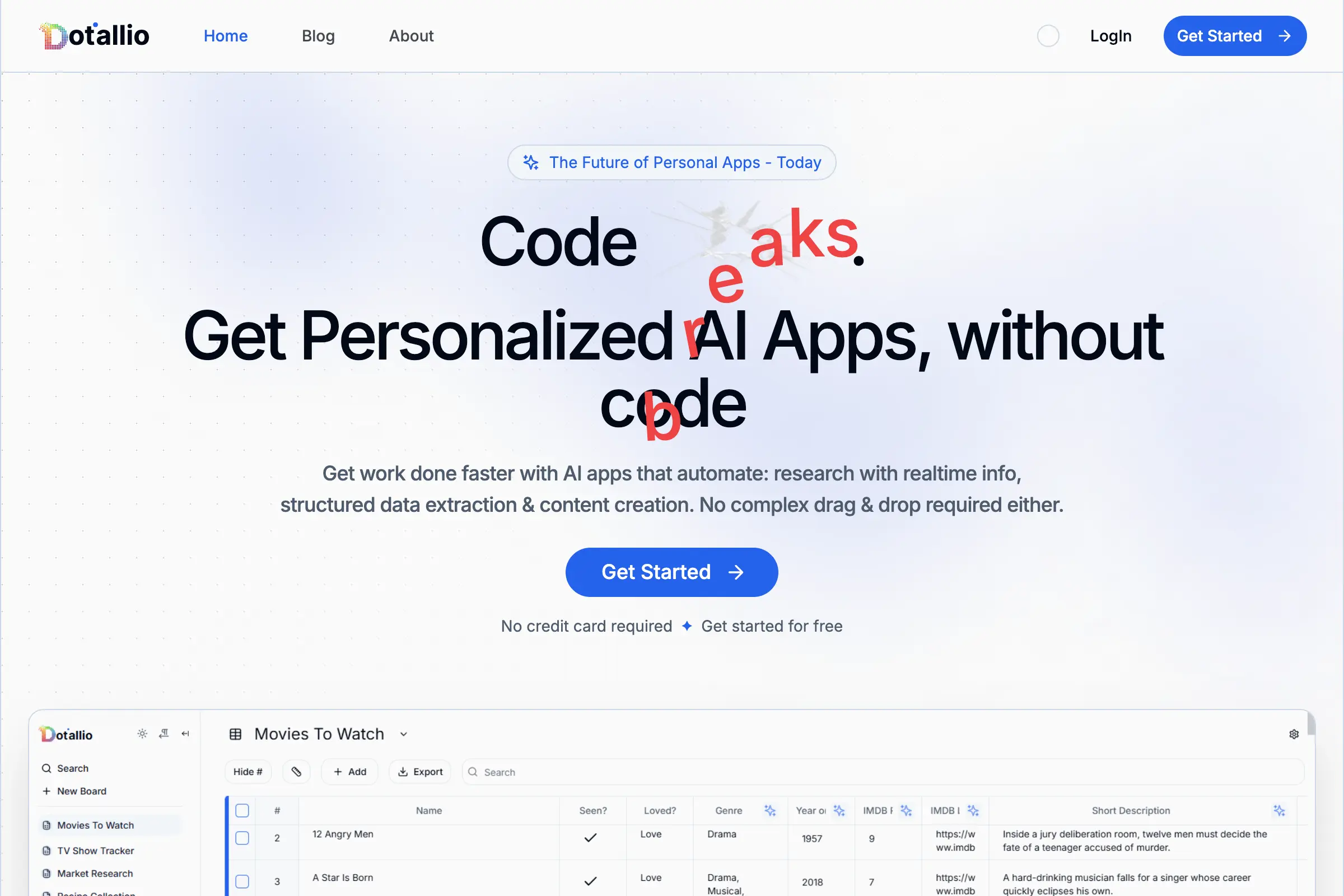
Dotallio
Personalized AI apps that automate research, data extraction, and content creation without code 🤖
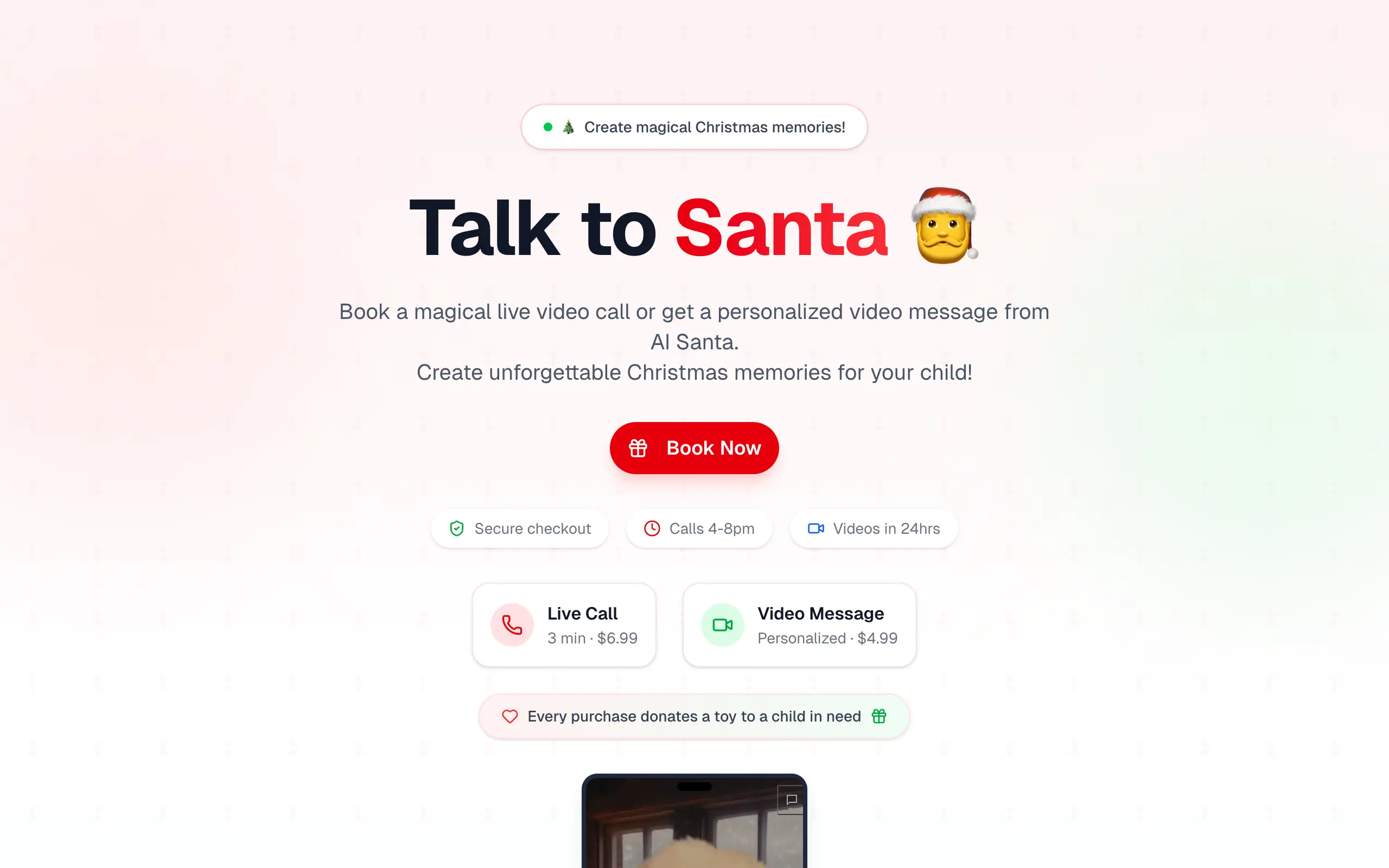
Talk to Santa
Enjoy a magical live video chat or receive a unique AI-generated video greeting from Santa Claus 🎅
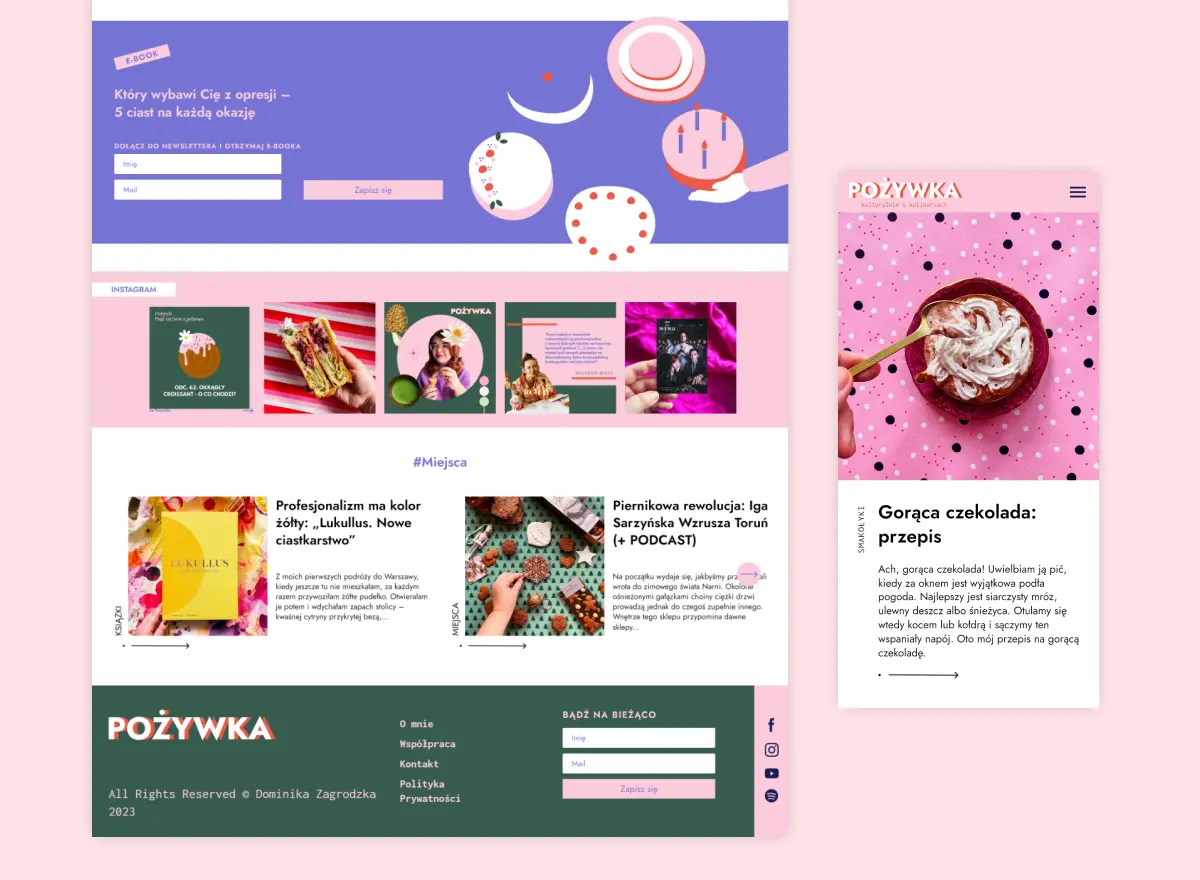
pozywka.pl
Scalable blog for food journalist, focused on performance and user experience 🌭
zagrodzki.me
Personal blog and portfolio of Bart Zagrodzki, where he shares his knowledge and work 💼
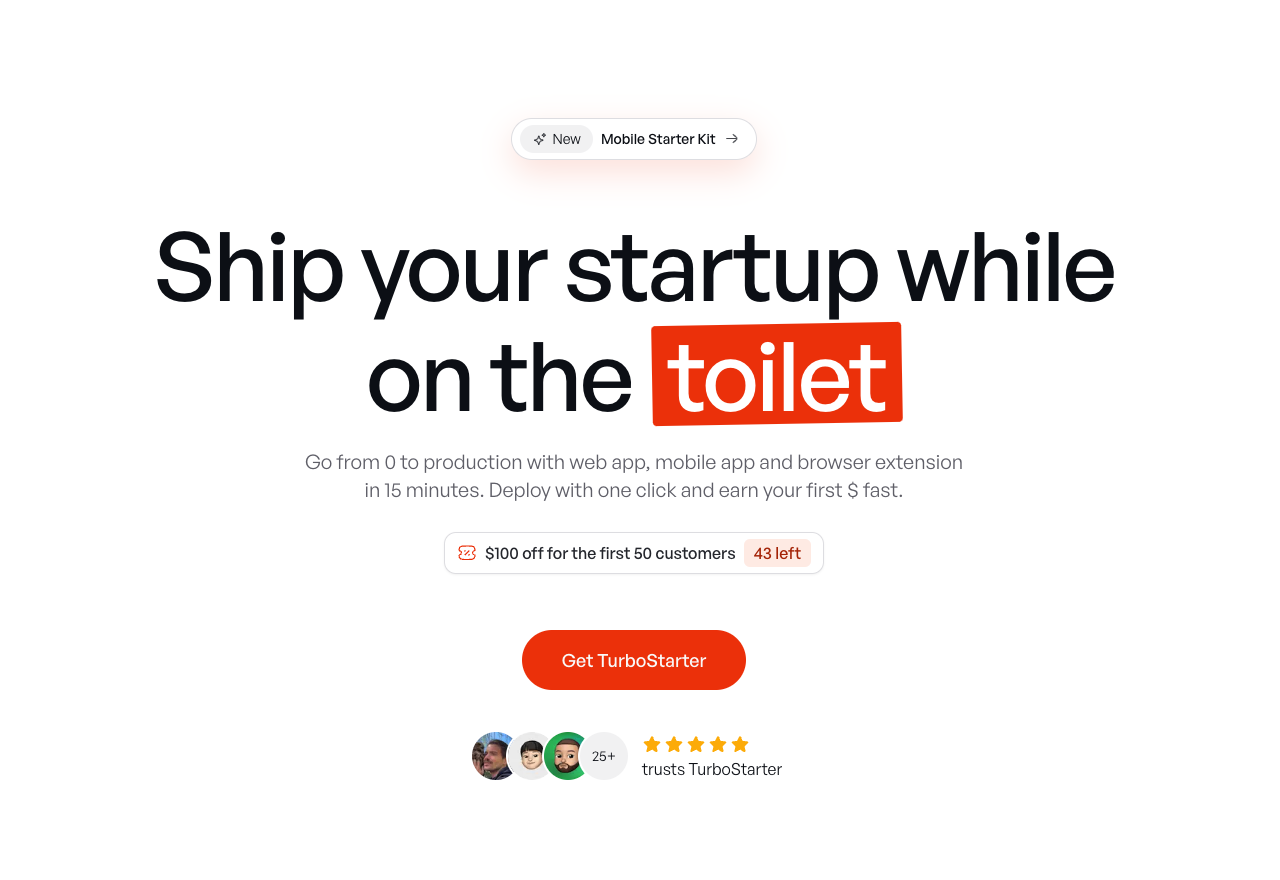
TurboStarter
Ship your startup everywhere. In minutes.
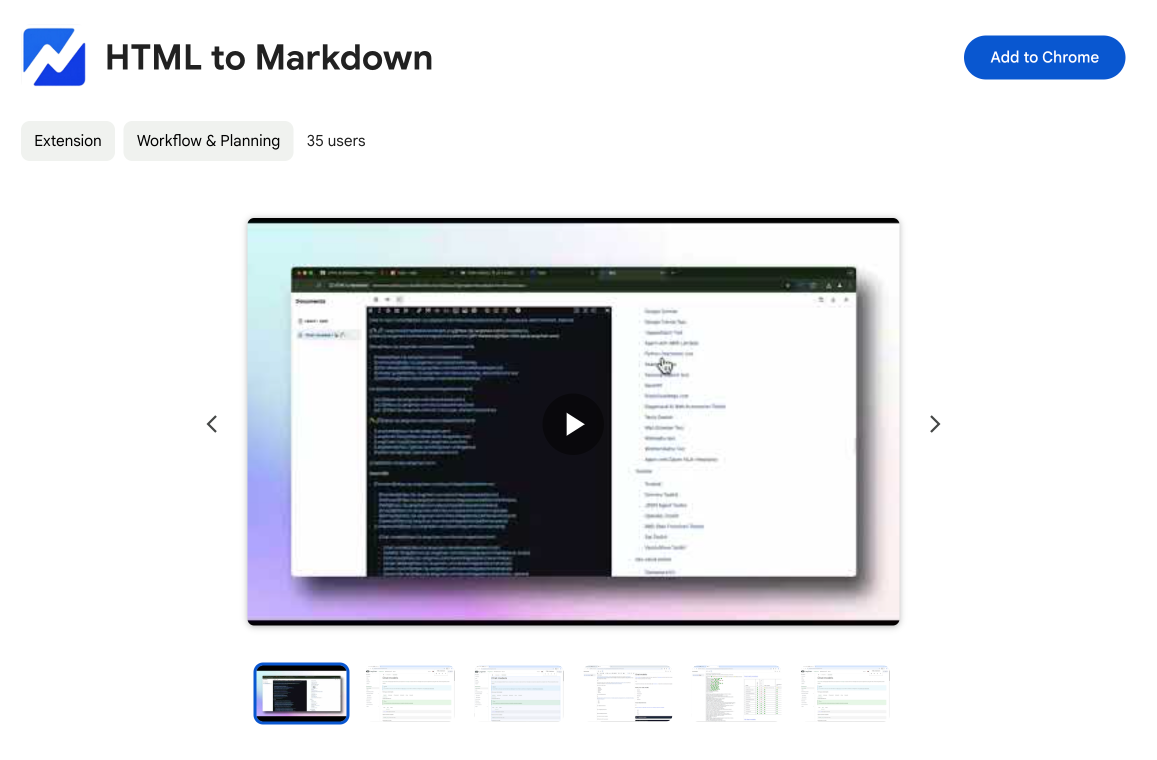
HTML to Markdown
Convert HTML to Markdown with ease, directly in your browser 📄
Dotallio
Personalized AI apps that automate research, data extraction, and content creation without code 🤖
Talk to Santa
Enjoy a magical live video chat or receive a unique AI-generated video greeting from Santa Claus 🎅
pozywka.pl
Scalable blog for food journalist, focused on performance and user experience 🌭
zagrodzki.me
Personal blog and portfolio of Bart Zagrodzki, where he shares his knowledge and work 💼
TurboStarter
Ship your startup everywhere. In minutes.
HTML to Markdown
Convert HTML to Markdown with ease, directly in your browser 📄
Dotallio
Personalized AI apps that automate research, data extraction, and content creation without code 🤖
Talk to Santa
Enjoy a magical live video chat or receive a unique AI-generated video greeting from Santa Claus 🎅
pozywka.pl
Scalable blog for food journalist, focused on performance and user experience 🌭
zagrodzki.me
Personal blog and portfolio of Bart Zagrodzki, where he shares his knowledge and work 💼
TurboStarter
Ship your startup everywhere. In minutes.
HTML to Markdown
Convert HTML to Markdown with ease, directly in your browser 📄
Dotallio
Personalized AI apps that automate research, data extraction, and content creation without code 🤖
Talk to Santa
Enjoy a magical live video chat or receive a unique AI-generated video greeting from Santa Claus 🎅
pozywka.pl
Scalable blog for food journalist, focused on performance and user experience 🌭
zagrodzki.me
Personal blog and portfolio of Bart Zagrodzki, where he shares his knowledge and work 💼
TurboStarter
Ship your startup everywhere. In minutes.
HTML to Markdown
Convert HTML to Markdown with ease, directly in your browser 📄
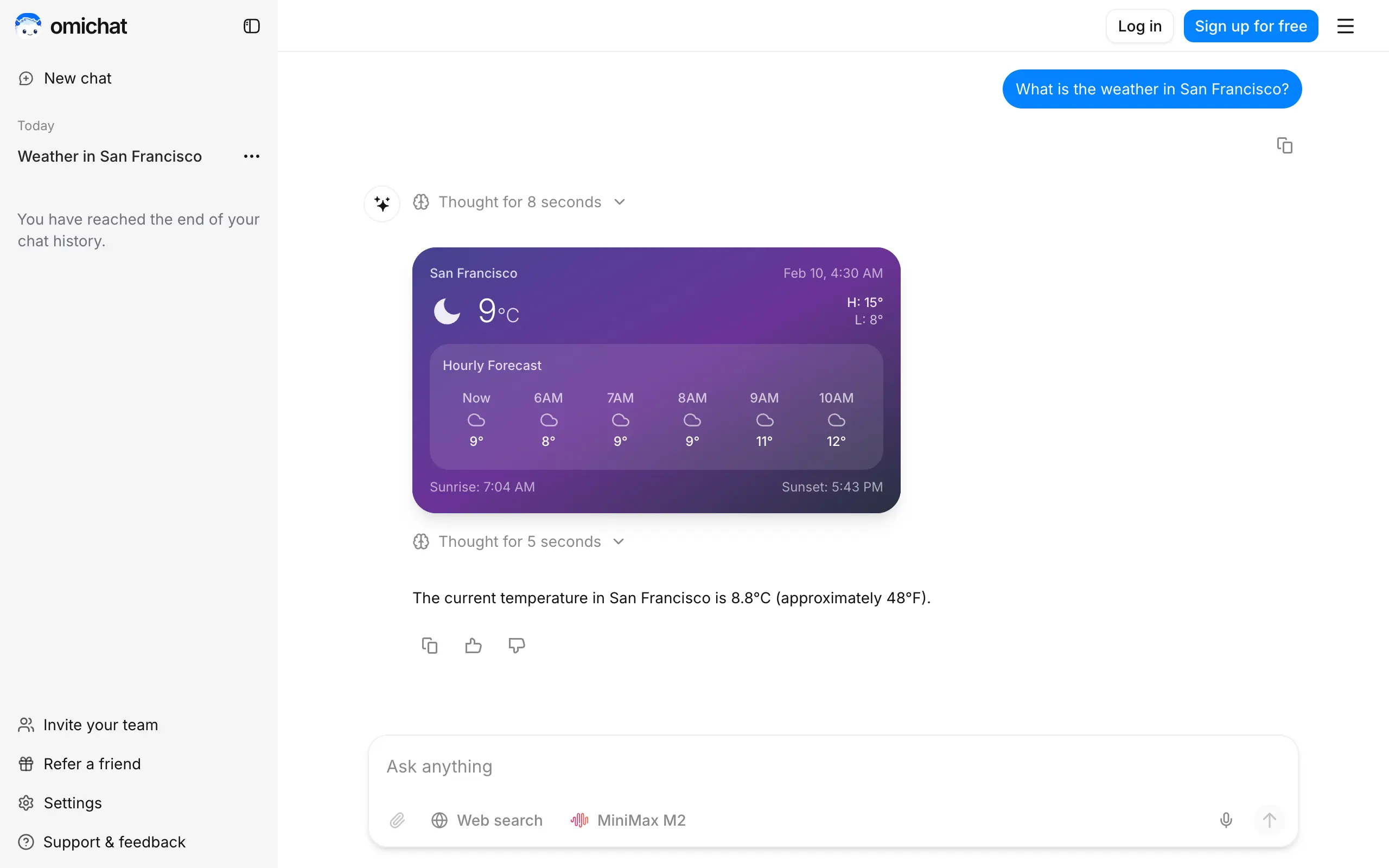
Omichat
Chat with 50+ AI models, including ChatGPT and Claude, in one place - switch models anytime without losing context 🤖
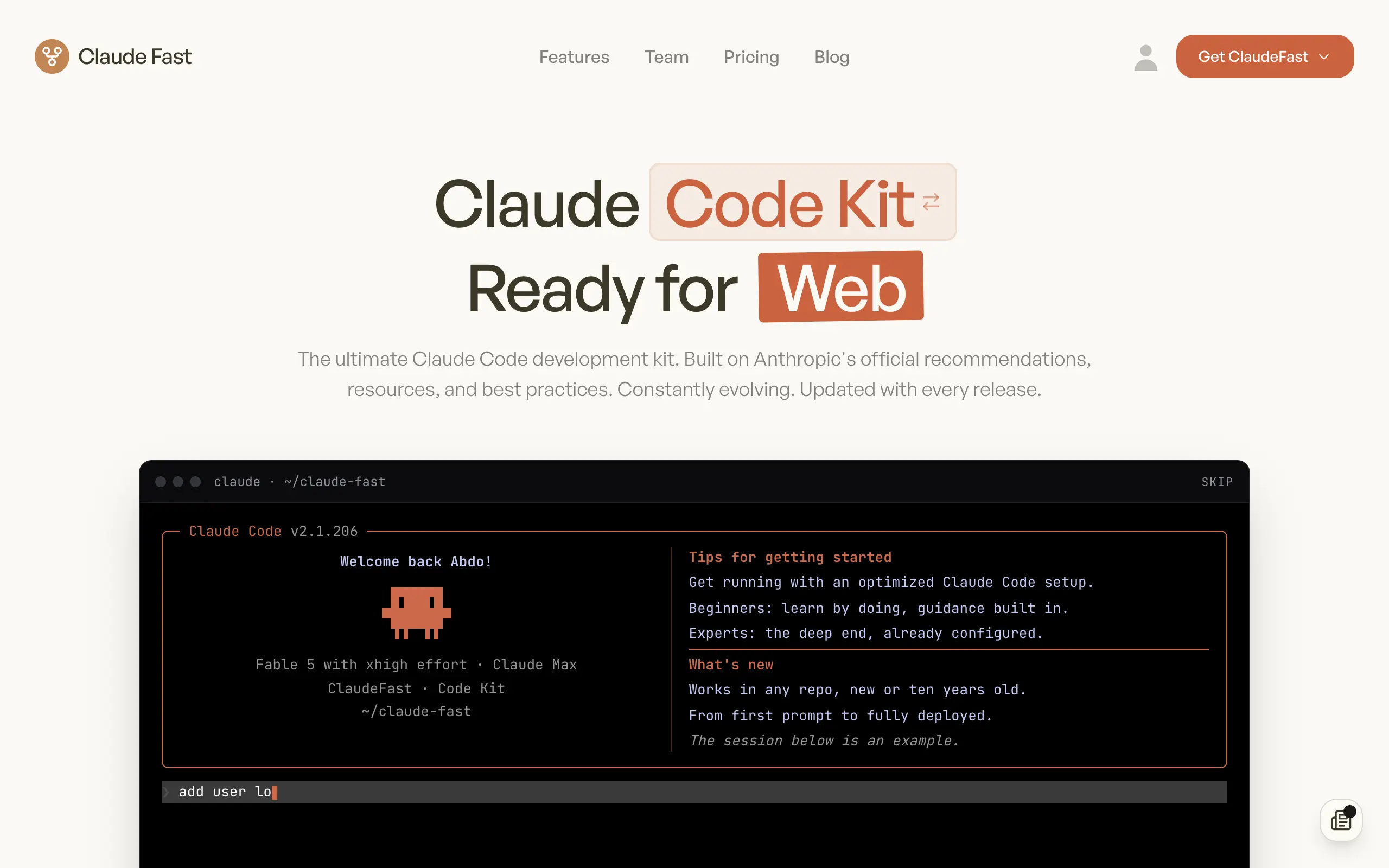
Claude Fast
Supercharge your Claude Code with 6x effective context window and specialized AI agents 🤖
EmojAI
AI-powered emoji picker with smart, context-aware suggestions 🤖

Solohacker
Autonomous company launcher - AI agents work 24/7, escalate what matters, and you stay in control 🤖

BeRawi: Storytelling Coach
Practice storytelling daily with instant feedback to sound clearer, more engaging, and confident 🎤
Omichat
Chat with 50+ AI models, including ChatGPT and Claude, in one place - switch models anytime without losing context 🤖
Claude Fast
Supercharge your Claude Code with 6x effective context window and specialized AI agents 🤖
EmojAI
AI-powered emoji picker with smart, context-aware suggestions 🤖
Solohacker
Autonomous company launcher - AI agents work 24/7, escalate what matters, and you stay in control 🤖
BeRawi: Storytelling Coach
Practice storytelling daily with instant feedback to sound clearer, more engaging, and confident 🎤
Omichat
Chat with 50+ AI models, including ChatGPT and Claude, in one place - switch models anytime without losing context 🤖
Claude Fast
Supercharge your Claude Code with 6x effective context window and specialized AI agents 🤖
EmojAI
AI-powered emoji picker with smart, context-aware suggestions 🤖
Solohacker
Autonomous company launcher - AI agents work 24/7, escalate what matters, and you stay in control 🤖
BeRawi: Storytelling Coach
Practice storytelling daily with instant feedback to sound clearer, more engaging, and confident 🎤
Omichat
Chat with 50+ AI models, including ChatGPT and Claude, in one place - switch models anytime without losing context 🤖
Claude Fast
Supercharge your Claude Code with 6x effective context window and specialized AI agents 🤖
EmojAI
AI-powered emoji picker with smart, context-aware suggestions 🤖
Solohacker
Autonomous company launcher - AI agents work 24/7, escalate what matters, and you stay in control 🤖
BeRawi: Storytelling Coach
Practice storytelling daily with instant feedback to sound clearer, more engaging, and confident 🎤

Connect with like-minded people
Join our community to get feedback, support, and grow together with 1,000+ builders on board, let's ship it!
Join usShip your startup everywhere. In minutes.
Don't burn tokens on setup and start building features on day one.