ThoughtTrail
AI turns scattered notes, voice memos, and browser saves into connected ideas, next steps, and weekly creative briefs.
Why an AI note-taking app needs to become an idea system
Most note-taking tools are good at capture and weak at recall. People collect meeting notes, journal entries, browser bookmarks, screenshots, voice memos, and unfinished thoughts across many apps, then struggle to turn that material into useful decisions or creative output.
That is the problem space for ThoughtTrail: an AI note-taking app that transforms scattered personal knowledge into connected ideas, prioritized next steps, and weekly creative briefs.
The opportunity is not to build another blank document editor. It is to build an AI idea management system that answers practical questions users already have:
- What have I been thinking about repeatedly?
- Which saved articles connect to my current project?
- What ideas are worth developing this week?
- What did I promise myself or my team I would do next?
- Which themes are emerging across notes, voice memos, and web research?
- Can my personal knowledge base create a useful brief without manual organization?
ThoughtTrail’s unique value is its ability to move users through a complete workflow:
- Capture raw inputs with minimal friction.
- Understand content across formats and sources.
- Connect related ideas, people, projects, and themes.
- Prioritize the insights that deserve attention.
- Activate knowledge through next steps and weekly briefs.
That positioning makes ThoughtTrail more than an AI notes app. It becomes a personal intelligence layer for creators, researchers, founders, knowledge workers, and teams that need to turn information overload into momentum.
Core positioning
ThoughtTrail should be positioned as an AI-powered thinking workspace, not simply a note organizer. Users do not pay for storage; they pay for clarity, continuity, and better decisions.
The target audience for ThoughtTrail
The strongest early market is not “everyone who takes notes.” Broad positioning can create an unfocused product and expensive customer acquisition. Instead, ThoughtTrail should begin with users who have both a high volume of unstructured inputs and a meaningful cost when valuable ideas disappear.
Independent creators and writers
Writers, newsletter operators, YouTubers, podcasters, designers, and content strategists routinely save links, record voice ideas, highlight books, and keep fragments of possible work. Their challenge is rarely a lack of ideas. It is the inability to retrieve and develop the right idea at the right time.
For this segment, ThoughtTrail can provide:
- A unified inbox for saved links, notes, and voice memos
- AI-generated topic clusters such as “pricing psychology,” “remote work,” or “brand storytelling”
- Source-aware creative briefs for articles, videos, podcast episodes, or social campaigns
- Suggested angles based on recurring themes in their own research
- A backlog of ideas ranked by originality, relevance, and available source material
The promise is highly tangible: turn a messy idea archive into publishable work every week.
Founders and product leaders
Startup founders and product managers collect customer feedback, feature requests, competitor observations, market research, and strategic questions from dozens of conversations. Important patterns often remain buried in meeting notes or chat transcripts.
ThoughtTrail can help them:
- Identify repeated customer pain points
- Link feature ideas to supporting feedback and research
- Build product discovery briefs from scattered evidence
- Generate follow-up actions after investor, customer, or team meetings
- Surface open strategic questions that have appeared across multiple notes
This audience values traceability. AI-generated recommendations should always show the original notes or source excerpts that informed the output.
Researchers, consultants, and analysts
Researchers and consultants need a defensible process for collecting, synthesizing, and communicating information. They may be less interested in “second brain” language and more interested in research synthesis, evidence management, and faster briefing.
ThoughtTrail’s value for this group includes:
- Browser capture with source URLs and timestamps
- Search across notes, transcripts, highlights, and saved web pages
- Automatic entity extraction for companies, people, markets, and concepts
- AI summaries that preserve citations to original source material
- Weekly research digests that identify emerging patterns and unresolved questions
For professional users, trust matters more than novelty. The product must make it easy to validate every generated conclusion.
Knowledge-heavy teams
Small agencies, product teams, investment teams, and editorial groups can use ThoughtTrail as a shared knowledge workspace. The challenge here is that useful context is distributed across individuals, projects, meeting notes, and web research.
A team-oriented version could provide:
- Shared spaces with role-based access
- Project-specific idea trails
- Collaborative creative and research briefs
- Decision logs connected to relevant discussions
- Theme detection across customer calls, internal notes, and market research
Teams are likely to become a higher-value expansion segment after the individual workflow is proven.
The market gap in AI knowledge management
The personal knowledge management market is crowded, but the customer experience remains fragmented. Traditional note apps are optimized for writing and organization. Bookmark tools are optimized for saving. transcription tools are optimized for converting speech to text. AI chat tools are optimized for answering prompts.
Users must still manually bridge those categories.
| Category | Primary job | Common weakness | ThoughtTrail opportunity |
|---|---|---|---|
| Traditional notes apps | Write and organize documents | Ideas remain isolated in folders | Connect themes and recommend action |
| Bookmark managers | Save web content | Saved links rarely become work | Turn research into briefs and prompts |
| Voice transcription apps | Convert speech to text | Transcripts become another archive | Extract ideas, commitments, and links |
| Generic AI chat tools | Answer on-demand questions | Limited durable personal context | Maintain a user-owned knowledge graph |
| Task managers | Track work to be done | Tasks lose the thinking behind them | Link next steps to the source idea |
The key gap is contextual continuity. Users need a system that remembers their inputs over time, detects relationships they may not notice, and produces practical outputs without requiring constant manual tagging.
This is especially timely because multimodal AI capabilities are becoming more accessible. High-quality speech-to-text, semantic search, embeddings, retrieval-augmented generation, and structured extraction can now work together in a consumer-grade product. The technology is no longer the primary constraint. Product trust, workflow design, privacy, and focused positioning are the hard parts.
When making market-size or adoption claims on a landing page or investor deck, cite named primary research rather than using vague numbers. Useful sources to review include reports from Gartner, McKinsey, Microsoft’s Work Trend Index, and product-specific user research. A strong claim should include the publication name, date, methodology, and direct source reference.
The ThoughtTrail product vision
ThoughtTrail should feel like a calm, intelligent workspace rather than a complicated knowledge graph tool. The product must earn user trust through immediate utility before asking users to adopt a new organizational system.
The core experience can be summarized as:
Capture anything. Let AI find the connections. Receive one clear direction for what to think, create, or do next.
A user might save three articles about creator businesses, record a quick voice memo about pricing, add meeting notes from a client call, and write a loose idea for a newsletter. ThoughtTrail should recognize the theme, connect the materials, and generate a brief such as:
- A working title for an article or project
- The core insight emerging across sources
- Supporting references from the user’s library
- Contradictions or unanswered questions
- Suggested outline or next experiment
- A concrete next action
This is a different workflow from asking an AI chatbot to summarize one document. It is ongoing synthesis across a growing body of personal context.
The minimum viable product
An MVP should prove a single high-value loop: capture → connect → brief → act.
Do not launch with a large, visual graph as the primary feature. Graphs can look impressive, but they often create novelty without helping users complete meaningful work. Start with utility that users can assess in minutes.
The first ThoughtTrail MVP should include:
Fast capture
Create text notes, record voice memos, and save web pages or links through a browser extension and mobile share sheet.
Reliable processing
Transcribe audio, extract metadata, create semantic embeddings, and identify themes, entities, projects, and actionable commitments.
Connected trails
Show why two items are related with clear source excerpts instead of opaque AI claims.
Weekly creative brief
Deliver a useful synthesis of ideas, evidence, unanswered questions, and suggested next steps.
Capture should be frictionless
Capture quality determines the quality of the knowledge base. If it takes too long to add information, users will keep using existing habits and ThoughtTrail becomes incomplete.
Recommended capture methods include:
- A responsive web app for typed notes
- A mobile app for quick voice capture
- Audio upload for longer recordings
- Browser extension for articles and page highlights
- Email forwarding for newsletters or ideas sent to oneself
- Optional integrations with calendar notes and selected document providers
Each captured item should retain context. For a web save, store the URL, title, author when available, date captured, selected text, and a clean content extraction. For a voice memo, store the original audio file, transcript, recording time, optional location only with explicit consent, and extracted action items.
AI connections must be explainable
The product should never simply say, “These notes are related.” Instead, it should show an understandable reason:
- Shared concept or entity
- Similar underlying problem
- Opposing viewpoints
- Repeated project mention
- Common customer need
- Related task or decision
- Temporal sequence
Explainability is important for both user trust and product differentiation. Users will accept imperfect recommendations if they can inspect the reasoning and correct the system.
A useful interface pattern is a relationship card:
- “Connected because both discuss retention pricing for independent creators.”
- “Evidence found in 4 notes and 2 saved articles.”
- “Last discussed 12 days ago.”
- “Potential next step: compare annual-plan objections from recent customer interviews.”
Weekly briefs are the retention engine
The weekly creative brief is ThoughtTrail’s strongest recurring value proposition. It gives users a reason to return even when they have not actively searched their notes.
A quality weekly brief should avoid generic summaries. It should include:
- Emerging themes based on repeated concepts or newly connected items.
- Ideas worth developing based on novelty, relevance, and evidence density.
- Open loops such as unresolved decisions or commitments.
- A recommended focus that reflects the user’s current projects.
- Source links so the user can inspect the original materials.
- One low-friction next step that converts insight into momentum.
The brief should adapt to the user’s role. A writer may receive content angles. A founder may receive customer-learning themes. A researcher may receive a synthesis of evidence and questions. A product manager may receive a discovery brief.
Essential AI note-taking app features
Semantic search with source-grounded answers
Keyword search is necessary but insufficient. Users often remember meaning rather than exact phrasing. They might search for “that note about customers resisting annual billing” even if their original note used different words.
Semantic search allows ThoughtTrail to retrieve conceptually relevant content. The answer layer should use retrieval-augmented generation, meaning the model is prompted with selected source material from the user’s own workspace.
The UI should distinguish between:
- Directly retrieved source content
- AI-generated synthesis
- Inferred connections
- Suggested actions
This separation reduces hallucination risk and makes the system easier to audit.
Voice memo transcription and insight extraction
Voice is a high-potential input type because ideas often arrive while walking, commuting, or between meetings. But raw transcripts are noisy. ThoughtTrail should go beyond transcription by identifying:
- Potential ideas
- Decisions
- Tasks and commitments
- Names and organizations
- Questions to investigate
- Emotional emphasis or uncertainty, used cautiously
- Project or topic associations
Use a transcription provider with speaker diarization if group conversations are part of the roadmap. For private voice memos, prioritize accuracy, fast processing, and visible transcript editing.
Idea trails and concept clusters
An “idea trail” is a dynamic collection of connected items around a theme, project, question, or goal. Unlike folders, trails can overlap. One saved article could belong to trails about “creator monetization,” “subscription pricing,” and “customer retention.”
Each trail should include:
- A concise AI-generated description
- Key source notes and saves
- Important entities and recurring terms
- Related trails
- Timeline view of how the idea evolved
- Suggested actions or outputs
- User controls to rename, merge, split, pin, or dismiss connections
This gives users the benefits of a knowledge graph without demanding that they learn graph-management behavior.
Action extraction without task-manager bloat
ThoughtTrail should identify next steps, but it should not attempt to replace every task management tool on day one.
A practical approach is to extract actions into an “Open loops” view and support exports or integrations with tools users already trust. Initially, one-way export to popular task systems can be more valuable than building a full task hierarchy, reminders, recurring tasks, and team assignment engine.
The user should be able to confirm an extracted action before it becomes active. AI should recommend, not silently create obligations.
Privacy and user control features
Personal notes can contain sensitive ideas, health reflections, business plans, client details, and recordings. Privacy is not a legal checkbox; it is a product feature.
ThoughtTrail should offer:
- Clear data ownership language
- Workspace export in usable formats
- Deletion controls for original files, embeddings, and derived summaries
- Private-by-default settings
- Explicit consent for third-party integrations
- Configurable AI processing options where technically feasible
- Transparent retention policy
- Strong encryption practices for data in transit and at rest
- A clear explanation of whether customer data is used for model training
For compliance needs, consult qualified counsel and security professionals. Avoid presenting a future certification or legal posture as complete before independent verification.
Recommended tech stack for ThoughtTrail
The right stack should optimize for iteration speed, dependable background processing, secure data handling, and strong search quality. The application will involve standard SaaS concerns plus asynchronous AI pipelines, file storage, and vector retrieval.
Suggested application architecture
A pragmatic stack for an early-stage product includes:
- Frontend using React and Next.js
- Styling with Tailwind CSS
- Backend using TypeScript server routes or a dedicated TypeScript service
- Relational database using PostgreSQL
- ORM using Prisma
- Authentication through Auth.js or a managed identity provider
- File storage through an S3-compatible object store
- Background jobs through a durable queue and worker system
- Observability through structured logs, error tracking, job tracing, and product analytics
- Payments through Stripe
- AI orchestration through provider APIs with an abstraction layer for model routing
For fast SaaS development, a production-minded starter such as TurboStarter can reduce setup time for authentication, billing, application structure, and operational foundations.
Data model for an AI knowledge base
ThoughtTrail needs more than a notes table. The product should treat captured materials as durable source objects and keep AI-derived information separate from the original content.
A simplified model might include:
type SourceItem = {
  id: string;
  workspaceId: string;
  type: "note" | "voice_memo" | "web_save" | "document";
  title: string | null;
  rawContent: string;
  sourceUrl: string | null;
  createdAt: Date;
  capturedAt: Date;
};

type DerivedInsight = {
  id: string;
  sourceItemId: string;
  kind: "summary" | "entity" | "action" | "topic" | "embedding";
  value: string;
  confidence: number;
  modelVersion: string;
  createdAt: Date;
};

type Connection = {
  id: string;
  sourceItemAId: string;
  sourceItemBId: string;
  relationship: "similar" | "supports" | "contradicts" | "continues";
  explanation: string;
  confidence: number;
};
This structure supports reprocessing when models improve, preserving provenance, and allowing users to correct or delete derived AI outputs.
Vector search and relational data trade-offs
For an MVP, PostgreSQL with the pgvector extension is often a sensible choice. It keeps transactional data and embeddings close together, reduces operational complexity, and supports useful filtering by workspace, source type, date, project, or permissions.
A dedicated vector database may be justified later if the product requires very large collections, specialized indexing, multi-region scale, or exceptionally low-latency retrieval. The trade-off is additional infrastructure, synchronization complexity, and a larger operational surface area.
The principle is simple: do not introduce a separate database category until user scale or retrieval requirements clearly justify it.
Background processing pipeline
AI processing should be asynchronous and resilient. A user should be able to capture a voice memo or web save immediately, then see clear processing status while the system performs heavier work.
Each step should be idempotent, meaning a failed job can run again without creating duplicate records or corrupting the workspace.
Monetization strategy for an AI idea management SaaS
ThoughtTrail has a natural freemium model because users need time to develop a meaningful history of notes and connections before fully appreciating the product. However, AI processing and storage create real costs, so the free plan must have intentional limits.
A practical pricing structure
- "Free plan": limited monthly AI processing, limited audio transcription minutes, core note capture, and a basic weekly digest.
- "Pro plan": higher processing limits, unlimited or generous semantic search, full weekly creative briefs, browser extension, richer trail views, and priority processing.
- "Creator plan": enhanced content brief templates, publishing workflows, larger storage, and advanced exports.
- "Team plan": shared workspaces, permissions, collaborative briefs, centralized billing, and admin controls.
- "Enterprise plan": security review, data retention options, SSO, contractual support, and potentially private deployment requirements.
Avoid unlimited AI usage at a low fixed price unless the unit economics are well understood. Use fair-use limits, transparent credits, or tiered processing allowances to protect margins.
Value metrics that match customer outcomes
The best pricing metric should feel connected to product value, not arbitrary storage quotas. Good candidates include:
- AI processing credits
- Audio transcription hours
- Number of actively processed source items
- Weekly briefs and advanced synthesis runs
- Shared workspace seats for teams
A hybrid model often works well: charge per seat for collaboration and include a usage allowance for high-cost AI operations.
Competitive advantage and product differentiation
ThoughtTrail will compete indirectly with note apps, AI assistants, transcription tools, bookmarks, and project management products. It should not try to win by claiming it has every feature those categories offer.
Its defensible advantage comes from the combination of multimodal capture, source-grounded connection, and recurring synthesis.
ThoughtTrail’s differentiators
-
It is built around ideas, not documents.
Documents are inputs. The product’s primary output is clarity about what those inputs mean together. -
It connects multiple capture modes.
Voice memos, typed notes, browser saves, and imported materials contribute to the same knowledge system. -
It produces proactive value.
Weekly briefs reduce the burden on users to remember to search, review, and organize. -
It explains its reasoning.
Connections and recommendations include visible evidence, which improves trust and helps users correct the system. -
It preserves personal context over time.
The value grows as the user captures more material, creating a compounding retention loop. -
It keeps action connected to source material.
A task is more useful when users can revisit the thought, conversation, or research that created it.
The product moat is not merely access to a language model. Models are broadly available. The moat comes from high-quality interaction data, trusted user workflows, well-designed source attribution, personalized trail logic, and accumulated knowledge history.
Risks and mitigation for an AI notes product
Risk: inaccurate summaries or fabricated connections
Generative AI can overstate conclusions, miss nuance, or generate claims not supported by source material.
"Mitigation":
- Ground every synthesis in retrieved workspace sources
- Display citations and relevant excerpts
- Use language that communicates uncertainty
- Let users flag, edit, dismiss, or correct insights
- Evaluate retrieval and output quality with real user datasets
- Avoid presenting AI output as factual certainty without evidence
Risk: privacy concerns slow adoption
Users may hesitate to upload private audio, strategy notes, or confidential client information.
"Mitigation":
- Make privacy practices prominent and understandable
- Provide clear deletion and export controls
- Minimize collection of unnecessary personal data
- Use role-based permissions for shared workspaces
- Publish a security overview and keep it updated
- Offer stronger controls for higher-tier business customers
Risk: onboarding feels like work
If users must import thousands of notes, create categories, or manually train the system, many will abandon the product before seeing value.
"Mitigation":
- Start with one simple capture method
- Provide immediate AI processing for the first items
- Offer guided examples and starter prompts
- Create a first-week brief even from a small collection
- Ask only a few high-signal setup questions, such as role and current focus
Risk: AI costs grow faster than revenue
Audio transcription, embeddings, extraction, and repeated synthesis can create high variable costs.
"Mitigation":
- Process incrementally rather than reprocessing entire workspaces
- Cache results and reuse embeddings
- Route tasks to appropriately priced models
- Use smaller models for classification and extraction where quality is sufficient
- Set plan-based usage limits
- Track cost per active user, per brief, and per successfully completed workflow
Risk: becoming a feature inside a larger platform
Large productivity platforms may add AI summaries, semantic search, or note connections.
"Mitigation":
- Own a highly specific workflow around cross-source idea development
- Build excellent capture experiences across formats
- Develop trusted, explainable personal synthesis
- Integrate with ecosystems rather than requiring complete replacement
- Focus marketing on outcomes such as publishable briefs and retained strategic context
Go-to-market strategy for ThoughtTrail
The most effective early go-to-market motion is likely audience-specific content and product-led growth. The product itself can generate outputs worth sharing, such as sanitized brief templates, idea-development workflows, and creator research frameworks.
Initial acquisition channels
- SEO content targeting queries such as “AI note-taking app,” “voice memo organizer,” “AI second brain,” “personal knowledge management,” and “turn notes into content ideas”
- Creator partnerships with writers, podcasters, and productivity educators
- Communities focused on writing, building in public, research, product management, and PKM
- Browser extension distribution and extension-store optimization
- Short product demos that show messy inputs becoming a clear brief
- Referral incentives tied to additional processing credits
- Template-led acquisition for content planning, product discovery, research synthesis, and founder reflection
The best content does not merely promote ThoughtTrail. It teaches users how to capture ideas, develop a personal knowledge workflow, conduct research synthesis, and avoid information overload. That strategy builds topical authority while attracting people with a real use case.
An actionable implementation roadmap
A focused launch plan should prioritize learning over feature volume.
Phase one: validate the core job
Build the smallest workflow that allows a user to add notes, save web pages, and receive a useful connected brief.
Success signals include:
- Users capture information multiple times per week
- Users open source links from their brief
- Users save, edit, or act on suggested next steps
- Users report that ThoughtTrail surfaced something they had forgotten
- Users return for the next weekly brief
Phase two: improve connection quality
Once capture and briefs are useful, improve the intelligence layer:
- Add source-grounded semantic search
- Introduce editable idea trails
- Improve theme clustering and duplicate detection
- Add manual feedback for connection quality
- Build personalized brief templates by user role
Phase three: expand capture and collaboration
Only after the individual experience has reliable retention should the product add:
- Native mobile voice capture
- More import options
- Team spaces and sharing
- Collaboration controls
- Integration exports to task and writing tools
- Advanced permissions and business features
Phase four: establish operational trust
As usage grows, invest in:
- Retrieval quality evaluation
- AI output monitoring
- Security reviews
- Accessible privacy documentation
- Scalable background job infrastructure
- Customer support workflows
- Data portability and deletion reliability
Avoid the common MVP trap
Do not spend the first six months building dozens of integrations, a complex graph canvas, and a full task manager. If ThoughtTrail cannot turn five scattered inputs into one genuinely useful brief, additional features will not solve the core product problem.
Frequently asked questions about building an AI note-taking app
ThoughtTrail is designed to connect information across voice memos, written notes, and browser saves, then turn those connections into concrete outputs. Its core value is not simply summarization. It is source-grounded idea trails, actionable next steps, and recurring weekly creative briefs.
No. A visual graph can become valuable later, but it should not be the first proof of value. Start with understandable connections, strong semantic retrieval, and briefs that help users complete real work. Add graph exploration only when users request a better way to navigate a large knowledge base.
Show the evidence behind every recommendation, preserve access to original content, make editing and deletion easy, state privacy practices clearly, and communicate uncertainty when AI confidence is limited. Trust grows when users can verify, correct, and control the system.
Independent creators and writers are a compelling initial segment because they capture many ideas, feel the pain of lost inspiration, and can quickly assess whether weekly creative briefs improve output. Founders, product leaders, and researchers are logical expansion audiences.
The path to a durable AI knowledge product
ThoughtTrail has a strong opportunity because it addresses a persistent problem: valuable thinking is scattered across too many places and too rarely converted into action. The product should resist becoming another passive archive.
A successful AI note-taking app will make users feel that their past thinking is available, connected, and useful. It will reduce the cognitive cost of remembering where an idea came from, why it mattered, and what should happen next.
The winning version of ThoughtTrail is not the app with the most AI features. It is the one that reliably helps users discover the thread running through their notes and follow it toward meaningful work.
More 🤖 AI Startup SaaS ideas
Discover more innovative ai startup SaaS ideas that are trending in 2026. Each idea is AI-generated with market validation and growth potential to help you find your next profitable venture faster than competitors.
Your competitors are building with TurboStarter
Below are some of the SaaS ideas that have been generated and built with our starter kit.
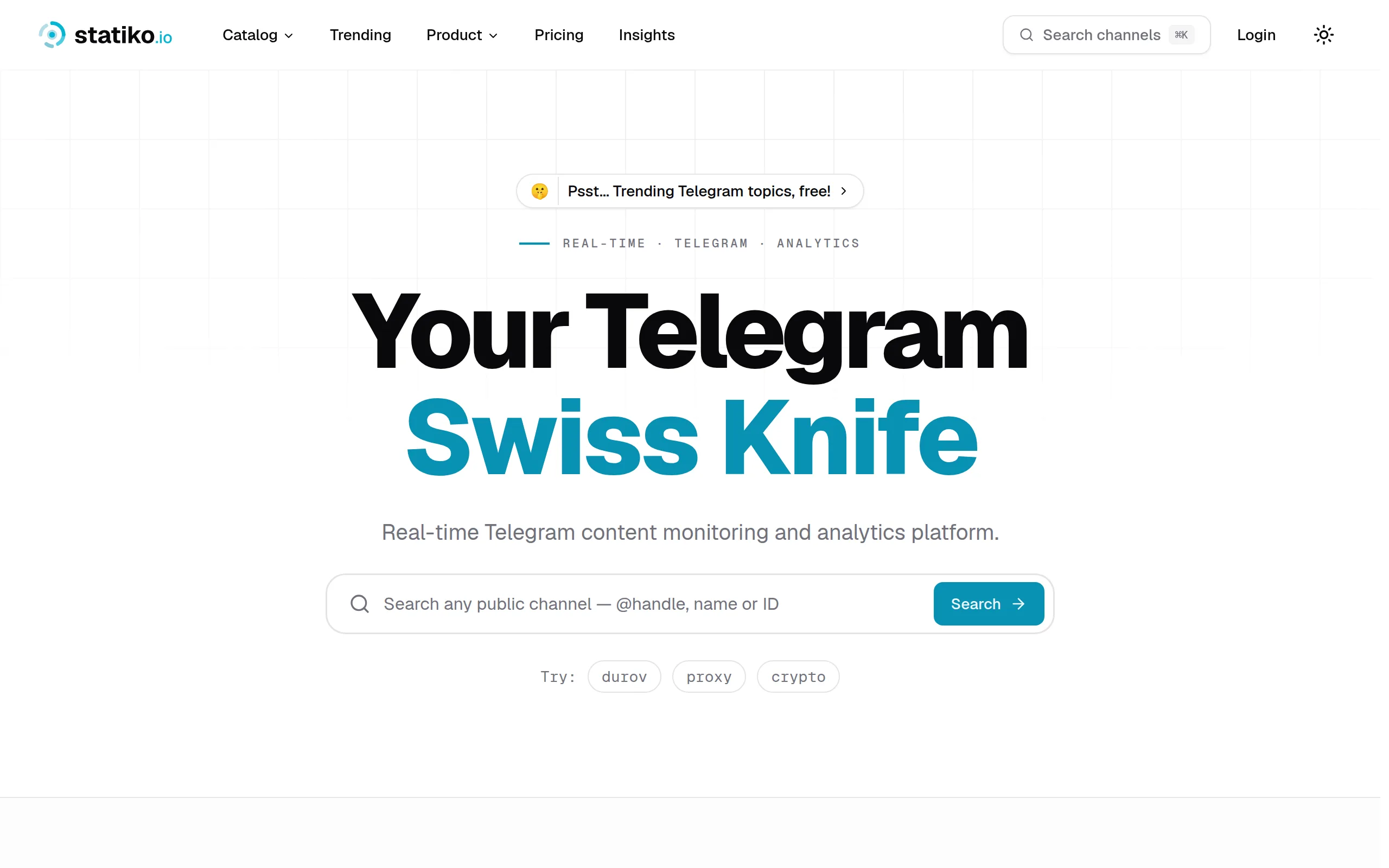
Statiko
Monitor any Telegram channel in real time - track posts, edits, deletions, and growth with AI recaps 📡

Shibui
AI website builder - describe your business, pick a niche template, edit by chatting, and publish instantly ✨

Pro Service
Find verified home service professionals, compare quotes, and pay securely through escrow - built for Brazilians across the US 🏠
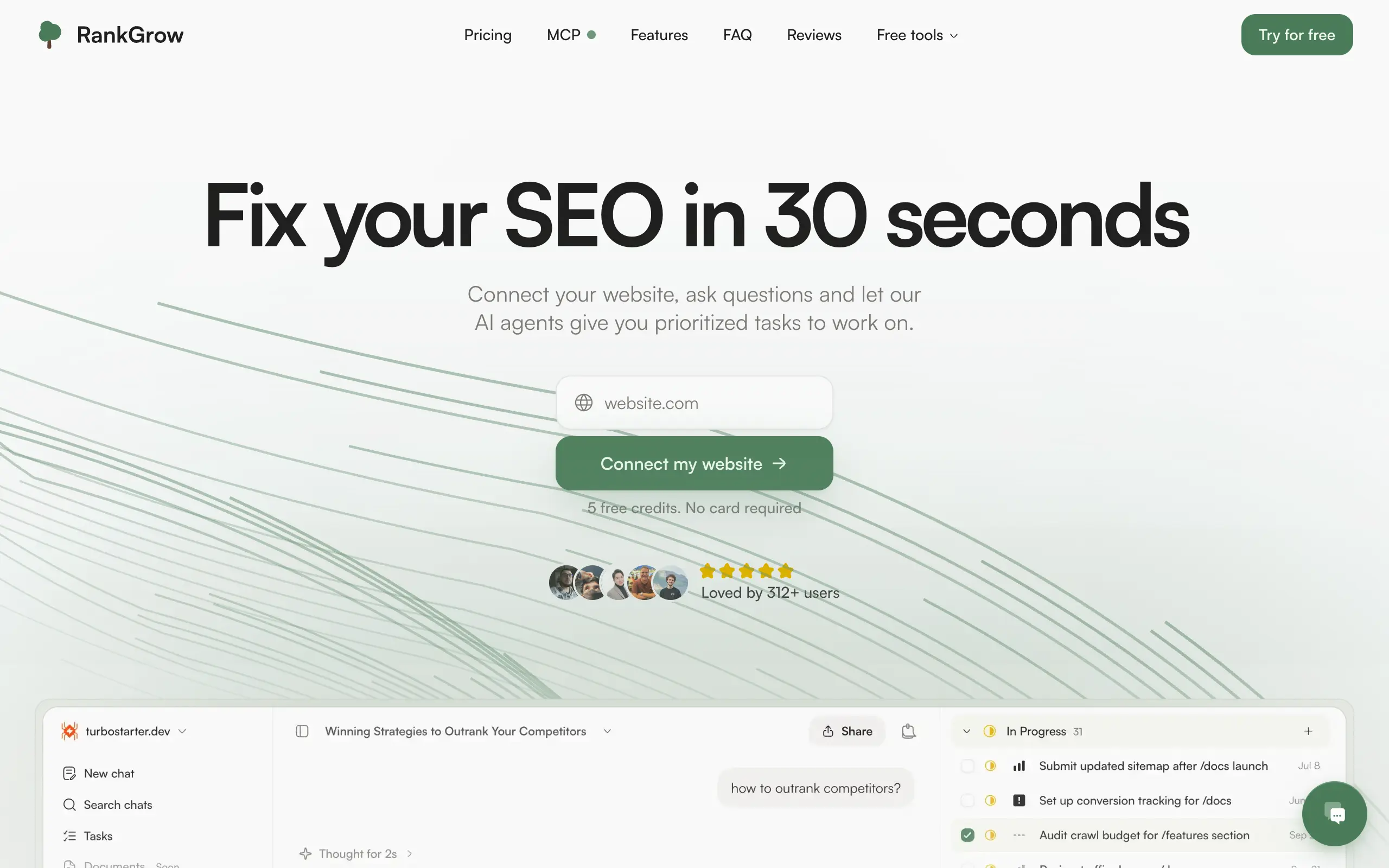
RankGrow
Fix your SEO with AI agents - connect Search Console, get prioritized tasks, and grow organic traffic 📈
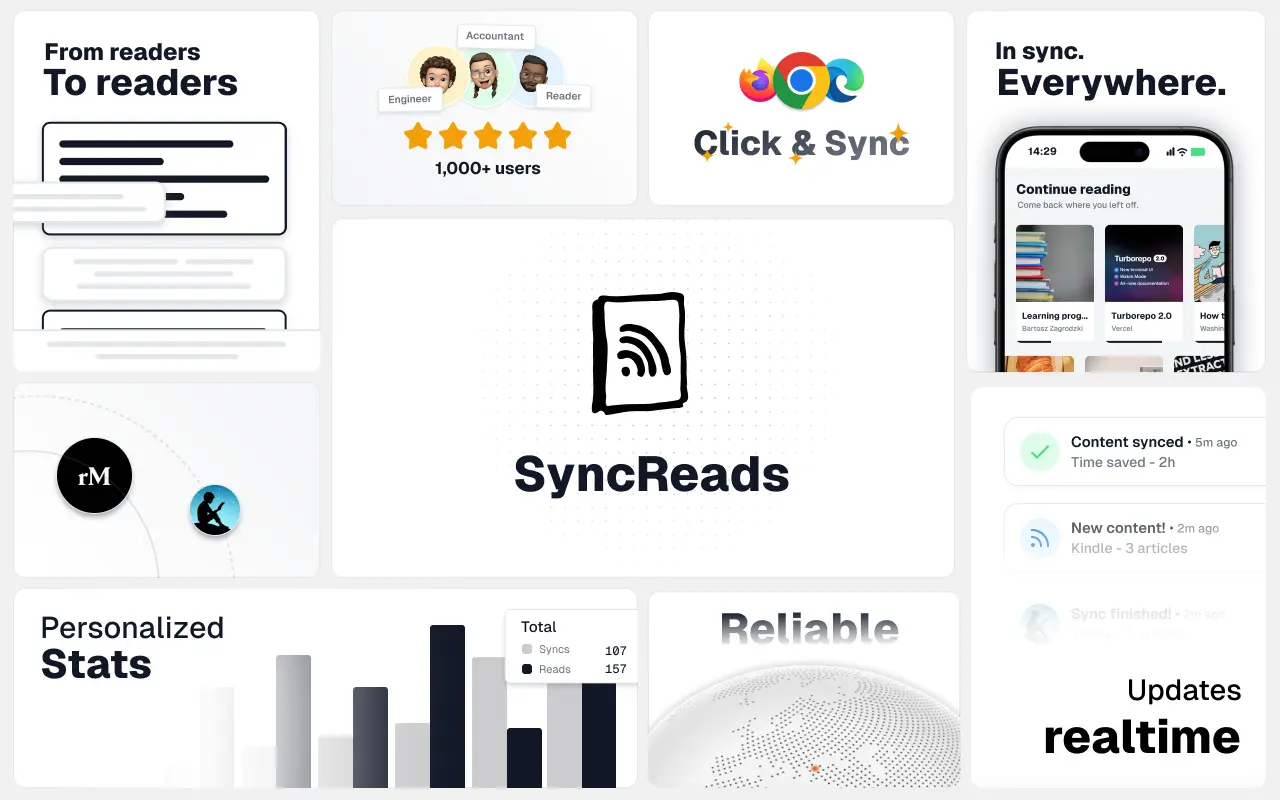
SyncReads
Sync your favorite content for distraction-free reading, save time and replace multiple apps. Anytime, anywhere 🔄
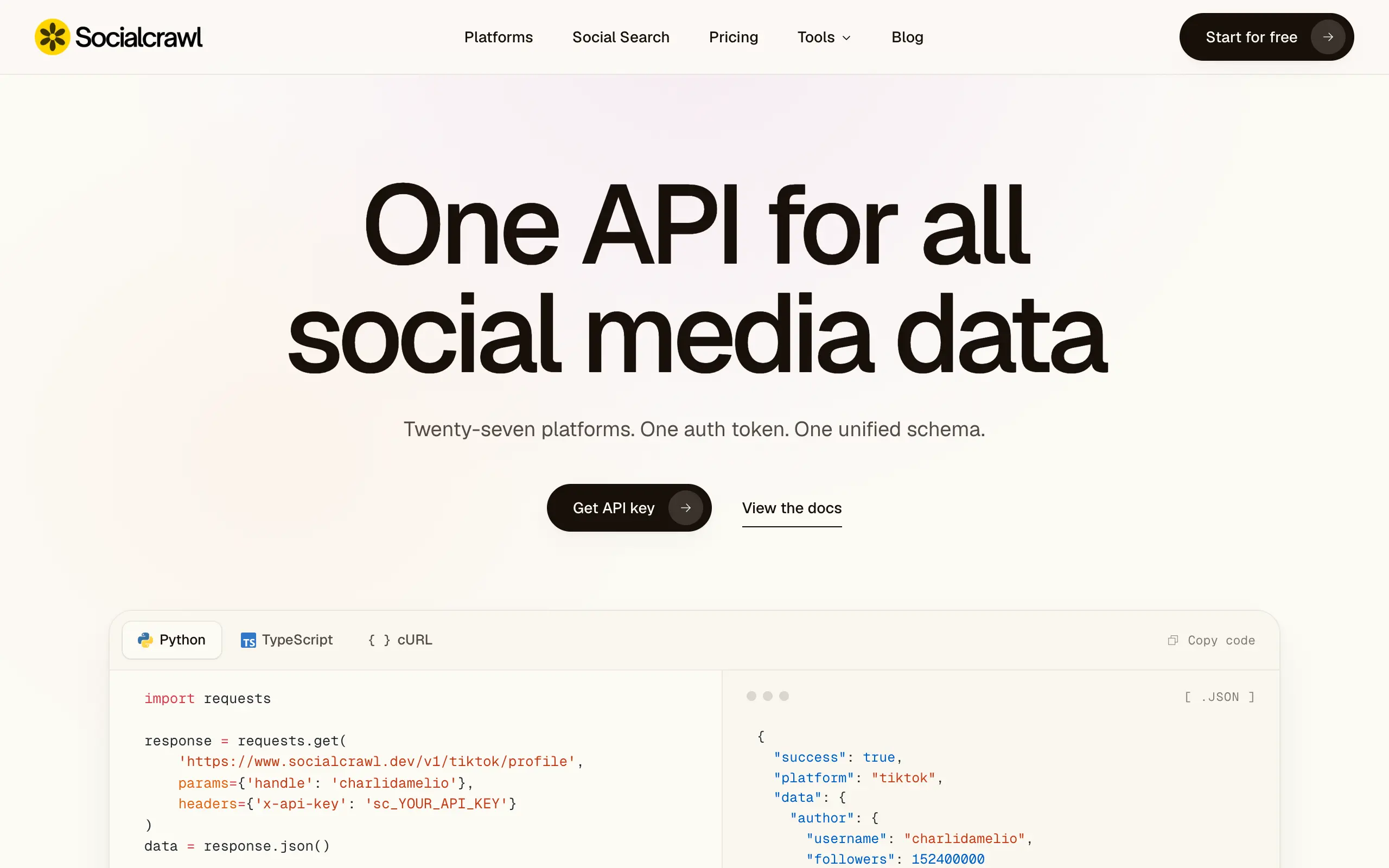
Socialcrawl
Get clean, structured data from 21 platforms like TikTok, Instagram, and YouTube with a single request 📊
Statiko
Monitor any Telegram channel in real time - track posts, edits, deletions, and growth with AI recaps 📡
Shibui
AI website builder - describe your business, pick a niche template, edit by chatting, and publish instantly ✨
Pro Service
Find verified home service professionals, compare quotes, and pay securely through escrow - built for Brazilians across the US 🏠
RankGrow
Fix your SEO with AI agents - connect Search Console, get prioritized tasks, and grow organic traffic 📈
SyncReads
Sync your favorite content for distraction-free reading, save time and replace multiple apps. Anytime, anywhere 🔄
Socialcrawl
Get clean, structured data from 21 platforms like TikTok, Instagram, and YouTube with a single request 📊
Statiko
Monitor any Telegram channel in real time - track posts, edits, deletions, and growth with AI recaps 📡
Shibui
AI website builder - describe your business, pick a niche template, edit by chatting, and publish instantly ✨
Pro Service
Find verified home service professionals, compare quotes, and pay securely through escrow - built for Brazilians across the US 🏠
RankGrow
Fix your SEO with AI agents - connect Search Console, get prioritized tasks, and grow organic traffic 📈
SyncReads
Sync your favorite content for distraction-free reading, save time and replace multiple apps. Anytime, anywhere 🔄
Socialcrawl
Get clean, structured data from 21 platforms like TikTok, Instagram, and YouTube with a single request 📊
Statiko
Monitor any Telegram channel in real time - track posts, edits, deletions, and growth with AI recaps 📡
Shibui
AI website builder - describe your business, pick a niche template, edit by chatting, and publish instantly ✨
Pro Service
Find verified home service professionals, compare quotes, and pay securely through escrow - built for Brazilians across the US 🏠
RankGrow
Fix your SEO with AI agents - connect Search Console, get prioritized tasks, and grow organic traffic 📈
SyncReads
Sync your favorite content for distraction-free reading, save time and replace multiple apps. Anytime, anywhere 🔄
Socialcrawl
Get clean, structured data from 21 platforms like TikTok, Instagram, and YouTube with a single request 📊
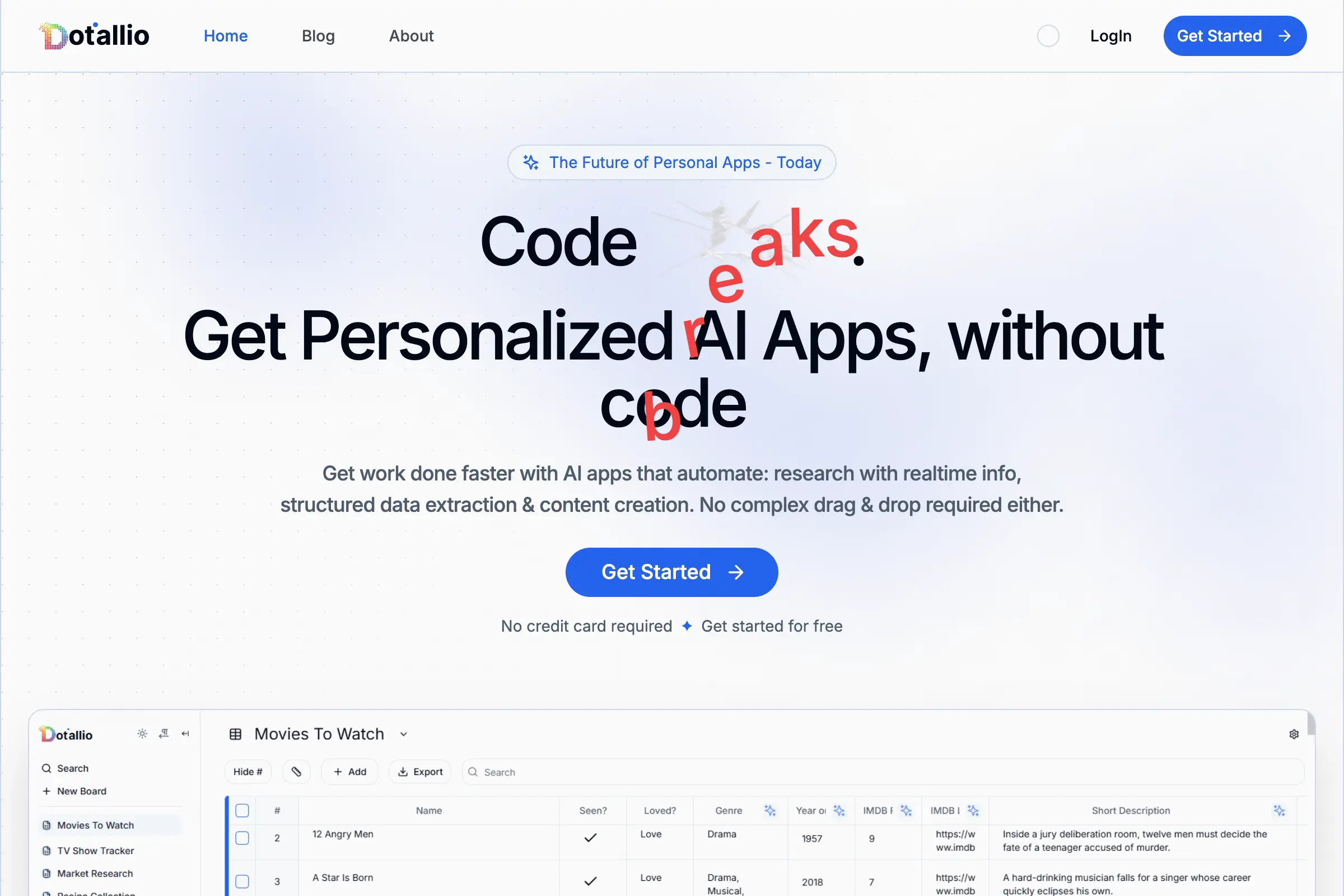
Dotallio
Personalized AI apps that automate research, data extraction, and content creation without code 🤖

Talk to Santa
Enjoy a magical live video chat or receive a unique AI-generated video greeting from Santa Claus 🎅

pozywka.pl
Scalable blog for food journalist, focused on performance and user experience 🌭
zagrodzki.me
Personal blog and portfolio of Bart Zagrodzki, where he shares his knowledge and work 💼
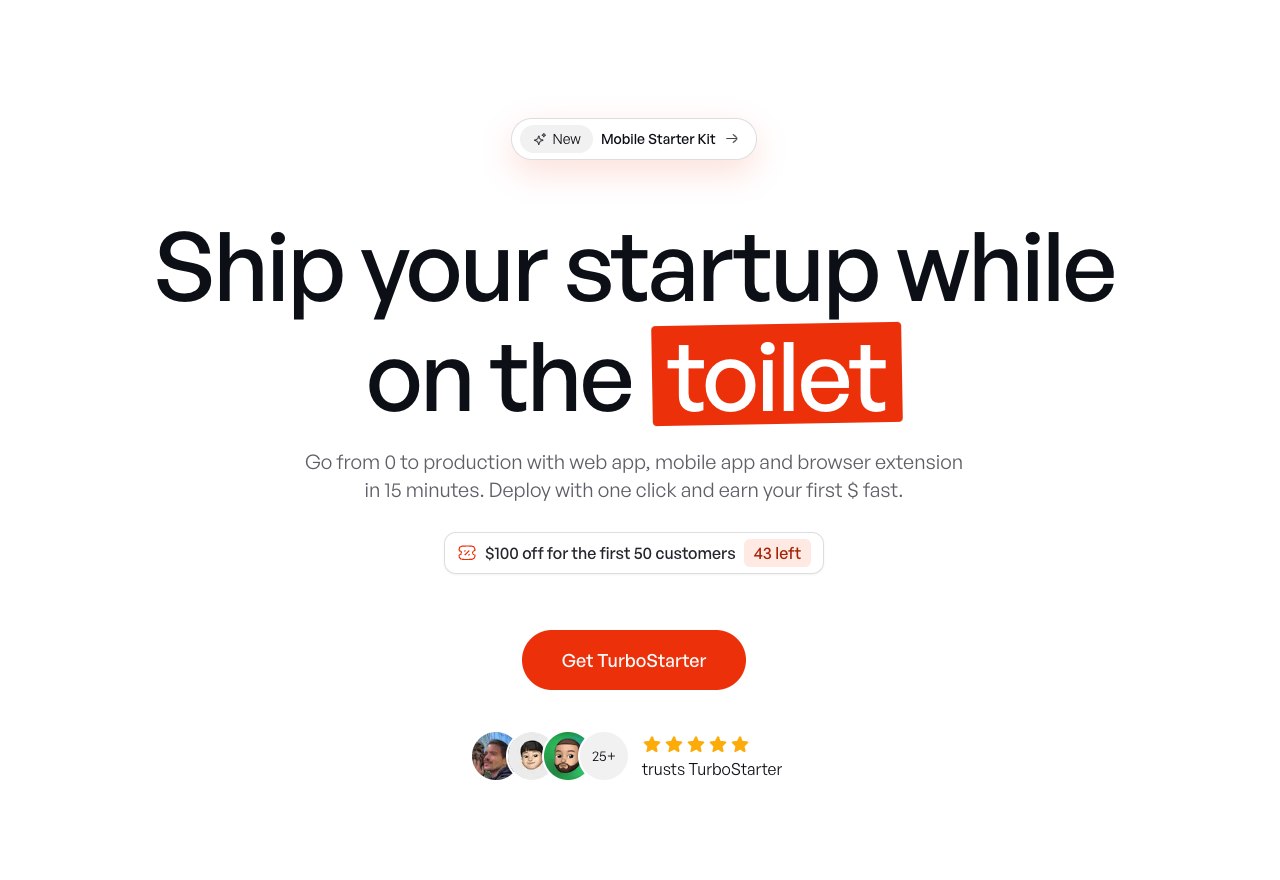
TurboStarter
Ship your startup everywhere. In minutes.
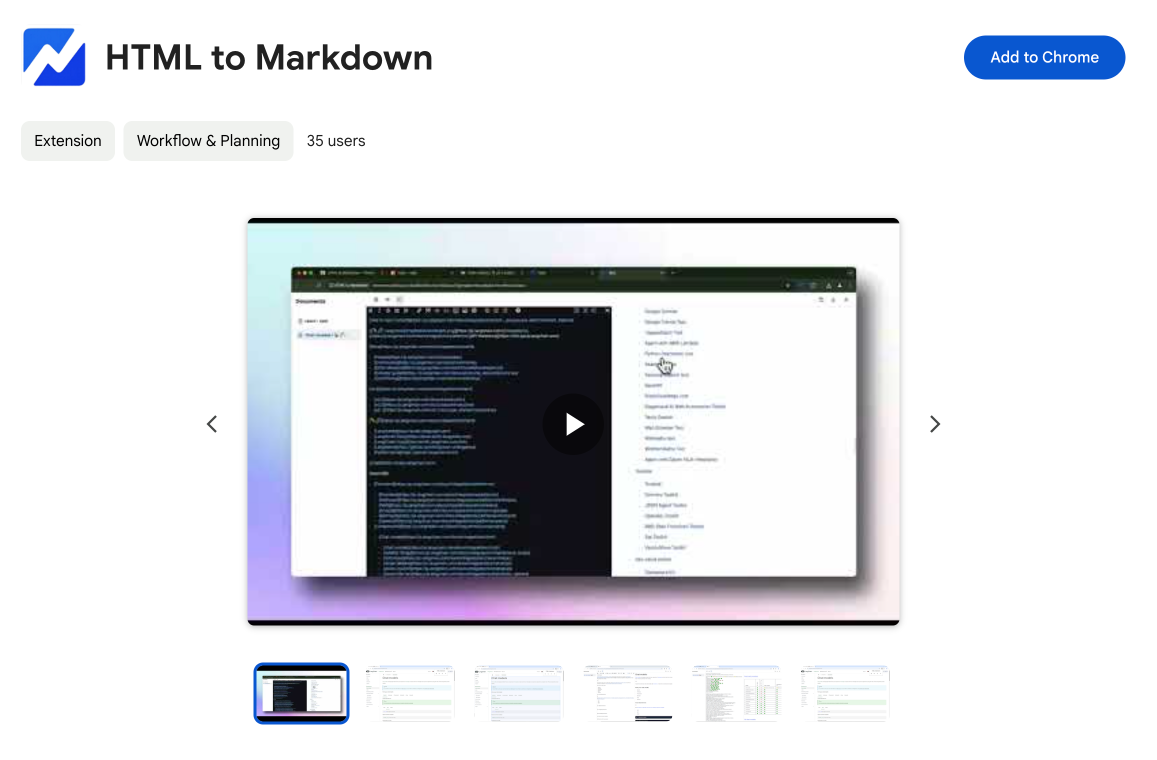
HTML to Markdown
Convert HTML to Markdown with ease, directly in your browser 📄
Dotallio
Personalized AI apps that automate research, data extraction, and content creation without code 🤖
Talk to Santa
Enjoy a magical live video chat or receive a unique AI-generated video greeting from Santa Claus 🎅
pozywka.pl
Scalable blog for food journalist, focused on performance and user experience 🌭
zagrodzki.me
Personal blog and portfolio of Bart Zagrodzki, where he shares his knowledge and work 💼
TurboStarter
Ship your startup everywhere. In minutes.
HTML to Markdown
Convert HTML to Markdown with ease, directly in your browser 📄
Dotallio
Personalized AI apps that automate research, data extraction, and content creation without code 🤖
Talk to Santa
Enjoy a magical live video chat or receive a unique AI-generated video greeting from Santa Claus 🎅
pozywka.pl
Scalable blog for food journalist, focused on performance and user experience 🌭
zagrodzki.me
Personal blog and portfolio of Bart Zagrodzki, where he shares his knowledge and work 💼
TurboStarter
Ship your startup everywhere. In minutes.
HTML to Markdown
Convert HTML to Markdown with ease, directly in your browser 📄
Dotallio
Personalized AI apps that automate research, data extraction, and content creation without code 🤖
Talk to Santa
Enjoy a magical live video chat or receive a unique AI-generated video greeting from Santa Claus 🎅
pozywka.pl
Scalable blog for food journalist, focused on performance and user experience 🌭
zagrodzki.me
Personal blog and portfolio of Bart Zagrodzki, where he shares his knowledge and work 💼
TurboStarter
Ship your startup everywhere. In minutes.
HTML to Markdown
Convert HTML to Markdown with ease, directly in your browser 📄
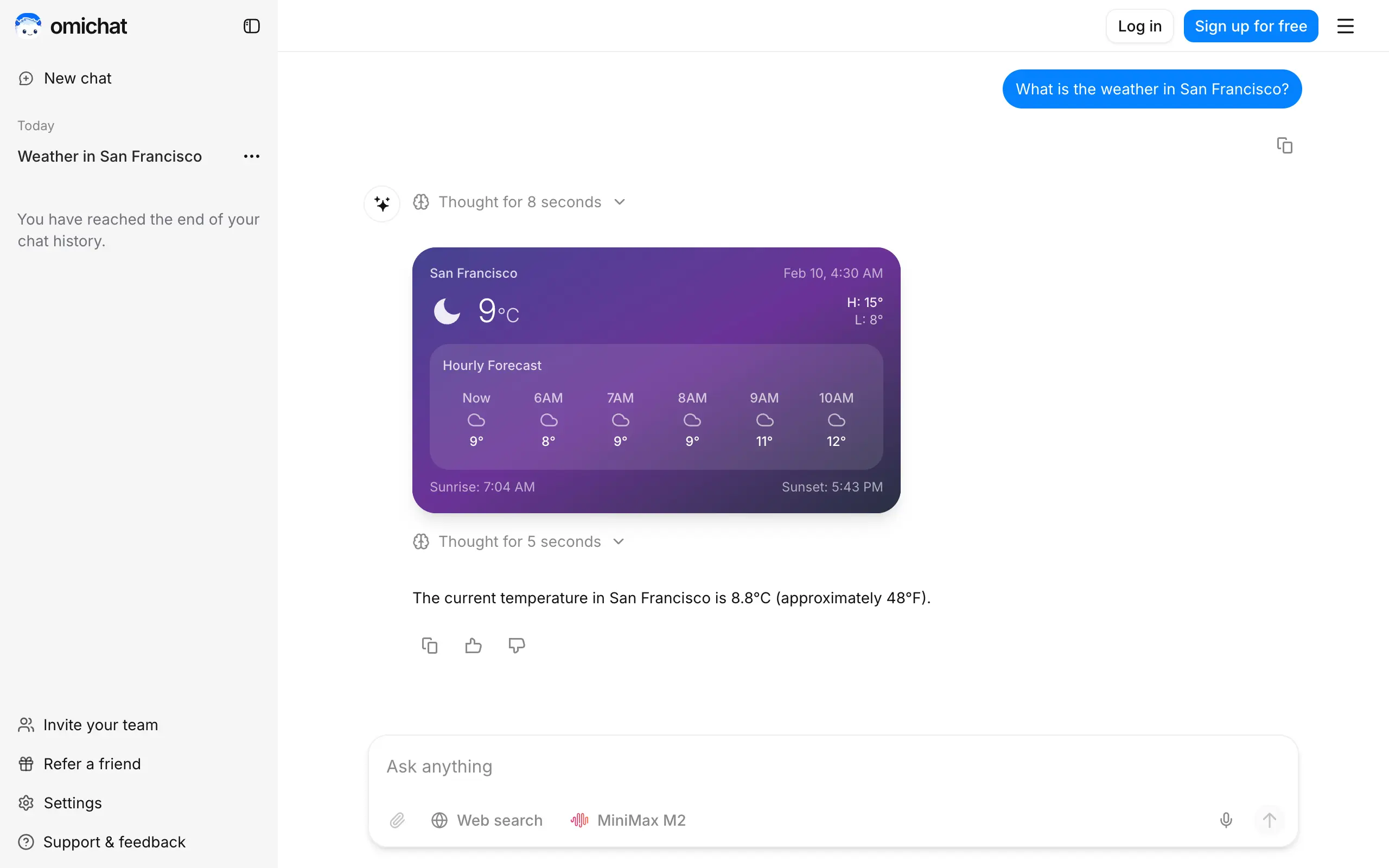
Omichat
Chat with 50+ AI models, including ChatGPT and Claude, in one place - switch models anytime without losing context 🤖
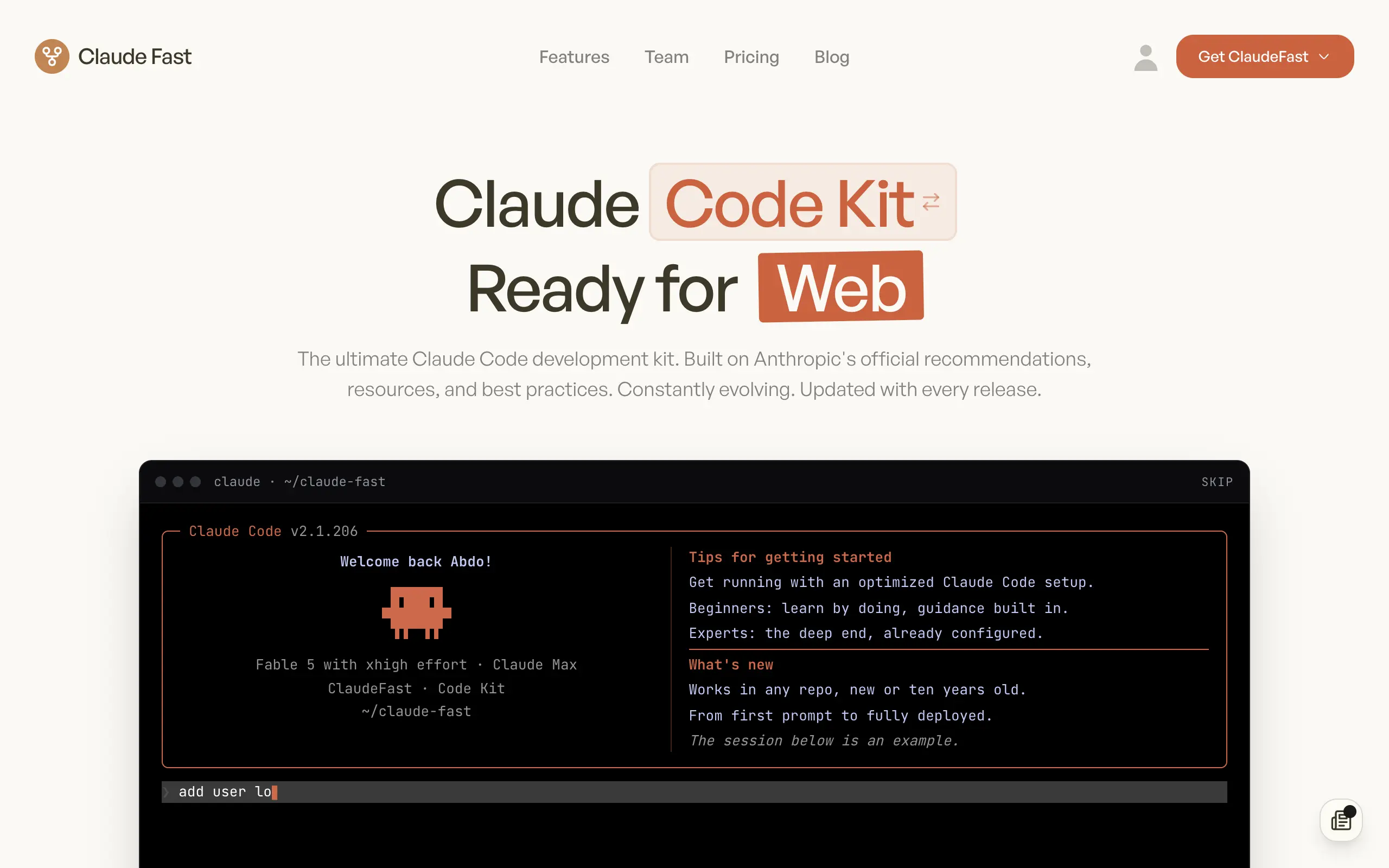
Claude Fast
Supercharge your Claude Code with 6x effective context window and specialized AI agents 🤖
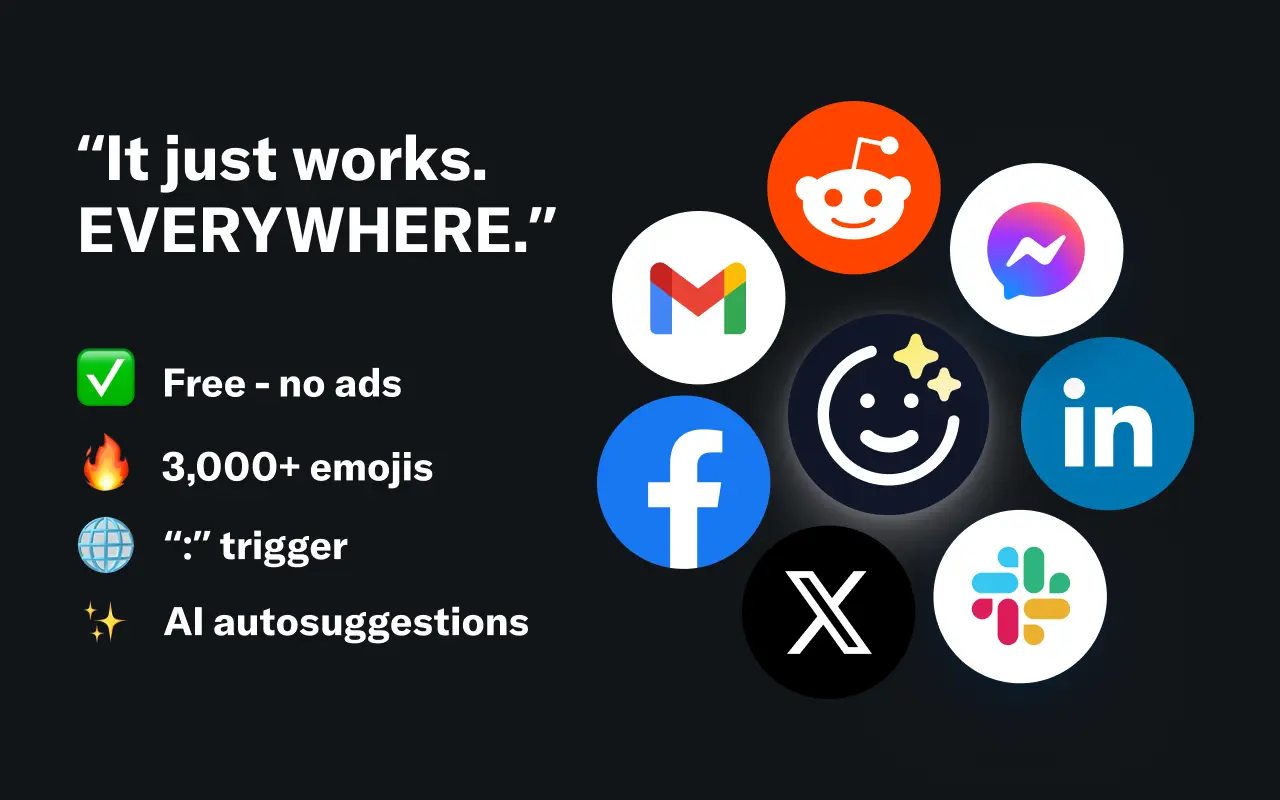
EmojAI
AI-powered emoji picker with smart, context-aware suggestions 🤖
Solohacker
Autonomous company launcher - AI agents work 24/7, escalate what matters, and you stay in control 🤖
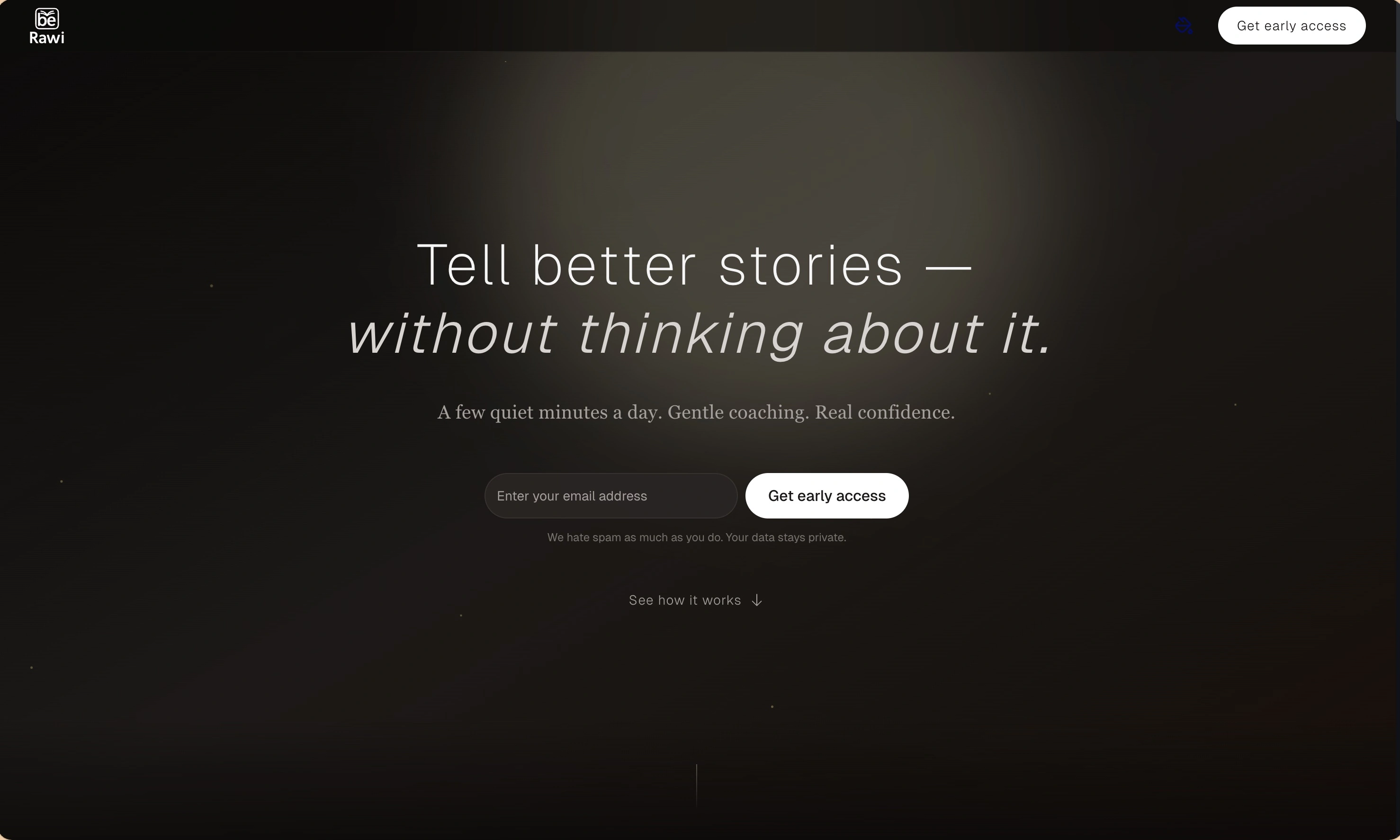
BeRawi: Storytelling Coach
Practice storytelling daily with instant feedback to sound clearer, more engaging, and confident 🎤
Omichat
Chat with 50+ AI models, including ChatGPT and Claude, in one place - switch models anytime without losing context 🤖
Claude Fast
Supercharge your Claude Code with 6x effective context window and specialized AI agents 🤖
EmojAI
AI-powered emoji picker with smart, context-aware suggestions 🤖
Solohacker
Autonomous company launcher - AI agents work 24/7, escalate what matters, and you stay in control 🤖
BeRawi: Storytelling Coach
Practice storytelling daily with instant feedback to sound clearer, more engaging, and confident 🎤
Omichat
Chat with 50+ AI models, including ChatGPT and Claude, in one place - switch models anytime without losing context 🤖
Claude Fast
Supercharge your Claude Code with 6x effective context window and specialized AI agents 🤖
EmojAI
AI-powered emoji picker with smart, context-aware suggestions 🤖
Solohacker
Autonomous company launcher - AI agents work 24/7, escalate what matters, and you stay in control 🤖
BeRawi: Storytelling Coach
Practice storytelling daily with instant feedback to sound clearer, more engaging, and confident 🎤
Omichat
Chat with 50+ AI models, including ChatGPT and Claude, in one place - switch models anytime without losing context 🤖
Claude Fast
Supercharge your Claude Code with 6x effective context window and specialized AI agents 🤖
EmojAI
AI-powered emoji picker with smart, context-aware suggestions 🤖
Solohacker
Autonomous company launcher - AI agents work 24/7, escalate what matters, and you stay in control 🤖
BeRawi: Storytelling Coach
Practice storytelling daily with instant feedback to sound clearer, more engaging, and confident 🎤

Connect with like-minded people
Join our community to get feedback, support, and grow together with 1,000+ builders on board, let's ship it!
Join usShip your startup everywhere. In minutes.
Don't burn tokens on setup and start building features on day one.