TraceLens
AI incident investigator that correlates logs, traces, deploys, and code changes to explain production failures with actionable fixes.
Why AI incident investigation is becoming an engineering priority
Modern production incidents rarely have a single obvious cause. A checkout endpoint starts timing out, error rates rise in one region, and a customer reports failed requests. The evidence is scattered across application logs, distributed traces, infrastructure events, feature flag changes, deployment records, pull requests, and code commits.
The immediate challenge is not a lack of observability data. It is the opposite. Engineering teams often have too much telemetry and too little time to connect it into a defensible explanation.
TraceLens is an AI incident investigator designed to correlate logs, traces, deployments, and code changes to explain production failures and recommend actionable fixes. Instead of asking an on-call engineer to manually pivot among dashboards, search tools, Git history, and deployment systems, TraceLens builds an incident narrative grounded in evidence.
The primary keyword for this category is AI incident investigator. Related search terms include:
- AI root cause analysis
- incident investigation software
- production incident analysis
- observability AI
- log and trace correlation
- automated root cause analysis
- SRE incident response
- deployment correlation
- production debugging tools
- AI for DevOps
- incident management automation
The opportunity is significant because companies increasingly operate distributed systems while maintaining lean platform and site reliability engineering teams. As systems become more event-driven, multi-cloud, and service-oriented, manual incident investigation becomes slower, more expensive, and more dependent on a small number of experienced engineers.
The core value proposition
TraceLens should not position itself as another monitoring dashboard. Its value is evidence-backed explanation. The product helps teams answer what changed, what failed, why it failed, who is affected, and what to do next.
The production incident problem TraceLens solves
Most observability tools are excellent at exposing raw signals. Metrics show that latency increased. Logs reveal exceptions. Traces identify slow spans. Alerting tools notify responders. Source control records show code changes.
However, the human responder is still responsible for joining those signals into a coherent chain of causality.
During a real incident, an engineer commonly needs to answer questions such as:
- Which services are affected and which are merely noisy?
- When did the incident begin relative to the most recent deployment?
- Did an infrastructure change, dependency failure, feature flag, schema migration, or code release cause the behavior?
- Is the error isolated to one tenant, region, runtime version, endpoint, or request path?
- Which trace attributes correlate most strongly with failures?
- What exact code path changed?
- What rollback, configuration update, query optimization, or code patch is most likely to reduce impact?
This process can consume hours because the underlying information is fragmented.
A deployment platform knows when version 2025.04.18-3 shipped. A Git provider knows which commits were included. The tracing backend knows that requests now fail in a downstream payment call. The logging system contains the exception stack. The feature flag platform may show that a flag reached 100 percent of users minutes before the failure began.
Without correlation, the on-call engineer acts as the integration layer.
TraceLens turns that fragmented workflow into a structured investigation process. It should create a timeline, link anomalies to changes, surface high-confidence hypotheses, show the primary supporting evidence, and propose safe next actions.
Who needs an AI incident investigator
TraceLens has several strong target segments. The best initial segment is likely teams already investing in observability but struggling with investigation speed.
Site reliability engineers and platform teams
SRE and platform teams carry responsibility for service reliability across many application teams. They often receive alerts first, but the root cause may be buried in an unfamiliar service or recent code change.
For these users, TraceLens provides:
- Faster triage across distributed services
- Automatic service dependency mapping during incidents
- A normalized view of deployments and telemetry
- Evidence to route incidents to the right owning team
- Incident reports that reduce repeat investigation work
- Reduced dependence on tribal knowledge
An SRE does not want an AI system that merely says “possible database issue.” They need the system to say that error rates for POST /orders started three minutes after a deployment, correlate with a specific schema query introduced in a commit, and are concentrated on requests where a particular database index is missing.
On-call software engineers
Application engineers are often on call for services they did not originally build or have not touched recently. Their immediate need is orientation.
TraceLens can help an on-call developer understand:
- The blast radius of the incident
- The first anomalous event
- The affected endpoints, customers, regions, and versions
- The relevant code diff
- The likely fault domain
- Safe mitigation choices
This reduces the time spent asking where to look first. It also helps junior or rotating on-call engineers make decisions with more confidence while giving senior responders a clear evidence trail to review.
Engineering leaders
CTOs, VPs of Engineering, and directors care about incident duration, customer impact, engineering cost, and organizational learning. They are not looking for more telemetry. They are looking for reliability operations that scale as the company grows.
TraceLens gives engineering leadership:
- Consistent post-incident evidence
- Trend analysis across recurring failure modes
- Visibility into deployment-related risk
- Faster communication during high-severity incidents
- Lower operational load on high-context engineers
- Measurable improvements in mean time to resolution
For leadership buyers, the strongest narrative is that TraceLens converts observability spending into faster operational decisions.
Managed service providers and DevOps consultancies
Managed service providers frequently investigate incidents across many client environments. Their teams must switch context rapidly and document findings clearly.
A multi-tenant TraceLens offering can help these providers standardize incident investigations, reduce manual reporting, and differentiate their service with a more proactive reliability practice.
The market gap in AI root cause analysis
The observability market is mature in telemetry collection, dashboarding, alerting, and tracing. Yet there remains a practical gap between detecting a symptom and explaining a cause.
Traditional approaches usually fall into one of these categories:
| Approach | Primary strength | Main limitation | TraceLens opportunity | Buyer value |
|---|---|---|---|---|
| Alerting tools | Fast detection | Limited causal context | Add evidence-based investigation | Faster triage |
| Log search | Detailed event records | High manual query effort | Automate clustering and correlation | Less investigation toil |
| APM platforms | Service and trace visibility | Code and deploy context may be fragmented | Join runtime data with change intelligence | Clearer root cause hypotheses |
| Incident management tools | Coordination and communication | Do not deeply diagnose the failure | Provide the technical investigation layer | Higher-quality incident updates |
The market does not need another generic chatbot attached to logs. It needs a system that can reason over time-series events, request topology, deployment lineage, source code changes, and service ownership while making uncertainty explicit.
That distinction is critical.
An AI incident investigator should never present a speculative explanation as proven fact. TraceLens needs to separate:
- Confirmed observations
- Strongly supported hypotheses
- Weak signals that need human verification
- Recommended mitigation actions
- Evidence that contradicts a hypothesis
This evidence-first design is a major trust requirement for technical buyers.
TraceLens product vision and unique selling proposition
The unique selling proposition for TraceLens is straightforward:
TraceLens explains production failures by connecting runtime behavior to the operational and code changes most likely responsible, then recommends evidence-backed actions.
The product should be built around an investigation graph rather than a dashboard collection.
Every incident becomes a connected set of entities:
- Alerts and anomaly events
- Services, endpoints, and dependencies
- Logs and exception clusters
- Traces and slow or failed request paths
- Deployments and runtime versions
- Commits, pull requests, and code ownership
- Feature flags and configuration changes
- Infrastructure events
- Customer, tenant, region, and environment dimensions
The system then ranks relationships based on timing, topology, semantic similarity, error co-occurrence, version boundaries, and historical incident patterns.
What a strong TraceLens investigation looks like
A useful incident output might read like this:
Error rate for checkout requests increased from 0.2 percent to 18.7 percent at 14:08 UTC. The increase began four minutes after deployment
checkout-api@2025.04.18.3reached production. Failures are concentrated in thecalculate_taxhandler and affect requests for EU tenants. The dominant exception is a null reference caused by an absenttaxRegionfield. Commit8f3c1aintroduced a new tax provider mapping without a fallback for legacy tenant profiles. Rolling back the deployment or enabling the previous mapping configuration is likely to mitigate customer impact.
This is much more valuable than a dashboard that simply shows elevated 500 responses.
The trust model must be visible
Each conclusion should include:
- Confidence level
- Supporting signals
- Event timestamps
- Linked trace samples
- Linked log clusters
- Associated deployment and commit
- Known unknowns
- Suggested verification query or action
The product should make it easy for engineers to inspect why the AI produced its conclusion. This is essential for adoption in incident response, where a bad recommendation can create more damage.
Core features for an AI incident investigator
A successful MVP should solve the investigation loop deeply before expanding into broad observability capabilities.
Incident timeline
Create a unified, chronological timeline across alerts, anomalies, deployments, commits, feature flags, infrastructure events, and responder actions.
Evidence graph
Connect services, traces, logs, releases, owners, and changes so responders can inspect the causal chain behind each hypothesis.
Root cause hypotheses
Rank plausible causes using correlation, topology, version boundaries, historical behavior, and semantic analysis of logs and code diffs.
Actionable fixes
Recommend reversible mitigations, verification steps, rollback options, and code-level remediation guidance with explicit confidence.
Unified incident timeline
The incident timeline is the first surface users should see. It needs to answer one core question: what changed around the time the system began failing?
The timeline should ingest and normalize events from:
- Observability alerts
- Log anomalies
- Distributed tracing anomalies
- Continuous deployment tools
- Git commits and pull requests
- Feature flag updates
- Cloud infrastructure events
- Database migrations
- Incident management events
- Manual annotations from responders
A responder should be able to zoom from a 24-hour overview into a minute-by-minute view around the first detected anomaly.
Cross-signal correlation engine
Correlation is the technical heart of TraceLens. The engine should identify relationships such as:
- A release preceding an error spike in the same service
- A new runtime version appearing only in failed traces
- A dependency latency increase preceding upstream timeouts
- A log signature emerging only after a configuration update
- A code diff touching the same endpoint or function seen in failures
- A feature flag rollout aligned with a tenant-specific regression
- A cloud event that changes the performance profile of a service
Correlation alone is not causation. The product should use language such as “correlates with,” “likely contributed to,” and “requires verification” where appropriate.
Log clustering and exception intelligence
Production logs contain repeated noise, multiple representations of the same error, and often inconsistent fields. TraceLens should cluster logs by stack trace, template, error code, semantic meaning, service, runtime version, and request attributes.
Useful outputs include:
- New error signatures since the incident began
- Exception clusters ranked by affected request volume
- Fields shared by failed requests but absent from healthy requests
- Log patterns that correlate with a specific deployment version
- Suggested queries for manual verification
Semantic clustering should combine deterministic methods with LLM-assisted classification. Deterministic grouping is cheaper and more reliable for recurring log formats, while language models help interpret unstructured messages and stack trace context.
Trace and dependency analysis
Distributed traces offer the clearest path through a failing request. TraceLens should identify:
- The first failing span
- The slowest dependency in degraded traces
- Differences between successful and failing request paths
- Cross-service propagation of failures
- Retry storms and cascading timeout patterns
- Version-specific behavior across services
- Error concentration by route, region, tenant, or client version
Integrating OpenTelemetry is strategically important because it provides a vendor-neutral foundation for traces, metrics, and logs. Supporting OpenTelemetry first reduces integration friction and makes the product relevant to teams with mixed observability stacks.
Deployment and code change intelligence
This capability is where TraceLens can differentiate itself from tools focused solely on telemetry.
The product should ingest deployment metadata from continuous delivery systems and connect it to source control records. For every production deployment, TraceLens should know:
- The deployed service and environment
- Version, image digest, or release identifier
- Deployment start and completion time
- Included commits and pull requests
- Changed files and code ownership
- Linked issue tracker tickets when available
- Migration and configuration changes
- Rollback availability
For high-confidence incident hypotheses, TraceLens can point engineers directly to the relevant diff and explain the relationship between the change and runtime failure.
Evidence-backed remediation guidance
The recommended actions should prioritize safety. The system should not lead with a complex refactor when a reversible feature flag rollback can stop customer impact.
A remediation engine can organize suggestions into:
- Immediate mitigation such as rolling back a release, disabling a flag, increasing capacity, or routing traffic away from a failing dependency.
- Verification such as comparing error rates by deployment version or replaying a failing request with a specific payload.
- Permanent fix such as adding validation, restoring backward compatibility, optimizing a query, or correcting retry behavior.
- Prevention such as adding a deployment guardrail, test case, SLO alert, or runbook update.
Every recommendation should identify risk, expected impact, and the evidence behind it.
A practical TraceLens workflow
A clear workflow makes the product easy to evaluate during a proof of concept.
This workflow allows the product to support humans rather than pretending to replace them. The responder remains accountable, while TraceLens reduces the search space and documentation burden.
Recommended tech stack for TraceLens
TraceLens needs a stack optimized for secure integrations, high-volume event ingestion, time-based correlation, graph-style relationships, and AI-assisted retrieval.
Application layer
A strong SaaS application stack could include:
- Next.js for the web application, server rendering, API routes, and operational dashboards
- React for interactive investigation views
- TypeScript for safer domain modeling across telemetry and integration schemas
- Tailwind CSS for consistent, fast UI development
- PostgreSQL for tenants, users, incidents, integrations, billing state, annotations, and audit records
For a fast SaaS foundation, TurboStarter can accelerate the initial setup with common authentication, billing, database, and application patterns already considered.
Telemetry ingestion and storage
The ingestion path must tolerate bursts during incidents without losing data or blocking user-facing requests.
Recommended components include:
- OpenTelemetry collectors for vendor-neutral telemetry intake
- Apache Kafka or Redpanda for durable event streaming
- ClickHouse for high-volume analytical queries across logs, traces, and event dimensions
- PostgreSQL for transactional product data and incident metadata
- Object storage for compressed raw event archives and replayable investigation artifacts
ClickHouse is compelling for large-scale observability workloads because it is designed for analytical querying across large event sets. The trade-off is additional operational complexity compared with storing everything in PostgreSQL. For an early MVP, a managed ClickHouse offering can reduce this burden.
Search, retrieval, and graph modeling
TraceLens needs multiple retrieval strategies because incident investigation is not a single database query problem.
A practical architecture includes:
- Full-text search for logs, error messages, and documentation
- Vector search for semantic retrieval across incident notes, code diffs, runbooks, and unstructured logs
- A graph model for relationships among services, deployments, commits, traces, and ownership
- Time-series analysis for anomaly detection and event ordering
A graph database such as Neo4j can simplify early relationship exploration. The trade-off is maintaining another datastore and synchronizing data models. An alternative is to begin with relational edge tables in PostgreSQL and move graph workloads to a dedicated database once query patterns justify it.
AI and reasoning layer
The AI layer should be built as a controlled pipeline, not a single unrestricted model call.
A robust design includes:
- Deterministic correlation rules for high-signal relationships
- Statistical anomaly detection for baseline deviations
- Embeddings for log, issue, runbook, and code-diff retrieval
- An LLM for narrative synthesis and remediation explanation
- Tool calls that retrieve evidence from approved sources
- A confidence-calibration layer that limits unsupported claims
- Evaluation datasets based on resolved historical incidents
The LLM should receive narrow, structured evidence bundles rather than entire log indexes. This lowers cost, improves relevance, and reduces hallucination risk.
Here is an illustrative TypeScript shape for a hypothesis object:
type IncidentHypothesis = {
  id: string;
  incidentId: string;
  statement: string;
  confidence: "low" | "medium" | "high";
  supportingEvidence: Array<{
    kind: "trace" | "log" | "deployment" | "commit" | "metric";
    reference: string;
    observedAt: string;
    explanation: string;
  }>;
  contradictoryEvidence: string[];
  recommendedActions: string[];
  requiresHumanVerification: boolean;
};
The important design choice is that evidence is a first-class object. A polished natural-language explanation without inspectable sources should never be considered sufficient for an incident response product.
Integrations that create real product value
TraceLens should prioritize integrations based on data quality, buyer demand, and time-to-value.
Start with OpenTelemetry-compatible telemetry sources, GitHub, GitLab, common CI/CD systems, Kubernetes, and one or two major cloud providers. These integrations enable the core promise of connecting runtime failures to deployments and code changes.
Expand into feature flag platforms, incident management tools, chat platforms, issue trackers, database monitoring, synthetic testing, and customer support systems. These sources improve business impact analysis and remediation coordination.
Build granular permissions, data retention controls, field redaction, audit logs, encryption, and regional data processing choices from the beginning. Production telemetry frequently contains sensitive identifiers and occasionally secrets.
A focused MVP should avoid trying to replace every existing observability system. The better strategy is to become the intelligence layer that works with the telemetry tools teams already trust.
Monetization strategy for TraceLens
TraceLens can support several pricing models, but pricing should align with value rather than encourage customers to suppress useful data.
Usage-based pricing
Usage-based pricing can be measured by:
- Investigated incidents
- Services connected
- Monthly correlated events
- Retained investigation history
- AI analysis credits
- Seats with investigation and collaboration access
This model aligns cost with adoption, but pure event-volume pricing may make buyers cautious about connecting high-volume logs. If the product depends on broad telemetry access, that friction can weaken adoption.
Seat-based pricing
Seat-based pricing works well for small and mid-sized engineering teams that want predictable spend. A tier can include a service limit or a reasonable investigation allowance.
Potential plans might include:
- A free developer tier for one environment and a limited investigation history
- A team tier for connected repositories, deployment correlation, shared incidents, and chat notifications
- A business tier for advanced integrations, retention, SSO, and organization-wide analytics
- An enterprise tier for private networking, custom retention, dedicated support, and compliance controls
Value-based enterprise pricing
Larger customers may pay based on the number of production services, business units, or engineering teams supported. This works when TraceLens proves measurable reductions in incident duration and operational effort.
The enterprise sales motion should include a clearly scoped proof of value. Choose one or two critical services, import a small historical incident set, and demonstrate whether TraceLens can recover evidence that aligns with known root causes.
Competitive advantage and positioning
TraceLens will encounter adjacent platforms in observability, AIOps, incident management, source control, and developer tooling. Its competitive advantage should not rely on claiming that no other tool uses AI. That claim would be difficult to defend.
Instead, the product should lead with a specific combination of capabilities:
- Change-aware reasoning that directly links production symptoms to deployments, commits, pull requests, migrations, and configuration changes
- Evidence-first explanations where every claim can be inspected through linked telemetry or source history
- Cross-tool investigation that reduces context switching without requiring customers to abandon their existing monitoring stack
- Action-oriented output that distinguishes immediate mitigation from long-term remediation
- Learning from verified incidents that improves future hypothesis ranking without silently changing the evidence model
The defensible moat is not the language model itself. Foundation models are increasingly accessible. The durable advantage comes from the normalized operational data model, integration quality, historical incident outcomes, domain-specific evaluation benchmarks, and user trust built through transparent reasoning.
Risks and mitigation strategies
Building AI-powered incident investigation software involves technical, commercial, and trust-related risks.
Mitigate this risk by requiring source-linked evidence for every material claim, exposing confidence levels, showing contradictory evidence, and forcing the system to label uncertain conclusions as hypotheses. Use deterministic checks before displaying high-confidence recommendations.
Apply encryption in transit and at rest, role-based access control, tenant isolation, audit logs, configurable retention, data redaction, and secret detection. Give enterprise customers control over model providers and data residency where possible.
Start with a narrow set of high-value integrations. Build a stable canonical event schema and connector framework rather than custom logic that spreads throughout the application.
Explicitly show data coverage and confidence degradation. TraceLens should explain when a conclusion is limited because trace sampling is low, deploy metadata is missing, or logs lack correlation identifiers.
Offer a fast self-serve proof of concept for engineering teams while maintaining enterprise-ready security documentation, SSO, auditability, and procurement support for larger buyers.
Security and privacy are product requirements
Observability data can include customer identifiers, API payload fragments, internal architecture details, and credentials accidentally written to logs. TraceLens must treat data governance as a core feature rather than a late-stage compliance project.
Important controls include:
- Tenant-level encryption boundaries
- Least-privilege integration permissions
- Read-only access by default
- Configurable PII redaction rules
- Detection and masking of common secret formats
- Short retention defaults for raw data
- Audit logs for investigations and administrative actions
- Clear policies for model training and customer data isolation
For regulated customers, TraceLens should offer clear documentation describing data flows, subprocessors, retention behavior, and incident response procedures. Claims about compliance should only be made after the relevant controls and independent assessments are in place.
How to validate demand before building the full platform
Before investing deeply in autonomous investigation, validate that target users will trust and pay for the workflow.
Start with customer discovery interviews involving:
- SRE leaders at companies running distributed production systems
- On-call application engineers
- Platform engineering managers
- Engineering leaders responsible for reliability metrics
- DevOps consultancies managing multiple client environments
Ask about recent incidents, not hypothetical preferences. Good questions include:
- Walk me through the last severe production incident.
- Which tools did you open first?
- How did you determine whether a deployment caused the issue?
- What took the longest during investigation?
- Which evidence did leadership ask for after mitigation?
- How often is the root cause still uncertain after the incident closes?
- Would you grant a read-only system access to logs, traces, deployments, and Git history?
The best early design partners will have a clear observability stack, recurring production complexity, and a willingness to share anonymized historical incident data.
A high-quality validation exercise uses resolved incidents as benchmarks. Give TraceLens access to the data that was available at the time, then assess whether it identifies the known root cause, ranks it near the top, and avoids unsupported conclusions.
Actionable implementation roadmap
A disciplined roadmap keeps TraceLens focused on its core differentiation.
Phase one: build the investigation foundation
Deliver a secure multi-tenant web app with authentication, organization management, incident records, and audit logging. Connect OpenTelemetry traces and logs, GitHub or GitLab, and one deployment source.
Build a normalized schema for:
- Services
- Environments
- Deployments
- Commits
- Pull requests
- Trace spans
- Log events
- Alerts
- Incidents
- Evidence links
At this stage, the product can provide a unified incident timeline and manually triggered correlation reports.
Phase two: deliver hypothesis ranking
Add anomaly detection, log clustering, deployment-window correlation, and code-diff retrieval. Create an AI narrative that is limited to retrieved evidence.
The initial goal is not full autonomous root cause analysis. The goal is a useful ranked shortlist that consistently saves investigators time.
Track metrics such as:
- Time from incident creation to first useful hypothesis
- Percentage of hypotheses accepted or rejected by users
- Mean time spent investigating
- Number of context switches per incident
- Percentage of incidents with an evidence-complete summary
Phase three: add remediation and learning loops
Introduce safe remediation recommendations, feature flag awareness, runbook retrieval, and post-incident feedback. Allow users to mark a hypothesis as confirmed, partially correct, or incorrect.
This feedback should improve ranking and evaluation, but it should not turn the system into an opaque black box. Preserve the evidence trail for every future recommendation.
Phase four: expand enterprise readiness
Add SSO, SCIM, granular role-based access control, advanced retention settings, private networking, additional integrations, and larger-scale ingestion capabilities.
At this stage, TraceLens can also provide organization-level reliability insights, such as recurring failure patterns, risky deployment profiles, and services with the highest investigation burden.
Build for assistive intelligence first
The fastest way to lose trust is to make TraceLens sound certain when production evidence is incomplete. Start by helping experts investigate faster. Earn the right to automate more decisions through reliable, reviewable results.
Final takeaway
TraceLens addresses a real and growing gap in modern engineering operations. Teams have abundant logs, traces, alerts, and deployment records, yet they still spend too much time manually reconstructing why production failures happened.
The strongest version of this AI incident investigator will not compete by adding generic chat to observability data. It will win by delivering reliable, change-aware, evidence-backed incident explanations that help on-call engineers mitigate failures faster and help organizations learn from every incident.
The path to success is clear:
- Focus on the painful investigation workflow rather than broad monitoring.
- Connect runtime telemetry to deploys, code changes, and service ownership.
- Make evidence, confidence, and uncertainty visible in every AI conclusion.
- Prioritize reversible mitigation actions over speculative code changes.
- Validate against real historical incidents and measure time saved.
- Build security, privacy, and integration reliability into the product foundation.
For a SaaS team moving from concept to a production-ready application, TurboStarter can provide a practical foundation while the team concentrates on TraceLens’s differentiated incident intelligence layer.
More 🤖 AI Startup SaaS ideas
Discover more innovative ai startup SaaS ideas that are trending in 2026. Each idea is AI-generated with market validation and growth potential to help you find your next profitable venture faster than competitors.
Your competitors are building with TurboStarter
Below are some of the SaaS ideas that have been generated and built with our starter kit.
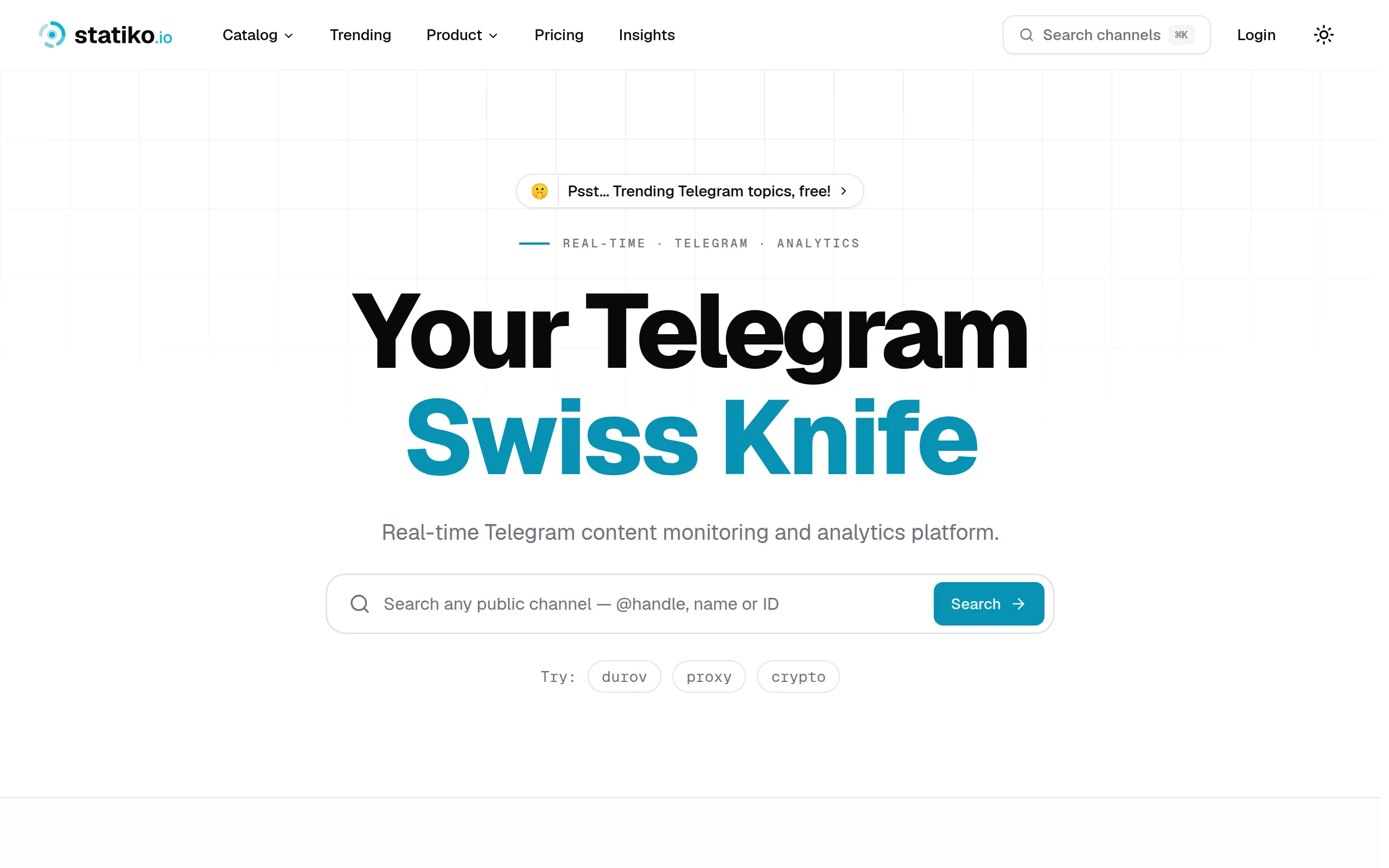
Statiko
Monitor any Telegram channel in real time - track posts, edits, deletions, and growth with AI recaps 📡

Shibui
AI website builder - describe your business, pick a niche template, edit by chatting, and publish instantly ✨

Pro Service
Find verified home service professionals, compare quotes, and pay securely through escrow - built for Brazilians across the US 🏠
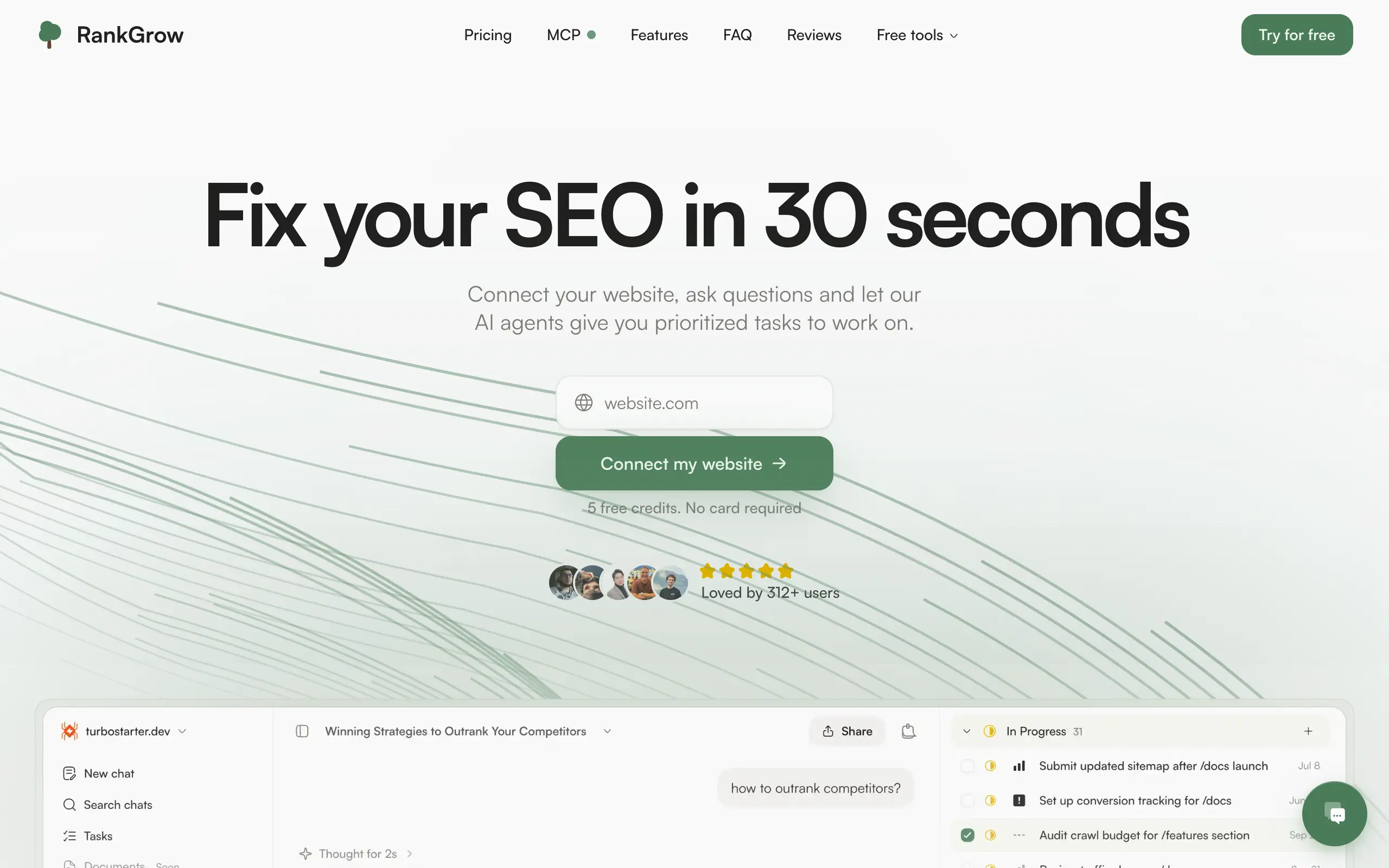
RankGrow
Fix your SEO with AI agents - connect Search Console, get prioritized tasks, and grow organic traffic 📈
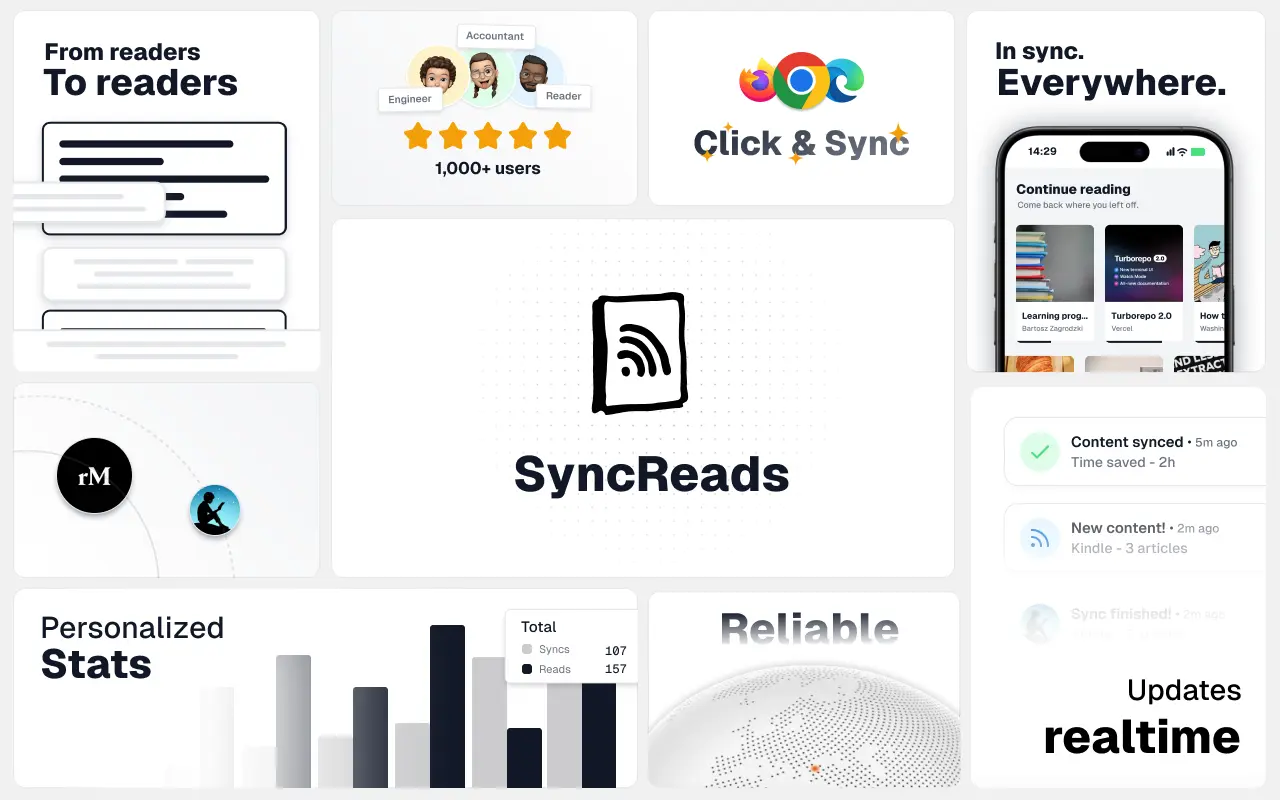
SyncReads
Sync your favorite content for distraction-free reading, save time and replace multiple apps. Anytime, anywhere 🔄
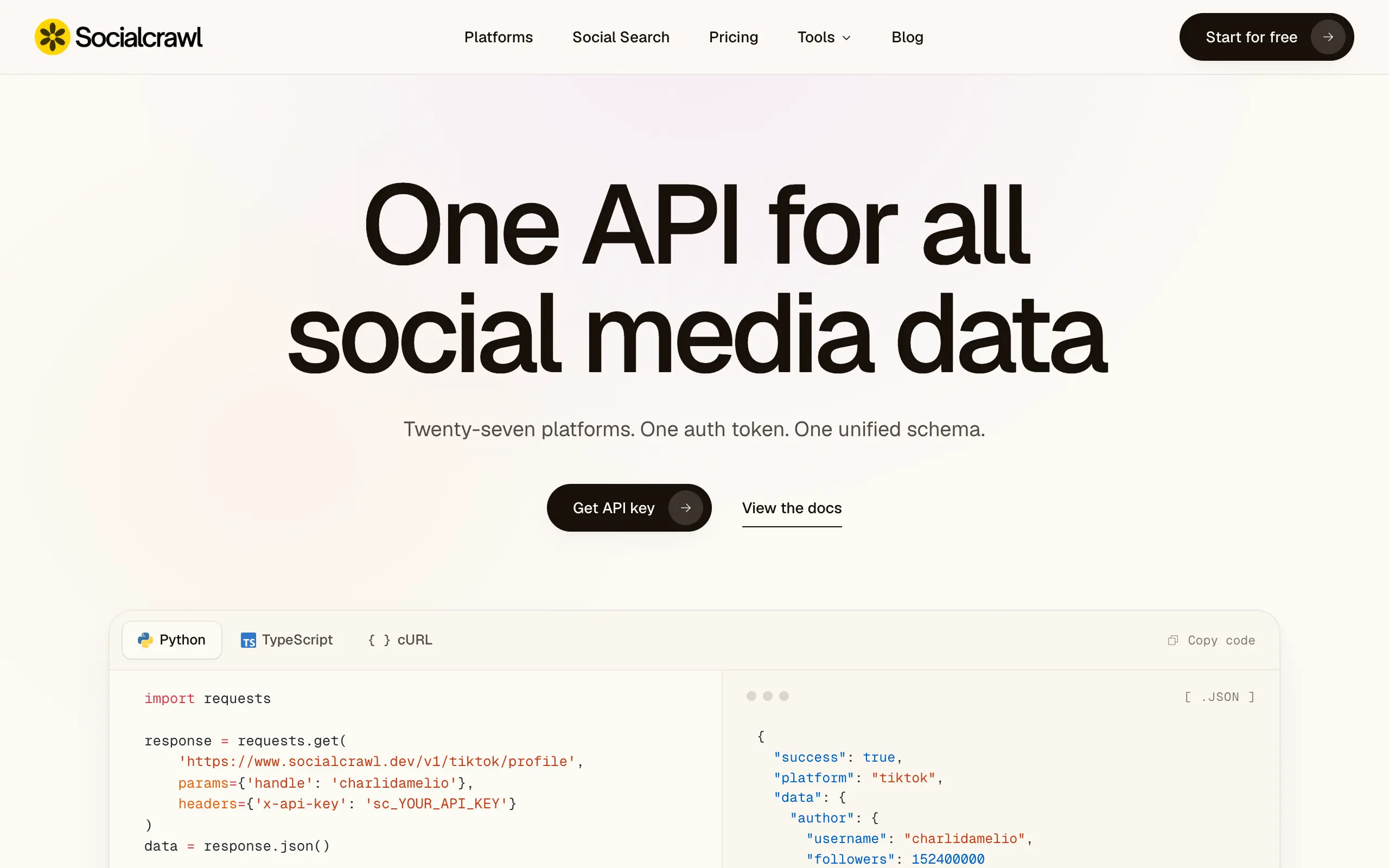
Socialcrawl
Get clean, structured data from 21 platforms like TikTok, Instagram, and YouTube with a single request 📊
Statiko
Monitor any Telegram channel in real time - track posts, edits, deletions, and growth with AI recaps 📡
Shibui
AI website builder - describe your business, pick a niche template, edit by chatting, and publish instantly ✨
Pro Service
Find verified home service professionals, compare quotes, and pay securely through escrow - built for Brazilians across the US 🏠
RankGrow
Fix your SEO with AI agents - connect Search Console, get prioritized tasks, and grow organic traffic 📈
SyncReads
Sync your favorite content for distraction-free reading, save time and replace multiple apps. Anytime, anywhere 🔄
Socialcrawl
Get clean, structured data from 21 platforms like TikTok, Instagram, and YouTube with a single request 📊
Statiko
Monitor any Telegram channel in real time - track posts, edits, deletions, and growth with AI recaps 📡
Shibui
AI website builder - describe your business, pick a niche template, edit by chatting, and publish instantly ✨
Pro Service
Find verified home service professionals, compare quotes, and pay securely through escrow - built for Brazilians across the US 🏠
RankGrow
Fix your SEO with AI agents - connect Search Console, get prioritized tasks, and grow organic traffic 📈
SyncReads
Sync your favorite content for distraction-free reading, save time and replace multiple apps. Anytime, anywhere 🔄
Socialcrawl
Get clean, structured data from 21 platforms like TikTok, Instagram, and YouTube with a single request 📊
Statiko
Monitor any Telegram channel in real time - track posts, edits, deletions, and growth with AI recaps 📡
Shibui
AI website builder - describe your business, pick a niche template, edit by chatting, and publish instantly ✨
Pro Service
Find verified home service professionals, compare quotes, and pay securely through escrow - built for Brazilians across the US 🏠
RankGrow
Fix your SEO with AI agents - connect Search Console, get prioritized tasks, and grow organic traffic 📈
SyncReads
Sync your favorite content for distraction-free reading, save time and replace multiple apps. Anytime, anywhere 🔄
Socialcrawl
Get clean, structured data from 21 platforms like TikTok, Instagram, and YouTube with a single request 📊
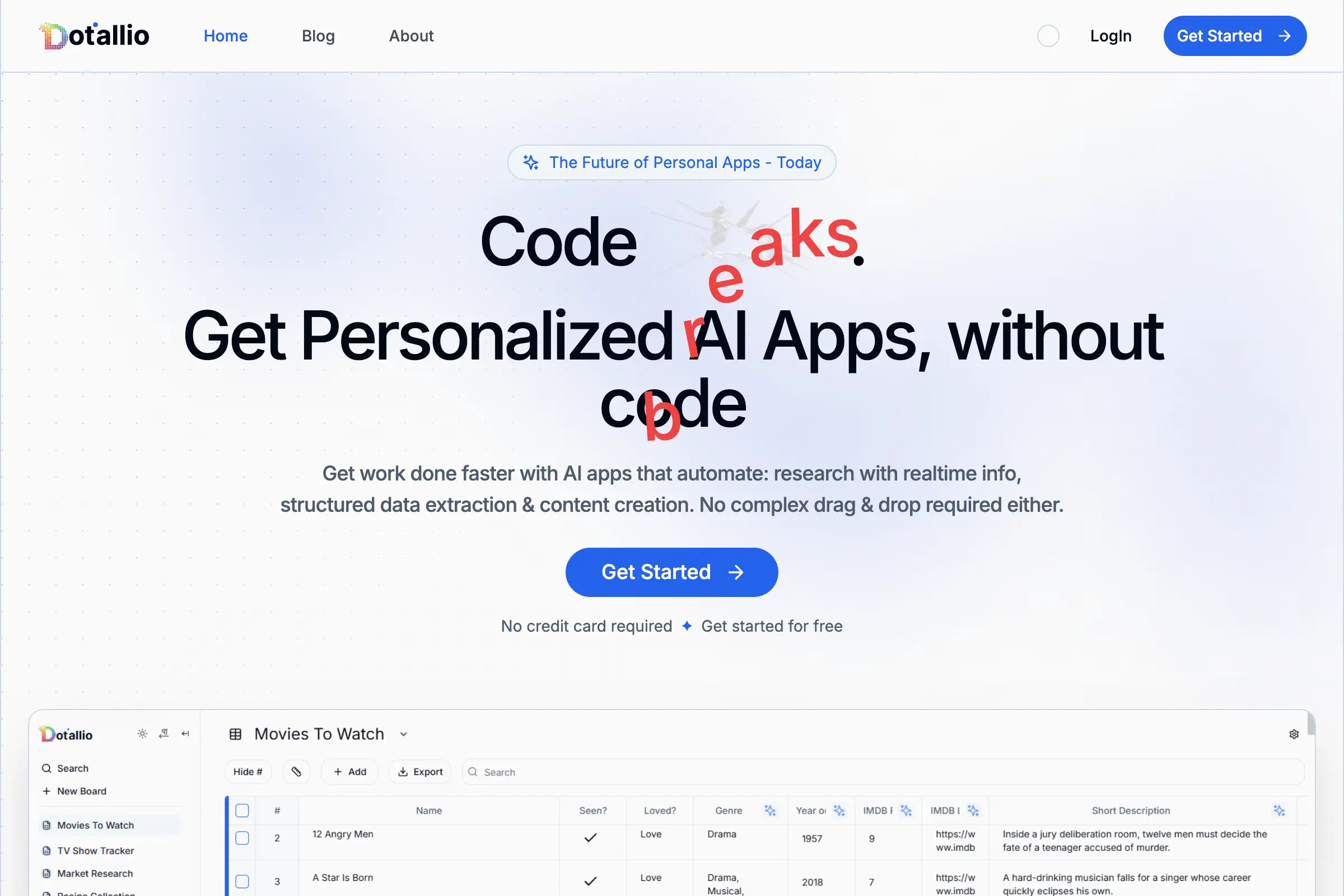
Dotallio
Personalized AI apps that automate research, data extraction, and content creation without code 🤖

Talk to Santa
Enjoy a magical live video chat or receive a unique AI-generated video greeting from Santa Claus 🎅

pozywka.pl
Scalable blog for food journalist, focused on performance and user experience 🌭
zagrodzki.me
Personal blog and portfolio of Bart Zagrodzki, where he shares his knowledge and work 💼
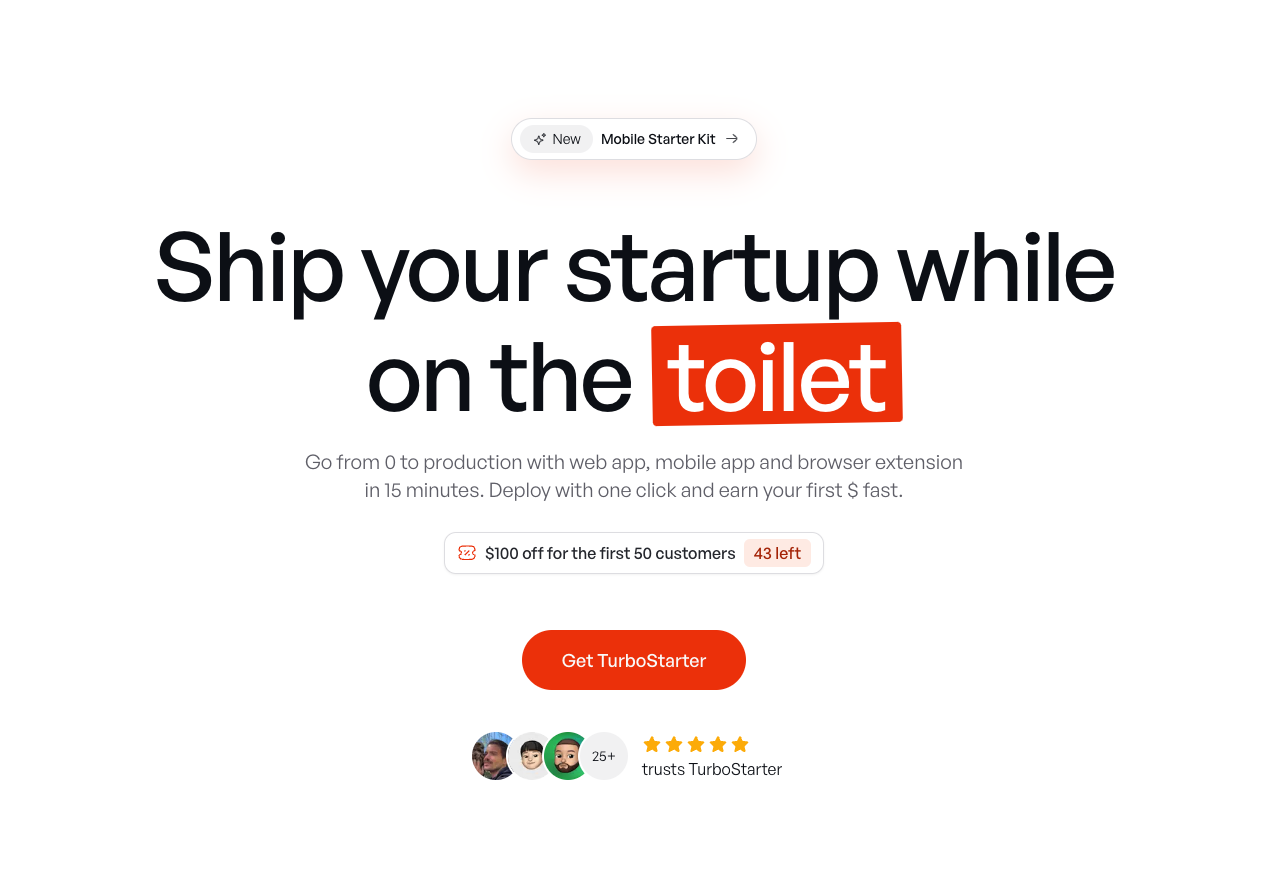
TurboStarter
Ship your startup everywhere. In minutes.
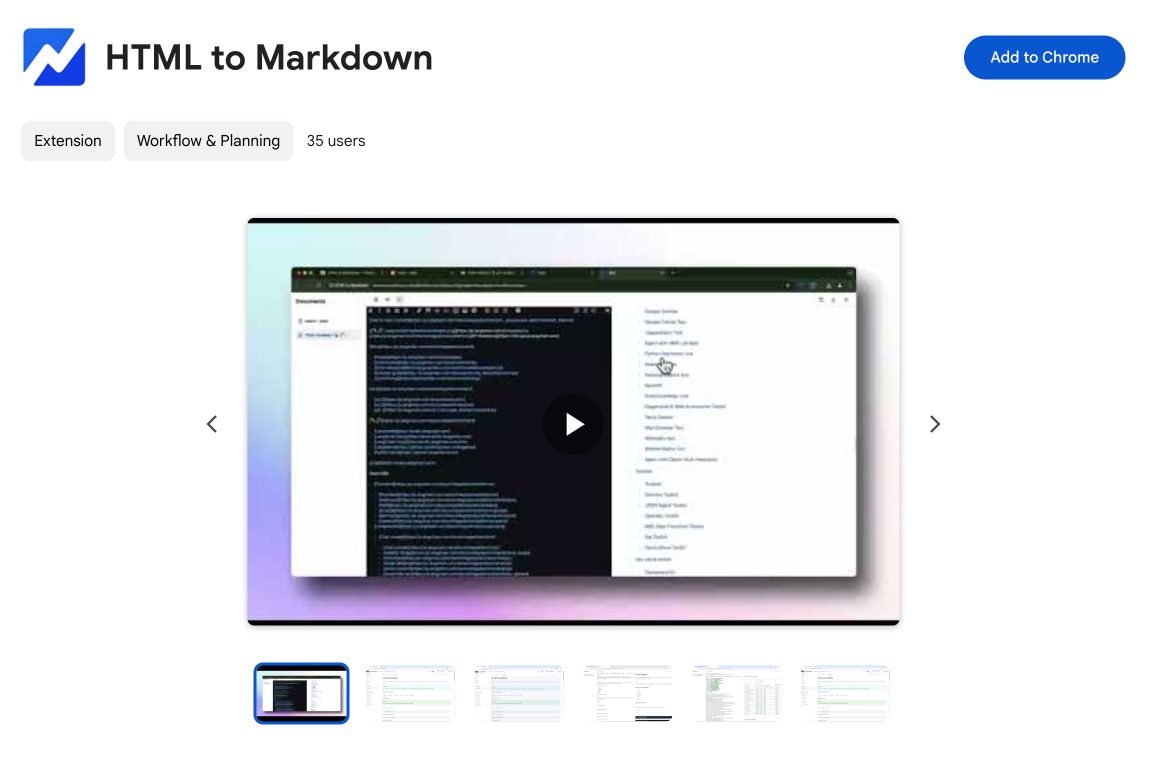
HTML to Markdown
Convert HTML to Markdown with ease, directly in your browser 📄
Dotallio
Personalized AI apps that automate research, data extraction, and content creation without code 🤖
Talk to Santa
Enjoy a magical live video chat or receive a unique AI-generated video greeting from Santa Claus 🎅
pozywka.pl
Scalable blog for food journalist, focused on performance and user experience 🌭
zagrodzki.me
Personal blog and portfolio of Bart Zagrodzki, where he shares his knowledge and work 💼
TurboStarter
Ship your startup everywhere. In minutes.
HTML to Markdown
Convert HTML to Markdown with ease, directly in your browser 📄
Dotallio
Personalized AI apps that automate research, data extraction, and content creation without code 🤖
Talk to Santa
Enjoy a magical live video chat or receive a unique AI-generated video greeting from Santa Claus 🎅
pozywka.pl
Scalable blog for food journalist, focused on performance and user experience 🌭
zagrodzki.me
Personal blog and portfolio of Bart Zagrodzki, where he shares his knowledge and work 💼
TurboStarter
Ship your startup everywhere. In minutes.
HTML to Markdown
Convert HTML to Markdown with ease, directly in your browser 📄
Dotallio
Personalized AI apps that automate research, data extraction, and content creation without code 🤖
Talk to Santa
Enjoy a magical live video chat or receive a unique AI-generated video greeting from Santa Claus 🎅
pozywka.pl
Scalable blog for food journalist, focused on performance and user experience 🌭
zagrodzki.me
Personal blog and portfolio of Bart Zagrodzki, where he shares his knowledge and work 💼
TurboStarter
Ship your startup everywhere. In minutes.
HTML to Markdown
Convert HTML to Markdown with ease, directly in your browser 📄
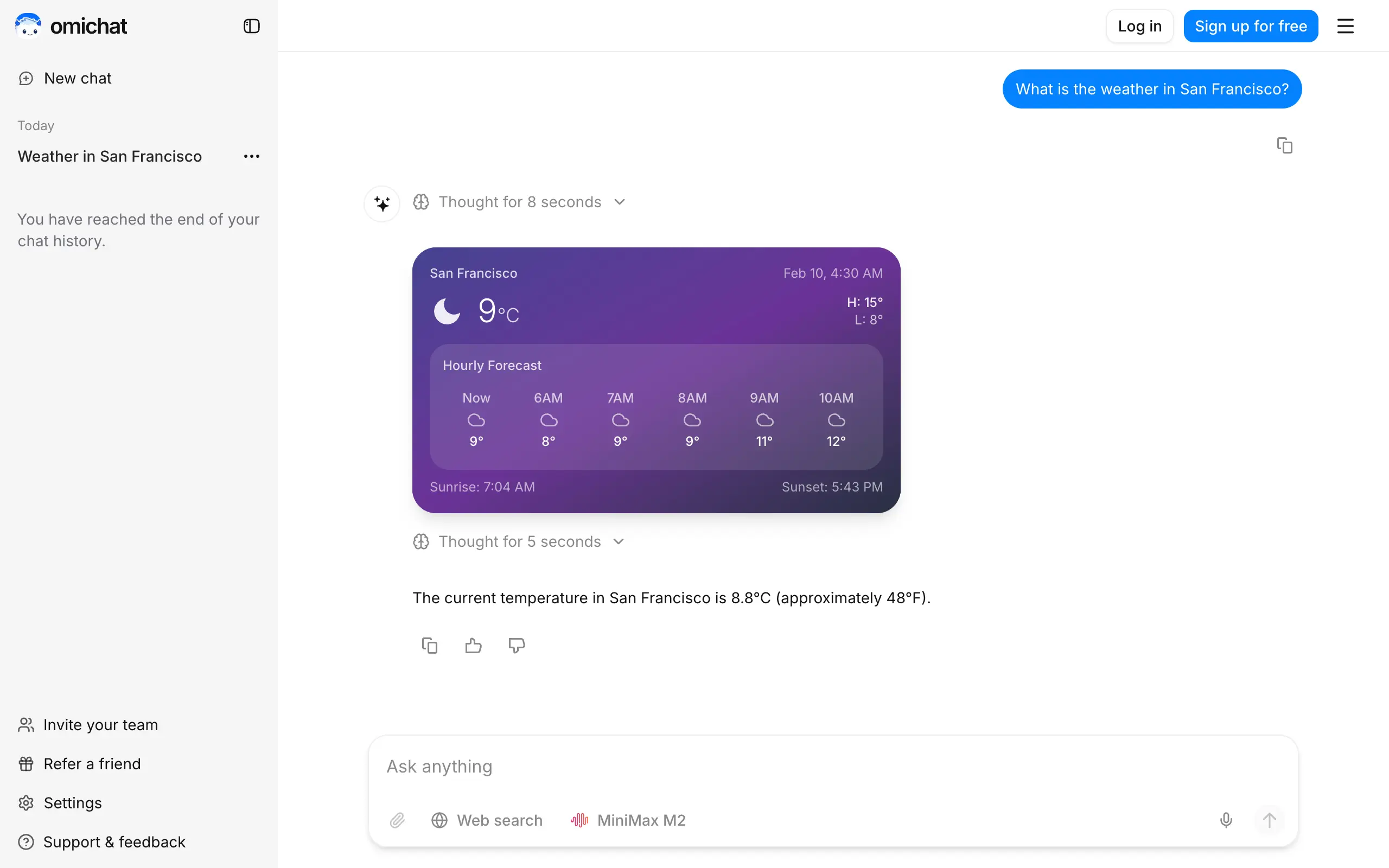
Omichat
Chat with 50+ AI models, including ChatGPT and Claude, in one place - switch models anytime without losing context 🤖
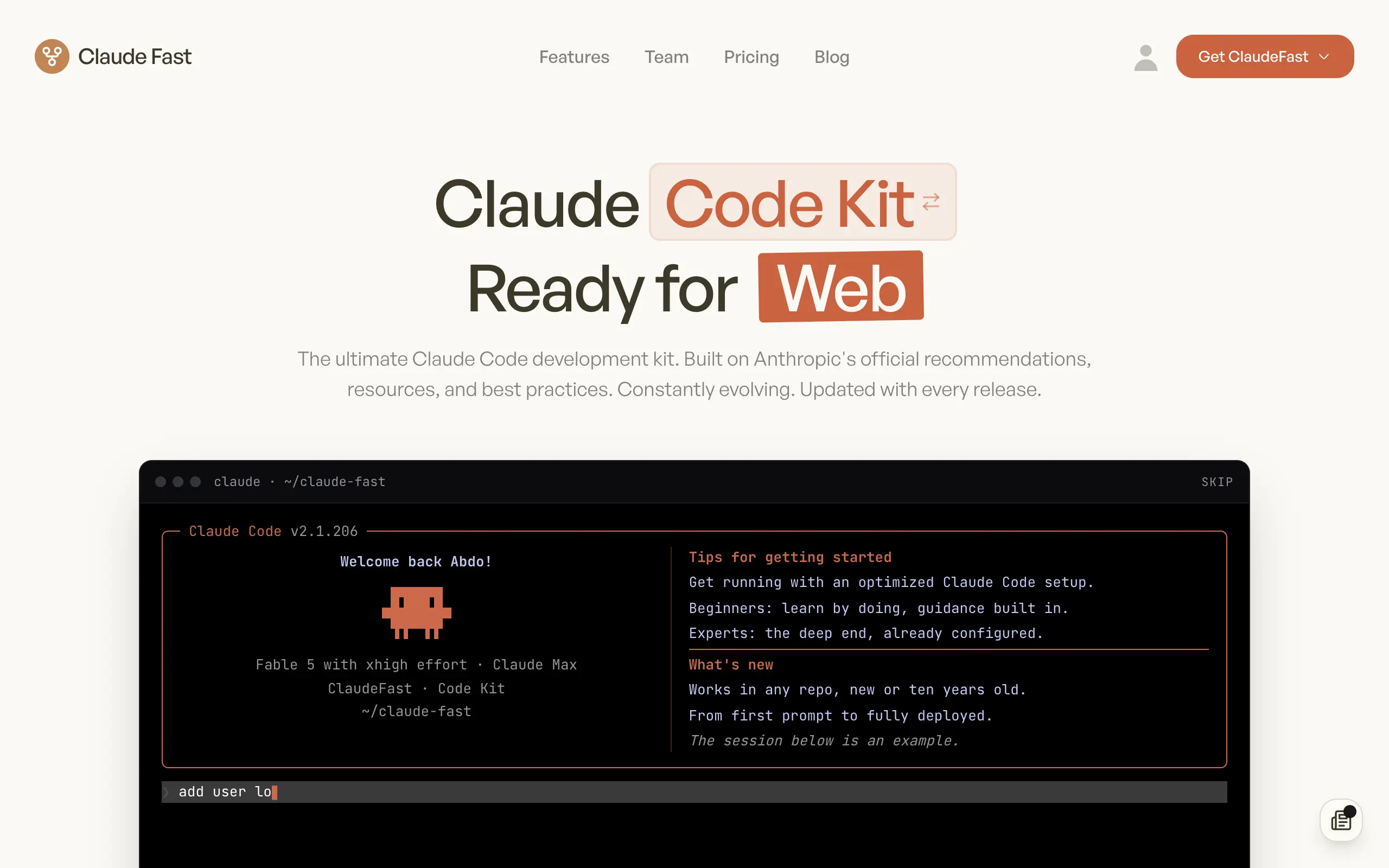
Claude Fast
Supercharge your Claude Code with 6x effective context window and specialized AI agents 🤖
EmojAI
AI-powered emoji picker with smart, context-aware suggestions 🤖
Solohacker
Autonomous company launcher - AI agents work 24/7, escalate what matters, and you stay in control 🤖
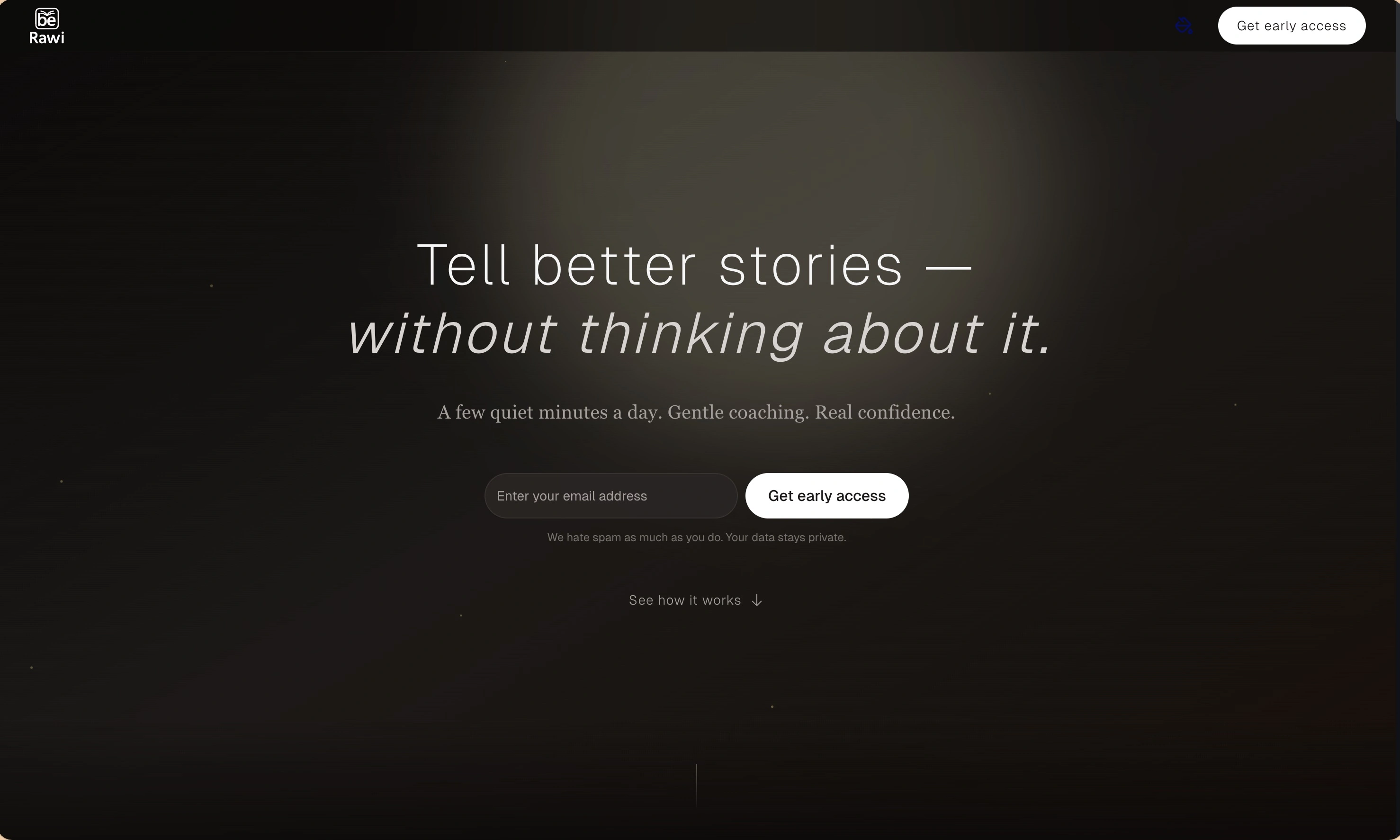
BeRawi: Storytelling Coach
Practice storytelling daily with instant feedback to sound clearer, more engaging, and confident 🎤
Omichat
Chat with 50+ AI models, including ChatGPT and Claude, in one place - switch models anytime without losing context 🤖
Claude Fast
Supercharge your Claude Code with 6x effective context window and specialized AI agents 🤖
EmojAI
AI-powered emoji picker with smart, context-aware suggestions 🤖
Solohacker
Autonomous company launcher - AI agents work 24/7, escalate what matters, and you stay in control 🤖
BeRawi: Storytelling Coach
Practice storytelling daily with instant feedback to sound clearer, more engaging, and confident 🎤
Omichat
Chat with 50+ AI models, including ChatGPT and Claude, in one place - switch models anytime without losing context 🤖
Claude Fast
Supercharge your Claude Code with 6x effective context window and specialized AI agents 🤖
EmojAI
AI-powered emoji picker with smart, context-aware suggestions 🤖
Solohacker
Autonomous company launcher - AI agents work 24/7, escalate what matters, and you stay in control 🤖
BeRawi: Storytelling Coach
Practice storytelling daily with instant feedback to sound clearer, more engaging, and confident 🎤
Omichat
Chat with 50+ AI models, including ChatGPT and Claude, in one place - switch models anytime without losing context 🤖
Claude Fast
Supercharge your Claude Code with 6x effective context window and specialized AI agents 🤖
EmojAI
AI-powered emoji picker with smart, context-aware suggestions 🤖
Solohacker
Autonomous company launcher - AI agents work 24/7, escalate what matters, and you stay in control 🤖
BeRawi: Storytelling Coach
Practice storytelling daily with instant feedback to sound clearer, more engaging, and confident 🎤

Connect with like-minded people
Join our community to get feedback, support, and grow together with 1,000+ builders on board, let's ship it!
Join usShip your startup everywhere. In minutes.
Don't burn tokens on setup and start building features on day one.