TraceMint
TraceMint turns production traces, logs, and deploy diffs into privacy-safe, reproducible test cases, helping engineering teams prevent recurring incidents.
What TraceMint is and why it matters
TraceMint is an AI incident-to-test-case platform that turns production traces, logs, and deployment changes into privacy-safe, reproducible tests. Its goal is straightforward: when an incident happens, help engineering teams preserve the conditions that caused it and turn them into a regression test before the same failure happens again.
The idea addresses a gap between observability and software testing. Observability tools help teams understand what happened in production. Testing tools help teams check whether software behaves as expected. But the investigation that connects a production incident to a durable, repeatable test is often manual. Engineers inspect telemetry, reconstruct the sequence of events, create representative test inputs, and attempt to reproduce the failure in a non-production environment.
That work can be difficult, slow, and easy to lose. The engineer who understands the incident may move to another task, the fix may ship without a regression test, or the test may omit the production conditions that triggered the problem. TraceMint would make this process more systematic by converting incident evidence into an artifact that fits the team’s existing testing workflow.
The product should not promise to automatically solve every incident. A more credible promise is to reduce the manual effort involved in capturing, sanitizing, reproducing, and testing known production failures. The engineer remains in control of what is safe, accurate, and appropriate to run.
The problem TraceMint solves
Production incidents rarely arrive as neat test cases. They may involve a specific request, a sequence of service calls, an unusual configuration, a particular database state, or an interaction between multiple services. Logs and traces help explain the incident, but they are not automatically executable test fixtures.
Teams typically have to bridge several separate activities:
- Identify the relevant trace, logs, and deployment context.
- Determine which details are causal and which are incidental.
- Remove or transform sensitive information.
- Reconstruct a test environment that can reproduce the behavior.
- Write a test in the team’s framework.
- Verify that the test fails before the fix and passes afterward.
- Maintain the test as the application evolves.
The work is not simply “turn logs into tests.” Logs may be incomplete, inconsistent, or too sensitive to move into a test environment. A test generated from an entire trace may also be brittle, slow, or tied to implementation details that do not represent the real behavior the team wants to protect.
TraceMint’s opportunity is to offer a controlled workflow between telemetry and testing. It can help engineers move from evidence of a production failure to a reviewed, privacy-safe, reproducible regression test.
A practical product promise
TraceMint should assist with test-case creation, not claim that every trace can be replayed exactly or that AI can infer the right fix without engineering review.
Who TraceMint should serve
TraceMint is most valuable to teams that already collect production telemetry and maintain automated tests, but still rely on people to translate incidents into regression coverage.
Primary audience
Software engineering teams at growing SaaS companies are a strong initial audience. These organizations often operate several services, deploy frequently, and have enough production complexity to experience recurring incidents. At the same time, they may not have dedicated reliability engineering teams to build custom incident-to-test tooling.
Likely users include:
- Backend engineers responsible for APIs and service reliability.
- Site reliability engineers who investigate production failures.
- Quality engineers who maintain integration and regression test suites.
- Engineering managers who want fewer repeat incidents and clearer follow-through.
- Platform teams that support deployment, observability, and testing practices.
The buyer and daily user may not be the same person. An engineering leader may approve a team or company subscription, while developers use TraceMint during incident review and test creation. The product should make value visible to both: engineers need a practical workflow, and leaders need evidence that incident learnings are becoming lasting safeguards.
Best-fit teams
Early adopters are likely to have several characteristics:
- They use structured logs, distributed tracing, or both.
- Their engineering teams already have a test framework and CI pipeline.
- They experience recurring or difficult-to-reproduce production defects.
- They need to limit the movement of production data into development environments.
- They want better continuity between incident response and engineering improvement work.
TraceMint may be less useful to a very early-stage company with one simple application and few production incidents. It may also be difficult to sell to organizations that cannot share telemetry with a third-party service and do not have the capacity to operate a self-hosted alternative. Those are not reasons to abandon either segment, but they are important product and go-to-market constraints.
Initial ideal customer profile
A sensible initial ideal customer profile is a B2B software company with a small-to-mid-sized engineering organization, an established CI pipeline, and an observability stack that produces structured traces and logs. The team should have enough production traffic to encounter meaningful edge cases, but not so much organizational complexity that a new workflow requires a long enterprise procurement process.
Start with one service, one observability integration, and one or two widely used test frameworks. A focused first use case makes it easier to prove that TraceMint can produce useful tests without demanding that a customer replace its existing systems.
The market opportunity and product gap
TraceMint sits at the intersection of several established software categories:
- Application performance monitoring and observability, which help teams inspect application behavior.
- Incident management, which coordinates response, communication, and follow-up.
- Automated testing, which checks expected behavior across code changes.
- Test data management, which helps teams create and control test inputs.
- AI-assisted software development, which can help draft code and test scaffolding.
These categories each address part of the workflow, but TraceMint’s differentiation is the connective step: using production evidence to help produce a reviewed, sanitized, reproducible test.
That does not mean existing tools cannot support parts of the job. Teams can write scripts, export data, create mocks, and use code-generation assistants. The product opportunity is to make this process easier to repeat and govern. A customer should not need to build and maintain a custom pipeline that connects telemetry queries, data redaction, test generation, and pull requests.
Why the gap may persist
The gap is not necessarily caused by a lack of engineering awareness. It exists partly because the task crosses ownership boundaries:
- Observability teams focus on collecting and querying operational data.
- Application teams focus on fixing the code.
- Quality teams focus on test coverage and release confidence.
- Security and privacy teams focus on data handling.
- Platform teams focus on repeatable tooling.
A product that depends on these groups coordinating manually may leave incident-derived tests incomplete. TraceMint could provide a shared workflow and clear review points, while still integrating with the tools each group already uses.
How to validate market demand
The idea should be validated through workflow research before substantial product development. Ask engineers to walk through a recent incident from first alert to final resolution. Look for the moments where they had to recreate data, write an ad hoc script, or decide whether a test was worth adding.
Useful discovery questions include:
- How often do production bugs recur after an initial fix?
- How does the team decide whether an incident needs a regression test?
- Which telemetry sources are used during incident investigation?
- What makes production data unsafe or impractical to use in testing?
- Which test frameworks and CI systems are already standard?
- Who owns the work of adding tests after incidents?
- What evidence would convince the team that an automatically suggested test is trustworthy?
- What data is the organization unwilling to send to a third party?
Avoid treating stated interest as proof of willingness to pay. Ask prospects to share a real, sanitized example and test whether TraceMint can help them create a test that an engineer would actually merge.
Core features for an incident-to-test-case platform
TraceMint’s feature set should support the full path from production evidence to an approved test. The central product decision is to keep each transformation visible and reviewable rather than hiding it behind a single “generate test” button.
1. Incident context and telemetry capture
A user should be able to start from an incident, trace, or selected log range. TraceMint can collect relevant context such as:
- Trace spans and parent-child relationships.
- Selected log events and timestamps.
- Service and environment identifiers.
- Relevant deployment or commit information.
- Request metadata that is explicitly approved for capture.
- Links back to the source observability system.
The product should capture only the information needed to understand and reproduce the failure. It should not indiscriminately copy an entire production dataset. Narrow capture makes the workflow easier to review and reduces the privacy and security burden.
2. Deployment and code-change correlation
A test case becomes more useful when it is connected to the change that may have introduced or resolved the issue. TraceMint can associate an incident with deployment metadata, such as a release identifier, commit hash, or service version.
That association can help an engineer compare:
- The version where the failure occurred.
- The version where it stopped occurring.
- Relevant configuration changes.
- The code paths involved in the captured trace.
Correlation is not proof of causation. The interface should label associations as contextual evidence and let engineers confirm or correct them.
3. Privacy-safe data transformation
This feature is central to TraceMint’s credibility. Production telemetry may contain personal data, credentials, customer content, or internal identifiers. TraceMint needs a configurable data-handling layer before any captured evidence is stored, sent to an AI model, or exported as a test fixture.
Possible controls include:
- Redacting values that match configured patterns.
- Replacing identifiers with stable synthetic tokens.
- Allowlisting approved fields and discarding everything else.
- Flagging unknown fields for review.
- Applying organization-specific policies.
- Showing a preview of the sanitized fixture before use.
- Keeping an audit record of transformations and approvals.
Redaction should be treated as a risk-reduction measure, not a guarantee that data is anonymous. For example, a sequence of otherwise harmless values may still identify a customer when combined with other information. TraceMint should explain its controls clearly and provide deployment options that match the customer’s security requirements.
4. Reproducible test-case generation
Once evidence has been selected and sanitized, TraceMint can help generate a test scaffold. The output might include:
- A test name and brief explanation.
- A sanitized request or event fixture.
- Necessary mocks or service stubs.
- Setup and teardown logic.
- Assertions based on the failure or expected behavior.
- Links to the incident, trace, deployment, and source data.
The system should distinguish observed facts from generated suggestions. For example, it might state that a trace contained a particular sequence of service calls, while separately identifying an assertion as a proposed test condition that requires review.
The test should be generated for the customer’s existing stack where possible. Exporting a clean test file and fixture is more valuable than trapping the result inside a proprietary test runner.
5. Replay, verification, and review
A generated test is not useful merely because it looks plausible. TraceMint should support a verification loop that helps an engineer determine whether it reproduces the original failure and whether the fix resolves it.
A practical workflow is:
- Generate a proposed test from selected evidence.
- Run the test against the relevant pre-fix version, when available.
- Confirm that the test detects the defect.
- Run it against the fixed version.
- Confirm that the test passes.
- Review fixture contents and assertions.
- Export or submit the test through the team’s normal code review process.
This is where TraceMint can build trust. A test that fails before the fix and passes afterward provides stronger evidence than a generated test that simply passes on the current branch.
6. Repository and CI integration
TraceMint should fit into existing engineering workflows. Useful integrations may include:
- Source control providers for creating a branch or pull request.
- CI systems for running a proposed test.
- Issue trackers for connecting the test to incident follow-up.
- Observability tools for linking to the original trace and logs.
- Team communication tools for sharing review status.
Integrations should be prioritized based on interviews, not the size of an integration checklist. A shallow connection to many tools can be less useful than a reliable connection to one common telemetry source and one source control workflow.
7. Recurrence and coverage insights
Over time, TraceMint could help teams understand how incident learnings translate into test coverage. Useful summaries might include:
- Incidents with an associated regression test.
- Proposed tests that were accepted, edited, or rejected.
- Services with repeated failures in similar areas.
- Time from incident resolution to test creation.
- Test cases that no longer run or need maintenance.
These insights should be descriptive rather than punitive. Metrics that rank individual engineers or encourage teams to maximize test counts can create poor incentives. The goal is to improve learning and reliability, not to produce a misleading score.
A sensible MVP scope
The first release should prove the core workflow, not attempt to build a complete observability or testing platform.
A focused MVP could include:
- One telemetry ingestion path or a manual trace upload workflow.
- One supported test framework and programming language.
- A clear redaction and field-allowlist interface.
- A generated test scaffold with visible source evidence.
- A local or CI-based test execution path.
- Export to a repository or downloadable files.
- A review screen for approving the fixture and assertions.
For example, the first version could support a common HTTP API test workflow. An engineer selects a trace, reviews sanitized request data, generates a test, and runs it in the project’s existing test suite. That is a narrower product than a universal platform, but it is easier to validate and safer to operate.
A useful MVP success criterion is not the number of tests generated. It is the proportion of proposed tests that engineers consider accurate and useful enough to keep, along with the time required to produce them compared with the existing process.
Recommended technology stack
The right stack depends on whether TraceMint is initially a hosted SaaS product, a self-hosted tool, or a hybrid. The following choices are a reasonable starting point, not a requirement to use every technology listed.
Application and user interface
A TypeScript web application built with React can support the incident review, trace inspection, redaction configuration, and test approval experience. Next.js is one possible framework for building the application, with server-rendered pages where they provide value and API routes or separate services for backend operations.
A React-based interface is a practical option if the team has relevant experience. The more important design requirement is a clear review experience: users need to understand what data was captured, what was changed, and which parts of a generated test are inferred.
Telemetry data and interoperability
OpenTelemetry is a useful reference point for telemetry instrumentation and data conventions. Supporting OpenTelemetry-compatible data can reduce dependence on one observability vendor, but it does not eliminate integration work. Trace formats, storage APIs, query permissions, and vendor-specific metadata still vary.
TraceMint should initially support the telemetry source most common among its target customers. A generic ingestion format can come later, once the product has learned which fields and relationships are essential to reproduce useful tests.
Backend and data storage
A TypeScript or Python backend can handle workflow orchestration, integrations, test generation, and policy enforcement. The choice should reflect the team’s skills and the requirements of data processing. Python may be attractive for data transformation and AI-related tasks; TypeScript may simplify sharing types across the application and backend.
A relational database such as PostgreSQL can store organizations, users, workflow metadata, integration settings, approval state, and references to test artifacts. Sensitive telemetry should not be placed in general-purpose application tables without a deliberate retention and access-control design.
For larger payloads, encrypted object storage may be more appropriate, with short retention windows and access controls. The product should separate metadata from captured telemetry so customers can remove payloads without losing the audit history needed to understand approvals.
Test execution and framework support
Support should begin with a framework that matches the initial customer segment. For JavaScript and TypeScript projects, Vitest or Jest may be relevant. For browser-driven workflows, Playwright may be useful. The product should not claim broad framework compatibility until generated tests have been verified in those environments.
A sensible integration model is to generate portable test files and let customers execute them in their own CI environment. This limits the need for TraceMint to run arbitrary customer code on its own infrastructure.
AI model integration
AI can help summarize traces, propose assertions, draft fixtures, and explain why a test may reproduce an incident. It should not be the sole authority for whether a test is correct or whether data is safe.
Model selection should account for:
- Whether customer data is used for model training.
- Data retention and regional processing terms.
- Availability of a private or customer-managed model option.
- The ability to redact or minimize input before inference.
- Output consistency and the cost of human review.
- The risks of hallucinated assertions or invented causal explanations.
A provider-agnostic model interface can reduce dependency on one model vendor. However, abstraction adds engineering overhead and may obscure important differences in privacy controls, performance, and output quality. Start with a small number of carefully evaluated models, and retain deterministic checks for tasks that do not need generative AI.
Security and deployment trade-offs
A hosted SaaS model can offer a simpler user experience and faster onboarding. A self-hosted deployment can address organizations with strict data-handling requirements, but it increases installation, upgrade, and support complexity. A hybrid model may keep sensitive payload processing within a customer-controlled environment while using a hosted control plane for workflow management.
The right choice should follow customer evidence. If target buyers will not permit production telemetry to leave their environment, privacy controls alone may not be enough; TraceMint may need a private deployment or local processing option.
Competitive advantage and positioning
TraceMint’s advantage should not be described simply as “AI for testing.” That positioning is broad and easy to imitate. The stronger position is a governed workflow for turning production incidents into verified regression tests.
Where TraceMint can stand out
| Product approach | Observability context | Test generation | Privacy workflow | Incident-to-test loop | Verification |
|---|---|---|---|---|---|
| Observability platform | Strong | Usually not the central workflow | Varies by product | Partial | Usually focused on monitoring |
| Test management tool | Limited | May support test authoring | Varies by product | Often manual | Depends on connected test runner |
| General AI coding assistant | User supplied | Can draft code | Depends on user workflow | Usually manual | Depends on local development setup |
| Custom internal scripts | Team-specific | Possible | Team-defined | Possible | Team-owned |
| TraceMint opportunity | Trace-linked | Generated with review | Explicit, configurable | Core workflow | Designed into the loop |
This table describes product categories, not every vendor in them. Specific products change over time, so TraceMint should validate comparisons through current customer research rather than relying on static competitor claims.
Potential defensible advantages
TraceMint may develop an advantage through several compounding capabilities:
- A well-designed redaction and privacy policy system.
- High-quality integrations with telemetry and test environments.
- A library of reliable, framework-specific test patterns.
- Clear provenance from test assertions back to trace evidence.
- Feedback from accepted, edited, and rejected generated tests.
- A workflow that fits incident review and code review rather than creating another isolated dashboard.
The hardest advantage to copy may be operational trust. Engineering teams need to know where a test came from, what data it contains, why an assertion was proposed, and how it behaves in CI. If TraceMint consistently answers those questions, it can become part of the incident learning process rather than a novelty used only for demonstrations.
Positioning statement
A concise positioning statement could be:
TraceMint helps software teams turn production incidents into privacy-safe, reviewable regression tests, using the traces and deployment context they already rely on.
The statement is specific about the user, outcome, and workflow. It avoids promising automatic root-cause analysis or perfect reproduction.
Monetization strategy
TraceMint can use several pricing models, but pricing should align with customer value and avoid penalizing the behavior the product is meant to encourage.
Seat-based subscription
A per-user plan is easy to explain and can work for engineering tools. The drawback is that incident response and test creation may involve different people, while the number of active users does not always track the product’s value.
Usage-based pricing
A usage model could charge for processed incidents, trace payload volume, or test generation. This connects revenue to product activity, but unpredictable telemetry volume can create buyer anxiety. It may also discourage teams from using the tool during incidents, precisely when it should be most useful.
If usage-based pricing is used, define limits in a way customers can understand. Consider including a generous allowance and charging for clearly measurable storage or processing beyond it, rather than charging for every test run.
Team and organization plans
A tiered subscription can differentiate by team size, integrations, retention, security controls, and deployment options. Enterprise plans may include features such as single sign-on, role-based access, audit logs, custom retention policies, private deployment, and support commitments.
Recommended starting model
A practical early approach is a team subscription with transparent usage limits, followed by enterprise pricing for advanced security and deployment needs. Keep a free trial or limited evaluation path so engineers can test the product against a real, sanitized incident before asking for a broader purchase.
Pricing experiments should measure conversion and product adoption, not just initial interest. Interview customers about budget ownership, procurement requirements, and the cost of their current incident-to-test process.
Risks and mitigation
TraceMint handles operational evidence and proposes executable artifacts. That combination creates meaningful technical, privacy, and product risks.
Sensitive data exposure
Risk: Telemetry may contain customer information, secrets, or regulated data.
Mitigation: Minimize collection, offer allowlists and redaction rules, encrypt data in transit and at rest, apply short default retention, and provide clear deletion controls. Document exactly where payloads are processed and stored. Do not describe data as anonymous unless that claim has been supported by appropriate analysis.
Incorrect or brittle tests
Risk: A generated test may assert an incidental implementation detail, miss the real failure, or pass without reproducing the original issue.
Mitigation: Show the source evidence behind each proposed assertion, distinguish observed facts from model-generated suggestions, and require engineering review. Where possible, verify that the test fails on the affected version and passes on the fixed version.
Unsafe execution of customer code
Risk: Running untrusted or customer-supplied test code in a shared service can expose infrastructure or data.
Mitigation: Prefer generating test files that run in the customer’s CI environment. If hosted execution is later introduced, isolate workloads, restrict network access, use ephemeral environments, and undergo security review before enabling arbitrary code execution.
False confidence in replay
Risk: A test environment may not contain the exact data, timing, dependencies, or configuration present in production.
Mitigation: Describe replay as an approximation unless the system has verified the necessary conditions. Show which dependencies were mocked and which environmental details were not reproduced.
Integration maintenance
Risk: Observability APIs, repository systems, and CI workflows evolve, creating ongoing support work.
Mitigation: Limit the first integrations, monitor failures, version adapters, and design a stable internal representation of traces and test artifacts. Prioritize integrations based on repeated customer demand.
AI dependency and output variability
Risk: Model changes can produce different tests, introduce hallucinated claims, or create unexpected costs.
Mitigation: Evaluate model output against representative incidents, maintain prompt and model version records, add deterministic validation where possible, and keep a human approval step. Make it possible to disable AI features while preserving the data-handling and workflow functions.
Weak product-market fit
Risk: Teams may find the idea interesting but continue using their existing manual process.
Mitigation: Test against real workflows early. Track whether customers complete the full journey from trace selection to a merged test, and learn why they abandon it. A compelling prototype is not enough; the test must fit the customer’s repository, CI system, and privacy requirements.
Implementation roadmap
A disciplined launch should move from evidence gathering to a narrow working workflow, then expand only after the product demonstrates value.
Interview teams about recent incidents
Talk to engineers, SREs, and quality specialists. Ask them to reconstruct a real incident and show how they handled evidence, testing, and follow-up. Record the systems involved and identify where work was repeated or abandoned.
Select one high-value workflow
Choose a narrow use case, such as generating a regression test for an API failure from a selected trace. Define the supported telemetry source, test framework, and deployment context before building multiple integrations.
Design privacy and trust controls first
Specify what TraceMint stores, what it transforms, how long it retains data, and who can access it. Build a visible sanitization preview and approval flow before adding broad telemetry ingestion.
Build the trace-to-test prototype
Create a workflow that captures a selected trace, produces a sanitized fixture, drafts a test, and exports it into a customer project. Keep the original evidence and generated content linked so engineers can inspect the reasoning.
Test on historical incidents
Use incidents that customers can safely share or reproduce in a controlled environment. Ask engineers to review the generated tests and classify them as useful, inaccurate, incomplete, or unsafe. Use those findings to improve the product before expanding scope.
Add verification and code review integration
Support running the test in the customer’s own environment and submitting it through the team’s normal review process. Measure whether the test detects the known failure and whether the team keeps it after review.
Expand based on repeated demand
Add additional observability, repository, CI, or framework integrations only when customer evidence supports them. Consider private deployment and advanced governance features when they are necessary to close qualified opportunities.
A useful early product scorecard could include:
- Percentage of generated tests that engineers keep.
- Percentage of tests that reproduce a known failure.
- Time from incident selection to a reviewable test.
- Rate of completed workflows from trace capture to repository submission.
- Common reasons tests are rejected or edited.
- Privacy-related blocks or support requests.
- Continued use across subsequent incidents.
These measurements should be interpreted carefully. A high number of generated tests does not necessarily indicate customer value. A smaller number of tests that reliably capture important failures may be a better result.
Actionable next steps for the founder
To move TraceMint from idea to a validated SaaS product:
- Choose a specific initial customer segment. Start with teams that have production telemetry, automated tests, and recurring difficulty reproducing incidents.
- Conduct workflow interviews. Focus on what teams actually did during recent incidents, not what they say they might do with AI.
- Secure a few design partners. Ask them to provide sanitized examples and participate in iterative testing.
- Define a narrow MVP. Support one meaningful trace source, one testing workflow, and a clear export path.
- Establish privacy boundaries. Write down what data is collected, transformed, retained, and processed by third-party services.
- Build for review and provenance. Make every proposed test traceable to its source evidence and easy for engineers to edit.
- Prove the test works. Validate against a known failure whenever possible, rather than measuring generation alone.
- Integrate into existing workflows. Prioritize the source control and CI systems your design partners already use.
- Test pricing with buyers. Learn who owns the budget and which security or deployment requirements affect purchasing.
- Expand only after repeat usage. Add platforms and advanced capabilities when customers complete the core workflow more than once.
For founders building the application, TurboStarter can help accelerate the SaaS foundation so more development effort can go toward TraceMint’s distinctive incident-to-test workflow.
Frequently asked questions
TraceMint turns selected production traces, logs, and deployment context into privacy-safe, reviewable test cases. It is designed to help engineering teams preserve the conditions behind a production failure and add a regression test to their existing workflow.
No. TraceMint should complement observability platforms rather than replace them. Observability tools help teams inspect production behavior; TraceMint focuses on turning selected evidence from that behavior into reproducible tests.
AI can help draft fixtures, test scaffolding, and candidate assertions, but it cannot guarantee that a generated test captures the true cause of an incident. Engineers should review the output, and teams should verify the test against the affected and fixed versions when possible.
It should minimize the data it collects, provide configurable redaction and field allowlists, show a sanitized preview, restrict access, encrypt stored data, and offer clear retention and deletion controls. Organizations with stricter requirements may need customer-controlled processing or a private deployment option.
A strong first feature is a narrow trace-to-regression-test workflow for one common use case. The product should let an engineer select evidence, review sanitized data, generate a test for a supported framework, run it in the customer’s environment, and export it for normal code review.
TraceMint’s strongest opportunity is not to replace engineers’ judgment with automation. It is to make the lessons from production incidents easier to preserve, verify, and reuse. If the product handles privacy carefully, integrates with existing testing practices, and earns trust through transparent evidence and review, it can help teams turn recurring failures into durable safeguards.
More 🤖 AI Startup SaaS ideas
Discover more innovative ai startup SaaS ideas that are trending in 2026. Each idea is AI-generated with market validation and growth potential to help you find your next profitable venture faster than competitors.
Your competitors are building with TurboStarter
Below are some of the SaaS ideas that have been generated and built with our starter kit.

Statiko
Monitor any Telegram channel in real time - track posts, edits, deletions, and growth with AI recaps 📡

Shibui
AI website builder - describe your business, pick a niche template, edit by chatting, and publish instantly ✨

Pro Service
Find verified home service professionals, compare quotes, and pay securely through escrow - built for Brazilians across the US 🏠

RankGrow
Fix your SEO with AI agents - connect Search Console, get prioritized tasks, and grow organic traffic 📈
SyncReads
Sync your favorite content for distraction-free reading, save time and replace multiple apps. Anytime, anywhere 🔄
Socialcrawl
Get clean, structured data from 21 platforms like TikTok, Instagram, and YouTube with a single request 📊
Statiko
Monitor any Telegram channel in real time - track posts, edits, deletions, and growth with AI recaps 📡
Shibui
AI website builder - describe your business, pick a niche template, edit by chatting, and publish instantly ✨
Pro Service
Find verified home service professionals, compare quotes, and pay securely through escrow - built for Brazilians across the US 🏠
RankGrow
Fix your SEO with AI agents - connect Search Console, get prioritized tasks, and grow organic traffic 📈
SyncReads
Sync your favorite content for distraction-free reading, save time and replace multiple apps. Anytime, anywhere 🔄
Socialcrawl
Get clean, structured data from 21 platforms like TikTok, Instagram, and YouTube with a single request 📊
Dotallio
Personalized AI apps that automate research, data extraction, and content creation without code 🤖

Talk to Santa
Enjoy a magical live video chat or receive a unique AI-generated video greeting from Santa Claus 🎅

pozywka.pl
Scalable blog for food journalist, focused on performance and user experience 🌭
zagrodzki.me
Personal blog and portfolio of Bart Zagrodzki, where he shares his knowledge and work 💼
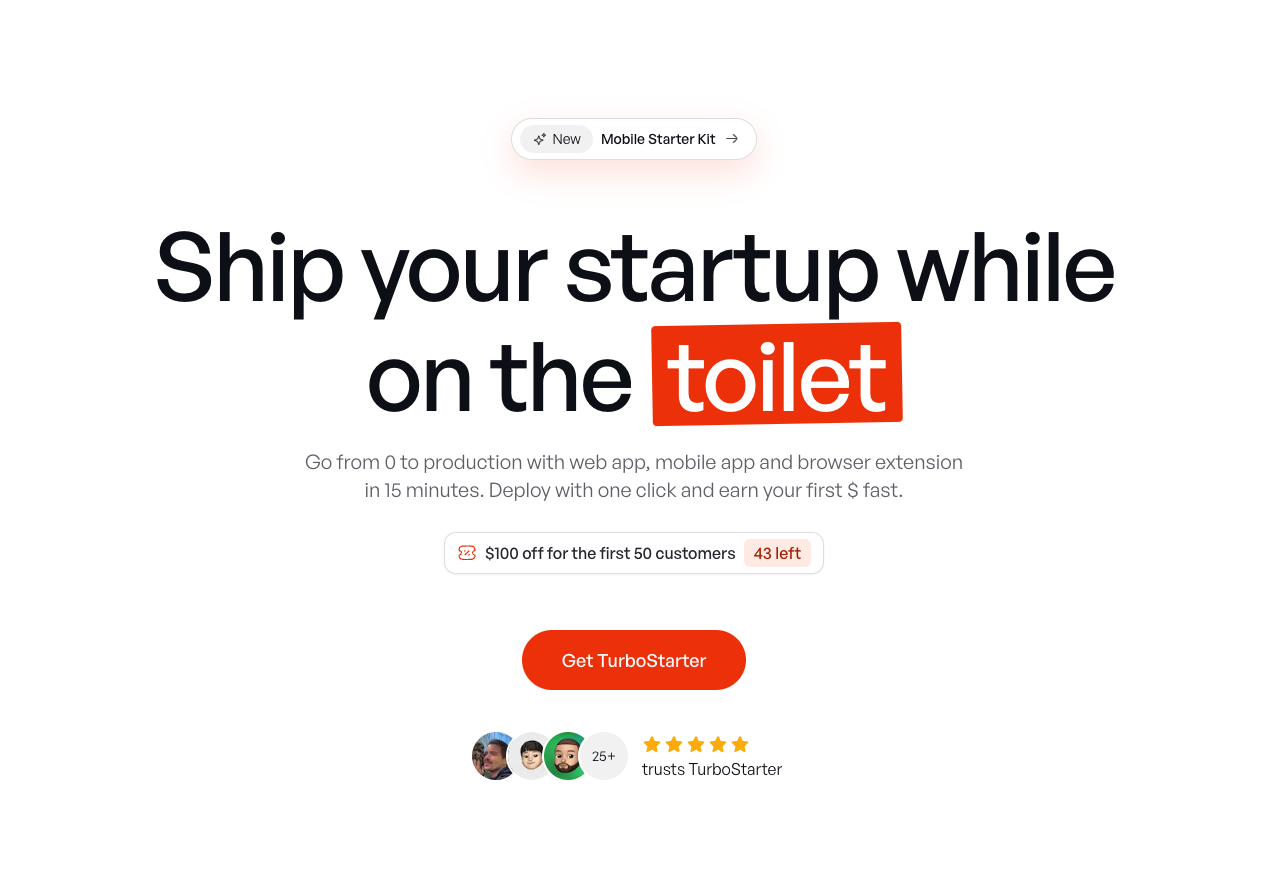
TurboStarter
Ship your startup everywhere. In minutes.
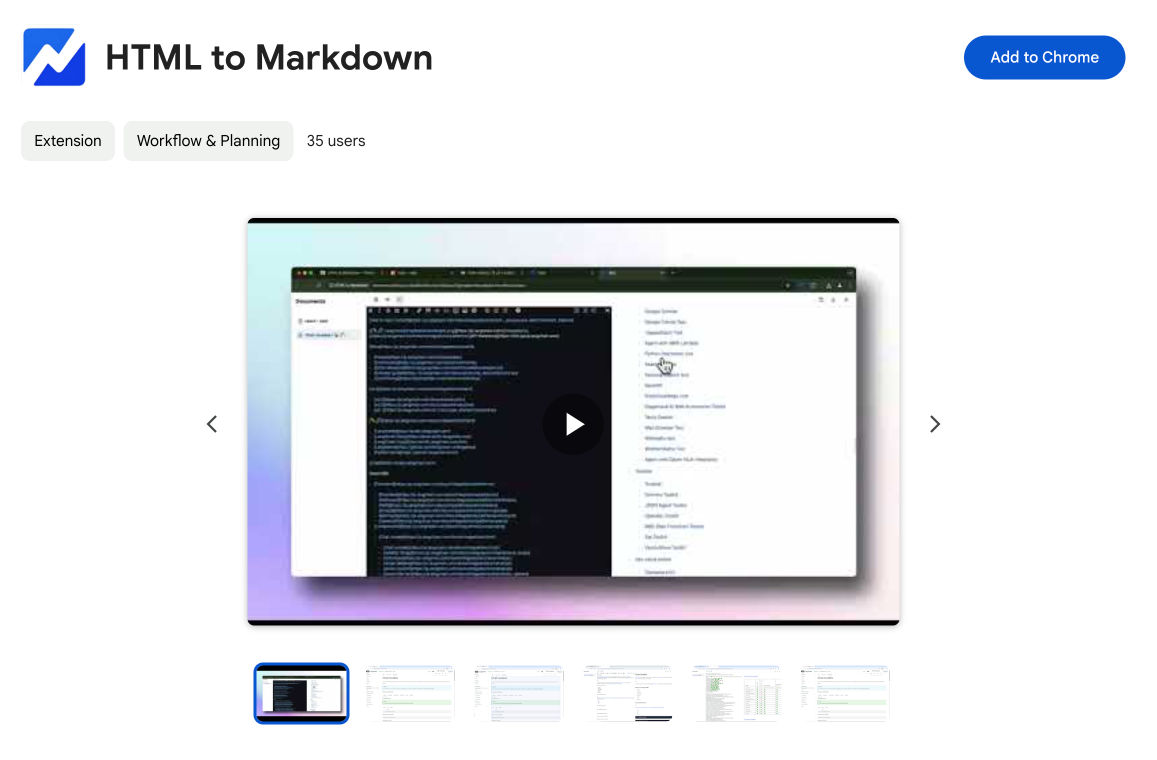
HTML to Markdown
Convert HTML to Markdown with ease, directly in your browser 📄
Dotallio
Personalized AI apps that automate research, data extraction, and content creation without code 🤖
Talk to Santa
Enjoy a magical live video chat or receive a unique AI-generated video greeting from Santa Claus 🎅
pozywka.pl
Scalable blog for food journalist, focused on performance and user experience 🌭
zagrodzki.me
Personal blog and portfolio of Bart Zagrodzki, where he shares his knowledge and work 💼
TurboStarter
Ship your startup everywhere. In minutes.
HTML to Markdown
Convert HTML to Markdown with ease, directly in your browser 📄
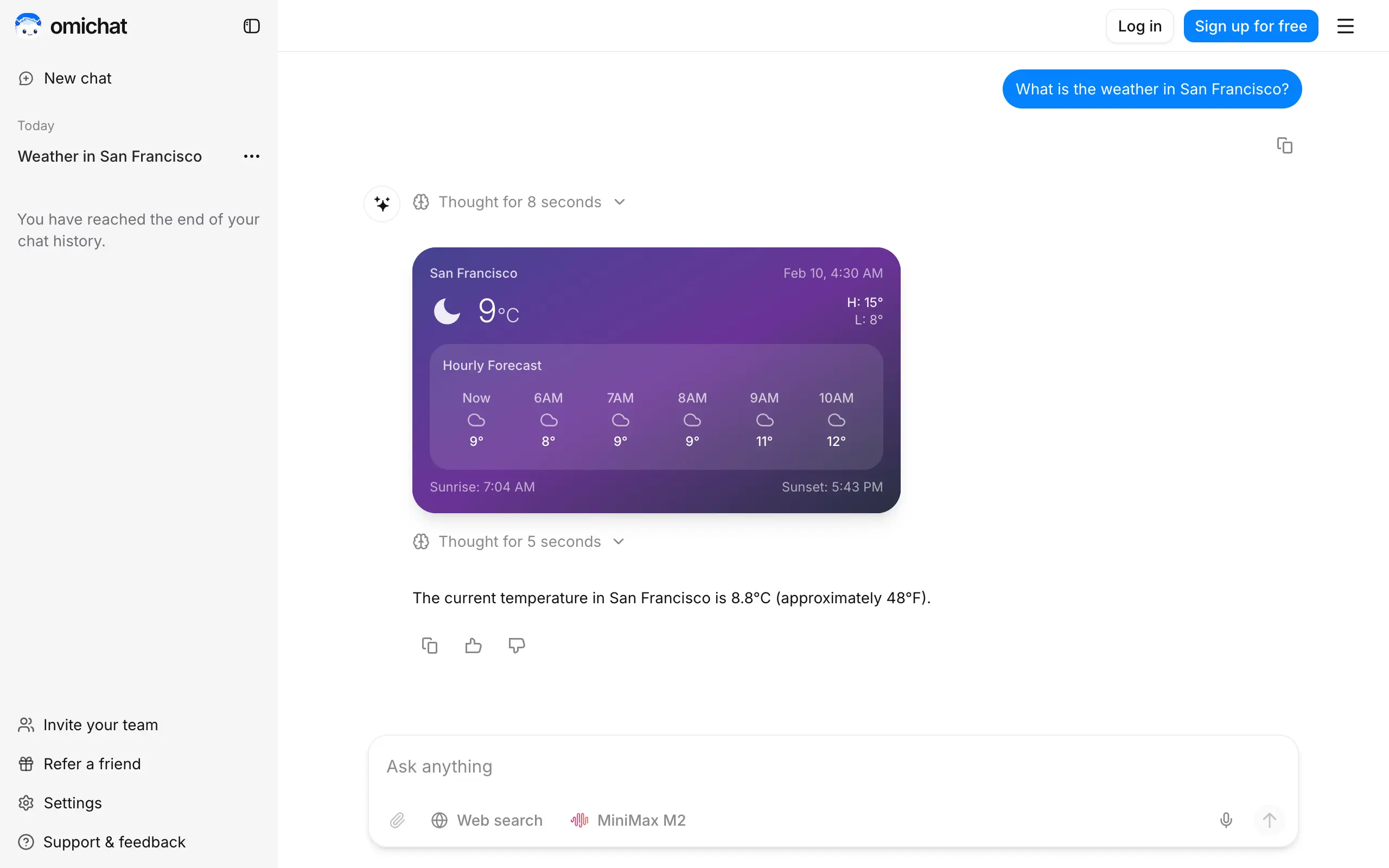
Omichat
Chat with 50+ AI models, including ChatGPT and Claude, in one place - switch models anytime without losing context 🤖
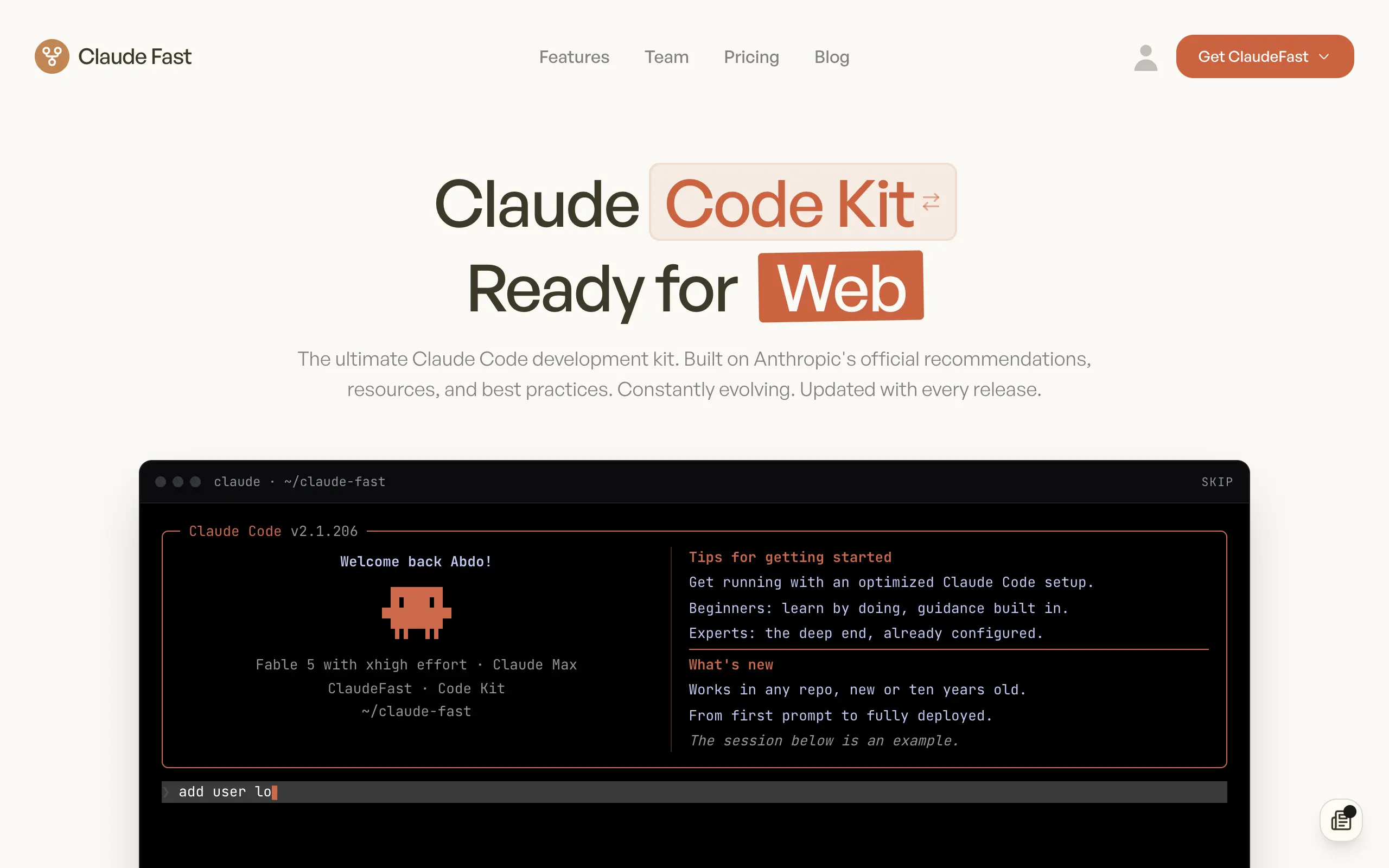
Claude Fast
Supercharge your Claude Code with 6x effective context window and specialized AI agents 🤖

EmojAI
AI-powered emoji picker with smart, context-aware suggestions 🤖

Solohacker
Autonomous company launcher - AI agents work 24/7, escalate what matters, and you stay in control 🤖

BeRawi: Storytelling Coach
Practice storytelling daily with instant feedback to sound clearer, more engaging, and confident 🎤
Omichat
Chat with 50+ AI models, including ChatGPT and Claude, in one place - switch models anytime without losing context 🤖
Claude Fast
Supercharge your Claude Code with 6x effective context window and specialized AI agents 🤖
EmojAI
AI-powered emoji picker with smart, context-aware suggestions 🤖
Solohacker
Autonomous company launcher - AI agents work 24/7, escalate what matters, and you stay in control 🤖
BeRawi: Storytelling Coach
Practice storytelling daily with instant feedback to sound clearer, more engaging, and confident 🎤

Connect with like-minded people
Join our community to get feedback, support, and grow together with 1,000+ builders on board, let's ship it!
Join usShip your startup everywhere. In minutes.
Don't burn tokens on setup and start building features on day one.