TraceSage
Turn failed EVM transactions into plain-English root causes and replayable Go tests, with ABI-aware traces in a lightweight dashboard.
What is TraceSage?
TraceSage is an AI-powered debugging tool for Ethereum Virtual Machine (EVM) developers. It takes a failed transaction, explains the likely root cause in plain English, and helps turn the failure into a replayable Go test. Its dashboard brings together ABI-aware execution traces, decoded events, contract calls, and test artifacts so developers can move from “this transaction reverted” to “here is how to reproduce and investigate it.”
The product sits at the intersection of smart contract debugging, transaction simulation, and developer productivity. Its central promise is not simply to summarize a revert. It is to connect an explanation to the underlying trace and a repeatable engineering workflow.
That distinction matters. Developers need more than a plausible AI answer: they need evidence they can inspect, replay, and use to prevent regressions.
The problem TraceSage addresses
A failed on-chain transaction can be difficult to diagnose, even when the failure appears simple. A wallet or block explorer may show that a transaction reverted, but the underlying cause may involve several layers:
- A function received an unexpected argument.
- A contract call failed inside a nested external call.
- A token transfer returned an unexpected value.
- A permission check rejected the caller.
- A proxy delegated execution to an implementation contract.
- A state change earlier in the transaction altered the expected outcome.
- A gas, block, or timestamp assumption did not match the developer’s local test environment.
A developer may need to inspect the receipt, fetch the transaction and its surrounding block data, decode input using an ABI, simulate execution against suitable state, and work through nested calls in a trace. Then they may need to reproduce the same conditions locally before changing the code.
This work is especially costly when the failure is intermittent, depends on a specific historical state, or occurs in a transaction that calls several contracts. A useful debugging product must preserve the relationship between the human-readable diagnosis and the actual execution evidence.
TraceSage’s opportunity is to make that investigation faster without hiding the details that experienced developers rely on.
Who is the target audience for TraceSage?
The strongest initial customers are engineering teams that regularly debug EVM transactions and can judge whether a proposed root cause is technically sound.
Smart contract engineers
Solidity developers need to understand why a call reverted, whether the issue is in their contract or a dependency, and how to reproduce it in their test suite. TraceSage can help them go from transaction hash to a focused test case without manually assembling every piece of evidence.
Protocol and infrastructure teams
Protocol teams may investigate failures reported by users, monitoring systems, relayers, or internal applications. For these teams, fast triage can reduce support load and shorten the time between a production issue and a verified fix.
Security researchers and auditors
Security professionals examine execution paths, authorization checks, external calls, and unexpected state transitions. TraceSage could help organize evidence and generate reproducible test scaffolding, though it should be positioned as an investigation aid rather than an autonomous auditor.
Developer support and developer relations teams
Support engineers often receive a transaction hash without the complete context needed to explain what happened. A shareable report containing decoded calls, trace evidence, and a concise explanation could help teams respond more consistently.
Teams building on-chain applications
Wallets, exchanges, bridges, marketplaces, and other products that submit or monitor transactions may benefit from an internal debugging workflow. These customers are more likely to need team features, integrations, and reliable access controls than individual hobbyists.
Best initial customer profile
A practical first market is small and midsize EVM engineering teams that:
- Use Go in their backend, testing, or infrastructure workflows.
- Work with contracts that make nested calls or use proxies.
- Already use a local fork or test framework.
- Need to investigate production transactions as well as local failures.
- Can share anonymized test cases and give direct feedback.
Starting with this focused group is more effective than trying to serve every blockchain user, every EVM chain, and every language from day one.
Market opportunity and product gap
TraceSage addresses a specific gap between raw execution data and a developer-ready regression test.
Existing workflows often cover only part of the journey. A block explorer can show transaction status and decoded input when the ABI is available. A local development framework can run tests and fork chain state. Node providers may expose tracing or simulation APIs. General-purpose AI tools can help explain code if a developer supplies enough context.
The gap is that developers may still have to connect these pieces themselves. They might copy a transaction hash into one tool, retrieve a trace from another, decode a call elsewhere, and then manually rebuild the scenario in a local test. That process is difficult to standardize across a team.
TraceSage’s product opportunity is to bring together:
- Transaction context, including the transaction, receipt, block, and relevant execution environment.
- ABI-aware interpretation, where known contract interfaces are used to decode function calls and events.
- Trace exploration, with nested calls and failure points organized for inspection.
- Evidence-linked explanations, so each conclusion can be checked against trace data rather than accepted on trust.
- Replayable test output, designed to fit a real Go-based development workflow.
A product that reliably connects these steps may save engineering time, improve incident handoffs, and make debugging knowledge easier to preserve.
A product positioning principle
TraceSage should present AI explanations as evidence-backed hypotheses. The trace, decoded data, and replay result should remain visible so developers can verify the diagnosis.
Core features and how they should work
Transaction-to-explanation workflow
A user should be able to submit a transaction hash or select a transaction from a supported environment. TraceSage can then gather available transaction data, decode it when an ABI is known, and identify the point at which execution failed.
A useful explanation should answer concrete questions:
- Which call failed?
- What error or revert information is available?
- Which contract and function were involved?
- What were the relevant caller, arguments, and call depth?
- Which parts of the diagnosis are confirmed, and which are inferred?
- What evidence should the developer inspect next?
The interface should distinguish observed facts from model-generated interpretation. For example, “the call to transferFrom reverted with this decoded custom error” is different from “the likely cause is that the spender lacks allowance.” The second statement may be a strong hypothesis, but it should be linked to the relevant call data and, where possible, state evidence.
ABI-aware traces
ABI awareness is one of TraceSage’s most important differentiators. Raw traces can be difficult to read because they contain addresses, selectors, calldata, return data, and nested execution steps. When a verified ABI or user-supplied ABI is available, the product can turn some of that data into readable function names, argument values, events, and custom errors.
The interface should gracefully handle incomplete information. If an ABI is missing or does not match the deployed contract, TraceSage should show the raw selector or data rather than inventing a decoded interpretation. It should also explain where an ABI came from and allow users to correct or replace it.
Useful trace views may include:
- A nested call tree with clear success and failure states.
- A focused view of the failing frame and its parent call.
- Decoded arguments, events, and custom errors when available.
- Raw calldata and return data for verification.
- Links between a summarized explanation and the specific trace frames that support it.
- Filters for contract address, call type, depth, or failure status.
Replayable Go tests
A generated test is valuable only if it reflects the conditions that caused the failure. TraceSage should produce a test artifact that developers can review, edit, and run in their existing project.
A realistic test-generation workflow should identify the assumptions it relies on, such as:
- The chain and fork block.
- The relevant contract addresses and ABI versions.
- The sender and call parameters.
- Required account balances, allowances, roles, or other state.
- The block timestamp and other environmental values when relevant.
- Whether earlier transactions must be replayed to recreate the required state.
The hardest case is a transaction whose outcome depends on state changes made earlier in the same block or on historical state that is not available in the developer’s local environment. TraceSage should not imply that every transaction can be reproduced with a single function call. It should report missing prerequisites and offer the closest reproducible test it can generate.
Team dashboard and investigation history
A lightweight dashboard can help users keep investigations organized. Each report could include the transaction hash, chain, discovered contracts, trace, explanation, generated test, and investigation notes.
Team-oriented functions may include:
- Shared workspaces and role-based access.
- Saved investigations and labels.
- Comments attached to trace frames or reports.
- Exportable reports for incidents and support tickets.
- A record of which ABI or configuration was used.
- Comparison of repeated failures across transactions.
A dashboard should make it easy to move from a report to an action. A collection of attractive visualizations is not enough if users still have to rebuild the test manually.
Integrations and developer workflow
TraceSage should fit into tools developers already use rather than requiring a full workflow migration. Potential integrations include command-line use, CI workflows, issue trackers, and developer frameworks. The right integration order should be determined by customer interviews and usage data, not by the number of integrations a competitor advertises.
A command-line interface is a particularly useful extension. Engineers could submit a transaction hash, retrieve a report, or generate a test artifact from a local development environment. CI integration could later help teams detect when a previously understood failure reappears.
Competitive advantage analysis
TraceSage would compete indirectly with several categories of tools, not just products that use the same AI label.
| Capability | Block explorers | Local test frameworks | Generic AI assistants | TraceSage opportunity |
|---|---|---|---|---|
| Transaction status and basic details | Strong | Limited | Depends on input | Gather into one investigation |
| ABI-based decoding | Often available when metadata exists | Available in project context | Requires supplied context | Connect decoding to trace evidence |
| Historical execution tracing | Varies by chain and provider | Possible with a fork | Not inherently available | Make traces easier to inspect |
| Plain-English failure explanation | Usually limited | Usually developer-led | Can explain supplied data | Ground explanations in execution evidence |
| Replayable Go test output | Not usually the core workflow | Core testing capability, but manual setup may be needed | Can draft code, with verification required | Generate a test from an investigation |
| Evidence-linked diagnosis | Varies | Depends on developer workflow | Often needs careful prompting | Make evidence and uncertainty visible |
This comparison is intentionally about workflow categories rather than unsupported claims about individual vendors. Product capabilities change, and the strongest competitive analysis should be validated with a current feature review and user interviews.
TraceSage’s unique selling proposition
The strongest USP is:
TraceSage turns an EVM transaction failure into an evidence-backed explanation and a reviewable Go test, with ABI-aware traces in one debugging workflow.
That positioning is more compelling than “AI for blockchain” because it describes a concrete outcome. It also gives the product a defensible product direction: improve trace interpretation, test fidelity, and developer workflow integration.
Potential advantages include:
- A closed debugging loop: explanation, evidence, and reproduction are connected.
- A developer-first output: the result can become a test rather than a disposable chat response.
- Language-specific usefulness: Go test generation can differentiate the initial product for a clearly defined audience.
- Transparency: trace-linked claims can build trust with technical users.
- Workflow data: with appropriate privacy controls, user feedback can reveal which explanations and test artifacts are useful.
The product should avoid competing primarily on the novelty of its AI model. Models and APIs change quickly. A durable advantage is more likely to come from execution-data handling, replay accuracy, developer trust, integrations, and a strong feedback loop.
Recommended technical stack
The core technical challenge is not just building a chat interface. It is reliably gathering EVM data, normalizing traces across sources, producing a traceable interpretation, and generating test artifacts that can run in a user’s environment.
Frontend
A lightweight web dashboard can be built with React and TypeScript. TypeScript can help enforce consistent data structures for transactions, trace frames, decoded errors, and generated tests. The interface should prioritize a searchable call tree, clear failure markers, and a side panel that links explanations to evidence.
API and orchestration layer
A Go backend is a natural fit for a product whose initial output is Go tests and whose target customers may already use Go tooling. Go can also work well for concurrent RPC requests and command-line utilities. A TypeScript backend is another reasonable choice if the team has stronger frontend expertise or expects to move quickly with a shared language across the application.
A practical architecture might separate:
- User and workspace APIs.
- Chain data retrieval.
- Trace normalization.
- ABI resolution and decoding.
- Explanation generation.
- Test generation and validation.
- Billing, quotas, and audit logging.
The service should treat chain providers as replaceable dependencies. Provider-specific trace formats, rate limits, and historical data availability can otherwise become tightly coupled to the application.
EVM data access
TraceSage may need standard JSON-RPC calls for transaction and receipt data, plus trace or simulation capabilities from a compatible node or provider. The exact availability and behavior can vary by chain and provider. Before committing to a provider, test representative cases: ordinary reverts, nested calls, proxy calls, transactions with custom errors, and historical block access.
A provider abstraction should record where each result came from, when it was fetched, and whether data was incomplete. This makes debugging TraceSage itself easier and gives users a clearer account of the evidence behind a report.
ABI decoding
ABI decoding should be deterministic. AI can help describe decoded information, but it should not be responsible for deciding what raw bytes mean when an ABI decoder can provide a verifiable result.
The system should support trusted contract metadata where available, as well as user-provided ABIs. It should store the source and version of each ABI used to decode a report so that later investigations can reproduce the same interpretation.
AI explanation layer
The model should receive a structured representation of the transaction and trace rather than an unfiltered, oversized payload. The application can supply:
- The failed trace frame.
- Relevant parent and child calls.
- Decoded errors and arguments.
- Transaction and block metadata.
- Known contract context.
- Explicit labels for missing or uncertain information.
The model’s response should follow a constrained structure, such as summary, evidence, likely causes, uncertainty, and suggested next steps. The product can then validate that each cited trace frame exists and render those references as navigable UI elements.
Test generation and validation
Generated code should be treated as an artifact that needs validation, not as a guaranteed solution. TraceSage can run static checks, format the output, and where practical execute a test in a controlled environment. It should show exactly what was validated.
An initial version may generate a test file and a checklist of required setup rather than attempting to run arbitrary user code in a hosted sandbox. If remote execution is added later, it needs strict isolation, resource limits, secrets handling, and clear retention policies.
Data storage and security
A relational database can store users, workspaces, reports, configuration, and billing state. Object storage may be useful for larger trace payloads and generated artifacts. Sensitive customer code, private RPC endpoints, and incident details should be handled as first-class security concerns.
Useful design principles include:
- Minimize retention of raw payloads where possible.
- Encrypt data in transit and at rest.
- Separate tenant data and enforce authorization at the API layer.
- Redact credentials from logs.
- Offer deletion controls and clear retention settings.
- Keep a record of provider and model usage for debugging and auditability.
Suggested stack trade-offs
| Layer | Practical option | Main benefit | Trade-off |
|---|---|---|---|
| Dashboard | React and TypeScript | Familiar ecosystem and typed UI data | Requires careful handling of large trace trees |
| Backend | Go | Strong fit for Go test workflows and concurrent services | May slow teams whose experience is primarily TypeScript |
| Database | PostgreSQL | Mature relational model for teams and reports | Large trace payloads may need separate object storage |
| Queue | Managed job queue or Redis-backed worker | Handles slow trace retrieval and AI tasks | Adds operational complexity |
| Chain access | Pluggable RPC and tracing providers | Avoids dependence on one data source | Requires provider-specific normalization |
| AI layer | Model API behind an abstraction | Enables iteration and provider changes | Requires evaluation, cost controls, and privacy review |
Monetization strategy options
TraceSage can monetize based on the value of investigations while keeping initial adoption simple.
Free tier for individual developers
A free plan can provide a limited number of reports, basic trace viewing, and manual test export. The aim is to let developers verify the workflow with real transactions before involving procurement or team setup.
A free tier should have clear limits. Unexpected throttling or unclear data retention can undermine trust more quickly than a modest usage cap.
Usage-based plans
Paid plans can charge based on investigation volume, trace complexity, or report generation. Usage-based pricing aligns revenue with actual product activity, but the pricing unit must be understandable. If users cannot predict the cost of a debugging session, they may avoid using the tool during incidents.
Possible controls include per-workspace budgets, usage alerts, and a transparent estimate before expensive operations.
Team subscriptions
Team plans can charge per workspace or seat and include shared investigations, role-based access, longer retention, and integrations. For many engineering organizations, collaboration and incident history may be more valuable than a higher raw transaction quota.
Enterprise plans
Larger customers may need private deployments, custom data retention, single sign-on, audit logs, support commitments, or approved provider configurations. These requirements can justify higher pricing, but they also introduce implementation and support costs that should be validated before promising them.
Pricing validation
Before settling on a pricing model, interview developers and engineering managers about:
- The cost of current investigation workflows.
- How often they debug historical transactions.
- Which features are essential for team adoption.
- Whether they prefer a seat-based subscription or predictable usage allowance.
- What security and procurement requirements apply.
Price should reflect time saved and confidence gained, not the mere presence of AI.
Risks and how to mitigate them
Incorrect or overconfident explanations
A plausible but incorrect diagnosis can waste time or cause a developer to make a harmful change. TraceSage should link conclusions to evidence, label hypotheses, display missing context, and avoid presenting model output as a formal security review.
Build an evaluation set with representative transaction types and have experienced EVM developers review the explanations. Track not only whether an explanation sounds clear, but whether the cited evidence supports it.
Incomplete replay conditions
A generated test may fail because it does not reproduce the relevant historical state, block environment, or earlier transaction sequence. The product should identify assumptions, surface missing state, and distinguish “generated” from “successfully replayed.”
A useful report might explain that a test reproduces the call against a forked block but does not recreate state changes from other transactions in the same block.
Chain and provider differences
Trace support, historical data access, and RPC behavior can differ across networks and vendors. TraceSage should begin with a narrow set of supported chains and publish what is supported rather than implying universal compatibility.
Provider adapters and a test suite of known transaction cases can reduce the risk of silent format differences.
ABI mismatch and incomplete metadata
An incorrect ABI can produce misleading names or arguments. TraceSage should record ABI provenance, allow users to supply an ABI, and preserve raw calldata for verification. When decoding fails, the interface should say so clearly.
Data privacy and intellectual property
Transaction data is public on-chain, but customer investigations may include private source code, internal incident notes, proprietary ABIs, and private RPC credentials. Data controls should be visible in the product and explained in plain language.
Do not send secrets or unnecessary private source code to model providers. Provide customers with clear configuration and retention options before expanding enterprise use.
High operational costs
Trace retrieval, historical queries, and model inference can become expensive. TraceSage can control costs through caching, asynchronous jobs, request limits, model selection by task, and clear quotas. A failed investigation should not trigger repeated expensive work without user visibility.
Trust and adoption
Experienced developers may be skeptical of AI-generated code and explanations. That skepticism is reasonable. TraceSage should make the evidence inspectable, let users edit generated tests, and show validation status. The product earns trust by helping developers verify a diagnosis, not by asking them to trust a confident answer.
Go-to-market strategy
A focused launch should target communities and teams already discussing EVM debugging, Go-based blockchain tooling, and transaction investigation. Rather than leading with broad claims, publish practical material that demonstrates the workflow:
- A walkthrough of diagnosing a reverted transaction.
- An explanation of how nested EVM calls appear in a trace.
- A guide to reproducing a historical failure in a Go test.
- A transparent postmortem showing where automated diagnosis succeeds and where it needs human review.
- A technical comparison of trace data, decoded errors, and replay assumptions.
The best early marketing assets can double as product tests. If users repeatedly ask how to reproduce a transaction or interpret a trace, those questions can inform both documentation and product priorities.
A small private beta is likely more valuable than a large public launch. Recruit developers who can provide real, anonymized failures and ask them to compare TraceSage with their current workflow. Measure time to a verified root cause, test usefulness, and the percentage of reports that require substantial correction.
Actionable implementation steps
Validate the problem with EVM developers
Interview smart contract engineers, protocol teams, and Go developers. Ask them to walk through their last difficult transaction failure rather than asking whether they like the idea. Record the tools they used, where they lost time, and how they decided the issue was resolved.
Narrow the first supported workflow
Choose a small set of chains, trace sources, and Go testing conventions. Define what the first release supports and document unsupported cases, especially transactions that depend on same-block state changes or unavailable historical data.
Build a deterministic trace pipeline
Retrieve transaction and receipt data, normalize trace formats, decode known ABIs, and preserve raw evidence. Keep this layer independent from the language model so that core transaction facts remain testable and reproducible.
Add evidence-linked explanations
Generate concise summaries from structured trace data. Require the output to distinguish observed facts from hypotheses and link claims to relevant calls, decoded errors, or transaction metadata.
Generate reviewable Go tests
Start with a test artifact that includes its assumptions and setup requirements. Validate syntax and formatting, then add automated execution only when the environment can run customer artifacts securely and reliably.
Test replay accuracy with real cases
Create a test corpus covering nested calls, proxies, custom errors, missing ABIs, and historical-state dependencies. Ask experienced developers to judge whether the generated tests reproduce the intended failure and whether the explanation is actionable.
Launch a private beta and measure outcomes
Track investigation completion, time to verified diagnosis, test adoption, correction rates, and repeat use. Use this evidence to prioritize integrations, team features, and pricing rather than building a broad feature set prematurely.
Building the first version efficiently
A focused SaaS launch requires more than the debugging engine. Authentication, workspaces, billing, onboarding, and application structure also need to be reliable. Teams that want to accelerate the surrounding product foundation can evaluate TurboStarter while keeping TraceSage’s chain-data pipeline, trace processing, and test-generation logic purpose-built.
The key is to avoid letting boilerplate determine the product architecture. The transaction investigation workflow is the differentiator; the supporting platform should make it faster to validate that workflow with customers.
Frequently asked questions
TraceSage is a proposed AI-powered EVM debugging product. It aims to explain failed transactions in plain English, show ABI-aware traces, and generate replayable Go tests that developers can review and run.
Likely users include smart contract engineers, protocol teams, security researchers, developer support teams, and companies that build applications on EVM-compatible chains.
No tool should promise that for every transaction. Reproduction may require historical state, block environment details, or earlier transactions. TraceSage should expose those assumptions and report what it could and could not recreate.
Its intended value is the connection between transaction data, ABI-aware execution traces, evidence-linked explanations, and Go test generation. A general assistant can help explain supplied information, but TraceSage is designed around a structured debugging workflow.
They should treat it as a hypothesis to verify. A trustworthy implementation will show the trace evidence, preserve raw data, label uncertainty, and let developers inspect or edit generated tests.
Conclusion
TraceSage targets a specific and consequential developer problem: turning a failed EVM transaction into a root cause that can be verified and a test that can help prevent the same failure from returning.
Its strongest product direction is an evidence-first debugging workflow that combines ABI-aware traces, clear explanations, and replayable Go tests. To earn adoption, it must be honest about incomplete data, historical-state limitations, and AI uncertainty. To stand out, it should make the path from transaction hash to verified regression test substantially easier than a developer’s current collection of tools.
The most actionable next step is to validate the workflow with engineers using real transaction failures. If TraceSage can consistently help them reach a verified explanation faster—and produce tests they are willing to keep—it will have a meaningful foundation for product-market fit.
More 🤖 AI Startup SaaS ideas
Discover more innovative ai startup SaaS ideas that are trending in 2026. Each idea is AI-generated with market validation and growth potential to help you find your next profitable venture faster than competitors.
Your competitors are building with TurboStarter
Below are some of the SaaS ideas that have been generated and built with our starter kit.
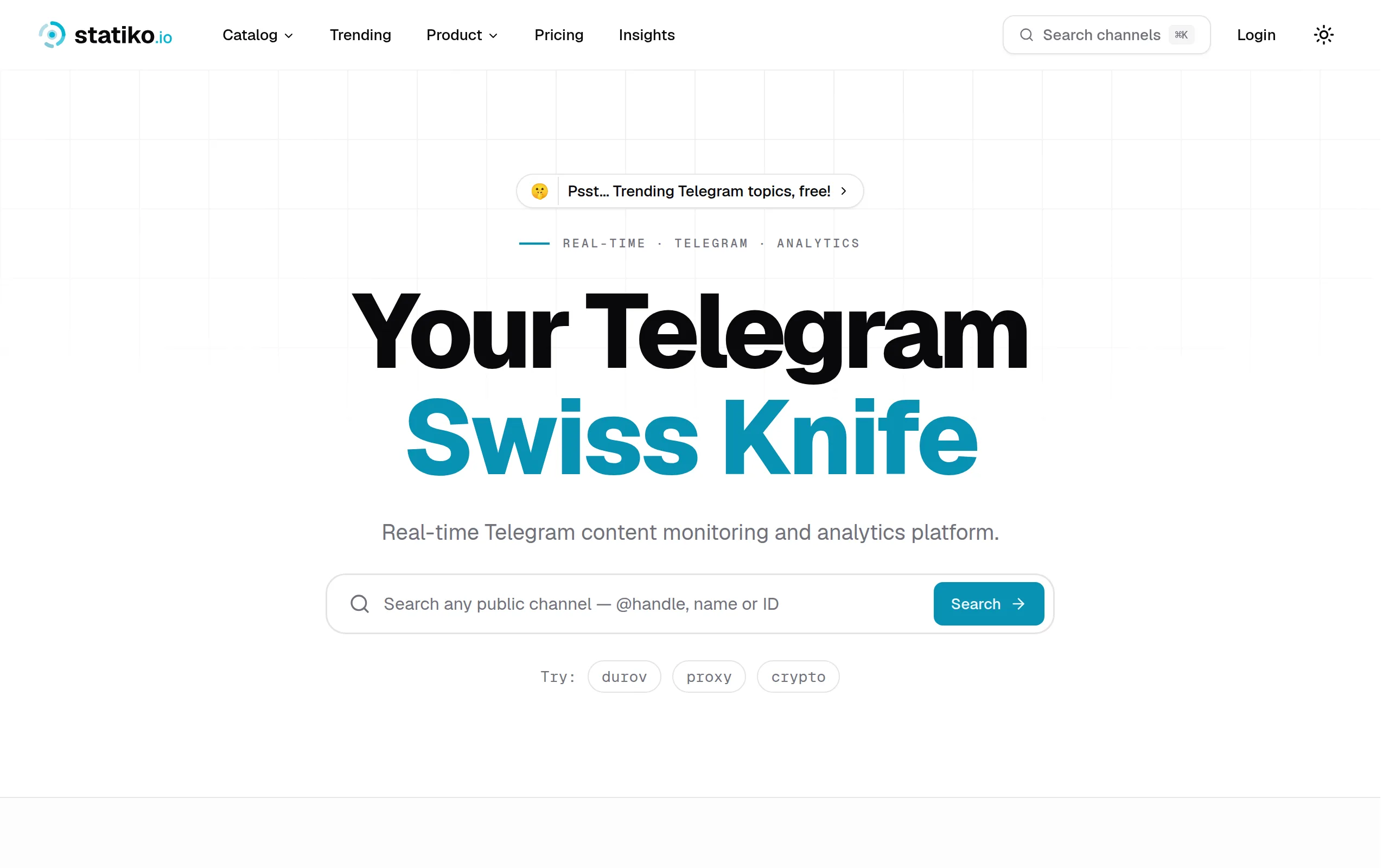
Statiko
Monitor any Telegram channel in real time - track posts, edits, deletions, and growth with AI recaps 📡

Shibui
AI website builder - describe your business, pick a niche template, edit by chatting, and publish instantly ✨

Pro Service
Find verified home service professionals, compare quotes, and pay securely through escrow - built for Brazilians across the US 🏠

RankGrow
Fix your SEO with AI agents - connect Search Console, get prioritized tasks, and grow organic traffic 📈
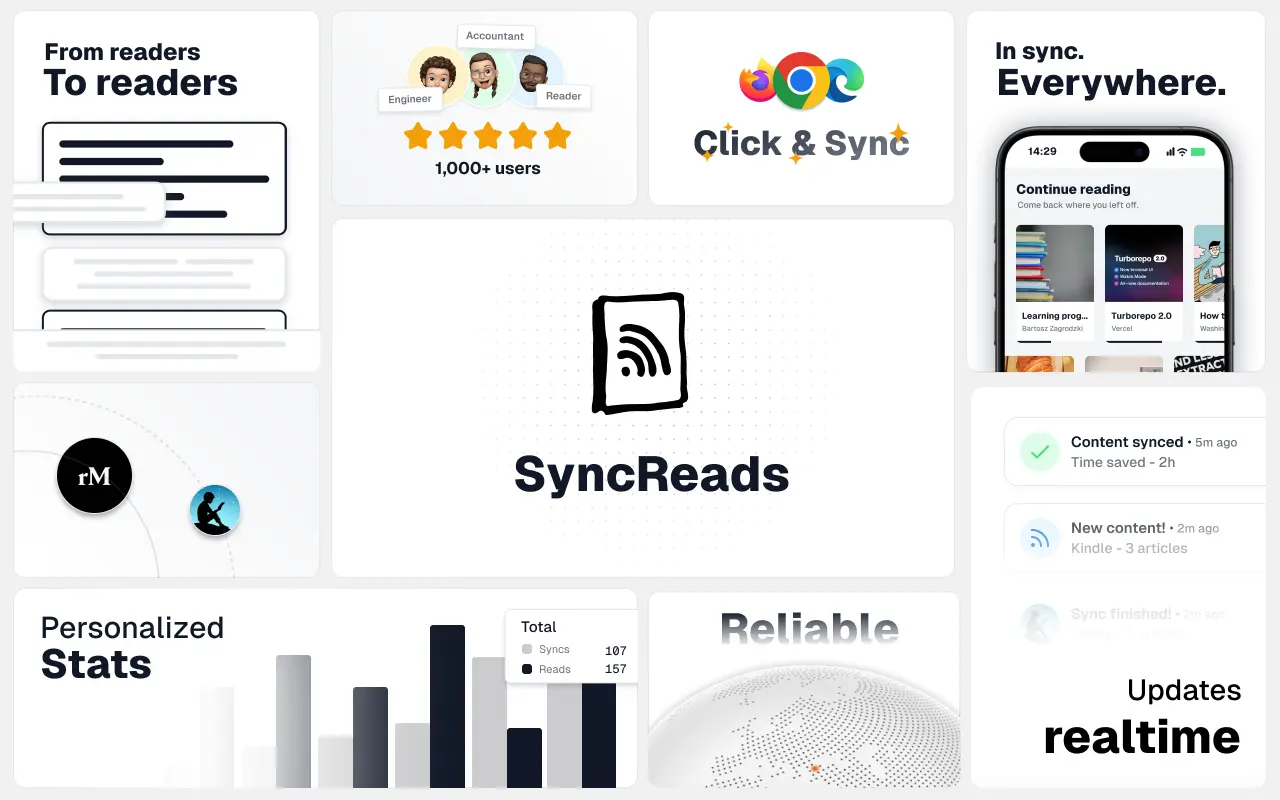
SyncReads
Sync your favorite content for distraction-free reading, save time and replace multiple apps. Anytime, anywhere 🔄
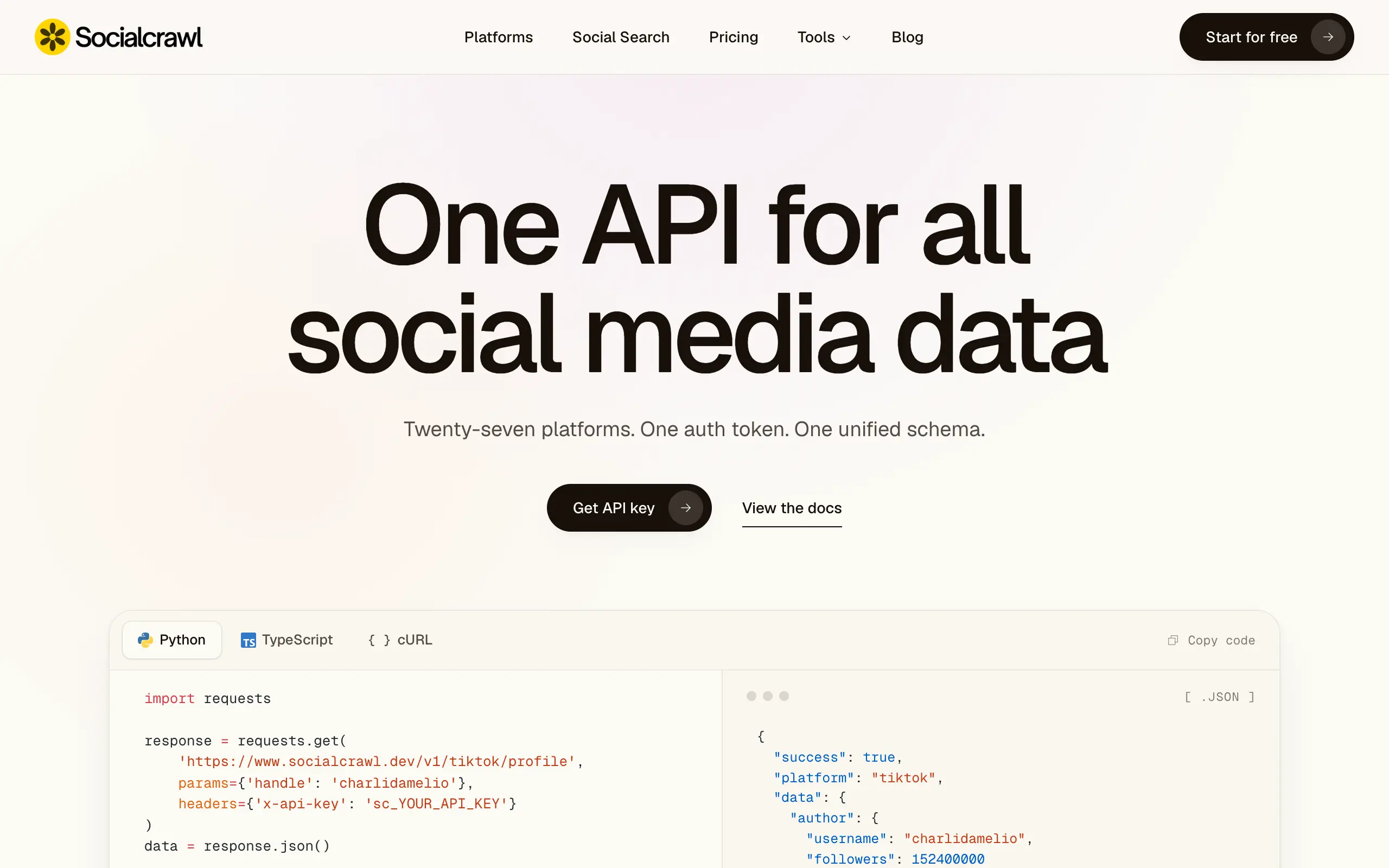
Socialcrawl
Get clean, structured data from 21 platforms like TikTok, Instagram, and YouTube with a single request 📊
Statiko
Monitor any Telegram channel in real time - track posts, edits, deletions, and growth with AI recaps 📡
Shibui
AI website builder - describe your business, pick a niche template, edit by chatting, and publish instantly ✨
Pro Service
Find verified home service professionals, compare quotes, and pay securely through escrow - built for Brazilians across the US 🏠
RankGrow
Fix your SEO with AI agents - connect Search Console, get prioritized tasks, and grow organic traffic 📈
SyncReads
Sync your favorite content for distraction-free reading, save time and replace multiple apps. Anytime, anywhere 🔄
Socialcrawl
Get clean, structured data from 21 platforms like TikTok, Instagram, and YouTube with a single request 📊
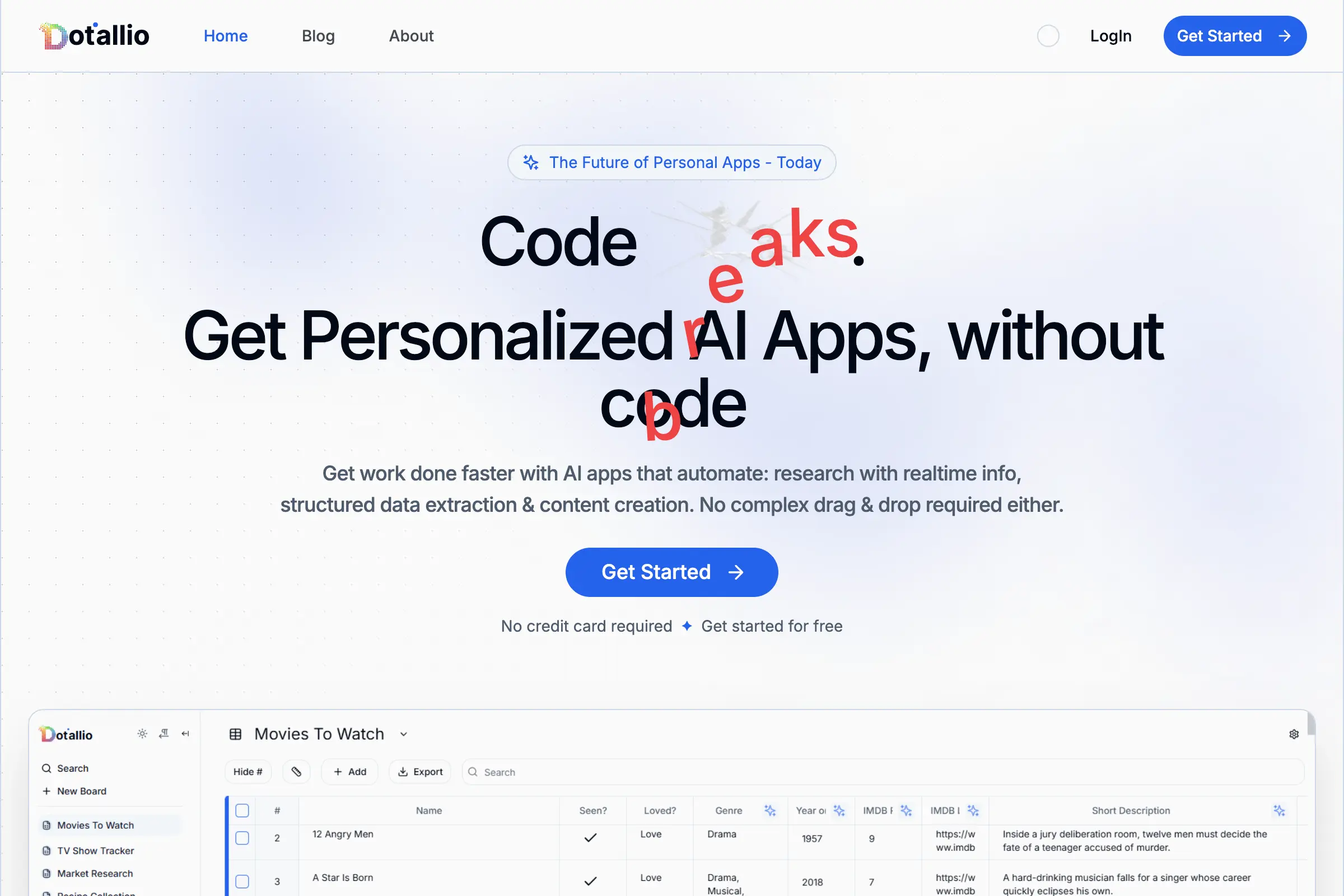
Dotallio
Personalized AI apps that automate research, data extraction, and content creation without code 🤖

Talk to Santa
Enjoy a magical live video chat or receive a unique AI-generated video greeting from Santa Claus 🎅

pozywka.pl
Scalable blog for food journalist, focused on performance and user experience 🌭
zagrodzki.me
Personal blog and portfolio of Bart Zagrodzki, where he shares his knowledge and work 💼
TurboStarter
Ship your startup everywhere. In minutes.
HTML to Markdown
Convert HTML to Markdown with ease, directly in your browser 📄
Dotallio
Personalized AI apps that automate research, data extraction, and content creation without code 🤖
Talk to Santa
Enjoy a magical live video chat or receive a unique AI-generated video greeting from Santa Claus 🎅
pozywka.pl
Scalable blog for food journalist, focused on performance and user experience 🌭
zagrodzki.me
Personal blog and portfolio of Bart Zagrodzki, where he shares his knowledge and work 💼
TurboStarter
Ship your startup everywhere. In minutes.
HTML to Markdown
Convert HTML to Markdown with ease, directly in your browser 📄
Omichat
Chat with 50+ AI models, including ChatGPT and Claude, in one place - switch models anytime without losing context 🤖
Claude Fast
Supercharge your Claude Code with 6x effective context window and specialized AI agents 🤖

EmojAI
AI-powered emoji picker with smart, context-aware suggestions 🤖

Solohacker
Autonomous company launcher - AI agents work 24/7, escalate what matters, and you stay in control 🤖

BeRawi: Storytelling Coach
Practice storytelling daily with instant feedback to sound clearer, more engaging, and confident 🎤
Omichat
Chat with 50+ AI models, including ChatGPT and Claude, in one place - switch models anytime without losing context 🤖
Claude Fast
Supercharge your Claude Code with 6x effective context window and specialized AI agents 🤖
EmojAI
AI-powered emoji picker with smart, context-aware suggestions 🤖
Solohacker
Autonomous company launcher - AI agents work 24/7, escalate what matters, and you stay in control 🤖
BeRawi: Storytelling Coach
Practice storytelling daily with instant feedback to sound clearer, more engaging, and confident 🎤

Connect with like-minded people
Join our community to get feedback, support, and grow together with 1,000+ builders on board, let's ship it!
Join usShip your startup everywhere. In minutes.
Don't burn tokens on setup and start building features on day one.