TraceWeaver
Map Java microservice dependencies and banking transaction flows from code, traces, and schemas. Catch risky architecture changes before deployment.
TraceWeaver is an AI-powered platform concept for mapping Java microservice dependencies and tracing banking transactions across code, telemetry, and schemas. Its central promise is practical: help engineering teams understand what depends on what, see how a transaction moves through distributed systems, and spot potentially risky architecture changes before deployment.
The idea addresses a persistent challenge in complex software environments. A service diagram can show how a system is supposed to work, while production traces show what happened during one request. Neither view alone necessarily explains how a proposed code or schema change could affect a critical banking flow. TraceWeaver aims to bring these perspectives together.
This analysis explores the product opportunity, likely users, essential features, technical architecture, monetization options, risks, and a step-by-step path to validation. It is intended for founders, product teams, and engineering leaders evaluating whether an AI-assisted Java microservice dependency mapping platform can solve a valuable and defensible problem.
What TraceWeaver does
TraceWeaver would create an evidence-backed map of software relationships by analyzing three complementary sources:
- Code reveals declared dependencies, service boundaries, APIs, configuration, and references between components.
- Distributed traces reveal runtime behavior, including which services participated in a request and how long each operation took.
- Schemas reveal the structure and evolution of data exchanged between services, databases, and event streams.
The platform would correlate these sources to answer questions such as:
- Which services can be affected by this code change?
- Which banking transaction flows pass through the service being modified?
- Does a proposed API or schema change appear incompatible with its consumers?
- Which service or dependency is associated with a recurring latency increase?
- Is the production dependency map consistent with the architecture developers believe they have?
The product should not present a graph as an end in itself. The graph is a means to help engineers make decisions faster and with better evidence. Its most valuable output is likely to be a clear explanation of impact, supported by links to the relevant code, trace, schema, or deployment change.
Why Java microservice dependency mapping matters
In a small application, developers can often understand how a change affects the rest of the system by reading the code and asking a teammate. In a large microservice environment, that approach becomes less dependable. Services may be owned by different teams, communicate through both synchronous APIs and asynchronous events, and use schemas that evolve independently.
This creates several related problems.
Documentation falls behind implementation
Architecture diagrams and service catalogs can be useful, but they require ongoing maintenance. When they are updated manually, they may describe the intended design rather than the system currently running in production.
A continuously refreshed dependency map can reduce this gap by using evidence from repositories and runtime telemetry. However, TraceWeaver should treat every inferred relationship as a claim with a source and confidence level, not as unquestionable truth.
Important dependencies are easy to overlook
Some dependencies are obvious in source code. Others are indirect, conditional, or visible only at runtime. A service may call another service only under certain transaction conditions. An event producer may be coupled to consumers through a shared message schema rather than a direct network call.
For banking systems, overlooking a dependency can have consequences beyond a failed deployment. A change might affect a payment workflow, account update, fraud check, reconciliation process, or customer-facing status. The platform needs to help teams distinguish ordinary dependency changes from changes that touch high-value business flows.
Change impact is difficult to assess across tools
A developer reviewing a pull request may need to move among a code host, an observability platform, an API catalog, schema files, a deployment dashboard, and internal documentation. That context-switching adds friction and makes it harder to assess the full impact of a change.
TraceWeaver’s opportunity is to connect these sources into a coherent change-impact view. It should not replace code review or observability tools. Instead, it should help users navigate from a proposed change to the relevant dependencies, flows, and evidence.
Target audience and buyer analysis
TraceWeaver’s potential users and buyers are related, but not always the same. The people using the product may be engineers investigating a deployment, while the budget owner may be a platform engineering director, CTO, or application security leader.
Primary users
Platform engineers need to understand service ownership, dependency boundaries, and the effects of changes across many teams. They are strong early adopters because they often maintain internal developer platforms and manage shared tooling.
Java and Spring engineering teams need a practical way to inspect dependencies in mature codebases. They may use TraceWeaver during code review, incident analysis, migration planning, or service decomposition.
Site reliability engineers can use the dependency map to understand the path of a failing or slow request. They are likely to value runtime evidence, historical comparisons, and links between traces and deployed versions.
Enterprise architects need a current view of how applications interact, especially when planning modernization, consolidation, or migration work. Their main requirement may be organization-wide visibility rather than per-pull-request automation.
Risk, security, and compliance teams may care about sensitive data paths, service ownership, audit trails, and the systems that support critical banking activities. These teams should be treated as stakeholders, even if engineers remain the main product users.
Potential buyers
The most plausible initial buyers are organizations with:
- A substantial Java or JVM service estate.
- Several teams contributing to shared applications or platform infrastructure.
- Existing distributed tracing or a plan to adopt it.
- Complex transaction flows that are difficult to document manually.
- A clear cost associated with incidents, regressions, or slow change review.
Large banks are an obvious potential market, but they may be a difficult first customer segment. Procurement cycles, security review, deployment requirements, and integration work can make early sales slow. A more focused entry point could be fintech companies, payment providers, banking technology vendors, or digital banking teams that have meaningful complexity but can run a pilot more quickly.
Jobs to be done
TraceWeaver should focus on recurring engineering jobs rather than a broad promise to “understand the architecture.”
- Before a change — identify affected services, APIs, schemas, and transaction flows.
- During a review — explain why a change may be risky and provide evidence reviewers can verify.
- During an incident — trace a request through the system and identify likely points of failure or delay.
- During modernization — determine which services still depend on a legacy component.
- During an audit or ownership review — show how a critical flow is implemented and which teams own its components.
The first job is a particularly strong starting point. Pull request review is a frequent workflow, provides a natural trigger for analysis, and gives the product a clear way to show value before a change reaches production.
Market opportunity and product gap
The opportunity is not simply to make another service catalog or observability dashboard. It is to connect architecture evidence with change decisions.
Many engineering organizations already have some combination of repository search, distributed tracing, service catalogs, API documentation, and schema registries. The gap is often not the complete absence of data. It is the effort required to reconcile that data and use it to answer a specific question about impact.
TraceWeaver can target this gap by providing a shared model of:
- What the code declares — dependencies, endpoints, configuration, and schema references.
- What production demonstrates — observed service calls, event activity, and transaction paths.
- What a change may affect — the downstream components and business flows connected to the modified code or contract.
That third layer is the product’s main opportunity. A map that merely displays services may be useful, but a map that explains why a pull request could affect a particular payment flow is more closely connected to a concrete engineering decision.
Why the banking focus could help
Banking systems make dependency visibility especially relevant because workflows can cross multiple services, databases, and event-driven components. The same complexity also raises expectations. A product positioned for financial institutions must be careful about data handling, access controls, auditability, and the accuracy of its recommendations.
A banking focus can help TraceWeaver differentiate through domain-aware concepts such as payment lifecycle stages, transaction identifiers, account operations, and reconciliation dependencies. It should not assume that all customers use the same terminology or architecture. Domain models should be configurable and grounded in customer-provided metadata.
The product should also avoid claiming that it can guarantee safe deployments. No dependency analysis tool can capture every runtime condition, undocumented integration, or operational risk. A more credible position is that it provides additional evidence to help teams identify and review risk earlier.
Competitive advantage and positioning
TraceWeaver would compete for attention with several product categories rather than a single direct alternative:
- Application performance monitoring and distributed tracing platforms.
- Software composition analysis and static code analysis tools.
- Service catalogs and internal developer portals.
- API management and schema governance products.
- Custom scripts, architecture diagrams, and team-specific documentation.
The platform’s advantage should come from bringing these perspectives together, not from claiming that each individual capability is unique.
| Product capability | TraceWeaver opportunity | Common limitation to address |
|---|---|---|
| Code dependency analysis | Connect code relationships to services and business flows | Source-level relationships may not reflect production behavior |
| Distributed tracing | Show observed runtime paths and latency | A trace is a sampled view, not a complete architecture |
| Schema analysis | Identify producer-consumer relationships and contract changes | Schema files may be incomplete or disconnected from ownership |
| Change impact review | Summarize likely downstream effects before deployment | Recommendations need evidence and explainable limits |
| Banking flow mapping | Group technical dependencies by transaction journey | Business-flow definitions vary between organizations |
The proposed USP
A concise positioning statement could be:
TraceWeaver maps Java service dependencies and banking transaction flows from code, traces, and schemas, then explains the likely impact of architecture changes before deployment.
The strongest version of this USP has four characteristics:
- Cross-source evidence rather than reliance on a single repository or telemetry source.
- Transaction-oriented views that connect technical services to business workflows.
- Change-aware analysis that compares a proposed change with the current dependency map.
- Explainable results that let engineers inspect the evidence behind each warning.
Trust is part of the competitive advantage. If TraceWeaver can show where a relationship came from, when it was last observed, and how confident the system is, engineers are more likely to use it in consequential workflows.
Core features and solution details
The product should be built around a sequence of connected workflows rather than a collection of unrelated dashboards.
1. Java repository analysis
The first ingestion path should analyze Java repositories and extract useful architectural relationships, such as:
- Service and module boundaries.
- REST or gRPC endpoints where detectable.
- Client libraries and outbound calls.
- Database and messaging integrations.
- Framework and configuration references.
- Schema or API contract usage.
- Ownership metadata from repository configuration.
The product should begin with high-confidence relationships. Static analysis can identify code references, but it cannot always determine which path will execute in production. TraceWeaver should label the origin of each finding, for example as statically detected, observed in telemetry, or inferred from schema relationships.
Initial support for common Java frameworks could include Spring-based applications, while keeping the analysis model flexible enough to add other JVM frameworks later. The goal is to provide useful coverage without promising perfect interpretation of every code pattern.
2. Runtime dependency mapping
Distributed tracing can reveal how services interact during real requests. TraceWeaver should ingest trace data through established instrumentation and telemetry formats where possible, rather than forcing customers to adopt a proprietary agent as a prerequisite.
OpenTelemetry provides documentation for vendor-neutral telemetry concepts and instrumentation. Using familiar formats can make adoption easier, although customers may still need help with inconsistent instrumentation, missing service identifiers, or low-quality span metadata.
The runtime map should show:
- Which services participated in a request.
- The sequence and duration of operations.
- Whether calls were synchronous or associated with asynchronous messaging.
- The deployed service version, when available.
- The traces that support a particular dependency edge.
- When a relationship was last observed.
A useful map should allow users to move from an architecture-level view into a representative trace. Otherwise, a graph edge may be difficult to validate.
3. Schema and contract analysis
Banking flows often cross service boundaries through APIs, event streams, and shared data contracts. TraceWeaver can analyze schema files and contract changes to detect potential compatibility issues.
Possible first integrations include OpenAPI specifications, Protocol Buffers, and event schemas. The platform can compare versions, identify consumers when that information is available, and connect the contract to services in the dependency graph.
Contract analysis should distinguish between a potential breaking change and a confirmed production impact. For example, a field removal may be structurally incompatible, but the practical risk depends on which consumers use the field and which versions are deployed.
4. Banking transaction flow maps
A transaction flow map should help users follow a business journey across technical services. Teams may define flows through naming conventions, trace attributes, API metadata, or manually selected entry points.
A useful flow view could include:
- The transaction’s entry point and major processing stages.
- Services and dependencies involved in the observed path.
- Data contracts or events used between stages.
- Relevant ownership details.
- Latency or error trends when telemetry supports them.
- A visible distinction between observed paths and inferred paths.
TraceWeaver should avoid treating a transaction as a single universal pattern. A payment authorization, account transfer, settlement, and reconciliation process may involve different components and business rules. Flow definitions should be configurable and auditable.
5. Pull request impact analysis
Pull request analysis can be the product’s most recognizable workflow. When a change is proposed, TraceWeaver could compare the affected code, contracts, and service ownership against the existing dependency model.
A report might include:
- Changed services, modules, or contracts.
- Downstream services that appear connected.
- Banking flows that include the affected components.
- Evidence supporting each relationship.
- Potentially breaking schema or API changes.
- A confidence level and a clear explanation of uncertainty.
- Links back to the relevant pull request files, traces, and service records.
The initial version should generate review context rather than block deployments automatically. Teams need time to assess false positives, tune policy, and build trust. Once customers understand the tool’s precision, they can choose whether to use selected findings as checks in a continuous integration workflow.
6. Search and natural-language exploration
Natural-language search can make a complex dependency map easier to navigate. An engineer might ask, “Which services process this transfer flow?” or “What calls the ledger service?”
AI should translate a question into a query over the product’s structured architecture model, then return an answer supported by specific evidence. It should not invent missing relationships to make the answer seem complete. If the platform cannot establish a connection, it should say so.
7. Change history and architecture drift
Dependency maps change over time as services are added, removed, or connected in new ways. TraceWeaver should show how the map evolved and distinguish intentional changes from unexpected drift.
A history view can help teams investigate:
- When a service first appeared in a transaction flow.
- Whether a dependency is still observed in recent telemetry.
- Which deployment introduced a new relationship.
- Whether a documented architecture view differs from current evidence.
This feature can also support modernization work by helping teams understand whether a legacy dependency is still active.
Recommended technical architecture
TraceWeaver is a data integration and analysis product with demanding requirements around security, explainability, and graph freshness. The architecture should be modular enough to support multiple input sources without coupling every connector to every analysis feature.
Ingestion and connectors
Use small, isolated ingestion services for repositories, traces, schemas, and deployment metadata. Each connector should normalize source-specific data into a shared internal model while retaining the original source references.
Key design decisions include:
- Whether repository analysis runs in a customer environment or a vendor-hosted worker.
- Whether telemetry is streamed, periodically imported, or queried on demand.
- How credentials are stored, rotated, and scoped.
- How customers can delete imported data and verify deletion.
- How ingestion handles large monorepositories and high-volume traces.
For banking customers, a deployment model that keeps sensitive source data within the customer’s environment may be an important differentiator. It also adds operational complexity, so the initial product should validate this requirement through customer interviews rather than assuming every buyer needs the same installation model.
Analysis and graph storage
A graph-oriented data model fits the relationships among repositories, services, endpoints, schemas, traces, teams, and transaction flows. A dedicated graph database may be useful when traversals become complex, but it is not automatically the right choice for a minimum viable product.
A practical starting architecture might use:
- PostgreSQL for customer configuration, users, and relational metadata.
- Object storage for larger raw or normalized artifacts where retention policies allow.
- A graph database or graph-compatible representation for dependency relationships.
- A queue or event stream for asynchronous ingestion and analysis.
- A search index if customers need fast full-text discovery across code and metadata.
The trade-off is operational complexity. A graph database can make relationship queries expressive, while a relational database may simplify early deployment and reporting. The team should benchmark real customer queries before selecting a specialized graph store.
Java and AI analysis
For Java source analysis, use parsing and static analysis techniques that preserve structural information instead of relying on regular expressions alone. A language-aware parser can identify declarations and references more reliably, though framework-specific behavior may still require dedicated rules.
AI can add value in areas such as:
- Summarizing the likely impact of a change.
- Translating natural-language questions into graph queries.
- Grouping related technical dependencies into candidate business flows.
- Explaining why a finding may matter to a reviewer.
Deterministic analysis should remain responsible for facts that can be extracted directly. AI-generated explanations should reference those facts and state their uncertainty. For sensitive deployments, customer-controlled model options or a fully private inference path may be important.
Frontend and developer workflow
A web interface should make it easy to move between a transaction flow, dependency graph, trace, and change report. An interactive graph can be useful, but the design should include searchable lists and accessible details for users who do not want to manipulate a visual canvas.
The user experience should prioritize:
- Fast filtering by service, owner, flow, and environment.
- Clear labels for observed, statically detected, and inferred relationships.
- Links to source evidence.
- Readable change summaries for pull request reviewers.
- Permission-aware views for teams and sensitive systems.
For a modern web application, React can support a component-based interface, while Tailwind CSS can accelerate consistent styling. These are implementation options rather than requirements; the product should choose tools that fit the team’s skills and accessibility standards.
Security and trust foundations
Security cannot be treated as a later enterprise feature if TraceWeaver analyzes financial infrastructure. Design for:
- Tenant isolation.
- Role-based access controls.
- Encryption in transit and at rest.
- Audit logs for access and administrative actions.
- Credential isolation and rotation.
- Configurable retention and deletion policies.
- Least-privilege repository and telemetry access.
- Clear controls over whether data may be used for model training.
Do not make compliance claims before the product has completed the relevant assessments. Instead, publish an accurate security overview, document data flows, and explain exactly what the product stores and processes.
Monetization strategy
TraceWeaver can test several pricing models. The best fit depends on how customers measure value and how much data the product needs to process.
Subscription by monitored service
A service-based plan is easy to understand and can scale with a customer’s architecture. It may become difficult to price when service boundaries change or when customers have many low-traffic services.
Usage-based pricing
Pricing could reflect trace volume, repository analysis volume, or graph updates. This aligns revenue with infrastructure usage but can create unpredictable bills. Clear limits, forecasts, and controls are essential.
Platform or enterprise licensing
A platform license can include multiple teams, environments, governance features, and private deployment options. This model is likely to appeal to larger organizations with procurement requirements, but sales cycles may be longer.
Pilot and expansion pricing
A paid pilot focused on one high-value transaction flow can reduce adoption risk. The pilot should have a defined duration, a clear data boundary, and measurable outcomes, such as time saved in impact assessment or the ability to identify previously undocumented dependencies.
Avoid pricing solely around the number of AI queries. The customer’s value comes from improved visibility and safer change decisions, not from consuming a particular number of prompts.
Risks and mitigation
Incomplete or misleading maps
Static analysis, traces, and schemas each have blind spots. A map that appears comprehensive but omits an important dependency can create misplaced confidence.
Mitigation: Show provenance, timestamps, coverage indicators, and confidence levels. Distinguish observed relationships from inferred ones, and make missing instrumentation visible.
False-positive change warnings
If every pull request produces a long list of possible risks, developers may ignore the reports.
Mitigation: Begin with advisory findings, let teams provide feedback, and prioritize evidence-backed impacts. Track precision and usefulness in pilot projects instead of optimizing for the number of warnings generated.
Customer data and intellectual property exposure
Source code, trace attributes, and transaction metadata may contain sensitive information.
Mitigation: Minimize collection, support customer-controlled deployments where justified, document data processing clearly, and provide configurable redaction and retention. Do not assume that traces are safe merely because they do not contain source code.
AI hallucinations and overconfidence
A generative model may describe a dependency or business meaning that is not supported by the underlying data.
Mitigation: Ground generated explanations in structured analysis, cite the evidence behind each statement, and return “unknown” when information is insufficient. Keep automated blocking decisions under customer control.
Long enterprise sales cycles
Banks may require extensive security reviews, architecture approvals, and procurement steps before adopting a new tool.
Mitigation: Start with a narrow workflow and a buyer segment that can run a controlled pilot. Build a security and deployment package early, but validate whether the target customer requires on-premises, private cloud, or hosted deployment before investing heavily in all options.
Integration complexity
Every customer may use a different combination of source control, observability, API management, messaging, and identity systems.
Mitigation: Prioritize integrations based on repeated customer demand. Build a stable ingestion model and connector framework, and avoid promising universal compatibility in the first release.
Difficult return-on-investment measurement
Architecture visibility is valuable, but buyers may struggle to attribute savings directly to a map.
Mitigation: Measure concrete operational outcomes, such as time to identify affected services, review effort for cross-service changes, number of verified undocumented dependencies, and time spent assembling incident context. Treat these as customer-specific evaluation measures rather than universal benchmarks.
How to validate the idea
Before building a full platform, validate the problem with teams that maintain Java microservices and banking transaction systems.
Interview around recent work
Ask engineers to describe the last time they assessed a risky change, traced a transaction across services, or discovered an undocumented dependency. Ask which tools they used, where information was missing, and how the team decided whether to proceed.
Avoid leading questions such as “Would an AI map be useful?” Concrete examples reveal whether the problem is frequent and costly enough to support a product.
Request real artifacts
Where customers can safely share them, review sanitized examples of:
- Service inventories.
- Trace structures.
- OpenAPI or event schemas.
- Pull request review checklists.
- Architecture diagrams.
- Incident investigation notes.
These artifacts will reveal integration constraints and terminology that a generic product design may miss.
Test a narrow workflow
Choose one representative use case, such as identifying the services and transaction flows affected by a Java pull request. Run the analysis on a limited set of repositories and compare the output with how experienced engineers assess the same change.
The test should measure both correctness and usefulness. A technically accurate dependency list is not automatically a useful review summary.
Actionable implementation steps
Select a focused initial customer segment. Start with one group of Java-heavy fintech, payments, or banking technology teams. Confirm their deployment requirements, current tracing maturity, and most expensive dependency-mapping task.
Define the first workflow. Make the initial product about one outcome, such as explaining the likely impact of a pull request on services and transaction flows. Keep broader architecture discovery as supporting context rather than the launch promise.
Build a source-grounded dependency model. Ingest Java repository metadata, a common trace format, and one schema type. Store provenance for every relationship and distinguish observed facts from inferred connections.
Create an evidence-first review experience. Show affected components, relevant traces, contract changes, and confidence levels. Include direct links to source evidence so developers can verify the analysis quickly.
Pilot with explicit success criteria. Agree with design partners on the workflow to test, the data that may be processed, and the outcomes to measure. Review false positives and missed relationships with the engineers who own the systems.
Harden security before broad enterprise sales. Document data flows, access controls, retention, deletion, and deployment options. Add only the compliance commitments the product can substantiate.
Expand integrations based on repeat demand. Add source control, observability, schema, and deployment integrations in the order customers need them. Use a connector architecture to keep new sources from destabilizing the core analysis model.
Final assessment
TraceWeaver has a credible product opportunity if it solves a specific, repeated engineering problem: understanding how a proposed change could affect Java services and critical transaction flows. Its differentiation is not simply AI, graph visualization, or code scanning. It is the combination of code, runtime traces, and schemas into an explainable change-impact view.
The largest challenges are data quality, security expectations, integration effort, and user trust. Those challenges are manageable only if the platform clearly communicates what it knows, how it knows it, and where its visibility ends. A focused pilot can test both product value and technical feasibility before the team invests in broad enterprise coverage.
For founders building the first version, TurboStarter can be considered as a starting point for the SaaS application foundation, leaving more development time for TraceWeaver’s core dependency analysis and evidence model.
The best next move is to validate the pull request impact workflow with a small number of Java-heavy engineering teams. If those teams can use TraceWeaver to find relevant dependencies faster, verify the evidence, and make more confident change decisions, the product will have a strong foundation for a broader platform.
More 🤖 AI Startup SaaS ideas
Discover more innovative ai startup SaaS ideas that are trending in 2026. Each idea is AI-generated with market validation and growth potential to help you find your next profitable venture faster than competitors.
Your competitors are building with TurboStarter
Below are some of the SaaS ideas that have been generated and built with our starter kit.

Statiko
Monitor any Telegram channel in real time - track posts, edits, deletions, and growth with AI recaps 📡

Shibui
AI website builder - describe your business, pick a niche template, edit by chatting, and publish instantly ✨

Pro Service
Find verified home service professionals, compare quotes, and pay securely through escrow - built for Brazilians across the US 🏠

RankGrow
Fix your SEO with AI agents - connect Search Console, get prioritized tasks, and grow organic traffic 📈
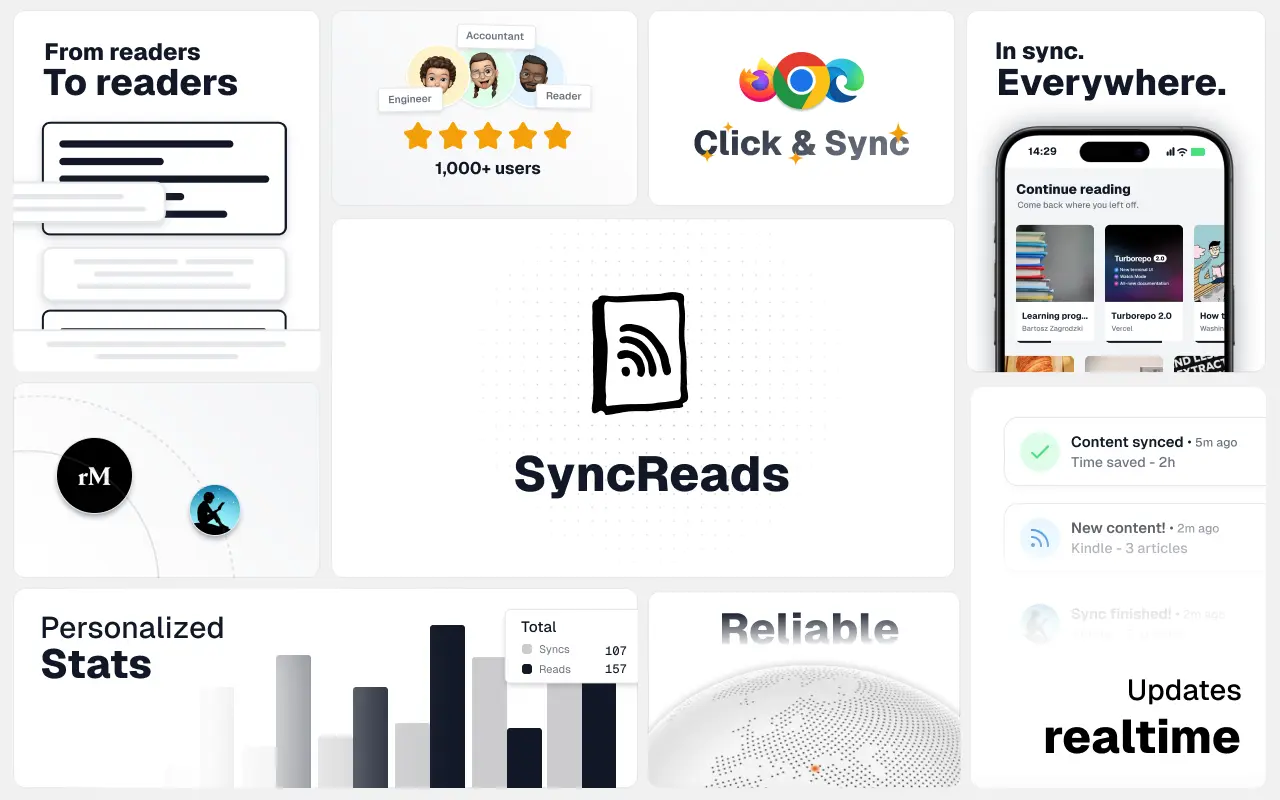
SyncReads
Sync your favorite content for distraction-free reading, save time and replace multiple apps. Anytime, anywhere 🔄
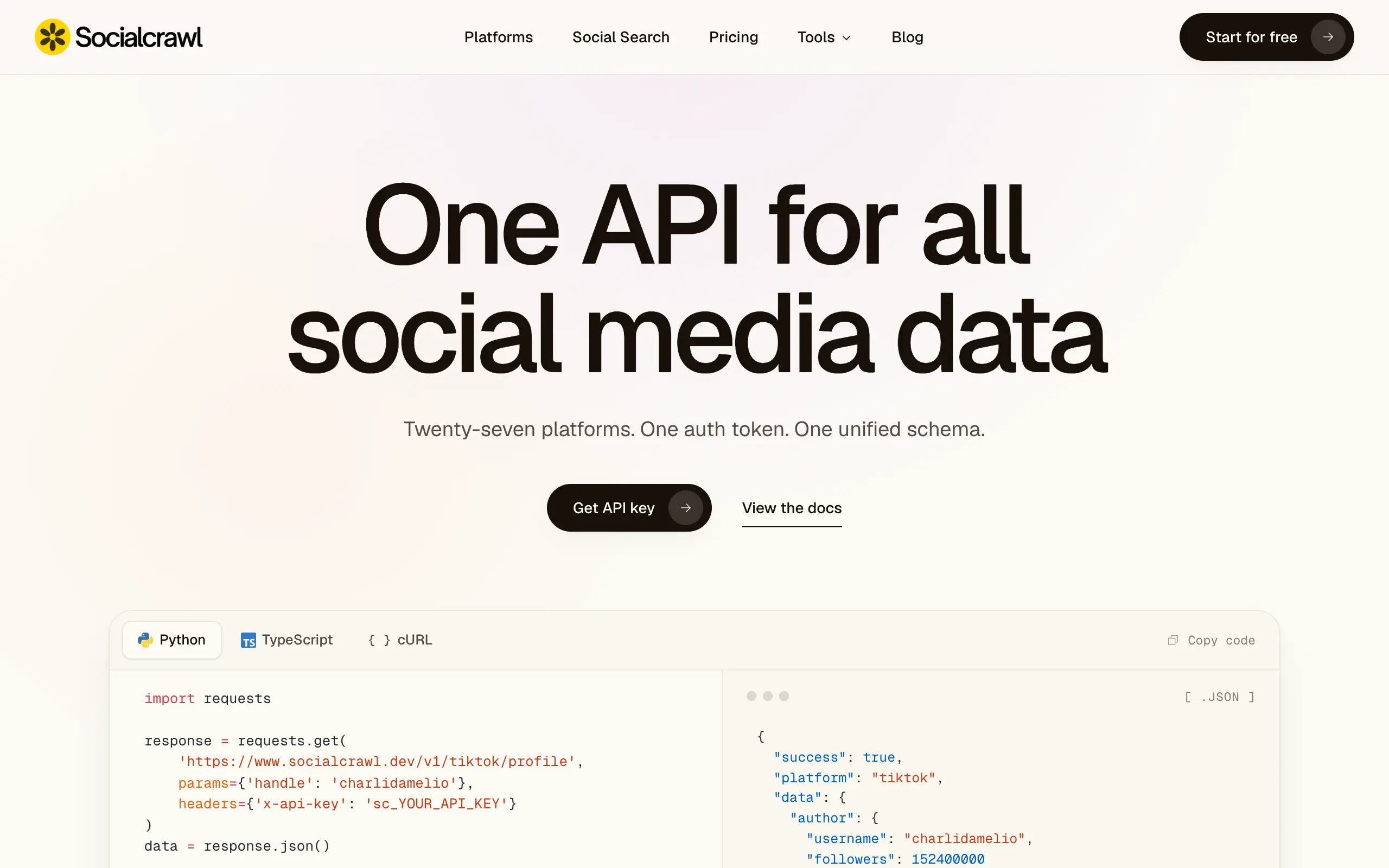
Socialcrawl
Get clean, structured data from 21 platforms like TikTok, Instagram, and YouTube with a single request 📊
Statiko
Monitor any Telegram channel in real time - track posts, edits, deletions, and growth with AI recaps 📡
Shibui
AI website builder - describe your business, pick a niche template, edit by chatting, and publish instantly ✨
Pro Service
Find verified home service professionals, compare quotes, and pay securely through escrow - built for Brazilians across the US 🏠
RankGrow
Fix your SEO with AI agents - connect Search Console, get prioritized tasks, and grow organic traffic 📈
SyncReads
Sync your favorite content for distraction-free reading, save time and replace multiple apps. Anytime, anywhere 🔄
Socialcrawl
Get clean, structured data from 21 platforms like TikTok, Instagram, and YouTube with a single request 📊
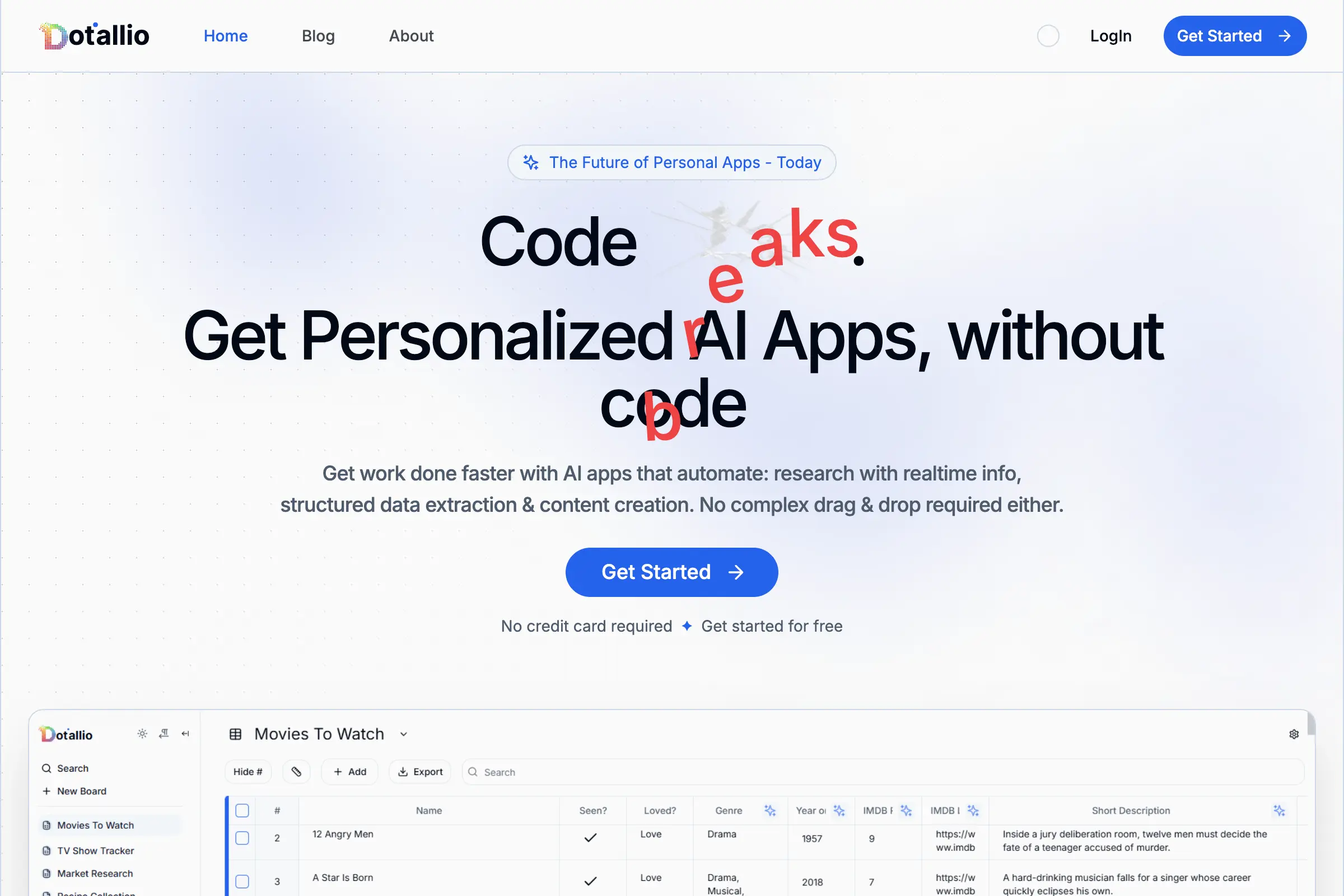
Dotallio
Personalized AI apps that automate research, data extraction, and content creation without code 🤖

Talk to Santa
Enjoy a magical live video chat or receive a unique AI-generated video greeting from Santa Claus 🎅

pozywka.pl
Scalable blog for food journalist, focused on performance and user experience 🌭
zagrodzki.me
Personal blog and portfolio of Bart Zagrodzki, where he shares his knowledge and work 💼

TurboStarter
Ship your startup everywhere. In minutes.
HTML to Markdown
Convert HTML to Markdown with ease, directly in your browser 📄
Dotallio
Personalized AI apps that automate research, data extraction, and content creation without code 🤖
Talk to Santa
Enjoy a magical live video chat or receive a unique AI-generated video greeting from Santa Claus 🎅
pozywka.pl
Scalable blog for food journalist, focused on performance and user experience 🌭
zagrodzki.me
Personal blog and portfolio of Bart Zagrodzki, where he shares his knowledge and work 💼
TurboStarter
Ship your startup everywhere. In minutes.
HTML to Markdown
Convert HTML to Markdown with ease, directly in your browser 📄
Omichat
Chat with 50+ AI models, including ChatGPT and Claude, in one place - switch models anytime without losing context 🤖
Claude Fast
Supercharge your Claude Code with 6x effective context window and specialized AI agents 🤖

EmojAI
AI-powered emoji picker with smart, context-aware suggestions 🤖

Solohacker
Autonomous company launcher - AI agents work 24/7, escalate what matters, and you stay in control 🤖

BeRawi: Storytelling Coach
Practice storytelling daily with instant feedback to sound clearer, more engaging, and confident 🎤
Omichat
Chat with 50+ AI models, including ChatGPT and Claude, in one place - switch models anytime without losing context 🤖
Claude Fast
Supercharge your Claude Code with 6x effective context window and specialized AI agents 🤖
EmojAI
AI-powered emoji picker with smart, context-aware suggestions 🤖
Solohacker
Autonomous company launcher - AI agents work 24/7, escalate what matters, and you stay in control 🤖
BeRawi: Storytelling Coach
Practice storytelling daily with instant feedback to sound clearer, more engaging, and confident 🎤

Connect with like-minded people
Join our community to get feedback, support, and grow together with 1,000+ builders on board, let's ship it!
Join usShip your startup everywhere. In minutes.
Don't burn tokens on setup and start building features on day one.