TradeTerms
Learn Incoterms, customs basics, and international trade documents through AI simulations built for commerce and BBA students.
International trade education has a persistent practical gap. Commerce and BBA students often memorize Incoterms, customs vocabulary, and document definitions for exams, yet struggle when asked to apply them to an actual shipment. They may know that FOB and CIF are different, but not confidently explain where risk transfers, which party arranges carriage, or how an incorrect commercial invoice affects customs clearance.
TradeTerms can close that gap with an AI-powered learning platform focused on realistic international trade simulations. Rather than presenting trade law as static flashcards and lectures, the product can place students inside guided shipment scenarios where they choose Incoterms, review documents, answer customs questions, and receive immediate feedback.
The primary opportunity is to build an AI international trade learning platform that makes complex trade concepts concrete, assessable, and repeatable. Its strongest positioning is not “another AI tutor.” It is a domain-specific simulation environment for learning how international trade decisions work in practice.
What TradeTerms should solve for commerce and BBA students
TradeTerms is designed for learners who need practical trade literacy but may not yet have workplace experience in logistics, customs brokerage, procurement, export sales, or freight forwarding.
The platform should teach three connected subjects:
- Incoterms 2020 rules and risk allocation
- Customs basics, including classification, duties, declarations, and compliance concepts
- International trade documents such as commercial invoices, packing lists, bills of lading, certificates of origin, and letters of credit
The real educational challenge is that these subjects are interdependent. A student cannot fully understand a bill of lading without understanding the shipment context. They cannot choose an appropriate Incoterm without considering transport mode, insurance responsibility, delivery location, risk transfer, and negotiating power. They cannot assess customs exposure without interpreting product data, origin, value, and destination requirements.
An effective AI trade education product should therefore move students through a repeatable decision cycle:
- Read a commercial scenario.
- Identify the relevant trade concepts.
- Make a decision under realistic constraints.
- Explain the reasoning behind that decision.
- Receive feedback grounded in recognized trade practice.
- Retry the simulation with changing variables.
That loop turns passive content consumption into practical capability.
Product positioning insight
TradeTerms should position itself as a simulation-first learning product, not simply an Incoterms reference guide. Reference content attracts search traffic, while simulations create the recurring learning value that institutions and students pay for.
Target audience for an AI international trade learning platform
The most attractive initial market is not every person involved in global trade. TradeTerms should begin with learners who have a clear educational need, predictable curricula, and a lower barrier to adoption than enterprise logistics teams.
Primary audience: commerce and BBA students
Commerce, business administration, international business, supply chain, and logistics students are the core audience. They often encounter trade topics in modules covering export management, import procedures, global supply chains, international marketing, and business law.
Their main pain points include:
- Textbook explanations that feel abstract and difficult to retain
- Confusion between delivery obligations, cost allocation, and transfer of risk
- Little opportunity to practice completing or reviewing trade documents
- Exam anxiety around case-based questions
- Limited access to experienced trade practitioners
- Difficulty translating academic knowledge into job-ready skills
For this audience, TradeTerms should emphasize clarity, practice, instant feedback, and confidence. The product should make students feel that they are preparing for both exams and real business work.
Secondary audience: lecturers and university departments
Lecturers need more than engaging content. They need reliable learning outcomes, ways to assign work, visibility into student progress, and confidence that AI-generated feedback is accurate.
A faculty version of TradeTerms should help instructors:
- Assign specific simulations to a class
- Set completion dates and grading criteria
- Review student decision paths and written explanations
- Identify concepts where an entire cohort is struggling
- Create custom cases relevant to their syllabus
- Export activity and assessment records
This audience is critical because institutional adoption creates a much more predictable revenue model than relying exclusively on individual student subscriptions.
Tertiary audience: early-career trade professionals
A later expansion can target junior export coordinators, procurement analysts, logistics assistants, freight forwarding trainees, and small-business owners entering cross-border commerce.
These users need practical guidance, but they also need careful framing. TradeTerms should never present itself as a replacement for legal counsel, customs brokers, or official regulatory guidance. Instead, it can help users build foundational knowledge and recognize when an issue requires professional escalation.
| Audience | Primary job | Core pain point | Best product hook | Revenue potential |
|---|---|---|---|---|
| Students | Learn and pass assessments | Concepts feel theoretical | Interactive case simulations | Moderate recurring revenue |
| Lecturers | Teach and assess cohorts | Limited applied exercises | Classroom dashboard | High institutional value |
| Early-career staff | Build job confidence | Knowledge without practice | Role-based scenarios | Strong expansion path |
Market gap in Incoterms and customs education
The international trade education market contains plenty of material, but much of it is fragmented.
Students can find videos, PDFs, blog posts, online courses, exam notes, trade association resources, and general-purpose AI chat tools. The issue is not a lack of information. The issue is the lack of structured, safe, scenario-driven practice.
Most existing educational options fall into one of four categories:
- Static reference content that explains definitions but does not test judgment
- Long-form courses that offer limited personalized feedback
- Generic quizzes that reward recall more than reasoning
- Enterprise training that is expensive and often unsuitable for students
This creates a compelling gap for TradeTerms. The product can combine a curated knowledge base with an AI simulation engine that responds to student choices.
For example, a scenario might ask a student to advise an exporter in India shipping machinery to a buyer in Germany. The learner must choose an appropriate Incoterm, determine who arranges insurance, inspect a packing list, identify missing invoice details, and explain the customs implications of an inaccurate product description.
A generic quiz can tell the student whether an answer is right. TradeTerms can explain why a decision is risky, what assumption was missed, and what alternative terms could better match the transaction.
Why the timing is strong
Several trends make this SaaS concept timely:
- Universities are under pressure to deliver demonstrable employability outcomes.
- Students increasingly expect personalized, interactive learning experiences.
- Generative AI makes adaptive feedback possible at a lower cost than one-to-one tutoring.
- Global supply chains remain a major business discipline despite frequent disruptions.
- Cross-border commerce continues to create demand for foundational trade knowledge.
- Educators need AI tools with stronger subject controls than general chatbots provide.
For market-sizing claims, the TradeTerms website should cite credible sources in a consistent format, such as reports from the World Trade Organization, the International Chamber of Commerce, national customs authorities, or recognized higher-education research bodies. Avoid publishing unverified market figures simply to make the opportunity look larger.
The TradeTerms value proposition and competitive advantage
The unique selling proposition for TradeTerms is simple:
TradeTerms helps commerce and BBA students learn international trade by making decisions inside realistic, AI-guided shipment simulations.
That distinction matters. The product is not trying to win by offering the largest encyclopedia of trade terminology. It wins by helping learners apply knowledge under realistic conditions.
A defensible advantage: structured AI, not open-ended AI
Generic AI chatbots can explain Incoterms, but they have known limitations in education and compliance-heavy domains. They can produce confident but incomplete answers, fail to distinguish between legal jurisdictions, or overlook key shipment details.
TradeTerms can be more reliable because it constrains the AI experience around:
- Curated subject-matter content
- Approved simulation templates
- Structured variables and answer rubrics
- Source-grounded feedback
- Transparent uncertainty notices
- Human-reviewed educational content
- Clear distinctions between learning guidance and professional advice
The system should use AI for personalization and explanation, not as the sole source of truth.
Competitive positioning against alternatives
Against textbooks
TradeTerms adds repeatable, practical decisions and immediate explanations rather than relying on reading alone.
Against generic AI chat
TradeTerms provides controlled scenarios, verified learning material, and assessment-ready outputs.
Against video courses
TradeTerms creates active practice loops instead of one-directional instruction.
Against enterprise systems
TradeTerms is designed for student affordability, classroom deployment, and curriculum alignment.
The product can build a meaningful moat over time through its scenario library, faculty relationships, anonymized learning analytics, domain-specific evaluation rubrics, and editorial quality controls.
Core features for TradeTerms
The first release should avoid trying to simulate every global trade process. It should focus on a narrow but highly useful learning journey around Incoterms, trade documents, and customs fundamentals.
AI-powered trade simulations
Simulations are the core product experience. Each simulation should include a realistic business context, trade lane, product category, parties, transport mode, destination, time pressure, and document set.
A simulation might introduce a business decision such as:
A cosmetics exporter is selling a shipment to a distributor overseas. The buyer wants the supplier to arrange transport, but the supplier wants to limit its risk after handing goods to the first carrier. Which Incoterm best fits the arrangement, and what must the parties clarify before agreeing?
The student should make choices, write rationale, and inspect information. The simulation engine can then change the scenario based on their decisions.
High-value simulation types include:
- Incoterm selection exercises
- Risk and cost transfer mapping
- Document error detection
- Customs declaration preparation drills
- Shipping-delay incident responses
- Origin and valuation reasoning exercises
- Letter of credit document compliance cases
- Multi-stage export workflow simulations
Incoterms learning paths
Incoterms are ideal for structured practice because learners regularly confuse several related concepts.
TradeTerms should teach each term through:
- Plain-language definition
- Transport-mode applicability
- Seller obligations
- Buyer obligations
- Delivery point
- Risk transfer point
- Typical use cases
- Common misconceptions
- Scenario practice
- Short recall quizzes
It is especially important to teach that Incoterms do not determine every contractual issue. They do not replace a sales contract, define title transfer in all circumstances, or resolve every payment dispute. This kind of nuance builds trust and makes the platform academically stronger.
The product should align terminology carefully with the official Incoterms framework from the International Chamber of Commerce. Editorial review by qualified trade educators is essential.
International trade document workspace
Students should not only read about trade documents. They should interact with them.
A document workspace can present realistic but fictional examples of:
- Commercial invoices
- Packing lists
- Pro forma invoices
- Bills of lading
- Air waybills
- Certificates of origin
- Insurance certificates
- Inspection certificates
- Export declarations
- Letters of credit
The learner can click fields, flag inconsistencies, and answer questions such as whether product quantities align across documents. The platform can also ask them to identify missing fields or determine which party is responsible for supplying a document under a selected trade term.
This experience is more memorable than asking, “What is a commercial invoice?”
Adaptive AI tutor
The AI tutor should be a guided coach that works alongside simulations, not a blank chat box placed on the screen.
Useful tutor actions include:
- Explain a concept at beginner, intermediate, or advanced level
- Ask a leading question instead of revealing an answer immediately
- Highlight a missed scenario fact
- Compare two Incoterms in the specific context
- Turn an incorrect answer into a short remediation lesson
- Recommend the next simulation based on weak areas
- Generate a revision summary before an exam
The tutor should clearly indicate when it is making an educational simplification. In trade education, simplified explanations are useful, but students need to know that real transactions depend on contract language, jurisdiction, product type, and applicable regulation.
Lecturer dashboard and assessments
Institutional features should be part of the product roadmap early, even if the first version is student-led.
A lecturer dashboard could include:
- Course and cohort creation
- Simulation assignment tools
- Gradebook exports
- Student completion tracking
- Concept-level performance insights
- Rubric-based written response review
- Custom scenario variables
- Academic integrity controls
A useful metric is not merely completion rate. It is whether students improve their reasoning between the first and final attempt.
Knowledge base with cited sources
The TradeTerms knowledge base should support SEO and product trust. It can include concise explainers for terms like FOB, CIF, DDP, harmonized system codes, customs value, rules of origin, and bills of lading.
Each article should use a consistent editorial pattern:
- Define the concept.
- Explain why it matters.
- Show a practical example.
- Clarify common mistakes.
- Connect to a simulation.
- Include references or suggested reading.
For authoritative source material, the team should regularly review publications from organizations such as the World Customs Organization and official national customs agencies. Content should record its review date because regulations and procedures can change.
Designing safe and accurate AI feedback
An AI international trade learning platform must prioritize accuracy. Incorrect information can cause a learner to form dangerous assumptions about customs compliance, duties, or contractual responsibilities.
The best approach is a retrieval-augmented generation architecture. In practical terms, this means the AI should retrieve relevant content from a reviewed knowledge base before creating an answer.
A robust feedback pipeline can work like this:
The student submits a decision, selected option, or written explanation.
The application identifies the simulation facts, learning objective, and expected reasoning rubric.
The AI retrieves approved educational content relevant to the decision.
A model generates feedback using the scenario context and retrieved source material.
A rule-based validator checks for prohibited claims, unsupported legal certainty, and missing safety language.
The platform stores the result for learner progress tracking and faculty review.
The feedback should explain both correctness and reasoning quality. A student may select the right Incoterm by guessing. Another may select a less suitable answer but demonstrate strong awareness of risk transfer. These should not receive identical guidance.
Example rubric dimensions
- Concept selection accuracy
- Understanding of risk transfer
- Understanding of cost allocation
- Document awareness
- Recognition of missing facts
- Quality of business reasoning
- Appropriate escalation to a customs or legal professional
The platform should avoid presenting regulatory training as legal advice. A visible educational disclaimer is prudent, especially within customs and compliance scenarios.
Compliance boundary
TradeTerms should teach principles and workflows, not make binding customs, tax, legal, or sanctions decisions for real shipments. Product copy, tutor responses, and scenario feedback should consistently reinforce this boundary.
Recommended technology stack for TradeTerms
TradeTerms needs a stack that supports interactive learning, secure user accounts, AI workflows, analytics, and institutional administration without slowing down the initial launch.
A modern TypeScript-based web stack is a practical fit.
Frontend and application framework
Use Next.js with React and TypeScript.
This combination supports a fast student experience, server-side rendering for SEO-friendly knowledge-base content, authenticated dashboards, API routes, and a large ecosystem of developer tools.
For styling, Tailwind CSS is a strong option because it speeds up interface iteration and enables a consistent design system. Simulations benefit from a clean, focused interface with readable decision cards, document panels, progress indicators, and feedback states.
Database and authentication
Use PostgreSQL as the core relational database.
International trade simulations naturally involve connected entities such as users, courses, assignments, scenarios, attempts, documents, choices, feedback records, and learning objectives. A relational database is easier to query and audit than a loosely structured alternative.
A possible data model includes:
type SimulationAttempt = {
  id: string
  studentId: string
  scenarioId: string
  currentStage: number
  selectedIncoterm?: string
  answers: Record<string, string | string[]>
  rubricScores: {
    accuracy: number
    reasoning: number
    documentAwareness: number
  }
  feedbackStatus: "pending" | "complete" | "review_required"
  createdAt: Date
  completedAt?: Date
}
For authentication, choose a well-supported provider that can handle both individual accounts and university-friendly sign-in options. The key requirement is support for roles such as student, lecturer, department administrator, and internal content reviewer.
AI layer and retrieval
The AI layer should use a model provider with reliable API support, logging controls, and enterprise options for institutional customers. Keep the model provider abstracted behind an internal service so that TradeTerms can change providers, route different tasks to different models, and control costs.
Use embeddings and a vector search layer for approved educational content. The content pipeline should tag materials by:
- Topic
- Difficulty
- Jurisdiction relevance
- Source authority
- Last reviewed date
- Simulation mapping
- Learning objective
The main trade-off is complexity. A simple prompt-only implementation launches quickly but creates unacceptable accuracy risk as usage grows. Retrieval, source management, and evaluation infrastructure take more upfront work but are necessary for a trusted educational product.
Payments, analytics, and email
For payments, Stripe is a practical choice for student subscriptions and institution invoices.
Product analytics should track meaningful learning behavior rather than vanity metrics. Monitor simulation starts, completion rates, retries, concept mastery, tutor usage, and cohort performance. Ensure privacy controls are appropriate for education users.
For transactional email, use a reputable provider and keep messages focused on account access, assignment notifications, progress summaries, and renewal information.
Faster implementation with a SaaS starter
Launching a multi-role SaaS application from scratch can delay the core learning work. A production-ready starter can accelerate account management, billing, UI foundations, team workflows, and application architecture.
TurboStarter can be useful for getting the SaaS foundation in place so the TradeTerms team can focus on simulations, trade content, AI evaluation, and faculty workflows.
Monetization strategy for TradeTerms
The most resilient model is a hybrid of direct-to-student subscriptions and business-to-institution licensing.
Student subscription
A student plan should be low-friction and affordable. A freemium structure can work well:
- Free access to introductory Incoterms lessons and a limited number of simulations
- Paid monthly or semester plan for full scenario access
- Exam revision packs and completion certificates as premium features
- Optional annual plan for students pursuing supply chain or international business careers
The free tier should demonstrate the simulation value quickly. A learner who only sees static articles may not understand why the paid product is different.
University and educator licensing
Institutional licensing should become the primary growth engine after product validation.
Possible pricing structures include:
- Per-student annual licenses
- Department-level access based on active enrollment
- Course-specific licensing
- Faculty bundles with custom simulations and analytics
- Campus-wide plans for business schools
Universities generally care about measurable outcomes, accessibility, data handling, curriculum alignment, and implementation support. The sales materials should directly address each of these.
Professional training expansion
After proving value in higher education, TradeTerms can offer professional packages for:
- Freight forwarders
- Export promotion organizations
- Chambers of commerce
- Small-business support programs
- Corporate graduate schemes
- Trade finance training providers
The professional offering should add advanced scenario packs, branded learning paths, reporting, and perhaps continuing professional development certificates where appropriate.
Key risks and how to mitigate them
A strong SaaS strategy acknowledges the hard parts early.
Risk of inaccurate or outdated trade guidance
International trade rules, local customs processes, and regulatory requirements can change. Even established rules can be misunderstood when applied to different contracts and jurisdictions.
Mitigation measures include:
- Use reviewed source content for high-stakes explanations
- Show content review dates
- Maintain a subject-matter expert review process
- Use jurisdiction labels on country-specific content
- Add clear educational disclaimers
- Create an escalation flag for ambiguous tutor questions
Risk of overbuilding content before validation
It is tempting to create hundreds of scenarios before launch. That can consume time without proving what students actually want.
Start with a narrow curriculum such as Incoterms fundamentals, core trade documents, and introductory customs concepts. Measure where students struggle and expand from actual usage data.
Risk of weak institutional adoption
Universities may like the idea but have slow procurement cycles. They may also require accessibility documentation, data protection reviews, and evidence of pedagogical value.
Mitigate this by running pilots with individual lecturers first. A successful pilot can generate testimonials, outcome data, and internal champions.
Risk of AI cost growth
Long chat interactions and large document-processing tasks can become expensive at scale.
Use practical controls:
- Limit free-tier AI interactions
- Cache common explanations
- Use smaller models for classification and routing
- Reserve larger models for complex personalized feedback
- Track cost per completed learning outcome
- Summarize long conversation histories
Risk of students using the platform only to get answers
If TradeTerms reveals answers too quickly, it becomes a shortcut rather than a learning tool.
Design the tutor to use progressive disclosure. Ask a question, point to relevant facts, and offer hints before showing a model answer. Reward explanation quality and improvement, not only final answer correctness.
A practical MVP roadmap
The strongest MVP is not a full trade management platform. It is a focused learning product that proves students will repeatedly use AI-guided simulations.
Phase one: validate the learning loop
Build:
- Student authentication
- A short Incoterms learning path
- Five to ten high-quality simulations
- Basic AI feedback based on a curated knowledge base
- Progress tracking
- A small knowledge base for SEO
- Payment support for individual users
The initial scenarios should cover commonly confused pairs such as FOB versus FCA, CIF versus CIP, and DAP versus DDP. They should also include at least one document consistency exercise.
Phase two: support educators
Add:
- Lecturer accounts
- Classroom creation
- Assignment workflows
- Cohort progress tracking
- Exportable assessment results
- Basic content authoring tools
At this stage, recruit a small group of lecturer partners. Ask them to evaluate whether the scenarios map to their course outcomes and where students make recurring mistakes.
Phase three: build the content moat
Expand into:
- Customs classification basics
- Rules of origin exercises
- Documentary credit simulations
- Multimodal transport cases
- Regional trade scenarios
- Advanced assessment rubrics
- Custom university content
The goal is not merely more content. The goal is better coverage of high-value learner decisions.
Start with an Incoterm selection scenario involving a straightforward shipment, a clear transport mode, and a realistic conflict between seller and buyer preferences. It teaches risk transfer, cost allocation, and document responsibilities without overwhelming new users.
No. The product should provide education, practice, and source-grounded explanations. Real shipments may require advice from customs brokers, legal counsel, freight forwarders, insurers, or other qualified professionals.
Track pre- and post-simulation confidence, decision accuracy, quality of written reasoning, completion rates, retry improvement, and lecturer feedback. Pilot studies should compare outcomes with existing teaching methods where feasible.
Actionable next steps for launching TradeTerms
The next steps should prioritize evidence over assumptions.
-
Interview 15 to 25 commerce, BBA, logistics, and international business students. Ask which trade concepts feel hardest, how they currently study, and whether they would use scenario practice before exams.
-
Interview at least five lecturers. Validate curriculum alignment, preferred assessment formats, purchasing constraints, and required learning analytics.
-
Create a subject-matter advisory group. Include at least one trade educator and one practitioner with experience in customs, freight forwarding, export operations, or trade finance.
-
Build a content standard. Every trade explanation should have a source, review owner, review date, difficulty tag, and clear note about educational limitations.
-
Produce five polished simulations rather than fifty generic ones. Quality, feedback precision, and usability matter more than initial catalog size.
-
Launch a landing page around search intent clusters such as “learn Incoterms,” “Incoterms practice questions,” “international trade documents explained,” and “customs basics for students.”
-
Recruit a pilot cohort through lecturers, student societies, and international business programs. Offer a defined pilot period in exchange for structured feedback.
-
Measure activation carefully. A strong early signal is a learner completing a simulation, receiving feedback, retrying it, and improving their explanation.
-
Package the pilot results into an educator-facing case study. Focus on engagement, confidence, concept mastery, and time saved in creating applied exercises.
-
Expand only after the learning loop works. The most valuable feature is the one that consistently makes students better at reasoning through trade scenarios.
TradeTerms can become a credible category leader by treating international trade education as a practical skill, not a vocabulary test. With focused simulations, reviewed knowledge, safe AI feedback, and a clear path to university licensing, the platform can help learners move from memorizing trade terms to understanding the decisions behind global commerce.
More 🤖 AI Startup SaaS ideas
Discover more innovative ai startup SaaS ideas that are trending in 2026. Each idea is AI-generated with market validation and growth potential to help you find your next profitable venture faster than competitors.
Your competitors are building with TurboStarter
Below are some of the SaaS ideas that have been generated and built with our starter kit.
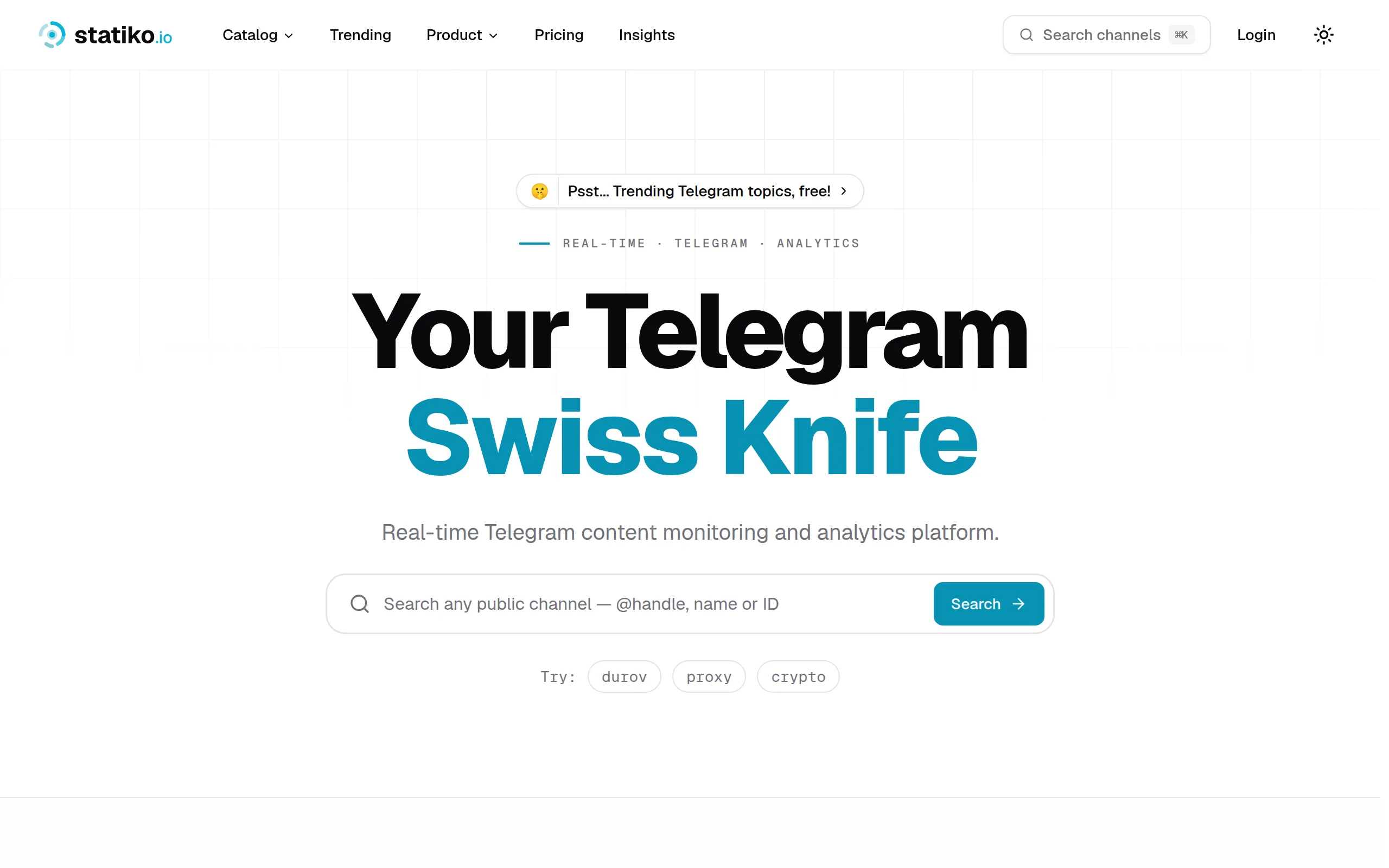
Statiko
Monitor any Telegram channel in real time - track posts, edits, deletions, and growth with AI recaps 📡
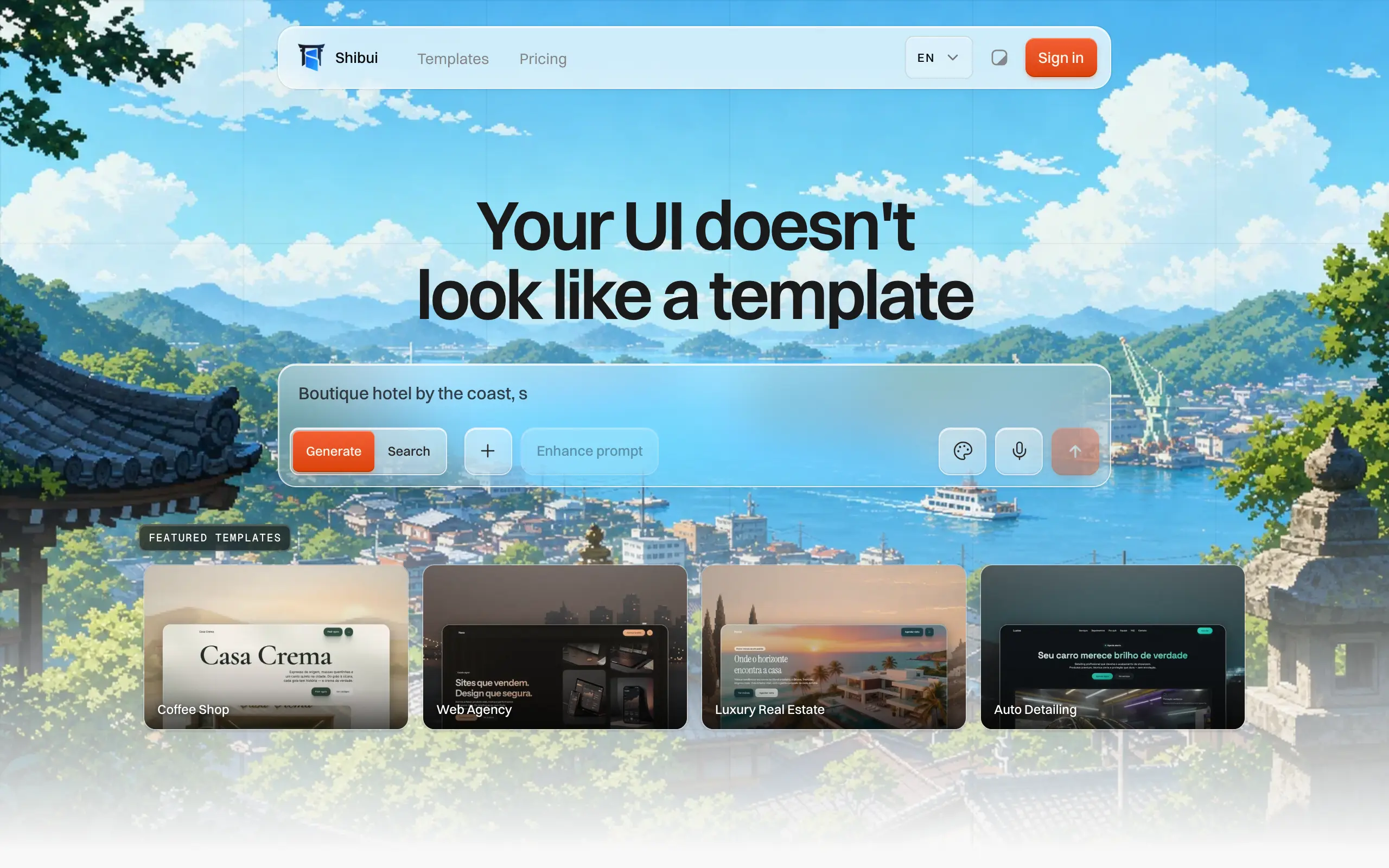
Shibui
AI website builder - describe your business, pick a niche template, edit by chatting, and publish instantly ✨

Pro Service
Find verified home service professionals, compare quotes, and pay securely through escrow - built for Brazilians across the US 🏠
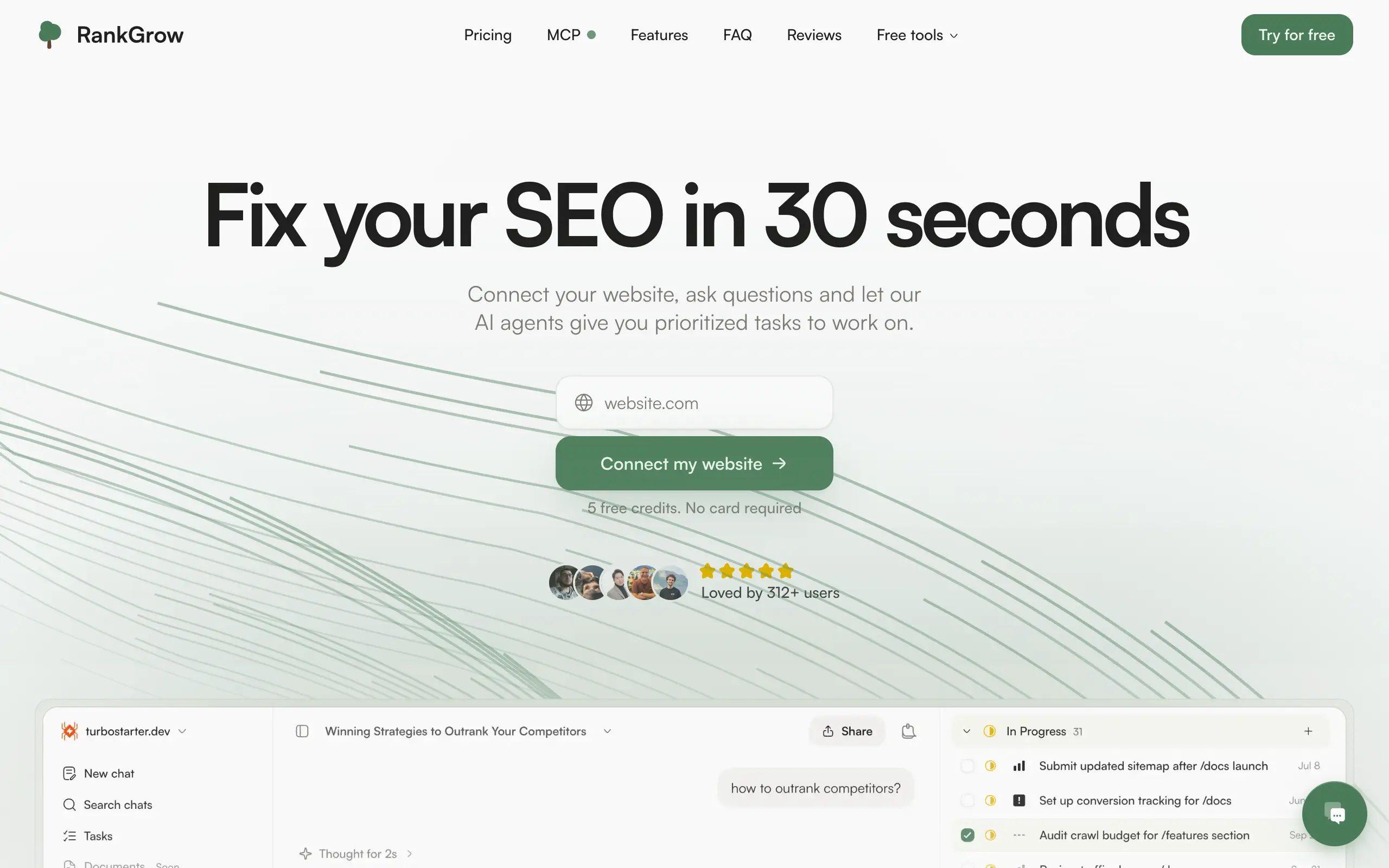
RankGrow
Fix your SEO with AI agents - connect Search Console, get prioritized tasks, and grow organic traffic 📈
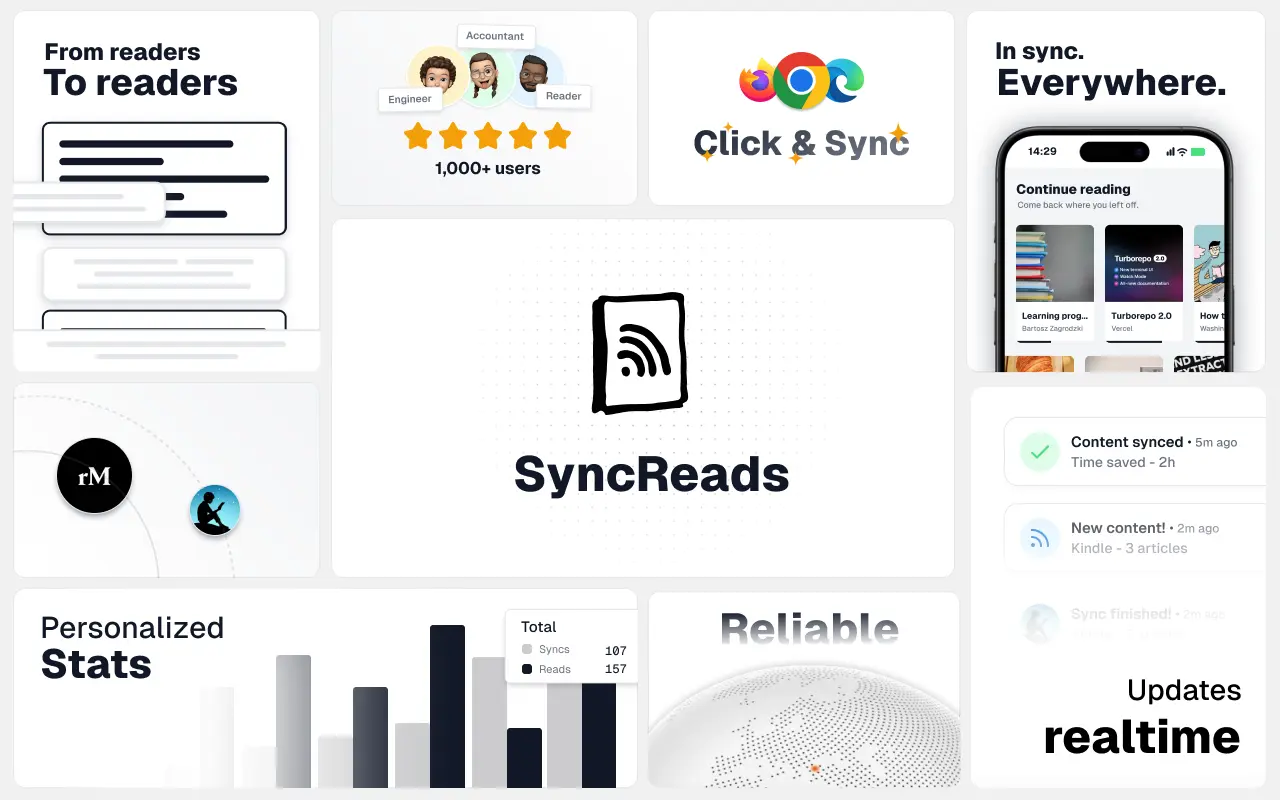
SyncReads
Sync your favorite content for distraction-free reading, save time and replace multiple apps. Anytime, anywhere 🔄
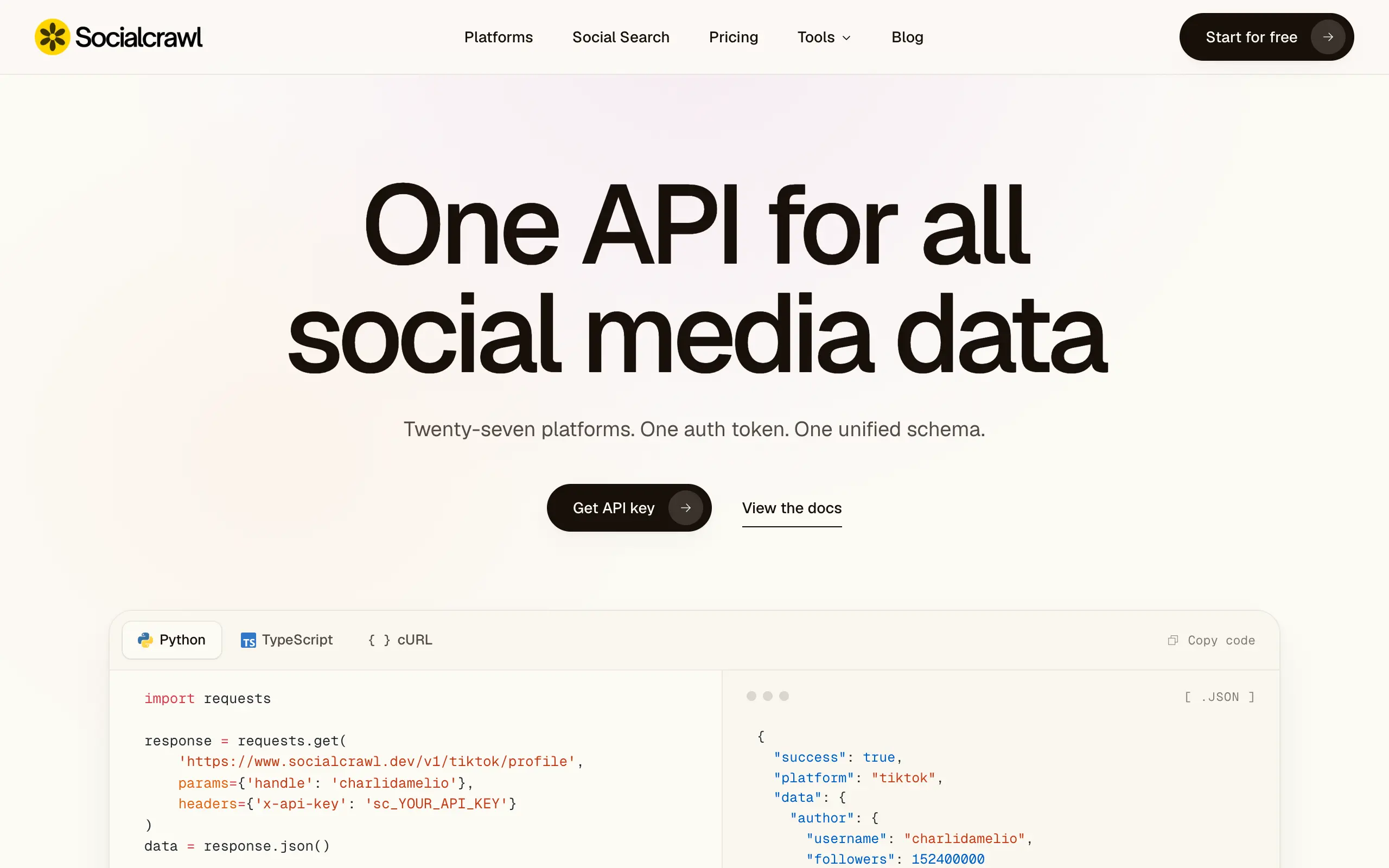
Socialcrawl
Get clean, structured data from 21 platforms like TikTok, Instagram, and YouTube with a single request 📊
Statiko
Monitor any Telegram channel in real time - track posts, edits, deletions, and growth with AI recaps 📡
Shibui
AI website builder - describe your business, pick a niche template, edit by chatting, and publish instantly ✨
Pro Service
Find verified home service professionals, compare quotes, and pay securely through escrow - built for Brazilians across the US 🏠
RankGrow
Fix your SEO with AI agents - connect Search Console, get prioritized tasks, and grow organic traffic 📈
SyncReads
Sync your favorite content for distraction-free reading, save time and replace multiple apps. Anytime, anywhere 🔄
Socialcrawl
Get clean, structured data from 21 platforms like TikTok, Instagram, and YouTube with a single request 📊
Statiko
Monitor any Telegram channel in real time - track posts, edits, deletions, and growth with AI recaps 📡
Shibui
AI website builder - describe your business, pick a niche template, edit by chatting, and publish instantly ✨
Pro Service
Find verified home service professionals, compare quotes, and pay securely through escrow - built for Brazilians across the US 🏠
RankGrow
Fix your SEO with AI agents - connect Search Console, get prioritized tasks, and grow organic traffic 📈
SyncReads
Sync your favorite content for distraction-free reading, save time and replace multiple apps. Anytime, anywhere 🔄
Socialcrawl
Get clean, structured data from 21 platforms like TikTok, Instagram, and YouTube with a single request 📊
Statiko
Monitor any Telegram channel in real time - track posts, edits, deletions, and growth with AI recaps 📡
Shibui
AI website builder - describe your business, pick a niche template, edit by chatting, and publish instantly ✨
Pro Service
Find verified home service professionals, compare quotes, and pay securely through escrow - built for Brazilians across the US 🏠
RankGrow
Fix your SEO with AI agents - connect Search Console, get prioritized tasks, and grow organic traffic 📈
SyncReads
Sync your favorite content for distraction-free reading, save time and replace multiple apps. Anytime, anywhere 🔄
Socialcrawl
Get clean, structured data from 21 platforms like TikTok, Instagram, and YouTube with a single request 📊
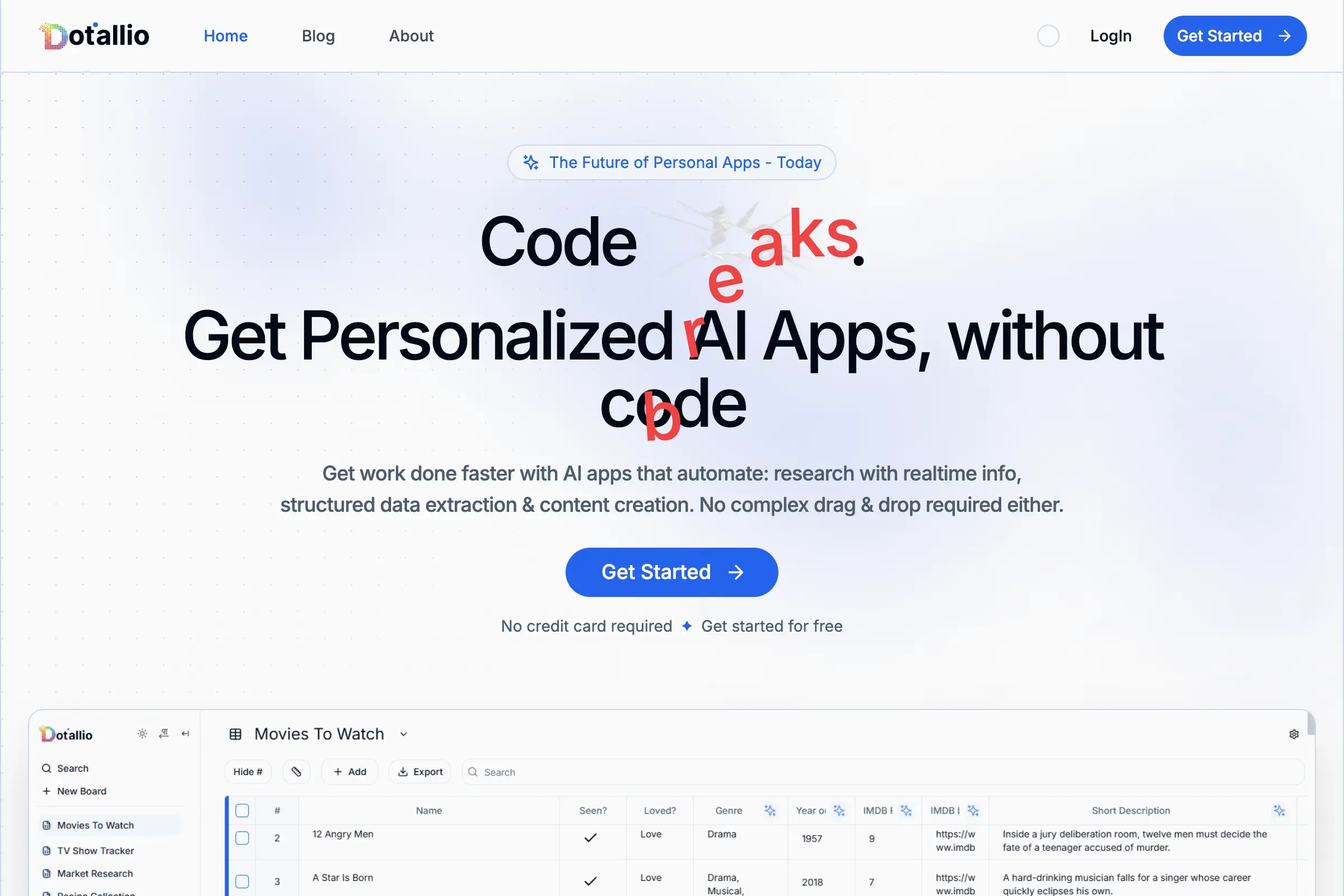
Dotallio
Personalized AI apps that automate research, data extraction, and content creation without code 🤖
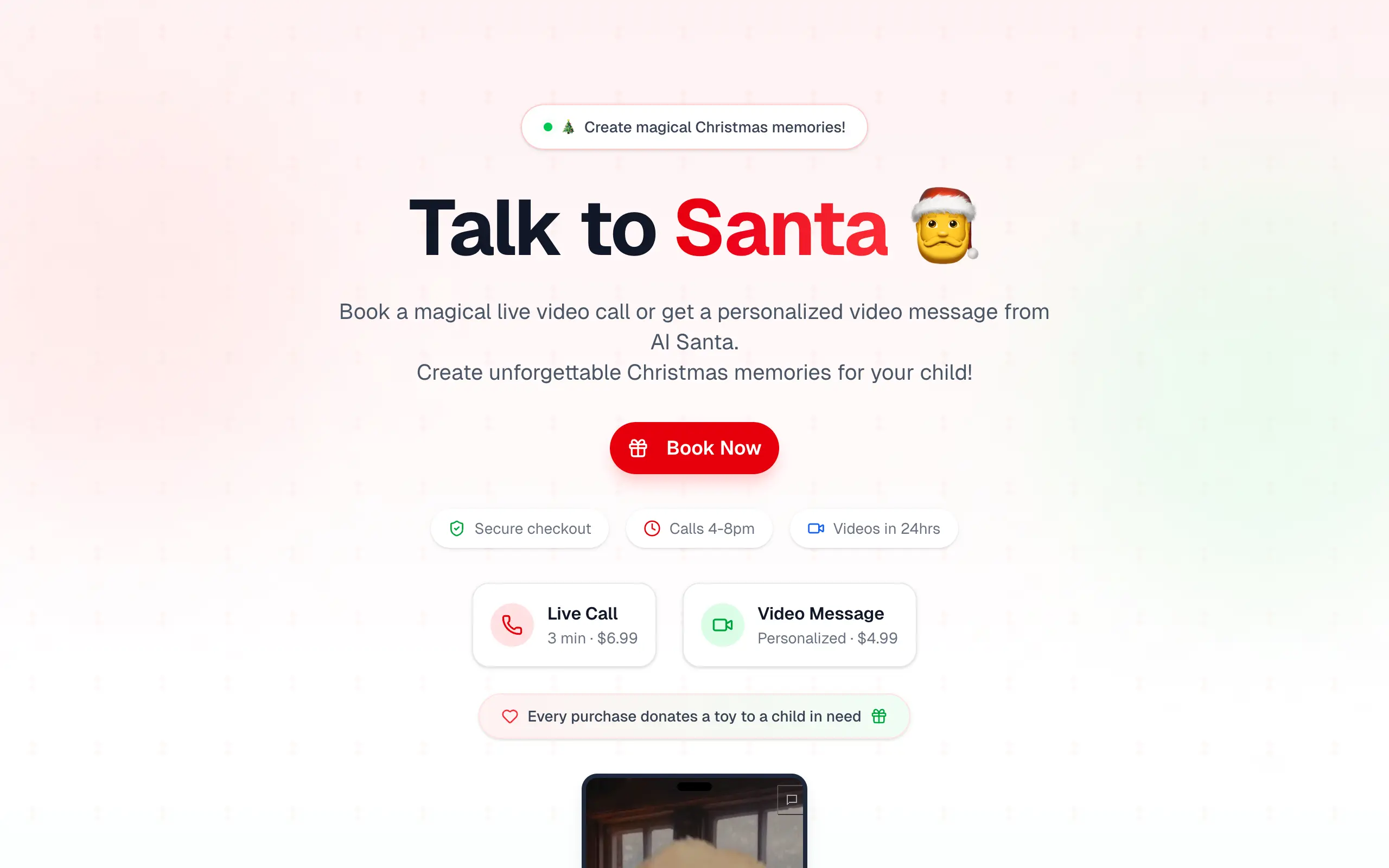
Talk to Santa
Enjoy a magical live video chat or receive a unique AI-generated video greeting from Santa Claus 🎅
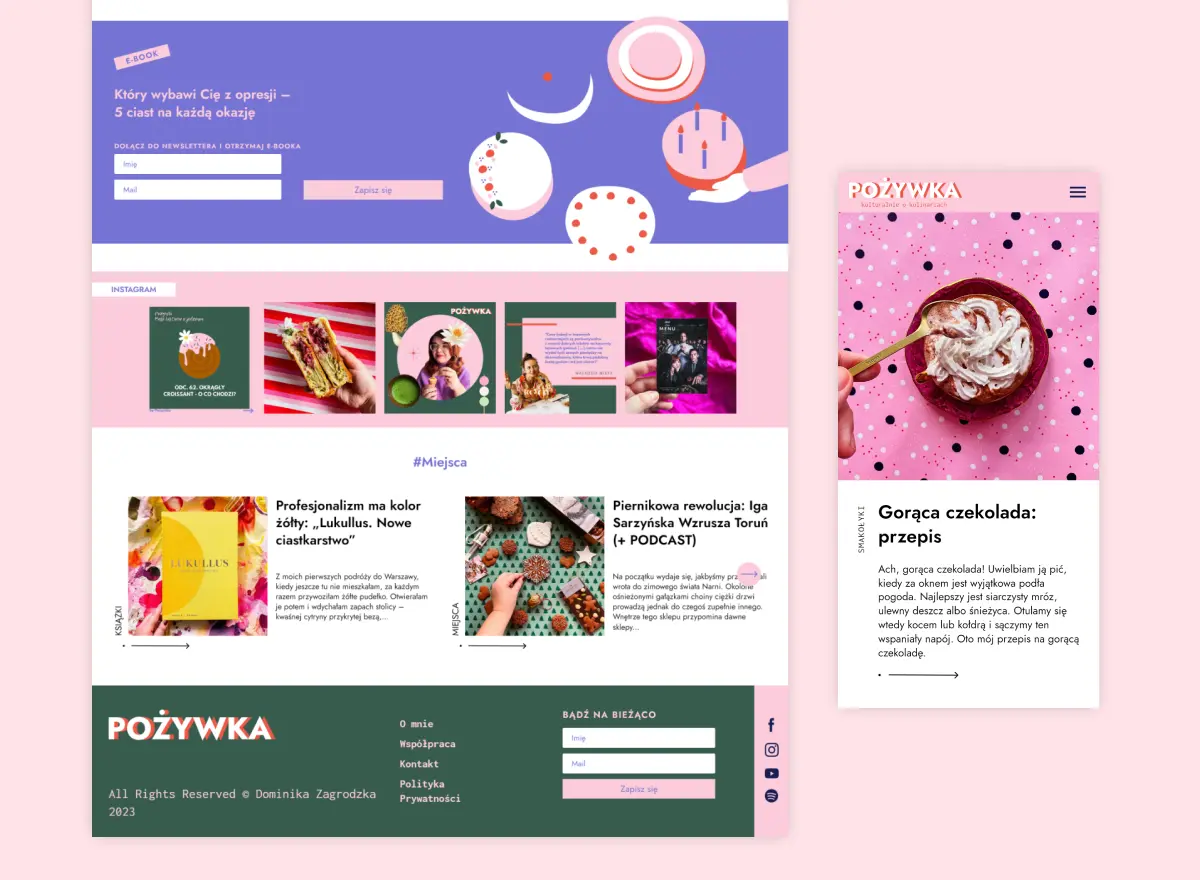
pozywka.pl
Scalable blog for food journalist, focused on performance and user experience 🌭
zagrodzki.me
Personal blog and portfolio of Bart Zagrodzki, where he shares his knowledge and work 💼
TurboStarter
Ship your startup everywhere. In minutes.
HTML to Markdown
Convert HTML to Markdown with ease, directly in your browser 📄
Dotallio
Personalized AI apps that automate research, data extraction, and content creation without code 🤖
Talk to Santa
Enjoy a magical live video chat or receive a unique AI-generated video greeting from Santa Claus 🎅
pozywka.pl
Scalable blog for food journalist, focused on performance and user experience 🌭
zagrodzki.me
Personal blog and portfolio of Bart Zagrodzki, where he shares his knowledge and work 💼
TurboStarter
Ship your startup everywhere. In minutes.
HTML to Markdown
Convert HTML to Markdown with ease, directly in your browser 📄
Dotallio
Personalized AI apps that automate research, data extraction, and content creation without code 🤖
Talk to Santa
Enjoy a magical live video chat or receive a unique AI-generated video greeting from Santa Claus 🎅
pozywka.pl
Scalable blog for food journalist, focused on performance and user experience 🌭
zagrodzki.me
Personal blog and portfolio of Bart Zagrodzki, where he shares his knowledge and work 💼
TurboStarter
Ship your startup everywhere. In minutes.
HTML to Markdown
Convert HTML to Markdown with ease, directly in your browser 📄
Dotallio
Personalized AI apps that automate research, data extraction, and content creation without code 🤖
Talk to Santa
Enjoy a magical live video chat or receive a unique AI-generated video greeting from Santa Claus 🎅
pozywka.pl
Scalable blog for food journalist, focused on performance and user experience 🌭
zagrodzki.me
Personal blog and portfolio of Bart Zagrodzki, where he shares his knowledge and work 💼
TurboStarter
Ship your startup everywhere. In minutes.
HTML to Markdown
Convert HTML to Markdown with ease, directly in your browser 📄
Omichat
Chat with 50+ AI models, including ChatGPT and Claude, in one place - switch models anytime without losing context 🤖
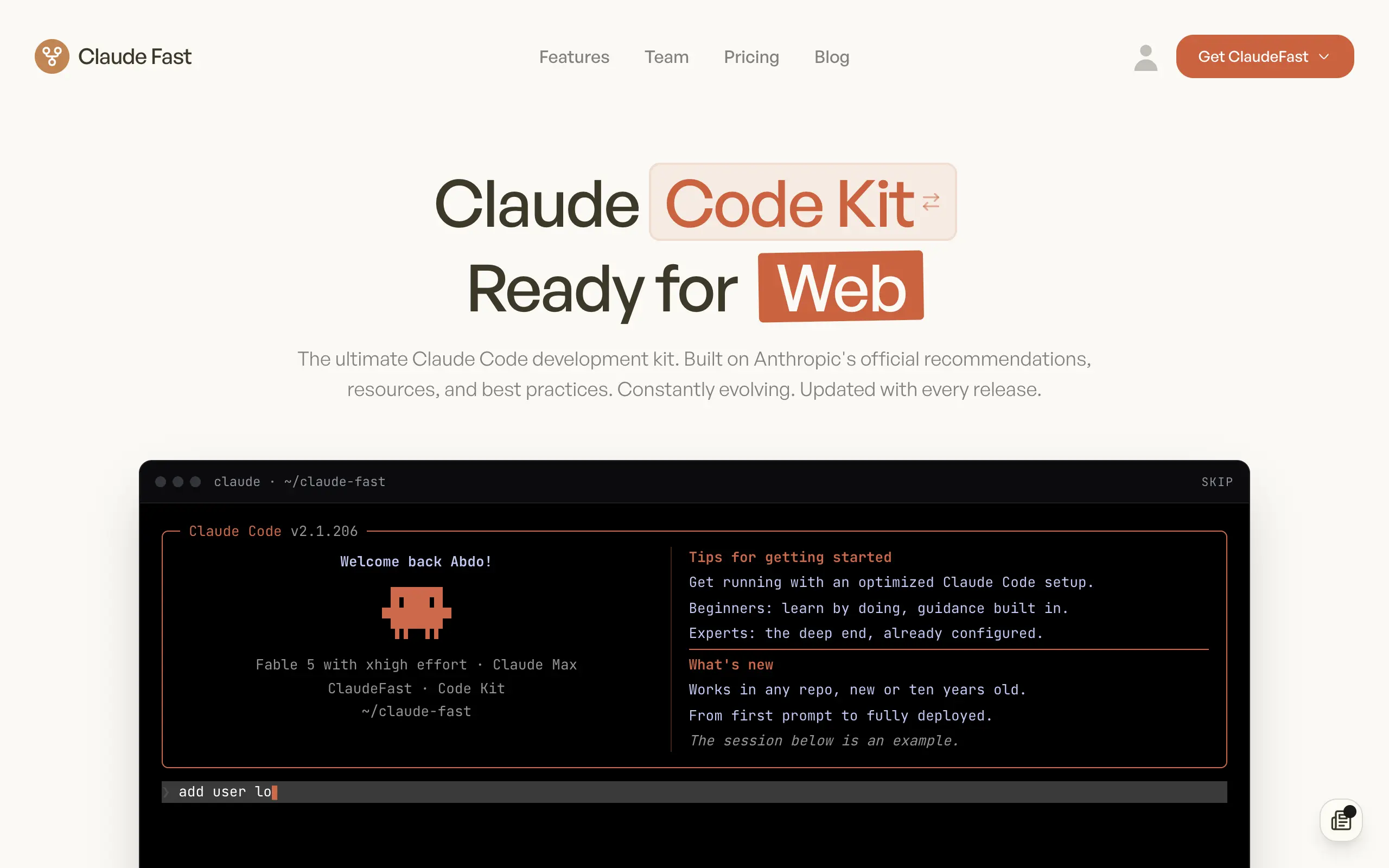
Claude Fast
Supercharge your Claude Code with 6x effective context window and specialized AI agents 🤖
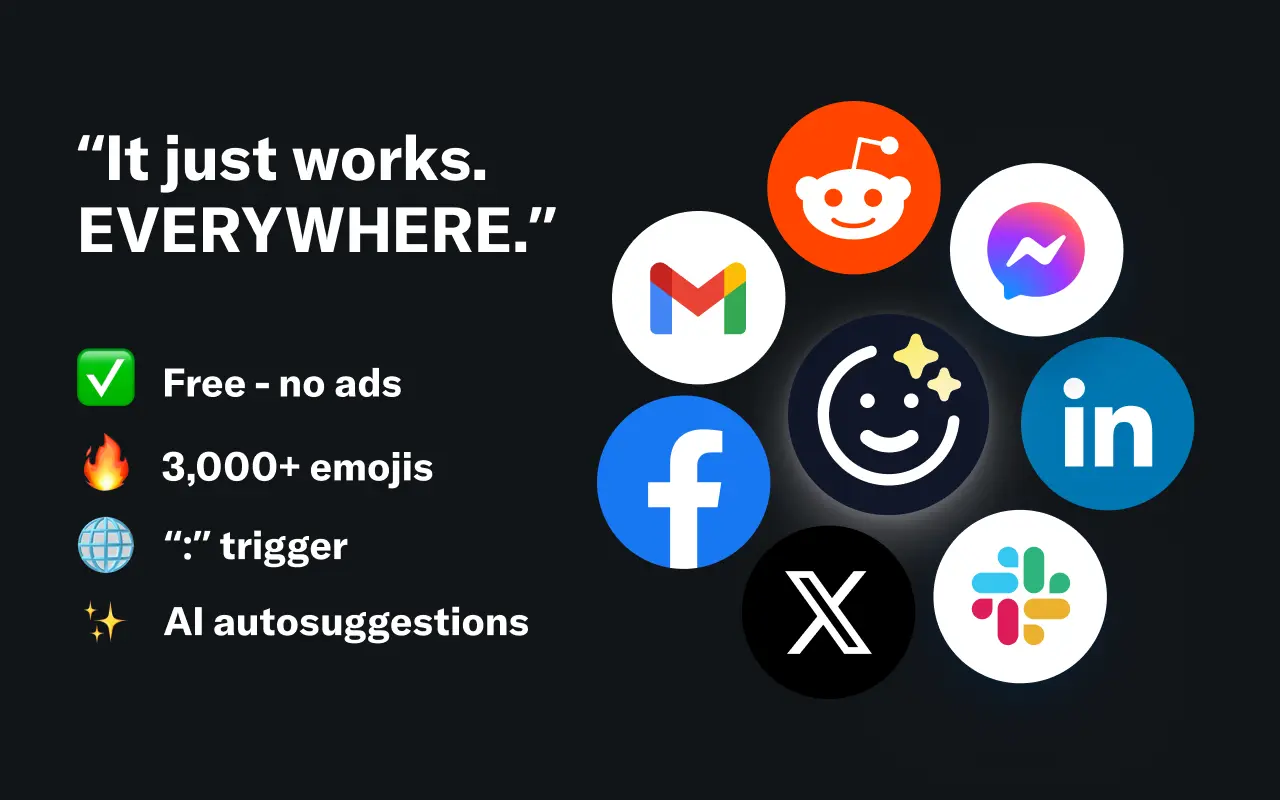
EmojAI
AI-powered emoji picker with smart, context-aware suggestions 🤖
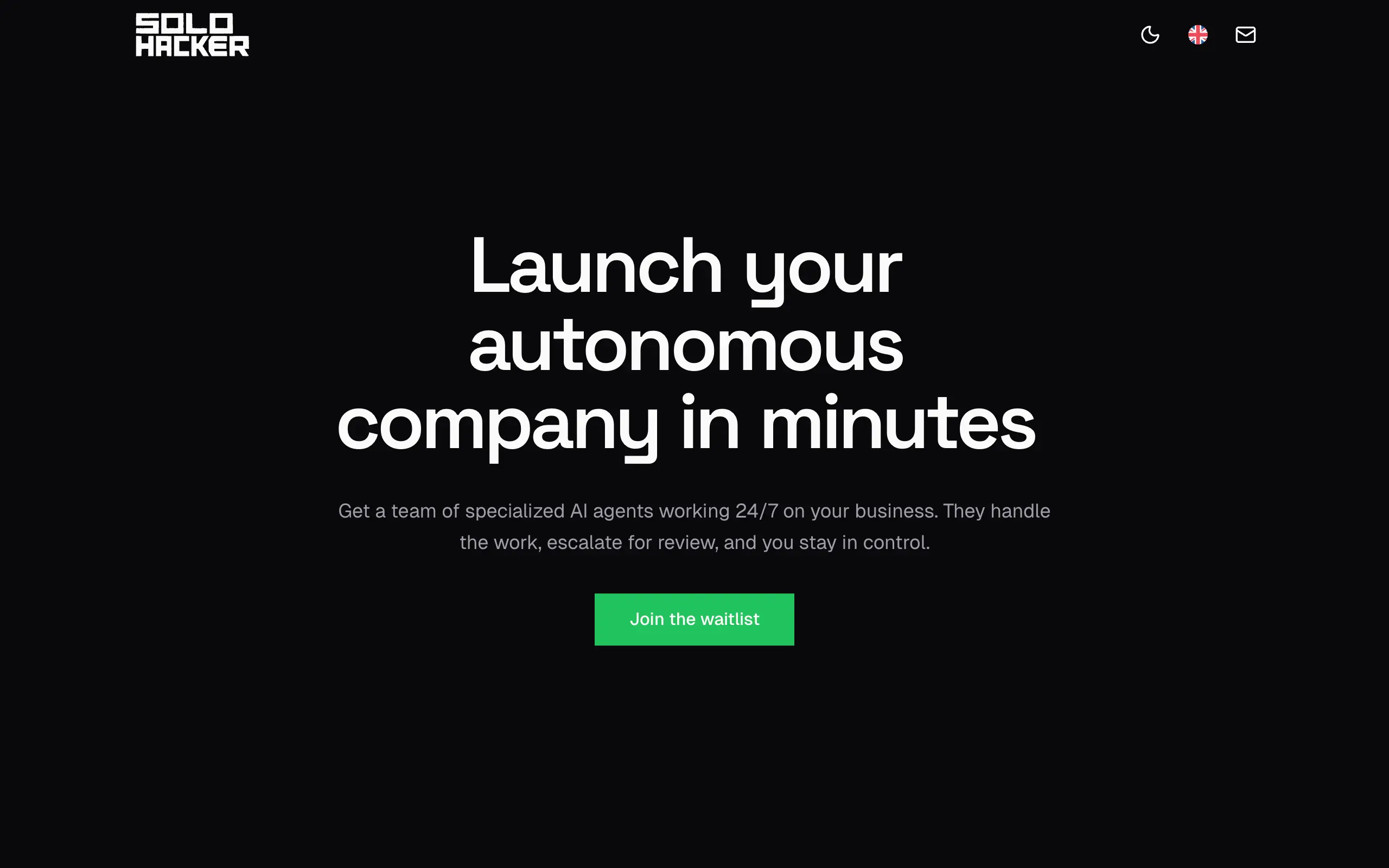
Solohacker
Autonomous company launcher - AI agents work 24/7, escalate what matters, and you stay in control 🤖
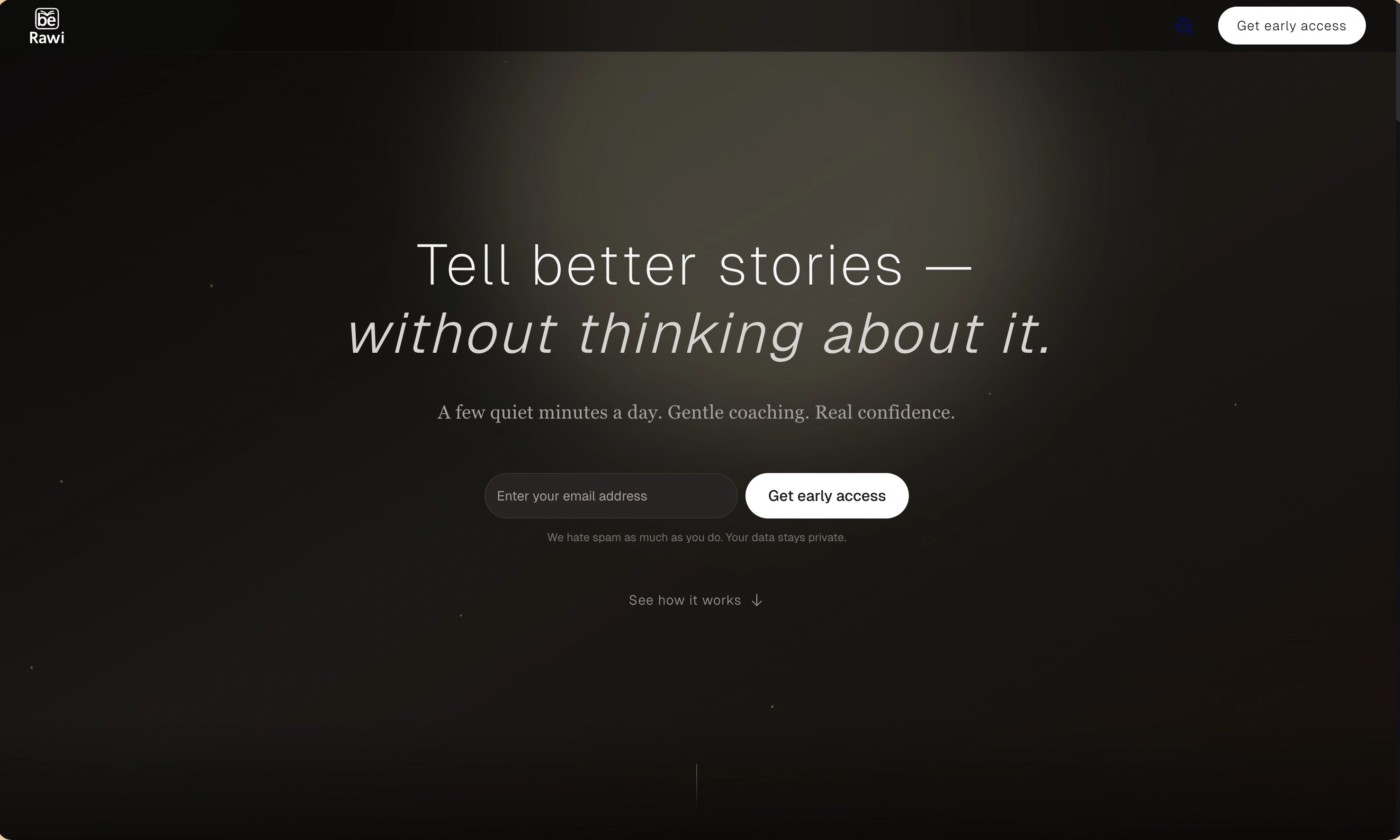
BeRawi: Storytelling Coach
Practice storytelling daily with instant feedback to sound clearer, more engaging, and confident 🎤
Omichat
Chat with 50+ AI models, including ChatGPT and Claude, in one place - switch models anytime without losing context 🤖
Claude Fast
Supercharge your Claude Code with 6x effective context window and specialized AI agents 🤖
EmojAI
AI-powered emoji picker with smart, context-aware suggestions 🤖
Solohacker
Autonomous company launcher - AI agents work 24/7, escalate what matters, and you stay in control 🤖
BeRawi: Storytelling Coach
Practice storytelling daily with instant feedback to sound clearer, more engaging, and confident 🎤
Omichat
Chat with 50+ AI models, including ChatGPT and Claude, in one place - switch models anytime without losing context 🤖
Claude Fast
Supercharge your Claude Code with 6x effective context window and specialized AI agents 🤖
EmojAI
AI-powered emoji picker with smart, context-aware suggestions 🤖
Solohacker
Autonomous company launcher - AI agents work 24/7, escalate what matters, and you stay in control 🤖
BeRawi: Storytelling Coach
Practice storytelling daily with instant feedback to sound clearer, more engaging, and confident 🎤
Omichat
Chat with 50+ AI models, including ChatGPT and Claude, in one place - switch models anytime without losing context 🤖
Claude Fast
Supercharge your Claude Code with 6x effective context window and specialized AI agents 🤖
EmojAI
AI-powered emoji picker with smart, context-aware suggestions 🤖
Solohacker
Autonomous company launcher - AI agents work 24/7, escalate what matters, and you stay in control 🤖
BeRawi: Storytelling Coach
Practice storytelling daily with instant feedback to sound clearer, more engaging, and confident 🎤

Connect with like-minded people
Join our community to get feedback, support, and grow together with 1,000+ builders on board, let's ship it!
Join usShip your startup everywhere. In minutes.
Don't burn tokens on setup and start building features on day one.