UpgradePilot
UpgradePilot analyzes dependency release notes and your codebase to forecast breaking changes, generate migration patches, and run focused validation.
What UpgradePilot is and why it matters
UpgradePilot is an AI dependency upgrade assistant that helps engineering teams understand, plan, and validate software upgrades. It analyzes dependency release notes alongside a customer’s codebase, identifies changes that may affect the application, proposes migration patches, and runs focused validation before a developer merges them.
The idea addresses a frustrating gap in software maintenance. Teams know they should keep dependencies current, but an upgrade is rarely as simple as changing a version number. A new release can deprecate an API, alter a default, introduce a stricter validation rule, or require a different configuration. Developers must find those changes, work out whether they apply to their code, update the project, and then discover whether anything broke.
Existing dependency automation can identify outdated packages and open pull requests. Security tools can flag vulnerable versions. AI coding assistants can suggest code changes. But developers still need to connect those capabilities into a dependable workflow that answers three questions:
- What changed in this release?
- Which changes matter to this codebase?
- How can the team upgrade with confidence?
UpgradePilot’s strongest product opportunity is to answer all three questions in one reviewable process. Its value should not be framed as “AI upgrades everything automatically.” A more credible and useful promise is evidence-backed upgrade guidance, with patches and focused checks that keep developers in control.
Product positioning
UpgradePilot should help teams make safer dependency upgrades, not ask them to trust an opaque AI agent. Every recommendation should be traceable to a release note, a code location, a proposed change, and a validation result.
The problem with dependency upgrades
Modern applications depend on direct and transitive packages, language runtimes, build tools, frameworks, and external APIs. Each dependency brings its own release cycle and documentation. As a result, upgrading a package often involves more than editing a manifest.
A typical upgrade can require developers to:
- Find the release notes, changelog, migration guide, or advisory for the target version.
- Determine whether the changes apply to the APIs and configurations used by their application.
- Search the codebase for affected calls, options, and patterns.
- Update code, tests, configuration, and documentation.
- Run the right subset of tests, then investigate any failures.
- Explain the reasoning to reviewers and maintain a record of the decision.
The work becomes especially difficult when a project has accumulated many dependencies or when upgrades are deferred. Several major releases may need to be crossed at once, and a team may not know which intermediate changes are relevant. Developers can also face noisy automated pull requests: a package update may be technically available but poorly timed, inadequately explained, or risky to merge without additional context.
That creates a tension between upgrade frequency and upgrade confidence. Teams that update frequently may spend too much time reviewing low-value changes. Teams that postpone maintenance risk facing a larger, less familiar migration later. UpgradePilot can reduce that tension by turning upgrade work into a sequence of smaller, evidence-based decisions.
Who UpgradePilot should serve
The initial market should be narrow enough to build a reliable product, but broad enough to support expansion. UpgradePilot should begin with teams that feel recurring upgrade pain and already use code review and automated checks.
Primary audience: engineering teams with active repositories
The best early customers are likely to be software teams that:
- Maintain production applications with meaningful dependency trees.
- Use GitHub or GitLab pull requests as their standard review workflow.
- Have automated tests or CI checks that can validate proposed changes.
- Lack a dedicated developer productivity team to handle upgrade work.
- Need to balance maintenance with customer-facing feature development.
These teams have enough technical maturity to evaluate a generated patch, but may not have enough spare engineering time to interpret every release manually.
Secondary audience: platform and developer experience teams
Platform engineering and developer experience groups may manage dependency standards across multiple repositories. They need visibility into upgrade backlogs, migration risk, and recurring failure patterns. For these teams, UpgradePilot could become a portfolio-level control panel rather than a tool used only on individual pull requests.
Useful capabilities for this audience include:
- A view of pending dependency upgrades across repositories.
- Consistent risk labels and upgrade policies.
- Rules for packages that require human approval.
- Reporting on upgrade completion time and validation outcomes.
- Reusable migration guidance for internal libraries and frameworks.
Additional audiences
- Startups that want to keep dependencies current without assigning an engineer to every release.
- Agencies and consultancies that maintain applications for multiple customers.
- Open-source maintainers who need to assess upgrades but have limited contributor time.
- Regulated or security-conscious organizations that need auditable review records and controlled automation.
These groups may share the same core workflow, but their buying criteria differ. A startup may value speed and setup simplicity. An enterprise may require access controls, private deployment options, audit trails, and strict data retention settings. UpgradePilot should avoid trying to satisfy every requirement in its first release.
The market opportunity and product gap
The market opportunity is not simply “more AI for code.” It is the space between dependency detection and confidently completed migration.
Dependency bots and package management workflows are good at identifying version changes and proposing updates. Security products add vulnerability context. Code review assistants can help interpret diffs. But these capabilities do not automatically provide a trustworthy, end-to-end migration workflow for every package and repository.
UpgradePilot can focus on the missing connective tissue:
- Release intelligence: extract meaningful changes from release notes and migration guides.
- Repository relevance: connect those changes to actual imports, calls, configuration, and tests.
- Patch generation: propose a small, reviewable change that addresses the identified impact.
- Focused validation: run checks that are relevant to the proposed migration.
- Decision traceability: show why the patch was suggested and what evidence supports it.
The opportunity is especially compelling for upgrades that are not simple patch bumps but are also not large, bespoke platform migrations. This middle ground includes framework upgrades, SDK changes, deprecated configuration options, and libraries with important behavioral changes.
The product should be careful about its claims. Release-note analysis cannot prove that an application is safe. A passing test suite cannot guarantee that every production behavior is unchanged. The strongest product framing is therefore risk reduction and review efficiency, not guaranteed correctness.
How UpgradePilot could work
A valuable UpgradePilot workflow should fit into the tools developers already use. The product should minimize context switching and make its work easy to inspect.
1. Connect a repository and detect dependencies
A user connects a repository through a source-control integration. UpgradePilot identifies relevant manifests and lockfiles, then builds a dependency inventory. It should initially support a focused set of ecosystems rather than promise universal coverage.
For each package, the system can record:
- Current and available versions.
- Direct or transitive status.
- The manifest and lockfile locations.
- The update type, such as patch, minor, or major.
- Whether the package is governed by a team policy.
- The repository’s existing tests and CI conventions.
Accurate inventory is foundational. If the system misreads a lockfile or confuses a transitive dependency with a direct dependency, every later recommendation becomes less trustworthy.
2. Collect release and migration information
UpgradePilot retrieves release notes, changelogs, migration guides, and other relevant documentation. It should preserve the original source and version range associated with each extracted change.
A useful analysis distinguishes among:
- Breaking changes.
- Deprecations.
- Security fixes.
- Behavior changes.
- New features.
- Bug fixes.
- Changes that appear unrelated to the repository.
The system should not treat every sentence in a changelog as equally meaningful. It needs to identify version boundaries and understand that a migration from one version to another may cross several releases. When documentation is missing or ambiguous, it should say so rather than invent a confident explanation.
3. Map release changes to the codebase
This is where UpgradePilot can create meaningful differentiation. A generic summary may tell a developer what changed in a package; a repository-aware analysis should show whether the project uses the affected behavior.
For example, the product could connect a migration note about a renamed option to:
- The exact configuration file where the old option appears.
- The relevant code or test that uses the package.
- A link to the source location in the repository.
- A confidence level and explanation of the match.
The analysis should distinguish confirmed usage from possible relevance. A code search hit is evidence that a symbol exists, but it may not prove that the code path executes or that the migration note applies in the project’s specific context.
4. Generate a migration patch
Once the product identifies a likely impact, it can create a small patch. The patch might update a deprecated method, adjust a configuration field, revise a test, or change a manifest and lockfile.
Patch quality matters more than patch volume. UpgradePilot should prefer:
- Minimal diffs over broad refactors.
- Changes tied directly to documented migration guidance.
- Separate commits or clear change groupings where practical.
- A visible explanation for each material edit.
- Human approval before merge, particularly for high-risk changes.
The product should avoid applying unrelated formatting changes or opportunistic cleanup. Unnecessary diff noise makes reviewers less likely to trust the useful parts.
5. Run focused validation
Validation should be layered. The product can start with static checks and existing project commands, then use tests where available. A focused test selection may make feedback faster, but the system should also make clear what was not run.
A useful validation report might show:
- Which commands ran.
- Which tests were selected and why.
- Whether checks passed, failed, or could not run.
- Relevant error output.
- Whether a result came from a local sandbox, CI, or another environment.
- Any limitations, such as missing credentials or unsupported services.
A passing check is evidence, not a guarantee. UpgradePilot should communicate this distinction directly in the pull request and user interface.
6. Present the result as a reviewable change
The final output should feel like a strong engineering pull request, not a chatbot transcript. It should summarize the upgrade, list the relevant release changes, link those changes to repository evidence, explain the patch, and disclose validation results.
A clear pull request description might include:
- Upgrade summary: package and version range.
- Why it matters: relevant release changes.
- Repository impact: affected files and code paths.
- Patch overview: what UpgradePilot changed.
- Validation: checks run and their results.
- Caveats: uncertainty, skipped checks, or remaining manual work.
Core features for an UpgradePilot MVP
A strong minimum viable product should demonstrate that the end-to-end workflow works for a limited set of packages and repositories.
Essential MVP features
- Repository connection with read access initially and narrowly scoped write permissions when creating a branch or pull request.
- Dependency detection for one or two popular ecosystems.
- Release-note retrieval and summarization with citations to source material.
- Codebase impact analysis that links changes to files and symbols.
- Patch proposal for a small set of well-understood migration patterns.
- Focused validation using repository-defined commands.
- Pull request creation with a transparent explanation and validation report.
- Human review and control over when changes are applied or merged.
A narrow MVP is strategically useful. Supporting fewer ecosystems well makes it easier to test accuracy, build reliable fixtures, and understand failure modes. Expanding the ecosystem list before the core workflow is dependable can create a broad but untrustworthy product.
Features to consider after validation
Once teams trust the basic workflow, UpgradePilot could add:
- Organization-level upgrade policies.
- Cross-repository dashboards.
- Custom rules for internal packages.
- Upgrade scheduling and batching.
- Slack or other collaboration notifications.
- Historical analysis of recurring migration failures.
- Private networking or self-hosted execution.
- Enterprise controls for retention, identity, and auditability.
The order should follow customer evidence. A portfolio dashboard is useful only if users trust the repository-level analysis. Enterprise deployment features matter only if qualified buyers actually require them.
Competitive advantage and differentiation
UpgradePilot would operate alongside several established categories: dependency update automation, software composition analysis, security scanning, CI systems, and general-purpose AI coding assistants. These tools can overlap with parts of the workflow, so the product must define its advantage precisely.
| Capability | Dependency update tools | Security platforms | General AI coding assistants | UpgradePilot opportunity |
|---|---|---|---|---|
| Identify available package updates | ✅ | ✅ | ❌ | ✅ |
| Explain release-note changes | Varies | Varies | ✅ | ✅ |
| Connect changes to repository usage | Varies | Varies | Varies | ✅ |
| Propose migration-specific patches | Varies | Varies | ✅ | ✅ |
| Run repository validation | Often via CI | Often via CI | Varies | ✅ |
| Present evidence and uncertainty together | Varies | Varies | Varies | Core focus |
This comparison describes broad product categories, not a guarantee that every product in a category has the same capabilities. The landscape changes quickly, so a founder should validate specific feature comparisons against current product documentation before using them in sales or marketing.
The defensible USP
UpgradePilot’s most credible unique selling proposition is:
A repository-aware dependency migration workflow that connects release-note evidence to code changes, focused tests, and a reviewable pull request.
That proposition is stronger than “AI-powered dependency updates” because it describes the user outcome and the reasoning chain. It is also more defensible than a generic summarization feature. Models and language interfaces can be replicated; accumulated migration examples, package-specific knowledge, validation outcomes, and trust-building workflow details are harder to reproduce.
Potential sources of durable differentiation include:
- A high-quality dataset connecting release changes to real migration patches.
- Ecosystem-specific analysis rules and test-selection logic.
- Reliable handling of version ranges and multi-release upgrades.
- An auditable history of recommendations and outcomes.
- Organization policies and knowledge about internal libraries.
- A reputation for conservative, explainable automation.
Recommended technology stack
The stack should support secure repository integrations, asynchronous analysis, isolated execution, and a maintainable product surface. The exact choices depend on the team’s strengths, but the architecture should keep model providers and execution environments replaceable.
Product interface and API
A practical web application can use React with Next.js and TypeScript. This combination supports a responsive dashboard, typed API boundaries, and a familiar ecosystem for SaaS product development.
For interface styling, Tailwind CSS can speed up iteration, though teams with an existing component system may prefer to build on it. The product UI should prioritize reviewability: source citations, file-level evidence, patch previews, and validation status should be visible without forcing users to hunt through multiple screens.
Data and background processing
A relational database such as PostgreSQL is a good fit for organizations, repositories, dependency records, analysis runs, policy settings, and audit events. A queue or workflow engine should handle longer tasks such as cloning a repository, gathering documentation, running analysis, and waiting for CI results.
Keep interactive requests separate from longer-running jobs. Users should be able to see a job’s status, retry recoverable failures, and inspect logs without blocking a web request.
Repository integrations
Build source-control integrations with the least privilege possible. Start with a narrowly scoped GitHub or GitLab app integration, and make permissions understandable during installation. Tokens and webhook secrets should be encrypted, access should be revocable, and webhook signatures should be verified.
Integrations should be designed around durable events. A repository push, new release, or pull request update may trigger analysis, but repeated events should not create duplicate work. Idempotency keys and clear job state transitions help prevent that problem.
AI and retrieval architecture
Use language models for tasks where they add value, such as extracting structured changes from release notes, mapping documentation to likely code impact, and drafting explanations. Do not rely on a model as the sole authority for package versions, source locations, test results, or patch acceptance.
A safer design combines:
- Deterministic parsers for manifests, lockfiles, and version ranges.
- Search and retrieval over release notes and migration documents.
- Structured model outputs validated against schemas.
- Static analysis and code search for repository evidence.
- Sandboxed execution for tests and build commands.
- Human review before changes are merged.
For every model-generated claim, retain the underlying source text and location where possible. This allows users to check whether a summary faithfully represents the documentation.
Secure execution
Running repository code creates real security risk. Tests and build scripts may execute arbitrary commands, access secrets, or attempt network connections. Treat validation as untrusted code execution.
Use isolated, ephemeral environments with resource limits and restricted network access. Do not expose long-lived credentials to test containers. Separate repository access from test execution, and clean up workspaces after jobs complete. Enterprise customers may also expect controls around data retention, private networking, and model-provider usage.
Trade-offs to manage
- Managed cloud execution is easier to launch and operate, but it raises customer questions about code access and data handling.
- Customer-hosted runners improve control for some organizations, but add installation, support, and reliability complexity.
- A single model provider simplifies initial development, but creates vendor dependence.
- Multiple providers add resilience and choice, but increase evaluation and operational work.
- Broad language support may increase the addressable audience, but makes accurate analysis harder to maintain.
A product team should choose a small number of supported environments and document them clearly. Reliability in a defined scope is usually more valuable than nominal support for every stack.
Monetization strategy
UpgradePilot can use a SaaS pricing model tied to the value and operational cost of the workflow. Pricing should be tested with real buyers rather than derived solely from competitor price pages.
Possible pricing dimensions
- Per developer seat: simple to understand, but may discourage broad adoption.
- Per repository: aligns with repository-level value, but can penalize organizations with many small services.
- Per completed upgrade or analysis run: maps to usage, but can make costs feel unpredictable.
- Tiered organization plans: provide a clear path from individual teams to enterprise controls.
- Hybrid pricing: a platform fee plus usage allowances can balance predictable revenue with compute costs.
A sensible initial model might offer a limited free or low-cost tier for individual repositories, a paid team tier with collaboration and automation, and a custom enterprise tier for advanced controls and deployment requirements.
What customers may pay for
Customers are more likely to value measurable workflow improvements than an abstract AI feature. Pricing conversations should test whether buyers care most about:
- Fewer engineering hours spent investigating upgrades.
- A smaller backlog of dependency maintenance.
- Faster delivery of security or compatibility fixes.
- Better auditability and standardization across repositories.
- Reduced disruption from large, delayed migrations.
Be cautious about claiming a specific return on investment without customer data. Instead, measure baseline time and outcomes during pilots, then build a credible business case from observed results.
Risks and how to mitigate them
Incorrect or overconfident recommendations
AI may misinterpret release notes, infer an API change that does not apply, or generate a patch that compiles but changes behavior.
Mitigation: cite source material, show code-level evidence, label confidence conservatively, validate generated output, and require review for consequential changes. Maintain a clear “not enough evidence” outcome.
Incomplete test coverage
A passing test suite does not prove that a migration is behaviorally safe. Some projects lack tests for the affected paths, and some production conditions are hard to reproduce.
Mitigation: state exactly which checks ran and what they cover. Distinguish “tests passed” from “upgrade is safe.” Let teams add required checks and prohibit automated merging when confidence is insufficient.
Unsafe code execution
Repository scripts may be malicious or may accidentally expose secrets.
Mitigation: isolate execution, limit permissions, restrict network access, use ephemeral environments, and keep sensitive credentials outside test containers. Conduct a security review before enabling broad automation.
Poor release-note quality
Some packages have sparse, inconsistent, or missing migration documentation. AI cannot reliably recover information that is not available or infer every undocumented behavior change.
Mitigation: track source coverage, show when documentation is missing, and let users provide internal migration guides. Avoid generating authoritative-sounding claims without evidence.
Integration and ecosystem complexity
Different languages and package managers have different version rules, lockfile formats, and testing conventions.
Mitigation: launch with a carefully selected ecosystem. Add another only after the team has test fixtures, representative repositories, and a way to measure analysis quality.
Trust and adoption barriers
Developers may reject automated patches if they cannot understand how they were produced. Security teams may object to sending source code or logs to external services.
Mitigation: make the workflow transparent, minimize data collection, offer clear retention controls, publish security practices, and keep merge decisions with the customer. Build trust through small successful upgrades before asking users to enable broader automation.
Metrics that show whether the product is working
UpgradePilot should measure both product usage and engineering outcomes. High activity alone does not prove customer value.
Useful metrics include:
- Time from upgrade discovery to reviewed pull request.
- Percentage of recommendations accepted, edited, or rejected.
- Patch acceptance rate by ecosystem and upgrade type.
- Validation pass rate and common failure causes.
- Rate of duplicate or low-value pull requests.
- Time spent by users reviewing generated changes.
- Number of upgrades completed per repository.
- Retention of teams after the first successful migration.
- Frequency of manual intervention and support requests.
Acceptance rate should not become a target that pressures the system to produce more patches. A cautious product that correctly declines uncertain upgrades may create more trust than one that generates a high volume of questionable recommendations.
Actionable implementation steps
Interview target users before building automation. Speak with engineering leads, platform teams, and developers who regularly handle upgrades. Ask them to walk through a recent difficult migration, including how they found the release information, what took the most time, and what would make them trust a generated patch.
Choose one ecosystem and one upgrade workflow. Select a package manager and source-control platform based on interview evidence. Define the first supported case, such as a documented framework migration with a reliable test command, rather than attempting every dependency type.
Build a transparent analysis prototype. Show release-note sources, relevant repository locations, an impact summary, and uncertainty. Initially, have a developer review suggested patches manually. This helps reveal whether the analysis is useful before investing in full automation.
Add patch generation and isolated validation. Generate minimal changes, run them in a controlled environment, and display exactly which checks were executed. Keep human approval mandatory during early pilots.
Pilot with a small number of design partners. Choose teams with real upgrade pain and permission to share feedback. Track time saved, patch quality, review friction, and failure modes rather than relying on anecdotal enthusiasm.
Harden security and reliability before expanding. Review repository permissions, secret handling, data retention, sandbox isolation, webhook verification, and audit logging. Document what code and metadata the service processes.
Expand based on observed demand. Add ecosystems, organization-level controls, and advanced deployment options only when pilots demonstrate a repeatable need and the team can maintain quality.
For teams building the product, TurboStarter can provide a starting point for a SaaS application, helping reduce the time spent on foundational product infrastructure so the team can focus on validating UpgradePilot’s core workflow.
How to validate UpgradePilot before scaling
A practical validation plan should test both desirability and technical feasibility.
First, ask prospective users to rank the pain of dependency upgrades against other engineering priorities. If upgrades are annoying but rarely important enough to fund, the product may need to focus on a narrower high-value segment, such as teams with large frameworks, many repositories, or compliance requirements.
Second, test the workflow with real historical examples. Take upgrades that a team has already completed and see whether UpgradePilot can identify the relevant release notes, locate affected code, and propose a reasonable patch. Historical examples make it easier to compare the product’s output with a known human decision.
Third, test trust directly. Ask developers what evidence they need before reviewing or merging a generated patch. Observe whether they read citations, inspect the diff, rerun tests, or ignore the recommendation. Product adoption depends on fitting actual review behavior, not only producing technically plausible output.
Finally, measure willingness to pay with a concrete offer. A team may praise a prototype while still choosing not to budget for it. Pricing conversations should include the buyer, the user, and the security or platform stakeholders who may influence procurement.
Frequently asked questions about UpgradePilot
Is UpgradePilot a dependency management tool?
It can include dependency inventory and update workflows, but its core purpose is broader. UpgradePilot should help teams interpret the consequences of an update, make migration changes, and validate those changes. It complements dependency management rather than replacing package managers or source-control workflows.
Can UpgradePilot guarantee that an upgrade is safe?
No. Software behavior depends on the application, its environment, its tests, and usage patterns that may not be visible to the tool. UpgradePilot can provide evidence, patches, and validation results, but it should not promise a guarantee. Clear communication about uncertainty is essential to long-term trust.
Should UpgradePilot merge changes automatically?
Not at launch. Human review is an important safety mechanism, especially for major versions, breaking changes, and packages that handle sensitive data or critical business logic. Later, organizations may choose to auto-merge narrowly defined low-risk updates under their own policies.
What should the first version support?
The first release should support the repository host, package ecosystem, and upgrade type that appear most often in customer interviews. A small, dependable scope makes it possible to evaluate patch quality and build trust before expanding.
How is UpgradePilot different from a general AI coding assistant?
A general coding assistant can help developers edit code, but UpgradePilot’s product focus is the complete dependency migration workflow. That includes version-aware release analysis, repository-specific impact mapping, source-backed reasoning, focused validation, and an auditable pull request.
The opportunity ahead
UpgradePilot has a promising SaaS opportunity because dependency upgrades are recurring work with clear technical consequences and a familiar review workflow. Its success will depend less on generating code than on combining accurate release intelligence, repository context, safe execution, and transparent evidence.
The strongest path is to start narrow, prove that the product can complete a real migration more efficiently than the existing process, and expand only after users trust its recommendations. If UpgradePilot consistently turns confusing release changes into small, reviewable, validated pull requests, it can become a valuable part of the software maintenance toolkit—not by removing developers from upgrade decisions, but by helping them make those decisions with better context and less wasted effort.
More 🤖 AI Startup SaaS ideas
Discover more innovative ai startup SaaS ideas that are trending in 2026. Each idea is AI-generated with market validation and growth potential to help you find your next profitable venture faster than competitors.
Your competitors are building with TurboStarter
Below are some of the SaaS ideas that have been generated and built with our starter kit.
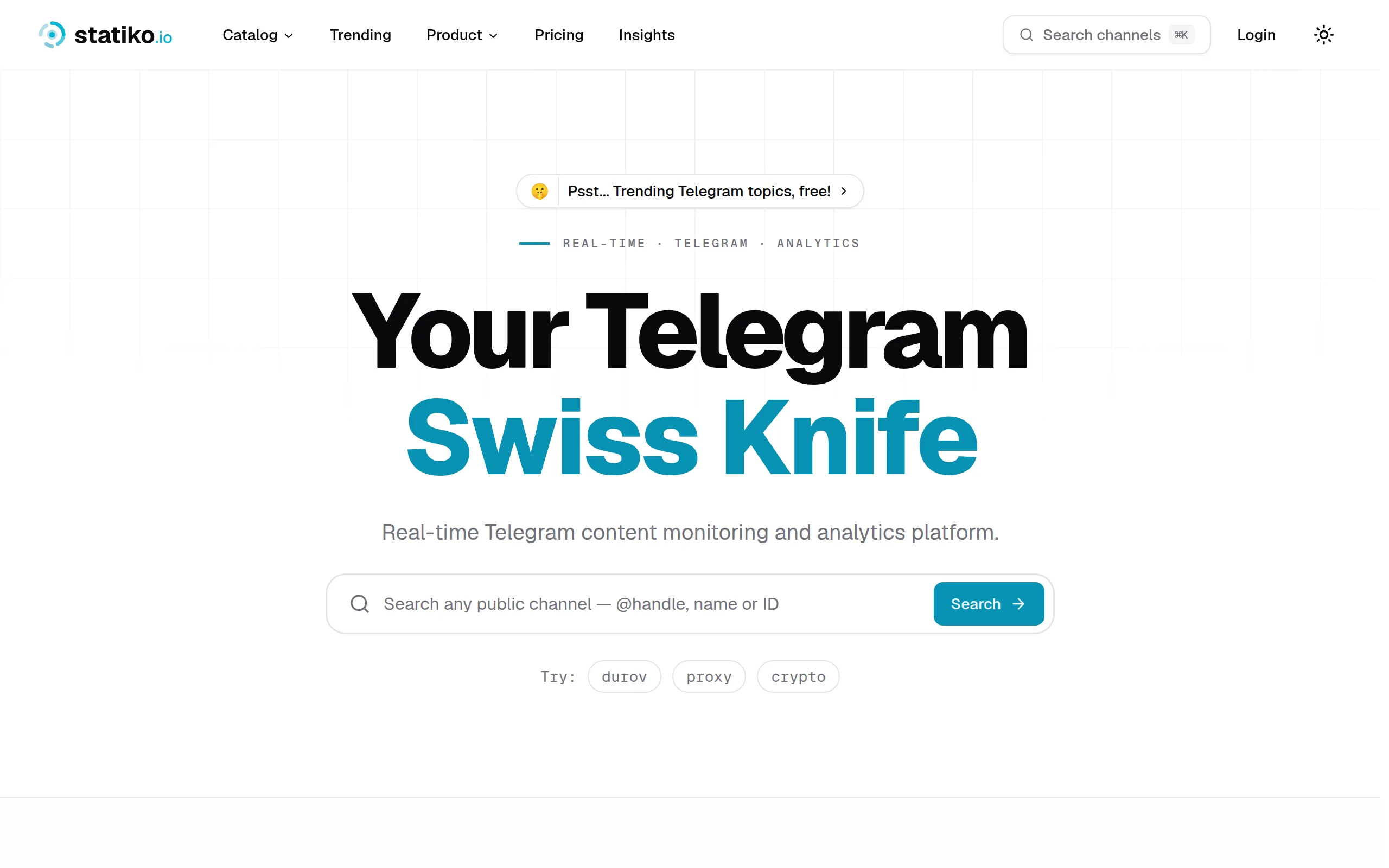
Statiko
Monitor any Telegram channel in real time - track posts, edits, deletions, and growth with AI recaps 📡

Shibui
AI website builder - describe your business, pick a niche template, edit by chatting, and publish instantly ✨

Pro Service
Find verified home service professionals, compare quotes, and pay securely through escrow - built for Brazilians across the US 🏠
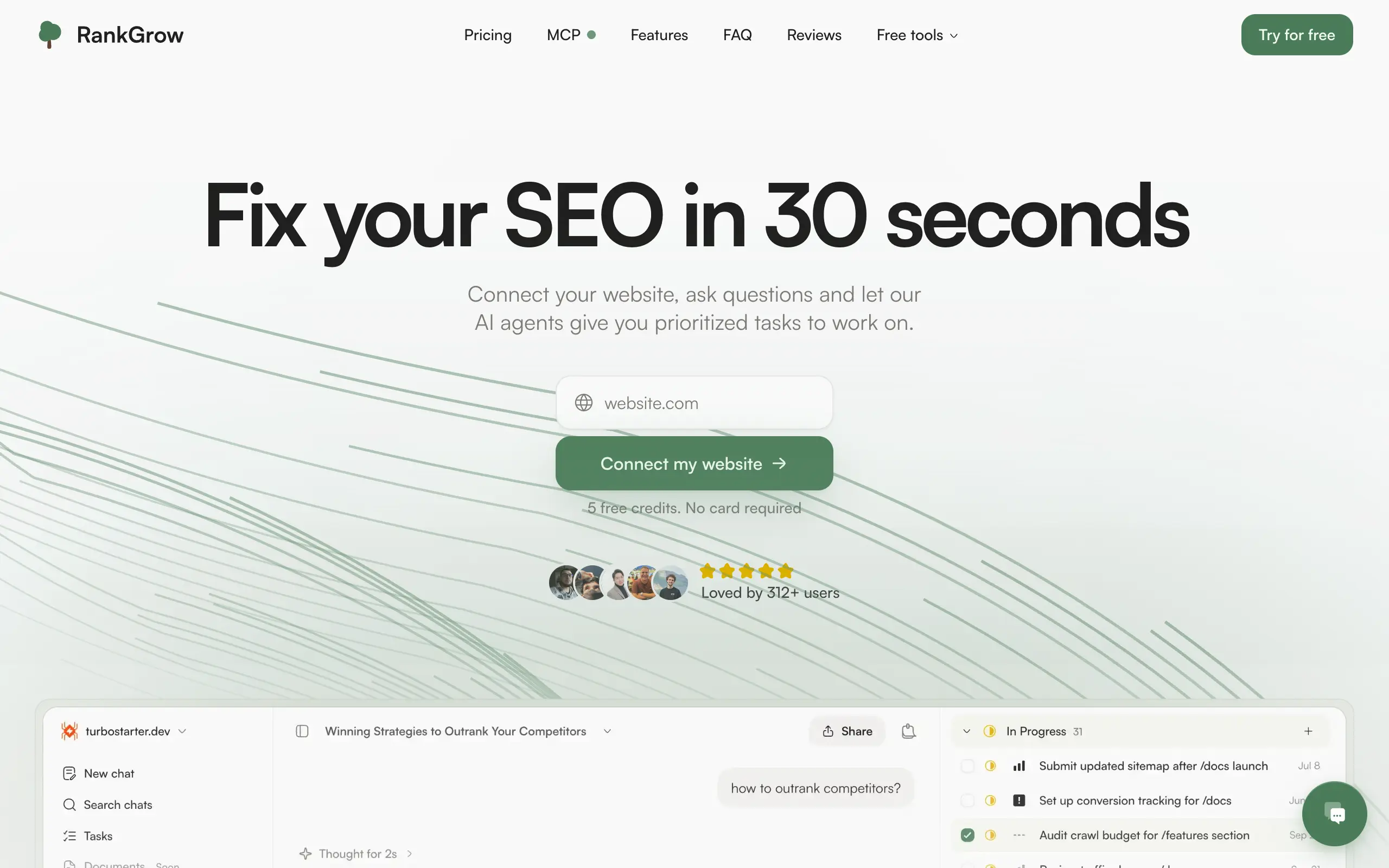
RankGrow
Fix your SEO with AI agents - connect Search Console, get prioritized tasks, and grow organic traffic 📈
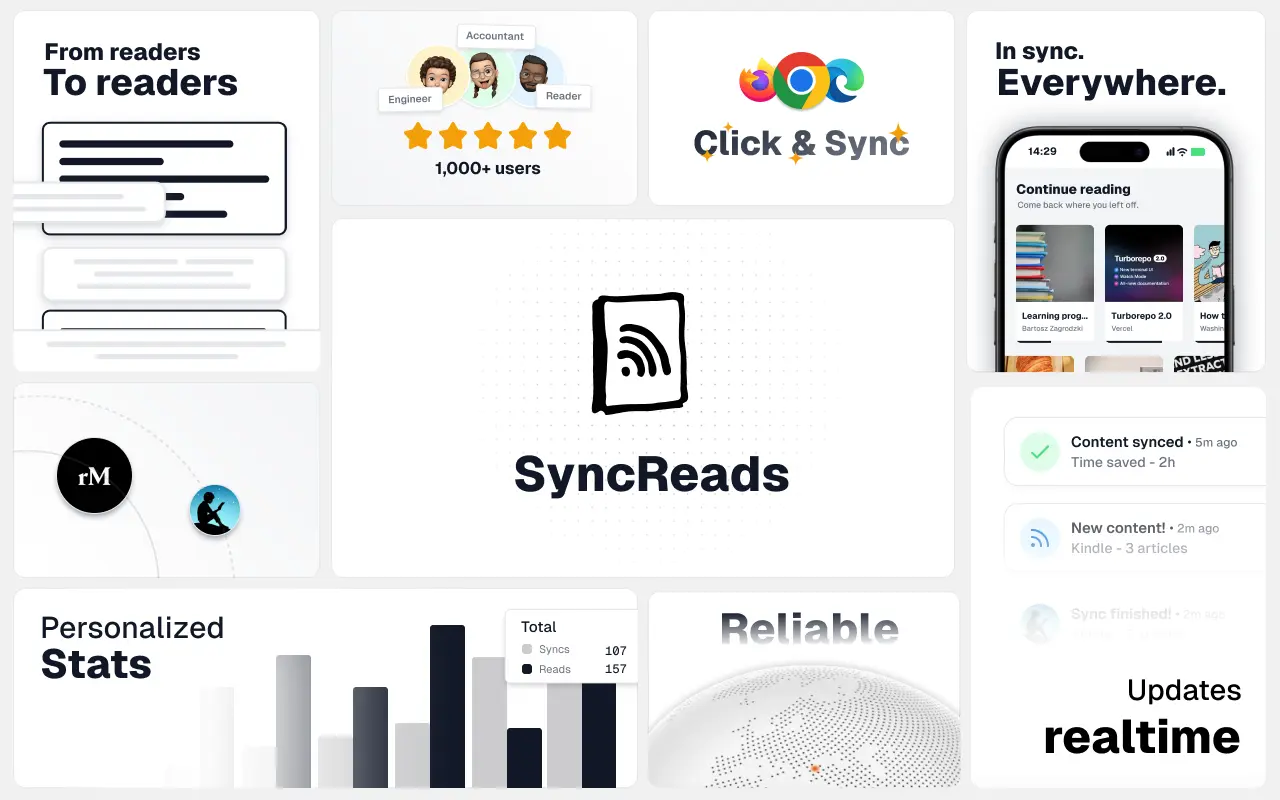
SyncReads
Sync your favorite content for distraction-free reading, save time and replace multiple apps. Anytime, anywhere 🔄
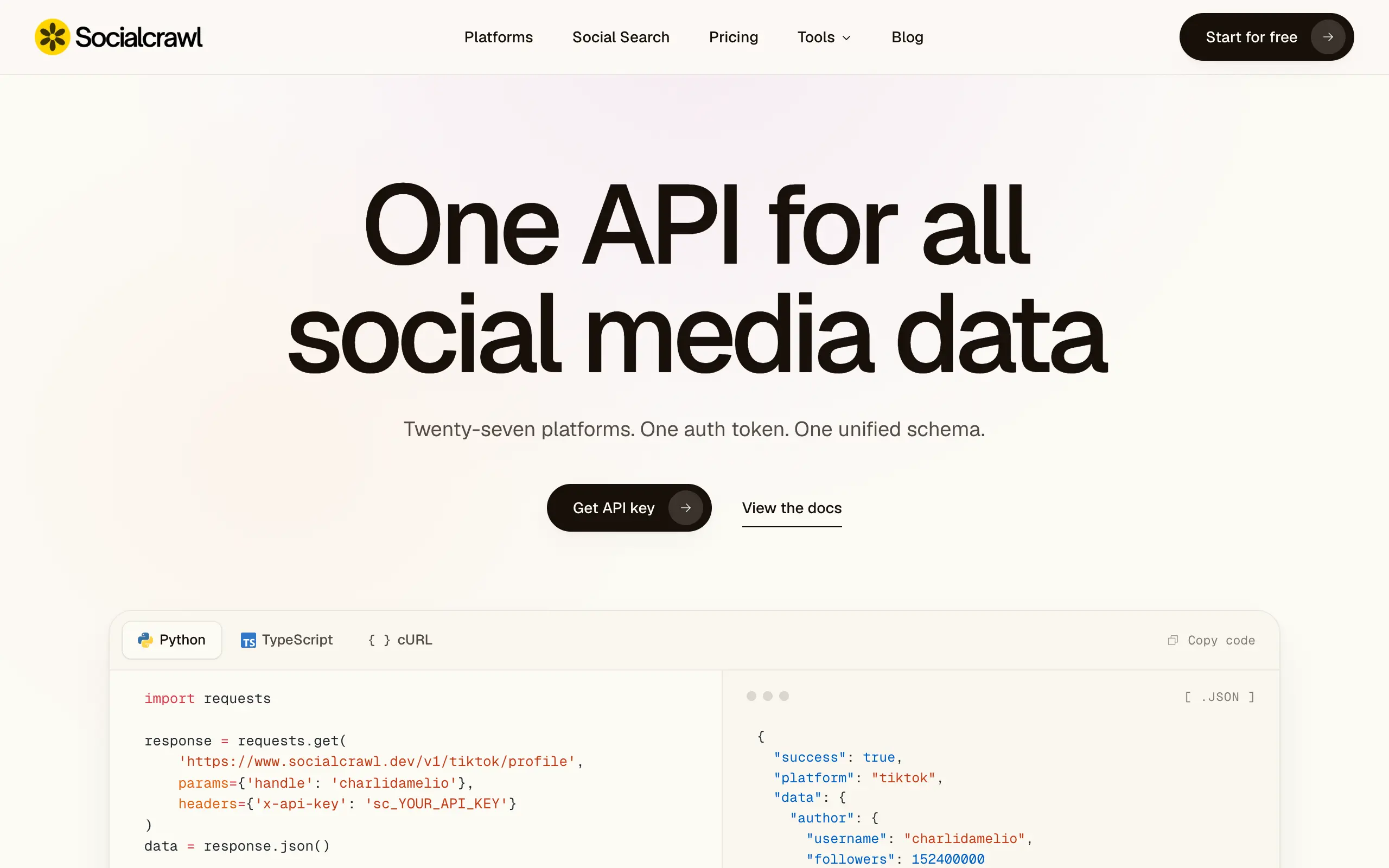
Socialcrawl
Get clean, structured data from 21 platforms like TikTok, Instagram, and YouTube with a single request 📊
Statiko
Monitor any Telegram channel in real time - track posts, edits, deletions, and growth with AI recaps 📡
Shibui
AI website builder - describe your business, pick a niche template, edit by chatting, and publish instantly ✨
Pro Service
Find verified home service professionals, compare quotes, and pay securely through escrow - built for Brazilians across the US 🏠
RankGrow
Fix your SEO with AI agents - connect Search Console, get prioritized tasks, and grow organic traffic 📈
SyncReads
Sync your favorite content for distraction-free reading, save time and replace multiple apps. Anytime, anywhere 🔄
Socialcrawl
Get clean, structured data from 21 platforms like TikTok, Instagram, and YouTube with a single request 📊
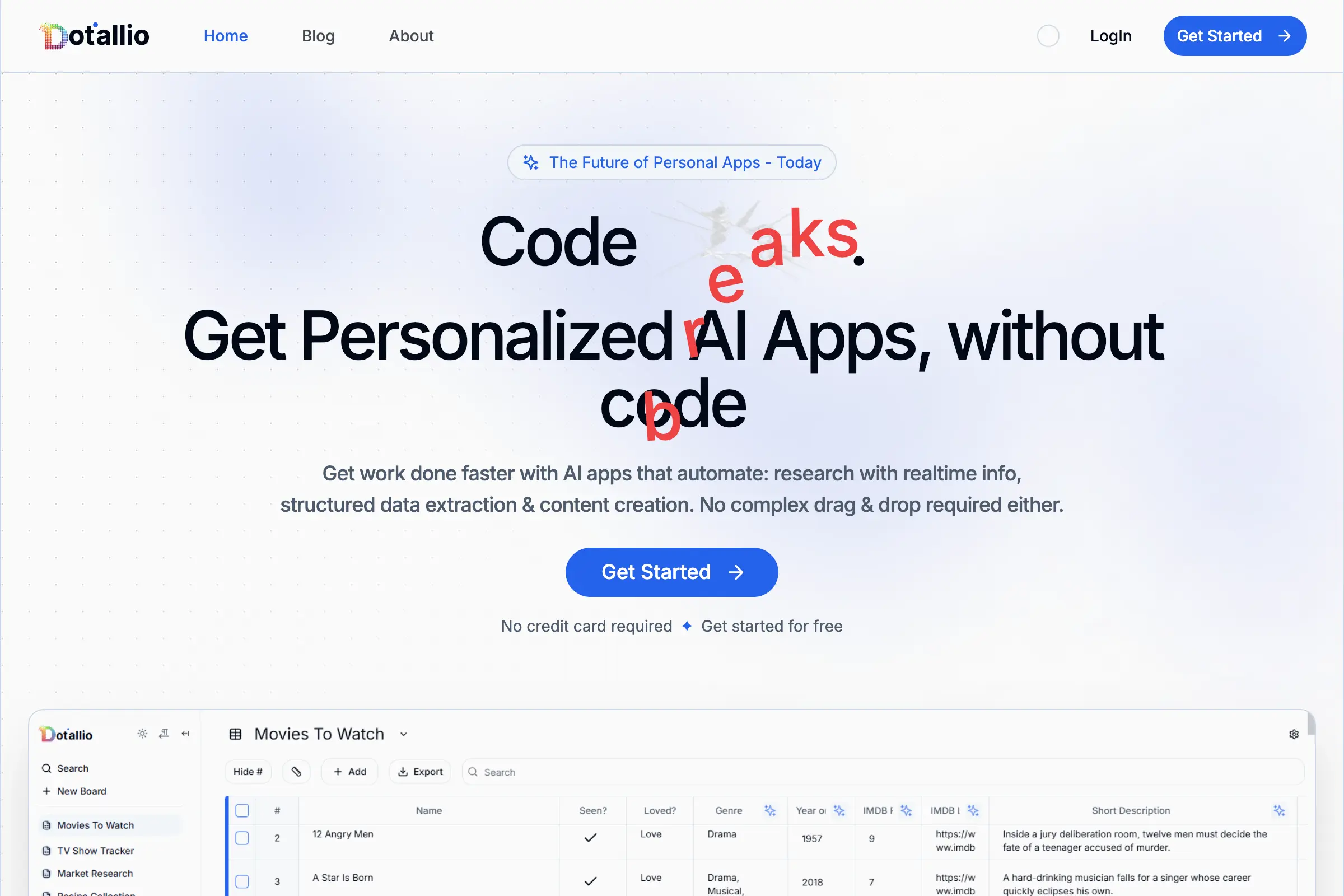
Dotallio
Personalized AI apps that automate research, data extraction, and content creation without code 🤖

Talk to Santa
Enjoy a magical live video chat or receive a unique AI-generated video greeting from Santa Claus 🎅

pozywka.pl
Scalable blog for food journalist, focused on performance and user experience 🌭
zagrodzki.me
Personal blog and portfolio of Bart Zagrodzki, where he shares his knowledge and work 💼
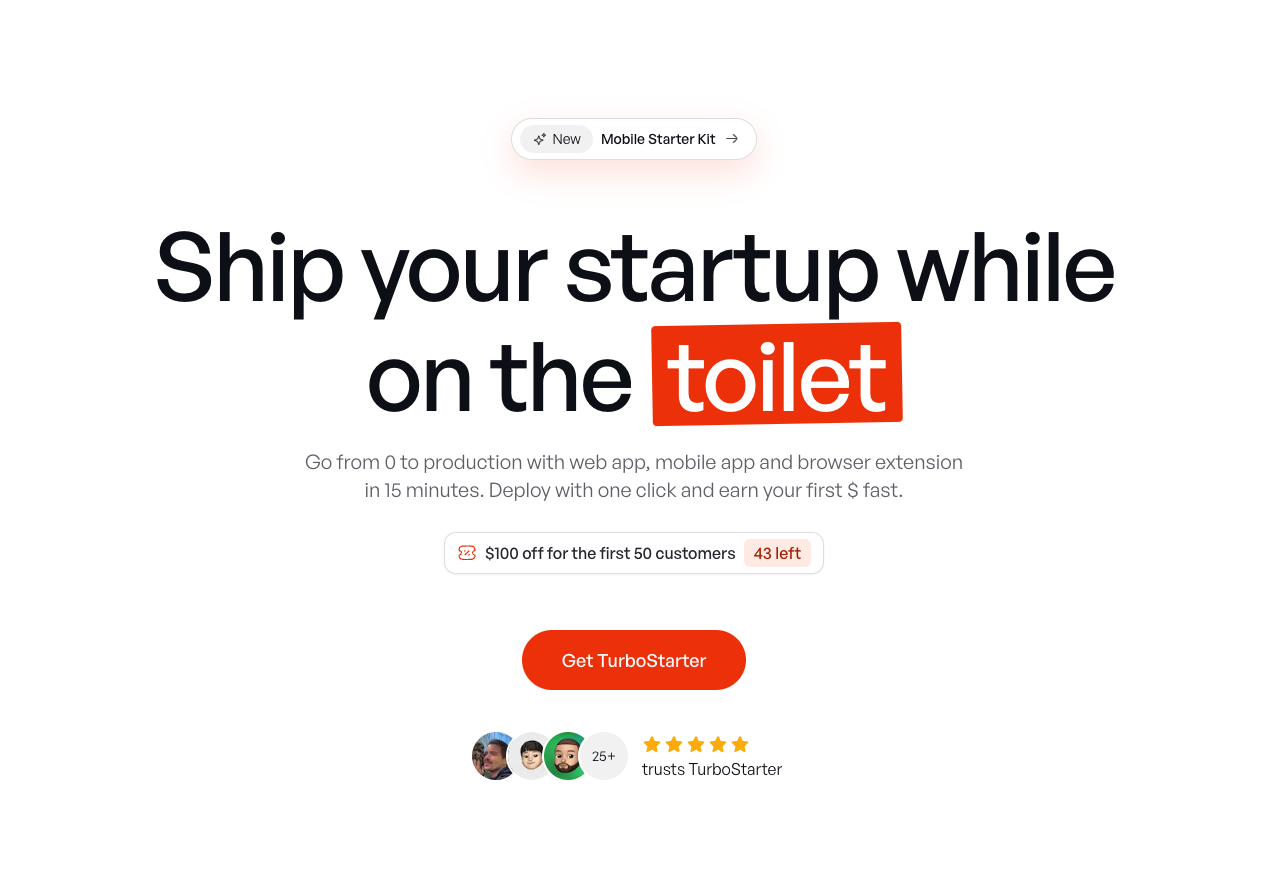
TurboStarter
Ship your startup everywhere. In minutes.
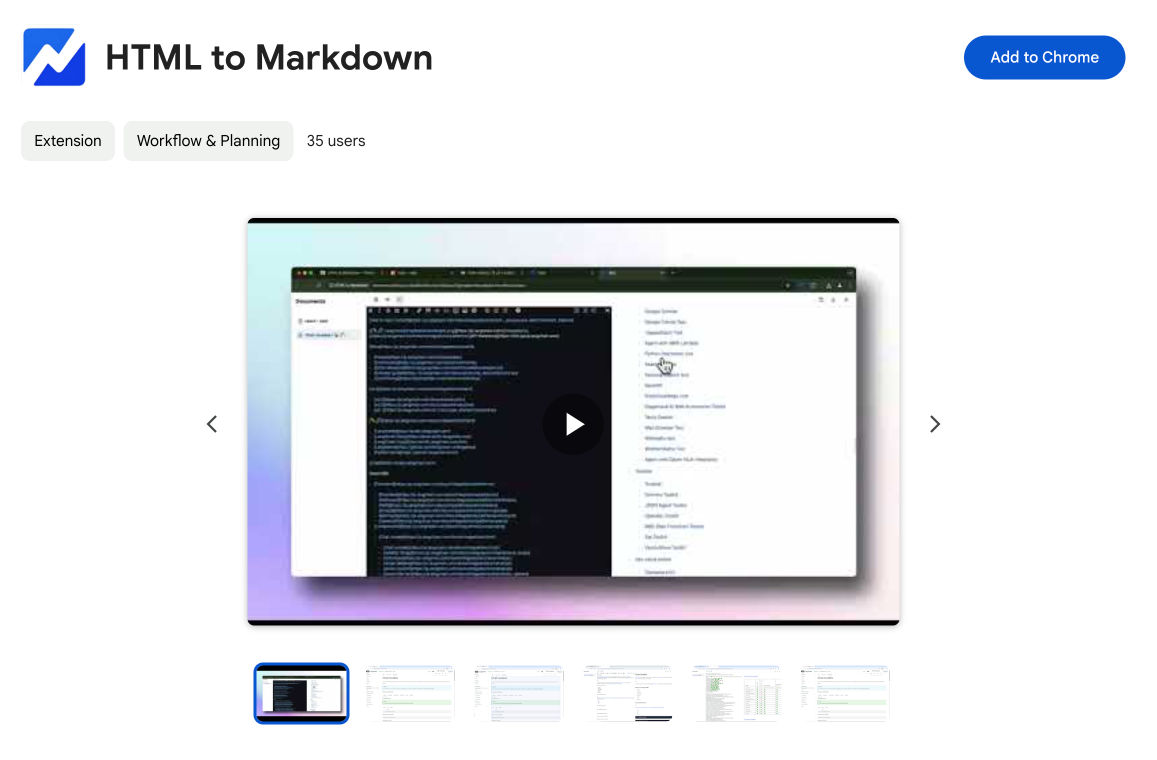
HTML to Markdown
Convert HTML to Markdown with ease, directly in your browser 📄
Dotallio
Personalized AI apps that automate research, data extraction, and content creation without code 🤖
Talk to Santa
Enjoy a magical live video chat or receive a unique AI-generated video greeting from Santa Claus 🎅
pozywka.pl
Scalable blog for food journalist, focused on performance and user experience 🌭
zagrodzki.me
Personal blog and portfolio of Bart Zagrodzki, where he shares his knowledge and work 💼
TurboStarter
Ship your startup everywhere. In minutes.
HTML to Markdown
Convert HTML to Markdown with ease, directly in your browser 📄
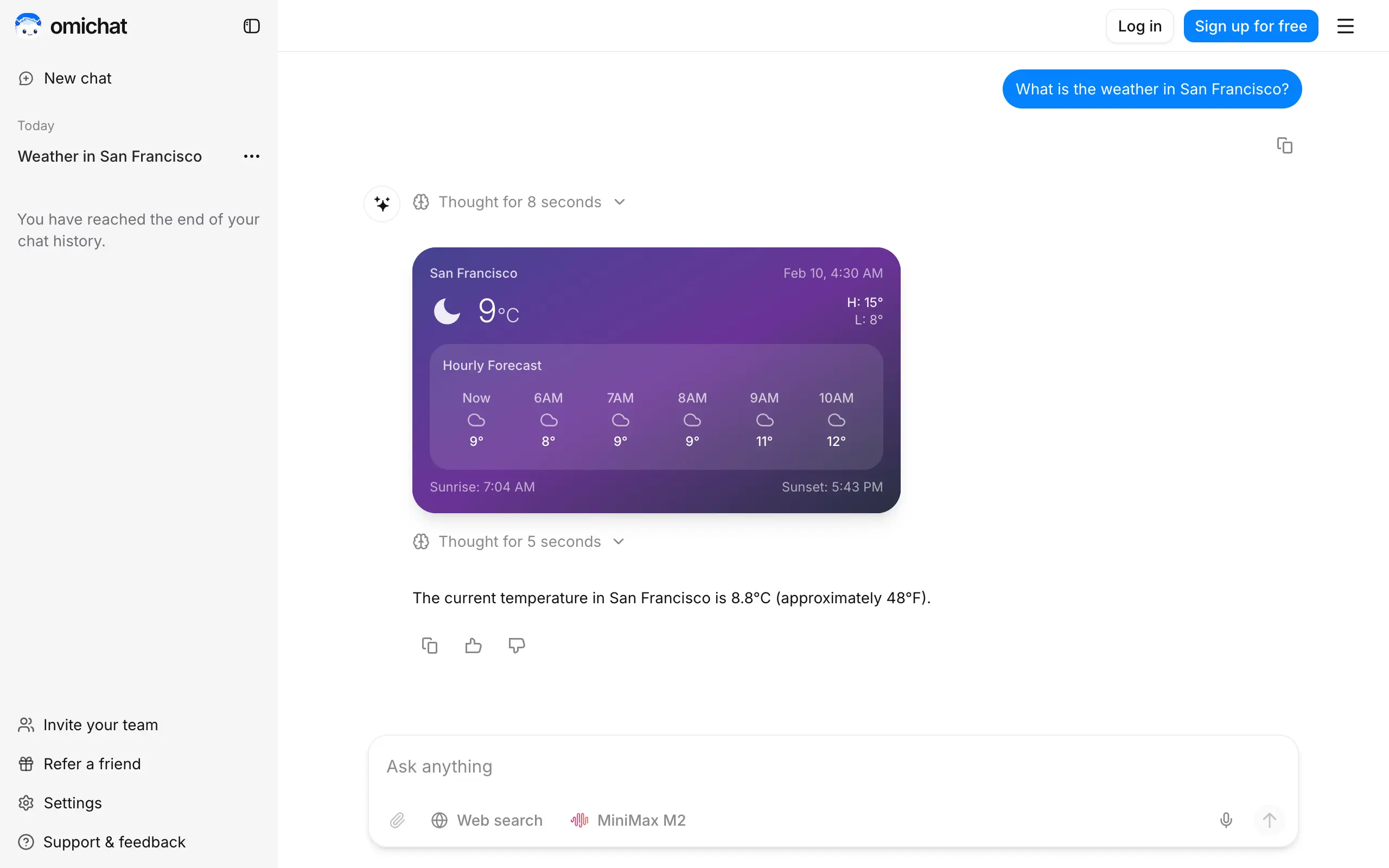
Omichat
Chat with 50+ AI models, including ChatGPT and Claude, in one place - switch models anytime without losing context 🤖
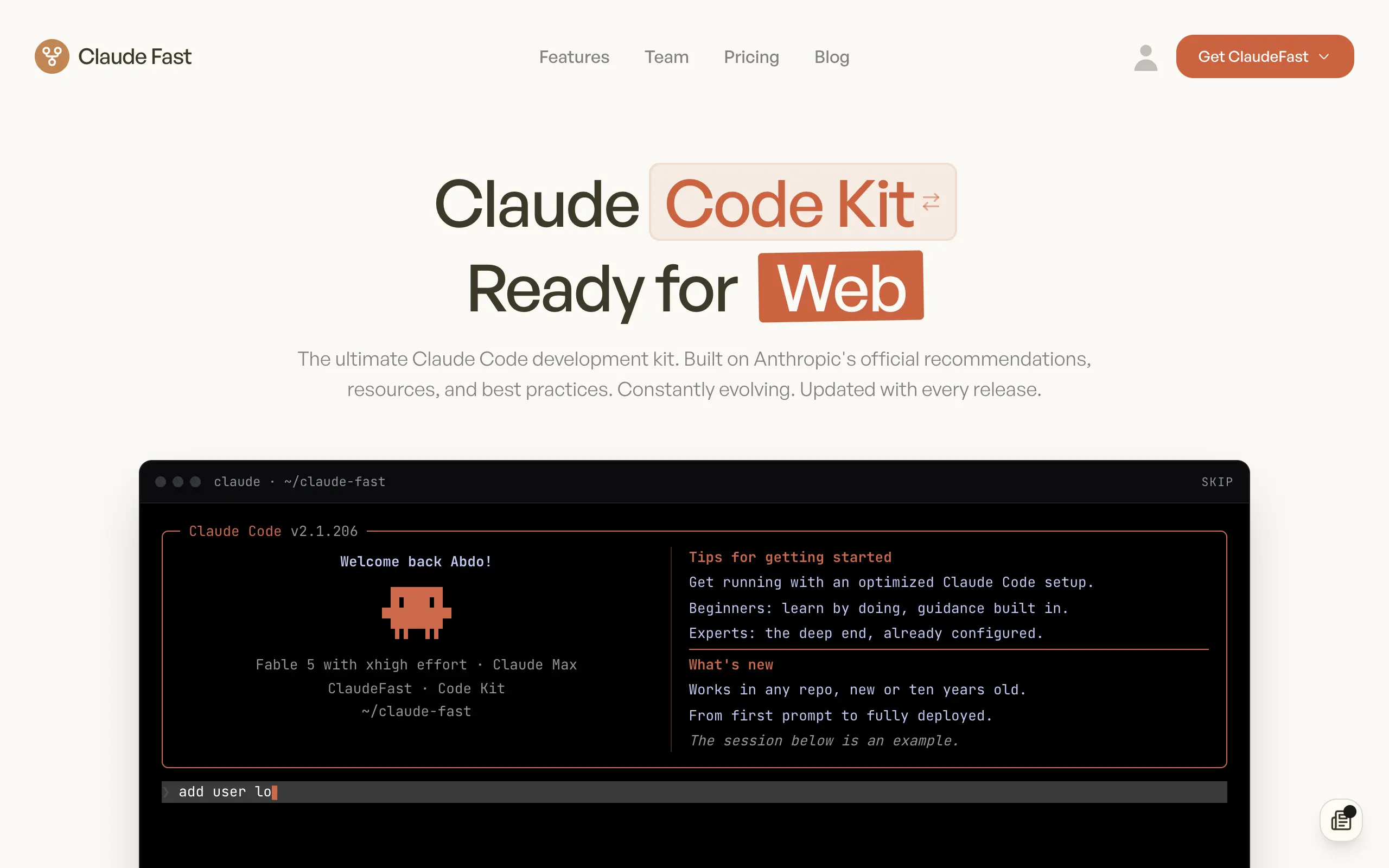
Claude Fast
Supercharge your Claude Code with 6x effective context window and specialized AI agents 🤖
EmojAI
AI-powered emoji picker with smart, context-aware suggestions 🤖
Solohacker
Autonomous company launcher - AI agents work 24/7, escalate what matters, and you stay in control 🤖
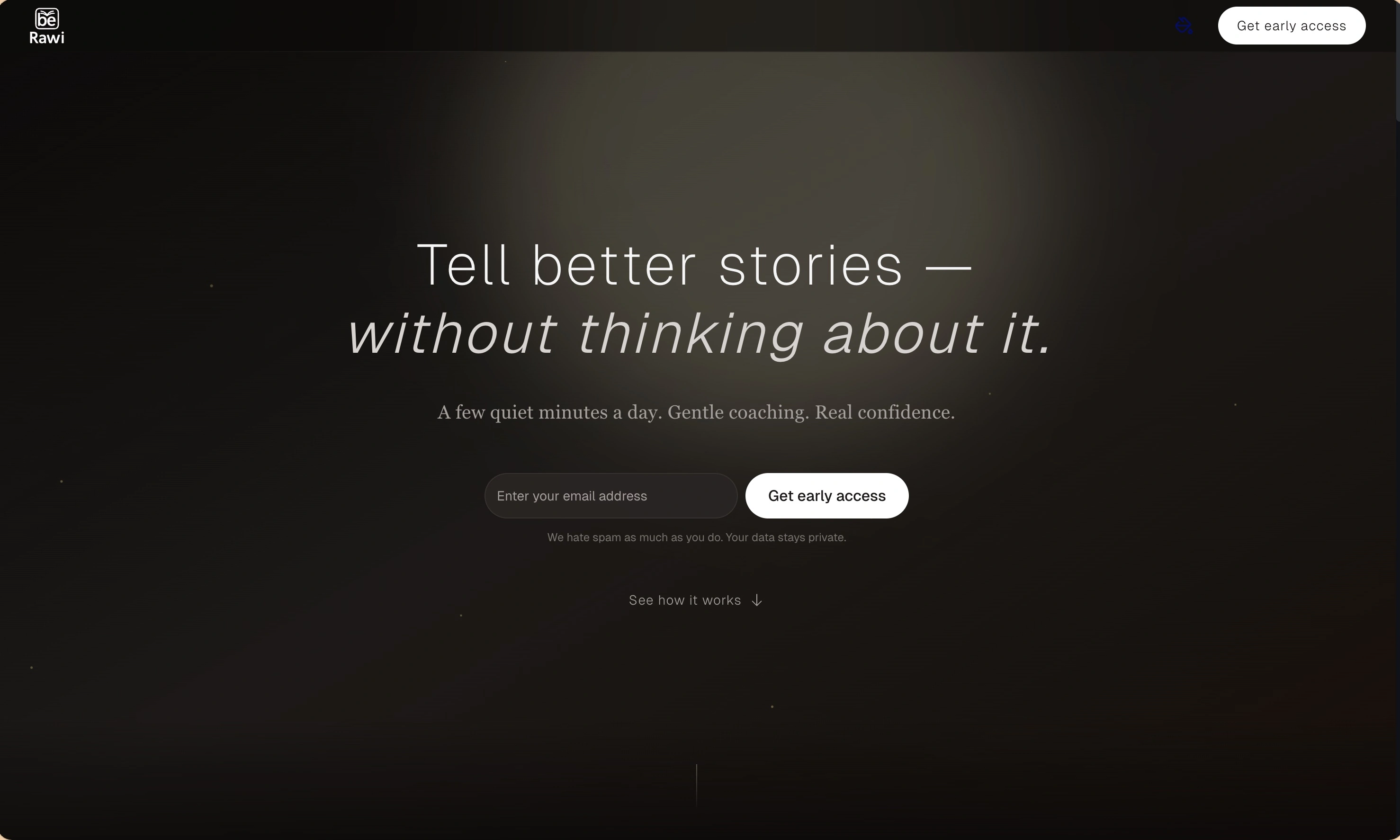
BeRawi: Storytelling Coach
Practice storytelling daily with instant feedback to sound clearer, more engaging, and confident 🎤
Omichat
Chat with 50+ AI models, including ChatGPT and Claude, in one place - switch models anytime without losing context 🤖
Claude Fast
Supercharge your Claude Code with 6x effective context window and specialized AI agents 🤖
EmojAI
AI-powered emoji picker with smart, context-aware suggestions 🤖
Solohacker
Autonomous company launcher - AI agents work 24/7, escalate what matters, and you stay in control 🤖
BeRawi: Storytelling Coach
Practice storytelling daily with instant feedback to sound clearer, more engaging, and confident 🎤

Connect with like-minded people
Join our community to get feedback, support, and grow together with 1,000+ builders on board, let's ship it!
Join usShip your startup everywhere. In minutes.
Don't burn tokens on setup and start building features on day one.