Wisdom Switchboard
Call distinct AI philosophy guides—from Existentialist to Buddhist—to compare life advice, uncover assumptions, and find your next step.
What is Wisdom Switchboard?
Wisdom Switchboard is an AI philosophy guide platform that lets people ask a difficult life question and receive contrasting perspectives from distinct philosophical traditions. Rather than delivering one generic AI answer, the product acts like an intelligent switchboard. A user can call on an Existentialist, Buddhist, Stoic, Aristotelian, Pragmatist, or other carefully designed guide to examine the same problem through different assumptions about meaning, agency, suffering, ethics, and action.
The core value is not merely generating thoughtful-sounding advice. It is helping users see that many personal decisions contain hidden philosophical premises.
A user who asks, “Should I leave a stable job to pursue meaningful work?” may receive very different but useful responses:
- An Existentialist guide may focus on freedom, responsibility, and owning the consequences of a choice.
- A Buddhist guide may investigate attachment, craving, impermanence, and whether the desire for a new path is driven by avoidance.
- A Stoic guide may separate controllable actions from uncontrollable outcomes.
- An Aristotelian guide may ask which option supports practical wisdom, character, relationships, and a flourishing life.
- A Pragmatist guide may encourage small experiments that create evidence before a dramatic commitment.
This makes Wisdom Switchboard more than an AI chatbot. It is an AI-powered reflective decision-making tool that gives users a structured way to compare worldviews, uncover assumptions, and choose a next step with greater clarity.
The product positioning
Wisdom Switchboard should be positioned as a reflective companion and philosophy exploration platform, not as therapy, crisis support, legal advice, financial advice, or a replacement for qualified professionals.
Why an AI philosophy guide has strong market potential
The market opportunity sits at the intersection of several durable user behaviors: people increasingly use AI for personal reflection, demand accessible mental wellness tools, seek meaning amid career and social uncertainty, and want alternatives to one-size-fits-all self-help content.
Traditional search engines can surface articles about Stoicism, Buddhism, or existentialism. Standard AI chatbots can explain those philosophies. But neither experience reliably gives a user a well-structured comparison of philosophical lenses applied to their personal context.
That gap is where Wisdom Switchboard can win.
The gap between generic AI advice and meaningful reflection
Most conversational AI systems are optimized for helpfulness and broad usefulness. In a personal decision context, that often creates a predictable response pattern:
- Validate the user’s feelings.
- Offer balanced pros and cons.
- Recommend talking to trusted people.
- Suggest a small action.
- Include a generic disclaimer.
While this is often sensible, it can feel interchangeable. Users do not always need another neutral answer. They may need help understanding why competing answers feel compelling in the first place.
An AI philosophy guide can introduce productive tension. It can say:
- “A Stoic may consider this fear an external impression to examine.”
- “An Existentialist may argue that waiting for certainty is a way to avoid freedom.”
- “A Buddhist perspective may question whether the desired outcome can deliver lasting satisfaction.”
- “A care ethics lens may ask who is affected by this decision and what relationships require.”
That is a more differentiated and defensible product experience than a generic “ask AI for advice” interface.
Cultural and product trends supporting the idea
Several trends make an AI philosophy app particularly relevant:
- AI companionship is becoming mainstream. Users are increasingly comfortable discussing ideas, concerns, and decisions with conversational software.
- Mental wellness content is expanding beyond meditation. Consumers are looking for journaling, reflection, emotional regulation, and self-development tools with more depth.
- Self-help fatigue is real. Many users are skeptical of oversimplified motivational advice and are drawn to frameworks that acknowledge ambiguity.
- Philosophy content performs well online. Stoicism, existentialism, Buddhism, Taoism, and practical ethics have active audiences across newsletters, podcasts, video platforms, and online communities.
- Career uncertainty has increased reflective demand. Automation, remote work, layoffs, independent work, and changing social expectations create frequent decision points.
- Personalization is now expected. People want frameworks applied to their actual situation, not only introductory lessons.
For market-sizing claims, investor-facing pages should reference current reports from recognized firms or institutions in a citation format such as “Source: [publisher], [report title], [year].” Avoid presenting broad market numbers without a traceable methodology.
Who Wisdom Switchboard is for
The strongest initial market is not “everyone interested in philosophy.” That audience definition is too broad for product design, onboarding, messaging, and paid acquisition.
Wisdom Switchboard should focus on people facing recurring ambiguity who are open to self-reflection but do not necessarily have formal philosophy training.
Thoughtful professionals
Knowledge workers, founders, managers, and creatives navigating career choices, burnout, ambition, identity, and workplace relationships.
Students and early-career adults
Users making high-stakes choices about work, relationships, place, purpose, values, and adulthood.
Personal growth enthusiasts
Readers of Stoicism, Buddhist philosophy, psychology, journaling, and self-development who want practical application.
Coaches and facilitators
Professionals who may use philosophical prompts as a structured reflection exercise with clients or groups.
Primary user persona: the reflective decision-maker
The primary user is likely between 22 and 45, digitally fluent, curious, and dealing with decisions that do not have objectively correct answers.
They may be asking questions such as:
- “Do I stay in this relationship?”
- “How do I decide between security and creative fulfillment?”
- “Should I confront a friend or let the conflict go?”
- “Why am I so afraid of making the wrong choice?”
- “How can I be ambitious without sacrificing my health?”
- “What does a good life look like for me?”
- “How do I deal with regret after a major decision?”
This user does not necessarily expect an AI to decide for them. Instead, they want a clearer map of the decision landscape.
Secondary user persona: the philosophy learner
A second valuable segment consists of users who enjoy philosophy but struggle to turn abstract concepts into daily practice.
For these users, Wisdom Switchboard can be a personalized learning product. The platform helps them move from “What is existentialism?” to “How might existentialism interpret my fear of disappointing my parents?”
This segment also creates strong content marketing opportunities around long-tail search terms:
- AI Stoic advisor
- Buddhist perspective on anxiety
- existentialist advice for career choices
- philosophy-based decision-making tool
- compare Stoicism and Buddhism
- AI life advice from philosophers
- practical philosophy app
- reflective journaling with AI
Jobs to be done
A successful onboarding flow should be built around what users are trying to accomplish, rather than around a list of philosophical schools.
| User situation | Functional job | Emotional job | Wisdom Switchboard outcome | Retention trigger |
|---|---|---|---|---|
| Career crossroads | Compare options | Feel less trapped | See several coherent paths | Saved decision journal |
| Relationship conflict | Find a response | Feel understood without judgment | Identify values and assumptions | Follow-up reflection |
| Identity uncertainty | Explore beliefs | Build self-trust | Receive useful philosophical contrast | Weekly insight review |
The unique selling proposition of Wisdom Switchboard
The most important strategic principle is this: Wisdom Switchboard should not market itself as an AI that has wisdom. It should market itself as a system that helps people compare wisdom traditions without pretending there is one final authority.
That distinction builds trust and reduces the risk of overclaiming.
The product’s unique selling proposition can be framed as:
Get multiple, clearly distinct philosophical perspectives on the decision in front of you, then turn the comparison into a grounded next step.
This combines three things that are often separated:
- Personalized AI conversation
- Historically informed philosophical lenses
- Practical decision support
What makes the product defensible
A basic chatbot prompt can imitate a philosopher once. A compelling SaaS product creates a repeatable, trusted, and frictionless experience around the task.
Wisdom Switchboard can build defensibility through:
- Curated philosophical guide profiles with documented source principles
- High-quality response schemas that force meaningful differences between guides
- A comparison interface rather than a linear chat-only interface
- Assumption mapping that reveals where viewpoints diverge
- Decision journals and longitudinal reflection
- Source citations and “learn more” explanations for philosophical concepts
- Personalized guide selection based on user goals and past sessions
- Safety systems for vulnerable or crisis-related conversations
- A recognizable brand voice that is intellectually honest without being academic or inaccessible
The platform should avoid turning historical thinkers into shallow caricatures. “Marcus Aurelius says wake up at 5 AM” is internet culture, not serious practical philosophy. The product must distinguish between accessible guidance and inaccurate roleplay.
Core features for an AI philosophy app
The first version should deliver a focused “ask, compare, reflect, act” loop. Do not begin with a huge library of traditions, social features, courses, or a marketplace. The initial product needs to prove that users value philosophical comparison enough to return.
Guided question intake
Users should be able to type naturally, but structured prompts improve answer quality. The intake flow can ask:
- What decision or situation are you facing?
- What feels most difficult about it?
- What options are you considering?
- What values feel in conflict?
- Do you want comfort, challenge, practical action, or deeper exploration?
- Which guides do you want to hear from?
A short intake creates richer context without feeling like a form. Allow users to skip questions and proceed quickly.
Philosophy guide selection
Start with a limited set of well-differentiated guides. Seven to ten guides are enough for an MVP.
A strong starting collection could include:
- Stoic guide for agency, character, emotional discipline, and the dichotomy of control
- Existentialist guide for freedom, authenticity, responsibility, and meaning-making
- Buddhist guide for attachment, compassion, impermanence, and mindful awareness
- Aristotelian guide for virtue, practical wisdom, habits, community, and flourishing
- Pragmatist guide for experimentation, consequences, learning, and revisable beliefs
- Taoist guide for non-forcing, simplicity, balance, and alignment with changing conditions
- Care ethics guide for relationships, responsibility, interdependence, and contextual judgment
- Socratic guide for questioning assumptions and clarifying definitions
Each guide should be represented as a philosophical lens, not a claim that the AI is literally a historical person. For example, use “A Stoic lens” or “The Existentialist guide” rather than promising an authentic simulation of a specific thinker.
Side-by-side advice comparison
The central interface should show philosophical perspectives in a comparison-friendly format. A user should immediately understand:
- What each guide notices first
- What each guide believes matters most
- What question each guide would ask
- What action each guide might recommend
- What risk or blind spot each guide identifies
This is much more valuable than forcing users to scroll through five long chat messages.
Show each philosophy guide’s interpretation in concise cards. Let users expand a card when they want deeper explanation, examples, and relevant concepts.
Highlight the hidden assumptions beneath each answer, such as whether fulfillment comes from achievement, detachment, duty, relationships, freedom, or experimentation.
Translate insights into low-risk next steps. A user might choose one action to test this week, one question to journal about, and one conversation to have.
Assumption mapping
Assumption mapping is one of the highest-value differentiators for Wisdom Switchboard.
Many users are not stuck because they lack advice. They are stuck because they are trying to satisfy incompatible values at the same time. For example, a person may want certainty, freedom, approval, financial safety, and a sense of purpose from one decision.
The platform can identify tensions such as:
- Security versus exploration
- Individual authenticity versus family obligation
- Immediate relief versus long-term growth
- Achievement versus contentment
- Control versus acceptance
- Justice versus loyalty
- Self-protection versus vulnerability
The AI should present these as tentative hypotheses, not diagnoses. A useful phrasing is, “One possible tension in what you described is…” This protects user autonomy and improves epistemic humility.
Follow-up dialogue with each guide
After reviewing perspectives, users should be able to ask a specific guide a follow-up question:
- “What would courage look like here?”
- “How do I know whether I am avoiding discomfort or protecting myself?”
- “What is one practical Buddhist exercise for this situation?”
- “What would an Aristotelian mean by flourishing in my case?”
Guide-specific follow-ups increase engagement, but every answer should remain grounded in the user’s stated context and the guide’s framework.
Reflection journal and decision memory
A journal turns a one-off AI experience into a product users can revisit.
Users should be able to save:
- Their original question
- Guide responses
- Key assumptions
- A chosen next step
- Their confidence level
- A future check-in date
- Notes on what happened after acting
Over time, Wisdom Switchboard can show patterns without making inappropriate psychological claims. For example, it might say, “You often return to questions about autonomy and belonging,” or “You tend to prefer practical experiments over irreversible choices.”
Source-aware learning mode
Trust improves when users can see the basis of a perspective. Each response should offer an optional “Why this guide might say this” section that explains relevant concepts in plain language.
Examples include:
- The Stoic distinction between what is within one’s control and what is not
- The Buddhist teaching of impermanence
- Existentialist ideas about freedom and responsibility
- Aristotle’s concept of practical wisdom
- Pragmatism’s focus on consequences and inquiry
Do not fabricate quotations or citations. Where direct quotations are used, they must be verified, correctly attributed, and supplied with appropriate context. A content review process should verify source material before publication.
A strong response should identify the lens being used, explain its reasoning in accessible language, acknowledge uncertainty, avoid presenting philosophy as clinical treatment, and give the user agency to accept, reject, or adapt the perspective.
Avoid false historical impersonation, invented quotes, moral certainty, overly prescriptive life directives, and personality claims based on limited conversations. The platform should never frame a philosophical perspective as the objectively correct answer.
How the AI system should work
An AI philosophy guide requires more than a system prompt asking a model to “act like a Stoic.” The product needs an orchestration layer that separates philosophical grounding, user context, response generation, safety classification, and UI-ready formatting.
A recommended response pipeline
A robust application flow can look like this:
Collect the user’s question, desired outcome, emotional intensity, options, and selected philosophical guides.
Run a safety classifier to identify crisis signals, self-harm language, abuse, severe distress, medical questions, and other high-risk contexts.
Retrieve vetted philosophical reference material for the selected guides using retrieval-augmented generation.
Generate each guide response using a fixed schema that includes interpretation, assumptions, reflective questions, cautions, and practical next steps.
Run a comparison pass that identifies agreements, disagreements, unresolved tensions, and shared actionable themes.
Validate the output for unsupported claims, disallowed advice, fabricated quotes, excessive certainty, and unclear language before rendering it in the interface.
Use structured outputs instead of free-form text
Structured outputs make the product easier to test, compare, and safely render. A guide response can use a schema like this:
type PhilosophyGuideResponse = {
  guide: "Stoic" | "Buddhist" | "Existentialist" | "Aristotelian";
  summary: string;
  corePrinciple: string;
  interpretation: string;
  assumptionsToExamine: string[];
  reflectiveQuestions: string[];
  practicalNextSteps: string[];
  cautions: string[];
  confidenceNotes: string[];
  sourceConcepts: string[];
};
This structure supports product requirements such as character limits, expandable sections, saved journals, analytics, and quality evaluation. It also reduces the chance that one guide produces a 1,000-word essay while another gives a vague paragraph.
Retrieval-augmented generation for philosophical accuracy
Retrieval-augmented generation, often called RAG, should provide the model with carefully curated source excerpts, scholarly summaries, and internally reviewed explanations.
The knowledge base should include:
- Primary texts where licensing permits
- Public-domain translations where appropriate
- Expert-authored summaries
- Definitions of key concepts
- Notes on historical context
- Interpretive disagreements between scholars
- Explicit warnings about concepts that are frequently oversimplified online
A source-aware system will not eliminate hallucinations, but it provides a more reliable basis for each answer than pure prompting alone.
Recommended tech stack for Wisdom Switchboard
The right stack should prioritize speed to market, clean AI orchestration, user privacy, observability, and future flexibility. A TypeScript-based full-stack architecture is a practical choice for a SaaS MVP.
Frontend and application framework
Use Next.js with React and TypeScript.
This combination is well suited to an AI SaaS product because it supports server-rendered marketing pages, interactive application views, API routes, authentication flows, streaming AI responses, and SEO-friendly content in one ecosystem.
For UI styling, Tailwind CSS is a strong option. It enables fast iteration and makes it easier to create consistent cards, comparison layouts, journals, settings screens, and responsive mobile interfaces.
Database and user data
Use PostgreSQL as the primary relational database. The product has naturally relational data:
- User profiles
- Conversations
- Guide selections
- Saved responses
- Reflection entries
- Subscription status
- Evaluation logs
- Consent and data-retention preferences
For data access, Prisma provides a productive TypeScript ORM experience. The trade-off is that teams with complex database optimization needs may eventually prefer more direct SQL usage in critical paths. For an MVP, Prisma’s speed and maintainability are significant advantages.
Authentication and payments
Use Clerk or another established authentication provider to accelerate secure sign-in, account recovery, social login, and user management.
For subscriptions, Stripe remains the practical default for SaaS billing, customer portal access, invoices, payment methods, and webhooks.
AI model layer and orchestration
The LLM layer should be provider-agnostic. Use an abstraction that allows the team to evaluate models for quality, latency, cost, tool support, and safety.
Key evaluation criteria include:
- Ability to follow nuanced philosophical instructions
- Strong structured-output reliability
- Low hallucination rates in source-sensitive content
- Cost per completed comparison
- Streaming support
- Data handling and privacy commitments
- Regional availability and compliance requirements
A multi-model strategy can be useful. For example, use a higher-reasoning model for final guide synthesis and a lower-cost model for categorization, title generation, or non-critical summarization. However, introducing multiple models increases operational complexity and makes quality testing more important.
For vector retrieval, pgvector can be an efficient first choice because it keeps embeddings close to PostgreSQL. A dedicated vector database may become attractive at larger scale, but it is rarely necessary on day one.
Analytics, monitoring, and evaluation
The product should measure both SaaS metrics and AI quality metrics.
Track product behavior such as:
- Activation rate after the first question
- Number of guides compared per session
- Saved reflection rate
- Follow-up question rate
- Weekly and monthly retention
- Trial-to-paid conversion
- Subscription cancellation reasons
Track AI quality such as:
- Response latency
- Safety escalation rate
- Source citation coverage
- Hallucination reports
- Guide distinctiveness score
- User-rated helpfulness
- “This did not represent the philosophy accurately” reports
Use Sentry for application error monitoring. Add privacy-conscious product analytics and an internal evaluation dashboard before scaling paid acquisition.
Monetization strategies for an AI philosophy SaaS
Wisdom Switchboard can support a freemium subscription model, but pricing should reflect the product’s recurring value. If the app only answers occasional one-off questions, users may not sustain a subscription. The journal, follow-up guidance, learning paths, and periodic reflection features create the habits that improve retention.
Recommended pricing model
A simple tiered model could include:
- Free plan with a limited number of switchboard sessions per month and access to a small guide selection
- Premium individual plan with unlimited or high-volume sessions, all guides, saved journals, deeper comparisons, custom reflection plans, and priority model access
- Annual plan with a meaningful discount to improve cash flow and retention
- Professional plan for coaches, educators, or workshop facilitators with client-safe templates and collaborative reflection tools
Avoid charging immediately before the user experiences the core “aha” moment. Let people see at least one high-quality comparison before showing the paywall.
Alternative revenue opportunities
Once the core product has product-market fit, consider:
- Curated practical philosophy courses
- Themed reflection packs for career, grief, relationships, leadership, and creativity
- Team workshops for values-based decision-making
- Educational licenses for philosophy or ethics programs
- A coach toolkit with white-labeled worksheets
- Gift subscriptions
- Printed annual reflection reports, provided privacy expectations are explicit
Do not monetize personal data through advertising or data resale. For a product built around intimate questions, privacy is part of the value proposition.
Risks and mitigation for an AI life advice platform
The product has meaningful risks because users may bring emotionally charged, high-stakes, or vulnerable questions to the platform. Safety and trust cannot be treated as post-launch work.
| Risk | Why it matters | Mitigation | Owner | Priority |
|---|---|---|---|---|
| Unsafe reliance | Users may treat AI output as authoritative advice | Clear boundaries, calibrated language, escalation flows | Product and safety | High |
| Philosophical inaccuracy | Oversimplification damages trust and credibility | Curated sources, expert review, user reporting | Content and AI | High |
| Privacy concerns | Users share sensitive personal context | Encryption, deletion controls, minimal retention | Engineering and legal | High |
| Generic responses | Users may see little difference from standard chatbots | Distinct guide schemas and rigorous evaluation | AI product | High |
| High model costs | Long multi-guide answers can erode margins | Usage limits, caching, concise defaults, tiered models | Engineering and finance | Medium |
Safety boundaries must be built into the experience
When users disclose imminent self-harm, abuse, violence, or a severe crisis, the product should shift away from philosophy exploration. It should offer immediate, region-appropriate crisis guidance and encourage contact with local emergency services or qualified support resources.
The exact implementation must be reviewed by legal and clinical safety experts for the markets served. Safety copy should be clear, compassionate, and nonjudgmental.
The platform should also use caution for:
- Medical or psychiatric questions
- Legal disputes
- Financial decisions involving substantial risk
- Eating disorders
- Substance use
- Domestic abuse
- Coercive relationships
- Delusional or psychotic content
- Requests for wrongdoing or harm
Privacy is a competitive advantage
A person deciding whether to leave a marriage, disclose an identity, change careers, or confront a family member may share deeply personal details. Wisdom Switchboard should make privacy controls visible and understandable.
Core privacy practices include:
- Clear explanation of what data is stored
- Conversation deletion controls
- Export options for user-owned journal data
- Explicit opt-in for model training or research use
- Encryption in transit and at rest
- Minimal data collection
- Role-based access controls for internal systems
- Separate retention rules for safety logs and user content
- Transparent subprocessor disclosures
Trust is not just a legal page. It should be a recurring product principle expressed during onboarding, account settings, and sensitive conversations.
Competitive advantage against generic AI chatbots
The biggest competitive challenge is that users can already ask a general-purpose AI, “What would Buddhism say about my career?” Wisdom Switchboard must make the specialized experience obviously better within minutes.
The answer is product depth, not simply better marketing copy.
Generic chatbot versus Wisdom Switchboard
A generic chatbot provides a single response and depends on the user’s prompting skill. Wisdom Switchboard should provide:
- A purpose-built multi-perspective interface
- Philosophically distinct reasoning rather than superficial tone changes
- Side-by-side comparison
- Assumption discovery
- Source-aware explanations
- Structured reflection prompts
- Action planning
- Saved decision history
- Safety-aware personal reflection flows
- A focused brand for practical philosophy
The product should emphasize that it is not competing with philosophy books, therapy, coaching, or trusted relationships. It is helping users prepare for and deepen the conversations they have with themselves and others.
Building an expert credibility moat
To demonstrate E-E-A-T, Wisdom Switchboard should establish an editorial and advisory process.
A strong credibility program includes:
- Philosophy advisors or reviewed contributor bios
- Published methodology explaining how guides are designed
- Transparent distinctions between primary texts and modern interpretations
- A public correction process for factual errors
- Periodic guide audits
- Accessible citations or concept references
- Clear safety standards
- Product content written by people with demonstrated subject expertise
This approach creates authority that a quick prompt wrapper cannot easily replicate.
Go-to-market strategy for Wisdom Switchboard
Early distribution should focus on high-intent content, communities already interested in practical philosophy, and shareable product outcomes.
SEO content opportunities
Create pillar pages around philosophical frameworks and decision contexts. Each article should be written by or reviewed with subject-matter expertise, include careful definitions, and avoid making mental health claims.
Promising SEO topics include:
- How to make a difficult decision using philosophy
- Stoicism versus Buddhism for anxiety and uncertainty
- Existentialism and career choice
- What Aristotle means by a flourishing life
- How to identify your core values in a major life decision
- Practical philosophy exercises for everyday life
- How to compare competing values
- How to use reflective journaling for decisions
The conversion path can be natural: educate the reader, show how different philosophies frame the same dilemma, then invite them to compare perspectives in the product.
Community-led launch
Early adopters may be found in:
- Practical philosophy communities
- Stoicism and Buddhism reading groups
- Newsletter audiences focused on meaning and work
- Coaching communities
- University philosophy clubs
- Productivity and journaling communities
- Founder and creative professional groups
Offer a shareable but privacy-conscious output format. For example, users could share an anonymized “What five philosophies say about changing careers” comparison without exposing their personal journal entry.
A practical 90-day implementation roadmap
The most effective launch plan prioritizes a narrow, excellent core loop over feature breadth.
Days 1 through 30: validate the core experience
Build the first functional prototype with four guides: Stoic, Buddhist, Existentialist, and Pragmatist.
Focus on:
- Landing page with clear positioning
- Authentication
- Question intake
- Multi-guide answer generation
- Side-by-side comparison UI
- Basic safety detection
- User feedback controls
- Conversation saving
- Internal evaluation dataset with at least 50 realistic user questions
Interview at least 15 target users. Watch them use the prototype rather than relying only on survey answers. The most important question is whether seeing multiple lenses changes how they understand their decision.
Days 31 through 60: improve quality and retention
Add features that turn insight into repeat usage:
- Assumption mapping
- Follow-up questions
- Reflection journal
- Weekly check-in prompts
- Source concept cards
- Subscription billing
- Privacy settings
- Analytics dashboard
- Improved safety escalation
Use a simple evaluation rubric for every guide response:
- Is the response clearly distinct from the other guides?
- Is it faithful to the selected philosophical lens?
- Does it address the user’s actual context?
- Does it avoid false certainty?
- Does it offer a practical and safe next step?
Days 61 through 90: launch and learn
Launch to a small, relevant audience before pursuing broad consumer acquisition.
Priorities include:
- Publish foundational SEO content
- Invite beta users from philosophy and reflection communities
- Test free-to-paid conversion points
- Add structured feedback after each session
- Review low-rated responses manually
- Identify the most retained user segment
- Double down on the most compelling decision category
The initial goal is not massive traffic. It is evidence that users return because the AI philosophy guides help them think in a way generic chatbots do not.
Final recommendation
Wisdom Switchboard has a compelling opportunity to become a trusted practical philosophy platform for people navigating uncertain decisions. Its strongest positioning is not “AI life advice.” That category is crowded, vague, and difficult to trust.
Instead, position the product as a philosophical perspective comparison tool that helps users understand competing values, question assumptions, and choose an intentional next step.
The winning experience will feel calm, intellectually honest, useful, and humble. It will not claim to solve life’s hardest questions. It will help users ask better questions, see their options more clearly, and act with greater awareness.
Build the MVP around distinct guides, structured comparison, source-aware reasoning, reflective journaling, and strong safety boundaries. Then use retained behavior, not novelty alone, to guide the roadmap.
For a faster path to building the authentication, billing, dashboard, and SaaS foundations behind an AI product like Wisdom Switchboard, start with TurboStarter.
More 🤖 AI Startup SaaS ideas
Discover more innovative ai startup SaaS ideas that are trending in 2026. Each idea is AI-generated with market validation and growth potential to help you find your next profitable venture faster than competitors.
Your competitors are building with TurboStarter
Below are some of the SaaS ideas that have been generated and built with our starter kit.
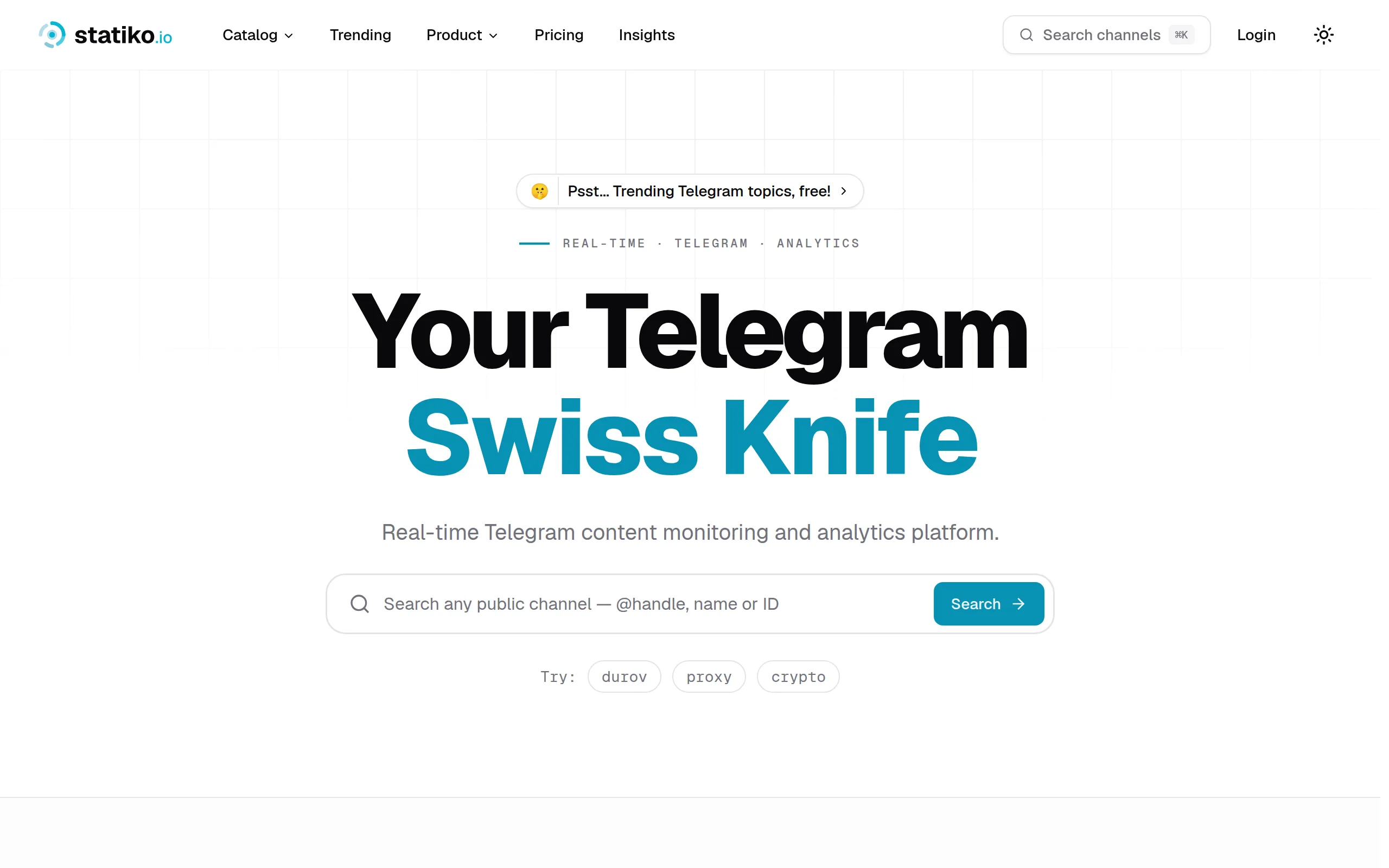
Statiko
Monitor any Telegram channel in real time - track posts, edits, deletions, and growth with AI recaps 📡

Shibui
AI website builder - describe your business, pick a niche template, edit by chatting, and publish instantly ✨

Pro Service
Find verified home service professionals, compare quotes, and pay securely through escrow - built for Brazilians across the US 🏠
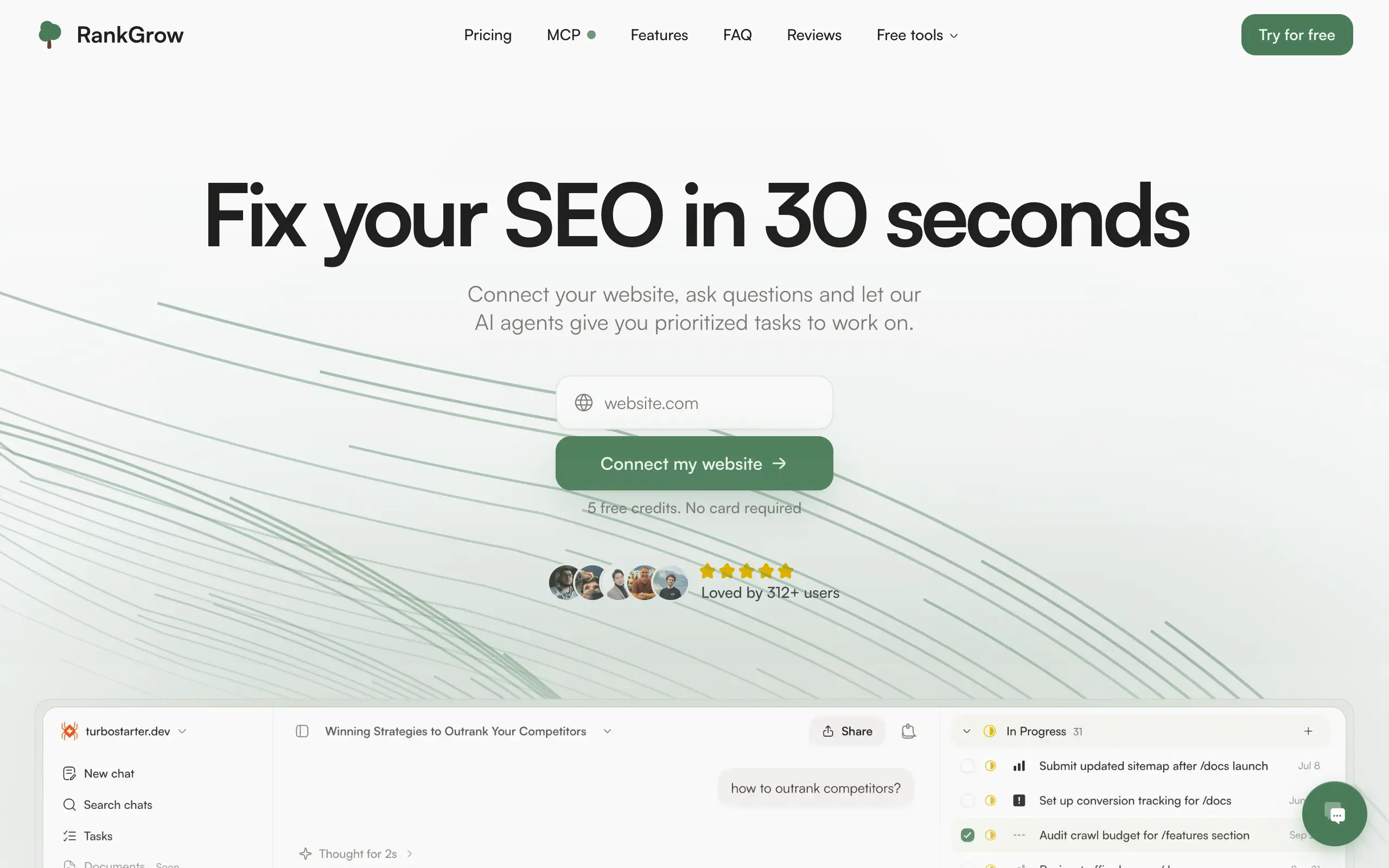
RankGrow
Fix your SEO with AI agents - connect Search Console, get prioritized tasks, and grow organic traffic 📈
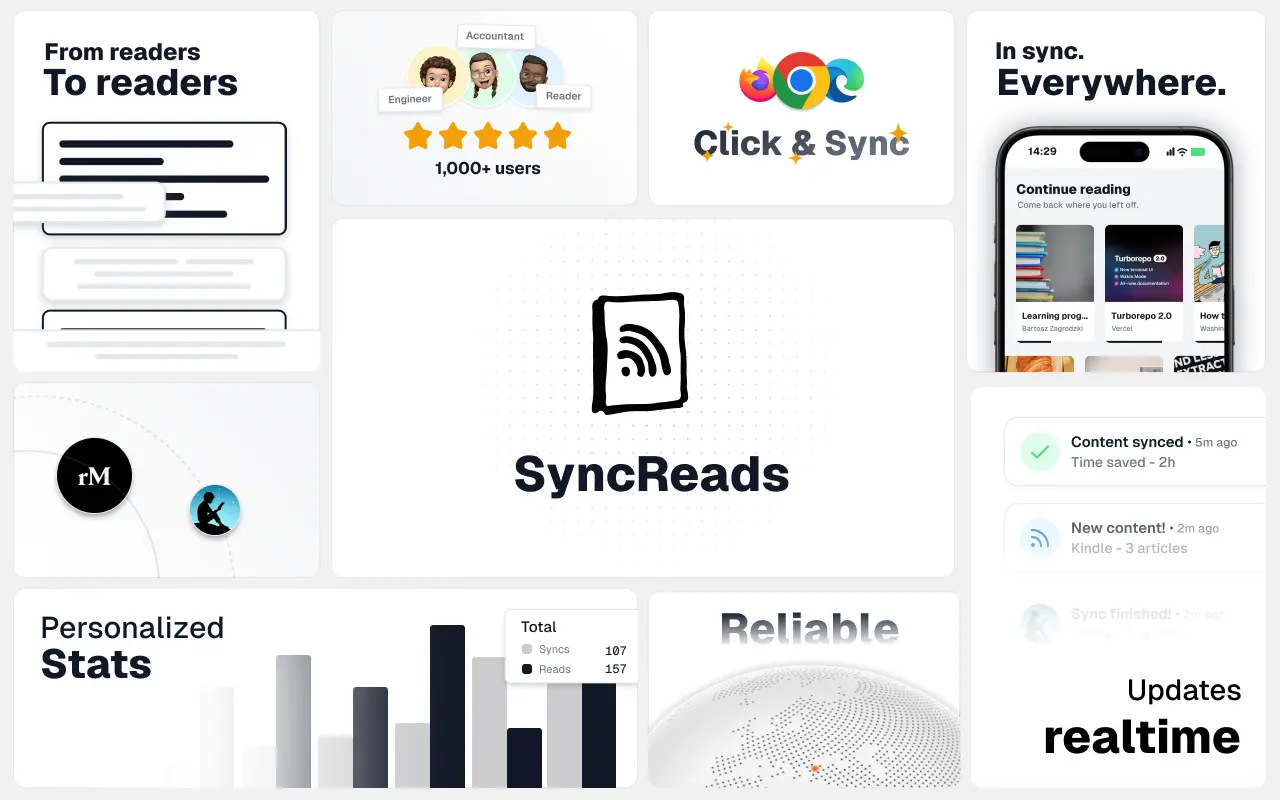
SyncReads
Sync your favorite content for distraction-free reading, save time and replace multiple apps. Anytime, anywhere 🔄
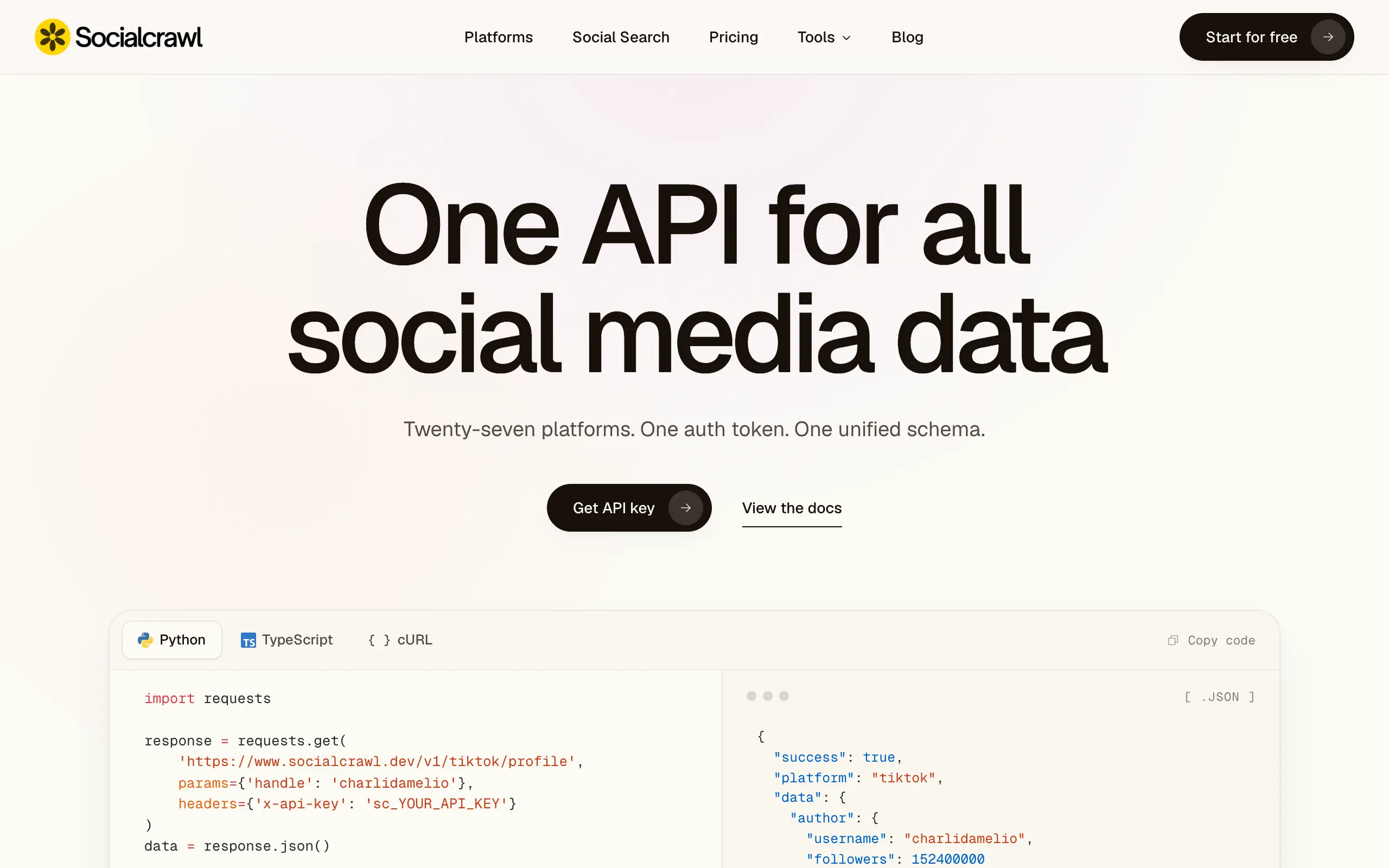
Socialcrawl
Get clean, structured data from 21 platforms like TikTok, Instagram, and YouTube with a single request 📊
Statiko
Monitor any Telegram channel in real time - track posts, edits, deletions, and growth with AI recaps 📡
Shibui
AI website builder - describe your business, pick a niche template, edit by chatting, and publish instantly ✨
Pro Service
Find verified home service professionals, compare quotes, and pay securely through escrow - built for Brazilians across the US 🏠
RankGrow
Fix your SEO with AI agents - connect Search Console, get prioritized tasks, and grow organic traffic 📈
SyncReads
Sync your favorite content for distraction-free reading, save time and replace multiple apps. Anytime, anywhere 🔄
Socialcrawl
Get clean, structured data from 21 platforms like TikTok, Instagram, and YouTube with a single request 📊
Statiko
Monitor any Telegram channel in real time - track posts, edits, deletions, and growth with AI recaps 📡
Shibui
AI website builder - describe your business, pick a niche template, edit by chatting, and publish instantly ✨
Pro Service
Find verified home service professionals, compare quotes, and pay securely through escrow - built for Brazilians across the US 🏠
RankGrow
Fix your SEO with AI agents - connect Search Console, get prioritized tasks, and grow organic traffic 📈
SyncReads
Sync your favorite content for distraction-free reading, save time and replace multiple apps. Anytime, anywhere 🔄
Socialcrawl
Get clean, structured data from 21 platforms like TikTok, Instagram, and YouTube with a single request 📊
Statiko
Monitor any Telegram channel in real time - track posts, edits, deletions, and growth with AI recaps 📡
Shibui
AI website builder - describe your business, pick a niche template, edit by chatting, and publish instantly ✨
Pro Service
Find verified home service professionals, compare quotes, and pay securely through escrow - built for Brazilians across the US 🏠
RankGrow
Fix your SEO with AI agents - connect Search Console, get prioritized tasks, and grow organic traffic 📈
SyncReads
Sync your favorite content for distraction-free reading, save time and replace multiple apps. Anytime, anywhere 🔄
Socialcrawl
Get clean, structured data from 21 platforms like TikTok, Instagram, and YouTube with a single request 📊
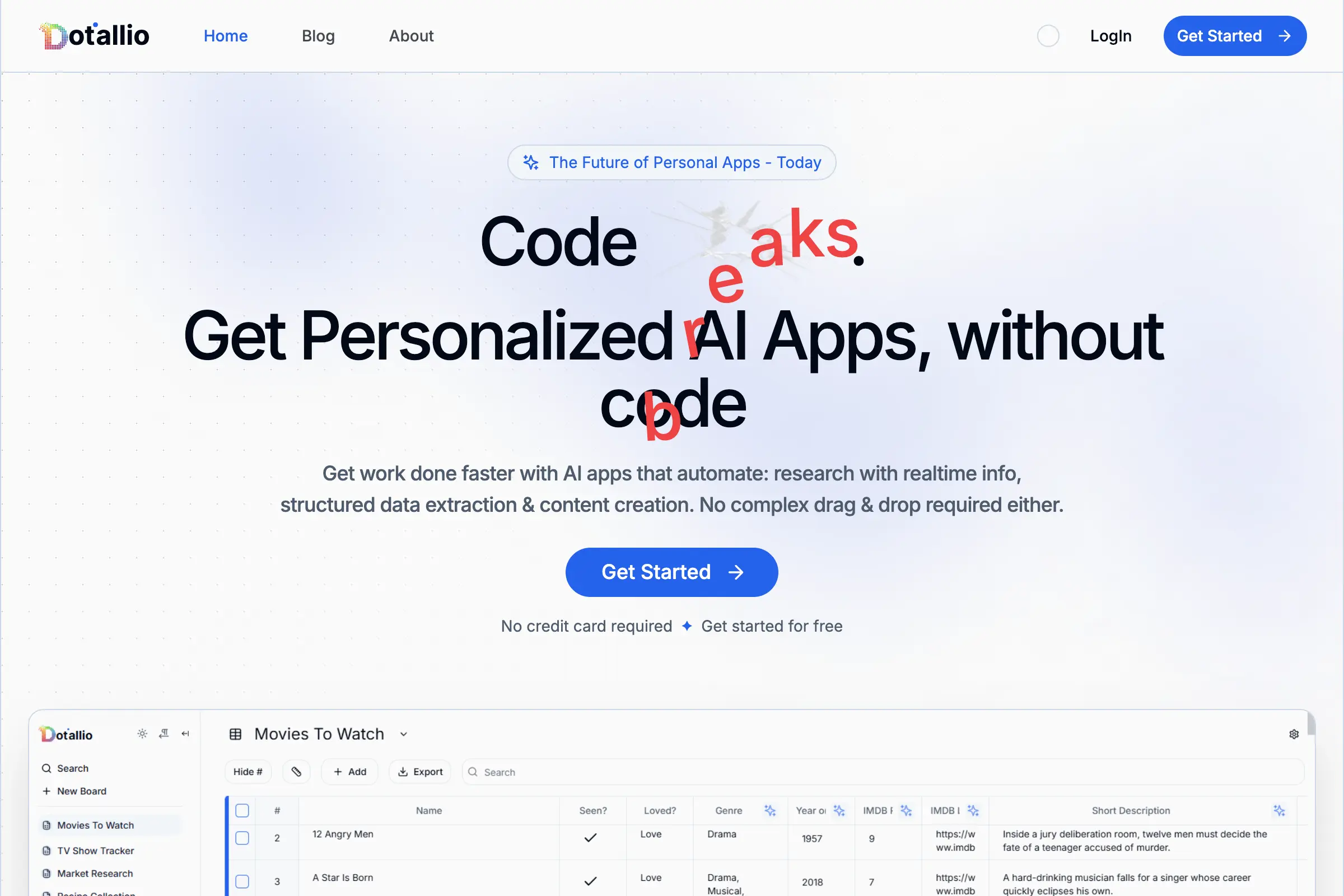
Dotallio
Personalized AI apps that automate research, data extraction, and content creation without code 🤖
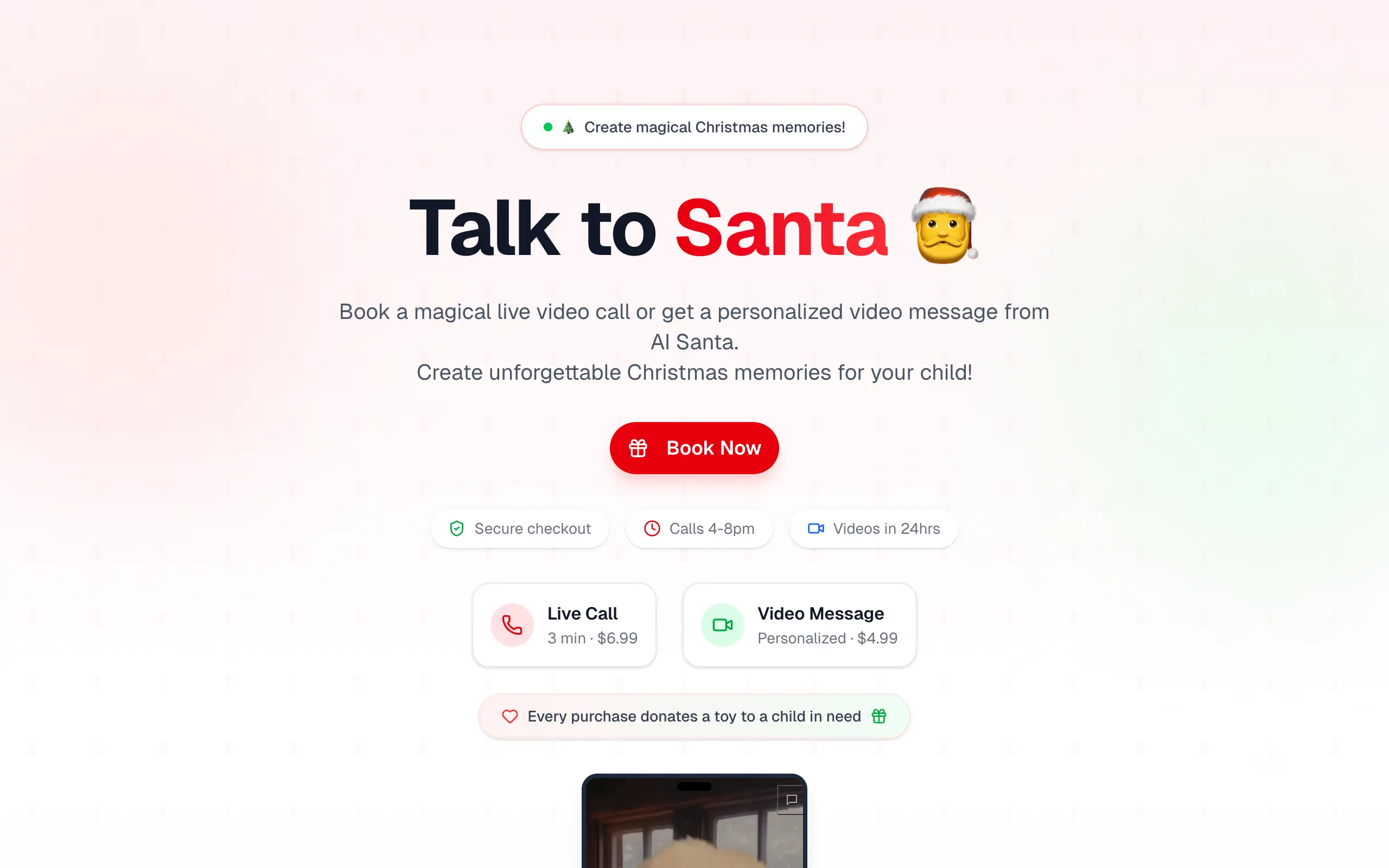
Talk to Santa
Enjoy a magical live video chat or receive a unique AI-generated video greeting from Santa Claus 🎅
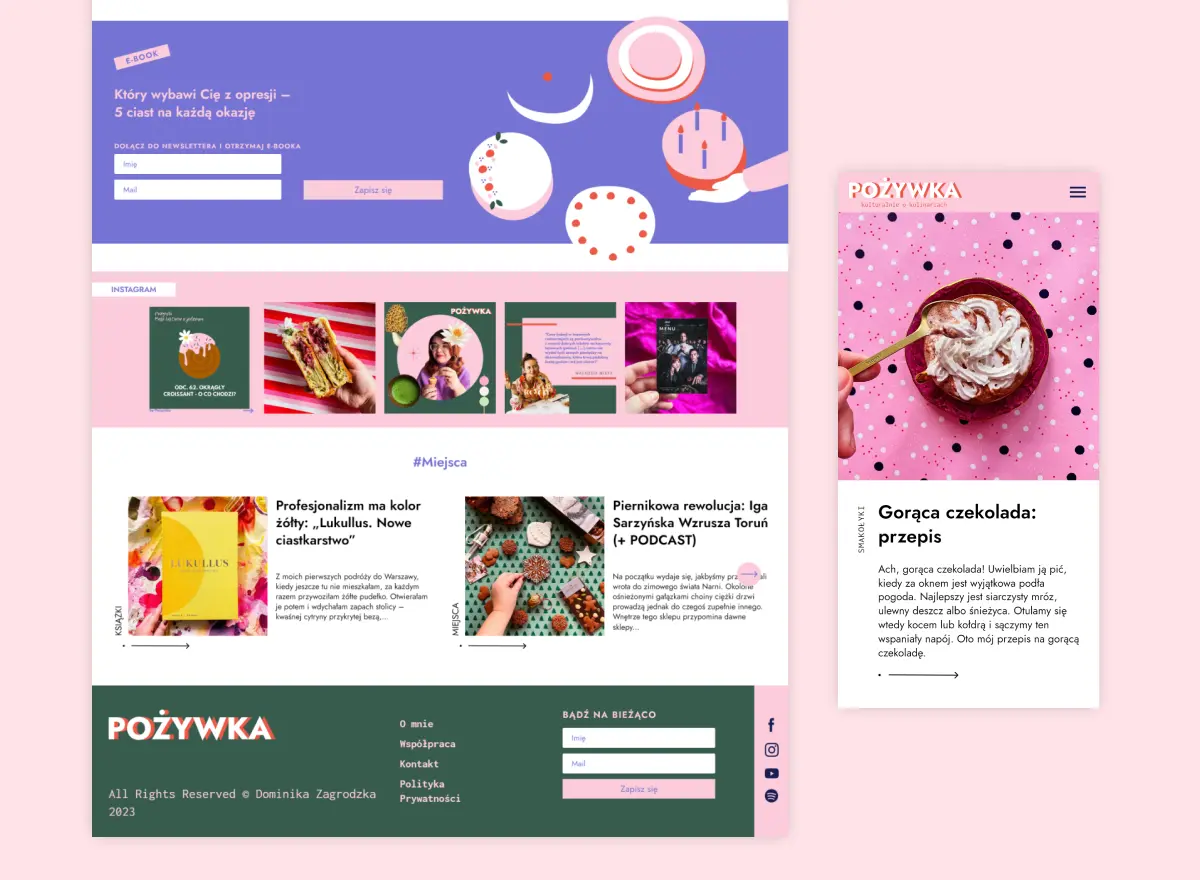
pozywka.pl
Scalable blog for food journalist, focused on performance and user experience 🌭
zagrodzki.me
Personal blog and portfolio of Bart Zagrodzki, where he shares his knowledge and work 💼
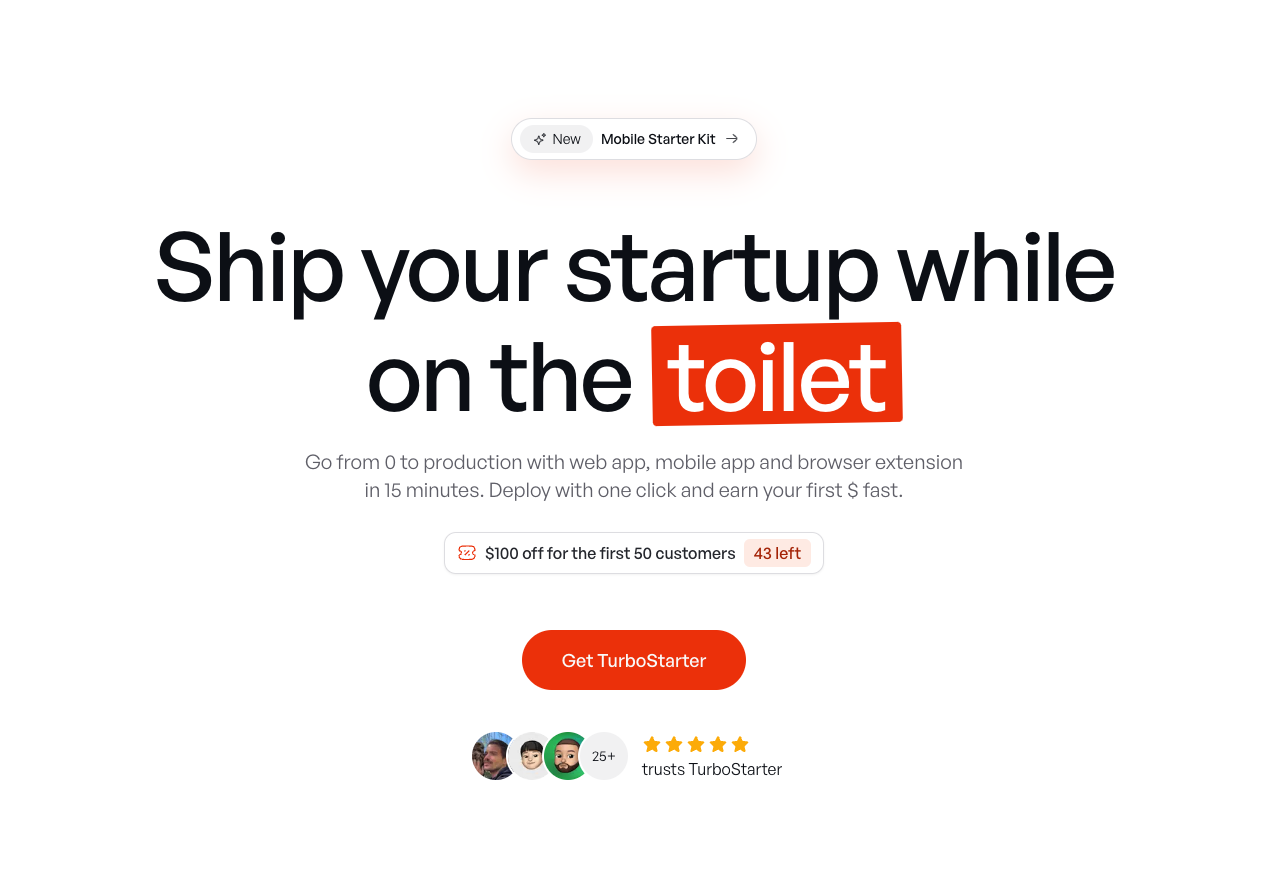
TurboStarter
Ship your startup everywhere. In minutes.
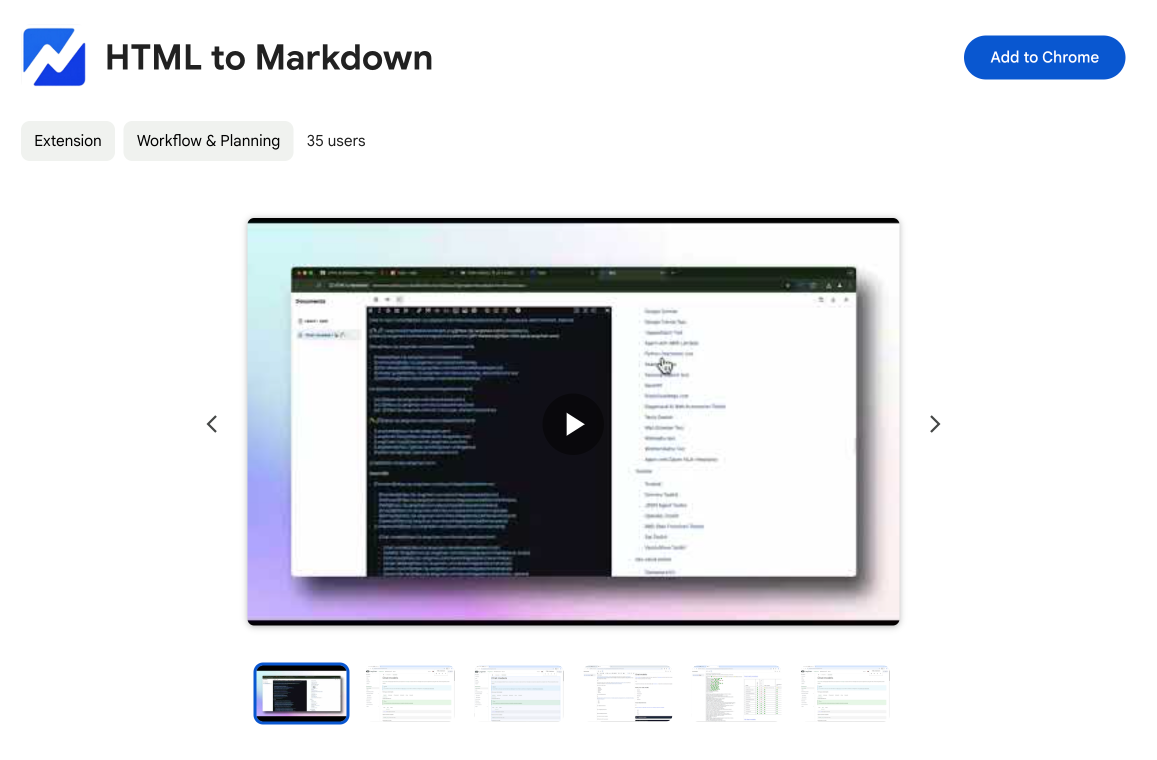
HTML to Markdown
Convert HTML to Markdown with ease, directly in your browser 📄
Dotallio
Personalized AI apps that automate research, data extraction, and content creation without code 🤖
Talk to Santa
Enjoy a magical live video chat or receive a unique AI-generated video greeting from Santa Claus 🎅
pozywka.pl
Scalable blog for food journalist, focused on performance and user experience 🌭
zagrodzki.me
Personal blog and portfolio of Bart Zagrodzki, where he shares his knowledge and work 💼
TurboStarter
Ship your startup everywhere. In minutes.
HTML to Markdown
Convert HTML to Markdown with ease, directly in your browser 📄
Dotallio
Personalized AI apps that automate research, data extraction, and content creation without code 🤖
Talk to Santa
Enjoy a magical live video chat or receive a unique AI-generated video greeting from Santa Claus 🎅
pozywka.pl
Scalable blog for food journalist, focused on performance and user experience 🌭
zagrodzki.me
Personal blog and portfolio of Bart Zagrodzki, where he shares his knowledge and work 💼
TurboStarter
Ship your startup everywhere. In minutes.
HTML to Markdown
Convert HTML to Markdown with ease, directly in your browser 📄
Dotallio
Personalized AI apps that automate research, data extraction, and content creation without code 🤖
Talk to Santa
Enjoy a magical live video chat or receive a unique AI-generated video greeting from Santa Claus 🎅
pozywka.pl
Scalable blog for food journalist, focused on performance and user experience 🌭
zagrodzki.me
Personal blog and portfolio of Bart Zagrodzki, where he shares his knowledge and work 💼
TurboStarter
Ship your startup everywhere. In minutes.
HTML to Markdown
Convert HTML to Markdown with ease, directly in your browser 📄
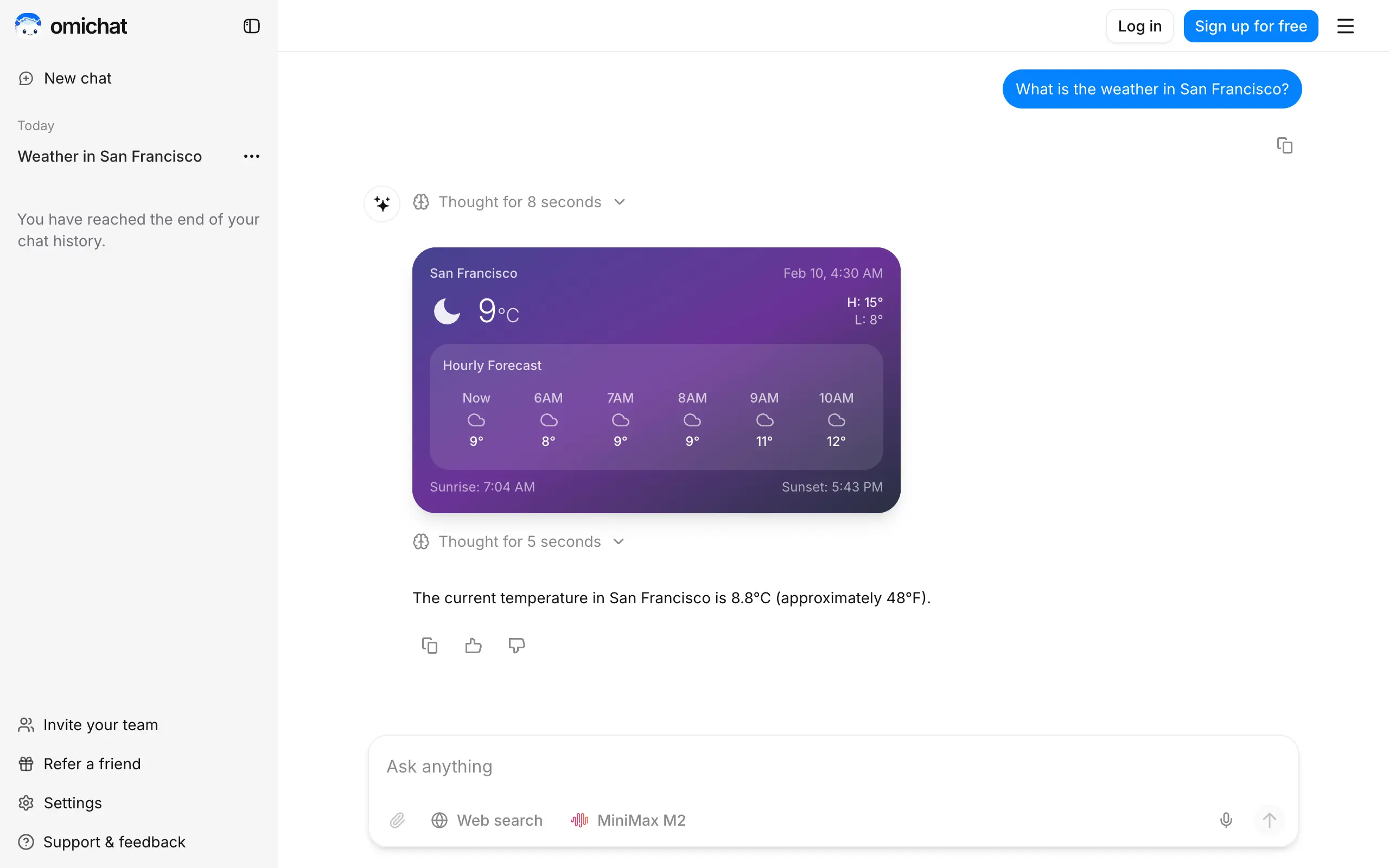
Omichat
Chat with 50+ AI models, including ChatGPT and Claude, in one place - switch models anytime without losing context 🤖
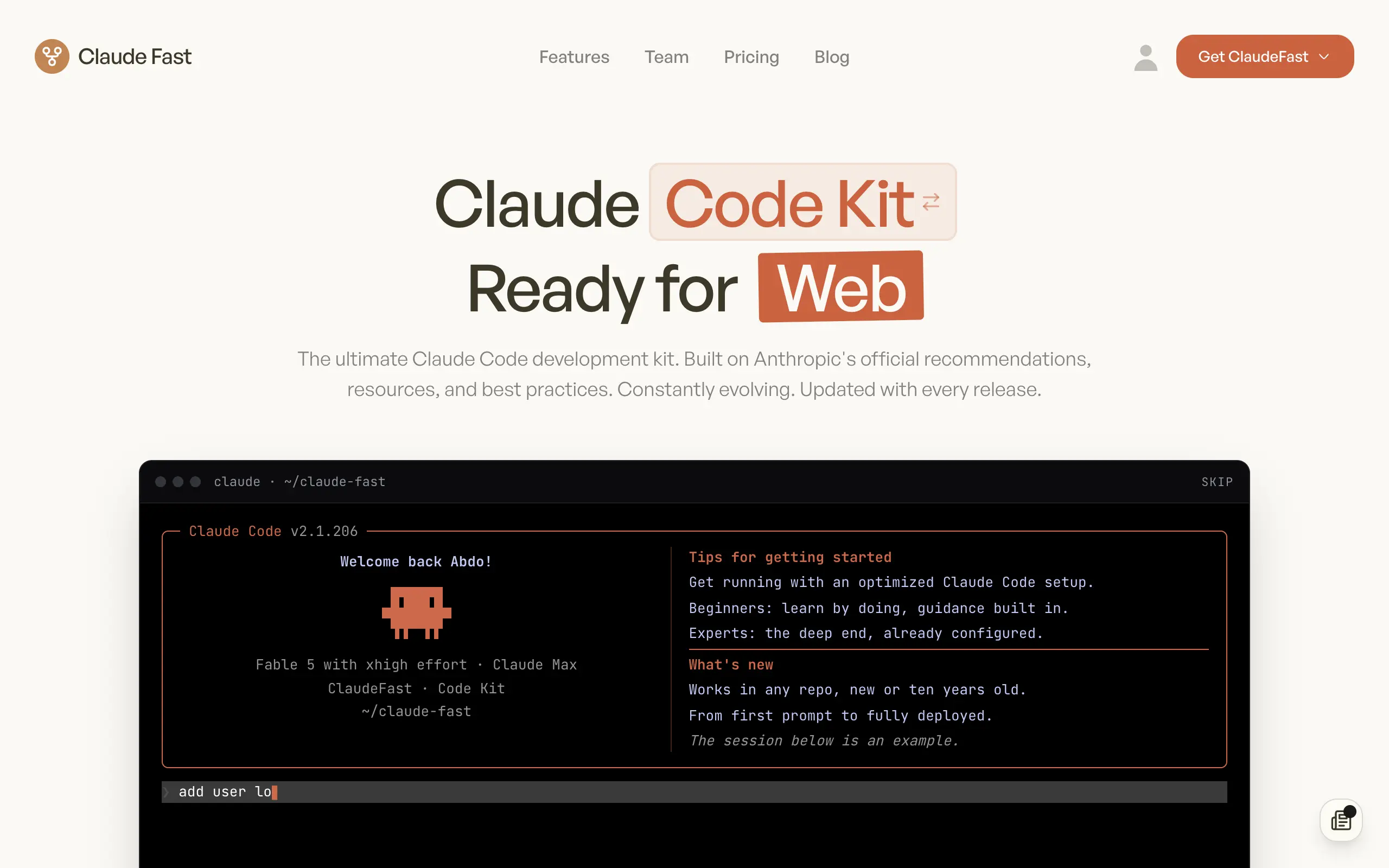
Claude Fast
Supercharge your Claude Code with 6x effective context window and specialized AI agents 🤖
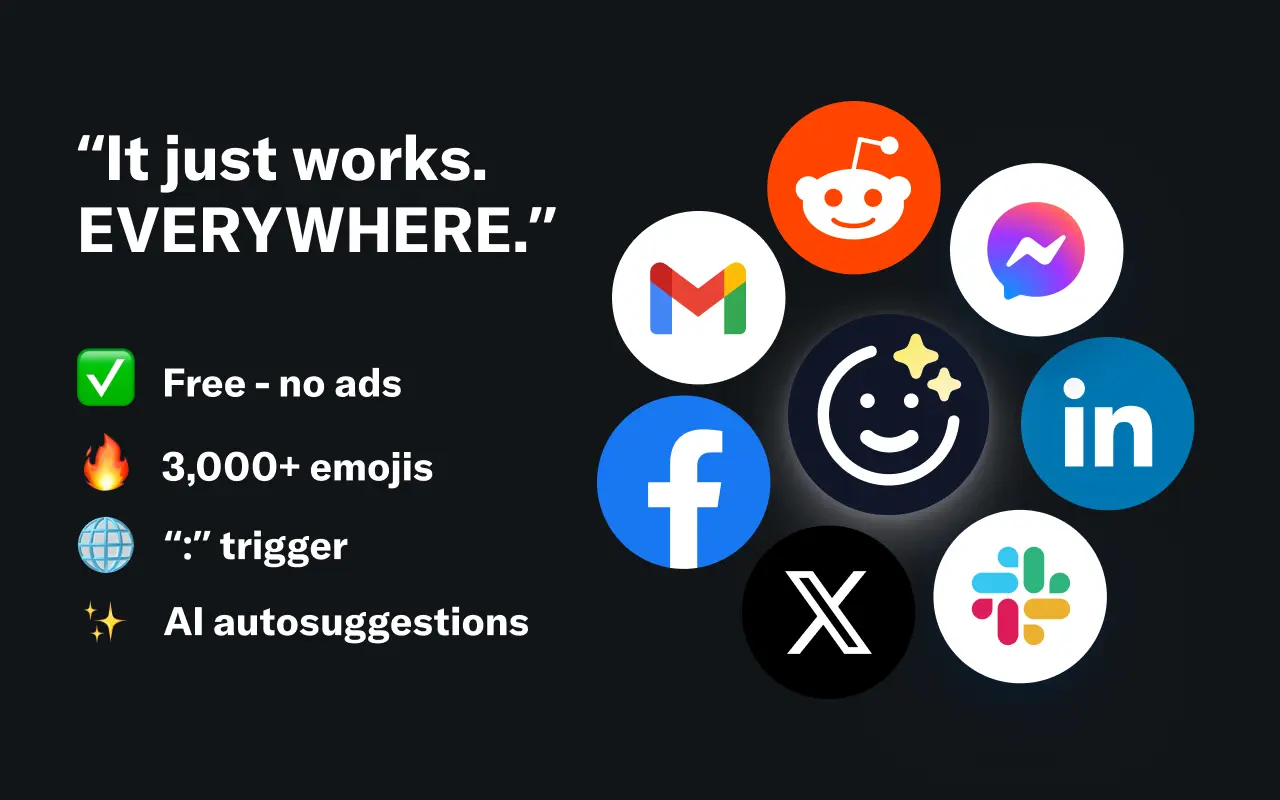
EmojAI
AI-powered emoji picker with smart, context-aware suggestions 🤖
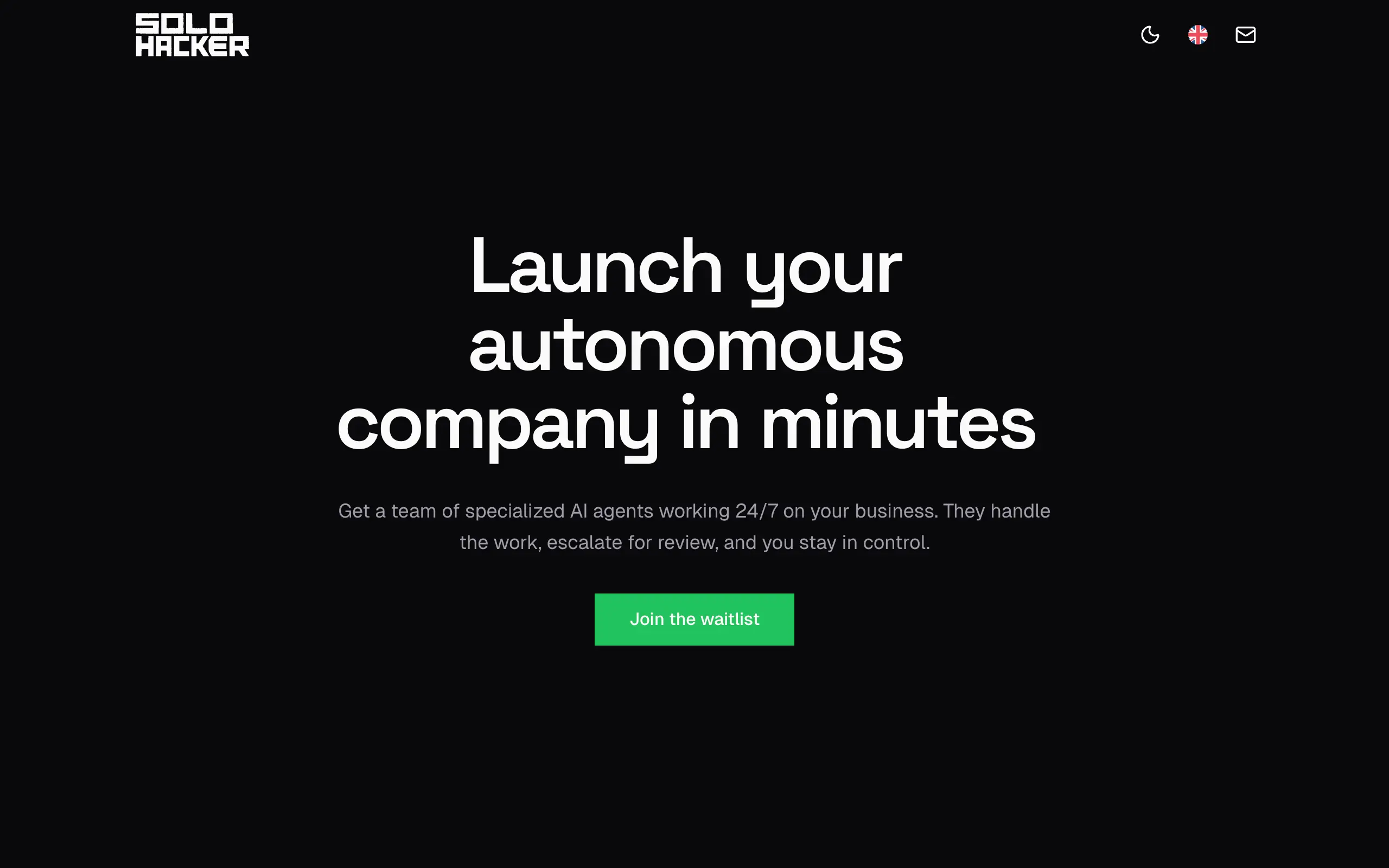
Solohacker
Autonomous company launcher - AI agents work 24/7, escalate what matters, and you stay in control 🤖
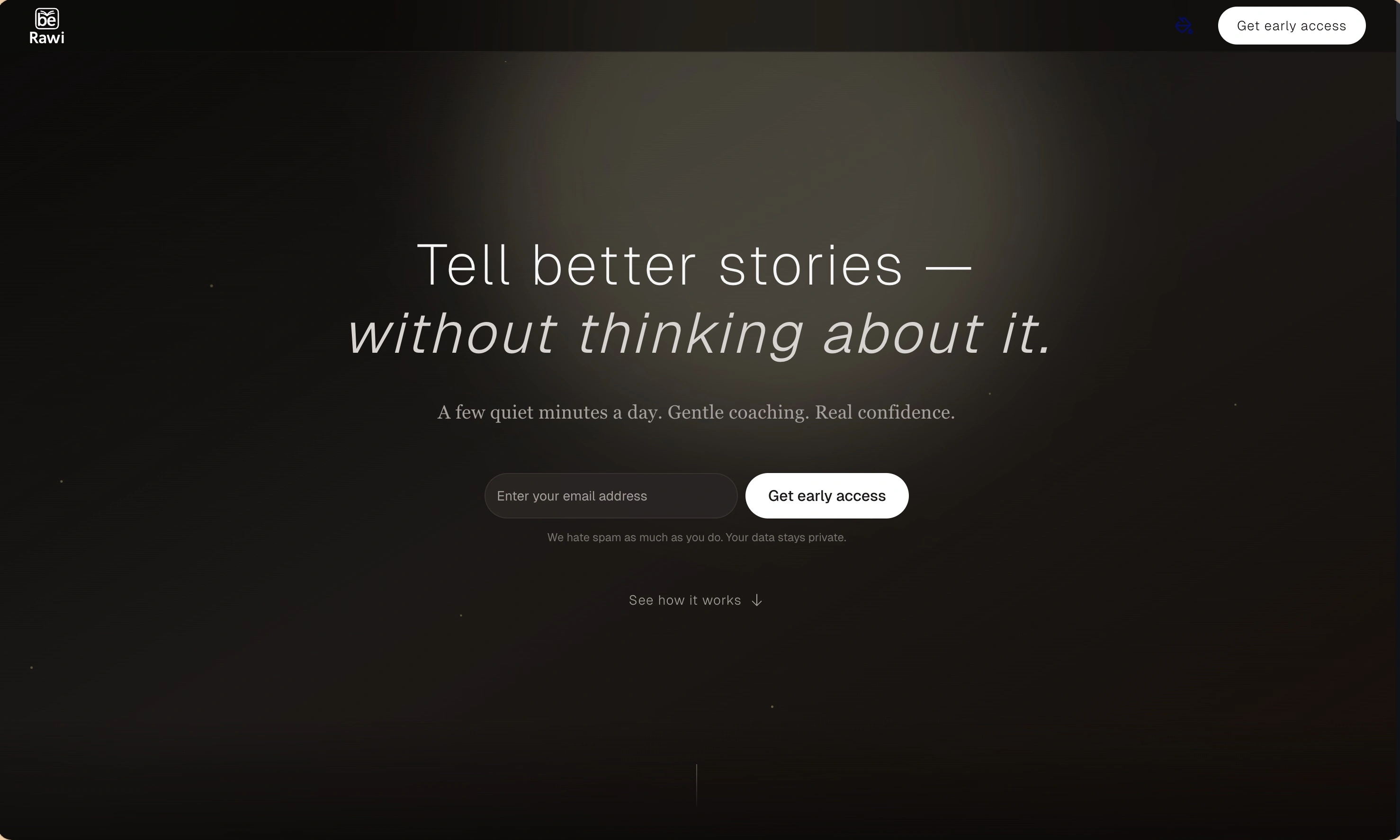
BeRawi: Storytelling Coach
Practice storytelling daily with instant feedback to sound clearer, more engaging, and confident 🎤
Omichat
Chat with 50+ AI models, including ChatGPT and Claude, in one place - switch models anytime without losing context 🤖
Claude Fast
Supercharge your Claude Code with 6x effective context window and specialized AI agents 🤖
EmojAI
AI-powered emoji picker with smart, context-aware suggestions 🤖
Solohacker
Autonomous company launcher - AI agents work 24/7, escalate what matters, and you stay in control 🤖
BeRawi: Storytelling Coach
Practice storytelling daily with instant feedback to sound clearer, more engaging, and confident 🎤
Omichat
Chat with 50+ AI models, including ChatGPT and Claude, in one place - switch models anytime without losing context 🤖
Claude Fast
Supercharge your Claude Code with 6x effective context window and specialized AI agents 🤖
EmojAI
AI-powered emoji picker with smart, context-aware suggestions 🤖
Solohacker
Autonomous company launcher - AI agents work 24/7, escalate what matters, and you stay in control 🤖
BeRawi: Storytelling Coach
Practice storytelling daily with instant feedback to sound clearer, more engaging, and confident 🎤
Omichat
Chat with 50+ AI models, including ChatGPT and Claude, in one place - switch models anytime without losing context 🤖
Claude Fast
Supercharge your Claude Code with 6x effective context window and specialized AI agents 🤖
EmojAI
AI-powered emoji picker with smart, context-aware suggestions 🤖
Solohacker
Autonomous company launcher - AI agents work 24/7, escalate what matters, and you stay in control 🤖
BeRawi: Storytelling Coach
Practice storytelling daily with instant feedback to sound clearer, more engaging, and confident 🎤

Connect with like-minded people
Join our community to get feedback, support, and grow together with 1,000+ builders on board, let's ship it!
Join usShip your startup everywhere. In minutes.
Don't burn tokens on setup and start building features on day one.