AlphaSignal Hub
AI-powered crypto signal validation platform that helps prop trading firms and crypto funds backtest, verify, and deploy high-performing trading signals with real-time risk scoring.
The new standard for AI-powered crypto signal validation in prop trading and funds
Institutional crypto trading has matured dramatically over the last few years. Prop trading firms, hedge funds, and quantitative crypto funds are no longer satisfied with raw trading signals scraped from Telegram groups or unverified AI models. They need robust backtesting, statistical validation, and real-time risk scoring before deploying capital.
That’s where an AI-powered crypto signal validation platform like AlphaSignal Hub becomes mission-critical.
This article provides a comprehensive, expert-level breakdown of how such a B2B SaaS platform can dominate the market. We’ll cover:
- Target audience and user intent
- Market opportunity and gaps
- Core product features and architecture
- Recommended tech stack (with trade-offs)
- Monetization models
- Risk and compliance considerations
- Competitive positioning
- Step-by-step implementation roadmap
If you’re evaluating the viability of an AI-powered crypto signal validation SaaS—or planning to build one—this guide will give you a strategic blueprint.
Understanding the target audience
The primary users of a crypto signal validation platform are institutional-grade traders, not retail speculators. Their expectations are dramatically different.
1. Crypto prop trading firms
Prop firms allocate internal capital to traders or automated strategies. Their core problems:
- Too many unverified strategies
- Overfitting in backtests
- Lack of robust risk controls
- Difficulty scaling signal pipelines
- Limited real-time validation infrastructure
They need:
- Reliable backtesting engines
- Risk-adjusted performance metrics
- Signal quality scoring
- Deployment pipelines to exchanges
- Audit trails for internal compliance
2. Quantitative crypto hedge funds
Crypto funds typically operate multi-strategy portfolios across:
- Market making
- Arbitrage
- Momentum
- Mean reversion
- On-chain alpha signals
Their pain points include:
- Fragmented data infrastructure
- Signal decay over time
- Model drift
- Execution slippage
- Real-time drawdown risk
They need:
- AI-powered signal validation
- Regime detection
- Stress testing under volatility spikes
- Portfolio-level risk scoring
3. Algorithmic strategy developers
Independent quants and signal providers also represent a secondary B2B market:
- They need credibility
- They want performance certification
- They seek institutional buyers
AlphaSignal Hub can become the “verification layer” for crypto signals—similar to how backtesting frameworks operate in traditional quant finance.
The market opportunity for crypto signal validation SaaS
The crypto trading infrastructure market has expanded rapidly alongside institutional adoption. Reports from reputable firms like McKinsey, Deloitte, and PwC have highlighted growing institutional involvement in digital assets (you may cite their digital asset reports for validation).
Key trends driving demand:
- ✅ Institutional capital entering crypto
- ✅ AI-driven trading strategies increasing
- ✅ Demand for risk transparency post-FTX
- ✅ Growth in quantitative crypto funds
- ✅ Increased regulatory scrutiny
The market gap
Current solutions are fragmented:
- TradingView → Retail-focused charting
- QuantConnect → Broad algorithmic trading platform (not crypto-specialized validation)
- In-house tools → Expensive, non-scalable
There is no dominant, AI-native platform focused specifically on:
Validating, stress-testing, and risk-scoring crypto trading signals for institutional deployment.
That’s the opportunity AlphaSignal Hub can capture.
Core features of an AI-powered crypto signal validation platform
To satisfy institutional search intent, the platform must go beyond basic backtesting.
1. Advanced backtesting engine
The foundation of crypto signal validation is a robust backtesting framework.
Must include:
- Multi-exchange historical data
- Tick-level and OHLCV support
- Slippage modeling
- Latency simulation
- Transaction fee modeling
- Walk-forward testing
- Monte Carlo simulations
Why this matters
Institutional users distrust naive backtests. Overfitting is common in AI-generated strategies. A serious platform must:
- Detect curve fitting
- Penalize unstable performance
- Highlight unrealistic Sharpe ratios
2. AI-powered signal validation layer
This is the true differentiator.
The AI engine can:
- Detect overfitting patterns
- Identify signal regime dependency
- Measure decay over time
- Score robustness across volatility regimes
- Detect correlations with known factors (e.g., BTC beta)
Example validation metrics:
- Out-of-sample Sharpe ratio
- Sortino ratio
- Maximum drawdown
- Win-rate stability
- Regime-adjusted alpha
Example risk scoring formula (simplified)
const riskScore = (
  0.3 * normalize(maxDrawdown) +
  0.2 * normalize(volatility) +
  0.2 * normalize(signalDecay) +
  0.2 * normalize(correlationToBTC) +
  0.1 * normalize(liquidityRisk)
);
In production, this would use more advanced ML-based ensemble scoring.
3. Real-time risk monitoring
Once deployed, signals must be monitored.
Features include:
- Live PnL tracking
- Real-time drawdown alerts
- Volatility spike detection
- Market regime classification
- Risk-adjusted exposure limits
Institutional requirement
Most institutional desks require automated kill-switch mechanisms when risk thresholds are breached.
This is where AlphaSignal Hub moves from validation tool to full signal lifecycle platform.
4. Portfolio-level analytics
Institutions rarely trade a single signal. They deploy:
- 10–100+ signals simultaneously
- Cross-exchange strategies
- Multi-timeframe systems
The platform must provide:
- Signal correlation matrix
- Factor exposure breakdown
- Capital allocation optimization
- Dynamic rebalancing recommendations
5. API-first deployment architecture
Prop firms and funds require programmatic access.
Essential capabilities:
- REST & WebSocket APIs
- Strategy deployment endpoints
- Signal ingestion pipelines
- Webhooks for alerts
- Exchange connectors
Feature comparison vs traditional solutions
| Feature | TradingView | Generic Backtest Tools | In-house Build | AlphaSignal Hub |
|---|---|---|---|---|
| Institutional-grade validation | ❌ | ❌ | ✅ | ✅ |
| AI-based overfitting detection | ❌ | ❌ | ❌ | ✅ |
| Real-time risk scoring | ❌ | ❌ | Partial | ✅ |
Recommended tech stack for building AlphaSignal Hub
A robust crypto signal validation SaaS requires high-performance architecture.
Frontend
Why:
- SSR for SEO
- Modular dashboard architecture
- Rapid UI iteration
Backend
Options:
Option A: Node.js + TypeScript
- Fast iteration
- Strong ecosystem
- Ideal for API-first SaaS
Option B: Python (FastAPI)
- Superior for AI/ML workloads
- Better scientific computing support
Best architecture:
Hybrid: Python for signal validation engine + Node.js for API layer.
AI/ML layer
- Python
- PyTorch or TensorFlow
- Scikit-learn
- XGBoost
Used for:
- Regime detection
- Signal robustness scoring
- Anomaly detection
- Performance classification
Infrastructure
- Kubernetes for scalability
- Redis for caching
- PostgreSQL for relational storage
- Time-series DB (e.g., Timescale)
- Kafka for event streaming
Cloud providers:
- AWS
- GCP
- Azure
Monetization strategy for a B2B crypto signal validation SaaS
AlphaSignal Hub should avoid retail subscription pricing. Instead, focus on high-value B2B contracts.
1. Tiered SaaS model
- Starter (small prop firms)
- Professional (crypto hedge funds)
- Enterprise (custom integration)
Pricing can range from:
- $2,000/month → $25,000+/month
2. Usage-based pricing
Charge based on:
- Number of signals
- Historical data usage
- API calls
- Portfolio size
3. Performance-linked pricing
For institutional alignment:
- Base subscription
-
- % of validated signal profits
This creates trust and shared incentives.
4. White-label licensing
Allow funds to:
- Brand dashboards
- Provide validation to LPs
- Use as internal risk engine
Competitive advantage and USP
AlphaSignal Hub’s unique selling proposition:
AI-native crypto signal validation with institutional-grade risk scoring and deployment automation.
Core differentiation pillars:
- AI-driven robustness scoring
- Regime-aware validation
- Real-time portfolio risk monitoring
- Institutional compliance reporting
- API-first infrastructure
Most competitors focus on either:
- Retail charting
- Generic quant platforms
- Manual backtesting
AlphaSignal Hub becomes the “Bloomberg Terminal for crypto signals.”
Risks and mitigation strategies
1. Regulatory uncertainty
Mitigation:
- Avoid direct brokerage
- Remain analytics provider
- Include legal disclaimers
- Consult securities counsel
2. Data integrity risk
Mitigation:
- Multi-source exchange data
- Redundant feeds
- Data validation pipelines
3. Model overfitting
Mitigation:
- Strict out-of-sample testing
- AI-based curve fitting detection
- Cross-market robustness checks
4. Security risks
Mitigation:
- SOC 2 compliance
- Encryption at rest & transit
- API key isolation
- Regular penetration testing
Implementation roadmap
Go-to-market strategy
1. Direct outreach to prop firms
- LinkedIn founder outreach
- Crypto quant communities
- Institutional conferences
2. Publish validation research
Position the platform as a thought leader:
- Whitepapers on signal robustness
- Research on AI overfitting in crypto
- Case studies
3. Strategic integrations
Partner with:
- Crypto exchanges
- Custodians
- Execution platforms
Why this idea is viable in 2026 and beyond
The AI boom has dramatically increased the number of:
- Auto-generated trading strategies
- LLM-based signal bots
- Quant retail platforms
But verification hasn’t kept pace.
Institutional capital demands:
- Transparency
- Statistical rigor
- Risk accountability
AlphaSignal Hub solves this asymmetry.
Building AlphaSignal Hub efficiently
Launching a complex B2B SaaS requires a solid technical foundation.
Instead of building infrastructure from scratch, founders can accelerate development using a production-ready SaaS starter like TurboStarter, which provides:
- Auth
- Billing
- Admin dashboards
- Scalable architecture
This allows teams to focus on the core differentiation: AI-powered crypto signal validation and risk scoring.
Final thoughts
The institutional crypto market is evolving toward maturity. As capital grows, so does demand for:
- Verified trading signals
- AI-backed validation
- Real-time risk scoring
- Deployment automation
An AI-powered crypto signal validation platform like AlphaSignal Hub sits at the intersection of:
- Quant finance
- AI
- Risk analytics
- Institutional crypto infrastructure
By focusing on:
- Deep validation science
- Institutional-grade reliability
- Transparent risk metrics
- API-first architecture
It can establish itself as the trusted signal verification layer for prop trading firms and crypto funds worldwide.
For founders, this represents a rare opportunity: building infrastructure that becomes deeply embedded in institutional trading workflows—high switching costs, high contract values, and long-term defensibility.
If executed correctly, AlphaSignal Hub can become the standard for crypto signal validation in the institutional era.
More 🏢 B2B Application SaaS ideas
Discover more innovative b2b application SaaS ideas that are trending in 2026. Each idea is AI-generated with market validation and growth potential to help you find your next profitable venture faster than competitors.
Your competitors are building with TurboStarter
Below are some of the SaaS ideas that have been generated and built with our starter kit.
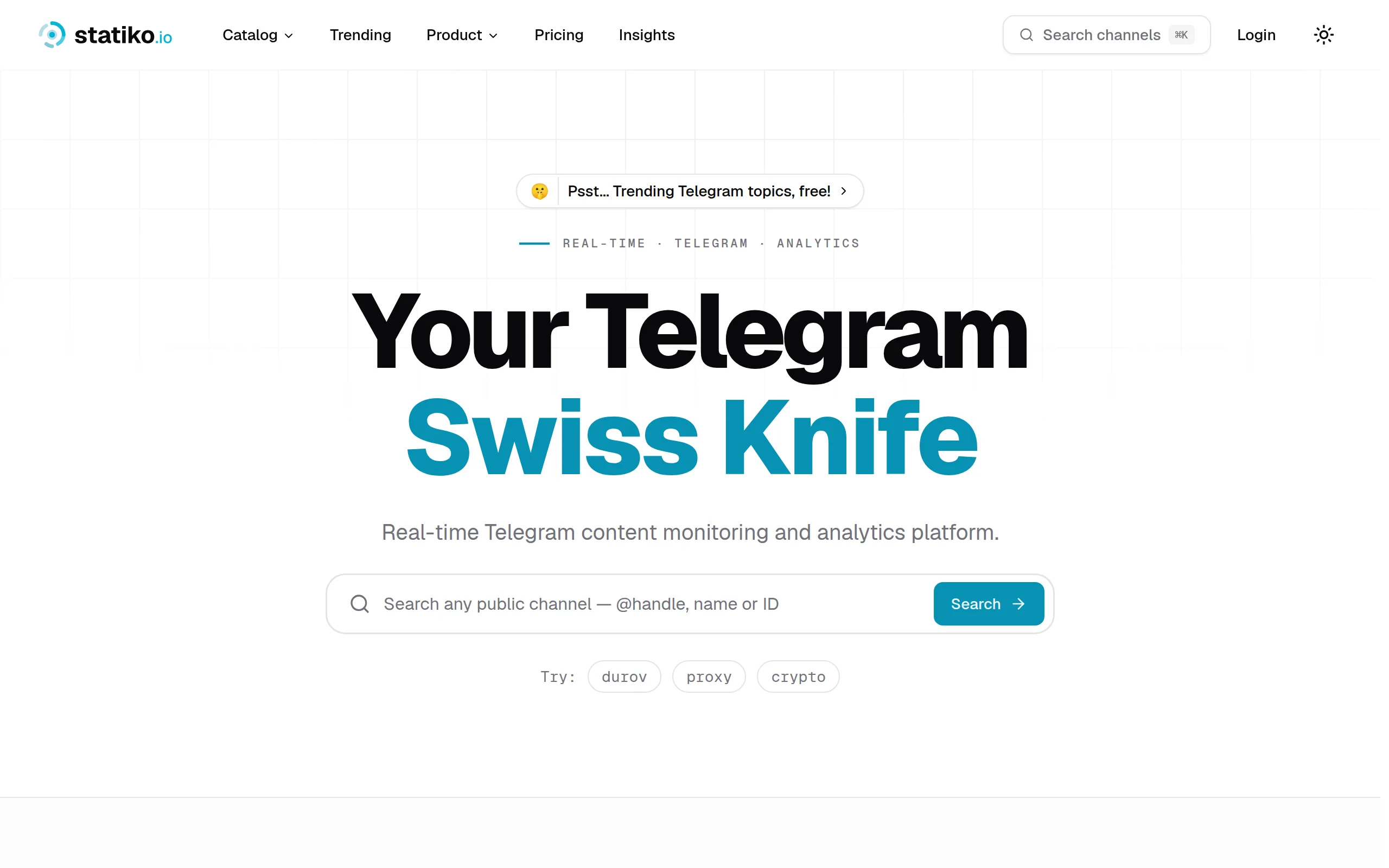
Statiko
Monitor any Telegram channel in real time - track posts, edits, deletions, and growth with AI recaps 📡

Shibui
AI website builder - describe your business, pick a niche template, edit by chatting, and publish instantly ✨

Pro Service
Find verified home service professionals, compare quotes, and pay securely through escrow - built for Brazilians across the US 🏠

RankGrow
Fix your SEO with AI agents - connect Search Console, get prioritized tasks, and grow organic traffic 📈
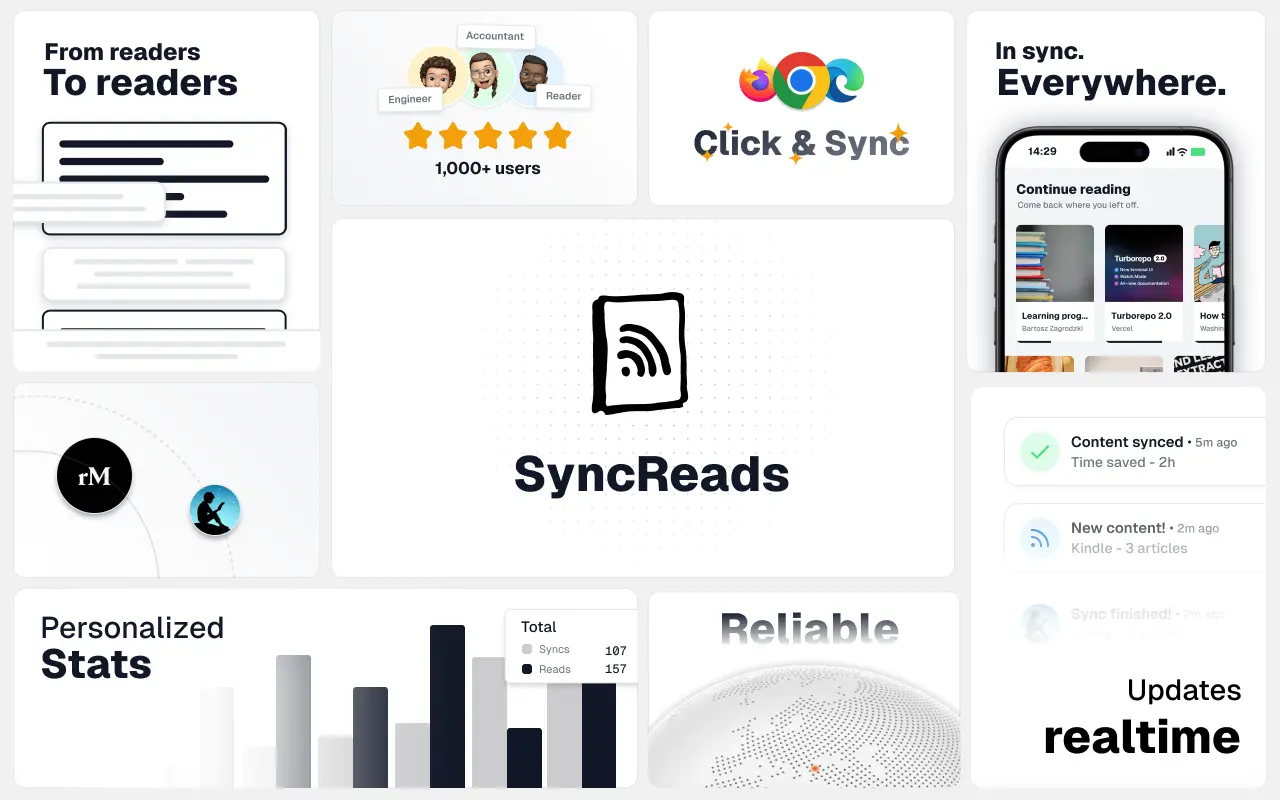
SyncReads
Sync your favorite content for distraction-free reading, save time and replace multiple apps. Anytime, anywhere 🔄
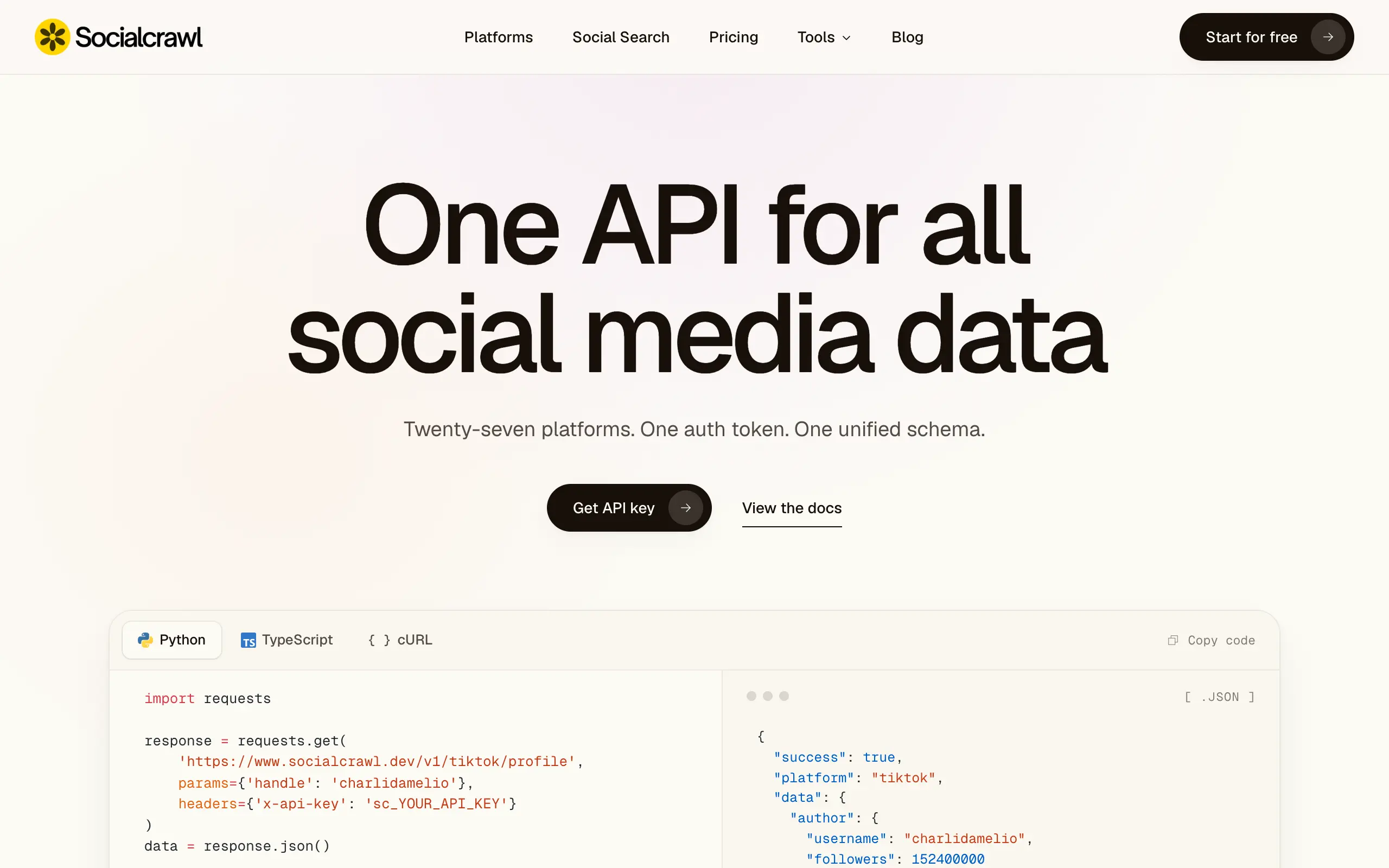
Socialcrawl
Get clean, structured data from 21 platforms like TikTok, Instagram, and YouTube with a single request 📊
Statiko
Monitor any Telegram channel in real time - track posts, edits, deletions, and growth with AI recaps 📡
Shibui
AI website builder - describe your business, pick a niche template, edit by chatting, and publish instantly ✨
Pro Service
Find verified home service professionals, compare quotes, and pay securely through escrow - built for Brazilians across the US 🏠
RankGrow
Fix your SEO with AI agents - connect Search Console, get prioritized tasks, and grow organic traffic 📈
SyncReads
Sync your favorite content for distraction-free reading, save time and replace multiple apps. Anytime, anywhere 🔄
Socialcrawl
Get clean, structured data from 21 platforms like TikTok, Instagram, and YouTube with a single request 📊
Statiko
Monitor any Telegram channel in real time - track posts, edits, deletions, and growth with AI recaps 📡
Shibui
AI website builder - describe your business, pick a niche template, edit by chatting, and publish instantly ✨
Pro Service
Find verified home service professionals, compare quotes, and pay securely through escrow - built for Brazilians across the US 🏠
RankGrow
Fix your SEO with AI agents - connect Search Console, get prioritized tasks, and grow organic traffic 📈
SyncReads
Sync your favorite content for distraction-free reading, save time and replace multiple apps. Anytime, anywhere 🔄
Socialcrawl
Get clean, structured data from 21 platforms like TikTok, Instagram, and YouTube with a single request 📊
Statiko
Monitor any Telegram channel in real time - track posts, edits, deletions, and growth with AI recaps 📡
Shibui
AI website builder - describe your business, pick a niche template, edit by chatting, and publish instantly ✨
Pro Service
Find verified home service professionals, compare quotes, and pay securely through escrow - built for Brazilians across the US 🏠
RankGrow
Fix your SEO with AI agents - connect Search Console, get prioritized tasks, and grow organic traffic 📈
SyncReads
Sync your favorite content for distraction-free reading, save time and replace multiple apps. Anytime, anywhere 🔄
Socialcrawl
Get clean, structured data from 21 platforms like TikTok, Instagram, and YouTube with a single request 📊
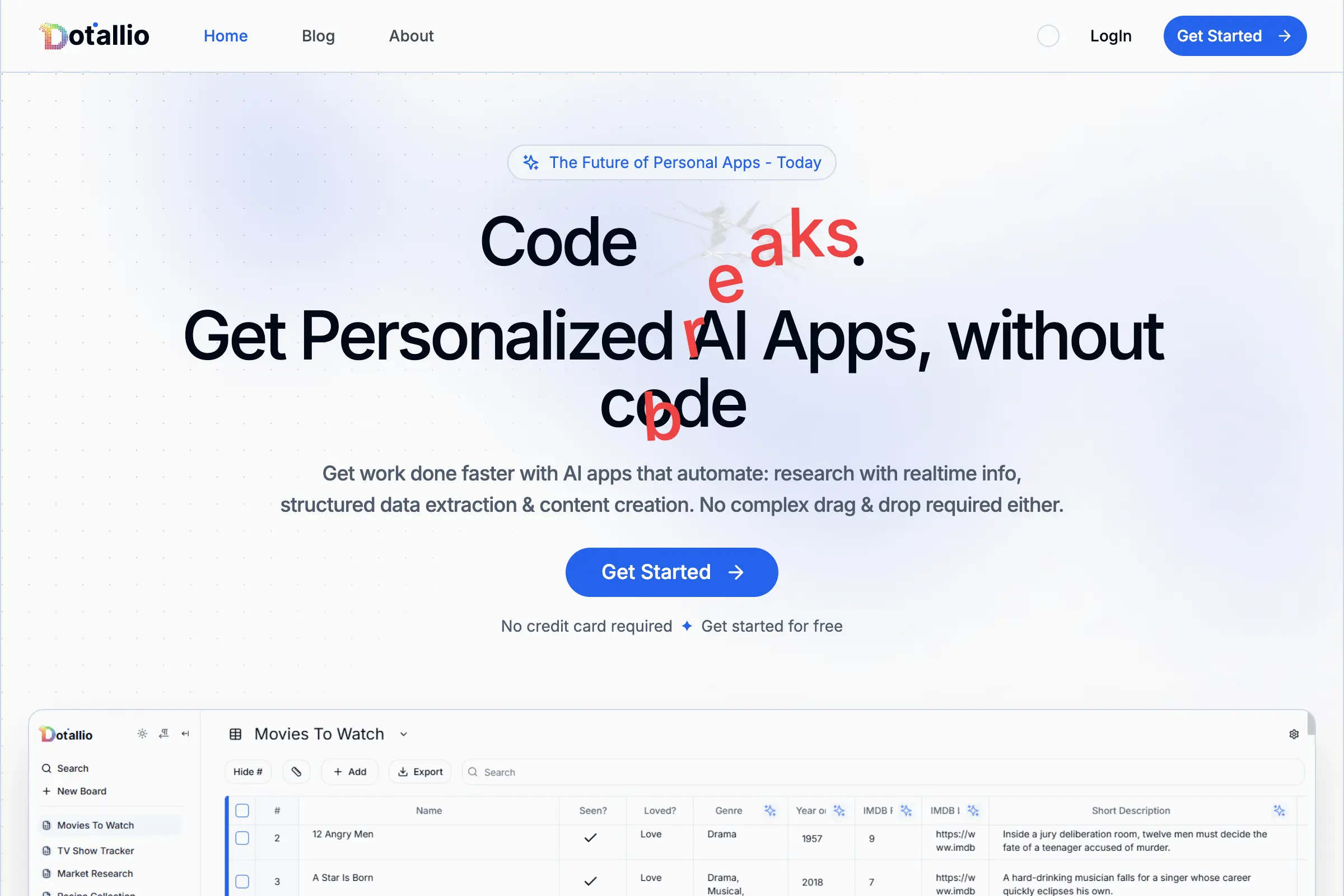
Dotallio
Personalized AI apps that automate research, data extraction, and content creation without code 🤖

Talk to Santa
Enjoy a magical live video chat or receive a unique AI-generated video greeting from Santa Claus 🎅

pozywka.pl
Scalable blog for food journalist, focused on performance and user experience 🌭
zagrodzki.me
Personal blog and portfolio of Bart Zagrodzki, where he shares his knowledge and work 💼
TurboStarter
Ship your startup everywhere. In minutes.
HTML to Markdown
Convert HTML to Markdown with ease, directly in your browser 📄
Dotallio
Personalized AI apps that automate research, data extraction, and content creation without code 🤖
Talk to Santa
Enjoy a magical live video chat or receive a unique AI-generated video greeting from Santa Claus 🎅
pozywka.pl
Scalable blog for food journalist, focused on performance and user experience 🌭
zagrodzki.me
Personal blog and portfolio of Bart Zagrodzki, where he shares his knowledge and work 💼
TurboStarter
Ship your startup everywhere. In minutes.
HTML to Markdown
Convert HTML to Markdown with ease, directly in your browser 📄
Dotallio
Personalized AI apps that automate research, data extraction, and content creation without code 🤖
Talk to Santa
Enjoy a magical live video chat or receive a unique AI-generated video greeting from Santa Claus 🎅
pozywka.pl
Scalable blog for food journalist, focused on performance and user experience 🌭
zagrodzki.me
Personal blog and portfolio of Bart Zagrodzki, where he shares his knowledge and work 💼
TurboStarter
Ship your startup everywhere. In minutes.
HTML to Markdown
Convert HTML to Markdown with ease, directly in your browser 📄
Dotallio
Personalized AI apps that automate research, data extraction, and content creation without code 🤖
Talk to Santa
Enjoy a magical live video chat or receive a unique AI-generated video greeting from Santa Claus 🎅
pozywka.pl
Scalable blog for food journalist, focused on performance and user experience 🌭
zagrodzki.me
Personal blog and portfolio of Bart Zagrodzki, where he shares his knowledge and work 💼
TurboStarter
Ship your startup everywhere. In minutes.
HTML to Markdown
Convert HTML to Markdown with ease, directly in your browser 📄
Omichat
Chat with 50+ AI models, including ChatGPT and Claude, in one place - switch models anytime without losing context 🤖
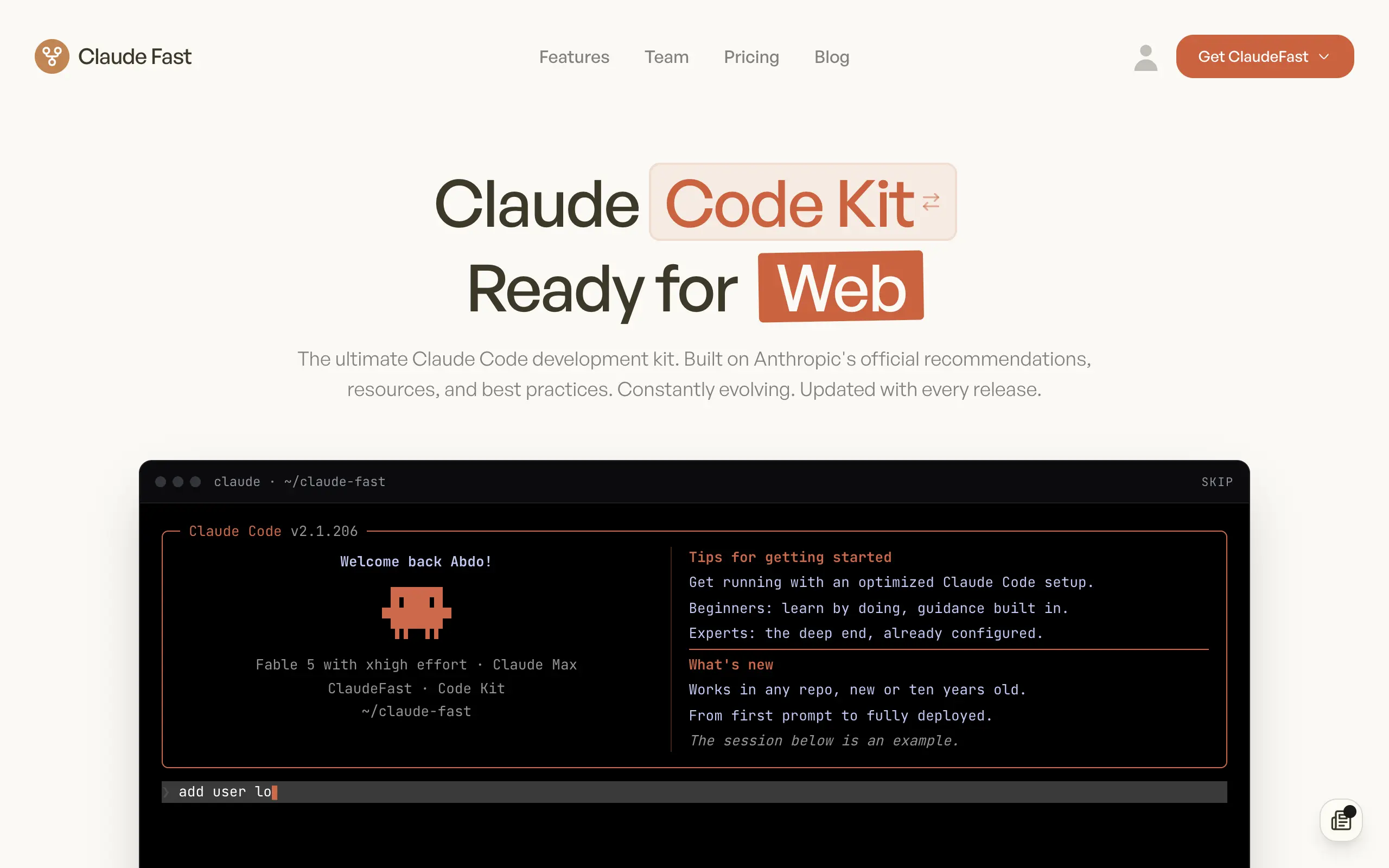
Claude Fast
Supercharge your Claude Code with 6x effective context window and specialized AI agents 🤖
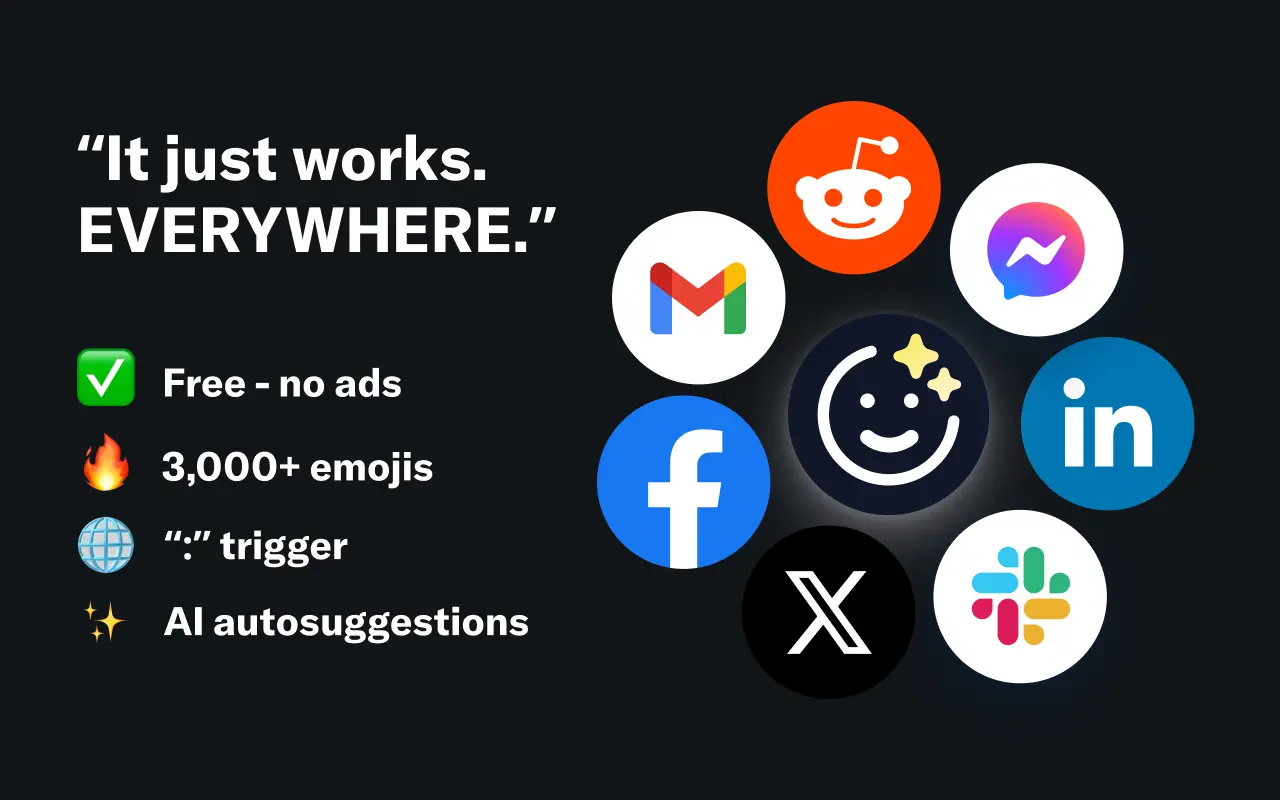
EmojAI
AI-powered emoji picker with smart, context-aware suggestions 🤖

Solohacker
Autonomous company launcher - AI agents work 24/7, escalate what matters, and you stay in control 🤖

BeRawi: Storytelling Coach
Practice storytelling daily with instant feedback to sound clearer, more engaging, and confident 🎤
Omichat
Chat with 50+ AI models, including ChatGPT and Claude, in one place - switch models anytime without losing context 🤖
Claude Fast
Supercharge your Claude Code with 6x effective context window and specialized AI agents 🤖
EmojAI
AI-powered emoji picker with smart, context-aware suggestions 🤖
Solohacker
Autonomous company launcher - AI agents work 24/7, escalate what matters, and you stay in control 🤖
BeRawi: Storytelling Coach
Practice storytelling daily with instant feedback to sound clearer, more engaging, and confident 🎤
Omichat
Chat with 50+ AI models, including ChatGPT and Claude, in one place - switch models anytime without losing context 🤖
Claude Fast
Supercharge your Claude Code with 6x effective context window and specialized AI agents 🤖
EmojAI
AI-powered emoji picker with smart, context-aware suggestions 🤖
Solohacker
Autonomous company launcher - AI agents work 24/7, escalate what matters, and you stay in control 🤖
BeRawi: Storytelling Coach
Practice storytelling daily with instant feedback to sound clearer, more engaging, and confident 🎤
Omichat
Chat with 50+ AI models, including ChatGPT and Claude, in one place - switch models anytime without losing context 🤖
Claude Fast
Supercharge your Claude Code with 6x effective context window and specialized AI agents 🤖
EmojAI
AI-powered emoji picker with smart, context-aware suggestions 🤖
Solohacker
Autonomous company launcher - AI agents work 24/7, escalate what matters, and you stay in control 🤖
BeRawi: Storytelling Coach
Practice storytelling daily with instant feedback to sound clearer, more engaging, and confident 🎤

Connect with like-minded people
Join our community to get feedback, support, and grow together with 1,000+ builders on board, let's ship it!
Join usShip your startup everywhere. In minutes.
Don't burn tokens on setup and start building features on day one.