BacklogUX
UX intelligence layer for product backlogs that scores stories by user impact, usability risk, and research gaps before development starts.
Why product backlogs fail users (and how UX intelligence fixes it)
Most product backlogs are optimized for delivery speed, not user impact.
Teams use tools like Jira, Linear, or Azure DevOps to manage stories, epics, and tasks. They prioritize based on business value, deadlines, or stakeholder pressure. But what’s missing?
- A structured evaluation of user impact
- Visibility into usability risk
- Clear identification of research gaps before development
- Objective scoring that blends UX evidence with delivery feasibility
That’s where BacklogUX, a UX intelligence layer for product backlogs, creates a strategic advantage.
Instead of treating UX as a post-design checkpoint, BacklogUX integrates directly into backlog grooming and sprint planning. It scores stories by user impact, usability risk, and research completeness before engineering starts.
This article breaks down:
- The real market gap in backlog management
- Target customer segments and buyer intent
- Core product features and scoring framework
- Recommended technical architecture
- Monetization strategy
- Competitive landscape
- Risks and mitigation
- Actionable implementation roadmap
If you're validating a SaaS idea in the product management or UX space, this deep dive will help you assess opportunity and execution viability.
The market gap: backlog tools lack UX intelligence
Modern product teams have excellent execution tools:
But none of these systems deeply evaluate UX quality before development begins.
They answer:
- What are we building?
- When will we ship it?
- Who’s assigned?
They do not reliably answer:
- Does this story solve a validated user problem?
- How confident are we in its usability?
- What research evidence supports it?
- What is the risk of user friction or churn?
The hidden cost of UX-blind backlogs
According to widely cited industry research (e.g., Baymard Institute studies and Nielsen Norman Group findings), usability issues are among the top causes of feature underperformance and product abandonment. While exact impact varies by industry, the pattern is clear:
- Poor UX increases churn.
- Late-stage usability fixes are expensive.
- Rework after development can cost 5–10x more than early-stage validation.
Yet backlog grooming sessions rarely include structured UX risk analysis.
This creates a clear product gap:
There is no dedicated UX intelligence layer that sits between product ideation and engineering execution.
BacklogUX fills that gap.
Primary keyword focus: UX intelligence for product backlogs
The core SEO theme here is:
- UX intelligence for product backlogs
- UX scoring for user stories
- backlog prioritization by user impact
- usability risk scoring
- research gap detection in product development
Search intent likely includes:
- Product managers seeking prioritization frameworks
- UX leads wanting stronger influence in roadmap planning
- SaaS founders improving product quality
- Enterprises reducing rework and usability debt
BacklogUX addresses this intent with a structured, data-informed solution.
Target audience analysis
BacklogUX is a B2B SaaS. The primary ICP (Ideal Customer Profile) includes:
1. Product-led SaaS companies (Series A–C)
Pain points:
- Fast growth, messy backlog
- UX research not systematically integrated
- Engineering builds before validation
- Feature adoption inconsistent
Buyer persona:
- Head of Product
- VP of Product
- Director of UX
- Product Ops Lead
2. Enterprise product teams
Pain points:
- Multiple squads
- Large feature pipelines
- Inconsistent UX maturity
- High cost of rework
Buyer persona:
- Chief Product Officer
- UX Director
- Digital Transformation Lead
3. UX-mature startups wanting operationalization
These teams already do research—but struggle to:
- Connect insights to backlog items
- Quantify UX risk
- Influence sprint priorities
BacklogUX becomes their decision-support system.
Core value proposition of BacklogUX
BacklogUX is not another backlog tool.
It is:
A UX intelligence layer that scores backlog stories by user impact, usability risk, and research gaps before development starts.
The three-dimensional scoring framework
- User Impact Score
- Usability Risk Score
- Research Confidence Score
Together, they generate a composite UX Readiness Index.
How BacklogUX works (feature breakdown)
1. User impact scoring engine
Each story is evaluated against structured criteria:
- Affected user segment size
- Pain severity
- Frequency of interaction
- Alignment with user journey critical paths
- Revenue or retention influence
Teams answer guided prompts:
- Which persona is impacted?
- What user problem does this solve?
- Is the pain validated through data?
BacklogUX converts these inputs into a weighted score.
2. Usability risk detection
Stories are flagged based on:
- New interaction patterns
- Unfamiliar UI components
- High cognitive load potential
- Accessibility complexity
- Cross-device interaction requirements
For example:
- “Add AI configuration modal with 12 options” → High usability risk
- “Add export button” → Low usability risk
Risk scoring helps teams decide whether:
- Rapid prototyping is required
- Usability testing is mandatory
- UX design time needs adjustment
3. Research gap analysis
Many backlog items lack:
- Usability testing evidence
- Qualitative interviews
- Behavioral analytics validation
- A/B test data
BacklogUX scans stories for missing evidence categories.
Example logic:
- No persona tagged → Research gap
- No linked research doc → Confidence reduced
- No analytics event reference → Flagged
4. UX readiness index
The composite score helps product teams:
- De-prioritize high-risk, low-impact features
- Fast-track validated, high-impact work
- Schedule UX research strategically
This changes sprint planning conversations from opinion-based to evidence-based.
Competitive landscape analysis
BacklogUX sits at the intersection of:
- Product management tools
- UX research platforms
- Product analytics tools
Let’s compare positioning.
| Capability | Jira | Dovetail | Amplitude | BacklogUX |
|---|---|---|---|---|
| Backlog management | ✅ | ❌ | ❌ | ✅ (via integration) |
| UX risk scoring | ❌ | ❌ | ❌ | ✅ |
| Research gap detection | ❌ | ✅ | ❌ | ✅ |
| User impact prioritization | Manual | Partial | Data-driven | Structured & automated |
Unique positioning
BacklogUX does not replace Jira or Linear. It augments them.
Its USP:
It operationalizes UX maturity inside backlog prioritization workflows.
No major tool currently provides structured UX scoring directly embedded into backlog grooming.
Recommended tech stack for BacklogUX
A modern, scalable SaaS stack is essential.
Frontend
Why:
- Component-driven UX scoring dashboards
- Fast iteration
- Enterprise-ready UI flexibility
Backend
- Node.js with NestJS or Express
- PostgreSQL for structured scoring data
- Redis for caching scoring calculations
AI/Scoring intelligence layer
BacklogUX could use:
- Rule-based scoring engine initially
- Later evolve into ML-assisted risk prediction
Example pseudo-logic:
function calculateUXReadiness(story) {
  const impact = calculateImpactScore(story);
  const risk = calculateUsabilityRisk(story);
  const research = calculateResearchConfidence(story);

  return (impact * 0.5) + (research * 0.3) - (risk * 0.2);
}
Integrations (critical for adoption)
- Jira API
- Linear API
- GitHub Projects
- Notion
- Slack notifications
Integration-first architecture is key to minimizing friction.
Monetization strategy
BacklogUX is well-positioned for tiered B2B pricing.
Option 1: Per-seat pricing
- $19–$39 per user/month
- Best for SMB SaaS teams
Option 2: Per-squad pricing
- $299–$699 per team/month
- Better alignment with product squads
Option 3: Enterprise plan
- Custom pricing
- SSO
- Advanced analytics
- Custom scoring frameworks
Strategic upsells
- AI-powered predictive risk analysis
- UX audit exports
- Compliance modules (accessibility scoring)
Market trends supporting BacklogUX
Several industry shifts increase viability:
- Product-led growth (PLG) demands better UX.
- AI feature explosion increases usability complexity.
- UX research tooling adoption is rising.
- Engineering costs remain high → rework reduction matters.
Companies are increasingly measured by:
- Feature adoption rate
- Retention metrics
- Customer experience benchmarks
BacklogUX aligns directly with these KPIs.
Potential risks and mitigation
Risk 1: Perceived as “nice-to-have”
Mitigation:
- Tie scoring directly to measurable KPIs (retention, churn reduction).
- Publish case studies demonstrating cost-of-rework savings.
Risk 2: Integration complexity
Mitigation:
- Launch with one deep integration (e.g., Jira).
- Provide frictionless onboarding wizard.
Risk 3: Resistance from engineers
Mitigation:
- Emphasize reduced rework.
- Provide lightweight scoring workflow (under 3 minutes per story).
Implementation roadmap
Here’s a lean MVP approach.
MVP feature prioritization
- Jira integration
- Manual scoring prompts
- Basic dashboard
- UX readiness index
- AI-assisted risk detection
- Slack alerts
- Advanced analytics
- Role-based permissions
- Predictive churn-risk modeling
- Industry benchmarks
- Accessibility compliance scoring
Go-to-market strategy
1. Content marketing (high leverage)
Target keywords:
- backlog prioritization framework
- UX risk scoring
- product backlog UX
- usability risk assessment in agile
- research-driven product development
Publish:
- Case studies
- UX maturity benchmarks
- Backlog scoring templates
2. Product-led growth motion
Offer:
- Free plan with limited stories
- Public UX scoring template
- Freemium Jira integration
3. Community penetration
- UX communities
- Product management Slack groups
- DesignOps networks
- Agile conferences
Competitive advantage analysis
BacklogUX’s defensibility comes from:
- Scoring data accumulation
- Benchmark insights across industries
- Deep workflow integration
- Thought leadership in UX intelligence
The more teams use it, the more accurate and valuable the scoring models become.
Why this idea stands out
BacklogUX is not incremental improvement.
It creates a new category:
UX intelligence for product backlogs.
It bridges a long-standing disconnect:
- Product prioritization
- UX research
- Engineering execution
Most companies talk about being “user-centric.” BacklogUX operationalizes it.
Long-term expansion opportunities
- Accessibility scoring module
- AI usability simulation engine
- Enterprise UX compliance audits
- Integration with product analytics platforms
This evolves BacklogUX from tool → infrastructure layer.
Final implementation blueprint
If launching this SaaS today:
- Validate scoring framework with UX leaders.
- Launch narrow but deep (Jira-only).
- Position as backlog prioritization optimizer.
- Focus messaging on cost-of-rework reduction.
- Publish quantitative UX impact case studies.
Use a production-ready SaaS foundation like TurboStarter to accelerate development and focus on core differentiation instead of boilerplate infrastructure.
Final thoughts
BacklogUX addresses a real structural weakness in modern product teams:
Backlogs are execution-driven, not user-driven.
By embedding UX intelligence directly into backlog workflows, it enables:
- Smarter prioritization
- Lower usability risk
- Reduced rework
- Higher feature adoption
In a market where product quality determines retention and revenue, UX intelligence for product backlogs is not a luxury—it’s a strategic advantage.
The opportunity is strong. The differentiation is clear. The timing is right.
More 🏢 B2B Application SaaS ideas
Discover more innovative b2b application SaaS ideas that are trending in 2026. Each idea is AI-generated with market validation and growth potential to help you find your next profitable venture faster than competitors.
Your competitors are building with TurboStarter
Below are some of the SaaS ideas that have been generated and built with our starter kit.

Statiko
Monitor any Telegram channel in real time - track posts, edits, deletions, and growth with AI recaps 📡

Shibui
AI website builder - describe your business, pick a niche template, edit by chatting, and publish instantly ✨

Pro Service
Find verified home service professionals, compare quotes, and pay securely through escrow - built for Brazilians across the US 🏠
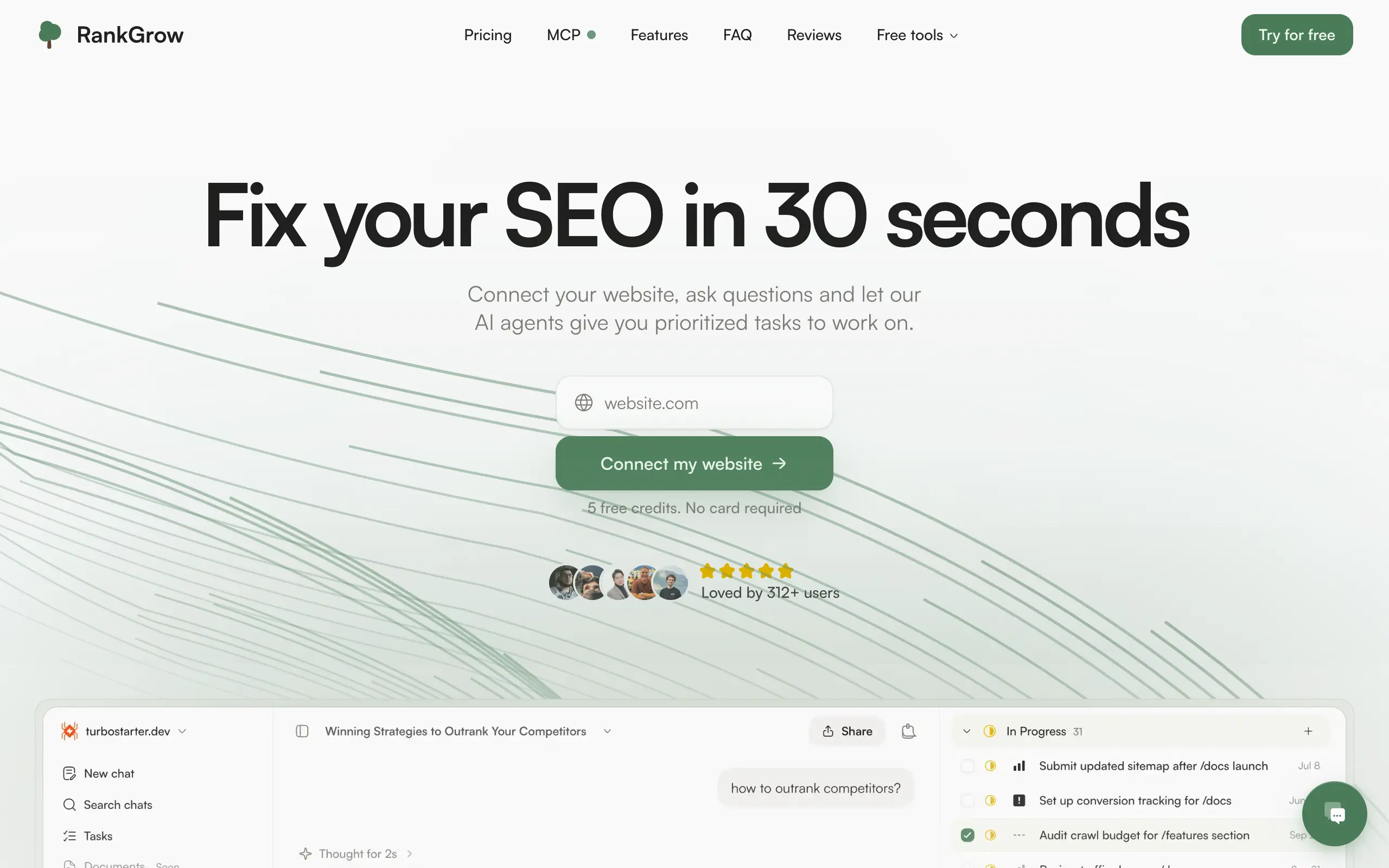
RankGrow
Fix your SEO with AI agents - connect Search Console, get prioritized tasks, and grow organic traffic 📈
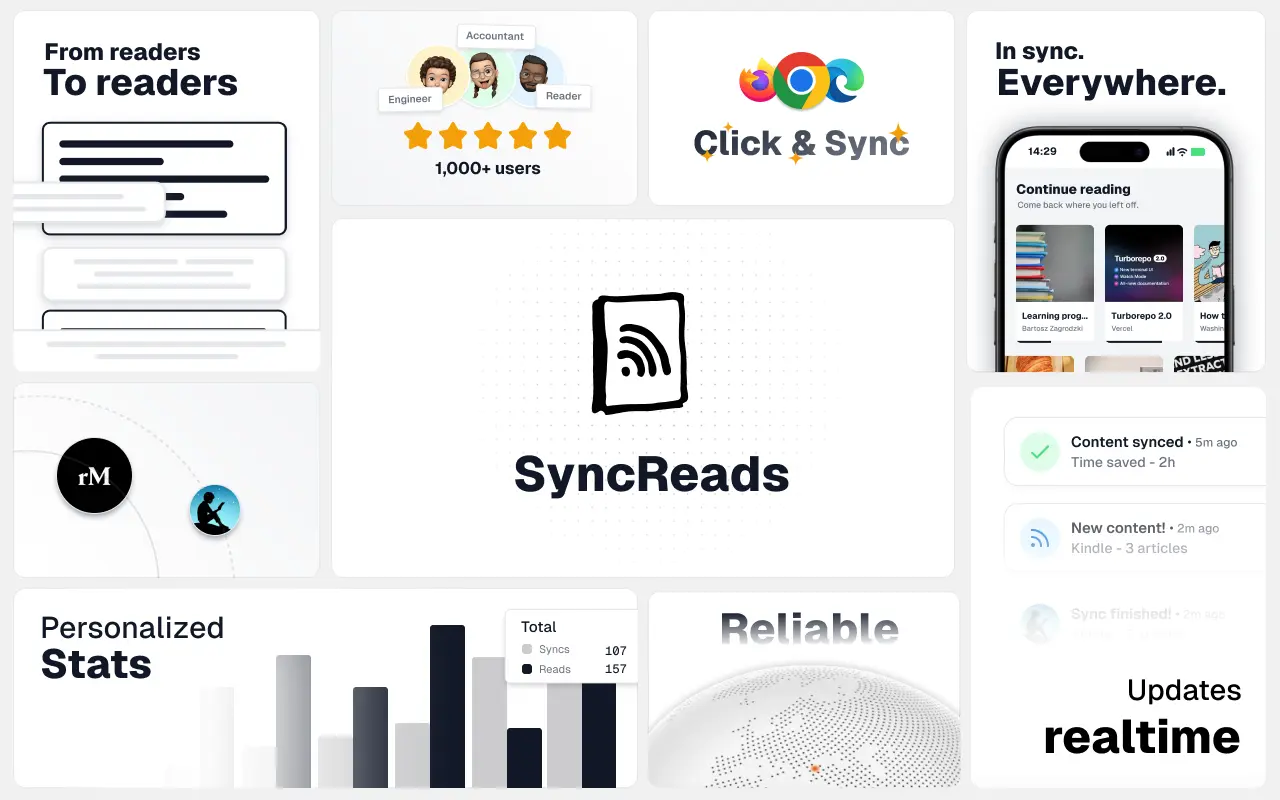
SyncReads
Sync your favorite content for distraction-free reading, save time and replace multiple apps. Anytime, anywhere 🔄
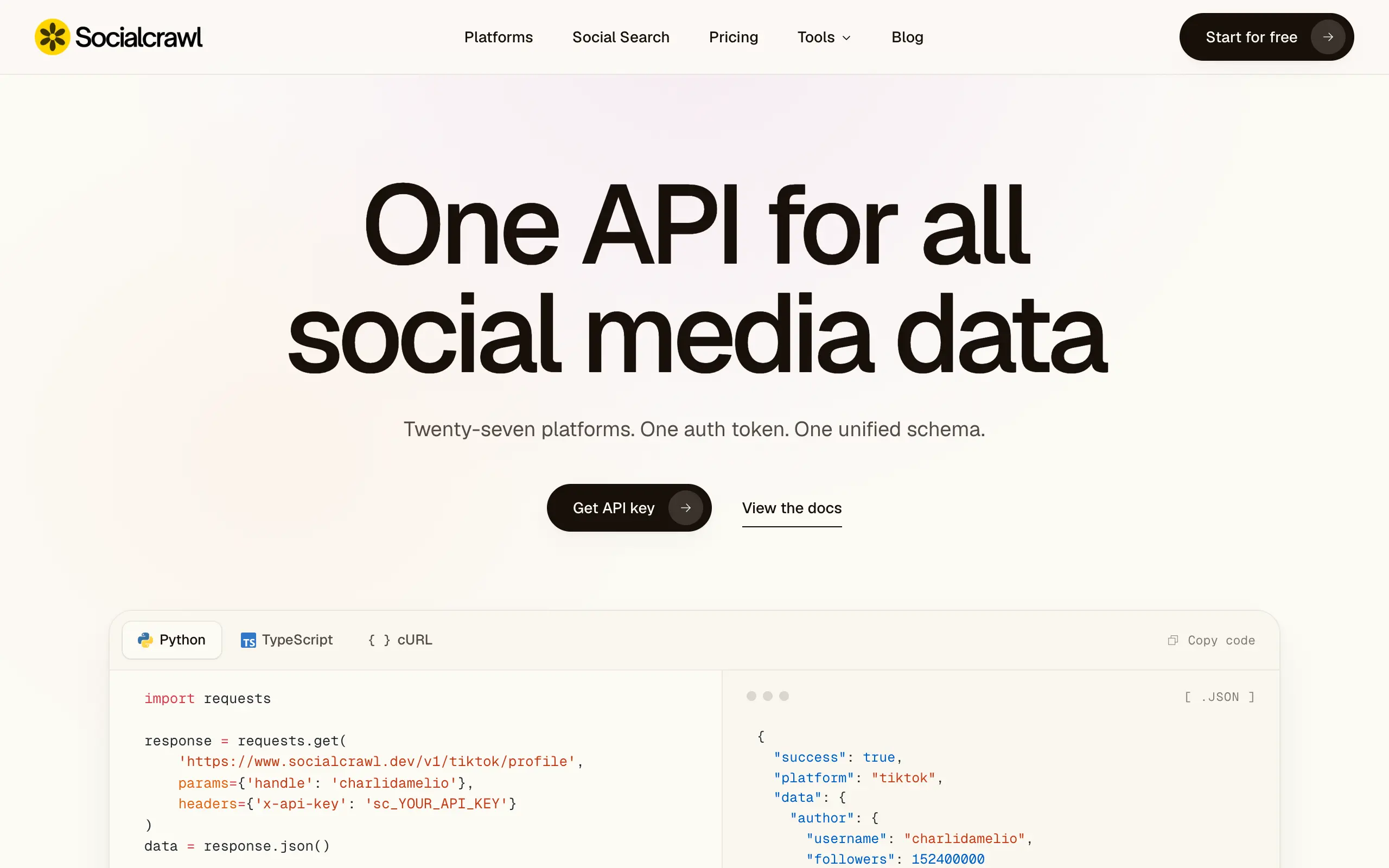
Socialcrawl
Get clean, structured data from 21 platforms like TikTok, Instagram, and YouTube with a single request 📊
Statiko
Monitor any Telegram channel in real time - track posts, edits, deletions, and growth with AI recaps 📡
Shibui
AI website builder - describe your business, pick a niche template, edit by chatting, and publish instantly ✨
Pro Service
Find verified home service professionals, compare quotes, and pay securely through escrow - built for Brazilians across the US 🏠
RankGrow
Fix your SEO with AI agents - connect Search Console, get prioritized tasks, and grow organic traffic 📈
SyncReads
Sync your favorite content for distraction-free reading, save time and replace multiple apps. Anytime, anywhere 🔄
Socialcrawl
Get clean, structured data from 21 platforms like TikTok, Instagram, and YouTube with a single request 📊
Statiko
Monitor any Telegram channel in real time - track posts, edits, deletions, and growth with AI recaps 📡
Shibui
AI website builder - describe your business, pick a niche template, edit by chatting, and publish instantly ✨
Pro Service
Find verified home service professionals, compare quotes, and pay securely through escrow - built for Brazilians across the US 🏠
RankGrow
Fix your SEO with AI agents - connect Search Console, get prioritized tasks, and grow organic traffic 📈
SyncReads
Sync your favorite content for distraction-free reading, save time and replace multiple apps. Anytime, anywhere 🔄
Socialcrawl
Get clean, structured data from 21 platforms like TikTok, Instagram, and YouTube with a single request 📊
Statiko
Monitor any Telegram channel in real time - track posts, edits, deletions, and growth with AI recaps 📡
Shibui
AI website builder - describe your business, pick a niche template, edit by chatting, and publish instantly ✨
Pro Service
Find verified home service professionals, compare quotes, and pay securely through escrow - built for Brazilians across the US 🏠
RankGrow
Fix your SEO with AI agents - connect Search Console, get prioritized tasks, and grow organic traffic 📈
SyncReads
Sync your favorite content for distraction-free reading, save time and replace multiple apps. Anytime, anywhere 🔄
Socialcrawl
Get clean, structured data from 21 platforms like TikTok, Instagram, and YouTube with a single request 📊
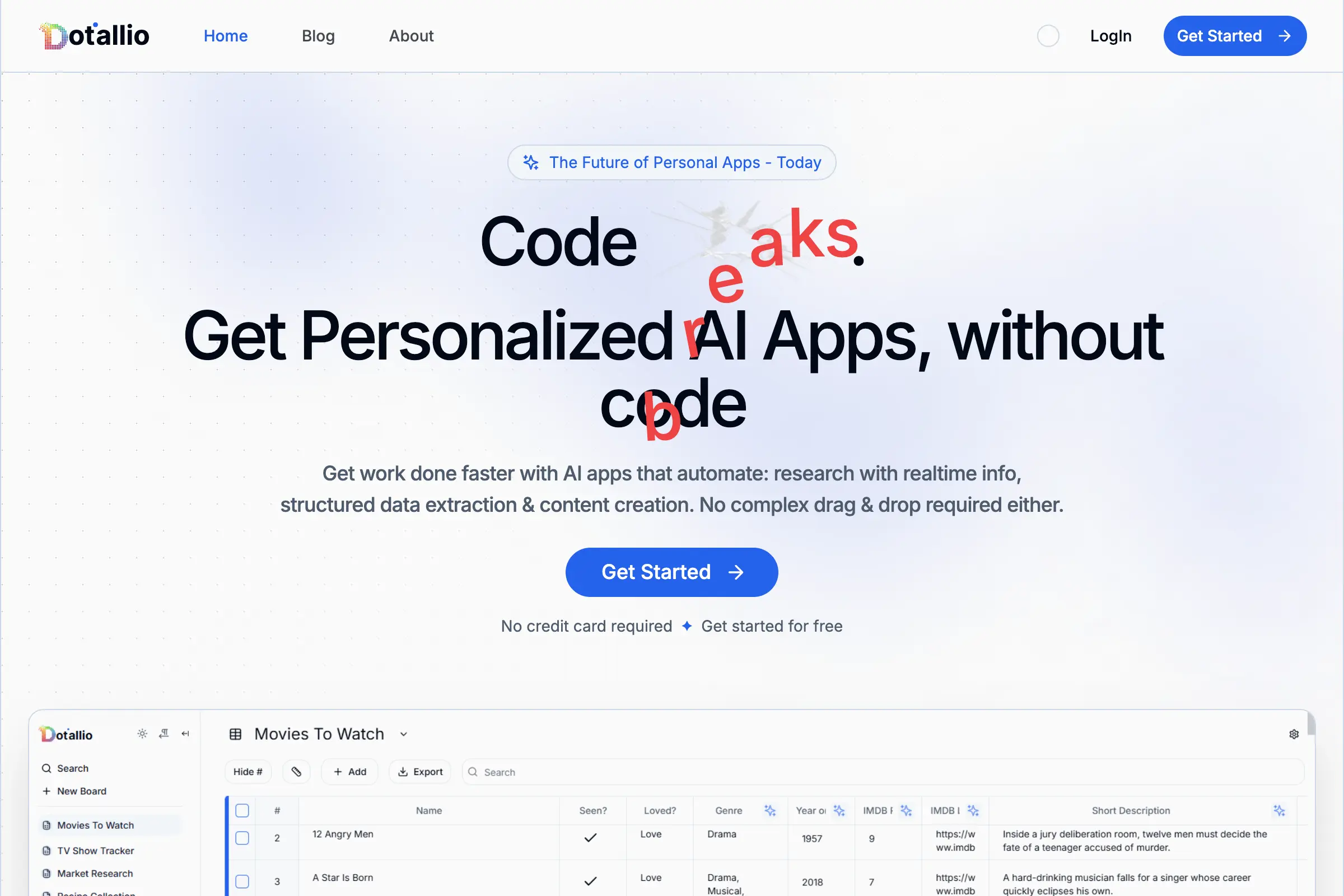
Dotallio
Personalized AI apps that automate research, data extraction, and content creation without code 🤖

Talk to Santa
Enjoy a magical live video chat or receive a unique AI-generated video greeting from Santa Claus 🎅
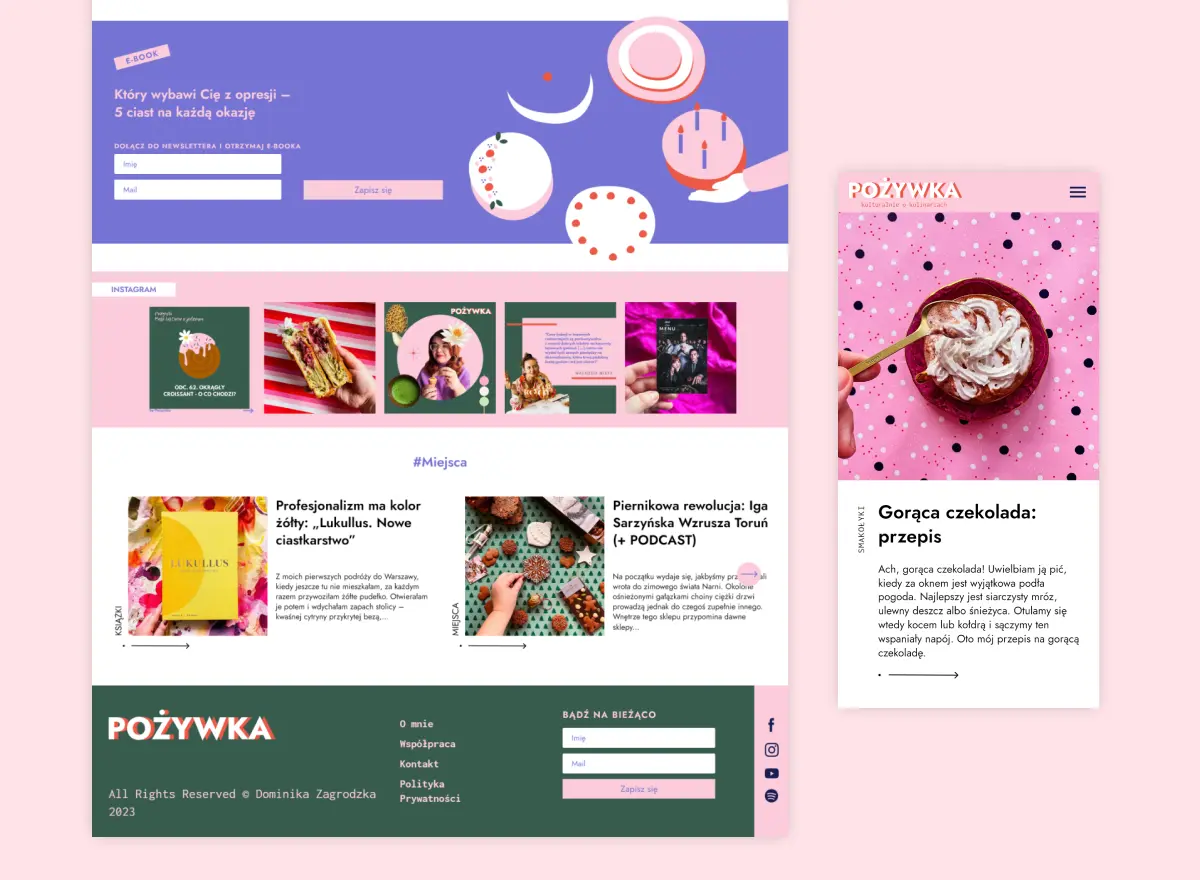
pozywka.pl
Scalable blog for food journalist, focused on performance and user experience 🌭
zagrodzki.me
Personal blog and portfolio of Bart Zagrodzki, where he shares his knowledge and work 💼
TurboStarter
Ship your startup everywhere. In minutes.
HTML to Markdown
Convert HTML to Markdown with ease, directly in your browser 📄
Dotallio
Personalized AI apps that automate research, data extraction, and content creation without code 🤖
Talk to Santa
Enjoy a magical live video chat or receive a unique AI-generated video greeting from Santa Claus 🎅
pozywka.pl
Scalable blog for food journalist, focused on performance and user experience 🌭
zagrodzki.me
Personal blog and portfolio of Bart Zagrodzki, where he shares his knowledge and work 💼
TurboStarter
Ship your startup everywhere. In minutes.
HTML to Markdown
Convert HTML to Markdown with ease, directly in your browser 📄
Dotallio
Personalized AI apps that automate research, data extraction, and content creation without code 🤖
Talk to Santa
Enjoy a magical live video chat or receive a unique AI-generated video greeting from Santa Claus 🎅
pozywka.pl
Scalable blog for food journalist, focused on performance and user experience 🌭
zagrodzki.me
Personal blog and portfolio of Bart Zagrodzki, where he shares his knowledge and work 💼
TurboStarter
Ship your startup everywhere. In minutes.
HTML to Markdown
Convert HTML to Markdown with ease, directly in your browser 📄
Dotallio
Personalized AI apps that automate research, data extraction, and content creation without code 🤖
Talk to Santa
Enjoy a magical live video chat or receive a unique AI-generated video greeting from Santa Claus 🎅
pozywka.pl
Scalable blog for food journalist, focused on performance and user experience 🌭
zagrodzki.me
Personal blog and portfolio of Bart Zagrodzki, where he shares his knowledge and work 💼
TurboStarter
Ship your startup everywhere. In minutes.
HTML to Markdown
Convert HTML to Markdown with ease, directly in your browser 📄
Omichat
Chat with 50+ AI models, including ChatGPT and Claude, in one place - switch models anytime without losing context 🤖
Claude Fast
Supercharge your Claude Code with 6x effective context window and specialized AI agents 🤖

EmojAI
AI-powered emoji picker with smart, context-aware suggestions 🤖

Solohacker
Autonomous company launcher - AI agents work 24/7, escalate what matters, and you stay in control 🤖

BeRawi: Storytelling Coach
Practice storytelling daily with instant feedback to sound clearer, more engaging, and confident 🎤
Omichat
Chat with 50+ AI models, including ChatGPT and Claude, in one place - switch models anytime without losing context 🤖
Claude Fast
Supercharge your Claude Code with 6x effective context window and specialized AI agents 🤖
EmojAI
AI-powered emoji picker with smart, context-aware suggestions 🤖
Solohacker
Autonomous company launcher - AI agents work 24/7, escalate what matters, and you stay in control 🤖
BeRawi: Storytelling Coach
Practice storytelling daily with instant feedback to sound clearer, more engaging, and confident 🎤
Omichat
Chat with 50+ AI models, including ChatGPT and Claude, in one place - switch models anytime without losing context 🤖
Claude Fast
Supercharge your Claude Code with 6x effective context window and specialized AI agents 🤖
EmojAI
AI-powered emoji picker with smart, context-aware suggestions 🤖
Solohacker
Autonomous company launcher - AI agents work 24/7, escalate what matters, and you stay in control 🤖
BeRawi: Storytelling Coach
Practice storytelling daily with instant feedback to sound clearer, more engaging, and confident 🎤
Omichat
Chat with 50+ AI models, including ChatGPT and Claude, in one place - switch models anytime without losing context 🤖
Claude Fast
Supercharge your Claude Code with 6x effective context window and specialized AI agents 🤖
EmojAI
AI-powered emoji picker with smart, context-aware suggestions 🤖
Solohacker
Autonomous company launcher - AI agents work 24/7, escalate what matters, and you stay in control 🤖
BeRawi: Storytelling Coach
Practice storytelling daily with instant feedback to sound clearer, more engaging, and confident 🎤

Connect with like-minded people
Join our community to get feedback, support, and grow together with 1,000+ builders on board, let's ship it!
Join usShip your startup everywhere. In minutes.
Don't burn tokens on setup and start building features on day one.