BatchBeacon
BatchBeacon gives small food producers lot-level traceability from spreadsheets and production logs, enabling fast mock recalls and audit-ready records.
Why small food producers need lot-level traceability
Small food businesses often start with a workable system: a spreadsheet for ingredient purchases, a production log near the line, invoices in accounting software, and shipping records in email. Each tool may be useful on its own. The problem appears when a customer, auditor, or regulator asks a question that crosses all of them:
- Which ingredient lots went into this finished product?
- Which batches used a particular supplier’s shipment?
- Where did the affected products go?
- Can the business document the answer quickly and consistently?
Answering may require searching several files, interpreting inconsistent product names, and relying on staff memory. That process can be slow, stressful, and vulnerable to mistakes—especially during a suspected contamination event or a time-sensitive audit.
BatchBeacon is a B2B food traceability software concept for small producers. It turns spreadsheets and production logs into connected, lot-level records, helping a team trace ingredients into finished batches and finished batches toward customers. Its defining promise is practical: make it easier to prepare audit-ready records and run a mock recall without forcing a small operation to replace every system it already uses.
That positioning matters. Many small producers do not need a full enterprise resource planning (ERP) implementation. They need a reliable way to connect the records they already keep, spot gaps, and produce a clear answer when someone asks about a lot.
A focused product promise
BatchBeacon should be framed as a traceability and recall-readiness layer—not as a guarantee of regulatory compliance, food safety, or recall prevention. The software can organize evidence and reveal missing links, but businesses remain responsible for their processes and obligations.
The target audience for BatchBeacon
The best early customers are not every business that handles food. They are small and midsize producers with enough operational complexity to feel the pain of manual traceability, but without the resources or appetite for a heavyweight ERP rollout.
Primary customer segments
Potential early customers include:
- Specialty food manufacturers producing sauces, dressings, baked goods, snacks, condiments, or packaged meals.
- Small co-packers that need to distinguish client products, production runs, and ingredient lots.
- Regional beverage producers managing ingredients, packaging materials, and batch-level distribution.
- Processors and value-added farms turning raw agricultural products into branded or packaged goods.
- Growing producers selling through multiple channels, such as distributors, independent retailers, food service, and direct-to-consumer orders.
These businesses may have a small quality team—or no dedicated quality manager at all. Operations, production, and compliance work can sit with the same few people. A product that assumes a full-time administrator is unlikely to fit.
The buyer and the day-to-day user
The economic buyer may be the owner, general manager, operations leader, or quality manager. The day-to-day users are more varied:
- A receiver records supplier lots and incoming quantities.
- A production lead logs which ingredients went into a batch.
- A warehouse employee tracks finished-product lots.
- An office manager maps customer orders to shipments.
- A quality lead prepares evidence for an audit or mock recall.
BatchBeacon must serve both people who care about the outcome and people entering information under time pressure. If data entry adds friction to receiving or production, users may fall back to the spreadsheet. Adoption depends on making the right process easier than the old one.
Customer qualification signals
A promising prospect may:
- Keep traceability records in multiple spreadsheets or paper logs.
- Sell products with batch or lot codes.
- Purchase ingredients from several suppliers.
- Ship through distributors, wholesale accounts, or more than one fulfillment channel.
- Struggle to complete mock recalls quickly.
- Have faced audit findings related to record retrieval, consistency, or documentation.
- Be growing beyond the point where a single employee can reliably reconstruct production history.
These are discovery signals, not proof that a prospect must buy software. Interviews should uncover the actual workflow, who owns it, and what a slow or incomplete trace would cost the business.
The market opportunity and the gap
The opportunity for BatchBeacon is in the space between manual records and integrated manufacturing systems. A spreadsheet is cheap and flexible, but it often depends on disciplined naming, careful cross-referencing, and a person who understands the whole process. An ERP or manufacturing execution system can support broader workflows, but setup, training, and ongoing administration may be disproportionate for a small producer.
That creates an underserved job to be done: turn existing operational records into a usable lot genealogy without demanding a complete technology overhaul.
Why spreadsheets stop scaling
Spreadsheets are often the right starting point. They are familiar, inexpensive, and easy to customize. Their weaknesses tend to emerge as records multiply:
- Product, supplier, and lot names are entered inconsistently.
- A production batch may refer to an ingredient without identifying the specific supplier lot.
- Changes to a file can be difficult to audit.
- Several people may maintain different versions of the same record.
- A finished-goods shipment may not be linked back to production records.
- Finding a gap requires a person to understand how several files fit together.
The issue is not that spreadsheets are inherently unsafe. It is that they do not automatically create a validated relationship between receiving, production, inventory, and shipping records.
Why a full ERP may be too much
A broad manufacturing platform can include purchasing, inventory, scheduling, accounting, production planning, and reporting. That breadth is valuable for companies ready to standardize those workflows. It can also create a long buying process and a large implementation burden for a small team whose immediate need is traceability.
BatchBeacon can differentiate by being deliberately narrower. It should ingest or organize relevant records, guide users through the critical links, and help them answer traceability questions. It should not try to rebuild every system a customer already uses.
Regulatory context without overpromising
Food traceability requirements depend on the product, business activities, location, customer expectations, and applicable regulations. In the United States, the FDA Food Traceability Rule is especially relevant to certain foods on the Food Traceability List and to covered activities and entities. The rule includes requirements around key data elements and critical tracking events. Applicability and implementation details should be assessed against authoritative FDA materials and qualified regulatory advice.
A prudent product strategy is to support good record organization while avoiding blanket claims such as “compliant for every food business.” BatchBeacon can help a customer locate and connect records, but it cannot determine every legal obligation from a product name alone. Requirements may also come from state or local authorities, customers, certification programs, or contractual agreements.
For current regulatory claims, consult the applicable FDA rule and guidance, relevant state or local agencies, and qualified food-safety or legal professionals. If publishing specific dates, exemptions, or covered-product claims, verify them against primary sources immediately before publication.
Core features for a useful food traceability product
BatchBeacon’s core should be a reliable, explainable chain of records—not a large feature checklist. The product needs to connect raw materials, production activity, finished products, and distribution while making uncertainty visible.
1. Spreadsheet and log ingestion
The product’s entry point should respect the records customers already have. Useful capabilities include:
- CSV and spreadsheet upload.
- Column mapping for supplier, item, lot code, quantity, unit, date, and document reference.
- Reusable import templates for recurring files.
- Duplicate and missing-value detection.
- A preview before records become part of the live dataset.
- Clear error messages that explain how to fix a row.
Importing a file should not silently transform ambiguous data into trusted traceability records. If a column could mean either a supplier’s item code or a lot code, the system should ask the user to map it. Maintain a source-file reference so a user can understand where a record came from.
A strong onboarding experience might import a sample file, identify likely columns, and ask the user to confirm the mapping. The system can recommend a mapping, but the customer should approve it.
2. Lot genealogy
Lot genealogy is the central capability: the ability to follow a raw-material lot forward into production and finished products, and to trace a finished lot backward to its inputs.
A useful record model distinguishes:
- Supplier lots, received from vendors.
- Internal production batches, created during manufacturing.
- Finished-goods lots, used to identify output.
- Shipments or transactions, connecting finished goods to recipients.
- Documents, such as invoices, receiving records, or production logs.
The system should support many-to-many relationships. One ingredient lot can be used across multiple production batches; one finished batch can contain several ingredient lots; and a shipment may contain multiple finished lots. Simplifying these relationships too much can make recall results misleading.
3. Forward and backward trace searches
Users should be able to start with either end of the chain:
- Forward trace: Identify which production batches and finished lots used a particular supplier lot, then identify where those products were shipped.
- Backward trace: Start with a finished-product lot and identify its ingredients, suppliers, production records, and relevant documents.
Search results should be understandable to a nontechnical user. Show the path from source to outcome, the records supporting each connection, and any unknown or incomplete links. Do not present a confident answer when the source data is ambiguous.
4. Mock recall workflow
A mock recall should be a guided test of readiness, not merely a search screen. A practical workflow could prompt a user to:
- Select a finished-product lot or incoming ingredient lot.
- Review connected production and distribution records.
- Identify affected quantities and known recipients.
- Record the start time and completion time.
- Document gaps, assumptions, and follow-up actions.
- Export a summary with source references.
The test should distinguish between known, inferred, and missing information. For example, an order may identify a product and quantity without carrying the finished-goods lot number. That is an important gap to surface—not a reason to invent a relationship.
5. Audit-ready records and exports
Customers need practical outputs they can review and share. BatchBeacon could generate a traceability packet containing:
- Search criteria and timestamps.
- Supplier, production, finished-goods, and shipment records.
- Relevant uploaded source documents.
- A list of records included in the trace.
- Missing data and unresolved exceptions.
- A human-readable PDF or spreadsheet export.
Exports should preserve context. A flat table without the relationships behind it may be hard to interpret. Include identifiers and source references so an auditor or internal reviewer can follow the evidence.
6. Roles, permissions, and activity history
Even a small team needs clarity about who can do what. Basic roles might separate administrators, record editors, and read-only reviewers. An activity history should capture important actions such as record creation, edits, imports, deletions, and export generation.
Audit history is particularly important when users correct an imported record. The software should preserve the prior value, record the change, and show who made it. Avoid relying on a “last updated” timestamp as a substitute for a meaningful history.
7. Exception monitoring
The product can create recurring value by flagging data quality issues before a recall or audit:
- Production records with no ingredient lots.
- Lots with no supplier or receiving reference.
- Finished-goods records with no shipment link.
- Expired or inconsistent product identifiers.
- Quantity mismatches that may warrant review.
- Repeatedly missing fields in a particular workflow.
Alerts should be prioritized and explain what action to take. A dashboard full of vague red warnings will be ignored. The product should help a user resolve the exception at its source.
Recommended product experience and workflow
The adoption strategy should be “start with the records you have, then improve the process.” Requiring a producer to rebuild every item master before seeing value creates unnecessary friction.
A first-run experience might guide a customer through a limited but complete trace:
- Import a receiving spreadsheet.
- Map supplier, ingredient, lot, date, and quantity fields.
- Add or import one production record.
- Link ingredient lots to a production batch.
- Add a finished-goods lot and a shipment.
- Run a trace and review the results.
- Identify missing links and create a short remediation plan.
This workflow demonstrates the product’s value while exposing real-world data challenges early. It also gives the team a baseline against which to measure onboarding success.
Make the software fit production realities
Production floors can be busy, noisy, and shared. Interfaces should work on common phones and tablets, tolerate intermittent connectivity where feasible, and minimize typing. Barcode scanning may be valuable, but it should not be a launch dependency if customers do not have standardized labels.
Users should be able to save a partially completed record, correct a mistake, and understand whether a change affects a trace. Field names should reflect the customer’s vocabulary, while the underlying data model stays consistent.
Competitive advantage and positioning
BatchBeacon should not compete on the number of modules. Its advantage should be the combination of low-friction adoption, transparent traceability, and a clear understanding of small-producer workflows.
| Alternative | Strength | Common limitation for a small producer | BatchBeacon opportunity |
|---|---|---|---|
| Spreadsheets and paper logs | Familiar, flexible, low initial cost | Relationships and history can be difficult to reconstruct | Import existing records and connect lots across workflows |
| General ERP or manufacturing software | Broad operational coverage | May require a larger rollout and process change | Offer a focused traceability layer with a smaller starting scope |
| Consultant-led documentation | Human expertise and tailored guidance | Can be episodic and difficult to operationalize day to day | Turn repeatable trace tasks into a usable workflow |
| Customer-specific portals | May satisfy a particular buyer’s requirements | Records can be fragmented across customers and systems | Maintain a central, reusable record set with controlled exports |
| BatchBeacon | Lot-level search, mock recall workflow, and record organization | Must earn trust through accuracy, integrations, and data quality | Become the approachable bridge between existing records and fast traceability |
The competitive story should be validated in customer interviews. Some producers may already have a traceability feature in their accounting or manufacturing tool and simply need better implementation. Others may need process consulting more than software. BatchBeacon should be clear about where it adds value and when it is not the right solution.
The product’s unique selling proposition
A concise positioning statement could be:
BatchBeacon helps small food producers turn existing spreadsheets and production logs into connected lot records, so they can trace ingredients and finished products faster without starting with a full ERP replacement.
The defensible advantage will not come from the word “traceability” alone. It can develop through:
- Import workflows tuned to real producer documents.
- A data model that handles messy lot relationships without hiding uncertainty.
- A short time-to-first-trace.
- Clear mock recall documentation.
- Practical exception guidance for small teams.
- Trusted onboarding and customer support.
Recommended technology stack
The technology should support secure multi-tenant data, dependable imports, explainable searches, and a maintainable product. The stack is less important than the data model and operational discipline, but sensible choices can reduce early development risk.
Application and interface
A TypeScript web application using React is a reasonable choice for a responsive dashboard and data-entry experience. A framework such as Next.js can support server-rendered pages and application routes, while Tailwind CSS can speed up consistent interface development.
Trade-offs include framework complexity and the need to keep server and client responsibilities clear. For a small product team, avoid adding multiple UI frameworks or elaborate state-management layers before the workflows demand them.
Database and data model
A relational database such as PostgreSQL is a strong fit because traceability depends on explicit relationships, constraints, and queries across connected records. Core entities might include:
- Organizations and users.
- Suppliers and ingredients.
- Supplier lots and receiving events.
- Production runs and consumption records.
- Finished-goods lots.
- Orders, shipments, and recipients.
- Documents and import batches.
- Audit events and trace runs.
Use tenant scoping throughout the data-access layer. Every business record should be associated with an organization, and automated tests should verify that users cannot access another organization’s information. Consider row-level security as an additional safeguard, not a substitute for sound application authorization.
Import processing and background jobs
Spreadsheet parsing can be resource-intensive and error-prone. A background job system can handle file validation, import previews, document processing, and large trace exports without blocking the interface.
Keep the original uploaded file or a secure reference to it, apply access controls, and record the import status. Design jobs to be idempotent so a retry does not create duplicate lots or production records. Before adding optical character recognition or AI extraction, make sure the basic CSV workflow is reliable and gives users a way to review extracted values.
Search, reporting, and document storage
Start with indexed relational queries for lot searches and trace paths. A graph database may sound natural for genealogy, but it introduces operational complexity that may not be justified in an initial product. Revisit it only if measured query patterns or data scale make relational traversal a real bottleneck.
Use object storage for source files and generated reports, with short-lived signed access links where appropriate. Exports containing supplier, customer, or production details should be protected and logged.
Security and reliability
Food traceability data can reveal suppliers, production volumes, customers, and commercial relationships. Build trust with:
- Encryption in transit and at rest.
- Strong authentication and secure account recovery.
- Role-based permissions.
- Tenant-isolation tests.
- Regular backups with restoration tests.
- Audit events for sensitive changes and exports.
- A documented incident-response process.
- Clear retention, deletion, and data-export policies.
Avoid claims such as “bank-grade security” unless the company can define and substantiate them. A practical security program is more credible than vague marketing language.
Monetization strategy options
BatchBeacon should price around the value of traceability readiness and the customer’s operational footprint, not simply the number of files uploaded.
Tiered subscription
A simple subscription model could use tiers based on locations, users, active products, or monthly production volume. Keep the entry tier accessible to a small producer, while charging more for multi-site operations, advanced permissions, integrations, or higher-volume processing.
Potential tier differences include:
- Number of users and facilities.
- Import volume and storage.
- Mock recall reports.
- Advanced activity history.
- Integrations and API access.
- Priority support and onboarding.
Be cautious about pricing by record count if it discourages customers from entering complete records.
Paid onboarding
Many customers will need help mapping existing spreadsheets and agreeing on naming conventions. A fixed-fee onboarding package can cover initial data review, import setup, and a first mock trace. This creates revenue while reducing the chance that a customer subscribes but never reaches value.
Keep onboarding bounded and repeatable. If each account requires extensive custom data cleanup, the business may be operating as a consultancy rather than a scalable SaaS company.
Partner and channel opportunities
Potential channels include food-safety consultants, co-packer networks, industry associations, and accounting or manufacturing software providers. Partnerships can build trust, but they require clear referral terms and a product that partners can confidently recommend. Do not imply endorsement by a regulator or certification body without explicit authorization.
Pricing levels should be tested through buyer interviews and paid pilots. Treat any proposed price points as hypotheses until customers have seen the workflow and agreed to pay.
Risks and ways to mitigate them
Incomplete or inaccurate source records
Software cannot create evidence that was never captured. If a producer does not record ingredient lots during production, a polished trace screen may create false confidence.
Mitigation: Make missing links visible, label inferred connections, and include source references. Position onboarding as a chance to improve workflows, not just upload files.
False confidence in a mock recall
A successful search in a demo dataset does not prove that the customer can conduct a real recall. Data may be incomplete, outdated, or disconnected from actual shipping activity.
Mitigation: Show the scope and limitations of every trace. Provide a repeatable test checklist and record what was not verified. Encourage customers to review their procedures with qualified food-safety professionals.
Regulatory overreach
Regulations vary by food, business role, and jurisdiction. A broad “compliance-ready” promise may mislead customers or create legal exposure.
Mitigation: Use precise product language, maintain a documented regulatory review process, and avoid making determinations the system cannot support. Provide links or references to authoritative primary materials only after verifying them.
Difficult onboarding and messy data
Every producer may use different spreadsheet layouts, product identifiers, and units. Manual cleanup can undermine margins and delay activation.
Mitigation: Build reusable import templates, document common mappings, measure time to first successful trace, and establish a clear boundary between standard onboarding and custom services.
Low adoption on the production floor
If record entry is slower than paper or a familiar spreadsheet, staff may not use the software consistently.
Mitigation: Observe actual receiving and production workflows. Test mobile usability with frontline workers, reduce mandatory fields to what is operationally necessary, and support simple correction and review workflows.
Sensitive data and trust
A breach or inappropriate disclosure could harm customer relationships and reveal commercially sensitive information.
Mitigation: Apply tenant isolation, least-privilege access, encryption, tested backups, and a clear incident process from the beginning. Make data ownership and export options understandable in the contract and product.
Long sales cycles
Food businesses may need approval from owners, quality leaders, customers, or consultants. A new system may be postponed even when the need is real.
Mitigation: Offer a focused pilot with a defined outcome, such as completing a trace from a specific finished lot. Demonstrate value using the prospect’s records, with permission and appropriate safeguards.
How to validate BatchBeacon before building too much
Validation should test both the problem and the proposed workflow. Positive reactions to the idea are not enough; the strongest evidence is a customer willing to share a representative process, complete a pilot, and pay for ongoing use.
Interview around recent behavior
Ask prospects to describe the last time they had to trace a product or prepare for an audit. Useful questions include:
- Which records did they need to collect?
- How long did the process take?
- Who participated?
- Where did the process slow down?
- What information was missing or inconsistent?
- What did they do after finding a gap?
- Which tools already hold the relevant records?
Avoid leading with “Would you use this?” Instead, learn what the business already does and what it has tried to change.
Test the workflow with real-looking records
With permission, use anonymized or synthetic files based on real formats. Test whether users can map columns, resolve ambiguous lots, and understand a forward or backward trace. Measure task completion, confusion, and corrections—not just satisfaction scores.
Run a narrow paid pilot
A useful pilot might cover one product family, one facility, and one defined trace scenario. Agree in advance on:
- The data the customer will provide.
- The records BatchBeacon will import.
- What counts as a completed trace.
- Which gaps are in scope to resolve.
- How success will be measured.
- What happens to the customer’s files after the pilot.
This reduces the temptation to build broad functionality before proving a repeatable use case.
Actionable implementation steps
Choose a specific initial customer profile. Start with one segment, such as regional packaged-food manufacturers with recurring production batches and spreadsheet-based records. Define the team size, sales channels, and current traceability process you want to serve.
Conduct problem interviews and workflow observation. Speak with owners, quality leads, receiving staff, and production users. Document actual records, handoffs, terminology, and failure points.
Define the minimum traceability data model. Establish how the product represents suppliers, incoming lots, production runs, finished-goods lots, shipments, source documents, and audit events. Validate the model against multiple customer workflows before locking it down.
Build the import-to-trace path first. Support file upload, column mapping, validation, lot linking, and a basic forward and backward trace. Defer broad ERP features until customers demonstrate a need.
Add transparency and safeguards. Show source references, missing data, inferred relationships, and meaningful change history. Test tenant isolation and recovery procedures before onboarding sensitive production records.
Pilot with a small number of design partners. Measure time to first successful trace, import error rates, weekly usage, unresolved data gaps, and willingness to pay. Ask users to complete tasks themselves rather than relying on founder-operated demos.
Refine onboarding and pricing from evidence. Standardize the import templates and setup process. Test subscription tiers and paid onboarding only after customers understand the product’s value and limitations.
TurboStarter can help a team accelerate the SaaS foundation, leaving more time to focus on BatchBeacon’s distinctive data model, import experience, and traceability workflows.
The long-term opportunity
BatchBeacon’s strongest opportunity is to make traceability practical for businesses that have outgrown disconnected records but are not ready for a full manufacturing platform. The product earns trust by connecting existing information, clearly identifying gaps, and helping teams practice the work of a trace before a real event demands it.
The winning version will not promise perfect data or universal compliance. It will help a small producer answer important questions faster, show how the answer was assembled, and make the next improvement obvious. That focused value proposition—lot-level traceability from the records a producer already has—gives BatchBeacon a credible path to becoming an everyday operational tool rather than another system that is only opened during an audit.
More 🏢 B2B Application SaaS ideas
Discover more innovative b2b application SaaS ideas that are trending in 2026. Each idea is AI-generated with market validation and growth potential to help you find your next profitable venture faster than competitors.
Your competitors are building with TurboStarter
Below are some of the SaaS ideas that have been generated and built with our starter kit.

Statiko
Monitor any Telegram channel in real time - track posts, edits, deletions, and growth with AI recaps 📡

Shibui
AI website builder - describe your business, pick a niche template, edit by chatting, and publish instantly ✨

Pro Service
Find verified home service professionals, compare quotes, and pay securely through escrow - built for Brazilians across the US 🏠
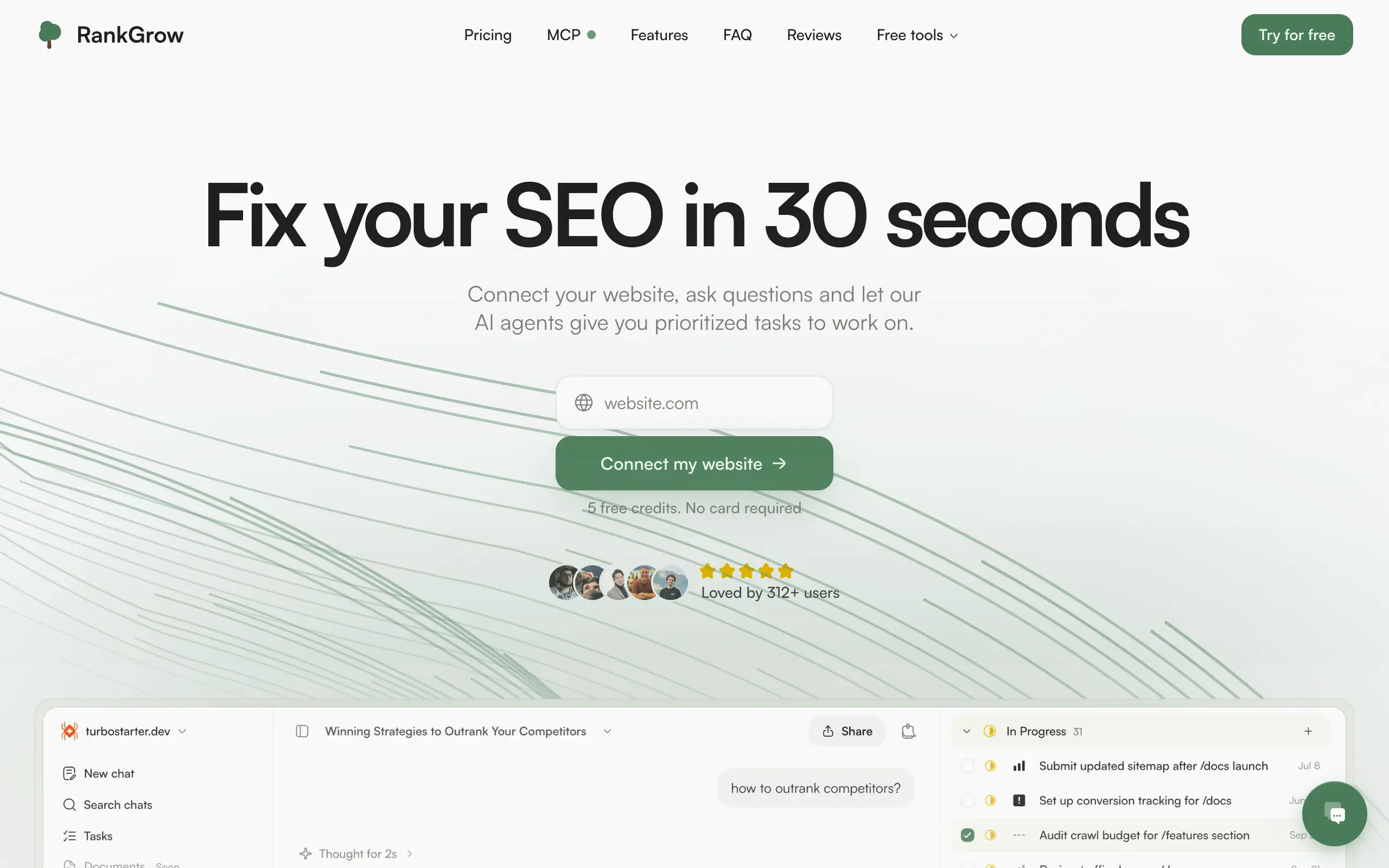
RankGrow
Fix your SEO with AI agents - connect Search Console, get prioritized tasks, and grow organic traffic 📈
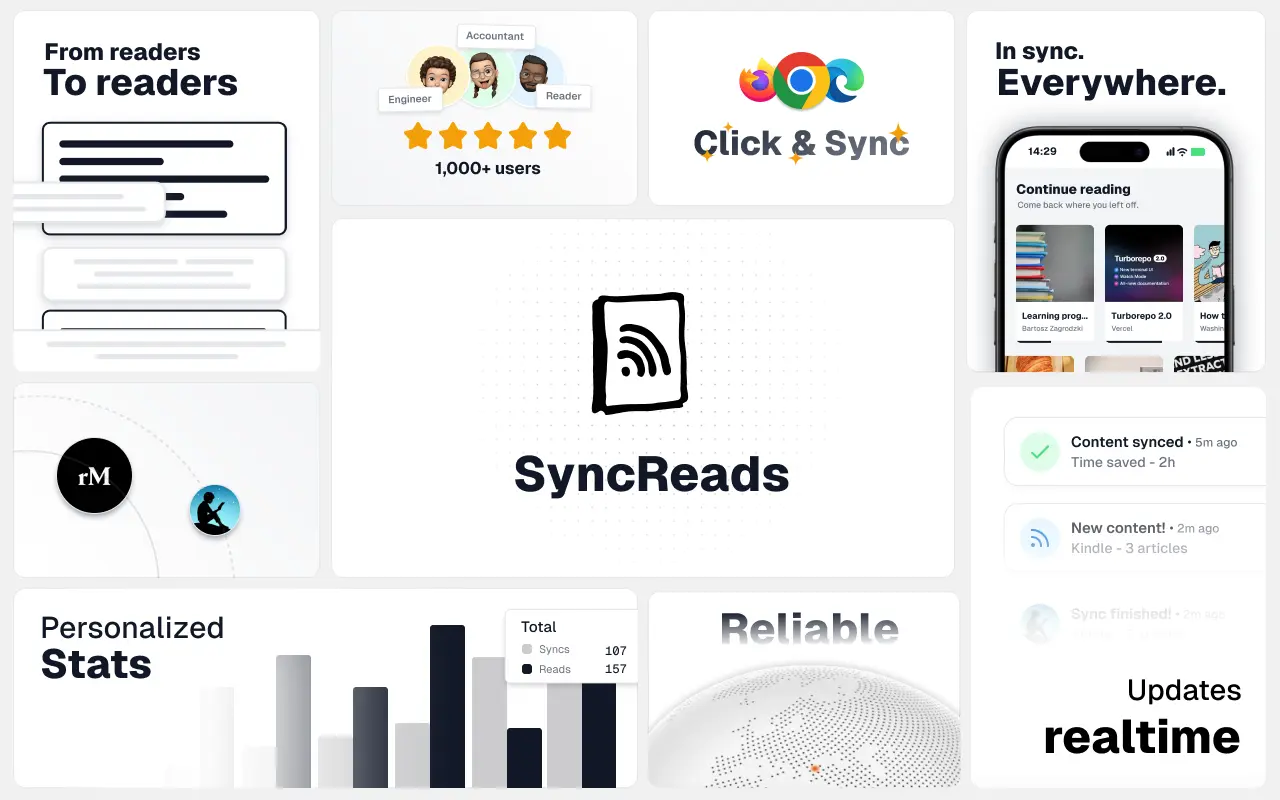
SyncReads
Sync your favorite content for distraction-free reading, save time and replace multiple apps. Anytime, anywhere 🔄
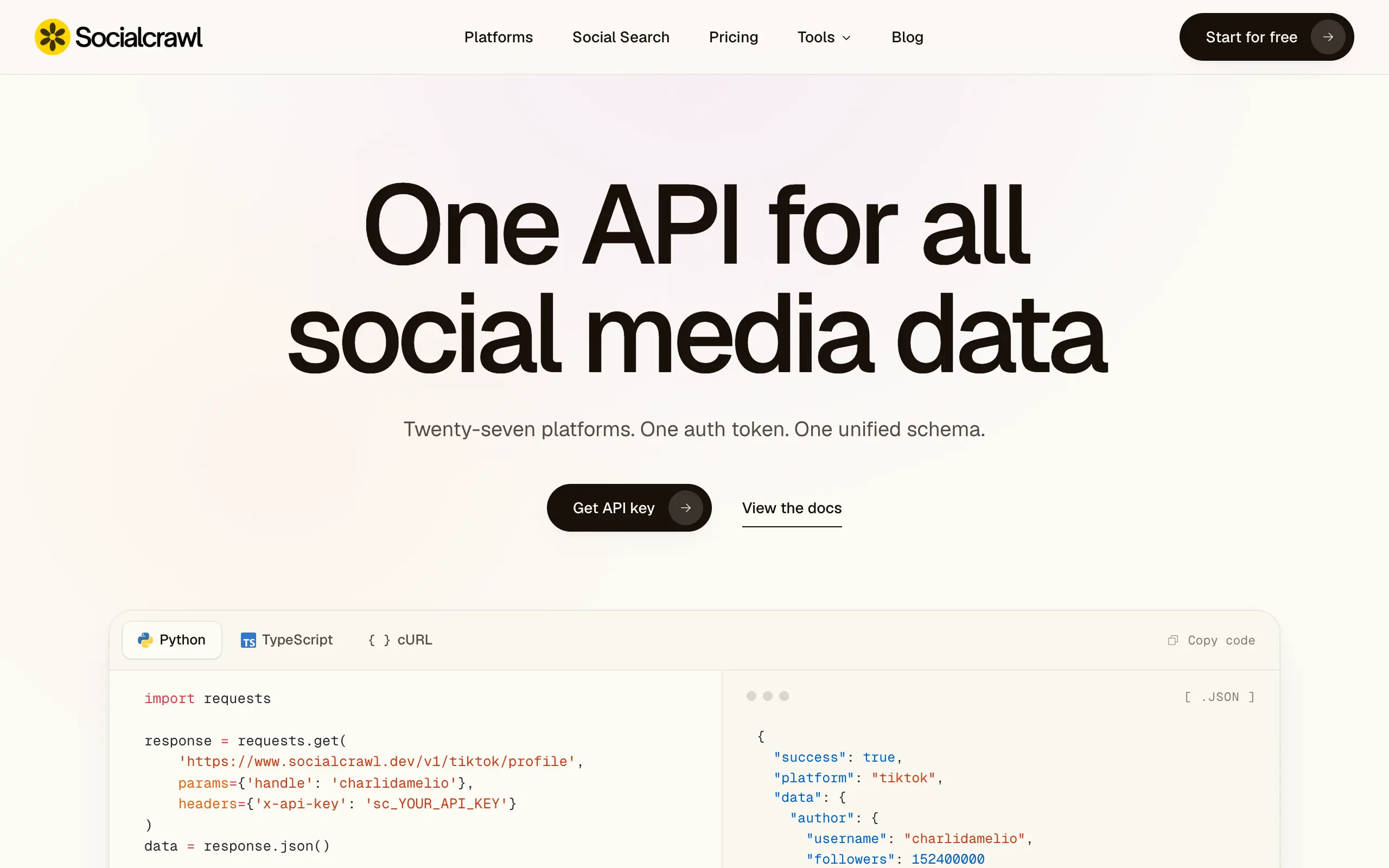
Socialcrawl
Get clean, structured data from 21 platforms like TikTok, Instagram, and YouTube with a single request 📊
Statiko
Monitor any Telegram channel in real time - track posts, edits, deletions, and growth with AI recaps 📡
Shibui
AI website builder - describe your business, pick a niche template, edit by chatting, and publish instantly ✨
Pro Service
Find verified home service professionals, compare quotes, and pay securely through escrow - built for Brazilians across the US 🏠
RankGrow
Fix your SEO with AI agents - connect Search Console, get prioritized tasks, and grow organic traffic 📈
SyncReads
Sync your favorite content for distraction-free reading, save time and replace multiple apps. Anytime, anywhere 🔄
Socialcrawl
Get clean, structured data from 21 platforms like TikTok, Instagram, and YouTube with a single request 📊
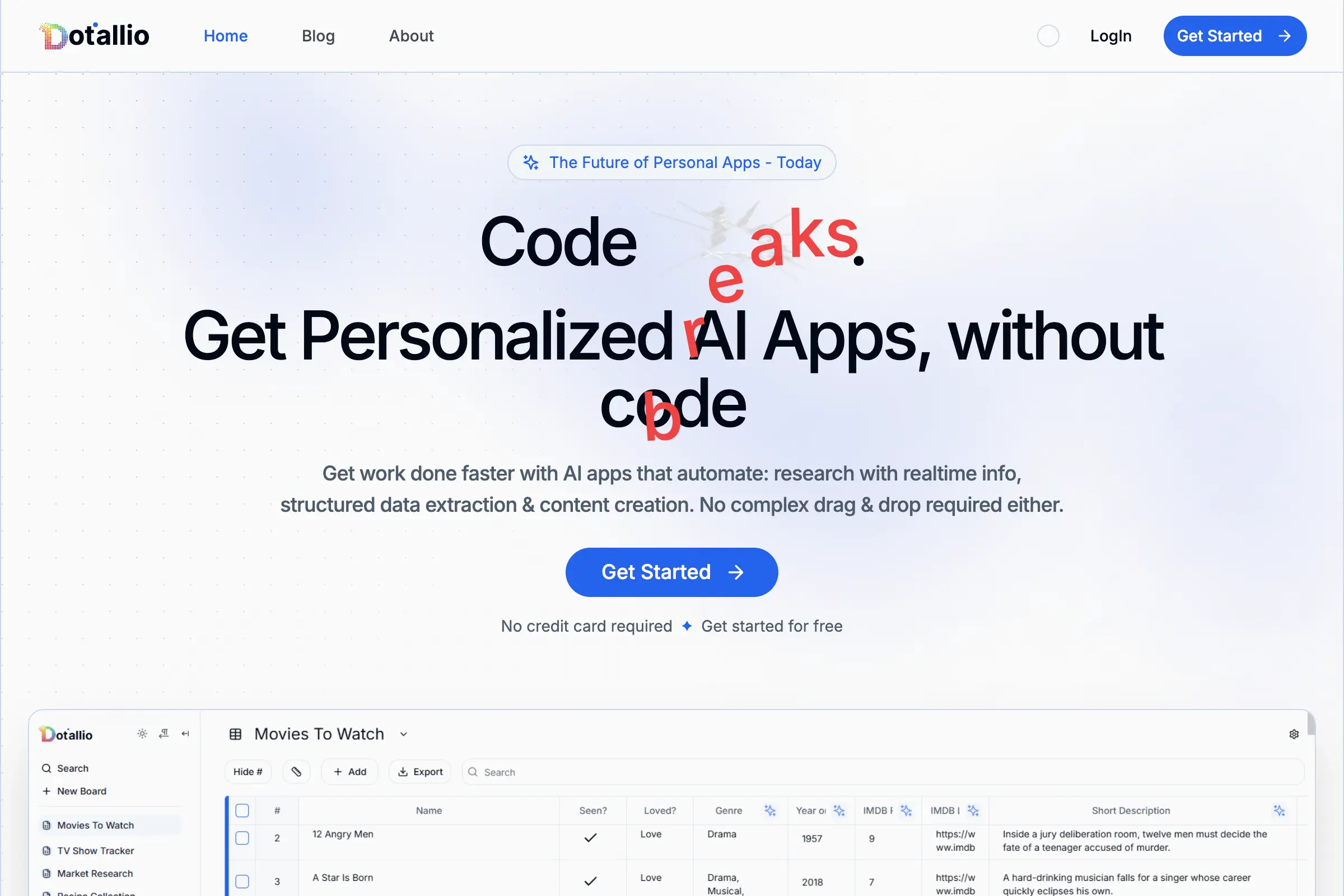
Dotallio
Personalized AI apps that automate research, data extraction, and content creation without code 🤖

Talk to Santa
Enjoy a magical live video chat or receive a unique AI-generated video greeting from Santa Claus 🎅

pozywka.pl
Scalable blog for food journalist, focused on performance and user experience 🌭
zagrodzki.me
Personal blog and portfolio of Bart Zagrodzki, where he shares his knowledge and work 💼

TurboStarter
Ship your startup everywhere. In minutes.
HTML to Markdown
Convert HTML to Markdown with ease, directly in your browser 📄
Dotallio
Personalized AI apps that automate research, data extraction, and content creation without code 🤖
Talk to Santa
Enjoy a magical live video chat or receive a unique AI-generated video greeting from Santa Claus 🎅
pozywka.pl
Scalable blog for food journalist, focused on performance and user experience 🌭
zagrodzki.me
Personal blog and portfolio of Bart Zagrodzki, where he shares his knowledge and work 💼
TurboStarter
Ship your startup everywhere. In minutes.
HTML to Markdown
Convert HTML to Markdown with ease, directly in your browser 📄
Omichat
Chat with 50+ AI models, including ChatGPT and Claude, in one place - switch models anytime without losing context 🤖
Claude Fast
Supercharge your Claude Code with 6x effective context window and specialized AI agents 🤖

EmojAI
AI-powered emoji picker with smart, context-aware suggestions 🤖

Solohacker
Autonomous company launcher - AI agents work 24/7, escalate what matters, and you stay in control 🤖

BeRawi: Storytelling Coach
Practice storytelling daily with instant feedback to sound clearer, more engaging, and confident 🎤
Omichat
Chat with 50+ AI models, including ChatGPT and Claude, in one place - switch models anytime without losing context 🤖
Claude Fast
Supercharge your Claude Code with 6x effective context window and specialized AI agents 🤖
EmojAI
AI-powered emoji picker with smart, context-aware suggestions 🤖
Solohacker
Autonomous company launcher - AI agents work 24/7, escalate what matters, and you stay in control 🤖
BeRawi: Storytelling Coach
Practice storytelling daily with instant feedback to sound clearer, more engaging, and confident 🎤

Connect with like-minded people
Join our community to get feedback, support, and grow together with 1,000+ builders on board, let's ship it!
Join usShip your startup everywhere. In minutes.
Don't burn tokens on setup and start building features on day one.