CareSignal
AI quality assurance for customer support teams that spots burnout, escalation risk, and coaching gaps before service levels and retention decline.
Why AI quality assurance for customer support teams is becoming essential
Customer support leaders are under pressure from every direction. Customers expect fast, accurate, empathetic answers across email, chat, phone, social, and self-service channels. Executives expect support to protect retention, identify product friction, and scale efficiently. Agents need clear coaching, manageable workloads, and a work environment that does not turn every difficult conversation into an invisible source of burnout.
Traditional quality assurance processes struggle to meet those expectations.
A QA manager may manually review a tiny fraction of interactions each month. Scorecards can capture whether agents followed a script, but they often miss the human signals that predict service decline. These signals include emotional fatigue, repeated customer frustration, escalation patterns, policy confusion, knowledge gaps, and recurring product defects.
CareSignal is a B2B SaaS concept built around a high-value problem: using AI quality assurance to identify burnout risk, escalation risk, and coaching gaps before customer experience, service levels, and retention deteriorate.
The opportunity is not simply to build another conversation analytics dashboard. The strongest version of CareSignal becomes an operational intelligence layer for customer support teams. It helps support leaders understand what is happening in every customer interaction, prioritize the issues that need intervention, and turn findings into practical coaching and workflow improvements.
The core product thesis
CareSignal should focus on early detection and action. It is more valuable to tell a support leader which agents, conversations, policies, or customer segments require attention this week than to provide another retrospective scorecard at the end of the month.
The primary keyword for this market is AI quality assurance for customer support teams. Related terms that should appear naturally across product messaging, landing pages, and educational content include:
- AI customer support QA
- customer service quality assurance software
- conversation intelligence for support teams
- support agent coaching software
- customer escalation detection
- contact center quality management
- agent burnout detection
- customer sentiment analysis
- automated QA scorecards
- customer support analytics
- service quality monitoring
- customer experience intelligence
The customer support QA problem CareSignal solves
Support organizations commonly have a monitoring problem rather than a data problem. They collect thousands or millions of conversations, tickets, CSAT responses, internal notes, and resolution records. Yet their quality programs still rely on sampled reviews, subjective scoring, disconnected reporting, and delayed coaching.
That creates several operational blind spots.
Manual QA only reviews a fraction of customer interactions
A support team handling 50,000 tickets per month cannot reasonably assess every interaction through a fully manual process. Even a strong QA team may review only a small sample, and samples can miss the conversations that matter most.
The missed interactions often include:
- A frustrated high-value customer who is close to churn
- An agent who is technically compliant but increasingly disengaged
- A policy that repeatedly produces long, circular customer exchanges
- A product issue that creates a sudden rise in repeat contacts
- A new team member who needs targeted coaching before poor habits become established
- An escalation pattern that has not yet surfaced in CSAT or leadership reporting
AI quality assurance expands coverage. It can review every interaction against consistent criteria, identify anomalies, and route the most important cases to humans for judgment.
Traditional scorecards do not measure the full customer experience
Many QA programs focus on easily measured compliance criteria. Did the agent verify identity? Did they include the approved closing? Did they follow a policy?
Those checks matter, especially in regulated industries. But they are insufficient when the goal is customer loyalty and agent performance improvement.
A meaningful AI QA platform should assess several dimensions together:
- Accuracy evaluates whether the answer aligns with approved knowledge and policy.
- Resolution quality evaluates whether the agent moved the customer toward a real outcome.
- Empathy and tone evaluate whether the interaction acknowledges the customer’s emotional context.
- Effort evaluates whether the customer had to repeat information, wait unnecessarily, or navigate avoidable friction.
- Risk evaluates language and patterns associated with escalation, churn, complaints, or regulatory exposure.
- Coachability identifies the most actionable behavior an agent can improve.
CareSignal’s opportunity is to connect these dimensions instead of treating them as separate reports.
Burnout appears in conversations before it appears in attrition reports
Support-agent burnout is difficult to detect because managers often see it only after it affects attendance, performance, internal engagement surveys, or resignations. By then, recovery can be expensive.
Conversation patterns can offer earlier signals, though they must never be treated as a diagnosis. Examples may include:
- Increasingly terse or formulaic replies
- A drop in personalization or empathy language
- Longer handling time for routine issues
- Higher transfer or escalation rates
- Frequent exposure to abusive or emotionally intense conversations
- A widening gap between an agent’s historical quality baseline and current performance
- Repeated coaching themes that have not improved despite feedback
CareSignal can frame this as an agent workload and support-risk signal, not a health assessment. The product should help leaders ask better questions, improve staffing and coaching, and offer support—not punish individuals based on opaque AI outputs.
Escalation risk needs intervention before a customer asks for a manager
Customer escalation is rarely caused by one sentence alone. It often develops through a sequence of unresolved issues, missed expectations, policy friction, delayed replies, and emotional signals.
An effective escalation detection system should consider:
- Customer language and sentiment changes
- Repeat contact history
- Account value or customer tier when appropriate
- SLA status and aging tickets
- Previous unresolved cases
- Product incident or known-bug context
- Agent response quality and confidence
- Explicit signals such as cancellation, chargeback, legal, complaint, or social media mentions
The product should then explain why a conversation has elevated risk. A bare risk score is not operationally useful. A support manager needs evidence, recommended action, and an owner.
Target audience for customer service quality assurance software
CareSignal should not market to “all companies with customer support” in its first release. The best initial customers are organizations where support interactions are strategically important, ticket volume is high enough for automation to matter, and leadership can connect quality improvements to retention or operational efficiency.
Primary buyer
VP of customer support, head of customer experience, contact center director, or customer operations leader responsible for quality, staffing, service levels, and retention outcomes.
Daily champion
QA manager, support operations manager, workforce manager, or enablement lead who needs practical workflows for reviews, coaching, calibration, and reporting.
End user
Team leads and support managers who need prioritized coaching opportunities, escalation alerts, and fair context for agent performance discussions.
Economic stakeholder
COO, chief customer officer, CFO, or revenue leader who values lower churn, fewer escalations, stronger productivity, and scalable quality control.
Best early customer segments
The highest-potential early segments generally share a meaningful support volume, a measurable cost of poor service, and enough process maturity to act on insights.
- B2B SaaS companies with high-touch onboarding, renewal-sensitive accounts, and multi-channel support teams
- Fintech and insurance companies that require consistent service, compliance awareness, and escalation management
- E-commerce and marketplaces that manage delivery issues, refunds, returns, seller disputes, and peak-volume fluctuations
- Health-adjacent service organizations that require careful privacy design and strong human review processes
- Travel and hospitality brands where disruptions create emotionally charged, time-sensitive support cases
- Telecommunications and utilities with large support volumes and substantial complaint or escalation risk
- Outsourced customer support providers that need to demonstrate service quality and coaching rigor to clients
A practical initial ideal customer profile could be a SaaS company with 30 to 500 support agents, at least 10,000 monthly customer conversations, an established help desk, and a leadership team already measuring CSAT, first response time, resolution time, or churn.
Jobs to be done for each stakeholder
CareSignal must translate technical analysis into stakeholder-specific outcomes.
| Stakeholder | Primary job | Current pain | CareSignal outcome | Proof metric |
|---|---|---|---|---|
| Support leader | Protect service quality at scale | Late visibility into quality decline | Early-warning operational dashboard | Lower escalation rate |
| QA manager | Review fairly and coach consistently | Small, inconsistent samples | 100% interaction coverage with evidence | More completed coaching actions |
| Team lead | Improve agent performance | Too many reports, too little context | Prioritized weekly coaching queue | Faster quality improvement |
| Executive sponsor | Reduce avoidable support costs and churn | Support data disconnected from outcomes | Links between service signals and business risk | Retention and efficiency gains |
Market gap and opportunity for CareSignal
The market includes established contact center quality management platforms, help desk reporting products, conversation intelligence tools, workforce engagement suites, and AI support automation vendors. That is validation that organizations will pay for better service intelligence.
However, there is still a clear product gap between retrospective quality reporting and proactive customer support risk management.
Where current tools often fall short
Many tools are designed around one primary function:
- Help desks manage tickets and workflows.
- Customer feedback platforms collect surveys and feedback.
- Workforce management tools forecast staffing and scheduling.
- QA tools score interactions against configured forms.
- AI agents deflect or automate simple inquiries.
- Conversation intelligence platforms summarize and search conversations.
CareSignal’s positioning should unify the missing layer: Which support interactions require action now, why do they matter, and what should a manager do next?
This orientation creates a more differentiated value proposition than generic sentiment analysis. Sentiment alone is noisy. A customer can use negative language while still receiving excellent help, or use polite language while being at serious churn risk. The product needs contextual, multi-signal analysis.
The most defensible market wedge
The recommended wedge is not “AI that scores every ticket.” That capability is increasingly expected.
A stronger wedge is:
CareSignal detects emerging service risk across customers, agents, and support processes, then converts that risk into explainable coaching and intervention workflows.
That wedge includes three interconnected surfaces:
- Customer risk intelligence for likely escalations, repeat contacts, unresolved issues, and retention-sensitive cases.
- Agent support intelligence for coaching gaps, workload strain signals, and quality trend changes.
- Operational intelligence for policies, macros, knowledge base gaps, and product issues that create recurring customer friction.
The combination is valuable because it avoids blaming individual agents for systemic problems. If ten agents struggle with the same billing policy, CareSignal should elevate the policy or product issue—not generate ten separate agent performance warnings.
Industry trends that strengthen demand
Several trends make AI customer support QA especially timely:
- Support teams are being asked to do more with constrained headcount.
- Customers increasingly move between channels and expect context continuity.
- Generative AI has made automated conversation analysis more accessible.
- Leadership teams are looking beyond CSAT because surveys have incomplete response rates and lagging indicators.
- AI governance expectations are rising, creating demand for explainable and auditable AI workflows.
- Support teams are increasingly recognized as a source of product, retention, and revenue intelligence.
For market validation content, reference current reports from reputable sources such as Gartner, Forrester, McKinsey, Zendesk, Salesforce, Intercom, or the Customer Contact Week research program. When citing a specific statistic, include publication name, report title, edition or year, and retrieval date in the final published article.
Core CareSignal features and solution design
The product should be built around an insight-to-action loop. Insights without workflow adoption become dashboards. Workflow tasks without trusted evidence become noise.
Unified conversation ingestion and normalization
CareSignal needs connectors for the systems support teams already use. Early integrations should prioritize the platforms most common in the chosen segment.
Recommended early sources include:
- Ticketing platforms such as Zendesk, Intercom, Freshdesk, or Salesforce Service Cloud
- Chat transcripts from web, in-app, and messaging support channels
- Email support conversations
- Voice transcripts from contact center providers
- CSAT, NPS, and customer feedback data
- CRM fields such as account tier, renewal date, plan type, and account owner
- Product incident and status information
- Internal knowledge bases and policy documentation
The ingestion layer should normalize events into a common interaction model. Each interaction should preserve channel metadata, timestamps, participants, ticket status, tags, conversation history, and relevant account context.
AI-powered automated QA scorecards
The automated QA engine should support flexible, versioned scorecards rather than a fixed proprietary standard. Every company has different policies, brand language, service promises, and risk requirements.
A useful scorecard configuration includes:
- Criteria descriptions written in business language
- Scoring guidance and severity levels
- Examples of passing and failing interactions
- Channel-specific rules for chat, email, and voice
- Mandatory compliance checks where applicable
- Confidence thresholds and human-review routing
- A version history for auditability
Each score should include evidence. For example, if the system identifies that an agent failed to set expectations, it should quote the relevant interaction segment and explain the missing behavior.
type QualityFinding = {
  criterion: "resolution" | "empathy" | "accuracy" | "process";
  score: number;
  confidence: number;
  evidence: string[];
  recommendedCoachingAction: string;
  requiresHumanReview: boolean;
};
The goal is not to replace quality managers. It is to help them spend their time on calibration, nuanced review, complex cases, and coaching rather than repetitive sampling.
Escalation risk detection
Escalation detection should prioritize precision, transparency, and workflow relevance.
A useful risk model can combine rules, machine learning, and LLM-based classification. Rules may detect direct phrases such as “cancel,” “chargeback,” “lawyer,” or “manager.” Statistical and AI models can identify less explicit patterns such as increasing dissatisfaction across repeated contacts, circular conversations, or an abrupt tone change.
Every alert should answer four questions:
- What happened with a concise summary of the risk
- Why it matters with the key signals and customer context
- What evidence supports it with linked conversation excerpts and historical events
- What to do next with a recommended intervention and accountable owner
Escalation workflows may include assigning a senior agent, alerting an account manager, applying a priority tag, reviewing a refund decision, or creating a product bug report.
Burnout and workload-risk signals
This module must be designed with exceptional care. CareSignal should never present itself as a medical, psychological, or employment-decision system. It should not diagnose burnout, infer protected characteristics, or recommend disciplinary action based solely on AI analysis.
Instead, it can surface workload and support-risk indicators at a team or managerial level.
Examples include:
- Unusually high exposure to abusive or emotionally intense conversations
- Sustained increases in workload complexity
- Rapid performance changes relative to an agent’s personal baseline
- Higher-than-usual after-contact work or transfer behavior
- Repeated quality issues concentrated during particular shifts or queues
- Low recovery time after high-volume incident periods
The product language should encourage supportive action. Suggested interventions could include workload redistribution, additional coverage, targeted enablement, shift adjustments, manager check-ins, or policy clarification.
Do not turn agent support signals into automated discipline
AI-generated risk signals should trigger human review and supportive management practices. Build explicit guardrails that prohibit use as the sole basis for performance ratings, termination, compensation, or other high-impact employment decisions.
Coaching intelligence and closed-loop improvement
Coaching is where CareSignal becomes sticky. A manager does not need another list of low scores. They need a realistic way to improve performance.
The coaching workspace should provide:
- A weekly prioritized coaching queue for each team lead
- A concise summary of the observed pattern
- Conversation examples that demonstrate the behavior
- Suggested coaching prompts tailored to the gap
- Recommended micro-learning or knowledge content
- A place to record the coaching session
- A follow-up window to measure whether the behavior improved
- Calibration workflows when managers disagree with an AI finding
This closed loop allows CareSignal to prove that its analysis is changing outcomes rather than merely reporting them.
Root-cause analysis for operational problems
The most strategic feature may be the ability to aggregate repeated interaction failures into systemic insights.
For example, CareSignal could identify that:
- Refund-related tickets have an escalating repeat-contact rate.
- New agents are consistently misapplying a subscription policy.
- A product release created confusion around a feature.
- A specific macro correlates with low resolution quality.
- Customers in one region are experiencing longer delays.
- A top cancellation reason is increasing after a billing workflow change.
This turns support QA into a source of actionable voice-of-customer intelligence for product, operations, and revenue teams.
Recommended tech stack for CareSignal
CareSignal needs a stack that supports secure multi-tenant SaaS delivery, asynchronous processing, reliable integrations, human-in-the-loop review, and evolving AI evaluation methods.
A pragmatic stack for an early-stage product could include React and Next.js for the web application, TypeScript for end-to-end type safety, PostgreSQL for core relational data, and Tailwind CSS for a fast, consistent UI system.
Suggested architecture
Use Next.js for the dashboard, authenticated workspace, configuration screens, and server-rendered marketing pages. Build backend APIs around clear domain boundaries such as integrations, conversations, scoring, alerts, coaching, and reporting.
For early teams, a modular monolith is usually faster and easier to operate than microservices. Split services only when scale, isolation requirements, or team structure clearly justify the operational complexity.
Store tenant data, user permissions, scorecards, workflows, and structured interaction metadata in PostgreSQL. Use object storage for raw transcript artifacts where necessary. Add a queue system for connector synchronization, transcription imports, scoring jobs, retries, and alert generation.
For retrieval-augmented generation, index approved knowledge base content and policy documents in a vector-capable retrieval layer. Keep source citations so the model can show which internal policy informed a quality or accuracy assessment.
Implement tenant isolation, role-based access control, SSO, encryption in transit and at rest, audit logs, retention controls, and configurable redaction before processing sensitive data.
Operationally, monitor model cost, latency, score drift, integration failures, alert volumes, and disagreement rates between AI and human reviewers. These are product-quality metrics, not merely engineering metrics.
AI approach and trade-offs
A hybrid AI approach is more reliable than relying on a single large language model prompt.
- Deterministic rules are best for explicit compliance checks, keyword-based risk triggers, and known workflow conditions.
- Traditional machine learning can be effective for classification tasks with sufficient labeled data and predictable throughput needs.
- LLMs are valuable for nuanced summaries, rubric-based evaluations, coaching suggestions, and unstructured pattern discovery.
- Human review remains essential for disputed findings, sensitive decisions, low-confidence classifications, and ongoing calibration.
The trade-off is clear. LLMs provide flexibility and speed but can produce inconsistent outputs, introduce cost variability, and require careful evaluation. Deterministic systems are predictable but can be brittle and harder to maintain as policies change.
CareSignal should use structured outputs, confidence scoring, retrieval citations, evaluation datasets, and prompt versioning. Never deploy a new model or prompt version without comparing it against a representative, human-labeled benchmark set.
Build versus buy decisions
For an MVP, buy or adopt managed infrastructure for commodity requirements such as authentication, observability, email delivery, billing, and background jobs. Build the proprietary layer around conversation normalization, risk logic, QA workflows, calibration, and coaching intelligence.
A production-ready SaaS foundation can reduce time spent rebuilding standard account, team, subscription, and dashboard functionality. TurboStarter is relevant for teams that want to accelerate the SaaS application foundation and invest more engineering time in CareSignal’s differentiated intelligence workflows.
Monetization strategy for AI customer support QA
CareSignal should use pricing that aligns with customer value while keeping AI processing costs understandable.
Recommended pricing model
A hybrid model is likely the strongest option:
- A platform fee based on workspace size or support organization tier
- A per-agent monthly fee for active users or monitored agents
- An interaction-volume allowance for analyzed conversations
- Usage-based overages for unusually high volume or voice transcription
- Premium modules for advanced integrations, custom governance, or enterprise analytics
This model avoids the downside of pure per-seat pricing, which can discourage a customer from covering all agents. It also avoids the unpredictability of a fully usage-based model for teams that need budget certainty.
Example packaging approach
- Starter supports smaller support teams with one help desk integration, automated QA, basic scorecards, and weekly coaching insights.
- Growth adds multi-channel analysis, escalation risk detection, CRM enrichment, custom scorecards, root-cause analysis, and deeper reporting.
- Enterprise adds SSO, advanced permissions, data retention controls, audit logs, dedicated environments where needed, custom integrations, priority support, and security review support.
Avoid pricing solely around generic “AI credits.” Buyers care about coverage, coaching time saved, fewer escalations, and better service outcomes. Those are the units of value that should anchor sales conversations.
Proving return on investment
CareSignal should include an ROI framework during onboarding. The calculation can estimate value from:
- Reduced manual QA review time
- Increased interaction coverage
- Fewer customer escalations
- Lower repeat-contact rates
- Faster targeted coaching cycles
- Reduced avoidable refunds or concessions
- Better retention for high-value customer accounts
- Faster identification of product and policy issues
The product should be careful not to promise unsupported results. Instead, establish a baseline, agree on target metrics, and report observed changes over a defined pilot period.
Competitive advantage and differentiation
CareSignal can compete effectively if it avoids becoming a generic AI dashboard.
Its primary competitive advantage is the connection between customer risk, agent experience, quality performance, and operational root causes.
What makes CareSignal distinct
| Capability | Basic QA tool | Conversation analytics tool | CareSignal position | Business value |
|---|---|---|---|---|
| Interaction review | Sampled scorecards | Search and summaries | Full-coverage, evidence-based QA | Fewer blind spots |
| Escalation management | Manual tags | Sentiment reporting | Explainable early-risk workflows | Faster intervention |
| Agent improvement | Low-score reporting | Coaching notes | Prioritized closed-loop coaching | More durable behavior change |
| Root cause | Limited aggregation | Topic trends | Links issues to policies, products, and queues | Systemic fixes |
The longer-term moat comes from a proprietary feedback loop:
- The platform ingests interaction and outcome data.
- Human reviewers calibrate findings and correct mistakes.
- CareSignal learns which signals matter for each customer environment.
- Coaching interventions are tracked.
- The system measures whether actions improved quality, risk, and resolution outcomes.
- Product and policy insights become increasingly specific to the organization.
That loop creates switching costs because the system becomes more useful as it learns a customer’s service standards, quality rubric, organizational vocabulary, and historical patterns.
Risks, governance, and mitigation
A platform analyzing customer conversations and employee performance signals must earn trust. Security, fairness, explainability, and governance are core product requirements.
Mitigate this with confidence thresholds, human-review queues, rubric-specific evaluation sets, calibration sessions, versioned prompts, and evidence attached to every finding. Let customers override findings and use those overrides as evaluation data.
Use supportive product language, minimize individual-level sensitivity, allow team-level aggregation, and create explicit policy controls. Customers should be able to configure which insights are visible to managers and which require HR or compliance approval.
Apply data minimization, redaction, encryption, access controls, retention settings, and audit logging. Support regional data requirements where commercially necessary. Conduct security reviews before enterprise expansion.
Rank alerts by likely business impact, group related cases, suppress duplicates, and require a clear recommended action. Measure alert acceptance, resolution, and dismissal rates to improve prioritization.
Start with a pilot that has a defined baseline, clear success metrics, and an executive sponsor. Report leading indicators such as QA coverage and coaching completion alongside lagging indicators such as escalations and repeat contacts.
Responsible AI principles for CareSignal
Publish and operationalize a responsible AI policy. It should include:
- Human accountability for consequential decisions
- Explainability through evidence and clear reasons
- Continuous testing for performance and bias
- Data minimization and customer-controlled retention
- Access controls based on user role and business need
- Clear disclosure of what the system does and does not infer
- Mechanisms to challenge, correct, and appeal AI findings
- Restrictions on use for high-impact employment decisions
For enterprise trust, plan a roadmap toward recognized security practices and independent assessments appropriate to the target market. Work with qualified legal, privacy, security, and HR professionals for regional requirements and employment-related product design.
Go-to-market strategy for CareSignal
The initial go-to-market should be narrow, consultative, and proof-driven.
Lead with an escalation and coaching audit
A strong acquisition offer is a limited-time support quality diagnostic. With customer permission and appropriate data handling, analyze a representative conversation sample and present findings such as:
- Estimated QA coverage gaps
- Common escalation triggers
- Repeated policy or knowledge failures
- High-friction support topics
- Coaching opportunities by team or queue
- Potential indicators of workload strain
- Recommended operational actions
This approach makes the product tangible before asking buyers to believe broad AI claims.
Content strategy for organic search
To rank for AI quality assurance for customer support teams, publish content that answers operational questions support leaders actively search for.
High-intent article topics include:
- How to build an AI customer support QA program
- Customer service QA scorecard examples for chat and email
- How to detect customer escalation risk from support tickets
- How to improve support agent coaching with conversation analysis
- Manual QA versus automated QA for customer support
- Customer support quality metrics beyond CSAT
- How to reduce repeat contacts through support root-cause analysis
- Responsible AI guidelines for customer service quality management
Support these articles with templates, scorecard examples, coaching frameworks, implementation checklists, and integration-specific landing pages. Use real operational expertise, clearly distinguish recommendations from verified data, and cite authoritative research when making statistical claims.
Partnership opportunities
Potential distribution partners include:
- Customer support consultancies
- BPO and outsourced support providers
- Help desk implementation agencies
- Customer experience advisory firms
- Customer success communities
- Contact center technology consultants
Partners can help CareSignal reach organizations already investing in service transformation while adding implementation expertise that an early-stage software company may not yet offer internally.
A practical implementation roadmap
The fastest path is to build a narrow, trustworthy product that solves one painful workflow extremely well.
Choose one ideal customer profile, such as B2B SaaS support teams with 50 to 300 agents using Zendesk or Intercom. Interview at least 15 support leaders, QA managers, and team leads about sampling, escalation handling, coaching, and reporting workflows.
Build one reliable integration and a normalized conversation data model. Prioritize clean ingestion, permissions, retries, and data provenance before expanding integration breadth.
Launch automated QA for a limited set of high-confidence criteria, such as resolution clarity, expectation setting, policy accuracy, and required process steps. Include evidence, confidence, and human review from day one.
Add escalation-risk detection with transparent explanations and an intervention workflow. Measure whether alerts are accepted, acted on, and associated with better customer outcomes.
Introduce coaching queues that turn repeated findings into manager-ready action plans. Track whether coaching was completed and whether the targeted behavior improved.
Add root-cause analysis after enough interaction data and feedback loops exist. Connect recurring support failures to product areas, knowledge content, policies, macros, and operational queues.
Expand into enterprise capabilities, including SSO, audit logs, retention controls, advanced roles, evaluation management, and governance reporting.
The MVP should aim to prove three outcomes within a pilot:
- More customer interactions are reviewed than under manual QA.
- Managers receive fewer but more actionable quality and escalation insights.
- Coaching and operational interventions can be tied to measurable service improvements.
Final perspective
CareSignal has a compelling opportunity because customer support organizations need more than automation and retrospective reporting. They need early signals that help them protect customers, support agents, and correct operational problems before those problems become costly.
The winning product will not claim to replace human judgment. It will make human judgment more scalable, consistent, and actionable.
By positioning CareSignal as an AI quality assurance platform for customer support teams that detects escalation risk, coaching gaps, and workload strain signals with evidence and governance, the business can occupy a valuable category intersection. It sits between customer experience analytics, QA automation, support operations, and responsible AI-enabled workforce support.
The path to differentiation is clear: analyze every interaction, explain what matters, prioritize action, close the coaching loop, and reveal the systemic issues that traditional QA programs leave hidden.
More 🏢 B2B Application SaaS ideas
Discover more innovative b2b application SaaS ideas that are trending in 2026. Each idea is AI-generated with market validation and growth potential to help you find your next profitable venture faster than competitors.
Your competitors are building with TurboStarter
Below are some of the SaaS ideas that have been generated and built with our starter kit.
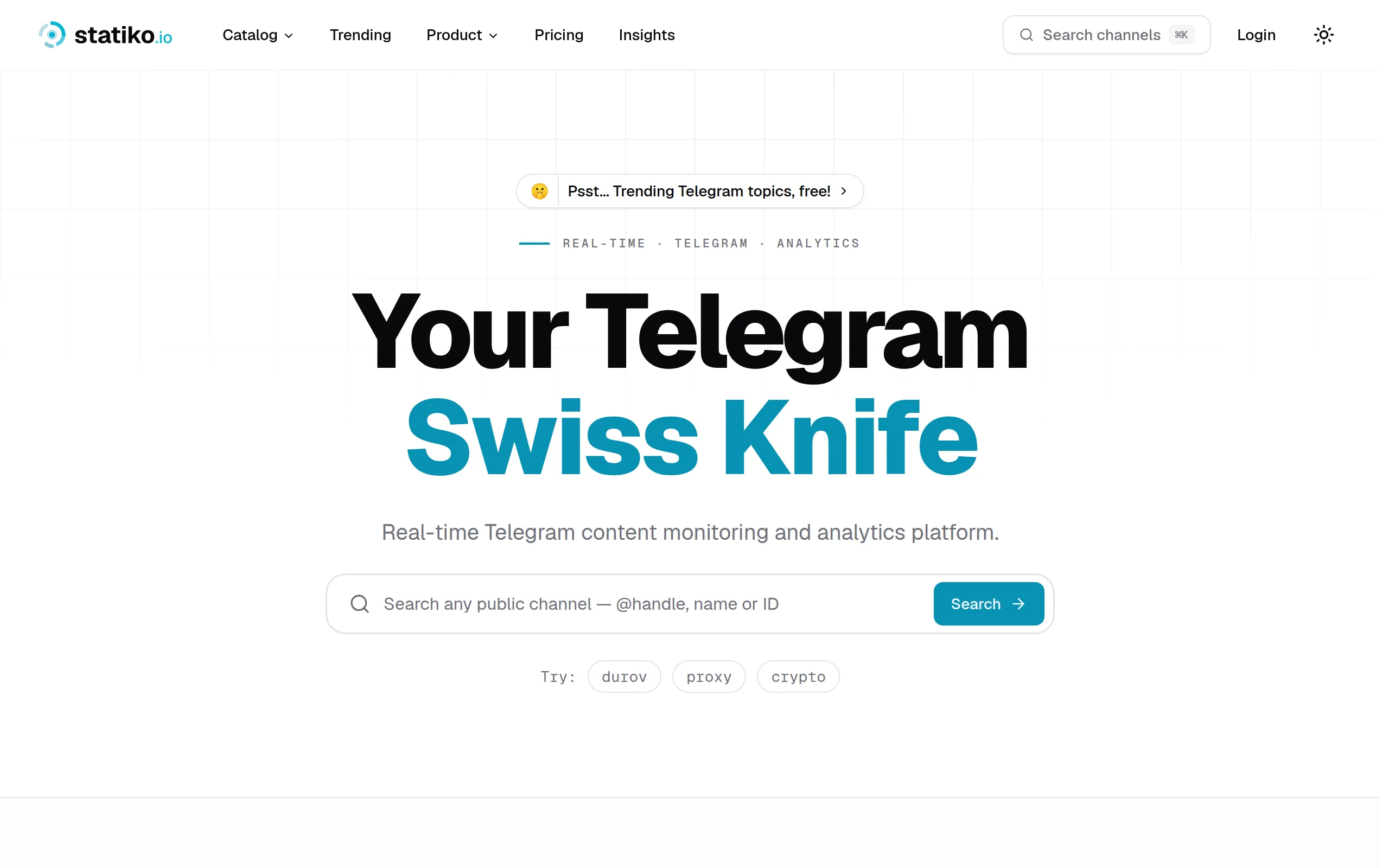
Statiko
Monitor any Telegram channel in real time - track posts, edits, deletions, and growth with AI recaps 📡

Shibui
AI website builder - describe your business, pick a niche template, edit by chatting, and publish instantly ✨
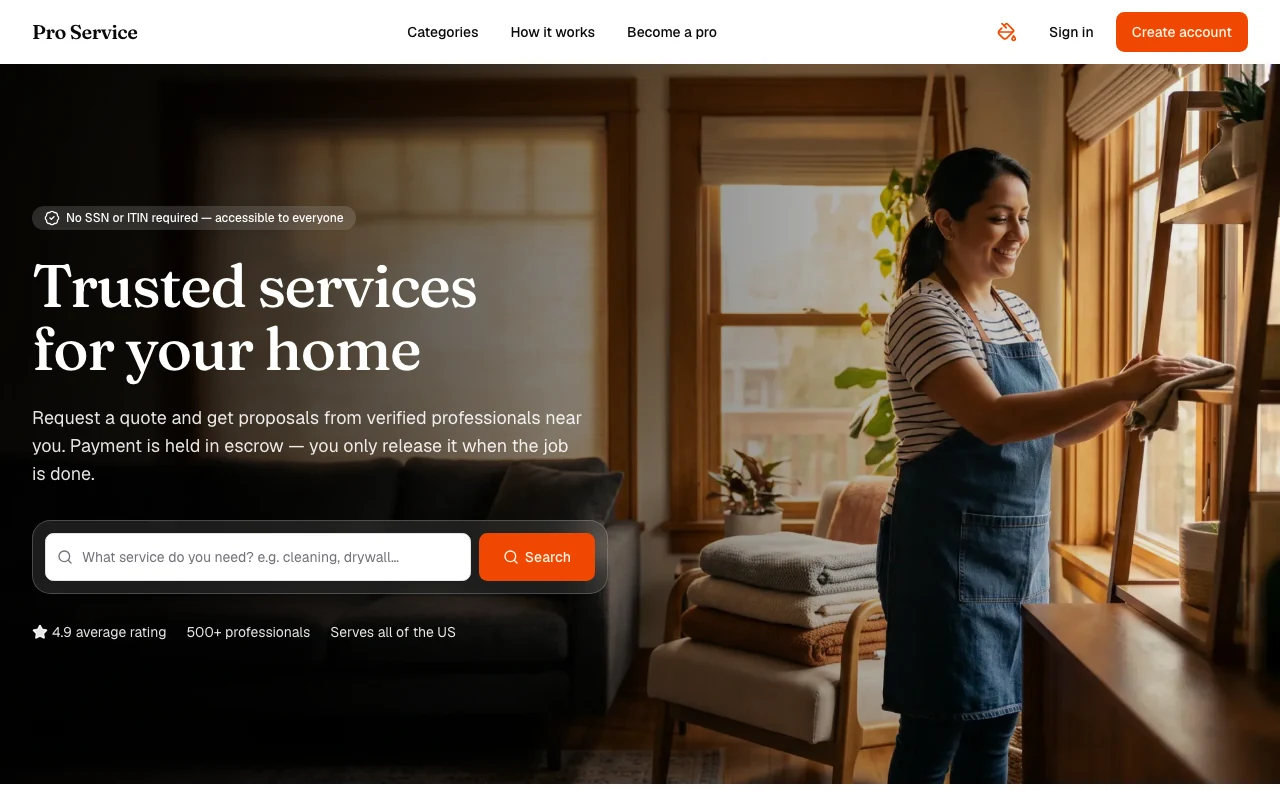
Pro Service
Find verified home service professionals, compare quotes, and pay securely through escrow - built for Brazilians across the US 🏠
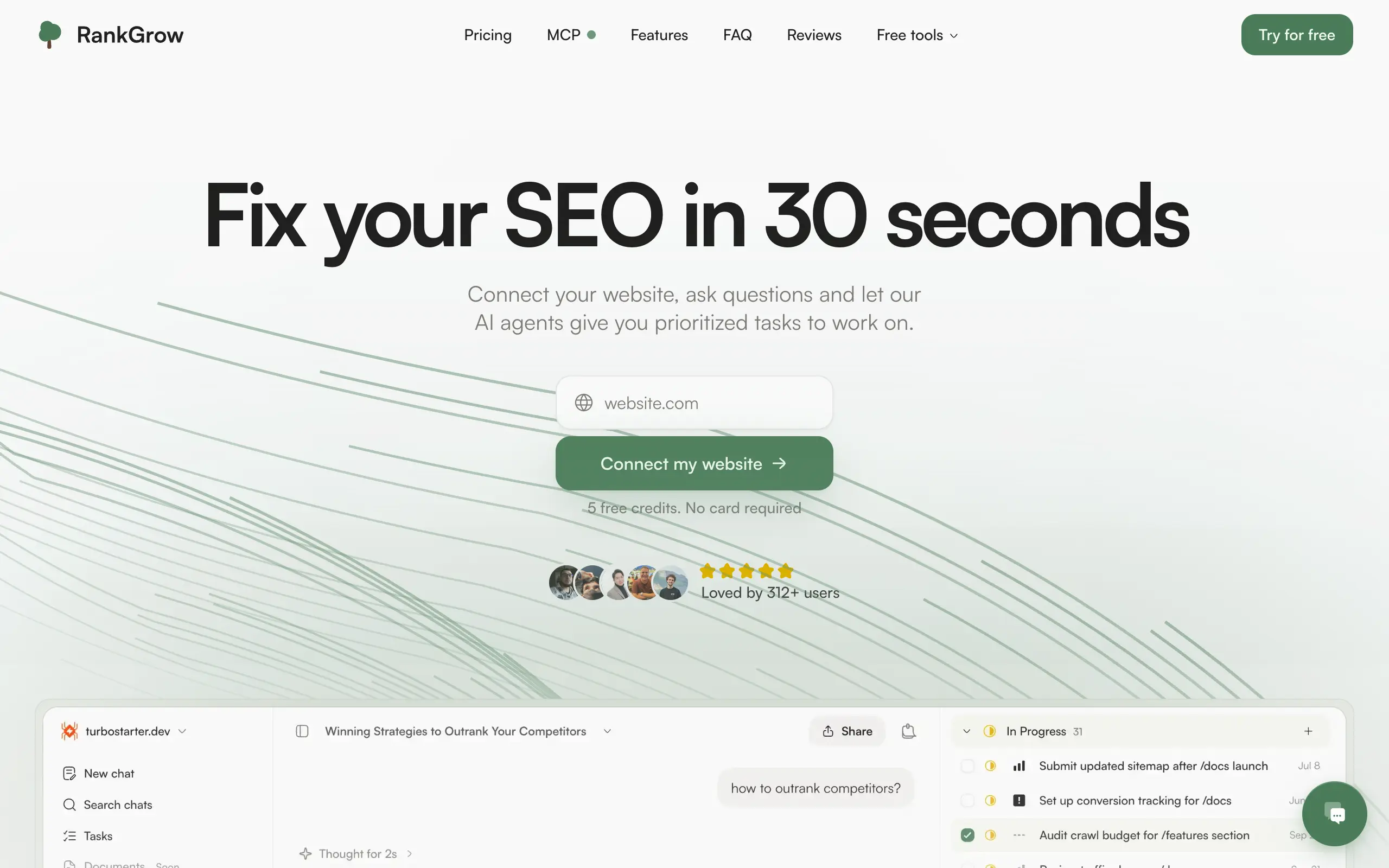
RankGrow
Fix your SEO with AI agents - connect Search Console, get prioritized tasks, and grow organic traffic 📈
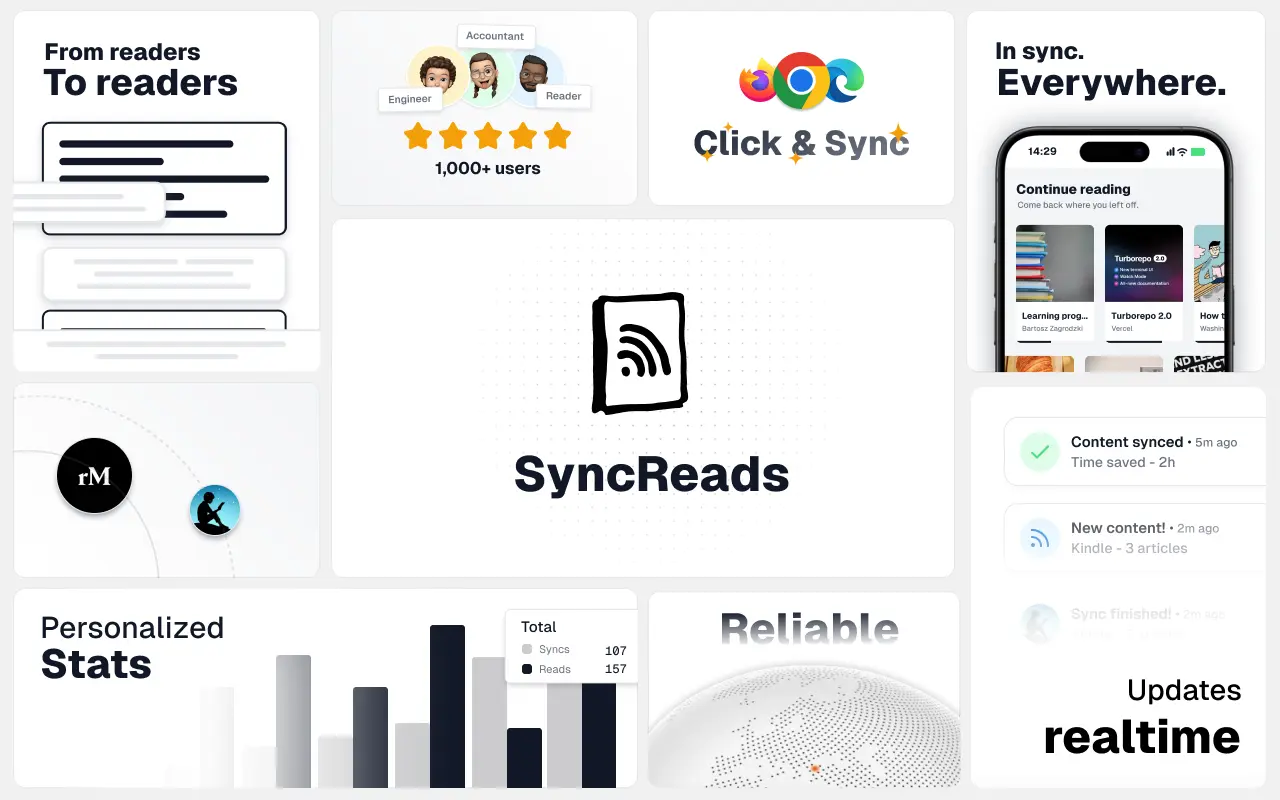
SyncReads
Sync your favorite content for distraction-free reading, save time and replace multiple apps. Anytime, anywhere 🔄
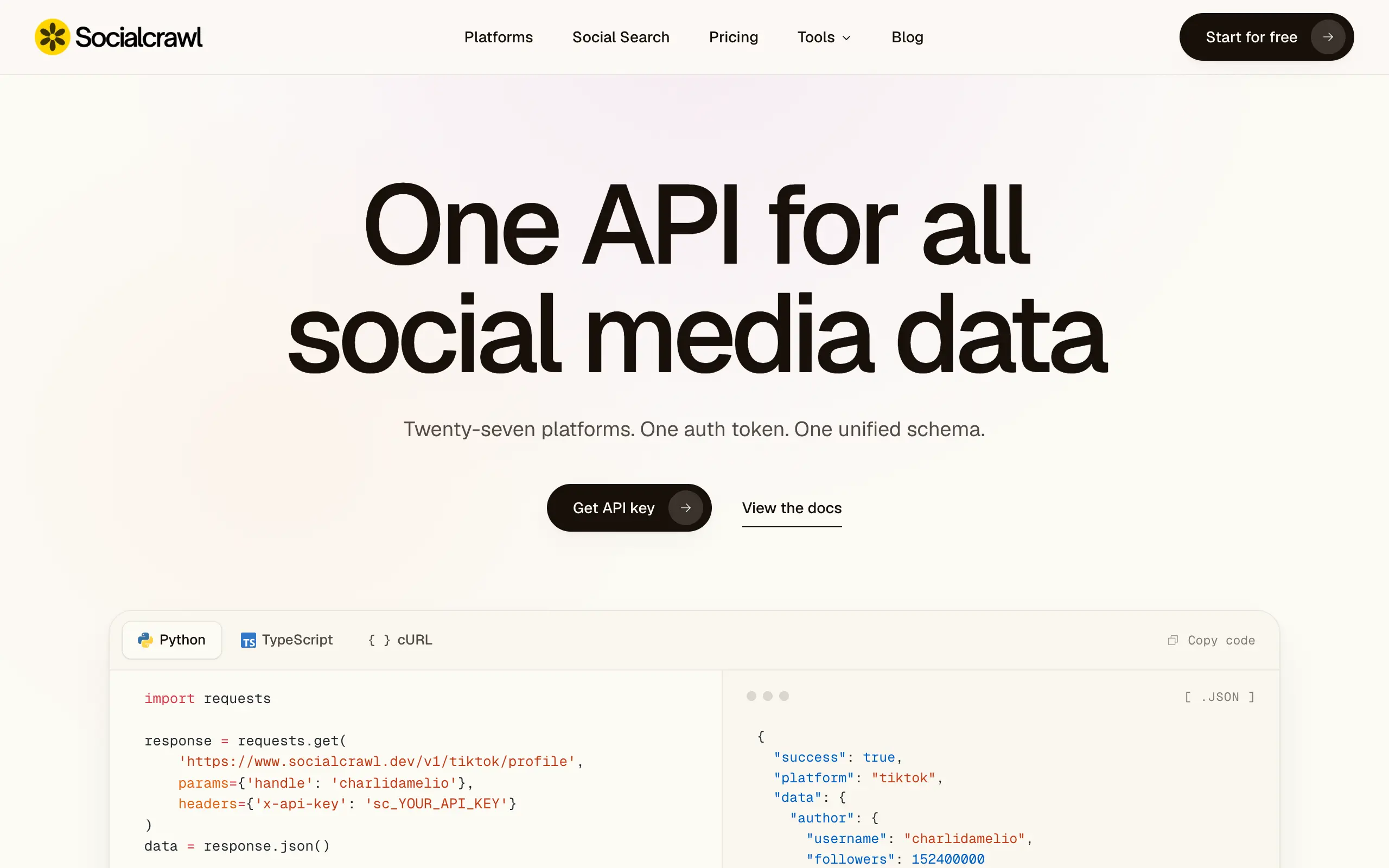
Socialcrawl
Get clean, structured data from 21 platforms like TikTok, Instagram, and YouTube with a single request 📊
Statiko
Monitor any Telegram channel in real time - track posts, edits, deletions, and growth with AI recaps 📡
Shibui
AI website builder - describe your business, pick a niche template, edit by chatting, and publish instantly ✨
Pro Service
Find verified home service professionals, compare quotes, and pay securely through escrow - built for Brazilians across the US 🏠
RankGrow
Fix your SEO with AI agents - connect Search Console, get prioritized tasks, and grow organic traffic 📈
SyncReads
Sync your favorite content for distraction-free reading, save time and replace multiple apps. Anytime, anywhere 🔄
Socialcrawl
Get clean, structured data from 21 platforms like TikTok, Instagram, and YouTube with a single request 📊
Statiko
Monitor any Telegram channel in real time - track posts, edits, deletions, and growth with AI recaps 📡
Shibui
AI website builder - describe your business, pick a niche template, edit by chatting, and publish instantly ✨
Pro Service
Find verified home service professionals, compare quotes, and pay securely through escrow - built for Brazilians across the US 🏠
RankGrow
Fix your SEO with AI agents - connect Search Console, get prioritized tasks, and grow organic traffic 📈
SyncReads
Sync your favorite content for distraction-free reading, save time and replace multiple apps. Anytime, anywhere 🔄
Socialcrawl
Get clean, structured data from 21 platforms like TikTok, Instagram, and YouTube with a single request 📊
Statiko
Monitor any Telegram channel in real time - track posts, edits, deletions, and growth with AI recaps 📡
Shibui
AI website builder - describe your business, pick a niche template, edit by chatting, and publish instantly ✨
Pro Service
Find verified home service professionals, compare quotes, and pay securely through escrow - built for Brazilians across the US 🏠
RankGrow
Fix your SEO with AI agents - connect Search Console, get prioritized tasks, and grow organic traffic 📈
SyncReads
Sync your favorite content for distraction-free reading, save time and replace multiple apps. Anytime, anywhere 🔄
Socialcrawl
Get clean, structured data from 21 platforms like TikTok, Instagram, and YouTube with a single request 📊
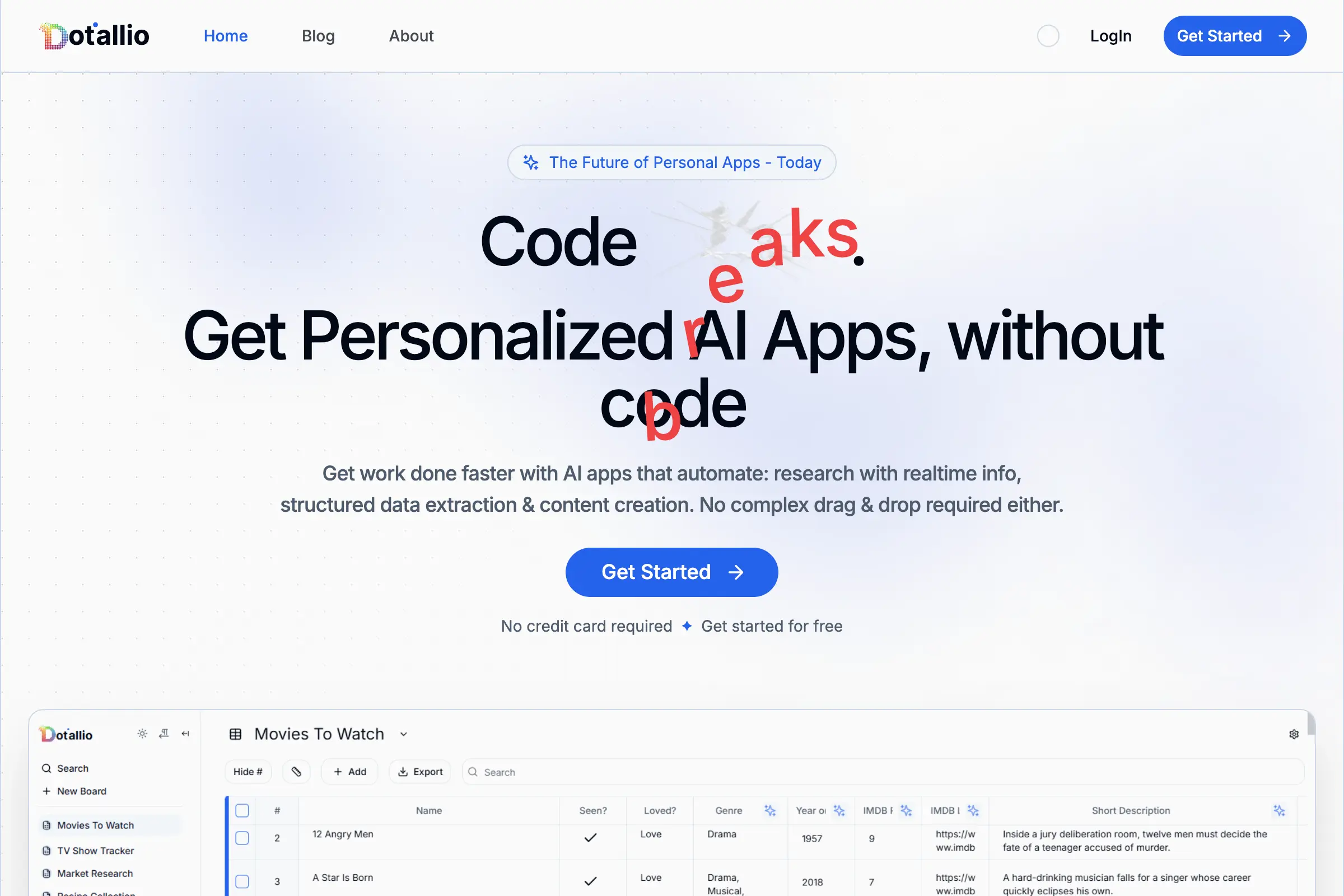
Dotallio
Personalized AI apps that automate research, data extraction, and content creation without code 🤖
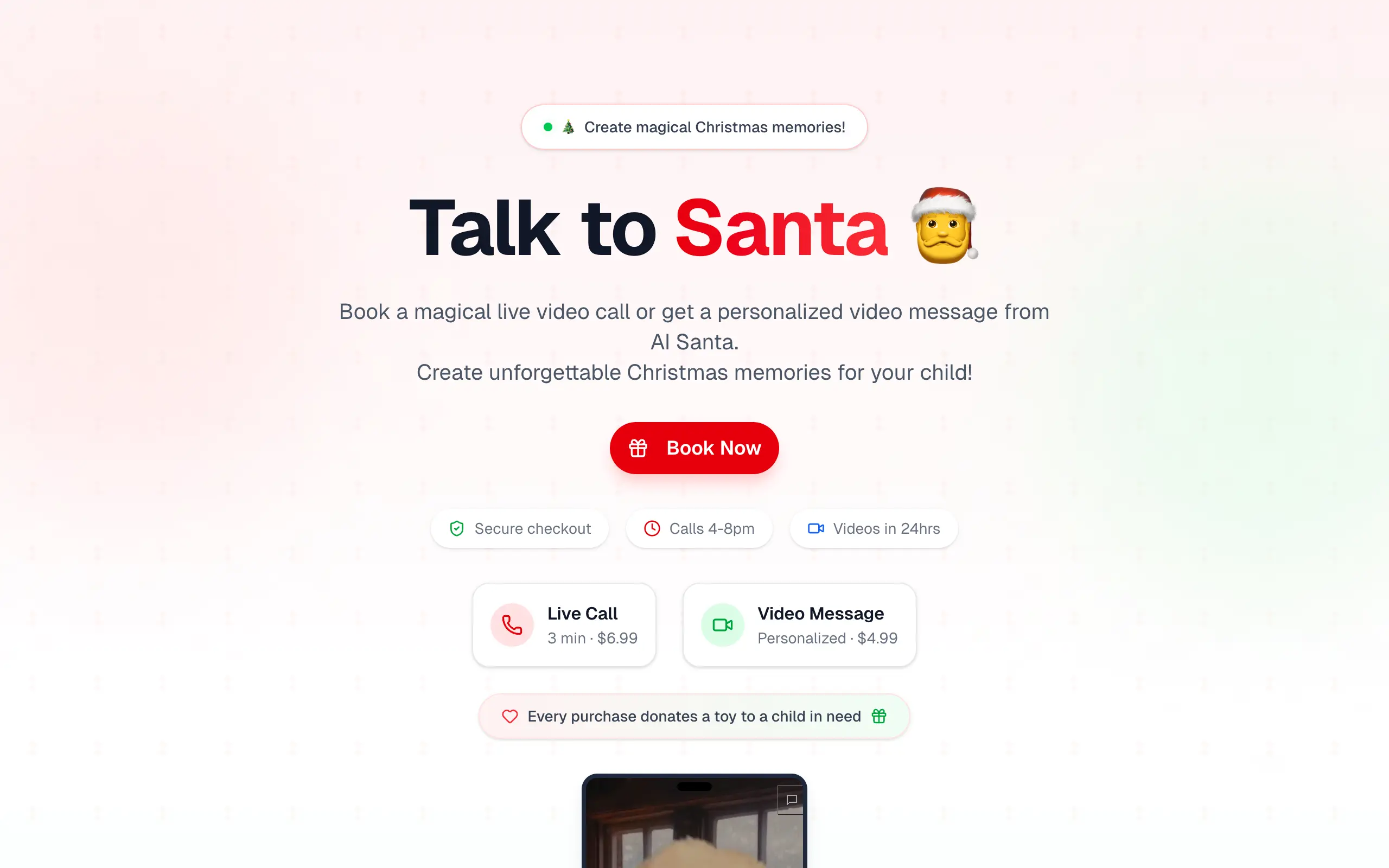
Talk to Santa
Enjoy a magical live video chat or receive a unique AI-generated video greeting from Santa Claus 🎅
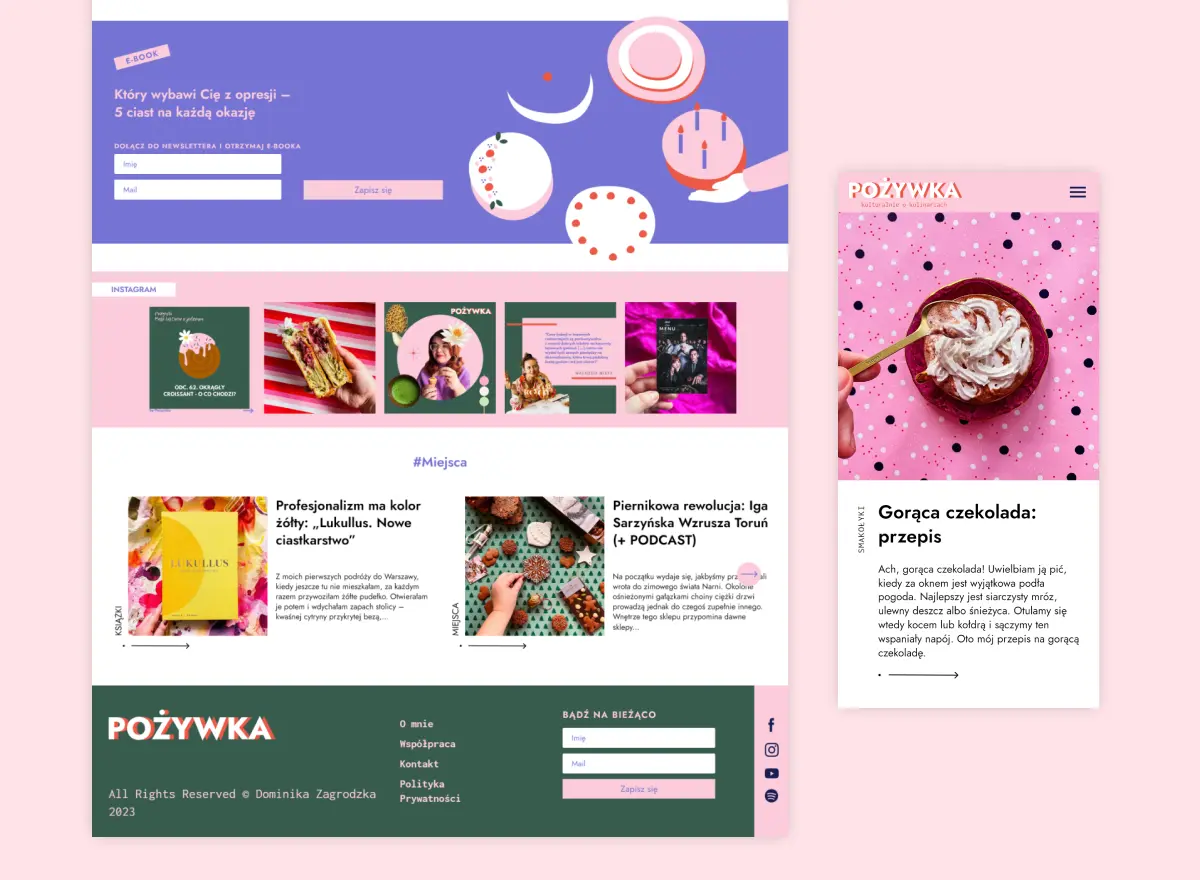
pozywka.pl
Scalable blog for food journalist, focused on performance and user experience 🌭
zagrodzki.me
Personal blog and portfolio of Bart Zagrodzki, where he shares his knowledge and work 💼
TurboStarter
Ship your startup everywhere. In minutes.
HTML to Markdown
Convert HTML to Markdown with ease, directly in your browser 📄
Dotallio
Personalized AI apps that automate research, data extraction, and content creation without code 🤖
Talk to Santa
Enjoy a magical live video chat or receive a unique AI-generated video greeting from Santa Claus 🎅
pozywka.pl
Scalable blog for food journalist, focused on performance and user experience 🌭
zagrodzki.me
Personal blog and portfolio of Bart Zagrodzki, where he shares his knowledge and work 💼
TurboStarter
Ship your startup everywhere. In minutes.
HTML to Markdown
Convert HTML to Markdown with ease, directly in your browser 📄
Dotallio
Personalized AI apps that automate research, data extraction, and content creation without code 🤖
Talk to Santa
Enjoy a magical live video chat or receive a unique AI-generated video greeting from Santa Claus 🎅
pozywka.pl
Scalable blog for food journalist, focused on performance and user experience 🌭
zagrodzki.me
Personal blog and portfolio of Bart Zagrodzki, where he shares his knowledge and work 💼
TurboStarter
Ship your startup everywhere. In minutes.
HTML to Markdown
Convert HTML to Markdown with ease, directly in your browser 📄
Dotallio
Personalized AI apps that automate research, data extraction, and content creation without code 🤖
Talk to Santa
Enjoy a magical live video chat or receive a unique AI-generated video greeting from Santa Claus 🎅
pozywka.pl
Scalable blog for food journalist, focused on performance and user experience 🌭
zagrodzki.me
Personal blog and portfolio of Bart Zagrodzki, where he shares his knowledge and work 💼
TurboStarter
Ship your startup everywhere. In minutes.
HTML to Markdown
Convert HTML to Markdown with ease, directly in your browser 📄
Omichat
Chat with 50+ AI models, including ChatGPT and Claude, in one place - switch models anytime without losing context 🤖
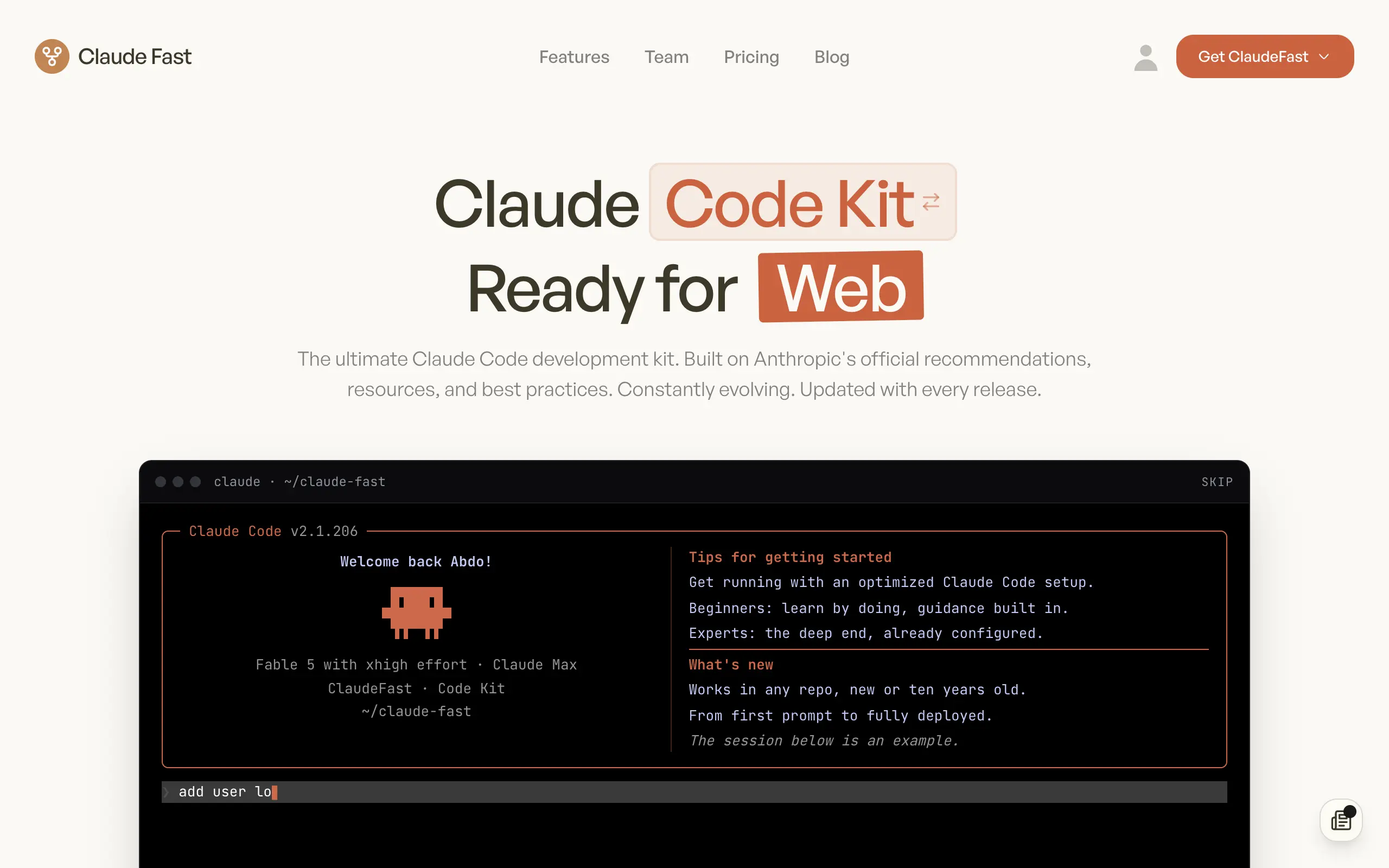
Claude Fast
Supercharge your Claude Code with 6x effective context window and specialized AI agents 🤖
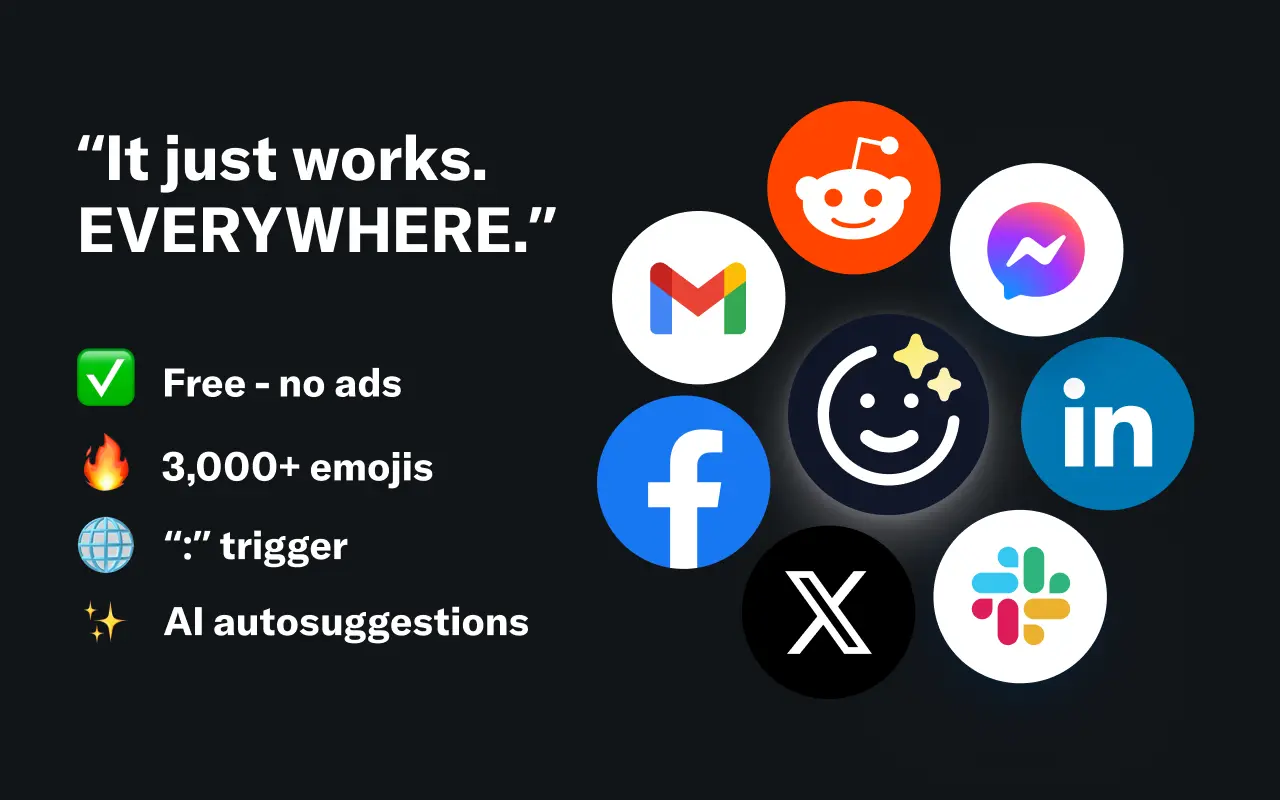
EmojAI
AI-powered emoji picker with smart, context-aware suggestions 🤖
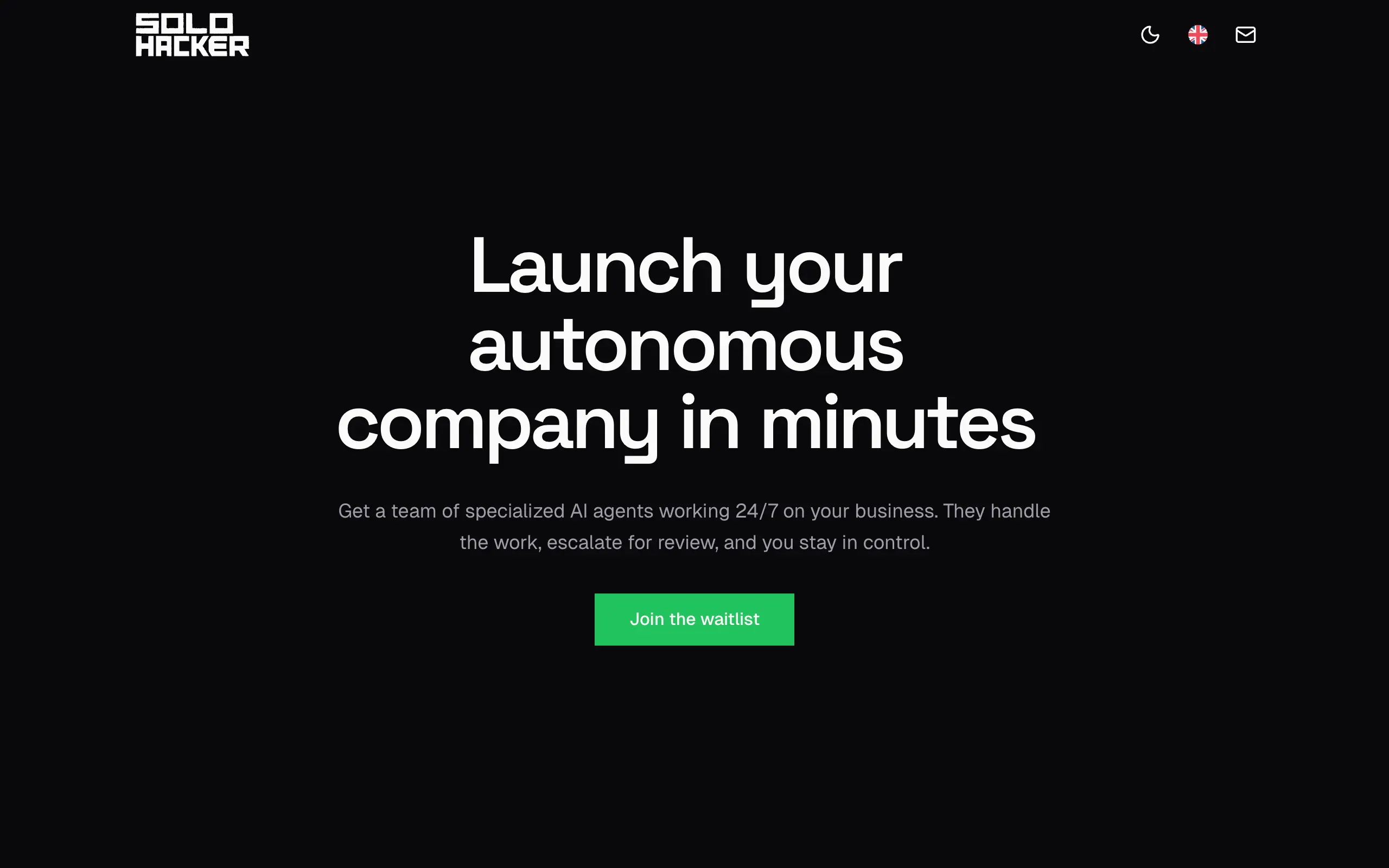
Solohacker
Autonomous company launcher - AI agents work 24/7, escalate what matters, and you stay in control 🤖
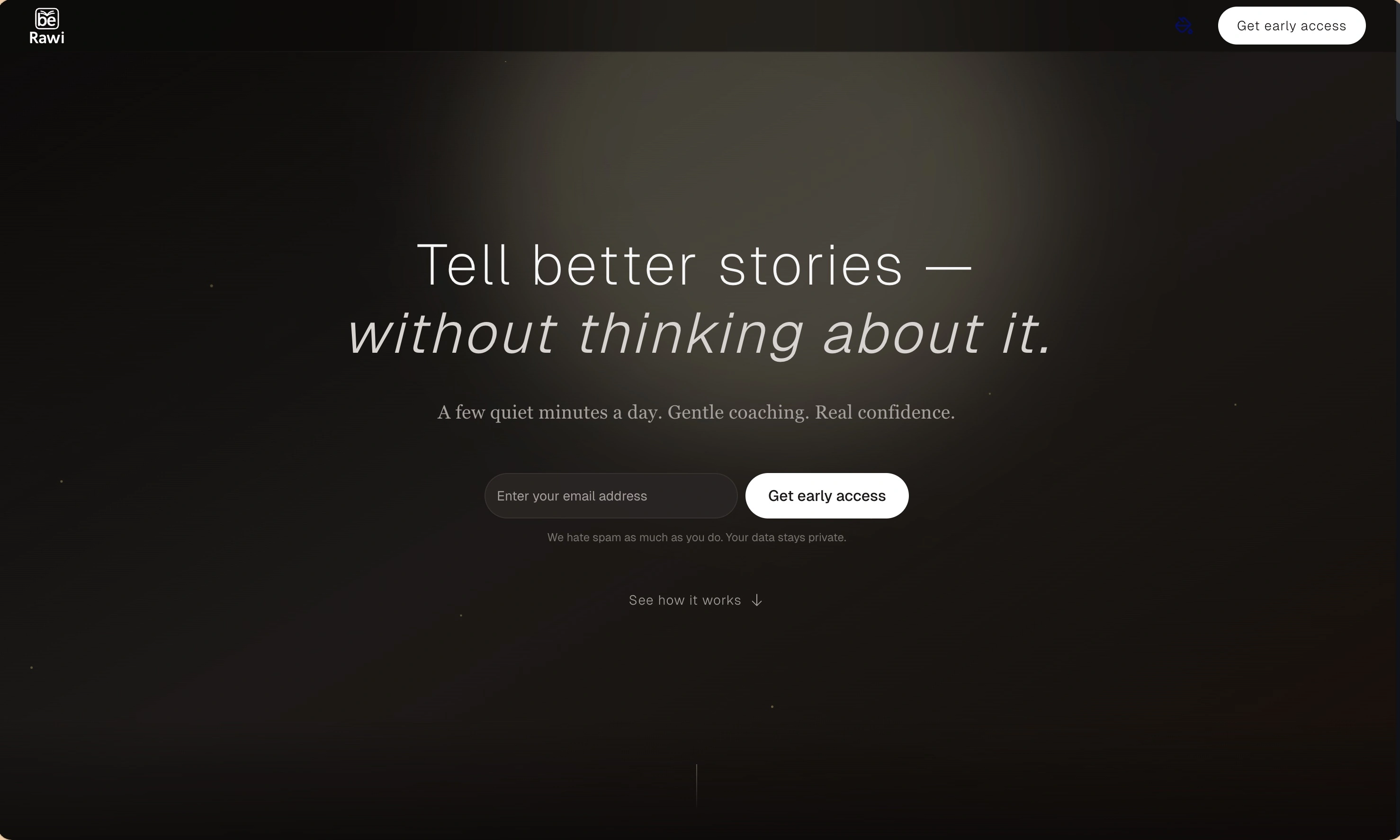
BeRawi: Storytelling Coach
Practice storytelling daily with instant feedback to sound clearer, more engaging, and confident 🎤
Omichat
Chat with 50+ AI models, including ChatGPT and Claude, in one place - switch models anytime without losing context 🤖
Claude Fast
Supercharge your Claude Code with 6x effective context window and specialized AI agents 🤖
EmojAI
AI-powered emoji picker with smart, context-aware suggestions 🤖
Solohacker
Autonomous company launcher - AI agents work 24/7, escalate what matters, and you stay in control 🤖
BeRawi: Storytelling Coach
Practice storytelling daily with instant feedback to sound clearer, more engaging, and confident 🎤
Omichat
Chat with 50+ AI models, including ChatGPT and Claude, in one place - switch models anytime without losing context 🤖
Claude Fast
Supercharge your Claude Code with 6x effective context window and specialized AI agents 🤖
EmojAI
AI-powered emoji picker with smart, context-aware suggestions 🤖
Solohacker
Autonomous company launcher - AI agents work 24/7, escalate what matters, and you stay in control 🤖
BeRawi: Storytelling Coach
Practice storytelling daily with instant feedback to sound clearer, more engaging, and confident 🎤
Omichat
Chat with 50+ AI models, including ChatGPT and Claude, in one place - switch models anytime without losing context 🤖
Claude Fast
Supercharge your Claude Code with 6x effective context window and specialized AI agents 🤖
EmojAI
AI-powered emoji picker with smart, context-aware suggestions 🤖
Solohacker
Autonomous company launcher - AI agents work 24/7, escalate what matters, and you stay in control 🤖
BeRawi: Storytelling Coach
Practice storytelling daily with instant feedback to sound clearer, more engaging, and confident 🎤

Connect with like-minded people
Join our community to get feedback, support, and grow together with 1,000+ builders on board, let's ship it!
Join usShip your startup everywhere. In minutes.
Don't burn tokens on setup and start building features on day one.