CertChase
Small property managers lose time chasing vendor insurance documents. Track certificates, expiry dates, and follow-ups in one audit-ready workspace.
What CertChase is and the problem it solves
CertChase is a B2B software concept for tracking vendor insurance certificates, monitoring expiration dates, and managing follow-ups in one audit-ready workspace. Its primary market is small property managers who need to collect and maintain insurance documents from contractors, suppliers, and other third parties.
The problem is familiar: a property manager requests a certificate of insurance (COI), saves the PDF somewhere, and later has to remember when it expires. If a vendor’s coverage lapses, the manager may not discover it until an audit, an incident, or a new request for documentation. Meanwhile, follow-up emails compete with tenant issues, maintenance coordination, leasing tasks, and day-to-day operations.
The product opportunity is not simply to store PDFs. It is to give property teams a reliable way to answer questions such as:
- Which vendors have submitted a certificate?
- When does each certificate expire?
- Which vendors need a reminder or a new document?
- What documentation was on file on a particular date?
- Can the team quickly produce an accurate record for an audit or internal review?
A focused vendor certificate of insurance tracking software product can answer those questions without requiring a small property management company to adopt a large, complex risk-management platform.
Important insurance boundary
CertChase should organize and surface certificate information, not represent that a certificate guarantees coverage or changes the terms of an insurance policy. Product language should make clear that certificates are documents for review and recordkeeping, not legal or coverage determinations.
Target audience and buyer analysis
CertChase’s first customers should be organizations that manage recurring vendor relationships but lack dedicated insurance-compliance staff. A narrow initial audience gives the product a clearer sales message and makes it easier to design practical workflows.
Primary audience: small property managers
A strong initial customer profile might include:
- Independent property management companies
- Residential operators managing multiple buildings
- Commercial property managers with recurring maintenance vendors
- Small real estate firms that manage their own vendor relationships
- Owners or operators coordinating contractors across several properties
These teams often work with electricians, plumbers, landscapers, cleaners, HVAC technicians, security providers, restoration firms, and general contractors. The volume may not justify a specialized compliance department, but it can still be large enough for missed expirations and manual follow-ups to create real administrative work.
The likely day-to-day user is a property manager, operations coordinator, or administrative assistant. The economic buyer may be the owner, managing director, head of operations, or property management executive. Product messaging should account for both:
- Users want fewer manual reminders, a clear status view, and quick document retrieval.
- Buyers want lower administrative overhead, more consistent processes, and confidence that records are organized.
Adjacent audiences
After validating the property management use case, CertChase could explore related customer groups with similar document-tracking needs:
- Homeowners’ associations and community associations
- Facilities management providers
- Small construction firms
- Commercial landlords
- Real estate investment operators
- Local service companies that subcontract work
These adjacent markets may look similar, but their workflows can differ. For example, a construction firm may need more detailed project-level requirements, while a small residential manager may prioritize simple vendor onboarding. Expansion should follow evidence from customer interviews rather than assumptions that all industries need the same product.
Jobs to be done
The product should focus on a few practical jobs rather than trying to become a full compliance suite:
- Collect a document: Make it easy to request and receive a vendor’s certificate.
- Understand its status: Record relevant dates and show whether a document needs review.
- Follow up consistently: Send reminders before a certificate expires and track the response.
- Find the record: Retrieve the current or historical document for a vendor or property.
- Demonstrate process: Provide an organized activity history showing what was received, reviewed, and followed up on.
Customer interviews should uncover how these tasks are handled today. Ask what happens after a certificate arrives, who checks it, where it is saved, how expirations are tracked, and what the team does when a vendor does not respond. Those answers will reveal whether the core pain is document collection, review, follow-up, reporting, or all four.
Market opportunity and the product gap
The market opportunity for CertChase comes from a gap between informal tools and broad enterprise platforms. Many small teams can technically track vendor documents with email, spreadsheets, shared drives, or property management software. The issue is that these tools do not necessarily provide a dedicated, dependable workflow for document status and expiry follow-up.
Why existing workarounds break down
A spreadsheet can hold vendor names and dates, but its reliability depends on someone maintaining it. A shared drive can store certificates, but it usually does not tell the team which documents are expiring. Email contains important history, but searching across inboxes is slow and individual follow-ups can be missed.
These tools may be adequate for a small number of vendors. As a portfolio grows, however, the process becomes more dependent on memory and manual coordination. The resulting pain is operational rather than theoretical: staff spend time checking files, updating lists, sending reminders, and reconstructing what happened.
A focused position between spreadsheets and enterprise systems
CertChase can position itself as a practical middle ground:
- More structured than a spreadsheet and shared folder
- Easier to adopt than a broad enterprise risk platform
- Purpose-built for vendor certificate collection and expiration tracking
- Designed around the day-to-day needs of small property teams
This positioning should be validated in customer conversations and competitor research. Avoid claiming that competitors lack a feature unless that has been verified. Instead, compare the customer experience: setup effort, workflow clarity, pricing fit, and how well the tool serves a small team.
A defensible wedge
The initial wedge is not “insurance compliance for every industry.” It is simple, audit-ready vendor certificate tracking for small property managers. That distinction gives CertChase a more specific product roadmap and a more credible go-to-market message.
A narrow wedge can still support future expansion. If property managers adopt the product and repeatedly request related capabilities—such as vendor onboarding, property-level requirements, or additional insurance document types—those requests can guide the next phase.
Core features for a useful certificate tracking product
The first version should make the central workflow dependable before adding advanced automation. A small, polished product that accurately tracks documents and follow-ups is more useful than a broad system that is difficult to configure.
1. Vendor and property records
Users need a straightforward way to create vendor profiles and associate vendors with one or more properties. Each record could include:
- Vendor name and business contact details
- Vendor category, such as plumbing or landscaping
- Associated properties or portfolios
- Internal owner or staff contact
- Notes and document history
- Current certificate status
Keep data entry light. Require only what is needed to send a request, track the document, and retrieve it later. Optional fields can support teams with more complex vendor records without slowing down initial setup.
2. Certificate uploads and document history
CertChase should support secure uploads and preserve a clear record of document versions. A new certificate should not silently replace the old one. Users may need to understand which document was on file previously, when it arrived, and who uploaded or reviewed it.
Useful document details include:
- Upload date and source
- Document file and version
- Effective date, if captured
- Expiration date, if captured
- Associated vendor and property
- Review status and reviewer
- Internal notes or follow-up history
The product should distinguish between the original file and extracted metadata. If OCR or AI-assisted data entry is used, users should be able to inspect and correct extracted fields.
3. Expiration tracking and status indicators
The dashboard should quickly show which certificates are current, approaching expiration, expired, missing, or awaiting review. Status labels should be understandable and consistently applied.
A useful initial set might include:
- Current: A recorded expiration date is in the future and the document has been reviewed according to the customer’s process.
- Expiring soon: The expiration date falls within a configurable reminder window.
- Expired: The recorded expiration date has passed.
- Missing: No certificate has been recorded for the vendor or requirement.
- Needs review: A document has been uploaded but has not yet been checked.
Avoid implying that a “current” status confirms that coverage is adequate. The status should describe the document-tracking workflow, not make an insurance judgment.
4. Automated reminders and follow-up history
Automated reminders are a central source of value. Users should be able to configure when reminders are sent, who receives them, and whether internal staff are copied or notified.
A sensible reminder sequence might include:
- A request when a vendor is added or marked as missing documentation
- A reminder before the recorded expiration date
- A follow-up after expiration if a replacement has not been received
- An internal alert when a vendor remains unresolved
Every outgoing message should appear in the vendor’s activity history. If a reminder fails, bounces, or is manually followed up, the team should be able to record that event. The goal is to make the workflow visible rather than create opaque automation.
5. Audit-ready records and reporting
An audit-ready workspace should make it easy to retrieve documents and explain the steps the team took. Helpful reporting capabilities include:
- A vendor list filtered by certificate status
- Expiring and expired document reports
- A property-level view of associated vendors
- Downloadable records for a selected vendor or date range
- An activity timeline showing uploads, reminders, and reviews
The exact export format can come later. The foundational requirement is that the underlying records are consistent, timestamped, and retrievable.
6. Role-based access and collaboration
Even small teams benefit from clear access rules. At minimum, consider roles for administrators and standard users. As the product grows, additional permissions may allow staff to upload documents without changing organization-wide settings.
Activity attribution matters too. Recording who uploaded, reviewed, or changed a document helps teams collaborate and makes the history more useful.
Recommended product workflow
A simple workflow can help CertChase deliver value quickly without requiring extensive setup.
Add the vendor
A user creates a vendor record, enters contact information, and associates the vendor with one or more properties. CertChase should provide a fast path for adding a small batch of vendors, such as a spreadsheet import.
Request the certificate
The user sends a templated request that explains what document is needed and where the vendor can send or upload it. The message should be editable and should avoid making legal claims about insurance requirements.
Receive and review the document
The document is uploaded or received through the workflow. The user checks the relevant details, corrects any extracted metadata, and marks the document as reviewed according to the organization’s internal process.
Monitor status and follow up
CertChase tracks the recorded expiration date, displays an appropriate status, and sends reminders based on the organization’s settings. The activity timeline records each message and document update.
Retrieve records when needed
The user filters by property, vendor, or status and retrieves the document history or report needed for internal review.
Competitive advantage and positioning
CertChase’s competitive advantage should be built around focus, usability, and trust. The product does not need to out-feature every insurance or vendor management platform. It needs to solve one recurring workflow better for a specific customer.
| Approach | Strength | Common limitation | CertChase opportunity | Best fit |
|---|---|---|---|---|
| Spreadsheet and shared drive | Low cost and familiar | Manual status updates and follow-ups | Combine records, reminders, and history | Very small teams testing a process |
| Email-based workflow | Easy to start with existing tools | History is scattered across inboxes | Keep vendor communication attached to records | Teams with a small vendor list |
| Broad vendor or risk platform | May support many organizational needs | Can be more complex than a small team needs | Offer a faster, focused setup | Larger organizations with wider requirements |
| CertChase | Purpose-built certificate tracking | Must earn trust and prove workflow value | Deliver clear status, follow-up, and retrieval | Small property managers and operators |
A strong unique selling proposition could be:
CertChase helps small property management teams collect vendor insurance certificates, track expiration dates, and follow up from one clear, audit-ready workspace.
This message is specific without overpromising. It describes the product’s practical outcome and names the audience.
The moat is unlikely to come from document storage alone. More durable differentiation could develop through:
- A smoother setup experience for property managers
- Reliable reminder and renewal workflows
- Useful portfolio and property-level reporting
- A clear, searchable history of vendor interactions
- Integrations that fit the systems customers already use
- Strong security practices and dependable document handling
Recommended technology stack
CertChase handles business records and potentially sensitive documents, so the technology choices should prioritize reliability, access control, and maintainability. The best stack is the one the founding team can operate securely and evolve without unnecessary complexity.
Front end and application framework
A TypeScript-based web application using React is a reasonable choice for a responsive, dashboard-oriented product. A framework such as Next.js can provide routing, server rendering where useful, and server-side application capabilities.
Trade-offs to consider:
- A full-stack framework can reduce the number of separate services a small team must manage.
- A separate frontend and API can provide clearer service boundaries but adds deployment and operational work.
- Server-rendered pages can help with fast initial loads, while authenticated dashboard screens may rely more heavily on client-side interactions.
Choose based on team experience and deployment needs rather than adopting a framework solely because it is popular.
Database and file storage
A relational database such as PostgreSQL fits the product’s structured relationships: organizations, users, vendors, properties, documents, reminders, and activity events.
Store uploaded files in object storage rather than directly in database rows. The application should use access-controlled file links and avoid exposing public document URLs. Plan for backups, retention rules, and recovery testing from the beginning.
Authentication and authorization
Use established authentication practices and implement organization-level access boundaries carefully. A user should only access records belonging to their organization, and administrative actions should require appropriate permissions.
Important controls include:
- Secure session management
- Multi-factor authentication options, especially for administrators
- Role-based permissions
- Organization-scoped authorization checks
- Audit logging for sensitive changes
- A process for offboarding former users
Authorization should be enforced on the server, not only by hiding interface elements.
Background jobs and email
Expiration reminders should run reliably even when no user is logged in. Use a job queue or scheduled task system to evaluate upcoming expiration dates and send messages. Build in idempotency so a retry does not send duplicate reminders.
Email delivery also needs operational visibility. Track message status where possible, handle bounces, and give administrators a way to review or pause automated messages.
OCR and AI-assisted document entry
OCR can reduce manual data entry by extracting dates or names from uploaded certificates. Treat it as an assistive feature, not a source of unquestioned truth. Document formats vary, and extraction errors can create misleading status indicators.
A safer design is to:
- Extract likely fields.
- Show the source document beside those fields.
- Ask a user to confirm or correct them.
- Record that the metadata was reviewed.
- Preserve the original file and extraction history.
Start with manually entered dates if that helps validate the workflow sooner. Add OCR after customers demonstrate that data entry is a meaningful source of friction.
Security and privacy foundations
Security is a product feature for software that stores business documents. Establish a clear baseline that covers encrypted transport, secure storage, access controls, backups, incident response, and data deletion policies. Document how uploaded files are handled and who can access them.
The product should avoid collecting unnecessary data. A minimal data model lowers exposure and makes privacy practices easier to explain. Before serving larger organizations, evaluate whether their procurement requirements call for additional security documentation or controls.
Monetization strategy options
CertChase should price around recurring operational value, not simply the number of files stored. A pricing model needs to be understandable to a small property manager and flexible enough to support customers as their portfolios grow.
Tiered subscription pricing
A practical starting model could offer tiers based on a combination of vendors, properties, or team seats. For example:
- Starter: A limited number of vendors and basic expiration reminders
- Growth: More vendors, multiple properties, team collaboration, and reporting
- Business: Higher limits, advanced permissions, integrations, and priority support
The exact limits and price points should be tested through customer interviews and paid pilots. Avoid introducing too many tiers before understanding which usage dimension customers consider valuable.
Portfolio-based pricing
Pricing by managed portfolio or property count may align with the customer’s business structure. It can also be easier for a buyer to understand if certificates are organized by property. The risk is that portfolio sizes vary substantially in vendor density, so the pricing metric should be tested against real customer usage.
Vendor-volume pricing
A vendor-based limit is closely tied to the product’s core records. It may work well when customer value rises with the number of vendors tracked. However, customers can perceive per-vendor pricing as a penalty for adding records they need for complete coverage. Consider generous limits or predictable tiers.
Paid onboarding and migration
Some customers may value help importing vendor lists, organizing existing files, or configuring reminder templates. This could support a one-time onboarding fee, especially for larger accounts. Keep self-serve setup available so the service does not become a barrier for small customers.
Pricing validation
A useful validation process is to show prospective customers a clear price and ask whether they would pay for a pilot. Compliments about the concept are not equivalent to purchase intent. Track:
- Conversion from trial or demo to paid use
- Time to import vendors and upload initial documents
- Number of active users per account
- Renewal behavior
- Support effort per customer
- Which features influence purchase decisions
Risks and mitigation strategies
A credible product plan should address operational and trust risks before they become customer problems.
Incorrect or incomplete document data
A certificate may be hard to read, contain information in an unexpected format, or be uploaded with incomplete metadata. If the product automatically assigns a status without review, users may rely on inaccurate information.
Mitigation: Keep original files available, show the source for extracted fields, require human confirmation for uncertain data, and clearly distinguish “uploaded” from “reviewed.”
Confusion about what a certificate proves
Users may mistake a certificate for a guarantee of coverage or assume that a software status represents a legal compliance decision.
Mitigation: Use careful language throughout the product. Describe tracked dates and document states, not coverage adequacy. Encourage customers to follow their own established review process and consult qualified insurance or legal professionals when appropriate.
Missed or duplicated reminders
A reminder system that fails silently can undermine the product’s main promise. Duplicate messages can also frustrate vendors and damage a customer’s relationship with them.
Mitigation: Use monitored background jobs, idempotent sending logic, delivery logging, administrative controls, and alerts for repeated delivery failures. Provide a clear view of upcoming reminders.
Sensitive document exposure
Unauthorized access to vendor documents could harm customer trust and create security obligations.
Mitigation: Apply least-privilege access, organization-level data isolation, secure file handling, appropriate encryption, audit logs, and tested backups. Establish a documented incident-response process.
Slow customer adoption
Small property management teams may be too busy to migrate records or learn a complicated system.
Mitigation: Make setup lightweight. Offer CSV imports, clear defaults, simple templates, and an onboarding path that gets the first vendors tracked quickly. Observe real users during setup rather than relying only on stated preferences.
Competitive pressure
Larger platforms may add similar certificate tracking features, while niche vendors may already serve parts of the market.
Mitigation: Win through a sharper customer fit, better usability, and strong workflow execution. Build relationships with property management communities and seek feedback continuously. Do not depend on a feature that is easy for an incumbent to copy.
Integration complexity
Property management platforms, email services, and vendor systems may have different data models and access rules. Building integrations before proving demand can consume significant development time.
Mitigation: Start with dependable imports and exports. Prioritize an integration only when multiple qualified customers identify the same workflow as a purchase blocker.
Go-to-market strategy for CertChase
For an early B2B product, direct customer discovery is often more useful than broad advertising. CertChase should identify a narrowly defined group of property managers and learn how they currently manage certificates before investing heavily in acquisition.
Start with a discovery cohort
Recruit a small group of property managers who regularly coordinate maintenance vendors. Ask them to walk through their current process using actual, anonymized examples where possible. Observe how long it takes to find a certificate, identify an expiration date, or confirm whether someone followed up.
Look for repeated pain, not one-off requests. If several teams independently describe the same breakdown, it is a stronger signal for product prioritization.
Build trust through practical content
Educational content can attract people searching for ways to organize vendor insurance documents. Useful topics could include:
- How to organize vendor certificates by property
- How to create an expiration follow-up process
- What information to record when a certificate is received
- How to prepare vendor records for an internal review
- Common spreadsheet pitfalls in document tracking
Content should be operational and careful. Do not offer legal conclusions or imply that a particular workflow guarantees compliance.
Test partner channels
Potential channels may include property management consultants, association communities, bookkeeping or operations advisors, and software implementation firms. Partnerships are most promising when a partner already helps the target customer improve vendor operations.
Validate partner interest with small experiments, such as a co-hosted webinar or referral pilot. Avoid building a partnership program before there is evidence that the product converts and retains customers.
Measure outcomes customers recognize
The product should track metrics that connect to customer experience, such as:
- Time from account creation to first vendor record
- Percentage of vendors with a document status recorded
- Time to locate a requested certificate
- Number of reminders sent and successfully delivered
- Percentage of expiring records resolved before the recorded expiration date
- Customer-reported reduction in manual follow-up effort
These measures can help guide product decisions and support credible case studies. Any public performance claims should be based on observed customer data, with methods explained clearly.
Actionable implementation steps
A disciplined launch reduces the risk of building features before confirming demand.
Interview target customers
Speak with property managers who handle vendor documentation themselves. Learn about their vendor volume, current tools, follow-up process, audit needs, and willingness to pay. Record recurring pain points separately from feature requests.
Define the initial workflow
Choose a narrow first workflow: vendor record, certificate upload, expiration date, reminder, review status, and activity history. Write down what “done” means for each step so the team can test the experience consistently.
Prototype the core screens
Create a dashboard, vendor profile, document detail view, and reminder settings screen. Test whether users can identify missing and expiring documents without assistance. Revise confusing labels before building automation.
Build a secure MVP
Implement organization-scoped accounts, vendor and property records, secure file uploads, status tracking, reminder scheduling, and searchable history. Keep advanced integrations and automated document interpretation out of scope unless discovery shows they are essential.
Run a paid pilot
Onboard a small number of design partners using their real workflows. Charge for the pilot where possible, even if the offer is introductory. Observe setup effort, reminder reliability, document retrieval, and ongoing usage.
Improve retention before expanding scope
Investigate why users return, what causes inactivity, and which records remain incomplete. Improve the core workflow and onboarding before adding adjacent industries or broad compliance features.
Establish a repeatable acquisition channel
Once customers can reach value and continue using the product, test focused content, referrals, partnerships, and targeted outreach. Measure qualified signups and paid conversion rather than traffic alone.
For a faster starting point on the SaaS foundation, TurboStarter is worth evaluating. A starter can reduce setup work, but CertChase’s security model, document handling, data boundaries, and reminder reliability still need to be designed and validated for this specific product.
Final assessment
CertChase addresses a clear operational problem: small property managers need a dependable way to track vendor certificates, expiration dates, and follow-ups without relying on scattered email and manually maintained spreadsheets. Its strongest opportunity is to make that process easier and more visible, not to make insurance decisions on behalf of customers.
The idea is most compelling when it stays focused on a few principles:
- Serve small property management teams first.
- Make document status and follow-up history easy to understand.
- Treat automation and OCR as aids that require appropriate oversight.
- Build security and auditability into the product from the start.
- Validate willingness to pay through real pilots, not hypothetical interest.
- Expand only after the core workflow earns repeat usage.
If customer research confirms that teams regularly lose time finding documents and chasing renewals, CertChase can become a practical, focused solution in the gap between informal spreadsheets and broad enterprise systems.
More 🏢 B2B Application SaaS ideas
Discover more innovative b2b application SaaS ideas that are trending in 2026. Each idea is AI-generated with market validation and growth potential to help you find your next profitable venture faster than competitors.
Your competitors are building with TurboStarter
Below are some of the SaaS ideas that have been generated and built with our starter kit.

Statiko
Monitor any Telegram channel in real time - track posts, edits, deletions, and growth with AI recaps 📡

Shibui
AI website builder - describe your business, pick a niche template, edit by chatting, and publish instantly ✨

Pro Service
Find verified home service professionals, compare quotes, and pay securely through escrow - built for Brazilians across the US 🏠
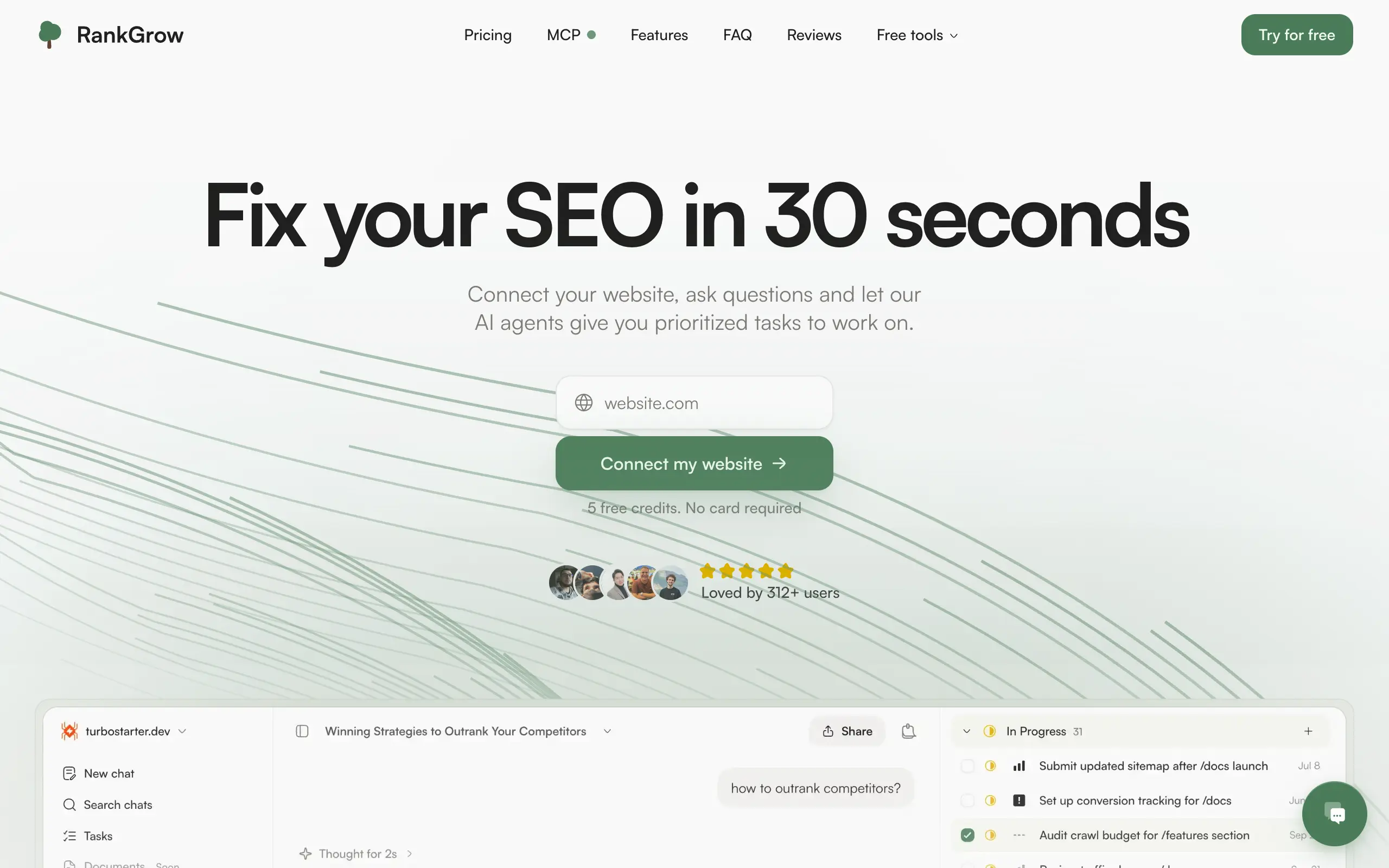
RankGrow
Fix your SEO with AI agents - connect Search Console, get prioritized tasks, and grow organic traffic 📈

SyncReads
Sync your favorite content for distraction-free reading, save time and replace multiple apps. Anytime, anywhere 🔄

Socialcrawl
Get clean, structured data from 21 platforms like TikTok, Instagram, and YouTube with a single request 📊
Statiko
Monitor any Telegram channel in real time - track posts, edits, deletions, and growth with AI recaps 📡
Shibui
AI website builder - describe your business, pick a niche template, edit by chatting, and publish instantly ✨
Pro Service
Find verified home service professionals, compare quotes, and pay securely through escrow - built for Brazilians across the US 🏠
RankGrow
Fix your SEO with AI agents - connect Search Console, get prioritized tasks, and grow organic traffic 📈
SyncReads
Sync your favorite content for distraction-free reading, save time and replace multiple apps. Anytime, anywhere 🔄
Socialcrawl
Get clean, structured data from 21 platforms like TikTok, Instagram, and YouTube with a single request 📊
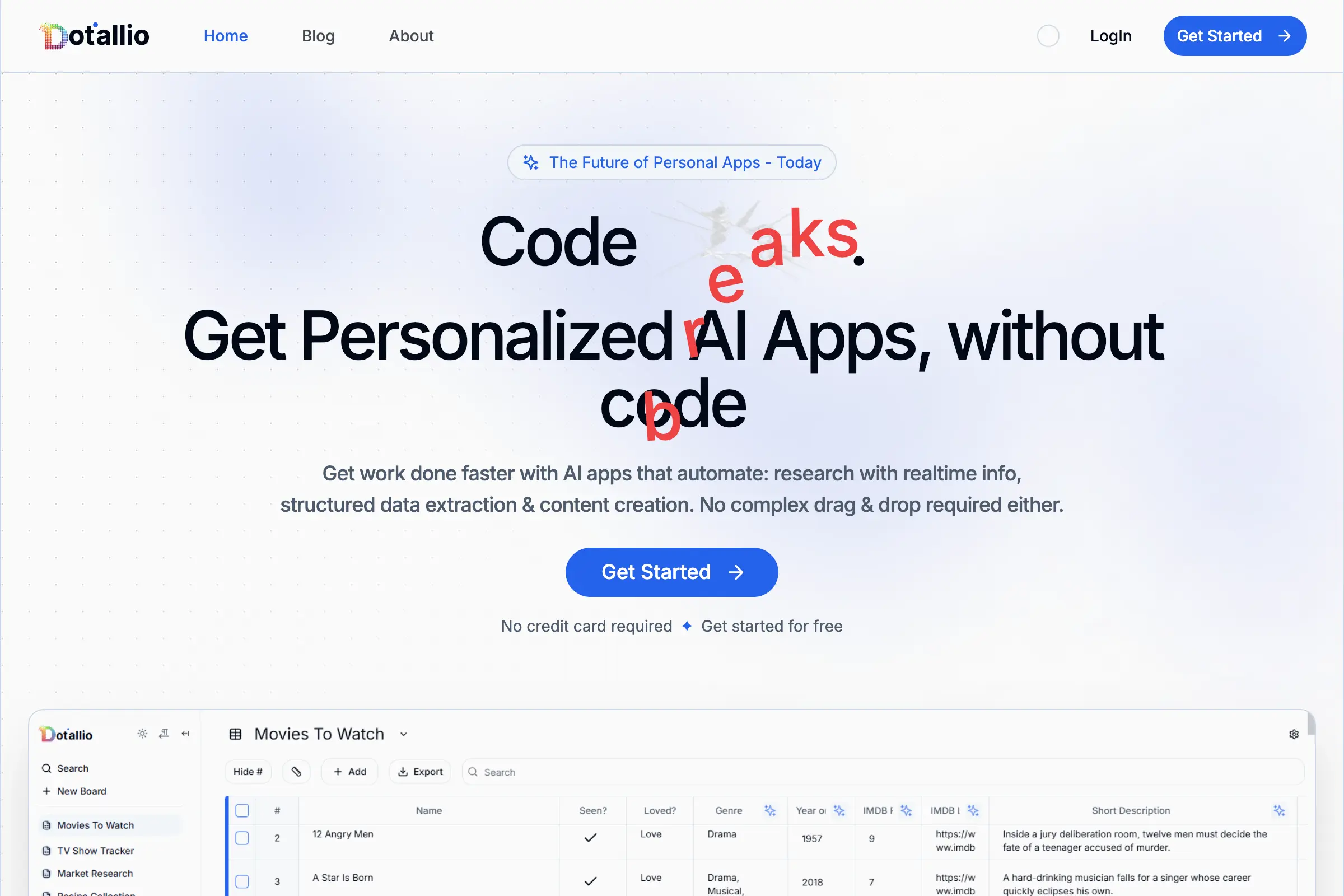
Dotallio
Personalized AI apps that automate research, data extraction, and content creation without code 🤖

Talk to Santa
Enjoy a magical live video chat or receive a unique AI-generated video greeting from Santa Claus 🎅

pozywka.pl
Scalable blog for food journalist, focused on performance and user experience 🌭
zagrodzki.me
Personal blog and portfolio of Bart Zagrodzki, where he shares his knowledge and work 💼

TurboStarter
Ship your startup everywhere. In minutes.
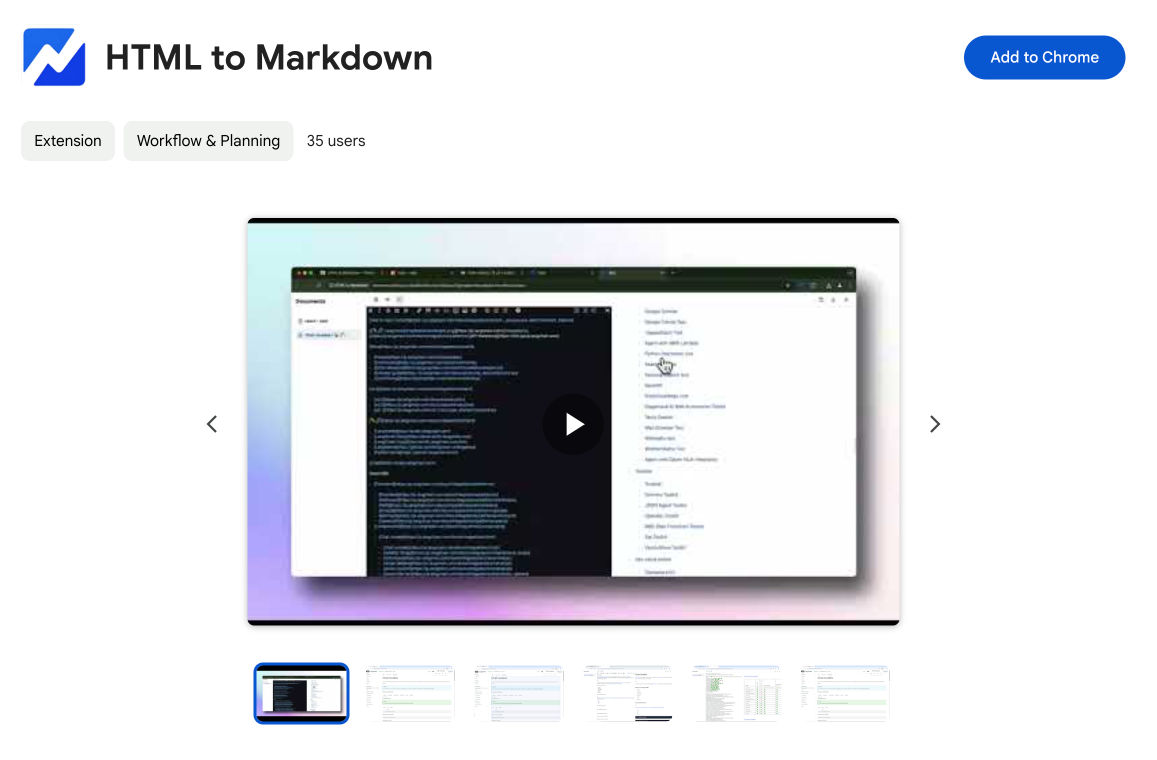
HTML to Markdown
Convert HTML to Markdown with ease, directly in your browser 📄
Dotallio
Personalized AI apps that automate research, data extraction, and content creation without code 🤖
Talk to Santa
Enjoy a magical live video chat or receive a unique AI-generated video greeting from Santa Claus 🎅
pozywka.pl
Scalable blog for food journalist, focused on performance and user experience 🌭
zagrodzki.me
Personal blog and portfolio of Bart Zagrodzki, where he shares his knowledge and work 💼
TurboStarter
Ship your startup everywhere. In minutes.
HTML to Markdown
Convert HTML to Markdown with ease, directly in your browser 📄
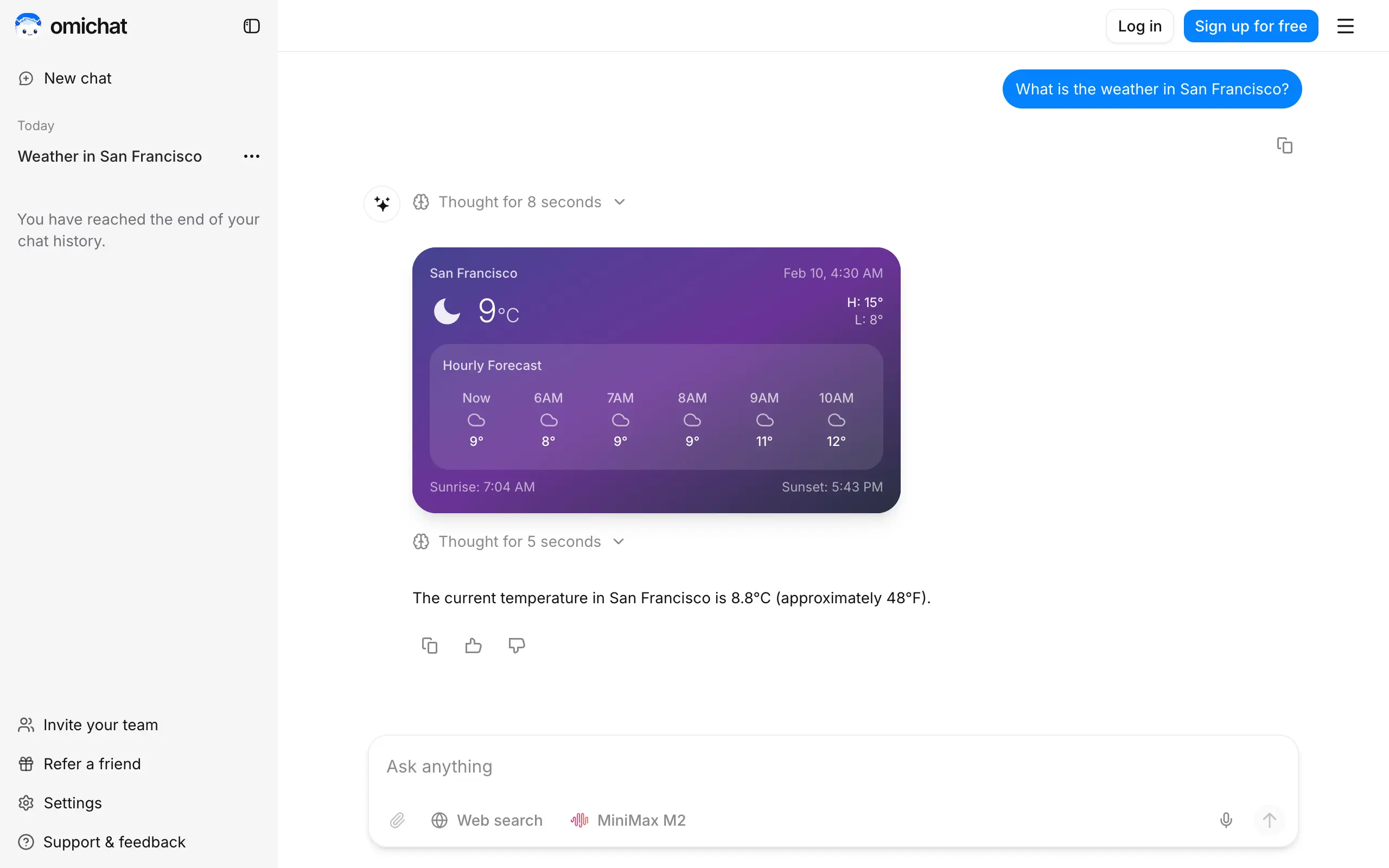
Omichat
Chat with 50+ AI models, including ChatGPT and Claude, in one place - switch models anytime without losing context 🤖
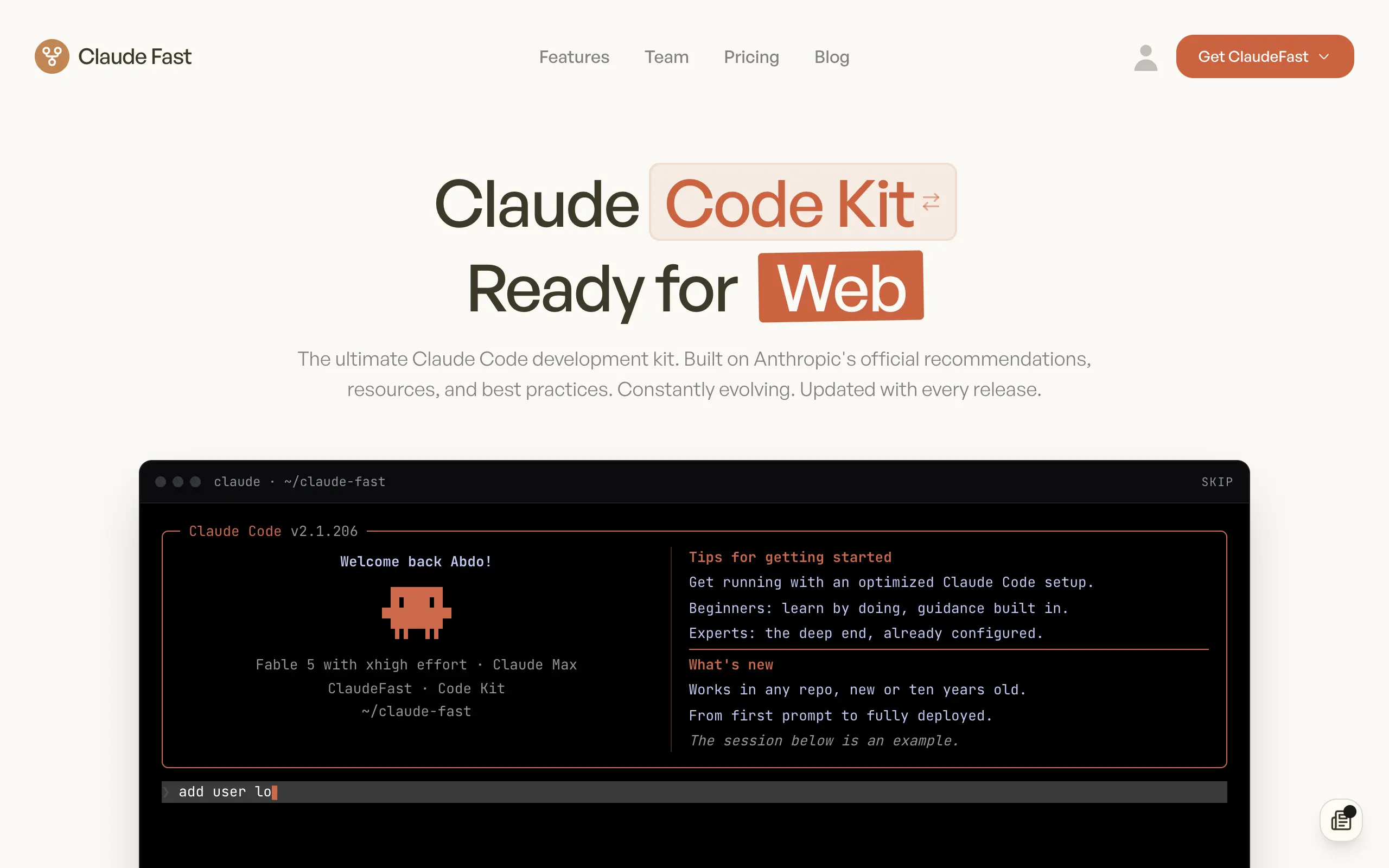
Claude Fast
Supercharge your Claude Code with 6x effective context window and specialized AI agents 🤖

EmojAI
AI-powered emoji picker with smart, context-aware suggestions 🤖

Solohacker
Autonomous company launcher - AI agents work 24/7, escalate what matters, and you stay in control 🤖

BeRawi: Storytelling Coach
Practice storytelling daily with instant feedback to sound clearer, more engaging, and confident 🎤
Omichat
Chat with 50+ AI models, including ChatGPT and Claude, in one place - switch models anytime without losing context 🤖
Claude Fast
Supercharge your Claude Code with 6x effective context window and specialized AI agents 🤖
EmojAI
AI-powered emoji picker with smart, context-aware suggestions 🤖
Solohacker
Autonomous company launcher - AI agents work 24/7, escalate what matters, and you stay in control 🤖
BeRawi: Storytelling Coach
Practice storytelling daily with instant feedback to sound clearer, more engaging, and confident 🎤

Connect with like-minded people
Join our community to get feedback, support, and grow together with 1,000+ builders on board, let's ship it!
Join usShip your startup everywhere. In minutes.
Don't burn tokens on setup and start building features on day one.