Chairside Ledger
Gives independent barbershop owners a booking and chair-rental tracker that calculates each barber's split automatically. Owners stop reconciling payouts by hand on paper every Friday.
Chairside Ledger is a booking and payout tracker for independent barbershop owners who run a mix of commission barbers and chair renters. It calculates each barber's split automatically, so the Friday ritual of reconciling cash, card tips and rent on paper disappears. In 2026 it has potential because small service businesses are tired of paying for bloated salon suites that handle booking well but treat money splits as an afterthought.
The best-fit barbershop payout software is narrow on purpose: one shop type, one painful weekly task, one clear result.
Key takeaways
- Target customer: owners of independent barbershops with 3 to 12 barbers, mixing commission and chair-rent arrangements.
- Pricing angle: flat monthly fee per shop, with a per-barber add-on above a base count. Roughly $29 to $79 per month is a sensible test range.
- Biggest risk: barbers and owners already use a booking tool and a card processor, so you must prove the payout math is worth switching or adding a tool.
- Time to MVP: about 4 to 6 weeks for one developer using a starter kit, assuming you skip payment processing at first.
What problem does Chairside Ledger solve for barbershop owners?
Owners lose hours every week working out who is owed what. The split depends on each barber's deal: a percentage of services, a flat weekly chair rent, a product commission, or a hybrid. Add card tips, cash, refunds and no-shows, and the Friday math becomes error-prone.
Who is the ideal customer?
The ideal customer is an owner-operator of a shop with 3 to 12 chairs, who still cuts hair part of the week. They are not a franchise and have no office manager. They pay themselves from whatever is left after everyone else is paid.
Mixed arrangements are the strongest signal. A shop with only employees can use payroll software, and a shop with only renters can collect a flat rent. A shop where two barbers are on 60/40, one rents a chair for a flat fee and one is on a hybrid is where paper breaks.
What is the current workaround, and why does it fail?
Most owners combine three things: the booking app's sales report, a notebook or spreadsheet, and a calculator. Some photograph the day's cash tally and sort it out later.
This fails in predictable ways:
- Disputes: a barber remembers a different number, and the owner has no audit trail to settle it.
- Mixed deal types: spreadsheets need hand-edited formulas per person, and one wrong cell shifts everyone's pay.
- Time: the work lands on a Friday evening, when the owner is tired and the shop is busiest.
- Trust: renters and commission barbers both want to see how the number was reached.
Why is now a good time for chairside payout and booking software?
The gap is that general booking tools optimize for the client side: reminders, deposits, no-show fees. Payout logic for independent contractors sits in the back office, and it is usually shallow. The big names in this category, such as Square Appointments, Booksy, Vagaro and Fresha, cover booking and payments well, while payroll tools like Gusto cover employees. The mixed-deal barbershop sits awkwardly between them.
Several trends make 2026 a reasonable moment to build:
- More booth and chair renters: independent contractor arrangements are common in barbering, which creates split logic that payroll tools do not model.
- Subscription fatigue: owners resist adding a second large suite, so a focused tool with a low price and fast setup has a chance.
- Cheaper development: auth, billing and multi-tenant structure are largely solved problems, so a solo founder can build a credible v1.
- Data portability: many booking tools export sales reports, which lets you start with imports instead of full integrations.
Treat this as a hypothesis, not a proven market. Measure how many owners you can find who say the weekly reconciliation costs them more than an hour, and who would pay to remove it.
What should the Chairside Ledger MVP include?
Build the smallest product that produces a correct weekly payout statement. Everything else is secondary. The aha moment is the owner opening a Friday summary where every barber's number is already calculated, itemized and ready to share.
Deal rules per barber
Set commission percentages, flat chair rent, product splits or hybrids for each barber, with effective dates so changes do not rewrite history.
Service and tip ledger
Record or import each service, tip, refund and cash entry, tied to a barber and a day.
Weekly payout statement
Calculate who owes whom each week and produce an itemized statement the barber can read and approve.
Simple booking calendar
A lightweight chair schedule with online booking links, enough to feed the ledger without replacing a full suite.
What should you cut from version one?
Cut payroll, tax filing, inventory, marketing campaigns, loyalty programs and card processing. Do not try to become the payment processor. Record what happened and compute the split.
Consider whether to build booking at all. If early interviews show owners are happy with their current booking app, import its CSV export and make the ledger the product. Booking can come later or never.
How is Chairside Ledger different from spreadsheets and booking suites?
The unique selling proposition is simple: the split math is the product, not a side report. Owners get a payout they can defend to each barber, in minutes instead of hours.
| Option | Handles mixed deal types | Itemized barber statements | Setup effort |
|---|---|---|---|
| Chairside Ledger | ✅ | ✅ | Low |
| Paper and calculator | ❌ | ❌ | None, but slow weekly |
| Spreadsheet | Manual formulas | Manual | Medium |
| Booking suites (Booksy, Vagaro, Fresha) | Partial, varies by plan | Varies | Medium |
| Payroll tools (Gusto) | Employees, not chair renters | ❌ | High |
Features vary by plan and change often, so check current pricing pages during your competitor research. The point is positioning: you are the ledger that sits next to whatever booking tool the shop already uses.
How would Chairside Ledger make money?
Charge the shop owner, since they feel the pain and hold the budget. Barbers should see their statements for free, which also acts as a distribution channel.
Option 1: flat monthly fee per shop
A single price, for example $29 to $49 per month, keeps selling simple. If you charge $39 per month and convert 10% of trial shops, you need roughly 130 paying shops to reach $5,000 in monthly revenue. Treat those numbers as assumptions to test.
Option 2: base plan plus per-barber pricing
Include 3 barbers in the base price, then add a small fee per additional barber. This tracks value, since larger shops have more complex splits, but it complicates the pricing page.
Option 3: annual plan with onboarding
Offer a discounted annual plan with a one-time setup service where you configure deal rules and import history. This suits owners who dislike software setup, and it generates cash early.
Which growth channel works first?
Direct outreach is most likely to work. Barbershops are local, visible and reachable on Instagram, in barber Facebook groups and through supplier reps. Walk in, show a real payout statement and offer to set up the first week free. Partnerships with barber educators or supply distributors can come later.
How do you validate Chairside Ledger before building it?
Spend one to two weeks proving owners will talk about the problem and put down money. Do not write production code yet.
Interview ten shop owners
Find shops with at least three barbers and ask them to walk through last Friday's payout. Note the deal types, time spent and every tool involved.
Collect real examples
Ask to see an anonymized notebook page or spreadsheet. These become your test cases for the calculation engine.
Launch a one-page site
State one promise, such as "Close out the week's chair splits in five minutes", and show a sample payout statement. Add a waitlist form.
Run a manual concierge test
Take one shop's weekly data and produce the statements yourself in a spreadsheet. If they ask for next week's, you have a real signal.
Ask for a pre-sale
Offer a founding price for the first month. Even three or four owners who commit tell you more than fifty waitlist signups.
What tech stack should you use to build barbershop payout software?
Use a boring, well-supported stack: a TypeScript web app, a relational database and server-side calculation logic with tests. The payout engine must be deterministic and auditable, which favors Postgres and plain code over anything clever.
TurboStarter removes much of the undifferentiated work. It ships with authentication, billing for subscriptions, a database layer, organizations for teams, plus emails, storage and a monorepo that can also hold a mobile app. A shop maps naturally to an organization, with the owner as admin and barbers as members.
That leaves your time for the part that matters: deal rules, the ledger and statements.
Which database and approach fit best?
The better default. You get transactions, constraints and row-level scoping per shop, which matter when money calculations must be exact. Store amounts as integer cents.
Simpler and cheap for a prototype, but multi-tenant access, backups and concurrent writes become your problem sooner. Reasonable only for a short concierge-style pilot.
What does the core data model look like?
Keep deal rules separate from ledger entries, and version them by date so past payouts never change.
type DealRule = {
  barberId: string;
  type: "commission" | "chair_rent" | "hybrid";
  commissionBps?: number; // 6000 = 60%
  weeklyRentCents?: number;
  effectiveFrom: string; // ISO date
};

type LedgerEntry = {
  shopId: string;
  barberId: string;
  kind: "service" | "tip" | "product" | "refund";
  amountCents: number;
  method: "card" | "cash";
  occurredAt: string;
};
Write unit tests for every deal type, refunds crossing week boundaries and mid-week rule changes. If the math is ever wrong, trust is gone.
What could make Chairside Ledger fail?
Most failures here are about behavior and trust, not code. Plan for these four.
Biggest risk: owners will not switch from paper
Many owners are comfortable with their notebook, and data entry can feel like extra work. If the ledger needs double entry on top of the booking app, it loses. Solve this with imports and a first-week setup you do for them, and measure how many minutes the Friday close takes before and after.
- Contractor classification and tax issues: how barbers are treated for tax purposes varies by location. Present the product as a record and calculation tool, not tax or legal advice, and let owners confirm their arrangements with an accountant.
- Booking suites add payout features: a larger player could ship a decent splits report. Stay ahead with better statements, flexible deal rules and a lower price.
- Low willingness to pay: shops run on thin margins. Keep the price near the cost of one haircut per month and tie it to saved hours.
- Dirty input data: cash entries and missing tips create errors. Add a daily close step and flag mismatches before the weekly statement.
What is a 30-day plan to launch Chairside Ledger?
Week 1: validate
Run the interviews, collect sample sheets and start the one-page waitlist site.
Week 2: build the engine
Set up the project from TurboStarter, model shops as organizations and write the payout calculation with tests against your real examples.
Week 3: ship the statement
Build the ledger entry screen, CSV import and the weekly statement view. Email statements to barbers.
Week 4: onboard five shops
Set up each shop yourself, run one real Friday close, and ask what they would change. Turn on billing for the ones who stay.
Start with the interviews this week. If owners keep describing the same Friday headache, you have a real barbershop payout software business worth building.
FAQ
Interview ten owners, review their real payout sheets and run one manual concierge week for a friendly shop. A pre-sale or paid pilot is a stronger signal than a waitlist signup.
Test a flat fee between roughly $29 and $79 per month per shop, then adjust by barber count. Anchor the price to hours saved each week rather than to feature count.
Booking suites like Square Appointments, Booksy, Vagaro and Fresha cover scheduling and payments, and payroll tools like Gusto cover employees. Many owners still use spreadsheets or paper for chair-renter splits, which is your real competition.
A TypeScript web app with Postgres, server-side calculation and strong unit tests is a safe choice. A starter kit such as TurboStarter covers authentication, billing, organizations and emails so you can focus on the payout logic.
A solo developer can usually reach a usable MVP in 4 to 6 weeks if booking is limited and payments are not processed in-app. Costs are mostly your time plus modest hosting and email fees at the start.
More 🏢 B2B Application SaaS ideas
Discover more innovative b2b application SaaS ideas that are trending in 2026. Each idea is AI-generated with market validation and growth potential to help you find your next profitable venture faster than competitors.
Your competitors are building with TurboStarter
Below are some of the SaaS ideas that have been generated and built with our starter kit.

Monitor any Telegram channel in real time - track posts, edits, deletions, and growth with AI recaps 📡

AI website builder - describe your business, pick a niche template, edit by chatting, and publish instantly ✨
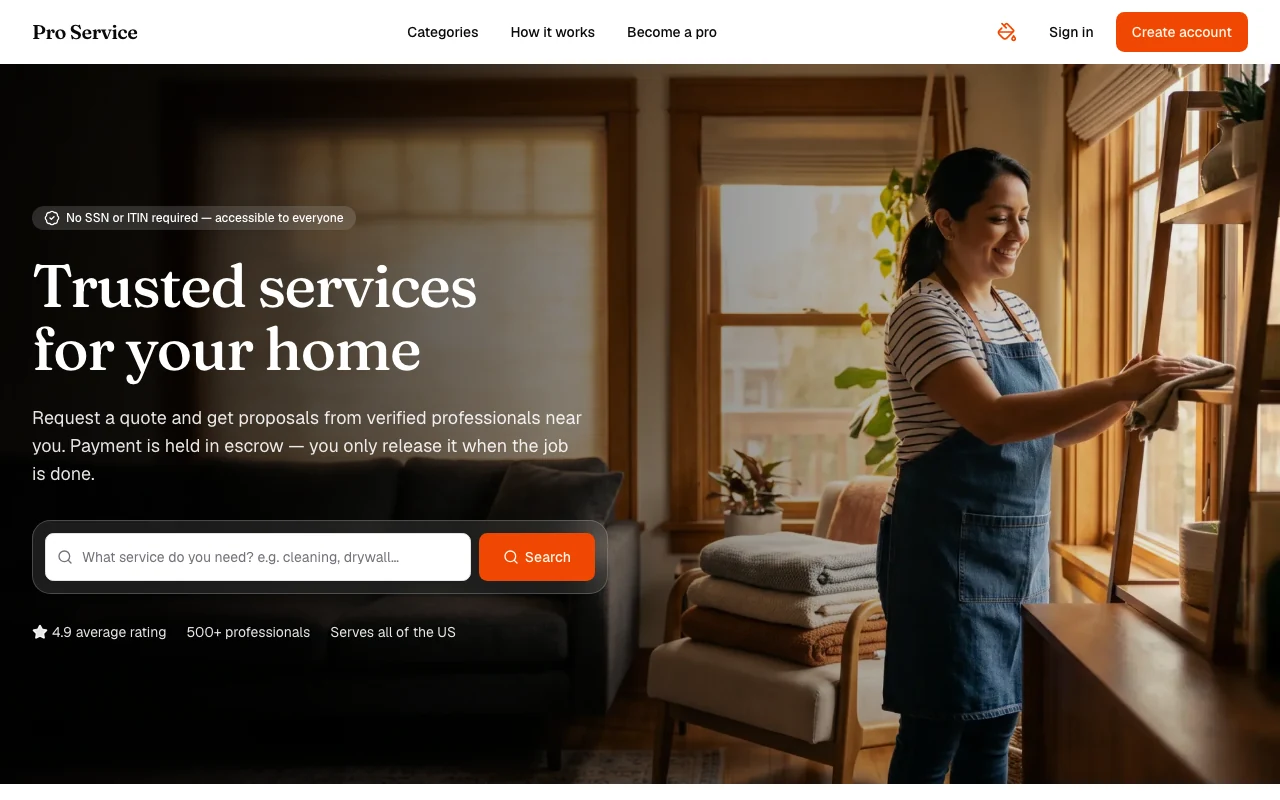
Find verified home service professionals, compare quotes, and pay securely through escrow - built for Brazilians across the US 🏠
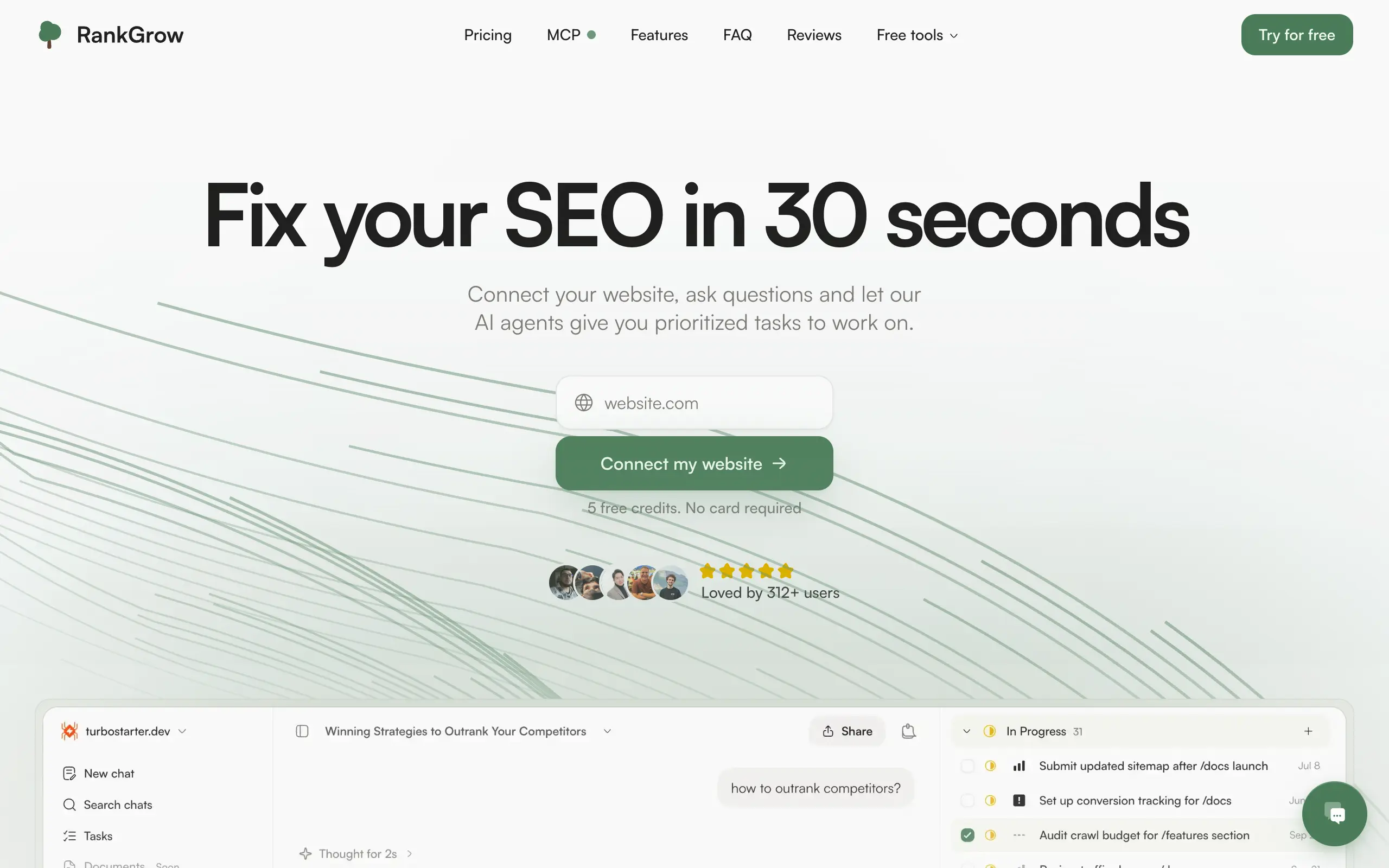
Fix your SEO with AI agents - connect Search Console, get prioritized tasks, and grow organic traffic 📈

Sync your favorite content for distraction-free reading, save time and replace multiple apps. Anytime, anywhere 🔄

Get clean, structured data from 21 platforms like TikTok, Instagram, and YouTube with a single request 📊
Monitor any Telegram channel in real time - track posts, edits, deletions, and growth with AI recaps 📡
AI website builder - describe your business, pick a niche template, edit by chatting, and publish instantly ✨
Find verified home service professionals, compare quotes, and pay securely through escrow - built for Brazilians across the US 🏠
Fix your SEO with AI agents - connect Search Console, get prioritized tasks, and grow organic traffic 📈
Sync your favorite content for distraction-free reading, save time and replace multiple apps. Anytime, anywhere 🔄
Get clean, structured data from 21 platforms like TikTok, Instagram, and YouTube with a single request 📊

Personalized AI apps that automate research, data extraction, and content creation without code 🤖

Enjoy a magical live video chat or receive a unique AI-generated video greeting from Santa Claus 🎅

Scalable blog for food journalist, focused on performance and user experience 🌭

Personal blog and portfolio of Bart Zagrodzki, where he shares his knowledge and work 💼

Ship your startup everywhere. In minutes.

Convert HTML to Markdown with ease, directly in your browser 📄
Personalized AI apps that automate research, data extraction, and content creation without code 🤖
Enjoy a magical live video chat or receive a unique AI-generated video greeting from Santa Claus 🎅
Scalable blog for food journalist, focused on performance and user experience 🌭
Personal blog and portfolio of Bart Zagrodzki, where he shares his knowledge and work 💼
Ship your startup everywhere. In minutes.
Convert HTML to Markdown with ease, directly in your browser 📄

Chat with 50+ AI models, including ChatGPT and Claude, in one place - switch models anytime without losing context 🤖

Supercharge your Claude Code with 6x effective context window and specialized AI agents 🤖

AI-powered emoji picker with smart, context-aware suggestions 🤖

Autonomous company launcher - AI agents work 24/7, escalate what matters, and you stay in control 🤖

Practice storytelling daily with instant feedback to sound clearer, more engaging, and confident 🎤
Chat with 50+ AI models, including ChatGPT and Claude, in one place - switch models anytime without losing context 🤖
Supercharge your Claude Code with 6x effective context window and specialized AI agents 🤖
AI-powered emoji picker with smart, context-aware suggestions 🤖
Autonomous company launcher - AI agents work 24/7, escalate what matters, and you stay in control 🤖
Practice storytelling daily with instant feedback to sound clearer, more engaging, and confident 🎤

Connect with like-minded people
Join our community to get feedback, support, and grow together with 1,000+ builders on board, let's ship it!
Join usShip your startup everywhere. In minutes.
Don't burn tokens on setup and start building features on day one.