ClausePilot
Automate contract obligation tracking from signed PDFs. It routes renewals, deliverables, and notice dates to owners before costly deadlines slip.
Contract deadlines rarely fail because a legal team does not understand the agreement. They fail because critical obligations are buried in signed PDFs, scattered across inboxes, or assigned informally without an auditable workflow. A renewal notice window closes, a supplier deliverable is missed, or a customer receives an invoice without the supporting acceptance milestone required by the contract.
Contract obligation tracking software solves this operational gap by turning executed agreements into owned, visible, and time-bound work. ClausePilot is positioned as a B2B platform that extracts obligations, renewal terms, notice periods, deliverables, and key dates from signed contracts, then routes each item to the people accountable for completing it.
For legal operations leaders, procurement teams, finance leaders, revenue operations teams, and compliance managers, the goal is not simply to store contracts. The goal is to ensure that the commitments inside those contracts are actively managed before they become financial, legal, or customer-retention problems.
The central opportunity
A contract repository tells a business where its agreements live. Contract obligation tracking software tells the business what must happen next, who owns it, and how much time remains.
Why contract obligation tracking software matters now
Companies are signing more agreements across more business functions than ever before. SaaS subscriptions, vendor master service agreements, customer order forms, data processing addenda, leases, insurance policies, channel agreements, statements of work, and procurement contracts all create obligations that continue long after signature.
The operational issue is straightforward. Most organizations have a contract execution workflow, but many do not have a reliable post-signature workflow.
A signed contract may include requirements such as:
- Giving written non-renewal notice within a defined window
- Delivering quarterly reports to a customer
- Reviewing security controls annually
- Providing proof of insurance before a renewal date
- Meeting a service-level obligation after a service interruption
- Reaching a minimum purchase commitment
- Completing an implementation milestone
- Paying a vendor according to a negotiated schedule
- Reviewing a data processing agreement after regulatory changes
- Providing termination assistance at the end of a relationship
Without a systematic process, these requirements are often manually tracked in spreadsheets, calendar reminders, task management tools, or individual employees' email inboxes. Each approach can work temporarily. None is consistently resilient when contract volume grows, personnel change, or accountability crosses departments.
Recent advances in document intelligence and generative AI make this category more practical than earlier contract lifecycle management implementations. Instead of asking legal teams to manually enter every date and obligation, a modern product can combine OCR, clause classification, structured extraction, confidence scoring, and human review.
However, the best product is not just an AI contract reader. It is a contract obligation management system that connects extraction to action.
The target audience for ClausePilot
ClausePilot should focus on teams with meaningful contract volume, decentralized ownership, and measurable consequences when deadlines slip. The strongest early customers are not necessarily the largest enterprises. They are organizations with enough complexity to feel the pain but without the budget, time, or appetite for a long enterprise CLM deployment.
Legal operations and in-house legal teams
Legal teams are often responsible for contract process design but are not the actual owners of every commercial obligation. They need visibility into contractual risk without becoming the administrative bottleneck for every renewal or deliverable.
Their common challenges include:
- Contracts arriving in multiple formats and locations
- Legal being copied too late when notice periods are approaching
- No central view of upcoming obligations
- Difficulty proving that critical terms were communicated to business owners
- Incomplete handoff from deal desk or counsel to operations teams
- High manual effort required to maintain an obligation tracker
For this audience, ClausePilot should emphasize controlled extraction, review workflows, audit history, and clear assignment logic.
Procurement and vendor management teams
Procurement departments manage supplier relationships with deadlines tied to renewals, pricing changes, rebates, volume commitments, insurance certificates, service reviews, and termination notices.
A missed notice date can result in an unwanted auto-renewal, while a missed vendor obligation can lead to service failures or weak negotiation leverage. Procurement teams need an operational layer that helps them prepare for renewals well before the deadline.
The most compelling procurement use cases include:
- Auto-renewal and non-renewal notice tracking
- Supplier performance review reminders
- Certificate of insurance expiration monitoring
- Vendor deliverable and implementation milestone tracking
- Renewal readiness workflows with spend owners
- Contractual price escalation and indexation alerts
Finance, accounts payable, and revenue operations teams
Finance teams care about agreements because contract terms affect cash flow, revenue recognition, payment schedules, purchase commitments, and budgeting. Revenue operations teams need customer obligations surfaced so account managers do not miss contractual service commitments, renewal milestones, or reporting requirements.
These users do not want to read a 60-page agreement. They want the few contract terms that affect their work, delivered in a practical and timely way.
ClausePilot can create value by translating legal documents into a concise operational record:
- What is due
- When it is due
- Who needs to act
- What source clause supports the requirement
- Whether the obligation is complete, at risk, or overdue
Compliance, security, and privacy teams
Regulated businesses and security-conscious companies frequently accept obligations around audits, data protection, incident notification, certifications, subprocessors, security questionnaires, and retention requirements.
These teams need evidence that commitments were identified and acted on. A simple reminder is not enough. They need a defensible record showing ownership, status, escalation, and supporting documentation.
This makes compliance a high-value segment for a contract obligation tracking platform, particularly in industries such as SaaS, healthcare, financial services, professional services, logistics, and regulated manufacturing.
Best early adopter
A growing B2B company with 100 to 2,000 active contracts, a lean legal or procurement team, and recurring renewal or compliance risk.
High-value trigger
A recent missed renewal, vendor dispute, audit finding, or expensive auto-renewal that makes the cost of inaction tangible.
Strong champion
A legal operations, procurement operations, or finance operations leader who owns the process but needs business teams to execute.
The market gap in contract obligation management
The market has no shortage of contract tools. The challenge is that many solutions fall into one of two categories.
The first category is document storage and contract lifecycle management. These platforms can be powerful, especially for organizations that need intake, drafting, approvals, negotiation, e-signature, repositories, and reporting. But they can be expensive, complex, and implementation-heavy for teams primarily trying to prevent post-signature deadlines from slipping.
The second category is generic work management. Spreadsheets, calendars, ticketing tools, and project management platforms can track tasks, but they do not reliably interpret legal language or preserve traceability to the source agreement.
ClausePilot can occupy the space between these categories by focusing on the post-signature reality of contracts.
| Approach | Stores signed contracts | Extracts obligations | Routes work to owners | Shows source evidence |
|---|---|---|---|---|
| Shared drive | ✅ | ❌ | ❌ | ❌ |
| Spreadsheet tracker | ❌ | Manual | Partial | Partial |
| Generic task platform | ❌ | Manual | ✅ | ❌ |
| Traditional CLM | ✅ | Often | Varies | ✅ |
| ClausePilot | ✅ | AI-assisted | ✅ | ✅ |
The differentiated opportunity is a product that makes contract commitments operational without requiring customers to replace every part of their existing CLM, e-signature, storage, procurement, or work-management stack.
The core market insight
A business does not need every contract clause turned into a task. That would create noise and rapidly erode trust in the system.
It needs the material obligations that carry a financial, compliance, customer, or relationship consequence if missed. The product must distinguish between a boilerplate clause and an actionable commitment.
That means ClausePilot needs to be opinionated about what is worth tracking:
- Renewal and termination notice dates
- Payment, invoicing, and price-change events
- Deliverables and acceptance milestones
- Insurance, certification, and audit requirements
- Reporting obligations
- Security, privacy, and incident-notification commitments
- Minimum commitments and volume thresholds
- Governance meetings and review cycles
- Renewal preparation tasks
- Contract expiry, extension, and amendment dependencies
How ClausePilot should work
The core product experience should be designed around a simple promise: upload or connect a signed agreement, confirm the extracted obligations, and let the platform route the work before deadlines become emergencies.
Contract intake and secure document ingestion
ClausePilot should support multiple contract intake paths so it fits into existing workflows:
- Drag-and-drop PDF upload
- Bulk upload for historical contract backfills
- Email forwarding to a secure ingestion address
- Cloud storage connections
- E-signature completion triggers
- API-based ingestion from a CRM, procurement system, or CLM
- Manual creation for obligations found outside formal contracts
The first version should prioritize signed PDFs because that is the clearest problem statement and supports a narrow, credible initial use case. Later integrations can expand adoption.
At ingestion, the system should capture metadata such as contract name, entity, counterparty, contract type, effective date, expiry date, department, owner, and linked business record.
AI-assisted clause extraction with review controls
The extraction engine should identify clauses and convert them into structured obligation candidates. Each candidate should include a human-readable summary, relevant dates, event triggers, accountable role, recommended reminder schedule, confidence level, and source location.
A useful obligation record might look like this:
const obligation = {
  contract: "Master services agreement",
  counterparty: "Northstar Logistics",
  obligationType: "Non-renewal notice",
  summary: "Provide written notice at least 60 days before renewal.",
  dueDate: "2026-08-02",
  owner: "Procurement manager",
  status: "Open",
  confidence: 0.94,
  sourceReference: "Section 12.2, page 18",
};
The product should never present AI output as unquestionable legal truth. Contract language is contextual, amendments may supersede earlier provisions, and date calculations can depend on notices, business days, local law, or linked schedules.
A robust workflow includes:
- Extract candidate obligations from the contract.
- Surface source text and page references.
- Ask a reviewer to approve, edit, dismiss, or merge candidates.
- Apply routing rules based on obligation type, department, counterparty, and spend or revenue threshold.
- Create reminders, tasks, and escalations.
- Keep a complete audit trail of edits and completion evidence.
Do not automate uncertainty
ClausePilot should use AI to accelerate review and reduce data entry, not to silently make legal interpretations. Confidence indicators, source citations, and human approval are product requirements, not optional polish.
Ownership routing and escalation workflows
The workflow engine is where ClausePilot becomes more than a contract repository. Every actionable obligation needs a clearly defined owner, a backup owner, a deadline, and an escalation path.
Routing rules can be configured by contract category or obligation type. For example:
- A renewal notice routes to procurement and the business spend owner.
- A customer reporting obligation routes to customer success.
- A privacy review routes to the privacy team and security lead.
- A payment milestone routes to finance.
- A project deliverable routes to the delivery manager.
- A contract amendment review routes to legal operations.
Reminders should not be one-size-fits-all. A three-year vendor renewal deserves different workflows than a 10-day incident-notification requirement.
The platform should allow configurable alert sequences based on risk:
- Low-risk obligations receive reminders 30 and 7 days before the due date.
- Medium-risk obligations receive reminders 60, 30, 14, and 7 days before the due date.
- High-risk obligations trigger earlier reminders, manager visibility, and escalation when no action is recorded.
A workload dashboard built for action
A strong dashboard does not simply count contracts. It answers operational questions:
- Which obligations are due this week?
- Which contracts have unassigned critical obligations?
- Which owners have overdue work?
- Which renewals require a decision before notice deadlines?
- Which obligations were completed without supporting evidence?
- Which counterparties create the highest near-term risk?
- Where are extraction confidence scores low enough to require review?
For executives, a concise risk view is valuable. For operational users, a personal work queue matters more. ClausePilot should offer both.
Source-linked evidence and auditability
Trust is the hardest product challenge in contract automation. Users must be able to understand why the system says an obligation exists.
Every obligation should link back to:
- The specific contract document
- The relevant page and clause location
- A highlighted source excerpt
- The extraction or review history
- The assigned owner and due-date calculation
- Completion notes and attached evidence
- Any subsequent amendment that alters the obligation
This feature is central to ClausePilot's competitive advantage. A dashboard without evidence may be useful for task tracking, but it is weak for legal, compliance, and audit purposes.
The unique selling proposition for ClausePilot
ClausePilot's USP should be framed as post-signature contract intelligence that becomes accountable work.
Rather than competing broadly as another all-in-one contract lifecycle management platform, it can make a more specific and compelling promise:
ClausePilot turns obligations hidden in signed contracts into owner-assigned, source-linked workflows before costly deadlines slip.
This positioning has several advantages.
First, it is easy for buyers to understand. They immediately recognize the risk of missed renewals, deliverables, and notices.
Second, it is measurable. Buyers can evaluate the platform based on avoided auto-renewals, reduced overdue obligations, faster contract review, and improved audit readiness.
Third, it creates a focused product wedge. The team can solve a painful post-signature problem without building every drafting, redlining, e-signature, and CLM feature at the beginning.
Fourth, it can integrate with systems buyers already use instead of asking them to rip and replace them.
Recommended technology stack for a contract obligation tracking SaaS
ClausePilot needs a stack that supports secure file handling, asynchronous document processing, structured workflows, role-based access, and auditable data. Reliability and security matter more than chasing novelty.
Product application and user interface
For a modern SaaS application, a strong foundation is Next.js with React and TypeScript. This stack supports a fast application experience, server-side capabilities, typed API contracts, and an ecosystem well suited to B2B dashboards.
Tailwind CSS is a practical choice for building a consistent, accessible interface quickly. It works especially well when the product needs dense data tables, workflow statuses, dashboards, and responsive detail views.
Recommended frontend choices include:
- Next.js for application routing and full-stack delivery
- React for composable workflow interfaces
- TypeScript for stronger data reliability
- Tailwind CSS for a maintainable design system
- TanStack Query for server-state synchronization
- Zod for schema validation at system boundaries
Database and workflow architecture
PostgreSQL is an excellent primary database because contract data is relational. Contracts connect to counterparties, entities, clauses, obligations, owners, notifications, evidence, amendments, and audit events.
A recommended approach is to model obligations as first-class records rather than simply storing extracted JSON. This enables querying, reporting, filtering, permissions, and workflow automation.
Core entities should include:
- "Organization" for the tenant account
- "User" for authenticated users and their roles
- "Contract" for the signed agreement and metadata
- "ContractVersion" for amendments, restatements, and revised documents
- "Clause" for extracted source segments
- "Obligation" for actionable requirements
- "Task" for execution work tied to an obligation
- "Notification" for reminders and escalations
- "Evidence" for proof of completion
- "AuditEvent" for immutable activity history
For background processing, use a durable queue or workflow system. PDF extraction, OCR, AI analysis, notifications, and recurring deadline checks should never depend on a user keeping a browser tab open.
Document processing and AI trade-offs
The extraction pipeline should have multiple layers:
- PDF parsing for digitally generated documents
- OCR fallback for scanned agreements
- Layout-aware segmentation for headings, sections, tables, and signatures
- Clause classification and structured extraction
- Validation rules for dates and commercial fields
- Human review for low-confidence or high-risk outputs
A large language model can summarize clauses and identify likely obligations, but it should operate within controlled prompts and structured output schemas. Retrieval should be grounded in the document's actual text, not general legal knowledge.
The trade-off is clear:
- Fully automated extraction is faster but carries legal and operational risk.
- Human review increases trust but adds time.
- A hybrid workflow is the most commercially viable option for early-stage B2B software.
Use deterministic rules where possible. For example, if a clause explicitly says notice must be provided 60 days before the end of the term, the due-date calculation should be performed by tested application logic, not by an AI model.
Security and privacy requirements
Because contracts frequently contain confidential commercial, personal, and security information, security is not a later-stage concern.
ClausePilot should plan for:
- Encryption in transit and at rest
- Tenant-level data isolation
- Role-based access controls
- Secure object storage for PDFs
- Audit logs for document access and changes
- Data retention and deletion controls
- SSO for larger customers
- Multi-factor authentication
- Redaction options for sensitive documents
- Vendor due diligence for AI and OCR providers
- Clear customer data processing terms
For enterprise sales, a roadmap toward SOC 2 readiness is important. Buyers may also expect a security overview, incident response process, subprocessor list, and evidence that customer contract data is not used to train public models.
For credible industry statistics on the cost of missed renewals, contract leakage, or manual contract administration, cite the relevant report directly from a recognized source such as World Commerce & Contracting, Gartner, Deloitte, or an established legal operations publication. Avoid relying on unattributed market-size claims.
Monetization strategies for contract obligation tracking software
ClausePilot should price around measurable value while keeping the buying decision easy for mid-market teams.
Per-contract or active obligation pricing
Usage-based pricing can align with customer growth. A plan may include a set number of active contracts or obligations, with overage charges for additional volume.
This model works well when:
- Customers have highly variable contract portfolios
- The platform is used for a defined subset of high-risk agreements
- Buyers want a low-cost entry point
The downside is that customers may hesitate to upload their full portfolio if they fear unexpected usage charges.
Seat-based pricing with included contract volume
A more familiar B2B model is a monthly or annual subscription based on platform seats, including a reasonable number of active contracts.
This works well for legal operations, procurement, and compliance teams because they can predict spend. It also avoids discouraging adoption across departments.
A possible packaging structure is:
- "Starter" for small teams tracking a limited portfolio
- "Growth" for multi-department routing, integrations, and reporting
- "Enterprise" for SSO, advanced permissions, API access, custom retention, and dedicated support
Implementation and backfill services
Historical contract ingestion can be a major value driver. Customers often have hundreds or thousands of existing signed PDFs that need cleanup, metadata enrichment, and obligation review.
ClausePilot can offer a paid onboarding package that includes:
- Bulk import support
- Contract taxonomy setup
- Initial routing rule configuration
- Historical contract extraction
- Review workshops for high-risk obligations
- Dashboard and reporting configuration
This creates early revenue while increasing customer success. The trade-off is that services must remain standardized enough not to distract the product team.
Premium intelligence modules
Over time, premium modules can expand average revenue per account:
- Renewal forecasting and negotiation readiness
- Vendor risk and obligation scorecards
- Compliance obligation templates
- Contract portfolio analytics
- Advanced amendment comparison
- Evidence collection workflows
- CRM, procurement, or ticketing integrations
- AI-assisted obligation review for high-volume portfolios
The core product should remain focused. Upsells should deepen the value of obligation management rather than pull the roadmap toward a generic CLM clone.
Competitive advantage and defensibility
ClausePilot will face competition from CLM vendors, document AI providers, procurement suites, and productivity tools. The defense is not simply “we use AI.” AI features are increasingly easy to copy.
The defensible advantage comes from product depth in the obligation lifecycle.
Build a proprietary obligation dataset
With customer permission and appropriate isolation, the platform can learn from anonymized patterns such as clause categories, obligation types, date formulations, routing decisions, review corrections, and completion outcomes.
The goal is not to train on confidential contract text indiscriminately. The goal is to improve extraction quality through structured feedback loops.
Over time, ClausePilot can become better at recognizing:
- Renewal language across contract types
- Notice-period variations
- Ambiguous delivery terms
- Common compliance requirements
- Amendment conflicts
- Appropriate owner recommendations
- Risk factors associated with overdue obligations
Make integrations operational, not cosmetic
A shallow integration merely syncs contacts or exports tasks. A strong integration closes the loop.
Examples include:
- Creating a procurement review request before a vendor renewal deadline
- Opening a customer success task when a reporting obligation is due
- Syncing account ownership from a CRM
- Creating a ticket in an existing service desk
- Sending high-risk escalations to collaboration tools
- Updating finance workflows when payment milestones are complete
The more ClausePilot fits into where work already happens, the harder it becomes to replace.
Earn trust through explainability
Legal and operational users will not trust a black-box recommendation for high-stakes deadlines. The platform should consistently show the original text, explain the extracted field, record who approved it, and preserve the history of changes.
That trust layer is a genuine moat because it requires disciplined data modeling, thoughtful interface design, and workflow rigor.
Risks and how to mitigate them
Extraction errors and ambiguous language
Contract language can be conditional, negotiated, amended, or dependent on external events. A system that confidently extracts incorrect obligations can create more risk than a spreadsheet.
Mitigation should include:
- Confidence scoring for extracted fields
- Mandatory review rules for high-risk obligation types
- Source text and page-level citations
- Clear labels distinguishing AI suggestions from approved records
- Amendment-aware contract versioning
- Rule-based date calculations
- Customer-configurable risk thresholds
Long enterprise sales cycles
Legal and compliance software can require security reviews, procurement approval, and stakeholder alignment. A broad enterprise positioning may slow early traction.
Mitigation should include a focused wedge. Sell to mid-market teams around one urgent use case, such as auto-renewal prevention or vendor obligation tracking. Offer a fast implementation path and prove value within the first 30 to 60 days.
Integration complexity
Integrations can become a roadmap trap, especially when every buyer requests a different system connection.
Mitigation should include beginning with CSV imports, email ingestion, webhooks, and a small set of high-demand integrations. Build an API and event model early so future connections are easier without committing to every platform immediately.
Security concerns around contract uploads
Customers may be hesitant to upload sensitive documents into a newer platform.
Mitigation should include transparent security documentation, encryption, role controls, data retention policies, a clear AI data policy, and support for pilot projects using a limited subset of contracts.
Notification fatigue
If every extracted clause becomes a reminder, users will ignore alerts and the product will lose credibility.
Mitigation should include risk-based defaults, approval workflows, configurable reminder schedules, digest options, and the ability to suppress low-value obligations.
Not initially. The stronger strategy is to integrate with existing repositories and CLM tools while becoming the specialized action layer for post-signature obligations. Some customers may eventually consolidate tools, but replacement should not be required for initial adoption.
No. Legal teams often govern contract process, but procurement, finance, customer success, security, compliance, and delivery teams are usually responsible for completing contract commitments.
Renewal and notice-date tracking is often the clearest initial wedge because the deadline is objective, the financial cost of failure is easy to explain, and business owners understand the impact immediately.
A practical go-to-market strategy
The first go-to-market message should avoid generic claims about “AI-powered contracts.” Buyers have seen those messages repeatedly. Instead, lead with a specific expensive failure mode.
Effective messaging themes include:
- Never miss a contract renewal notice again
- Turn signed PDFs into accountable obligations
- Give every contract deadline an owner and escalation path
- Make contract commitments audit-ready
- See what is due before it becomes urgent
The best initial acquisition channels are likely:
- Content targeting searches for contract renewal tracking, obligation management, and notice-period tracking
- Legal operations and procurement communities
- Partnerships with contract consultants and fractional general counsel
- Outbound campaigns triggered by procurement or legal operations hiring signals
- Educational webinars around renewal risk and post-signature contract management
- Integration marketplaces once the core platform has proven demand
Content should answer high-intent questions in detail. Examples include:
- How to track contract renewal dates
- How to avoid auto-renewal clauses
- Contract obligation management best practices
- How to create a contract obligations register
- Contract notice period checklist
- Post-signature contract management workflow
This approach builds topical authority while connecting directly to the pain ClausePilot solves.
Actionable implementation steps for launching ClausePilot
The most effective path is to validate the highest-risk workflow before building a large CLM platform.
For founders moving quickly, a production-minded SaaS starter can reduce time spent on foundational concerns such as authentication, billing, dashboards, account management, and application structure. TurboStarter is a practical starting point for teams that want to focus engineering effort on the contract intelligence and workflow features that make ClausePilot distinctive.
The path to a durable contract operations platform
ClausePilot has a compelling opportunity because it addresses a persistent operational problem rather than a novelty use case. Businesses already have contracts. They already have deadlines. They already suffer when ownership is unclear and critical dates remain hidden in documents.
The winning product will not be the one that extracts the most clauses. It will be the one that reliably identifies what matters, makes ownership obvious, supports human judgment, provides evidence, and ensures the right people act before the deadline.
By starting with high-value obligations such as renewal notices, then expanding into deliverables, compliance requirements, and commercial commitments, ClausePilot can become the system of record for post-signature accountability.
That is a valuable position in the B2B software market: not another place to store contracts, but the operational layer that makes signed agreements actually work.
More 🏢 B2B Application SaaS ideas
Discover more innovative b2b application SaaS ideas that are trending in 2026. Each idea is AI-generated with market validation and growth potential to help you find your next profitable venture faster than competitors.
Your competitors are building with TurboStarter
Below are some of the SaaS ideas that have been generated and built with our starter kit.
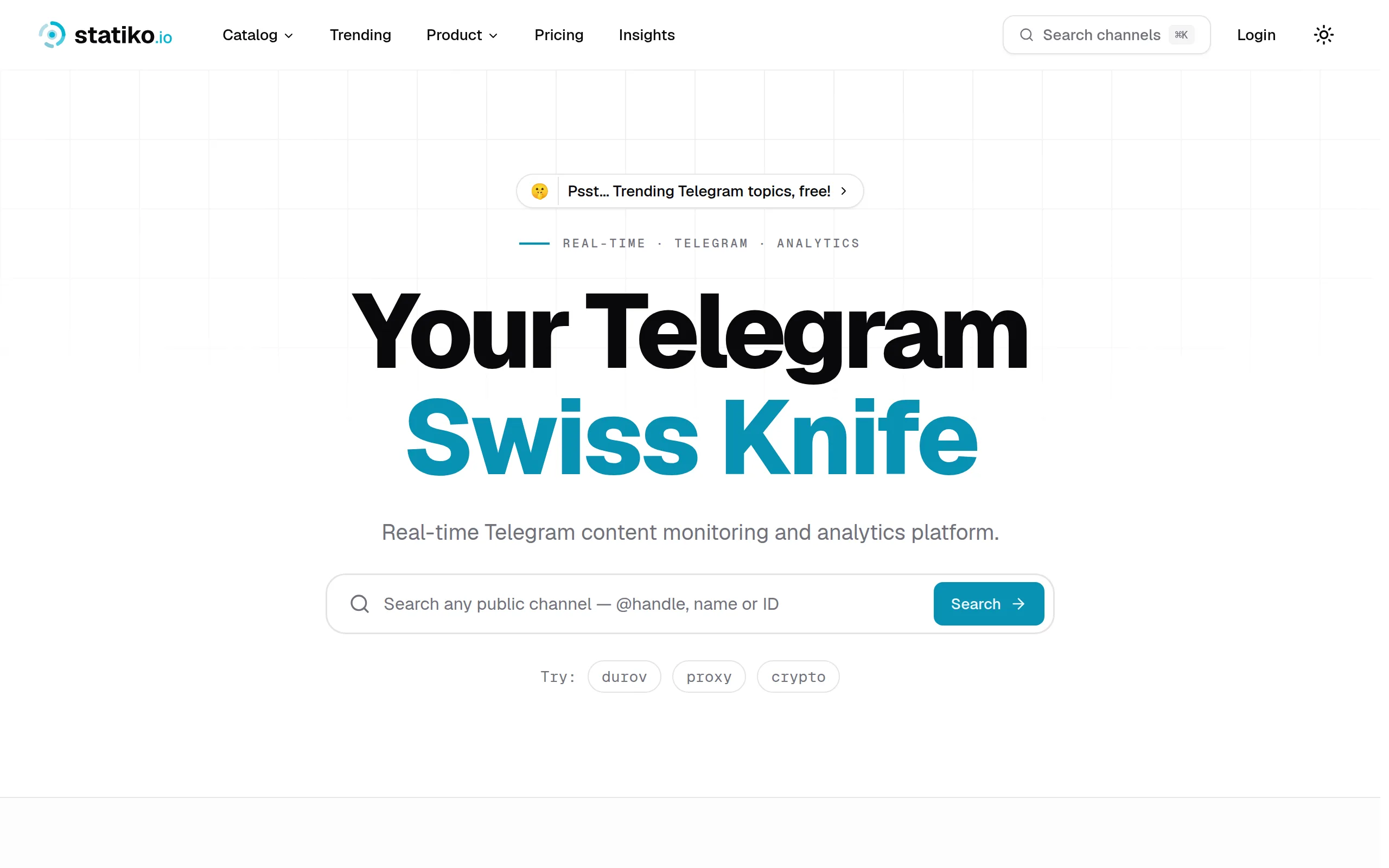
Statiko
Monitor any Telegram channel in real time - track posts, edits, deletions, and growth with AI recaps 📡

Shibui
AI website builder - describe your business, pick a niche template, edit by chatting, and publish instantly ✨

Pro Service
Find verified home service professionals, compare quotes, and pay securely through escrow - built for Brazilians across the US 🏠
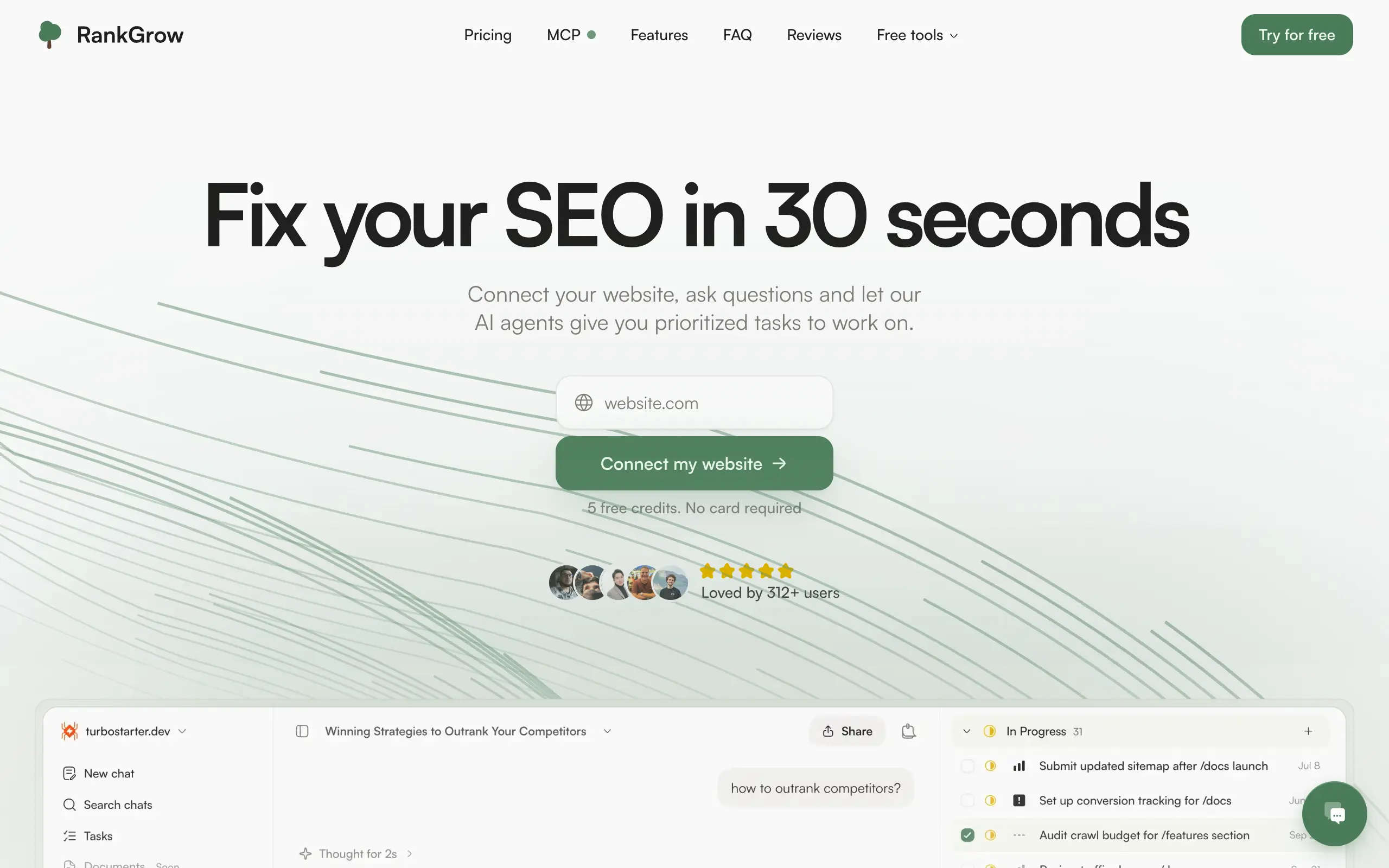
RankGrow
Fix your SEO with AI agents - connect Search Console, get prioritized tasks, and grow organic traffic 📈
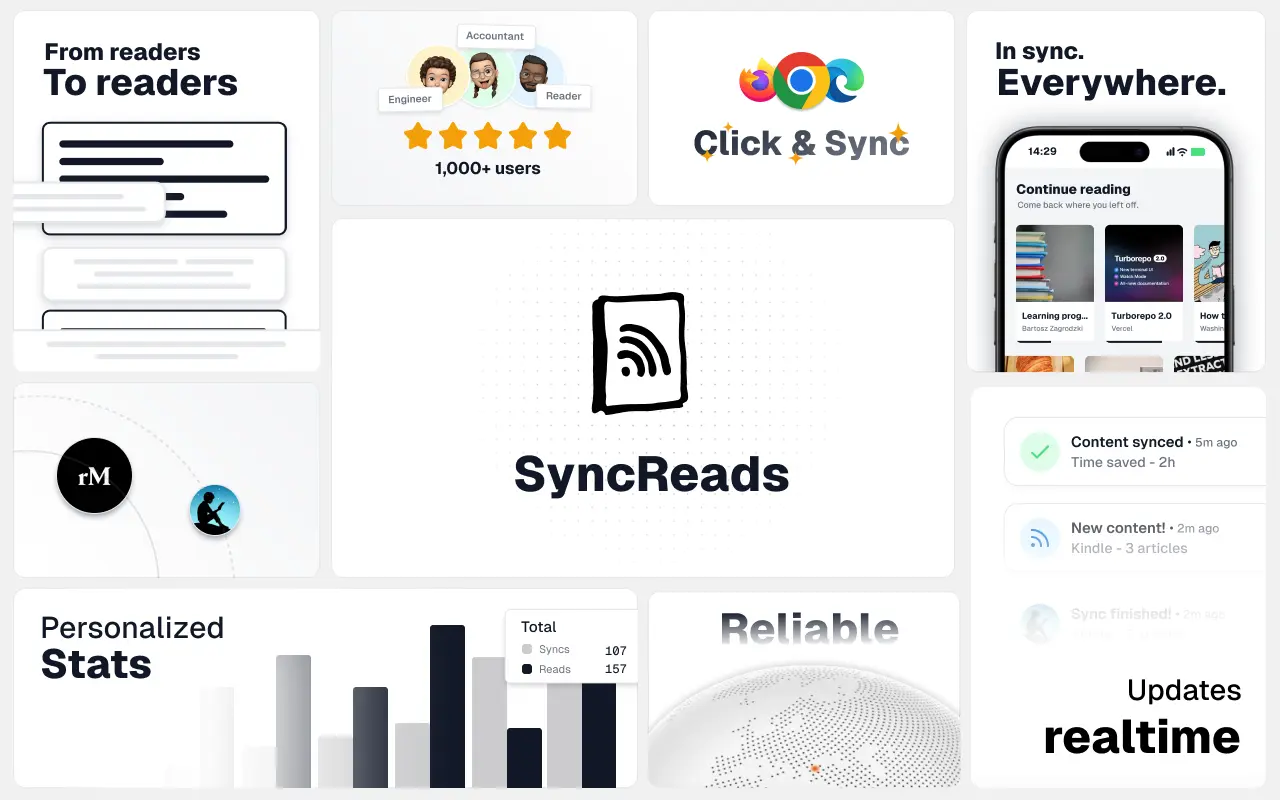
SyncReads
Sync your favorite content for distraction-free reading, save time and replace multiple apps. Anytime, anywhere 🔄
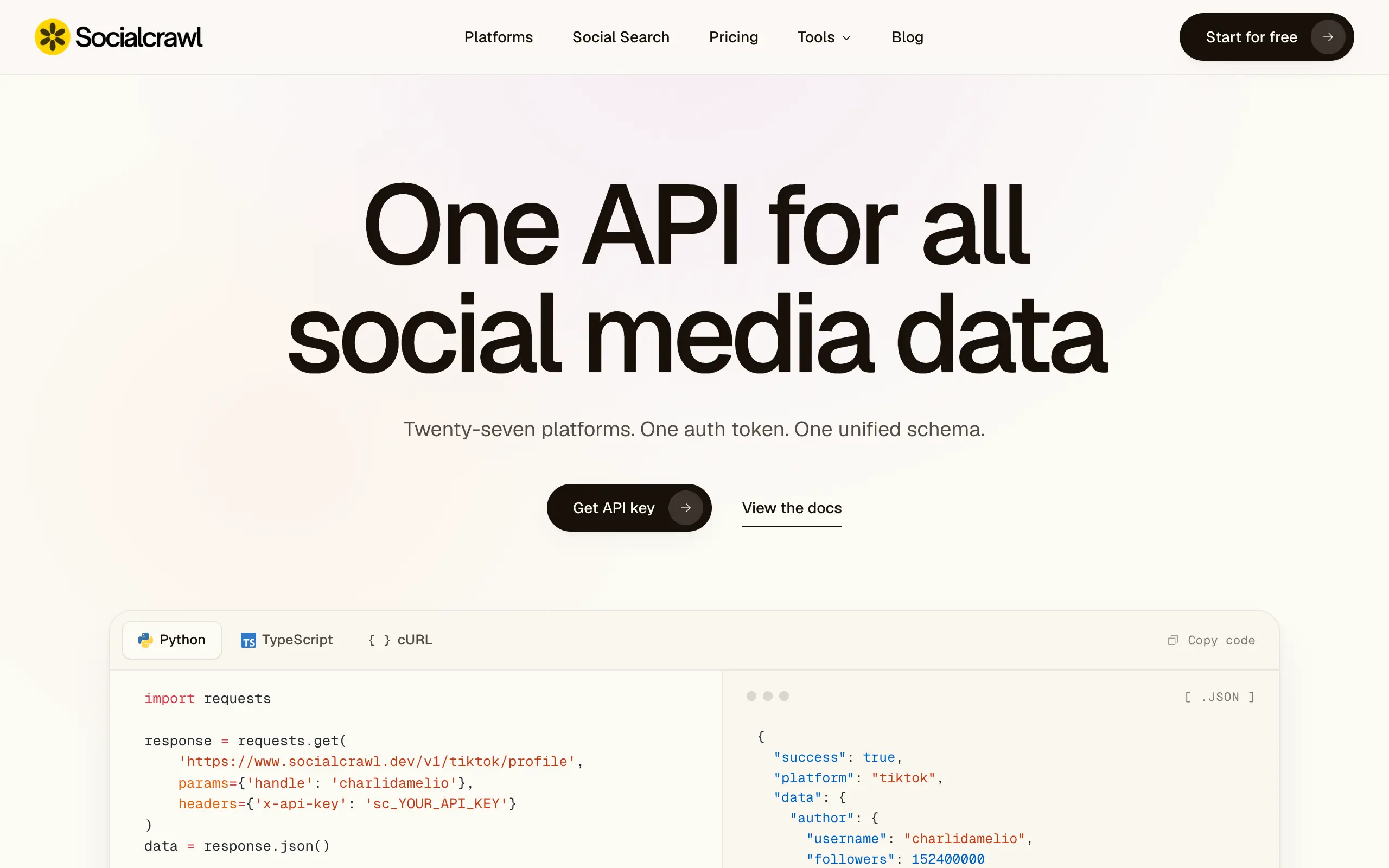
Socialcrawl
Get clean, structured data from 21 platforms like TikTok, Instagram, and YouTube with a single request 📊
Statiko
Monitor any Telegram channel in real time - track posts, edits, deletions, and growth with AI recaps 📡
Shibui
AI website builder - describe your business, pick a niche template, edit by chatting, and publish instantly ✨
Pro Service
Find verified home service professionals, compare quotes, and pay securely through escrow - built for Brazilians across the US 🏠
RankGrow
Fix your SEO with AI agents - connect Search Console, get prioritized tasks, and grow organic traffic 📈
SyncReads
Sync your favorite content for distraction-free reading, save time and replace multiple apps. Anytime, anywhere 🔄
Socialcrawl
Get clean, structured data from 21 platforms like TikTok, Instagram, and YouTube with a single request 📊
Statiko
Monitor any Telegram channel in real time - track posts, edits, deletions, and growth with AI recaps 📡
Shibui
AI website builder - describe your business, pick a niche template, edit by chatting, and publish instantly ✨
Pro Service
Find verified home service professionals, compare quotes, and pay securely through escrow - built for Brazilians across the US 🏠
RankGrow
Fix your SEO with AI agents - connect Search Console, get prioritized tasks, and grow organic traffic 📈
SyncReads
Sync your favorite content for distraction-free reading, save time and replace multiple apps. Anytime, anywhere 🔄
Socialcrawl
Get clean, structured data from 21 platforms like TikTok, Instagram, and YouTube with a single request 📊
Statiko
Monitor any Telegram channel in real time - track posts, edits, deletions, and growth with AI recaps 📡
Shibui
AI website builder - describe your business, pick a niche template, edit by chatting, and publish instantly ✨
Pro Service
Find verified home service professionals, compare quotes, and pay securely through escrow - built for Brazilians across the US 🏠
RankGrow
Fix your SEO with AI agents - connect Search Console, get prioritized tasks, and grow organic traffic 📈
SyncReads
Sync your favorite content for distraction-free reading, save time and replace multiple apps. Anytime, anywhere 🔄
Socialcrawl
Get clean, structured data from 21 platforms like TikTok, Instagram, and YouTube with a single request 📊
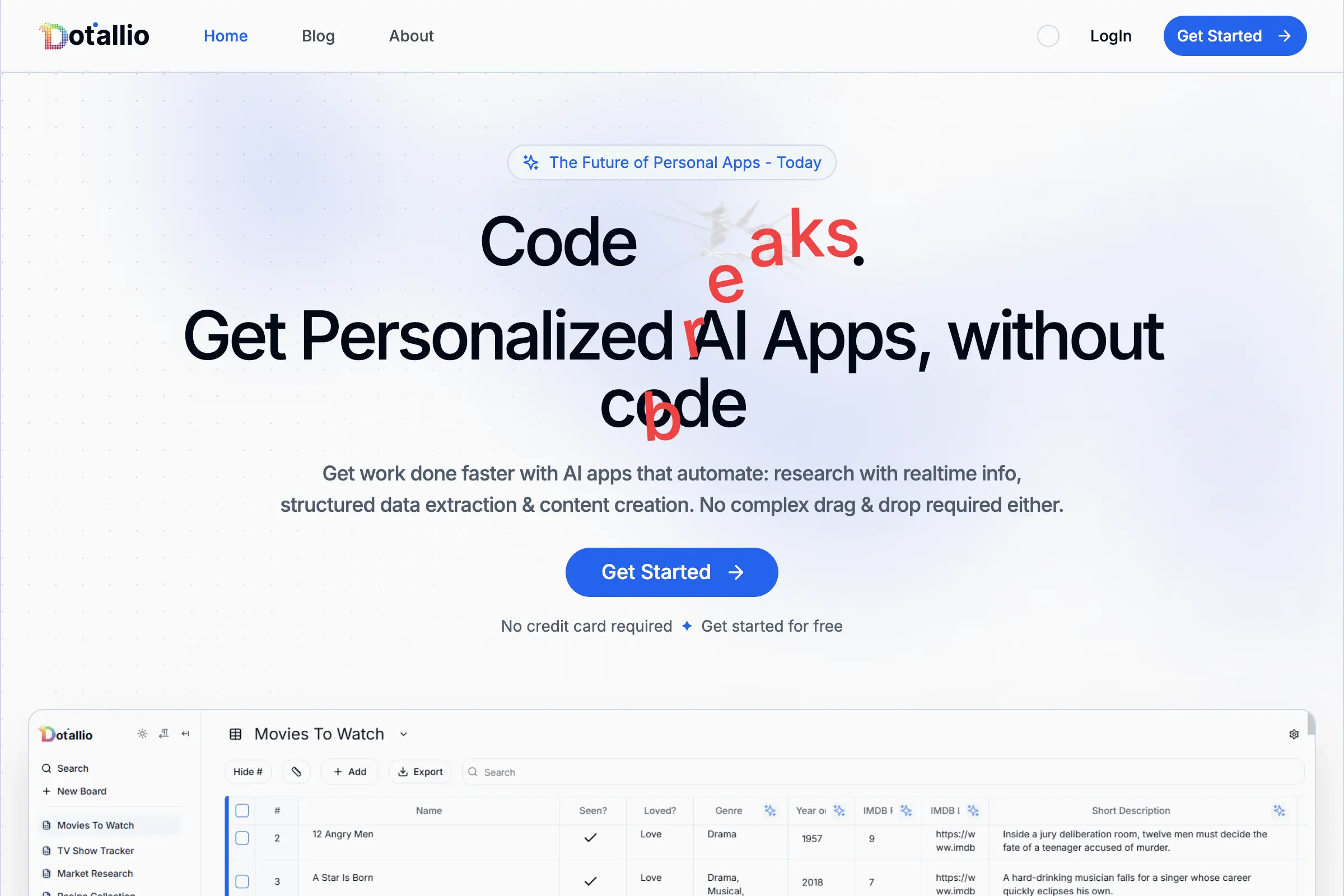
Dotallio
Personalized AI apps that automate research, data extraction, and content creation without code 🤖

Talk to Santa
Enjoy a magical live video chat or receive a unique AI-generated video greeting from Santa Claus 🎅

pozywka.pl
Scalable blog for food journalist, focused on performance and user experience 🌭
zagrodzki.me
Personal blog and portfolio of Bart Zagrodzki, where he shares his knowledge and work 💼
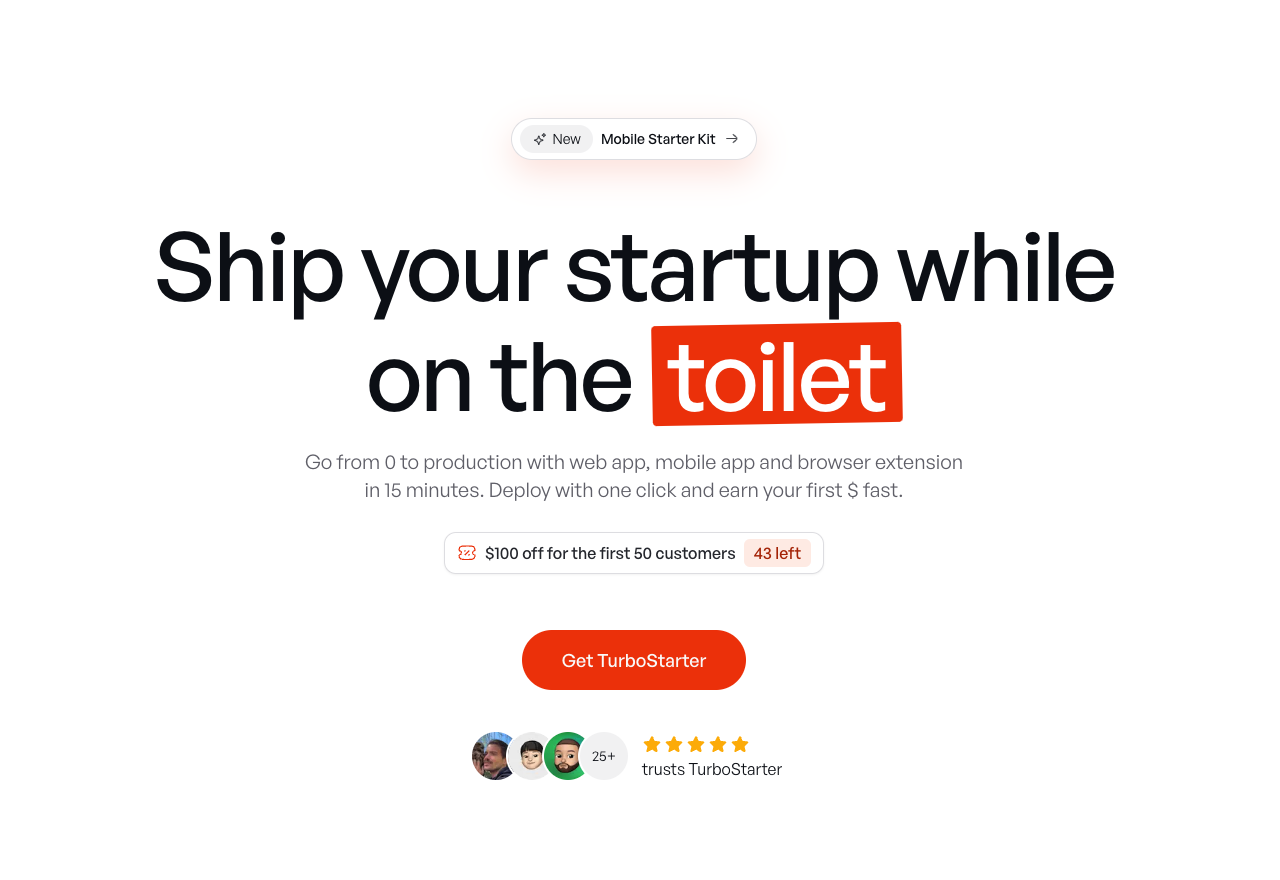
TurboStarter
Ship your startup everywhere. In minutes.
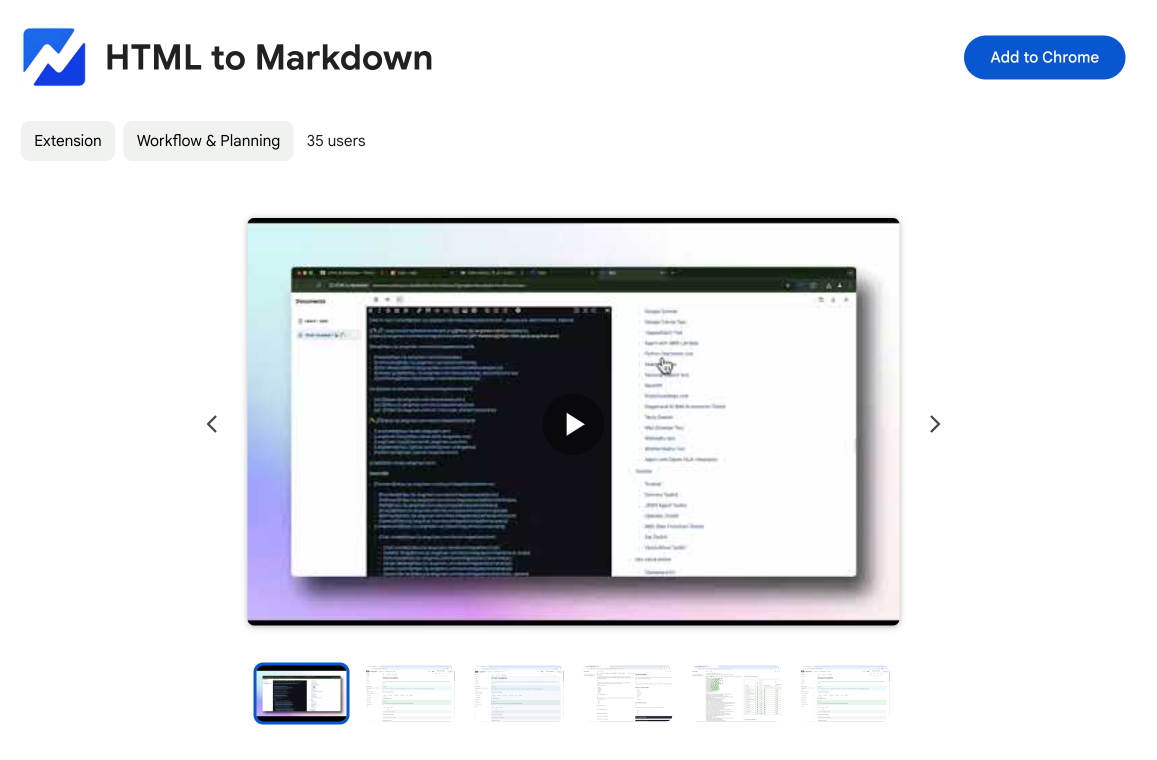
HTML to Markdown
Convert HTML to Markdown with ease, directly in your browser 📄
Dotallio
Personalized AI apps that automate research, data extraction, and content creation without code 🤖
Talk to Santa
Enjoy a magical live video chat or receive a unique AI-generated video greeting from Santa Claus 🎅
pozywka.pl
Scalable blog for food journalist, focused on performance and user experience 🌭
zagrodzki.me
Personal blog and portfolio of Bart Zagrodzki, where he shares his knowledge and work 💼
TurboStarter
Ship your startup everywhere. In minutes.
HTML to Markdown
Convert HTML to Markdown with ease, directly in your browser 📄
Dotallio
Personalized AI apps that automate research, data extraction, and content creation without code 🤖
Talk to Santa
Enjoy a magical live video chat or receive a unique AI-generated video greeting from Santa Claus 🎅
pozywka.pl
Scalable blog for food journalist, focused on performance and user experience 🌭
zagrodzki.me
Personal blog and portfolio of Bart Zagrodzki, where he shares his knowledge and work 💼
TurboStarter
Ship your startup everywhere. In minutes.
HTML to Markdown
Convert HTML to Markdown with ease, directly in your browser 📄
Dotallio
Personalized AI apps that automate research, data extraction, and content creation without code 🤖
Talk to Santa
Enjoy a magical live video chat or receive a unique AI-generated video greeting from Santa Claus 🎅
pozywka.pl
Scalable blog for food journalist, focused on performance and user experience 🌭
zagrodzki.me
Personal blog and portfolio of Bart Zagrodzki, where he shares his knowledge and work 💼
TurboStarter
Ship your startup everywhere. In minutes.
HTML to Markdown
Convert HTML to Markdown with ease, directly in your browser 📄
Omichat
Chat with 50+ AI models, including ChatGPT and Claude, in one place - switch models anytime without losing context 🤖
Claude Fast
Supercharge your Claude Code with 6x effective context window and specialized AI agents 🤖
EmojAI
AI-powered emoji picker with smart, context-aware suggestions 🤖
Solohacker
Autonomous company launcher - AI agents work 24/7, escalate what matters, and you stay in control 🤖
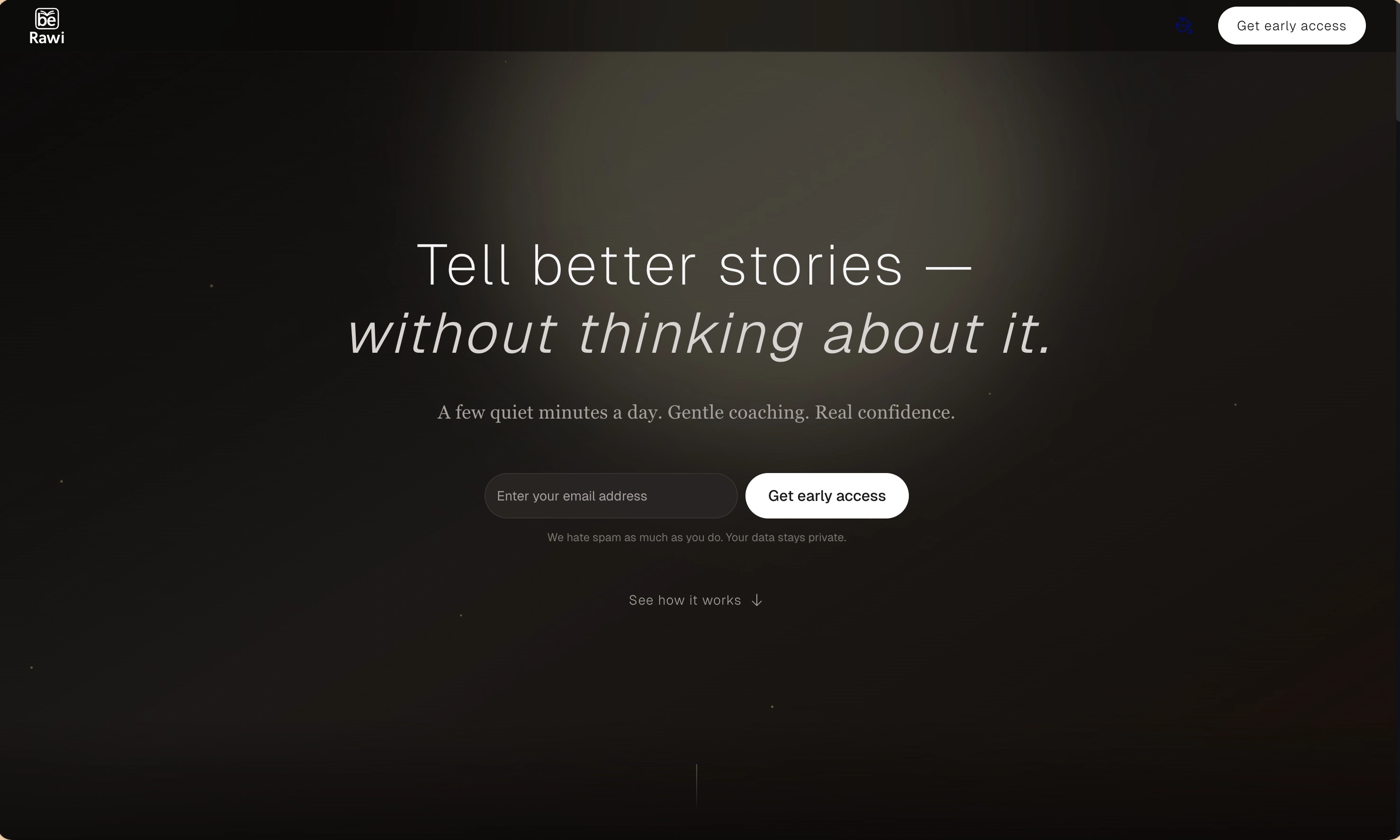
BeRawi: Storytelling Coach
Practice storytelling daily with instant feedback to sound clearer, more engaging, and confident 🎤
Omichat
Chat with 50+ AI models, including ChatGPT and Claude, in one place - switch models anytime without losing context 🤖
Claude Fast
Supercharge your Claude Code with 6x effective context window and specialized AI agents 🤖
EmojAI
AI-powered emoji picker with smart, context-aware suggestions 🤖
Solohacker
Autonomous company launcher - AI agents work 24/7, escalate what matters, and you stay in control 🤖
BeRawi: Storytelling Coach
Practice storytelling daily with instant feedback to sound clearer, more engaging, and confident 🎤
Omichat
Chat with 50+ AI models, including ChatGPT and Claude, in one place - switch models anytime without losing context 🤖
Claude Fast
Supercharge your Claude Code with 6x effective context window and specialized AI agents 🤖
EmojAI
AI-powered emoji picker with smart, context-aware suggestions 🤖
Solohacker
Autonomous company launcher - AI agents work 24/7, escalate what matters, and you stay in control 🤖
BeRawi: Storytelling Coach
Practice storytelling daily with instant feedback to sound clearer, more engaging, and confident 🎤
Omichat
Chat with 50+ AI models, including ChatGPT and Claude, in one place - switch models anytime without losing context 🤖
Claude Fast
Supercharge your Claude Code with 6x effective context window and specialized AI agents 🤖
EmojAI
AI-powered emoji picker with smart, context-aware suggestions 🤖
Solohacker
Autonomous company launcher - AI agents work 24/7, escalate what matters, and you stay in control 🤖
BeRawi: Storytelling Coach
Practice storytelling daily with instant feedback to sound clearer, more engaging, and confident 🎤

Connect with like-minded people
Join our community to get feedback, support, and grow together with 1,000+ builders on board, let's ship it!
Join usShip your startup everywhere. In minutes.
Don't burn tokens on setup and start building features on day one.