ContractBeacon
ContractBeacon maps breaking OpenAPI or protobuf changes to the services and endpoints that consume them. Teams get actionable CI gates instead of noisy schema diffs.
ContractBeacon addresses a common problem in distributed software development: an API schema can change in a way that breaks a service, even when the change looks harmless in a pull request. By connecting schema changes to the services and endpoints that depend on them, the product can help teams replace noisy diffs with actionable CI decisions.
The idea has a clear B2B audience, a practical engineering use case, and a focused promise: show who may be affected by an API change before that change reaches production. The opportunity is not simply to compare two versions of an OpenAPI document or protobuf definition. It is to make those comparisons meaningful within the context of an organization’s service dependencies.
What ContractBeacon should do
ContractBeacon is a change-impact analysis platform for API schemas. It watches OpenAPI specifications and protobuf definitions, identifies potentially breaking changes, and connects those changes to the services, clients, and endpoints that consume them.
A useful result should answer three questions:
- What changed? Identify the schema element and the nature of the change.
- Why does it matter? Explain the likely compatibility impact in the relevant direction.
- Who should act? Name the known services, repositories, owners, or CI workflows that may be affected.
That last question is where ContractBeacon can distinguish itself. A conventional schema diff may report that a field was removed. A useful change-impact tool can report that the field is used by three registered consumers, identify their owning teams, and block a merge only when an organization-defined policy says the risk is unacceptable.
The product should avoid presenting every difference as a breaking change. It should make risk legible and give teams enough evidence to decide whether to block, warn, or approve a change.
Why API breaking change detection matters
Modern software systems rarely consist of one application and one API. A product may have dozens or hundreds of services, shared libraries, internal APIs, external integrations, and separately deployed clients. A schema change in one repository can therefore affect code maintained elsewhere.
The problem gets harder as teams adopt:
- Microservices and independently deployed applications
- Shared API gateways and internal platform teams
- Multiple programming languages
- Public and private APIs
- Mobile clients that cannot be upgraded immediately
- Event-driven systems with long-lived message consumers
- Automated generation of clients and server stubs
In this environment, a schema diff is not the same thing as an impact assessment. A change can be syntactically valid and still cause a downstream failure. Conversely, a change that looks concerning may be safe for every consumer currently registered in a particular organization.
ContractBeacon should help teams move from “the schema changed” to “these consumers may be affected, for these reasons, under this compatibility policy.”
The gap between schema diffing and impact analysis
Schema comparison is a necessary capability, but it is only one part of the workflow. A basic diff can identify additions, removals, and modifications. It often cannot establish:
- Whether a changed field is used by a particular client
- Which team owns the consumer
- Whether the change is breaking for request producers, response consumers, or both
- Whether the affected consumer is still active
- Whether the repository’s compatibility policy allows the change
- Whether the check should block a merge or raise a warning
Consumer-driven contract testing can help teams validate expectations between providers and consumers. Schema registries can provide a governed place to store and validate schemas. ContractBeacon can sit alongside these practices by focusing on change impact across a service graph.
It should not claim that static schema analysis can prove every runtime behavior. Instead, it can combine schema rules, repository metadata, explicit dependency declarations, and optional consumer evidence to produce a transparent assessment.
Target audience for ContractBeacon
The best early customers are teams with enough service complexity to feel the problem and enough engineering maturity to adopt CI checks.
Primary users
- Platform engineering teams that provide shared CI tooling or service catalogs
- API platform teams that define schema standards and compatibility policies
- Backend engineers who maintain API providers
- Client and integration engineers who consume APIs across team boundaries
- Engineering managers and technical leads responsible for delivery risk
These users do not all need the same interface. Engineers need a fast, precise check in a pull request. Platform teams need policy controls, integrations, and organization-wide visibility. Engineering leaders may need a summary of unresolved compatibility risks rather than raw schema details.
Best-fit companies
ContractBeacon is most likely to deliver immediate value to organizations that have:
- Multiple teams releasing services independently
- A mix of OpenAPI and protobuf
- Shared APIs used by many internal services
- Client applications with different release schedules
- Existing CI pipelines and code review practices
- A service catalog, ownership metadata, or repository conventions
- Repeated incidents or delays caused by unnoticed API incompatibilities
Smaller teams may still benefit, but they may not have enough consumers for a dedicated impact-analysis platform to be an urgent purchase. A self-serve product tier can make it easy for these teams to adopt ContractBeacon before their service graph becomes difficult to manage.
Buyers and champions
The technical champion is likely to be a platform engineer, API lead, or senior developer who has experienced a breaking change firsthand. The economic buyer may be a VP of Engineering, CTO, or platform organization leader.
The product’s value proposition should be expressed in engineering outcomes rather than fear-based claims:
- Fewer surprise integration failures
- Faster and more confident API reviews
- Less manual coordination between provider and consumer teams
- More consistent compatibility policy enforcement
- Better visibility into API ownership and dependencies
Any claims about reduced incidents or engineering time should be validated with customer data. In early marketing, use measurable outcomes from pilots rather than unsupported industry-wide percentages.
Market opportunity and product positioning
ContractBeacon operates in the broader API lifecycle and software delivery market. Its adjacent categories include API design and documentation, schema registries, consumer-driven contract testing, service catalogs, and code review automation.
The opportunity is to serve a specific workflow between API change creation and downstream deployment:
- A provider team changes an OpenAPI or protobuf schema.
- A pull request triggers an analysis.
- ContractBeacon identifies changes and known consumers.
- The check explains the risk and applies the team’s policy.
- Owners receive an actionable request to review, migrate, or approve.
Many engineering teams already have some of these pieces. They may store schemas in repositories, run linters in CI, maintain a catalog, or use contract tests. The gap is often not a complete lack of tools; it is that the data and decisions are spread across systems.
A strong positioning statement would be:
ContractBeacon maps API schema changes to the services that depend on them, so teams can enforce compatibility policies with precise, actionable CI checks.
This makes the product’s scope easy to understand. It does not promise to replace all API tooling. It promises to connect change detection with dependency context and team action.
A focused initial market
A promising initial wedge is internal APIs at organizations using GitHub-based workflows and OpenAPI or protobuf in source control. This segment is easier to reach with a pull-request integration than a broad product that initially attempts to cover every API lifecycle use case.
A practical first version can support:
- GitHub repositories
- OpenAPI documents and protobuf definitions
- Explicit provider-to-consumer dependency registration
- A useful set of breaking-change rules
- Pull request comments and status checks
- Team ownership and policy configuration
Once this workflow is reliable, ContractBeacon can expand to additional code hosts, schema sources, service catalogs, and runtime evidence.
Core features for an effective API change impact tool
The product should prioritize trustworthy analysis and a low-friction developer workflow. A long feature list matters less than a CI result that engineers understand and trust.
1. OpenAPI and protobuf parsing
ContractBeacon needs robust parsers for OpenAPI and protobuf, including support for commonly used versions and repository layouts. It should report unsupported or malformed input clearly instead of silently skipping analysis.
For each schema, capture a normalized representation that allows the analyzer to compare versions consistently. Preserve source locations so the pull request report can link findings to the relevant file and line where possible.
The product should also account for practical repository patterns, such as:
- Multiple API documents in a monorepo
- Shared schema fragments or imported protobuf definitions
- Generated files that should not be treated as the source of truth
- Versioned API directories
- Reusable components and references
A polished parser experience is a product feature, not just an implementation detail. If users cannot reliably configure which files are authoritative, they will not trust the results.
2. Direction-aware compatibility analysis
“Breaking” depends on how a schema is used. Adding a required request field can affect clients that call a service. Removing a response field can affect clients that read it. The same structural change can have different consequences depending on whether the schema describes a request, response, event, or shared message.
ContractBeacon should describe compatibility in context. A finding might say:
- A required request property was added, so existing clients may fail validation.
- A response property was removed, so consumers that read it may need to migrate.
- A protobuf field number was reused, creating a wire-compatibility risk.
- An enum value was added, which may affect consumers that assume the set is exhaustive.
The analyzer should provide a severity, a reason, and a confidence level. It should also distinguish between a deterministic rule and an inferred risk.
3. Service and endpoint dependency mapping
The dependency graph is central to the product’s differentiation. ContractBeacon needs to know which consumer uses which provider, API, or endpoint.
There are several ways to build this graph:
- Explicit declarations in a repository manifest
- Repository and service catalog integrations
- API client generation metadata
- User-managed dependency registration
- Optional runtime or gateway observations
A sensible product should begin with explicit registration and repository metadata. Runtime discovery can be valuable, but it adds operational and privacy complexity. It should complement the graph rather than become a prerequisite for useful results.
Each dependency record should include enough context to support action:
- Provider service and schema
- Consumer service or repository
- Relevant endpoint, operation, or message
- Owning team
- Environment or lifecycle state, where available
- Evidence source and last-updated time
Showing the source and freshness of dependency information helps users judge whether an impact result is complete.
4. Actionable pull request checks
The CI experience should be concise by default. A useful report can include:
- A summary of the change
- The compatibility policy applied
- The affected consumers
- A severity and confidence label
- A direct link to details or migration guidance
- A clear pass, warning, or failure outcome
Avoid flooding a pull request with every low-risk detail. Show the highest-priority findings first and allow engineers to expand the report when they need more information.
A policy might block a change if it removes a public response field with registered consumers, but only warn about a change to an internal API with no known dependents. ContractBeacon should allow organizations to define such distinctions without making policy configuration a full-time job.
5. Ownership, notifications, and remediation
A finding is actionable only if the right person can respond. Integrations with code ownership files, a service catalog, or team directories can help identify owners. Notifications should be targeted and deduplicated.
Useful actions include:
- Requesting review from an affected team
- Opening a migration task
- Adding a compatibility waiver with an expiry date
- Linking to a migration guide
- Assigning a finding to an owner
- Recording acceptance of a known risk
Waivers should be auditable and time-bounded. An indefinite “ignore” switch will gradually undermine the value of the policy system.
6. Explainable findings and audit history
Trust is essential for any tool that can block a merge. Each finding should explain the rule that produced it and identify the input data used. Users should be able to distinguish:
- A schema-level rule
- A dependency-based impact
- A user-defined policy
- An inference based on incomplete information
An audit trail should record policy changes, waivers, approvals, and the result of CI evaluations. This matters for incident review and for organizations with governance requirements.
Example of a CI policy configuration
A repository-level configuration could be kept simple and version controlled. The following example is illustrative and would need to match ContractBeacon’s eventual configuration schema:
version: 1
schemas:
  - path: "apis/**/*.yaml"
    format: "openapi"
  - path: "proto/**/*.proto"
    format: "protobuf"
policies:
  unknown-consumer:
    action: "warn"
  breaking-change-with-consumers:
    action: "block"
ownership:
  source: "codeowners"
The product should validate configuration before applying it. Errors should identify the file, line, and correction needed. Teams should also be able to test policy changes in report-only mode before enforcing them.
Recommended technology stack for ContractBeacon
The stack should support fast CI execution, reliable schema analysis, secure handling of repository metadata, and a maintainable SaaS control plane. No particular framework is mandatory; the best choice depends on the team’s language experience and the complexity of the analyzer.
A pragmatic architecture
A reasonable first architecture could include:
- A web application for setup, dependency management, policies, and reports
- A background job system for repository synchronization and larger analyses
- A CI-facing API or command-line client
- A versioned analysis engine for OpenAPI and protobuf
- A relational database for organizations, repositories, dependencies, policies, and findings
- Object storage for retained analysis artifacts, if required
- A queue for asynchronous work and webhook processing
Keep the analysis engine logically separate from the dashboard. CI checks need predictable behavior and clear timeouts; the web product can handle broader workflows such as history, ownership, and policy management.
Language and framework choices
For the analysis engine, Go or TypeScript could both be practical choices.
- Go is attractive for a fast, single-binary CI tool and concurrent repository processing. It can be a good fit if the team wants a compact command-line distribution.
- TypeScript can reduce context switching when the product team already uses it across the web application and integration services. It also supports a broad ecosystem for webhooks and API integrations.
The key trade-off is not theoretical performance alone. It is whether the chosen language has reliable libraries and whether the team can maintain parsers, compatibility rules, and integrations over time.
For the dashboard, React is a well-established option. A server-rendered React framework can support product pages and authenticated application routes, while a component system and design tokens can keep the interface consistent.
For persistence, PostgreSQL is a strong default. The product’s core records—organizations, repositories, schema versions, consumers, policies, and findings—are relational. JSON columns can store flexible parser metadata without making the whole data model schemaless.
CI integration and delivery
GitHub pull request checks are a sensible first integration because they place results where engineers already review changes. The GitHub Actions documentation is available at docs.github.com/en/actions. ContractBeacon should also provide a command-line option so teams can run analysis locally or in other CI systems.
A CI integration should be designed around least privilege:
- Request only the repository permissions required
- Separate read access from status-writing permissions
- Avoid storing long-lived credentials when an installation-based integration is appropriate
- Make webhook verification and token rotation part of the design
- Provide clear uninstall and data deletion flows
Containerized development and deployment can help make analyzer behavior consistent across environments. Docker is one possible option, though a container is not required for every deployment model.
Schema sources and standards
ContractBeacon should document exactly which schema versions, extensions, and protobuf features it supports. The official OpenAPI Specification and Protocol Buffers documentation are useful references for defining supported formats and compatibility behavior.
Compatibility rules should be tested against real fixtures and edge cases. The product should avoid implying that a general-purpose rule set captures every organization’s runtime semantics. Teams need the ability to tune policies and to understand the limits of static analysis.
Competitive advantage and differentiation
ContractBeacon’s defensible advantage should be its ability to connect schema changes to a current, explainable dependency graph—not merely its ability to produce a diff.
| Capability | Basic schema diff | Contract testing workflow | ContractBeacon opportunity |
|---|---|---|---|
| Compare schema versions | Common | Sometimes | Core capability |
| Identify known consumers | Limited | Consumer-specific | Organization-wide mapping |
| Explain impact by consumer | Often limited | Strong for tested contracts | Central product focus |
| Enforce pull request policy | Possible | Possible | Policy-aware CI checks |
| Show ownership and routing | Usually separate | Varies | Actionable team handoff |
| Support multiple schema types | Varies | Varies | OpenAPI and protobuf foundation |
Consumer-driven contract testing tools such as Pact address an important adjacent problem: validating expectations between consumers and providers. ContractBeacon should position itself as complementary where appropriate. It can help teams understand the broader impact of a schema change, while contract tests provide evidence about specific interactions.
What can become defensible
Over time, differentiation may come from:
- A high-quality dependency graph that stays current
- Accurate and explainable compatibility rules
- Low-noise CI reports that engineers trust
- Organization-specific policy history and auditability
- Integrations that make ownership data useful
- Reliable support for both OpenAPI and protobuf workflows
- A migration workflow that connects findings to remediation
The graph itself is not automatically a moat. Customers must be able to populate it without excessive manual work, and the product must show when the graph is incomplete or stale.
Monetization strategy
ContractBeacon can use a SaaS subscription model, with pricing aligned to the value and operating cost of the product.
Possible pricing dimensions
Potential pricing metrics include:
- Number of active services or schemas
- Number of repositories connected
- Number of registered consumers
- Organization size or team count
- Analysis volume
- Advanced governance and audit features
A per-seat model may be easy to explain but can discourage broad adoption by the teams needed to maintain an accurate dependency graph. A service- or repository-based model may better match product usage, though it must remain predictable for customers with large monorepos.
A balanced plan structure could include:
- Free or developer plan for a small number of repositories and basic checks
- Team plan with shared dependency mapping, policies, and pull request integration
- Enterprise plan with advanced identity management, audit history, data controls, and support commitments
These tiers are options to test, not assumptions. Customer interviews should establish which units buyers understand and which capabilities they consider enterprise requirements.
Expand through demonstrated value
A practical go-to-market path is to start with a free or low-friction CI experience, then convert organizations that need centralized visibility, governance, and ownership workflows.
The product should make the value visible before asking customers to commit to a large rollout. A pilot can measure:
- Number of schemas analyzed
- Number of consumers mapped
- High-risk changes identified
- Time needed to configure the initial integration
- False-positive and false-negative feedback
- Whether findings changed review or release decisions
Use these observations to refine pricing and packaging. Do not equate the number of detected changes with value; a low-noise tool that finds a few important issues may be more valuable than one that reports hundreds of unhelpful differences.
Risks and how to mitigate them
False positives and developer fatigue
If every schema change generates a blocking failure, engineers will work around the tool. False positives can result from incomplete consumer data, incorrect compatibility assumptions, or policies that are too broad.
Mitigation: Start with report-only mode, publish the reasoning behind each result, collect user feedback, and allow scoped, expiring waivers. Track override patterns to identify noisy rules.
Incomplete dependency graphs
An analysis cannot identify an unregistered consumer. A confident-looking result that misses a dependency can create a false sense of security.
Mitigation: Show data coverage and freshness. Distinguish “no known consumers” from “no consumers.” Provide several ways to register dependencies and make ownership discovery part of onboarding.
Compatibility complexity
API compatibility is directional and context-dependent. Protocol-level compatibility, generated client behavior, validation rules, and application semantics do not always align.
Mitigation: State which guarantees are deterministic, describe the direction of each check, and allow policy customization. Treat static analysis as risk reduction rather than proof that a change is safe.
Sensitive repository and schema data
Schemas may reveal internal system structure, business operations, or customer-facing capabilities. Repository access may also create security concerns.
Mitigation: Minimize data collection, encrypt data in transit and at rest, apply least-privilege permissions, define retention controls, and document deletion behavior. Enterprise buyers may ask for regional hosting, private networking, or self-hosted execution; validate demand before investing in every deployment option.
Integration maintenance
Code hosting platforms, CI environments, schema formats, and service catalogs evolve. A narrow integration may be easy to launch but limiting for larger customers.
Mitigation: Build a stable internal integration model and add external systems based on customer demand. Keep provider-specific code isolated and monitor webhook failures, token expiration, and API changes.
Long enterprise sales cycles
A product that touches source code, CI, and service dependencies may trigger security reviews and procurement requirements.
Mitigation: Offer a clear security overview, minimal-permission installation, a contained pilot, and a documented path from evaluation to organization-wide rollout. Prove value in one team before pursuing a broad platform deployment.
How to validate the opportunity before building too much
The strongest validation is evidence that teams will change their workflow or pay to solve the problem—not simply positive reactions to an idea.
Interview engineers and platform leaders about recent API incidents or blocked releases. Ask them to walk through a real change review:
- Where was the schema stored?
- How were consumers discovered?
- What made the change risky?
- Who had to be notified?
- What tools were used?
- How much manual coordination was required?
- What would have made the decision clearer?
Avoid leading questions such as “Would you use a tool that catches breaking changes?” Most people will agree in principle. Instead, ask for examples, existing workarounds, and the consequences of the current process.
Then run a concierge pilot. Manually map a small set of schemas and consumers for one team, produce impact reports on real pull requests, and measure whether the findings are accurate and useful. This approach reveals whether the hard problem is parsing, dependency discovery, policy design, notification, or adoption.
A practical implementation roadmap
Build the smallest product that proves the central promise: a schema change can be mapped to known consumers and produce a useful CI decision.
Step 1: Choose a narrow initial workflow
Start with one code host, one CI path, and a defined set of OpenAPI and protobuf formats. Decide which repository layouts are supported and document exclusions. A narrow, dependable integration is better than broad but unreliable coverage.
Step 2: Interview target teams and collect real schemas
Work with platform engineers and API owners to gather representative schema changes, dependency metadata, and compatibility policies. Include safe changes, breaking changes, edge cases, and ambiguous examples. Use the examples to create a test corpus.
Step 3: Build the analyzer before the dashboard
Implement parsing, normalization, change classification, and source-linked findings. Create fixtures for each rule. Make the analyzer explain why it produced a result and distinguish unsupported inputs from safe changes.
Step 4: Add explicit consumer registration
Create a simple way to declare which services consume which APIs. Begin with repository configuration or a lightweight interface. Include ownership and evidence timestamps so the graph is understandable and maintainable.
Step 5: Ship a report-only CI check
Integrate with pull requests and post findings without blocking merges. Observe which results teams accept, dispute, or ignore. Use this feedback to improve rule quality and reduce noise before introducing enforcement.
Step 6: Add policy gates and audit history
Once the analysis is trusted, allow teams to set warning and blocking policies. Record policy changes, waivers, approvals, and check results. Make it possible to test policy changes before enforcing them broadly.
Step 7: Expand based on adoption evidence
Add integrations, service-catalog connections, runtime signals, or enterprise deployment options only when pilots show that they remove a real adoption barrier. Prioritize capabilities that improve graph accuracy and CI trust.
For a faster path to the surrounding SaaS foundation, TurboStarter can help reduce the time spent on common product infrastructure. Keep ContractBeacon’s schema analysis and dependency intelligence as the core product work, since those capabilities define its differentiation.
Measuring product-market fit
ContractBeacon should evaluate both product performance and customer behavior. Useful early indicators include:
- Percentage of connected schemas analyzed successfully
- Percentage of known dependencies with an identified owner
- Time from installation to first useful finding
- Share of pull request findings accepted as accurate
- Rate of waivers and overrides by rule
- Number of teams that move from report-only to enforced policies
- Renewal or expansion intent from pilot customers
These metrics should be interpreted together. A high number of findings is not necessarily success if engineers routinely dismiss them. A small number of accurate, consequential findings may signal stronger product value.
For external claims, publish methodology and customer-specific evidence where permitted. If ContractBeacon later reports that a customer reduced a particular class of integration failures, describe the measurement period, baseline, sample, and limitations. Trustworthy evidence is more persuasive than broad, unsupported claims.
Frequently asked questions
An API diff tool compares schema versions and reports structural changes. ContractBeacon’s intended focus is to connect those changes to known services and endpoints that consume the affected API, then apply organization-specific CI policies. The dependency context is the key distinction.
Not necessarily. Consumer-driven contract testing validates specific expectations between providers and consumers. ContractBeacon can complement that practice by mapping schema changes across a wider service graph and routing impact findings to owners. Teams should choose the combination that fits their architecture and testing maturity.
No. Static analysis can identify known structural compatibility risks and compare them with registered dependencies, but it cannot prove every runtime behavior or discover every unregistered consumer. The product should clearly expose its assumptions, data coverage, and confidence.
Choose based on the design partners’ actual workflows. Supporting both OpenAPI and protobuf is central to the idea, but a phased implementation may reduce early complexity. The first release should deeply support the formats and repository patterns used by pilot customers rather than advertise superficial coverage.
No. A report-only rollout gives teams a chance to validate findings and tune policies. Blocking should be introduced after the organization trusts the analysis and understands how dependency coverage affects results.
The opportunity for ContractBeacon
ContractBeacon has a focused opportunity to make API change review more useful for organizations with distributed services. Its strongest product promise is not “find every schema difference.” It is “show the likely impact of a change, identify the teams involved, and help enforce a policy in the workflow where the change is reviewed.”
That promise depends on three things: accurate compatibility analysis, a trustworthy dependency graph, and a low-noise CI experience. Start with a narrow integration, validate the problem against real schema changes, and make every finding explainable. If teams trust the results and can act on them without adding friction, ContractBeacon can become a practical layer between API development and safe delivery.
More 🏢 B2B Application SaaS ideas
Discover more innovative b2b application SaaS ideas that are trending in 2026. Each idea is AI-generated with market validation and growth potential to help you find your next profitable venture faster than competitors.
Your competitors are building with TurboStarter
Below are some of the SaaS ideas that have been generated and built with our starter kit.
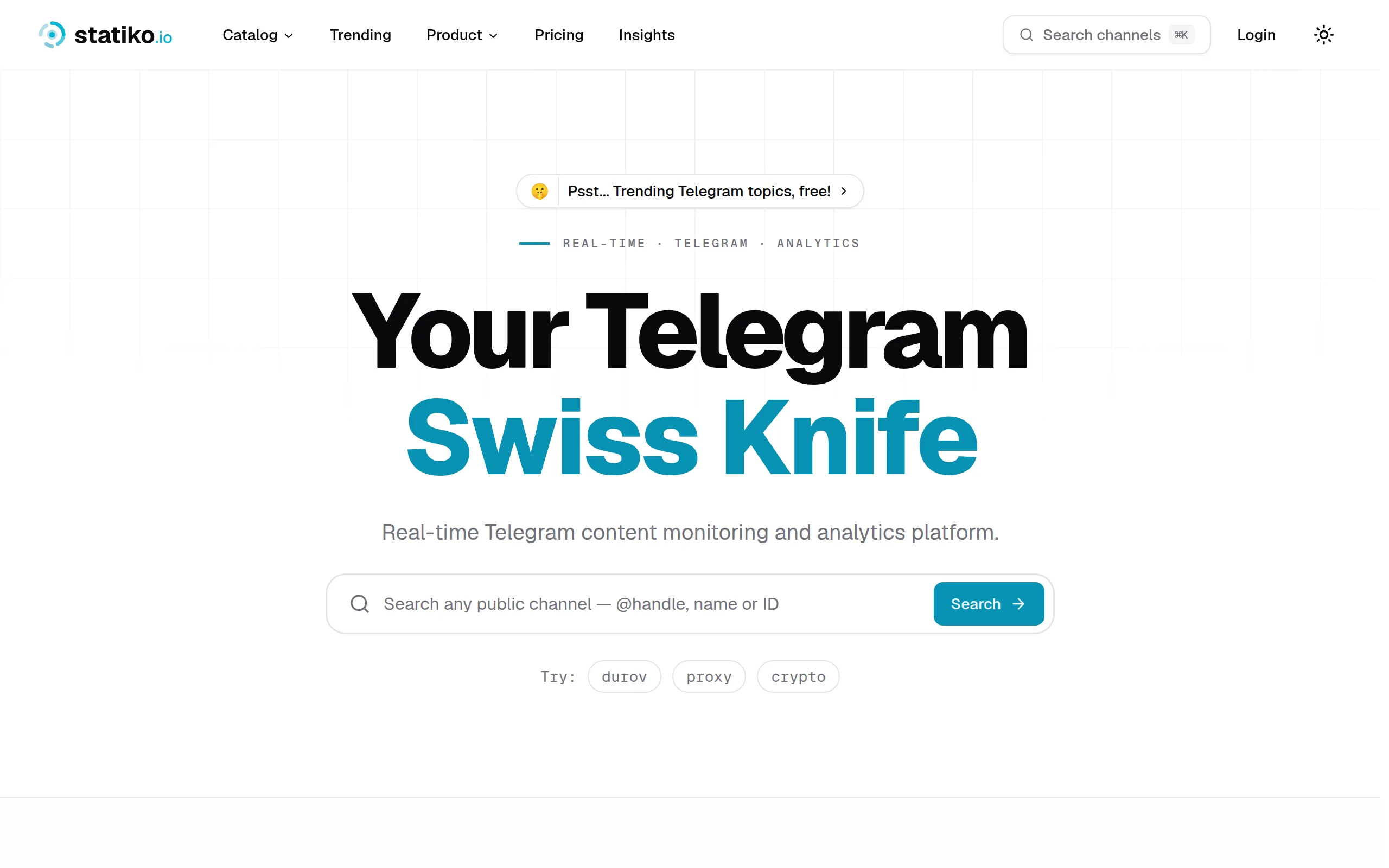
Statiko
Monitor any Telegram channel in real time - track posts, edits, deletions, and growth with AI recaps 📡

Shibui
AI website builder - describe your business, pick a niche template, edit by chatting, and publish instantly ✨

Pro Service
Find verified home service professionals, compare quotes, and pay securely through escrow - built for Brazilians across the US 🏠
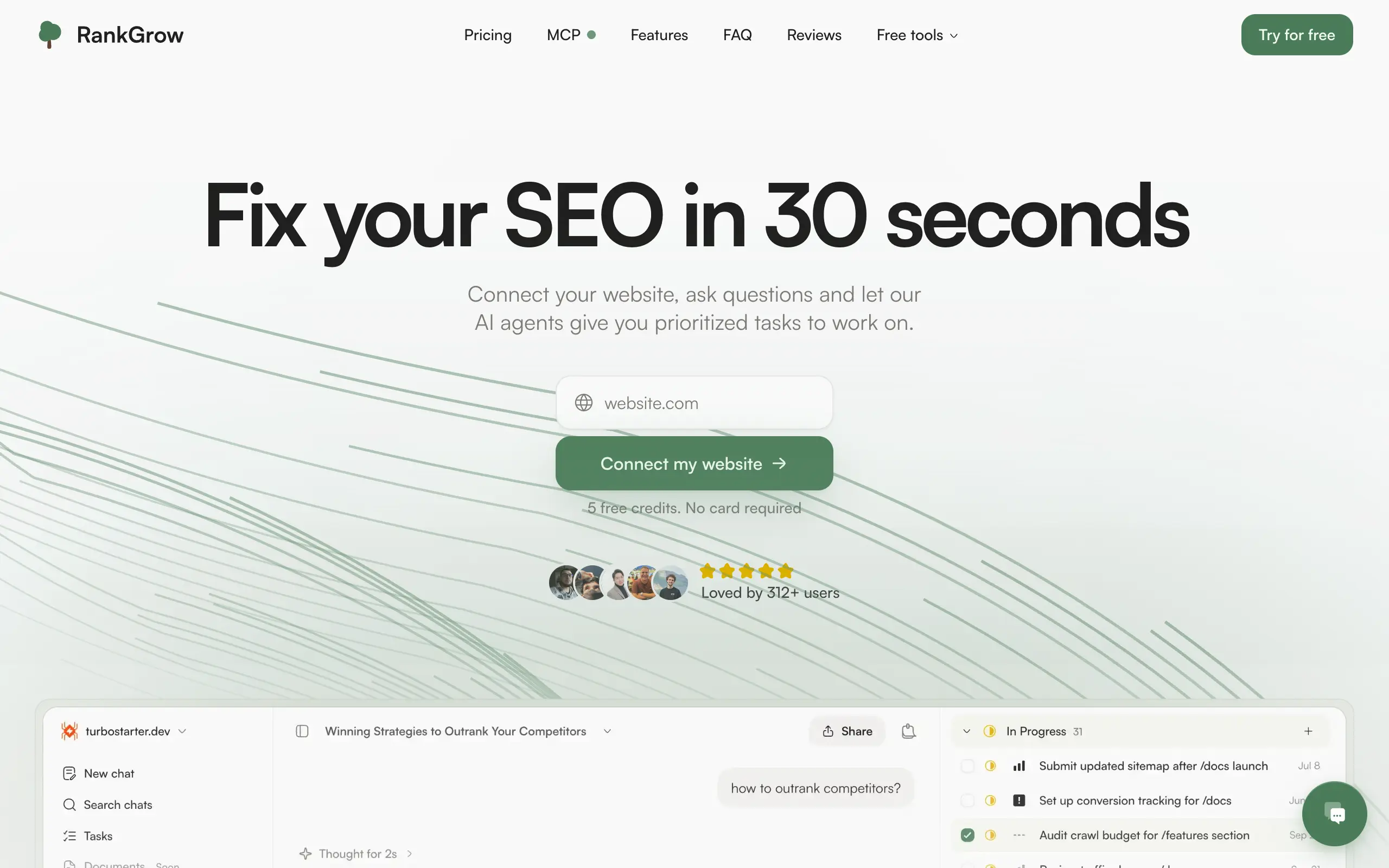
RankGrow
Fix your SEO with AI agents - connect Search Console, get prioritized tasks, and grow organic traffic 📈
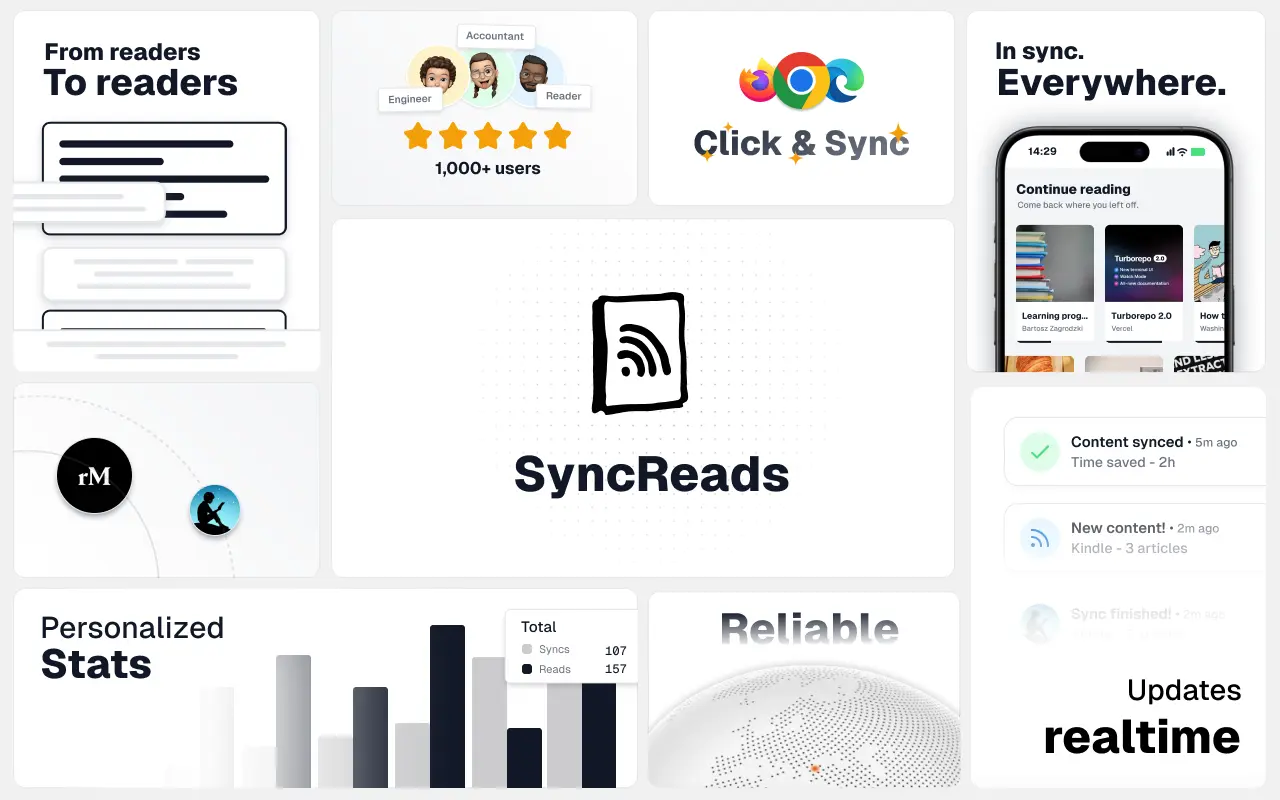
SyncReads
Sync your favorite content for distraction-free reading, save time and replace multiple apps. Anytime, anywhere 🔄
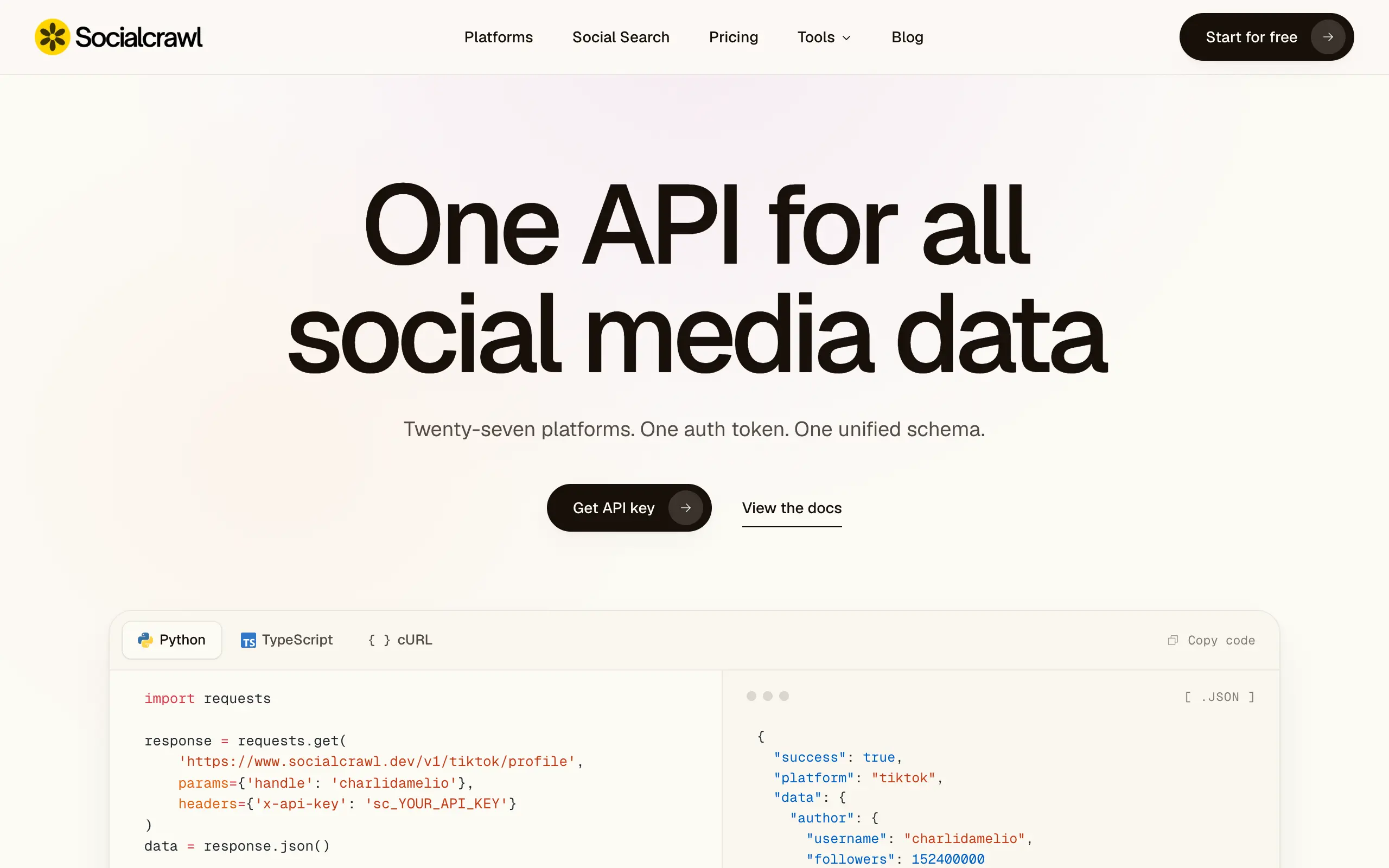
Socialcrawl
Get clean, structured data from 21 platforms like TikTok, Instagram, and YouTube with a single request 📊
Statiko
Monitor any Telegram channel in real time - track posts, edits, deletions, and growth with AI recaps 📡
Shibui
AI website builder - describe your business, pick a niche template, edit by chatting, and publish instantly ✨
Pro Service
Find verified home service professionals, compare quotes, and pay securely through escrow - built for Brazilians across the US 🏠
RankGrow
Fix your SEO with AI agents - connect Search Console, get prioritized tasks, and grow organic traffic 📈
SyncReads
Sync your favorite content for distraction-free reading, save time and replace multiple apps. Anytime, anywhere 🔄
Socialcrawl
Get clean, structured data from 21 platforms like TikTok, Instagram, and YouTube with a single request 📊
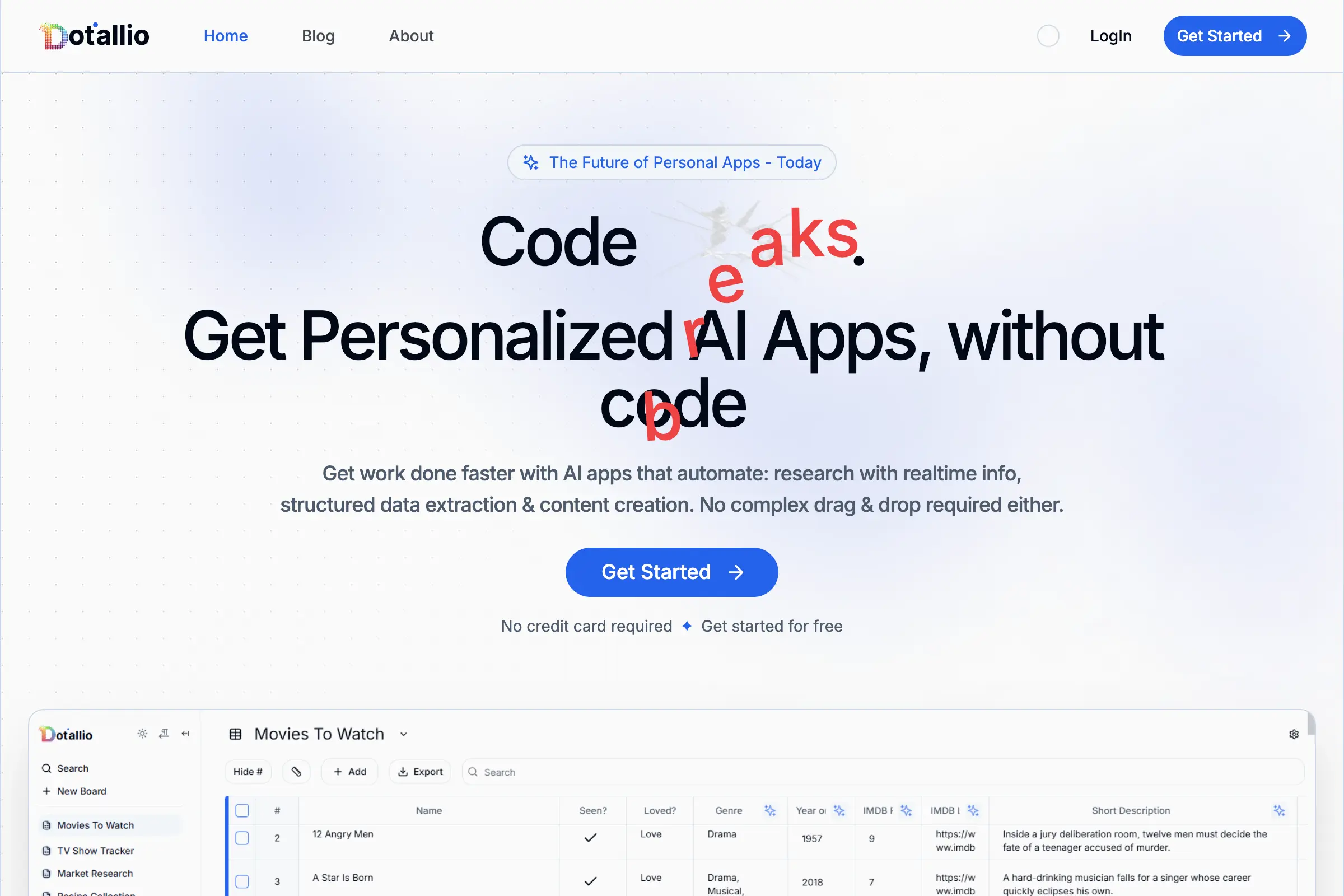
Dotallio
Personalized AI apps that automate research, data extraction, and content creation without code 🤖

Talk to Santa
Enjoy a magical live video chat or receive a unique AI-generated video greeting from Santa Claus 🎅

pozywka.pl
Scalable blog for food journalist, focused on performance and user experience 🌭
zagrodzki.me
Personal blog and portfolio of Bart Zagrodzki, where he shares his knowledge and work 💼
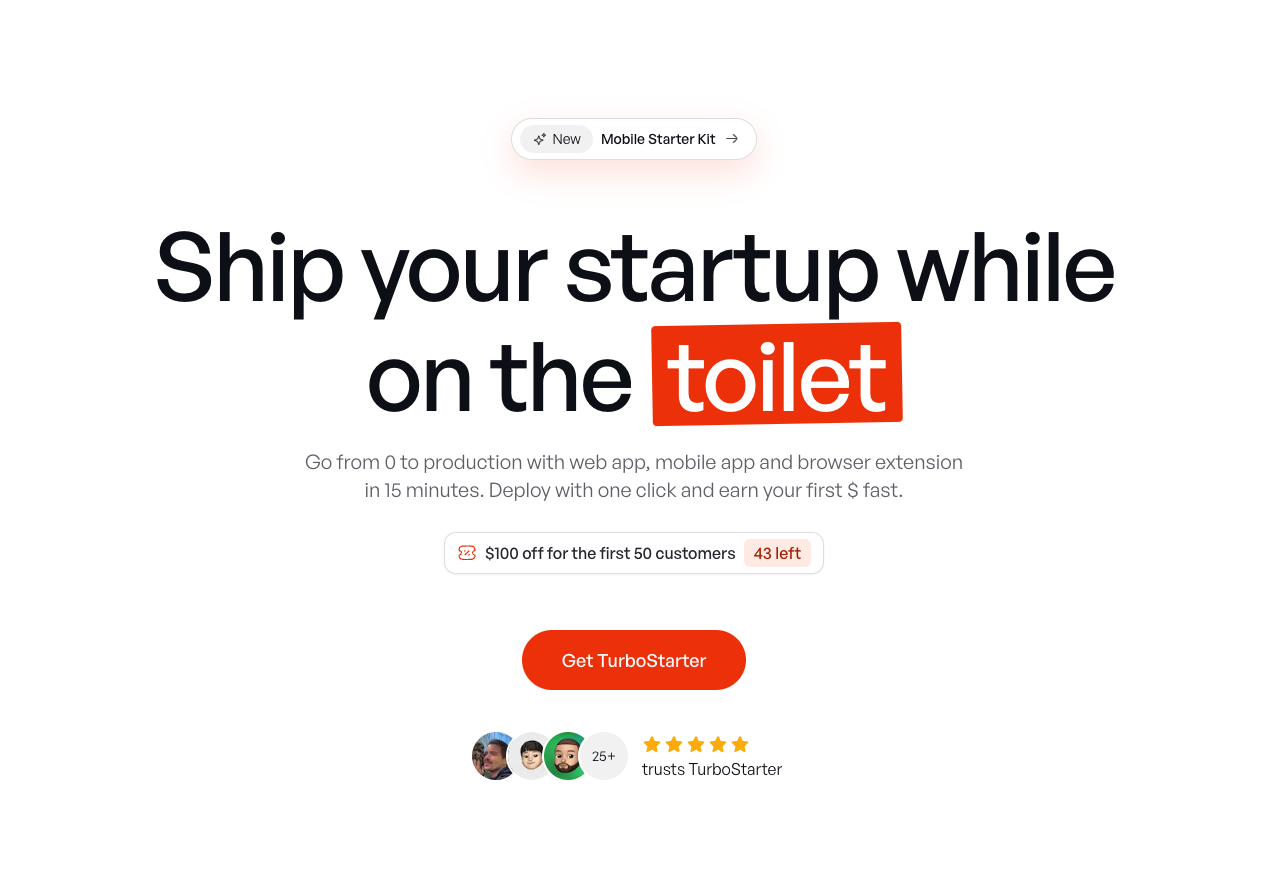
TurboStarter
Ship your startup everywhere. In minutes.
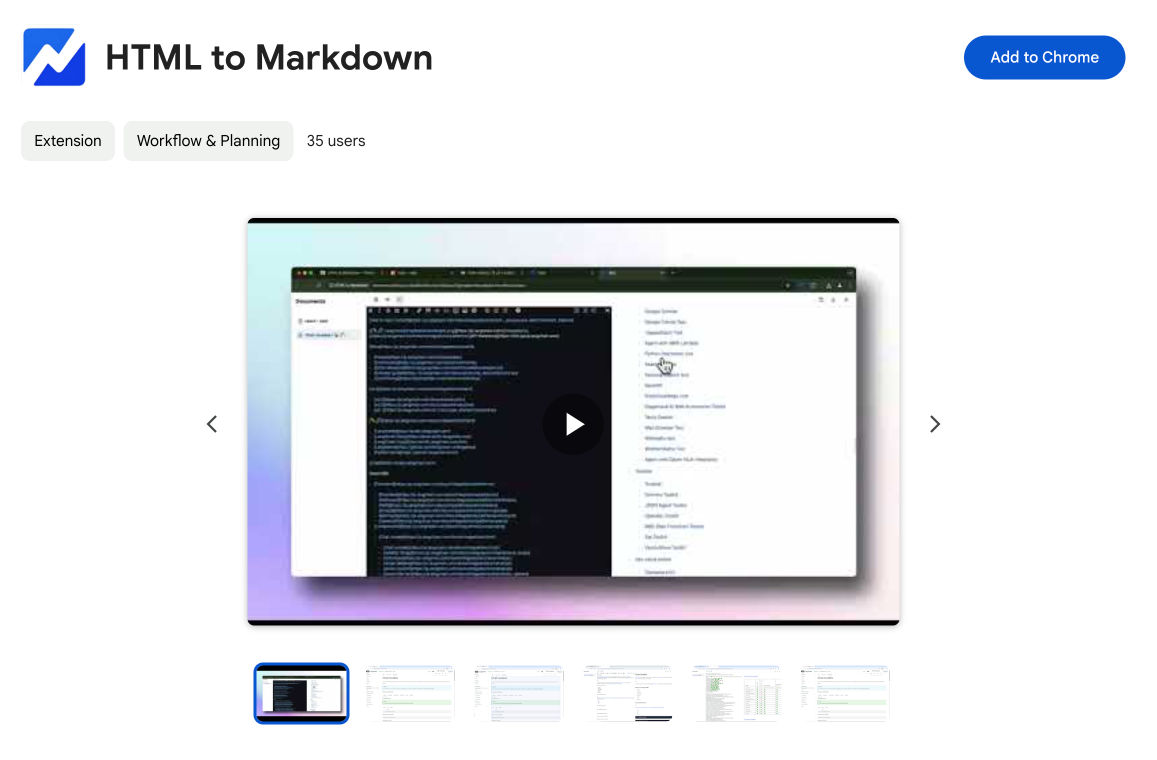
HTML to Markdown
Convert HTML to Markdown with ease, directly in your browser 📄
Dotallio
Personalized AI apps that automate research, data extraction, and content creation without code 🤖
Talk to Santa
Enjoy a magical live video chat or receive a unique AI-generated video greeting from Santa Claus 🎅
pozywka.pl
Scalable blog for food journalist, focused on performance and user experience 🌭
zagrodzki.me
Personal blog and portfolio of Bart Zagrodzki, where he shares his knowledge and work 💼
TurboStarter
Ship your startup everywhere. In minutes.
HTML to Markdown
Convert HTML to Markdown with ease, directly in your browser 📄
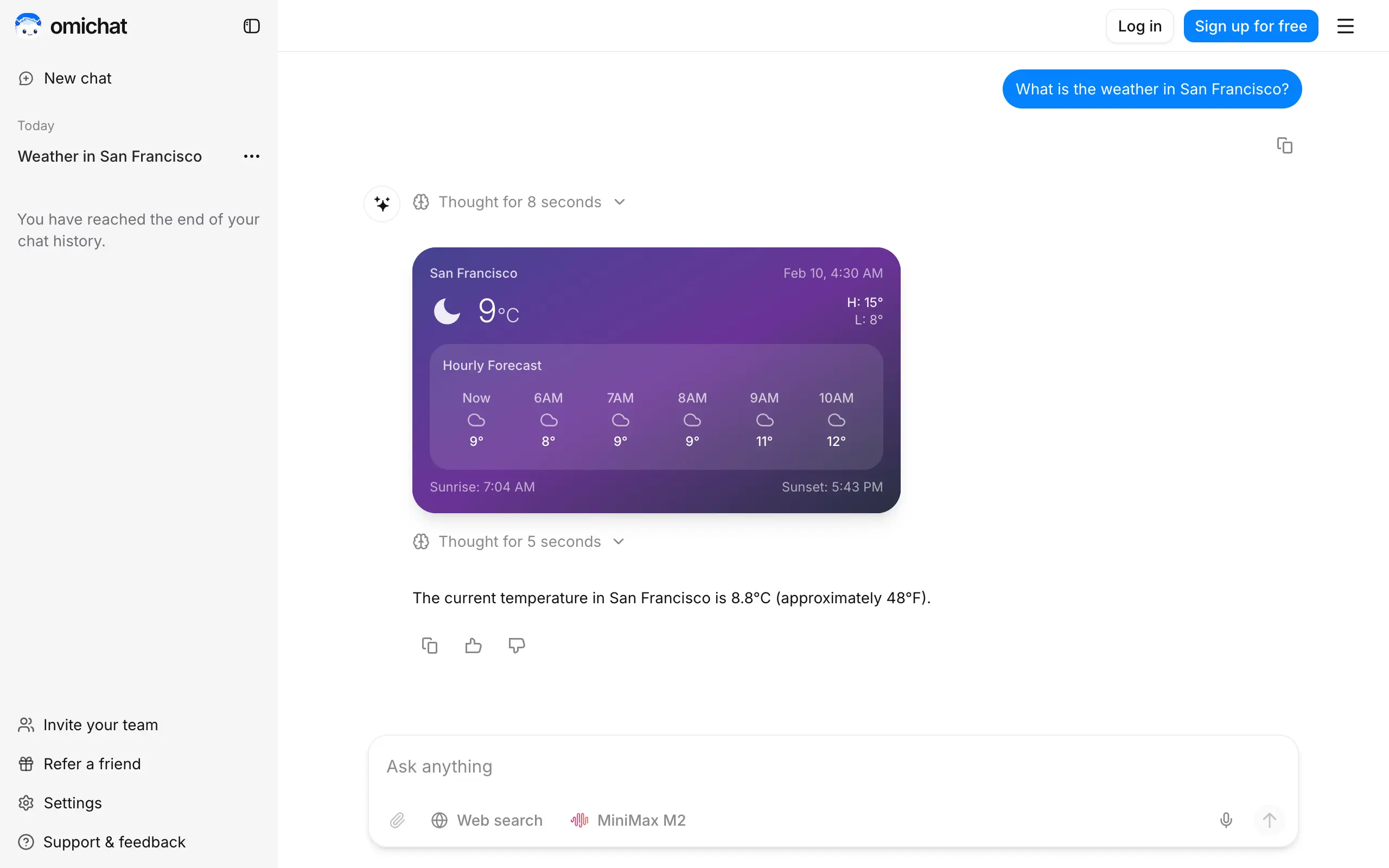
Omichat
Chat with 50+ AI models, including ChatGPT and Claude, in one place - switch models anytime without losing context 🤖
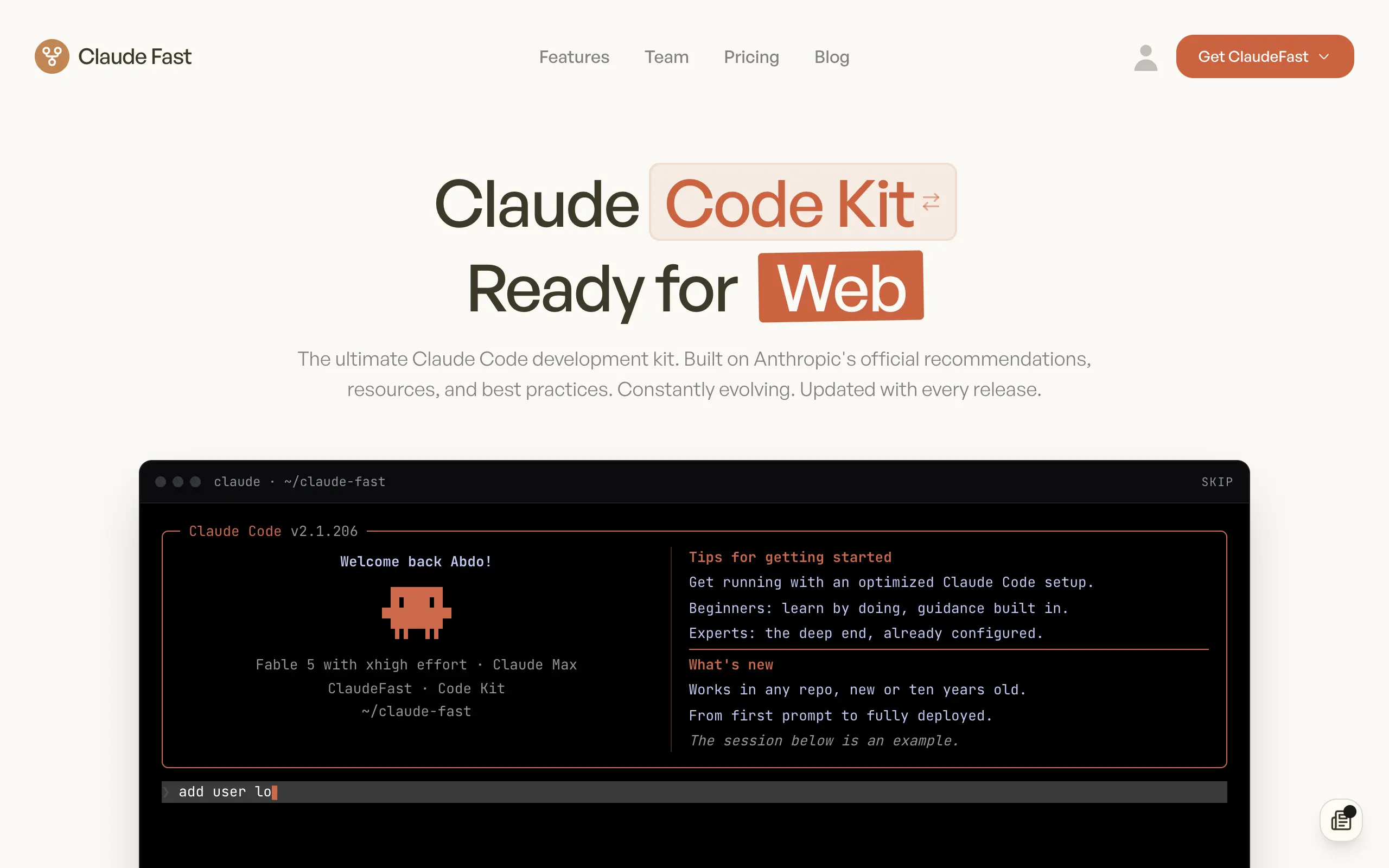
Claude Fast
Supercharge your Claude Code with 6x effective context window and specialized AI agents 🤖
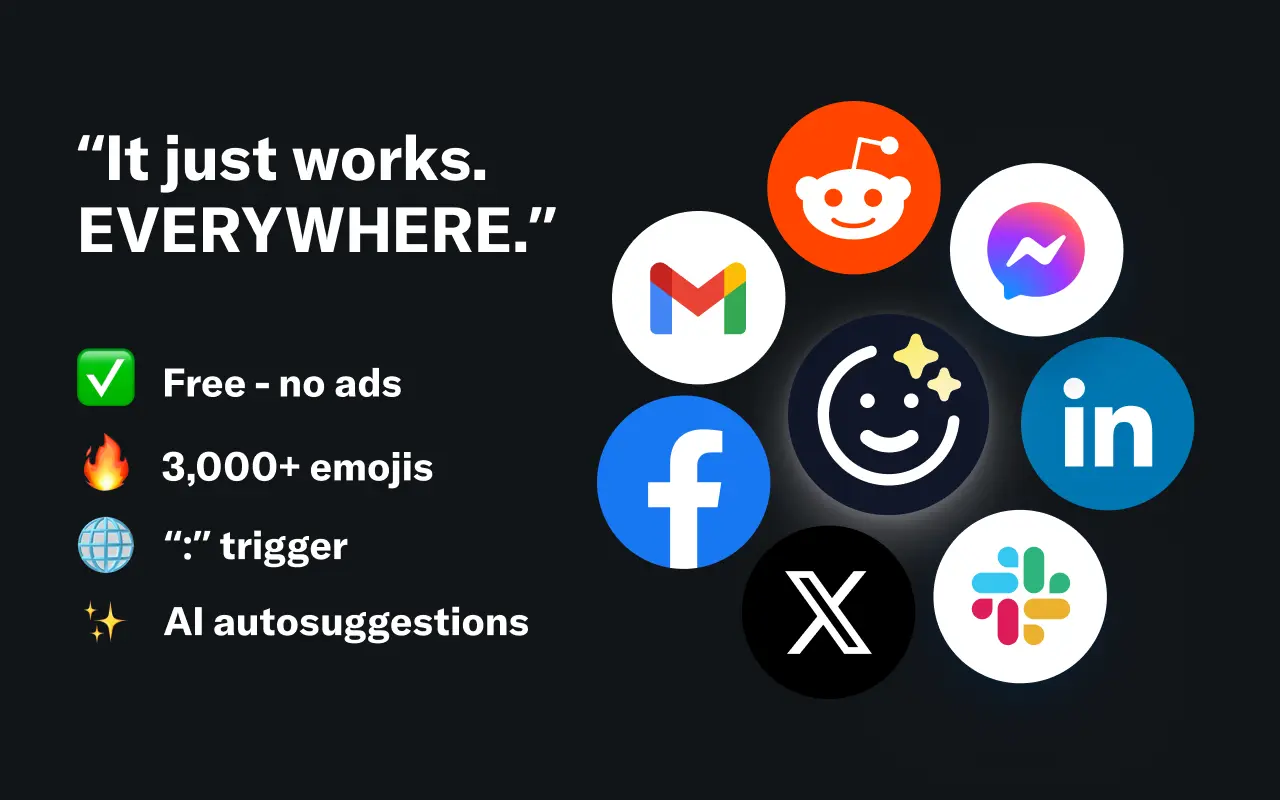
EmojAI
AI-powered emoji picker with smart, context-aware suggestions 🤖

Solohacker
Autonomous company launcher - AI agents work 24/7, escalate what matters, and you stay in control 🤖
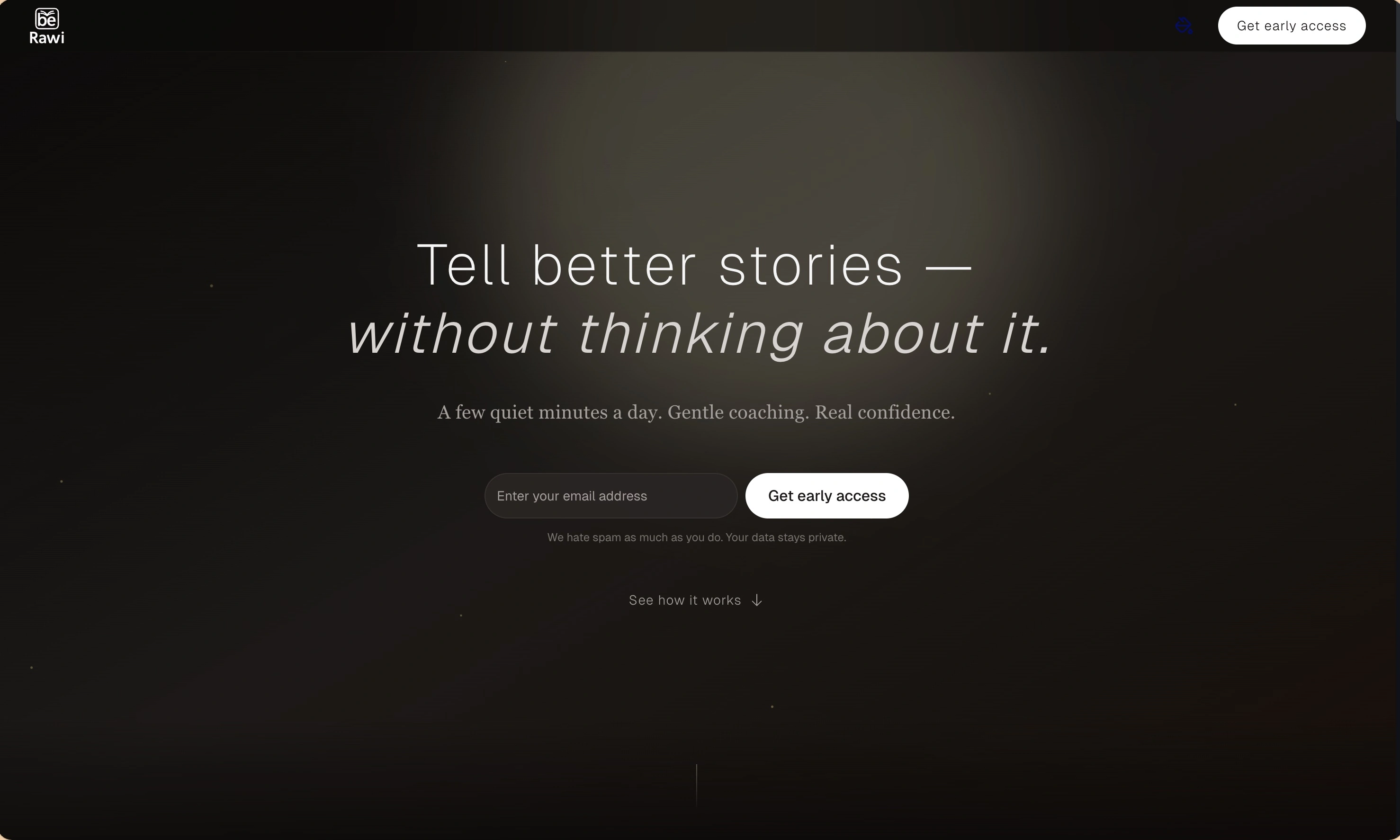
BeRawi: Storytelling Coach
Practice storytelling daily with instant feedback to sound clearer, more engaging, and confident 🎤
Omichat
Chat with 50+ AI models, including ChatGPT and Claude, in one place - switch models anytime without losing context 🤖
Claude Fast
Supercharge your Claude Code with 6x effective context window and specialized AI agents 🤖
EmojAI
AI-powered emoji picker with smart, context-aware suggestions 🤖
Solohacker
Autonomous company launcher - AI agents work 24/7, escalate what matters, and you stay in control 🤖
BeRawi: Storytelling Coach
Practice storytelling daily with instant feedback to sound clearer, more engaging, and confident 🎤

Connect with like-minded people
Join our community to get feedback, support, and grow together with 1,000+ builders on board, let's ship it!
Join usShip your startup everywhere. In minutes.
Don't burn tokens on setup and start building features on day one.