CreatorCartel
A creator affiliate operating system that tracks codes, commissions, product seeding, and profitable partnerships in one workspace.
Why a creator affiliate operating system is becoming essential for consumer brands
Creator partnerships have moved far beyond one-off sponsored posts. For many ecommerce, beauty, wellness, fashion, food, and lifestyle brands, creators now sit at the intersection of customer acquisition, brand trust, product feedback, and community growth.
Yet the operational layer behind those partnerships is often fragmented. Affiliate codes live in ecommerce platforms. Commission calculations live in spreadsheets. Product seeding is managed through email threads. Creator contracts are stored in cloud folders. Performance reporting is delayed, incomplete, or based on inconsistent attribution rules.
A creator affiliate operating system solves this fragmentation by bringing creator codes, commissions, product seeding, relationship management, and profitability analysis into one shared workspace.
CreatorCartel is positioned as a B2B platform for brands that need to manage creator affiliate programs with more financial discipline and less administrative overhead. Rather than treating creator marketing as a vague awareness channel, it helps teams understand which partnerships produce profitable, repeatable commercial results.
The core opportunity is clear. Brands do not simply need more creators. They need a reliable operating system for identifying, activating, compensating, retaining, and scaling the right creators.
The key shift for creator programs
The most valuable creator programs are no longer measured only by reach or engagement. They are managed like performance channels, with clear economics, auditable attribution, controlled product costs, and repeatable partnership workflows.
The audience for creator affiliate management software
CreatorCartel should focus on teams that have already proven that creators can drive sales, but have reached the point where manual management creates errors, slows decisions, and obscures profitability.
The primary buyer is usually a marketing, growth, partnerships, or ecommerce leader. However, the product must also serve finance, operations, customer experience, and agency stakeholders who need reliable data from the same creator program.
Core customer segments
Growing DTC brands
Consumer brands with a growing creator roster that need to replace spreadsheets, affiliate dashboard exports, and manual commission calculations.
Established ecommerce teams
Multi-channel brands managing hundreds of creators, multiple product collections, recurring campaigns, and regional affiliate programs.
Influencer and affiliate agencies
Agencies that manage creator relationships for several clients and need standardized reporting, approvals, and operational workflows.
Marketplace and retail-led brands
Brands that need to connect creator activity with product gifting, inventory availability, customer acquisition, and contribution margin.
Jobs to be done for creator program managers
A creator affiliate operating system should be designed around practical operational jobs, not around a generic influencer marketing dashboard.
Creator program managers need to:
- Discover which creators deserve more investment based on net business value.
- Issue and manage unique discount codes, links, campaign rules, and commission structures.
- Track creator-generated orders without repeatedly exporting data from multiple systems.
- Calculate commissions accurately while accounting for cancellations, refunds, discount stacking, taxes, and excluded products.
- Coordinate product seeding requests without losing track of fulfillment status or product costs.
- See whether a creator is profitable after commissions, gifting, shipping, fees, and discounts.
- Maintain a structured record of partnership history, content expectations, contractual terms, and payment status.
- Give leadership a credible answer when they ask which creator investments should be scaled, paused, or renegotiated.
For finance teams, the job is different but equally important. They need predictable commission liabilities, traceable payment records, cost allocation, and an auditable process for approving payouts.
For creators, the desired outcome is transparency. They want clarity around codes, earnings, deliverables, payment timing, product shipments, and the terms of their partnership. A brand that runs a well-organized affiliate program is easier to trust and more likely to retain high-performing talent.
The market gap in creator affiliate operations
The creator economy software market contains many point solutions. There are influencer discovery tools, social listening platforms, affiliate networks, ecommerce analytics tools, product seeding platforms, and payment providers. Each category solves part of the problem.
The gap is the workflow between them.
A brand may be able to find creators in one tool, create discount codes in another, ship products through its ecommerce backend, calculate commissions in a spreadsheet, and send payments through a finance platform. But the team still lacks one source of truth for partnership profitability.
That gap becomes expensive as a program grows.
Where manual workflows break down
The common spreadsheet-based workflow works when a brand has ten creators and one product launch. It becomes fragile when there are hundreds of affiliate codes, several commission tiers, multiple markets, seasonal campaigns, and recurring product gifting.
Typical problems include:
- Duplicate creator records across affiliate, CRM, and shipping systems.
- Incorrect commission payments caused by refunded orders or invalid code usage.
- No visibility into the total cost of product seeding.
- Inability to distinguish revenue from profitable revenue.
- Slow creator support because payment, shipment, and campaign details are scattered.
- Difficulty enforcing program policies consistently.
- Revenue attribution that fails when a customer uses multiple channels before conversion.
- High-value creators receiving the same management process as unproven creators.
A creator affiliate management platform should not only collect data. It should turn that data into operational decisions.
The specific opportunity for CreatorCartel
CreatorCartel can occupy a valuable position between traditional affiliate software and broad influencer relationship management platforms.
Its unique selling proposition is a unified creator affiliate operating system that makes creator partnerships financially measurable and operationally manageable. The product should connect the commercial mechanics of affiliate programs with the relationship mechanics of creator partnerships.
That means it must answer questions that standalone affiliate tools often miss:
- Which creators generate the highest contribution margin rather than the highest gross sales?
- How much has the brand invested in each creator through product seeding, commissions, shipping, and campaign fees?
- Which codes are active, over-discounted, misused, or approaching expiration?
- Which creators have delivered content but have not yet been paid?
- Which partnerships have enough repeatable performance to justify a better commission tier or long-term agreement?
- Which product gifting campaigns are generating creator content and downstream revenue?
This is a more durable category than “influencer tracking software” because it aligns directly with the operational and financial reality of scaling creator revenue.
The CreatorCartel product vision
CreatorCartel should be built as a workspace where a brand can operate the complete lifecycle of a creator affiliate partnership.
The experience should feel less like a generic social media analytics tool and more like a purpose-built revenue operations platform for creator commerce.
The central workspace model
Every creator should have a single profile that brings together commercial performance, relationship history, fulfillment activity, and partnership status.
A complete creator profile could include:
- Creator identity, contact details, social channels, audience geography, and category fit.
- Affiliate codes, tracked links, and custom landing pages.
- Commission rules, earnings, payout status, and payment history.
- Attributed orders, net revenue, refunds, average order value, and conversion data.
- Product seeding requests, shipping details, delivery status, and estimated product cost.
- Campaign participation, content deadlines, usage rights, and approval notes.
- Internal team notes, relationship stage, and renewal opportunities.
- Profitability metrics calculated using a configurable cost model.
The platform should allow teams to move from a high-level portfolio view to a single creator’s economics without needing a separate reporting process.
Core feature set for an MVP
An MVP should focus on the workflows that make manual creator affiliate management painful and error-prone.
Creator relationship database
The foundation is a creator CRM tailored to commerce partnerships.
Brands should be able to:
- Create creator profiles manually or through CSV import.
- Organize creators by status, market, niche, campaign, product category, or program tier.
- Assign internal owners and tasks.
- Record partnership terms and communication history.
- Add tags such as “high potential,” “VIP,” “gifting only,” “affiliate active,” or “needs renewal.”
- Store tax, payment, and compliance information with appropriate access controls.
This feature creates the system of record required before automation can be trusted.
Affiliate code and link management
CreatorCartel should centralize the creation and governance of creator codes.
Useful capabilities include:
- Generating unique creator discount codes.
- Setting expiration dates and usage limits.
- Defining percentage, fixed-value, or product-specific discounts.
- Associating a code with a commission plan.
- Flagging code collisions and duplicate code requests.
- Tracking code performance over time.
- Pausing, revoking, or replacing codes without losing historical reporting.
- Supporting tracked links alongside discount codes for customers who do not enter a code at checkout.
For ecommerce integrations, Shopify should be a high-priority starting point because many direct-to-consumer brands operate on its ecosystem.
Commission engine and payout workflow
Commission calculations are one of the clearest reasons brands adopt creator affiliate management software.
The engine should support configurable rules based on:
- Net sales rather than gross order value.
- Product collections or individual SKUs.
- Creator tier or individual negotiated rate.
- New-customer versus returning-customer orders.
- Time-bound campaign boosts.
- Discount code use or tracked-link attribution.
- Refunded, cancelled, or partially returned orders.
- Currency and market.
A clear audit trail matters as much as the calculation itself. Users should be able to see why a commission was earned, adjusted, withheld, or reversed.
type CommissionRule = {
  creatorId: string;
  commissionRate: number;
  eligibleCollectionIds: string[];
  newCustomerBonusRate?: number;
  excludeDiscountedItems: boolean;
  holdPeriodDays: number;
};

function calculateCommission(
  netEligibleSales: number,
  rule: CommissionRule,
  isNewCustomer: boolean
) {
  const baseRate =
    rule.commissionRate +
    (isNewCustomer ? rule.newCustomerBonusRate ?? 0 : 0);

  return Math.max(0, netEligibleSales * baseRate);
}
The code above represents a simplified rule model. In production, the calculation service also needs refund handling, currency conversion policies, tax treatment, rate versioning, idempotent event processing, and a detailed ledger.
Product seeding management
Product seeding is often treated as a separate operational process, even though it is part of creator investment.
CreatorCartel should enable teams to:
- Create product seeding campaigns and creator recipient lists.
- Request products, variants, sizes, and shipping addresses.
- Route requests through internal approval workflows.
- Track fulfillment, shipment, delivery, and exceptions.
- Estimate retail value, cost of goods, shipping cost, and seeding cost per creator.
- Connect gifting activity to future content deliverables and affiliate revenue.
- Identify creators who repeatedly receive products without producing agreed outcomes.
The product should avoid treating every seeded item as a marketing success. It is an investment that needs context.
Profitability and partnership intelligence
Revenue is not enough. CreatorCartel’s most differentiated reporting should show creator-level profitability.
A useful formula is:
Creator contribution margin = attributed net revenue − commissions − product cost − shipping cost − paid fees − platform costs − returns impact
The exact model should be configurable because margins vary dramatically by business. A high-margin cosmetics brand, low-margin food subscription company, and premium fashion retailer will calculate partnership value differently.
Do not use revenue as the only creator KPI
A creator with high sales volume can still be unprofitable after commissions, discounts, returns, paid deliverables, and product seeding costs. Margin-aware reporting is where a creator affiliate operating system becomes materially more valuable than a basic affiliate dashboard.
Product roadmap after MVP validation
Once the core operating workflows are stable, CreatorCartel can expand into features that increase retention and strategic differentiation.
A creator-facing portal can show active codes, commission balances, payment status, gifting shipments, campaign briefs, content due dates, and brand announcements. This reduces repetitive support requests while improving transparency.
A scoring model can rank creators using revenue quality, contribution margin, return rate, repeat purchase behavior, content consistency, response time, and audience alignment. The score should remain explainable rather than becoming a black-box recommendation.
Campaign management can include briefs, deliverables, content review, usage rights, deadlines, approvals, and reminders. This makes CreatorCartel more useful for hybrid partnerships that include both affiliate and fixed-fee components.
Historical performance can support monthly commission liability forecasts, product seeding budgets, creator tier recommendations, and scenario planning for launches or peak sales periods.
How CreatorCartel creates a competitive advantage
The creator software landscape is crowded, so CreatorCartel should avoid competing solely on feature count. Its advantage should come from a sharper operating thesis.
Position around profitable partnerships, not vanity metrics
Many creator tools emphasize reach, engagement, audience demographics, or content discovery. Those features can be useful before a partnership begins, but they do not answer whether a creator program is commercially sustainable.
CreatorCartel should lead with the question that operators and finance leaders care about:
Which creator partnerships are profitable, scalable, and worth keeping?
That positioning creates a clear distinction from tools built primarily for influencer discovery or social listening.
Connect product seeding to affiliate economics
Product seeding is frequently invisible in affiliate reporting. A brand may see affiliate revenue but not know how much inventory, shipping, and operational effort was required to generate it.
By treating seeding as a first-class cost center, CreatorCartel can show the complete economic picture. This is particularly valuable for brands with expensive products, limited inventory, or high fulfillment costs.
Build trust through transparent attribution
Attribution is sensitive because brands and creators both have incentives to question the data.
CreatorCartel should make attribution logic visible:
- Show the event source behind every attributed conversion.
- Explain the rules that determined code eligibility.
- Separate tracked sales from estimated influence.
- Preserve historical rules when commission plans change.
- Make reversals and adjustments easy to review.
- Provide exportable records for finance reconciliation.
Transparent systems reduce payout disputes and make creators more willing to remain in the program.
Become the workflow layer, not just another dashboard
A dashboard tells a team what happened. An operating system helps them decide and act.
CreatorCartel should allow users to turn insight into workflow:
- Flag an underperforming creator and assign a review task.
- Identify a top performer and propose a tier upgrade.
- Detect an unpaid balance and trigger payout approval.
- See a delayed product shipment and notify operations.
- Find a high-return creator code and pause it pending investigation.
The integration between data and action is defensible because it becomes embedded in the team’s day-to-day work.
Recommended technology stack for CreatorCartel
The best CreatorCartel architecture should prioritize dependable integrations, financial calculation accuracy, secure multi-tenant data access, and a fast internal dashboard experience.
A modern TypeScript stack is a sensible choice because it supports shared types across frontend, backend, integrations, and background jobs.
Suggested application stack
| Layer | Recommended choice | Why it fits | Key trade-off | MVP priority |
|---|---|---|---|---|
| Frontend | Next.js | Fast React-based SaaS development with server rendering and dashboard support | Requires disciplined server and client boundary design | High |
| UI system | Tailwind CSS | Rapid, consistent interface development for dense operations screens | Needs a design system to prevent inconsistent utility use | High |
| Database | PostgreSQL | Strong relational model for creators, orders, commissions, and ledgers | Analytics workloads may need optimization at scale | High |
| ORM | Prisma | Type-safe data access and productive schema management | Complex reporting may require raw SQL expertise | High |
| Billing | Stripe | Subscription billing, invoicing, payment workflows, and reliable APIs | Payment availability and tax needs vary by market | High |
| Background jobs | Trigger.dev | Useful for scheduled syncs, payout calculations, notifications, and retries | Workflow observability still needs deliberate setup | High |
Why PostgreSQL is important for creator commission data
CreatorCartel’s data model is fundamentally relational. A creator belongs to an organization, receives multiple codes, participates in campaigns, earns commissions from orders, receives seeded products, and may have multiple payout records.
PostgreSQL is well-suited to this model because it supports transactions, constraints, joins, row-level security patterns, and durable financial ledgers.
The system should separate raw commerce events from derived financial records:
- Import the source order or refund event.
- Normalize it into an internal event model.
- Apply the commission and attribution rules that were active at that point in time.
- Write a commission ledger entry.
- Reconcile the ledger entry when a cancellation, refund, or adjustment occurs.
- Lock approved payout periods to protect historical reporting.
This event-oriented design reduces the risk of silent recalculations changing an already approved payout amount.
Integration architecture considerations
Shopify integration should support webhooks for order creation, order updates, refunds, customer data, product catalog changes, and discount code metadata where permitted.
However, the product should never assume external webhook delivery is perfect. Integrations need:
- Idempotency keys to prevent duplicate processing.
- Scheduled reconciliation jobs.
- Retry policies with observable failure states.
- A manual re-sync capability for administrators.
- Clear timestamps for last successful synchronization.
- Versioned mapping rules for changing ecommerce schemas.
Over time, CreatorCartel can support additional commerce systems, affiliate tracking platforms, fulfillment providers, payment systems, and customer data platforms. The early strategy should be selective. A deep, reliable Shopify integration is more valuable than shallow support for ten platforms.
Monetization options for CreatorCartel
The best pricing model should align with the value CreatorCartel creates while remaining predictable enough for growing brands.
A hybrid subscription model is likely the strongest approach.
Recommended pricing structure
- "Starter plan" for smaller brands with a limited number of active creators, one ecommerce integration, core code tracking, commission reporting, and basic product seeding.
- "Growth plan" for brands with larger creator portfolios, advanced commission rules, multiple users, creator portals, automated workflows, and profitability reporting.
- "Scale plan" for high-volume brands and agencies that need multiple storefronts, custom roles, priority integrations, advanced reporting, and dedicated onboarding.
- "Enterprise plan" for organizations that require SSO, audit logs, data retention policies, service-level commitments, custom integrations, and procurement support.
A monthly platform fee should be the primary revenue source. It is easier for customers to forecast and avoids the perception that CreatorCartel benefits from higher commission payments.
Usage-based expansion levers
Usage-based pricing can work when tied to obvious value drivers:
- Active creators managed per month.
- Monthly attributed orders processed.
- Number of storefronts or brands.
- Product seeding shipments tracked.
- Creator portal seats or agency client workspaces.
- Advanced analytics and data export volume.
Avoid pricing based only on the number of stored creators. Brands may import large lists of inactive creators, and charging for dormant records can feel punitive. Active partnership volume is a better measure of realized value.
Services as an early revenue and learning channel
During the first phase, CreatorCartel can offer paid implementation services, including Shopify setup, historical data import, commission plan configuration, creator program cleanup, and custom reporting.
This service layer should not become the business model, but it has strategic value. It exposes edge cases, reveals the language customers use, and helps the product team identify the workflows worth automating.
Risks and mitigation strategies
Creator affiliate software touches financial data, personal information, commercial agreements, and external platform APIs. The product needs a deliberate risk strategy from the beginning.
Attribution disputes
Creators may believe they drove a sale that was not attributed to their code or link. Brands may question whether a code was shared on unauthorized coupon sites.
Mitigation should include transparent attribution records, configurable rules, fraud flags, clear program terms, and separate reporting for direct tracked conversions versus broader assisted influence.
Commission overpayment
Overpayment can occur when refunds are delayed, orders are duplicated, discount rules are misconfigured, or payout periods are approved too quickly.
Mitigate this through payout hold periods, refund reconciliation, approval workflows, immutable ledger records, and role-based access controls.
Privacy and data protection
Creator profiles can contain contact information, payment details, addresses, and tax documentation. Ecommerce order data may also contain personal customer information.
CreatorCartel should apply data minimization, encryption in transit and at rest, strict tenant isolation, least-privilege permissions, audit logging, and documented retention policies. Brands operating in regulated markets should consult appropriate privacy counsel regarding obligations such as GDPR and regional data-processing agreements.
Ecommerce integration dependency
A product that depends heavily on one ecommerce platform is exposed to API changes, permission requirements, rate limits, and app review policies.
The mitigation is to build a stable internal commerce abstraction layer, maintain webhook monitoring, document integration assumptions, and avoid coupling the entire product experience to one external API response format.
Creator fraud and code leakage
Affiliate codes can spread through deal forums, browser extensions, and coupon sites. This may reduce margin while crediting a creator for orders they did not meaningfully influence.
CreatorCartel can help by detecting abnormal code patterns, tracking unusually high conversion volumes from unknown referrers, monitoring repeat-customer behavior, restricting code eligibility, and allowing brands to mark suspicious activity for review.
A practical go-to-market strategy
CreatorCartel should initially target a narrow and urgent customer profile rather than trying to serve every business that works with influencers.
The strongest early segment is likely Shopify-based consumer brands with an existing creator affiliate program, between roughly 30 and 500 active creators, and a team currently using spreadsheets to reconcile commissions and gifting.
These customers already understand the problem. They do not need to be convinced that creator partnerships matter. They need help making the program manageable.
Initial positioning message
A concise positioning message could be:
CreatorCartel helps consumer brands manage creator codes, commissions, product seeding, and partnership profitability in one operating system.
The supporting proof should emphasize outcomes:
- Reduce manual commission reconciliation.
- See true creator profitability.
- Track product seeding as a commercial investment.
- Give creators more transparent payment visibility.
- Scale affiliate partnerships without scaling spreadsheet complexity.
Customer acquisition channels
Early distribution should focus on high-intent environments:
- Shopify app ecosystem visibility once the integration is mature.
- Partnerships with creator marketing agencies and ecommerce consultants.
- Founder-led outbound to DTC operators managing affiliate programs.
- Educational content around creator commission management, affiliate code fraud, gifting ROI, and creator contribution margin.
- Webinars with ecommerce finance leaders and experienced creator program managers.
- Migration offers for brands currently managing commissions in spreadsheets.
Content should target search terms such as creator affiliate software, creator commission tracking, influencer affiliate management, product seeding software, creator profitability analytics, and affiliate code management for Shopify.
Implementation roadmap for launching CreatorCartel
The most important implementation principle is to build the financial and workflow foundation before adding sophisticated AI features or broad creator discovery capabilities.
Validate the workflow with 15 to 25 ecommerce brands that currently run creator affiliate programs. Map their code setup, commission rules, payout process, product seeding workflow, and reporting gaps.
Design the core data model for organizations, users, creators, codes, campaigns, orders, refunds, commission rules, ledger entries, payouts, and seeded products.
Build a dependable Shopify integration with webhook handling, scheduled reconciliation, clear sync status, and test cases for refunds, cancellations, partial refunds, and duplicate events.
Launch the creator CRM, affiliate code registry, commission ledger, and creator profitability dashboard as the first cohesive product workflow.
Add product seeding management with approval states, fulfillment tracking, product cost capture, and creator-level cost allocation.
Pilot with a small group of design partners, review every commission discrepancy manually, and use those cases to improve calculation logic and payout controls.
Introduce creator portals, automation, advanced segmentation, and forecasting only after the core data is trusted by both brand operators and finance teams.
For teams that want to accelerate the initial SaaS foundation, TurboStarter can reduce time spent assembling common application infrastructure so development attention stays on CreatorCartel’s differentiated creator operations workflows.
Final perspective on the CreatorCartel opportunity
CreatorCartel has a strong B2B SaaS opportunity because creator affiliate programs are becoming more operationally complex at the same time that brands face greater pressure to prove marketing efficiency.
The winning product will not be the one with the most generic influencer features. It will be the one that gives brands a trustworthy answer to difficult operational questions:
- Which creators are actually profitable?
- What do we owe them, and why?
- How much are we spending on product seeding?
- Which codes are working or leaking margin?
- Which partners deserve deeper investment?
- What should our team do next?
By combining affiliate code management, commission tracking, product seeding workflows, creator relationship data, and contribution-margin reporting, CreatorCartel can become the operating layer that turns fragmented creator activity into a scalable growth channel.
The product’s long-term defensibility comes from trusted data, embedded workflows, historical partnership intelligence, and a reputation for accurate creator economics. If CreatorCartel earns that trust early, it can become an essential system for modern consumer brands building profitable creator partnerships.
More 🏢 B2B Application SaaS ideas
Discover more innovative b2b application SaaS ideas that are trending in 2026. Each idea is AI-generated with market validation and growth potential to help you find your next profitable venture faster than competitors.
Your competitors are building with TurboStarter
Below are some of the SaaS ideas that have been generated and built with our starter kit.
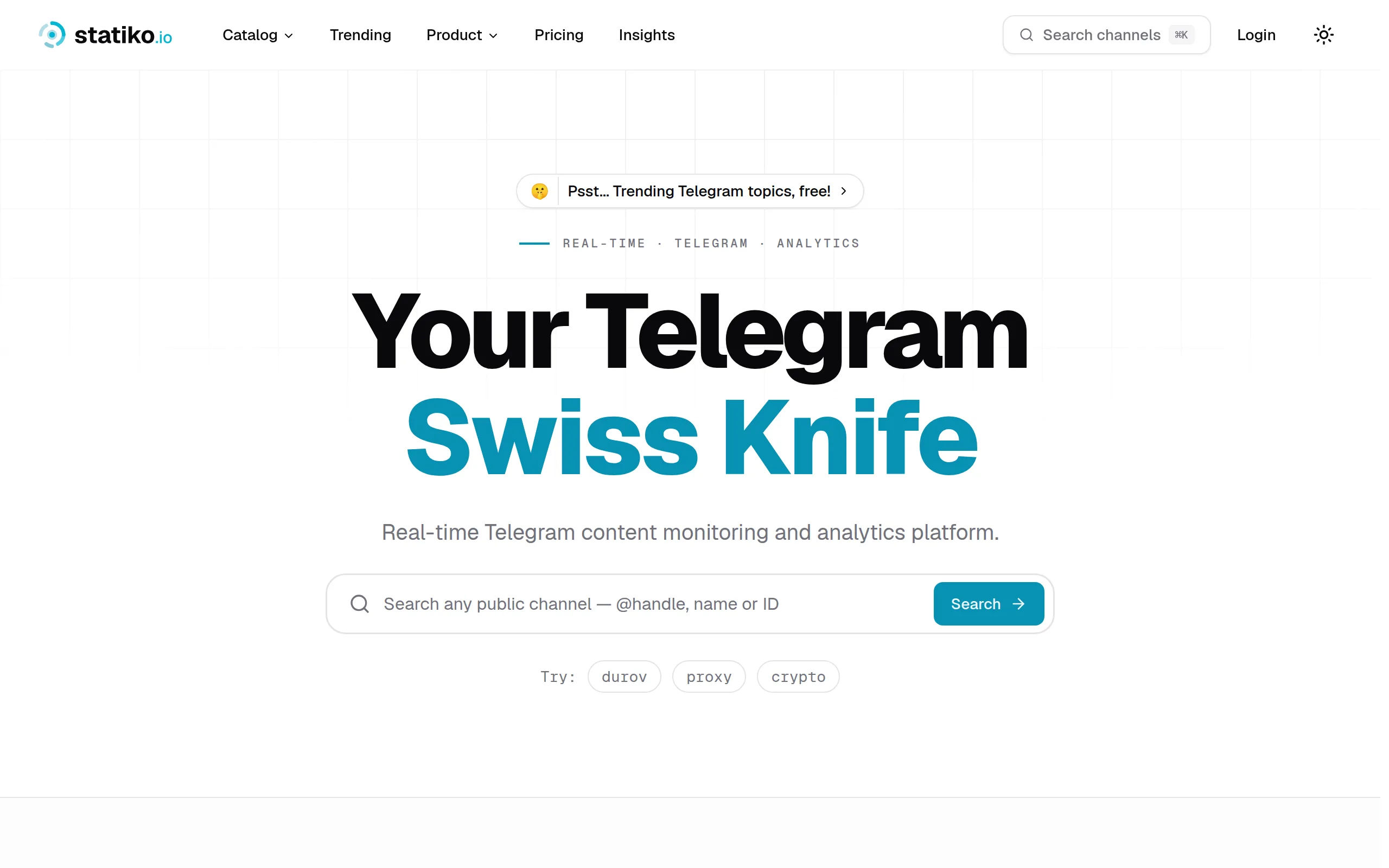
Statiko
Monitor any Telegram channel in real time - track posts, edits, deletions, and growth with AI recaps 📡

Shibui
AI website builder - describe your business, pick a niche template, edit by chatting, and publish instantly ✨

Pro Service
Find verified home service professionals, compare quotes, and pay securely through escrow - built for Brazilians across the US 🏠
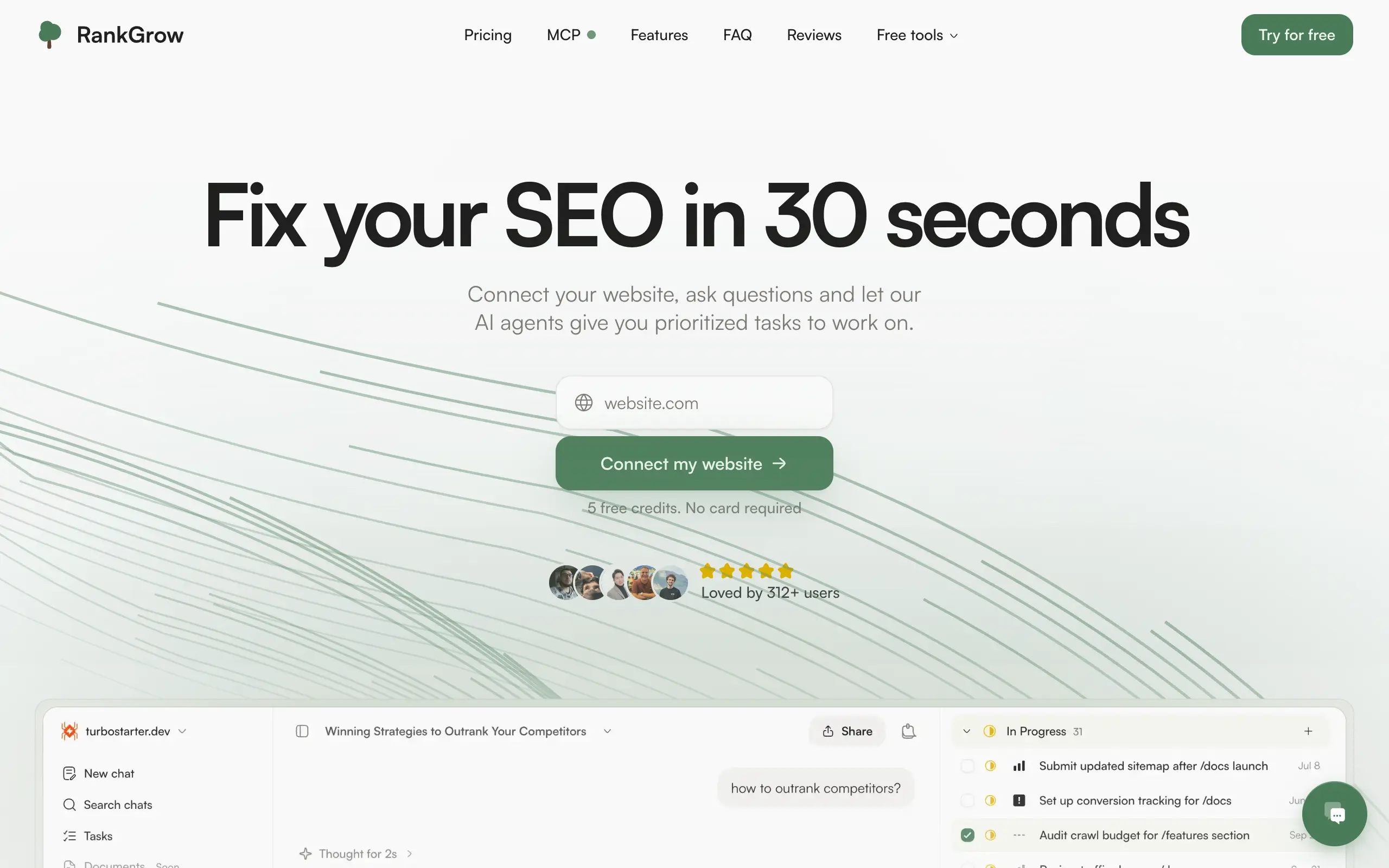
RankGrow
Fix your SEO with AI agents - connect Search Console, get prioritized tasks, and grow organic traffic 📈
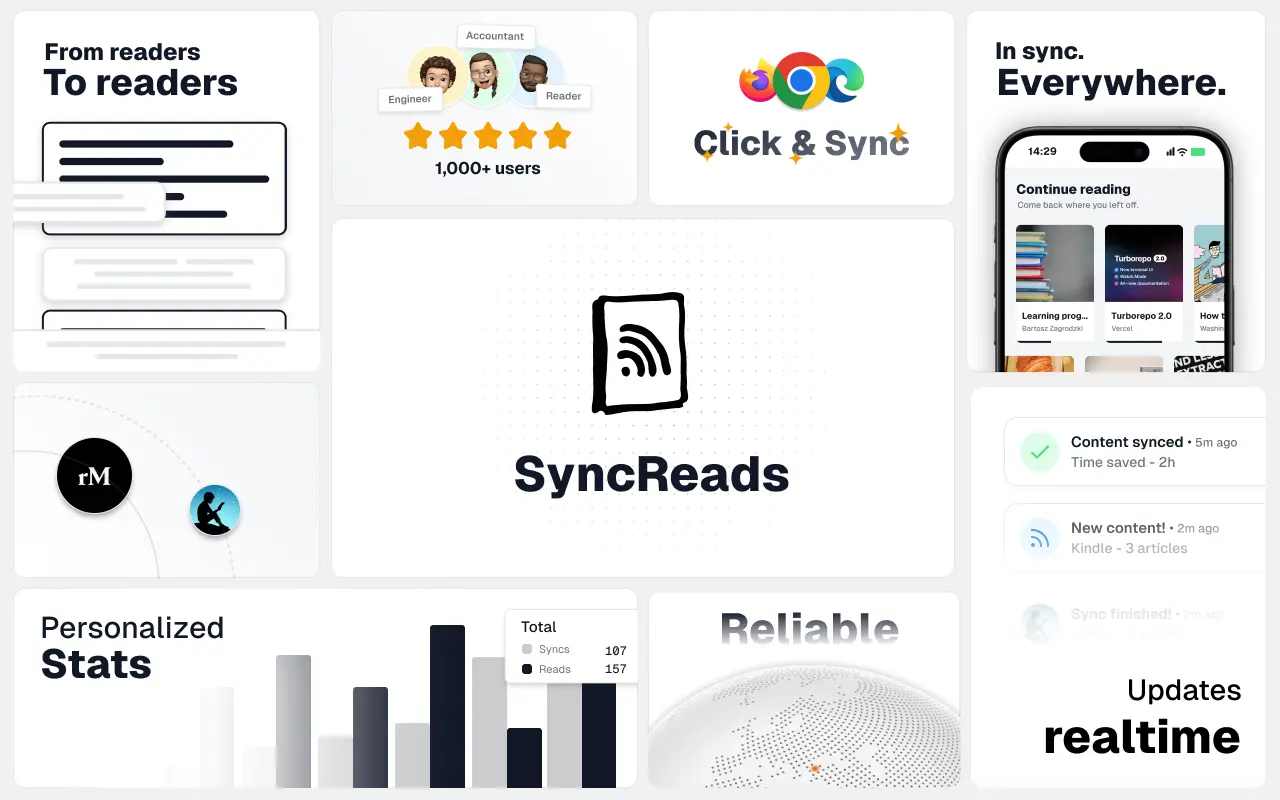
SyncReads
Sync your favorite content for distraction-free reading, save time and replace multiple apps. Anytime, anywhere 🔄
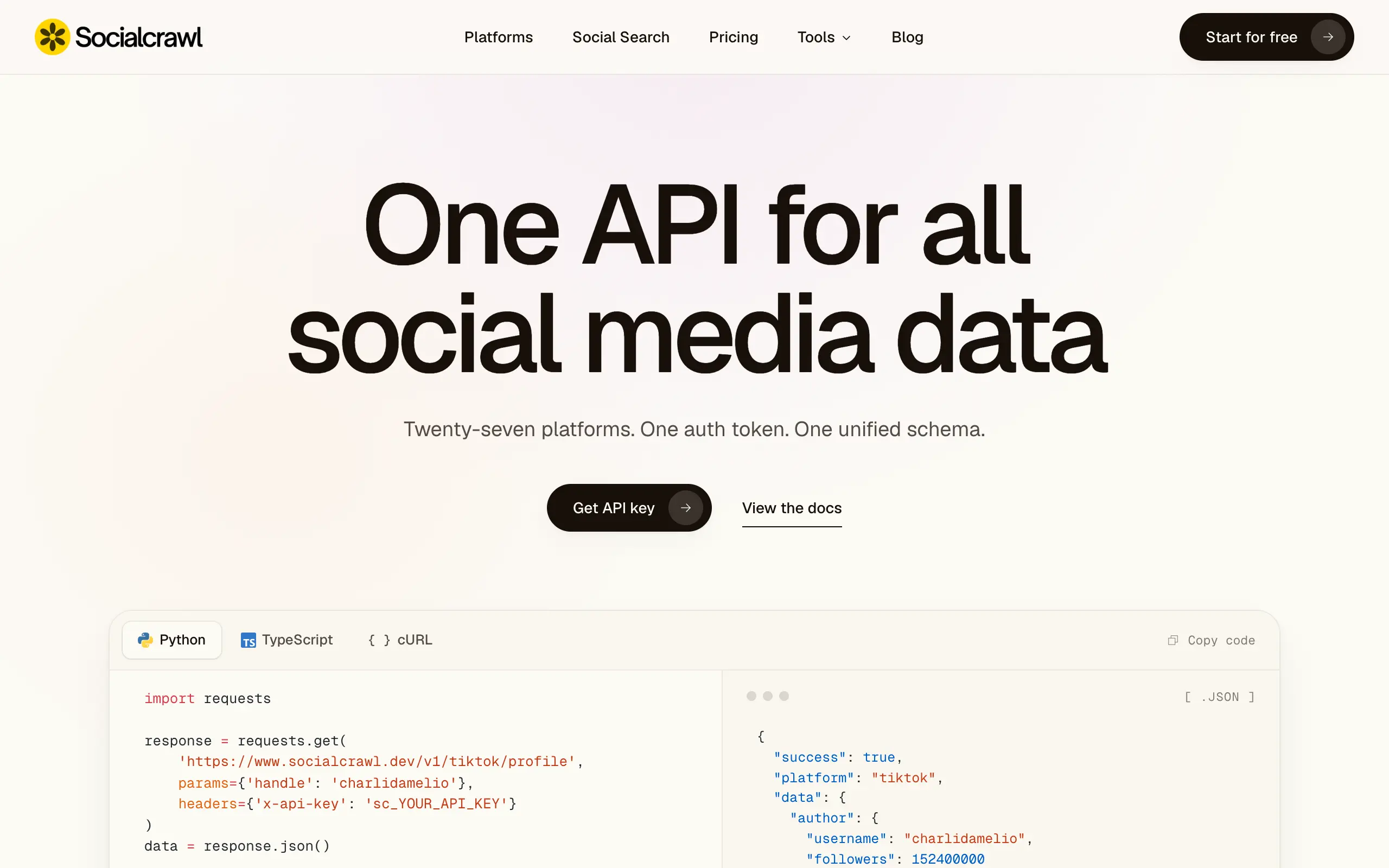
Socialcrawl
Get clean, structured data from 21 platforms like TikTok, Instagram, and YouTube with a single request 📊
Statiko
Monitor any Telegram channel in real time - track posts, edits, deletions, and growth with AI recaps 📡
Shibui
AI website builder - describe your business, pick a niche template, edit by chatting, and publish instantly ✨
Pro Service
Find verified home service professionals, compare quotes, and pay securely through escrow - built for Brazilians across the US 🏠
RankGrow
Fix your SEO with AI agents - connect Search Console, get prioritized tasks, and grow organic traffic 📈
SyncReads
Sync your favorite content for distraction-free reading, save time and replace multiple apps. Anytime, anywhere 🔄
Socialcrawl
Get clean, structured data from 21 platforms like TikTok, Instagram, and YouTube with a single request 📊
Statiko
Monitor any Telegram channel in real time - track posts, edits, deletions, and growth with AI recaps 📡
Shibui
AI website builder - describe your business, pick a niche template, edit by chatting, and publish instantly ✨
Pro Service
Find verified home service professionals, compare quotes, and pay securely through escrow - built for Brazilians across the US 🏠
RankGrow
Fix your SEO with AI agents - connect Search Console, get prioritized tasks, and grow organic traffic 📈
SyncReads
Sync your favorite content for distraction-free reading, save time and replace multiple apps. Anytime, anywhere 🔄
Socialcrawl
Get clean, structured data from 21 platforms like TikTok, Instagram, and YouTube with a single request 📊
Statiko
Monitor any Telegram channel in real time - track posts, edits, deletions, and growth with AI recaps 📡
Shibui
AI website builder - describe your business, pick a niche template, edit by chatting, and publish instantly ✨
Pro Service
Find verified home service professionals, compare quotes, and pay securely through escrow - built for Brazilians across the US 🏠
RankGrow
Fix your SEO with AI agents - connect Search Console, get prioritized tasks, and grow organic traffic 📈
SyncReads
Sync your favorite content for distraction-free reading, save time and replace multiple apps. Anytime, anywhere 🔄
Socialcrawl
Get clean, structured data from 21 platforms like TikTok, Instagram, and YouTube with a single request 📊
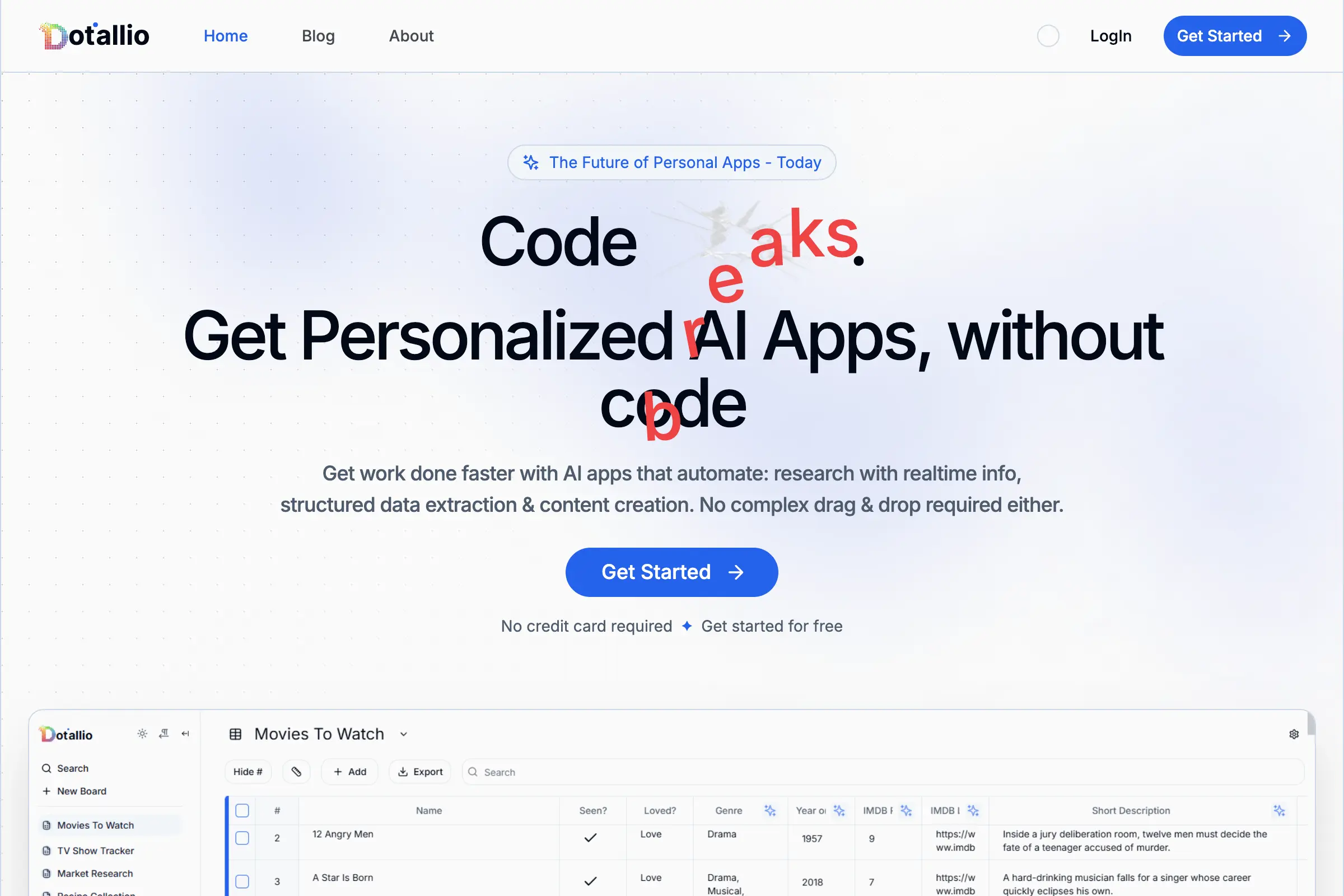
Dotallio
Personalized AI apps that automate research, data extraction, and content creation without code 🤖

Talk to Santa
Enjoy a magical live video chat or receive a unique AI-generated video greeting from Santa Claus 🎅

pozywka.pl
Scalable blog for food journalist, focused on performance and user experience 🌭
zagrodzki.me
Personal blog and portfolio of Bart Zagrodzki, where he shares his knowledge and work 💼
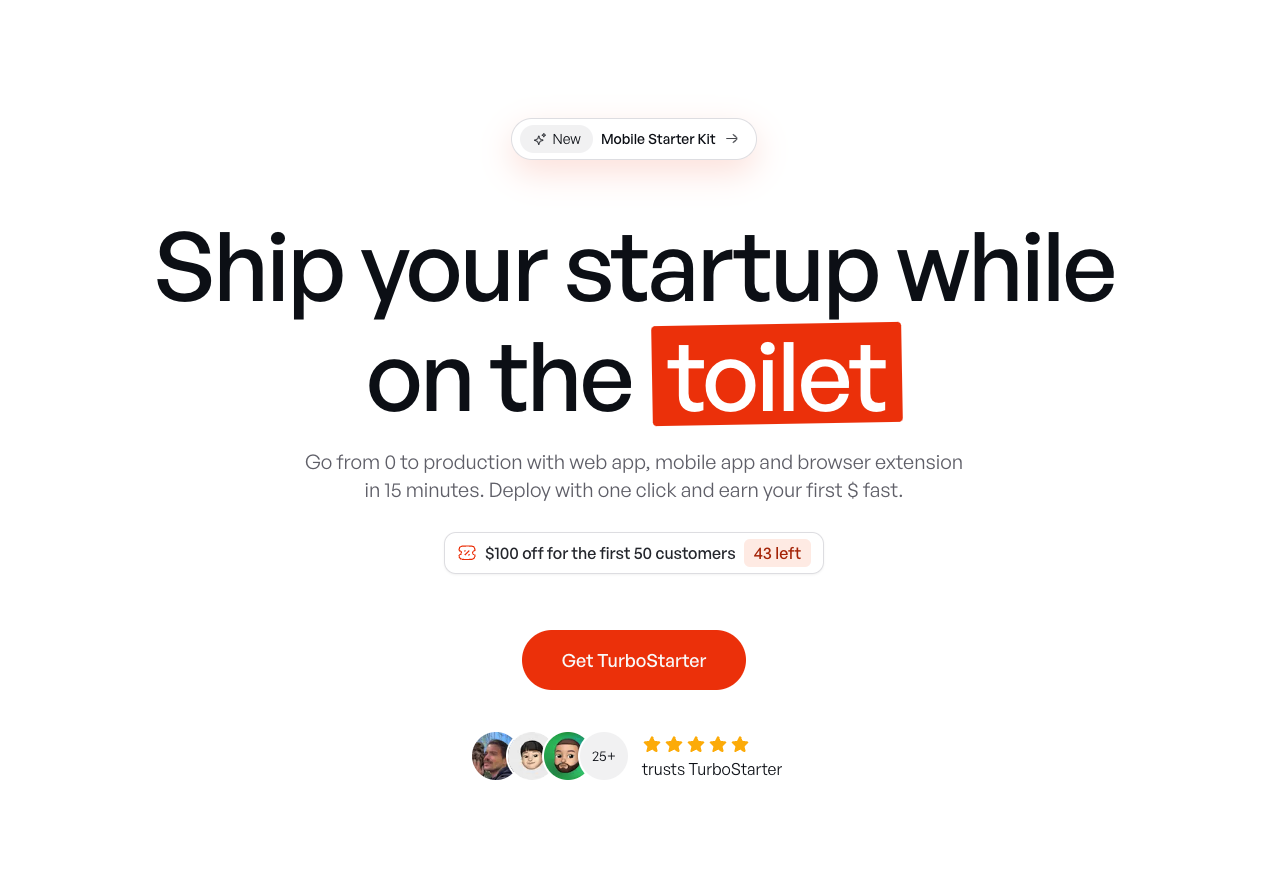
TurboStarter
Ship your startup everywhere. In minutes.
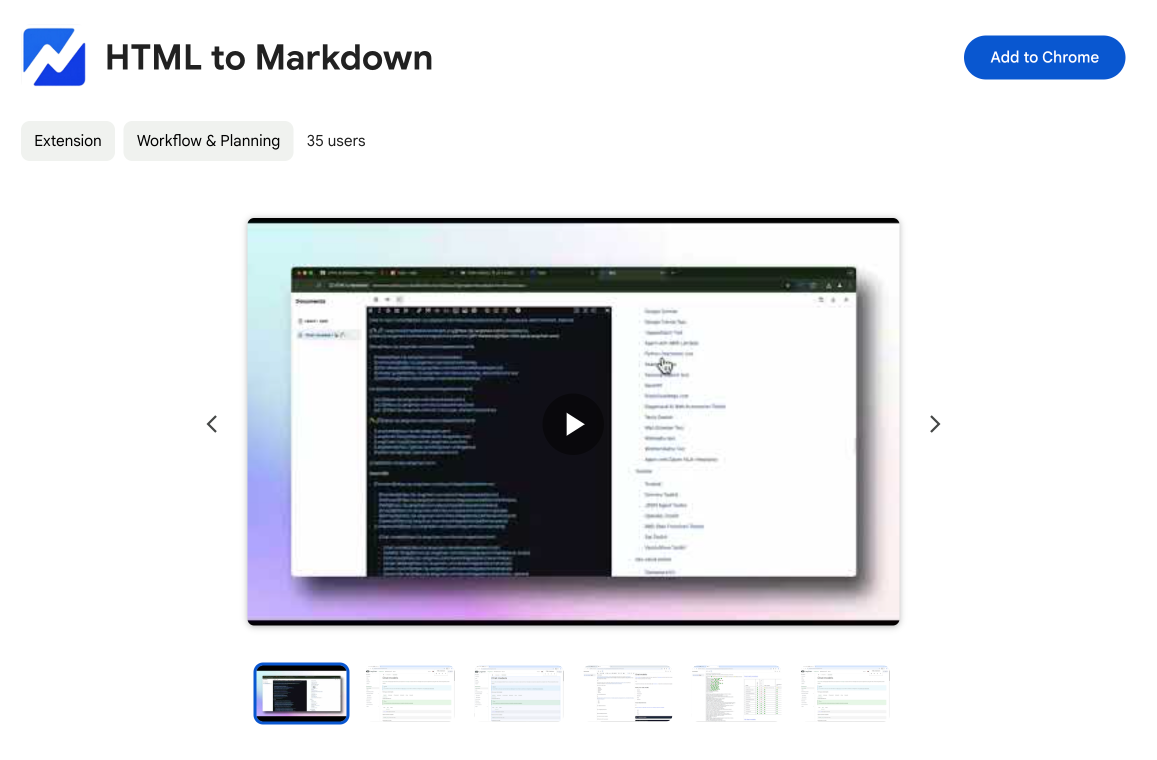
HTML to Markdown
Convert HTML to Markdown with ease, directly in your browser 📄
Dotallio
Personalized AI apps that automate research, data extraction, and content creation without code 🤖
Talk to Santa
Enjoy a magical live video chat or receive a unique AI-generated video greeting from Santa Claus 🎅
pozywka.pl
Scalable blog for food journalist, focused on performance and user experience 🌭
zagrodzki.me
Personal blog and portfolio of Bart Zagrodzki, where he shares his knowledge and work 💼
TurboStarter
Ship your startup everywhere. In minutes.
HTML to Markdown
Convert HTML to Markdown with ease, directly in your browser 📄
Dotallio
Personalized AI apps that automate research, data extraction, and content creation without code 🤖
Talk to Santa
Enjoy a magical live video chat or receive a unique AI-generated video greeting from Santa Claus 🎅
pozywka.pl
Scalable blog for food journalist, focused on performance and user experience 🌭
zagrodzki.me
Personal blog and portfolio of Bart Zagrodzki, where he shares his knowledge and work 💼
TurboStarter
Ship your startup everywhere. In minutes.
HTML to Markdown
Convert HTML to Markdown with ease, directly in your browser 📄
Dotallio
Personalized AI apps that automate research, data extraction, and content creation without code 🤖
Talk to Santa
Enjoy a magical live video chat or receive a unique AI-generated video greeting from Santa Claus 🎅
pozywka.pl
Scalable blog for food journalist, focused on performance and user experience 🌭
zagrodzki.me
Personal blog and portfolio of Bart Zagrodzki, where he shares his knowledge and work 💼
TurboStarter
Ship your startup everywhere. In minutes.
HTML to Markdown
Convert HTML to Markdown with ease, directly in your browser 📄
Omichat
Chat with 50+ AI models, including ChatGPT and Claude, in one place - switch models anytime without losing context 🤖
Claude Fast
Supercharge your Claude Code with 6x effective context window and specialized AI agents 🤖
EmojAI
AI-powered emoji picker with smart, context-aware suggestions 🤖

Solohacker
Autonomous company launcher - AI agents work 24/7, escalate what matters, and you stay in control 🤖

BeRawi: Storytelling Coach
Practice storytelling daily with instant feedback to sound clearer, more engaging, and confident 🎤
Omichat
Chat with 50+ AI models, including ChatGPT and Claude, in one place - switch models anytime without losing context 🤖
Claude Fast
Supercharge your Claude Code with 6x effective context window and specialized AI agents 🤖
EmojAI
AI-powered emoji picker with smart, context-aware suggestions 🤖
Solohacker
Autonomous company launcher - AI agents work 24/7, escalate what matters, and you stay in control 🤖
BeRawi: Storytelling Coach
Practice storytelling daily with instant feedback to sound clearer, more engaging, and confident 🎤
Omichat
Chat with 50+ AI models, including ChatGPT and Claude, in one place - switch models anytime without losing context 🤖
Claude Fast
Supercharge your Claude Code with 6x effective context window and specialized AI agents 🤖
EmojAI
AI-powered emoji picker with smart, context-aware suggestions 🤖
Solohacker
Autonomous company launcher - AI agents work 24/7, escalate what matters, and you stay in control 🤖
BeRawi: Storytelling Coach
Practice storytelling daily with instant feedback to sound clearer, more engaging, and confident 🎤
Omichat
Chat with 50+ AI models, including ChatGPT and Claude, in one place - switch models anytime without losing context 🤖
Claude Fast
Supercharge your Claude Code with 6x effective context window and specialized AI agents 🤖
EmojAI
AI-powered emoji picker with smart, context-aware suggestions 🤖
Solohacker
Autonomous company launcher - AI agents work 24/7, escalate what matters, and you stay in control 🤖
BeRawi: Storytelling Coach
Practice storytelling daily with instant feedback to sound clearer, more engaging, and confident 🎤

Connect with like-minded people
Join our community to get feedback, support, and grow together with 1,000+ builders on board, let's ship it!
Join usShip your startup everywhere. In minutes.
Don't burn tokens on setup and start building features on day one.