Hawkerlist
Helps Singapore hawker stall owners track daily supplier prices and food waste in one simple app. It shows which ingredients are eating into margins before the month closes.
Hawkerlist is a mobile-first web app that lets Singapore hawker stall owners log daily supplier prices and food waste in under two minutes, then shows which ingredients are quietly eating into margins before the month closes. In 2026, input costs, digital payments and government pushes for hawker digitalisation have made thin margins more visible than ever, yet most stalls still track costs in notebooks, WhatsApp chats or memory. A narrow cost-tracking tool for hawker stall margins is a small, buildable B2B product with a clear user and a clear job.
Key takeaways
- Target customer: owner-operators of hawker stalls and small food court stalls in Singapore, typically running one to three outlets.
- Pricing angle: a low monthly subscription, for example $9 to $19 per stall, with a free tier for logging only.
- Biggest risk: daily data entry. If logging takes more than a couple of minutes, owners stop after two weeks.
- Time to MVP: roughly three to five weeks for one developer starting from TurboStarter.
What problem does Hawkerlist solve for hawker stall owners?
Hawker stall owners know their selling prices precisely but often do not know their real ingredient costs until the month ends. By then, a supplier price rise or a pattern of over-prepping has already cost them money. Hawkerlist moves that insight from month-end to the same week.
Who is the ideal customer?
The ideal customer is an owner-operator who personally buys or approves purchases, runs a stall with a small team, and sells a menu with a handful of cost-sensitive ingredients. Think chicken rice, fish soup, nasi lemak, economy rice or a drinks stall. They buy from a mix of wet market vendors, wholesalers and delivery suppliers, often with prices that change by the day.
They are not accountants. Many are comfortable with WhatsApp, PayNow and a smartphone, but have little patience for software that looks like bookkeeping.
What do they do today?
Typical workarounds look like this:
- Paper notebook: prices and quantities scribbled at the market, rarely totalled.
- WhatsApp threads: supplier quotes and invoices buried in chat history.
- Memory: "the chicken feels more expensive lately", with no number behind it.
- Month-end accountant summary: accurate, but too late and too aggregated to act on.
- POS reports: useful for sales, but they say nothing about what each ingredient cost.
Why do these workarounds fail?
They fail because they give no comparison. A notebook cannot tell you that your cabbage price rose across three suppliers over two weeks, or that you binned a meaningful share of your prepared noodles every Monday. Owners need a trend and a ranked list of problems, not a record of everything.
Why is there an opening for hawker cost tracking software in 2026?
The gap sits between full restaurant inventory systems and a paper notebook. Tools built for restaurants assume a back office, a dedicated manager and recipe costing. A hawker stall has none of these, so the tools feel heavy and are usually abandoned.
What does the existing landscape look like?
- Spreadsheets (Excel, Google Sheets): flexible, but rely on discipline and formulas the owner has to build.
- Accounting software such as Xero or QuickBooks: good for bookkeeping, not designed for daily ingredient price movement.
- POS systems and F&B platforms: strong on sales and ordering, typically weak on supplier price tracking and waste.
- Restaurant inventory and food cost tools: often built for larger kitchens with recipe databases and stock counts.
Why now?
Several trends make the timing reasonable, assuming you verify each with owners in interviews:
- Cost pressure: ingredient, rent and labour costs have kept owners focused on margins.
- Digital habits: PayNow, QR payments and delivery apps have made smartphones part of daily stall operations.
- Waste awareness: food waste reduction is a public topic in Singapore, and owners often feel it directly in their margins.
- Cheaper AI input: photo and voice capture of invoices and handwritten notes is now practical, which lowers the logging burden that sank earlier tools.
The honest caveat: this is a small-ticket market. You win by being very cheap to acquire and very simple to use, not by selling big contracts.
What should the Hawkerlist MVP include?
Build the shortest path from "I bought ingredients today" to "this is what is hurting my margin." Everything else waits.
Quick price log
Record an ingredient, supplier, quantity and price in a few taps, with recent items and suppliers pre-filled.
Waste log
Note what was thrown away at closing time, by ingredient and rough amount, in under 30 seconds.
Margin leak ranking
A weekly ranked list of ingredients whose price rise or waste cost the most compared with the previous period.
Price alerts
A simple message when an ingredient price from a supplier jumps meaningfully above its recent average.
What is the aha moment?
The aha moment is the first weekly summary: "Chicken cost you more this week than your usual, and you binned a lot of rice on Tuesday." If an owner sees a ranked, plain-language list of leaks after seven days of logging, the product has proven its value.
What should you cut from version one?
- Full recipe costing and menu engineering.
- Stock counts and purchase orders.
- Multi-user roles beyond owner and one helper.
- Accounting integrations and tax reports.
- Supplier marketplaces or group buying.
Group buying is tempting and may be the long-term upside, but it is a different business with supply-side complexity. Earn the data first.
How is Hawkerlist different from spreadsheets and restaurant software?
The unique selling proposition is simple: daily ingredient price and waste tracking built for a one-person stall, with answers instead of reports. It is designed to be used at the market or at closing time on a phone, in minutes.
| Option | Built for hawker stalls | Under 2 minutes daily | Ranks margin leaks automatically | Cost |
|---|---|---|---|---|
| Hawkerlist | ✅ | ✅ | ✅ | Low monthly fee |
| Paper notebook | ✅ | ✅ | ❌ | Free |
| Spreadsheet | Depends | ❌ | Only if self-built | Free |
| Accounting software | ❌ | ❌ | ❌ | Moderate |
| Restaurant inventory tools | ❌ | ❌ | Partly | Moderate to high |
The moat is not the software. It is the accumulated, anonymised price data across stalls and suppliers, plus a design tuned to how owners actually work. Over time, benchmarking ("your cooking oil cost is above similar stalls") becomes something a notebook can never offer.
How would Hawkerlist make money?
Start with simple subscriptions and keep the price below the cost of one wasted bag of ingredients per month.
Option 1: flat monthly subscription
Charge something like $9 to $19 per stall per month. If you charge $15 a month and convert 10% of active free users, you need roughly 700 paying stalls to reach about $10,000 in monthly revenue. That is a real target for a niche, but it requires a lot of owners, so acquisition cost must stay very low.
Option 2: free logging, paid insights
Let owners log for free, and charge for the margin ranking, alerts and exports. This lowers the barrier and builds the dataset. The risk is that free users never convert if the free tier already feels sufficient, so keep the weekly leak report behind the paywall.
Option 3: multi-outlet or operator plan
Owners running several stalls, or small operators managing a few outlets, can pay a higher per-account price for combined reporting. This is likely your best margin per customer, but it is a smaller segment.
Which growth channel works first?
Direct, local, in-person outreach. Visit hawker centres in the afternoon lull, show the app on a phone, and ask owners to log one day of purchases. Pair it with WhatsApp onboarding and referrals between neighbouring stalls. Paid ads are unlikely to work at this price point.
How do you validate a hawker cost tracking app before building?
Spend one to two weeks testing demand and logging behaviour. The real question is not "would you use this?" but "will you enter data every day?"
Interview 15 stall owners
Visit hawker centres and ask how they track purchases today, what costs surprised them last month, and how they handle waste. Note whether they pull out a notebook or phone to show you.
Run a manual concierge pilot
Ask five owners to send daily prices and waste by WhatsApp message or photo. Compile the weekly leak summary yourself in a spreadsheet and see if they ask for the next one.
Publish a simple landing page
State one promise, such as "Find the ingredient eating your margin," and collect phone numbers or WhatsApp contacts rather than only emails. Track how many reply when you follow up.
Ask for a pre-commitment
Offer a founding price for the first 20 stalls, paid monthly with an easy cancel. Even a handful of paid commitments is a stronger signal than dozens of waitlist signups.
What tech stack should you use to build Hawkerlist?
A mobile-friendly web app (a progressive web app) is the fastest start. Owners do not want to install yet another app from a store at first, and a link shared over WhatsApp removes friction. You can add a native app later if usage proves it.
The core pieces are authentication, a relational database, subscription billing, transactional emails or messages, and file storage for invoice photos. These are the same for nearly every SaaS, and none make Hawkerlist unique. Starting from TurboStarter means you inherit a ready-made monorepo for web and mobile, so you spend your weeks on the logging flow and the leak ranking.
Useful docs for this build: authentication for owner and helper sign-in, billing for subscriptions, database for the price and waste data, and AI for reading invoice photos.
How should you model the data?
Keep the model small. Everything hangs off a stall, an ingredient and a dated entry.
create table price_entries (
  id uuid primary key,
  stall_id uuid not null,
  ingredient_id uuid not null,
  supplier_name text,
  quantity numeric not null,
  unit text not null,
  total_price_cents integer not null,
  bought_on date not null
);

create table waste_entries (
  id uuid primary key,
  stall_id uuid not null,
  ingredient_id uuid not null,
  quantity numeric not null,
  unit text not null,
  est_cost_cents integer,
  logged_on date not null
);
Compute unit price as total_price_cents / quantity and compare it with a trailing average per ingredient. That alone powers the first version of the alerts and the ranking.
Which AI approach should you pick for invoice and voice capture?
Send an invoice photo or a voice note to a hosted model and extract items, quantities and prices into structured fields. It sharply cuts logging time, which is your biggest adoption risk. Expect errors on handwritten and mixed-language notes, so always show a quick confirm screen.
Start with tap-based entry using pre-filled ingredients and suppliers. It is cheaper, more predictable and faster to ship, and it teaches you which items owners log most. Add AI capture once you know the real input patterns.
My recommendation is to ship manual entry with smart defaults first and add photo capture in the second month, once the leak ranking is proven useful.
What could make Hawkerlist fail?
Biggest risk: owners stop logging
Everything depends on daily data entry. If the habit does not form in the first two weeks, the leak ranking has nothing to analyse and churn follows. Design for the closing-time routine, keep logging under two minutes, send a WhatsApp reminder, and track weekly logging days per stall as your key retention metric.
Other real risks:
- Low willingness to pay: margins are thin and owners are cautious. Mitigate by pricing below the cost of a single wasted ingredient batch and showing a concrete saving in the first report.
- Slow, costly acquisition: door-to-door does not scale easily. Mitigate with referrals, hawker association contacts and a short onboarding demo.
- Messy data: units, local ingredient names and informal suppliers vary widely. Mitigate with a curated starter ingredient list, flexible units and gradual cleanup.
What should you do in the first 30 days?
- Week 1: interview owners, run the WhatsApp concierge pilot with five stalls and write down every point where logging felt annoying.
- Week 2: set up the project with TurboStarter, configure authentication and billing, and build the price and waste log screens.
- Week 3: build the weekly leak ranking and basic price alerts, then onboard the pilot stalls onto the real app.
- Week 4: fix friction found in daily use, add a payment link for founding members and visit three to five new hawker centres to recruit more stalls.
By the end of the month, you should know three things: how many owners log at least four days a week, whether they open the weekly report, and whether any will pay. If the answer to all three is yes, keep going. If not, the logging experience needs work before anything else.
Start with ten stalls and one honest question: does this show them money they were losing?
FAQ
Run a manual pilot through WhatsApp with a handful of stalls before writing code. If owners keep sending daily prices and ask for the next weekly summary, demand is real. A paid founding-member offer is a stronger signal than a waitlist.
A low monthly price, often in the range of $9 to $19 per stall, fits the segment. Anchor it against a single wasted batch of ingredients, and test a free logging tier with paid insights to see which converts better.
Indirect ones include spreadsheets, accounting tools such as Xero and QuickBooks, POS systems and restaurant inventory software. Most are built for larger kitchens or for sales and bookkeeping, not daily price and waste tracking for a single stall.
A mobile-friendly web app on a relational database such as Postgres, with authentication, subscription billing and file storage for invoice photos. Using a starter kit like TurboStarter covers these basics so you can focus on the logging flow and ranking logic.
A solo developer can typically ship a working MVP in three to five weeks when starting from a starter kit. Costs are mostly your time, hosting and any AI usage for invoice reading, which stays small at early volumes.
Not at first. A progressive web app opened from a WhatsApp link removes install friction. Consider native once you know owners log daily and want faster capture or offline support.
More 🏢 B2B Application SaaS ideas
Discover more innovative b2b application SaaS ideas that are trending in 2026. Each idea is AI-generated with market validation and growth potential to help you find your next profitable venture faster than competitors.
Your competitors are building with TurboStarter
Below are some of the SaaS ideas that have been generated and built with our starter kit.

Monitor any Telegram channel in real time - track posts, edits, deletions, and growth with AI recaps 📡

AI website builder - describe your business, pick a niche template, edit by chatting, and publish instantly ✨
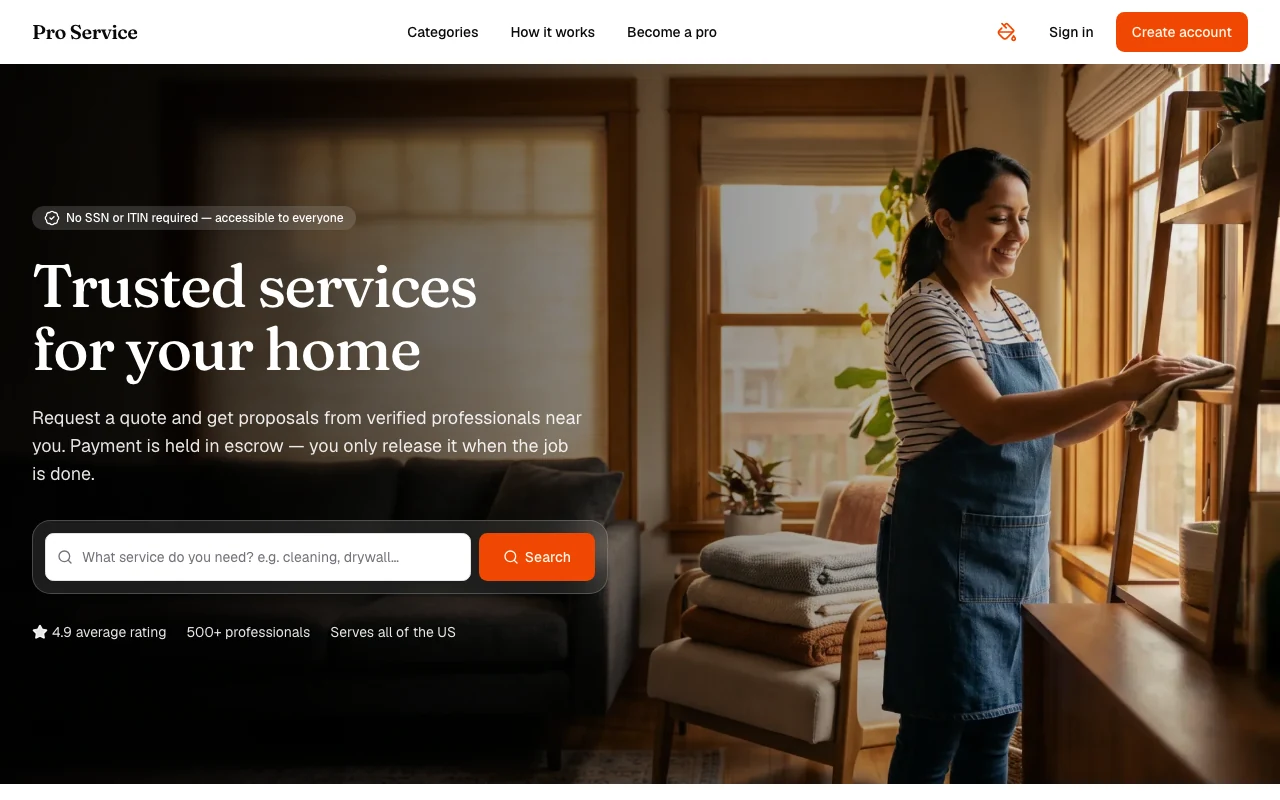
Find verified home service professionals, compare quotes, and pay securely through escrow - built for Brazilians across the US 🏠
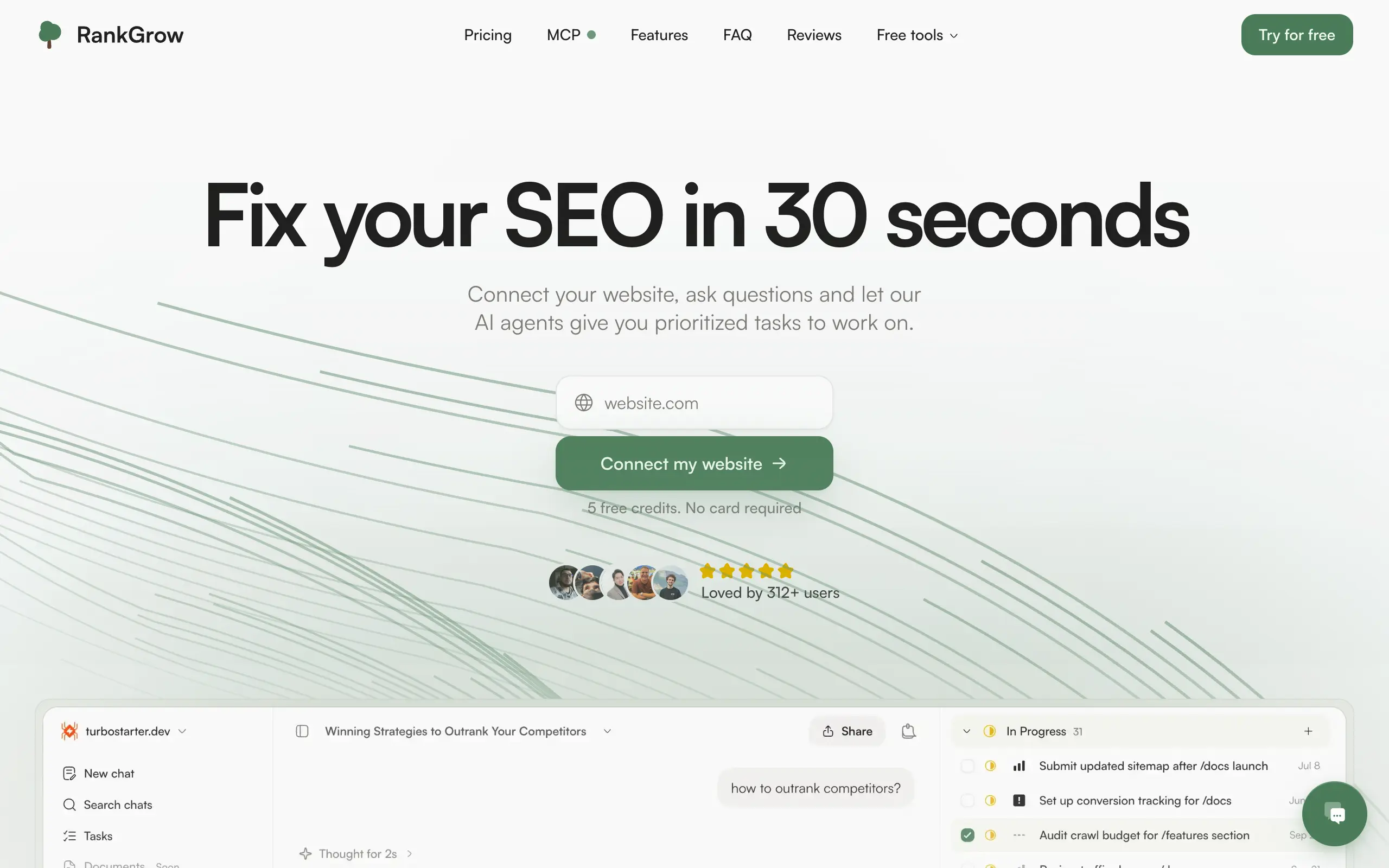
Fix your SEO with AI agents - connect Search Console, get prioritized tasks, and grow organic traffic 📈

Sync your favorite content for distraction-free reading, save time and replace multiple apps. Anytime, anywhere 🔄

Get clean, structured data from 21 platforms like TikTok, Instagram, and YouTube with a single request 📊
Monitor any Telegram channel in real time - track posts, edits, deletions, and growth with AI recaps 📡
AI website builder - describe your business, pick a niche template, edit by chatting, and publish instantly ✨
Find verified home service professionals, compare quotes, and pay securely through escrow - built for Brazilians across the US 🏠
Fix your SEO with AI agents - connect Search Console, get prioritized tasks, and grow organic traffic 📈
Sync your favorite content for distraction-free reading, save time and replace multiple apps. Anytime, anywhere 🔄
Get clean, structured data from 21 platforms like TikTok, Instagram, and YouTube with a single request 📊

Personalized AI apps that automate research, data extraction, and content creation without code 🤖

Enjoy a magical live video chat or receive a unique AI-generated video greeting from Santa Claus 🎅

Scalable blog for food journalist, focused on performance and user experience 🌭

Personal blog and portfolio of Bart Zagrodzki, where he shares his knowledge and work 💼

Ship your startup everywhere. In minutes.

Convert HTML to Markdown with ease, directly in your browser 📄
Personalized AI apps that automate research, data extraction, and content creation without code 🤖
Enjoy a magical live video chat or receive a unique AI-generated video greeting from Santa Claus 🎅
Scalable blog for food journalist, focused on performance and user experience 🌭
Personal blog and portfolio of Bart Zagrodzki, where he shares his knowledge and work 💼
Ship your startup everywhere. In minutes.
Convert HTML to Markdown with ease, directly in your browser 📄

Chat with 50+ AI models, including ChatGPT and Claude, in one place - switch models anytime without losing context 🤖

Supercharge your Claude Code with 6x effective context window and specialized AI agents 🤖

AI-powered emoji picker with smart, context-aware suggestions 🤖

Autonomous company launcher - AI agents work 24/7, escalate what matters, and you stay in control 🤖

Practice storytelling daily with instant feedback to sound clearer, more engaging, and confident 🎤
Chat with 50+ AI models, including ChatGPT and Claude, in one place - switch models anytime without losing context 🤖
Supercharge your Claude Code with 6x effective context window and specialized AI agents 🤖
AI-powered emoji picker with smart, context-aware suggestions 🤖
Autonomous company launcher - AI agents work 24/7, escalate what matters, and you stay in control 🤖
Practice storytelling daily with instant feedback to sound clearer, more engaging, and confident 🎤

Connect with like-minded people
Join our community to get feedback, support, and grow together with 1,000+ builders on board, let's ship it!
Join usShip your startup everywhere. In minutes.
Don't burn tokens on setup and start building features on day one.