Kilnwise
Lets pottery studios schedule kiln firings and log cone temperatures for every load. Owners avoid ruined glaze runs and know exactly which shelf fired which piece.
Kilnwise is a scheduling and firing-log tool for pottery studios: it books kiln loads, records cone and temperature data for every firing, and tracks which shelf held which piece. In 2026 the opportunity is a small, underserved vertical where studios still run a costly, failure-prone process on paper logs, whiteboards and group chats, and where a focused kiln firing management software for pottery studios can be built by one founder in weeks.
Key takeaways
- Target customer: owners and studio managers of community pottery studios, membership studios and teaching studios that fire shared kilns for many members.
- Pricing angle: flat monthly subscription per studio, tiered by number of kilns, plus an optional per-member add-on. Assume roughly $29 to $79 per month.
- Biggest risk: the market is small and studio owners are not software buyers, so acquisition cost must stay close to zero.
- Time to MVP: about 3 to 5 weeks for a solo founder using a starter kit, assuming you scope out hardware integrations.
What problem does kiln firing management software solve?
A shared kiln is the most expensive and least forgiving asset in a pottery studio, and a bad firing destroys both money and member trust. Kilnwise replaces the paper log and the "who's loading Thursday?" group chat with one system of record for every load.
Who feels this problem most?
The ideal customer is a membership or community pottery studio with 30 to 300 members, one to four kilns (electric, sometimes gas), and one owner or manager who also teaches, cleans and unloads. Members drop off work, staff load it, and everyone asks when it will be ready.
Typical pain points for this owner:
- Members' pieces sit on shelves with no reliable record of which firing they went into.
- Glaze runs get ruined when a load mixes incompatible cones, or when someone fires to the wrong schedule.
- Nobody can prove what the kiln did last Tuesday when a glaze blisters.
- Firing slots are negotiated by text message, so staff time disappears into logistics.
What do studios use today, and why does it fail?
The common workaround is a clipboard next to the kiln, a shared spreadsheet, or a whiteboard, combined with a general studio management tool for memberships. Those fail in predictable ways. Paper logs get lost or smudged, spreadsheets are not tied to members or shelves, and general booking tools model classes and appointments, not a kiln load with a cone target, a ramp schedule and a cooling window.
The deeper failure is traceability. When a firing goes wrong, an owner wants to answer "what was in that load, what did we fire to, and who needs to be told?" Today that answer lives in someone's memory.
Is there a market for pottery studio software in 2026?
Yes, but it is a niche market, and you should treat it as a focused vertical SaaS play rather than a venture-scale bet. The gap is that existing tools cover the business side of a studio, such as memberships, class registration and payments, while the firing workflow is left to manual processes.
What does the competitive picture look like?
Broad studio and class platforms such as Mindbody or Square Appointments handle booking and payments, but they know nothing about kilns. Kiln controllers and their companion apps focus on the temperature curve inside one kiln, not on the people and pieces going in. Spreadsheets and paper remain the real competitor.
That leaves a specific gap: a kiln load scheduler with firing records and shelf-level traceability, built for the way shared studios actually operate.
Why now?
- Cheaper build costs: a vertical tool no longer needs a team. One developer can ship auth, billing and a clean UI quickly with a starter kit.
- Craft studio growth: community studios and membership models have stayed popular as people look for hands-on hobbies, and each of them runs shared kilns.
- Owner expectations: studio owners already use phone-based payment and booking tools, so a mobile-friendly web app is a normal ask rather than a hard sell.
- AI-assisted entry: photo and voice capture can reduce data entry, which is the main reason log tools get abandoned.
What should the Kilnwise MVP include?
Build the smallest product that gives an owner a trustworthy record of every firing and a calm way to schedule them. The aha moment is the first time a member asks "where's my bowl?" and the owner finds the answer in ten seconds.
Firing scheduler
Book kiln loads by kiln, date and target cone, with capacity limits so a slot cannot be overbooked.
Firing log
Record cone, schedule, peak temperature, start and end times, and notes for every load.
Shelf map
Assign member pieces to shelves in a load so you always know what fired where.
Member notifications
Email members when their load is scheduled, fired and ready for pickup.
What to cut from version one
- Kiln hardware integrations: reading live temperature from controllers is a hardware and support swamp. Start with manual entry.
- Glaze recipe databases: useful, but a different product.
- Full membership and class billing: integrate later or stay out of it. Owners already have a tool for that.
- Native mobile apps: a responsive web app is enough for the first release.
How is Kilnwise different from spreadsheets and general studio tools?
The unique selling proposition is simple: every piece is traceable to a firing, and every firing is traceable to a schedule and a result. No general booking tool does that, and a spreadsheet only does it if someone is disciplined every single day.
| Option | Kiln load scheduling | Cone and firing log | Shelf-level traceability | Member notifications |
|---|---|---|---|---|
| Kilnwise | ✅ | ✅ | ✅ | ✅ |
| Paper log or whiteboard | ❌ | Manual | ❌ | ❌ |
| Spreadsheet | Manual | Manual | Manual | ❌ |
| General booking or studio tools | Generic only | ❌ | ❌ | Partial |
| Kiln controller apps | ❌ | Temperature only | ❌ | ❌ |
The honest caveat: a disciplined owner with a good spreadsheet is a viable alternative. Your job is to be faster than the spreadsheet on a busy Saturday, not just more complete.
How would Kilnwise make money?
Charge studios a flat subscription. Studios think in terms of rent, clay and kiln electricity, so a small predictable monthly fee fits their mental model.
Pricing options
- Per-studio tiers by kiln count: for example $29 per month for one kiln, $49 for up to three, $79 for more. This is easy to explain and scales with value.
- Base fee plus member add-on: a low base price with a small charge per active member over a threshold. It aligns revenue with studio size but makes bills less predictable.
- Annual plan with a discount: offer two months free for paying yearly, which helps cash flow and reduces churn in a seasonal business.
As an assumption: if you convert 20% of studios that complete a trial at an average of $49 per month, you need roughly 100 paying studios to reach about $4,900 in monthly recurring revenue. Measure your own conversion rather than trusting that number.
What growth channel works first?
Direct outreach and community presence. Pottery is a tight-knit world with active studio owner groups, ceramics forums, supply store relationships and instructors who move between studios. Start by offering free setup to ten studios, then ask each owner to introduce you to others. Search traffic for terms like "pottery studio kiln log" is a slower second channel.
How do you validate the idea before building?
Spend one to two weeks proving that owners feel the pain and will pay. You can do this without writing production code.
Interview ten studio owners
Ask them to walk through their last three firings: how they scheduled them, what they logged, and what went wrong. Listen for ruined loads, lost pieces and time spent answering member questions.
Offer a manual concierge version
Run a shared spreadsheet and email template for two or three studios for a week. If they keep using it and ask for improvements, the workflow is real.
Publish a one-page site with a waitlist
State one promise, such as "Know exactly what fired where, every time," and show a mockup of the shelf map. Send it to the studios you interviewed and to two or three owner communities.
Ask for a pre-sale
Offer a discounted founding-studio annual plan before the product exists. Even three to five paid commitments tell you more than fifty waitlist signups.
What tech stack should you use to build Kilnwise?
Use a conventional full-stack TypeScript setup with a relational database. The data is highly relational: studios have kilns, kilns have firings, firings have shelves, shelves hold pieces that belong to members.
Starting from TurboStarter removes most of the undifferentiated work. It ships with web and mobile apps, authentication, organizations and teams, billing, database, emails, file storage, AI, background tasks, an admin panel, analytics, internationalization and monitoring in a ready-made monorepo. That lets you spend your first weeks on the scheduler and shelf map rather than on login screens and Stripe webhooks.
Which parts of the starter matter most here?
- Multi-tenancy: each studio is an organization with staff and members. See the organizations docs.
- Subscriptions: tiered plans by kiln count map directly to billing.
- Notifications: firing-ready messages go through emails.
- Data model: the relational structure sits on the database layer.
A starting data model
// Simplified shape, adapt to your ORM
type Firing = {
  id: string;
  studioId: string;
  kilnId: string;
  scheduledAt: Date;
  targetCone: string; // e.g. "6"
  peakTempC?: number;
  status: "scheduled" | "firing" | "cooling" | "done" | "failed";
  notes?: string;
};

type ShelfItem = {
  id: string;
  firingId: string;
  shelf: number;
  memberId: string;
  description: string;
  photoUrl?: string;
};
How should you choose an AI approach?
AI is optional in version one, but it can cut data entry, for example by reading a photo of a cone pack or turning a spoken note into a log entry.
Fastest way to add photo or voice-to-log features, and it fits the starter's AI support. The trade-offs are per-call cost and occasional wrong reads, so always show the parsed result for confirmation before saving.
Keeps scope tight and avoids accuracy debates. Choose this if your interviews show owners mainly want a reliable schedule and log, which is likely. Add AI only once you see where manual entry hurts.
What could make Kilnwise fail?
Biggest risk: a small market and low willingness to pay
Many pottery studios are small, thinly staffed and price-sensitive, and some will never move off a clipboard. If your average revenue per studio is low and each sale takes a long conversation, the business may not support a full income. Test pre-sales early, keep support nearly zero-touch, and consider this a lean, profitable niche product rather than a venture bet.
Other real risks:
- Adoption friction: staff may skip logging on busy days. Mitigate with a very fast mobile entry flow and a tablet-friendly view next to the kiln.
- Feature creep toward hardware: requests for controller integration will arrive. Say no until revenue justifies it, or partner rather than build.
- A larger studio platform adds kiln features: a bigger tool could copy the basics. Stay ahead with depth in traceability and by knowing your customers personally.
- Seasonality: classes and firings fluctuate with the year. Annual plans smooth this out.
What are the next steps for a 30-day launch?
Days 1 to 7: validate
Run the interviews, set up the waitlist page and pitch founding-studio pre-sales.
Days 8 to 14: scaffold the product
Start from TurboStarter, configure studios as organizations, and define the firing and shelf data model.
Days 15 to 21: build the core loop
Ship the scheduler, firing log and shelf map. Skip everything else.
Days 22 to 26: onboard three studios
Import their kilns and members by hand, watch them use it, and fix the top three frustrations.
Days 27 to 30: turn on billing and launch
Enable tiered plans, convert pre-sale studios, and ask each for two introductions to other owners.
If you have talked to even a handful of studio owners and they recognize the problem, start building the smallest version this week. A focused tool for kiln firing management for pottery studios is easiest to prove with real loads from real studios.
FAQ
Interview ten studio owners about their last few firings, then run a manual spreadsheet version with two or three of them. If they keep using it and agree to a discounted pre-sale, you have stronger evidence than a waitlist alone.
A flat monthly fee tiered by kiln count is the simplest model, and a range of roughly $29 to $79 per month is a reasonable starting assumption. Test it in your pre-sale conversations and adjust based on what owners say compared with what they pay for clay and rent.
Mostly spreadsheets, paper logs and general studio or booking tools that do not understand firing workflows. Kiln controller apps cover temperature curves but not members, shelves or scheduling.
A TypeScript full-stack app with a relational database such as Postgres fits well, because the data is structured and connected. Using a starter kit like TurboStarter covers auth, billing, organizations and emails so you only build the kiln-specific logic.
Assuming a solo developer and a starter kit, expect roughly 3 to 5 weeks for the scheduler, log and shelf map. Costs are mostly your time plus modest hosting and email fees, since you are not building hardware integrations.
More 🏢 B2B Application SaaS ideas
Discover more innovative b2b application SaaS ideas that are trending in 2026. Each idea is AI-generated with market validation and growth potential to help you find your next profitable venture faster than competitors.
Your competitors are building with TurboStarter
Below are some of the SaaS ideas that have been generated and built with our starter kit.

Statiko
Monitor any Telegram channel in real time - track posts, edits, deletions, and growth with AI recaps 📡

Shibui
AI website builder - describe your business, pick a niche template, edit by chatting, and publish instantly ✨
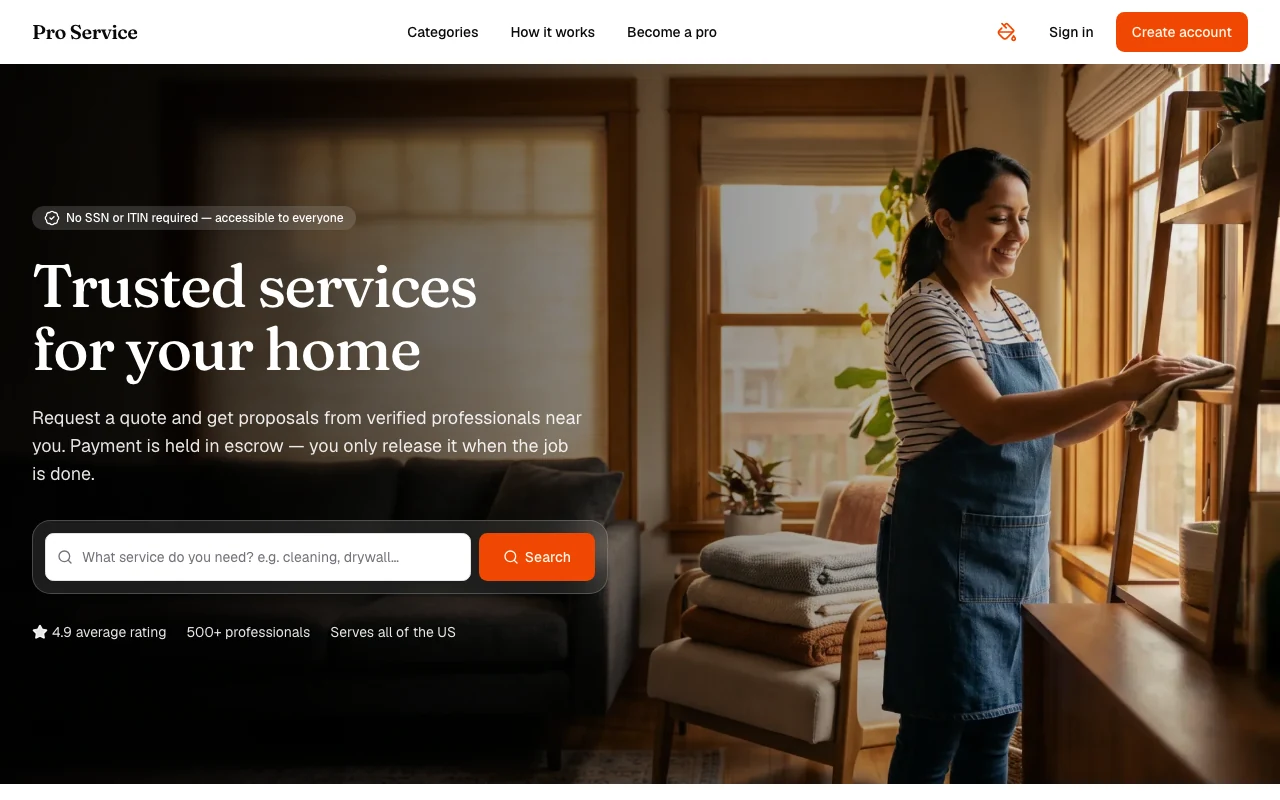
Pro Service
Find verified home service professionals, compare quotes, and pay securely through escrow - built for Brazilians across the US 🏠
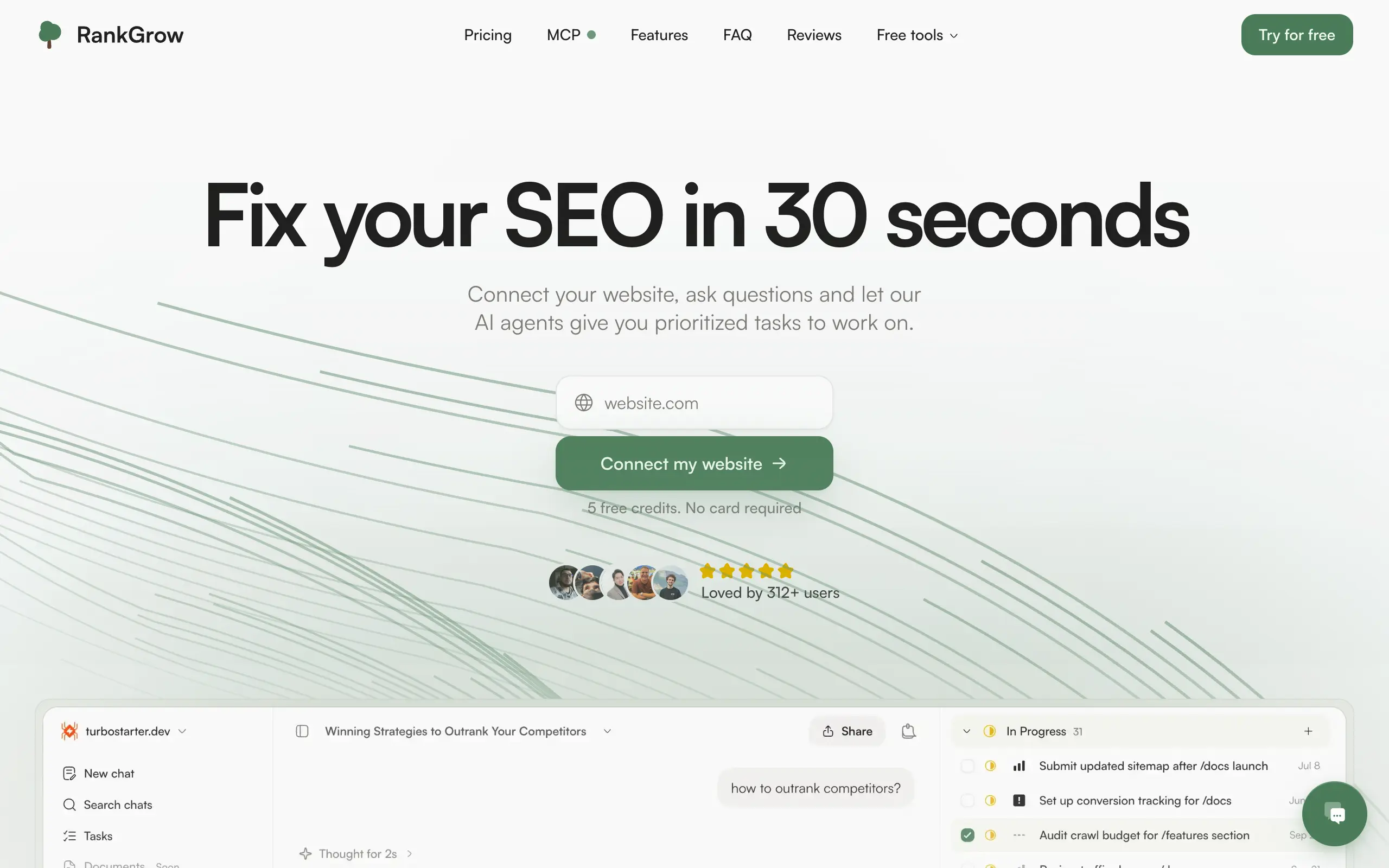
RankGrow
Fix your SEO with AI agents - connect Search Console, get prioritized tasks, and grow organic traffic 📈

SyncReads
Sync your favorite content for distraction-free reading, save time and replace multiple apps. Anytime, anywhere 🔄

Socialcrawl
Get clean, structured data from 21 platforms like TikTok, Instagram, and YouTube with a single request 📊
Statiko
Monitor any Telegram channel in real time - track posts, edits, deletions, and growth with AI recaps 📡
Shibui
AI website builder - describe your business, pick a niche template, edit by chatting, and publish instantly ✨
Pro Service
Find verified home service professionals, compare quotes, and pay securely through escrow - built for Brazilians across the US 🏠
RankGrow
Fix your SEO with AI agents - connect Search Console, get prioritized tasks, and grow organic traffic 📈
SyncReads
Sync your favorite content for distraction-free reading, save time and replace multiple apps. Anytime, anywhere 🔄
Socialcrawl
Get clean, structured data from 21 platforms like TikTok, Instagram, and YouTube with a single request 📊

Dotallio
Personalized AI apps that automate research, data extraction, and content creation without code 🤖

Talk to Santa
Enjoy a magical live video chat or receive a unique AI-generated video greeting from Santa Claus 🎅

pozywka.pl
Scalable blog for food journalist, focused on performance and user experience 🌭

zagrodzki.me
Personal blog and portfolio of Bart Zagrodzki, where he shares his knowledge and work 💼

TurboStarter
Ship your startup everywhere. In minutes.

HTML to Markdown
Convert HTML to Markdown with ease, directly in your browser 📄
Dotallio
Personalized AI apps that automate research, data extraction, and content creation without code 🤖
Talk to Santa
Enjoy a magical live video chat or receive a unique AI-generated video greeting from Santa Claus 🎅
pozywka.pl
Scalable blog for food journalist, focused on performance and user experience 🌭
zagrodzki.me
Personal blog and portfolio of Bart Zagrodzki, where he shares his knowledge and work 💼
TurboStarter
Ship your startup everywhere. In minutes.
HTML to Markdown
Convert HTML to Markdown with ease, directly in your browser 📄

Omichat
Chat with 50+ AI models, including ChatGPT and Claude, in one place - switch models anytime without losing context 🤖

Claude Fast
Supercharge your Claude Code with 6x effective context window and specialized AI agents 🤖

EmojAI
AI-powered emoji picker with smart, context-aware suggestions 🤖

Solohacker
Autonomous company launcher - AI agents work 24/7, escalate what matters, and you stay in control 🤖

BeRawi: Storytelling Coach
Practice storytelling daily with instant feedback to sound clearer, more engaging, and confident 🎤
Omichat
Chat with 50+ AI models, including ChatGPT and Claude, in one place - switch models anytime without losing context 🤖
Claude Fast
Supercharge your Claude Code with 6x effective context window and specialized AI agents 🤖
EmojAI
AI-powered emoji picker with smart, context-aware suggestions 🤖
Solohacker
Autonomous company launcher - AI agents work 24/7, escalate what matters, and you stay in control 🤖
BeRawi: Storytelling Coach
Practice storytelling daily with instant feedback to sound clearer, more engaging, and confident 🎤

Connect with like-minded people
Join our community to get feedback, support, and grow together with 1,000+ builders on board, let's ship it!
Join usShip your startup everywhere. In minutes.
Don't burn tokens on setup and start building features on day one.