MarginMuse
Connect ad spend, discounts, shipping, and returns to reveal true profit by campaign and SKU for growing ecommerce brands.
Growing ecommerce brands rarely fail because they cannot see revenue. They fail because they cannot see true profit quickly enough to make better decisions.
A store can report a healthy return on ad spend while quietly losing money after discount codes, shipping subsidies, payment processing fees, fulfillment costs, and customer returns are included. A bestseller can generate impressive top-line revenue but consume margin at scale. A campaign can look profitable in an ad platform while its attributed orders contain low-margin SKUs or unusually high return rates.
MarginMuse is an ecommerce profit analytics SaaS concept built to solve that visibility problem. It connects advertising spend, product costs, discounts, shipping, returns, and order-level transaction data to reveal actual contribution margin by campaign, channel, order, product, and SKU.
The core opportunity is clear. Ecommerce operators need a decision layer that answers a more useful question than “What sold?”
They need to know:
- Which campaigns produce profitable customers
- Which SKUs create or destroy contribution margin
- Which discount strategies are eroding profitability
- Which shipping policies are becoming too expensive
- Which customer segments produce costly returns
- Where paid acquisition can scale safely
This article evaluates MarginMuse as a B2B SaaS opportunity, including its target customers, market gap, product strategy, ecommerce analytics architecture, monetization options, competitive positioning, technical stack, and practical launch plan.
Why ecommerce profit analytics is a growing SaaS opportunity
Ecommerce reporting has traditionally centered on revenue, conversion rate, average order value, customer acquisition cost, and return on ad spend. These metrics matter, but they do not independently indicate whether a business is creating profitable growth.
A brand with a 4x return on ad spend may still lose money when the business accounts for:
- Cost of goods sold
- Product-specific landed costs
- Paid media spend
- Discounts and promotions
- Shipping labels and delivery surcharges
- Fulfillment fees
- Marketplace commissions
- Payment processing fees
- Refunds and return shipping
- Taxes and duties where relevant
- Subscription software and operational costs
This is why ecommerce profit analytics software has become increasingly important for direct-to-consumer brands, multichannel retailers, and agencies managing paid acquisition.
The market does not lack dashboards. It lacks a consistently trusted, granular, explainable profit model that ecommerce teams can use every day.
The real buyer problem
Most operators do not want another report. They want confidence that increasing a campaign budget, extending a promotion, or reordering a SKU will improve contribution margin rather than simply increase revenue.
MarginMuse can position itself as the bridge between fragmented ecommerce data and operationally useful profitability decisions.
Its differentiator should not be “we show profit.” Many tools make that claim. Its differentiator should be:
MarginMuse explains why profit changed and identifies the campaign, SKU, discount, shipping policy, or return pattern responsible for the change.
That explanatory layer matters. Founders, finance leaders, marketers, and merchandising teams need a common source of truth they can interrogate without exporting spreadsheets every week.
The target audience for MarginMuse
MarginMuse should focus on ecommerce businesses with enough transaction volume and channel complexity to feel the pain of inaccurate profitability reporting, but not so much complexity that they require a full enterprise data warehouse implementation.
The strongest initial market is likely a Shopify-centered segment, followed by brands that sell across additional channels and marketplaces.
Primary customer profile: growing DTC ecommerce brands
The most promising early customers are likely to have several of these characteristics:
- Annual online revenue between approximately $1 million and $50 million
- Meaningful investment in Meta, Google, TikTok, or influencer acquisition
- A catalog of multiple products, variants, bundles, or seasonal SKUs
- Frequent promotions, discount codes, or free-shipping offers
- A fulfillment model involving third-party logistics providers, in-house fulfillment, or both
- Material return rates, especially in apparel, beauty, home goods, or consumer electronics
- Teams currently dependent on spreadsheets, disconnected dashboards, or manual finance reconciliation
- A founder, operator, growth lead, or finance manager who needs faster margin visibility
At this stage, the customer often has data in Shopify, ad platforms, accounting software, shipping systems, return-management systems, and a fulfillment partner portal. Every individual tool may be functional, yet no one sees the complete unit economics picture.
Secondary customer profile: ecommerce agencies and fractional operators
Performance marketing agencies, fractional CFOs, ecommerce consultants, and growth operators are valuable distribution partners and future customers.
They manage several client accounts and need repeatable ways to explain results beyond ad-platform metrics. MarginMuse could give them a multi-brand workspace, client-ready profit reporting, and margin-based optimization recommendations.
Their needs differ from those of a brand operator:
- Efficient onboarding across many stores
- Clear client permissions and role controls
- Exportable or shareable reports
- Standardized profitability benchmarks
- Alerts that identify accounts needing attention
- A portfolio-level view of client margin health
Tertiary customer profile: multichannel retailers
After validating the core Shopify use case, MarginMuse can expand toward brands selling through Amazon, wholesale, marketplaces, retail partners, and international storefronts.
This segment has a larger contract value but more complex data requirements. Channel commissions, settlement delays, inventory valuation, marketplace fees, and varying fulfillment terms require a more robust profitability engine.
Growth marketer
Needs campaign-level contribution margin instead of surface-level ROAS.
Ecommerce founder
Needs one trusted view of where profitable growth is coming from.
Finance lead
Needs order-level inputs that reconcile with accounting and cash realities.
Merchandising manager
Needs SKU and bundle profitability to make better assortment decisions.
The market gap: revenue dashboards do not equal true profitability
The central market gap is caused by a mismatch between how ecommerce teams make decisions and how their data is organized.
Ad platforms optimize around clicks, conversions, and attributed purchase value. Ecommerce platforms optimize around orders and products. Shipping systems track labels and carrier costs. Return platforms track exchanges, refunds, and reasons. Accounting platforms track financial statements and cash movements.
None of these systems automatically creates a clean answer to this question:
What was the contribution margin generated by this exact campaign, product, customer cohort, or promotion?
A basic formula may look simple:
Contribution margin =
Net sales
- cost of goods sold
- advertising spend
- discounts
- shipping and fulfillment
- payment fees
- return and refund costs
- channel fees
In practice, each line item contains difficult allocation choices.
For example, how should the platform allocate a campaign’s spend across orders when attribution is imperfect? Should a refunded order have its original ad cost retained? How should blended shipping costs be distributed across multi-item orders? What happens when a bundle contains products with different landed costs? How are partial refunds treated?
A viable ecommerce profit analytics product needs to handle these decisions transparently rather than hiding them behind a single “profit” number.
The spreadsheet ceiling
Spreadsheets are usually the first solution. They are flexible and familiar, but they break down as transaction volume, data sources, and decision frequency increase.
Common spreadsheet problems include:
- Manual exports that quickly become stale
- Inconsistent definitions across marketing and finance teams
- Formula errors that are hard to audit
- Inability to drill from a summary figure into specific orders
- Limited automated alerts
- Slow reporting cycles
- Fragile workflows dependent on one employee
- No reliable historical record of changing costs and refund behavior
MarginMuse should not merely replicate a spreadsheet in a web interface. It should provide a governed profit model with source-level traceability, repeatable calculations, and team-ready workflows.
The attribution gap
Attribution is another important gap. Ecommerce businesses often use platform-reported return on ad spend even though individual platforms may over-credit themselves for the same conversion.
MarginMuse should avoid promising perfect attribution. Instead, it should make attribution assumptions explicit and offer practical reporting modes.
For example:
- "Platform-reported view" uses each channel’s reported spend and conversion data
- "Blended efficiency view" compares total paid spend against total ecommerce revenue and profit
- "Order-attributed view" applies selected attribution rules to orders
- "Contribution margin view" includes operational costs after revenue attribution
This positioning is more trustworthy than claiming to solve an inherently probabilistic attribution problem with false precision.
MarginMuse’s core value proposition and unique selling proposition
MarginMuse should be positioned as a profit intelligence platform for ecommerce operators, not simply a financial dashboard or marketing analytics tool.
Its primary value proposition is:
Connect every material cost of an ecommerce order to identify true contribution margin by campaign and SKU.
The concept becomes more compelling when translated into decisions customers can make immediately:
- Pause campaigns that look efficient on ROAS but lose money after discounts and returns
- Increase budget on campaigns that produce high-margin customer cohorts
- Reprice, bundle, or discontinue SKUs with weak contribution margin
- Adjust free-shipping thresholds using actual fulfillment economics
- Identify promotions that generate revenue but train customers to buy unprofitably
- Detect return-heavy products or acquisition sources before they materially damage margin
- Compare profit performance across channels, collections, landing pages, and customer segments
A defensible USP: explainable profit at the decision level
The most defensible version of MarginMuse is not “all-in-one ecommerce analytics.” That category is broad and crowded.
A sharper USP is explainable, order-aware profit intelligence for growth decisions.
The product should show:
-
What changed
Contribution margin fell by a defined amount. -
Where it changed
The decline was concentrated in a campaign, SKU group, country, shipping method, or customer cohort. -
Why it changed
The underlying drivers were higher discounts, rising delivery cost, product mix changes, increased returns, or higher acquisition cost. -
What the team can do next
Pause spend, adjust the offer, revise shipping rules, investigate product quality, or update pricing.
This is a more valuable workflow than static reporting because it turns fragmented commerce data into prioritized action.
Core MarginMuse features for an effective MVP
An MVP should focus on accuracy, trust, and decision usefulness. Broad integrations and advanced forecasting can come later. Early customers will forgive a narrow product; they will not forgive profit numbers they cannot trust.
Data connections and onboarding
The first version should integrate with the systems most central to an ecommerce brand’s profit calculation:
- Shopify for orders, line items, discounts, customers, refunds, products, and variants
- Meta Ads for campaign, ad set, and ad spend data
- Google Ads for paid search and shopping spend
- A shipping or fulfillment data source for actual label and fulfillment costs
- A returns platform or Shopify refund data for return economics
- CSV upload for product costs, landed costs, custom fees, or unsupported systems
A guided onboarding flow should make data requirements clear. Product cost ingestion deserves special attention because many brands do not keep cost-of-goods-sold data cleanly inside their commerce platform.
The setup experience can ask operators to choose among several cost methods:
- Fixed unit cost by SKU
- Variant-specific unit cost
- Effective-dated historical cost
- Percentage-of-revenue fallback
- Imported landed cost by purchase order or inventory batch
Historical cost support is especially valuable. If a brand’s supplier cost changes, MarginMuse should not retroactively rewrite past unit economics unless the customer intentionally updates the historical record.
Profit model configuration
A configurable profit model is the heart of the product.
Users should be able to define which costs are included in their contribution margin calculation. The interface should use clear language and show the formula before generating reports.
Potential cost components include:
- Gross sales
- Product discounts
- Refunds
- Net sales
- Cost of goods sold
- Advertising spend
- Shipping revenue collected from customers
- Carrier label cost
- Pick-and-pack fees
- Packaging costs
- Payment processing fees
- Marketplace fees
- Return shipping costs
- Duties and taxes, where applicable
Avoid a one-size-fits-all margin formula
A beauty brand with low returns and high repeat purchase behavior should not be forced into the same profitability assumptions as an apparel retailer with expensive return shipping and frequent size-related exchanges.
The system should retain an audit trail of configuration changes. When a customer asks why a historical dashboard changed, the platform should identify whether the reason was new source data, a changed cost rule, a refund event, or an updated attribution setting.
Campaign-level profit analytics
Campaign profitability is likely to be the main acquisition hook for MarginMuse.
The campaign dashboard should include:
- Ad spend
- Attributed or blended revenue
- Net revenue after discounts and refunds
- Contribution margin
- Margin percentage
- Customer acquisition cost
- Profit per order
- Profit per acquired customer
- Return rate
- Discount rate
- Top purchased SKUs
- Time-to-profit trend
The platform should make clear whether results are platform-attributed, first-click, last-click, blended, or based on another selected model. Trust is built by labeling methodology plainly.
A growth marketer should be able to look at a campaign and understand that a lower ROAS campaign may still be worth scaling because it sells higher-margin products with lower refund risk.
SKU and product profitability analytics
SKU-level profit reporting is equally important because product economics drive the quality of every marketing result.
The SKU view should reveal:
- Units sold
- Gross sales and net sales
- Average selling price
- Discount depth
- COGS and estimated landed cost
- Shipping and fulfillment allocation
- Return rate and refund amount
- Gross margin
- Contribution margin
- Margin trend over time
- Campaigns most associated with the SKU
- Frequently purchased together products
This creates a bridge between growth and merchandising. A team may discover that its highest-volume product is profitable only at full price, or that a bundle is more margin-accretive than the individual products inside it.
Alerts and margin anomaly detection
Dashboards are passive. Alerts make the platform operational.
A valuable early alert engine can start with deterministic rules rather than complex machine learning:
- Contribution margin percentage falls below a configured threshold
- Campaign spend rises while profit per order declines
- A SKU’s return rate rises above its trailing average
- A discount code exceeds an acceptable margin impact
- Shipping expense per order rises materially
- A high-spend campaign has negative estimated contribution margin
- Product costs are missing for a fast-selling SKU
Later, anomaly detection models can compare a metric against seasonality, day-of-week patterns, and historical variance. However, transparent rules are more appropriate for an MVP because users can easily understand and validate them.
Drill-down and reconciliation workflows
Trust depends on the ability to drill into the numbers.
A report that says a campaign lost money must allow the operator to inspect:
- The underlying orders
- The products purchased
- Discounts applied
- Allocated ad spend
- Shipping and fulfillment charges
- Payment fee calculations
- Refunds and returns
- The exact version of the margin rule used
This matters for finance alignment. Marketing teams may use MarginMuse daily, but finance stakeholders need evidence that the product’s operating metrics are directionally consistent with actual financial performance.
Refunds should be linked to the original order and line item whenever possible. The dashboard can show both initial contribution margin and realized contribution margin after refunds. Keeping these views separate helps teams understand whether a campaign initially looked healthy but deteriorated because of returns.
MarginMuse should support transparent attribution settings and clearly label them in every report. For many operators, a blended paid-media view is more reliable for budget decisions than an overconfident order-level attribution claim.
The product should flag incomplete cost coverage rather than quietly presenting misleading profit figures. It can support CSV imports, default cost rules, and estimated cost status labels while encouraging customers to improve data quality.
A recommended technical stack for MarginMuse
MarginMuse is fundamentally a data product. The engineering challenge is not just building dashboards; it is ingesting inconsistent commerce data, preserving historical accuracy, applying explainable calculations, and delivering fast drill-down analytics.
A pragmatic stack should prioritize speed to market while leaving room for reliable data processing.
Application layer
A strong web application stack could include:
- React for the application interface
- Next.js for full-stack React rendering, routing, and server-side capabilities
- TypeScript for safer domain modeling and integration code
- Tailwind CSS for a fast, consistent design system
- PostgreSQL for relational application data and early-stage transactional workloads
TypeScript is particularly useful because ecommerce data contains many entities that benefit from explicit domain types, including orders, line items, refunds, product costs, campaigns, spend records, fulfillment events, and margin calculation versions.
Data ingestion and processing architecture
The product should use a durable ingestion pipeline rather than fetching live API data every time a dashboard loads.
A practical architecture includes:
- OAuth connection to the source platform
- Initial historical backfill
- Webhook or scheduled incremental synchronization
- Raw source event storage
- Normalization into a canonical ecommerce data model
- Cost allocation and margin calculation jobs
- Materialized analytics tables for fast reporting
- Observability and reconciliation checks
For job orchestration, Temporal is powerful when workflow reliability and retries are important. A simpler queue-based approach may be sufficient at the earliest stage, but long-running backfills and rate-limited APIs will eventually make durable workflows valuable.
For transformations, teams can begin with SQL and application jobs, then adopt dbt as reporting logic and transformation complexity increase.
Analytics database trade-offs
PostgreSQL can support the MVP if the customer base and transaction history are modest. It simplifies operations and enables a faster initial launch.
As data volume grows, ecommerce analytics often benefits from an analytical database such as ClickHouse. ClickHouse is well suited to high-volume event data and fast aggregations across large order, line-item, and ad-performance datasets.
The trade-off is operational complexity.
| Decision area | Early-stage choice | Scale-up choice | Main trade-off | Recommendation |
|---|---|---|---|---|
| Primary database | PostgreSQL | PostgreSQL plus ClickHouse | Simple operations versus analytical speed | Start with PostgreSQL |
| Data sync | Scheduled jobs | Webhooks plus durable workflows | Fast build versus fresher data | Use both for critical sources |
| Profit rules | Application logic | Versioned transformation layer | Speed versus governance | Version rules from day one |
| Attribution | Blended and platform-reported | Configurable models | Clarity versus sophistication | Prioritize transparent labels |
Security, privacy, and reliability requirements
Ecommerce data includes customer information and commercially sensitive performance data. Security cannot be added as an afterthought.
MarginMuse should implement:
- Encryption in transit and at rest
- Role-based access controls
- Secure OAuth token storage
- Audit logs for material configuration changes
- Tenant isolation
- Data retention and deletion controls
- Backups and restoration procedures
- Monitoring for failed syncs and stale data
- Clear incident response procedures
- Privacy documentation that explains what customer data is processed
As the company grows, customers may request security questionnaires and third-party assurance. A SOC 2 readiness roadmap can become a sales enabler for larger brands and agencies, even if formal compliance is not necessary before early product-market fit.
Monetization strategy for ecommerce profit analytics software
MarginMuse should use pricing that reflects the value of better decisions while remaining easy for growing brands to understand.
A recurring subscription model based on order volume, monthly revenue, connected stores, or a combination is likely the most natural fit.
Recommended pricing structure
A tiered SaaS model could include:
- "Starter" for small but growing stores with one storefront, core Shopify profit reporting, and a limited historical lookback
- "Growth" for brands with paid media connections, campaign profitability, alerts, additional users, and deeper historical reporting
- "Scale" for multichannel brands requiring custom integrations, advanced permissions, API access, and premium support
- "Agency" for partners managing multiple client brands under one workspace
Avoid making every valuable feature an add-on. Customers buying profit analytics want a coherent answer, not a confusing menu of calculations.
Instead, reserve premium functionality for features with real operational complexity:
- Additional storefronts or brands
- Longer historical data backfills
- Custom data pipelines
- Dedicated data warehouse exports
- Multi-entity reporting
- Advanced agency reporting
- White-label client portals
- Higher-frequency syncs
- Priority support and onboarding
Value metric considerations
Order volume is easy to measure and broadly correlates with data processing cost. However, it can feel punitive to brands that grow successfully.
Monthly revenue is intuitive but may cause concerns if customers have high revenue and thin margins.
A hybrid approach can work well:
- Base price determined by monthly order volume
- Higher tiers unlocked by feature depth and integration complexity
- Annual plan discounts for retention and cash flow
- Assisted onboarding fee for complex implementations
The onboarding fee is justified when MarginMuse is importing historical COGS, configuring custom allocation rules, and reconciling source data. This service can also create early learning loops for the product team.
Competitive advantage analysis
MarginMuse will operate in a competitive environment that includes ecommerce analytics tools, attribution platforms, accounting systems, BI dashboards, and spreadsheet-based workflows.
The winning strategy is not to compete with all of them on every capability. It is to own a clear decision-making job.
What competitors often do well
Existing categories offer meaningful strengths:
- Ad attribution tools offer detailed marketing measurement
- Ecommerce reporting tools offer fast revenue and customer dashboards
- Accounting platforms offer compliant financial reporting
- BI platforms offer flexible custom analysis
- Spreadsheets offer total flexibility for advanced operators
MarginMuse should acknowledge these strengths rather than framing itself as a replacement for every system.
Where MarginMuse can win
MarginMuse can create an advantage through five product principles.
-
Order-aware profitability
Connect the order, line-item, discount, shipping, fee, refund, and product-cost layers instead of relying on broad averages. -
Decision-level reporting
Make campaign and SKU profitability the primary interface, not an afterthought in a finance report. -
Explainability
Show the inputs, formulas, and allocation logic behind every number. -
Shared operating language
Give finance, marketing, operations, and merchandising one margin model, reducing debates caused by competing dashboards. -
Fast time to value
Deliver a useful first profit view in days, not months of warehouse engineering.
The long-term moat is likely to come from the normalized commerce data model, accumulated benchmark data, workflow adoption, and historical margin intelligence. Once a brand uses MarginMuse to understand campaign and SKU profitability over many quarters, switching becomes harder because the platform holds the context behind past decisions.
Risks and mitigation strategies
A strong SaaS strategy identifies where the concept can fail before investing heavily in feature development.
Data quality risk
The largest risk is incomplete or inconsistent source data. If COGS is missing, shipping costs are estimated poorly, or refund events do not reconcile correctly, users will distrust the output.
Mitigation should include:
- Data completeness scores
- Prominent warnings for estimated values
- Reconciliation reports
- Configurable rules with visible assumptions
- Onboarding validation checklists
- Historical cost imports
- Human-assisted setup for higher-value accounts
Attribution credibility risk
Marketing attribution is inherently imperfect. Overstating certainty will damage trust.
Mitigation should include:
- Clearly labeled attribution modes
- Blended profitability reporting
- Configurable models where appropriate
- Documentation explaining each methodology
- Emphasis on directional decision support over false precision
Integration dependency risk
Shopify, Meta, Google, and other platforms can change APIs, rate limits, scopes, and policies.
Mitigation should include:
- Modular connector architecture
- Sync health monitoring
- Graceful handling of API failures
- Source-data snapshots where permitted
- A prioritized integration roadmap based on customer demand
- CSV fallback imports for critical data gaps
Crowded category risk
Profit analytics can sound similar to existing ecommerce software.
Mitigation should include:
- A narrow initial ideal customer profile
- Campaign-to-SKU margin storytelling in all messaging
- Strong onboarding and reconciliation
- Agency partnerships
- High-quality educational content about contribution margin
- Product-led alerts that prove value before a customer churns
Privacy and security risk
Customer and order data creates security expectations even for small SaaS vendors.
Mitigation should include secure engineering practices, minimal data collection, documented access controls, and a clear roadmap toward formal security assurance as deal size increases.
Go-to-market strategy for MarginMuse
The best early go-to-market strategy is education-led and operator-focused.
Many ecommerce leaders know that they need better profitability data, but they may not yet have language for the underlying issue. Content should help them identify the gap between revenue reporting and true margin analysis.
High-intent topics include:
- How to calculate ecommerce contribution margin
- Why ROAS can hide unprofitable campaigns
- Ecommerce profit dashboard metrics that matter
- How to calculate profitability by SKU
- How discounts affect ecommerce margin
- How to measure return-adjusted profitability
- Shipping cost allocation for ecommerce brands
- When a DTC brand needs profit analytics software
These topics can attract founders, growth marketers, and finance leaders before they actively search for a named tool.
Early customer acquisition channels
Initial channels should include:
- Founder-led outreach to Shopify brands with active paid media
- Partnerships with ecommerce agencies and fractional CFOs
- Shopify ecosystem communities and operator groups
- Educational webinars on campaign contribution margin
- Free profitability audit templates that lead into onboarding
- Integration-focused SEO pages for Shopify and paid media reporting
- Case studies showing specific margin improvements
The first case studies should focus on outcomes customers understand, such as identifying a loss-making campaign, reducing discount leakage, or finding a high-return SKU before scaling inventory.
When presenting results, avoid unsupported universal claims. Use customer-specific evidence and explain the calculation methodology. For broader market statistics, cite authoritative reports from recognized ecommerce, payments, logistics, or analyst organizations after independently verifying the latest edition.
An implementation roadmap for MarginMuse
The fastest route to validation is to build a narrow but trustworthy product for a clear customer segment.
Define the first ideal customer profile as Shopify brands with meaningful paid social spend, more than one core SKU, and a recurring need to evaluate campaign profitability.
Interview at least 20 founders, growth leads, and finance operators. Ask them to walk through the last time revenue increased but profit did not. Collect their exports, spreadsheet logic, and reporting disputes.
Build the canonical profit model before polishing dashboards. Define net sales, COGS, discount treatment, shipping allocation, returns, payment fees, and ad-spend logic in versioned rules.
Launch Shopify, Meta Ads, product cost import, and refund support first. Use CSV imports for unsupported fulfillment or shipping systems rather than delaying the MVP.
Create three high-value screens: executive margin overview, campaign contribution margin, and SKU profitability drill-down.
Add data quality indicators and order-level auditability. Do not allow incomplete cost coverage to look like confirmed profitability.
Run concierge onboarding with the first customers. Reconcile outputs against their spreadsheets and finance reports, then turn repeated setup work into product workflows.
Introduce proactive alerts only after the core calculations are trusted. Start with clear threshold-based alerts before investing in predictive models.
For founders building the first version, starting with a proven SaaS foundation can reduce time spent on authentication, billing, workspace design, and production-ready application patterns. TurboStarter can be a useful starting point for accelerating the product layer while the team concentrates on MarginMuse’s differentiated data model and profit intelligence workflows.
Final perspective: build for profitable growth, not prettier reporting
MarginMuse addresses a durable ecommerce problem: the systems used to drive revenue are disconnected from the systems needed to understand margin.
That disconnect becomes more expensive as a brand scales. More ad spend, more products, more promotions, more fulfillment complexity, and more returns can all increase revenue while obscuring whether the business is improving economically.
The opportunity is strongest when MarginMuse refuses to become another generic dashboard. Its product should make profitability understandable at the exact level where operators act: campaigns, products, SKUs, promotions, shipping methods, and customer cohorts.
A successful MarginMuse implementation should help a team move from vague questions such as “Should we scale this?” to specific, evidence-backed decisions:
- Scale the campaign because its return-adjusted contribution margin is strong
- Pause the promotion because discounts have eliminated profit on key SKUs
- Raise the free-shipping threshold because carrier costs are rising faster than shipping revenue
- Fix the product or sizing experience because return-adjusted margin is deteriorating
- Reallocate budget toward the product mix that creates profitable customer acquisition
That is the promise of effective ecommerce profit analytics software: not simply more data, but clearer decisions that protect and expand true margin.
More 🏢 B2B Application SaaS ideas
Discover more innovative b2b application SaaS ideas that are trending in 2026. Each idea is AI-generated with market validation and growth potential to help you find your next profitable venture faster than competitors.
Your competitors are building with TurboStarter
Below are some of the SaaS ideas that have been generated and built with our starter kit.

Statiko
Monitor any Telegram channel in real time - track posts, edits, deletions, and growth with AI recaps 📡

Shibui
AI website builder - describe your business, pick a niche template, edit by chatting, and publish instantly ✨

Pro Service
Find verified home service professionals, compare quotes, and pay securely through escrow - built for Brazilians across the US 🏠

RankGrow
Fix your SEO with AI agents - connect Search Console, get prioritized tasks, and grow organic traffic 📈
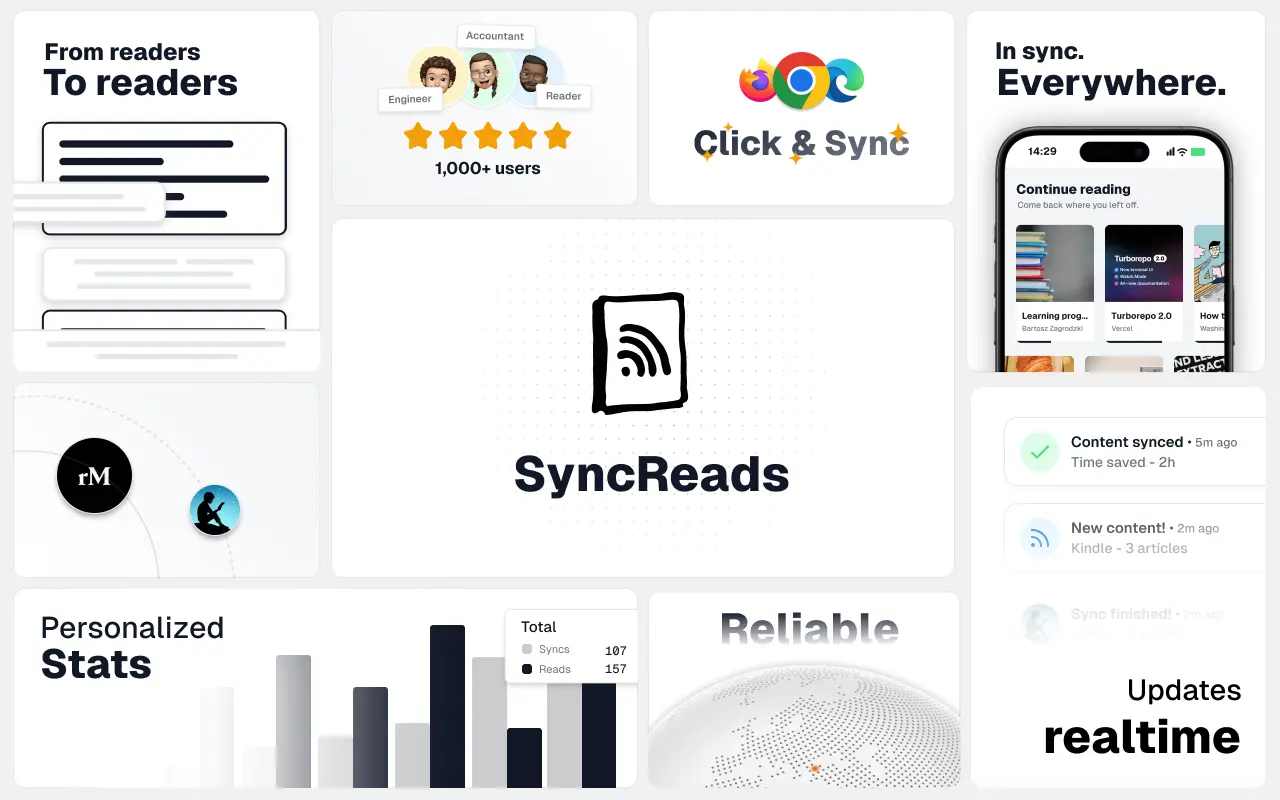
SyncReads
Sync your favorite content for distraction-free reading, save time and replace multiple apps. Anytime, anywhere 🔄
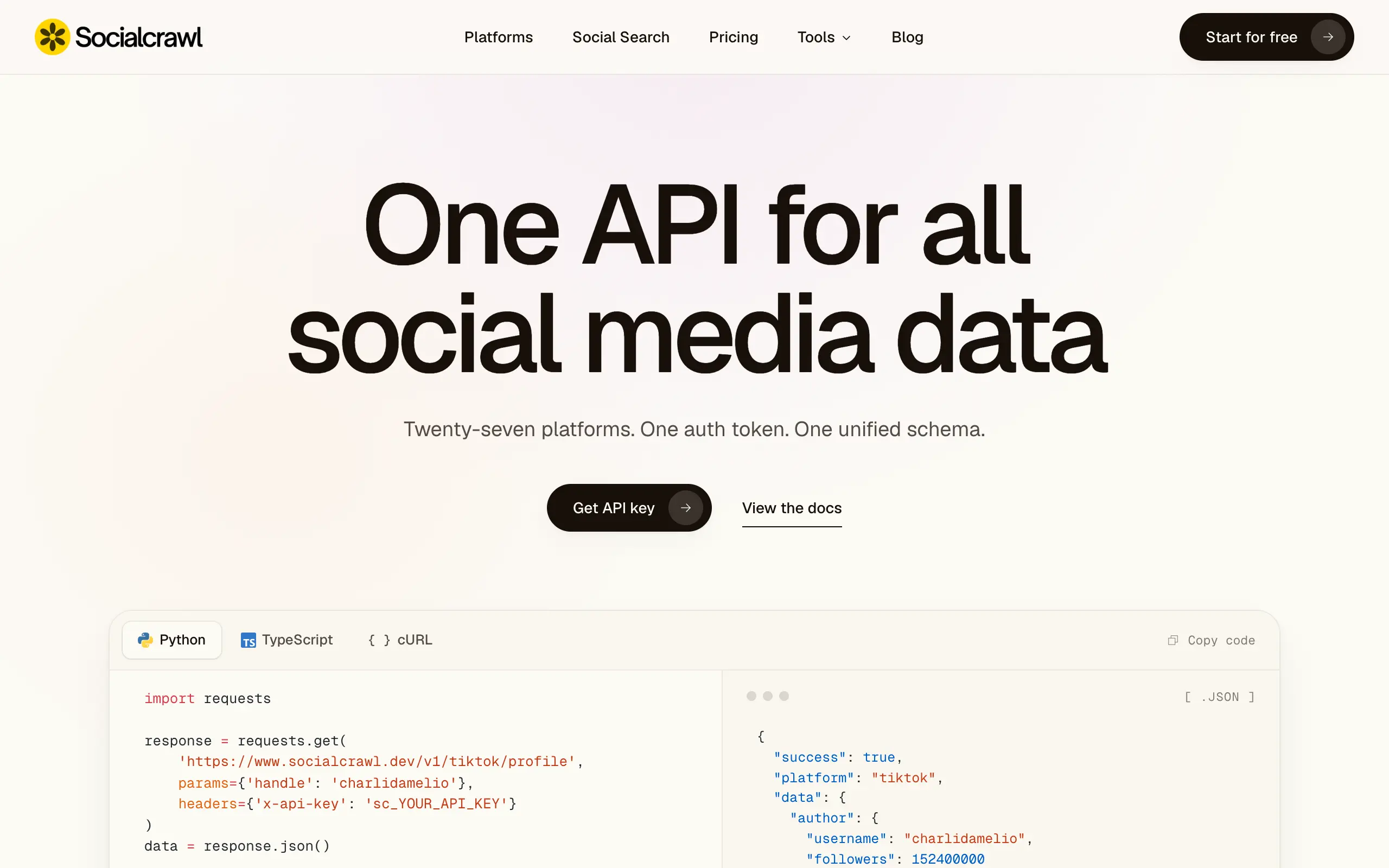
Socialcrawl
Get clean, structured data from 21 platforms like TikTok, Instagram, and YouTube with a single request 📊
Statiko
Monitor any Telegram channel in real time - track posts, edits, deletions, and growth with AI recaps 📡
Shibui
AI website builder - describe your business, pick a niche template, edit by chatting, and publish instantly ✨
Pro Service
Find verified home service professionals, compare quotes, and pay securely through escrow - built for Brazilians across the US 🏠
RankGrow
Fix your SEO with AI agents - connect Search Console, get prioritized tasks, and grow organic traffic 📈
SyncReads
Sync your favorite content for distraction-free reading, save time and replace multiple apps. Anytime, anywhere 🔄
Socialcrawl
Get clean, structured data from 21 platforms like TikTok, Instagram, and YouTube with a single request 📊
Statiko
Monitor any Telegram channel in real time - track posts, edits, deletions, and growth with AI recaps 📡
Shibui
AI website builder - describe your business, pick a niche template, edit by chatting, and publish instantly ✨
Pro Service
Find verified home service professionals, compare quotes, and pay securely through escrow - built for Brazilians across the US 🏠
RankGrow
Fix your SEO with AI agents - connect Search Console, get prioritized tasks, and grow organic traffic 📈
SyncReads
Sync your favorite content for distraction-free reading, save time and replace multiple apps. Anytime, anywhere 🔄
Socialcrawl
Get clean, structured data from 21 platforms like TikTok, Instagram, and YouTube with a single request 📊
Statiko
Monitor any Telegram channel in real time - track posts, edits, deletions, and growth with AI recaps 📡
Shibui
AI website builder - describe your business, pick a niche template, edit by chatting, and publish instantly ✨
Pro Service
Find verified home service professionals, compare quotes, and pay securely through escrow - built for Brazilians across the US 🏠
RankGrow
Fix your SEO with AI agents - connect Search Console, get prioritized tasks, and grow organic traffic 📈
SyncReads
Sync your favorite content for distraction-free reading, save time and replace multiple apps. Anytime, anywhere 🔄
Socialcrawl
Get clean, structured data from 21 platforms like TikTok, Instagram, and YouTube with a single request 📊

Dotallio
Personalized AI apps that automate research, data extraction, and content creation without code 🤖

Talk to Santa
Enjoy a magical live video chat or receive a unique AI-generated video greeting from Santa Claus 🎅

pozywka.pl
Scalable blog for food journalist, focused on performance and user experience 🌭
zagrodzki.me
Personal blog and portfolio of Bart Zagrodzki, where he shares his knowledge and work 💼

TurboStarter
Ship your startup everywhere. In minutes.
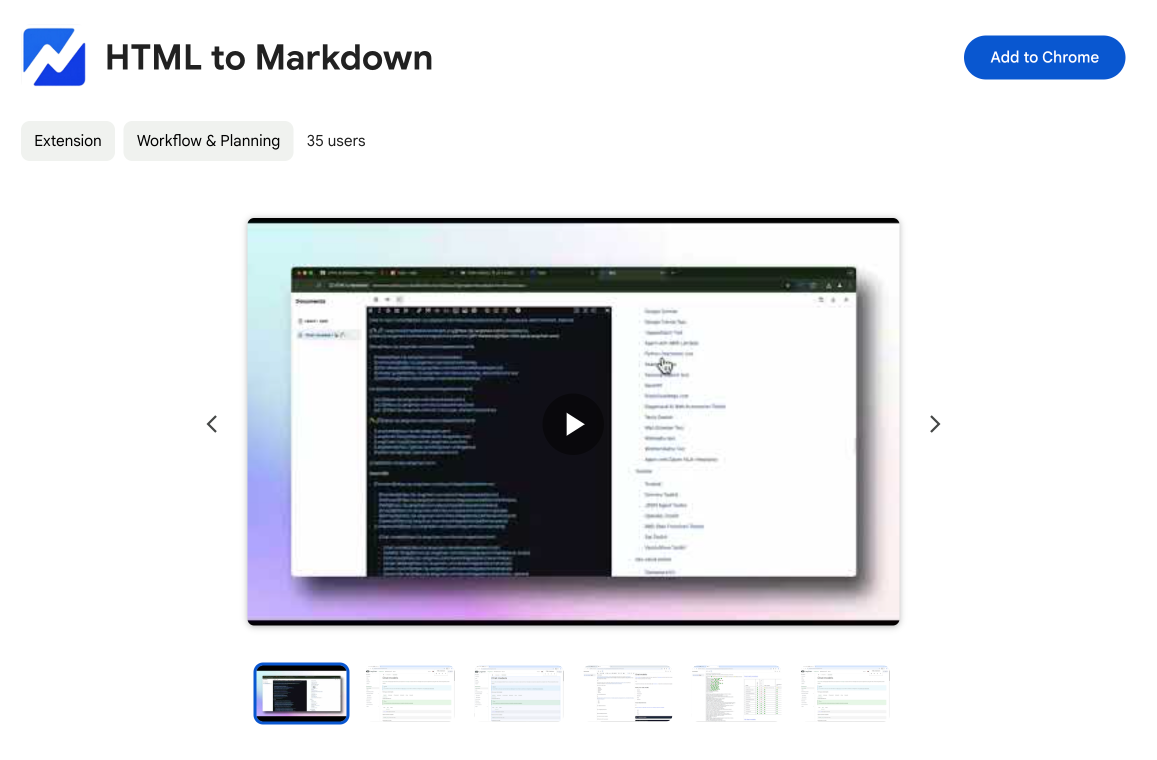
HTML to Markdown
Convert HTML to Markdown with ease, directly in your browser 📄
Dotallio
Personalized AI apps that automate research, data extraction, and content creation without code 🤖
Talk to Santa
Enjoy a magical live video chat or receive a unique AI-generated video greeting from Santa Claus 🎅
pozywka.pl
Scalable blog for food journalist, focused on performance and user experience 🌭
zagrodzki.me
Personal blog and portfolio of Bart Zagrodzki, where he shares his knowledge and work 💼
TurboStarter
Ship your startup everywhere. In minutes.
HTML to Markdown
Convert HTML to Markdown with ease, directly in your browser 📄
Dotallio
Personalized AI apps that automate research, data extraction, and content creation without code 🤖
Talk to Santa
Enjoy a magical live video chat or receive a unique AI-generated video greeting from Santa Claus 🎅
pozywka.pl
Scalable blog for food journalist, focused on performance and user experience 🌭
zagrodzki.me
Personal blog and portfolio of Bart Zagrodzki, where he shares his knowledge and work 💼
TurboStarter
Ship your startup everywhere. In minutes.
HTML to Markdown
Convert HTML to Markdown with ease, directly in your browser 📄
Dotallio
Personalized AI apps that automate research, data extraction, and content creation without code 🤖
Talk to Santa
Enjoy a magical live video chat or receive a unique AI-generated video greeting from Santa Claus 🎅
pozywka.pl
Scalable blog for food journalist, focused on performance and user experience 🌭
zagrodzki.me
Personal blog and portfolio of Bart Zagrodzki, where he shares his knowledge and work 💼
TurboStarter
Ship your startup everywhere. In minutes.
HTML to Markdown
Convert HTML to Markdown with ease, directly in your browser 📄

Omichat
Chat with 50+ AI models, including ChatGPT and Claude, in one place - switch models anytime without losing context 🤖
Claude Fast
Supercharge your Claude Code with 6x effective context window and specialized AI agents 🤖

EmojAI
AI-powered emoji picker with smart, context-aware suggestions 🤖

Solohacker
Autonomous company launcher - AI agents work 24/7, escalate what matters, and you stay in control 🤖

BeRawi: Storytelling Coach
Practice storytelling daily with instant feedback to sound clearer, more engaging, and confident 🎤
Omichat
Chat with 50+ AI models, including ChatGPT and Claude, in one place - switch models anytime without losing context 🤖
Claude Fast
Supercharge your Claude Code with 6x effective context window and specialized AI agents 🤖
EmojAI
AI-powered emoji picker with smart, context-aware suggestions 🤖
Solohacker
Autonomous company launcher - AI agents work 24/7, escalate what matters, and you stay in control 🤖
BeRawi: Storytelling Coach
Practice storytelling daily with instant feedback to sound clearer, more engaging, and confident 🎤
Omichat
Chat with 50+ AI models, including ChatGPT and Claude, in one place - switch models anytime without losing context 🤖
Claude Fast
Supercharge your Claude Code with 6x effective context window and specialized AI agents 🤖
EmojAI
AI-powered emoji picker with smart, context-aware suggestions 🤖
Solohacker
Autonomous company launcher - AI agents work 24/7, escalate what matters, and you stay in control 🤖
BeRawi: Storytelling Coach
Practice storytelling daily with instant feedback to sound clearer, more engaging, and confident 🎤
Omichat
Chat with 50+ AI models, including ChatGPT and Claude, in one place - switch models anytime without losing context 🤖
Claude Fast
Supercharge your Claude Code with 6x effective context window and specialized AI agents 🤖
EmojAI
AI-powered emoji picker with smart, context-aware suggestions 🤖
Solohacker
Autonomous company launcher - AI agents work 24/7, escalate what matters, and you stay in control 🤖
BeRawi: Storytelling Coach
Practice storytelling daily with instant feedback to sound clearer, more engaging, and confident 🎤

Connect with like-minded people
Join our community to get feedback, support, and grow together with 1,000+ builders on board, let's ship it!
Join usShip your startup everywhere. In minutes.
Don't burn tokens on setup and start building features on day one.