Offcut
Helps sign shops plan vinyl cuts and track leftover offcuts. Cuts material waste and stops rushed reorders of colors already stocked.
Offcut is vinyl inventory and nesting software for small sign shops: it plans cuts against the remnants already on the shelf and tracks every leftover piece, so shops stop reordering colors they already own. In 2026, material prices, tight margins and cheap AI-assisted layout make waste the most fixable cost in a small shop, and most shops still manage it with memory and a box of scraps. That is the opening for a focused tool for reducing vinyl waste in sign shops.
Key takeaways
- Target customer: independent sign and wrap shops with 2 to 15 employees that cut adhesive vinyl on a plotter or flatbed.
- Pricing angle: flat monthly subscription per shop, with a higher tier for multiple locations and integrations.
- Biggest risk: shop staff will not log offcuts if it adds friction at the cutter.
- Time to MVP: roughly 4 to 6 weeks for one developer using a starter kit, assuming you skip direct plotter integration at first.
What problem does Offcut solve for sign shops?
Sign shops lose money on vinyl in two quiet ways: cutting from a fresh roll when a usable remnant exists, and reordering a color that is already sitting in a drawer. Neither shows up as a line item. Both show up as a material bill that feels too high.
Who feels it most
The ideal customer is an owner-operator or production manager at a shop with a few employees, one or two plotters and a wall of rolls from brands like Oracal, 3M or Avery Dennison. They quote jobs quickly, cut in bursts and rarely have time for admin.
Current workaround and why it fails
Most shops use a mix of memory, a bin of offcuts, a spreadsheet nobody updates and a gut feeling about what is on the shelf. This fails for predictable reasons:
- Offcuts are invisible. A 14-inch by 30-inch piece of red has no label, so nobody remembers it exists.
- Rushed orders skip the check. When a job is due tomorrow, walking the shelves feels slower than clicking reorder.
- Quotes ignore remnants. Estimators price from full-roll cost, so there is no feedback loop on actual material use.
- Staff turnover erases knowledge. The person who knew what was in the back leaves.
Is there a market gap for vinyl offcut tracking software?
Yes, because existing tools sit at the wrong ends of the market. Generic inventory apps and spreadsheets do not understand rectangles, rolls and remnants. Sign-industry software such as design and RIP suites handles layout and cutting, but inventory of leftovers is usually not their focus, and shop management suites are typically built for larger operations.
Several trends make 2026 a good time to build in this niche:
- Material cost pressure. Small shops feel every wasted square foot, especially on specialty and wrap films.
- Cheaper layout automation. Rectangle and irregular-shape nesting libraries are accessible to a small team, and AI can read a job file or photo to extract dimensions.
- Vertical SaaS acceptance. Owners of small trade businesses now expect a browser tool with a monthly fee, if it saves money visibly.
- Cloud-friendly shops. Tablets and phones by the plotter are common enough to make shop-floor logging realistic.
The honest caveat: this is a small, specific market. You are building a profitable niche product, not a venture-scale platform, unless you expand into adjacent materials such as sheet substrates, banner stock and textiles.
What should the Offcut MVP include?
Build the smallest loop that proves the savings: log a remnant, plan a job against it, and see that you avoided a roll cut or a reorder. Everything else can wait.
The aha moment is the first time a user enters a job size and the app answers, "Use the 20-inch by 48-inch piece of matte black on shelf B instead of opening a new roll."
Remnant inventory
Log rolls and offcuts by material, color, finish, width, length and shelf location, with a quick add flow that works on a phone.
Cut planner
Enter a job's pieces and get a suggested layout that uses existing remnants first, then the least wasteful fresh roll.
Reorder guard
Before you create a purchase note, see whether the same color and finish is already in stock as rolls or usable offcuts.
Waste report
A simple monthly view of material used, material saved from remnants and leftover value sitting on the shelf.
What to cut from version one
- Direct plotter integration. Start with manual job dimensions or CSV import.
- Complex irregular nesting. Rectangular packing covers most sign work and is far easier to ship.
- Supplier ordering APIs. A simple reorder alert is enough.
- Label printing hardware. Offer printable QR labels from the browser instead.
How is Offcut different from spreadsheets and incumbents?
Offcut's position is narrow on purpose: it is the only tool whose entire job is to make leftover vinyl reusable. Design suites optimize artwork, and shop management suites optimize quotes and invoices. Offcut optimizes the material on the shelf.
| Option | Tracks offcuts | Plans cuts against remnants | Reorder warning | Setup effort |
|---|---|---|---|---|
| Offcut | ✅ | ✅ | ✅ | Low |
| Spreadsheet | Manual | ❌ | ❌ | Low, but decays fast |
| Generic inventory app | Partial | ❌ | Partial | Medium |
| Sign design or RIP software | Rarely | Layout only, usually fresh media | ❌ | Medium to high |
| Memory and a scrap bin | ❌ | ❌ | ❌ | None |
The strongest wedge is speed of logging. If adding an offcut takes under 15 seconds, it beats every alternative on convenience, not just features.
How would Offcut make money?
Charge a flat monthly fee per shop, because owners understand it and it does not punish them for logging more material. Usage-based pricing would discourage exactly the behavior you want.
Three realistic options
- Flat shop plan: for example $39 to $79 per month for one location, unlimited materials. Simple to sell and easy to justify if it saves one roll cut per month.
- Tiered by users and locations: a higher plan for multi-location shops or those wanting roles, audit history and integrations.
- Annual prepay with onboarding: a discounted yearly price that includes a paid inventory-setup session, which also solves your cold-start problem.
As an assumption to test: if you charge $49 per month and 25 shops convert from your first outreach wave, that is about $1,225 in monthly recurring revenue. The real question is whether a typical shop saves clearly more than the fee, which you can only learn from pilots.
First growth channel
Direct outreach to shops plus presence where owners already gather: sign-industry Facebook groups, forums and local trade associations. A short video showing a real remnant being reused instead of a roll being opened is more persuasive than any landing page. Material distributors and plotter resellers are a likely second channel.
How do you validate Offcut before building it?
Spend one to two weeks proving that owners recognize the pain and will pay to fix it.
Interview ten shop owners
Ask them to walk you through the last time they reordered vinyl and how they decided to do it. Listen for stories about duplicate colors and unused scraps.
Measure a real shelf
Visit or video-call one shop and estimate the value of usable offcuts sitting unused. This number becomes your sales argument.
Ship a landing page
State one promise, such as "Stop buying vinyl you already own," show a mockup and collect waitlist emails from your outreach.
Ask for a pre-sale
Offer five shops a founder-priced annual plan with setup help. Even two or three paid commitments are a stronger signal than fifty waitlist signups.
What tech stack should you use to build Offcut?
Use a conventional web stack with a mobile-friendly interface, since the main usage happens at the cutting table on a phone or tablet. The differentiation is in the data model and the layout logic, not in infrastructure.
TurboStarter removes the undifferentiated work: a monorepo for web and mobile, authentication, billing for subscriptions, a database layer, emails, file storage, an admin panel and organizations for shops with multiple staff. That lets you spend your first weeks on remnant modeling and the cut planner.
Core data model
Treat every piece of vinyl, roll or offcut, as the same entity with different dimensions. That keeps the planner simple.
create table material_piece (
  id uuid primary key,
  organization_id uuid not null,
  brand text,
  color text not null,
  finish text,
  width_mm integer not null,
  length_mm integer not null,
  is_remnant boolean default false,
  location text,
  parent_piece_id uuid references material_piece(id),
  created_at timestamptz default now()
);
When a cut is made, create a new remnant row from the leftover area and link it to its parent. This gives you history and waste reporting almost for free.
Choosing the layout approach
Start here. A guillotine or shelf-style packing algorithm handles most sign work, is deterministic and is easy to test. The trade-off is that irregular shapes get treated as bounding boxes, so some savings are left unclaimed.
Use AI to read job dimensions from a photo, a quote or a pasted order, then feed them into the same packing logic. It cuts data entry time but should never decide the layout itself, since wrong output wastes real material. TurboStarter includes AI integration if you want to add this after the core loop works.
Keep the layout engine as a plain, well-tested module. Shops will trust the product only if the suggested cuts are physically correct every time.
What could make Offcut fail?
Most failure modes are about behavior and distribution, not technology.
Biggest risk: nobody logs the offcuts
If staff skip logging, inventory drifts from reality and the planner recommends pieces that are not there. Make logging nearly free: QR labels, a one-tap "save remainder" step after a cut and a quick audit mode. Test this in a real shop before building anything advanced.
- Savings are too small to notice. In shops with low volume, the fee may not be obviously covered. Target shops with steady wrap and sign work, and show savings in dollars every month.
- Slow sales to a fragmented market. Owners are busy and hard to reach. Lean on demos, distributor partnerships and word of mouth, and accept a longer cycle.
- Incumbents add a similar feature. Larger suites could build remnant tracking. Your defense is focus, speed and a better shop-floor experience, plus accumulated inventory data that is painful to migrate.
What should you do in the first 30 days?
- Days 1 to 5: run owner interviews and measure one shop's unused remnants.
- Days 6 to 9: publish the landing page and send outreach to shops and trade groups.
- Days 10 to 12: pre-sell founder plans to the most engaged shops.
- Days 13 to 22: build the inventory, QR labels and basic cut planner on top of TurboStarter's auth, billing and organizations.
- Days 23 to 26: onboard two pilot shops and enter their real inventory with them.
- Days 27 to 30: review how many offcuts were logged and reused, fix the biggest friction point and publish the first savings example.
Offcut works if it turns forgotten scraps into visible savings, so start with a few real shelves rather than a feature list. If you want to ship the first version quickly, start from a production-ready base and spend your time on remnant logic.
FAQ
Interview shop owners about their last reorder, then quantify the unused remnants in one shop. Pre-selling to a handful of shops is the strongest test, because it shows they will pay, not just agree it is a good idea.
A flat monthly fee in the range of a few dozen dollars is a sensible starting assumption for small shops. Test it by comparing the price to the cost of one avoided roll cut or reorder per month.
Competition is mostly spreadsheets, generic inventory tools and sign design or shop management software that only partly handles remnants. Few tools focus specifically on planning cuts against leftover material.
A TypeScript web app with a relational database such as Postgres, a mobile-friendly interface and a simple packing algorithm is enough. A starter kit like TurboStarter covers auth, billing and teams so you can focus on the planner.
Roughly 4 to 6 weeks for a solo developer, assuming rectangle packing, manual job entry and no plotter integration. Pilot feedback from real shops will matter more than extra features.
More 🏢 B2B Application SaaS ideas
Discover more innovative b2b application SaaS ideas that are trending in 2026. Each idea is AI-generated with market validation and growth potential to help you find your next profitable venture faster than competitors.
Your competitors are building with TurboStarter
Below are some of the SaaS ideas that have been generated and built with our starter kit.

Monitor any Telegram channel in real time - track posts, edits, deletions, and growth with AI recaps 📡

AI website builder - describe your business, pick a niche template, edit by chatting, and publish instantly ✨

Find verified home service professionals, compare quotes, and pay securely through escrow - built for Brazilians across the US 🏠
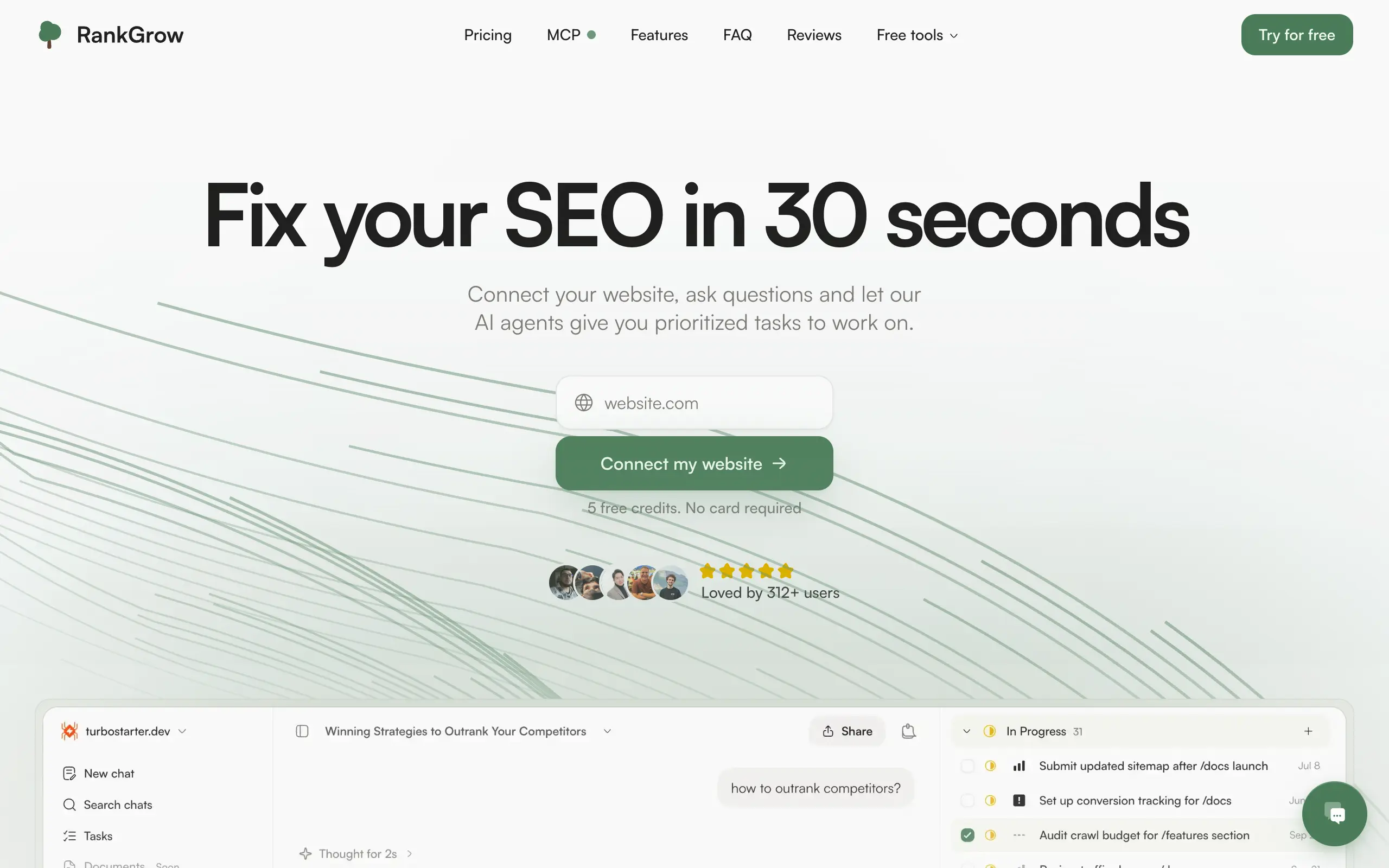
Fix your SEO with AI agents - connect Search Console, get prioritized tasks, and grow organic traffic 📈

Sync your favorite content for distraction-free reading, save time and replace multiple apps. Anytime, anywhere 🔄

Get clean, structured data from 21 platforms like TikTok, Instagram, and YouTube with a single request 📊
Monitor any Telegram channel in real time - track posts, edits, deletions, and growth with AI recaps 📡
AI website builder - describe your business, pick a niche template, edit by chatting, and publish instantly ✨
Find verified home service professionals, compare quotes, and pay securely through escrow - built for Brazilians across the US 🏠
Fix your SEO with AI agents - connect Search Console, get prioritized tasks, and grow organic traffic 📈
Sync your favorite content for distraction-free reading, save time and replace multiple apps. Anytime, anywhere 🔄
Get clean, structured data from 21 platforms like TikTok, Instagram, and YouTube with a single request 📊

Personalized AI apps that automate research, data extraction, and content creation without code 🤖

Enjoy a magical live video chat or receive a unique AI-generated video greeting from Santa Claus 🎅

Scalable blog for food journalist, focused on performance and user experience 🌭

Personal blog and portfolio of Bart Zagrodzki, where he shares his knowledge and work 💼

Ship your startup everywhere. In minutes.

Convert HTML to Markdown with ease, directly in your browser 📄
Personalized AI apps that automate research, data extraction, and content creation without code 🤖
Enjoy a magical live video chat or receive a unique AI-generated video greeting from Santa Claus 🎅
Scalable blog for food journalist, focused on performance and user experience 🌭
Personal blog and portfolio of Bart Zagrodzki, where he shares his knowledge and work 💼
Ship your startup everywhere. In minutes.
Convert HTML to Markdown with ease, directly in your browser 📄

Chat with 50+ AI models, including ChatGPT and Claude, in one place - switch models anytime without losing context 🤖

Supercharge your Claude Code with 6x effective context window and specialized AI agents 🤖

AI-powered emoji picker with smart, context-aware suggestions 🤖

Autonomous company launcher - AI agents work 24/7, escalate what matters, and you stay in control 🤖

Practice storytelling daily with instant feedback to sound clearer, more engaging, and confident 🎤
Chat with 50+ AI models, including ChatGPT and Claude, in one place - switch models anytime without losing context 🤖
Supercharge your Claude Code with 6x effective context window and specialized AI agents 🤖
AI-powered emoji picker with smart, context-aware suggestions 🤖
Autonomous company launcher - AI agents work 24/7, escalate what matters, and you stay in control 🤖
Practice storytelling daily with instant feedback to sound clearer, more engaging, and confident 🎤

Connect with like-minded people
Join our community to get feedback, support, and grow together with 1,000+ builders on board, let's ship it!
Join usShip your startup everywhere. In minutes.
Don't burn tokens on setup and start building features on day one.