PermitPulse
Tracks zoning, permit, and inspection changes for real estate teams, turning municipal updates into deal-risk alerts and task workflows.
What is PermitPulse and why real estate teams need permit tracking software
PermitPulse is a B2B real estate permit tracking software platform designed to monitor zoning changes, permit activity, inspections, and municipal updates that can affect a property transaction, development timeline, or portfolio decision.
For real estate teams, public records are both essential and frustrating. Critical information may be spread across city planning portals, county assessor records, permit systems, inspection databases, zoning maps, meeting agendas, and PDFs. Even when this data is public, it is rarely delivered in a timely, structured, actionable format.
That creates expensive blind spots.
A buyer may discover an unresolved inspection issue during due diligence. A lender may learn about an expired permit days before closing. A developer may miss a zoning hearing that changes what can be built on a parcel. A commercial broker may lose momentum because a tenant improvement permit is delayed without anyone noticing.
PermitPulse turns fragmented municipal data into an operating system for deal risk. Instead of forcing teams to repeatedly search government websites, it continuously tracks relevant records and converts meaningful changes into alerts, assigned tasks, and auditable workflows.
The core value proposition is simple:
PermitPulse helps real estate teams identify permitting, zoning, and inspection risks before those risks delay, devalue, or derail a deal.
This makes the product relevant to a broad category of property professionals, including acquisition teams, developers, commercial brokers, title and escrow professionals, property managers, lenders, and real estate attorneys.
The market problem behind real estate permit tracking
The commercial and residential real estate industry runs on timing, confidence, and accurate property intelligence. Yet municipal approval processes remain highly localized and operationally inconsistent.
One jurisdiction may offer an API-driven permit portal with detailed status history. Another may publish only weekly PDF agendas. A third may require manual searches by address, parcel number, owner name, or permit ID. Inspection status may be available in a separate system from permit records, while zoning rules may sit in a GIS portal or a municipal code website.
This creates several recurring challenges.
Public records are available but not operationalized
Real estate teams can often access permit and zoning information eventually. The problem is that access does not equal awareness.
A team that owns or evaluates hundreds of properties cannot reasonably perform daily manual searches across dozens of municipal portals. Even a disciplined analyst may miss:
- New permit applications filed on a neighboring parcel
- Permit status changes from approved to expired
- Failed inspections or repeat inspection activity
- Notice of violation records
- Planning commission agendas involving a target property
- Rezoning proposals affecting future development potential
- Historic preservation or environmental review triggers
- Certificate of occupancy delays
- Changes to permit expiration dates
- Property use changes that affect underwriting assumptions
The gap is not simply data collection. It is the lack of a reliable workflow that tells the right person what changed, why it matters, and what they should do next.
Permit risk often appears late in the transaction cycle
Many teams discover municipal risk during late-stage due diligence. By that point, leverage is lower and remediation is more expensive.
For example, a buyer may find that a renovation was completed without permits. A tenant may be ready to occupy a space, but the certificate of occupancy is incomplete. A development site may have zoning constraints that undermine the original feasibility model.
Late discovery can lead to:
- Renegotiated purchase prices
- Delayed closings
- Missed financing milestones
- Increased legal and consulting costs
- Tenant move-in delays
- Reputational damage with clients or investment partners
- Unplanned capital expenditure
- Lost acquisition opportunities
PermitPulse addresses this issue by making municipal records a continuous monitoring layer rather than a one-time diligence task.
Existing tools do not serve the entire workflow
Generic CRM platforms, spreadsheets, project management systems, and property management platforms can store notes and tasks. They usually do not collect permit intelligence from municipal systems, normalize inconsistent records, classify event severity, or alert a team when an external government record changes.
Likewise, public permit lookup tools are often designed for individual searches, not team-wide portfolio surveillance.
The opportunity for PermitPulse is to connect three things that are frequently disconnected:
- Municipal property data
- Deal and portfolio context
- Team workflows and accountability
Target audience for PermitPulse
The strongest early market for PermitPulse is not every person who owns property. It is teams with recurring exposure to high-value transactions, complex approvals, or large portfolios.
A focused go-to-market strategy should begin with users who already understand the financial cost of missed permit information.
Acquisition teams
Monitor target properties and nearby parcels for permits, zoning activity, violations, and approval changes before and during due diligence.
Real estate developers
Track entitlement milestones, inspection progress, permit expiration dates, and competing development activity around projects.
Commercial brokers
Give clients earlier visibility into tenant improvement permits, use restrictions, occupancy issues, and development signals.
Property managers
Create a portfolio-level view of inspections, recurring compliance requirements, corrective actions, and permit deadlines.
Real estate investment and acquisition teams
Acquisition teams need fast, reliable answers to a practical question: What could change the economics or closing certainty of this property?
They use PermitPulse to monitor:
- Target property permits and inspections
- Code enforcement or violation activity
- Neighboring development applications
- Land-use and zoning proposals
- Permit history associated with renovations or additions
- Expiring permits that may require additional work
- Planning meeting agendas and public notices
For this segment, the most valuable product outcome is early risk detection. A concise alert that identifies an expired permit or an upcoming rezoning hearing can save hours of analyst time and materially improve negotiation preparation.
Developers and entitlement teams
Developers face a more complex version of the same problem. They need to monitor their own project approvals while understanding activity around the project.
A development team may care about:
- Conditional use permits
- Variances and appeals
- Site plan approvals
- Building, electrical, plumbing, and mechanical permits
- Inspection pass or fail events
- Certificates of occupancy
- Environmental and historic review processes
- Zoning board meetings
- Competing projects that influence market supply
For this audience, PermitPulse should evolve beyond alerts into a shared approval timeline. Teams should be able to see which milestones are complete, who owns the next action, and which dates threaten the delivery schedule.
Commercial real estate brokers and tenant representatives
Brokers operate in a relationship-driven market where speed and credibility matter. PermitPulse can help them differentiate their advisory service with property intelligence that clients rarely receive proactively.
A tenant representative, for example, can identify whether a prospective space has unresolved occupancy issues or whether the proposed use requires a zoning review. A landlord broker can monitor tenant improvement permit progress and communicate earlier with tenants.
The product should position this use case as risk-informed brokerage intelligence, not just permit search.
Lenders, insurers, and real estate legal teams
Financial and legal professionals have a strong need for evidence, traceability, and risk documentation.
Potential use cases include:
- Construction loan monitoring
- Collateral review
- Draw condition support
- Compliance monitoring
- Closing checklist coordination
- Dispute documentation
- Property risk reporting
- Portfolio exception tracking
These users may have longer sales cycles, but they can support higher contract values because PermitPulse becomes part of a formal risk-control process.
The market opportunity for municipal data intelligence
Municipal data is becoming more digital, but it is not becoming standardized quickly enough for real estate teams to rely on one universal source.
This creates a durable SaaS opportunity.
Cities and counties continue to modernize permitting systems, adopt online inspection scheduling, publish open-data portals, and digitize planning records. At the same time, the volume of development activity, compliance obligations, and property data is increasing. The result is an expanding supply of public information that remains difficult to use at scale.
PermitPulse can occupy the valuable layer between raw government data and real estate decision-making.
The overlooked gap between property data and permit intelligence
Many real estate technology products focus on one of these categories:
- Property ownership and transaction data
- Listing and market data
- Property management
- Construction project management
- Document storage
- CRM and pipeline management
- Environmental or climate risk
- Title and lien research
Permit and zoning intelligence often remains a separate, manual, specialist-driven workflow.
That gap is especially important because permitting activity can act as a leading indicator. A new permit might signal a renovation, an occupancy change, a redevelopment plan, a construction delay, or new nearby competition. A zoning application may influence highest-and-best-use calculations before market data catches up.
PermitPulse should therefore frame permit records as decision-grade property signals, not administrative paperwork.
Why now is a strong time to build permit monitoring software
Several industry trends strengthen the timing for a product like PermitPulse.
- Municipal portals are increasingly digital, creating more accessible source data.
- Real estate firms are under pressure to reduce manual administrative work.
- AI-assisted document extraction can turn agendas, notices, and PDFs into structured events.
- Investment committees increasingly expect auditable risk processes.
- Distributed real estate teams need shared workflows rather than analyst-held spreadsheets.
- Market uncertainty makes early operational and entitlement risk detection more valuable.
When presenting market size or industry statistics to investors, reference credible sources such as government open-data programs, city planning departments, industry associations, and established real estate research firms. Avoid unsupported market-size claims. The stronger argument is rooted in the observable cost of delays, missed diligence findings, and manual monitoring labor.
Positioning insight
PermitPulse should not compete only as a permit lookup tool. Its defensible category is municipal change intelligence for real estate decisions.
Core PermitPulse features and solution design
The best version of PermitPulse is a workflow platform, not a passive database. Every feature should help a user move from a public record change to a documented business action.
Property watchlists and portfolio monitoring
The foundation of the product is a property watchlist.
Users should be able to add properties by:
- Street address
- Parcel or assessor number
- Latitude and longitude
- Owner entity where supported
- Permit identifier
- Project name
- Portfolio upload through CSV
Each property profile should become a live municipal intelligence record. It should display current permit activity, historical events, inspection updates, relevant zoning information, linked documents, assigned teammates, and open tasks.
For larger customers, a portfolio dashboard should summarize risk across all watched assets. This allows a regional manager or acquisition lead to quickly identify what changed this week.
Useful dashboard filters include:
- Jurisdiction
- Permit type
- Permit status
- Risk level
- Assigned owner
- Project stage
- Event date
- Inspection outcome
- Deal or portfolio tag
Change detection and smart alerts
PermitPulse needs a robust event engine that compares newly collected records with prior versions.
An alert should not merely say that data changed. It should answer:
- What changed?
- Which property is affected?
- What source system reported it?
- When did it happen?
- Why might it matter?
- Who needs to review it?
- What action is recommended?
For example:
Permit BP-2026-1042 for 175 Market Street changed from “Issued” to “Expired.” The record relates to interior alterations. Review whether work is complete, whether renewal is required, and whether occupancy timing is affected.
Alerts can be delivered through:
- In-app notifications
- Email digests
- Slack notifications
- Microsoft Teams notifications
- Webhooks for enterprise systems
- Daily or weekly portfolio summaries
Users should control alert thresholds. A developer may want every inspection event, while an acquisition team may only need high-severity changes.
Permit, inspection, and zoning timelines
A visual timeline makes fragmented municipal history understandable.
The timeline should combine events from different sources, including:
- Permit application submitted
- Permit issued
- Permit revised
- Permit expired
- Inspection scheduled
- Inspection passed
- Inspection failed
- Certificate of occupancy issued
- Planning hearing scheduled
- Zoning application filed
- Variance approved or denied
- Violation posted
- Public notice published
This feature is particularly valuable during due diligence because it gives analysts an understandable chronology rather than a stack of disconnected documents.
Risk scoring for property and deal review
A risk score can help users triage a large watchlist, but it must be transparent.
PermitPulse should avoid presenting opaque AI-generated scores as facts. Instead, it should provide explainable scoring criteria. For example, a property risk score may increase when a record includes:
- Expired active permits
- Failed inspections with no recorded resolution
- Open violations
- Missing certificate of occupancy indicators
- Active zoning appeals
- Significant status changes near a closing date
- Repeated permit extensions
- High-risk permit types based on customer-configured rules
A score should always link to the underlying events. The user needs evidence, not just a red, yellow, or green badge.
Automated task workflows
Alerting alone does not create accountability. PermitPulse should let teams convert findings into structured work.
After an event is identified, a user should be able to:
- Assign an owner.
- Set a due date.
- Add internal notes.
- Attach documents or screenshots.
- Link the task to a deal, project, or property.
- Mark the issue as resolved, accepted, or escalated.
- Preserve an audit trail.
This makes PermitPulse useful to operational teams, not only researchers.
A simple workflow could look like this:
AI-assisted document extraction and classification
Municipal planning records often arrive as PDFs, scanned notices, agenda packets, and unstructured text. This is an ideal place for carefully constrained AI assistance.
AI can help with:
- Extracting addresses and parcel references
- Identifying permit numbers
- Summarizing public hearing notices
- Classifying permit types
- Detecting status changes in documents
- Highlighting deadline language
- Suggesting event categories
- Generating a plain-language explanation of a record
However, the system should preserve the original document and clearly label AI-generated summaries. For high-stakes workflows, users need a direct link or attachment that supports the summary.
A trustworthy pattern is:
- Show the original source record.
- Show extracted structured fields.
- Show the AI summary.
- Display confidence or extraction status.
- Allow a human to correct the result.
- Log edits for future model evaluation.
Reporting and exports
Enterprise customers will expect reports they can share with investment committees, lenders, clients, and internal stakeholders.
Useful report formats include:
- Property risk summary
- Weekly watchlist changes
- Due diligence permit report
- Open compliance issues
- Development approval status
- Inspection exception report
- Audit trail export
- CSV and PDF exports
The report should state the source, retrieval date, and record status. This increases trust and reduces confusion when municipal data changes after a report is generated.
Recommended tech stack for PermitPulse
PermitPulse needs a modern SaaS architecture that supports data ingestion, structured records, search, notifications, role-based access, and auditability.
A pragmatic stack should prioritize reliable shipping before overengineering.
Frontend and application layer
A strong web application stack could include:
- React for interactive interfaces
- Next.js for server-rendered pages, API routes, and full-stack TypeScript development
- TypeScript for safer data models and maintainable integrations
- Tailwind CSS for fast, consistent UI development
- shadcn/ui for accessible, composable application components
The product interface should be built around the user’s daily job. That means watchlists, event feeds, property profiles, task queues, filters, and reports should receive more design attention than a generic marketing dashboard.
Data storage and search architecture
Permit tracking creates a mix of structured and semi-structured data. PostgreSQL is a strong primary database because it handles relational models, full-text capabilities, JSON fields, and reliable transactional behavior.
A practical data layer may include:
- PostgreSQL for customers, properties, events, tasks, and permissions
- Prisma for type-safe database access
- Redis for caching, rate limiting, and queues
- Elasticsearch or OpenSearch for advanced address, permit, and document search at scale
- Object storage for PDFs, notices, screenshots, and exported reports
For the MVP, PostgreSQL search may be enough. Adding a dedicated search engine too early increases infrastructure complexity. Move to Elasticsearch or OpenSearch when search latency, ranking requirements, document volume, or geospatial queries justify it.
Municipal data ingestion and normalization
Data ingestion is the technical heart of PermitPulse.
Different jurisdictions may provide APIs, feeds, downloadable files, HTML portals, PDFs, or no machine-readable source at all. The platform should use an adapter-based architecture where each jurisdiction has its own connector and mapping rules.
A normalized record model might include:
type MunicipalEvent = {
  id: string
  jurisdictionId: string
  sourceUrl: string
  sourceRecordId: string
  propertyId?: string
  addressRaw?: string
  parcelNumber?: string
  eventType: "permit" | "inspection" | "zoning" | "violation" | "hearing"
  status?: string
  occurredAt?: Date
  discoveredAt: Date
  riskLevel: "low" | "medium" | "high"
  sourceDocumentId?: string
  rawPayload: Record<string, unknown>
}
The raw source payload should be retained whenever permitted by applicable terms and policies. Keeping it makes debugging, audit review, and mapping improvements much easier.
For websites without formal APIs, scraping can be technically possible but legally and operationally sensitive. PermitPulse should review website terms, robots directives, rate limits, data licensing conditions, and public-records rules jurisdiction by jurisdiction. Prefer official APIs, open-data feeds, licensed data providers, and public bulk downloads whenever available.
Background jobs and notifications
Municipal monitoring is asynchronous work. PermitPulse needs dependable job scheduling, retry behavior, and failure observability.
A recommended approach includes:
- Scheduled sync jobs by jurisdiction
- Queue-based processing for parsing and normalization
- Idempotent event comparison logic
- Retry policies with backoff
- Dead-letter queues for failed records
- Monitoring for connector health
- Alert delivery logs
For early-stage implementation, Inngest or Trigger.dev can simplify background workflows. Larger deployments may eventually use managed queue infrastructure or a dedicated workflow engine.
Security, privacy, and access controls
Even when underlying records are public, customer workspaces and risk assessments are private business data.
PermitPulse should include:
- Role-based access control
- Workspace isolation
- Single sign-on for enterprise plans
- Encryption in transit and at rest
- Audit logs for material actions
- Secure document access
- Data retention controls
- Export permissions
- Incident response procedures
Customers in finance, legal, and institutional real estate will ask detailed security questions. Build a security posture early, document it clearly, and avoid claiming certifications that have not been earned.
Monetization strategies for permit tracking software
PermitPulse should use a recurring SaaS model with pricing that reflects monitored property volume, jurisdiction coverage, automation depth, and collaboration needs.
The best pricing metric is likely a hybrid of watched properties and active users.
| Plan | Best for | Core limit | Key capability | Sales motion |
|---|---|---|---|---|
| Starter | Small broker and investor teams | Limited watchlist | Email alerts and property timelines | Self-serve |
| Professional | Acquisition and development teams | Expanded portfolio coverage | Tasks, exports, integrations, and shared workflows | Product-led with sales assist |
| Enterprise | Lenders, large operators, and institutional owners | Custom portfolio scale | SSO, API access, custom jurisdictions, and governance controls | Direct sales |
Subscription tiers
A tiered subscription model is predictable and easy to understand. The product should avoid charging only per seat because monitoring value is more closely tied to the number of assets and jurisdictions covered.
Possible packaging variables include:
- Number of watched properties
- Number of jurisdictions
- Alert frequency
- Historical record depth
- Number of team members
- Export and reporting access
- API access
- Collaboration workflows
- Custom data connectors
- Support level
Premium data and coverage add-ons
Some regions will be more difficult or costly to support. PermitPulse can charge for premium jurisdiction coverage, especially where dedicated integrations, document extraction, or licensed sources are required.
Other premium add-ons could include:
- Additional historical data
- Enhanced zoning intelligence
- Automated due diligence report generation
- Portfolio risk scoring
- Slack or Teams integrations
- API access
- White-label client reports
- Dedicated customer success support
Enterprise implementation services
Implementation fees can be appropriate for enterprise customers when PermitPulse configures custom workflows, imports a large portfolio, maps deal stages, builds bespoke integrations, or develops jurisdiction-specific connectors.
Services should accelerate adoption, not become the core business. The long-term goal remains scalable recurring revenue.
Competitive advantage and product moat
The competitive advantage of PermitPulse is not simply that it stores permit data. Competitors can replicate a dashboard. The more durable advantage comes from combining data coverage, normalization, workflow context, and accumulated intelligence.
A defensible PermitPulse advantage
PermitPulse can build differentiation through five reinforcing layers.
-
Jurisdiction-specific data connectors
Reliable municipal integrations take time to build and maintain. Every supported jurisdiction becomes a valuable operational asset. -
Property identity resolution
Matching inconsistent addresses, parcel numbers, owner names, and permit records is difficult. Better entity resolution improves alert accuracy and customer trust. -
Historical change dataset
A record of what changed, when it changed, and how teams resolved it becomes useful for benchmarking and risk models. -
Workflow embedding
Once customers assign tasks, document decisions, and create reports in PermitPulse, the platform becomes part of their operating process. -
Explainable risk intelligence
A transparent system that connects every alert to source evidence can win in high-trust industries where black-box recommendations are viewed skeptically.
Competitor categories to watch
PermitPulse may overlap with several types of alternatives:
- Manual municipal portal searches
- Spreadsheet-based diligence trackers
- Property intelligence platforms
- Permit data aggregators
- Construction management software
- Zoning and land-use consulting firms
- Title and public-record research providers
- Internal analyst teams
The clearest competitive message is not that these alternatives are bad. It is that they leave a workflow gap.
Spreadsheets are flexible but not continuously updated. Permit lookup portals are useful but reactive. Consultants provide expertise but cannot monitor every property every day. Construction tools manage work after approvals but do not necessarily detect external municipal changes.
PermitPulse makes municipal intelligence continuous, collaborative, and action-oriented.
Risks and mitigation strategies
Building a municipal data SaaS product has meaningful risks. Addressing them directly will improve product strategy and investor credibility.
Municipal websites can change layouts, retire portals, alter access rules, or publish incomplete records. Mitigate this through source monitoring, connector health checks, modular adapters, data quality flags, and a diversified source strategy that prioritizes official feeds.
An inaccurate alert can waste time and reduce trust. Use address normalization, parcel-level matching where possible, confidence scores, human review tools, and clear links to original records.
Public availability does not automatically grant unrestricted commercial reuse. Review terms of use, licensing, public-record policies, privacy requirements, and rate limits for every jurisdiction and data provider.
Institutional buyers may require security reviews and pilots. Start with focused teams that have urgent workflow pain, prove ROI through a limited portfolio pilot, and develop enterprise controls in parallel.
Managing data quality expectations
PermitPulse should never imply that it replaces legal advice, formal title work, municipal confirmation, or professional due diligence.
A clear product disclaimer can state that the platform provides monitoring and workflow support based on available source records. Customers remain responsible for validating material facts with the relevant municipality and qualified professionals.
This is not merely a legal safeguard. It is a trust-building practice. Sophisticated customers respect tools that clearly communicate their scope.
Avoiding premature geographic expansion
It may be tempting to promise nationwide coverage immediately. That can weaken the product if data quality varies widely.
A better approach is to launch with a narrow set of high-demand metro areas where:
- Development activity is strong
- Municipal records are sufficiently digital
- Target customers have concentrated portfolios
- Data sources are legally and technically workable
- The team can validate alert accuracy
Depth beats breadth in the first phase. A customer will pay for dependable coverage in ten critical jurisdictions before paying for shallow coverage across hundreds.
Go-to-market strategy for PermitPulse
The initial go-to-market motion should focus on a clear wedge: permit and inspection risk monitoring for active acquisition and development teams in selected metro areas.
This group has urgent pain, measurable financial stakes, and repeatable property-monitoring needs.
Start with a narrow ideal customer profile
An early ideal customer profile might be:
- A real estate investment, development, or brokerage team
- Five to fifty users
- Active in one to five metro areas
- Evaluating or managing at least 50 properties annually
- Currently using manual searches, spreadsheets, or analyst workflows
- Experiencing delays from permit, zoning, or inspection uncertainty
This customer profile is large enough to create meaningful recurring revenue but focused enough for direct outreach and pilot-based sales.
Use high-value content to capture search intent
SEO content should target people actively searching for answers about permit risk, zoning diligence, inspections, and property monitoring.
Potential content themes include:
- How to check permit history before buying a commercial property
- Real estate due diligence checklist for permits and inspections
- How to track zoning changes near an investment property
- What an expired building permit means for a property sale
- How developers monitor entitlement and inspection milestones
- Permit risk factors lenders should review before closing
These topics align with real buyer pain and naturally introduce PermitPulse as a scalable workflow solution.
Content should include clear operational guidance, source-verification reminders, and practical checklists. This supports E-E-A-T by being genuinely useful even to readers who do not immediately buy software.
Build trust with jurisdiction coverage pages
Local coverage pages can become a valuable organic acquisition channel, but they must provide substantive value.
For each supported jurisdiction, explain:
- What permit, inspection, or zoning sources are monitored
- Which record types are available
- Update frequency
- Known coverage limitations
- Typical customer use cases
- How property matching works
- How users can request corrections or support
Do not create thin pages that simply swap city names. Coverage pages should demonstrate real operational knowledge.
Actionable implementation plan
The fastest path to validating PermitPulse is to prove that customers will pay for timely, reliable municipal change alerts in a small number of jurisdictions.
Phase one: validate the workflow before scaling data coverage
Interview acquisition managers, development coordinators, brokers, and property managers. Ask for actual examples of deals delayed by permits, inspections, or zoning issues.
Look for evidence of repeated pain:
- How often do teams check municipal records?
- Who does the work?
- What tools do they use?
- Which events are most costly to miss?
- How do they document findings?
- What would they pay to monitor a live watchlist?
- Which cities matter most?
Then build a narrow MVP with:
- Address-based property watchlists
- One to three municipal data connectors
- Permit status monitoring
- Email alerts
- Basic property timelines
- Team notes and assignments
- Source links and event history
Do not begin with AI scoring, broad nationwide coverage, or complex enterprise reporting. The first goal is alert accuracy and customer trust.
Phase two: turn alerts into repeatable workflows
Once customers trust the data, add collaboration features that make PermitPulse harder to replace:
- Risk labels
- Task assignment
- Due dates
- Deal tags
- Audit logs
- Slack notifications
- Weekly summary reports
- CSV exports
- Portfolio dashboards
This is when the product starts moving from useful data service to embedded operating workflow.
Phase three: expand coverage and intelligence
After proving retention in early markets, expand deliberately.
Prioritize new jurisdictions based on customer demand, data accessibility, real estate activity, and connector maintenance cost. Add AI-assisted document extraction only where it improves real customer outcomes and can be verified against source materials.
For founders who want to move quickly, TurboStarter can provide a strong SaaS foundation for authentication, billing, dashboards, and production-ready application workflows, allowing the team to focus more engineering effort on the differentiated municipal data layer.
Final perspective on building PermitPulse
PermitPulse has the potential to solve a costly and persistent real estate operations problem: municipal records are public, but actionable property risk intelligence is not.
The winning product will not be the one with the largest raw database on day one. It will be the one that reliably tells a real estate professional what changed, why it matters, who should act, and how the team can document resolution.
By starting with a narrow geographic wedge, prioritizing trustworthy source-backed alerts, and building workflows around actual deal risk, PermitPulse can establish a valuable position in the growing property intelligence software market.
Its unique advantage is clear: it transforms zoning, permit, and inspection updates from fragmented public records into timely decisions and accountable action for real estate teams.
More 🏢 B2B Application SaaS ideas
Discover more innovative b2b application SaaS ideas that are trending in 2026. Each idea is AI-generated with market validation and growth potential to help you find your next profitable venture faster than competitors.
Your competitors are building with TurboStarter
Below are some of the SaaS ideas that have been generated and built with our starter kit.

Statiko
Monitor any Telegram channel in real time - track posts, edits, deletions, and growth with AI recaps 📡

Shibui
AI website builder - describe your business, pick a niche template, edit by chatting, and publish instantly ✨

Pro Service
Find verified home service professionals, compare quotes, and pay securely through escrow - built for Brazilians across the US 🏠
RankGrow
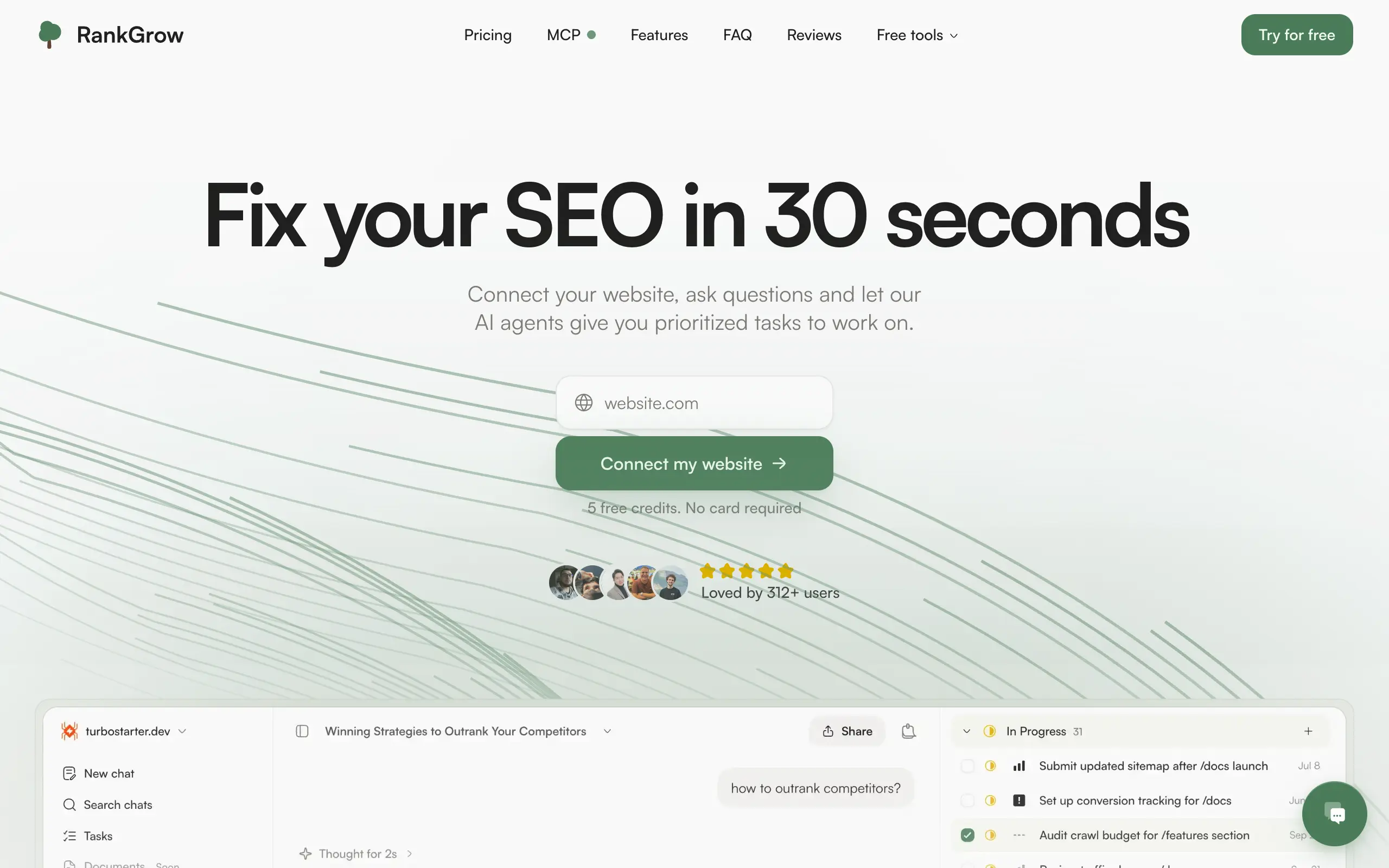
Fix your SEO with AI agents - connect Search Console, get prioritized tasks, and grow organic traffic 📈
SyncReads
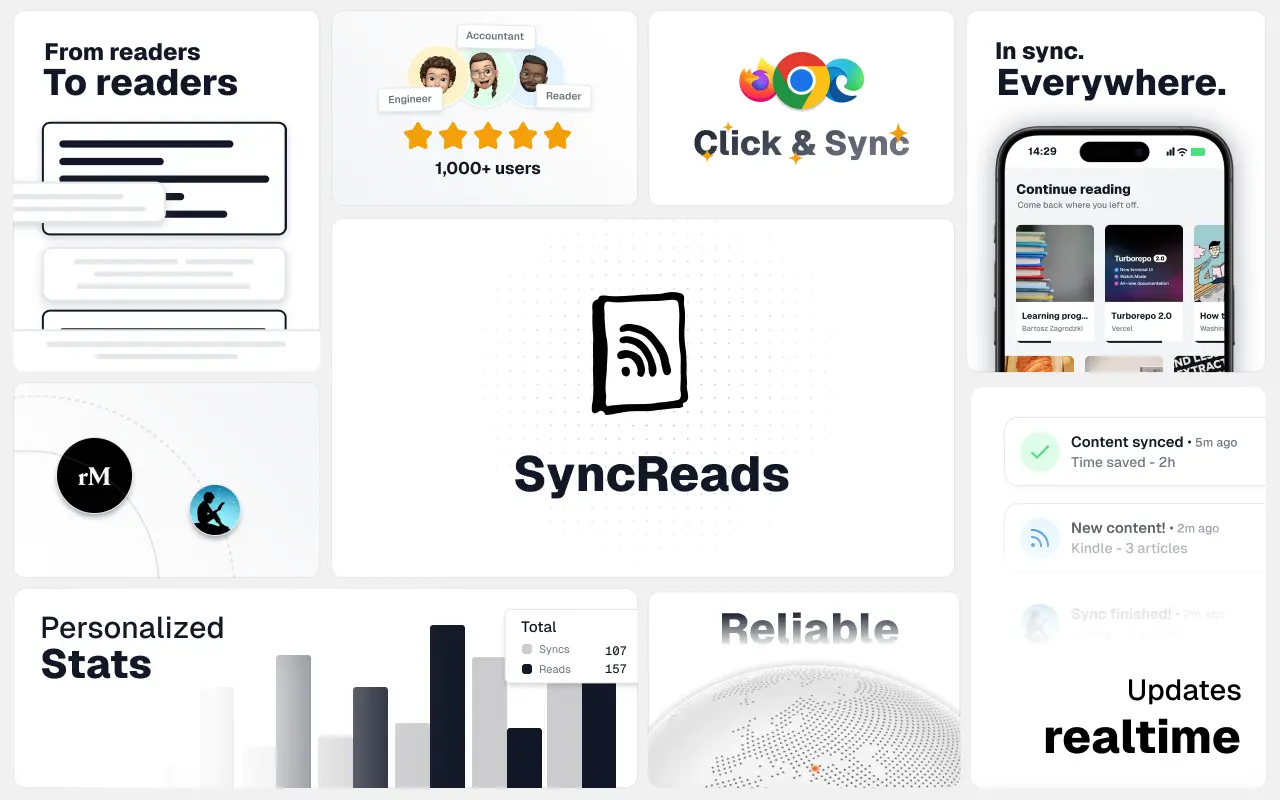
Sync your favorite content for distraction-free reading, save time and replace multiple apps. Anytime, anywhere 🔄
Socialcrawl
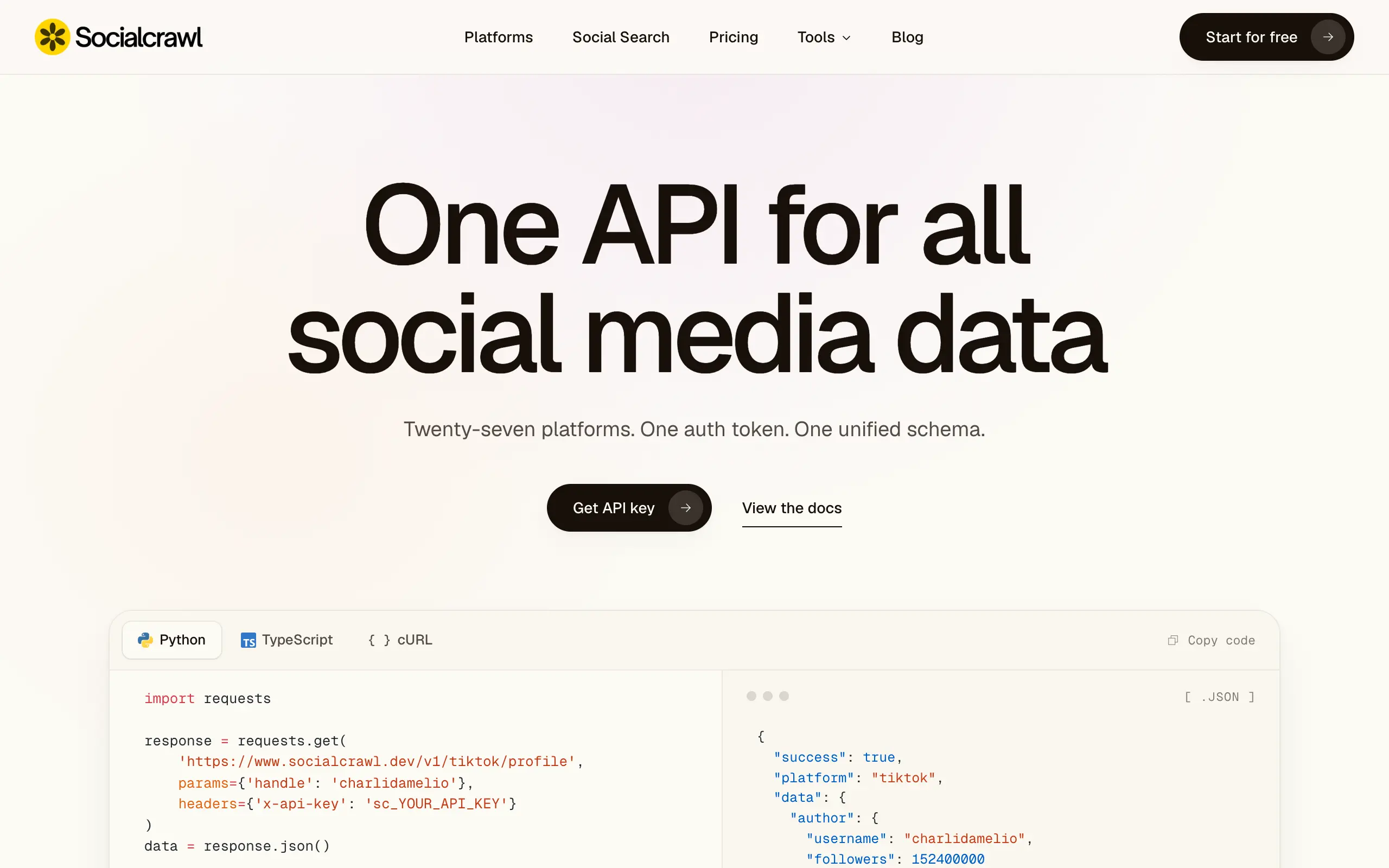
Get clean, structured data from 21 platforms like TikTok, Instagram, and YouTube with a single request 📊
Statiko
Monitor any Telegram channel in real time - track posts, edits, deletions, and growth with AI recaps 📡
Shibui
AI website builder - describe your business, pick a niche template, edit by chatting, and publish instantly ✨
Pro Service
Find verified home service professionals, compare quotes, and pay securely through escrow - built for Brazilians across the US 🏠
RankGrow
Fix your SEO with AI agents - connect Search Console, get prioritized tasks, and grow organic traffic 📈
SyncReads
Sync your favorite content for distraction-free reading, save time and replace multiple apps. Anytime, anywhere 🔄
Socialcrawl
Get clean, structured data from 21 platforms like TikTok, Instagram, and YouTube with a single request 📊
Statiko
Monitor any Telegram channel in real time - track posts, edits, deletions, and growth with AI recaps 📡
Shibui
AI website builder - describe your business, pick a niche template, edit by chatting, and publish instantly ✨
Pro Service
Find verified home service professionals, compare quotes, and pay securely through escrow - built for Brazilians across the US 🏠
RankGrow
Fix your SEO with AI agents - connect Search Console, get prioritized tasks, and grow organic traffic 📈
SyncReads
Sync your favorite content for distraction-free reading, save time and replace multiple apps. Anytime, anywhere 🔄
Socialcrawl
Get clean, structured data from 21 platforms like TikTok, Instagram, and YouTube with a single request 📊
Statiko
Monitor any Telegram channel in real time - track posts, edits, deletions, and growth with AI recaps 📡
Shibui
AI website builder - describe your business, pick a niche template, edit by chatting, and publish instantly ✨
Pro Service
Find verified home service professionals, compare quotes, and pay securely through escrow - built for Brazilians across the US 🏠
RankGrow
Fix your SEO with AI agents - connect Search Console, get prioritized tasks, and grow organic traffic 📈
SyncReads
Sync your favorite content for distraction-free reading, save time and replace multiple apps. Anytime, anywhere 🔄
Socialcrawl
Get clean, structured data from 21 platforms like TikTok, Instagram, and YouTube with a single request 📊
Dotallio
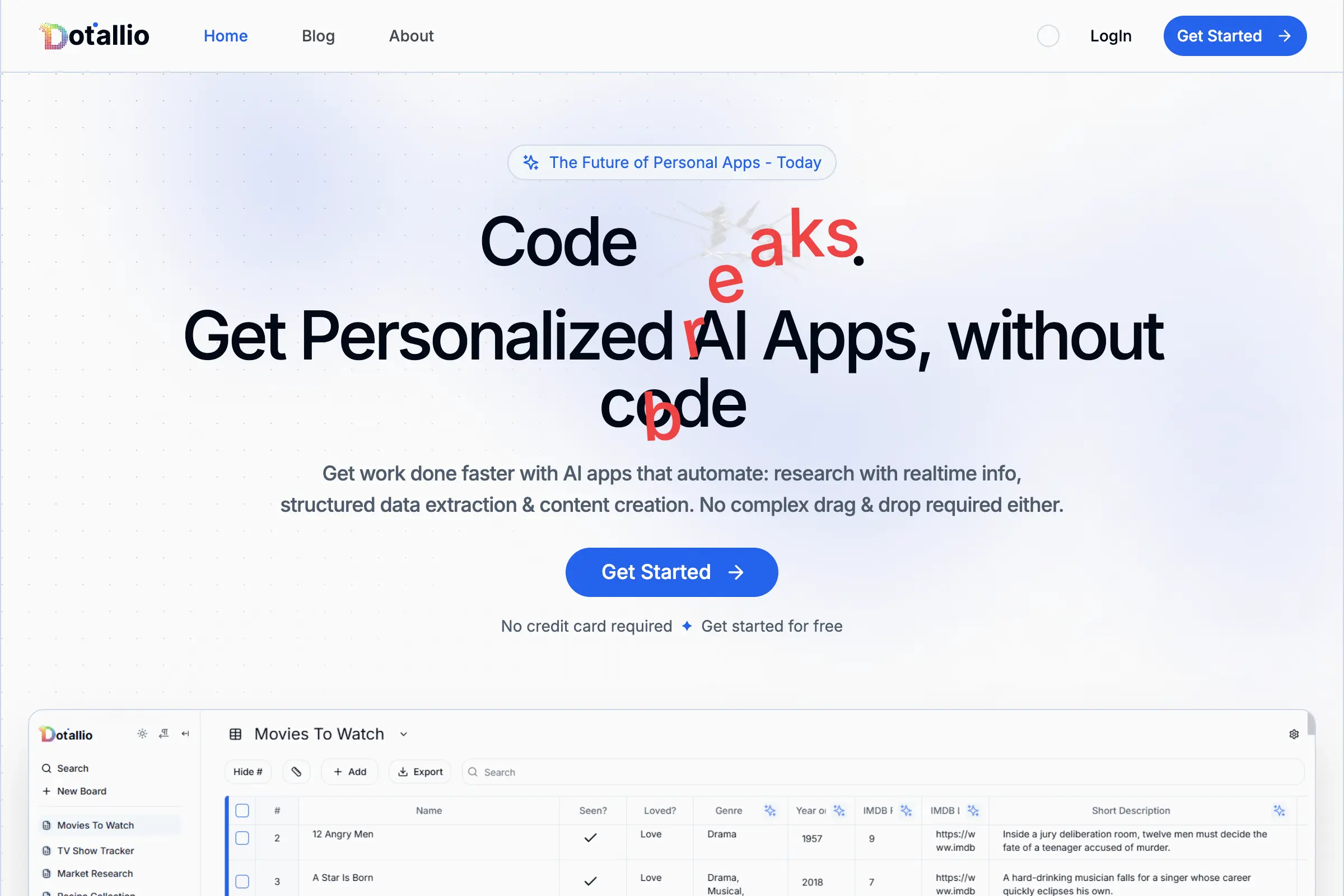
Personalized AI apps that automate research, data extraction, and content creation without code 🤖

Talk to Santa
Enjoy a magical live video chat or receive a unique AI-generated video greeting from Santa Claus 🎅

pozywka.pl
Scalable blog for food journalist, focused on performance and user experience 🌭
zagrodzki.me
Personal blog and portfolio of Bart Zagrodzki, where he shares his knowledge and work 💼

TurboStarter
Ship your startup everywhere. In minutes.
HTML to Markdown
Convert HTML to Markdown with ease, directly in your browser 📄
Dotallio
Personalized AI apps that automate research, data extraction, and content creation without code 🤖
Talk to Santa
Enjoy a magical live video chat or receive a unique AI-generated video greeting from Santa Claus 🎅
pozywka.pl
Scalable blog for food journalist, focused on performance and user experience 🌭
zagrodzki.me
Personal blog and portfolio of Bart Zagrodzki, where he shares his knowledge and work 💼
TurboStarter
Ship your startup everywhere. In minutes.
HTML to Markdown
Convert HTML to Markdown with ease, directly in your browser 📄
Dotallio
Personalized AI apps that automate research, data extraction, and content creation without code 🤖
Talk to Santa
Enjoy a magical live video chat or receive a unique AI-generated video greeting from Santa Claus 🎅
pozywka.pl
Scalable blog for food journalist, focused on performance and user experience 🌭
zagrodzki.me
Personal blog and portfolio of Bart Zagrodzki, where he shares his knowledge and work 💼
TurboStarter
Ship your startup everywhere. In minutes.
HTML to Markdown
Convert HTML to Markdown with ease, directly in your browser 📄
Dotallio
Personalized AI apps that automate research, data extraction, and content creation without code 🤖
Talk to Santa
Enjoy a magical live video chat or receive a unique AI-generated video greeting from Santa Claus 🎅
pozywka.pl
Scalable blog for food journalist, focused on performance and user experience 🌭
zagrodzki.me
Personal blog and portfolio of Bart Zagrodzki, where he shares his knowledge and work 💼
TurboStarter
Ship your startup everywhere. In minutes.
HTML to Markdown
Convert HTML to Markdown with ease, directly in your browser 📄
Omichat
Chat with 50+ AI models, including ChatGPT and Claude, in one place - switch models anytime without losing context 🤖
Claude Fast
Supercharge your Claude Code with 6x effective context window and specialized AI agents 🤖

EmojAI
AI-powered emoji picker with smart, context-aware suggestions 🤖

Solohacker
Autonomous company launcher - AI agents work 24/7, escalate what matters, and you stay in control 🤖

BeRawi: Storytelling Coach
Practice storytelling daily with instant feedback to sound clearer, more engaging, and confident 🎤
Omichat
Chat with 50+ AI models, including ChatGPT and Claude, in one place - switch models anytime without losing context 🤖
Claude Fast
Supercharge your Claude Code with 6x effective context window and specialized AI agents 🤖
EmojAI
AI-powered emoji picker with smart, context-aware suggestions 🤖
Solohacker
Autonomous company launcher - AI agents work 24/7, escalate what matters, and you stay in control 🤖
BeRawi: Storytelling Coach
Practice storytelling daily with instant feedback to sound clearer, more engaging, and confident 🎤
Omichat
Chat with 50+ AI models, including ChatGPT and Claude, in one place - switch models anytime without losing context 🤖
Claude Fast
Supercharge your Claude Code with 6x effective context window and specialized AI agents 🤖
EmojAI
AI-powered emoji picker with smart, context-aware suggestions 🤖
Solohacker
Autonomous company launcher - AI agents work 24/7, escalate what matters, and you stay in control 🤖
BeRawi: Storytelling Coach
Practice storytelling daily with instant feedback to sound clearer, more engaging, and confident 🎤
Omichat
Chat with 50+ AI models, including ChatGPT and Claude, in one place - switch models anytime without losing context 🤖
Claude Fast
Supercharge your Claude Code with 6x effective context window and specialized AI agents 🤖
EmojAI
AI-powered emoji picker with smart, context-aware suggestions 🤖
Solohacker
Autonomous company launcher - AI agents work 24/7, escalate what matters, and you stay in control 🤖
BeRawi: Storytelling Coach
Practice storytelling daily with instant feedback to sound clearer, more engaging, and confident 🎤

Connect with like-minded people
Join our community to get feedback, support, and grow together with 1,000+ builders on board, let's ship it!
Join usShip your startup everywhere. In minutes.
Don't burn tokens on setup and start building features on day one.