PersonaPulse
Continuous persona and journey analytics platform that shows Product Owners how real users behave, struggle, and convert across features.
Why continuous persona and journey analytics is the missing layer in product analytics
Product teams today are drowning in dashboards but starving for insight.
Tools like Mixpanel, Amplitude, GA4, and Heap tell you what happened—page views, funnels, retention curves, feature usage. But they rarely answer the questions Product Owners actually care about:
- Which personas are struggling right now?
- Where in the journey are power users converting differently from new users?
- Are our onboarding experiments improving activation for the right segment?
- How does behavior differ between enterprise buyers and SMB self-serve users?
This is where PersonaPulse, a continuous persona and journey analytics platform, creates a new category.
Instead of static dashboards or outdated persona documents, PersonaPulse continuously models real user behavior into dynamic personas and journey maps—showing Product Owners exactly how different user types move, struggle, and convert across features.
In this guide, we’ll explore:
- The market gap in persona-driven product analytics
- Target audience and buying motivations
- Core features and architecture
- Recommended tech stack
- Monetization strategies
- Risks and mitigation
- Competitive positioning
- Step-by-step implementation plan
If you're validating or building a B2B SaaS analytics product, this breakdown will help you assess both opportunity and execution.
The market gap: why traditional product analytics is not enough
The problem with static personas
Most companies create personas during early-stage strategy:
- “Growth Marketer Mary”
- “Enterprise IT Ian”
- “Startup Founder Sam”
These personas are:
- Built from interviews
- Often qualitative
- Rarely updated
- Disconnected from live product data
After 6–12 months, they become outdated. Meanwhile, user behavior evolves continuously.
The problem with event-based dashboards
Modern product analytics tools focus on:
- Events
- Funnels
- Retention
- Cohorts
- Feature adoption
But they require heavy manual segmentation:
- You must define segments
- You must create dashboards
- You must manually interpret patterns
There’s no continuous intelligence layer answering:
“How are our real behavioral personas changing over time?”
The rise of persona-driven product management
Recent trends fueling this opportunity:
- Product-led growth (PLG) requires granular user behavior insights.
- SaaS companies increasingly rely on behavioral segmentation.
- AI-driven analytics makes automated persona clustering feasible.
- Cross-functional teams (product, marketing, CS) need shared journey intelligence.
According to reports by McKinsey and Deloitte on digital transformation and analytics maturity, organizations that deeply integrate analytics into decision-making outperform peers significantly in revenue growth and customer satisfaction. PersonaPulse sits at this intersection: behavioral analytics + decision enablement.
What is PersonaPulse?
PersonaPulse is a continuous persona and journey analytics platform for Product Owners and product teams.
It:
- Automatically clusters users into behavioral personas
- Maps real-time journey paths across features
- Identifies friction points per persona
- Tracks persona-level conversion and retention
- Highlights behavioral shifts over time
Instead of static personas in a slide deck, teams get living, evolving persona intelligence.
Target audience analysis
Primary target: Product Owners and Product Managers
Profile:
- Mid-market to enterprise SaaS
- PLG or hybrid GTM model
- 5k–500k MAU
- Dedicated product analytics stack
Pain points:
- Too many dashboards, not enough clarity
- Struggle to prioritize roadmap
- Hard to understand why features underperform
- Difficulty aligning stakeholders around user insights
Buying motivation:
- Faster prioritization decisions
- Clear persona-level performance
- Reduce churn via targeted improvements
- Demonstrate impact to leadership
Secondary target: Growth and Lifecycle teams
Profile:
- Own onboarding, activation, retention
- Run experiments and A/B tests
- Care about conversion per segment
Pain points:
- Cohort analysis is manual
- Hard to detect behavior-based segments
- Experiments improve averages but hurt certain segments
Buying motivation:
- Identify which personas benefit or suffer from changes
- Optimize onboarding by behavioral cluster
- Increase LTV through personalization
Tertiary target: Customer success and RevOps
- Identify at-risk personas
- Understand journey bottlenecks
- Align support strategy to behavioral patterns
Core features of PersonaPulse
1. Automated behavioral persona clustering
Instead of manual tagging, PersonaPulse uses:
- Event streams
- Feature usage frequency
- Session depth
- Time-to-value metrics
- Engagement patterns
It clusters users using machine learning (e.g., k-means, hierarchical clustering, or advanced embedding models).
Output example:
- “Power Automators”
- “One-Feature Explorers”
- “Enterprise Admin Orchestrators”
- “Trial Abandoners”
Each persona includes:
- Size
- Revenue contribution
- Activation rate
- Churn rate
- Key behaviors
2. Continuous journey mapping
PersonaPulse builds journey maps dynamically:
- Entry point
- First key action
- Feature branching paths
- Drop-off points
- Conversion milestones
Instead of a static flowchart, it shows:
- Journey differences per persona
- Emerging behavioral shifts
- New friction nodes
3. Struggle detection engine
A powerful differentiator.
The platform detects:
- Repeated failed actions
- Feature toggling without completion
- High time-in-state without progress
- Rage clicks or retry loops (if session replay integrated)
These signals generate:
- Persona-level struggle heatmaps
- Feature friction scoring
- Alerting for sudden increases
4. Persona-level KPI dashboard
Traditional analytics shows averages.
PersonaPulse shows:
- Activation rate by persona
- Retention curves by persona
- LTV distribution
- Conversion rates by journey branch
This avoids misleading averages that hide underperforming segments.
5. Behavioral shift alerts
When persona composition changes:
- “Power Automators dropped from 22% to 14% this month.”
- “Trial Abandoners increased 8% after onboarding redesign.”
This makes the platform proactive instead of reactive.
6. Cross-team persona workspace
Shared interface where:
- Product sees feature adoption
- Marketing sees campaign impact by persona
- CS sees risk clusters
Unified source of persona truth.
Feature comparison vs traditional analytics
| Capability | GA4 | Amplitude | PersonaPulse | Manual Personas |
|---|---|---|---|---|
| Auto persona clustering | ❌ | Partial | ✅ | ❌ |
| Continuous journey mapping | ❌ | Partial | ✅ | ❌ |
| Persona-level struggle detection | ❌ | ❌ | ✅ | ❌ |
| Behavioral shift alerts | ❌ | ❌ | ✅ | ❌ |
PersonaPulse doesn’t replace event analytics—it adds an intelligence layer on top.
Recommended tech stack for building PersonaPulse
Frontend
Why:
- Fast iteration
- Modern SaaS UX
- Strong ecosystem
Backend
Options:
Node.js + TypeScript
- Great ecosystem
- Event-driven architecture
Python (FastAPI)
- Strong ML support
- Easier clustering experimentation
Trade-off:
- Node is better for unified JS stack
- Python better for ML-heavy pipelines
Hybrid approach is ideal.
Data pipeline
Core requirements:
- Event ingestion API
- Kafka or similar stream processing
- Warehouse (Snowflake, BigQuery, or Postgres)
- Feature store for ML models
You need:
- Batch clustering (daily)
- Incremental updates
- Persona reclassification logic
Example event ingestion snippet
// simplified Node.js event ingestion endpoint
import express from "express";

const app = express();
app.use(express.json());

app.post("/events", async (req, res) => {
  const { userId, eventName, metadata, timestamp } = req.body;

  // Validate payload
  if (!userId || !eventName) {
    return res.status(400).json({ error: "Invalid event" });
  }

  // Send to queue (Kafka or similar)
  await publishToStream({
    userId,
    eventName,
    metadata,
    timestamp: timestamp || new Date().toISOString(),
  });

  res.status(200).json({ success: true });
});
ML & persona clustering layer
Possible approaches:
- K-means for early MVP
- DBSCAN for density-based segmentation
- Embedding + vector clustering
- LLM-assisted persona labeling
Over time, incorporate:
- Drift detection
- Feature importance scoring
- Persona stability index
Monetization strategy
PersonaPulse is B2B SaaS. Several monetization models are viable.
1. Usage-based pricing (recommended)
Based on:
- Monthly tracked users (MTUs)
- Events volume
- Number of personas analyzed
Pros:
- Scales with customer growth
- Aligns with value
Cons:
- Revenue predictability lower
2. Tiered pricing
Example:
- Starter: $99/month (up to 5k users)
- Growth: $399/month (up to 50k users)
- Enterprise: Custom
Include:
- Advanced clustering
- Custom ML models
- Dedicated CSM
3. Add-ons
- Struggle detection advanced module
- Enterprise data warehouse sync
- White-label reporting
Competitive advantage and differentiation
PersonaPulse’s moat lies in:
1. Continuous persona evolution
Not just segmentation—but evolution tracking.
2. Journey + persona fusion
Most tools do one or the other.
3. Struggle intelligence
Deep friction analysis at persona level.
4. Behavioral shift alerts
Proactive vs reactive analytics.
Risks and mitigation
Key product risks
Analytics markets are crowded. Differentiation and execution quality are critical.
Risk 1: Feature overlap with Amplitude
Mitigation:
- Position as complementary
- Integrate instead of compete
- Offer native connectors
Risk 2: Complex ML setup
Mitigation:
- Start with rule-based clustering
- Gradually introduce ML
- Provide explainable persona logic
Risk 3: Data privacy concerns
Mitigation:
- SOC 2 compliance
- GDPR compliance
- Data anonymization
- Role-based access
Go-to-market strategy
Phase 1: Narrow niche
Target:
- PLG SaaS between Series A and C
- 10k–200k MAU
- Already using Mixpanel or Amplitude
Messaging:
“Stop guessing which persona is struggling.”
Phase 2: Integrations-first
Build:
- Mixpanel integration
- Segment integration
- PostHog integration
Reduce switching cost.
Phase 3: Thought leadership
Content strategy:
- “Why static personas are killing your roadmap”
- “Persona-level churn analysis”
- Case studies
Position PersonaPulse as the authority in behavioral persona analytics.
Implementation roadmap
How to build PersonaPulse efficiently
Instead of building SaaS infrastructure from scratch, use a production-ready SaaS boilerplate like TurboStarter.
This accelerates:
- Authentication
- Subscription billing
- Dashboard layout
- Role-based access
- SaaS infrastructure best practices
This allows you to focus on:
- Persona intelligence algorithms
- Data modeling
- Differentiated UX
Why PersonaPulse can become a category leader
Three macro trends support long-term growth:
- Explosion of product-led growth
- AI-driven segmentation
- Demand for explainable analytics
Companies don’t just want dashboards.
They want:
- Prioritized decisions
- Persona-level clarity
- Predictive signals
- Reduced churn
PersonaPulse addresses the cognitive overload problem in product analytics.
Final thoughts: from dashboards to decision intelligence
Product analytics is evolving.
The next generation of tools will not just display data—they will interpret behavior, cluster users intelligently, and highlight what matters.
PersonaPulse positions itself as:
- A continuous persona analytics platform
- A journey intelligence engine
- A struggle detection system
- A product decision accelerator
If executed with strong ML, tight integrations, and sharp positioning, it has the potential to define a new subcategory in B2B SaaS analytics.
The opportunity is real.
The differentiation is clear.
The key is disciplined execution.
More 🏢 B2B Application SaaS ideas
Discover more innovative b2b application SaaS ideas that are trending in 2026. Each idea is AI-generated with market validation and growth potential to help you find your next profitable venture faster than competitors.
Your competitors are building with TurboStarter
Below are some of the SaaS ideas that have been generated and built with our starter kit.

Statiko
Monitor any Telegram channel in real time - track posts, edits, deletions, and growth with AI recaps 📡

Shibui
AI website builder - describe your business, pick a niche template, edit by chatting, and publish instantly ✨

Pro Service
Find verified home service professionals, compare quotes, and pay securely through escrow - built for Brazilians across the US 🏠
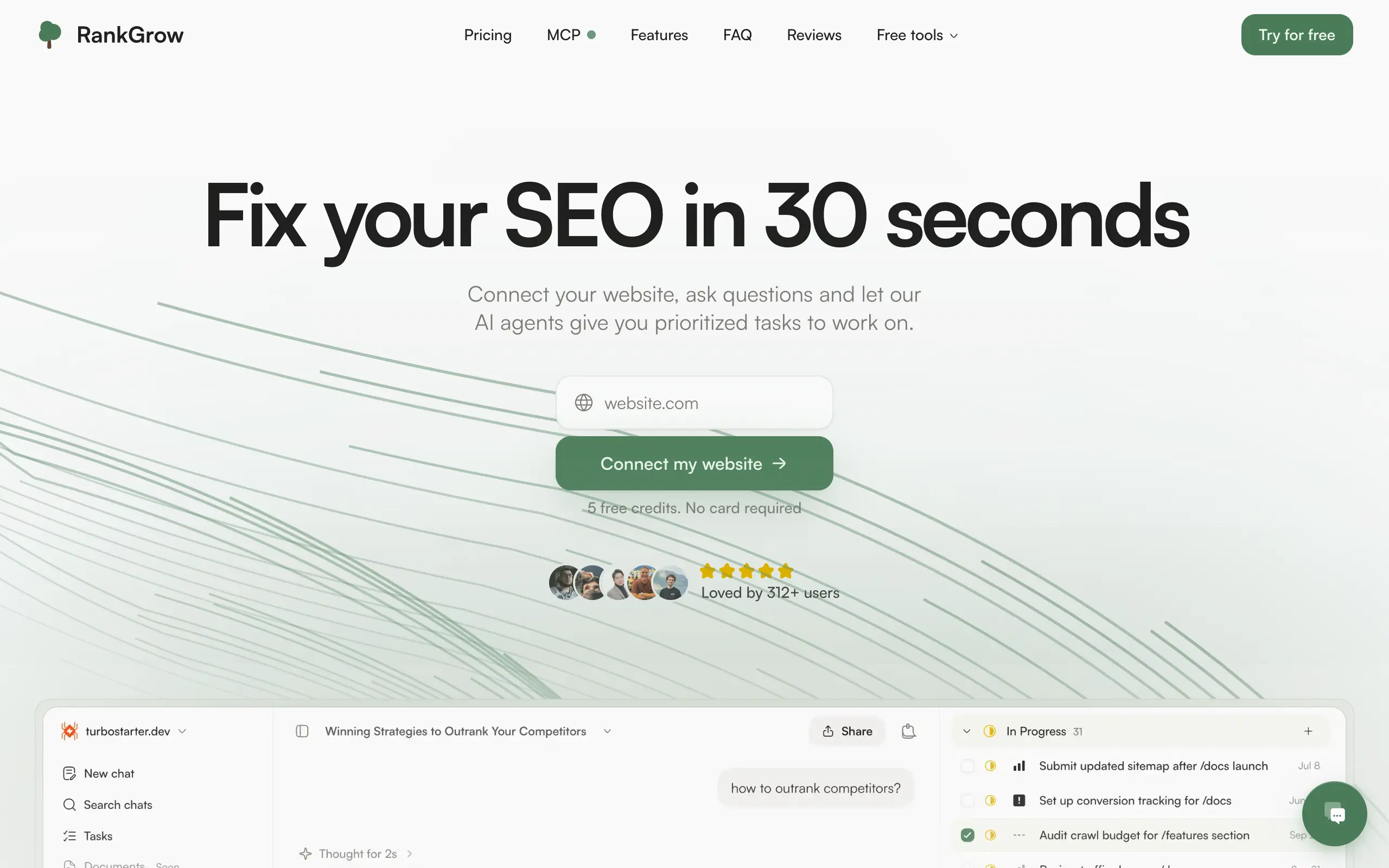
RankGrow
Fix your SEO with AI agents - connect Search Console, get prioritized tasks, and grow organic traffic 📈
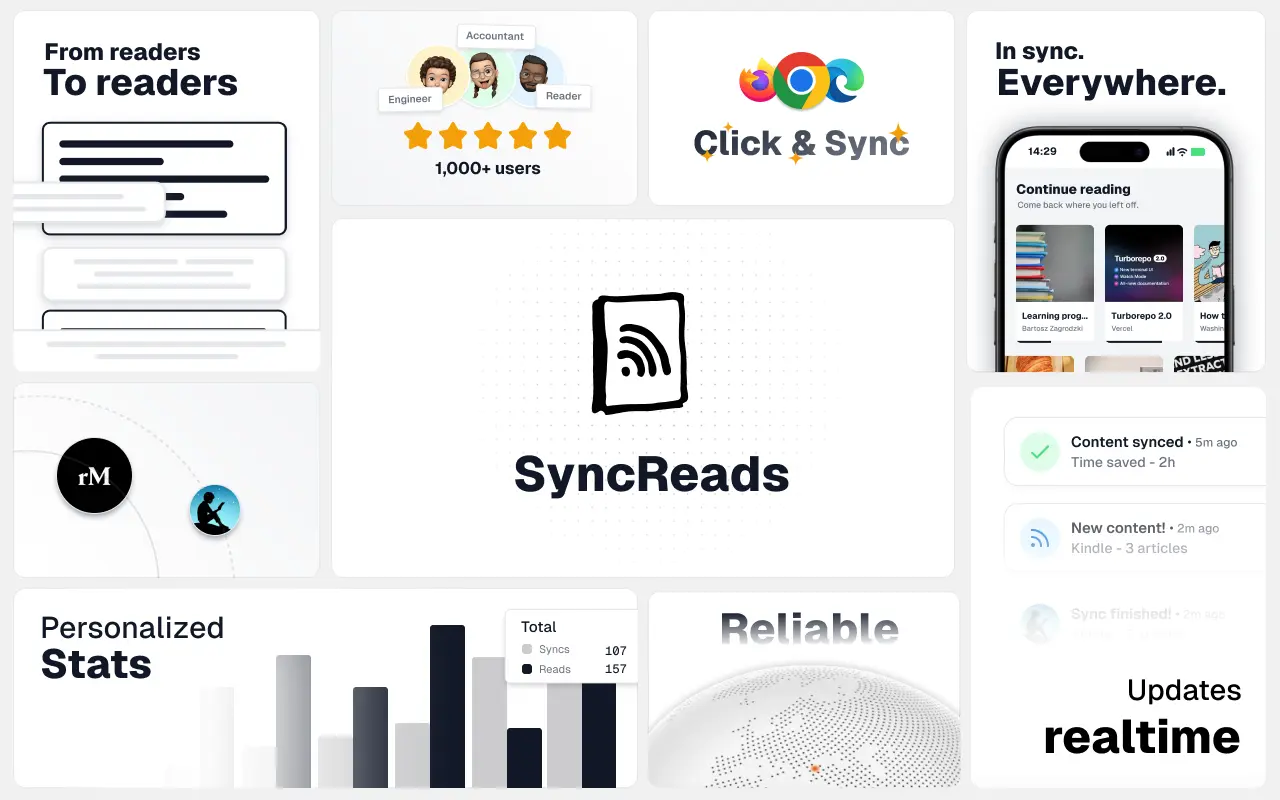
SyncReads
Sync your favorite content for distraction-free reading, save time and replace multiple apps. Anytime, anywhere 🔄
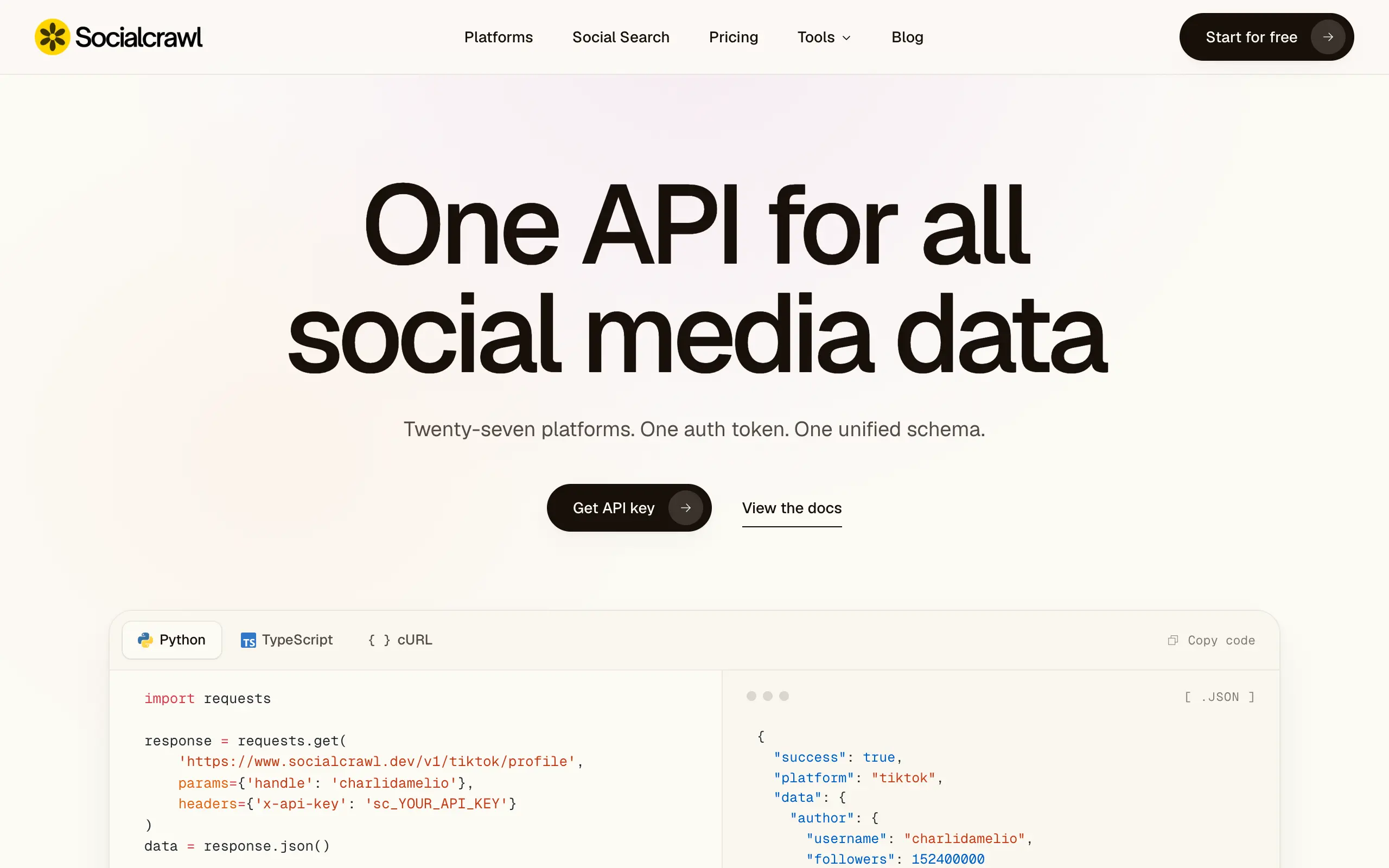
Socialcrawl
Get clean, structured data from 21 platforms like TikTok, Instagram, and YouTube with a single request 📊
Statiko
Monitor any Telegram channel in real time - track posts, edits, deletions, and growth with AI recaps 📡
Shibui
AI website builder - describe your business, pick a niche template, edit by chatting, and publish instantly ✨
Pro Service
Find verified home service professionals, compare quotes, and pay securely through escrow - built for Brazilians across the US 🏠
RankGrow
Fix your SEO with AI agents - connect Search Console, get prioritized tasks, and grow organic traffic 📈
SyncReads
Sync your favorite content for distraction-free reading, save time and replace multiple apps. Anytime, anywhere 🔄
Socialcrawl
Get clean, structured data from 21 platforms like TikTok, Instagram, and YouTube with a single request 📊
Statiko
Monitor any Telegram channel in real time - track posts, edits, deletions, and growth with AI recaps 📡
Shibui
AI website builder - describe your business, pick a niche template, edit by chatting, and publish instantly ✨
Pro Service
Find verified home service professionals, compare quotes, and pay securely through escrow - built for Brazilians across the US 🏠
RankGrow
Fix your SEO with AI agents - connect Search Console, get prioritized tasks, and grow organic traffic 📈
SyncReads
Sync your favorite content for distraction-free reading, save time and replace multiple apps. Anytime, anywhere 🔄
Socialcrawl
Get clean, structured data from 21 platforms like TikTok, Instagram, and YouTube with a single request 📊
Statiko
Monitor any Telegram channel in real time - track posts, edits, deletions, and growth with AI recaps 📡
Shibui
AI website builder - describe your business, pick a niche template, edit by chatting, and publish instantly ✨
Pro Service
Find verified home service professionals, compare quotes, and pay securely through escrow - built for Brazilians across the US 🏠
RankGrow
Fix your SEO with AI agents - connect Search Console, get prioritized tasks, and grow organic traffic 📈
SyncReads
Sync your favorite content for distraction-free reading, save time and replace multiple apps. Anytime, anywhere 🔄
Socialcrawl
Get clean, structured data from 21 platforms like TikTok, Instagram, and YouTube with a single request 📊
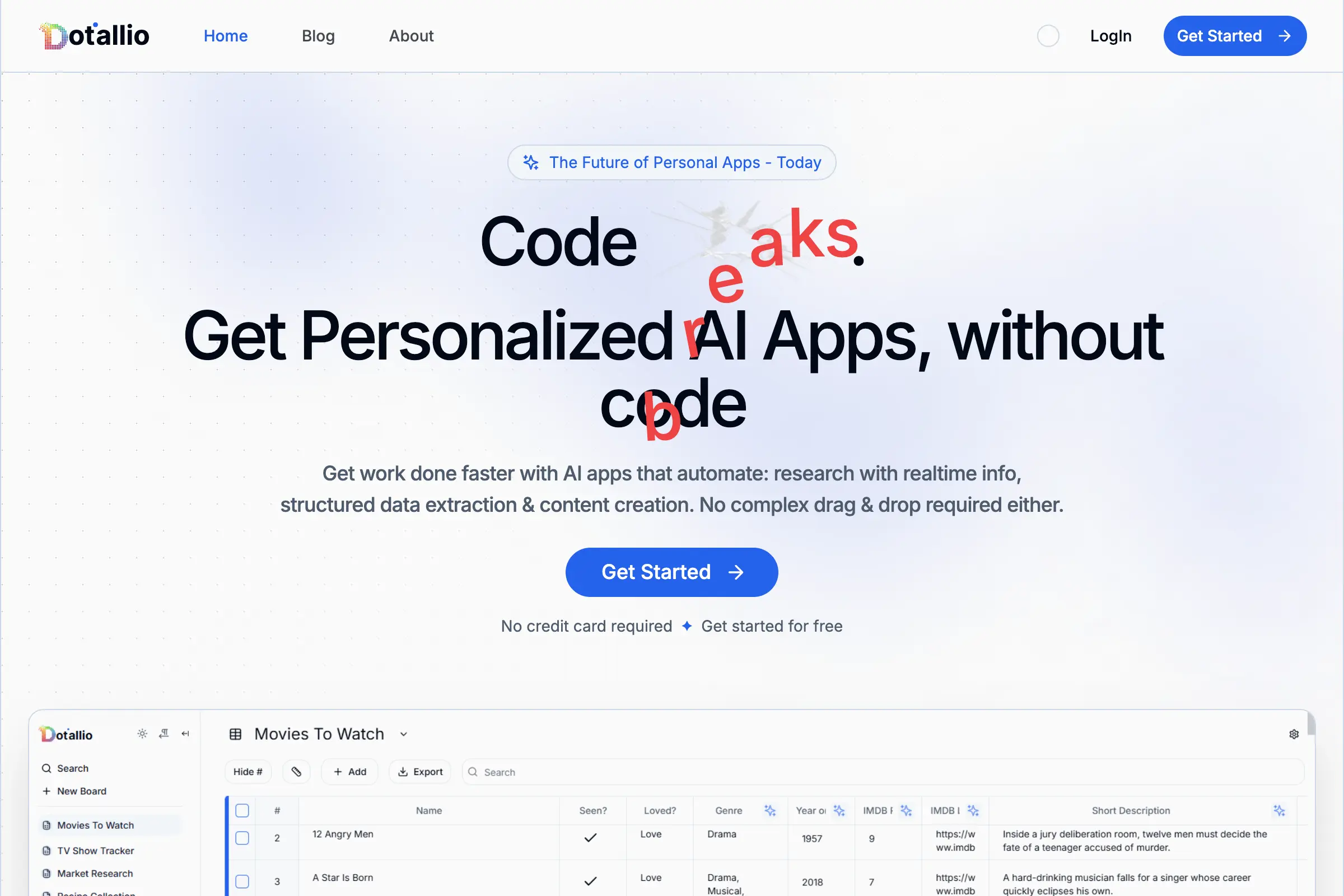
Dotallio
Personalized AI apps that automate research, data extraction, and content creation without code 🤖

Talk to Santa
Enjoy a magical live video chat or receive a unique AI-generated video greeting from Santa Claus 🎅

pozywka.pl
Scalable blog for food journalist, focused on performance and user experience 🌭
zagrodzki.me
Personal blog and portfolio of Bart Zagrodzki, where he shares his knowledge and work 💼

TurboStarter
Ship your startup everywhere. In minutes.
HTML to Markdown
Convert HTML to Markdown with ease, directly in your browser 📄
Dotallio
Personalized AI apps that automate research, data extraction, and content creation without code 🤖
Talk to Santa
Enjoy a magical live video chat or receive a unique AI-generated video greeting from Santa Claus 🎅
pozywka.pl
Scalable blog for food journalist, focused on performance and user experience 🌭
zagrodzki.me
Personal blog and portfolio of Bart Zagrodzki, where he shares his knowledge and work 💼
TurboStarter
Ship your startup everywhere. In minutes.
HTML to Markdown
Convert HTML to Markdown with ease, directly in your browser 📄
Dotallio
Personalized AI apps that automate research, data extraction, and content creation without code 🤖
Talk to Santa
Enjoy a magical live video chat or receive a unique AI-generated video greeting from Santa Claus 🎅
pozywka.pl
Scalable blog for food journalist, focused on performance and user experience 🌭
zagrodzki.me
Personal blog and portfolio of Bart Zagrodzki, where he shares his knowledge and work 💼
TurboStarter
Ship your startup everywhere. In minutes.
HTML to Markdown
Convert HTML to Markdown with ease, directly in your browser 📄
Dotallio
Personalized AI apps that automate research, data extraction, and content creation without code 🤖
Talk to Santa
Enjoy a magical live video chat or receive a unique AI-generated video greeting from Santa Claus 🎅
pozywka.pl
Scalable blog for food journalist, focused on performance and user experience 🌭
zagrodzki.me
Personal blog and portfolio of Bart Zagrodzki, where he shares his knowledge and work 💼
TurboStarter
Ship your startup everywhere. In minutes.
HTML to Markdown
Convert HTML to Markdown with ease, directly in your browser 📄
Omichat
Chat with 50+ AI models, including ChatGPT and Claude, in one place - switch models anytime without losing context 🤖
Claude Fast
Supercharge your Claude Code with 6x effective context window and specialized AI agents 🤖

EmojAI
AI-powered emoji picker with smart, context-aware suggestions 🤖

Solohacker
Autonomous company launcher - AI agents work 24/7, escalate what matters, and you stay in control 🤖

BeRawi: Storytelling Coach
Practice storytelling daily with instant feedback to sound clearer, more engaging, and confident 🎤
Omichat
Chat with 50+ AI models, including ChatGPT and Claude, in one place - switch models anytime without losing context 🤖
Claude Fast
Supercharge your Claude Code with 6x effective context window and specialized AI agents 🤖
EmojAI
AI-powered emoji picker with smart, context-aware suggestions 🤖
Solohacker
Autonomous company launcher - AI agents work 24/7, escalate what matters, and you stay in control 🤖
BeRawi: Storytelling Coach
Practice storytelling daily with instant feedback to sound clearer, more engaging, and confident 🎤
Omichat
Chat with 50+ AI models, including ChatGPT and Claude, in one place - switch models anytime without losing context 🤖
Claude Fast
Supercharge your Claude Code with 6x effective context window and specialized AI agents 🤖
EmojAI
AI-powered emoji picker with smart, context-aware suggestions 🤖
Solohacker
Autonomous company launcher - AI agents work 24/7, escalate what matters, and you stay in control 🤖
BeRawi: Storytelling Coach
Practice storytelling daily with instant feedback to sound clearer, more engaging, and confident 🎤
Omichat
Chat with 50+ AI models, including ChatGPT and Claude, in one place - switch models anytime without losing context 🤖
Claude Fast
Supercharge your Claude Code with 6x effective context window and specialized AI agents 🤖
EmojAI
AI-powered emoji picker with smart, context-aware suggestions 🤖
Solohacker
Autonomous company launcher - AI agents work 24/7, escalate what matters, and you stay in control 🤖
BeRawi: Storytelling Coach
Practice storytelling daily with instant feedback to sound clearer, more engaging, and confident 🎤

Connect with like-minded people
Join our community to get feedback, support, and grow together with 1,000+ builders on board, let's ship it!
Join usShip your startup everywhere. In minutes.
Don't burn tokens on setup and start building features on day one.