Poolrun
Gives solo pool techs route scheduling and digital chemical logs. Saves them an hour of driving and paperwork every single day.
Poolrun is route scheduling and digital chemical logs for solo pool technicians. It targets the daily loop of driving between backyards, testing water, dosing chemicals and writing it all down. In 2026 the opportunity is that most pool service software was built for multi-truck companies, while the long tail of one-person operators still runs on paper, texts and memory.
Key takeaways
- Target customer: solo pool technicians and owner-operators with roughly 30 to 120 weekly stops and no office staff.
- Pricing angle: a flat monthly subscription, for example $29 to $49 per month, justified by saving about an hour a day.
- Biggest risk: incumbents such as Skimmer and Pool Brain already serve this niche, so Poolrun must win on speed and simplicity, not feature count.
- Time to MVP: about 4 to 6 weeks for a mobile-first web app if you start from a starter kit.
What problem does Poolrun solve for solo pool techs?
Solo pool techs lose time twice: once planning a route that drifts over the week, and again writing down readings and chemicals added at every stop. The paperwork usually happens in the truck or at night, unpaid.
Who is the ideal customer?
The ideal customer is an owner-operator running 40 to 100 residential pools alone, perhaps with a part-time helper in summer. They are paid per stop on a monthly contract, they carry a phone, and they hate software that feels like an office tool.
What do they do today?
Common workarounds are:
- Paper route sheets: a clipboard or binder with customer names, gate codes and last readings.
- Notes apps and texts: quick but unsearchable, and nothing is shared with the homeowner.
- Google Maps: good for one drive, bad for reordering 12 stops when a customer cancels.
- Memory: the tech simply knows that the Hendersons' pool runs high on cyanuric acid.
Why the workarounds fail
Paper cannot optimize a route, cannot be searched when a customer disputes a green pool, and gets lost. Notes apps do not calculate dosing or show trends. The cost is not dramatic on any one day, but it compounds: every extra 20 minutes of driving is a stop you could have added to the route, and every missing log is a liability when water quality is questioned.
Is there a market for pool route scheduling software in 2026?
Yes, but it is a contested one. Pool service software exists, and a founder should assume the buyer has already seen at least one alternative. The gap is not "nothing exists," it is "what exists is heavy for one person."
The gap in existing solutions
Established tools such as Skimmer and Pool Brain cover routing, invoicing, billing and team management. That breadth suits companies with dispatchers and several trucks. For a solo tech, the result is often too many screens between arriving at a pool and logging a reading. General field service tools like Jobber or Housecall Pro add the same weight, and they are not built around water chemistry.
Why now
- Phones are the only computer: solo operators expect to run the day from a phone, ideally one-handed and with wet fingers.
- AI-assisted input: voice notes and photo capture of test strips or kit results can cut typing, which was not reliable enough a few years ago.
- Cheaper build costs: a small team can ship auth, billing and mobile-ready UI quickly, so a narrow product is now viable at a low price.
- Subscription fatigue pointing the other way: solo operators resist paying for bloat, which favors a focused tool with a clear price.
What should the Poolrun MVP include?
Build the shortest path from "open the app" to "last stop logged." The aha moment is the tech finishing the day, seeing that the route was shorter than their usual order and that every log is already done, with nothing left to write at night.
Route builder
Add stops, set service days and get an optimized driving order that reshuffles when a stop is added or skipped.
Fast chemical log
Enter readings and chemicals added in a few taps, with last visit values prefilled so most stops need minimal typing.
Customer pool profile
Store address, gate notes, pool volume and equipment so every visit starts with the context a tech used to keep in their head.
Visit history and export
Searchable history per pool with a shareable summary or PDF the tech can send when a customer asks what happened.
What to cut from version one
- Full invoicing and payment collection. Link out or export first.
- Multi-user dispatching and team roles.
- Inventory and purchasing.
- A customer portal. A simple emailed visit summary is enough to test the value.
- Automatic dosing recommendations. They add liability, so start with a log and simple trend display.
How is Poolrun different from Skimmer, spreadsheets and paper?
Poolrun's position is: the lightest daily tool for one-person pool routes. It wins by being faster per stop, not by having more features.
| Option | Route optimization | Fast chemical logging | Built for solo techs | Price feel |
|---|---|---|---|---|
| Poolrun | ✅ | ✅ | ✅ | Low, flat |
| Pool service incumbents | ✅ | ✅ | Partly | Often scaled by stops or users |
| General field service apps | Partly | ❌ | ❌ | Mid to high |
| Spreadsheets | ❌ | Manual | Partly | Free |
| Paper and memory | ❌ | Manual | ✅ | Free |
The honest caveat: an incumbent can launch a "lite" mode. Your defense is focus, community presence among solo techs and a product that stays small on purpose.
How would Poolrun make money?
Keep pricing flat and easy to explain to someone who dislikes software.
- Flat monthly plan: for example $29 to $39 per month for unlimited stops. Simple, and easy to justify against an hour saved daily.
- Tiered by stops: a cheaper tier under a set number of pools and a higher one above it. It captures more from larger routes but adds friction at signup.
- Annual discount: two months free for paying yearly. Seasonal churn is a real issue in pool work, so annual plans help cash flow.
As an assumption: if you charge $35 per month and 100 paying techs stay, that is $3,500 in monthly recurring revenue. That is a modest but real starting business, and it shows why low support load matters.
Which growth channel works first?
Start where solo techs already gather: Facebook groups and forums for pool professionals, local supply store counters, and YouTube channels about running a pool route. Direct outreach and a founder who shows up in these places beat paid ads at this stage. Cards of channels are less useful than one relationship: a respected tech who uses Poolrun and posts about it.
How do you validate Poolrun in two weeks?
Interview ten solo techs
Ask them to walk through yesterday, stop by stop. Note where they write things down, how they plan the route and what they already tried.
Shadow one route
Ride along for half a day if you can. You will see friction that interviews miss, like gloves, glare and bad signal in backyards.
Ship a landing page
State one promise, for example "finish your route and your logs at the same time," and collect waitlist emails from the groups where techs hang out.
Test a clickable prototype
Show the fast log screen to five techs and time how long it takes them to record a stop. If it is not clearly faster than their current method, rework it before building.
Ask for a pre-sale
Offer a founding price, such as a discounted first year, to the most engaged respondents. Even five paid commitments is stronger signal than 200 signups.
What tech stack should you use to build Poolrun?
Build a mobile-first web app first, with a path to a native app. Techs work in backyards with weak signal, so offline tolerance matters more than fancy UI.
What does TurboStarter handle for you?
Most of the work in a product like this is undifferentiated: accounts, subscriptions, emails and storage. TurboStarter provides a monorepo with web and mobile apps, plus the pieces you would otherwise build yourself. Relevant parts are authentication, billing for subscriptions, database setup and mobile for the native app when you need it. That leaves your time for routing and the logging experience, which is what makes Poolrun worth paying for.
Core data model
A minimal schema keeps the log fast to write and easy to chart:
create table pool (
  id uuid primary key,
  owner_id uuid not null,
  address text not null,
  volume_gallons int,
  service_day smallint,
  stop_order int
);

create table visit (
  id uuid primary key,
  pool_id uuid references pool(id),
  visited_at timestamptz not null,
  ph numeric(3,1),
  free_chlorine numeric(4,1),
  alkalinity int,
  chemicals_added jsonb,
  notes text
);
Which routing approach should you choose?
Use a hosted maps or routing service to compute stop order. It is accurate and fast to ship, but costs grow with usage, so cache results and only recompute when stops change. Best for the MVP.
A simple nearest-neighbor ordering on coordinates costs nothing to run and works acceptably for 30 to 100 stops in one area. It ignores real road conditions, so it is a good fallback or a later cost optimization, not the best first choice.
Offline and sync
Backyards have poor signal. Store the day's route and recent visits locally, queue new logs and sync when connected. This is the hardest technical piece, so scope it early and test on real routes.
What could make Poolrun fail?
Biggest risk: competing with entrenched tools
Solo techs may already use an incumbent, and switching costs are real because their customer list and history live there. If Poolrun cannot import existing customers in minutes and clearly beat the incumbent on daily speed, it will stay a nice demo. Build a spreadsheet or CSV import early and sell the first month as a free parallel trial.
- Seasonality and churn: pool work slows in colder regions. Offer annual plans or a pause option, and launch first in warm-climate markets with year-round service.
- Offline failures: lost logs destroy trust quickly. Test sync under bad signal before adding features.
- Liability around chemistry: do not present dosing as professional advice. Log what the tech did and show trends, and add a clear disclaimer if you add suggestions later.
- Small market ceiling: solo techs are a narrow audience. Plan to expand to small multi-tech crews once the solo product is solid.
What are the next steps to launch in 30 days?
Days 1 to 7: validate
Run interviews, ride along on a route and publish the landing page.
Days 8 to 14: set up the foundation
Start from TurboStarter so auth, billing and the database are ready, then define the pool and visit models.
Days 15 to 21: build the core loop
Ship the route list and fast log screen, and add CSV import for existing customers.
Days 22 to 26: test in the field
Give it to three techs for real routes and fix whatever slows them down.
Days 27 to 30: charge
Open paid founding spots to the waitlist and set up a simple feedback channel.
Pick one warm-climate region, find ten techs and get Poolrun into their trucks this month. The faster you watch someone use it at a real pool, the faster you learn what to build.
FAQ
Interview solo techs about their last day, ride along on a route and test whether a prototype logs a stop faster than their current method. Then ask for pre-sales. Paid commitments from even a handful of techs are the strongest signal.
For solo operators, a flat price in the range of $29 to $49 per month is a reasonable starting assumption. Compare it to the value of an hour saved per day, and test two price points with your waitlist before launch.
Dedicated pool service tools like Skimmer and Pool Brain, plus general field service apps like Jobber and Housecall Pro. The other major competitor is paper and habit, which is free and hard to beat on convenience.
A mobile-first web app with a Postgres database, a routing API and local-first storage for offline use is a practical choice. A starter kit like TurboStarter covers auth, billing and mobile so you can focus on routing and logging.
Typically 4 to 6 weeks for one developer working from a starter kit, with costs dominated by your time and a routing API bill that stays small at low volume. Offline sync is the part most likely to take longer than planned.
More 🏢 B2B Application SaaS ideas
Discover more innovative b2b application SaaS ideas that are trending in 2026. Each idea is AI-generated with market validation and growth potential to help you find your next profitable venture faster than competitors.
Your competitors are building with TurboStarter
Below are some of the SaaS ideas that have been generated and built with our starter kit.

Monitor any Telegram channel in real time - track posts, edits, deletions, and growth with AI recaps 📡

AI website builder - describe your business, pick a niche template, edit by chatting, and publish instantly ✨
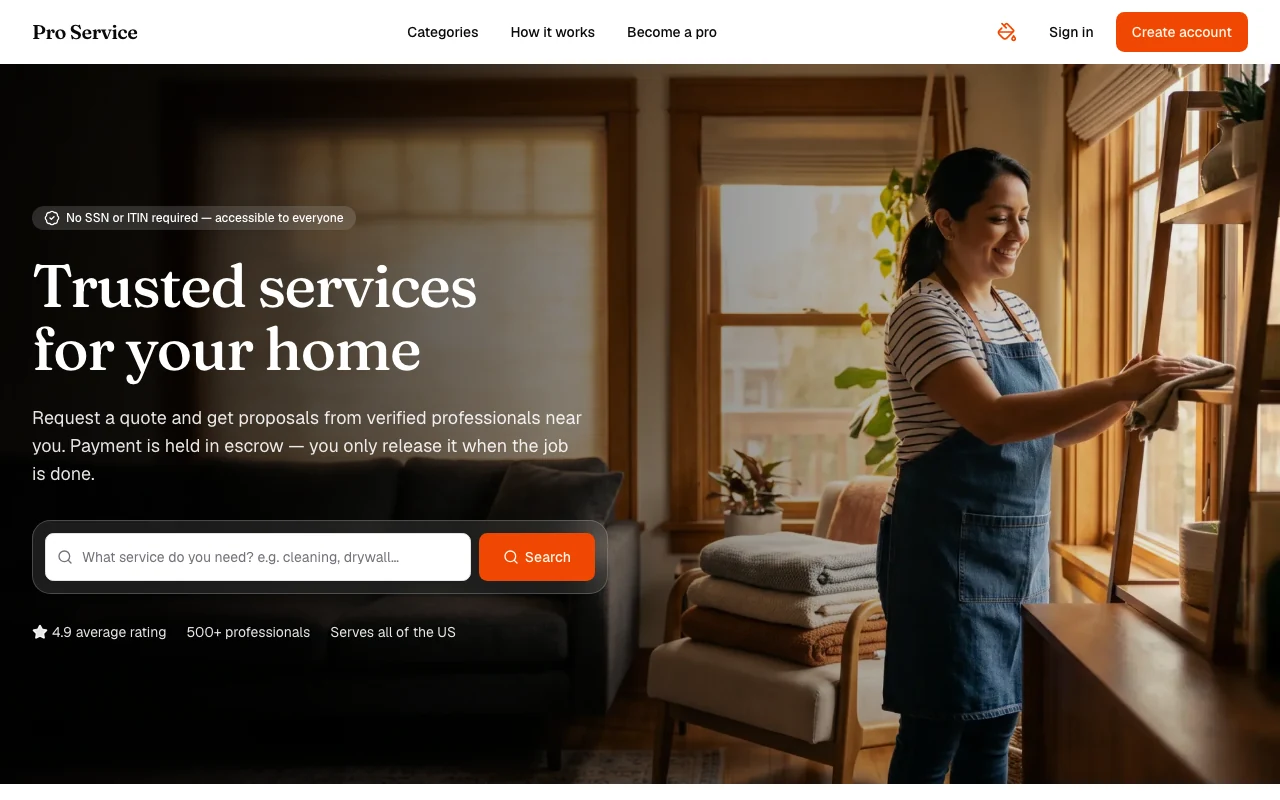
Find verified home service professionals, compare quotes, and pay securely through escrow - built for Brazilians across the US 🏠
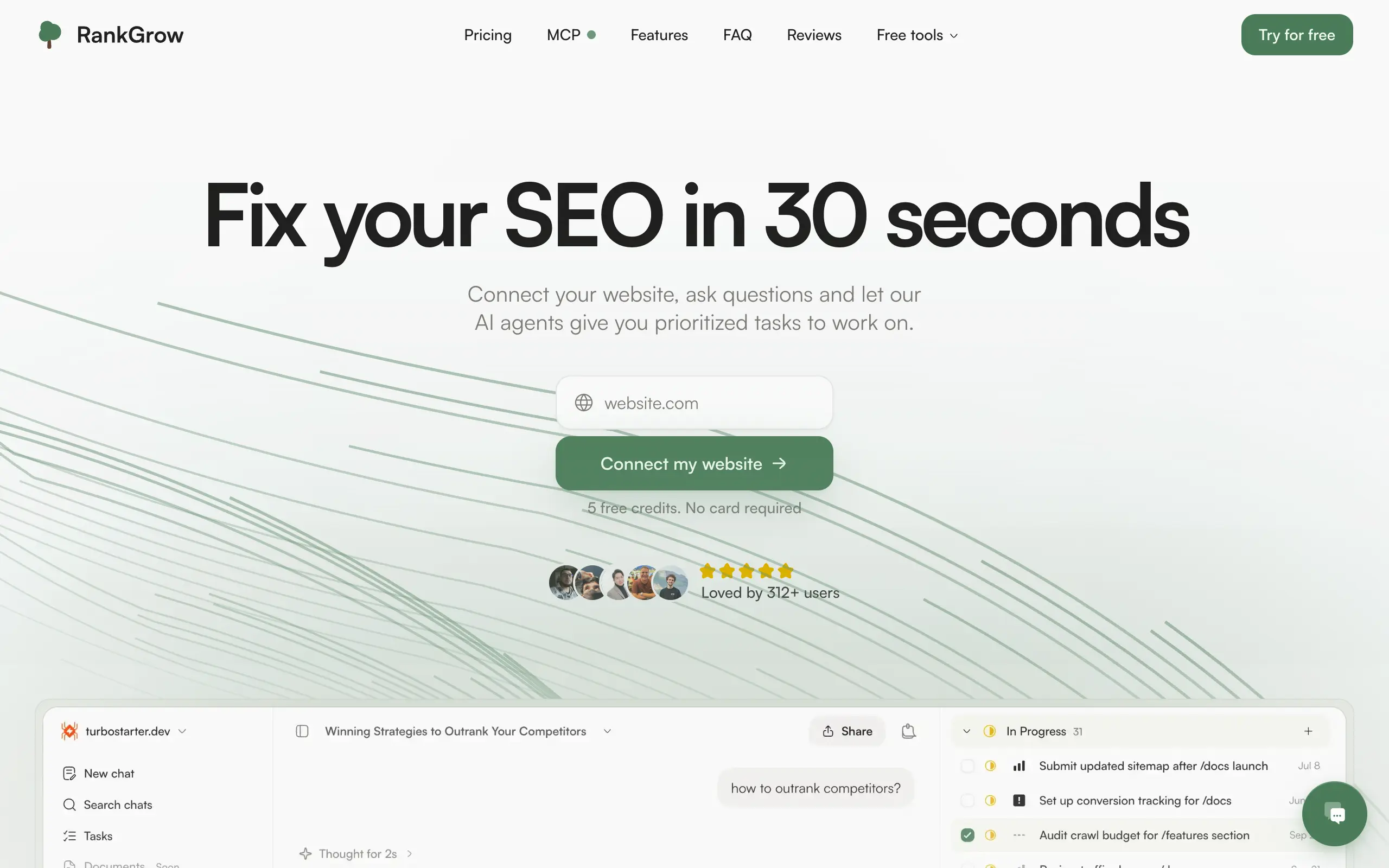
Fix your SEO with AI agents - connect Search Console, get prioritized tasks, and grow organic traffic 📈

Sync your favorite content for distraction-free reading, save time and replace multiple apps. Anytime, anywhere 🔄

Get clean, structured data from 21 platforms like TikTok, Instagram, and YouTube with a single request 📊
Monitor any Telegram channel in real time - track posts, edits, deletions, and growth with AI recaps 📡
AI website builder - describe your business, pick a niche template, edit by chatting, and publish instantly ✨
Find verified home service professionals, compare quotes, and pay securely through escrow - built for Brazilians across the US 🏠
Fix your SEO with AI agents - connect Search Console, get prioritized tasks, and grow organic traffic 📈
Sync your favorite content for distraction-free reading, save time and replace multiple apps. Anytime, anywhere 🔄
Get clean, structured data from 21 platforms like TikTok, Instagram, and YouTube with a single request 📊

Personalized AI apps that automate research, data extraction, and content creation without code 🤖

Enjoy a magical live video chat or receive a unique AI-generated video greeting from Santa Claus 🎅

Scalable blog for food journalist, focused on performance and user experience 🌭

Personal blog and portfolio of Bart Zagrodzki, where he shares his knowledge and work 💼

Ship your startup everywhere. In minutes.

Convert HTML to Markdown with ease, directly in your browser 📄
Personalized AI apps that automate research, data extraction, and content creation without code 🤖
Enjoy a magical live video chat or receive a unique AI-generated video greeting from Santa Claus 🎅
Scalable blog for food journalist, focused on performance and user experience 🌭
Personal blog and portfolio of Bart Zagrodzki, where he shares his knowledge and work 💼
Ship your startup everywhere. In minutes.
Convert HTML to Markdown with ease, directly in your browser 📄

Chat with 50+ AI models, including ChatGPT and Claude, in one place - switch models anytime without losing context 🤖

Supercharge your Claude Code with 6x effective context window and specialized AI agents 🤖

AI-powered emoji picker with smart, context-aware suggestions 🤖

Autonomous company launcher - AI agents work 24/7, escalate what matters, and you stay in control 🤖

Practice storytelling daily with instant feedback to sound clearer, more engaging, and confident 🎤
Chat with 50+ AI models, including ChatGPT and Claude, in one place - switch models anytime without losing context 🤖
Supercharge your Claude Code with 6x effective context window and specialized AI agents 🤖
AI-powered emoji picker with smart, context-aware suggestions 🤖
Autonomous company launcher - AI agents work 24/7, escalate what matters, and you stay in control 🤖
Practice storytelling daily with instant feedback to sound clearer, more engaging, and confident 🎤

Connect with like-minded people
Join our community to get feedback, support, and grow together with 1,000+ builders on board, let's ship it!
Join usShip your startup everywhere. In minutes.
Don't burn tokens on setup and start building features on day one.