ProofRelay
Turn security questionnaires into approved, evidence-linked answers with expiry alerts. Help lean B2B vendors win enterprise deals without a compliance team.
Why security questionnaires slow down B2B sales
Enterprise buyers need to understand the security and privacy risks of working with a vendor. Before a deal can move forward, the buyer may send a security questionnaire, a spreadsheet, a procurement portal request, or a custom assessment. The questions often cover familiar topics—access controls, encryption, incident response, data retention, and business continuity—but answering them accurately takes time.
For a lean B2B vendor, that work can fall to a founder, sales engineer, security lead, or product manager who already has other responsibilities. The same questions recur across prospects, yet answers can become inconsistent or outdated as the product, policies, and infrastructure change. A rushed response can create more work later, while a delayed response can stall a sales process.
ProofRelay is a B2B software idea for turning security questionnaires into approved, evidence-linked answers with expiry alerts. Its purpose is not simply to fill in forms. It is to help a small vendor build a reliable, reusable process for answering buyer questions while keeping the source, approval status, and freshness of each answer visible.
The opportunity is to make enterprise security reviews less dependent on scattered documents and institutional memory. Done well, security questionnaire automation can help a small team respond faster without implying that software itself certifies a company or guarantees compliance.
What ProofRelay should do
ProofRelay should provide a dependable workflow for collecting security answers, connecting those answers to supporting evidence, and reusing them across future questionnaires.
A strong product would bring together four related capabilities:
- Answer reuse: Find and adapt a previously approved answer instead of starting from a blank cell.
- Evidence management: Connect claims to policies, reports, diagrams, or other approved supporting materials.
- Review and approval: Route answers to the right person and record who approved them.
- Freshness management: Alert owners when answers or evidence need review or are approaching an expiry date.
The central product promise is straightforward: help lean B2B vendors answer security questionnaires consistently, with a traceable path from a buyer’s question to an approved answer and its supporting evidence.
ProofRelay should be positioned as an answer and evidence operations platform, not as a replacement for security expertise, legal review, or a formal compliance program. That distinction matters. The product can organize and accelerate the work, but customers remain responsible for making accurate claims and deciding what they are authorized to disclose.
Who is most likely to benefit
Not every business needs dedicated security questionnaire software. ProofRelay is most compelling for companies that meet two conditions: their sales process regularly includes security reviews, and they do not have a large compliance team to manage the work.
Primary audience: small B2B SaaS vendors
The first target segment should be B2B software companies selling to larger organizations. These vendors may have a security-conscious product and established internal policies, but a small team handles buyer reviews alongside other responsibilities.
Likely users include:
- Founders who own enterprise sales and security responses
- Sales engineers who receive questionnaires during procurement
- Security or compliance leads at companies without a large governance team
- Operations and legal staff responsible for reviewing commitments
- Customer success teams that help renewals pass vendor assessments
The buyer may be a founder or head of sales, while day-to-day users may include sales engineers and security owners. Product design should serve both: executives want to know whether reviews are moving, while contributors need a fast way to find and verify accurate responses.
Secondary audience: growing vendors entering enterprise sales
A company can outgrow an informal process before it hires a compliance specialist. At first, answers may live in a shared document. Later, several people edit different versions, evidence becomes hard to locate, and no one is sure whether a response is still current.
This transition is a useful point of entry for ProofRelay. The product can help a growing vendor formalize its workflow without requiring the team to adopt a complex governance, risk, and compliance platform immediately.
Potential later audiences
After validating the core workflow with B2B SaaS vendors, ProofRelay could test adjacent segments such as:
- IT service providers responding to customer security assessments
- Cloud-based agencies and consultancies selling into regulated clients
- Business-to-business platforms with frequent vendor reviews
- Startups preparing to support larger procurement teams
These groups may have different questionnaire formats, review requirements, and evidence-sharing needs. They should be treated as expansion hypotheses, not as proof of product-market fit. Start with a narrow segment, learn its workflow, and expand when the underlying needs are genuinely shared.
The market opportunity and product gap
Security reviews create operational friction because the work is repetitive but rarely identical. A buyer may ask a familiar question in a different format, combine several controls into one prompt, or expect an answer tailored to its own terminology. Reusing a previous response helps, but copying without reviewing it can preserve outdated or overbroad claims.
The gap ProofRelay can address is the space between generic document storage and large, multi-purpose compliance platforms. A lean team needs more than a folder of policies, but may not need an extensive suite with modules it will not use. The product can focus on the practical unit of work: a question, a proposed answer, an owner, an approval state, and supporting evidence.
| Workflow need | Common informal approach | ProofRelay opportunity |
|---|---|---|
| Reuse prior answers | Search old spreadsheets and email | Search a structured answer library |
| Verify answer quality | Ask a colleague or rely on memory | Show approval status, owner, and context |
| Support a claim | Attach files manually | Link answers to approved evidence |
| Manage stale information | Remember to check documents | Use review dates and expiry alerts |
| Coordinate contributors | Forward files or chat messages | Assign questions and track progress |
| Prepare a buyer response | Copy and paste between formats | Export or map approved answers |
This opportunity should be validated through interviews and workflow observation, not just feature polling. Ask prospective customers to show the last questionnaire they completed, how they found answers, who reviewed them, which questions took the longest, and what happened when a response needed updating. Those conversations can reveal whether the core pain is answer discovery, evidence access, approvals, deadline tracking, or a combination of all four.
A useful validation signal
Interest alone is a weak signal. Stronger evidence comes from prospective customers who will:
- Share a redacted questionnaire and walk through their process
- Identify a recurring owner or bottleneck
- Test the workflow on a real, low-risk assessment
- Pay for a pilot or commit to a defined evaluation
- Return with a second questionnaire and use the answer library again
The repeat-use test is especially important. If customers use ProofRelay once but do not maintain its answers or evidence, the product may be solving a one-off formatting problem instead of creating a durable system of record.
Core features for a credible first version
The initial product should make the complete answer lifecycle easier while avoiding unnecessary scope. A useful minimum viable product (MVP) does not need to automate every questionnaire format. It needs to help a team produce a reliable response and improve the next one.
1. Questionnaire intake
Users need a simple way to bring a questionnaire into ProofRelay. Start with common file formats such as spreadsheets and documents, while offering a manual question-entry option when importing is unreliable.
An intake workflow should:
- Preserve the original file
- Extract questions where practical
- Let users review and correct the extracted text
- Identify the source questionnaire and its due date
- Flag questions that appear ambiguous or contain multiple requests
Question extraction should be treated as a convenience, not as an unquestioned source of truth. Users need to confirm that the system has not skipped a row, merged two questions, or mistaken a heading for a question.
2. A structured, reusable answer library
A reusable answer should be more than a text field. Store enough context to help the next contributor determine whether the answer still applies.
Useful fields may include:
- Canonical answer
- Topic or control category
- Product, service, or business unit covered
- Owner or subject-matter expert
- Approval state and approver
- Last reviewed date
- Review-by date
- Supporting evidence
- Internal notes and usage guidance
Search should support keywords and relevant topics. Later, semantic search may help users find answers when a buyer phrases a question differently from the original. Regardless of search method, results should show context and status so that users are not encouraged to reuse an answer blindly.
3. Evidence links and controlled sharing
Evidence linkage is a key part of ProofRelay’s differentiation. A response about encryption, access reviews, or incident response is more useful when a reviewer can see which approved document supports it.
Evidence records can include:
- A title and description
- A file or secure external reference
- An owner
- A classification, such as internal or approved for customer sharing
- A review date or expiry date
- The answers that rely on the evidence
Not all evidence should be visible to every user or buyer. ProofRelay should support permission-aware access and a deliberate sharing workflow. An internal policy should not become customer-facing simply because it was attached to an answer.
4. Approval workflows
Approval should happen at the level that matches the risk of the claim. A minor formatting change may not need the same review as a new statement about data location or incident response.
A practical approval process might use states such as:
- Draft
- Needs subject-matter review
- Approved for reuse
- Approved for a specific customer
- Requires update
- Retired
The product should record who made or approved a change and when. It should also make it clear whether a response is a general approved answer or one tailored to a particular customer. This reduces the risk that a customer-specific commitment is reused as a universal company statement.
5. Expiry and freshness alerts
Expiry alerts can help users spot information that needs attention before it is reused. The system should distinguish between evidence expiry and answer review dates: a document may expire on a fixed date, while an answer may need review because the product or process changed.
Useful controls include:
- Owner-assigned review dates
- Reminders before a due date
- Alerts for expired evidence
- A view of answers that depend on expiring evidence
- A way to mark an item as reviewed, updated, or retired
Alerts only work when ownership is clear. If every stale item goes to a shared inbox, responsibility can remain ambiguous. Assign owners, let them delegate, and provide an escalation path for overdue high-priority items.
6. Export and questionnaire mapping
A workflow tool has to fit into the buyer’s process. In the MVP, a user should be able to map approved answers back to a source questionnaire and export a completed file without losing its basic layout.
Initially, a transparent review-and-export process may be safer than promising fully automated completion for every spreadsheet. Provide clear indications of which answers were matched, which need review, and which remain blank. Preserve the original questionnaire and allow the user to compare the final output before sharing it.
7. Activity history and team visibility
A small team needs to know what is complete, what needs review, and what is blocked. A basic activity log and status dashboard can provide this without turning the product into a full project-management platform.
Track events such as answer creation, approval, evidence replacement, review-date changes, and export. Make records easy to inspect, but avoid implying that an activity log alone meets any specific audit or regulatory requirement.
A practical workflow from intake to approved response
The product’s value is clearest when the end-to-end process feels coherent:
- A user creates a response project and records the customer, due date, and questionnaire source.
- ProofRelay imports or accepts the questions and lets the user correct the extracted content.
- The system suggests existing answers based on topic or wording.
- The user checks whether each answer applies to the requested product, service, and customer context.
- Questions without an approved answer are assigned to a subject-matter owner.
- The owner drafts or updates an answer and attaches relevant evidence.
- An authorized reviewer approves the response for reuse or customer-specific use.
- The team reviews the completed questionnaire, resolves gaps, and exports it.
- ProofRelay records the final mapping and schedules appropriate answer and evidence reviews.
The key product design principle is assistance with human accountability. Automation can reduce search and formatting work, but the person submitting the response must be able to inspect what is being sent and why.
How AI can help without undermining trust
AI can make security questionnaire automation more useful by clustering similar questions, suggesting relevant answers, and drafting a response from approved material. It can also make the product less trustworthy if it invents claims, hides uncertainty, or sends sensitive information to an external service without clear controls.
A responsible AI workflow should:
- Retrieve from the customer’s approved answer library and permitted evidence
- Show the source answer or evidence behind each suggestion
- Identify when a suggestion is a draft rather than an approved response
- Flag low-confidence matches and questions with multiple parts
- Avoid claiming a certification or control that the source material does not support
- Require human review before a response is sent externally
- Give administrators clear controls over data use and retention
For example, an AI system might suggest an answer and cite the approved policy record it used. A user should be able to open that source, check its review date, edit the response, and route it for approval. If no suitable source exists, the system should say so rather than fill the gap with a plausible-sounding statement.
AI capabilities should be introduced after ProofRelay has reliable permissions, answer provenance, and review states. Without those foundations, generated text can amplify stale or unauthorized information.
Recommended technology stack
The stack should help a small team ship a secure, maintainable SaaS product—not create a complicated architecture before customer demand is proven.
A reasonable starting point is:
- Frontend: React with TypeScript for a responsive application and reusable workflow components. See the official React documentation.
- Styling: Tailwind CSS for consistent interface development and rapid iteration. See Tailwind CSS.
- Backend: A typed application server using TypeScript, with a well-defined API boundary between the web app and core services.
- Database: PostgreSQL for structured records such as organizations, users, questionnaires, answers, approvals, evidence metadata, and review dates.
- File storage: Private object storage for uploaded questionnaires and evidence, with short-lived access links and server-side authorization checks.
- Background jobs: A job queue for file processing, reminders, exports, and other work that should not block a user request.
- Authentication: A managed or carefully maintained authentication system with multi-factor authentication options and organization-aware access controls.
- Observability: Application logs, error monitoring, and job monitoring that avoid recording sensitive questionnaire content unnecessarily.
For early development, a single application with clear modules is often easier to operate than a network of microservices. Separate services only when load, team structure, or operational boundaries justify the added complexity.
Trade-offs to consider
Relational database versus document storage
Questionnaire files may be documents, but answer states, ownership, approvals, and evidence relationships are structured. A relational database makes these relationships easier to query and enforce. Store original files separately and keep their metadata and access rules in the database.
Managed services versus self-hosting
Managed hosting can reduce operational work for a lean team, but it does not remove the need to review security configuration, access policies, backups, and provider terms. Self-hosting can offer more control, but it also creates maintenance responsibility.
Import automation versus manual correction
Automated extraction can save time but will not perfectly interpret every spreadsheet. A reviewable import flow is more trustworthy than a black-box promise of flawless parsing.
AI provider integration versus local models
External AI services may speed up development, but customers will want to understand how data is processed, retained, and protected. Evaluate vendor terms and controls before sending customer content to a model. Local or self-hosted models may offer more control but add infrastructure and quality trade-offs.
Multi-tenancy versus isolated deployments
A shared multi-tenant architecture can be cost-effective and easier to update, but tenant boundaries must be designed and tested carefully. Dedicated environments may suit some larger customers later, but they increase deployment and support complexity.
Example answer record shape
The exact schema will depend on product requirements, but a structured record can make provenance and review status explicit:
type AnswerStatus =
  | "draft"
  | "needs_review"
  | "approved"
  | "customer_specific"
  | "needs_update"
  | "retired";

type SecurityAnswer = {
  id: string;
  organizationId: string;
  question: string;
  answer: string;
  topic: string;
  status: AnswerStatus;
  ownerId: string;
  approvedById?: string;
  approvedAt?: string;
  reviewedAt?: string;
  reviewDueAt?: string;
  evidenceIds: string[];
  scopeNotes?: string;
};
This example is a starting point, not a complete data model. Production design should also consider version history, access control, retention, deletion, and how customer-specific responses relate to reusable answers.
Monetization options for ProofRelay
Pricing should reflect the value of reduced coordination and response effort while remaining predictable for a small vendor. Avoid charging in a way that discourages teams from adding the people needed to review answers properly.
Tiered subscription
A tiered subscription can be based on team size, active questionnaires, or advanced workflow capabilities. A possible structure might include:
- Starter for a small team building its answer library
- Growth for multiple contributors, evidence management, and approval workflows
- Business for advanced permissions, reporting, and integrations
The exact limits should come from customer research. Limiting questionnaire volume too aggressively may make the product frustrating during a busy sales period, while pricing only by seat can penalize cross-functional review.
Usage-based pricing
Pricing by completed questionnaire or processing volume may align with value, but can make costs difficult to predict. If used, show usage clearly and provide limits or alerts before customers incur unexpected charges.
Annual contracts and onboarding
Annual plans may suit organizations that treat questionnaire response as an ongoing sales operation. Paid onboarding can help import an existing answer library or configure roles, provided the service is repeatable and does not become a hidden requirement for product adoption.
Expansion revenue
Potential expansion features could include single sign-on, advanced audit exports, custom integrations, or additional organization controls. These should be introduced in response to verified customer needs, not merely because they are common in enterprise software pricing.
A useful pricing test is whether customers understand what they are paying for: faster response workflows, better reuse, clearer approvals, and fewer stale answers—not a guarantee of passing a security review.
Competitive advantage and positioning
ProofRelay will compete with existing habits as much as with software products. Those habits include shared drives, spreadsheets, document templates, email threads, and larger trust or compliance platforms.
| Alternative | Strength | Common limitation ProofRelay can address |
|---|---|---|
| Spreadsheets and shared folders | Familiar and inexpensive | Hard to track ownership, approvals, and answer freshness |
| Internal document templates | Easy to create and customize | Responses can become disconnected from evidence and review dates |
| General compliance platforms | Broad governance and control management | May be more complex than a lean sales-response workflow requires |
| Manual consulting support | Offers human expertise | Can be costly or difficult to repeat for every questionnaire |
| Buyer-provided portals | Fits the buyer’s process | Does not necessarily create a reusable vendor-side answer system |
ProofRelay should not claim that these alternatives are inadequate for every company. For a business receiving one questionnaire a year, a spreadsheet may be enough. The product is most valuable when recurring requests, multiple contributors, and changing evidence make the informal approach costly.
The distinctive USP
ProofRelay’s strongest potential differentiator is the combination of approved reusable answers, linked evidence, and review or expiry alerts in a workflow designed for vendors without a dedicated compliance team.
That position can be expressed as:
A practical security questionnaire workflow for lean B2B teams: reuse approved answers, trace them to evidence, and know when they need review.
This is more specific and credible than claiming to “automate compliance” or “guarantee enterprise readiness.” The product’s defensibility will depend on how well it understands the real questionnaire workflow, how reliably it preserves answer provenance, and how easily customers maintain their information over time.
Monetization and go-to-market considerations
ProofRelay’s early go-to-market should focus on a narrow customer profile and a clear trigger: a vendor is pursuing larger customers and security reviews are beginning to delay deals or consume scarce staff time.
Potential acquisition paths include:
- Founder-led outreach to B2B SaaS companies selling to enterprise customers
- Partnerships with security consultants who help vendors prepare for buyer reviews
- Educational content about building a reusable security answer library
- Templates and practical guidance that help teams organize their first response workflow
- Referrals from fractional security and compliance professionals
Content marketing can target searches such as “security questionnaire automation,” “how to answer a vendor security questionnaire,” and “security questionnaire management software.” The content should teach a useful process rather than promise that a software tool will replace security work.
A focused pilot can uncover the language prospects use, the formats they need, and which steps cause the most delay. It can also show whether buyers will pay for a repeatable workflow or primarily want one-time questionnaire completion services.
Risks and how to mitigate them
Inaccurate or overconfident answers
A user may reuse a response that no longer reflects current systems or practices.
Mitigation: Display approval and review dates prominently, show scope notes, track changes, and require confirmation when an answer is stale or customer-specific.
Sensitive information exposure
Questionnaires and evidence can contain confidential information about a company’s systems and operations.
Mitigation: Use private storage, least-privilege access, organization-level authorization checks, secure sharing controls, and clear retention and deletion policies. Test tenant isolation and access boundaries as core product requirements.
Unreliable extraction or AI suggestions
Parsing and generative systems can misread content or produce unsupported language.
Mitigation: Make extraction editable, show sources for suggestions, surface uncertainty, and require a human to review the final export.
Difficult integrations and inconsistent formats
Every buyer may use a slightly different questionnaire format or portal.
Mitigation: Start with a limited set of common file workflows, preserve the original source, and use a transparent review step. Add deeper integrations only when customers demonstrate repeated demand.
Low engagement after initial setup
Customers may import a library once and then forget to maintain it.
Mitigation: Make upkeep part of the workflow. Connect review dates to owners, show stale answers in context, and demonstrate the benefits when a new questionnaire arrives.
Confusing product scope with compliance certification
Users could mistake organized answers for proof that their company meets a framework or buyer requirement.
Mitigation: Use precise product language. Explain that ProofRelay manages responses and evidence; it does not certify controls, provide legal advice, or guarantee buyer approval.
Competing against established tools
Larger vendors may offer overlapping questionnaire or trust-center features.
Mitigation: Focus on a well-defined underserved workflow, provide a low-friction user experience, and build credibility through accuracy, clarity, and ease of adoption. Reassess positioning as the market evolves.
Success metrics to measure
ProofRelay should measure whether it makes the workflow faster and more dependable, not just whether users create accounts.
Useful metrics include:
- Time from questionnaire intake to first completed draft
- Time spent finding or rewriting answers
- Percentage of questions matched to an existing approved answer
- Percentage of answers linked to current evidence
- Number of stale answers resolved before reuse
- Time awaiting internal approval
- Questionnaire completion rate by deadline
- Repeat questionnaire projects per organization
- Conversion from pilot to paid plan
- Customer-reported confidence in response consistency
Metrics need context. A high answer-reuse rate is not necessarily good if users are copying outdated material. Pair efficiency measures with quality signals such as review completion, evidence freshness, and customer feedback.
Actionable implementation steps
A disciplined launch can reduce the risk of building a broad product before understanding the actual workflow.
Interview and observe the target customer
Speak with founders, sales engineers, and security owners at B2B vendors that regularly receive buyer questionnaires. Ask them to demonstrate their current process using a redacted example. Record the formats, roles, approval steps, and failure points.
Choose one narrow starting workflow
Select a specific initial user profile and a limited set of questionnaire formats. Define what the first product will support, what it will not support, and how users will handle questions that cannot be matched automatically.
Prototype the answer and evidence model
Test whether customers understand the difference between a draft answer, an approved reusable answer, and a customer-specific response. Include owners, evidence, approval history, and review dates in the prototype.
Build a secure workflow before adding AI
Implement organization boundaries, permissions, file handling, versioning, and approval states. These are foundational to trustworthy automation. Add answer suggestions only when the system can show where they came from.
Run a real-world pilot
Use a small group of design partners and a real questionnaire, with sensitive content handled under agreed safeguards. Measure response time, answer reuse, review effort, and the number of corrections required.
Improve onboarding and freshness management
Help customers import existing answers, identify owners, and set review dates. Confirm that reminders lead to action and that users can tell which answers remain safe to reuse.
Test pricing and repeat usage
Offer a clear paid pilot or subscription proposal. Watch whether customers return for another questionnaire and maintain the answer library. Use those behaviors to refine packaging and pricing.
Expand only after the core loop works
Consider more file formats, integrations, advanced analytics, and AI assistance when customers repeatedly encounter the same limitations. Keep the product focused on accurate, traceable responses.
For an accelerated SaaS foundation, teams can evaluate TurboStarter alongside their own requirements. Choose a starter platform only after checking that its authentication, data model, deployment approach, and security practices fit the product’s needs.
Build for trust, not just speed
The strongest version of ProofRelay will help teams respond faster while making it easier to see who approved an answer, what supports it, and when it needs review. Speed matters, but trustworthy reuse is the lasting product value.
Final perspective
ProofRelay addresses a concrete operational problem for lean B2B vendors: security questionnaires repeat familiar questions, but the work of answering them is scattered across people, files, and approval conversations. A focused security questionnaire management product can make that work more reusable and visible.
The opportunity depends on disciplined positioning. ProofRelay should not promise instant compliance or automatic buyer approval. It should help users find relevant approved answers, connect claims to evidence, route unresolved questions to the right people, and identify information that may be out of date.
Start with a specific customer segment, observe its real process, and build the answer-to-evidence workflow before investing heavily in broad automation. If customers return to ProofRelay for each new review—and trust it enough to maintain their library—the product can become a valuable part of how small vendors support enterprise sales.
More 🏢 B2B Application SaaS ideas
Discover more innovative b2b application SaaS ideas that are trending in 2026. Each idea is AI-generated with market validation and growth potential to help you find your next profitable venture faster than competitors.
Your competitors are building with TurboStarter
Below are some of the SaaS ideas that have been generated and built with our starter kit.

Statiko
Monitor any Telegram channel in real time - track posts, edits, deletions, and growth with AI recaps 📡

Shibui
AI website builder - describe your business, pick a niche template, edit by chatting, and publish instantly ✨

Pro Service
Find verified home service professionals, compare quotes, and pay securely through escrow - built for Brazilians across the US 🏠
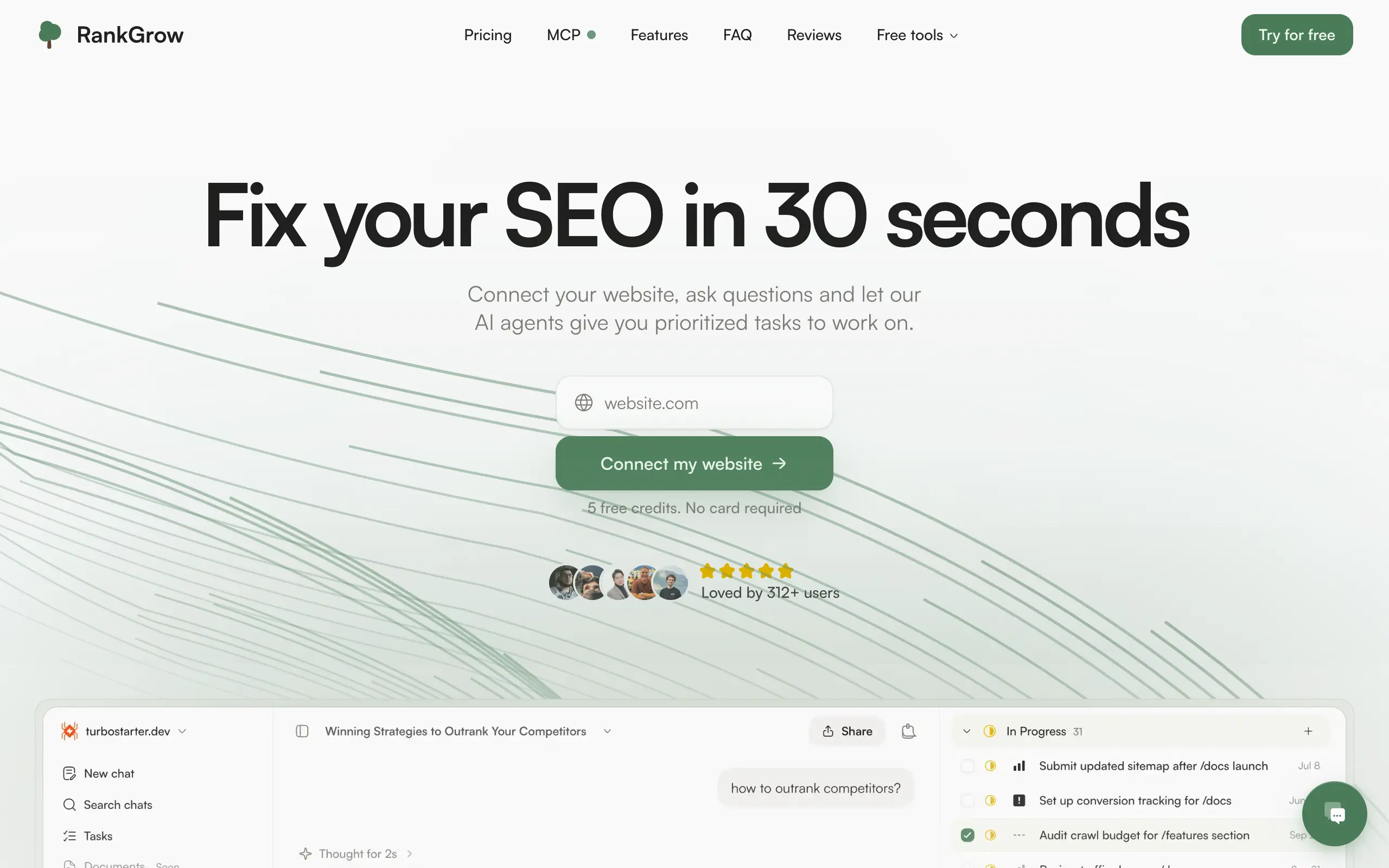
RankGrow
Fix your SEO with AI agents - connect Search Console, get prioritized tasks, and grow organic traffic 📈
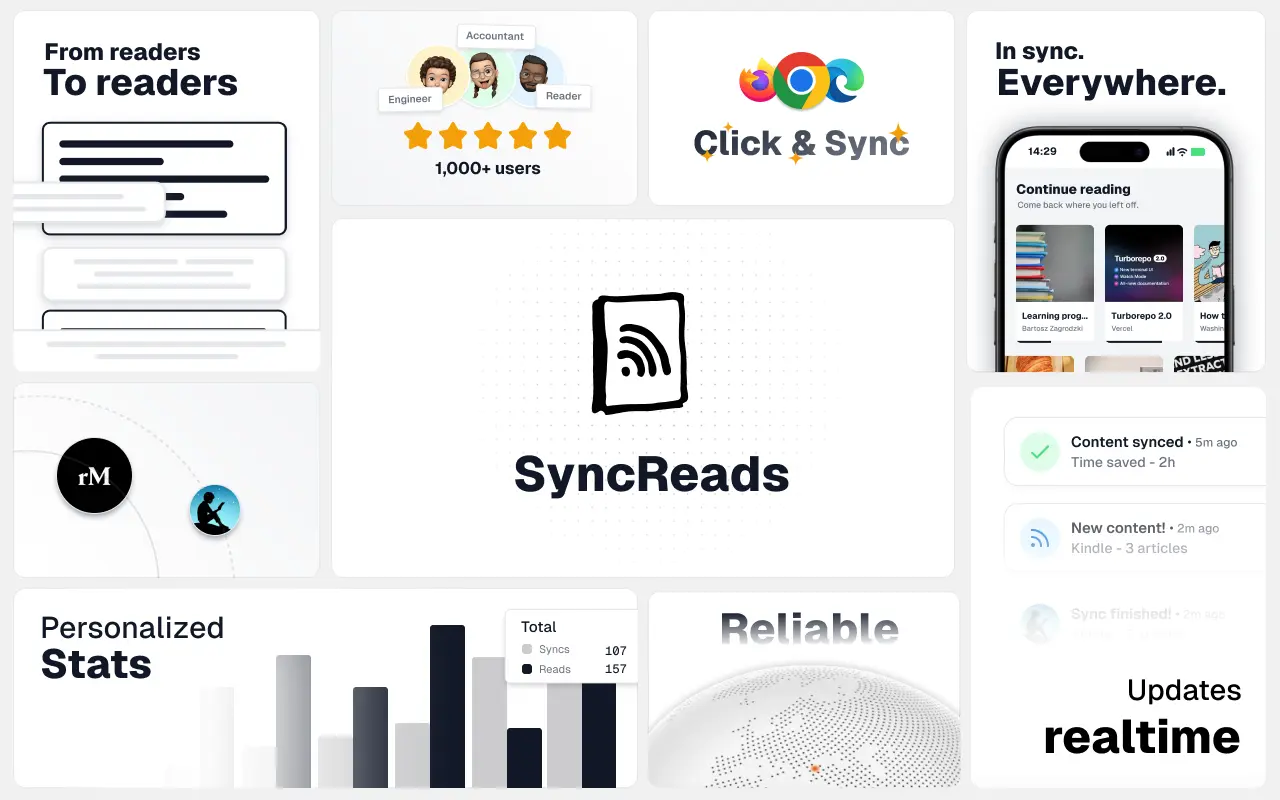
SyncReads
Sync your favorite content for distraction-free reading, save time and replace multiple apps. Anytime, anywhere 🔄
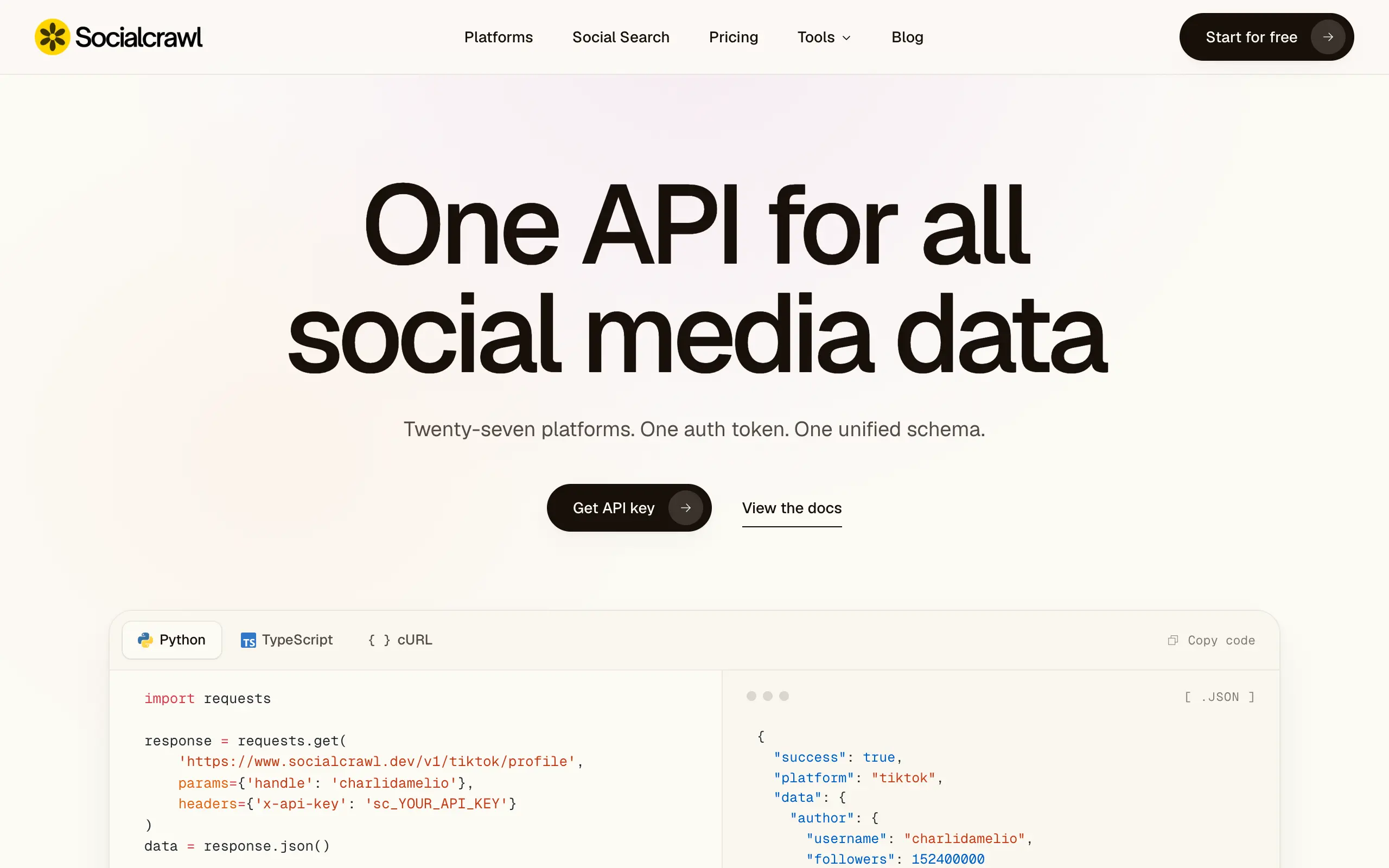
Socialcrawl
Get clean, structured data from 21 platforms like TikTok, Instagram, and YouTube with a single request 📊
Statiko
Monitor any Telegram channel in real time - track posts, edits, deletions, and growth with AI recaps 📡
Shibui
AI website builder - describe your business, pick a niche template, edit by chatting, and publish instantly ✨
Pro Service
Find verified home service professionals, compare quotes, and pay securely through escrow - built for Brazilians across the US 🏠
RankGrow
Fix your SEO with AI agents - connect Search Console, get prioritized tasks, and grow organic traffic 📈
SyncReads
Sync your favorite content for distraction-free reading, save time and replace multiple apps. Anytime, anywhere 🔄
Socialcrawl
Get clean, structured data from 21 platforms like TikTok, Instagram, and YouTube with a single request 📊
Statiko
Monitor any Telegram channel in real time - track posts, edits, deletions, and growth with AI recaps 📡
Shibui
AI website builder - describe your business, pick a niche template, edit by chatting, and publish instantly ✨
Pro Service
Find verified home service professionals, compare quotes, and pay securely through escrow - built for Brazilians across the US 🏠
RankGrow
Fix your SEO with AI agents - connect Search Console, get prioritized tasks, and grow organic traffic 📈
SyncReads
Sync your favorite content for distraction-free reading, save time and replace multiple apps. Anytime, anywhere 🔄
Socialcrawl
Get clean, structured data from 21 platforms like TikTok, Instagram, and YouTube with a single request 📊
Statiko
Monitor any Telegram channel in real time - track posts, edits, deletions, and growth with AI recaps 📡
Shibui
AI website builder - describe your business, pick a niche template, edit by chatting, and publish instantly ✨
Pro Service
Find verified home service professionals, compare quotes, and pay securely through escrow - built for Brazilians across the US 🏠
RankGrow
Fix your SEO with AI agents - connect Search Console, get prioritized tasks, and grow organic traffic 📈
SyncReads
Sync your favorite content for distraction-free reading, save time and replace multiple apps. Anytime, anywhere 🔄
Socialcrawl
Get clean, structured data from 21 platforms like TikTok, Instagram, and YouTube with a single request 📊
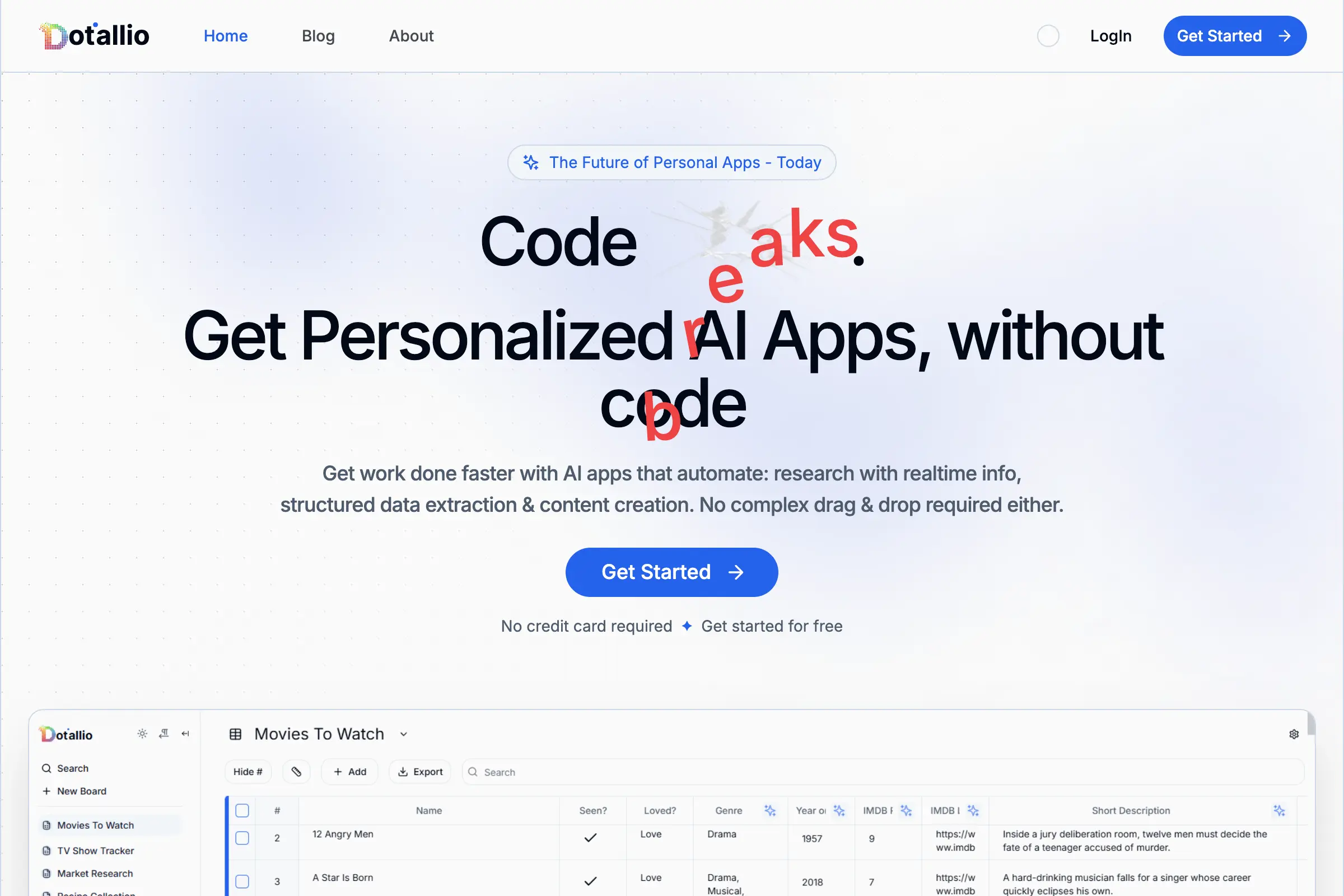
Dotallio
Personalized AI apps that automate research, data extraction, and content creation without code 🤖

Talk to Santa
Enjoy a magical live video chat or receive a unique AI-generated video greeting from Santa Claus 🎅

pozywka.pl
Scalable blog for food journalist, focused on performance and user experience 🌭
zagrodzki.me
Personal blog and portfolio of Bart Zagrodzki, where he shares his knowledge and work 💼
TurboStarter
Ship your startup everywhere. In minutes.
HTML to Markdown
Convert HTML to Markdown with ease, directly in your browser 📄
Dotallio
Personalized AI apps that automate research, data extraction, and content creation without code 🤖
Talk to Santa
Enjoy a magical live video chat or receive a unique AI-generated video greeting from Santa Claus 🎅
pozywka.pl
Scalable blog for food journalist, focused on performance and user experience 🌭
zagrodzki.me
Personal blog and portfolio of Bart Zagrodzki, where he shares his knowledge and work 💼
TurboStarter
Ship your startup everywhere. In minutes.
HTML to Markdown
Convert HTML to Markdown with ease, directly in your browser 📄
Dotallio
Personalized AI apps that automate research, data extraction, and content creation without code 🤖
Talk to Santa
Enjoy a magical live video chat or receive a unique AI-generated video greeting from Santa Claus 🎅
pozywka.pl
Scalable blog for food journalist, focused on performance and user experience 🌭
zagrodzki.me
Personal blog and portfolio of Bart Zagrodzki, where he shares his knowledge and work 💼
TurboStarter
Ship your startup everywhere. In minutes.
HTML to Markdown
Convert HTML to Markdown with ease, directly in your browser 📄
Dotallio
Personalized AI apps that automate research, data extraction, and content creation without code 🤖
Talk to Santa
Enjoy a magical live video chat or receive a unique AI-generated video greeting from Santa Claus 🎅
pozywka.pl
Scalable blog for food journalist, focused on performance and user experience 🌭
zagrodzki.me
Personal blog and portfolio of Bart Zagrodzki, where he shares his knowledge and work 💼
TurboStarter
Ship your startup everywhere. In minutes.
HTML to Markdown
Convert HTML to Markdown with ease, directly in your browser 📄
Omichat
Chat with 50+ AI models, including ChatGPT and Claude, in one place - switch models anytime without losing context 🤖
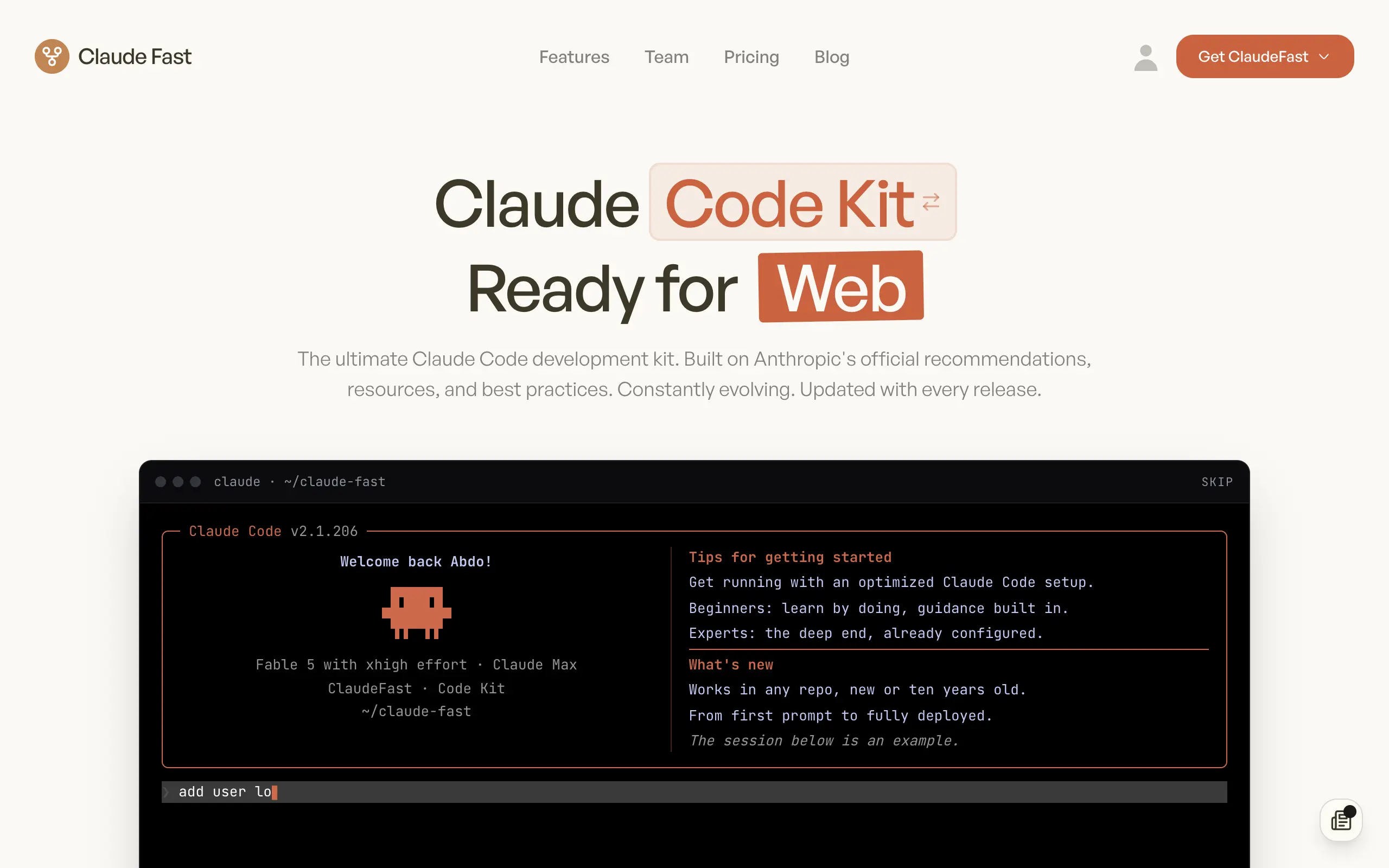
Claude Fast
Supercharge your Claude Code with 6x effective context window and specialized AI agents 🤖

EmojAI
AI-powered emoji picker with smart, context-aware suggestions 🤖
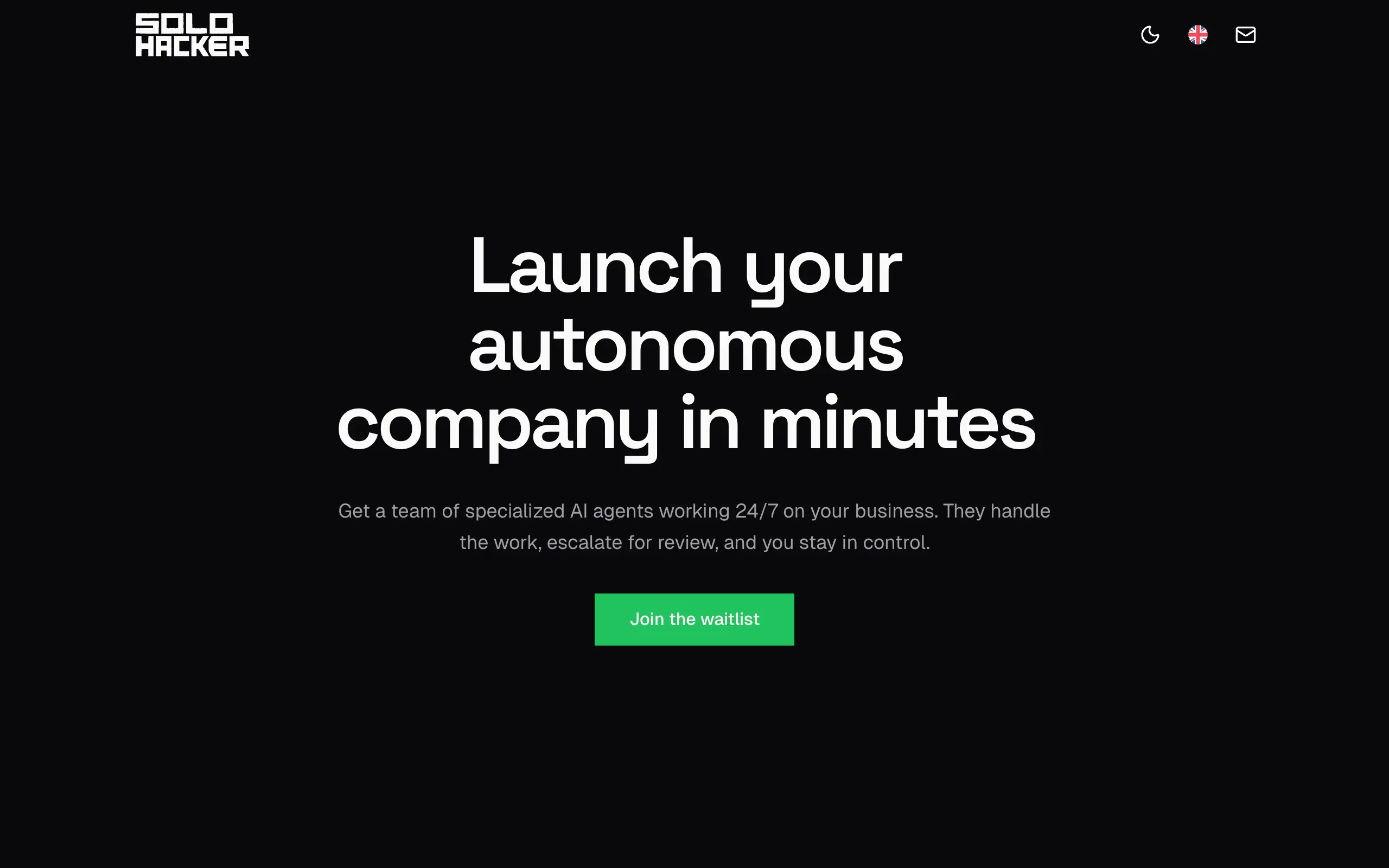
Solohacker
Autonomous company launcher - AI agents work 24/7, escalate what matters, and you stay in control 🤖

BeRawi: Storytelling Coach
Practice storytelling daily with instant feedback to sound clearer, more engaging, and confident 🎤
Omichat
Chat with 50+ AI models, including ChatGPT and Claude, in one place - switch models anytime without losing context 🤖
Claude Fast
Supercharge your Claude Code with 6x effective context window and specialized AI agents 🤖
EmojAI
AI-powered emoji picker with smart, context-aware suggestions 🤖
Solohacker
Autonomous company launcher - AI agents work 24/7, escalate what matters, and you stay in control 🤖
BeRawi: Storytelling Coach
Practice storytelling daily with instant feedback to sound clearer, more engaging, and confident 🎤
Omichat
Chat with 50+ AI models, including ChatGPT and Claude, in one place - switch models anytime without losing context 🤖
Claude Fast
Supercharge your Claude Code with 6x effective context window and specialized AI agents 🤖
EmojAI
AI-powered emoji picker with smart, context-aware suggestions 🤖
Solohacker
Autonomous company launcher - AI agents work 24/7, escalate what matters, and you stay in control 🤖
BeRawi: Storytelling Coach
Practice storytelling daily with instant feedback to sound clearer, more engaging, and confident 🎤
Omichat
Chat with 50+ AI models, including ChatGPT and Claude, in one place - switch models anytime without losing context 🤖
Claude Fast
Supercharge your Claude Code with 6x effective context window and specialized AI agents 🤖
EmojAI
AI-powered emoji picker with smart, context-aware suggestions 🤖
Solohacker
Autonomous company launcher - AI agents work 24/7, escalate what matters, and you stay in control 🤖
BeRawi: Storytelling Coach
Practice storytelling daily with instant feedback to sound clearer, more engaging, and confident 🎤

Connect with like-minded people
Join our community to get feedback, support, and grow together with 1,000+ builders on board, let's ship it!
Join usShip your startup everywhere. In minutes.
Don't burn tokens on setup and start building features on day one.