Quarterbell
Lets founders send one investor update to their angels and funds. Replies and questions land in one thread, not scattered inboxes.
Quarterbell is an investor update tool that lets a founder write one update, send it to every angel and fund on the cap table, and keep all replies and questions in a single shared thread. It has potential in 2026 because early-stage founders now report to larger, more fragmented investor groups (angels, syndicates, small funds, scouts), and the email-and-spreadsheet workflow breaks down once you pass roughly 15 recipients. If you are scanning b2b application SaaS ideas for 2026, this is a narrow, painful, recurring workflow with a clear buyer.
Key takeaways
- Target customer: seed and pre-seed founders with 10 to 60 investors who send monthly or quarterly updates.
- Pricing angle: a flat monthly plan per company, for example $19 to $49, with an optional higher tier for funds and accelerators.
- Biggest risk: founders see updates as a free, ten-minute email task, so the tool must clearly save time or improve investor responses.
- Time to MVP: about 3 to 4 weeks for one developer using a starter kit, since the core is composing, sending and threading replies.
What problem does an investor update tool solve?
Founders know they should send regular investor updates, but the process is irritating enough that many skip it or send them late. The work is not writing, it is the logistics: maintaining a recipient list, pasting metrics, handling replies that arrive in different inboxes, and remembering who asked what.
The result is a pile of one-to-one email threads. An angel asks about runway, a fund asks about hiring, and a third investor replies with an intro. The founder answers each separately, often repeating the same answer, and loses track of the intros.
Who is Quarterbell for?
The ideal customer is a seed or pre-seed founder, usually the CEO, with 10 to 60 people on the cap table who owe them periodic updates. Typically the company has no investor relations hire, so the founder does everything.
Their current workaround
Most founders use some mix of these:
- A Google Doc or Notion page copied into Gmail, with investors in BCC.
- A mailing tool such as Mailchimp, which was built for marketing and not for private, two-way conversations.
- A spreadsheet of investors, last contact dates and open asks.
- Their own memory for who asked for an intro.
Why the workaround fails
BCC blasts feel impersonal and replies scatter. Marketing tools track opens but not conversations, and they add unsubscribe footers that look wrong on a private note. Spreadsheets go stale the week after you build them.
Worse, the founder cannot easily see which investors engage. Knowing that a specific angel opens every update and has twice offered an intro is exactly the kind of signal worth keeping.
Secondary customers
Accelerators and small funds that want portfolio updates in a consistent format are a likely second segment. Treat them as an expansion path, not the launch audience, because their buying process is slower.
Is there room in the market for investor update software?
There is room, but not because nobody has tried. Dedicated investor update and investor relations tools already exist, and general newsletter tools such as Substack, Mailchimp and Beehiiv can be bent into the job. Cap table platforms like Carta also cover parts of investor communication.
The gap is the conversation layer. Most tools treat an update as a broadcast. Few treat the replies as a shared workspace where the founder sees every question, answers once, and decides what stays private.
Why now
- More investors per company: rolling funds, syndicates and angel networks mean cap tables are wider than they used to be.
- Founders run lean: with small teams and AI-assisted writing, the draft is cheap, but coordination is still manual.
- AI makes drafting and summarizing practical: pulling metrics into a draft and summarizing a reply thread are now achievable for a small team.
- Investors expect consistency: a regular, structured update has become a signal of founder quality.
The honest caveat is that this is a small category with a ceiling. You are building a focused, profitable tool, not a venture-scale platform, unless you expand into fundraising workflows later.
What should the MVP include?
Build the shortest path from "blank page" to "update sent and questions answered." The aha moment is the first time a founder sees five investors' replies in one thread and answers a shared question once.
Update composer
A structured template with sections for metrics, wins, challenges and asks, so a founder can write an update in minutes.
Investor list and groups
Import investors by CSV or email and group them, for example angels, funds and advisors, so one send reaches the right people.
Shared reply thread
Replies by email or in-app land in one thread per update, with the option to answer everyone or one person privately.
Engagement view
A simple log of who opened, who replied and who offered intros, so the founder knows where to follow up.
What to cut from version one
- Dashboards connected to Stripe or accounting tools: manual metric entry is fine at first.
- Investor accounts and portals: let investors reply by email and read via a link. Logins add friction.
- Fundraising CRM features: these are a different product with a different buyer.
- Native mobile apps: a responsive web app is enough.
How is Quarterbell different from email and newsletter tools?
The pitch is simple: one update out, one conversation back. Quarterbell is built around the private, two-way nature of investor communication, not marketing reach.
| Option | Built for private investor updates | Replies in one thread | Investor-level engagement | Effort per update |
|---|---|---|---|---|
| Quarterbell | ✅ | ✅ | ✅ | Low |
| Gmail with BCC | ❌ | ❌ | ❌ | Medium |
| Newsletter tools | ❌ | ❌ | Opens only | Medium |
| Spreadsheet plus docs | ❌ | ❌ | Manual | High |
| Cap table platforms | Partial | ❌ | Varies | Medium |
The comparison is directional, since features in incumbent products change often. Check current plans before positioning against a specific competitor.
A second angle is privacy and tone. Updates should look like a personal note from the founder, with no marketing footer and no tracking that feels invasive. That is a real product decision, not a copy tweak.
How would Quarterbell make money?
Charge the founder, not the investor, and keep pricing simple.
Option 1: flat monthly plan per company
A plan around $19 to $49 per month works because the buyer is a founder spending company money with no procurement. If you charge $29 per month and convert 3% of free trial users, you need roughly 35 paying customers per $1,000 of monthly revenue. Those are assumptions, so measure your own conversion.
Option 2: tiered by investor count
Free or cheap for up to roughly 10 investors, more as the list grows. This matches value to usage, but it can punish the exact founders who have the most investors and the most pain. Use it only if you see churn from tiny accounts.
Option 3: accelerator and fund plans
A higher-priced plan for programs that want standardized updates from many portfolio companies. Sales cycles are longer, so treat it as a later bet.
First growth channel
The most likely early channel is founder communities and direct outreach: startup Slack groups, accelerator alumni networks and founders' own investors. Every update sent introduces Quarterbell to 10 to 60 investors, many of whom are founders or angels themselves. A subtle "sent with Quarterbell" link, with an option to remove it on paid plans, is a natural loop.
How do you validate this before building?
Spend one to two weeks proving that founders feel the pain and will pay to remove it.
Interview 10 to 15 founders
Ask them to walk through their last investor update, from drafting to the final reply. Note how many investors they have, how long it took and what they dropped.
Interview 3 to 5 investors
Ask what makes an update useful and how they prefer to respond. If investors hate new links or logins, your reply-by-email design matters even more.
Publish a landing page
State one promise, such as "Send one update, get one thread," and add a waitlist form. Share it in founder communities and measure signups against visits.
Run a manual concierge test
Offer to run two or three founders' next update by hand, using a shared inbox and a spreadsheet. If they ask to do it again, the workflow has value.
Ask for a pre-sale
Offer a discounted annual plan or a founding-customer price. Even five to ten real payments say more than a long waitlist.
What tech stack should you use to build it?
Pick boring, well-supported technology so you spend your time on the reply-threading logic. A TypeScript web app with a Postgres database, transactional email and inbound email parsing covers nearly everything.
Where a starter kit saves time
Authentication, billing, emails, storage and a team model are needed but do not differentiate Quarterbell. TurboStarter ships these in a monorepo, so you can start on the composer and thread logic in the first week. Concretely, you get authentication for founder accounts, billing for subscriptions, emails for sending updates and notifications, and AI integration for drafting and summarizing.
It also includes organizations and teams, file storage, background tasks, an admin panel and analytics, which help when a co-founder or chief of staff needs access to the same workspace.
Choosing your inbound email approach
Threading replies is the hardest technical piece. Each update needs a unique reply address so inbound messages can be matched to the right thread.
Use a transactional email service that supports inbound parsing, with a reply-to address per update and recipient. Investors reply from their normal inbox, which keeps adoption friction near zero. The trade-off is handling quoted text, signatures and forwarded messages cleanly.
Each email contains a link to a hosted thread page where investors respond. It is simpler to build and gives you structured data, but many investors will not click through. Use it as a fallback, not as the primary path.
A minimal data model
create table updates (
  id uuid primary key,
  company_id uuid not null,
  subject text not null,
  body text not null,
  sent_at timestamptz
);

create table recipients (
  id uuid primary key,
  company_id uuid not null,
  email text not null,
  name text,
  group_name text
);

create table messages (
  id uuid primary key,
  update_id uuid not null references updates(id),
  recipient_id uuid references recipients(id),
  direction text not null, -- 'inbound' or 'outbound'
  visibility text not null, -- 'all' or 'private'
  body text not null,
  created_at timestamptz default now()
);
The visibility column is the key design choice. It lets a founder answer one investor privately or reply to the whole group.
Choosing an AI provider
A hosted model API is the fastest way to draft updates and summarize threads. Costs are small at this volume, and quality is high. The trade-off is sending sensitive company data to a third party, so state that clearly in your policy.
Running your own model keeps data in your infrastructure, which may matter to privacy-conscious founders. It adds operational work and usually lower quality. Consider it only if early customers explicitly ask for it.
What could make Quarterbell fail?
Biggest risk: founders may not feel enough pain to pay
An investor update is a task many founders do once a month in under an hour with free tools. If Quarterbell does not clearly cut that time or visibly improve investor response, it becomes a nice-to-have that gets cancelled after a few months. Test willingness to pay in your pre-sale step before writing much code.
Email deliverability and reply parsing
Updates that land in spam, or replies that thread incorrectly, destroy trust fast. Set up proper domain authentication, test with real investor inboxes, and keep a fallback where the founder can see raw messages.
Sensitive data and trust
Updates contain revenue, runway and cap table details. Founders will ask where data lives and who can see it. Use clear access controls, publish a plain-language security page, and avoid unnecessary tracking.
Churn from irregular usage
A monthly or quarterly workflow means low engagement between sends. Reduce churn with reminders, draft prefill from the last update and annual plans, and consider whether the product stays useful during fundraising.
Incumbents adding the feature
Cap table and finance platforms could add threaded updates. Your defense is a sharper, simpler product, strong founder community presence and speed on details like reply handling.
What should you do in the first 30 days?
Week 1: interviews and landing page
Complete the founder and investor interviews and publish the waitlist page with one clear promise.
Week 2: concierge test and pre-sales
Run manual updates for a few founders and ask for founding-customer payments.
Week 3: build the core flow
Start from TurboStarter so authentication and billing are done, then build the composer, recipient groups and sending.
Week 4: threading and launch to early users
Add inbound reply handling and the shared thread view, then onboard your pre-sale customers and watch them send a real update.
If the pre-sale numbers are encouraging, start building. The fastest route is to clone a starter kit, wire up inbound email and put the first update in front of real investors.
FAQ
Interview founders about their last update, run a manual concierge version for a few of them and ask for a pre-sale. Payment, even at a discount, is a much stronger signal than waitlist signups.
A flat plan in the $19 to $49 per month range is a reasonable starting assumption for seed-stage founders. Test two price points during pre-sales and watch which converts, since willingness to pay varies by founder.
Dedicated investor update tools, newsletter platforms like Substack and Mailchimp, plain Gmail and cap table platforms such as Carta all overlap in part. Your edge is the shared reply thread and a private, personal feel.
A TypeScript web app, Postgres, a transactional email provider with inbound parsing and a hosted AI API for drafting is enough. A starter kit like TurboStarter covers authentication, billing, emails and teams so you can focus on threading.
Assuming one experienced developer and a starter kit, about 3 to 4 weeks for composer, recipient groups, sending and threaded replies. Inbound email edge cases usually take longer than expected, so budget extra time for them.
More 🏢 B2B Application SaaS ideas
Discover more innovative b2b application SaaS ideas that are trending in 2026. Each idea is AI-generated with market validation and growth potential to help you find your next profitable venture faster than competitors.
Your competitors are building with TurboStarter
Below are some of the SaaS ideas that have been generated and built with our starter kit.

Monitor any Telegram channel in real time - track posts, edits, deletions, and growth with AI recaps 📡

AI website builder - describe your business, pick a niche template, edit by chatting, and publish instantly ✨

Find verified home service professionals, compare quotes, and pay securely through escrow - built for Brazilians across the US 🏠
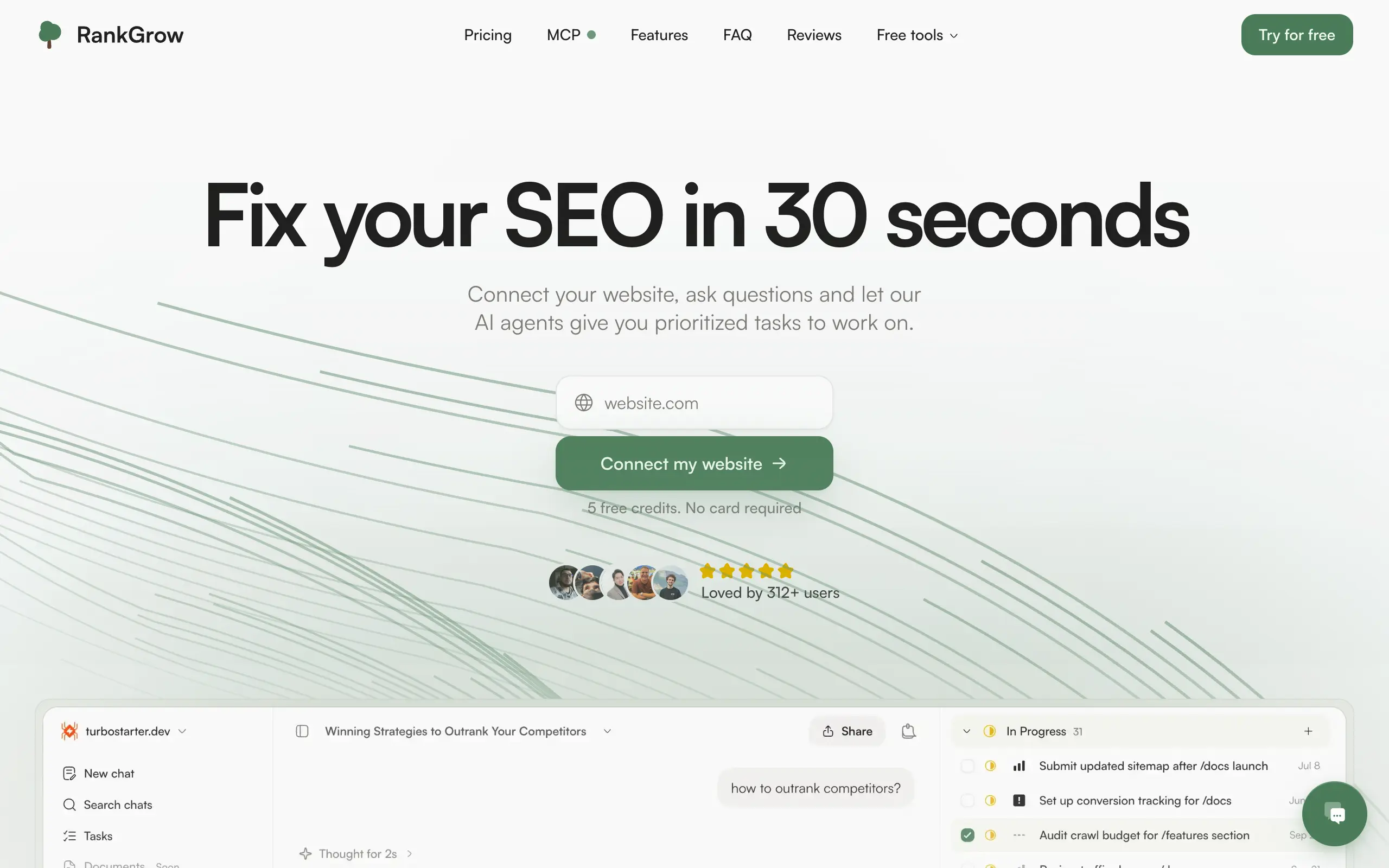
Fix your SEO with AI agents - connect Search Console, get prioritized tasks, and grow organic traffic 📈

Sync your favorite content for distraction-free reading, save time and replace multiple apps. Anytime, anywhere 🔄

Get clean, structured data from 21 platforms like TikTok, Instagram, and YouTube with a single request 📊
Monitor any Telegram channel in real time - track posts, edits, deletions, and growth with AI recaps 📡
AI website builder - describe your business, pick a niche template, edit by chatting, and publish instantly ✨
Find verified home service professionals, compare quotes, and pay securely through escrow - built for Brazilians across the US 🏠
Fix your SEO with AI agents - connect Search Console, get prioritized tasks, and grow organic traffic 📈
Sync your favorite content for distraction-free reading, save time and replace multiple apps. Anytime, anywhere 🔄
Get clean, structured data from 21 platforms like TikTok, Instagram, and YouTube with a single request 📊

Personalized AI apps that automate research, data extraction, and content creation without code 🤖

Enjoy a magical live video chat or receive a unique AI-generated video greeting from Santa Claus 🎅

Scalable blog for food journalist, focused on performance and user experience 🌭

Personal blog and portfolio of Bart Zagrodzki, where he shares his knowledge and work 💼

Ship your startup everywhere. In minutes.

Convert HTML to Markdown with ease, directly in your browser 📄
Personalized AI apps that automate research, data extraction, and content creation without code 🤖
Enjoy a magical live video chat or receive a unique AI-generated video greeting from Santa Claus 🎅
Scalable blog for food journalist, focused on performance and user experience 🌭
Personal blog and portfolio of Bart Zagrodzki, where he shares his knowledge and work 💼
Ship your startup everywhere. In minutes.
Convert HTML to Markdown with ease, directly in your browser 📄

Chat with 50+ AI models, including ChatGPT and Claude, in one place - switch models anytime without losing context 🤖

Supercharge your Claude Code with 6x effective context window and specialized AI agents 🤖

AI-powered emoji picker with smart, context-aware suggestions 🤖

Autonomous company launcher - AI agents work 24/7, escalate what matters, and you stay in control 🤖

Practice storytelling daily with instant feedback to sound clearer, more engaging, and confident 🎤
Chat with 50+ AI models, including ChatGPT and Claude, in one place - switch models anytime without losing context 🤖
Supercharge your Claude Code with 6x effective context window and specialized AI agents 🤖
AI-powered emoji picker with smart, context-aware suggestions 🤖
Autonomous company launcher - AI agents work 24/7, escalate what matters, and you stay in control 🤖
Practice storytelling daily with instant feedback to sound clearer, more engaging, and confident 🎤

Connect with like-minded people
Join our community to get feedback, support, and grow together with 1,000+ builders on board, let's ship it!
Join usShip your startup everywhere. In minutes.
Don't burn tokens on setup and start building features on day one.