QueueSentry
Monitor Odoo scheduled actions, background jobs, and integration queues across client databases. Alert consultants before silent failures disrupt orders or accounting.
What QueueSentry is and why it matters
QueueSentry is a proposed Odoo queue monitoring and alerting platform for consultants and service providers managing multiple client databases. It monitors scheduled actions, background jobs, and integration queues, then alerts the responsible team when work fails, stalls, or falls behind.
The problem is operationally important because many Odoo processes run without a person watching them. A scheduled action may stop running, an integration may begin returning errors, or a queue may accumulate work faster than it can process it. The result can be delayed orders, stale inventory, incomplete accounting workflows, and hours spent investigating problems only after a customer reports them.
QueueSentry’s central promise is simple: help Odoo service teams detect silent failures before they become business incidents.
That promise is more specific than general application monitoring. Rather than asking a consultant to interpret infrastructure metrics, QueueSentry should focus on operational signals that matter in Odoo:
- Did an expected scheduled action run?
- Is a background job repeatedly failing?
- Is a queue growing faster than it is being processed?
- Which client database is affected?
- What changed, and what should the consultant investigate next?
The opportunity is not merely to display job status. It is to make monitoring practical across many Odoo environments, where consultants need a dependable way to see what is healthy, what is at risk, and where to act first.
The Odoo queue monitoring opportunity
Odoo deployments often rely on automated work to keep business processes moving. Scheduled actions can perform recurring tasks, while background jobs and integrations handle work that may take longer or depend on external services. These processes are useful precisely because they happen outside a user’s immediate view. But that also makes failures easy to miss.
A failed task can be obvious when a user encounters an error in the interface. A task that quietly stops running is different. If nobody checks logs or notices the downstream symptoms, a process can remain broken until it affects an order, a financial close, or a customer interaction.
This creates a distinct monitoring need for Odoo-focused consultancies:
- One consultant may oversee many databases. Manual checks become increasingly difficult as the client portfolio grows.
- Operational symptoms may surface late. A failed integration might not become visible until data is missing elsewhere.
- Each client environment can differ. Odoo versions, installed modules, customizations, hosting arrangements, and business processes affect what “healthy” means.
- Existing monitoring may be too broad. Infrastructure monitoring can report that a server is up without explaining that a particular business-critical job has stopped completing.
- Investigation takes time. Consultants need enough context to identify the affected database, task, time window, and likely next step.
QueueSentry can address the gap between generic infrastructure alerts and hands-on Odoo troubleshooting. It should not try to replace logs, hosting dashboards, or the consultant’s expertise. Instead, it can provide an operational overview that helps those tools and people focus on the right issue sooner.
For Odoo-specific details, product and integration decisions should be checked against the relevant Odoo documentation. Compatibility should be verified for each supported Odoo version and deployment model rather than assumed from a single test environment.
Who QueueSentry should serve
QueueSentry is best suited to teams that manage several Odoo environments and need to identify important failures without repeatedly logging into each database.
Odoo implementation partners and consultancies
This is the strongest initial audience. A partner may be responsible for monitoring a portfolio of client systems while also handling support, upgrades, custom development, and new implementations.
QueueSentry could help these teams:
- View operational health across client databases from one place.
- Route alerts to the consultant or support team responsible for an account.
- Identify recurring failures before they generate support tickets.
- Create a consistent monitoring process across different client environments.
- Provide evidence of monitoring activity during service reviews.
For this audience, the value is not just fewer missed failures. It is also a more repeatable support operation. A standardized alerting workflow can reduce dependence on one consultant remembering to check a particular database.
Managed Odoo service providers
Providers responsible for hosting or maintaining Odoo environments may need to distinguish application-level failures from server-level incidents. QueueSentry can complement their existing infrastructure monitoring by reporting on the work Odoo is expected to perform.
This segment may value:
- Portfolio-wide health summaries.
- Escalation policies tied to support agreements.
- Alert history for incident review.
- Customer-facing reports, where appropriate.
- Integrations with existing ticketing and communication tools.
Internal Odoo administrators
An organization that operates its own Odoo instance may also benefit, especially when the system supports important operational workflows. These buyers may have fewer databases than a consultancy but a greater need to understand business impact.
For them, QueueSentry should make it easy to identify which process is affected and who owns it. An alert that says “job failed” is less useful than one that also identifies the affected workflow, recurrence pattern, and relevant task details.
Odoo developers and technical support teams
Developers and support engineers often need to investigate recurring errors, unusual execution times, or queue backlogs. QueueSentry can help them move from detection to diagnosis by preserving useful metadata and linking alerts to the right database and job.
However, the product should avoid presenting itself as a debugging replacement. Its role is to make the problem visible and reduce the time required to find the relevant evidence.
The market gap and product positioning
A useful position for QueueSentry is Odoo operations monitoring for teams responsible for multiple client databases. That positioning is narrower and more credible than claiming to monitor every aspect of an ERP deployment.
The product can occupy space between three common approaches:
- Manual checking, which can work for a small number of systems but becomes hard to scale consistently.
- General-purpose monitoring, which may provide host and service metrics without sufficient Odoo workflow context.
- Custom scripts and dashboards, which can be tailored to a particular provider but require ongoing maintenance and ownership.
The market gap is not necessarily an absence of monitoring tools. It is the potential lack of a focused, easy-to-operate view that combines Odoo job health with multi-client workflows. QueueSentry should validate whether its target customers currently solve this with scripts, platform dashboards, log searches, support procedures, or a combination of tools.
A strong discovery process should ask prospects:
- How do you currently learn that a scheduled action has stopped running?
- Which failures have caused the most operational disruption?
- How many client databases does your team support?
- What monitoring tools are already in use?
- Which Odoo versions and hosting arrangements are common in your portfolio?
- Who should receive an alert, and what response time is expected?
- What information is safe and appropriate to send outside a client database?
- What would make your team trust an alert enough to act on it?
These questions help distinguish a real, recurring pain from a feature request that sounds attractive but does not change buying behavior.
Core QueueSentry features
The first version should focus on dependable detection, useful context, and safe multi-tenant operations. A long feature list is less valuable than accurate alerts that consultants can act on.
Portfolio dashboard
The dashboard should give teams a fast answer to three questions:
- Which client databases are healthy?
- Which ones need attention?
- What is the most urgent issue?
A practical overview could include database status, recent failures, overdue scheduled actions, queue growth, and alert severity. Users should be able to filter by client, environment, owner, issue type, and status.
Avoid making every warning equally prominent. A warning about a low-priority task should not visually compete with a backlog that is delaying customer orders.
Scheduled action monitoring
QueueSentry should track whether expected scheduled actions run within their normal or configured time windows. It should detect signals such as:
- A scheduled action that has not run when expected.
- A task that begins failing repeatedly.
- A material change in execution frequency or duration.
- A job that completes but produces an unusual result, if that result can be measured safely.
- A task that is disabled or otherwise no longer following its expected schedule.
Scheduling expectations may vary by client and workload. QueueSentry should allow configurable rules rather than assuming that every task should run at the same cadence.
Background job and queue health
A queue can be technically active while still creating operational risk. QueueSentry should monitor both job outcomes and flow over time.
Useful indicators may include:
- Pending, completed, and failed job counts.
- Oldest pending job age.
- Retry frequency.
- Queue depth over time.
- Processing rate compared with arrival rate.
- Job duration changes.
The product should explain what these values mean. For example, a queue growing for several hours may matter more than a short-lived spike during a known busy period. Thresholds should be configurable, and alerting should account for expected workload patterns.
Integration monitoring
External integrations are a common source of asynchronous failures. QueueSentry can help detect recurring errors, stalled synchronization, and unusual delays without pretending to know the full business meaning of every payload.
The product should prioritize metadata that supports investigation while minimizing sensitive data. It may be enough to report the integration name, error category, timestamp, retry count, and affected database. Full request and response bodies should not be collected by default.
Alert routing and escalation
An alert is useful only if the right person receives it at the right time. QueueSentry should support routing by client, database, environment, severity, and ownership.
A mature workflow can include:
- Email or in-product notifications.
- Optional connections to team communication or ticketing systems.
- Deduplication for repeated alerts.
- Escalation when an issue remains unresolved.
- Acknowledgment and resolution states.
- Quiet hours or alert policies for lower-severity events.
The product should avoid generating a notification for every retry. Alert fatigue reduces trust, so rate limits, grouping, and clear severity rules are essential.
Incident history and reporting
A searchable history helps consultants understand whether an incident is new, recurring, or already under investigation. Each alert should preserve its timeline, affected environment, detection rule, and status changes.
Reporting can also support customer conversations. A partner may want to show that monitoring detected a problem, when it was addressed, and whether the issue has recurred. Reports should be factual and avoid claiming that monitoring guarantees uninterrupted operations.
Multi-tenant access control
Because QueueSentry serves teams with multiple client databases, access control is a core feature rather than an administrative extra. Users should see only the clients and environments assigned to them. Administrative users may need portfolio-wide access, while client users may require a restricted view.
Useful controls include role-based permissions, organization membership, audit records for sensitive actions, and clear separation of customer data.
What makes QueueSentry different
QueueSentry’s potential competitive advantage is not simply “alerts for Odoo.” It is the combination of Odoo-specific operational signals, multi-client visibility, and consultant-friendly response workflows.
Built around the service-provider workflow
A general monitoring tool often centers on a single organization’s infrastructure. QueueSentry can center on a partner’s portfolio: client accounts, database ownership, responsible consultants, severity policies, and recurring service reviews.
That distinction can influence the product’s information architecture. The top-level view should help a consultant prioritize across clients, while a database-level view should support technical investigation.
Business-aware alerting
An alert that names a failed process is more actionable when it connects the event to a meaningful operational context. QueueSentry can let teams tag jobs or scheduled actions with business importance, expected cadence, and ownership.
For example, a team could treat a report-generation task differently from an order synchronization process. This avoids relying on a single generic severity model.
Low-friction onboarding
The product’s value depends on reliable data collection. Setup should be documented, reversible, and transparent about permissions and data transmitted. A consultant should be able to understand what QueueSentry monitors before enabling it for a client.
The onboarding experience can become a differentiator if it helps a team connect an environment, confirm monitoring is working, and assign ownership without a lengthy professional-services engagement.
Trust through restraint
A monitoring product becomes more credible when it explains uncertainty. QueueSentry should distinguish between a confirmed failure, an unusual pattern, and a possible warning. It should show why an alert fired and which rule triggered it.
This approach is more trustworthy than presenting every anomaly as an emergency.
Recommended technical stack
The technology choices should support secure tenant isolation, reliable event processing, and a straightforward path from an MVP to a larger monitoring service. The exact stack should depend on the team’s existing expertise and hosting constraints.
Product interface
A web application built with React can support a responsive portfolio dashboard, database detail pages, alert history, and configuration workflows. Tailwind CSS is an option for building a consistent interface quickly, particularly when the team has a clear design system and wants to avoid maintaining a large collection of custom styles.
The interface should be optimized for scanning, not visual complexity. Consultants need to spot the highest-priority issue quickly and drill into detail when needed.
Application and API
A typed application layer can provide authenticated APIs for organizations, connected databases, monitoring policies, alerts, and audit events. TypeScript may be a suitable choice for teams that want shared types between front-end and back-end services. Another language may be preferable if the team already has strong experience with it or requires specific ecosystem capabilities.
Keep the monitoring collector and the customer-facing application logically separated. The collector needs to receive and validate events reliably; the application needs to manage accounts, policies, access control, and presentation.
Database and event processing
A relational database such as PostgreSQL can store tenants, users, database connections, monitoring rules, alert state, and audit metadata. Time-series or event data may eventually need separate storage or partitioning, but an MVP should avoid adding infrastructure before usage justifies it.
An asynchronous queue can help process incoming events, evaluate alert rules, send notifications, and retry transient failures. The system should make event processing idempotent so that a repeated event does not create duplicate incidents.
Odoo-side collection
The collection method is one of the most consequential technical decisions. Options may include an Odoo module, a controlled API integration, or a combination of approaches. Each has trade-offs:
- An Odoo module can access application-level context, but it must be maintained across supported versions and installed safely.
- An API-based connector may be easier to manage centrally, but available data and permissions can vary by deployment.
- A hybrid approach can provide richer monitoring where a module is installed while still supporting a more limited integration path.
Do not collect more information than the product needs. Use secure transport, scoped credentials, documented permissions, and a clear process for revoking access. Validate compatibility with real customer configurations before promising broad support.
Hosting and observability
QueueSentry itself must be observable. If the monitoring platform stops processing events, it cannot reliably tell customers that their Odoo jobs are failing. The service should monitor its own event ingestion, processing lag, notification delivery, and connector health.
Operational safeguards should include:
- Encrypted network connections.
- Secure secret storage and credential rotation.
- Backups with tested restoration procedures.
- Rate limits and abuse protection.
- Audit logging for administrative actions.
- Alerts for delayed or failed event processing.
- A documented incident response process.
For a fast-moving team, TurboStarter can provide a starting point for common SaaS foundations. It may reduce time spent assembling standard application scaffolding, but it does not replace product-specific work such as secure Odoo connectivity, alert evaluation, tenant isolation, or operational testing.
Monetization strategy
QueueSentry should price around the value and cost drivers customers understand. Possible pricing dimensions include the number of monitored databases, monitoring depth, user seats, retention period, or included alert integrations.
Tiered subscription plans
A tiered model can make the product accessible to smaller partners while supporting more complex service providers.
- Starter for a small number of environments and basic alerting.
- Team for more databases, multiple users, routing rules, and longer history.
- Business for advanced access controls, audit features, reporting, and priority support.
The tiers should differ in operational value, not just in arbitrary limits. For instance, richer escalation policies or customer reporting may be more compelling than a minor increase in stored events.
Usage-based pricing
Pricing per monitored database can map naturally to a consultancy’s portfolio size. It also scales as the customer adds clients. The risk is that database counts can be ambiguous when customers have development, staging, and production environments.
A clear policy should specify what counts as a monitored environment and whether non-production databases receive the same monitoring features.
Partner or reseller plans
An Odoo consultancy may want to include monitoring in a managed service package. Partner-oriented pricing can support that model, particularly if QueueSentry enables branded reports, consolidated administration, or customer-level access controls.
Reseller terms should be designed carefully. Partners need enough margin and control to package the service, while QueueSentry must retain a direct support and security relationship with the organizations using the platform.
Paid onboarding and support
Some customers may need help defining critical tasks, setting sensible thresholds, or connecting a complex deployment. Optional onboarding can generate revenue while helping customers achieve value sooner. It should complement self-service setup rather than making the product dependent on consulting work.
Before setting final prices, interview prospective buyers about their current monitoring costs, support workflows, and purchasing authority. Avoid basing pricing solely on engineering cost.
Risks and mitigation
A monitoring product is judged by its reliability and the quality of its alerts. Several risks deserve attention from the beginning.
False positives and alert fatigue
If normal workload variation generates too many warnings, users may mute notifications or stop trusting them.
Mitigation: Provide configurable thresholds, deduplication, severity levels, maintenance windows, and clear explanations for alert triggers. Test rules against real customer activity before making them defaults.
Missed failures
A collector may fail, lose connectivity, or stop reporting. Without a heartbeat, a silent collector failure could resemble a healthy environment.
Mitigation: Monitor the monitoring connection itself. Show the last successful check-in, alert when a connection becomes stale, and make the difference between “healthy” and “not currently reporting” unmistakable.
Odoo version and customization differences
Customer environments may differ in Odoo version, installed modules, custom code, and hosting setup. A connector that works in one deployment may not behave identically elsewhere.
Mitigation: Define a supported compatibility matrix, test across representative configurations, and communicate limitations plainly. Roll out connector changes gradually and provide a safe disable or rollback path.
Sensitive data exposure
Job details and integration errors may contain customer or personal information. Sending raw payloads to a monitoring service could create unnecessary privacy and security risk.
Mitigation: Minimize data collection, redact sensitive fields, avoid storing full payloads by default, document retention, and give customers control over what metadata is transmitted. Have qualified security and legal professionals review the product’s data practices for the markets it serves.
Tenant isolation failures
A cross-client dashboard is valuable only if one customer cannot access another customer’s data.
Mitigation: Enforce authorization server-side, test organization boundaries, log privileged actions, and include tenant-isolation testing in the release process. Never rely on interface filtering alone.
Unclear operational responsibility
An alert can reveal a problem without making clear who is expected to fix it. That can create confusion between a consultancy, an internal administrator, and a hosting provider.
Mitigation: Support ownership assignment, escalation policies, and explicit status tracking. Let customers define response responsibilities instead of assuming QueueSentry owns remediation.
Overpromising prevention
Monitoring can improve detection, but it cannot guarantee that failures will never disrupt business operations.
Mitigation: Describe the product as helping teams detect and investigate issues sooner. Be precise about what is measured, what is inferred, and what remains outside the platform’s visibility.
How to validate the idea before building too much
The first goal should be to validate the workflow and willingness to pay, not to build a complete monitoring platform.
Start with structured interviews across a few audience types: Odoo partners, managed service providers, and internal administrators. Ask for examples of recent failures rather than hypothetical interest. A prospect who can describe a costly incident, the steps taken to detect it, and the current workaround is offering stronger evidence than someone who simply says the idea sounds useful.
Next, map the operational workflow:
- How does the team know a job is expected to run?
- What signal indicates that it failed or became delayed?
- Where does the person investigate?
- Who owns remediation?
- How is the customer informed?
- What evidence is needed to close the incident?
This exercise can reveal whether the MVP needs a dashboard first, alert routing first, or a reliable connector before either.
Then test a narrow prototype with a small number of consenting design partners. Use real, representative environments and clearly document what the prototype can and cannot detect. Measure practical outcomes such as time to notice an issue, duplicate alert volume, setup time, and the proportion of alerts that led to useful action.
Do not use an alert count alone as a success metric. More alerts can mean more visibility, or it can mean poor signal quality. Useful early measures include:
- Time from issue onset to detection.
- Percentage of alerts acknowledged by the right person.
- Rate of duplicate or non-actionable alerts.
- Time required to connect a database.
- Number of monitored environments still active after a trial.
- Conversion from trial to paid use.
- Retention among teams managing multiple client environments.
Actionable implementation steps
A disciplined launch can reduce technical risk and help QueueSentry find a clear product-market wedge.
1. Choose a narrow initial customer
Start with one clear group, such as Odoo consultancies managing multiple client databases. Identify the team size, environment count, current monitoring process, and buyer involved. Avoid trying to serve every Odoo user equally in the first release.
2. Define the first monitored signals
Select a small set of high-value events, such as missed scheduled actions, repeated job failures, stale collector check-ins, and sustained queue growth. Write down how each signal is detected and what could cause a false positive.
3. Validate the connector approach
Test the proposed collection method against representative Odoo versions and deployment arrangements. Confirm the required permissions, data transmitted, credential lifecycle, and failure behavior before promising support.
4. Build the portfolio dashboard and alert workflow
Create a simple view of database health, recent incidents, and ownership. Add deduplication, acknowledgment, and resolution states so users can manage issues rather than just receive notifications.
5. Run a design-partner pilot
Work with a small group of consultancies that will provide access to realistic workflows and candid feedback. Agree on what data is collected, how incidents will be handled, and how success will be evaluated.
6. Improve signal quality before expanding features
Review every alert generated during the pilot. Identify noisy rules, missing context, and cases where a failure was not detected. Tune thresholds and improve explanations before adding a large number of integrations.
7. Establish security and support foundations
Document data handling, access controls, retention, incident response, compatibility, and support expectations. Test backup restoration, tenant isolation, notification delivery, and the monitoring platform’s own health.
8. Introduce pricing and scale deliberately
Test pricing with the same buyers who validated the problem. Start with understandable limits tied to monitored environments or meaningful capabilities. Expand to partner features and advanced reporting only when customers demonstrate demand.
The long-term opportunity for QueueSentry
QueueSentry can become more than a status page if it earns a trusted place in the daily operations of Odoo service teams. Over time, the product could help consultants compare patterns across environments, identify recurring failure classes, and prioritize issues based on client-specific importance.
That expansion should follow evidence from actual usage. Predictive alerts, automated remediation, and advanced analytics may eventually be valuable, but each introduces complexity and potential risk. A reliable foundation of accurate monitoring, secure data handling, and actionable alert workflows should come first.
The product’s clearest unique selling proposition is its focus on Odoo operational reliability across multiple client databases. Its best early advantage is likely to come from understanding the consultant’s workflow better than a generic monitoring tool: which database is affected, who owns it, what task failed, and what action should happen next.
QueueSentry is worth pursuing if discovery confirms that Odoo teams repeatedly miss these failures, their current workarounds are costly or fragile, and they are willing to pay for a dependable shared monitoring workflow. The strongest path is to begin with a narrow audience, prove that alerts are accurate and useful, and expand only as customers trust the signal.
More 🏢 B2B Application SaaS ideas
Discover more innovative b2b application SaaS ideas that are trending in 2026. Each idea is AI-generated with market validation and growth potential to help you find your next profitable venture faster than competitors.
Your competitors are building with TurboStarter
Below are some of the SaaS ideas that have been generated and built with our starter kit.
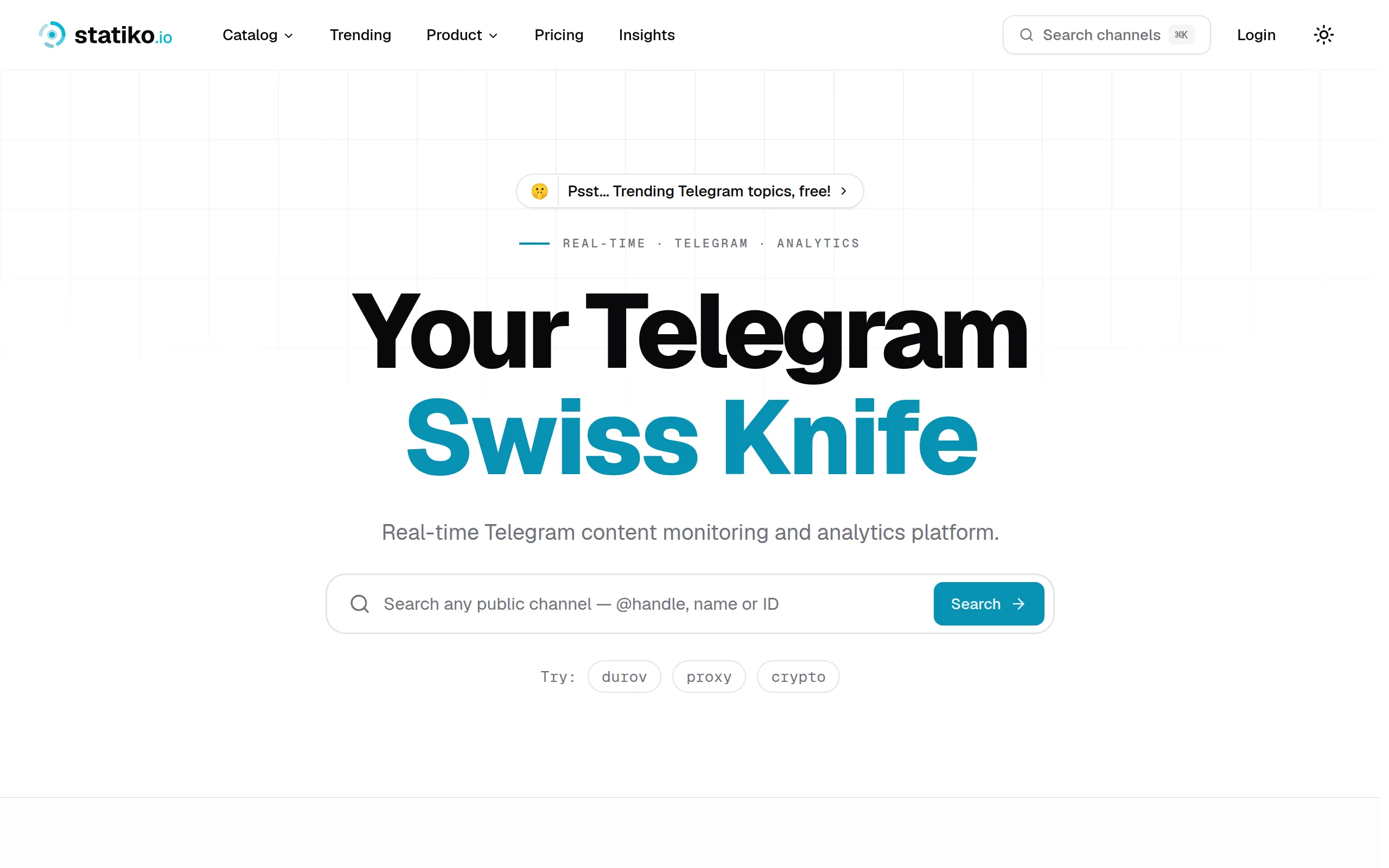
Statiko
Monitor any Telegram channel in real time - track posts, edits, deletions, and growth with AI recaps 📡

Shibui
AI website builder - describe your business, pick a niche template, edit by chatting, and publish instantly ✨

Pro Service
Find verified home service professionals, compare quotes, and pay securely through escrow - built for Brazilians across the US 🏠
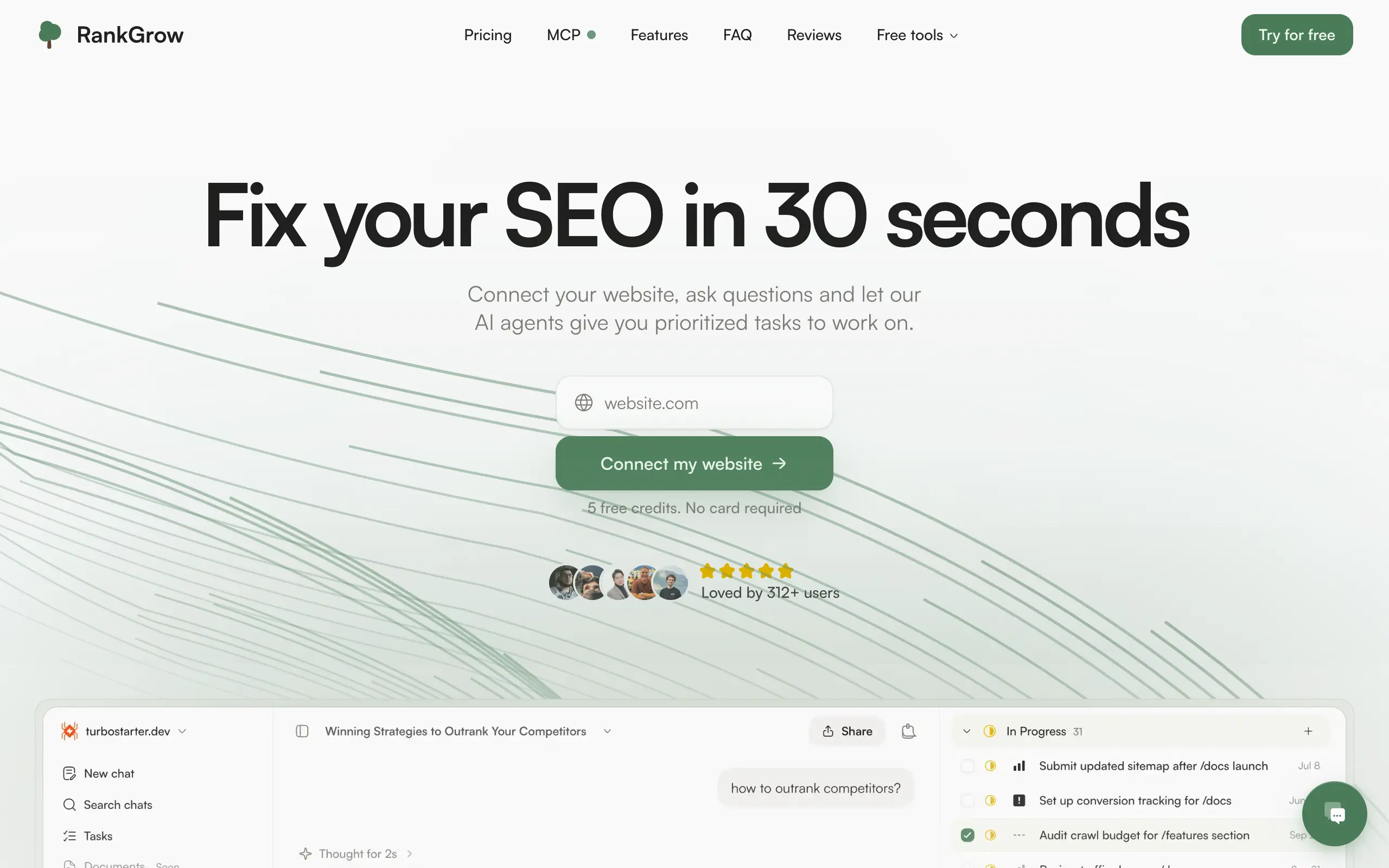
RankGrow
Fix your SEO with AI agents - connect Search Console, get prioritized tasks, and grow organic traffic 📈
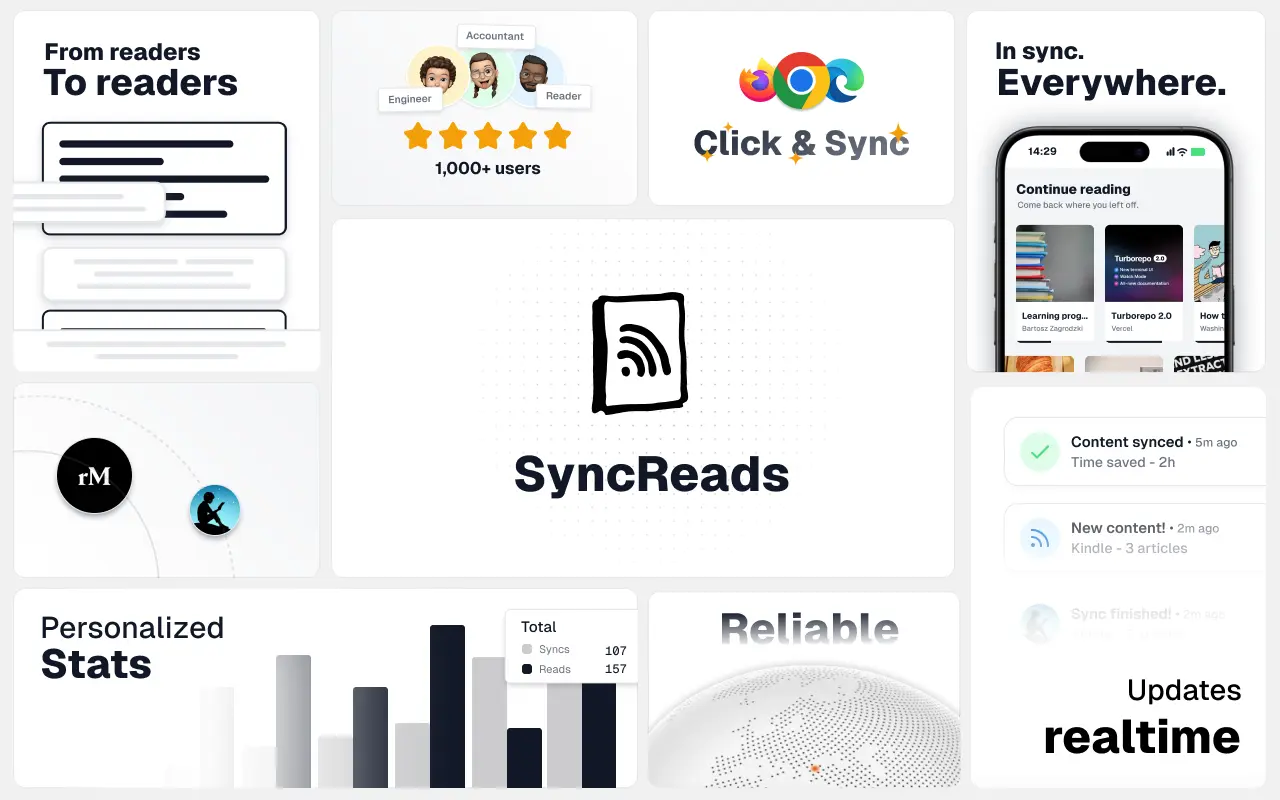
SyncReads
Sync your favorite content for distraction-free reading, save time and replace multiple apps. Anytime, anywhere 🔄
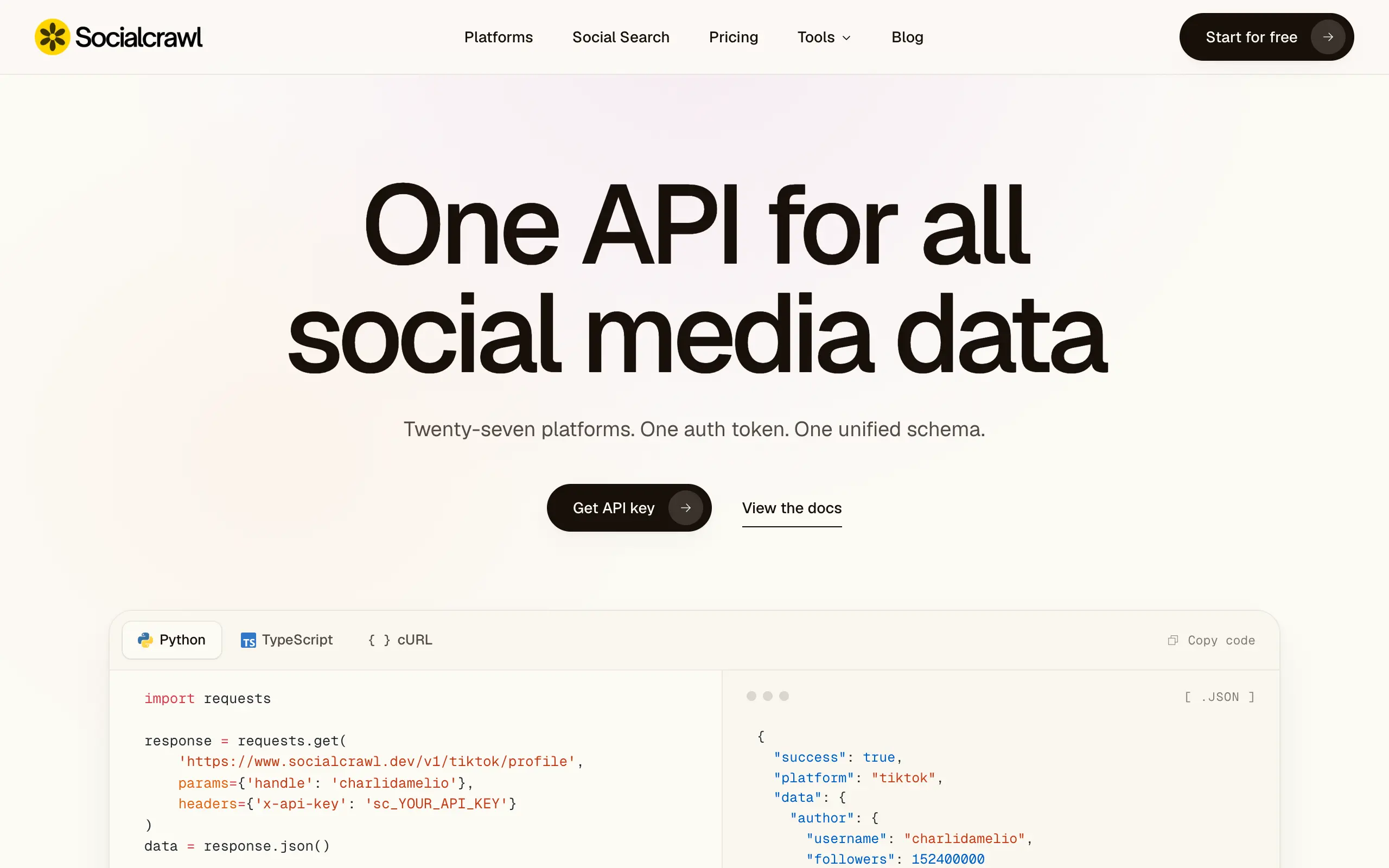
Socialcrawl
Get clean, structured data from 21 platforms like TikTok, Instagram, and YouTube with a single request 📊
Statiko
Monitor any Telegram channel in real time - track posts, edits, deletions, and growth with AI recaps 📡
Shibui
AI website builder - describe your business, pick a niche template, edit by chatting, and publish instantly ✨
Pro Service
Find verified home service professionals, compare quotes, and pay securely through escrow - built for Brazilians across the US 🏠
RankGrow
Fix your SEO with AI agents - connect Search Console, get prioritized tasks, and grow organic traffic 📈
SyncReads
Sync your favorite content for distraction-free reading, save time and replace multiple apps. Anytime, anywhere 🔄
Socialcrawl
Get clean, structured data from 21 platforms like TikTok, Instagram, and YouTube with a single request 📊
Statiko
Monitor any Telegram channel in real time - track posts, edits, deletions, and growth with AI recaps 📡
Shibui
AI website builder - describe your business, pick a niche template, edit by chatting, and publish instantly ✨
Pro Service
Find verified home service professionals, compare quotes, and pay securely through escrow - built for Brazilians across the US 🏠
RankGrow
Fix your SEO with AI agents - connect Search Console, get prioritized tasks, and grow organic traffic 📈
SyncReads
Sync your favorite content for distraction-free reading, save time and replace multiple apps. Anytime, anywhere 🔄
Socialcrawl
Get clean, structured data from 21 platforms like TikTok, Instagram, and YouTube with a single request 📊
Statiko
Monitor any Telegram channel in real time - track posts, edits, deletions, and growth with AI recaps 📡
Shibui
AI website builder - describe your business, pick a niche template, edit by chatting, and publish instantly ✨
Pro Service
Find verified home service professionals, compare quotes, and pay securely through escrow - built for Brazilians across the US 🏠
RankGrow
Fix your SEO with AI agents - connect Search Console, get prioritized tasks, and grow organic traffic 📈
SyncReads
Sync your favorite content for distraction-free reading, save time and replace multiple apps. Anytime, anywhere 🔄
Socialcrawl
Get clean, structured data from 21 platforms like TikTok, Instagram, and YouTube with a single request 📊
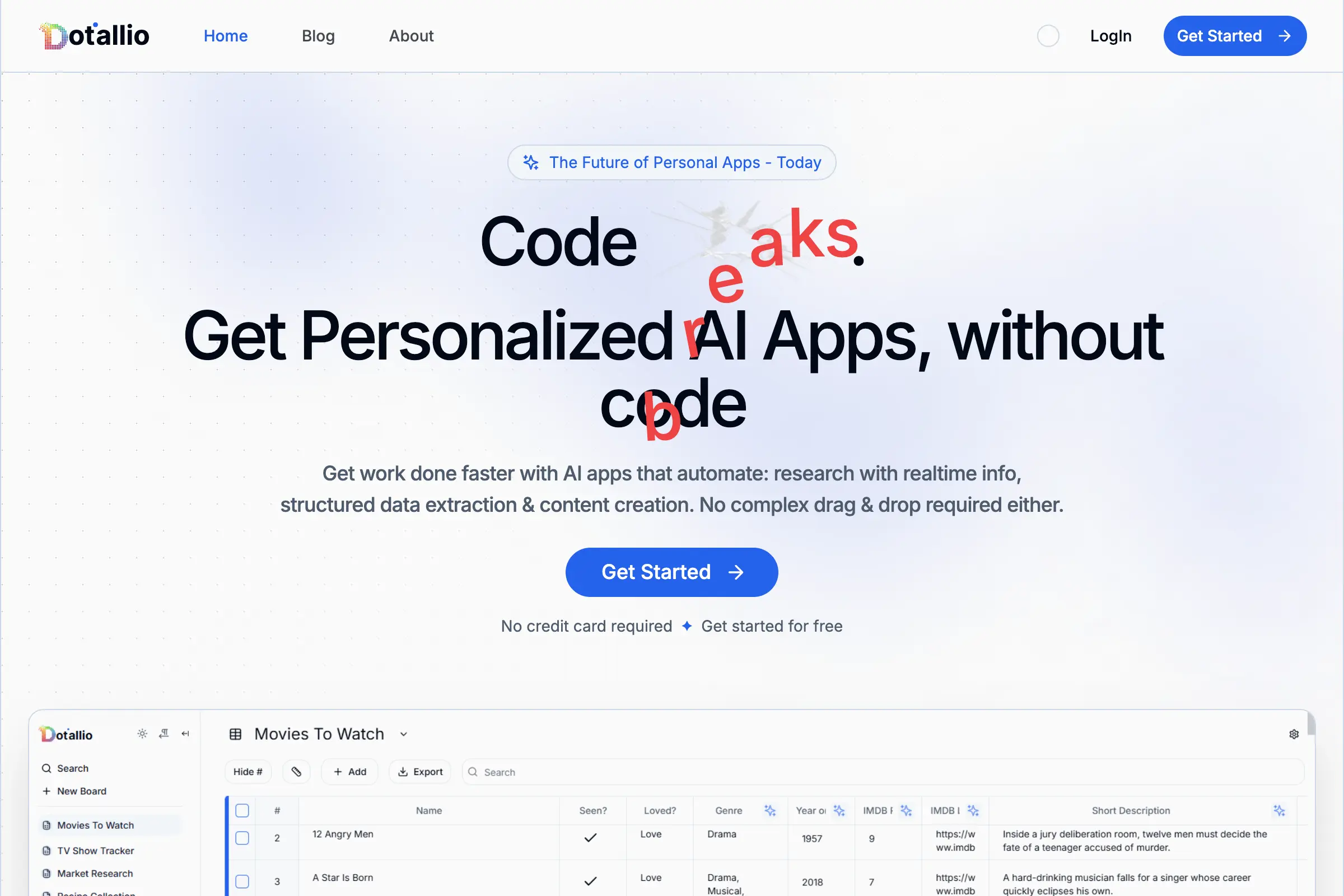
Dotallio
Personalized AI apps that automate research, data extraction, and content creation without code 🤖

Talk to Santa
Enjoy a magical live video chat or receive a unique AI-generated video greeting from Santa Claus 🎅

pozywka.pl
Scalable blog for food journalist, focused on performance and user experience 🌭
zagrodzki.me
Personal blog and portfolio of Bart Zagrodzki, where he shares his knowledge and work 💼
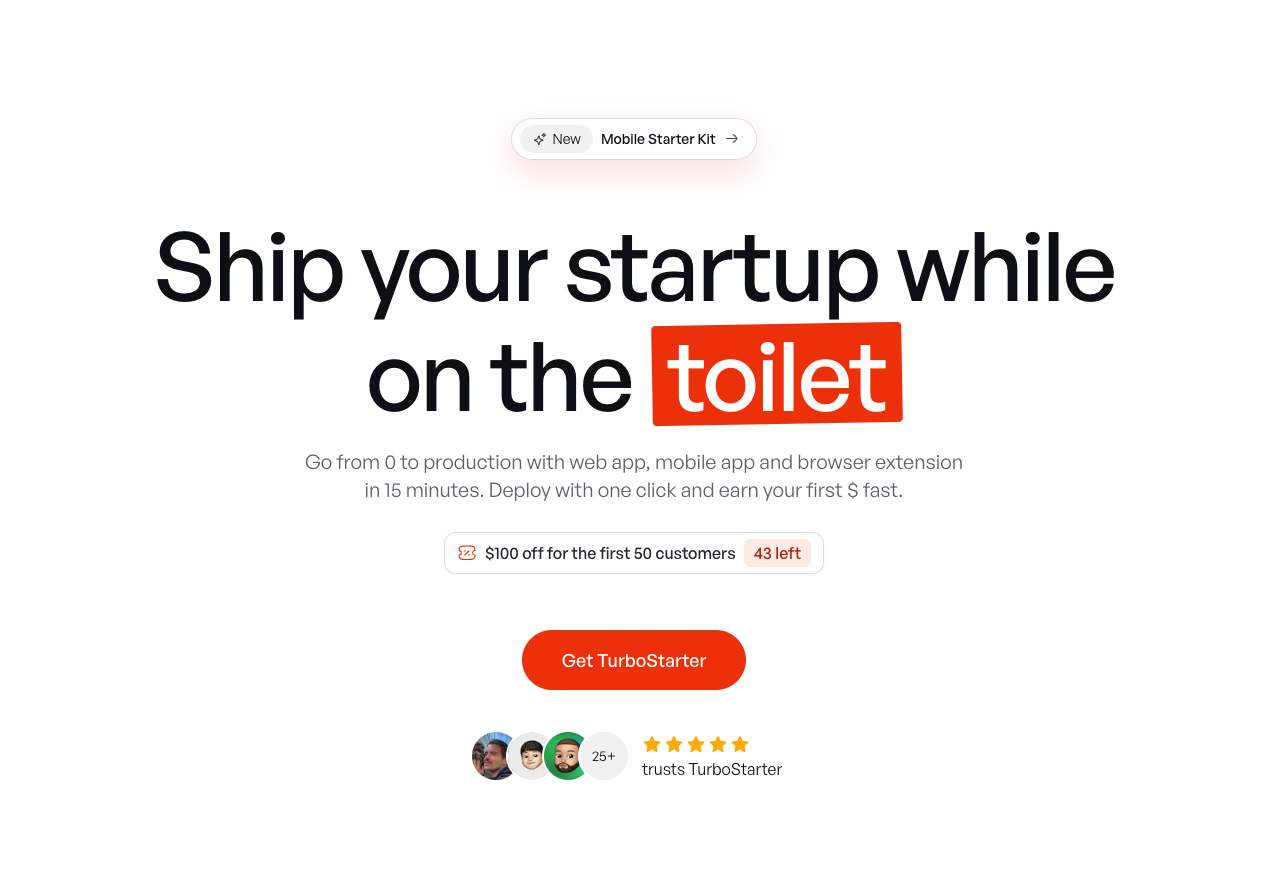
TurboStarter
Ship your startup everywhere. In minutes.
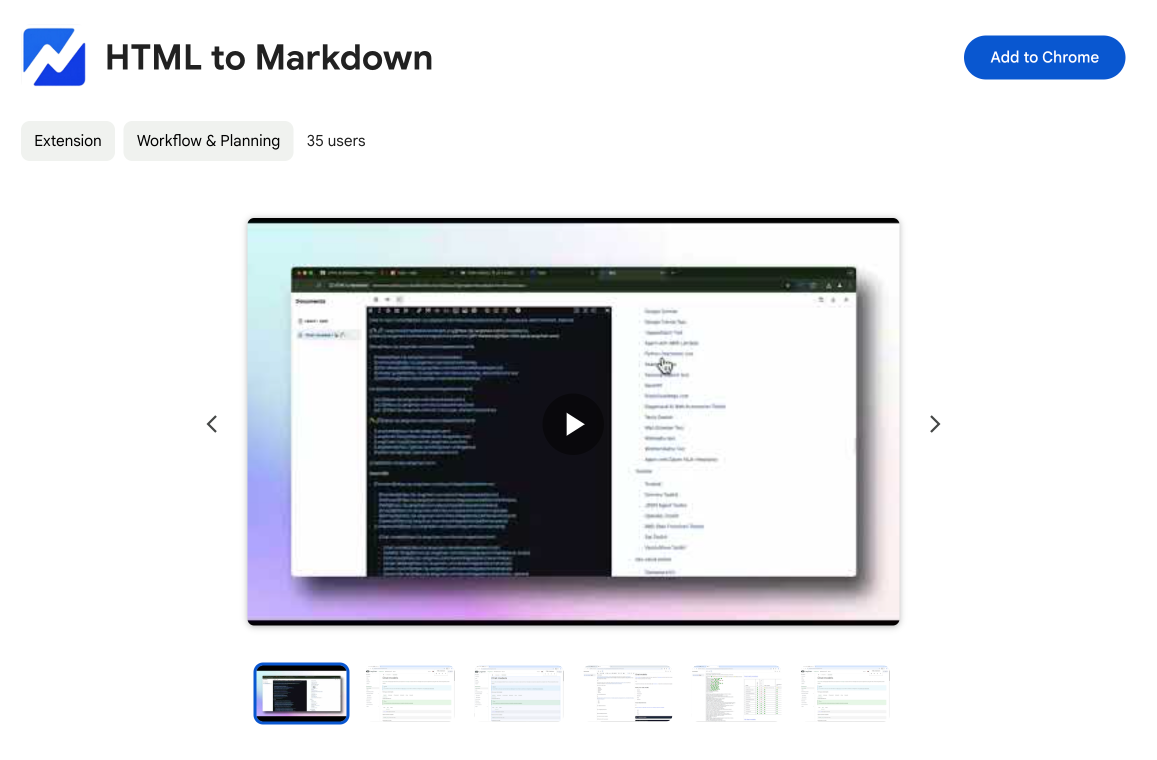
HTML to Markdown
Convert HTML to Markdown with ease, directly in your browser 📄
Dotallio
Personalized AI apps that automate research, data extraction, and content creation without code 🤖
Talk to Santa
Enjoy a magical live video chat or receive a unique AI-generated video greeting from Santa Claus 🎅
pozywka.pl
Scalable blog for food journalist, focused on performance and user experience 🌭
zagrodzki.me
Personal blog and portfolio of Bart Zagrodzki, where he shares his knowledge and work 💼
TurboStarter
Ship your startup everywhere. In minutes.
HTML to Markdown
Convert HTML to Markdown with ease, directly in your browser 📄
Dotallio
Personalized AI apps that automate research, data extraction, and content creation without code 🤖
Talk to Santa
Enjoy a magical live video chat or receive a unique AI-generated video greeting from Santa Claus 🎅
pozywka.pl
Scalable blog for food journalist, focused on performance and user experience 🌭
zagrodzki.me
Personal blog and portfolio of Bart Zagrodzki, where he shares his knowledge and work 💼
TurboStarter
Ship your startup everywhere. In minutes.
HTML to Markdown
Convert HTML to Markdown with ease, directly in your browser 📄
Dotallio
Personalized AI apps that automate research, data extraction, and content creation without code 🤖
Talk to Santa
Enjoy a magical live video chat or receive a unique AI-generated video greeting from Santa Claus 🎅
pozywka.pl
Scalable blog for food journalist, focused on performance and user experience 🌭
zagrodzki.me
Personal blog and portfolio of Bart Zagrodzki, where he shares his knowledge and work 💼
TurboStarter
Ship your startup everywhere. In minutes.
HTML to Markdown
Convert HTML to Markdown with ease, directly in your browser 📄
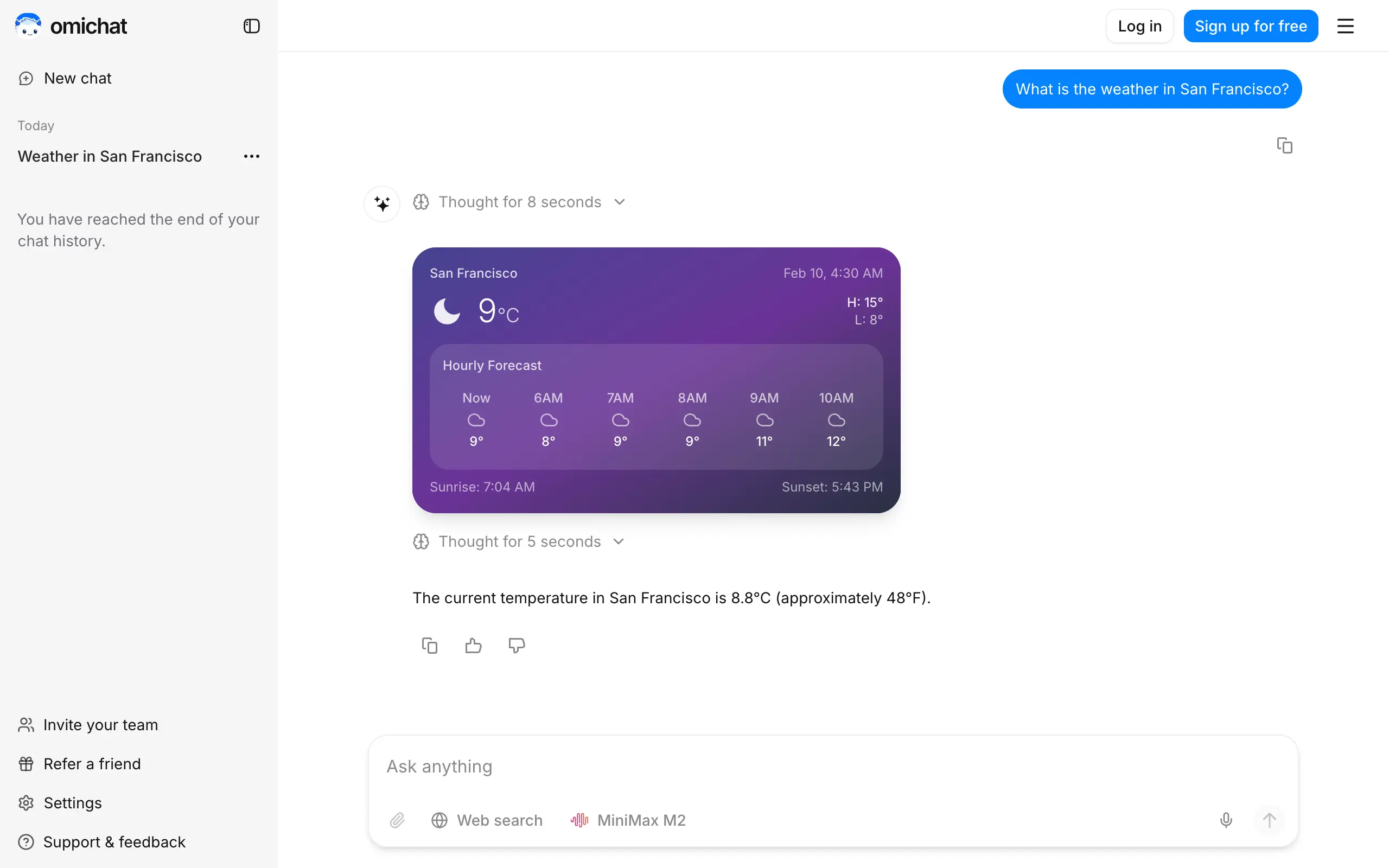
Omichat
Chat with 50+ AI models, including ChatGPT and Claude, in one place - switch models anytime without losing context 🤖
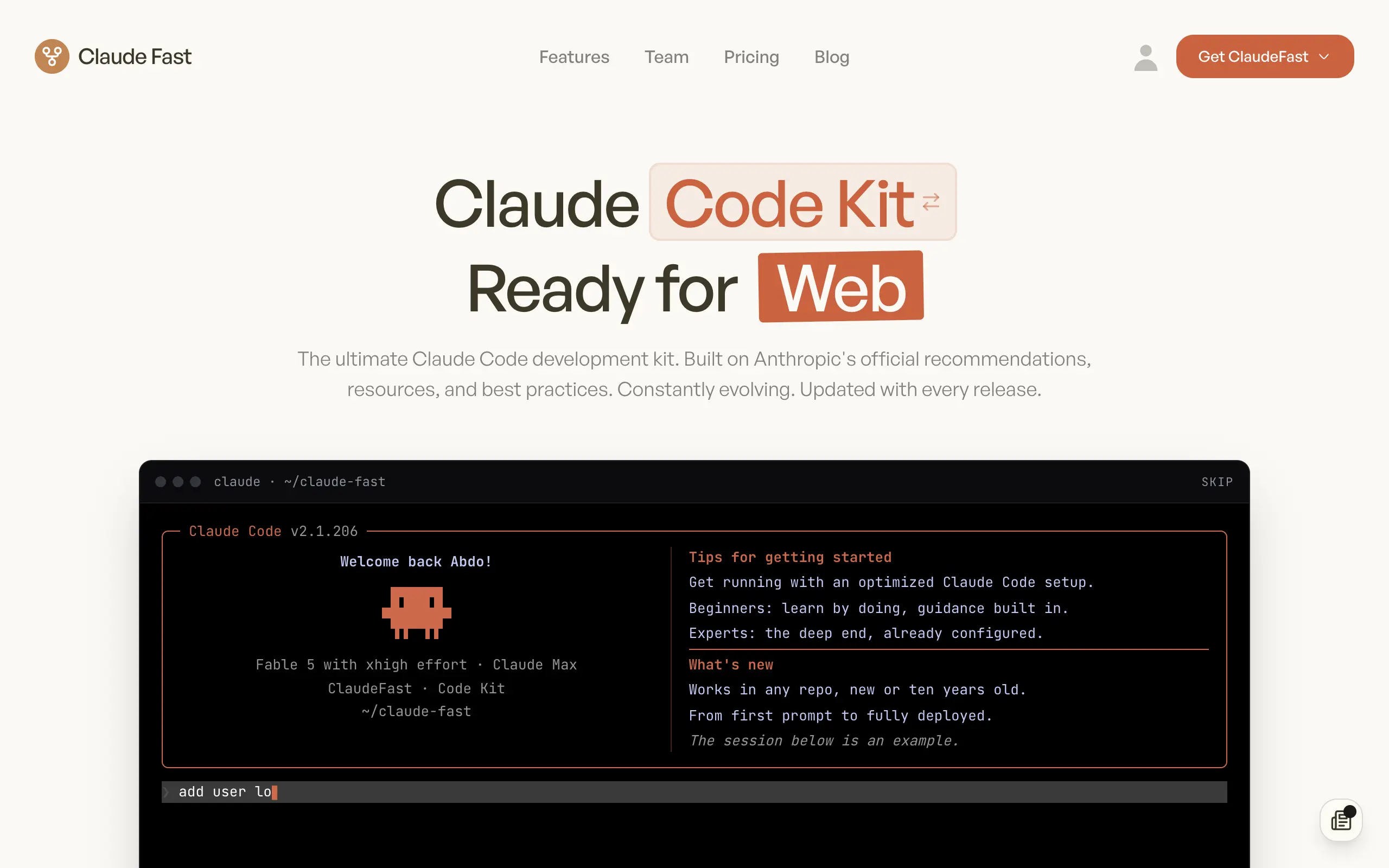
Claude Fast
Supercharge your Claude Code with 6x effective context window and specialized AI agents 🤖
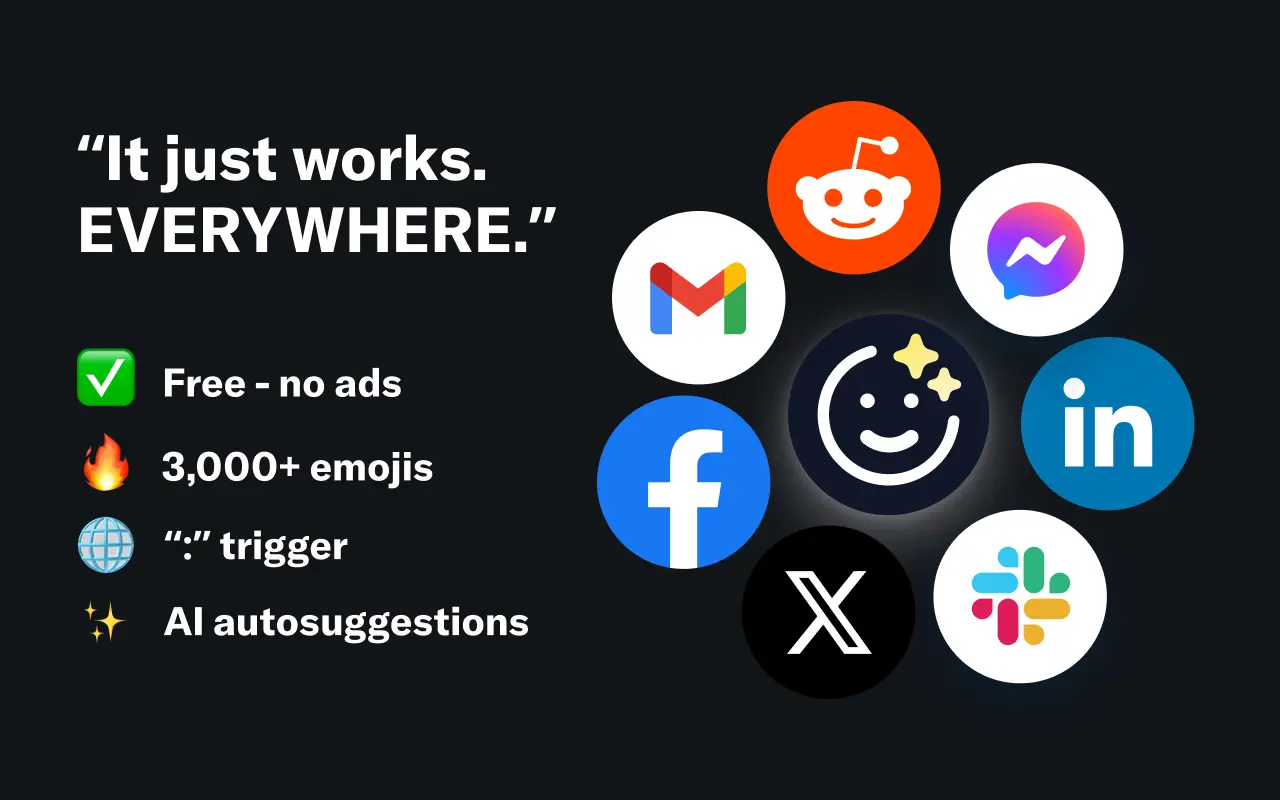
EmojAI
AI-powered emoji picker with smart, context-aware suggestions 🤖
Solohacker
Autonomous company launcher - AI agents work 24/7, escalate what matters, and you stay in control 🤖

BeRawi: Storytelling Coach
Practice storytelling daily with instant feedback to sound clearer, more engaging, and confident 🎤
Omichat
Chat with 50+ AI models, including ChatGPT and Claude, in one place - switch models anytime without losing context 🤖
Claude Fast
Supercharge your Claude Code with 6x effective context window and specialized AI agents 🤖
EmojAI
AI-powered emoji picker with smart, context-aware suggestions 🤖
Solohacker
Autonomous company launcher - AI agents work 24/7, escalate what matters, and you stay in control 🤖
BeRawi: Storytelling Coach
Practice storytelling daily with instant feedback to sound clearer, more engaging, and confident 🎤
Omichat
Chat with 50+ AI models, including ChatGPT and Claude, in one place - switch models anytime without losing context 🤖
Claude Fast
Supercharge your Claude Code with 6x effective context window and specialized AI agents 🤖
EmojAI
AI-powered emoji picker with smart, context-aware suggestions 🤖
Solohacker
Autonomous company launcher - AI agents work 24/7, escalate what matters, and you stay in control 🤖
BeRawi: Storytelling Coach
Practice storytelling daily with instant feedback to sound clearer, more engaging, and confident 🎤
Omichat
Chat with 50+ AI models, including ChatGPT and Claude, in one place - switch models anytime without losing context 🤖
Claude Fast
Supercharge your Claude Code with 6x effective context window and specialized AI agents 🤖
EmojAI
AI-powered emoji picker with smart, context-aware suggestions 🤖
Solohacker
Autonomous company launcher - AI agents work 24/7, escalate what matters, and you stay in control 🤖
BeRawi: Storytelling Coach
Practice storytelling daily with instant feedback to sound clearer, more engaging, and confident 🎤

Connect with like-minded people
Join our community to get feedback, support, and grow together with 1,000+ builders on board, let's ship it!
Join usShip your startup everywhere. In minutes.
Don't burn tokens on setup and start building features on day one.